

News and Views
Invisible technology, hyper-local formats and experience-led environments driving ROIC. Trends 2027–2029.




This trend report outlines how modular brand systems and predictive retail infrastructure scale across food and non-food protecting ROIC (2027–2029). Explore how invisible AI, value per square meter ecosystems, loyalty and experience design create emotionally engaging, high-performing supermarket environments. (Projects attributed to: Whole Foods Market - Cushing Terrell, Tesco - S+SA Architects, and Monetka - CampbellRigg)
Alternative Future Strategies
Retail’s next phase requires a decisive move away from rigid standardisation toward intelligent, system-led flexibility. Predictive stores will optimise availability, margins and inventory turns through AI-driven forecasting and replenishment, operating as invisible infrastructure that enhances performance without disrupting the customer experience. At the same time, hyper-local formats will tailor product mix, layout and messaging to neighbourhood demand, increasing relevance, basket size and loyalty.
Experience-driven store environments will play a central role, blending food, services and lifestyle retail to extend dwell time and generate incremental revenue. For multi-format operators spanning food and non-food categories such as homewares and textiles, long-term success depends on modular brand systems that scale efficiently across diverse formats without brand dilution. Leaders will update and modernise sub-brand identities by format scale, aligning store design, range presentation and communication to the geographic catchment, from Pakistani, Indian, East Asian communities to East European and African audiences.

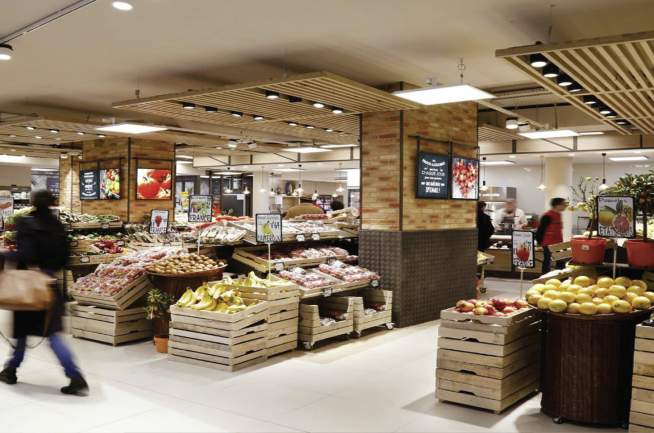
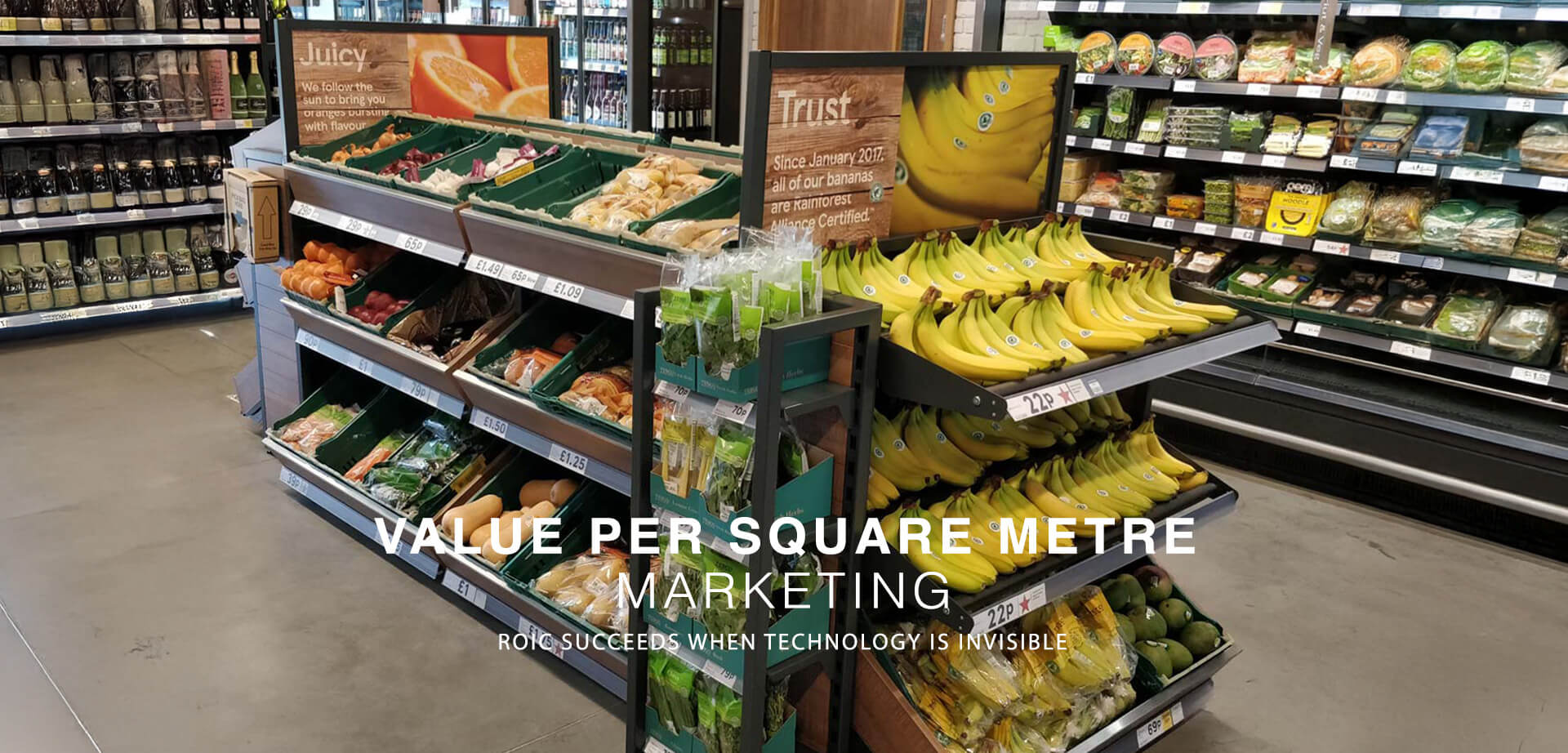
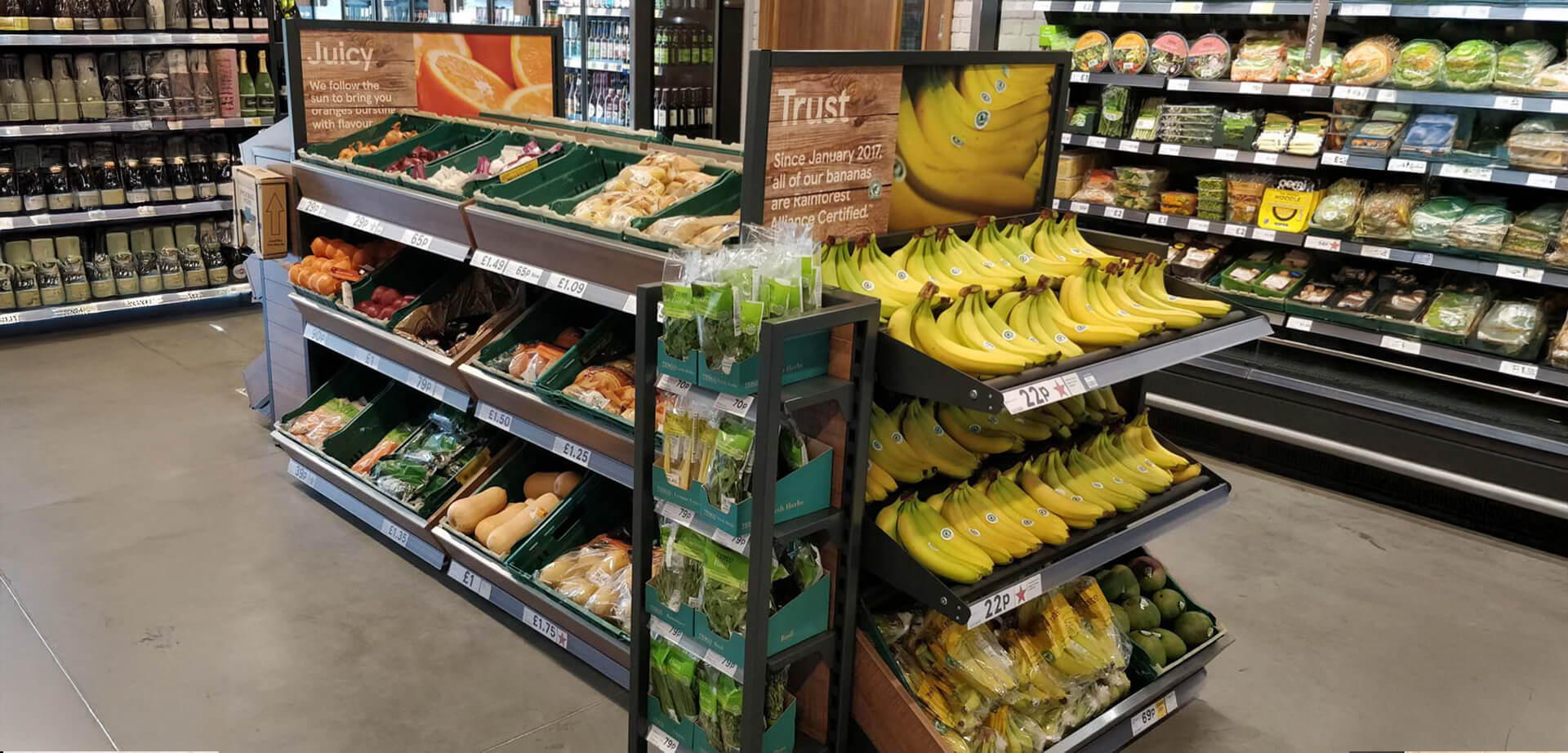
Below: The image shows the interior of a Whole Foods Market store, focusing on the fresh produce section and highlighting the company's quality commitments.
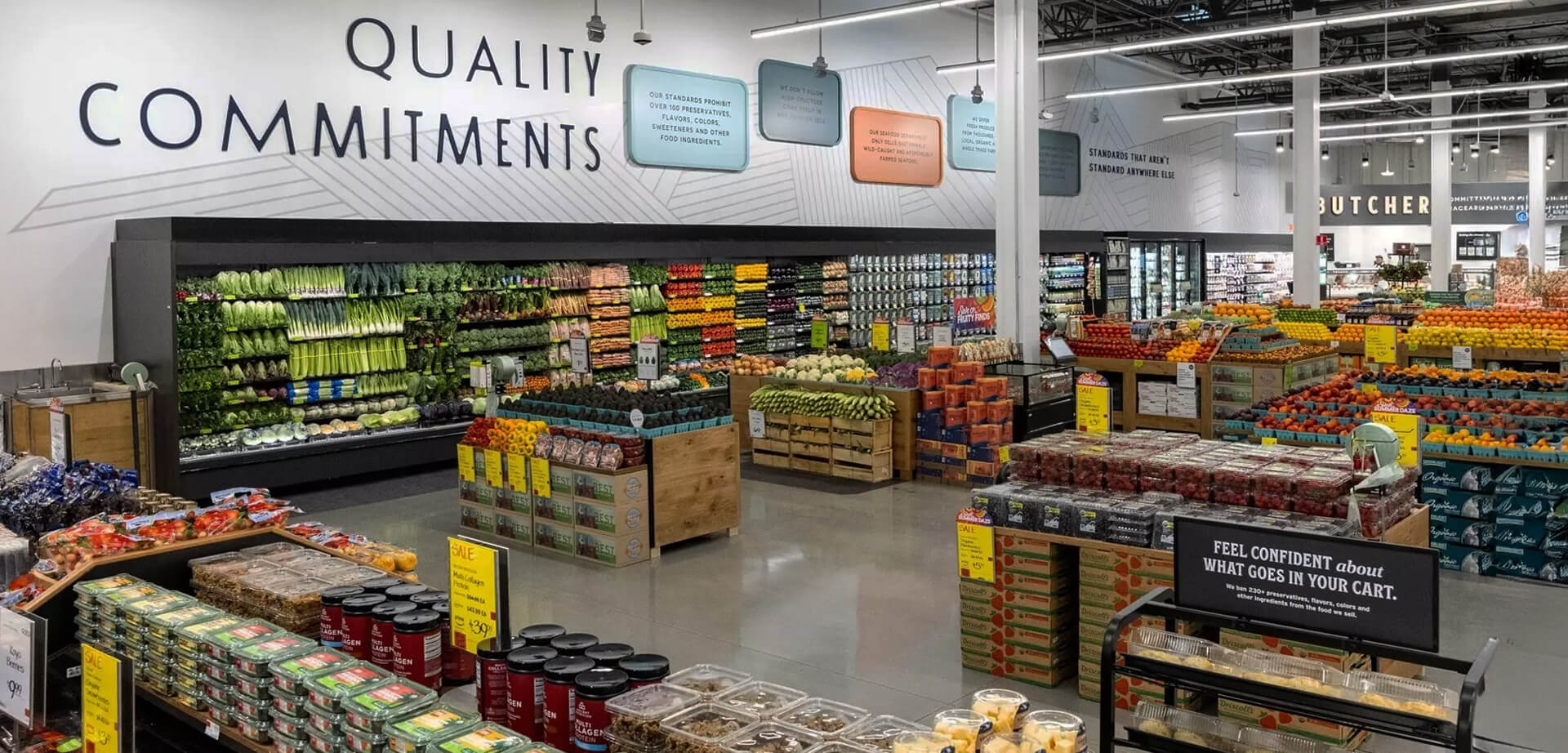
Whole Foods Market is a natural and organic grocery retailer with inviting, educational store environments. It champions strict quality standards, sustainable sourcing, and customer confidence in every purchase.
The Problem:
Many supermarket operators remain constrained by legacy, standardised formats that no longer reflect fragmented consumer behaviour, local demand patterns or omnichannel expectations. Technology investments are often siloed, highly visible to shoppers, and weakly connected to commercial outcomes. As operating costs rise and margins tighten, these formats struggle to deliver sales uplift, basket growth or acceptable returns on capital. The result is declining differentiation, inconsistent experiences across food and non-food categories, and flagship investments that fail to scale or perform sustainably.
The Strategic Solution:
The solution is an integrated, system-led strategy combining predictive technology, modular format branding and experience-driven design. AI-enabled forecasting, pricing and replenishment improve availability and margin performance in the background, while flexible brand systems allow stores to localise range, layout and messaging without dilution. Experience is designed with commercial intent, driving dwell time, basket size and loyalty. Capital is redirected from one-off formats to scalable platforms that flex across food, homewares and textiles while improving Performance Per Square Metre.
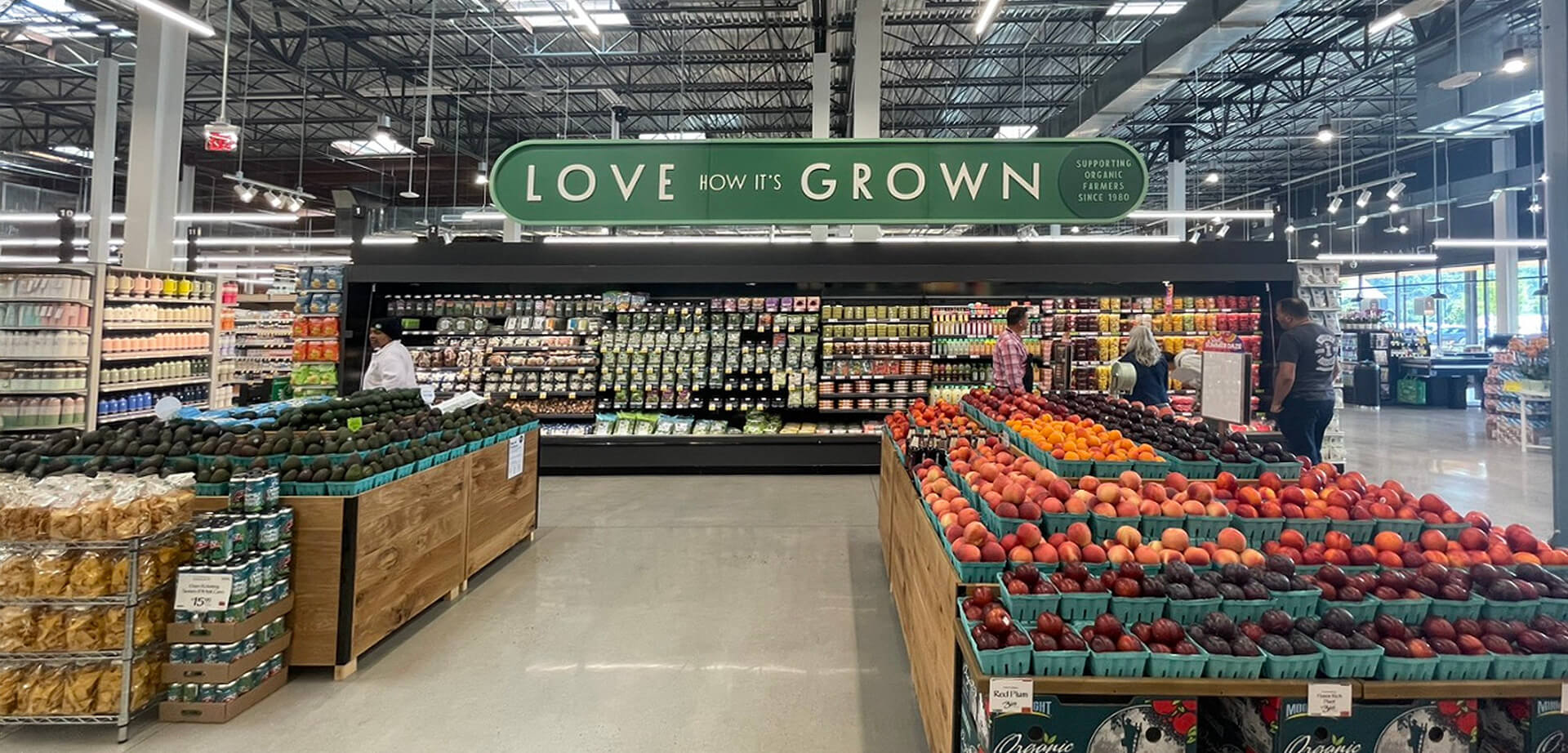
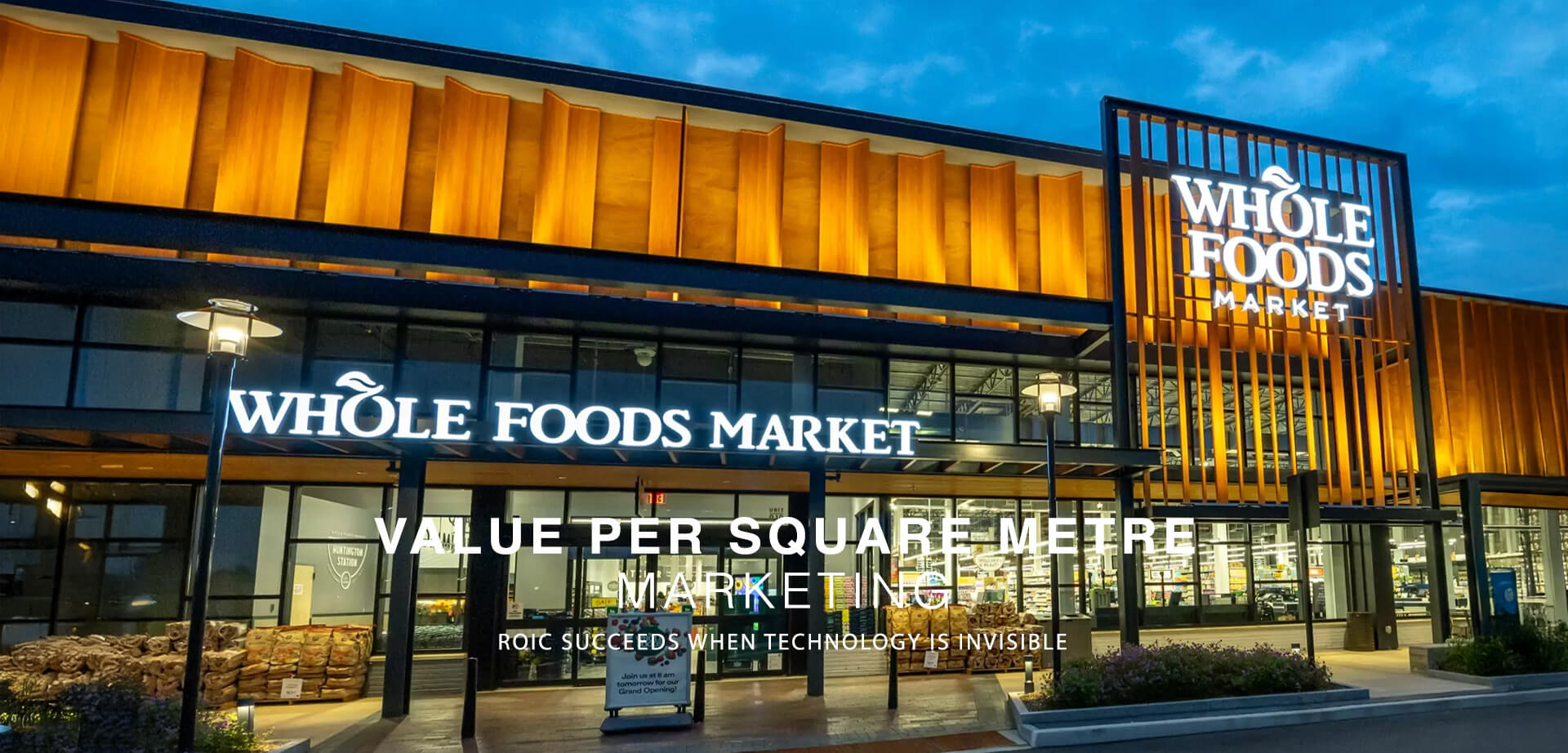
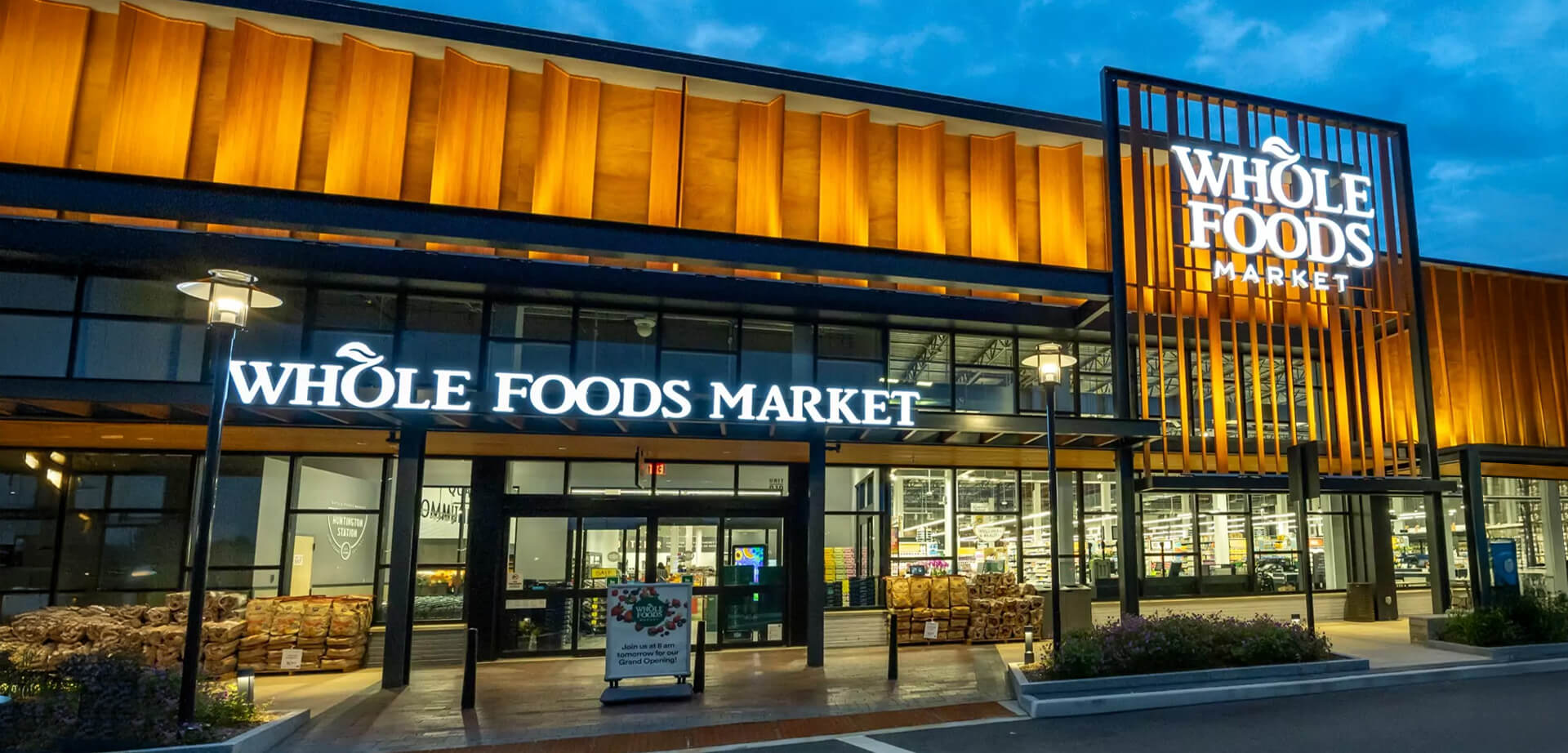
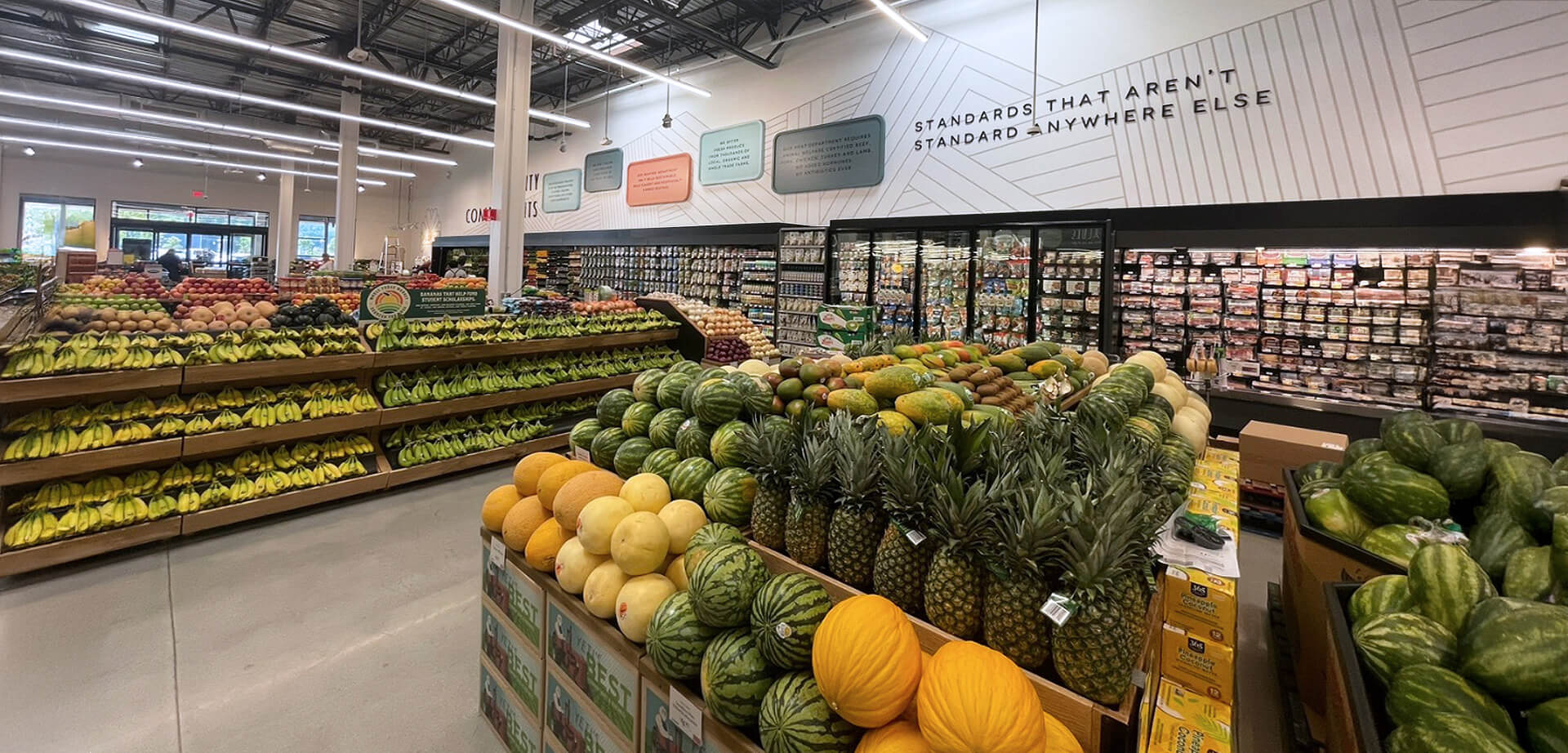
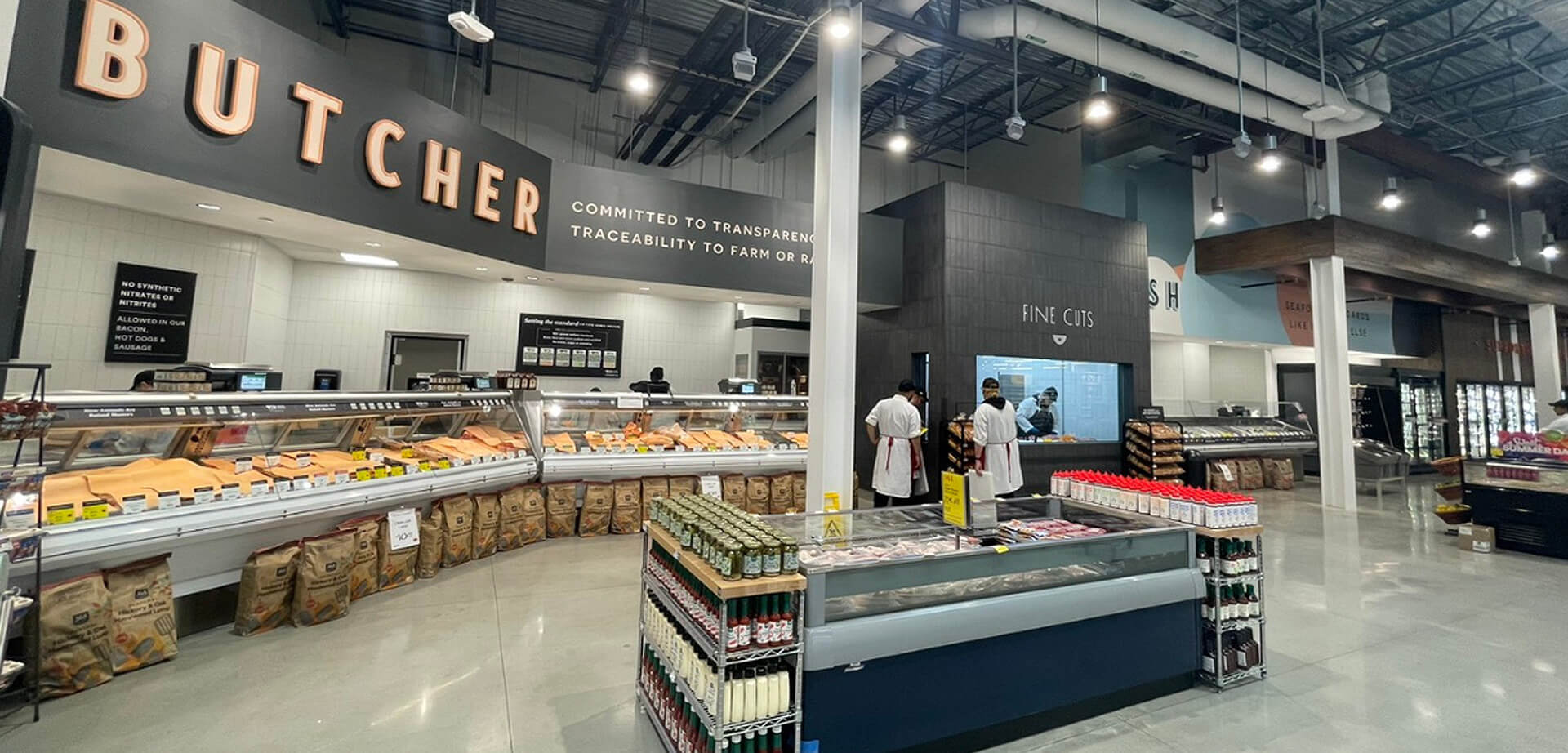
Whole Foods Market in Huntington Station, New York. The 40,000-square-foot store features a fresh bakery, floral department, butcher and more.
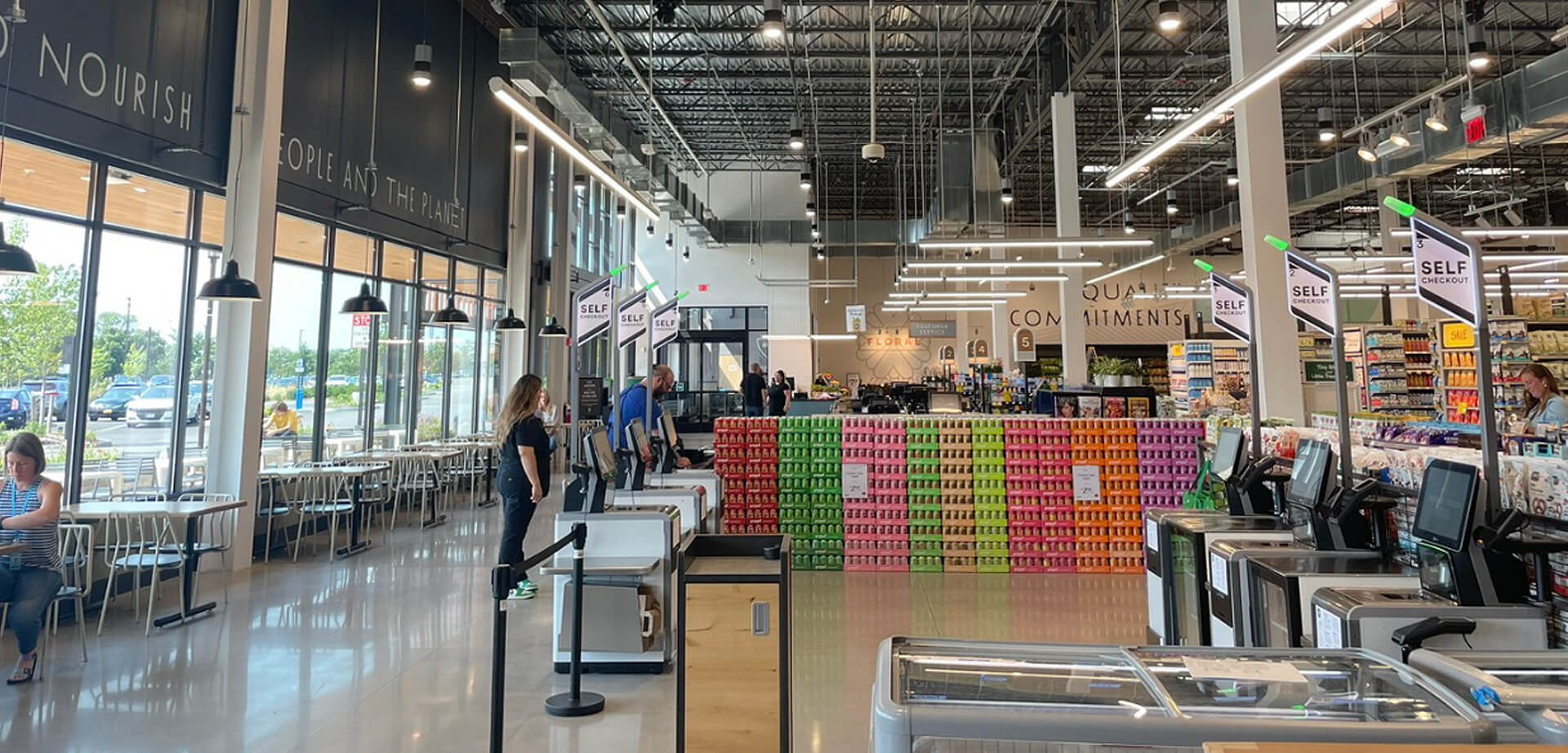
The store’s design has emphasised simplicity, incorporating elements reminiscent of the neighbourhood’s commuter heritage.
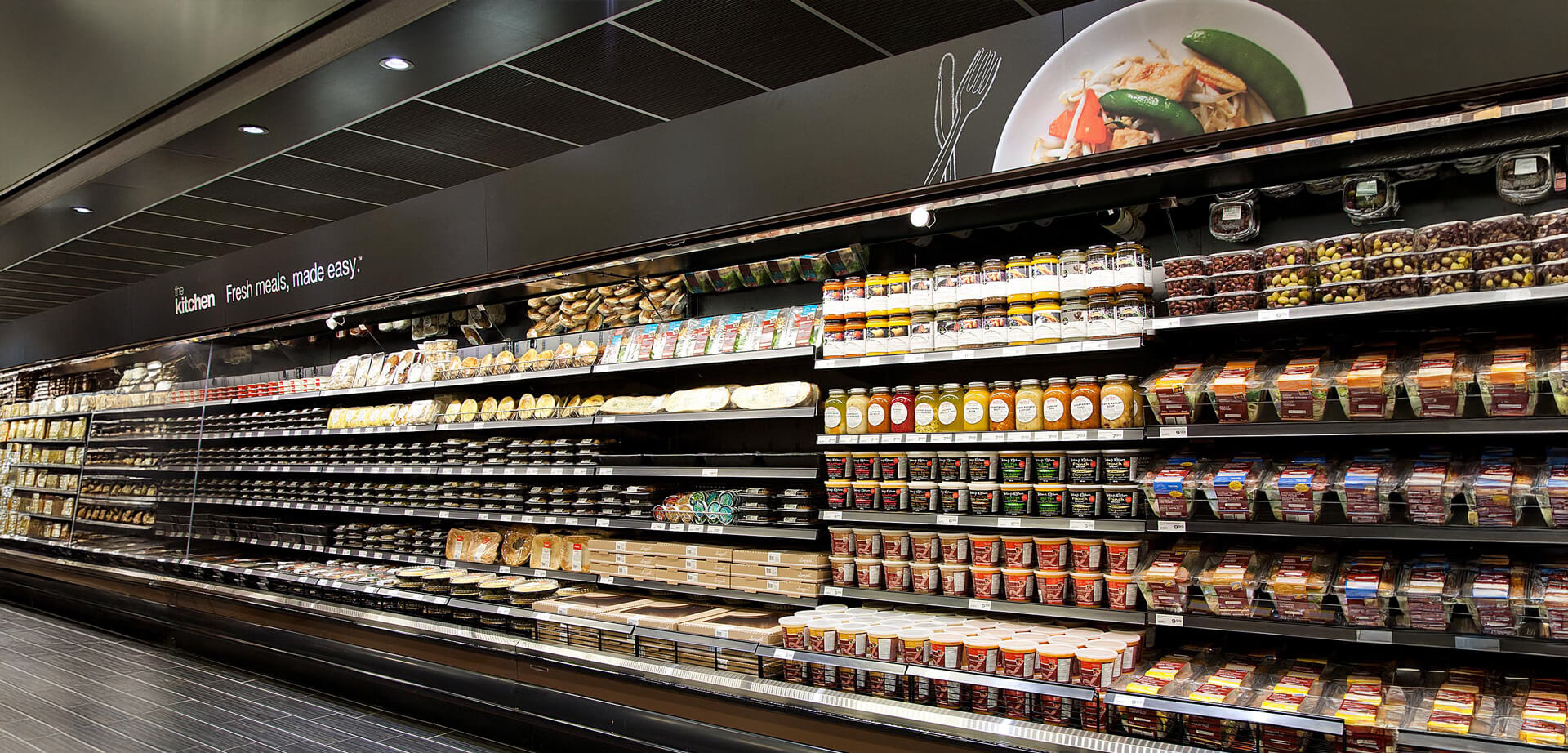
Below: Longo's, a Canadian grocery chain, showcasing its fresh produce department and prepared meals section branded as "The Kitchen: Fresh meals, made easy".
Experience & Local Relevance:
The future customer experience is phygital by default but human by design. AI personalisation, loyalty data and computer vision operate invisibly, enabling relevance without intrusion. Frictionless checkout, predictive availability and intuitive navigation remove effort, while physical environments deliver emotion through food theatre, services and community spaces. Stores shift from transactional efficiency to experiential value, encouraging longer visits and incremental spend. Trust, clarity and emotional connection become key drivers of loyalty as digital intelligence quietly supports every stage of the physical journey.
PCC Community Markets (Seattle)
Why it fits: Hyper-local, sustainability-led stores with foodservice, open kitchens and community zones.
KPI impact: Strong loyalty and premium basket size. High sales per square metre despite smaller footprints.
Emotional relevance + local trust driving performance.
Whole Foods Market (Huntingdon NY State flagship)
Why it fits: Experience-led layouts, food halls and predictive replenishment backed by Amazon infrastructure.
KPI impact: Higher dwell time and food-to-go revenue. Improved availability and margin control.
Predictive systems + experience-led flagship strategy.
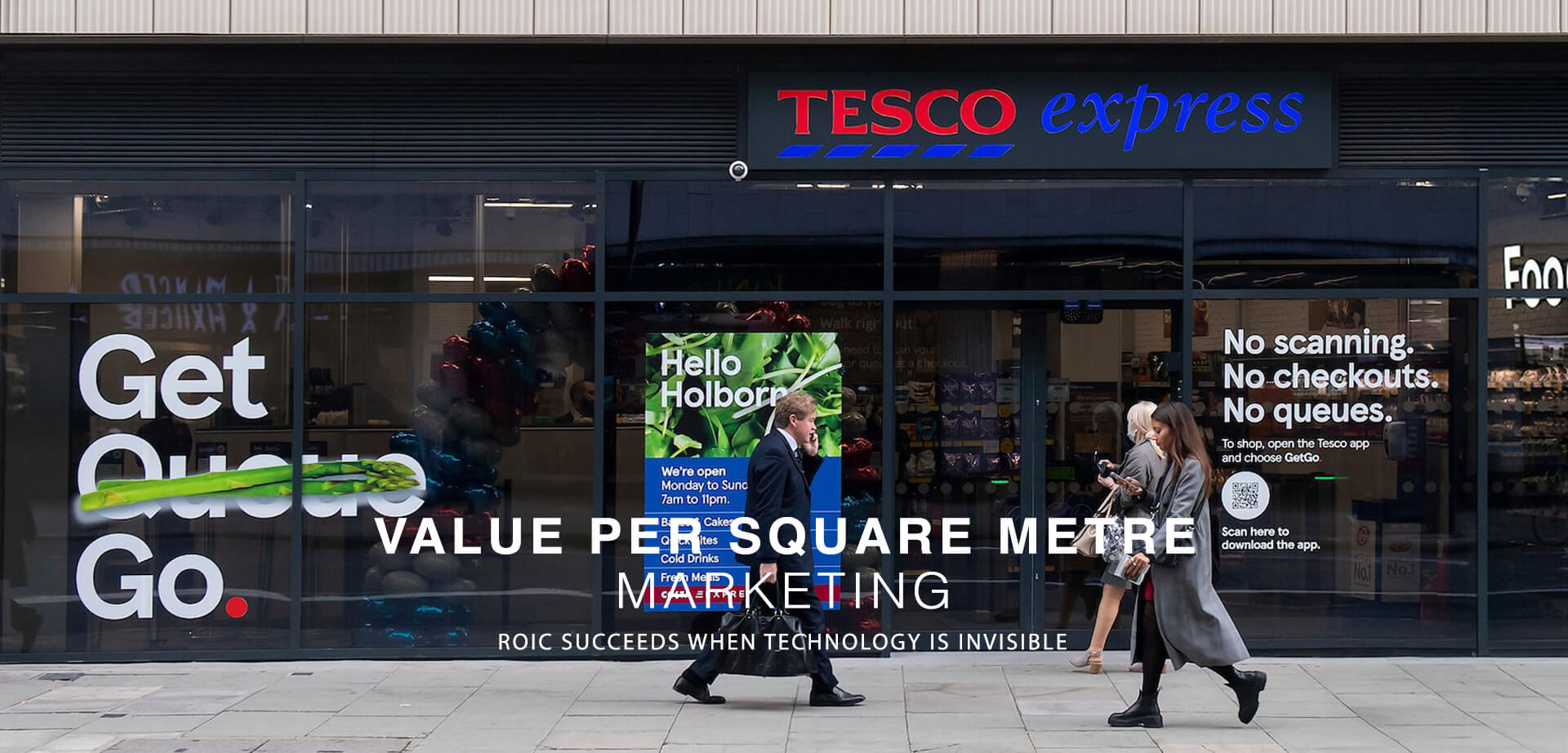
Tesco (UK)
Why it fits: Tesco’s Express, Superstore and Extra formats use predictive demand planning and loyalty data (Clubcard) to localise assortments by catchment area.
KPI impact: Reduced out-of-stocks - Sales uplift. Localised ranging - Higher basket relevance.
Standardised systems - Strong ROIC at scale.
Predictive infrastructure + hyper-local execution.
Conclusion:
From 2027–2029, The next-generation supermarket is not defined by geography, but by its ability to translate local market intelligence into relevance and relevance into ROIC.

The statement that Tesco's standardised formats no longer reflect fragmented consumer behaviour is a key observation that has driven the company's recent strategic changes. To address evolving consumer habits and local demands, Tesco has moved away from a one-size-fits-all approach and implemented a more dynamic, omnichannel strategy.
Tesco's Response and Strategy:
Tesco has actively adapted its strategy to meet these new demands, focusing on flexibility and customer focus rather than rigid standardisation.
Diversified Store Formats:
Tesco operates various store types, including large Tesco Extra and Superstores, as well as smaller convenience-focused Tesco Metro and Express stores, to cater to different local needs and shopping missions.
Value and Quality Focus:
Tesco uses initiatives like "Aldi Price Match," "Low Everyday Prices," and the premium "Finest" range to appeal to a broad demographic, from budget-conscious shoppers to those seeking higher-end items.

Conclusion:
From 2027–2029, competitive advantage will be defined by retailers that simplify operational complexity while delivering emotional and cultural relevance at local level. Retailers that connect predictive technology, format strategy, loyalty platforms and brand architecture to clear commercial KPIs, sales uplift, performance per square metre and ROIC, will consistently outperform. Growth will come not from scale alone, but from adaptable formats, disciplined investment and the ability to translate insight into higher returns across a diverse retail portfolio.
The next-generation supermarket is not defined by geography, but by its ability to translate intelligence into relevance and relevance into return.
Our Four-Step Process:
1. Book a consultation call for free
2. Co-create a bespoke brief
3. We execute the creative work fast
4. You see sales, brand loyalty and market share uplift

Data-Driven Localisation:
The Clubcard loyalty program, which has over 22 million members, is crucial. It provides extensive data that allows Tesco to understand specific local demand patterns and consumer preferences, informing everything from product ranges to counter services.
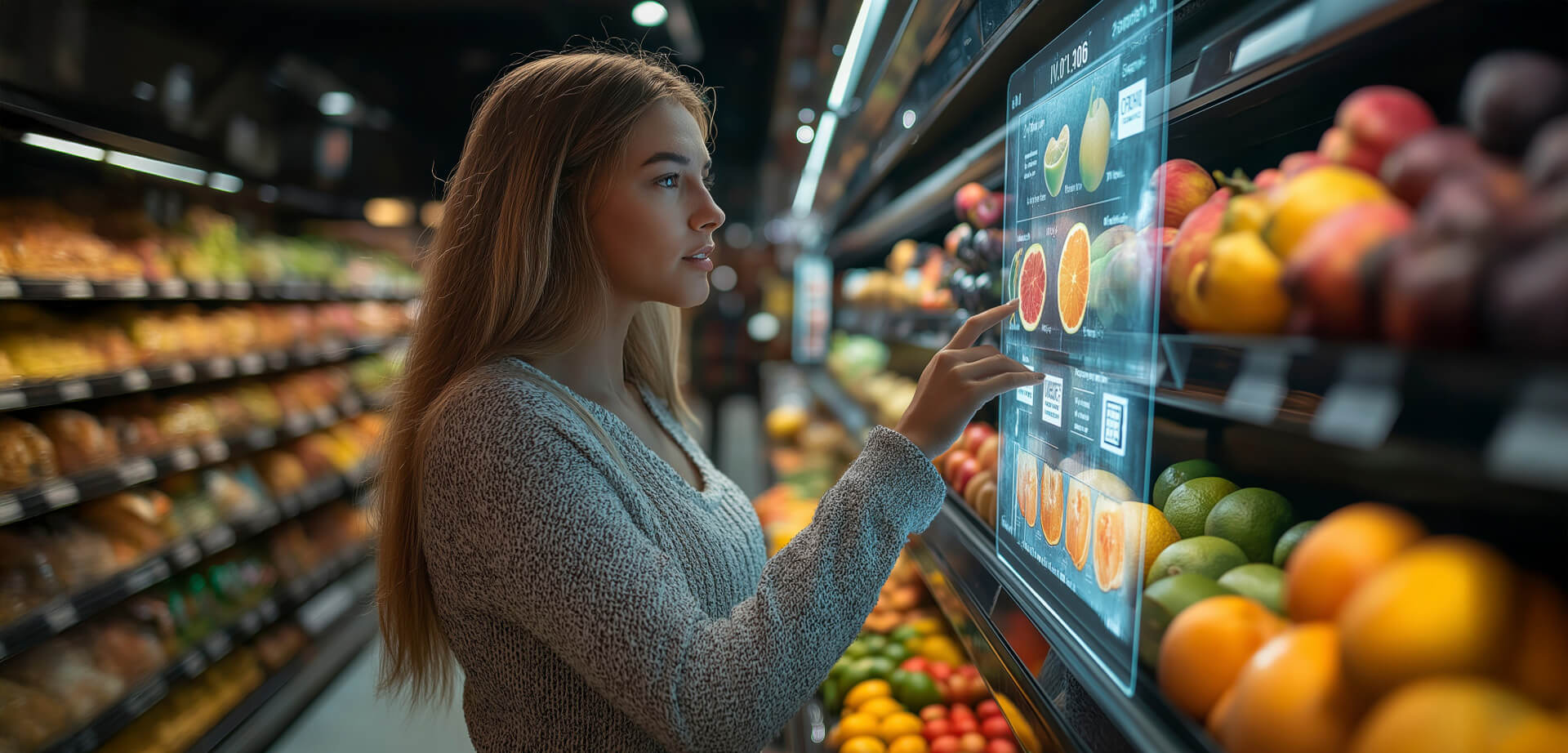
Below: CampbellRigg supports Monetka with scalable store design, format strategy, and brand alignment across 1,600+ locations, improving local relevance, operational efficiency, and performance per square metre.

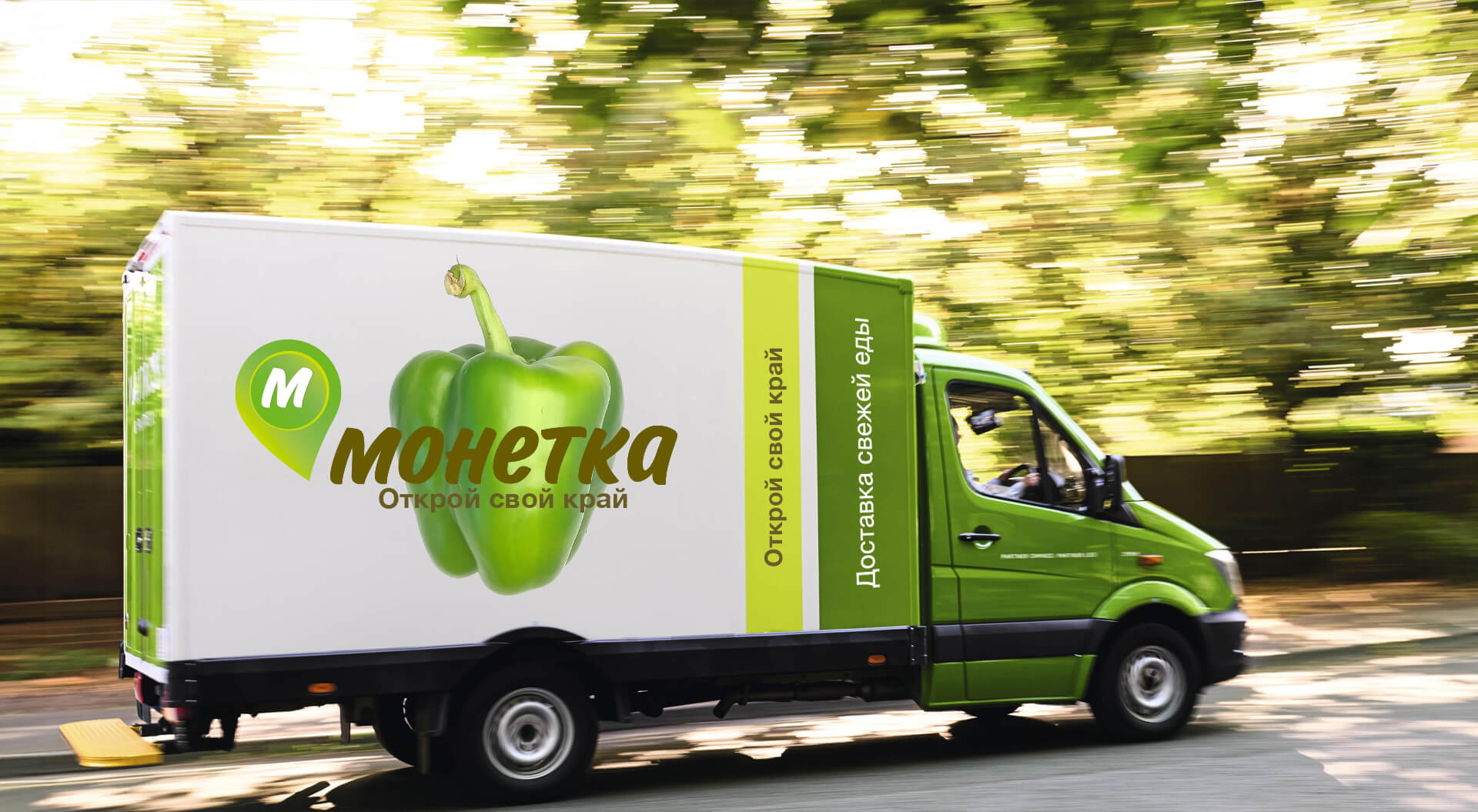
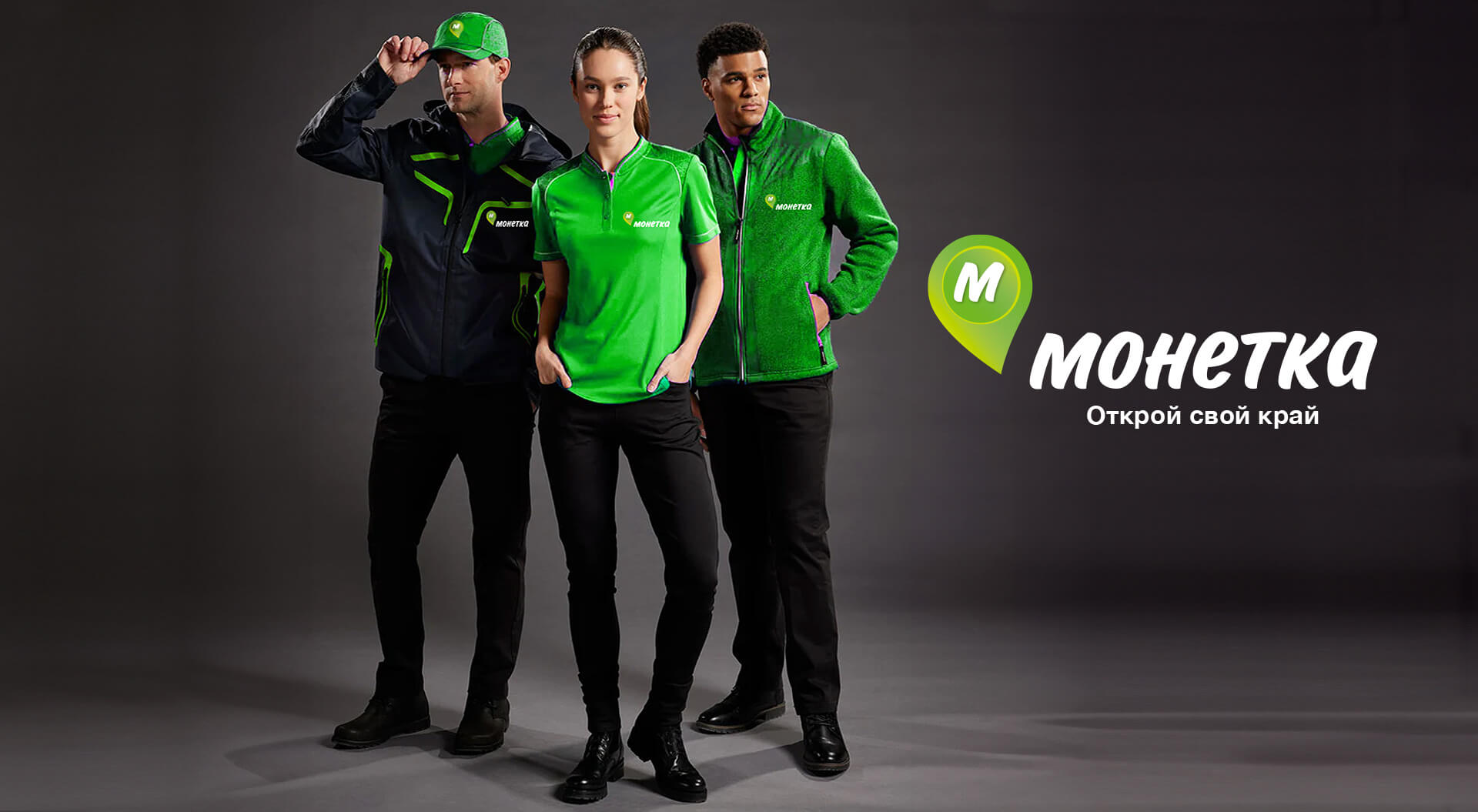
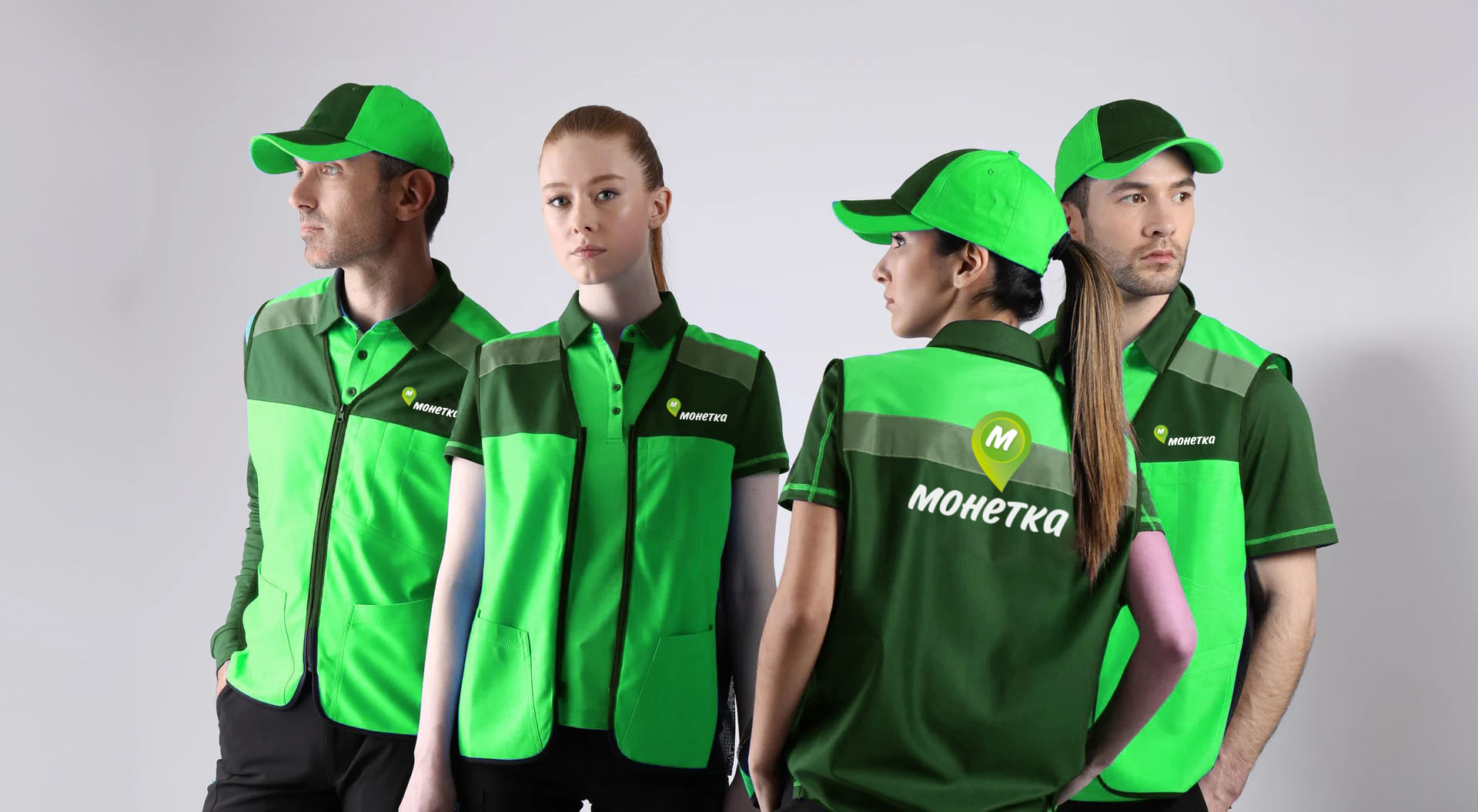
As part of a rebranding effort, we developed a fresh and contemporary brand image, along with a comprehensive toolkit.

Schedule your consultation today and receive a free quote.
Cost-Effective Excellence:
Our pricing structure is highly competitive, offering exceptional value without compromising on quality or creativity.
Rapid Execution:
We move fast. From concept to implementation, our agile team ensures your project is delivered on time and to the highest standards.
Multidisciplinary Expertise:
Our team brings together seasoned brand strategists, architects, interior designers, and graphic designers, collaborating to create seamless, end-to-end brand environments.
Global Reach, Local Insight:
With successful projects delivered across Europe, the Middle East, and Asia, we combine international experience with local market understanding.
Scalable Project Delivery:
Whether it's a flagship hypermarket store, an metropolitan city supermarket or convenience store, we manage and execute projects of all sizes, efficiently and effectively.
Proven Track Record:
Our designs evolve branch networks from purely transactional spaces into experiential, relationship-focused brand environments, enhancing engagement, elevating customer experience, and driving tangible business results.
Full-Service Creative Agency:
From rebranding and marketing campaigns to spatial design and rollout, we provide an integrated service tailored to your goals.