
News and Views
Supermarket Technology, Design, Branding & ROIC Growth Trends 2027–2029.








This trend report outlines how emerging supermarket technologies and format branding strategies (2027–2029) will drive measurable commercial performance. It connects future-facing design and technology trends directly to core retail KPIs: sales uplift, basket size, dwell time, loyalty, and ROIC.
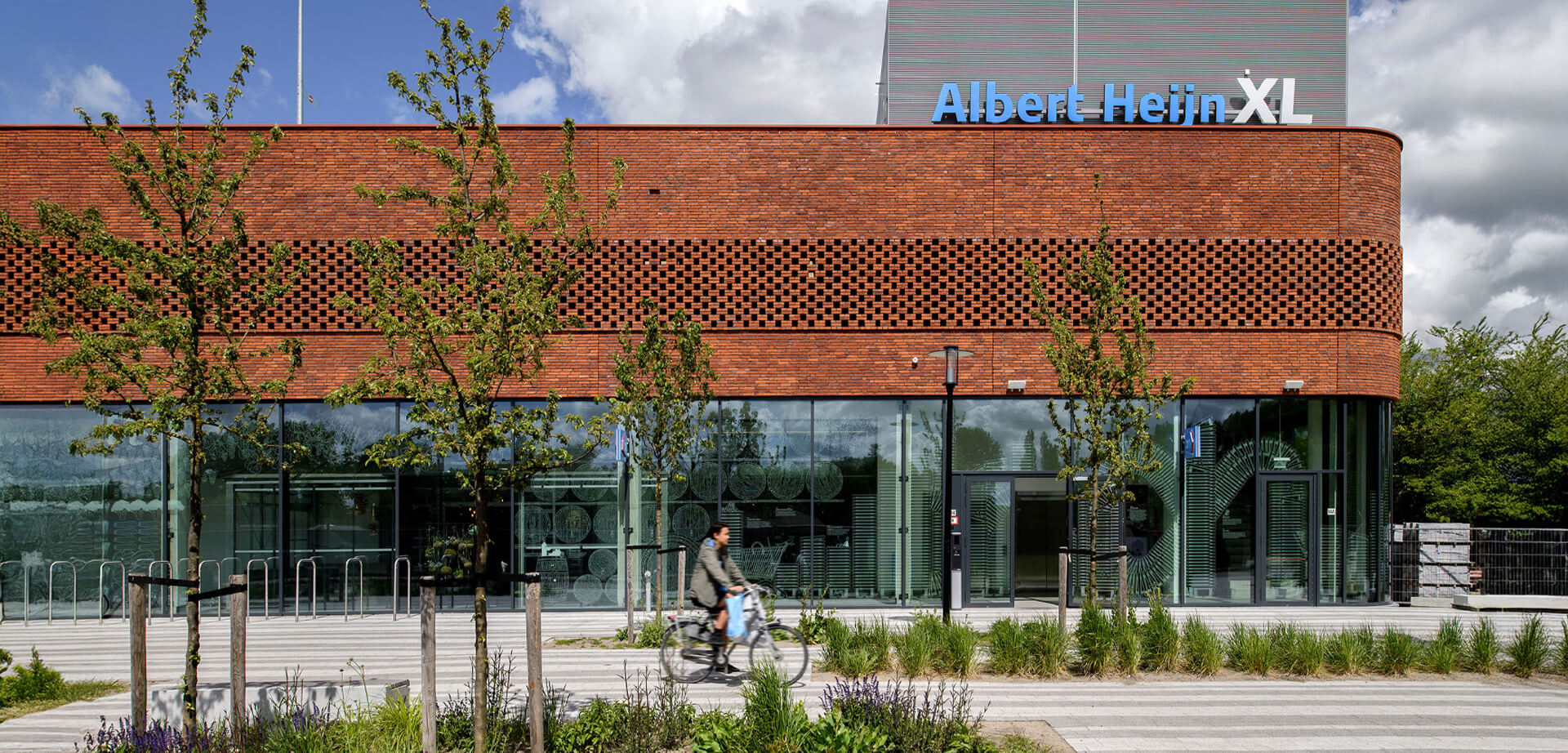
Customer Segmentation Analysis
Between 2027 and 2029, supermarket technology and format branding will increasingly respond to distinct customer segments defined by behaviour, mission, and value sensitivity rather than age alone. Time-poor urban shoppers prioritise speed, frictionless checkout, curated ranges, and predictive availability, driving conversion uplift and smaller but more frequent baskets. Family and value-led shoppers focus on clarity, trust, price confidence, and efficient navigation, responding strongly to simplified brand architecture and hyper-local ranging that increases basket size and loyalty. Experience-seeking customers, particularly in affluent and mixed-use locations, value food theatre, cafés, and discovery-led environments, delivering longer dwell time and incremental spend. Sustainability-conscious shoppers demand verifiable transparency rather than marketing claims, influencing brand trust and long-term ROIC. Across all segments, personalisation driven by data improves relevance and reduces promotional waste. Successful retailers design modular formats that flex to these segments by location and time of day, maximising sales uplift per square metre while improving capital efficiency. The result is a portfolio of flagship and local formats that balance emotional engagement with measurable commercial performance.

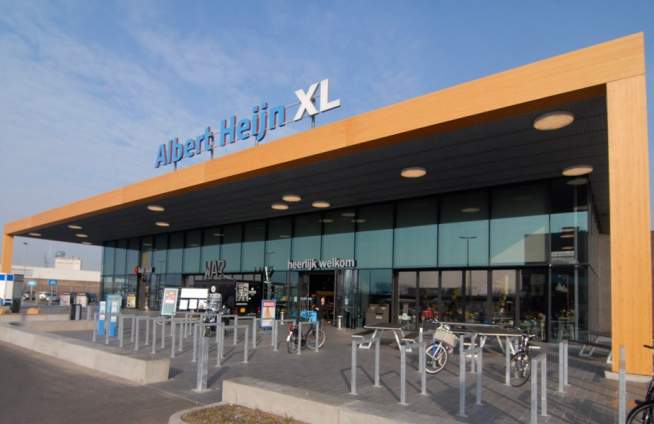
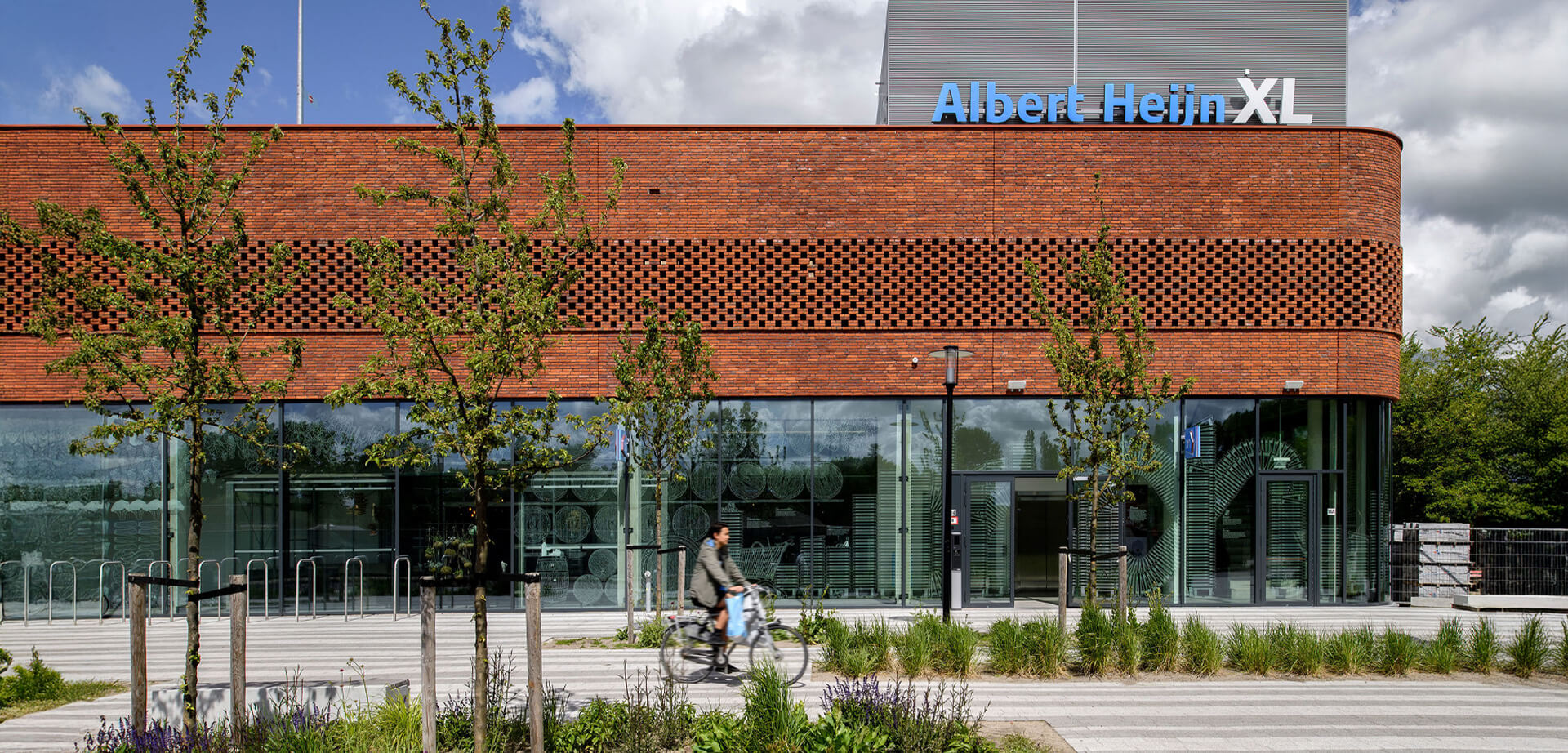
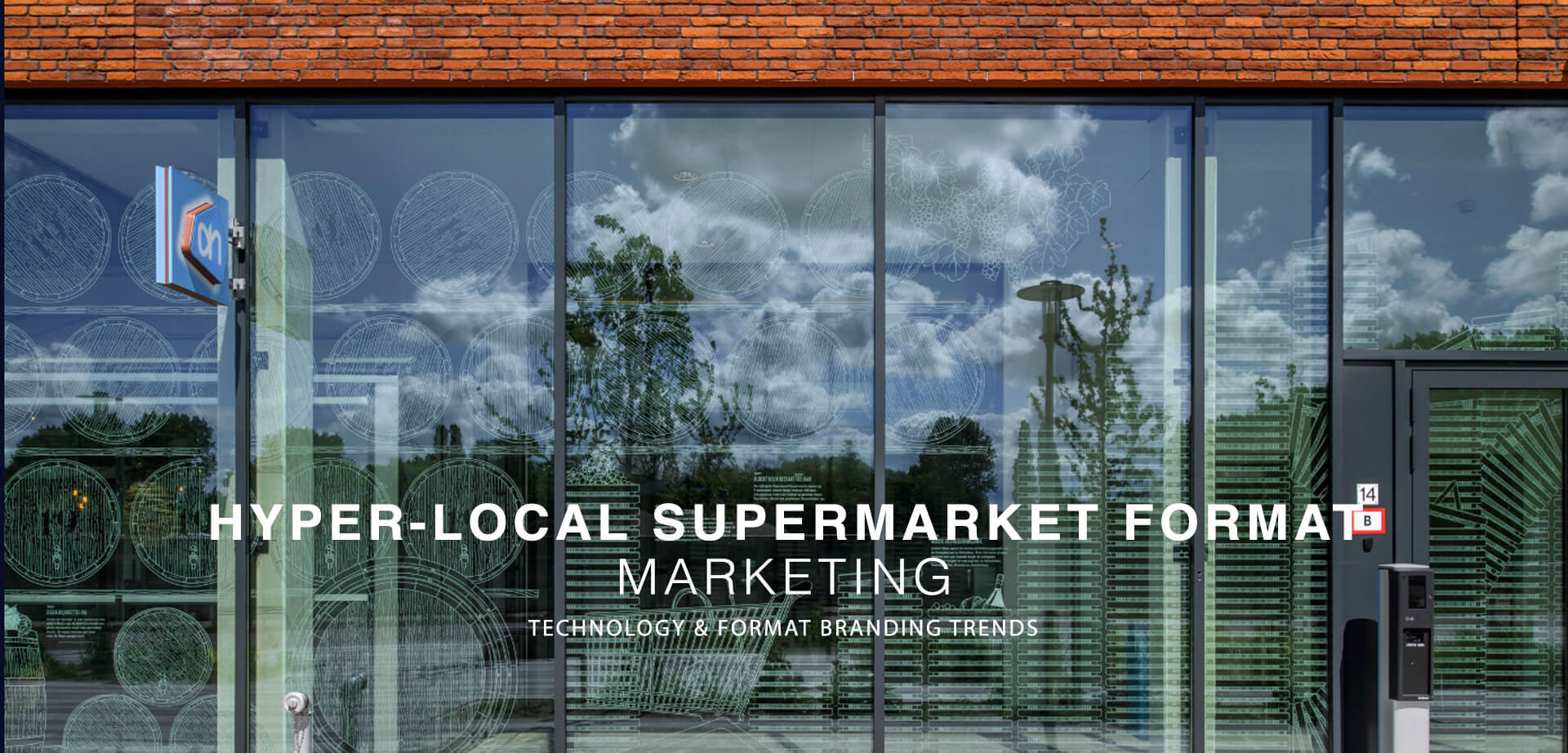
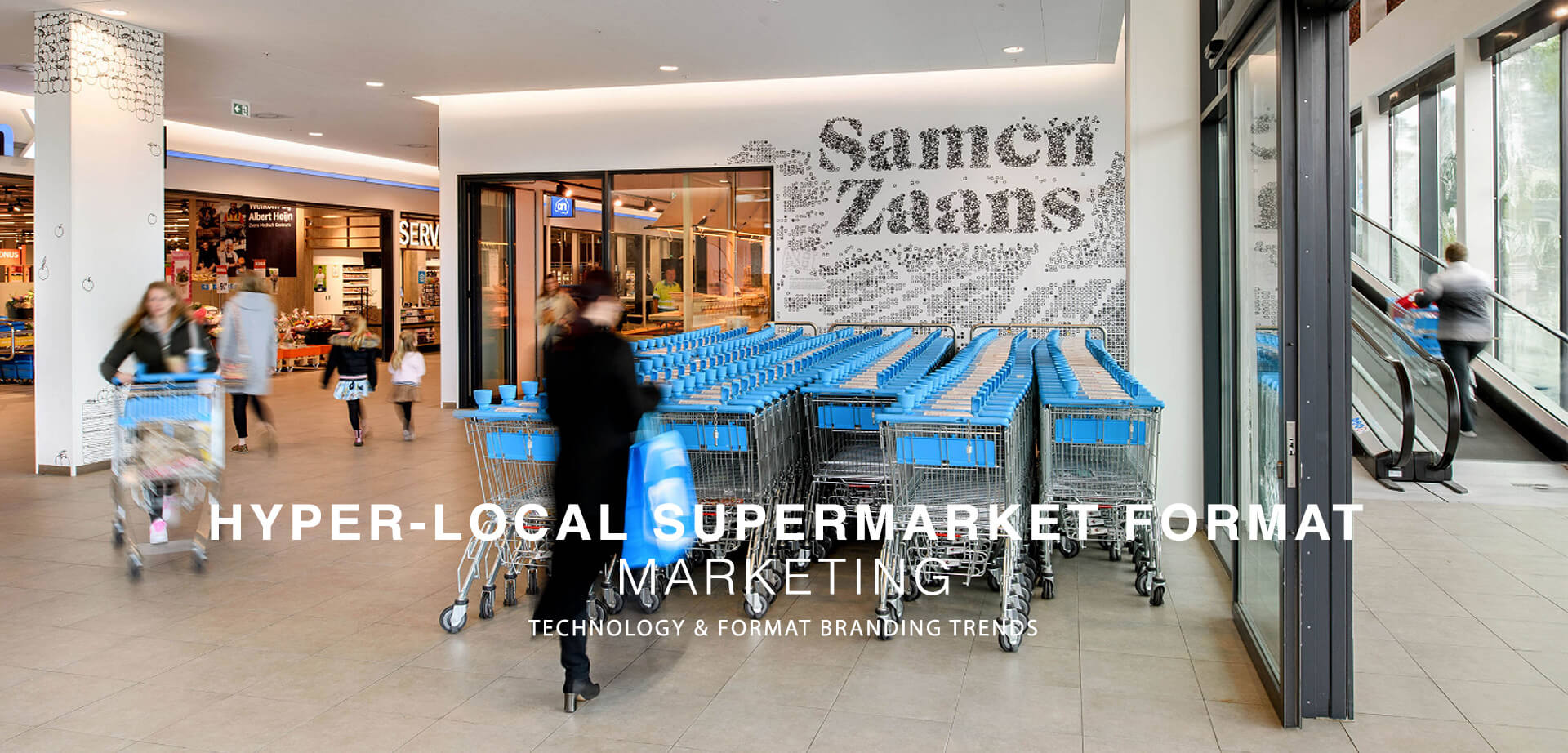
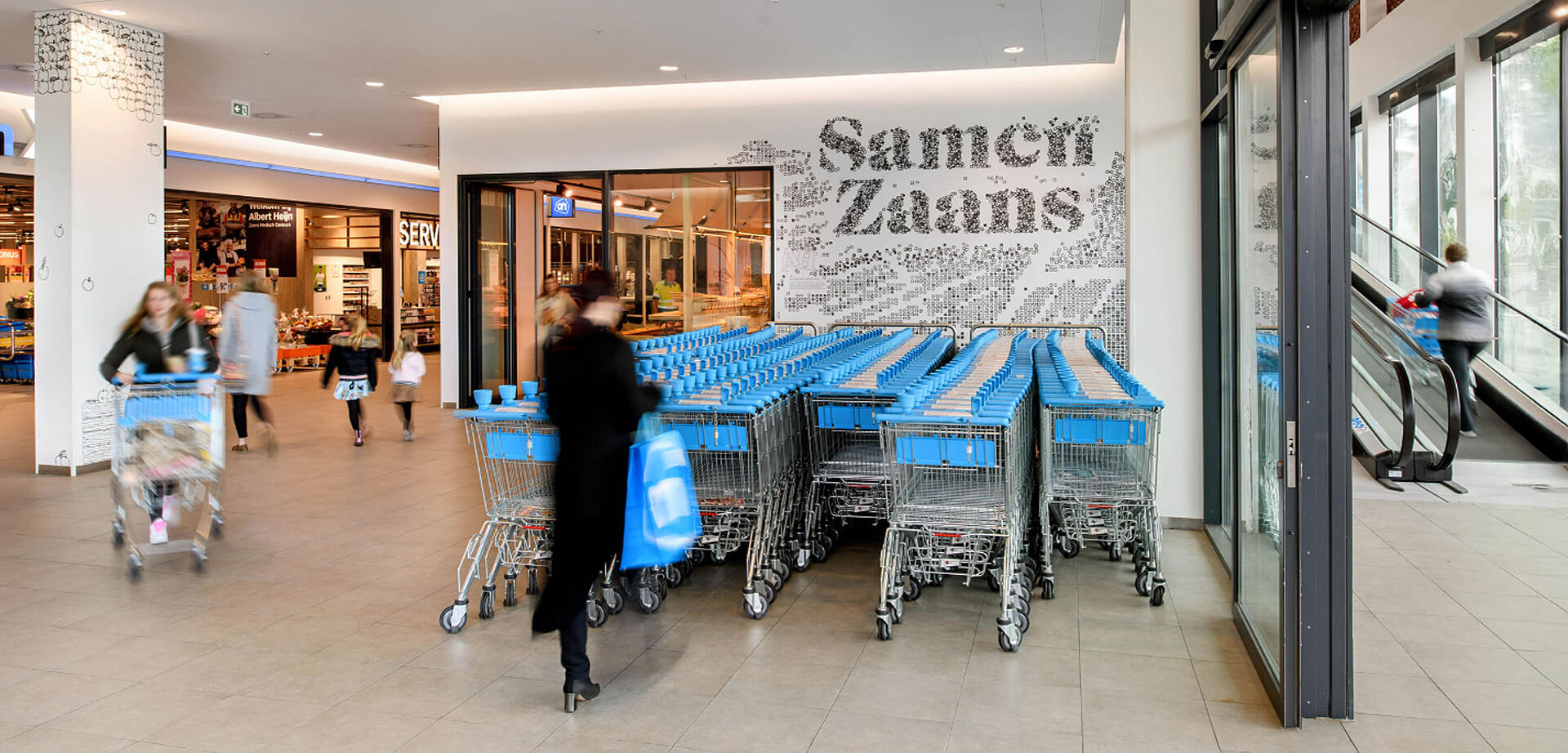
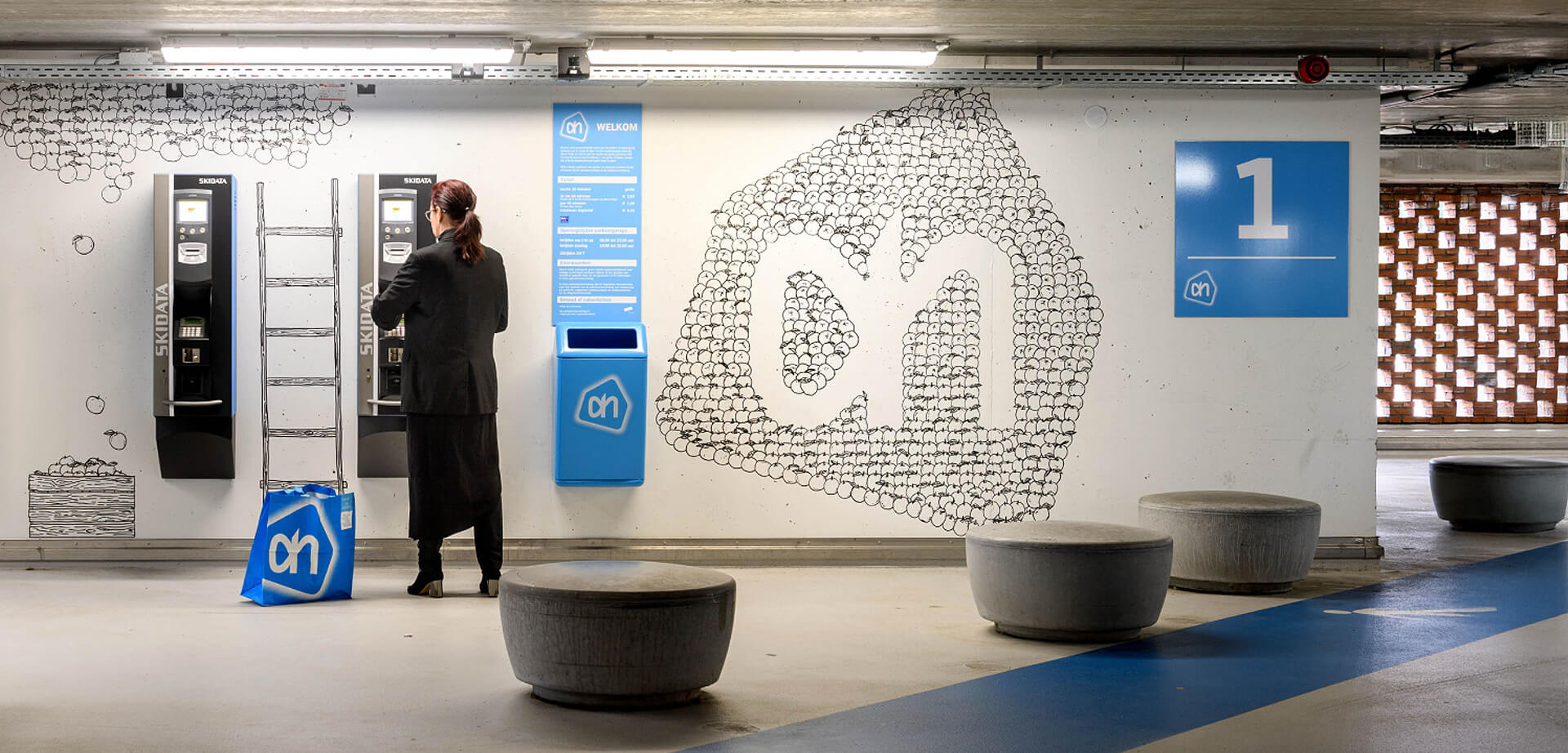
Below: Albert Heijn XL Zorgboulevard trolley collection point with hand-drawn illustrations show the quality products for which the supermarket is renowned.
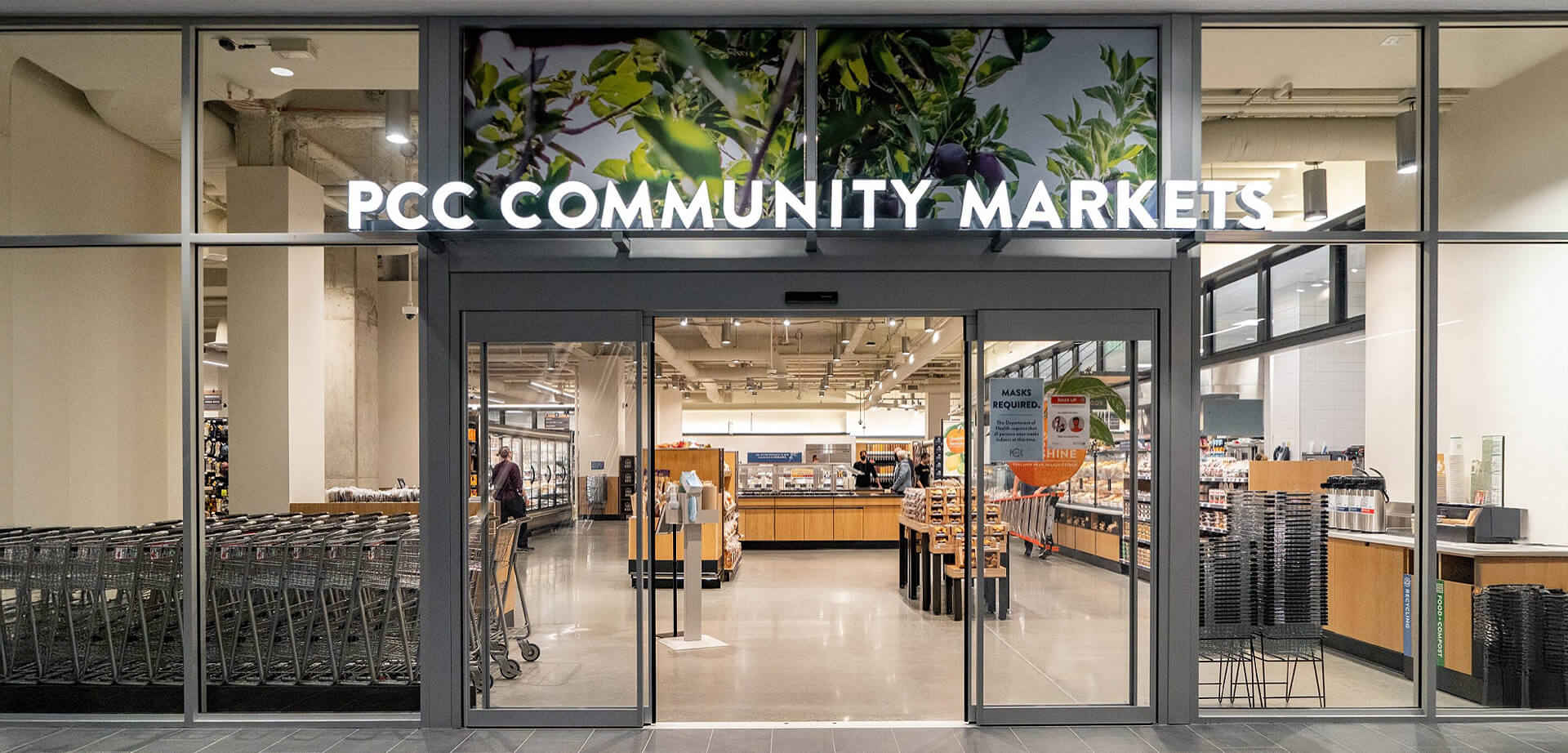
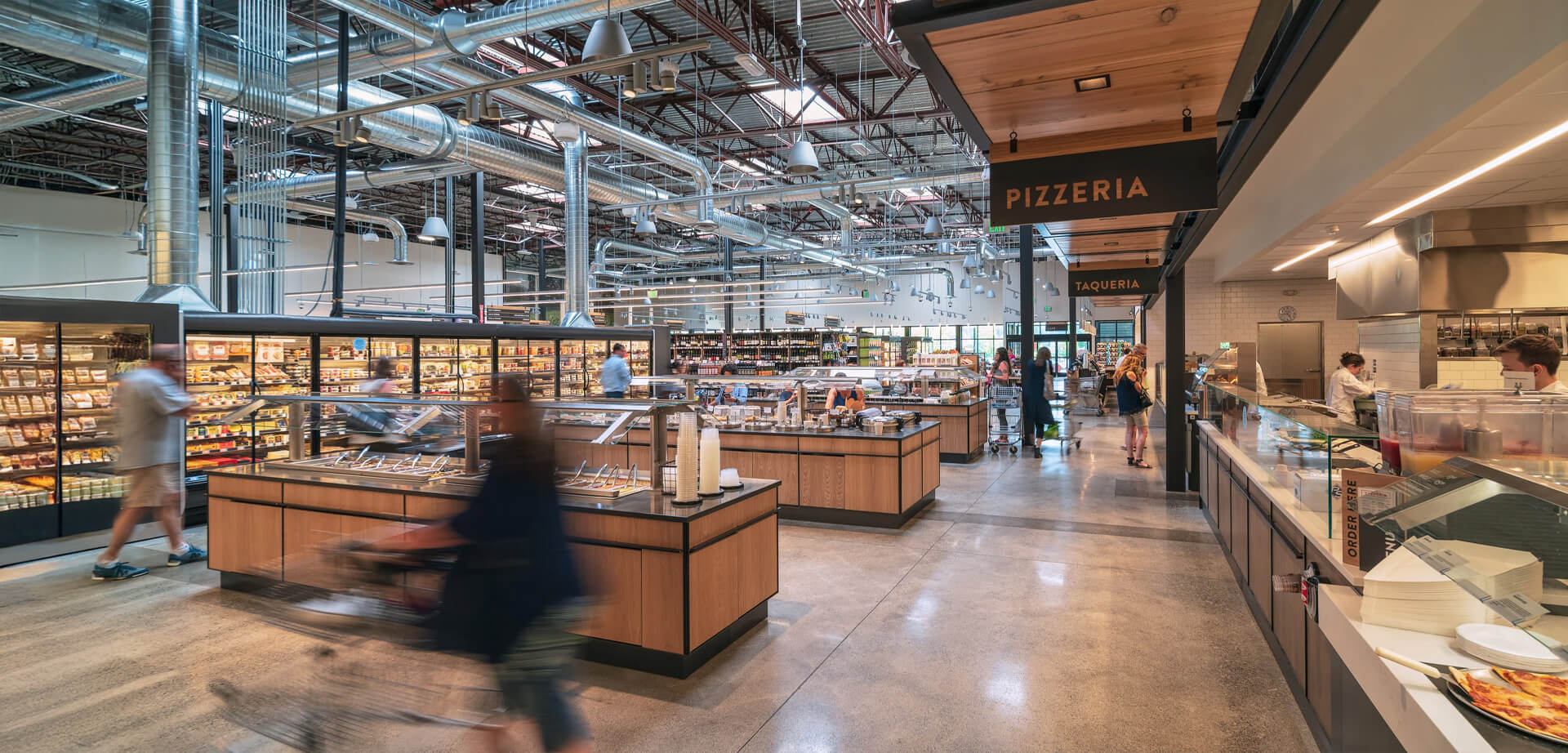
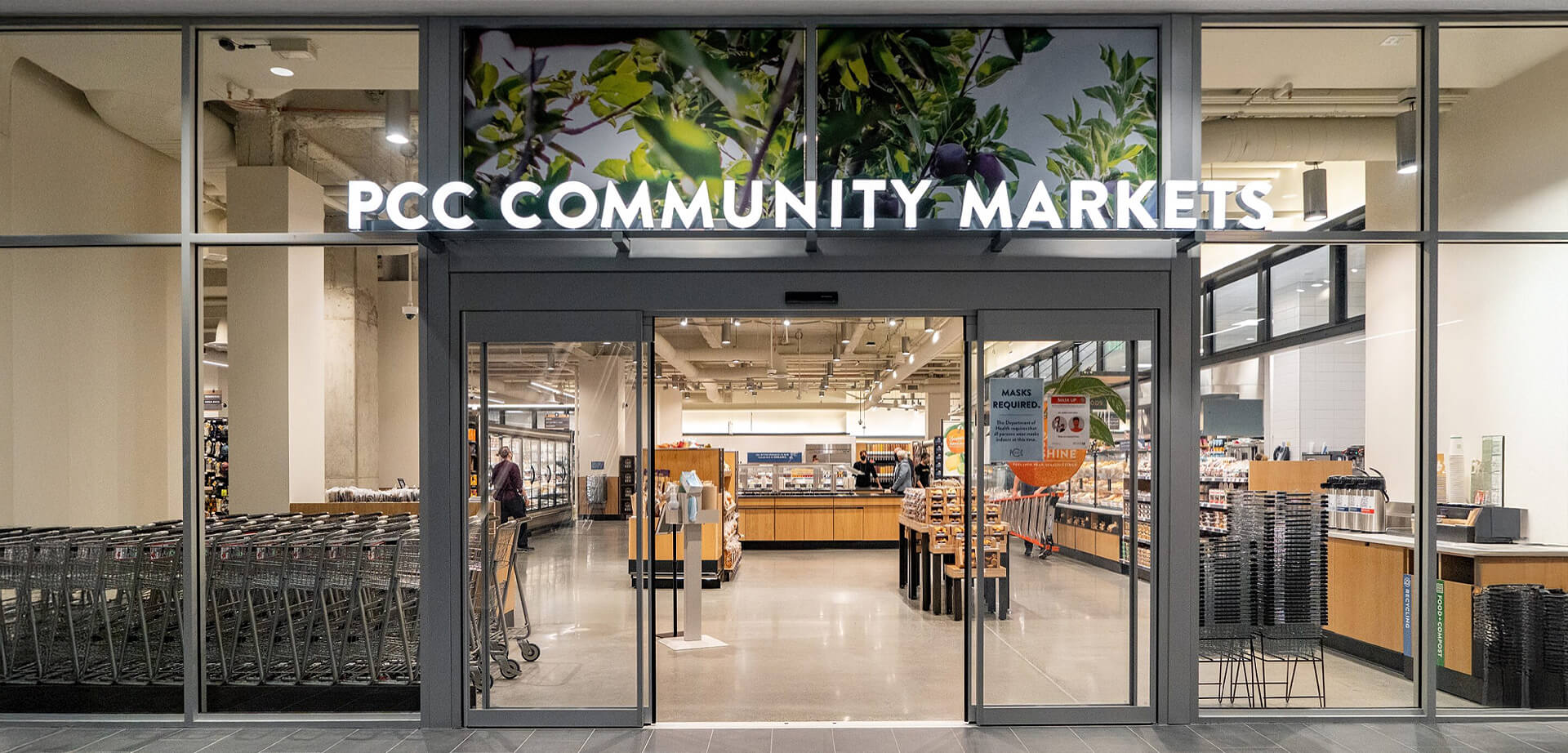
Below: PCC Community Markets is a community-owned food market chain primarily located in the Seattle, Washington area. These stores are known for their sustainable building practices and focus on local products. The store features an open industrial-style ceiling with exposed pipes and ductwork. There are dedicated sections for prepared foods, including a Pizzeria and Taqueria.
The Problem:
Many supermarket brands struggle with declining differentiation, inconsistent formats, and technology that adds complexity without delivering clear commercial returns. Flagship stores often fail to convert experience into measurable sales uplift, while standardised formats underperform in diverse local markets. As operating costs rise, retailers face pressure to improve basket size, conversion, and ROIC simultaneously, yet lack integrated brand systems that connect technology, space, and customer behaviour into a scalable, future-ready solution.
The Strategic Solution:
The strategic response lies in combining invisible technology with disciplined format branding. Predictive systems optimise availability and pricing, while hyper-local, modular store formats align brand expression to customer missions and locations. Experience-led environments are designed with commercial intent, increasing dwell time and incremental spend without operational inefficiency. Simplified brand architecture improves decision-making, basket clarity, and capital efficiency, ensuring flagship investment delivers sustained uplift, loyalty, and long-term return on invested capital
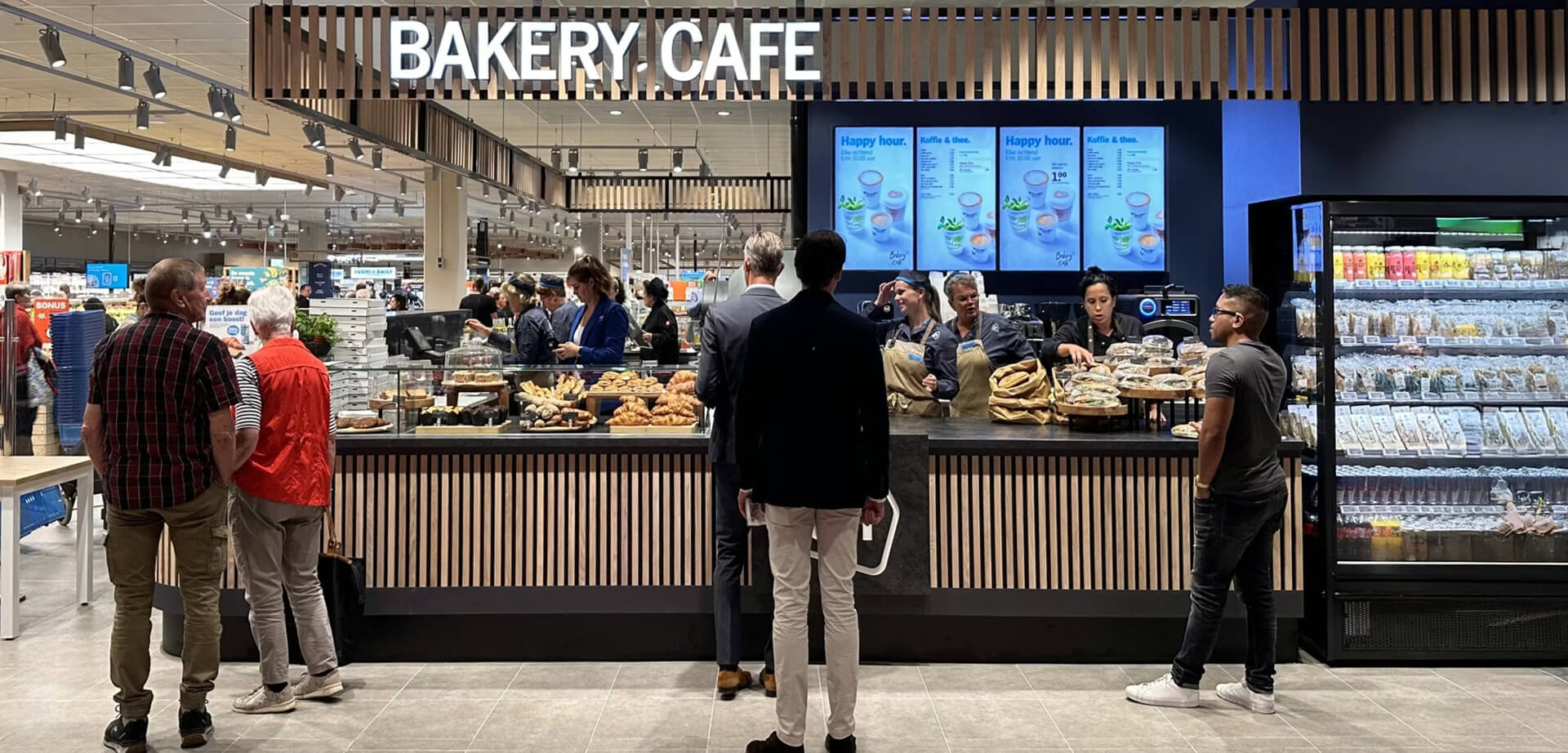
Albert Heijn XL in-store fresh bakery cafe design solution.
Hyper-Local Format Branding:
Stores adapt layout, range, messaging, and services to neighbourhood needs while remaining anchored to a strong master brand. Business Impact; Basket size: +5–10%, Loyalty uplift: +10–15% and ROIC: Improved performance per square metre. Brand Implication; Brand systems must be modular, flexible, and locally expressive.
Experience Over Efficiency:
Supermarkets integrate cafés, food halls, education kitchens, and community zones, borrowing from hospitality and lifestyle retail. Business Impact; Dwell time: +15–30%, Basket size: +8–15% and Incremental revenue from services and food-to-go. Brand Implication; Stores become destinations, strengthening emotional connection.
KPI Impact Summary:
Hyper-Local Formats:
Sales Uplift - High, Basket Size - High, ROIC Impact - High
Experience Design:
Sales Uplift - Medium–High, Basket Size - High, ROIC Impact - Medium
Strategic Implications for Retail Leaders:
1. Invest in brand systems, not one-off formats
2. Treat technology as invisible infrastructure
3. Design for adaptability and localisation
4. Measure success beyond cost efficiency alone
Conclusion:
From 2027–2029, competitive advantage in food retail will come from clarity, intelligence, and emotional relevance. Supermarkets that align technology, format branding, and experience design with clear commercial metrics will drive sustained growth, stronger loyalty, and superior returns on investment.
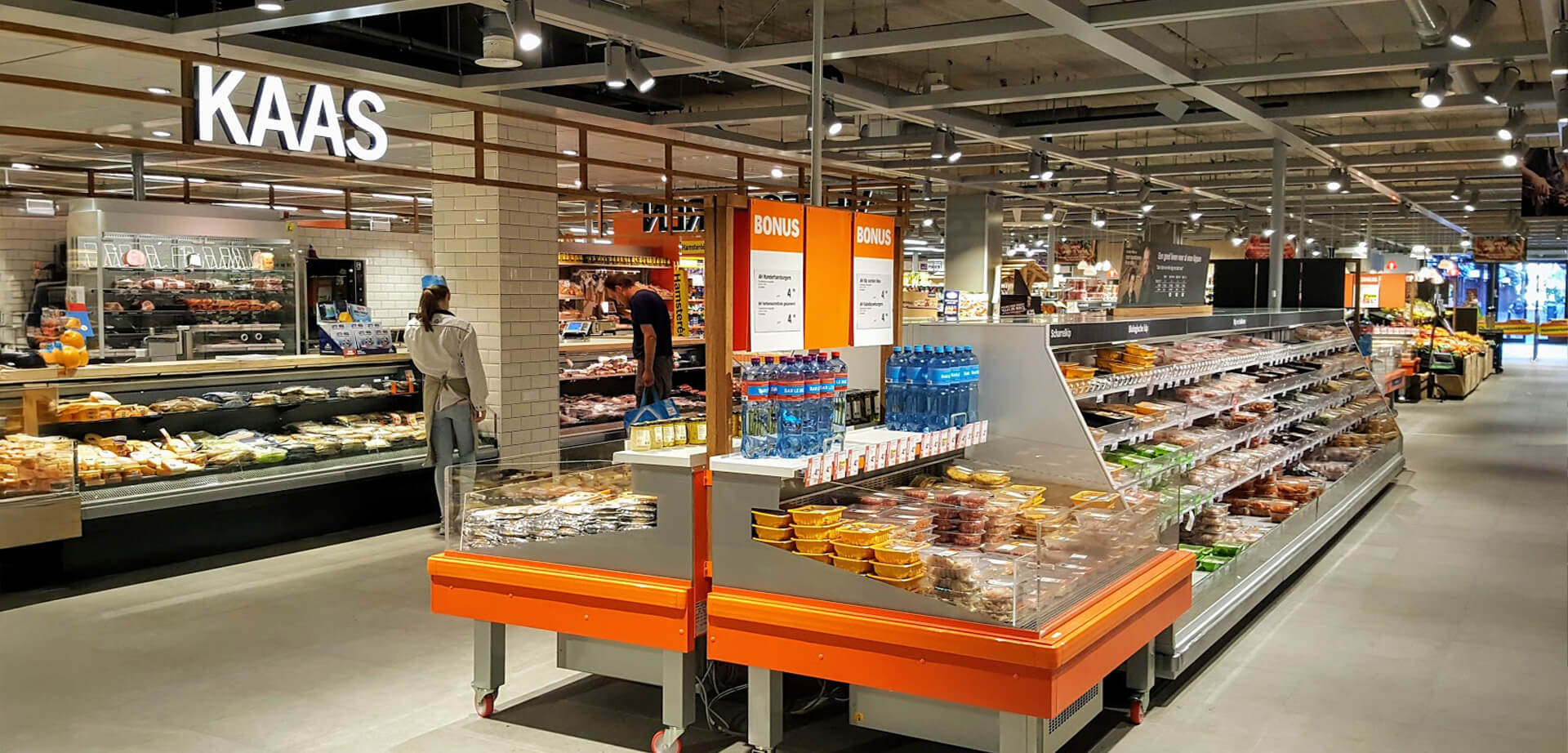
Below: PCC Community Markets is a food cooperative express checkouts. The store offers organic and responsibly sourced products, including meats, produce, and various grocery items.
Customer Experience & Phygital Trends:
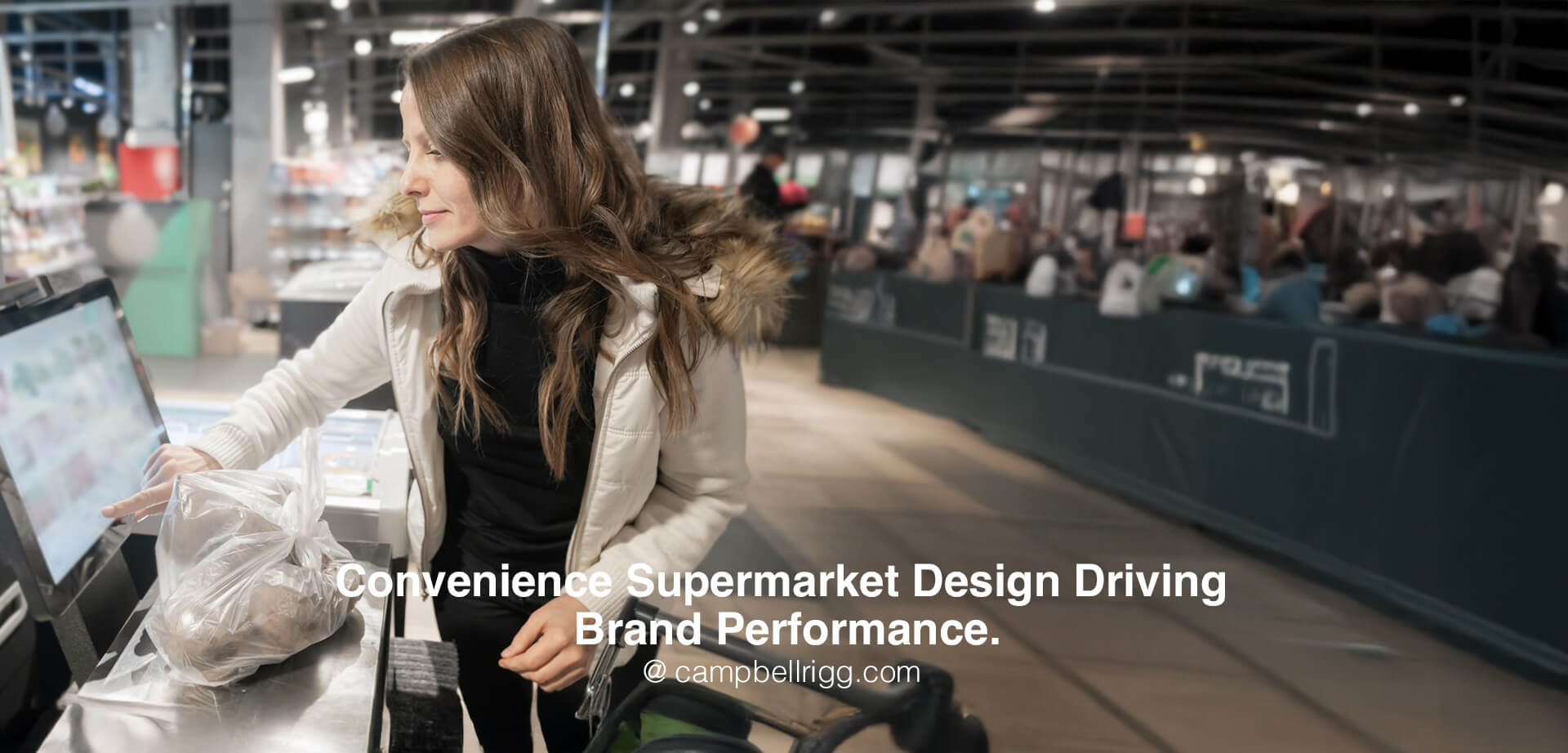
The phygital supermarket experience blends physical space with intelligent digital infrastructure. Personalisation occurs at shelf and journey level without intrusive screens, while frictionless checkout removes barriers at the moment of conversion. Physical environments prioritise emotion, clarity, and trust through design, materials, and storytelling, supported by data-driven relevance. The result is a seamless experience that feels human, intuitive, and locally relevant while driving higher basket value and repeat visits.

Our Four-Step Process:
1. Book a consultation call for free
2. Co-create a bespoke brief
3. We execute the creative work fast
4. You see sales, brand loyalty and market share uplift
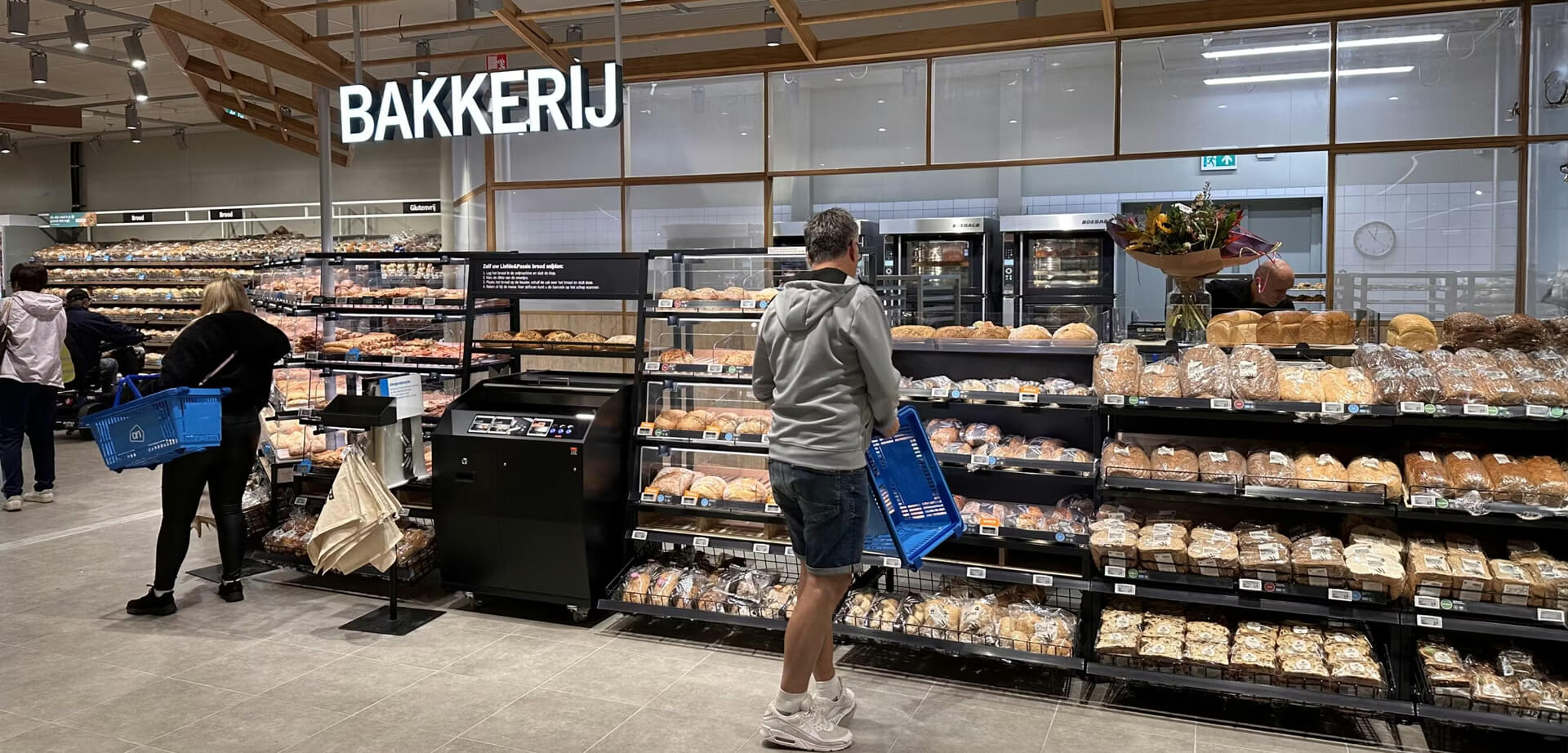
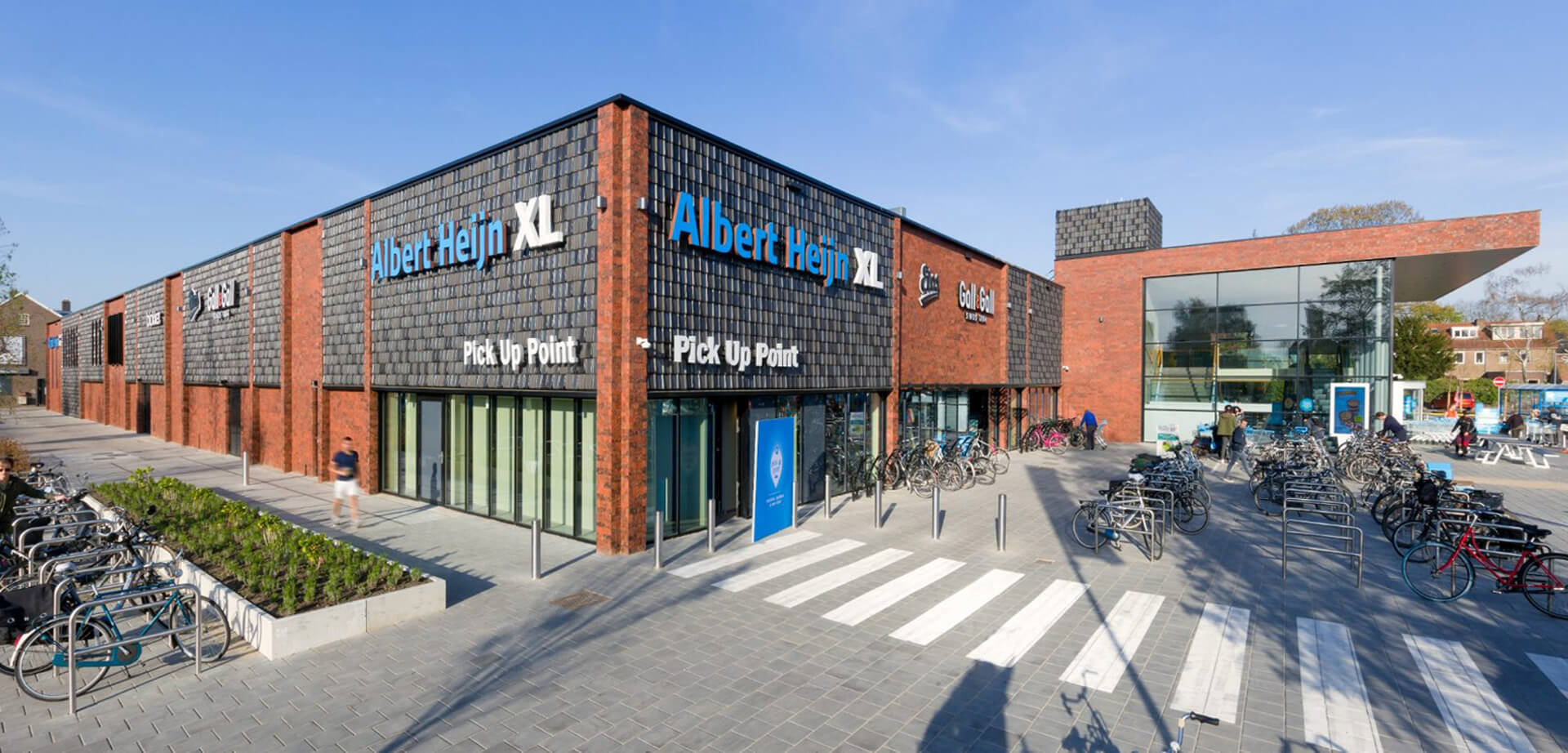
Above: The Albert Heijn XL format stores are designed as a "market square" with a heavy emphasis on fresh food and an immersive experience for shoppers. The bakery (labeled "Bakkerij" in Dutch) is a key feature, often offering a wide range of fresh bread and baked goods.
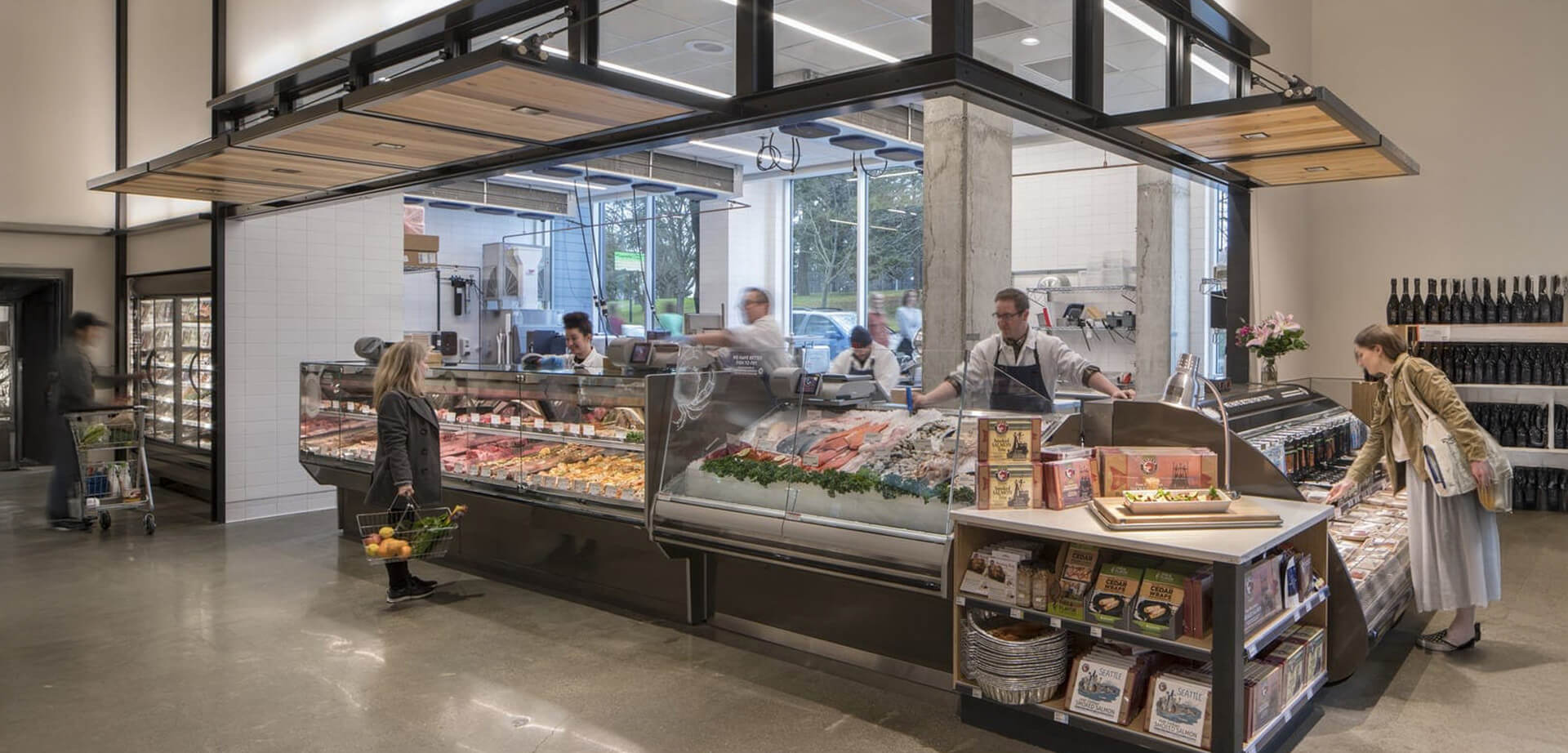
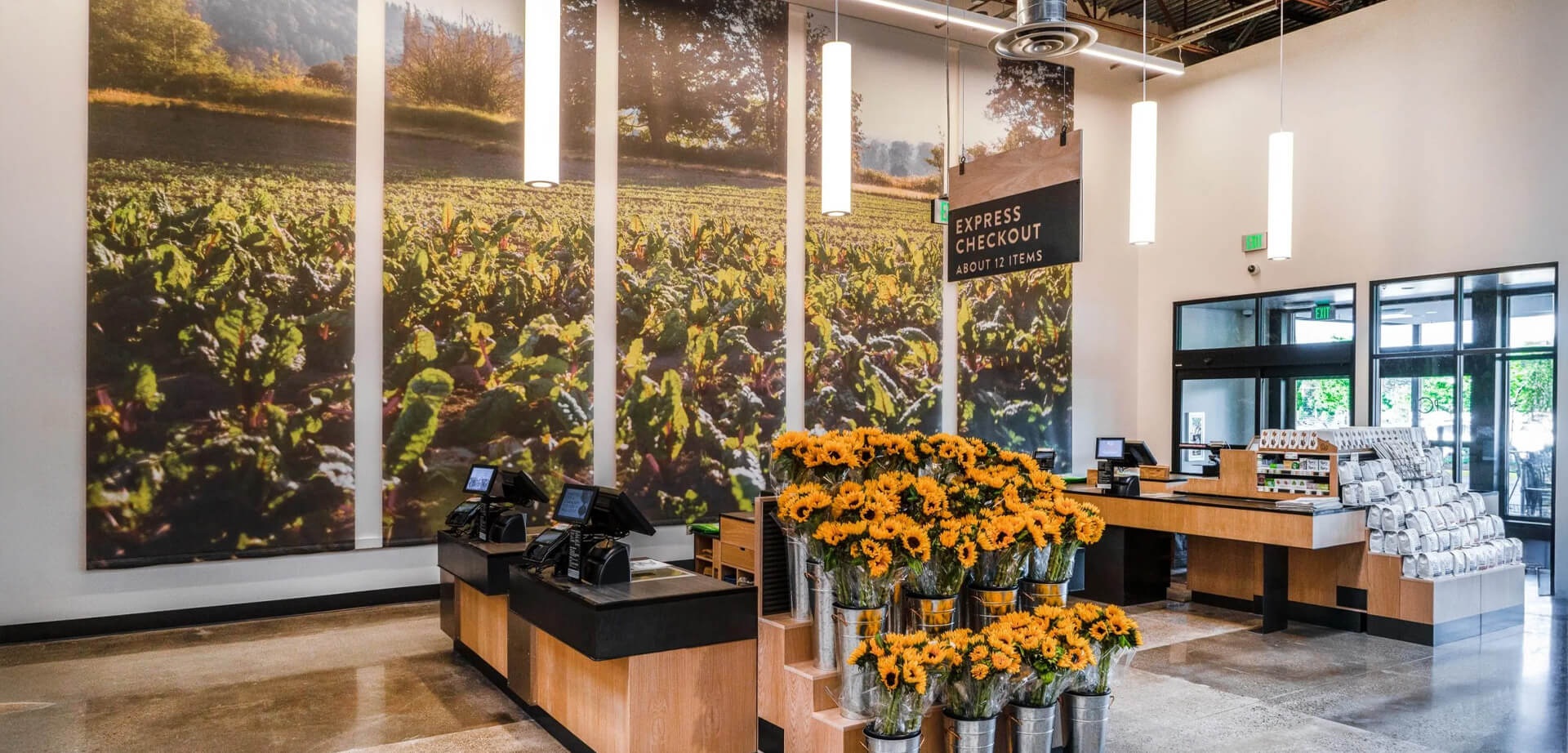
Above: PCC Community Markets, the store features a prominent, well-lit meat and seafood counter with staff assisting customers.
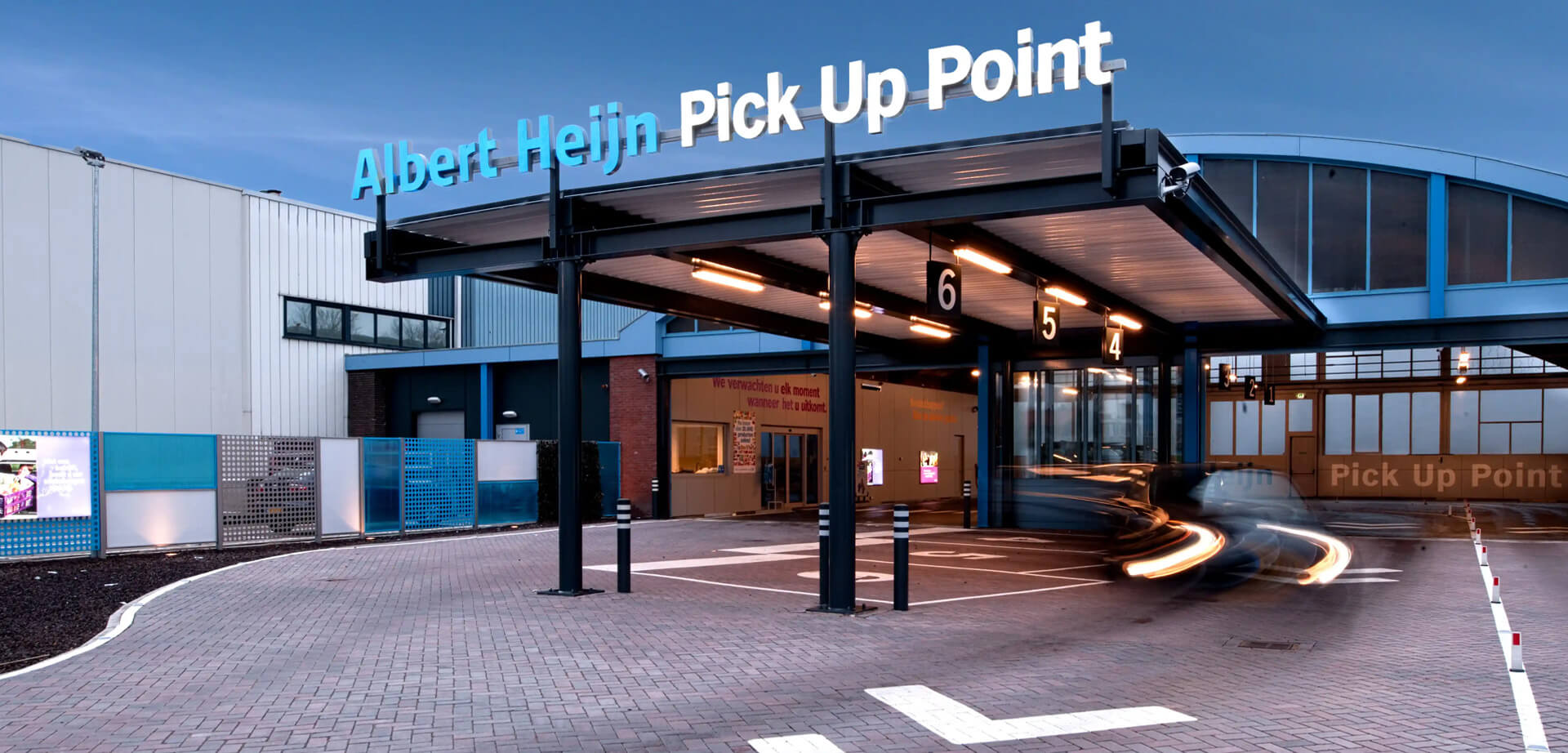
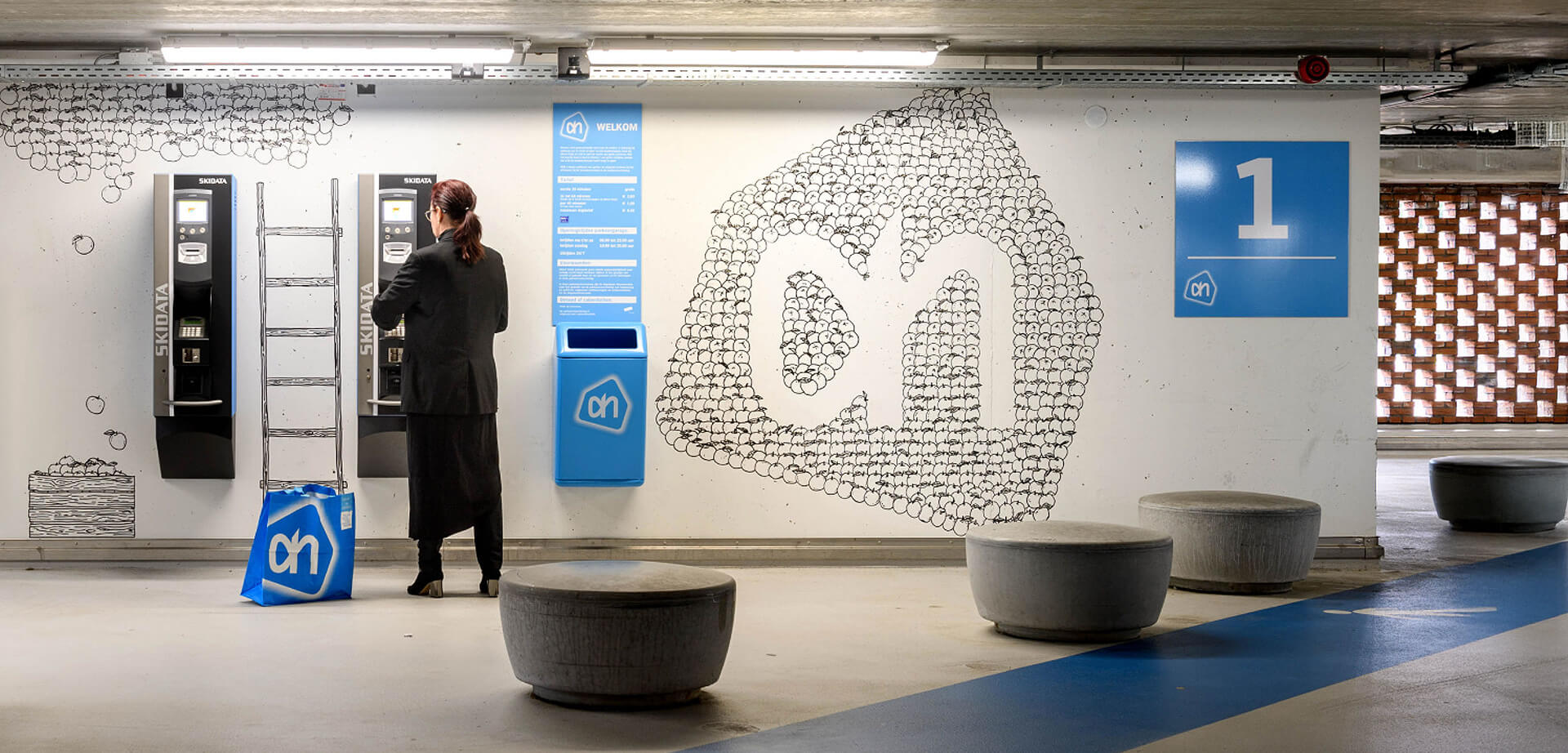
Storytelling in Albert Heijn XL car park payment point.
Schedule your consultation today and receive a free quote.
Cost-Effective Excellence:
Our pricing structure is highly competitive, offering exceptional value without compromising on quality or creativity.
Rapid Execution:
We move fast. From concept to implementation, our agile team ensures your project is delivered on time and to the highest standards.
Multidisciplinary Expertise:
Our team brings together seasoned brand strategists, architects, interior designers, and graphic designers, collaborating to create seamless, end-to-end brand environments.
Global Reach, Local Insight:
With successful projects delivered across Europe, the Middle East, and Asia, we combine international experience with local market understanding.
Scalable Project Delivery:
Whether it's a flagship hypermarket store, an metropolitan city supermarket or convenience store, we manage and execute projects of all sizes, efficiently and effectively.
Proven Track Record:
Our designs evolve branch networks from purely transactional spaces into experiential, relationship-focused brand environments, enhancing engagement, elevating customer experience, and driving tangible business results.
Full-Service Creative Agency:
From rebranding and marketing campaigns to spatial design and rollout, we provide an integrated service tailored to your goals.