News and Views
Flagship & Standard Store Design and Branding for Technology Companies.






Flagship & Standard Telecom Store Design: Building Scalable Retail Networks
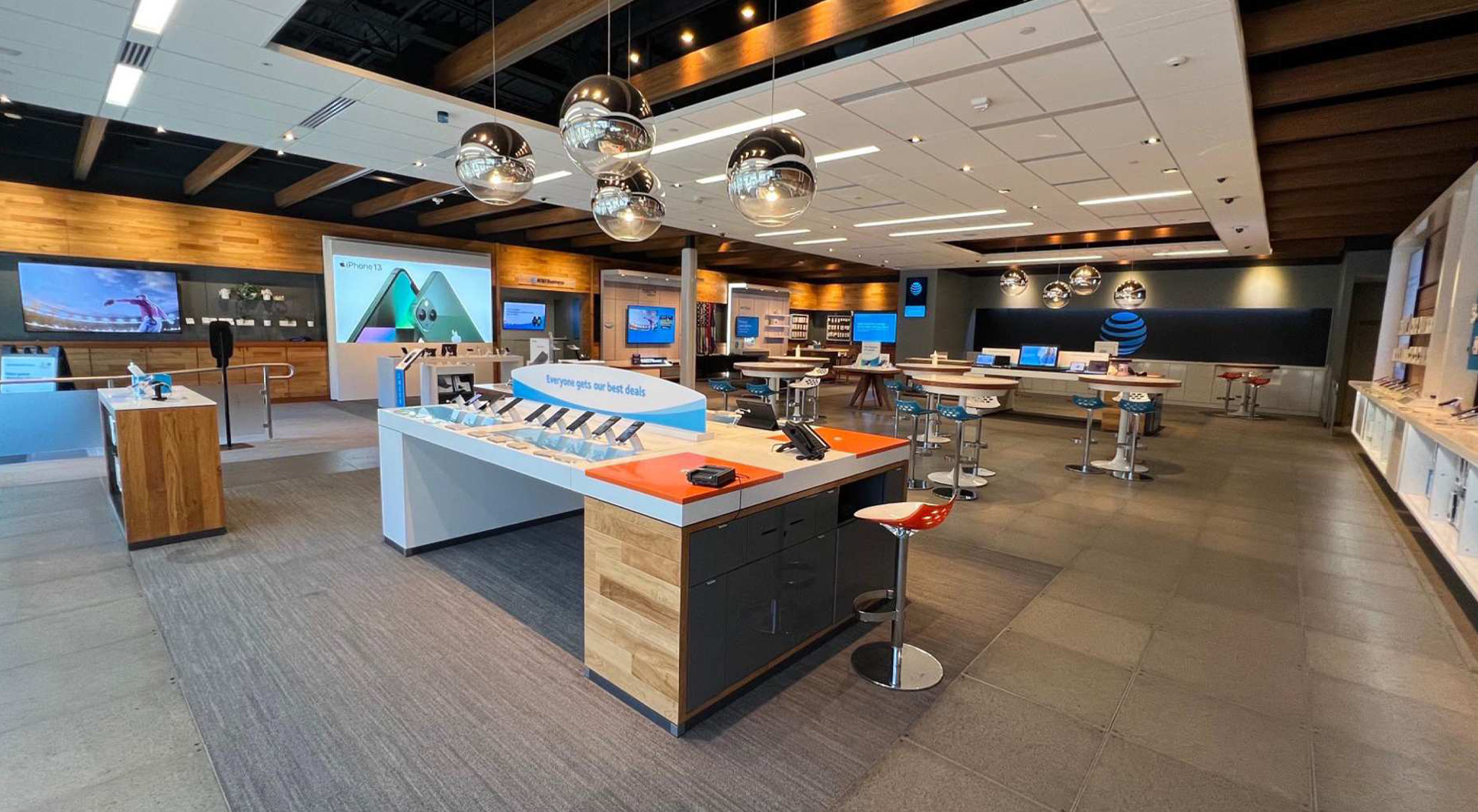
A successful telecom retail network needs more than one store format. Flagship telecom stores establish brand leadership, demonstrate innovation and create destination experiences, while standard telecom stores extend the proposition into locations where accessibility, service, conversion and commercial efficiency are paramount.
The challenge is not deciding whether a brand needs a flagship or standard store. Experienced management teams already understand the different roles these formats play. The strategic challenge is determining how they should work together as one scalable retail system, how the brand experience should translate between formats, and how investment in telecom store design can generate measurable commercial value across the network.
CampbellRigg combines brand strategy, telecom store design, retail planning, customer journey design, architecture, interior design, visual merchandising, communications and digital integration to help telecom and technology brands develop retail environments that are distinctive, commercially effective and capable of scaling.
The objective is not simply to create a successful flagship or an efficient standard store. It is to create a coherent retail network in which flagship innovation, standard-store performance and scalable implementation reinforce one another.
The Strategic Relationship Between Flagship and Standard Stores
A flagship has a different role from a standard network location.
The flagship can establish the ambition for the brand. It can introduce new products and services, demonstrate emerging technology, test customer journeys, create destination experiences and provide a physical expression of the brand's positioning.
The standard store has a different commercial responsibility. It must translate that proposition into an environment that works efficiently within a defined footprint, investment level, location and customer mission.
The two formats should therefore be developed together rather than as unrelated design projects.
A flagship concept that cannot be translated economically into standard locations may generate brand impact but limited value for the wider network. Equally, a standard format without a strong flagship proposition may deliver operational efficiency without establishing sufficient differentiation.
Flagship & standard telecom store design should connect these two requirements.
The flagship establishes the experience. The standard format makes that experience scalable.
Designing the Flagship as a Strategic Asset
The strongest flagship telecom stores do more than display smartphones, SIMs, tariffs and accessories.
They create environments where customers can explore products, understand services, experience connected technology and engage with the broader brand proposition.
This requires a different approach to telecom store design.
Rather than maximising product density, the environment can be structured around discovery, demonstration, consultation, experience and relationship-building.
The flagship as a strategic test bed
A flagship can provide space for technology demonstrations, connected-lifestyle environments, expert consultation, launches, events and community activity. It can also demonstrate services that are difficult to communicate through conventional merchandising.
The flagship therefore becomes a physical expression of the brand's ambition.
It can also become a test environment for the wider retail network.
New merchandising principles, customer journeys, service models, digital tools and experience zones can be introduced in a high-profile environment. Those that demonstrate genuine customer or commercial value can then be adapted for standard stores.
This creates a more strategic relationship between flagship investment and network development.
The flagship is not simply the biggest store.
It is an opportunity to establish, test and refine the principles that can subsequently influence the wider retail estate.
Standard Telecom Store Design: Making the Proposition Scalable
Standard telecom store design has a different objective.
The standard format must translate the brand proposition into a repeatable environment that works across multiple locations, footprints and commercial conditions.
Customers need to understand the proposition quickly. Products and services must be easy to discover. Consultation areas need to support meaningful conversations. Staff require an efficient working environment. The layout must make productive use of available space.
A standard store does not need to reproduce every feature of the flagship.
Instead, it should capture the essential brand experience and express it through a format appropriate to its commercial role.
A scalable standard format should establish clear principles for:
- customer journey and wayfinding;
- product and service zoning;
- visual identity;
- fixtures and merchandising;
- consultation areas;
- digital integration;
- materials and finishes;
- lighting and environmental graphics;
- staff interaction;
- signage and communications; and
- operational flexibility.
This provides a common framework without forcing every location into an identical physical solution.
Flagship vs Standard: Different Roles, One Brand
The difference between flagship and standard stores is not simply size or investment.
A flagship prioritises brand leadership, innovation, experience, discovery and destination appeal.
A standard store prioritises accessibility, service, conversion, operational efficiency and repeatable implementation.
Both should nevertheless share the same strategic foundations.
Brand positioning, visual identity, customer-experience principles, service proposition and core communications should remain recognisable across the network.
What changes is the way those principles are expressed.
A flagship may include larger demonstration areas, lifestyle environments, event capability and premium consultation. A standard store may require a more compact journey centred on product discovery, service and assisted selling.
An airport or shopping-centre location may require still another response, prioritising visibility, convenience and rapid customer interaction.
The objective is therefore brand consistency without design uniformity.
International Telecom & Technology Benchmarks
The following examples illustrate different approaches to flagship and technology retail. They are external design benchmarks rather than CampbellRigg projects.
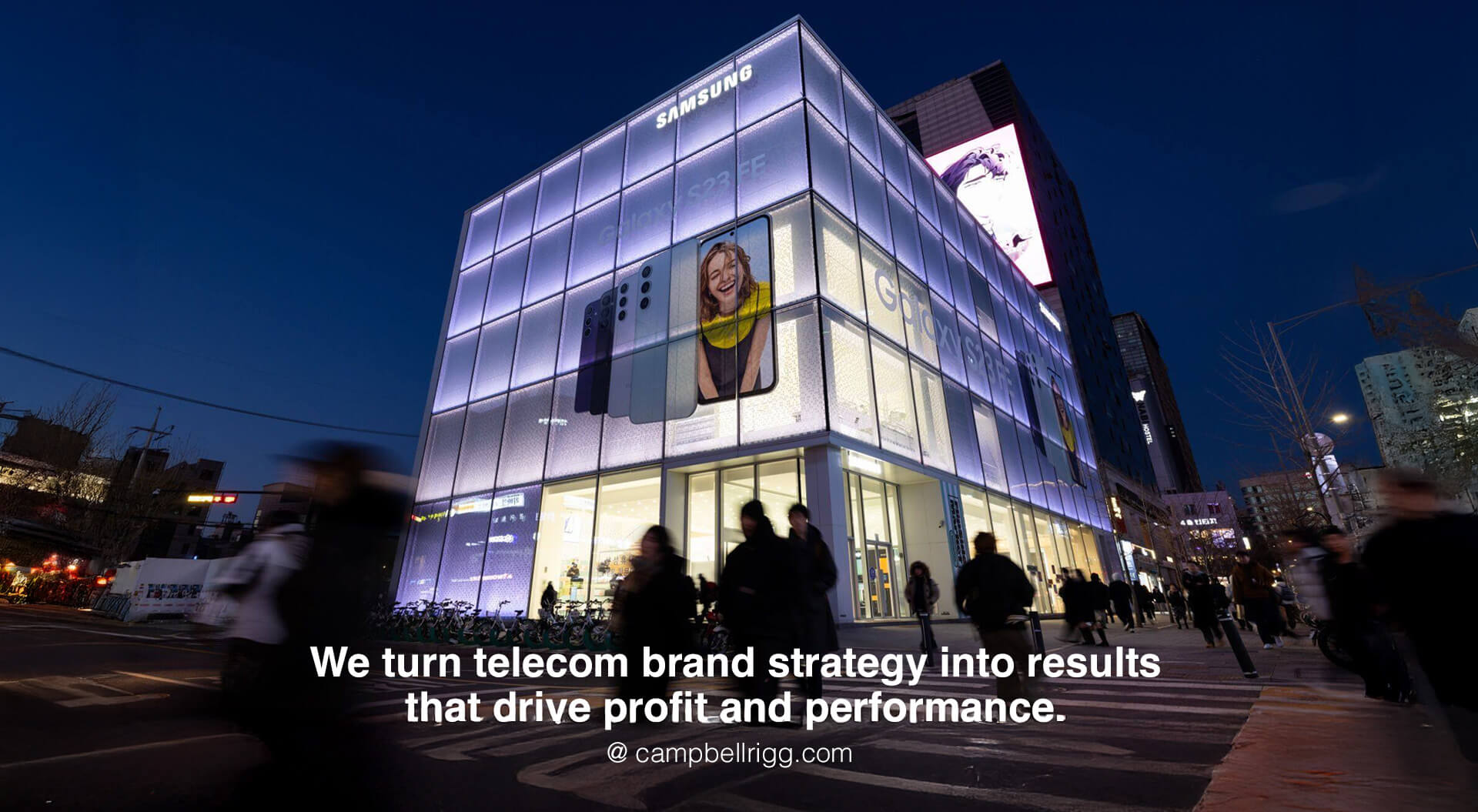
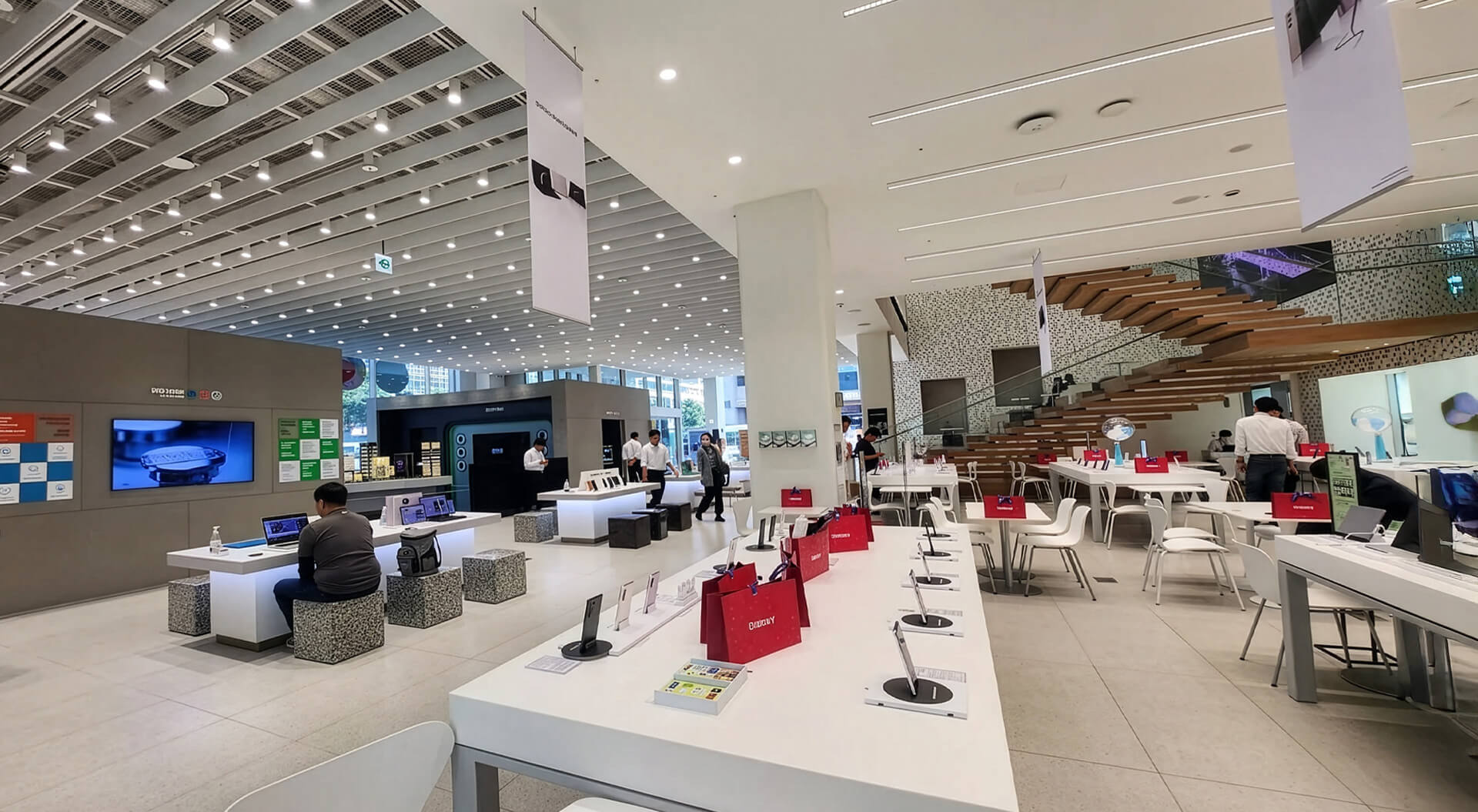
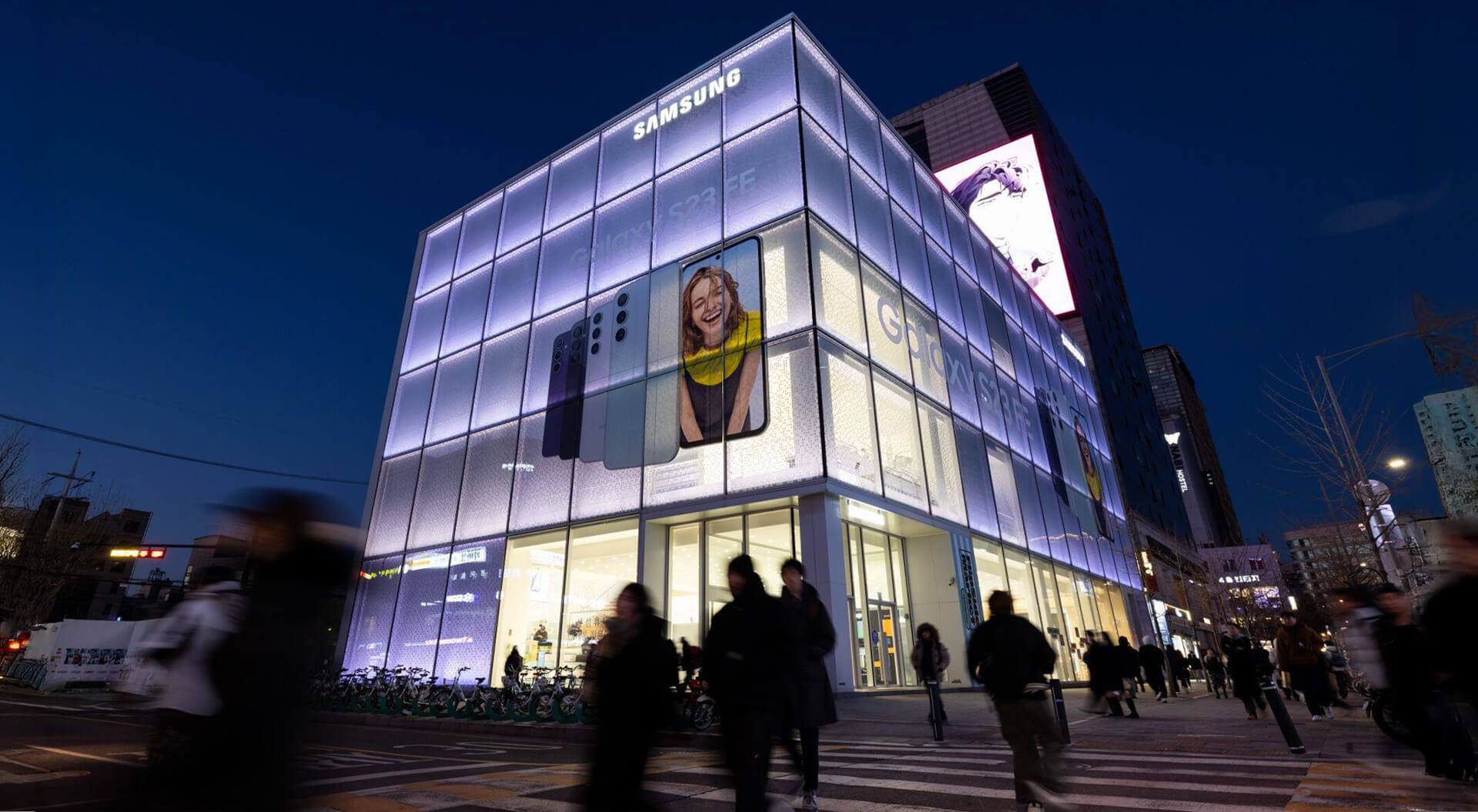
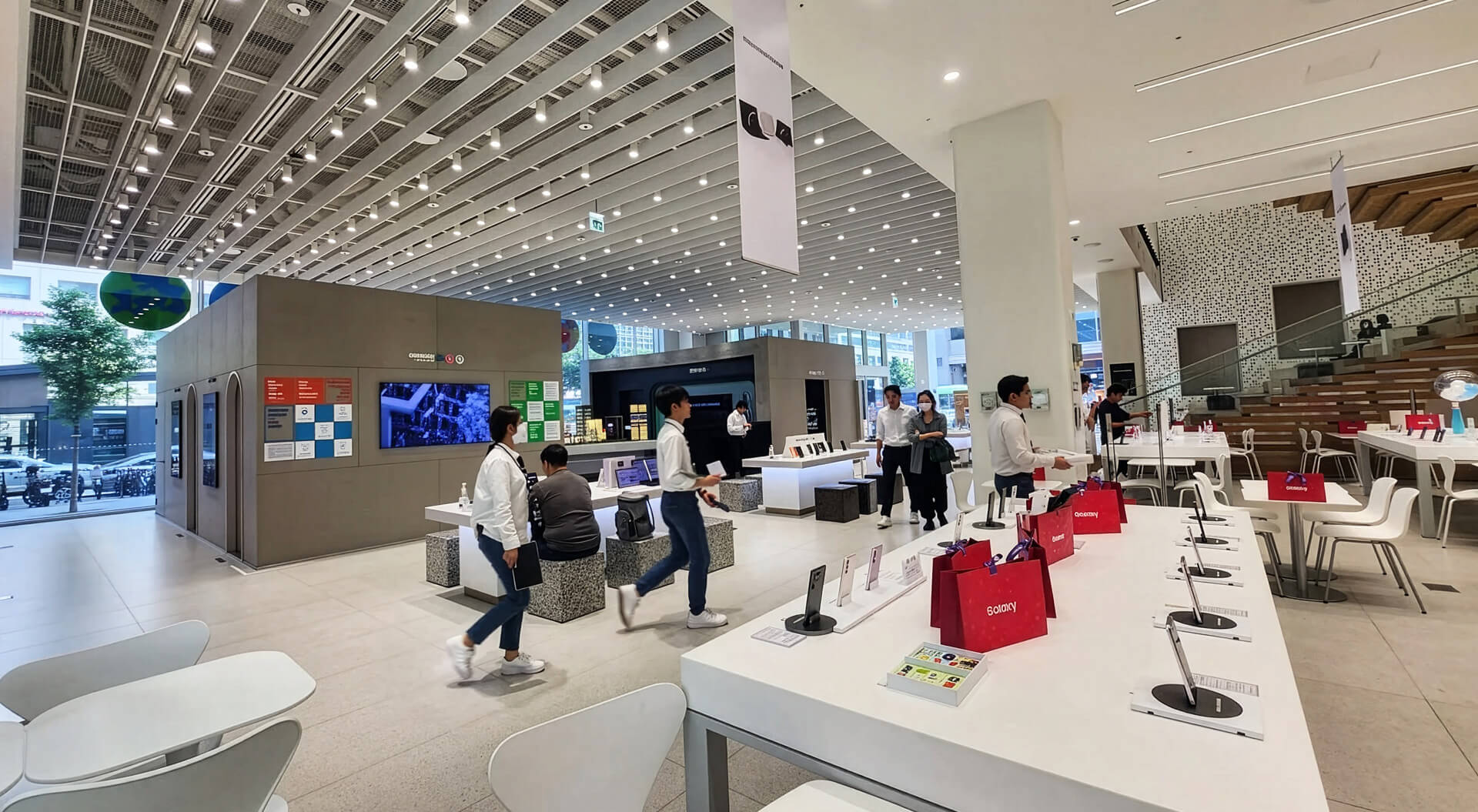
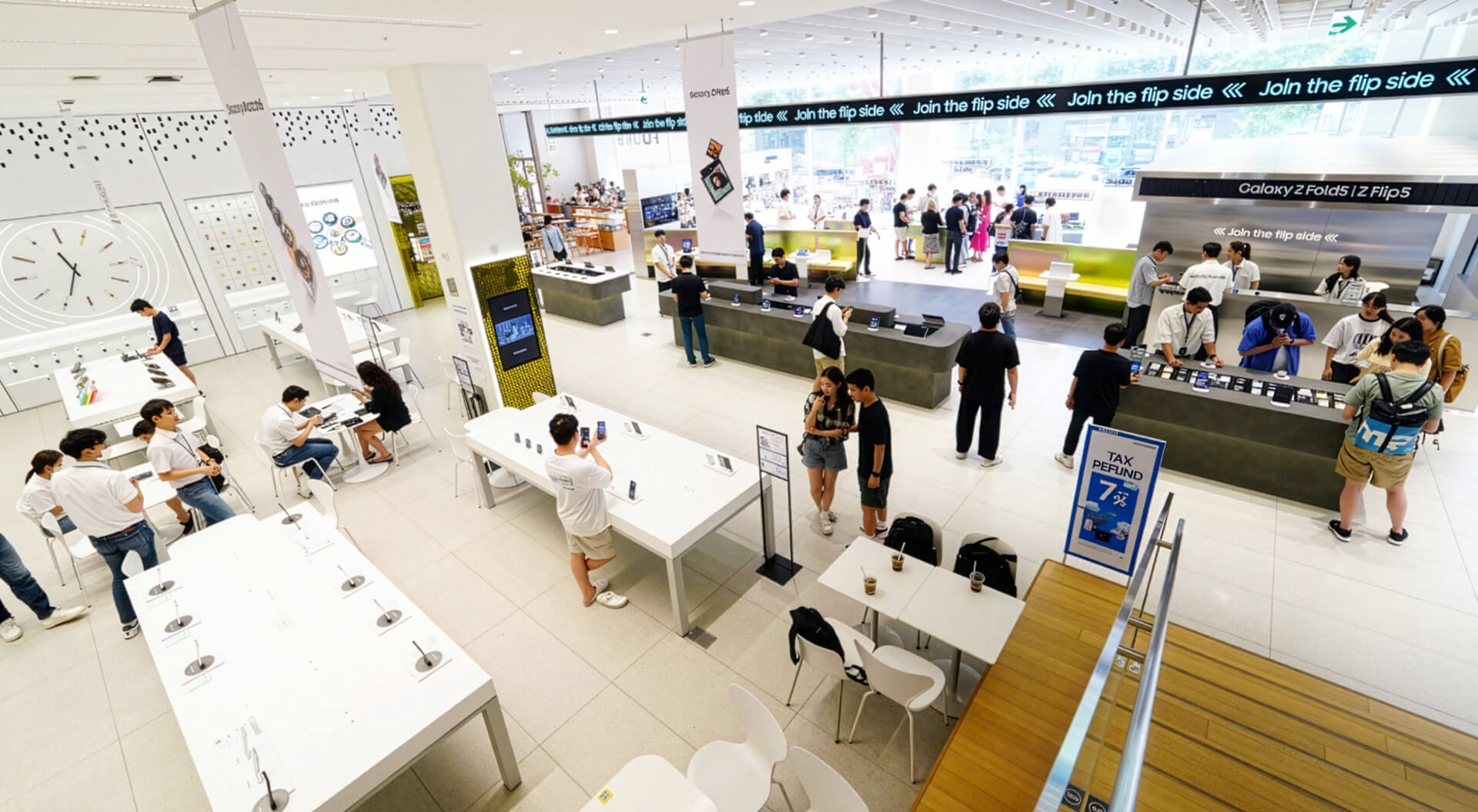
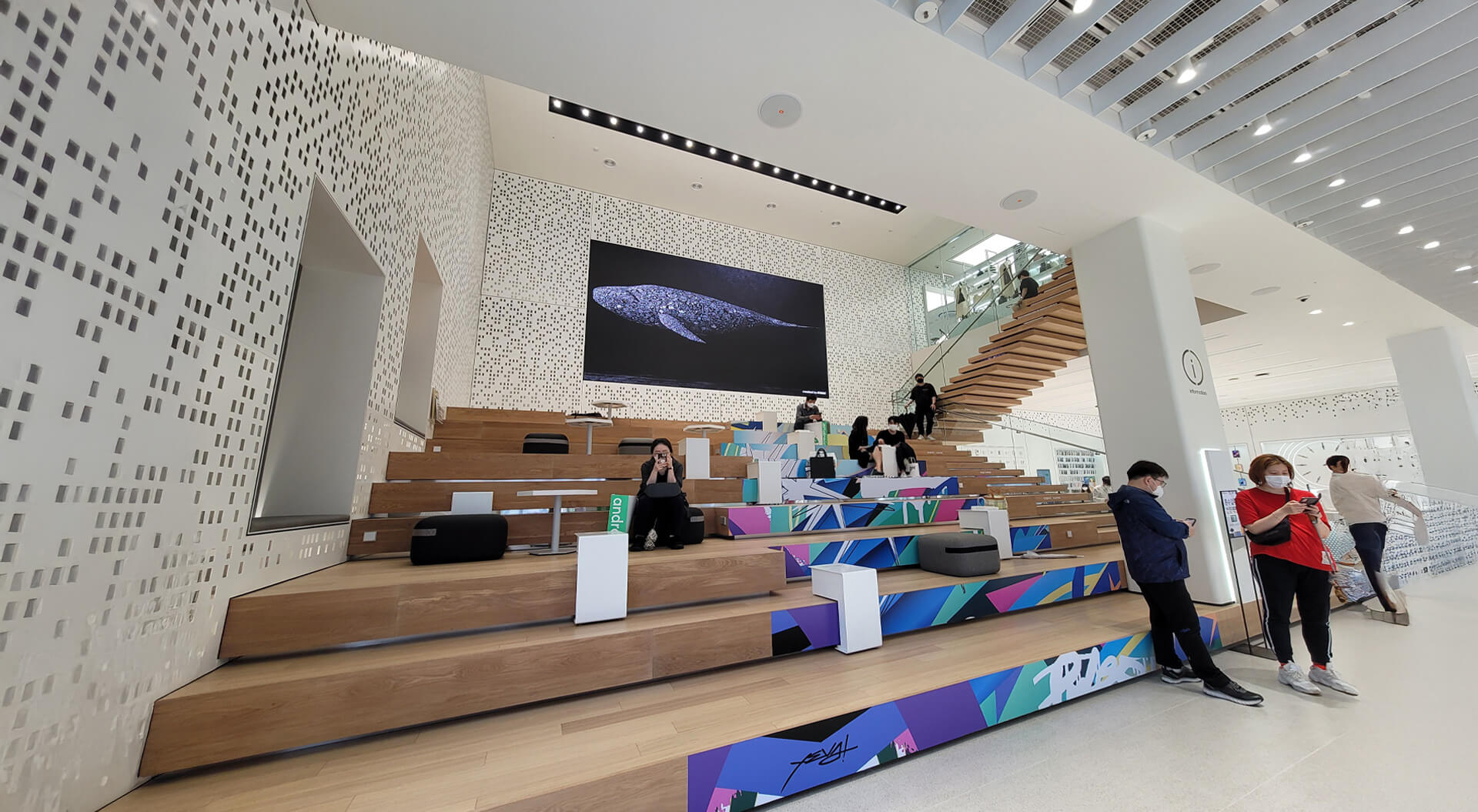
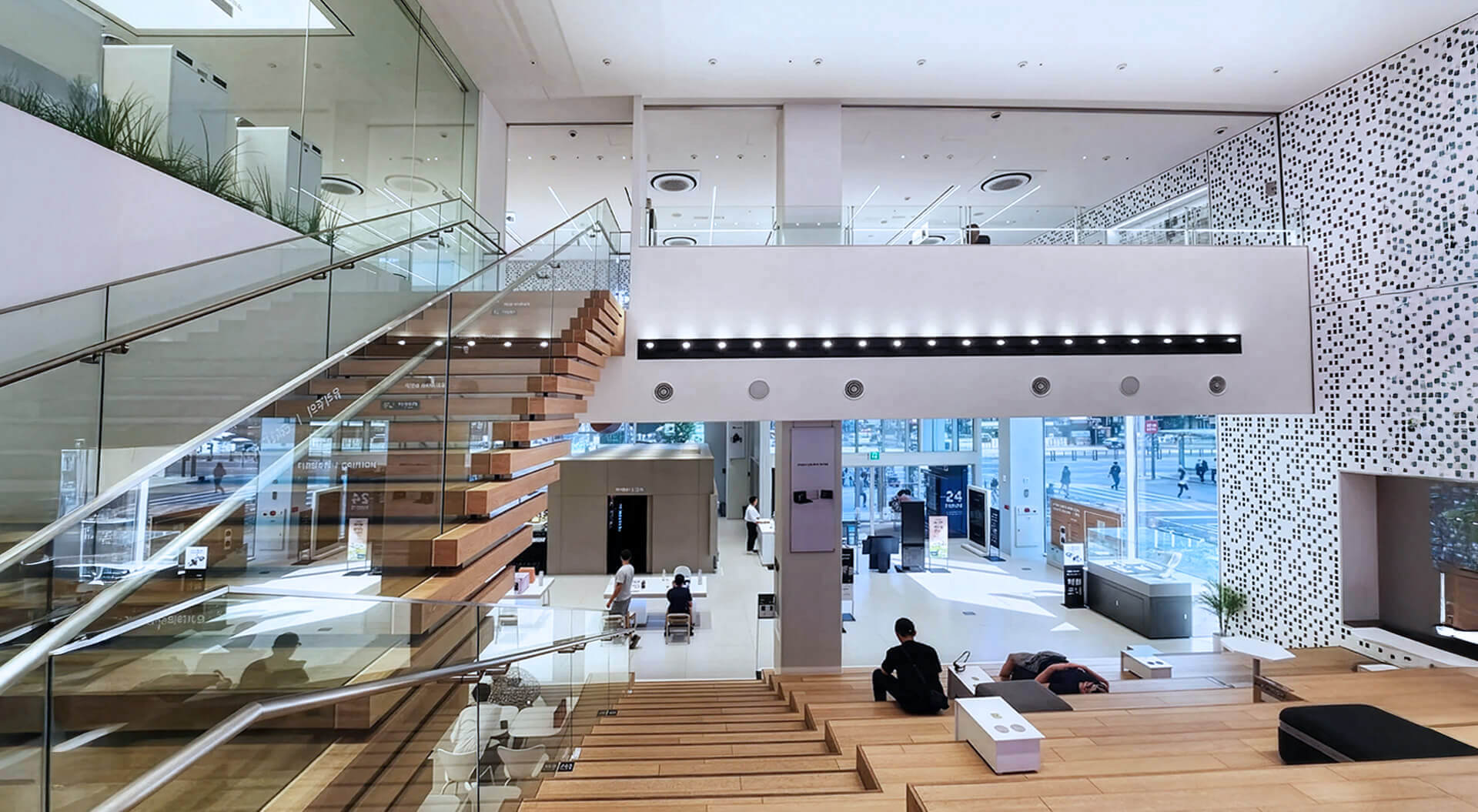
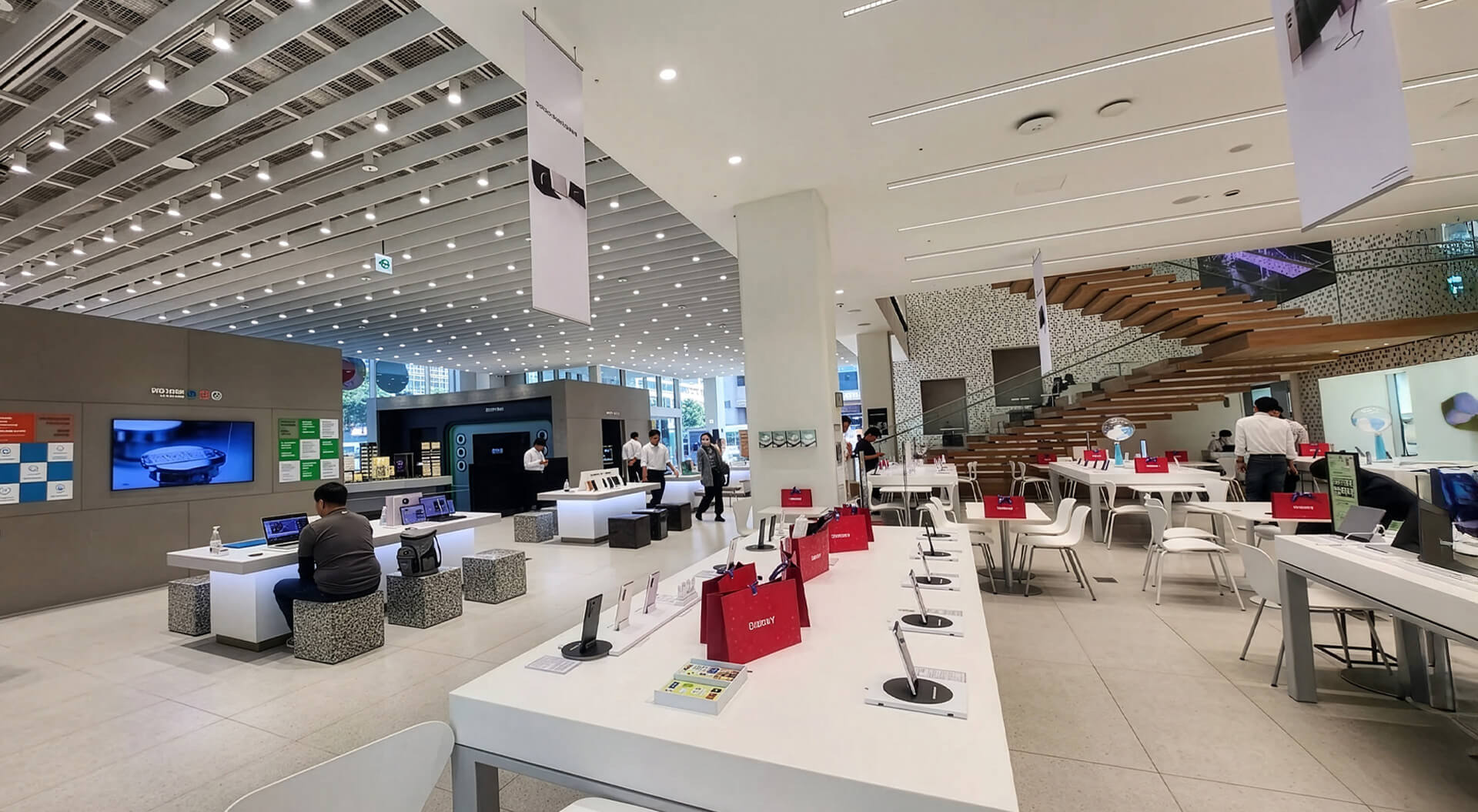
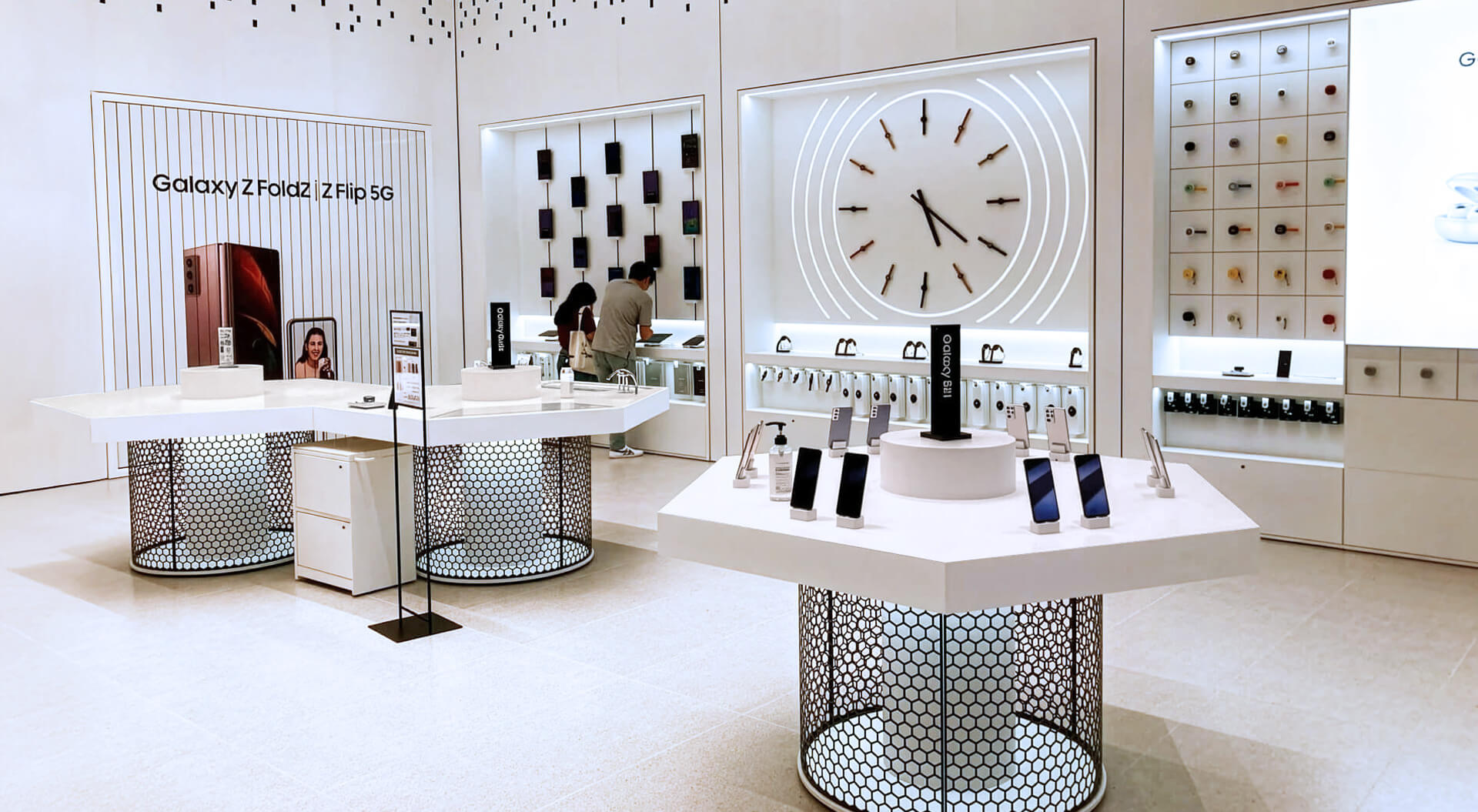
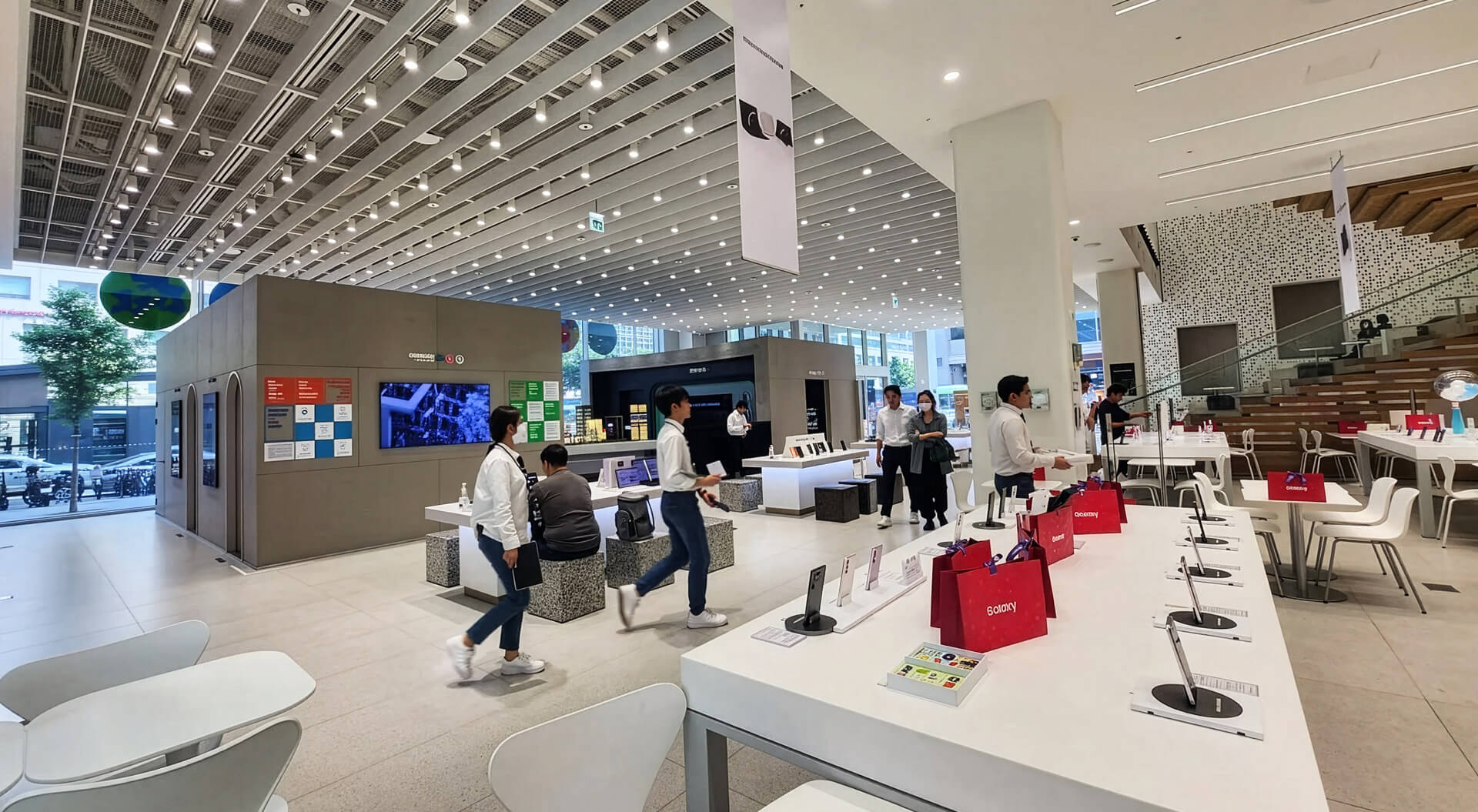
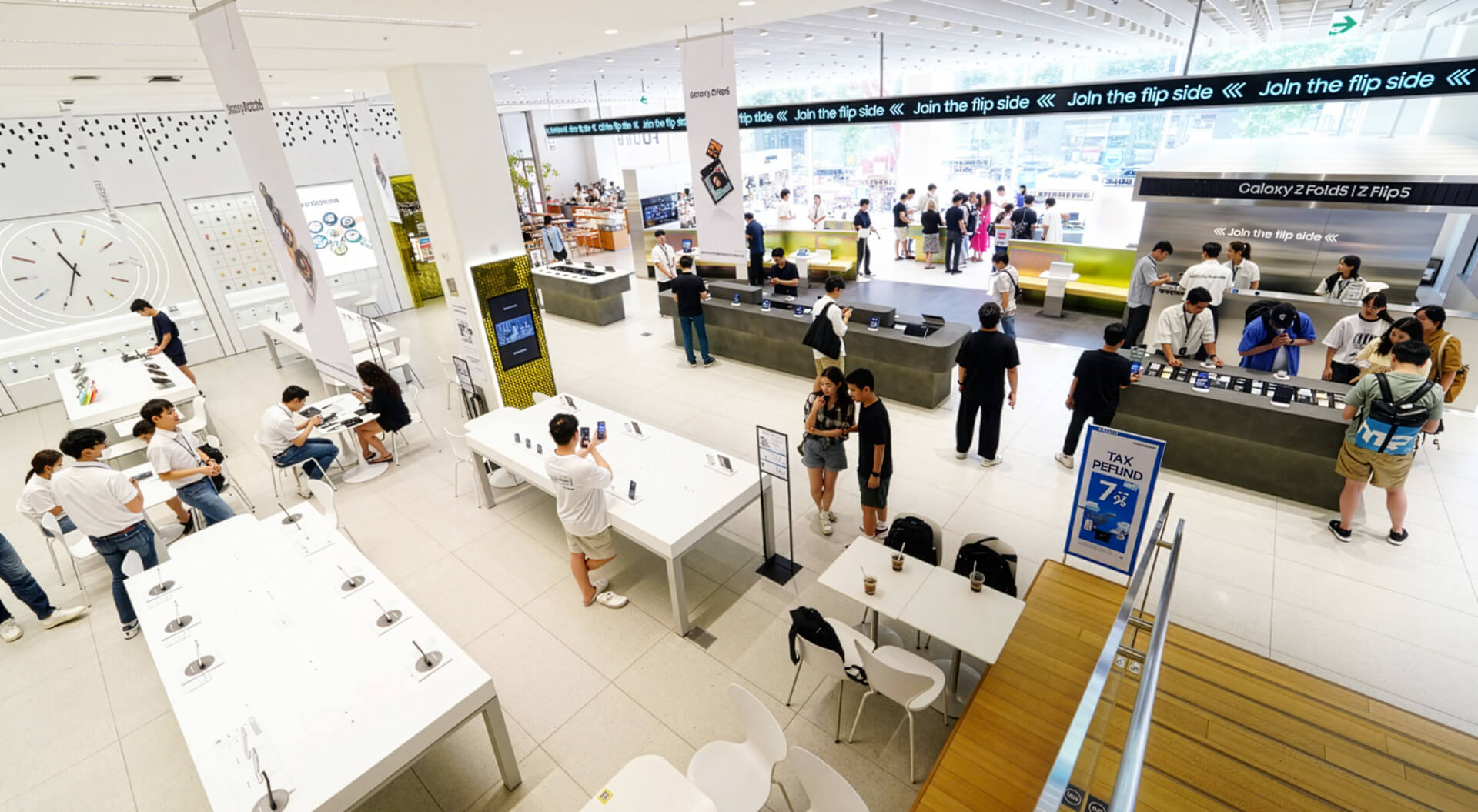
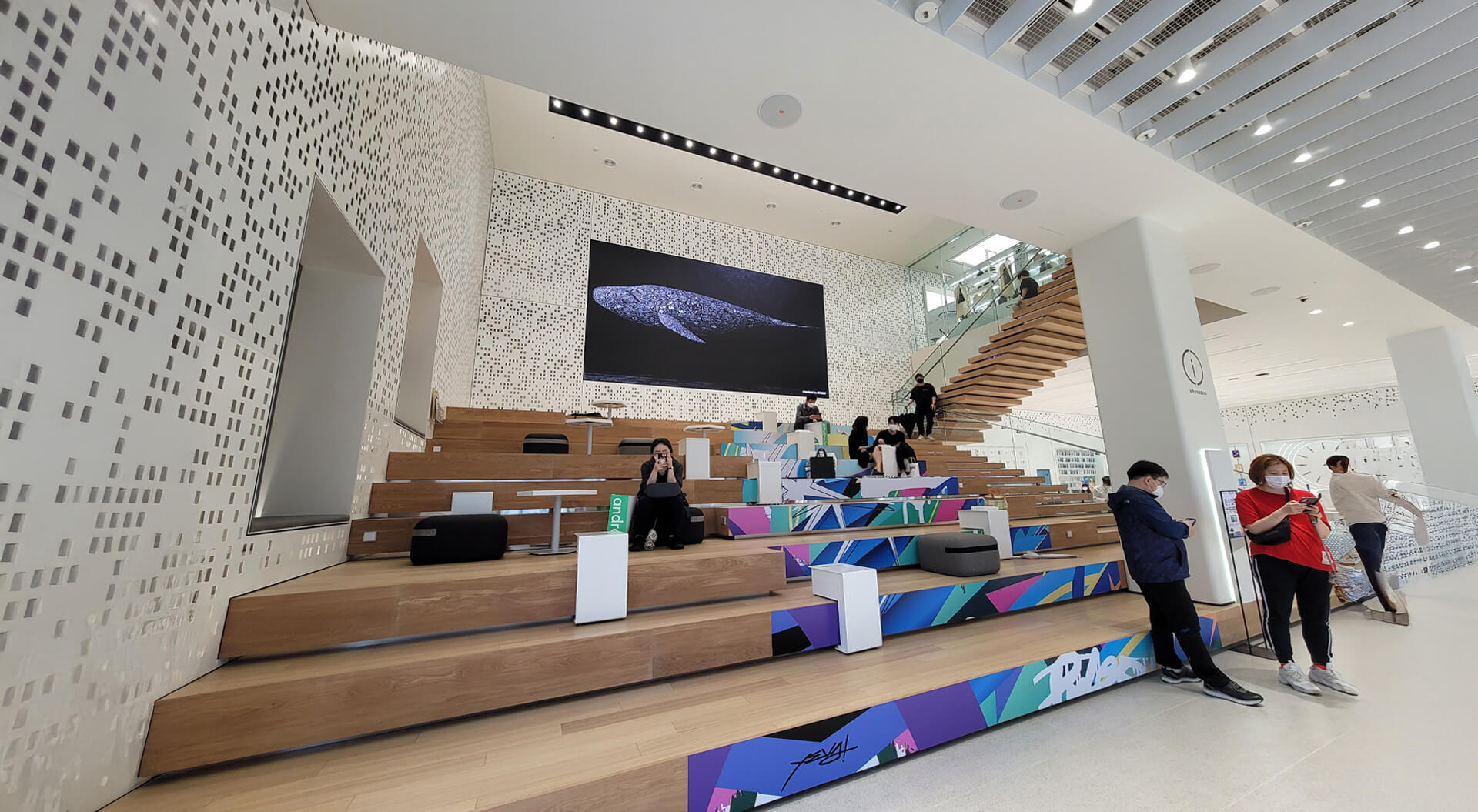
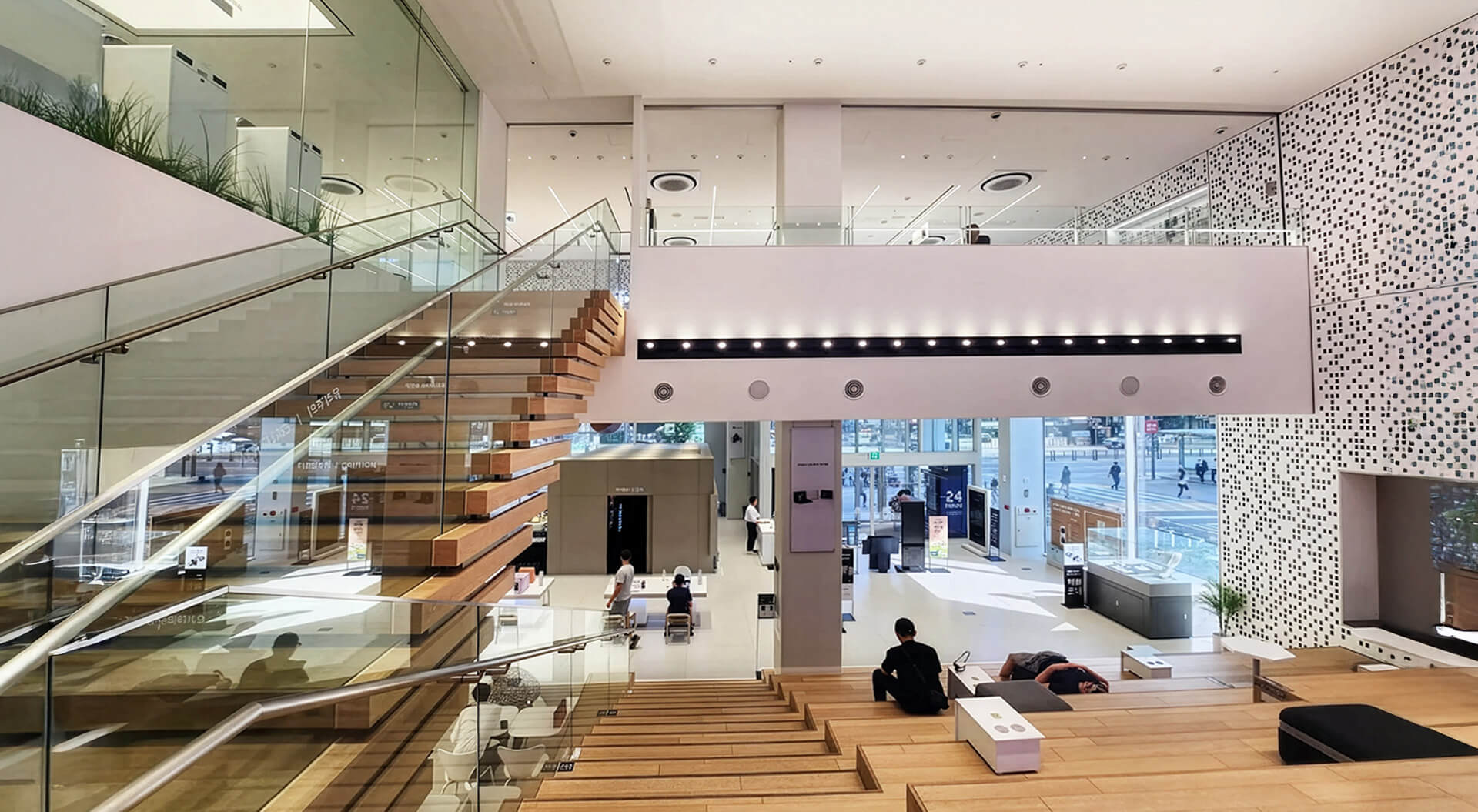
Samsung Hongdae, South Korea: Technology as Experience
Strategy: Samsung's Hongdae flagship demonstrates how technology retail can transform product presentation into an immersive brand experience. Interactive displays, product demonstrations and technology-led environments enable customers to explore the wider device ecosystem and understand how new products and services can enhance everyday life. For telecom operators, the benchmark demonstrates the value of using flagship retail to make complex technology accessible, encourage discovery and strengthen customer confidence. It also illustrates how experience-led environments can position a technology brand as innovative, relevant and engaging rather than simply competing on product specifications.
Design implication: Flagship telecom store design should make innovation tangible, intuitive and participatory.
Building a Scalable Telecom Retail Format System
Telecom operators increasingly manage portfolios comprising flagship destinations, standard network stores, compact urban locations, shopping-centre stores, airports, kiosks and other specialist formats.
Designing every location independently can create unnecessary development costs, inconsistent experiences and slower rollout.
A scalable format system establishes the common principles that connect the network while allowing individual formats to respond to their commercial environment.
This can provide five strategic advantages.
Consistent brand experience
Customers should recognise the same brand proposition regardless of which format they visit.
Faster implementation
Proven design principles and components can be adapted rather than recreated for every location.
Greater cost control
Standardised design principles can reduce unnecessary variation in design development, procurement and implementation.
More effective customer journeys
The same customer-experience logic can be adapted to different footprints and missions.
Continuous innovation
Flagships can test new approaches while the wider network adopts the elements that demonstrate customer or commercial value.
CampbellRigg's previous telecom work illustrates the importance of this format approach. For Tele2 Russia, CampbellRigg identified three future retail formats, flagship stores, standard stores and shopping-mall kiosks, demonstrating how different formats can be developed within one broader retail proposition.
International Telecom & Technology Benchmark
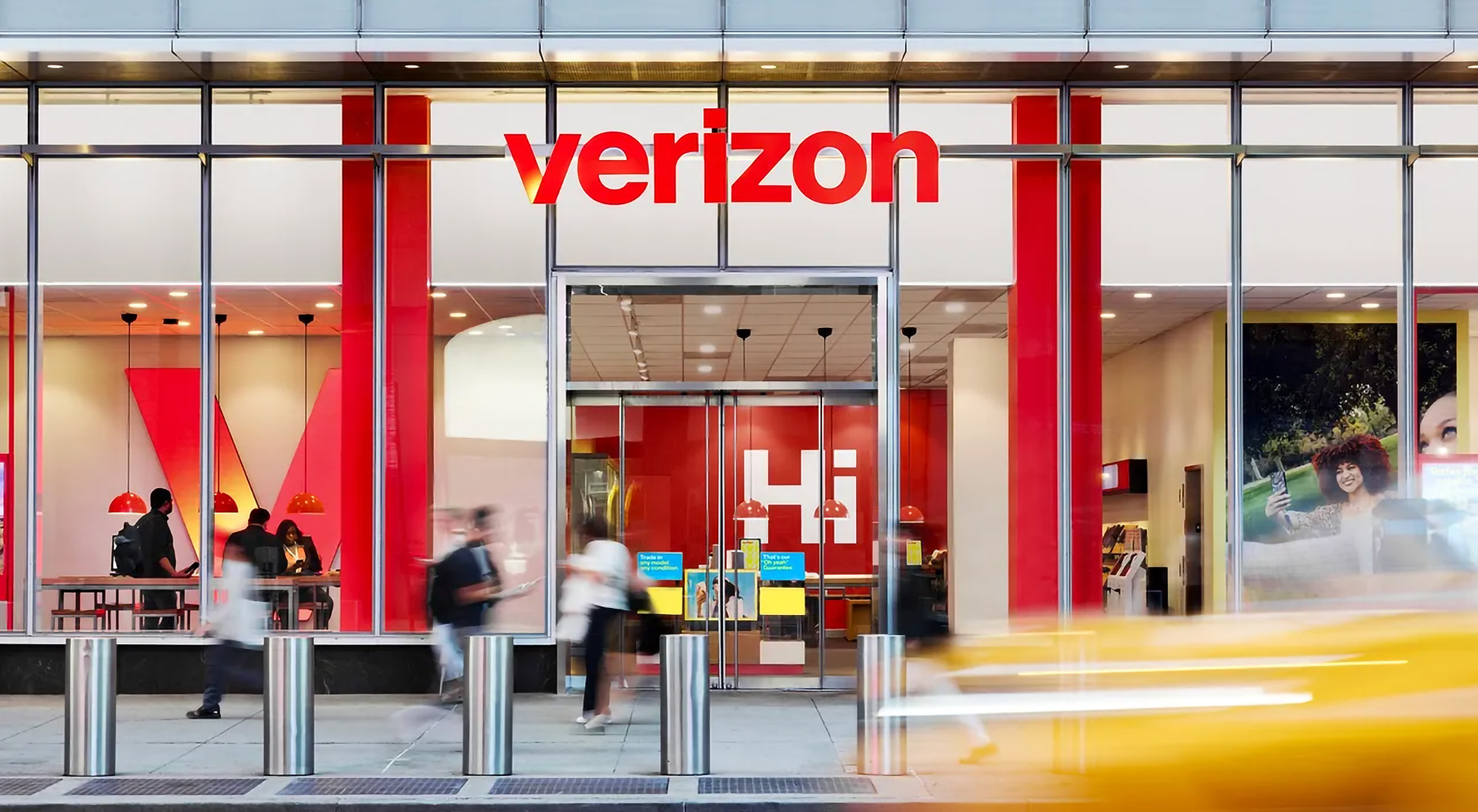
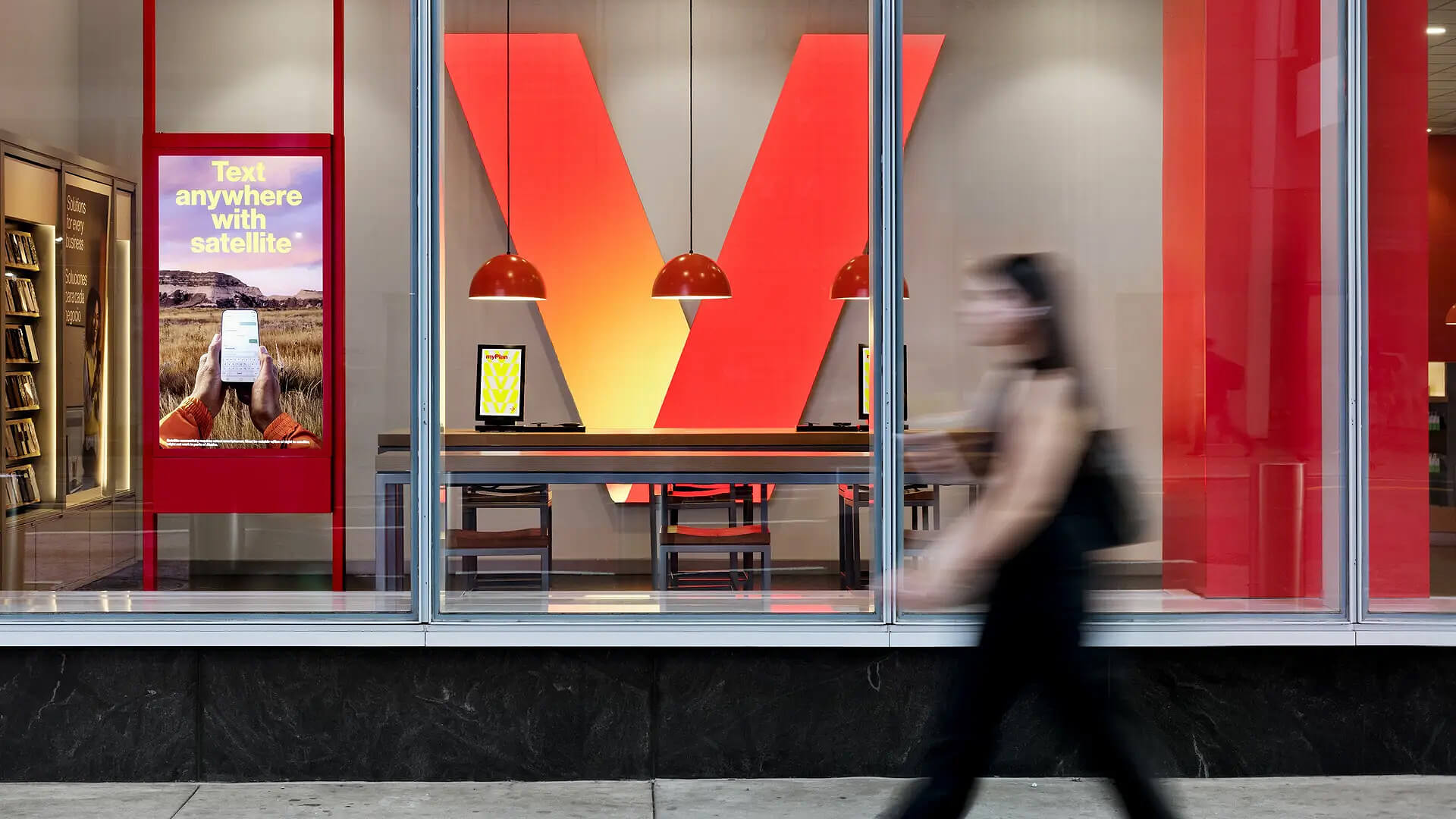
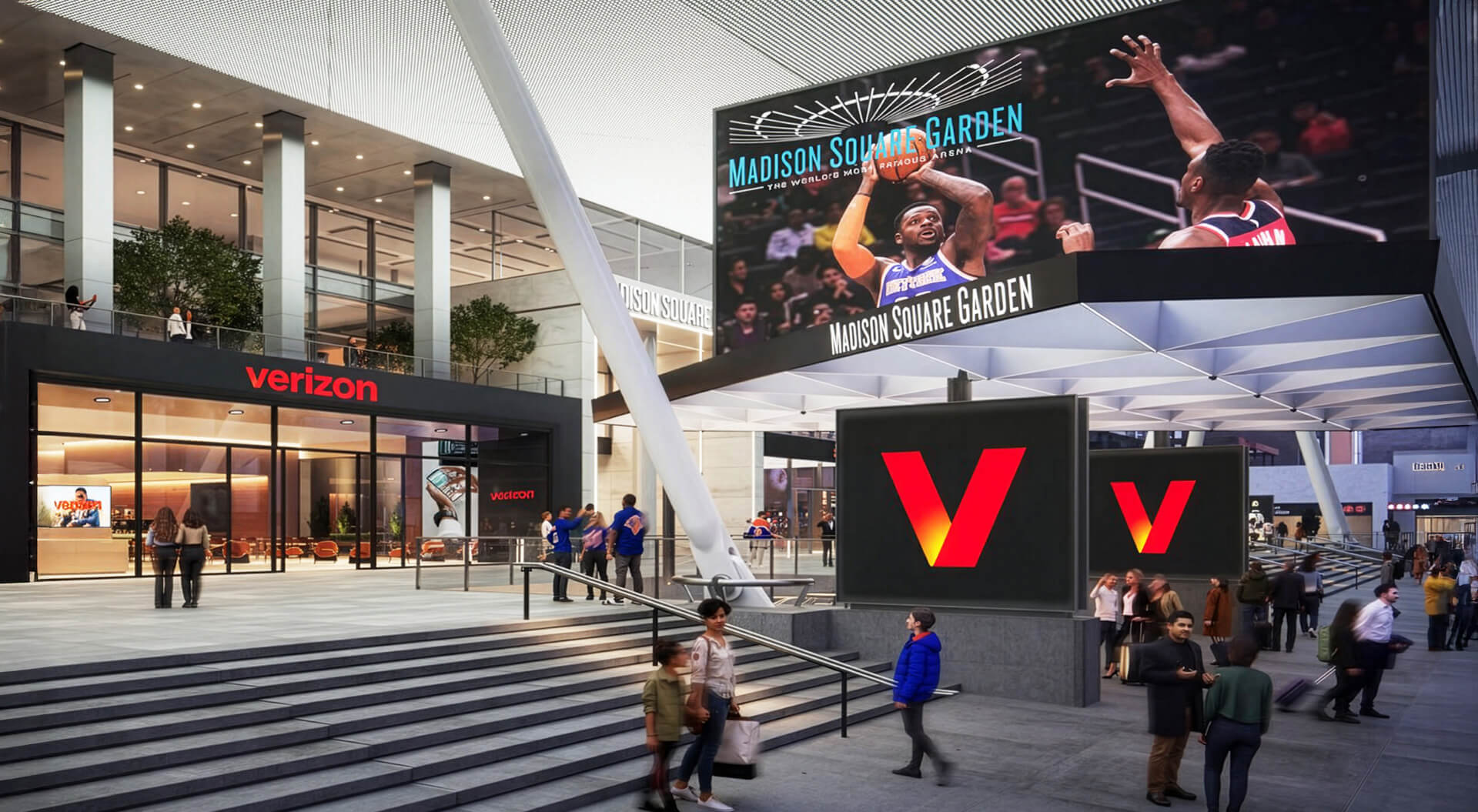
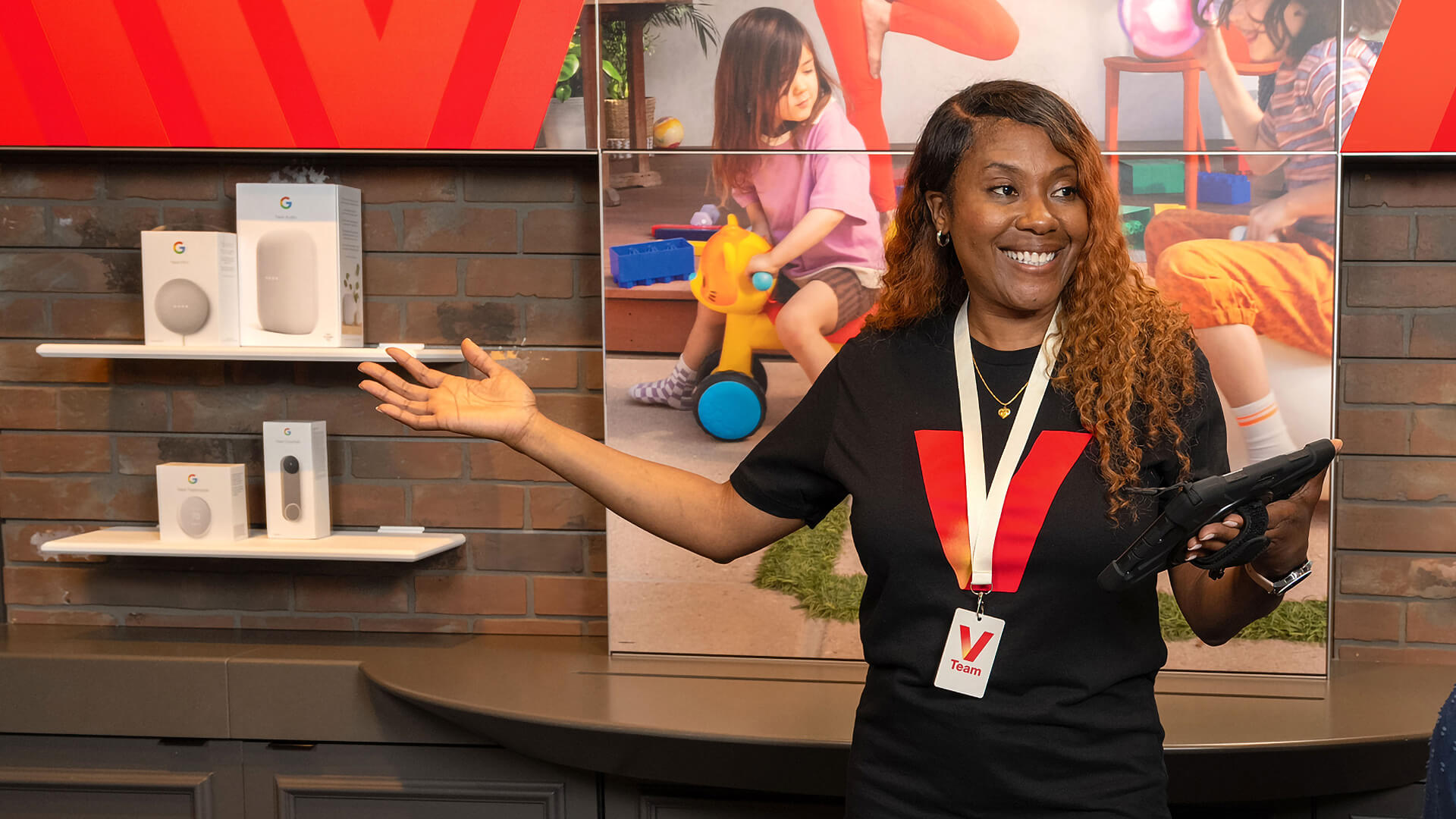
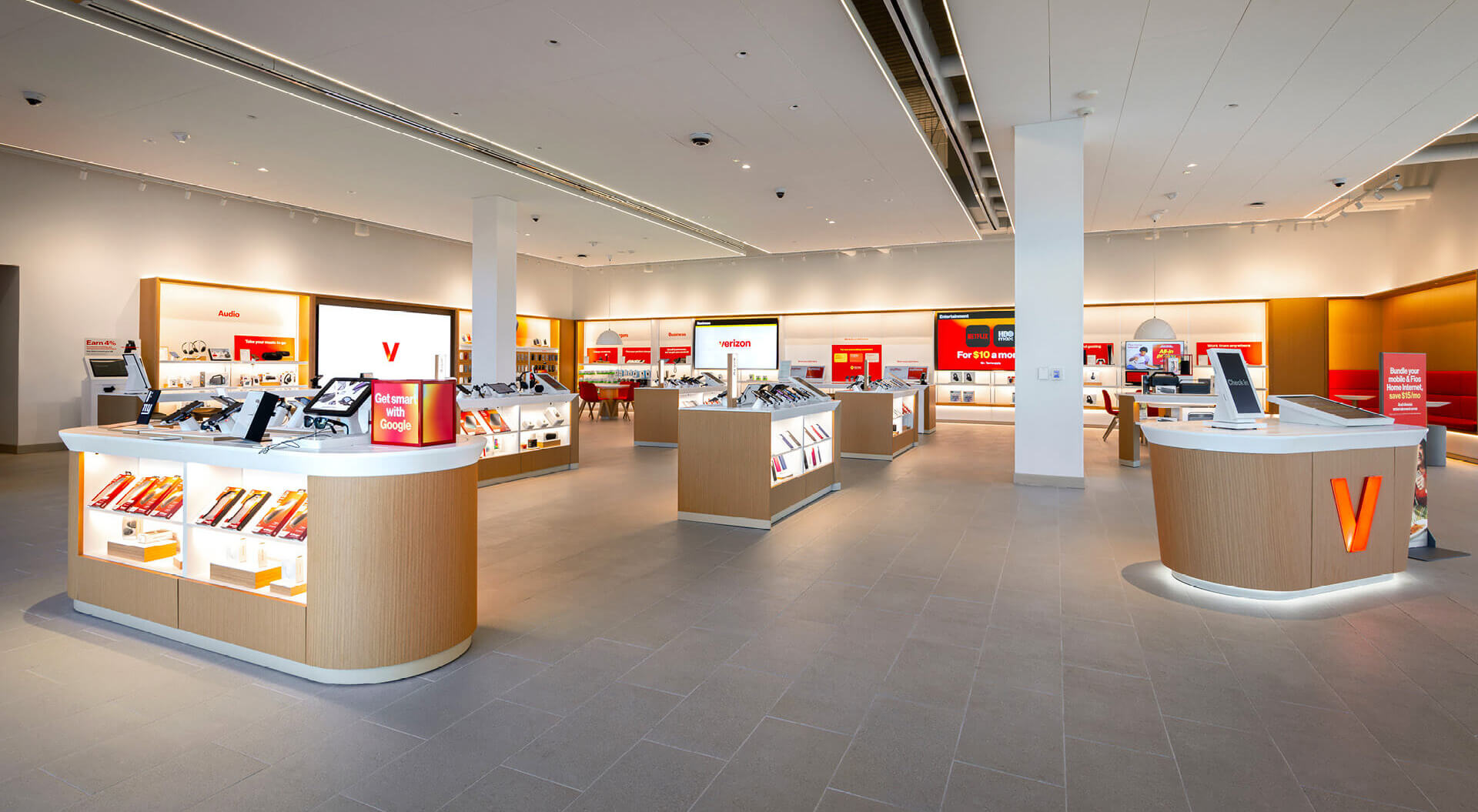
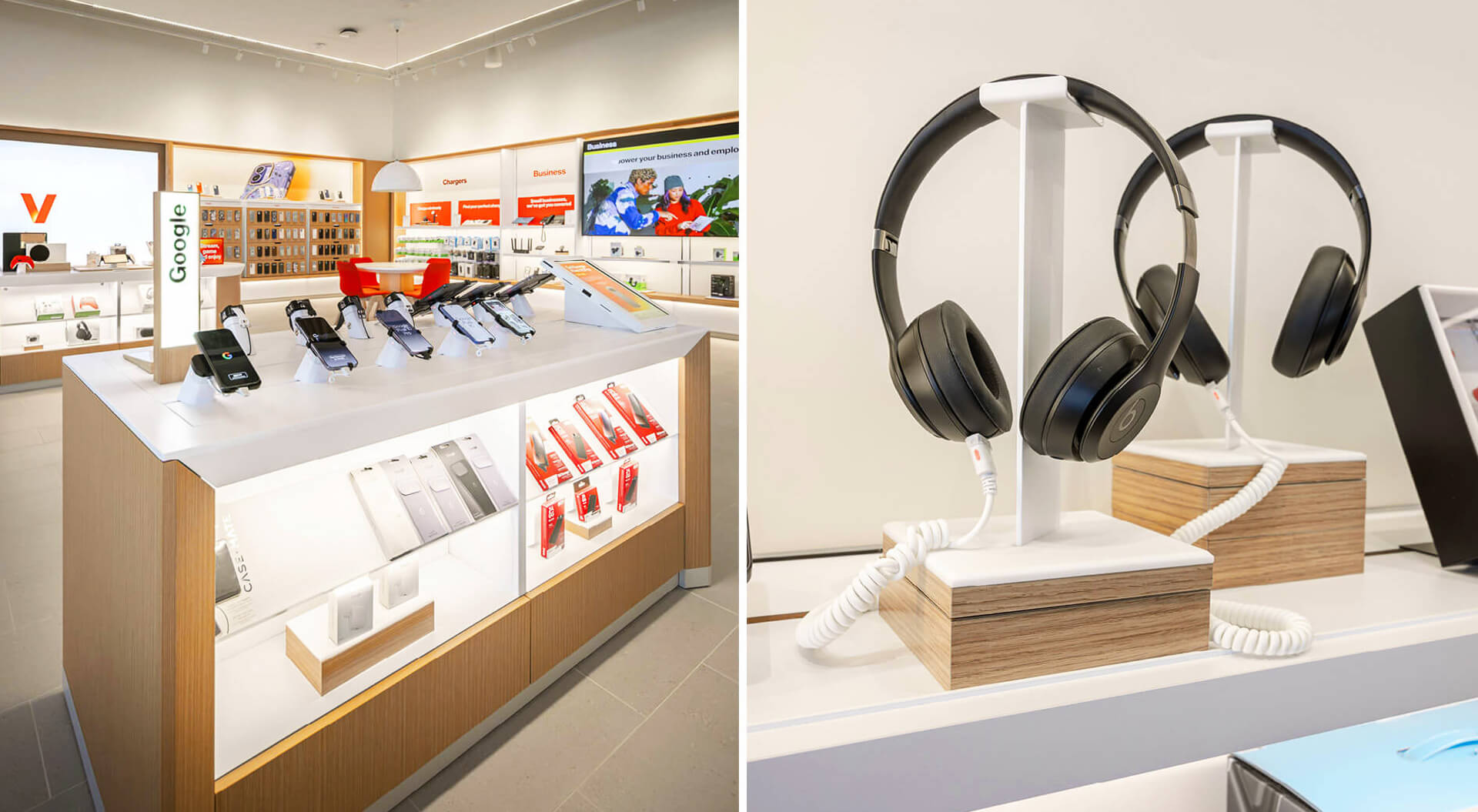
Verizon PENN 2, Midtown Manhattan: Flagship as Urban Destination
Strategy: Verizon's corporate headquarters and flagship retail presence at PENN 2 in Midtown Manhattan demonstrates how corporate identity, retail and destination strategy can work together. Located close to Penn Station and Madison Square Garden, the development benefits from exceptional visibility, connectivity and surrounding commercial activity. Verizon announced approximately 200,000 square feet of headquarters space at PENN 2 alongside a 4,400-square-foot flagship retail location on Seventh Avenue. For telecom operators, the benchmark highlights how site selection can strengthen brand presence and customer reach, with accessibility, footfall, corporate positioning and the surrounding destination contributing to the commercial role of the store.
Design implication: Flagship store planning should respond to the wider destination and customer catchment, not simply the available interior footprint.
Designing One Telecom Brand Across Different Formats
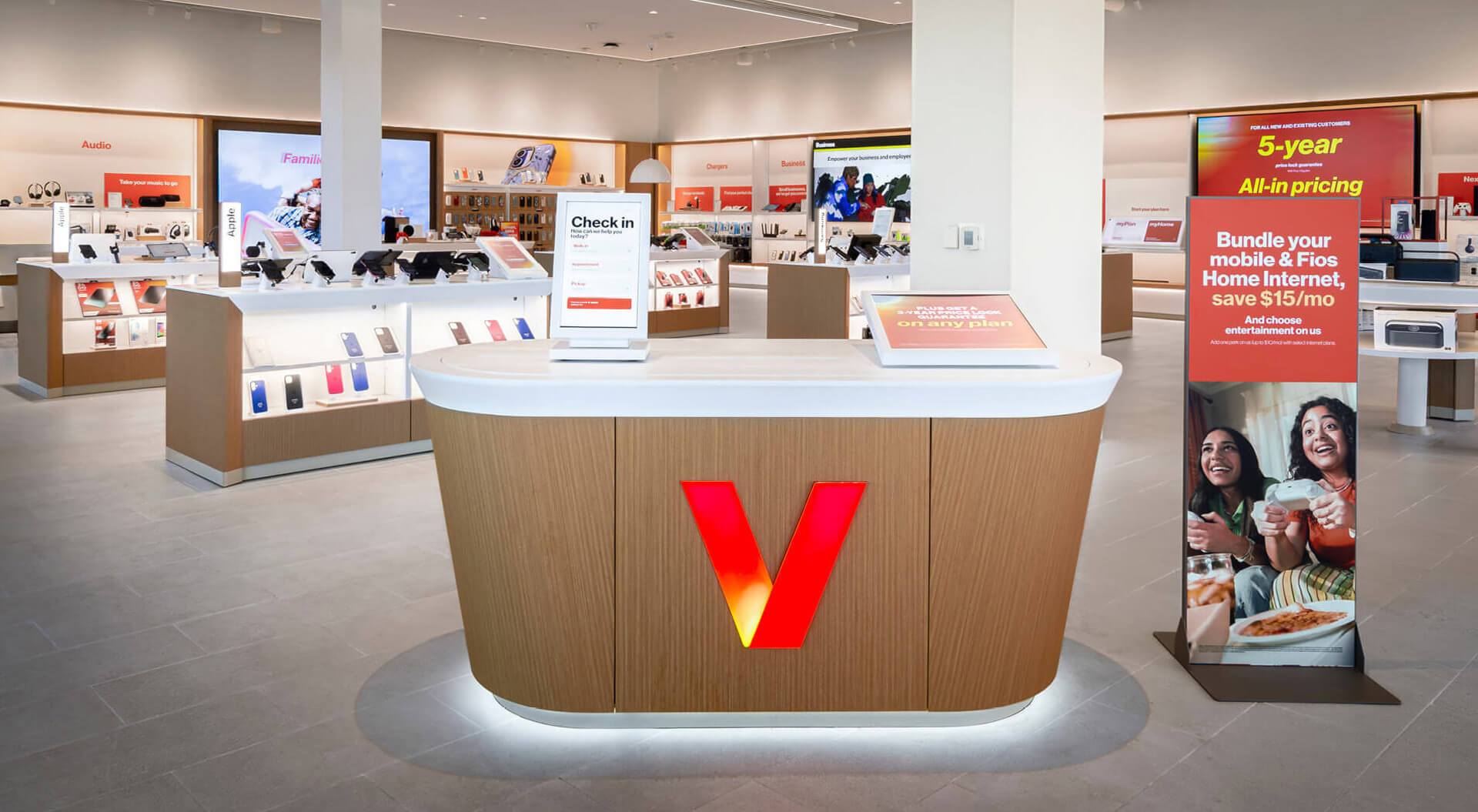
A scalable system should define what remains fixed and what is allowed to flex.
Core brand identity, visual language, key communications, customer-experience principles and service standards can establish continuity.
Floor plans, fixtures, merchandising density, experience zones and consultation areas can then adapt to individual locations.
This is where telecom store design becomes a strategic discipline rather than simply an interior-design exercise.
The designer must understand the relationship between: brand → customer → space → service → technology → commercial performance.
A flagship may require immersive environments and deeper customer engagement. A standard store may need greater efficiency and faster customer progression. A compact format may need to communicate the proposition within a significantly smaller footprint.
Each format should therefore have a defined role within the overall network.
What Makes Telecom Store Design Scalable?
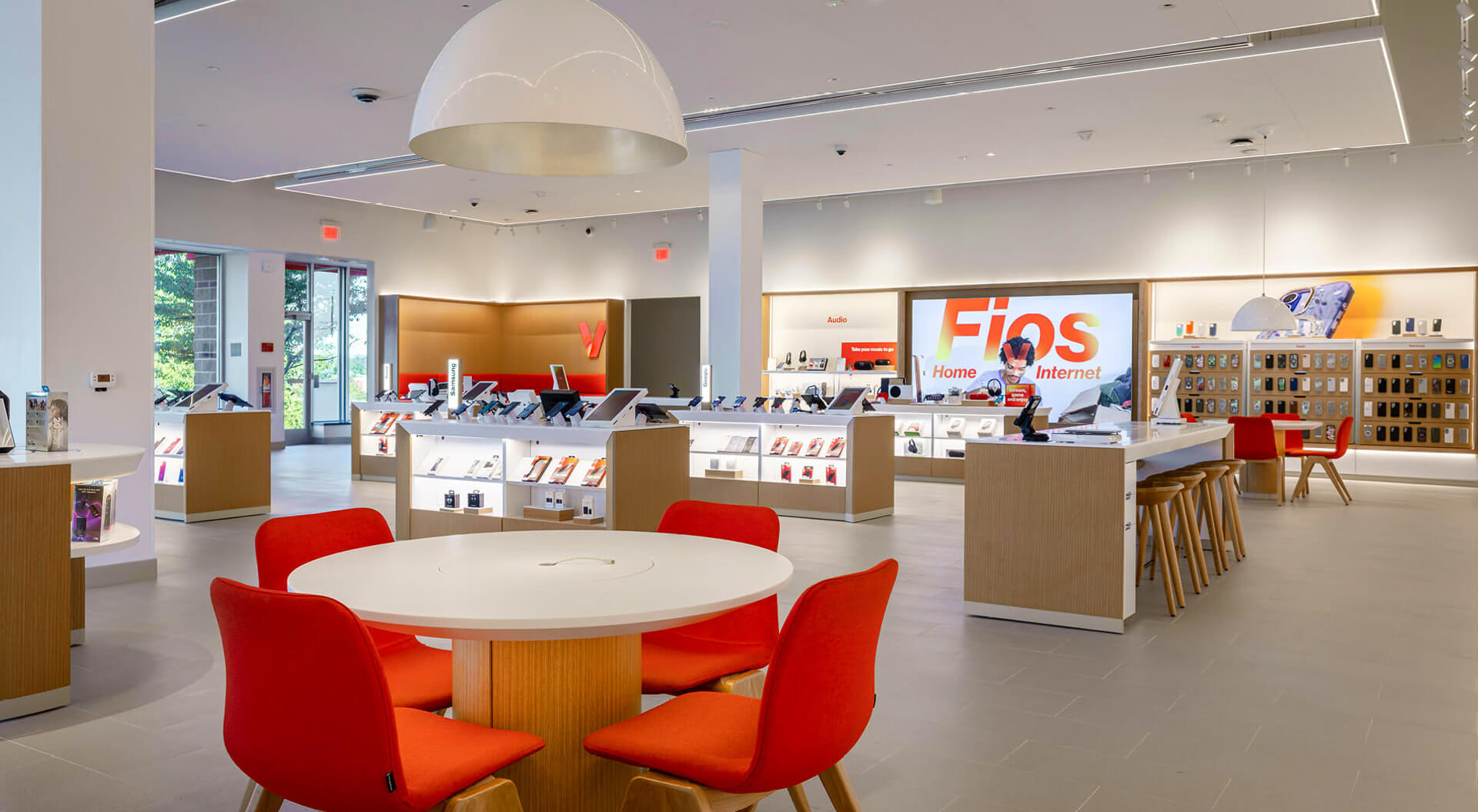
Scalability starts with a design system, not a single visual concept.
Modular fixtures
Fixtures should accommodate changing devices, accessories and service propositions without requiring complete store redesigns.
Flexible zoning
Product, experience, consultation and service areas should adapt to different footprints and customer missions.
Consistent visual identity
Materials, graphics, signage, lighting and environmental branding should create immediate recognition across the network.
Customer journey
The layout should guide customers from arrival and discovery through demonstration, consultation and conversion.
Digital integration
Apps, self-service, digital content and physical environments should operate as complementary elements of one customer journey.
Rollout standards
A comprehensive design manual can define essential requirements while allowing appropriate adaptation for different markets and property conditions.
The objective is to create a system that can evolve as the telecom proposition evolves.
New devices, services, connectivity propositions and customer expectations should be accommodated without forcing every location through a complete redesign.
Connecting Telecom Store Design to Commercial Performance
The physical environment should ultimately be judged by what it enables customers and staff to do.
Effective telecom store design can influence:
- customer engagement;
- dwell time;
- product discovery;
- demonstration engagement;
- conversion;
- cross-selling;
- average transaction value;
- sales per square metre;
- service efficiency;
- customer satisfaction;
- loyalty and retention; and
- future rollout economics.
These measures should influence the design brief from the beginning.
A clearer customer journey can reduce friction. Better zoning can increase product visibility. Demonstration environments can make complex propositions easier to understand. Consultation areas can support higher-value conversations. Flexible fixtures can reduce future change costs.
The objective is therefore not simply to create an impressive store.
It is to create an environment where brand, customer experience and commercial performance reinforce one another.
Measuring the Network, Not Just the Flagship
Flagship and standard stores should not necessarily be measured against identical KPIs.
A flagship may place greater emphasis on engagement, dwell time, product discovery, demonstration participation, brand perception and innovation.
A standard store may focus more heavily on conversion, sales per square metre, cross-selling, service efficiency and cost-to-serve.
At network level, management can also assess rollout cost, implementation speed, refurbishment economics, customer retention and consistency of brand experience.
This gives management a stronger basis for evaluating retail investment.
The flagship establishes the proposition. The standard format extends it. The network provides the measurable commercial outcome.
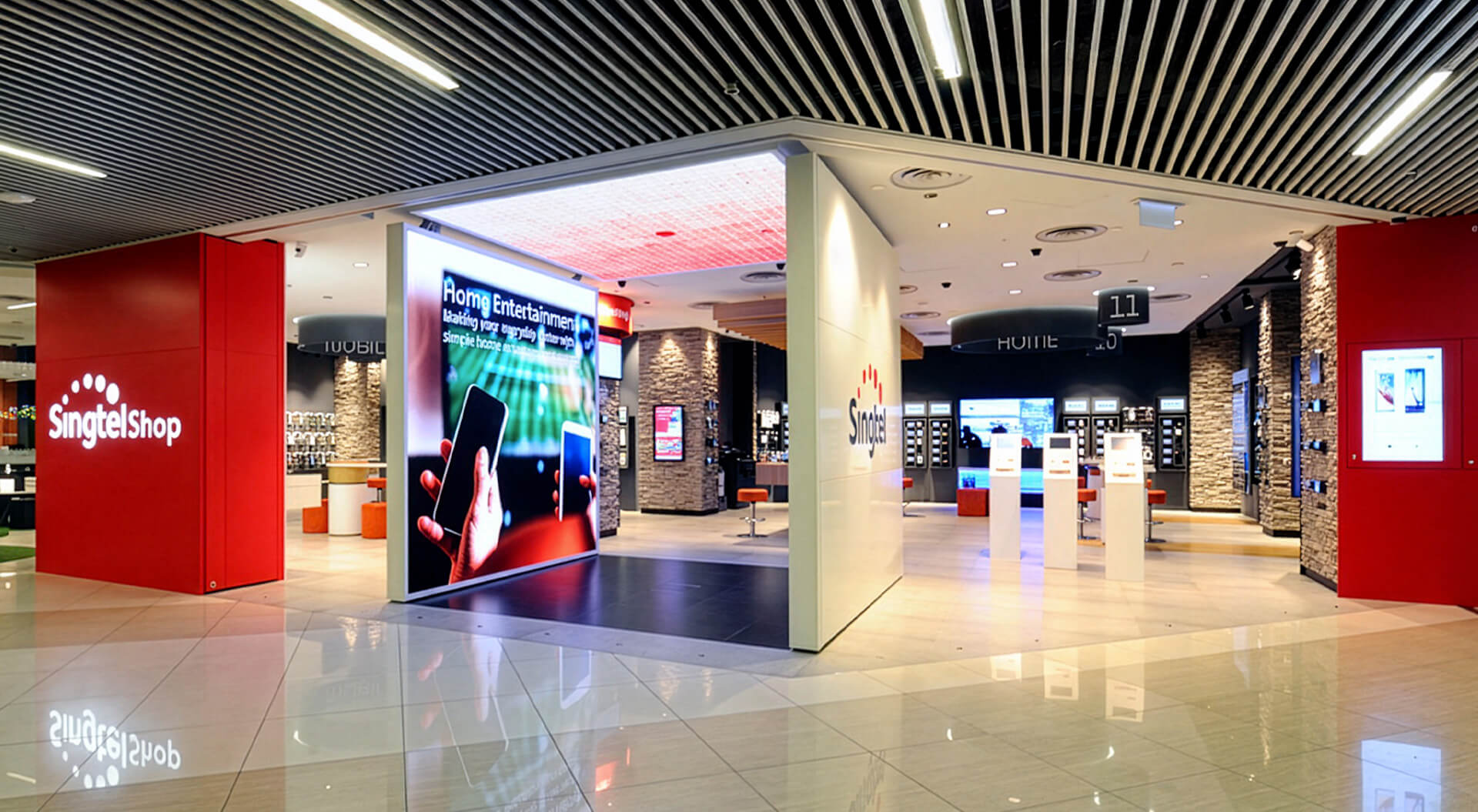
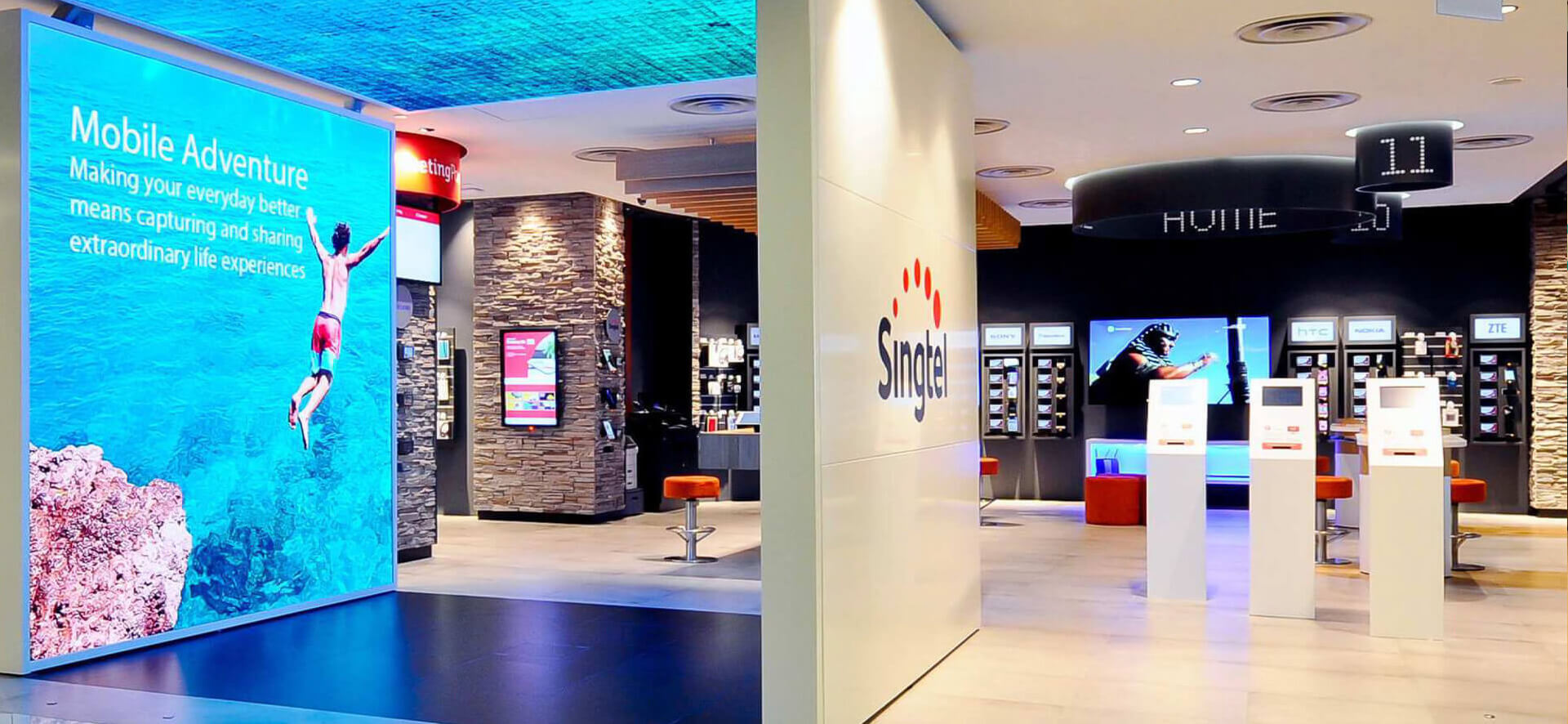
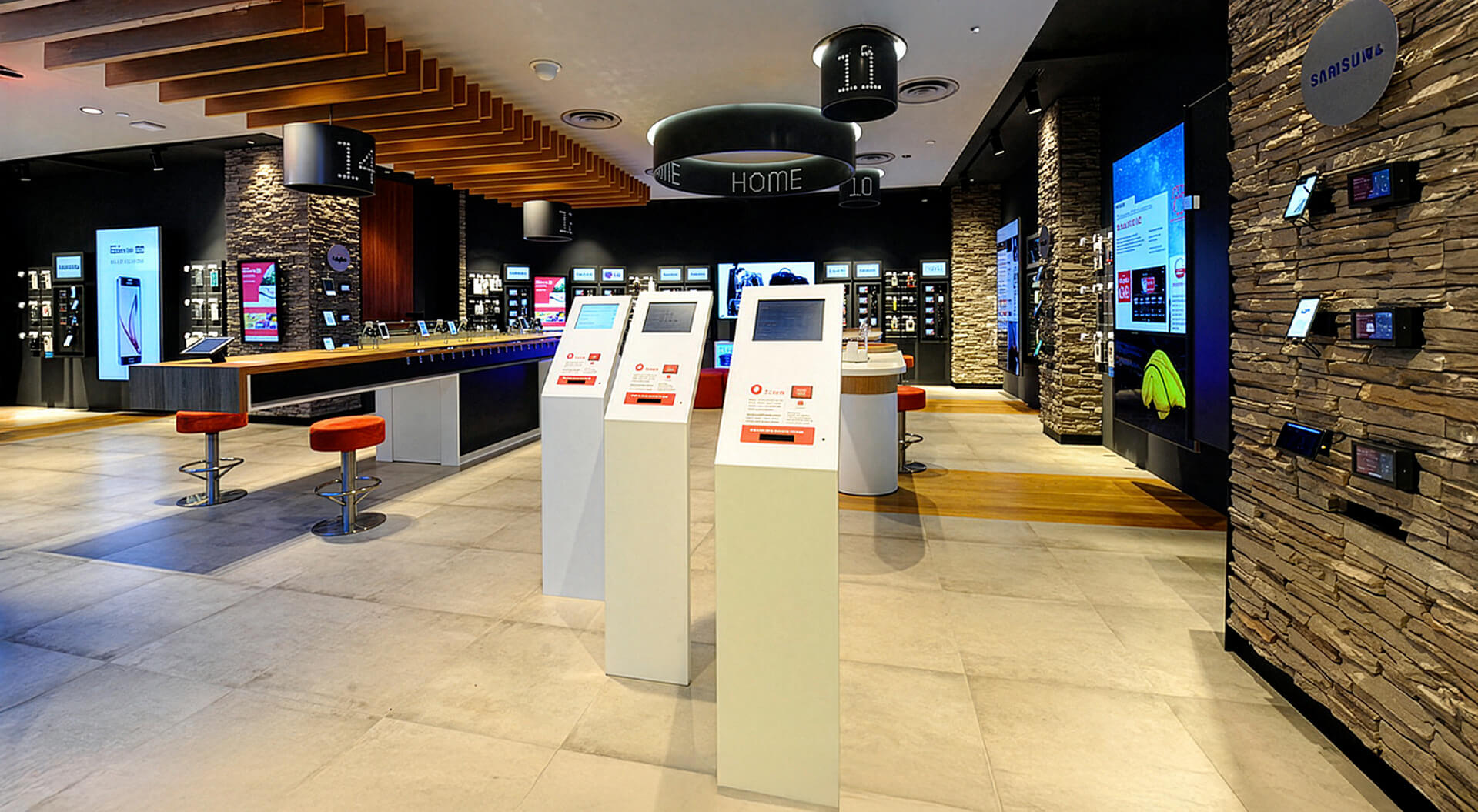
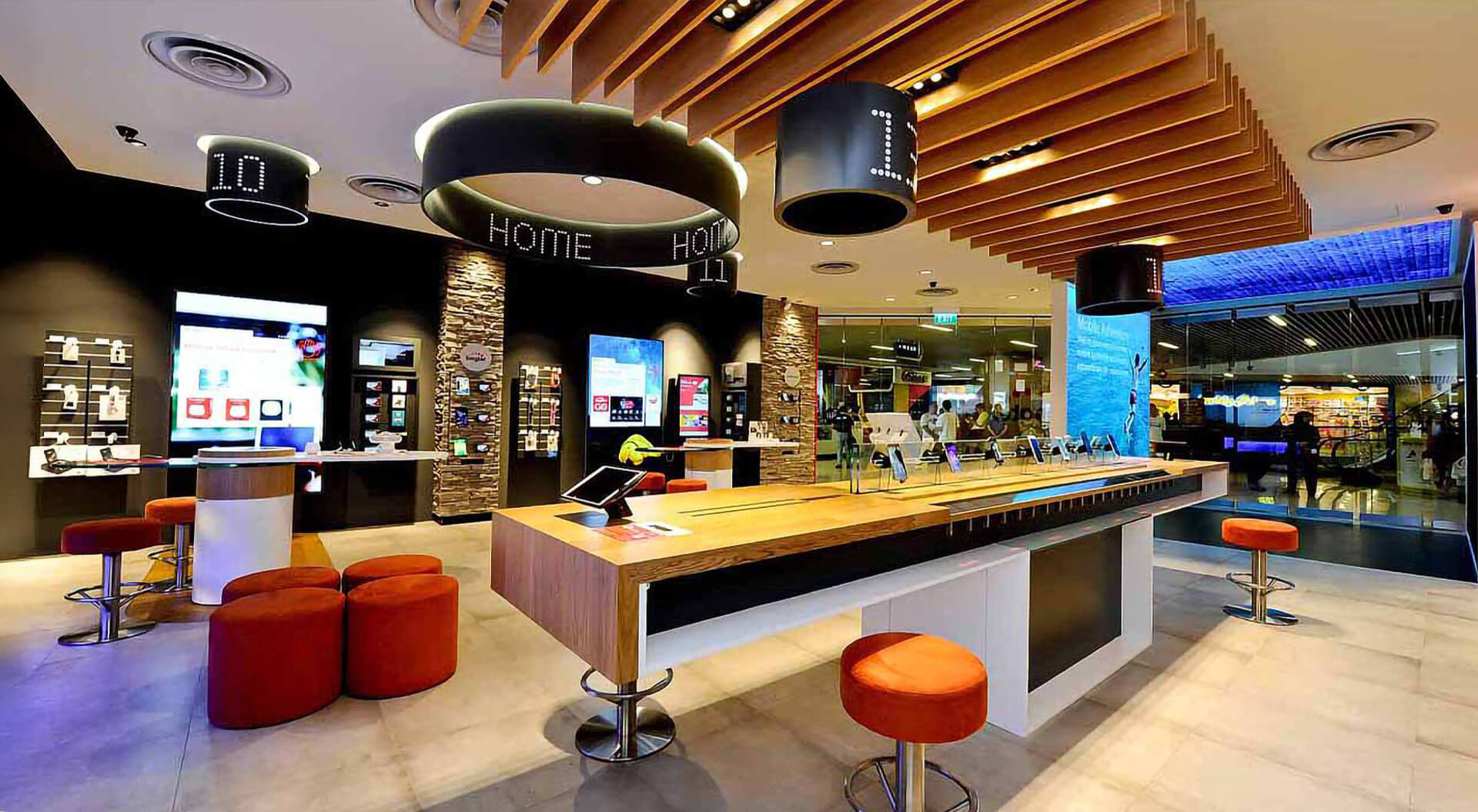
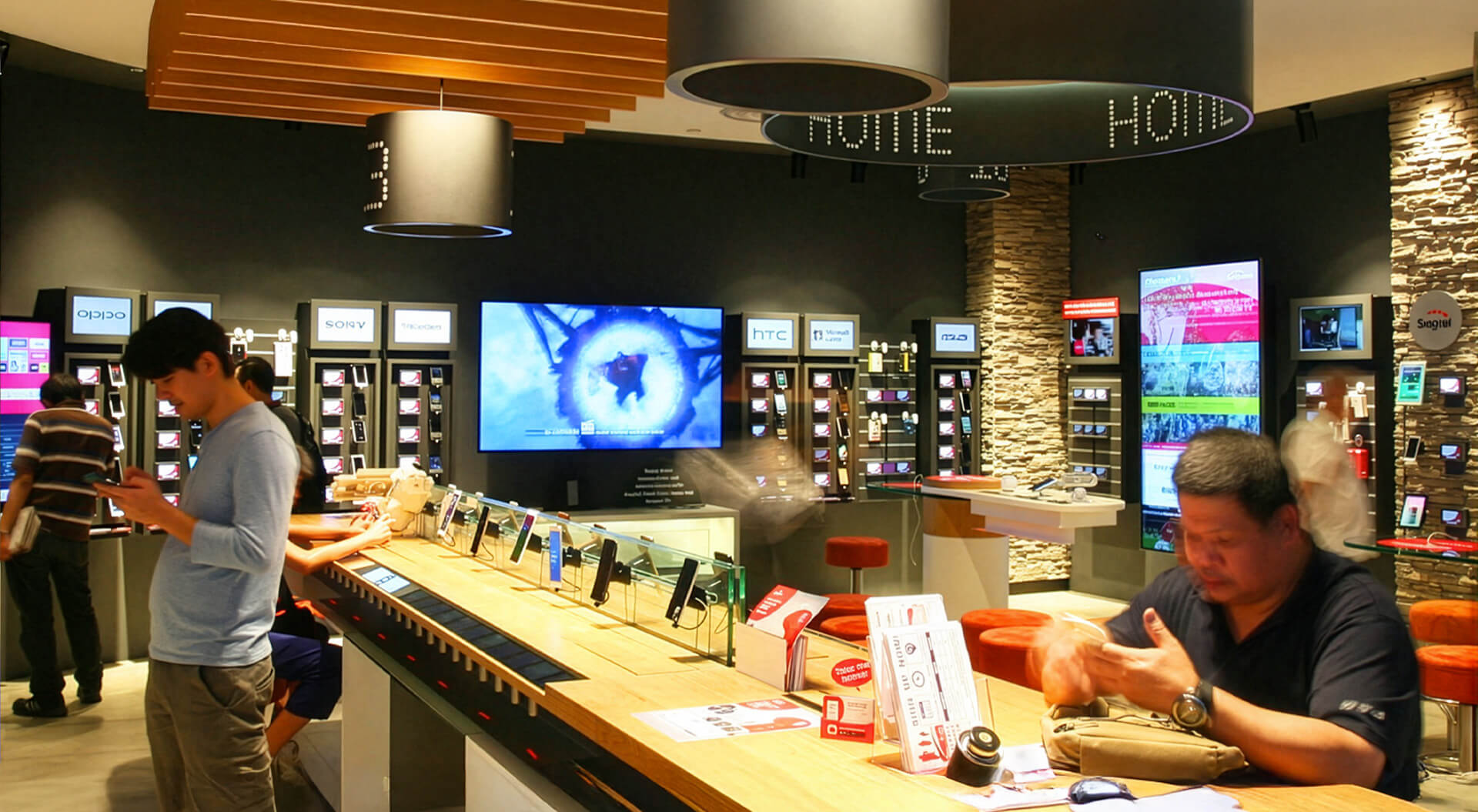
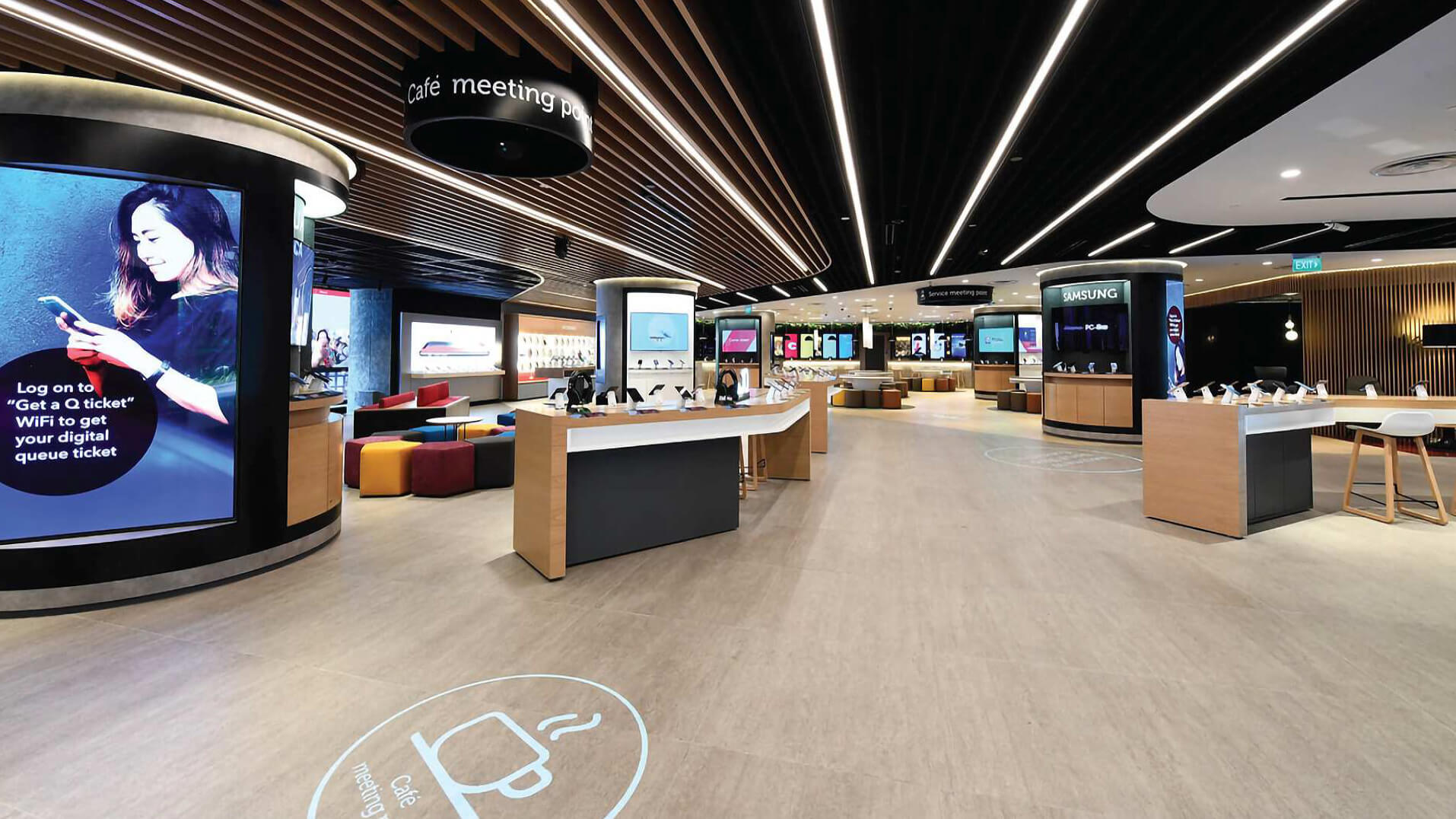
Singtel Shop, Singapore: Experiential Telecom Retail
Strategy: Singtel Shop provides a strong benchmark for experiential telecom retail in Singapore. As the country's largest mobile network operator, Singtel uses its retail environment to present connectivity as part of a broader connected lifestyle. Large digital display screens provide high-impact brand communication, while dedicated demonstration areas enable customers to explore devices, services and connectivity solutions. Home-entertainment setups extend the proposition beyond mobile communications, demonstrating how telecom technology can integrate into everyday living. For telecom operators, the benchmark illustrates how retail environments can shift the customer conversation from individual products towards connected ecosystems, creating opportunities for discovery, engagement and higher-value customer relationships.
Design implication: Telecom store design should demonstrate how products, services and connectivity work together in customers' lives rather than presenting them as isolated offers.
CampbellRigg: From Retail Strategy to Scalable Store Design
CampbellRigg's role is to connect the strategic requirement with the physical retail environment.
Our multidisciplinary expertise includes:
- telecom retail strategy;
- brand positioning;
- retail brand identity;
- flagship store design;
- standard store design;
- store-format development;
- retail architecture;
- interior design;
- visual merchandising;
- customer journey planning;
- environmental graphics;
- digital and phygital integration;
- connected-technology experience zones;
- modular design systems; and
- rollout standards.
The distinction is important.
Telecom retail strategy defines the commercial and customer ambition. Telecom store design translates that ambition into a physical environment.
CampbellRigg brings the two together.
The starting point is therefore not a predetermined visual style. It is the commercial challenge: what should the store achieve, what should customers experience, how should staff operate within it, and how can the resulting format be scaled?
For a flagship, the answer may involve establishing a new brand experience and testing innovative customer journeys.
For a standard network format, the requirement may be to translate those principles into a more efficient, repeatable environment.
For a multi-format estate, the challenge is to establish the architecture that connects all of these expressions of the brand.
Testimonial: "I can confidently recommend CampbellRigg as a solid and reliable partner, refreshing Play Telecoms Poland." Serdar Cetin, Partner - Novator Partners LLP
From Concept to Implementation
The value of telecom store design ultimately depends on implementation.
A strong strategy must become clear design principles, spatial planning, customer journeys, specifications, communications and practical rollout requirements.
For international operators, those principles must work across different markets, property conditions, footprints and investment levels.
CampbellRigg's multidisciplinary approach allows brand, retail, interior and communications decisions to be developed as one integrated proposition.
The process can begin with a free consultation, followed by a bespoke brief defining the commercial opportunity, customer requirements, brand objectives and implementation priorities.
From there, CampbellRigg can develop the appropriate strategy, concept and design system before progressing towards implementation.
The objective is to move efficiently from strategic requirement → bespoke brief → design development → implementation → measurable commercial performance.
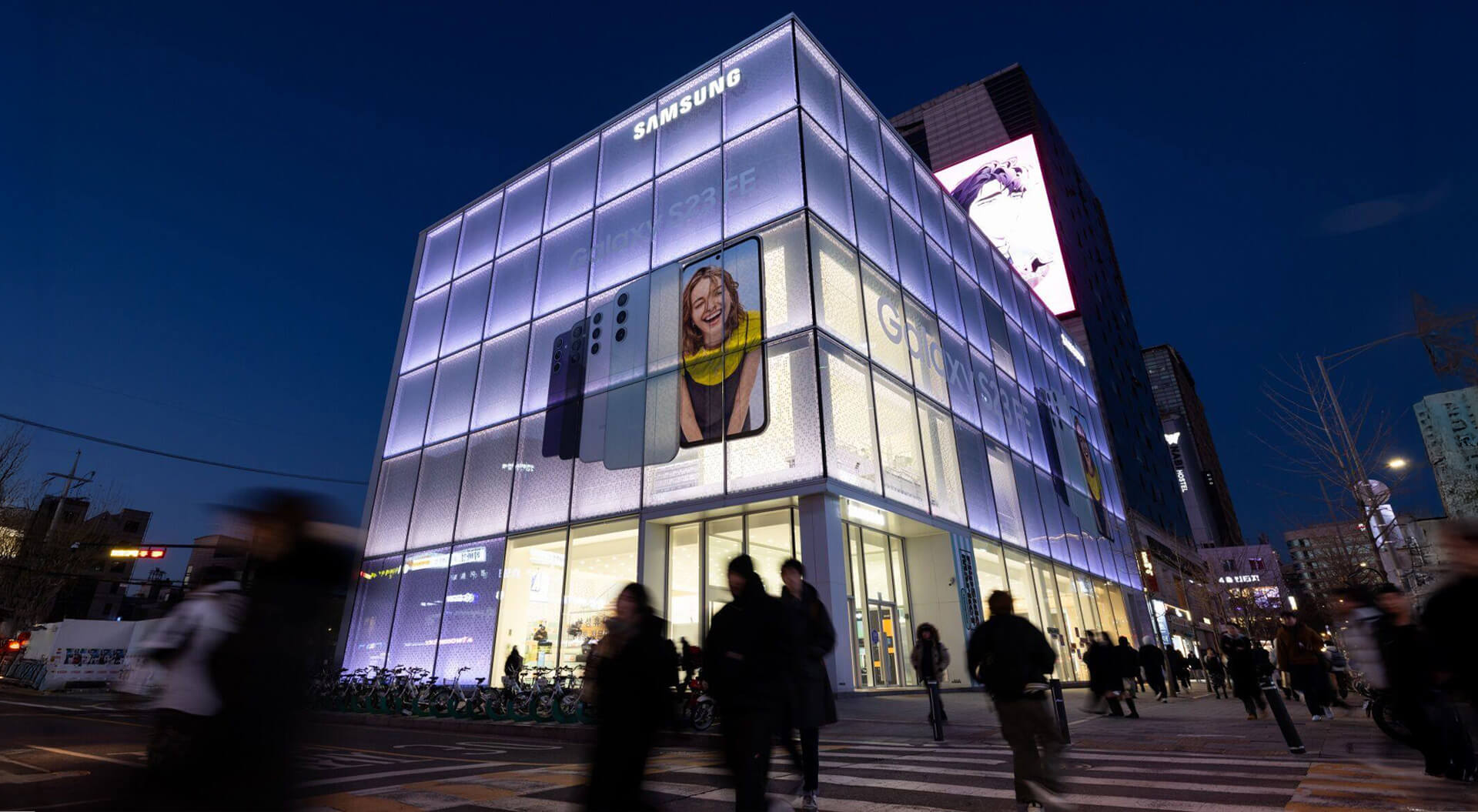
International Telecom & Technology Store Benchmark - Samsung Hongdae Store, South Korea: Technology as Experience
Samsung's Hongdae presence demonstrates how a technology flagship can operate as an experience platform rather than a conventional product showroom.
Interactive experiences, product demonstrations and technology-led environments allow customers to explore the wider device ecosystem and understand the practical relevance of new technology.
The strategic lesson is applicable to telecom operators: complex technology becomes more persuasive when customers can experience its relevance rather than simply read about its specifications.
Strategy: Samsung's Hongdae flagship demonstrates how technology retail can become an experience platform rather than a conventional product showroom. Located in Seoul's highly active Hongdae district, the multi-level environment gives visitors opportunities to explore Samsung's device ecosystem through interactive experiences and product demonstrations. The store has also supported experiential Galaxy AI activations, allowing visitors to understand technology through real-life scenarios rather than simply reading product information. The strategic lesson is that complex technology becomes more persuasive when customers can experience its relevance. Flexible experience zones, demonstration, hospitality and event-led programming can transform a flagship into a destination for discovery, learning and brand engagement.
Design implication: flagship telecom store design should make innovation tangible, intuitive and participatory.
Management Questions for Flagship & Standard Telecom Store Design
How can flagship innovation be translated into a scalable retail network?
The principles behind a flagship can be identified and converted into adaptable planning, experience and brand components. These can then be configured for standard stores according to location, footprint, customer mission and investment level.
How can telecom operators maintain brand consistency across different store formats?
The format system should distinguish between elements that are fundamental to the brand and those that can adapt. Core identity, customer-experience principles and service propositions should remain consistent while layouts, fixtures and spatial configurations respond to individual locations.
How can modular telecom store design improve rollout economics?
Modular planning allows proven design principles and components to be adapted rather than recreated for every location. This can support consistency, implementation efficiency and more economical refurbishment.
How should flagship and standard stores be measured?
The formats should have different objectives but contribute to the same network strategy. Flagships can focus on engagement, experience, innovation and brand impact, while standard stores can emphasise conversion, productivity, sales and operational efficiency.
What does CampbellRigg bring to a telecom retail programme?
CampbellRigg connects brand strategy, retail strategy, telecom store design, customer experience, architecture, interior design and communications. This enables management teams to move from an individual store concept towards a coherent, scalable retail format system.
Flagship Establishes. Standard Scales.
The strongest telecom retail networks need both flagship experiences and commercially efficient standard stores.
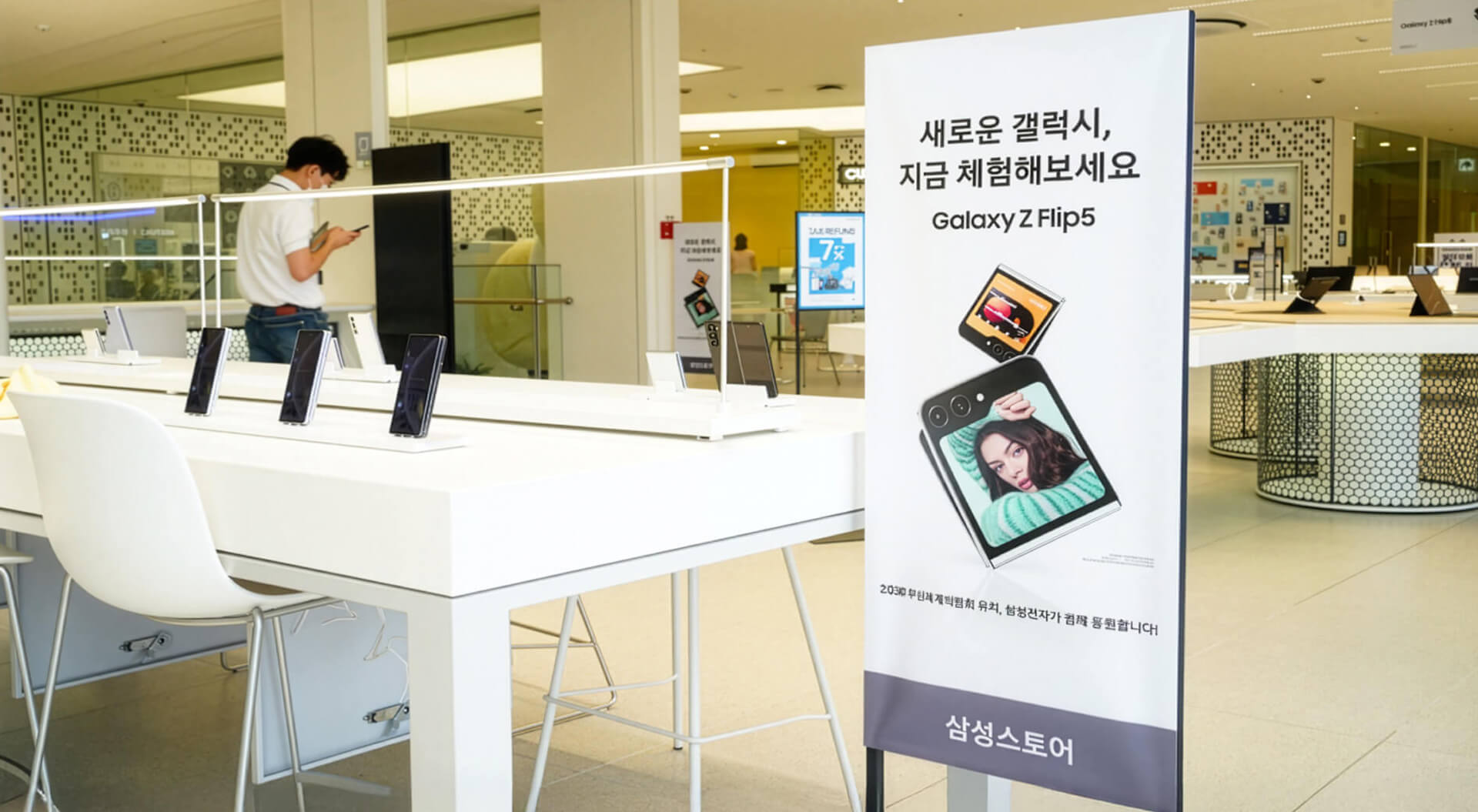
The flagship establishes what the brand stands for. It can demonstrate innovation, create destination experiences, test customer journeys and introduce new ways of presenting technology.
The standard store scales those principles. It translates the brand experience into a practical, repeatable and commercially effective format capable of operating across different locations and investment levels
The strategic opportunity is therefore not to design two separate types of store.
It is to create one connected retail format system in which flagship innovation, standard-store efficiency and scalable implementation reinforce one another.
CampbellRigg helps telecom and technology brands make that connection, from strategic positioning and retail format development through to customer experience, architecture, interior design, communications and implementation.
The result is not simply a better-looking store.
It is a retail network designed to strengthen the brand, improve customer experience, support commercial performance and provide a scalable platform for future growth.
Flagship establishes. Standard scales. CampbellRigg connects them.

Schedule your consultation today and receive a free quote.
Cost-Effective Excellence:
Our pricing structure is highly competitive, offering exceptional value without compromising on quality or creativity.
Rapid Execution:
We move fast. From concept to implementation, our agile team ensures your project is delivered on time and to the highest standards.
Multidisciplinary Expertise:
Our team brings together seasoned brand strategists, architects, interior designers, and graphic designers, collaborating to create seamless, end-to-end brand environments.
Global Reach, Local Insight:
With successful projects delivered across Europe, the Middle East, and Asia, we combine international experience with local market understanding.
Scalable Project Delivery:
Whether it's a flagship technology store, an urban network or mall micro-branches, we manage and execute projects of all sizes, efficiently and effectively.
Proven Track Record:
Our designs evolve branch networks from purely transactional spaces into experiential, relationship-focused brand environments, enhancing engagement, elevating customer experience, and driving tangible business results.
Full-Service Creative Agency:
From rebranding and marketing campaigns to spatial design and rollout, we provide an integrated service tailored to your goals.