News and Views
Telecom Flagship Store Design Trends 2026–2027: Building Scalable, Measurable Retail Networks




Telecom Flagship Store Design Trends 2026–2027: Building Scalable, Measurable Retail Networks
How telecom operators can turn flagship stores into commercially effective brand, experience and customer-growth platforms
Telecom flagship store design is moving beyond devices, tariffs and transactional service. As connectivity becomes increasingly commoditised and customers can research, compare and purchase online, leading operators are rethinking the physical store as an experience-led destination where brand, technology, service and connected lifestyles come together.
For 2026–2027, leading telecom retail strategies are combining immersive experience zones, phygital customer journeys, connected-lifestyle ecosystems, AI-assisted discovery, hospitality-inspired service, flexible environments and measurable commercial performance.
The management question is no longer simply: What should a telecom flagship store look like?
It is: How can the physical retail network strengthen the brand, demonstrate the value of connectivity, increase customer engagement, support service adoption and provide a scalable format that can be rolled out across multiple markets?
The shift is from: See → Select → Purchase to: Discover → Experience → Understand → Consult → Personalise → Connect
This makes telecom flagship store design a strategic business investment rather than simply an architectural or interior-design exercise.

Why telecom flagship stores are being reimagined
The traditional telecom store was designed primarily around smartphones, SIM cards, tariffs, accessories and customer service.
That model is increasingly challenged by digital commerce, online comparison, device commoditisation and changing customer expectations.
Customers can already research specifications, compare tariffs, watch demonstrations and purchase devices online.
The physical store therefore needs to provide experiences that digital channels cannot easily reproduce:
- Physical interaction with technology
- Expert human advice
- Immersive demonstrations
- Connected-lifestyle experiences
- Personalised consultation
- Community and events
- Hospitality
- Brand theatre
- Immediate service and support
The flagship can therefore become a physical technology platform: a place where the operator demonstrates not only what it sells, but what connectivity enables.
This changes telecom retail from a transaction channel into an experience, relationship and service-development platform.
How CampbellRigg helps
CampbellRigg begins by connecting these disciplines rather than treating them as separate design commissions.
Brand auditing establishes how the existing proposition is perceived and expressed. Strategy defines the desired market position. The design brief converts that strategy into practical requirements for customer experience, store planning, identity and implementation.
The benefit management receives is one strategic direction linking brand decisions to the physical retail network, rather than a collection of disconnected design initiatives.
The flagship therefore becomes the strategic starting point for the wider retail estate.
Seven Telecom Flagship Store Design Trends for 2026–2027
1. Experience-led telecom flagship stores
The next generation of telecom flagship stores will be designed around experiences rather than product density.
Instead of presenting rows of smartphones and accessories, operators can create environments where customers experience the wider ecosystem surrounding connectivity.
This can include:
- Gaming and entertainment
- Smart-home technology
- Wearables
- Connected mobility
- Home networking
- Digital entertainment
- 5G applications
- Productivity technology
- Interactive demonstrations
- Technology education
The physical store becomes a storytelling environment.
A customer may enter to replace a smartphone but discover how that device connects with broadband, entertainment, smart-home systems, wearables and other services.
This creates opportunities for cross-selling, service adoption, longer engagement and stronger customer relationships.
For management, experience design should therefore be evaluated not only by aesthetics but by the effectiveness of the customer journey and the commercial opportunities it creates.
How CampbellRigg helps
CampbellRigg translates the brand proposition into a customer experience architecture.
We identify customer missions, commercial priorities and technology ecosystems, then develop experience zones, circulation, product presentation, consultation areas and storytelling systems around those requirements.
The objective is to ensure every major area of the flagship has a defined commercial and customer role: Attract → Explain → Demonstrate → Advise → Convert → Retain
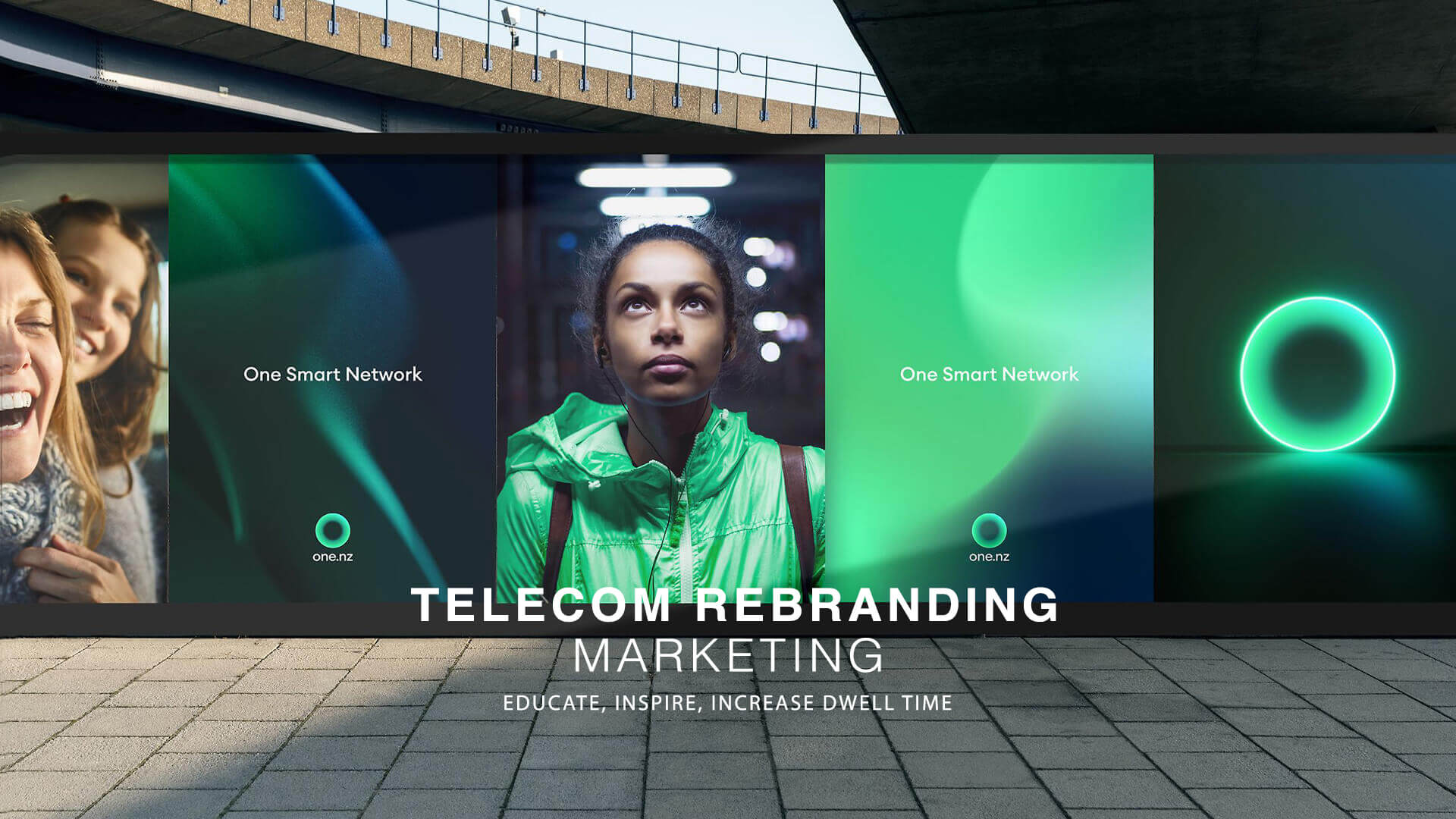
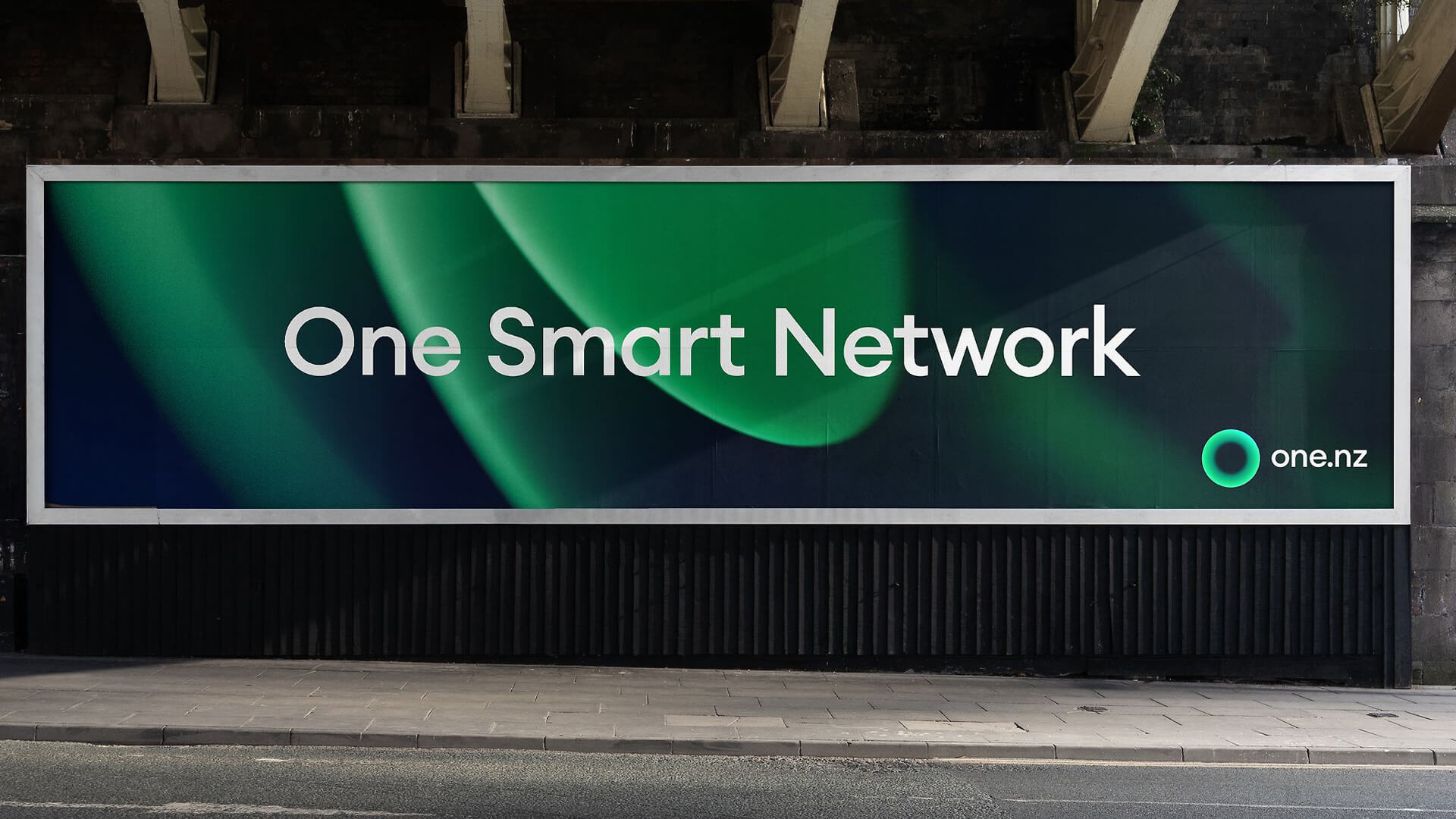
International benchmark: One NZ
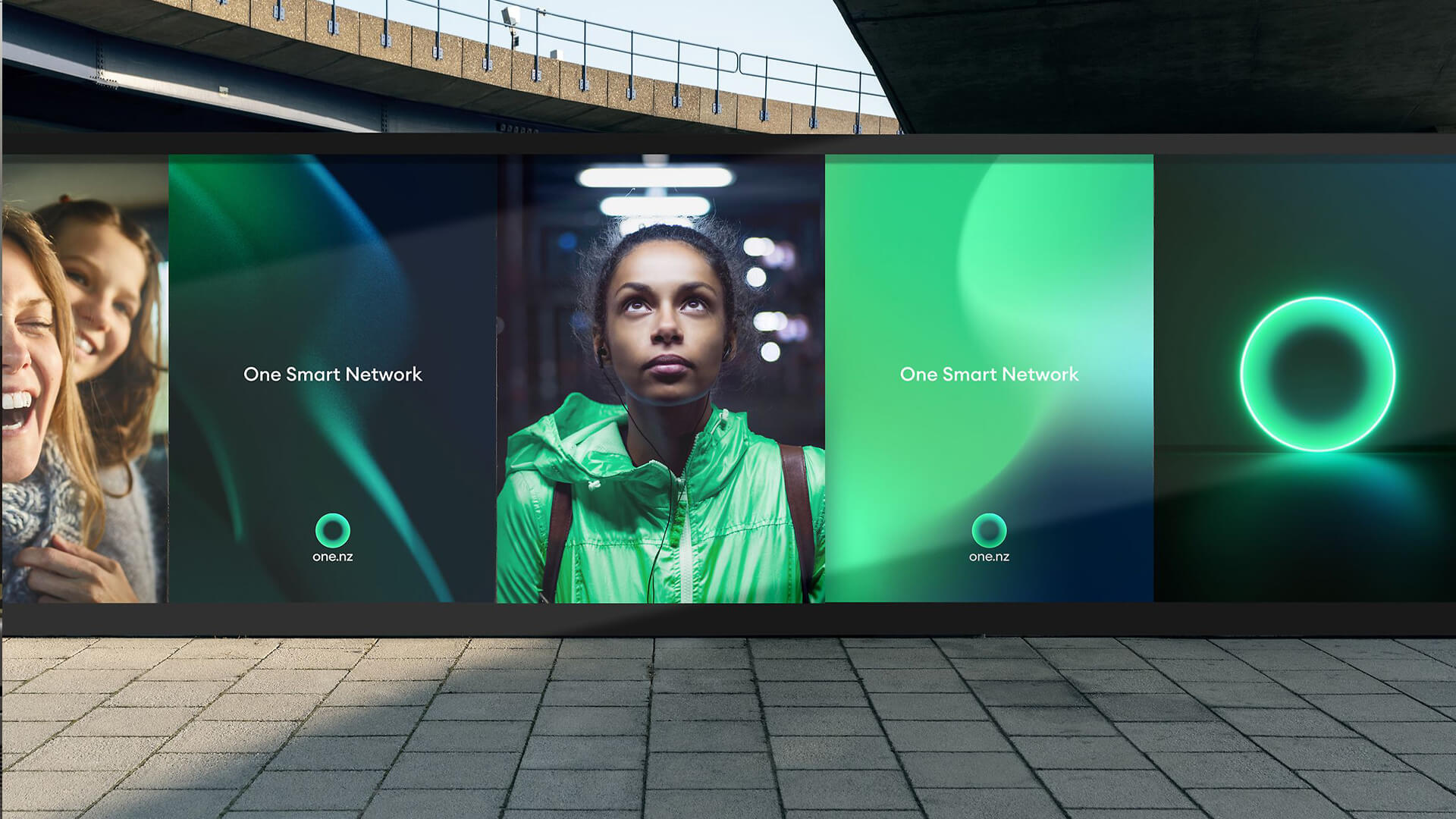
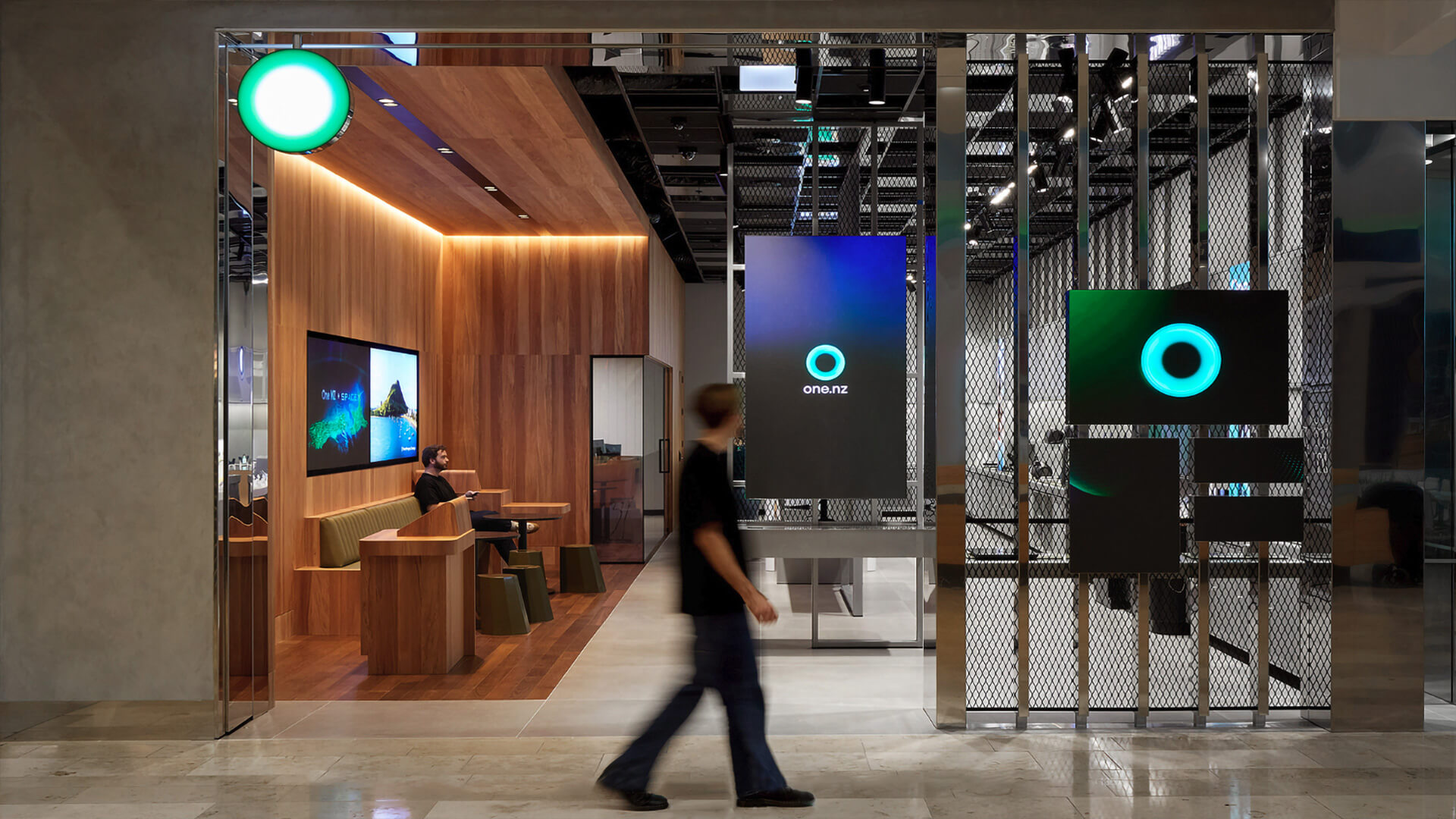
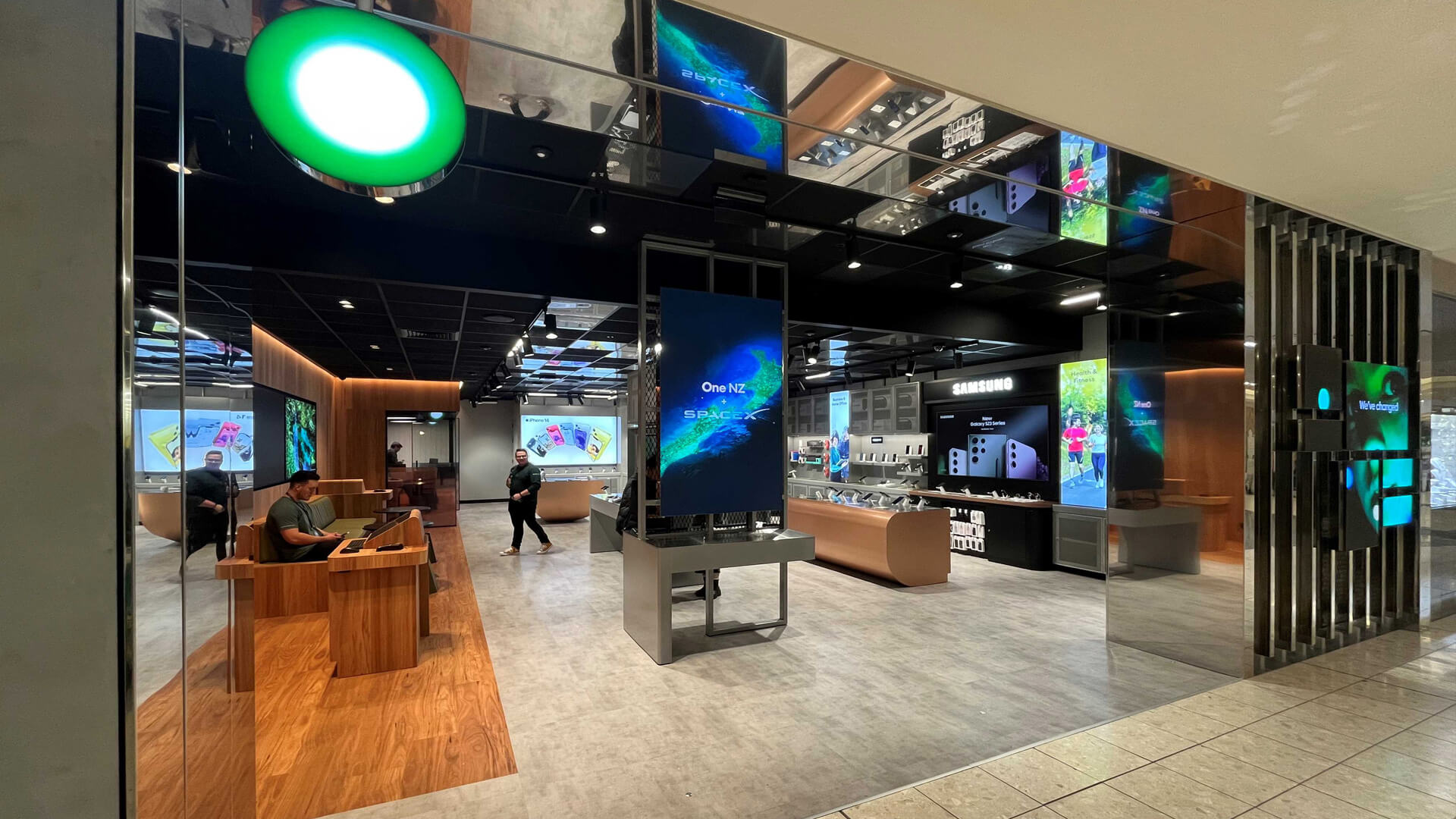
In 2023, One NZ transformed the former Vodafone NZ brand through a simplified identity and new visual system across communications and customer-facing environments. The transformation illustrates how a telecom proposition can extend beyond advertising into physical retail and other customer touchpoints.
For management, the lesson is straightforward: a telecom rebrand creates greater value when the new proposition becomes tangible across the physical retail network.
The name “one,” drawn from Vodafone’s final letters, reduced complexity while amplifying meaning. The logo evolved into a flexible, animated system designed for future AI interaction. This simplified, scalable brand architecture now powers communications, retail reinvention, interiors, uniforms, and digital tools across New Zealand.
2. Phygital telecom retail: connecting physical and digital journeys
Phygital telecom retail integrates physical stores with digital services to create one connected customer journey.
Customers may research online, compare products, check availability, book appointments and begin a purchase before entering the store.
Equally, they may discover a product physically and complete the transaction or service interaction digitally.
The store must therefore operate as part of a wider omnichannel ecosystem.
Phygital capabilities can include:
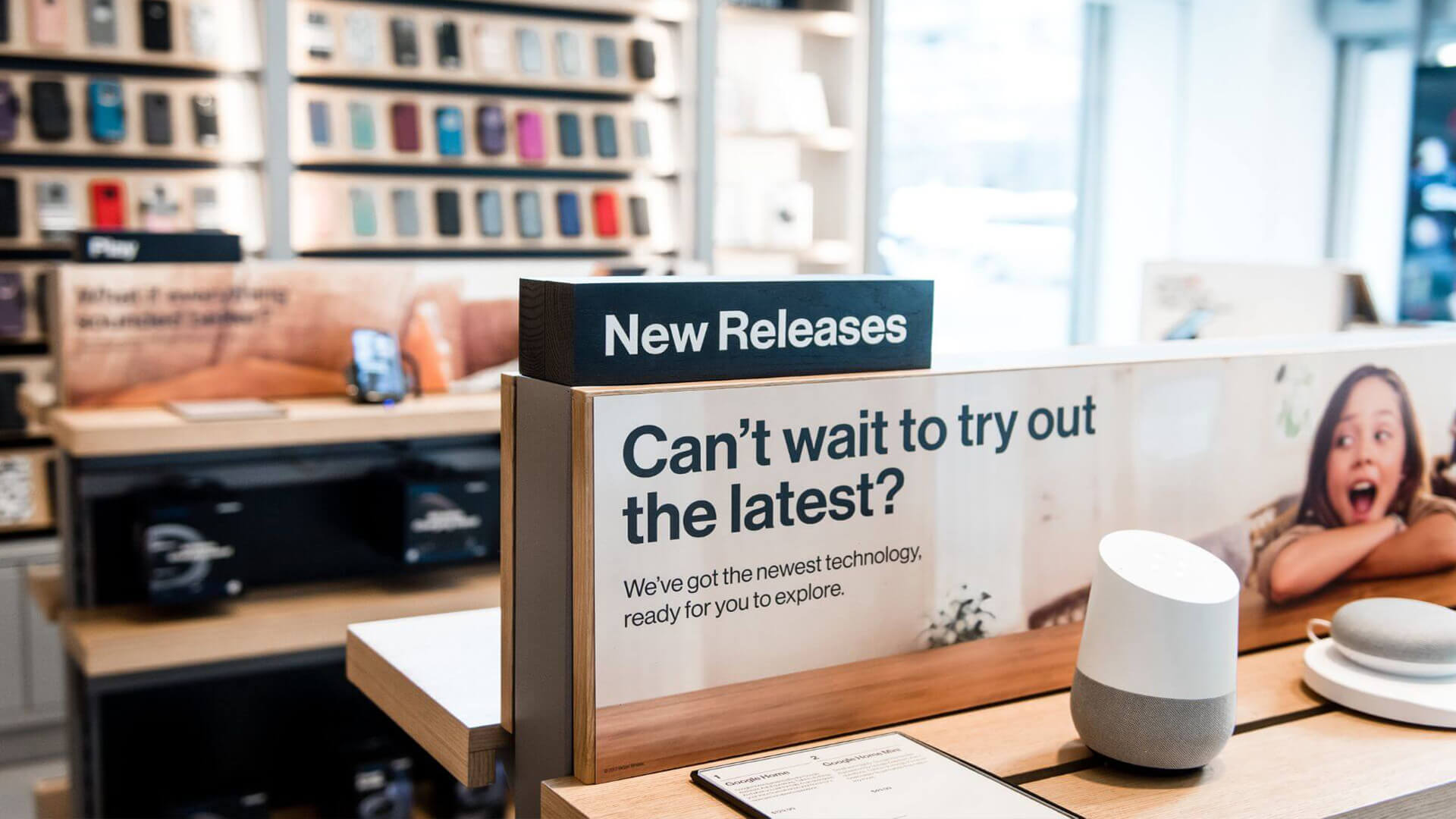
- Interactive product discovery
- Mobile-connected demonstrations
- Digital signage
- QR-enabled product information
- Appointment booking
- Digital onboarding
- Self-service interfaces
- Assisted-service technology
- Personalised recommendations
- Remote expert support
- Connected loyalty experiences
The strongest environments follow the principle of invisible technology.
Digital systems should remove friction and enrich the customer experience without turning the store into a technology showroom filled with screens.
Technology should work in the background while the customer experience remains intuitive, human and brand-led.
How CampbellRigg helps
CampbellRigg maps the complete physical-to-digital customer journey, identifying where technology should accelerate the experience and where human interaction should remain central.
The result is not simply a digitally enabled store. It is an integrated retail system in which digital services, staff, physical environments, data and brand experience work together.
This page addresses phygital retail specifically as part of flagship network strategy; deeper AI-led commerce belongs to CampbellRigg's dedicated AI-agent retail content.
3. Connected-lifestyle and smart-home experience zones
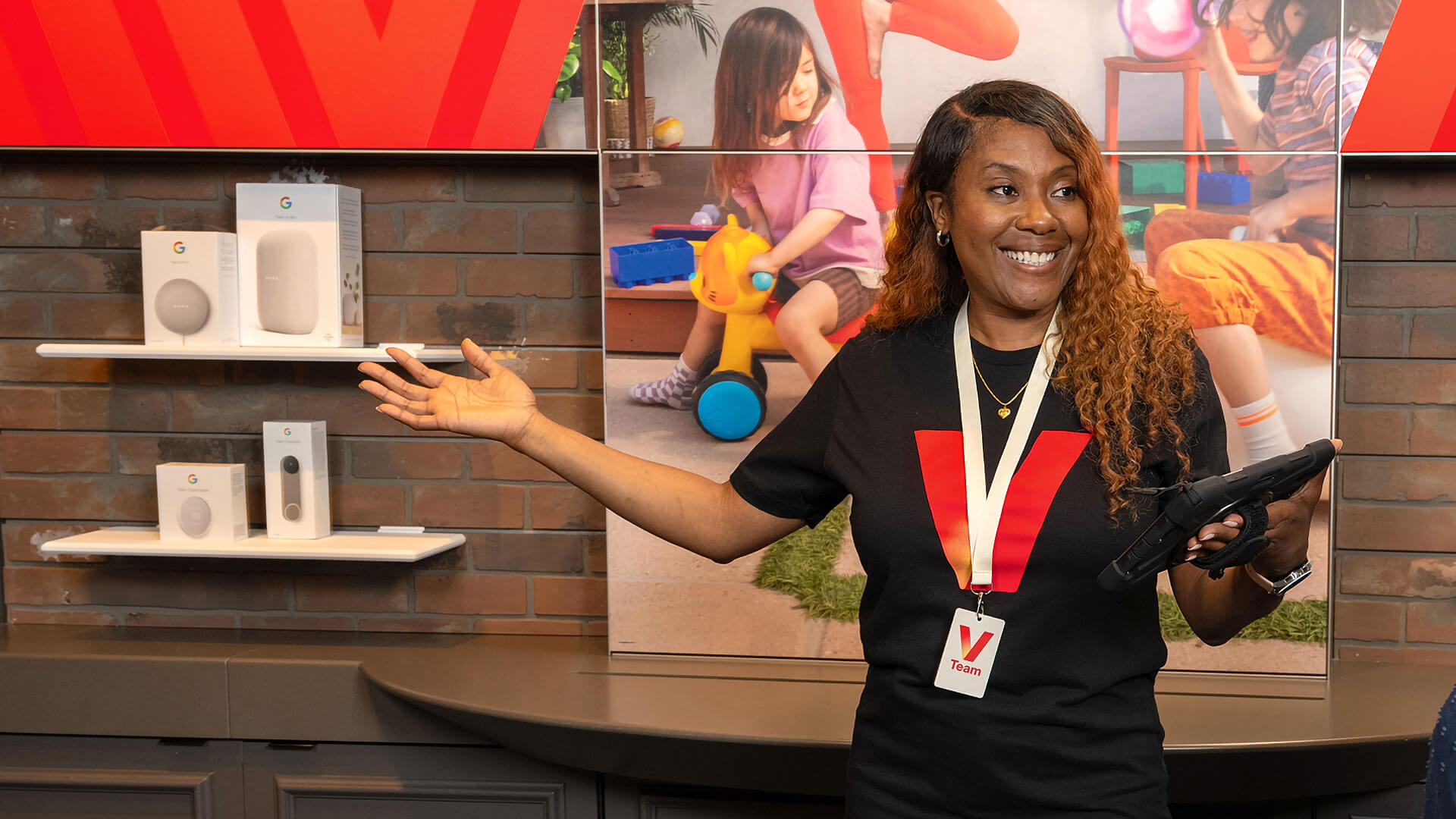
The smartphone is increasingly the gateway to a wider technology ecosystem.
This creates an important opportunity for telecom flagship stores to demonstrate connected lifestyles rather than individual products.
Smart-home environments can demonstrate how connectivity integrates:
- Home security
- Entertainment
- Energy management
- Connected appliances
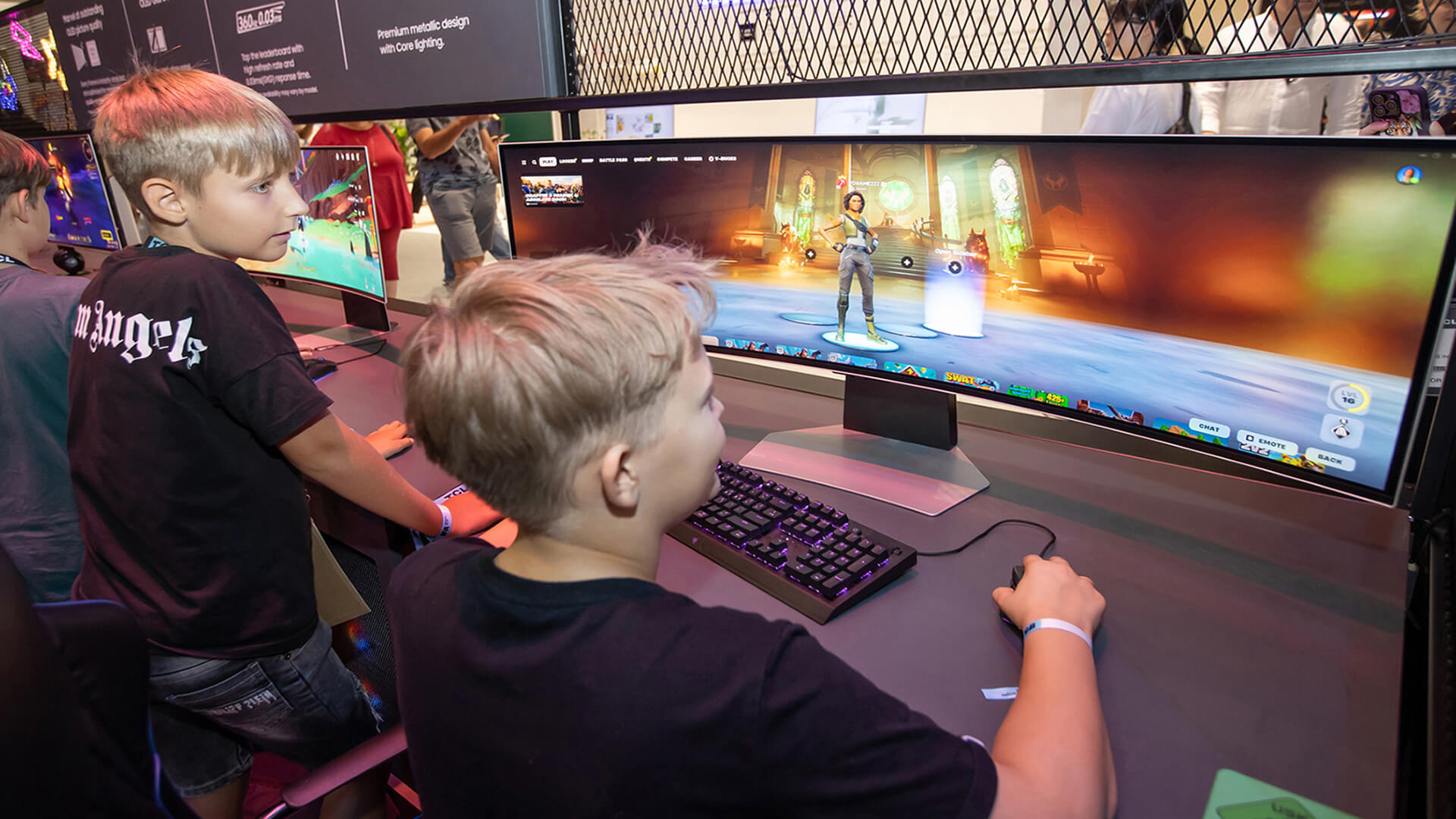
- Gaming
- Wearables
- Smart speakers
- Home networking
- Connected lifestyle technologies
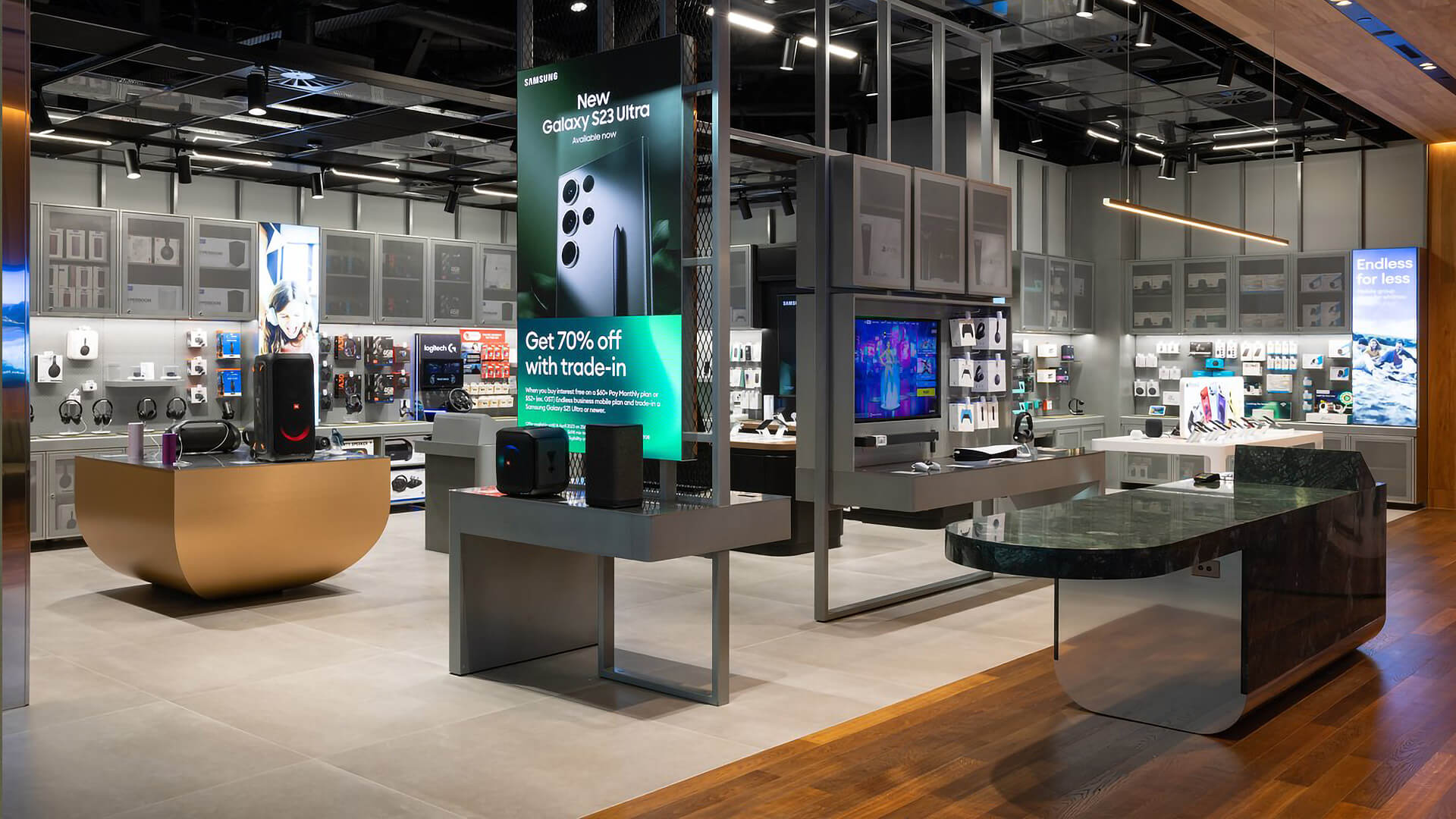
Rather than displaying dozens of unrelated products, stores can create realistic environments that show how technologies work together.
A living room, gaming environment, connected kitchen or home-office zone can become a powerful retail storytelling device.
The commercial opportunity is equally important.
A customer visiting to replace a smartphone can discover broadband, entertainment, smart-home technology, accessories and connected services within the same ecosystem.
The flagship therefore becomes a platform for ecosystem selling rather than device selling.
How CampbellRigg helps
CampbellRigg defines the role of each experience zone within the wider commercial journey.
We connect technology storytelling, merchandising, spatial planning, customer missions and service propositions so demonstrations are not isolated attractions.
Each zone is designed to answer a commercial question:
What should the customer understand, experience, ask about or purchase next?
This turns experiential retail into a structured customer-development tool.
4. AI-assisted discovery and personalised retail
AI is increasingly relevant to telecom retail because product portfolios, tariffs, services and connected ecosystems are becoming more complex.
AI can support product discovery, comparison, service recommendations, appointment preparation and assisted selling.
Potential applications include:
- Intelligent product recommendations
- Conversational retail assistants
- Personalised service discovery
- AI-assisted demonstrations
- Dynamic digital content
- Customer journey analysis
- Predictive service support
- Assisted sales
- Appointment preparation
- Personalised consultations
But AI should complement rather than replace human expertise.
For complex or high-value decisions, customers can still benefit from knowledgeable advisers who translate technology into relevant solutions.
The emerging model is therefore: AI-assisted discovery + human-led consultation
The strategic implication for flagship design is not to fill the store with AI interfaces. It is to determine where AI improves the customer journey and where human expertise creates greater value.
How CampbellRigg helps
CampbellRigg considers AI as part of the customer journey and operating model, rather than treating it as a collection of digital screens.
We identify where AI can reduce friction, improve discovery and support staff while preserving the human interactions that build confidence and trust.
For detailed consideration of AI agents, agentic commerce and AI-led telecom customer journeys, CampbellRigg addresses that emerging subject separately.
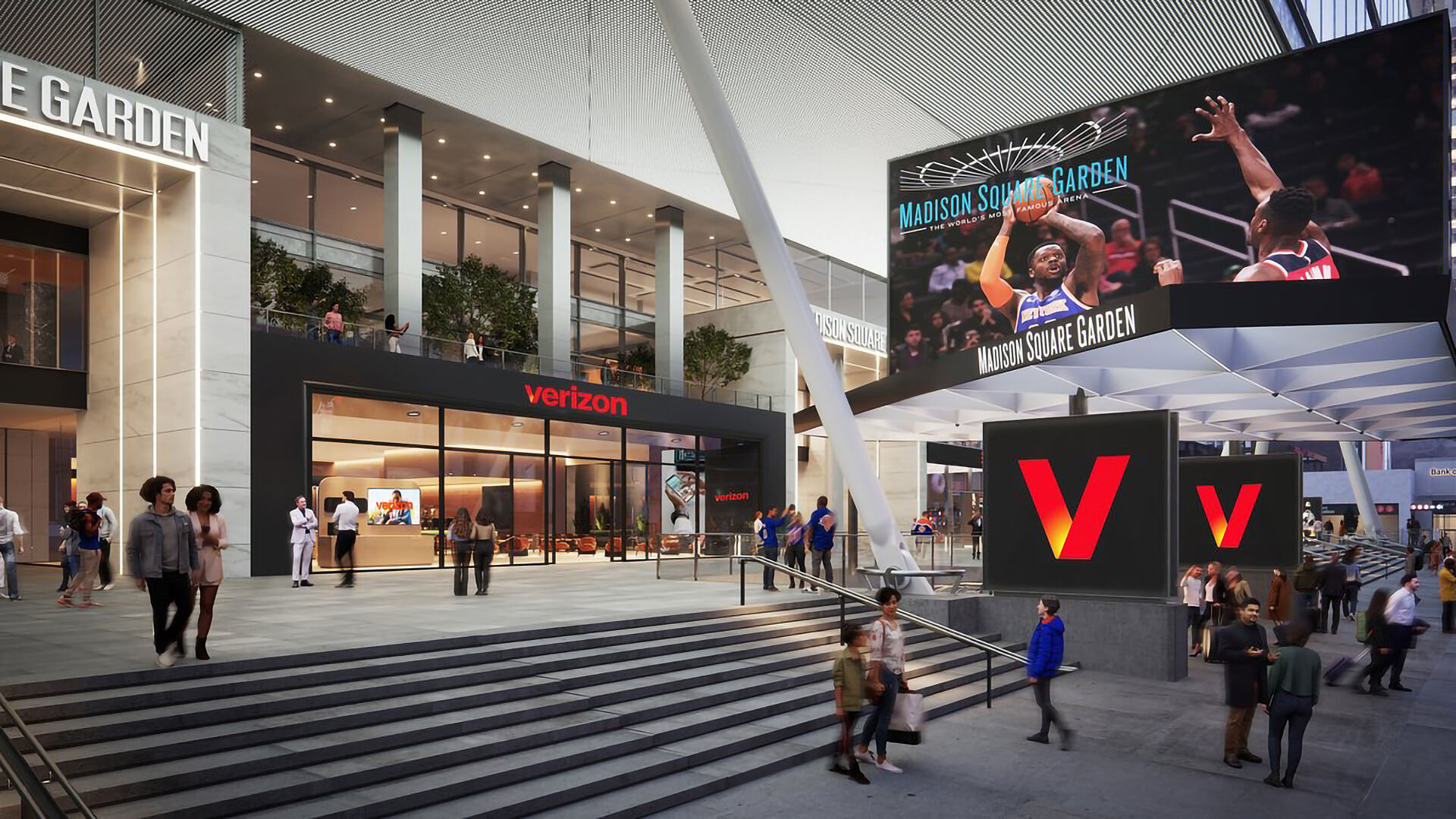
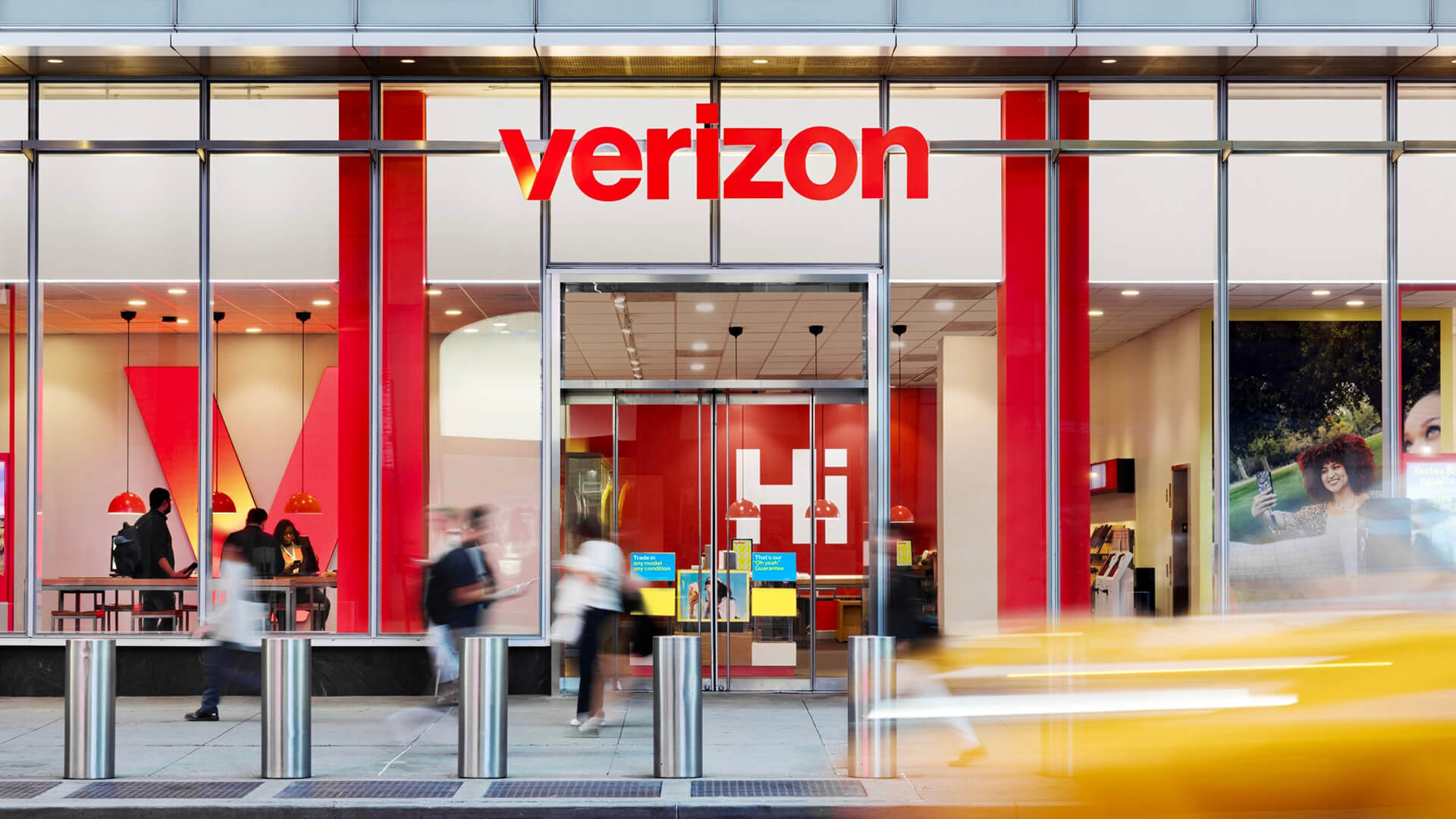
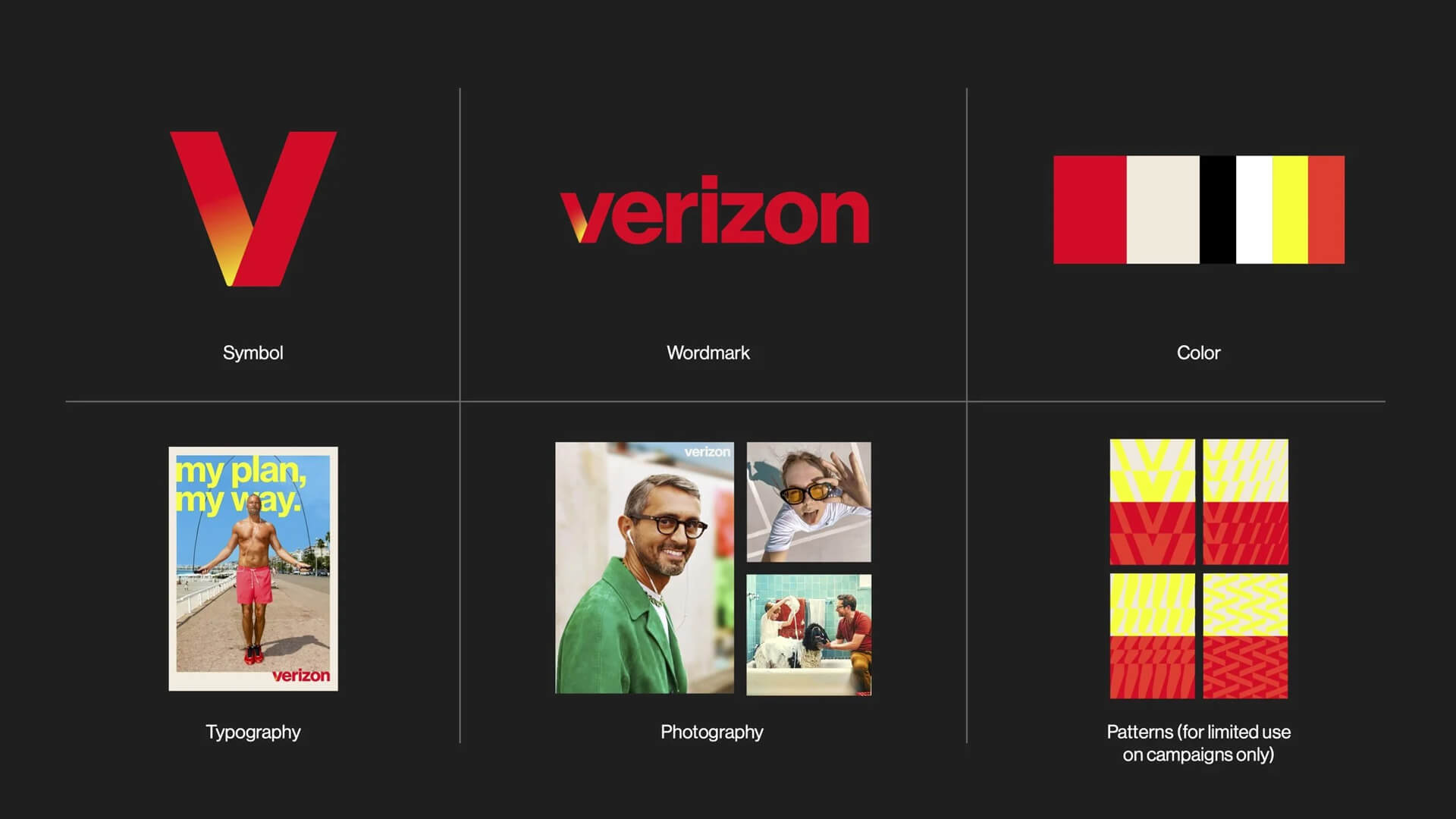
International benchmark: Verizon
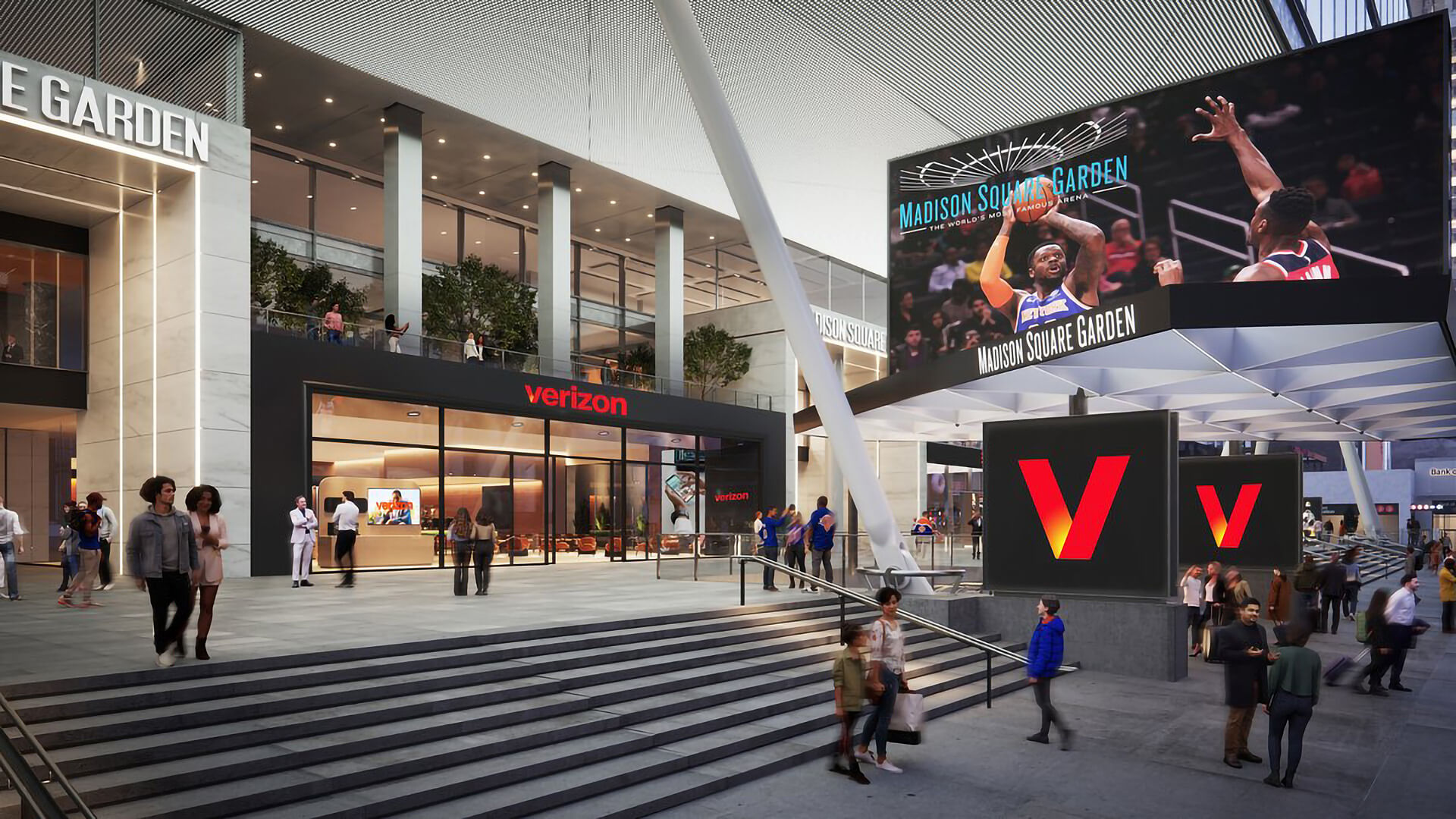
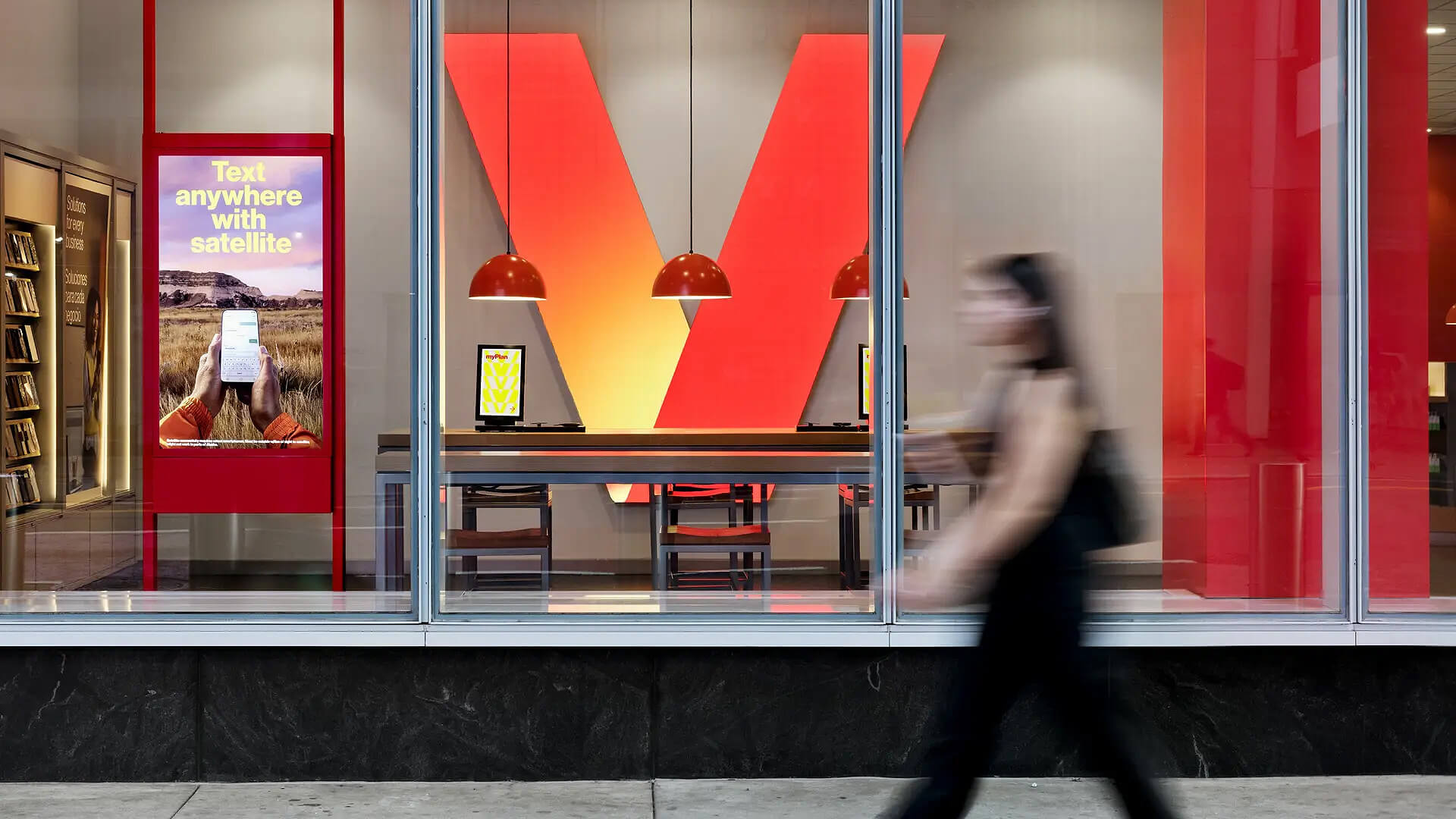
Verizon's recent brand evolution provides a useful reference for how a major telecom operator can connect brand identity with a broader technology proposition.
The management lesson is that brand transformation, service proposition and physical retail experience increasingly need to operate as one integrated system.
A sleek new visual identity, refreshed logo, and streamlined brand voice. The redesign emphasizes innovation, connectivity and customer-centric experiences, reflecting Verizon’s evolution beyond traditional telecom services. With renewed focus on 5G, digital services, and smart-home integration, the new branding positions Verizon as a modern, forward-looking tech leader.
5. Flexible and modular telecom store environments
Telecom retail has to adapt quickly as products, services and customer behaviour change.
Permanent fixtures designed around a single product category can become obsolete rapidly.
Modular telecom store design allows environments to evolve as new technologies and customer missions emerge.
Flexible design can incorporate:
- Movable product displays
- Reconfigurable experience zones
- Modular consultation areas
- Flexible digital installations
- Temporary launch environments
- Event and community spaces
- Adaptable merchandising systems
This enables flagship stores to become continually evolving environments rather than static showrooms.
Flexibility is particularly important for major locations that need to accommodate:
- Product launches
- Technology demonstrations
- Workshops
- Community events
- Seasonal campaigns
- Customer consultations
- New service introductions
The result is a store capable of adapting without requiring continual structural redesign.
How CampbellRigg helps
CampbellRigg develops modular design systems rather than one-off interiors.
The flagship establishes the design language, customer journey and experience principles, while modular components allow the system to adapt to different locations, footprints and commercial requirements.
This is where flagship design begins to become network strategy.
6. Hospitality-inspired telecom retail
Telecom customers do not necessarily want to enter a conventional sales environment and immediately encounter product displays.
They may want to browse, explore, ask questions, receive advice or understand what new technology could do for them.
Hospitality-inspired telecom store design can introduce:
- Comfortable consultation areas
- Informal seating
- Private advisory spaces
- Welcome zones
- Refreshment areas
- Community events
- Technology discovery lounges
- More intuitive circulation
This helps shift the perception of the telecom store from transactional outlet to technology destination.
It is particularly valuable when customers require advice about complex connectivity, smart-home or digital-service solutions.
Hospitality also gives staff more opportunities to establish relationships rather than simply process transactions.
How CampbellRigg helps
CampbellRigg uses hospitality principles selectively to support the commercial journey.
We determine where the environment should encourage exploration, consultation, waiting, learning or relationship-building, then integrate those requirements into the spatial plan.
The result is a customer journey in which service quality and commercial performance reinforce each other.
7. Designing around different telecom customer missions
Not every customer visits a telecom store for the same reason.
A successful flagship environment should therefore be designed around distinct customer missions.
The technology explorer
Need: Discover new devices, emerging technology and new experiences.
Store response: Immersive demonstrations, interactive displays and discovery zones.
The connected-lifestyle customer
Need: Understand how smartphones, broadband, entertainment and smart-home products work together.
Store response: Realistic connected-home and lifestyle environments.
The service customer
Need: Resolve an account, device or connectivity issue efficiently.
Store response: Clearly defined service areas and efficient circulation.
The premium customer
Need: Personalised advice, privacy and higher-touch service.
Store response: Private consultation and hospitality-led advisory spaces.
The business customer
Need: Specialist advice about connectivity, collaboration, devices and digital services.
Store response: Dedicated business consultation environments.
The existing customer
Need: Resolve an immediate issue while potentially discovering relevant services or upgrades.
Store response: Intelligent recognition, personalised recommendations and adviser-led discovery.
How CampbellRigg helps
CampbellRigg starts with customer mission mapping, not room planning.
We establish why different customers visit, what they need to accomplish and which commercial opportunities are relevant to each journey.
The spatial plan is then built around those missions.
This gives management a stronger basis for deciding what the store should contain, how much space each activity deserves and how the environment should support the wider proposition.
From telecom store to technology destination
The central challenge for telecom operators is straightforward:
Why should a customer visit a physical store when they can buy almost everything online?
The answer cannot simply be price or product availability.
The physical store must provide experiences that digital channels cannot easily reproduce.
A flagship can become a destination for:
- Technology discovery
- Product launches
- Education
- Demonstrations
- Customer events
- Expert consultation
- Smart-home exploration
- Community engagement
- Premium services
- Brand experiences
Rather than competing with ecommerce on transactional convenience, physical retail can concentrate on its natural advantages:
human interaction, physical experience, sensory engagement, expert advice and immersive demonstration.
That is the strategic rationale for investing in telecom flagship store design.
How CampbellRigg helps
CampbellRigg designs the flagship around what physical retail can uniquely accomplish.
The objective is to allocate space and investment to experiences that generate meaningful customer engagement rather than simply reproduce online transactions in a physical environment.

International telecom and technology benchmarks
International brands demonstrate different approaches to flagship retail.
One NZ shows how telecom rebranding can be translated into a contemporary customer environment, connecting brand simplification with retail reinvention.
Verizon provides a reference for integrating connectivity, technology and customer experience within a recognisable physical brand environment.
2degrees and Swisscom provide useful reference points for customer-centric telecom retail, where technology, service and brand experience need to operate together.
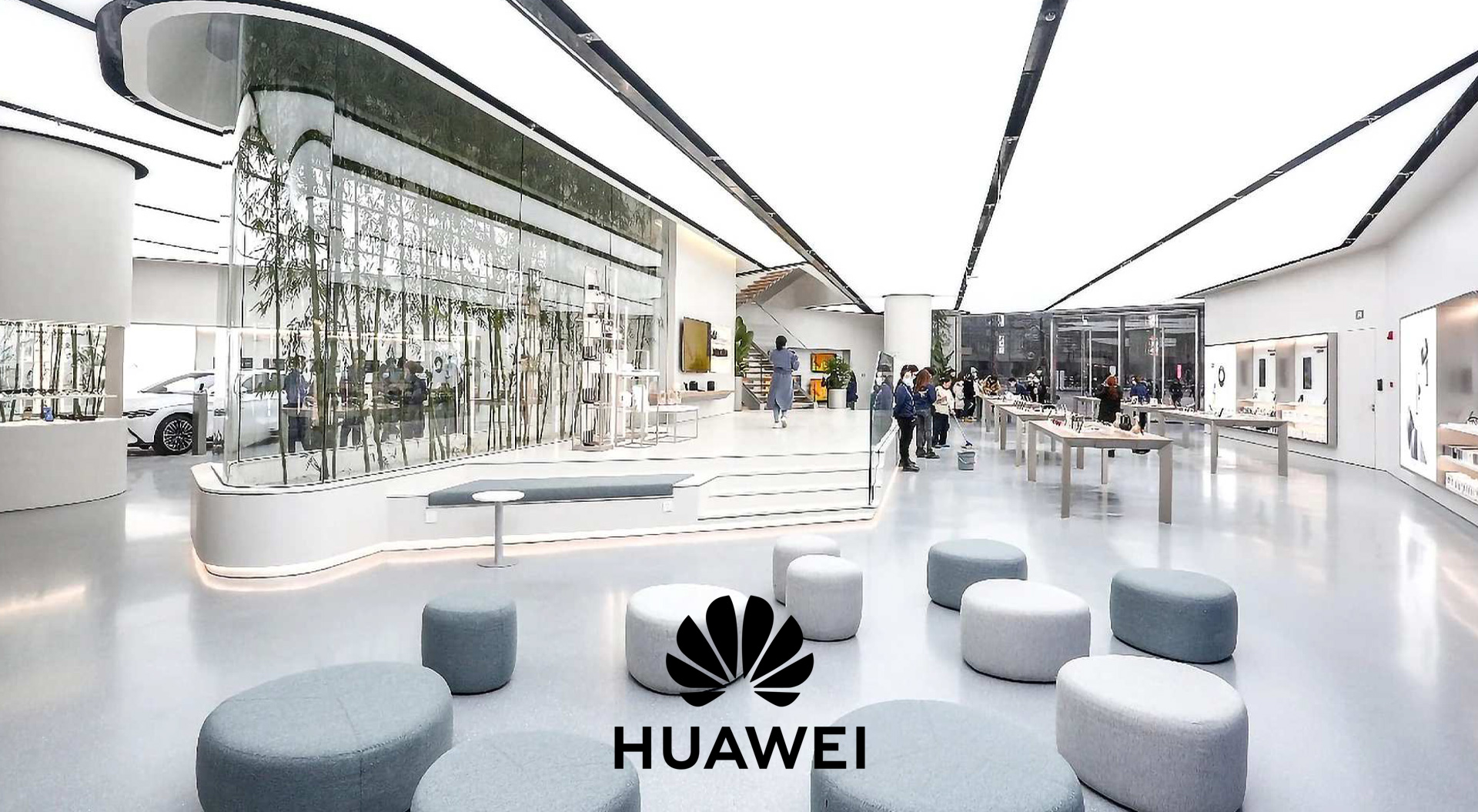
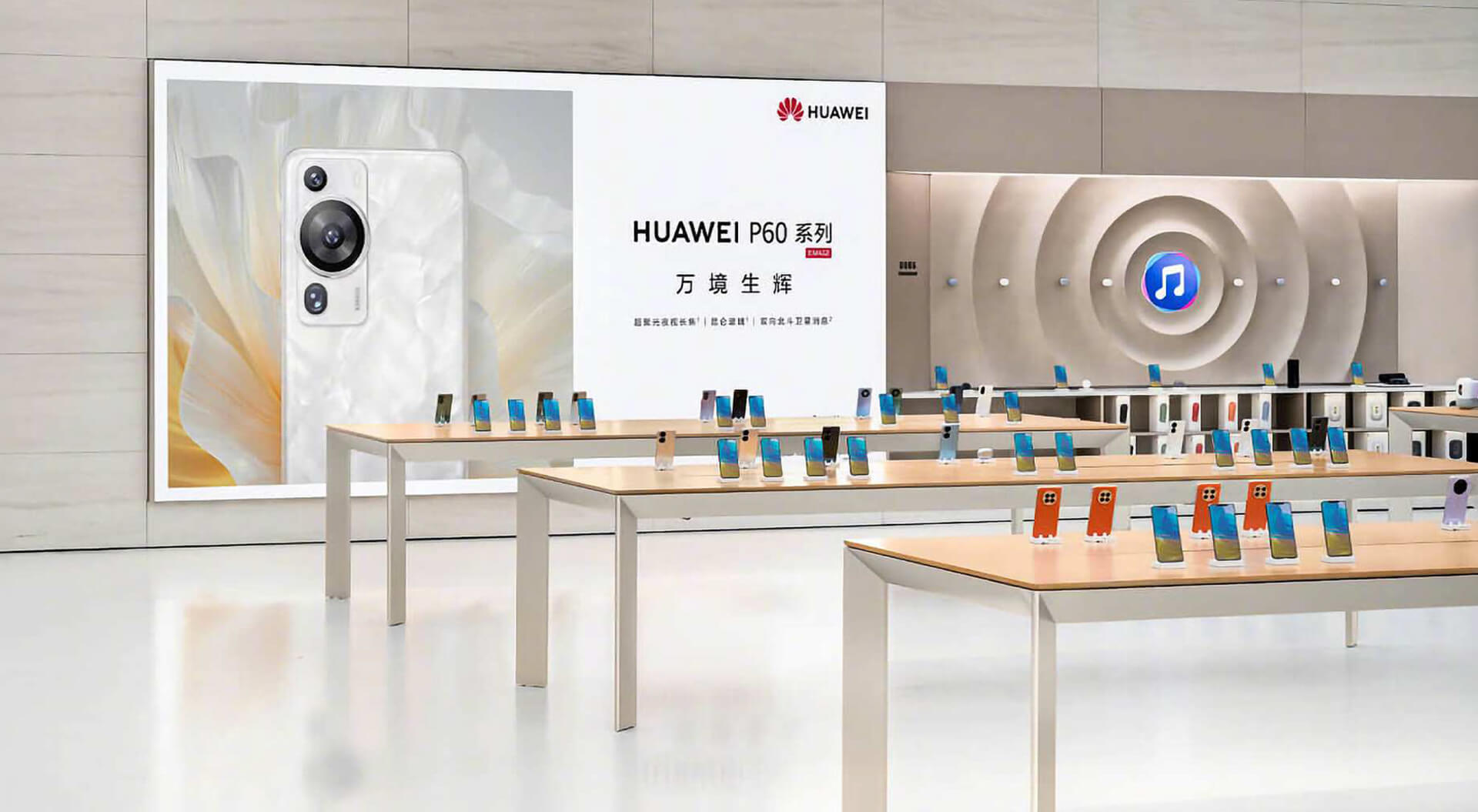
Huawei demonstrates the potential for technology stores to become experience and demonstration destinations rather than conventional retail outlets.
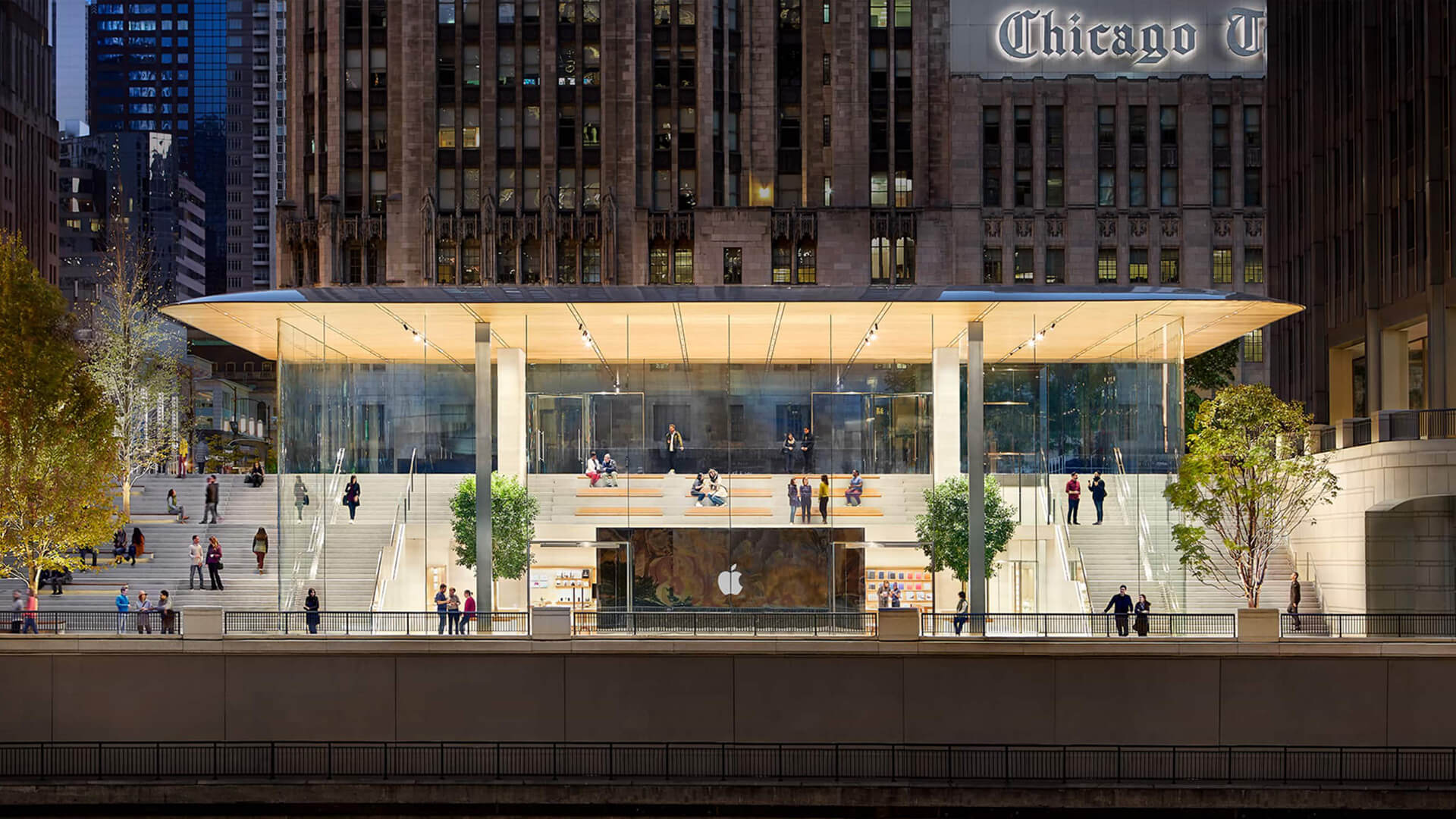
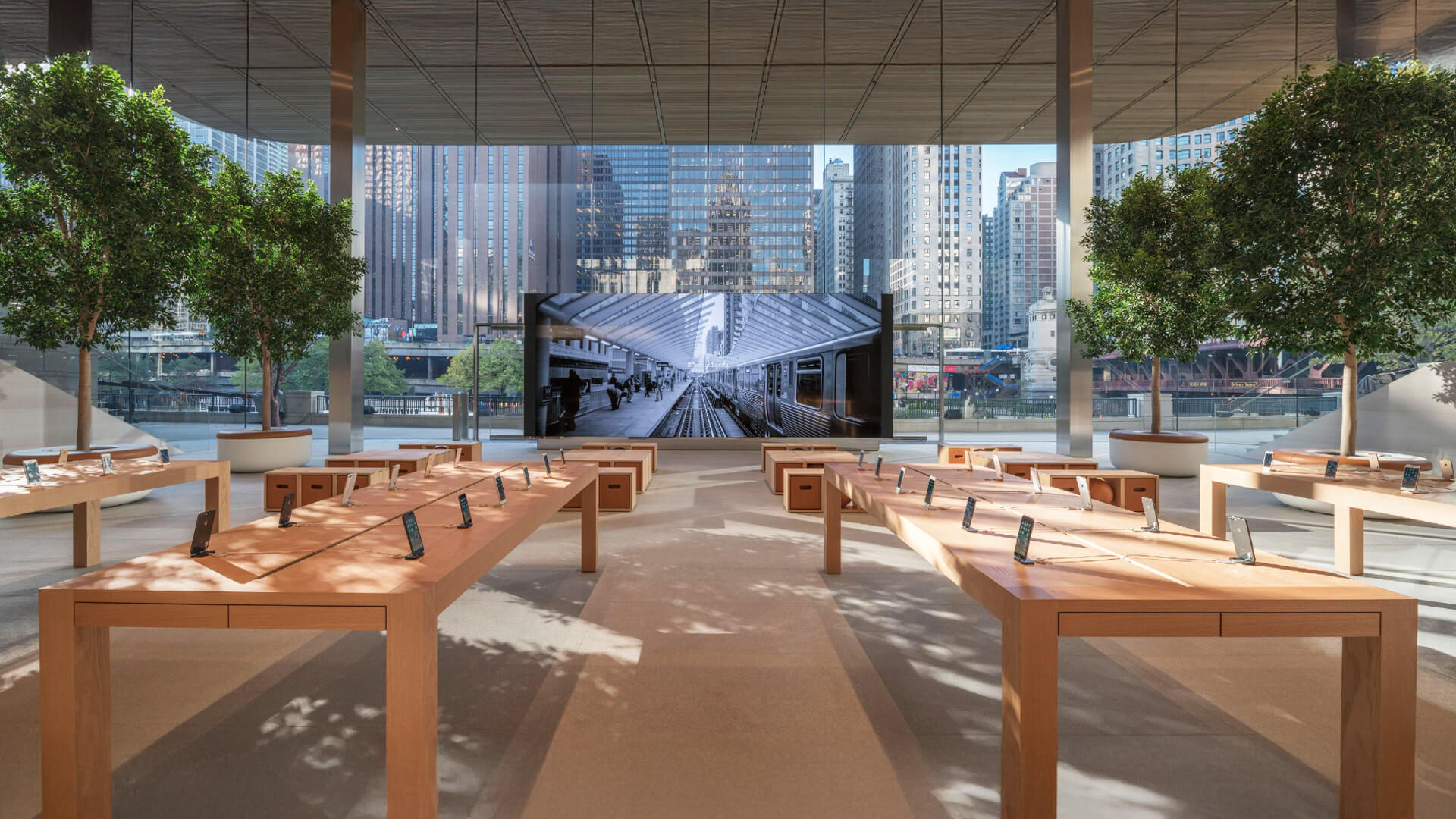
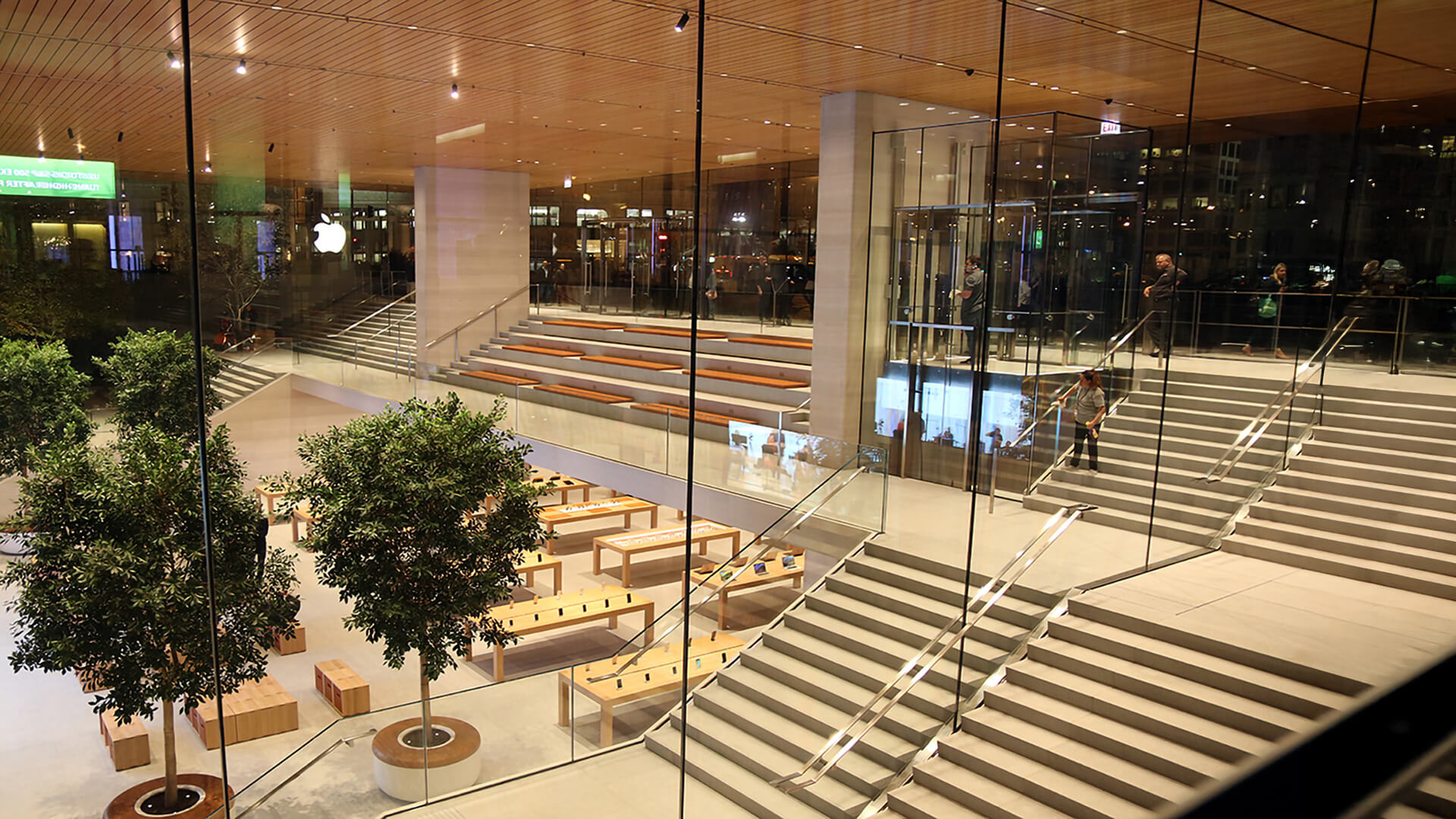
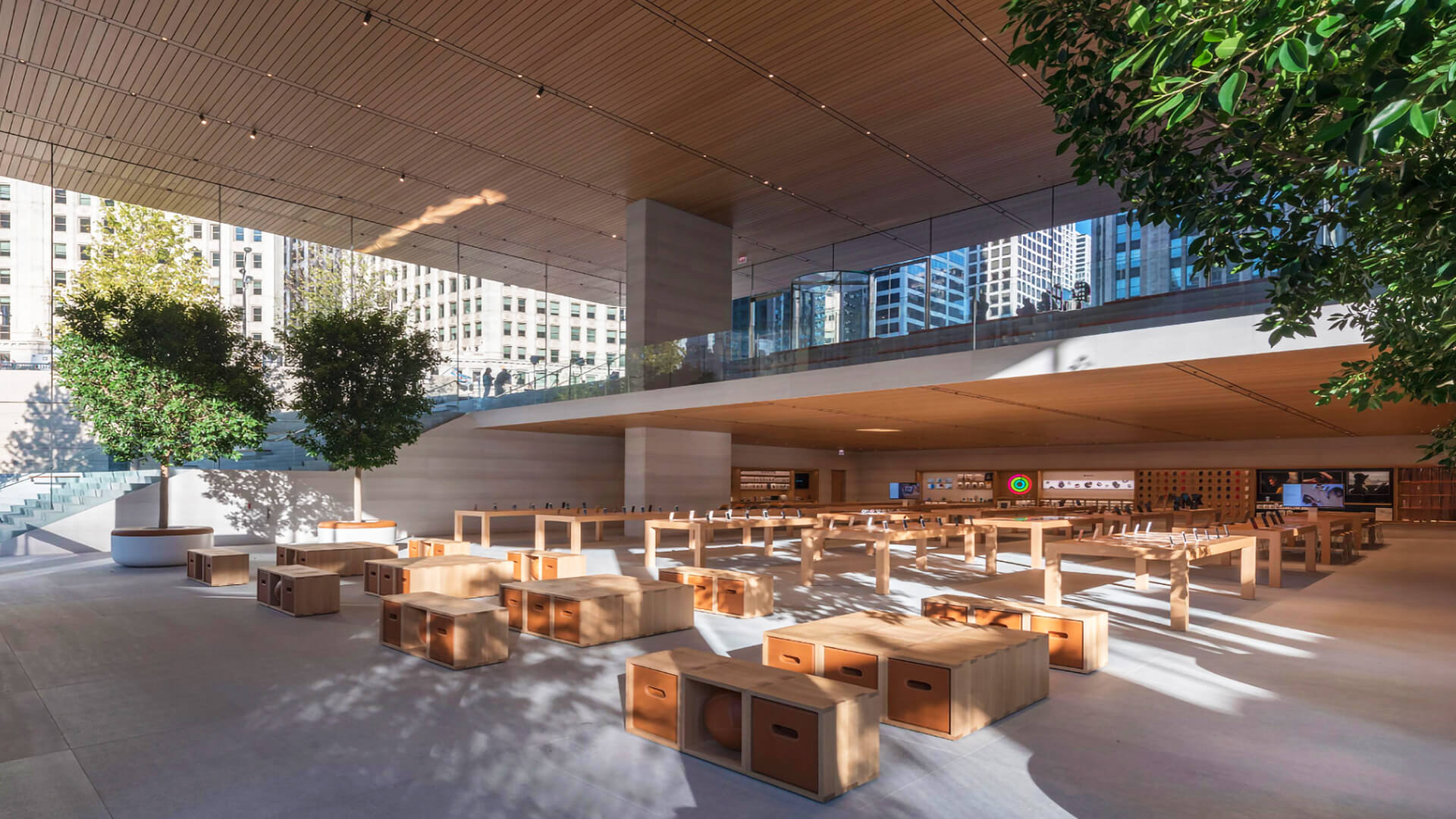
Apple remains an important benchmark for combining architecture, product discovery, service, education and community.
The lesson is not that telecom operators should copy any one of these brands.
It is that physical design can make a technology proposition tangible.
What telecom operators can learn from Apple
Apple has established a highly recognisable technology retail model combining architecture, product presentation, service, education and community.
Telecom operators have a different commercial opportunity.
A telecom flagship can demonstrate an entire connected lifestyle, not simply a portfolio of devices.
That can include:
- Smart-home simulation
- 5G experiences
- Connected entertainment
- Gaming
- Broadband
- Digital services
- Wearables
- Connected mobility
- Personalised advisory
- Omnichannel service
The opportunity is therefore not to replicate Apple's aesthetic.
It is to build a broader technology ecosystem around the telecom brand.
How CampbellRigg helps
CampbellRigg uses international benchmarks as reference points rather than templates.
We identify the underlying commercial and customer-experience principles that can be adapted to a specific operator's brand position, customer segments, service portfolio, market and retail estate.
Telecom rebranding must extend into the store
A telecom rebrand cannot stop with a new logo, colour palette or advertising campaign.
If the brand promises innovation, simplicity, connectivity or premium service, those characteristics need to be experienced physically.
Telecom rebranding can extend across:
- Store architecture
- Interior design
- Customer journey
- Signage and navigation
- Product presentation
- Digital interfaces
- Staff environments
- Service zones
- Experience spaces
- Brand storytelling
- Visual merchandising
The flagship becomes one of the most tangible expressions of the new brand.
However, telecom brand identity and omnichannel rebranding are supporting disciplines in this article, not its primary search territory. The strategic purpose here is to show how the brand proposition becomes tangible through the flagship and then transferable across the retail network.
How CampbellRigg helps
CampbellRigg connects brand audit, positioning, identity, customer experience and retail implementation.
The objective is to make the brand proposition immediately understandable through the environment itself.
This prevents a common management problem: a compelling new brand strategy being expressed inconsistently across stores, digital channels, communications and customer service.
Measuring the commercial performance of telecom store design
A flagship store should not be judged only by how impressive it looks.
Its performance should be connected to measurable commercial outcomes.
Relevant KPIs can include:
- Store footfall
- Dwell time
- Experience-zone engagement
- Conversion rate
- Average transaction value
- Accessory attachment
- Service adoption
- Cross-selling
- Customer retention
- Appointment conversion
- Revenue per square metre
- Customer satisfaction
- Brand engagement
The critical management shift is: Design as cost → Design as commercial infrastructure
A high-performance telecom flagship should be designed with a clear understanding of how physical investment is expected to contribute to customer engagement, conversion, service adoption, retention and brand value.
How CampbellRigg helps
CampbellRigg establishes the commercial objectives before the design is developed.
The design brief can therefore identify which customer behaviours the environment is intended to influence and which measures should subsequently be monitored.
This creates a stronger management framework for evaluating investment and deciding how successful elements should be transferred into the wider retail estate.
A commercial framework for high-performance telecom flagship stores
A high-performance telecom flagship should deliver seven connected outcomes:
- Attract - Create a distinctive physical destination that communicates the brand immediately.
- Demonstrate - Make complex technology understandable through physical interaction.
- Advise - Combine AI-assisted discovery with knowledgeable human consultation.
- Personalise - Use digital and physical customer insight to create more relevant journeys.
- Convert - Make purchase, activation and service adoption simple and frictionless.
- Retain - Give customers reasons to return through events, education, service and community.
- Measure - Connect major design investments to customer and commercial KPIs.
This framework turns telecom flagship store design from an aesthetic exercise into a strategic retail performance system.
CampbellRigg experience in technology and telecom retail
CampbellRigg's experience extends beyond trend analysis. The agency has delivered technology and telecom retail projects where brand strategy, store design, customer experience, format planning and commercial objectives have been connected.
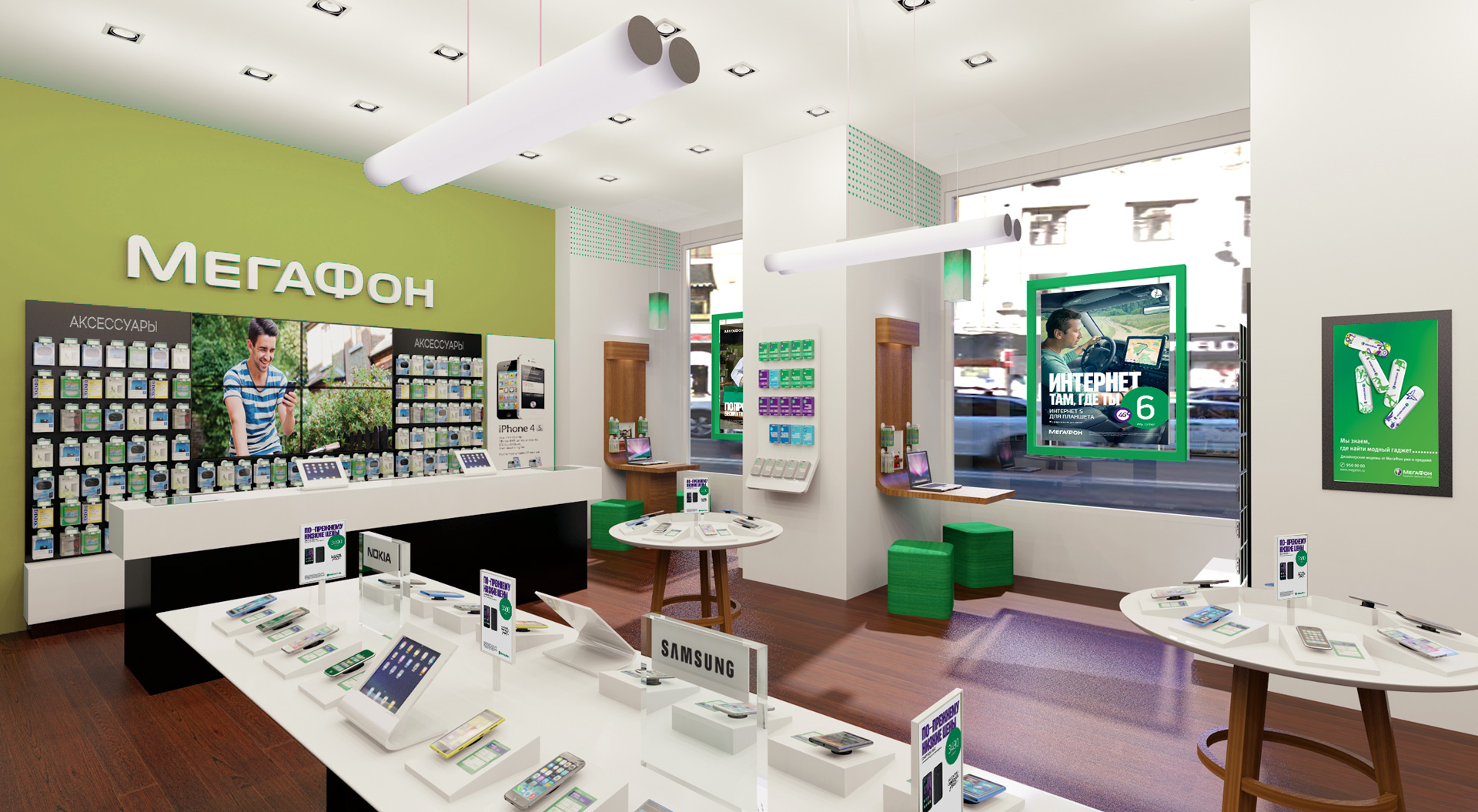
Megafon: creating a contemporary telecom retail system
Challenge: Megafon required a stronger and more consistent retail brand experience, clearer customer journeys, improved product presentation and formats capable of supporting different locations.
CampbellRigg response: Working with Megafon's marketing leadership, CampbellRigg rebranded store interiors and created a communications suite incorporating a bold graphic system, intuitive navigation, flexible merchandising and integrated digital and physical touchpoints.
Three priority formats were developed: flagship stores of approximately 150–200 sqm, standard stores of 50–70 sqm and shopping-mall kiosks.
Strategic relevance: The project demonstrates how a flagship concept can form part of a wider format architecture rather than operate as an isolated store. It connects brand identity, customer journey and format planning across different footprints.
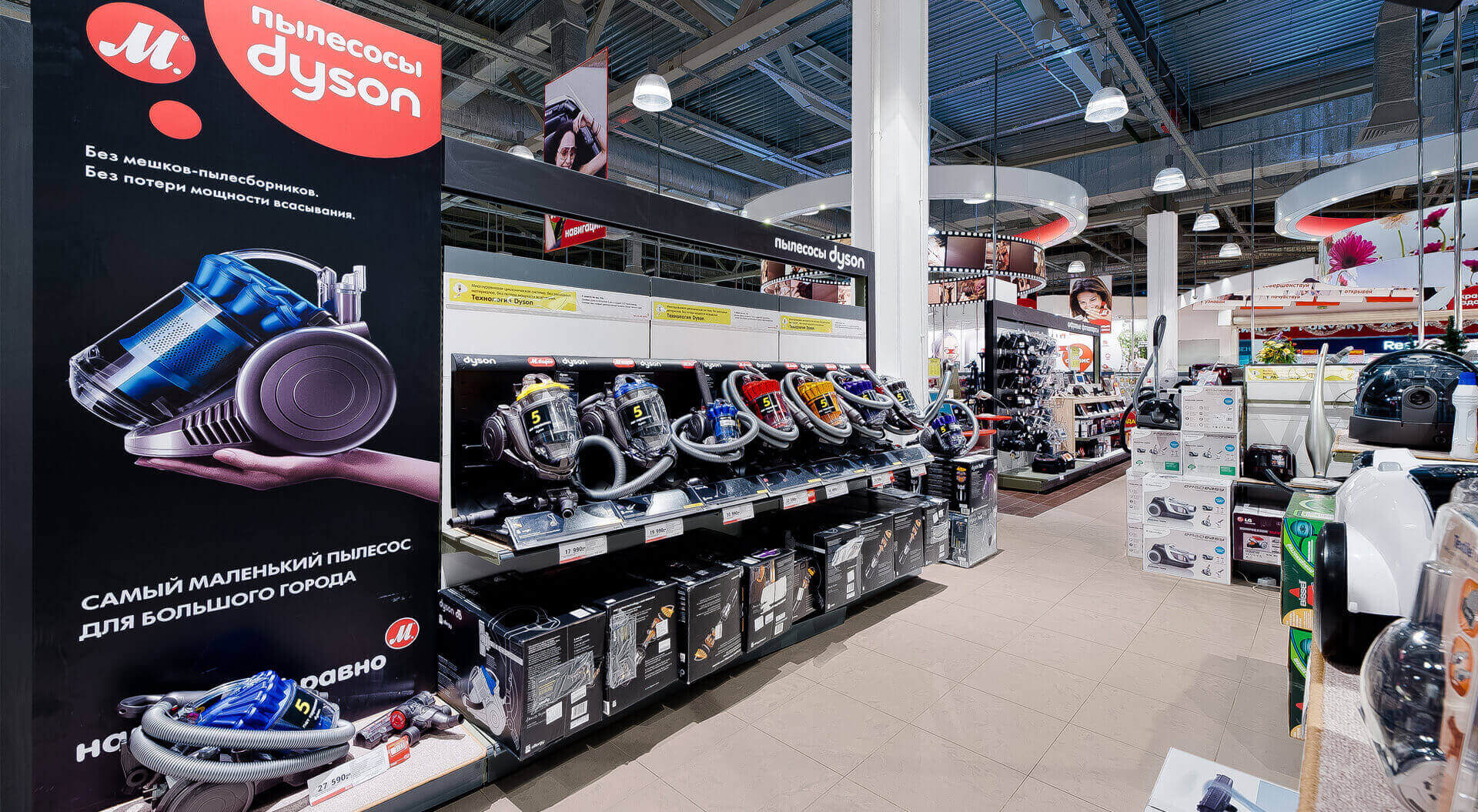
M.Video: proving the value of scalable technology retail design
Challenge: M.Video's management wanted to strengthen service, customer experience and store communications while developing a new concept capable of immediate rollout and further expansion.
CampbellRigg response: CampbellRigg integrated interior design, brand communication, navigation, merchandising and service features, including self-service help desks and the M.Service proposition.
Commercial evidence: CampbellRigg reports that like-for-like sales in its trial stores increased by 32%, following which M.Video invested in a 280-store refurbishment programme. The concept was subsequently implemented across the chain's estate of 284 stores.
This is an important distinction between designing one successful store and creating a retail concept capable of influencing a network.
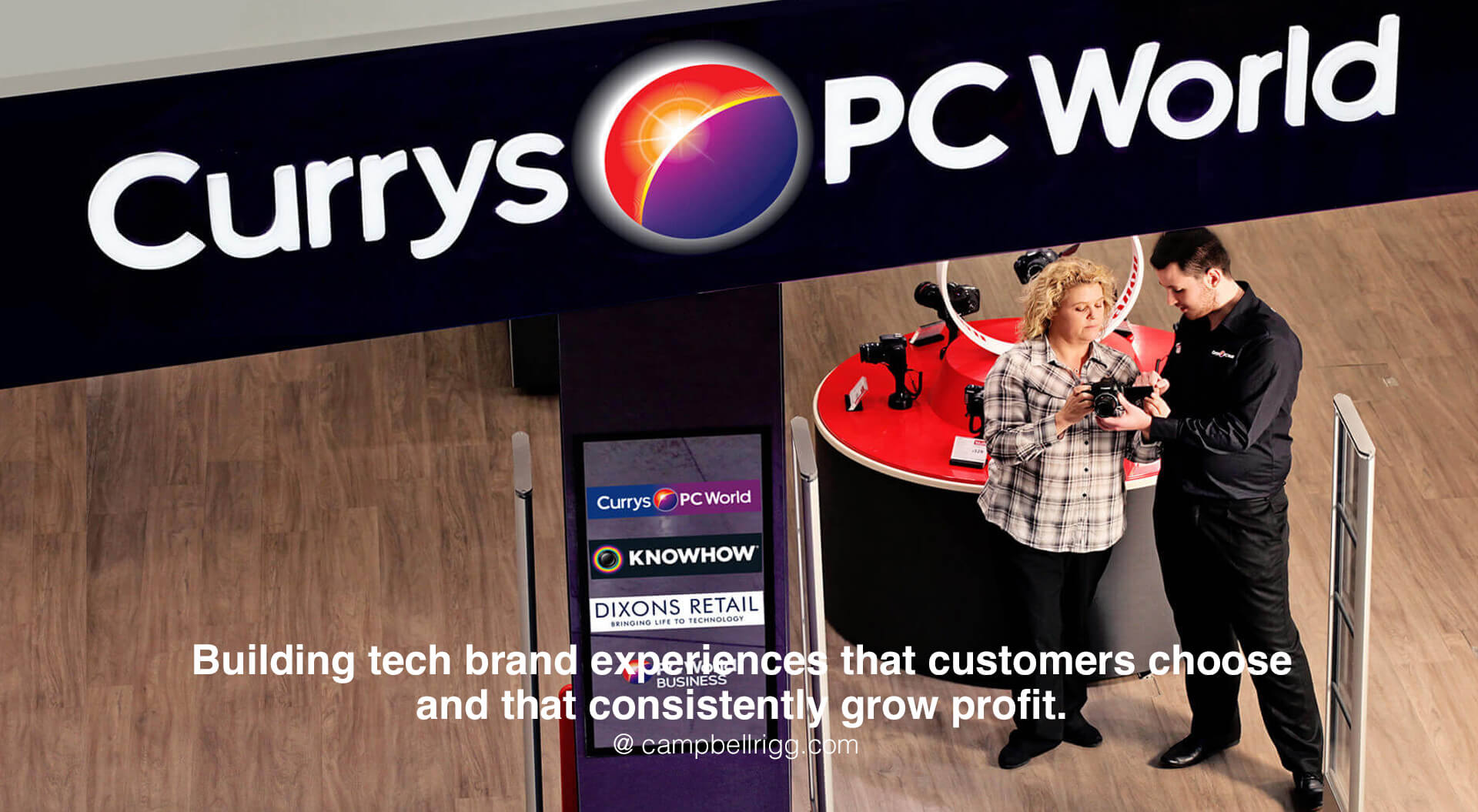
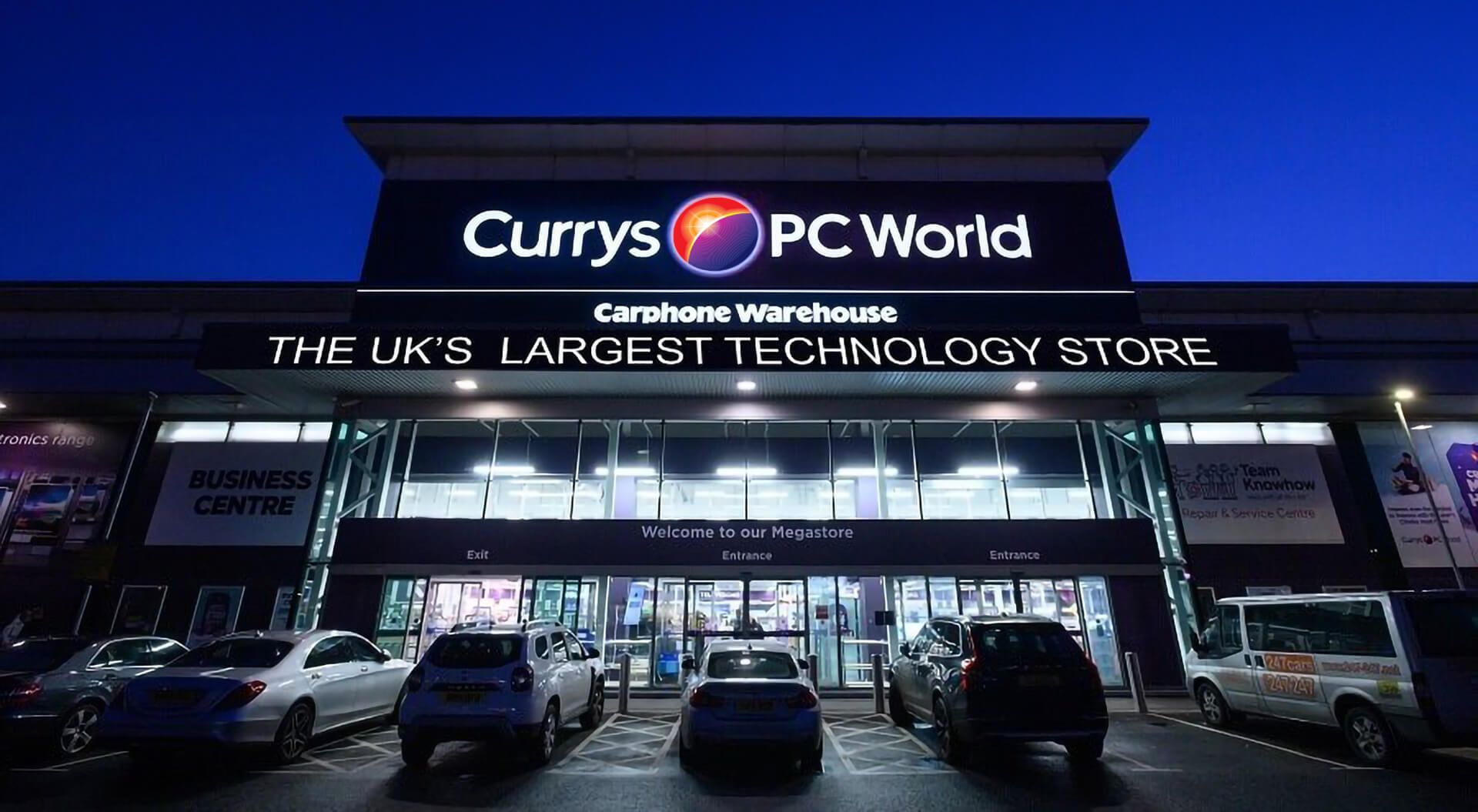
Currys: connecting brand identity, customer experience and retail performance
Challenge: Currys PC World needed to address inconsistent brand identity, store navigation, visual communication and expression across its technology retail estate.
CampbellRigg response: The work combined brand narrative development, visual identity, store-environment optimisation, intuitive product zones, digital interfaces, lighting and flexible merchandising systems. The project was designed to improve brand clarity, product discoverability and customer engagement across multiple store formats.
Strategic relevance: The project demonstrates how brand identity and store experience can be developed as one system, rather than treating visual identity and physical retail as separate projects.
 From flagship concept to scalable retail network
The central management principle is:
The flagship should be treated as the prototype for a scalable retail system, not as a one-off architectural statement.
A successful flagship can establish the principles that inform:
- Standard stores
- Compact stores
- Shopping-mall kiosks
- Experience centres
- Service formats
- Pop-up environments
- Future international rollouts
The strategic sequence becomes: Brand → Customer journey → Flagship → Modular format → Rollout → Measurement → Optimisation
This allows management to use the flagship as a strategic laboratory for the wider estate.
Successful elements can then be transferred into other formats without requiring every store to begin from zero.
Megafon provides a direct CampbellRigg example: its retail strategy incorporated flagship, standard and kiosk formats, demonstrating the importance of thinking about the network architecture alongside the flagship concept.
M.Video provides a second illustration: a trial concept developed into a large-scale refurbishment programme and ultimately implemented across its estate.
How CampbellRigg helps
CampbellRigg develops the strategic framework and design system that connects flagship ambition with network scalability.
This can include:
- Format principles
- Spatial priorities
- Modular components
- Brand standards
- Experience-zone rules
- Customer journey principles
- Visual merchandising systems
- Digital integration requirements
- Rollout guidelines
- Measurement frameworks
The result is a retail proposition that can evolve with the market while retaining a coherent brand and customer experience.
How CampbellRigg helps telecom operators turn strategy into a retail network
CampbellRigg combines:
- Brand strategy
- Brand auditing
- Retail branding
- Customer experience
- Architecture
- Interior design
- Digital retail
- Visual merchandising
- Format planning
- Modular design
- Retail rollout
The important distinction is that these disciplines are not treated as independent commissions.
CampbellRigg begins by connecting these disciplines rather than treating them as separate design commissions. Brand auditing establishes how the existing proposition is perceived and expressed. Strategy defines the desired market position. The design brief then converts that strategy into practical requirements for customer experience, store planning, identity and implementation.
The benefit management receives is one strategic direction linking brand decisions to the physical retail network, rather than a collection of disconnected design initiatives.
For a telecom operator, this creates a clearer route from: Business strategy → Brand proposition → Customer experience → Flagship → Store formats → Rollout → Measurement
That is the foundation of a scalable retail system.
Planning a telecom flagship store transformation?
For telecom operators planning a new flagship store, technology experience centre, major retail transformation or wider network rollout, the opportunity is to rethink the physical store as a strategic customer and commercial asset.
The strongest telecom flagship store design does more than showcase devices.
It creates an environment where customers can:
- Experience the brand
- Understand connected technologies
- Discover new services
- Receive expert advice
- Move seamlessly between physical and digital channels
- Build a longer-term relationship with the operator
For 2026–2027, the strategic priorities are: Experience. Connectivity. Personalisation. Phygital integration. Flexibility. Scalability. Measurement.
The commercial opportunity is to turn those priorities into a coherent retail system.

CampbellRigg's four-step approach
1. Consultation - Discuss the telecom retail challenge, network ambitions and commercial objectives.
2. Bespoke strategy and brief - Connect brand positioning, customer journeys, store formats, experience strategy and commercial priorities.
3. Creative development and implementation - Translate the strategy into branding, architecture, interiors, digital experiences, visual merchandising and scalable rollout systems.
4. Measure and optimise - Evaluate the environment against customer engagement, experience and commercial objectives, then identify opportunities for wider network application.
Transform your telecom retail environment
If your organisation is planning a telecom flagship store, technology experience centre, retail transformation or wider telecom store rollout, CampbellRigg can help turn the physical network into a more distinctive, scalable and commercially purposeful expression of the brand.
Innovative. Relevant. Memorable.
Schedule a consultation with CampbellRigg to discuss your telecom retail challenge and develop a bespoke brief.