News and Views
Fashion Store Interior Design: Brand Strategy to Scalable Retail




Fashion Store Interior Design: Brand Strategy to Scalable Retail
Fashion store interior design should convert brand strategy into a physical retail environment that customers recognise, navigate and value, while giving management a scalable platform for network growth.
For senior fashion retail decision-makers, the issue is not simply how a store should look. The more important question is:
How can fashion store interior design turn retail strategy into a scalable, measurable and commercially effective network?
That requires brand strategy, customer experience, store planning, visual merchandising, interior architecture, retail branding and implementation to work as one commercial programme.
CampbellRigg connects these disciplines to help fashion retailers develop new concepts, transform existing estates, refurbish locations and create physical retail systems capable of adapting across markets and formats.
The objective is not a collection of individually attractive stores. It is a distinctive, commercially purposeful and scalable retail environment.
What Fashion Store Interior Design Includes
Fashion store interior design begins with the retail proposition and commercial objectives rather than finishes, furniture or decoration.
The physical environment needs to translate the brand into practical decisions about:
- customer journey and circulation
- store format and space planning
- product hierarchy and category zoning
- visual merchandising
- fixtures and flexibility
- materials, lighting and colour
- graphics, signage and navigation
- fitting rooms and service areas
- digital and omnichannel touchpoints
- operational requirements
- implementation and network rollout.
A premium, contemporary, youthful, performance-led or lifestyle fashion proposition requires a different physical expression.
How CampbellRigg helps: CampbellRigg begins by connecting these disciplines rather than treating them as separate design commissions. Brand auditing establishes how the existing proposition is perceived and expressed. Strategy defines the desired market position. The design brief then converts that strategy into practical requirements for customer experience, store planning, identity and implementation.
The benefit for management is one strategic direction linking brand decisions to the physical retail network, rather than a collection of disconnected design initiatives.
Designing the Customer Journey
The customer journey should be designed as deliberately as the brand identity.
From entrance and first impression through product discovery, fitting rooms, service and checkout, the store needs to provide clarity without restricting exploration.
Effective planning considers:
- sightlines and visual hierarchy
- category adjacencies
- priority-product positioning
- destination zones
- circulation routes
- fitting-room location
- service and checkout positioning
- staff movement
- stock access and replenishment.
How CampbellRigg helps: CampbellRigg translates customer and commercial requirements into customer journeys and space plans before significant implementation investment is committed.
The benefit is a physical environment designed around customer behaviour, product discovery and operational efficiency, while retaining a recognisable experience across different locations.
From Brand Strategy to Fashion Store Interior Design
Fashion store design should follow the commercial and customer strategy, not develop independently from it.
The process should establish: Brand proposition → customer strategy → format strategy → store planning → merchandising → physical design → implementation.
This sequence determines what the environment needs to communicate, how customers should move through it, which products require priority and which elements must remain consistent across the network.
How CampbellRigg helps: CampbellRigg translates strategic requirements into spatial hierarchy, customer journeys, merchandising principles and physical design language.
For multi-location retailers, the critical distinction is between brand standards and local adaptation. The concept must remain recognisable without forcing every store into an identical physical solution.
The benefit is a design framework that can support network development rather than solving only the requirements of one property.
Visual Merchandising, Product Discovery and Store Layout
Visual merchandising should be integrated into fashion store interior design from the beginning.
New collections, priority categories and seasonal campaigns require appropriate visibility. Product adjacencies should reflect customer missions, while focal displays communicate commercial priorities.
Architecture, fixtures and merchandising therefore need to work together. Lighting can establish hierarchy and focus attention. Materials can communicate quality, value, sustainability or performance. Fixtures can provide flexibility as collections and merchandising strategies change.
How CampbellRigg helps: CampbellRigg integrates store planning and visual merchandising with the interior concept so that product presentation, customer movement and brand communication reinforce one another.
The benefit is greater control over how space supports product discovery and commercial priorities, particularly when the concept must perform across different footprints.
Creating Distinctive Physical Brand Experiences
A physical fashion store is an important part of the wider brand ecosystem.
Customers may encounter the brand through ecommerce, social media, advertising and mobile platforms. The store must therefore express the same proposition while providing physical experiences that digital channels cannot fully reproduce.
The answer is not technology or theatrical features for their own sake.
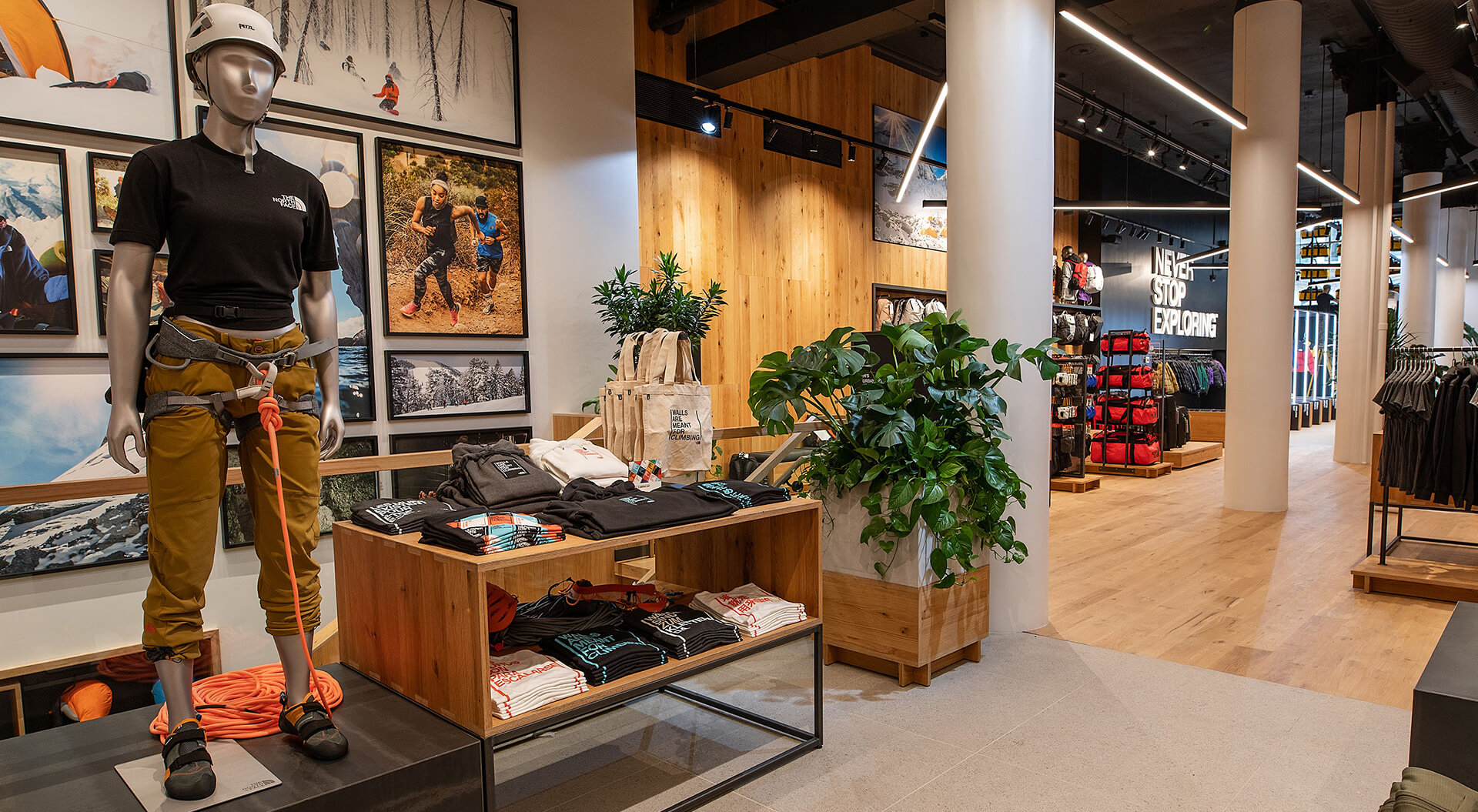
Architecture, materials, lighting, graphics, storytelling, digital content, product presentation and customer interaction should reinforce the same brand proposition.
How CampbellRigg helps: CampbellRigg identifies the characteristics that genuinely differentiate the fashion brand and translates them into spatial hierarchy, materials, lighting, merchandising, graphics and customer interaction.
The benefit is a distinctive physical experience with a strategic purpose, supporting brand recognition, product discovery and customer engagement rather than adding experiential features simply for effect.
Nike and The North Face: International Fashion Retail Benchmarks
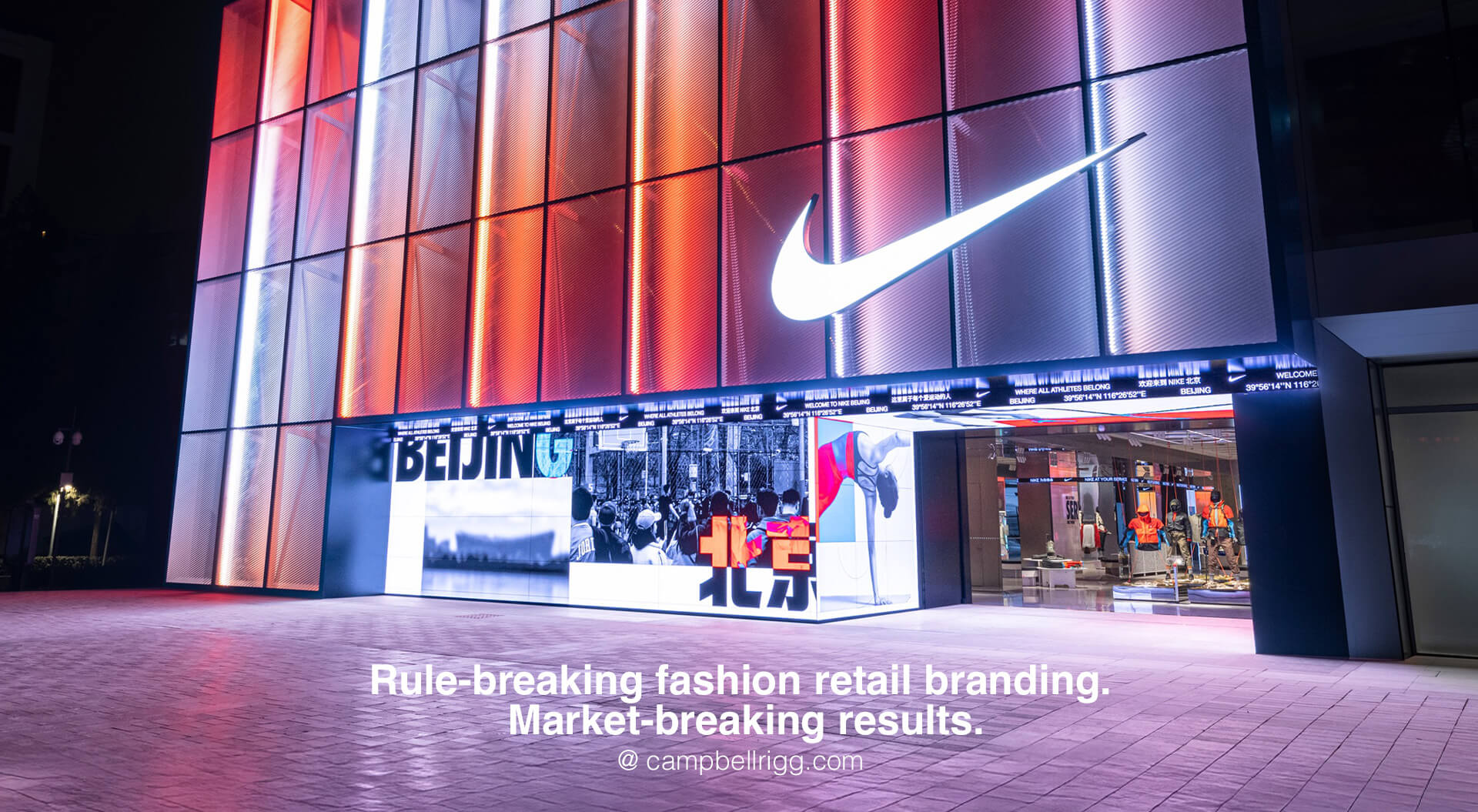
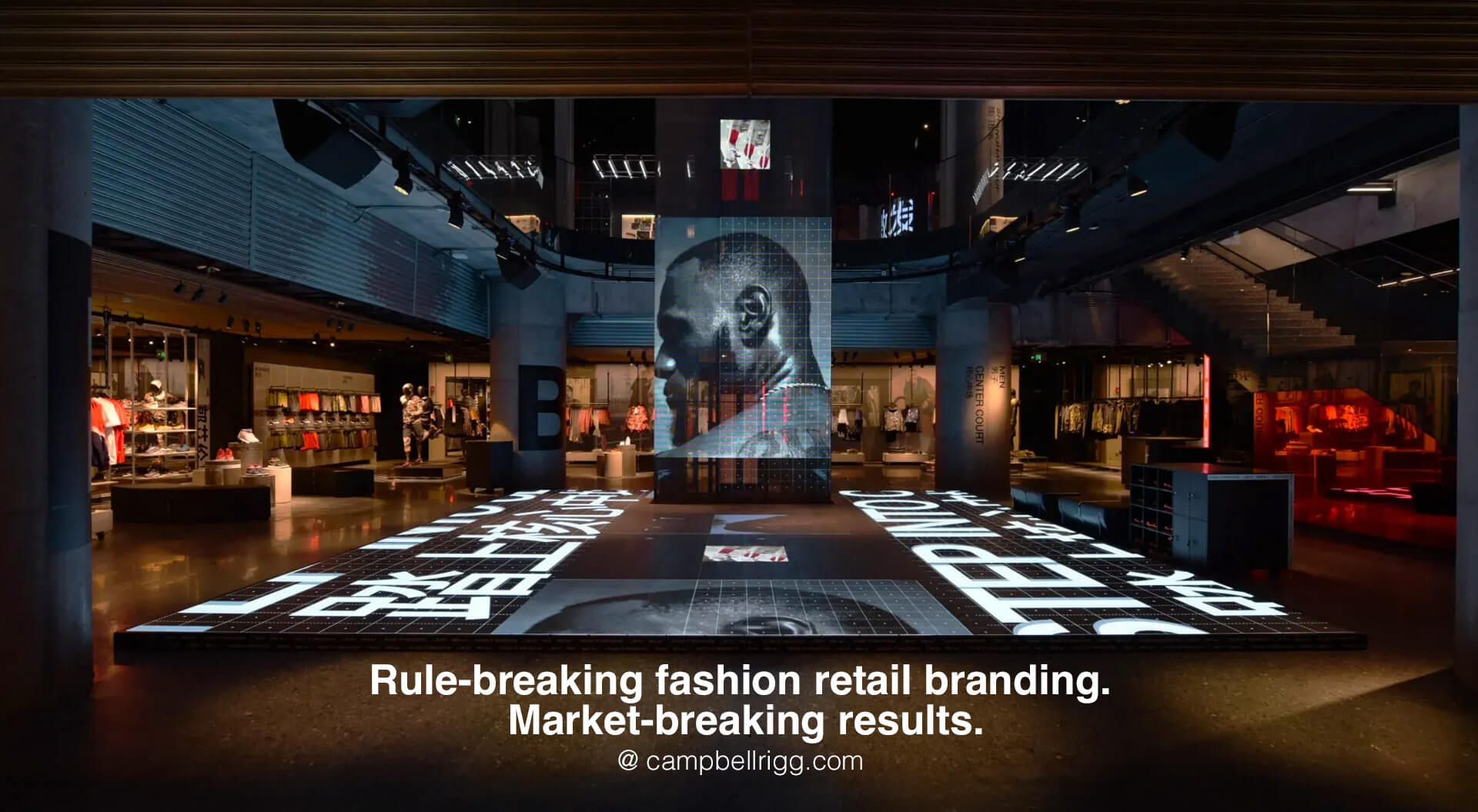
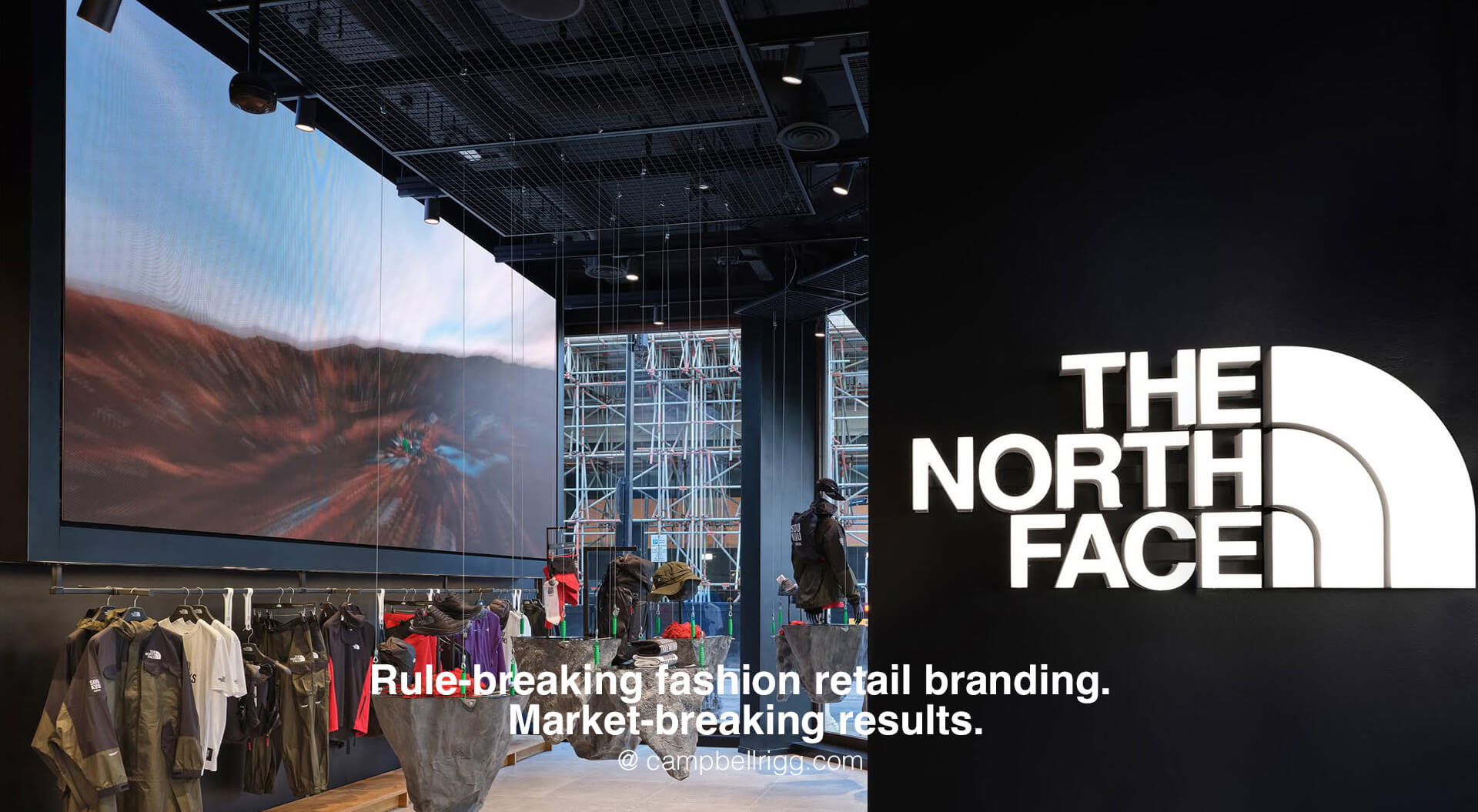
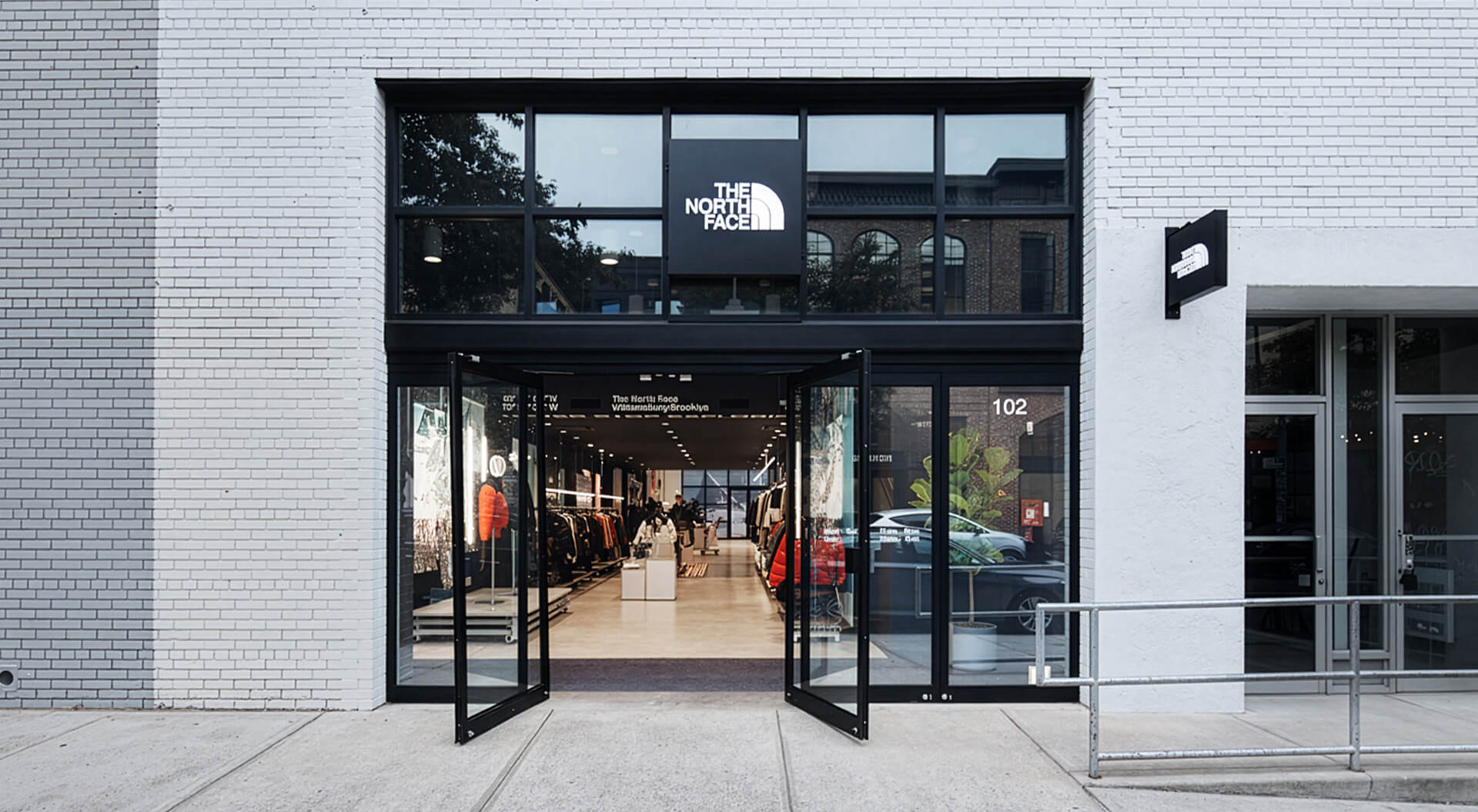
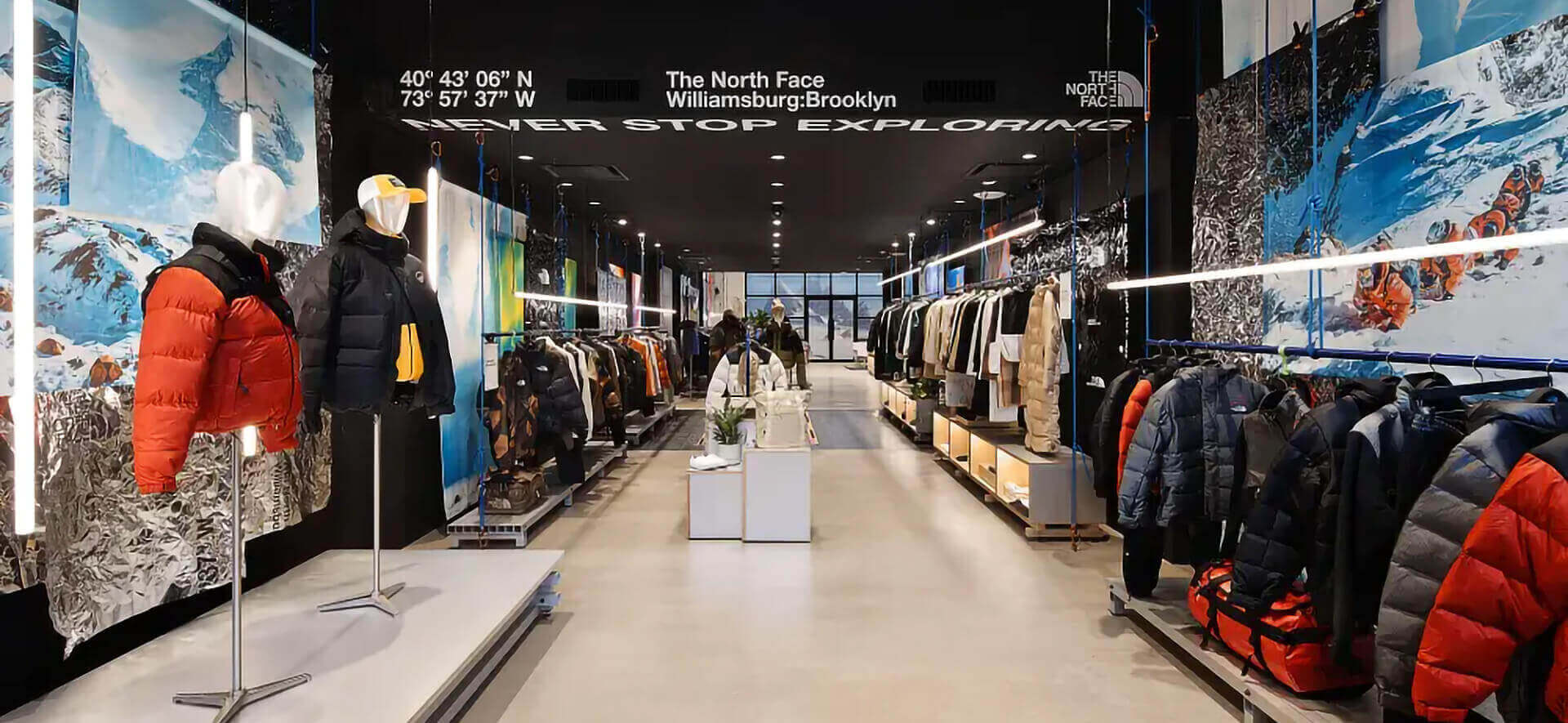
Nike and The North Face provide useful international benchmarks for how distinctive fashion propositions can be translated into physical retail.
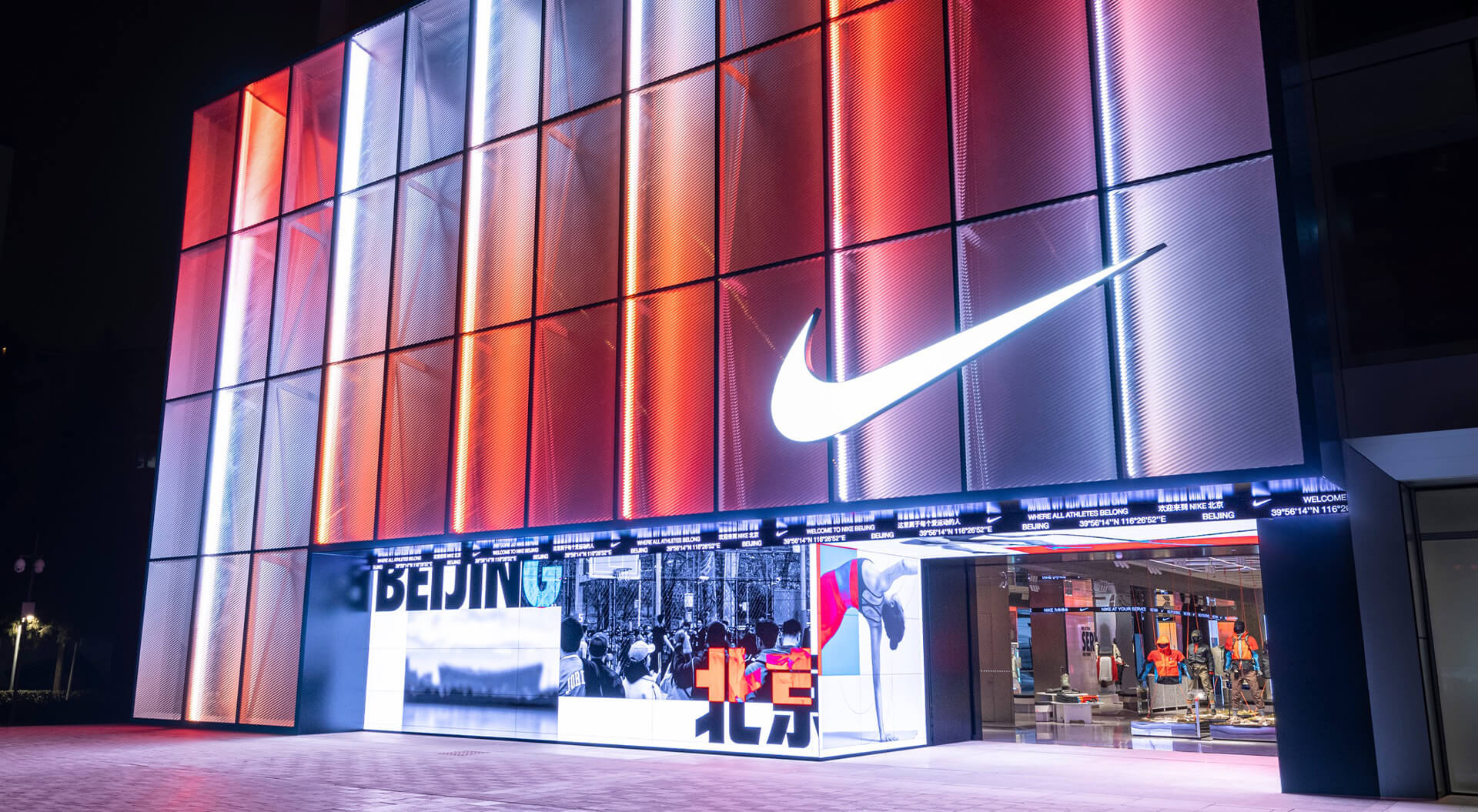
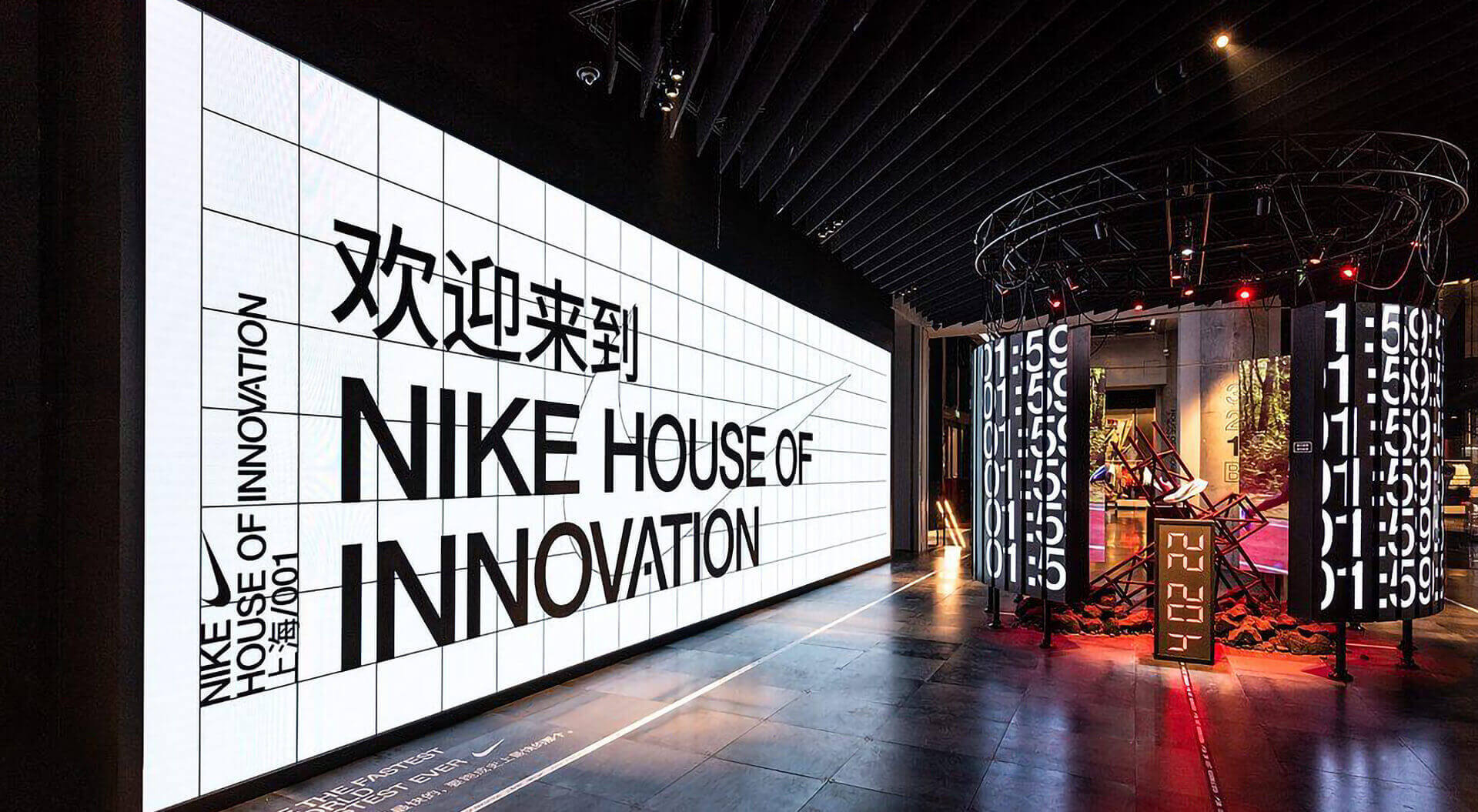
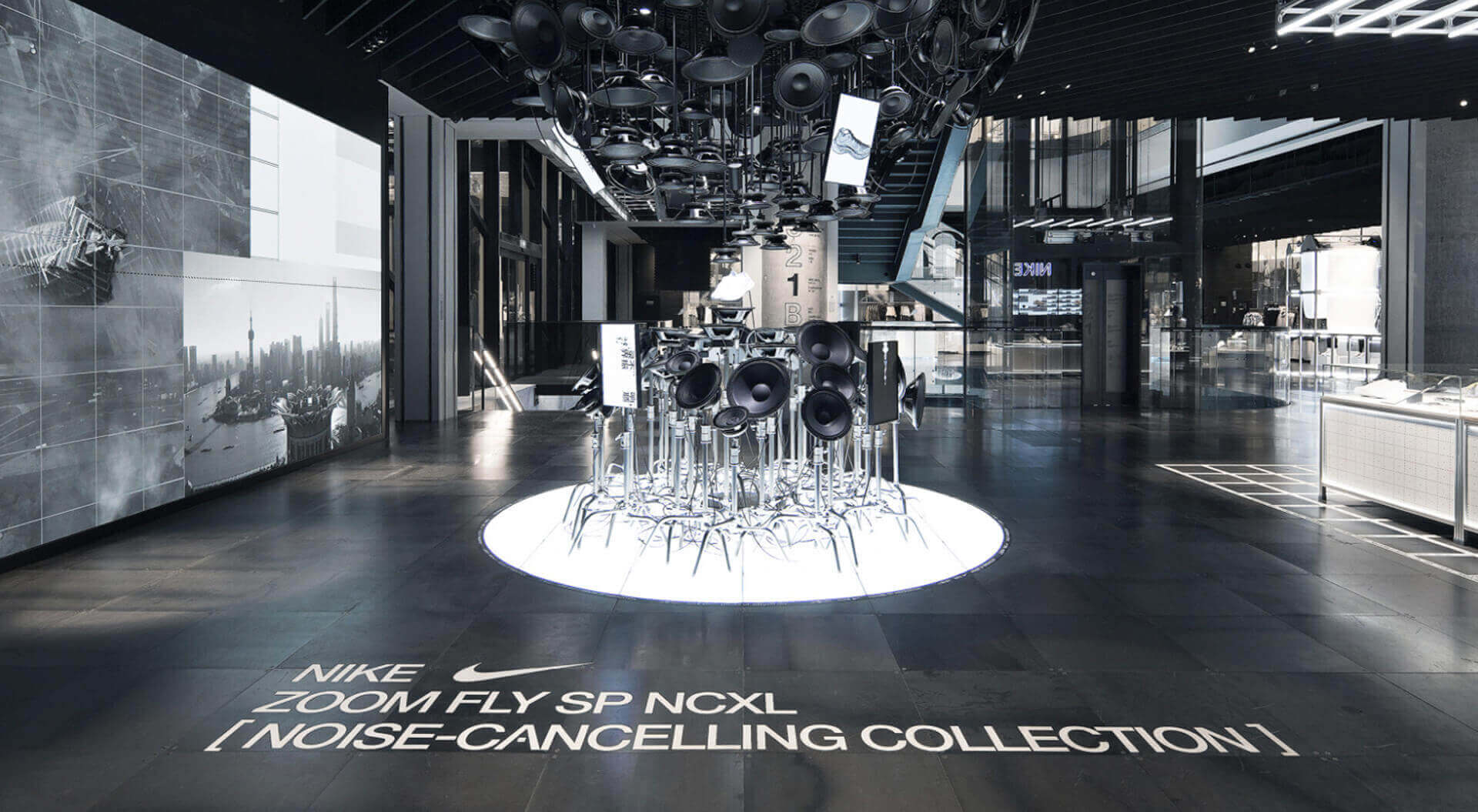
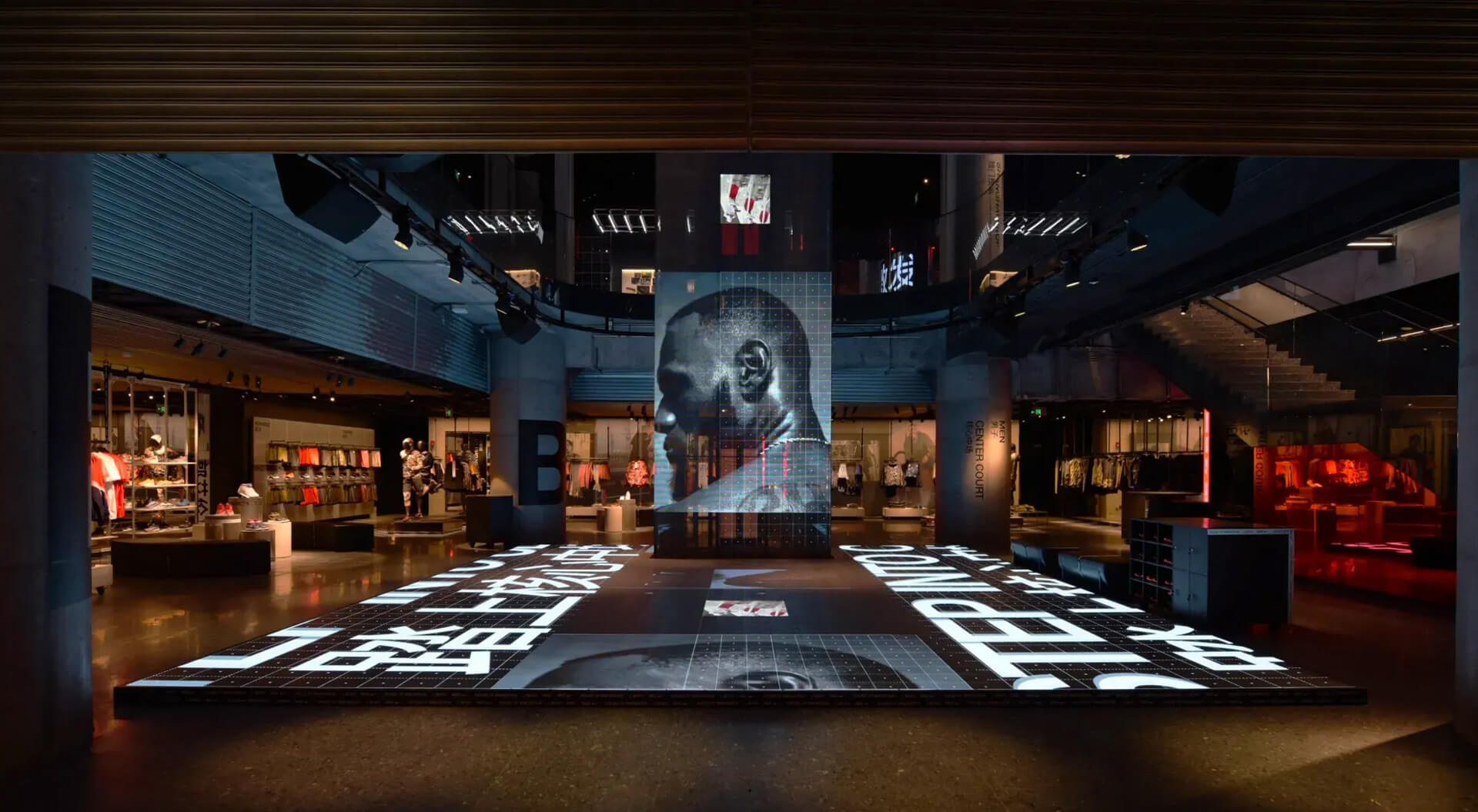
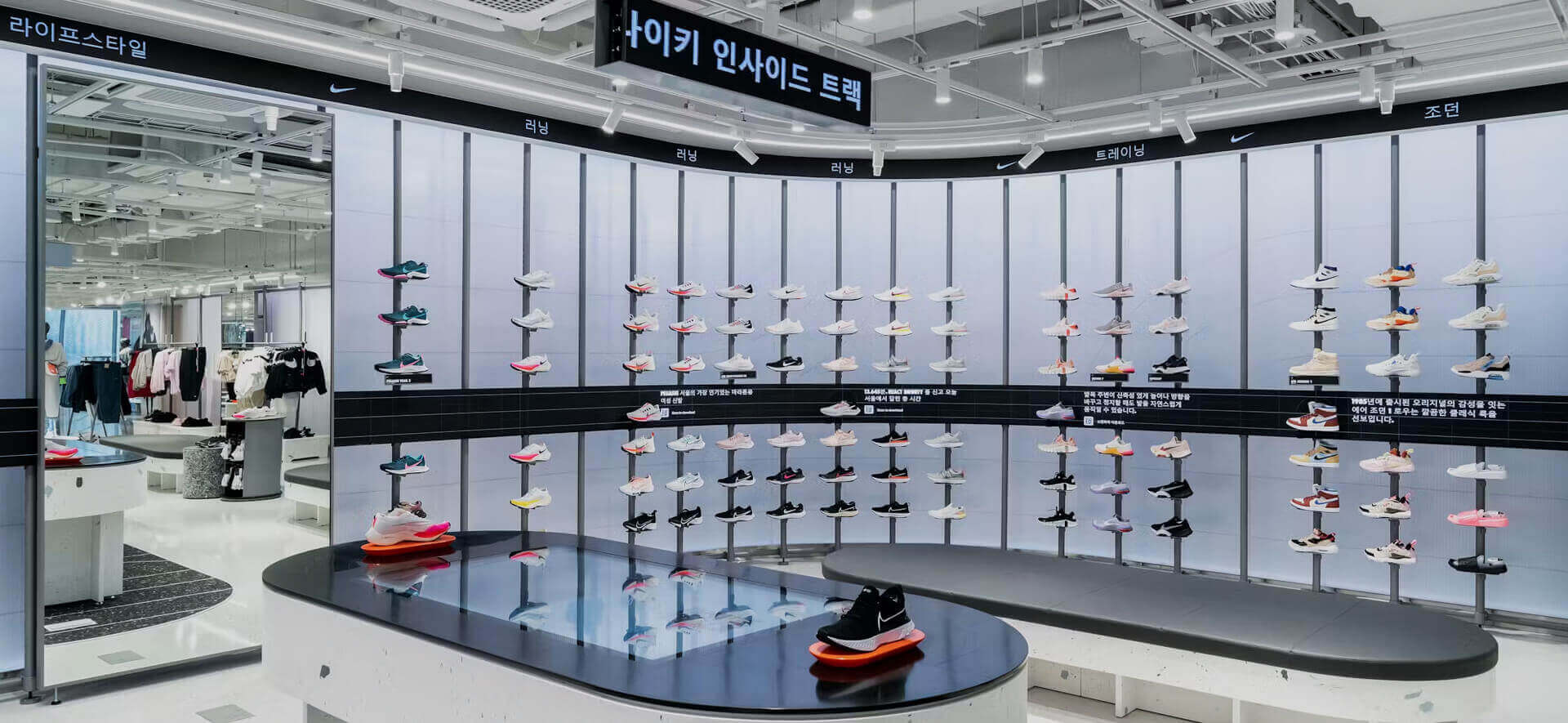
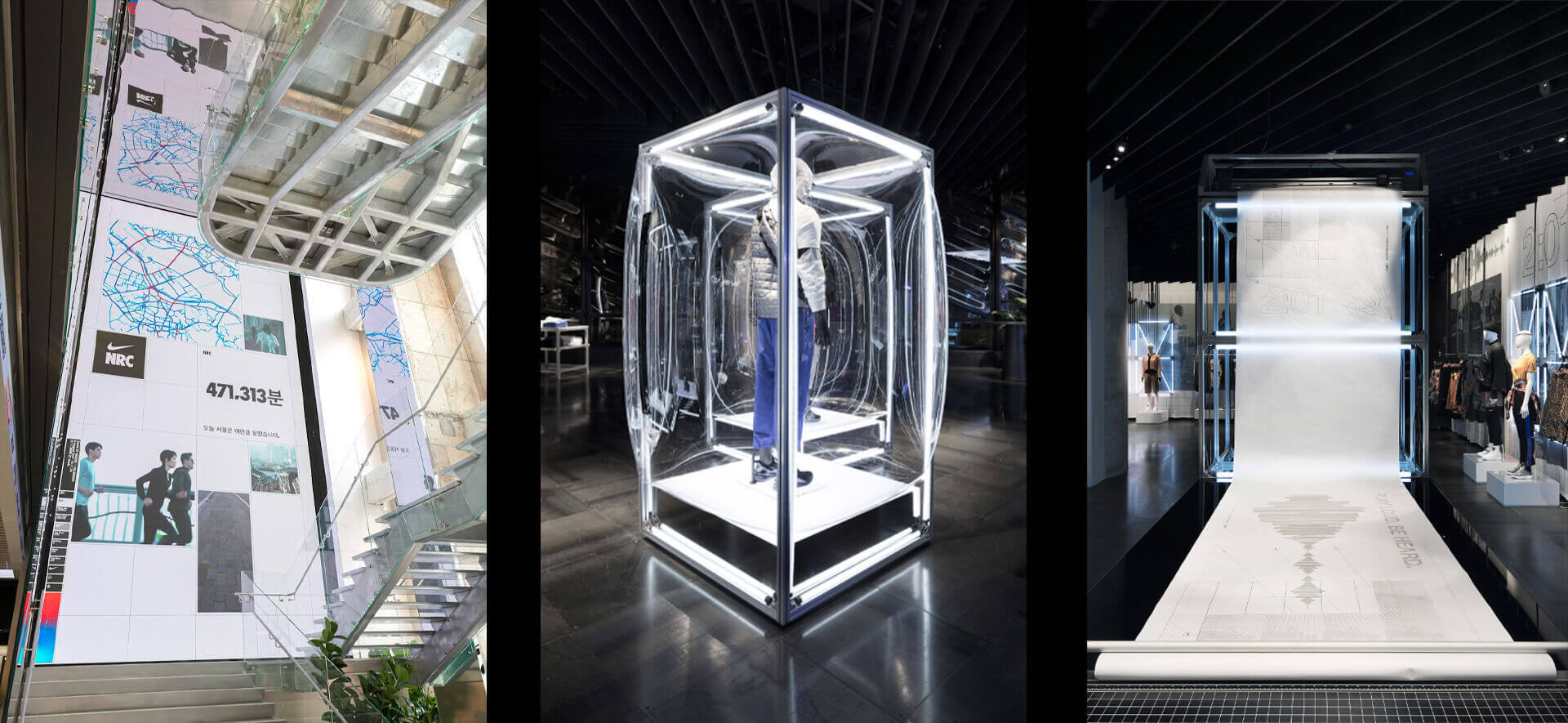
Nike's flagship environments connect sport, performance, innovation and consumer engagement through strong visual hierarchy, product-focused merchandising and dedicated zones. The lesson is not to reproduce Nike's visual language, but to understand the design logic: brand identity informs the physical environment, while spatial planning, merchandising and interaction translate that identity into retail.
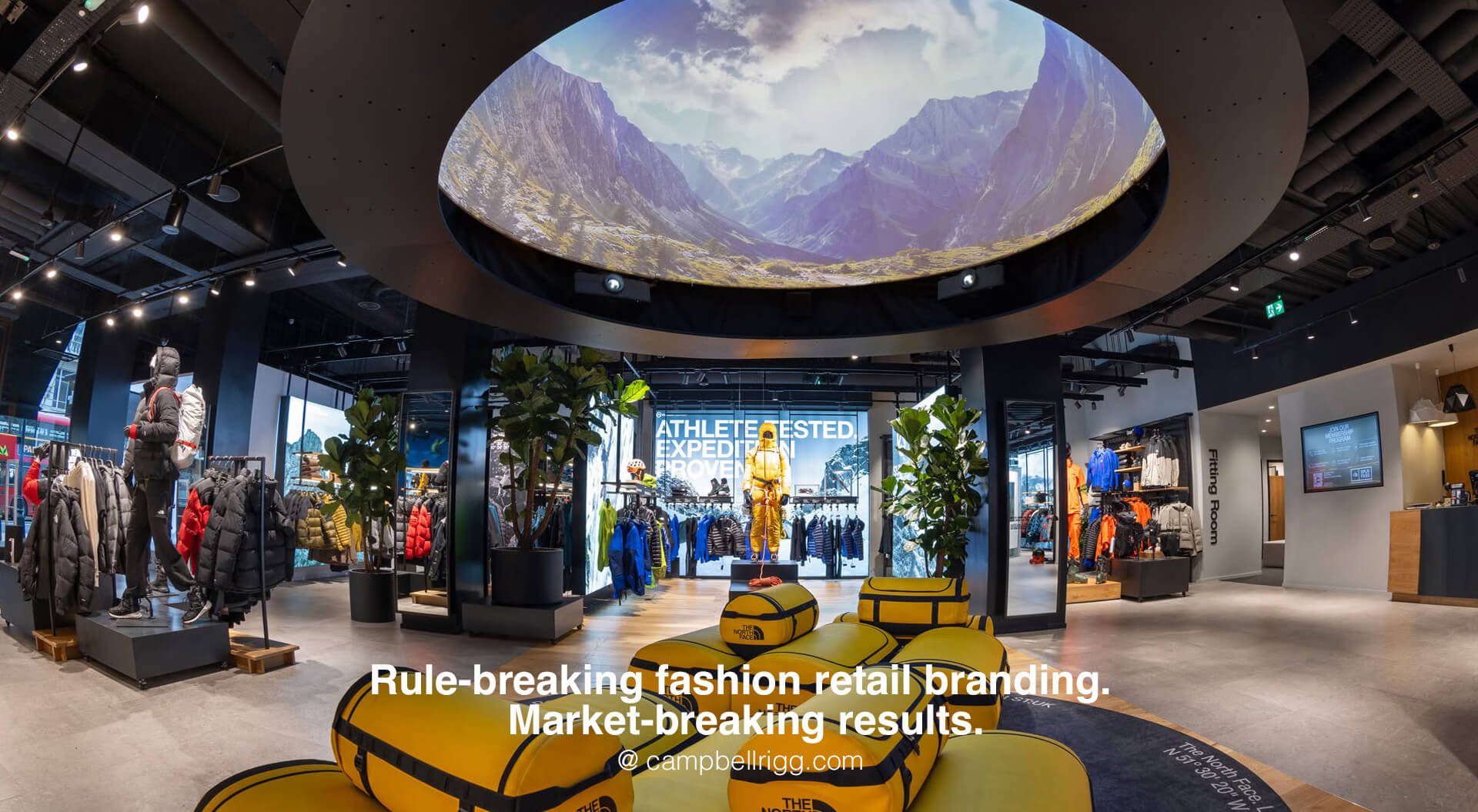
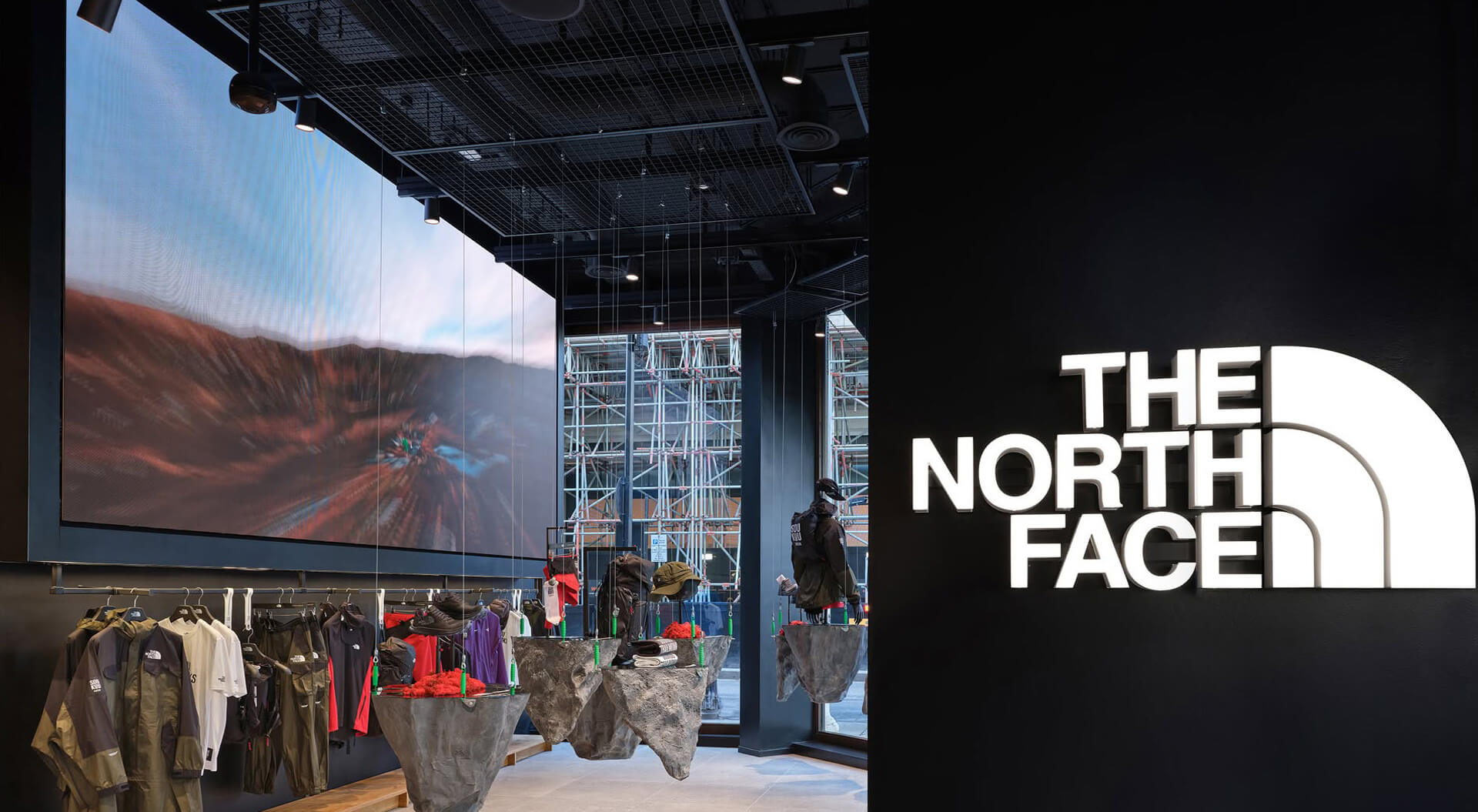
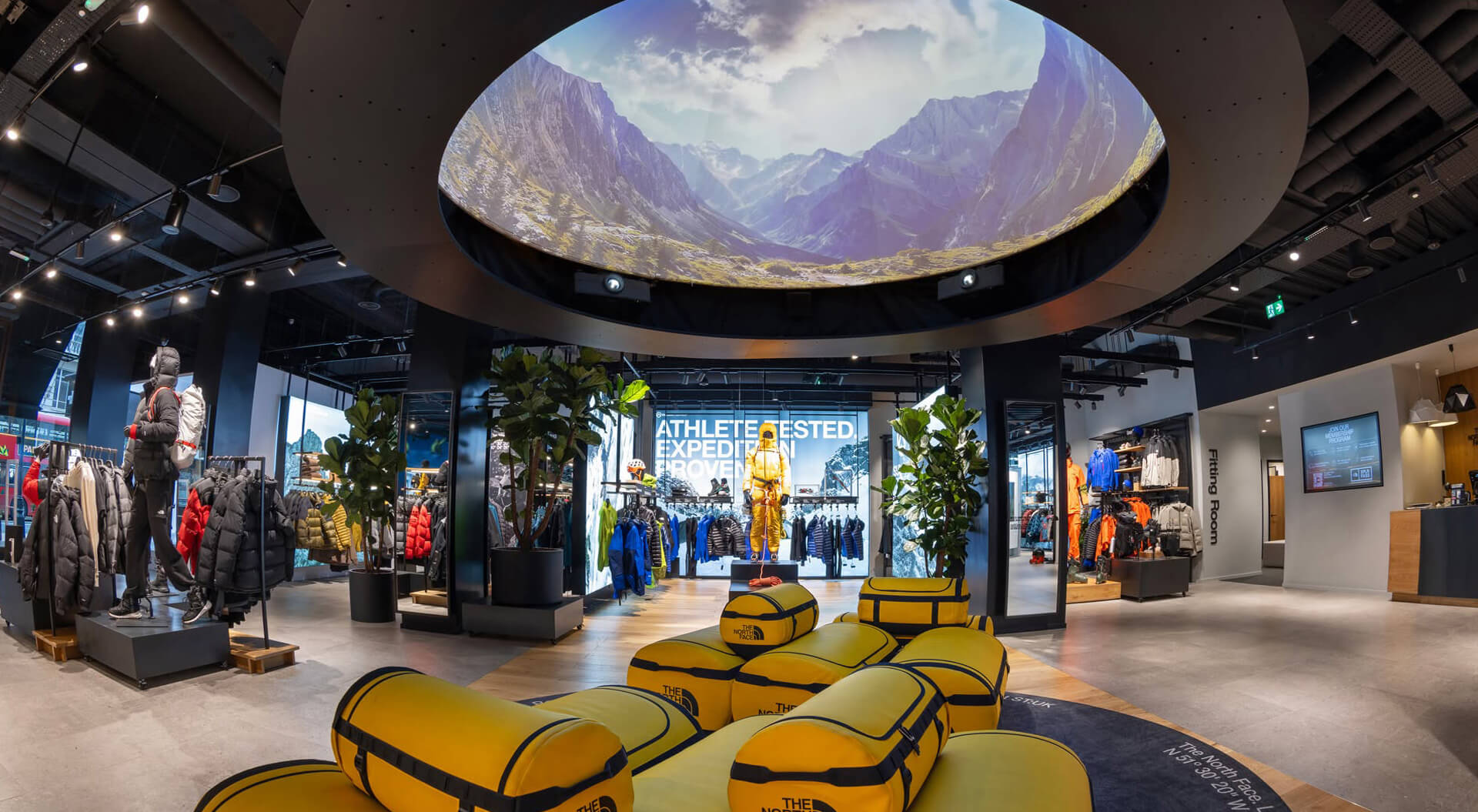
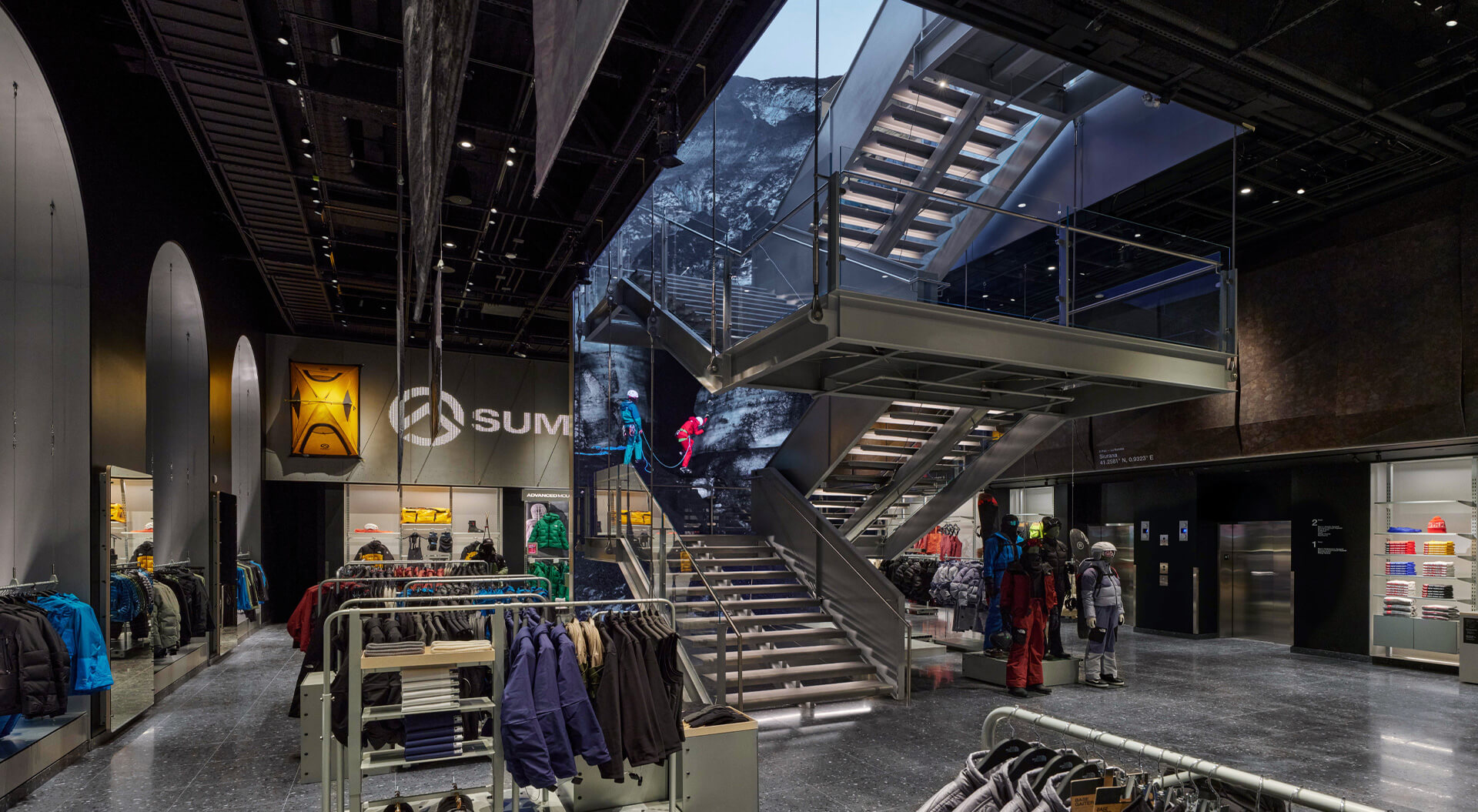
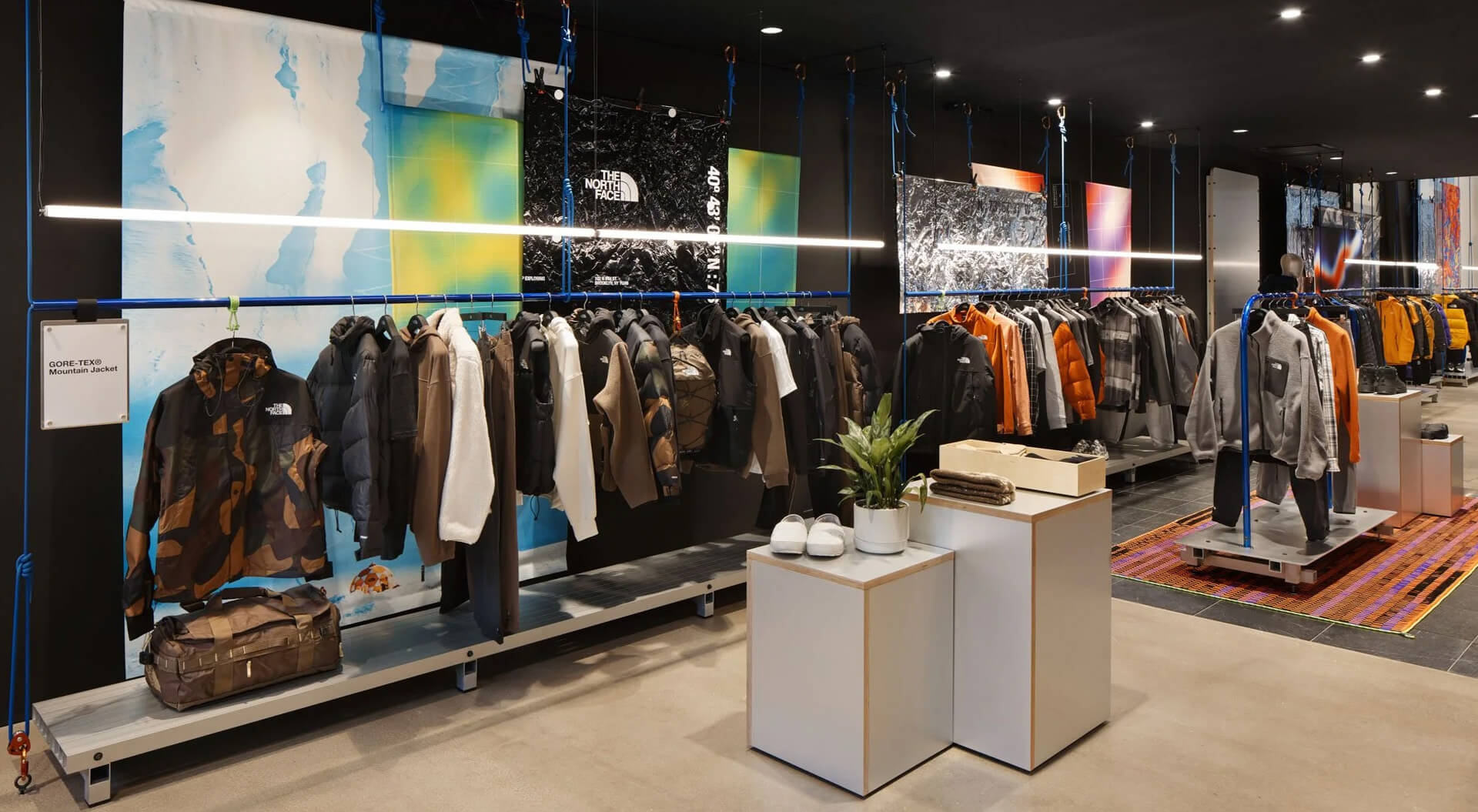
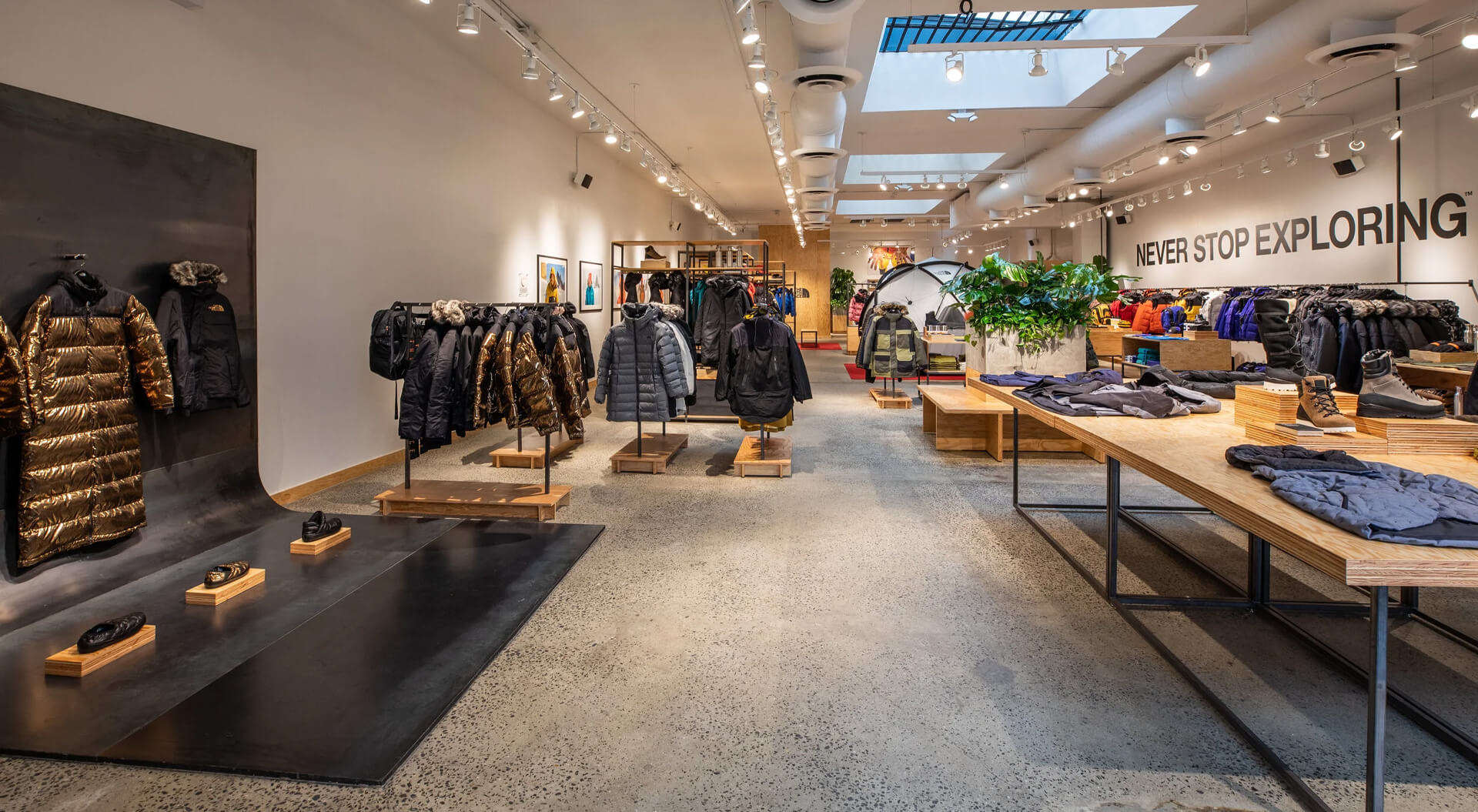
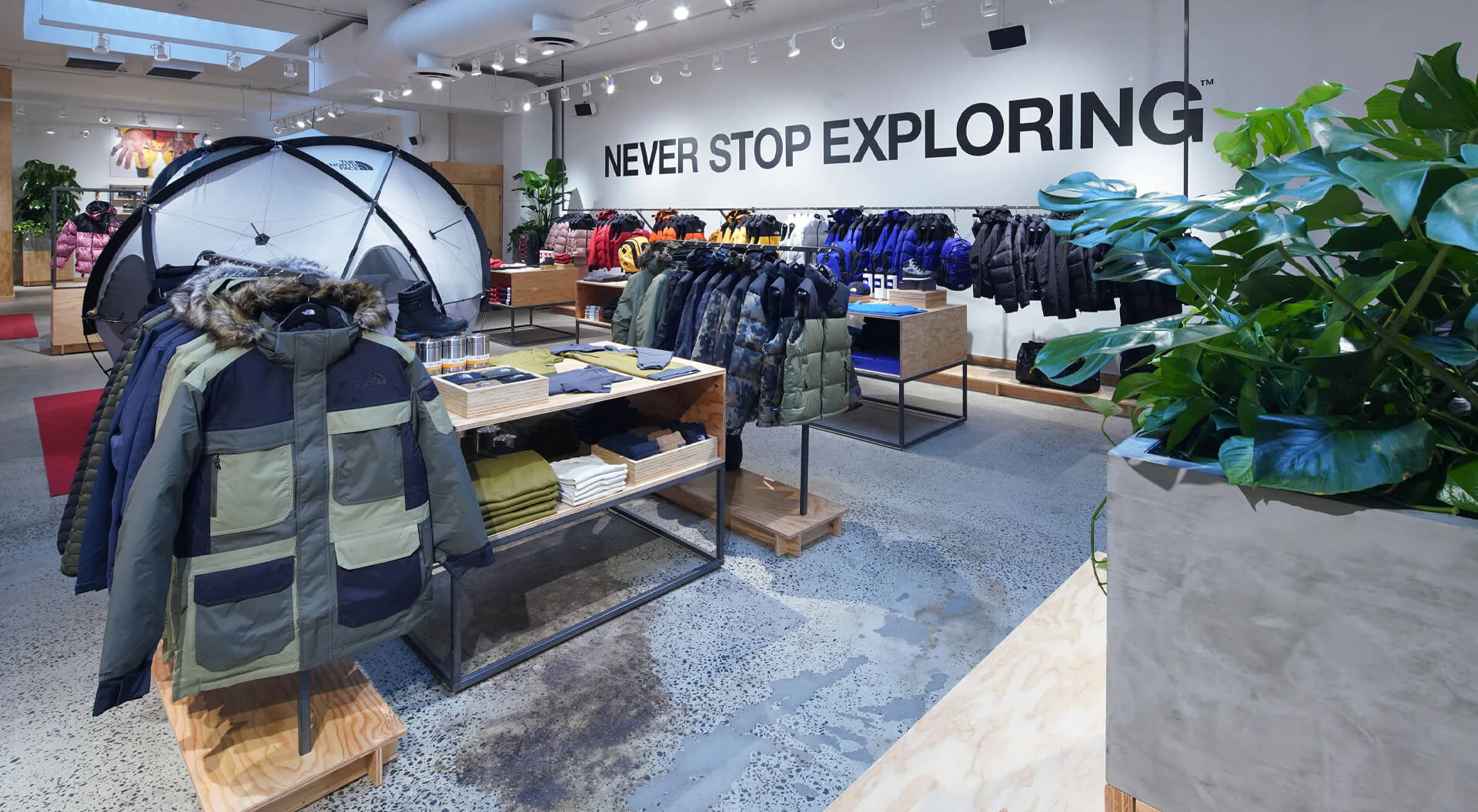
The North Face's Global Flagship on Fifth Avenue in New York takes a different approach. Its 21,000-square-foot environment connects outdoor exploration, expedition heritage and product performance through materials, spatial sequencing, communication and visual content.
How CampbellRigg helps: CampbellRigg applies the principle behind these benchmarks without reproducing another retailer's aesthetic: identify what makes the client's brand distinctive and convert those characteristics into practical physical design decisions.
Designing Fashion Stores for Commercial Performance
Fashion store interior design should ultimately be assessed by more than aesthetics.
Entrance visibility, zoning, circulation, merchandising, fitting rooms and checkout can all influence the ease with which customers discover, evaluate and purchase products.
Management can establish relevant measures including:
- conversion
- average transaction value
- basket size
- sales density
- dwell time
- product discovery
- repeat visits
- performance by category or zone.
How CampbellRigg helps: CampbellRigg establishes commercial objectives before developing the customer journey, space plan, merchandising strategy and physical design language.
The agency's fashion retail evidence includes a Tom Tailor concept for which a target of more than 20% sales uplift was established, alongside an identified 18% increase in average basket associated with tailored space planning and intuitive store navigation. These figures relate to specific project circumstances and are not universal performance guarantees.
The benefit is a design programme with measurable commercial objectives rather than an interior concept judged solely on appearance.
CampbellRigg Commercial Evidence
CampbellRigg's role is to connect brand, customer and commercial requirements before physical design is developed.
This means the agency can establish whether the priority is:
- repositioning the brand
- improving product discovery
- increasing conversion
- strengthening customer loyalty
- improving sales density
- creating a new format
- transforming an existing estate
- preparing for multi-location rollout.
The resulting brief gives management a clearer basis for evaluating design investment and implementation requirements.
Fashion Store Design for Different Retail Formats
A scalable fashion network rarely consists of identical stores.
A flagship may establish brand leadership and test new ideas. A shopping-centre store may prioritise efficient product discovery and conversion. A compact urban store may require a highly efficient assortment and circulation strategy.
The strategic question is therefore: What must remain consistent, and what should change?
The brand proposition, core visual language and customer principles should remain recognisable. Store size, circulation, fixture configuration, merchandising density and service provision may adapt.
How CampbellRigg helps: CampbellRigg develops design systems rather than single-store solutions.
The team establishes which elements are fixed, modular, adaptable or locally configurable.
The benefit is a physical retail concept capable of scaling across different properties without sacrificing brand recognition or operational practicality.
From Brand Strategy to Commercial Performance
For senior management, the critical transition is from brand strategy to measurable retail performance.
CampbellRigg approaches this through seven connected stages:
1. Define the commercial ambition
Establish what the physical network needs to achieve growth, repositioning, conversion, loyalty, premiumisation, product discovery or better property productivity.
2. Clarify the brand proposition
Identify the characteristics that must become tangible within the physical environment.
3. Define customer missions
Understand how customers enter, browse, discover products, seek assistance and purchase.
4. Develop the retail format
Translate those requirements into zoning, circulation, merchandising and operational principles.
5. Create the physical design language
Develop architecture, materials, lighting, fixtures, graphics and digital touchpoints as one system.
6. Establish scalability
Define which elements are fixed, modular, adaptable or locally configurable.
7. Connect design to measurement
Identify the commercial indicators against which the environment can be assessed.
How CampbellRigg helps: CampbellRigg manages the relationship between these stages so that design investment remains connected to the wider retail-development strategy.
The benefit is a clearer management framework for approving, funding, implementing and evaluating a fashion retail programme.
Designing Fashion Stores for Different Retail Requirements
Different stores can serve different strategic purposes.
CampbellRigg can support:
- new fashion store concepts
- existing-estate transformation
- refurbishment programmes
- retail rebranding
- store-format development
- customer-journey planning
- spatial planning
- visual merchandising
- interior architecture
- retail graphics and communications
- fixture and material development
- implementation
- multi-location rollout.
For property and investment teams, this means the design programme can be considered alongside footprint efficiency, implementation complexity, rollout requirements and long-term format development.
Connecting Fashion Brand Identity with Physical Retail
The physical store is where brand identity becomes tangible in three dimensions.
Space, materials, lighting, fixtures, merchandising, navigation, communication and customer interaction must operate as one coherent proposition.
When these elements are coordinated, physical retail becomes a strategic brand asset rather than simply a decorated sales environment.
How CampbellRigg helps: CampbellRigg brings brand strategists, architects, interior designers and graphic designers together to develop connected fashion retail environments from strategy through implementation.
International experience across Europe, the Middle East and Asia combines global design thinking with local market understanding.
The benefit for management is a single strategic relationship connecting brand transformation, retail design and implementation.
From Fashion Retail Strategy to a Scalable Store Network
The strongest fashion store concepts do more than create attractive environments.
They give management a physical platform through which the brand can be experienced, customer behaviour can be supported and commercial objectives can be pursued consistently across a retail network.
The connection is: Brand strategy → customer experience → store format → spatial planning → merchandising → physical design → implementation → commercial performance.
CampbellRigg helps fashion retailers build that connection.
Whether the requirement is a new store concept, estate transformation, refurbishment, retail rebranding, flagship environment or multi-location rollout, the objective is to turn brand strategy into distinctive physical retail that is commercially effective, operationally practical and capable of scaling.
Start with the Commercial Brief
The most effective fashion retail programmes begin before the first design concept is produced.
How CampbellRigg helps: CampbellRigg can work with senior management to:
- Define the strategic, brand, property and commercial challenge.
- Translate management objectives into customer, format, design and performance requirements.
- Connect brand strategy, customer journey, store planning, visual merchandising and interior design.
- Create a practical design system capable of adaptation across required locations and formats.
- Translate the approved concept into a consistent physical retail network.
- Establish appropriate commercial indicators for evaluating the impact of the environment.
The result is not simply a new store interior. It is a commercially defined retail design platform that management can use to support brand transformation, network development and future growth.
Start with a commercial brief. Contact CampbellRigg to discuss your fashion retail transformation programme and establish the strategy, design, rollout and performance requirements for your network.
Cost-Effective Excellence:
Our pricing structure is highly competitive, offering exceptional value without compromising on quality or creativity.
Rapid Execution:
We move fast. From concept to implementation, our agile team ensures your project is delivered on time and to the highest standards.
Multidisciplinary Expertise:
Our team brings together seasoned brand strategists, architects, interior designers, and graphic designers, collaborating to create seamless, end-to-end brand environments.
Global Reach, Local Insight:
With successful projects delivered across Europe, the Middle East, and Asia, we combine international experience with local market understanding.
Scalable Project Delivery:
Whether it's a flagship fashion store, an urban network or mall store, we manage and execute projects of all sizes, efficiently and effectively.
Proven Track Record:
Our designs evolve branch networks from purely transactional spaces into experiential, relationship-focused brand environments, enhancing engagement, elevating customer experience, and driving tangible business results.
Full-Service Creative Agency:
From rebranding and marketing campaigns to spatial design and rollout, we provide an integrated service tailored to your goals.