News and Views
Supermarket Branding, Design & Marketing Strategy for Retail Excellence for 2026 - 2027.





Supermarket Retail Strategy: Branding, Design & Growth
This article focuses specifically on supermarket retail strategy: how management teams can connect brand positioning, estate strategy, format planning, store design, customer experience and commercial measurement to build a scalable, high-performing grocery network.
Supermarket retail strategy is no longer simply about deciding what a store should look like. For CEOs, retail directors, CMOs, property teams and investment decision-makers, the more important question is how to build a retail network that is relevant to customers, commercially productive, operationally effective and scalable across the estate.
For supermarket groups operating convenience, urban supermarket, supermarket and hypermarket formats, this requires decisions that connect customer insight, brand positioning, estate planning, format development, space productivity, store design, customer experience, loyalty, digital integration and investment.
The objective is clear: Turn retail strategy into measurable commercial performance.
CampbellRigg approaches supermarket retail strategy as an integrated management discipline rather than a series of disconnected design commissions.
Brand auditing establishes how the existing proposition is perceived and expressed. Strategy defines the desired market position. Format planning determines how that strategy should operate across different locations. The design brief then converts the strategy into practical requirements for customer experience, store planning, identity and implementation.
The benefit management receives is one strategic direction linking brand decisions to the physical retail network, rather than a collection of disconnected design initiatives.
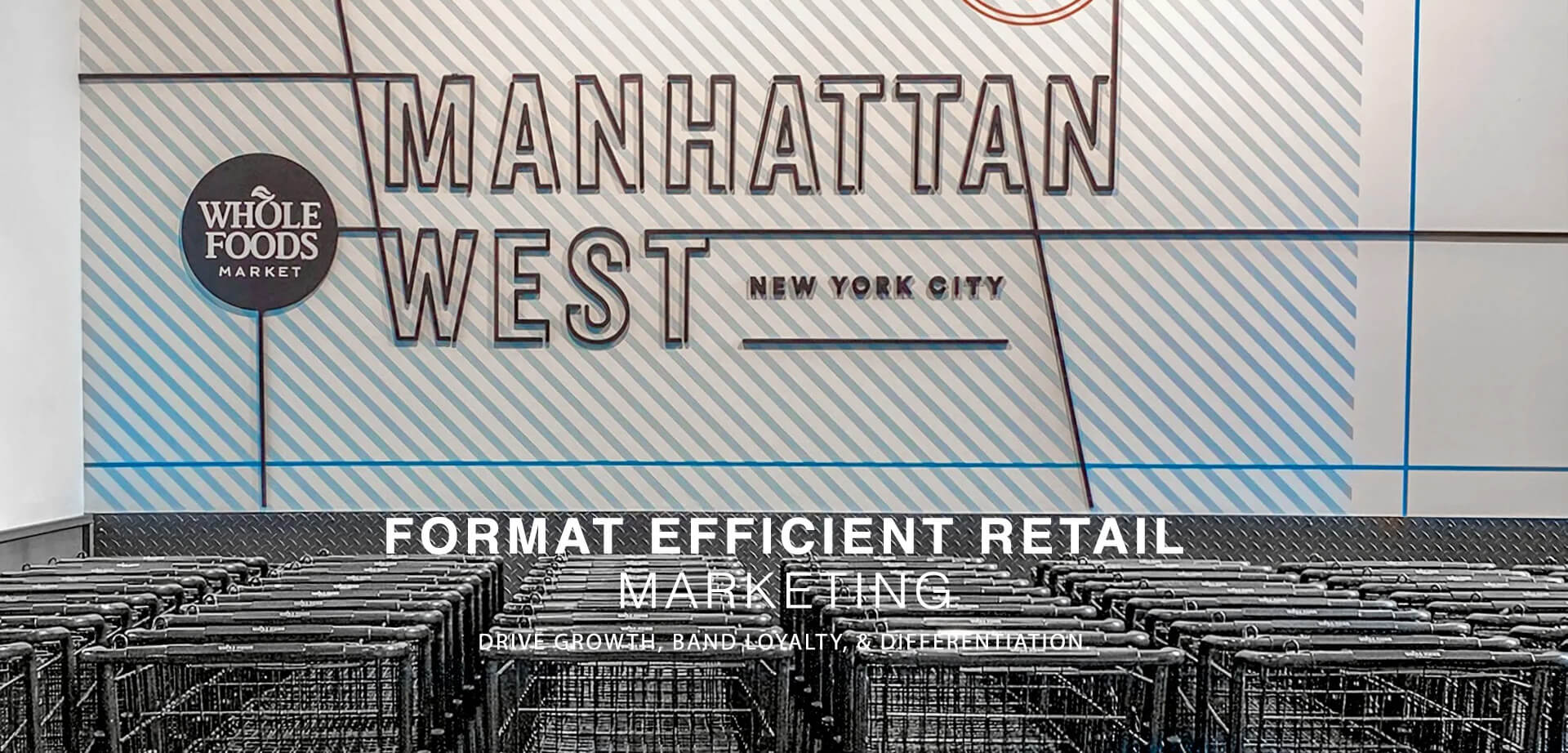
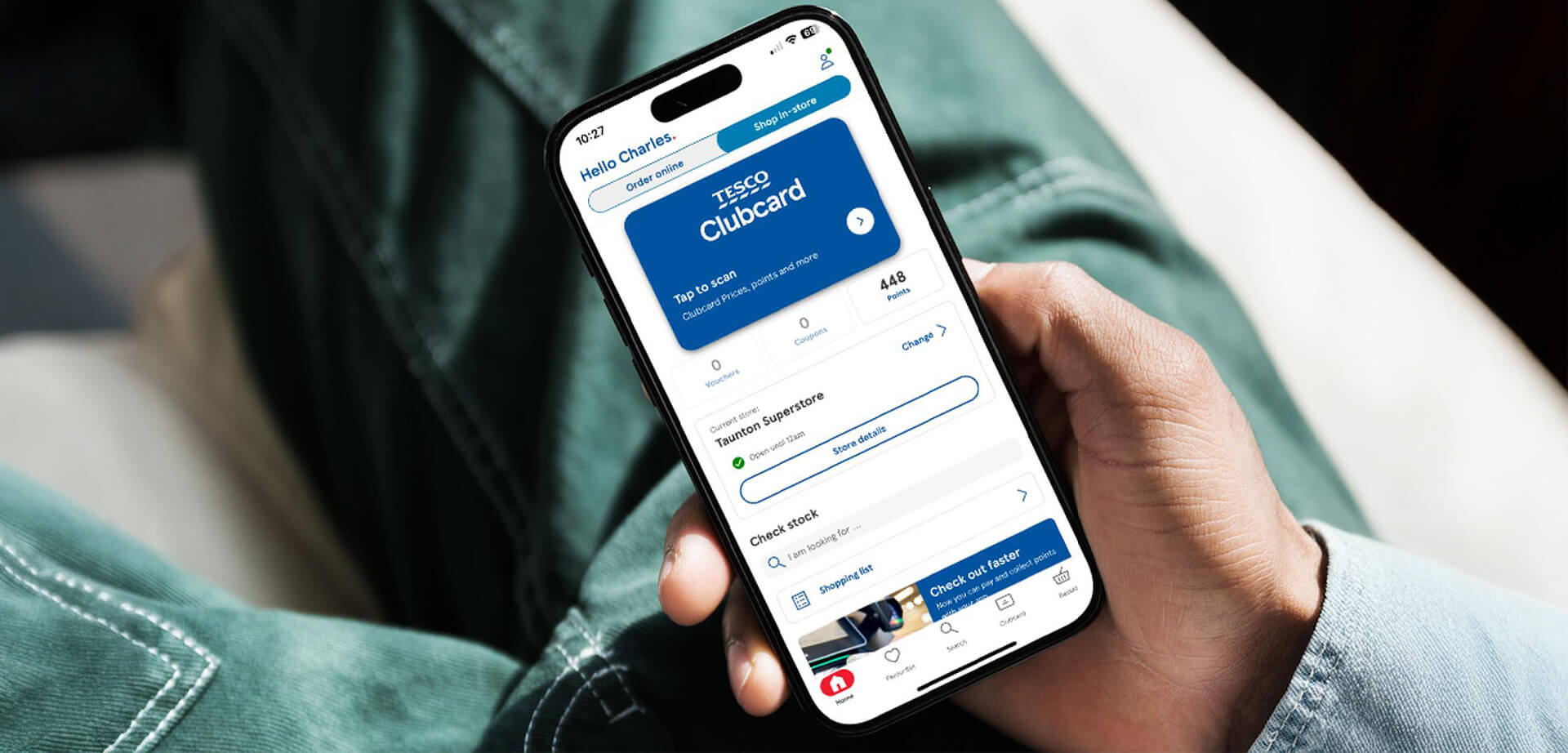
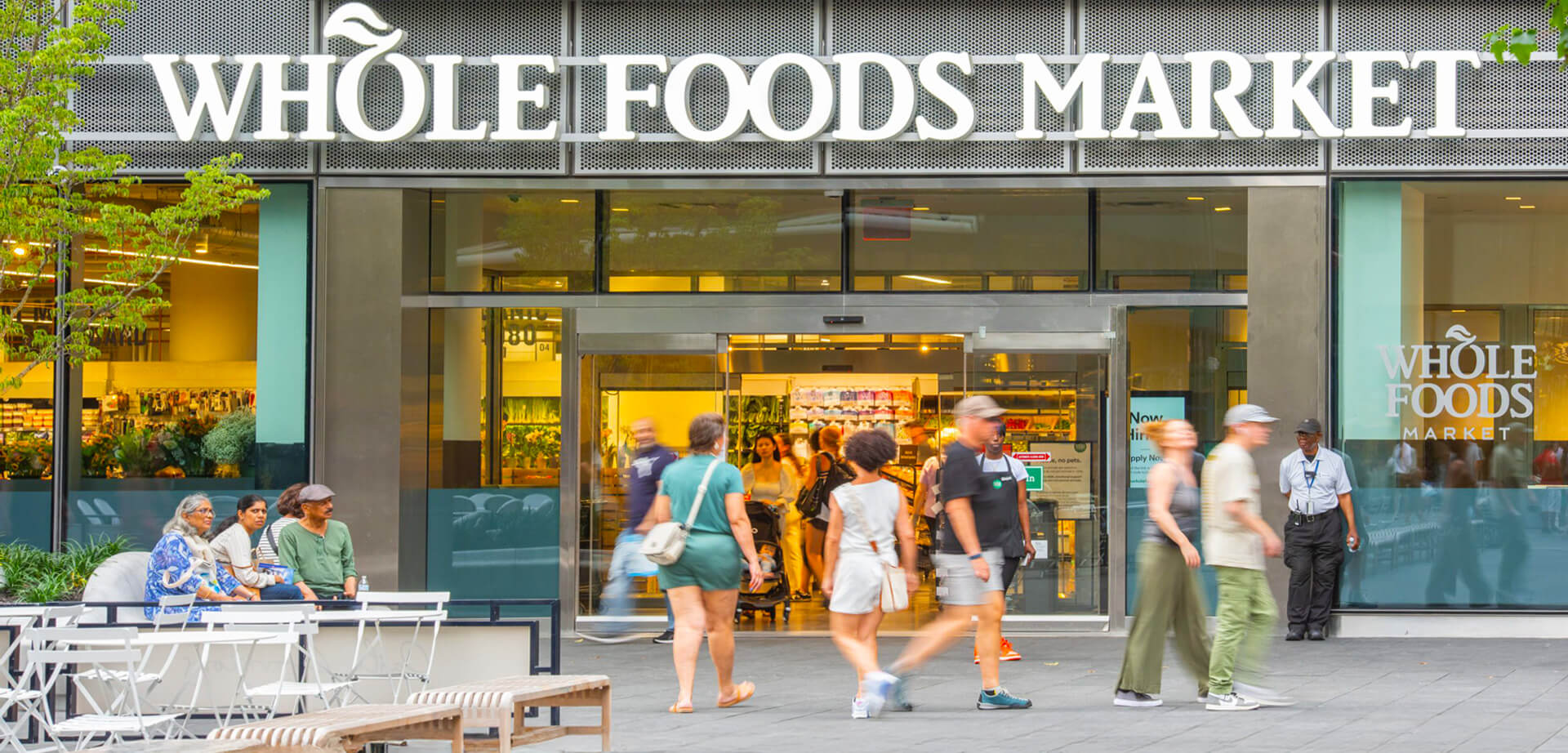
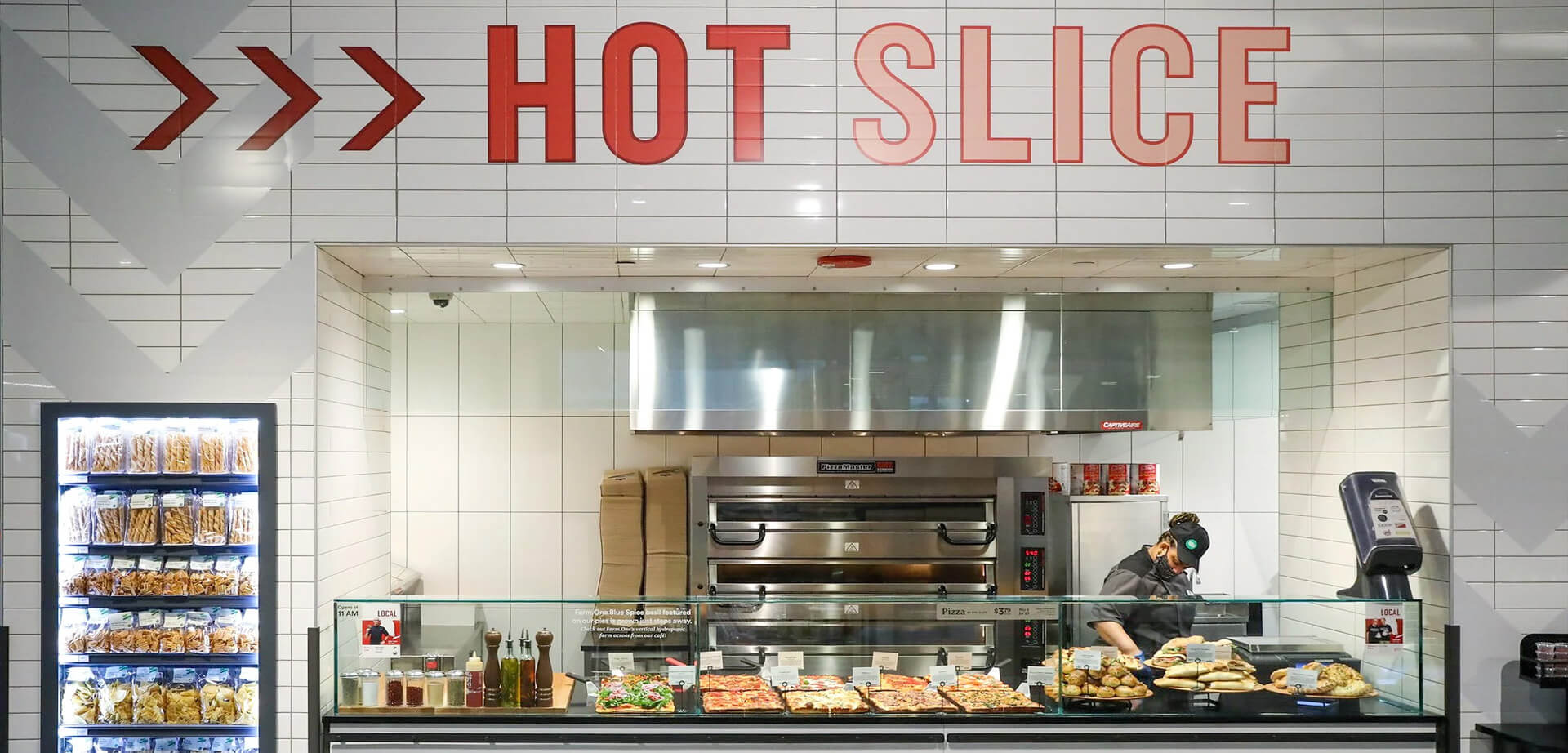
Explore how Whole Foods and Tesco use efficient store planning, shopper-focused design, multi-format innovation and data-led solutions to strengthen performance, build loyalty and differentiate their retail propositions. The comparison draws on international benchmarks including Whole Foods Market in New York, by Thread Collaborative, and Tesco Extra Hypermarket in Lancashire, designed by CampbellRigg.
What Is Supermarket Retail Strategy?
Supermarket retail strategy aligns customer insight, brand positioning, estate planning, format development, space allocation, store design, customer experience, merchandising, digital integration, loyalty and commercial performance around defined business objectives.
It is broader than supermarket marketing strategy and more commercially focused than supermarket design alone.
A marketing strategy determines how the retailer communicates and attracts customers. A store design strategy determines how the physical environment should work. A supermarket retail strategy connects these decisions with the wider estate, customer proposition and investment model.
For senior management, the central question therefore becomes:
How should we develop our retail network so that every format, store and customer touchpoint contributes to sustainable growth?
A practical framework is:
Customer insight → Brand proposition → Estate strategy → Format strategy → Space & design → Customer experience → Digital & loyalty → Commercial performance → Measurement → Rollout
How CampbellRigg helps
CampbellRigg connects these disciplines rather than treating them as separate design commissions.
Our multidisciplinary process can bring together brand strategy, format planning, architecture, interior design, visual merchandising, customer experience, graphic communication and implementation.
The objective is to give management a coherent strategic framework before significant capital is committed to individual stores or estate-wide programmes.
Build a Distinctive Supermarket Brand Position
A supermarket strategy starts with a commercially credible proposition.
Retailers increasingly compete across similar categories, price points and promotional mechanics. Differentiation may therefore come from value, freshness, quality, convenience, health, local sourcing, premium products, sustainability, food discovery or service.
The strategic issue is not simply identifying these attributes. It is determining which combination creates a compelling reason for customers to choose the retailer.
Brand identity must then work consistently across advertising, digital channels, packaging, signage, store environments, merchandising and service.
The objective is commercial: stronger preference, greater frequency, increased loyalty, higher basket value and clearer market differentiation.
For supermarket groups, the challenge becomes more complex when the estate contains several formats.
The brand must remain recognisable while the customer experience adapts to different locations, missions, catchments and store sizes.
How CampbellRigg helps
CampbellRigg connects brand auditing, positioning, brand architecture, identity and retail expression into one commercial proposition.
Our approach is deliberately broader than visual identity. We examine how the brand should influence the entrance, customer journey, department hierarchy, signage, graphics, materials, merchandising and service environment.
For retailers specifically reviewing brand positioning and identity, this article should work alongside CampbellRigg's dedicated supermarket branding strategy resource rather than duplicate it.
The strategic objective is to create a brand system that can be adapted across formats without losing coherence.
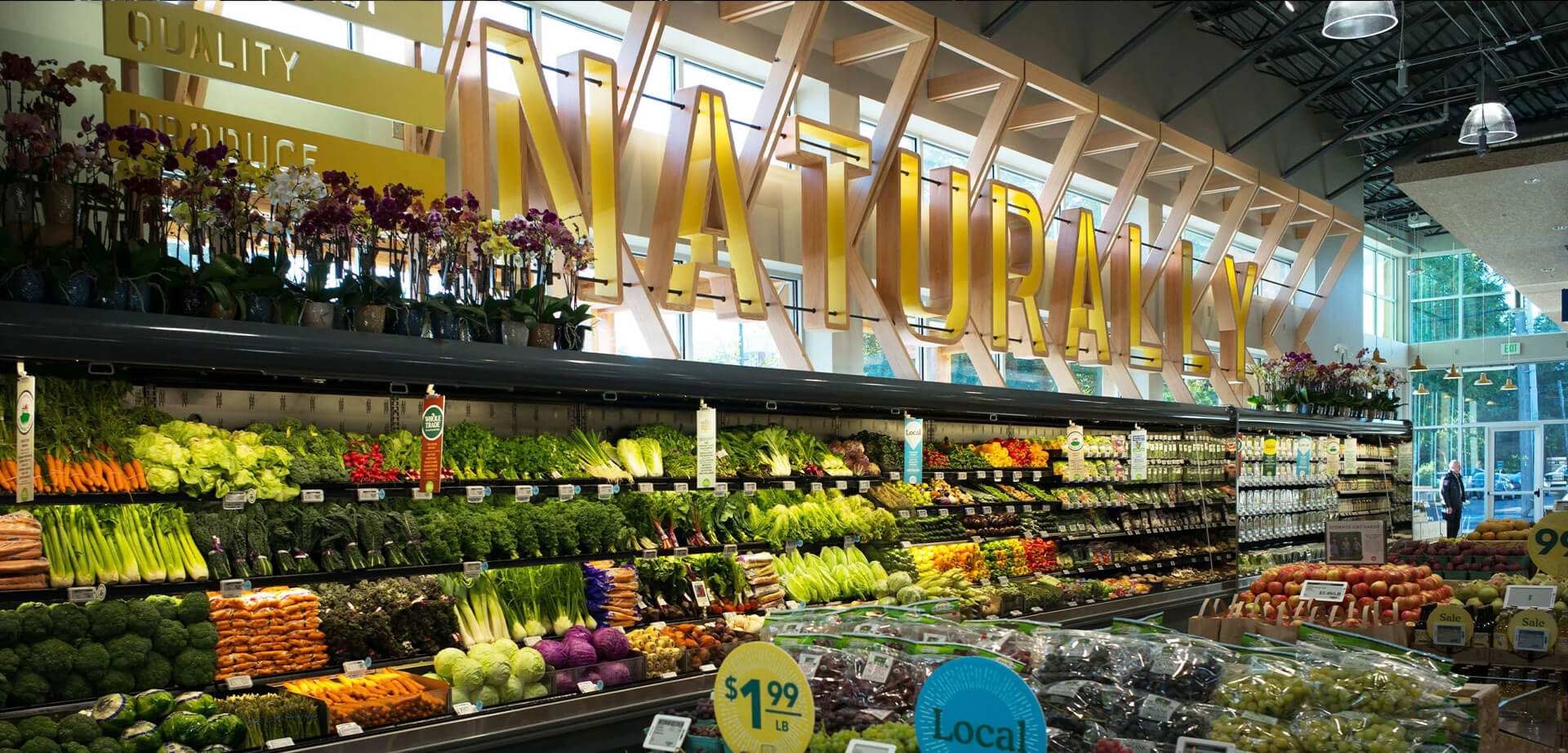
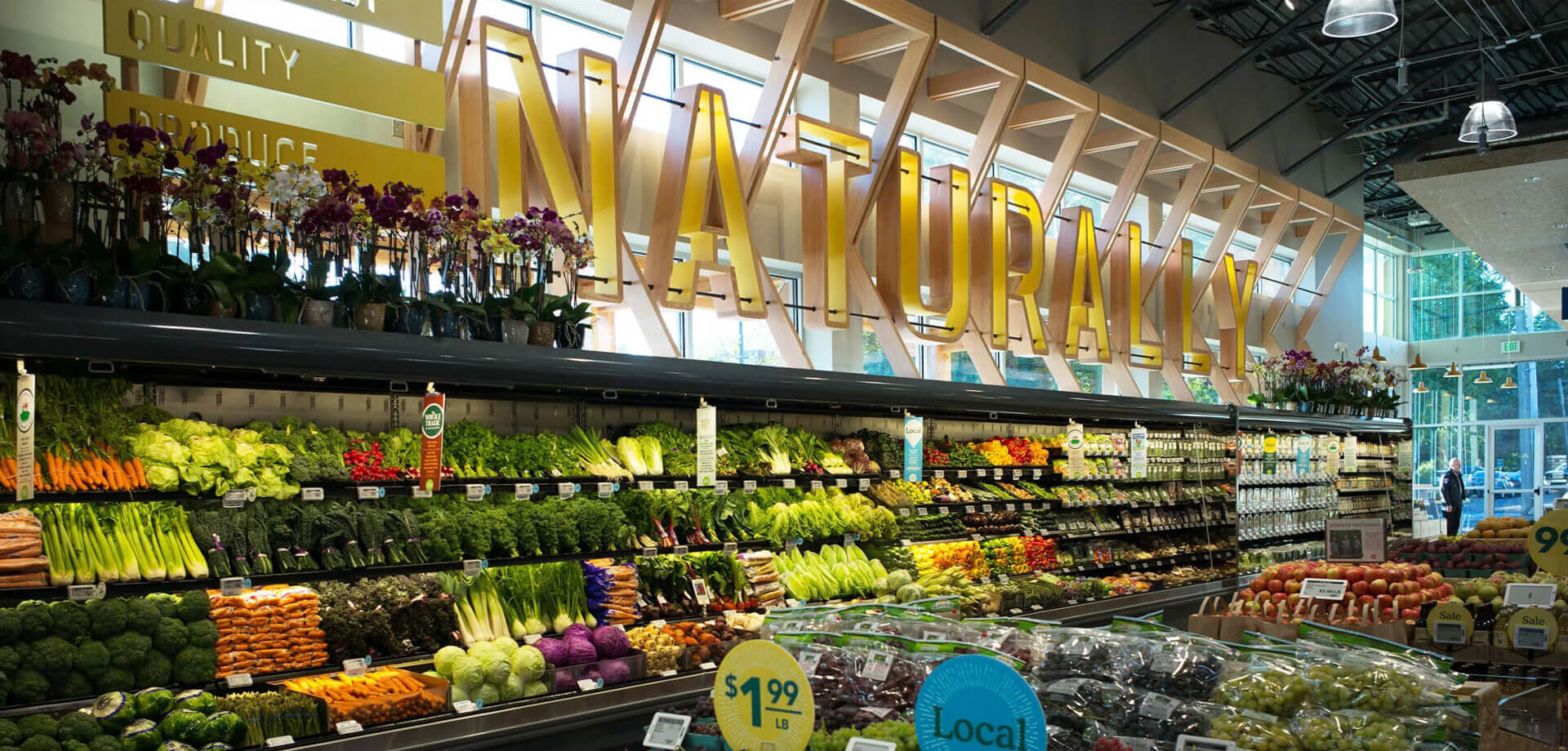
Below: Whole Foods Market store environment is designed to be inviting, with a strong emphasis on quality and fresh produce, as highlighted by the large "NATURALLY" and "QUALITY PRODUCE" signs, location in Eugene, Oregon USA.
Design Shopper Journeys Around Commercial Missions
Customers do not all shop in the same way.
A convenience customer may prioritise speed. A weekly shopper may value range, navigation and value communication. Another customer may visit specifically for fresh food, food-to-go, premium products, health and wellness or locally sourced products.
Management therefore needs to understand which shopping missions matter commercially and how the estate should respond to them.
Mission analysis can influence:
- Assortment
- Category adjacency
- Circulation
- Signage
- Fresh-food destinations
- Food-to-go
- Service levels
- Digital touchpoints
- Promotional zones
How CampbellRigg helps
CampbellRigg translates customer and market insight into shopper journeys, zoning, category relationships, navigation and experience principles.
The objective is productive customer behaviour.
Customers should be able to find destination products efficiently while still encountering relevant opportunities for discovery, comparison and additional purchase.
This approach also supports the development of differentiated formats. A compact urban store may prioritise speed and meal solutions, while a larger supermarket can create broader fresh-food destinations and specialist departments.
The brand remains consistent; the experience adapts.
Develop a Scalable Supermarket Estate Strategy
For a multi-store retailer, individual store performance is only part of the management challenge.
A supermarket estate strategy determines:
- Which formats should be developed
- Where each format should operate
- Which stores require refurbishment
- Where capital should be prioritised
- Which locations justify repositioning
- How much space each format requires
- Which elements should be standardised
- Which elements should be locally adapted
- How successful formats can be rolled out
The objective is not simply to improve one supermarket.
It is to create a repeatable retail model capable of generating value across the estate.
How CampbellRigg helps
CampbellRigg connects catchment thinking, format planning, brand strategy, store planning, refurbishment and rollout requirements.
This creates a distinction between strategic consistency and local flexibility.
For example, the brand proposition, identity system and core customer experience may remain consistent, while assortment, space allocation, fresh-food emphasis and customer journey adapt to local demand.
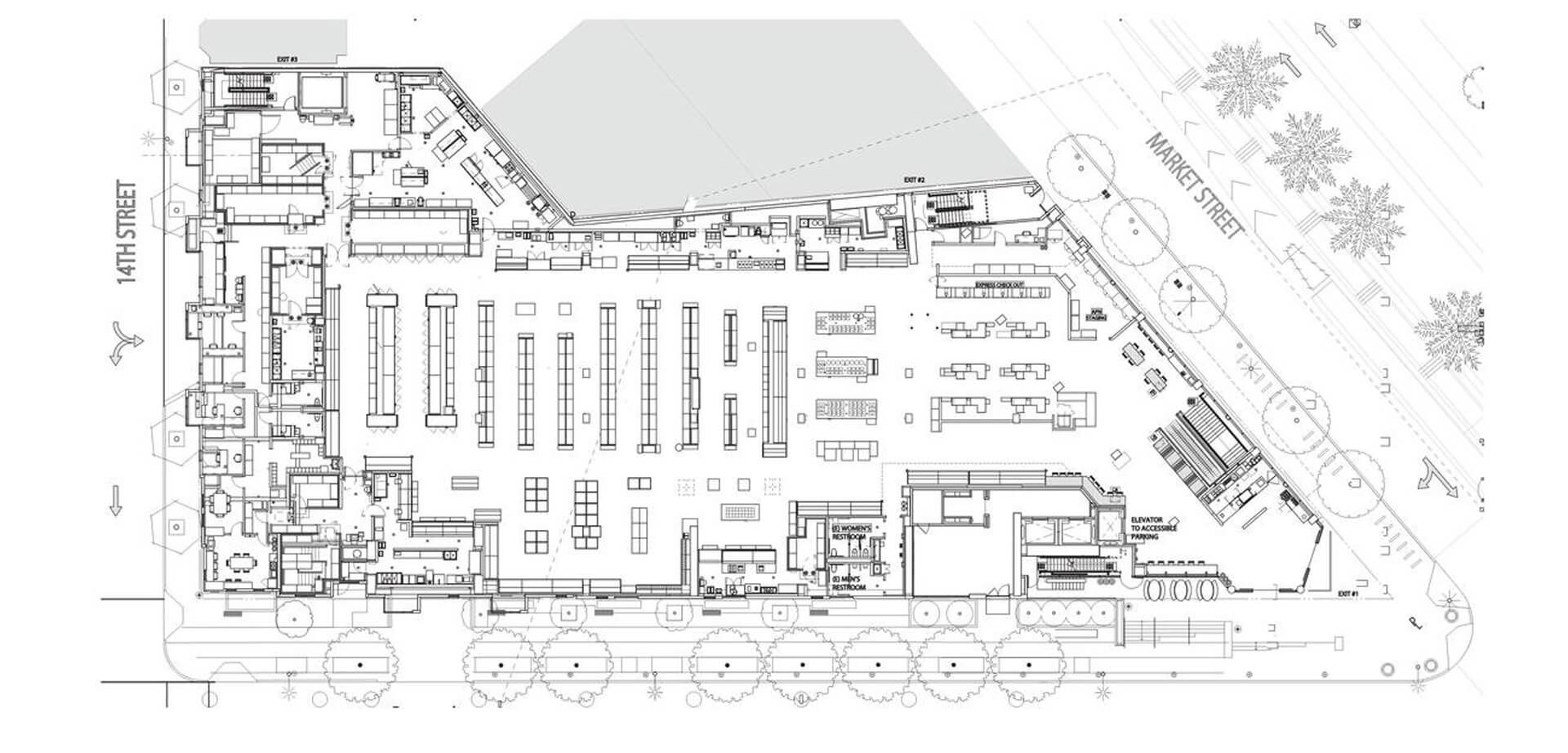
For retailers specifically reviewing physical floor plans and customer flow, the dedicated supermarket layout design content provides the more detailed design-level treatment. Here, the focus remains the wider management strategy that determines where and why those layouts should be deployed.
Connect Brand Strategy with Supermarket Store Design
The supermarket is one of the most powerful physical expressions of the brand.
Entrance design, circulation, category hierarchy, lighting, materials, graphics, signage, fresh-food environments and service areas all influence how customers understand and experience the proposition.
Supermarket store design should therefore be treated as a commercial implementation of strategy, not simply an aesthetic exercise.
How CampbellRigg helps
CampbellRigg converts strategy into a practical design brief covering space planning, architecture, interiors, customer experience, visual identity, signage, merchandising and implementation.
A fresh-food destination can reinforce quality.
A clearer category hierarchy can reduce friction.
A stronger entrance can communicate positioning.
A better layout can make high-value categories easier to discover.
Every major design intervention should therefore have a defined customer and commercial purpose.
For retailers considering a specific store redesign or refurbishment, the strategy should then connect to the dedicated supermarket refurbishment design discipline rather than treating refurbishment as an isolated aesthetic project.
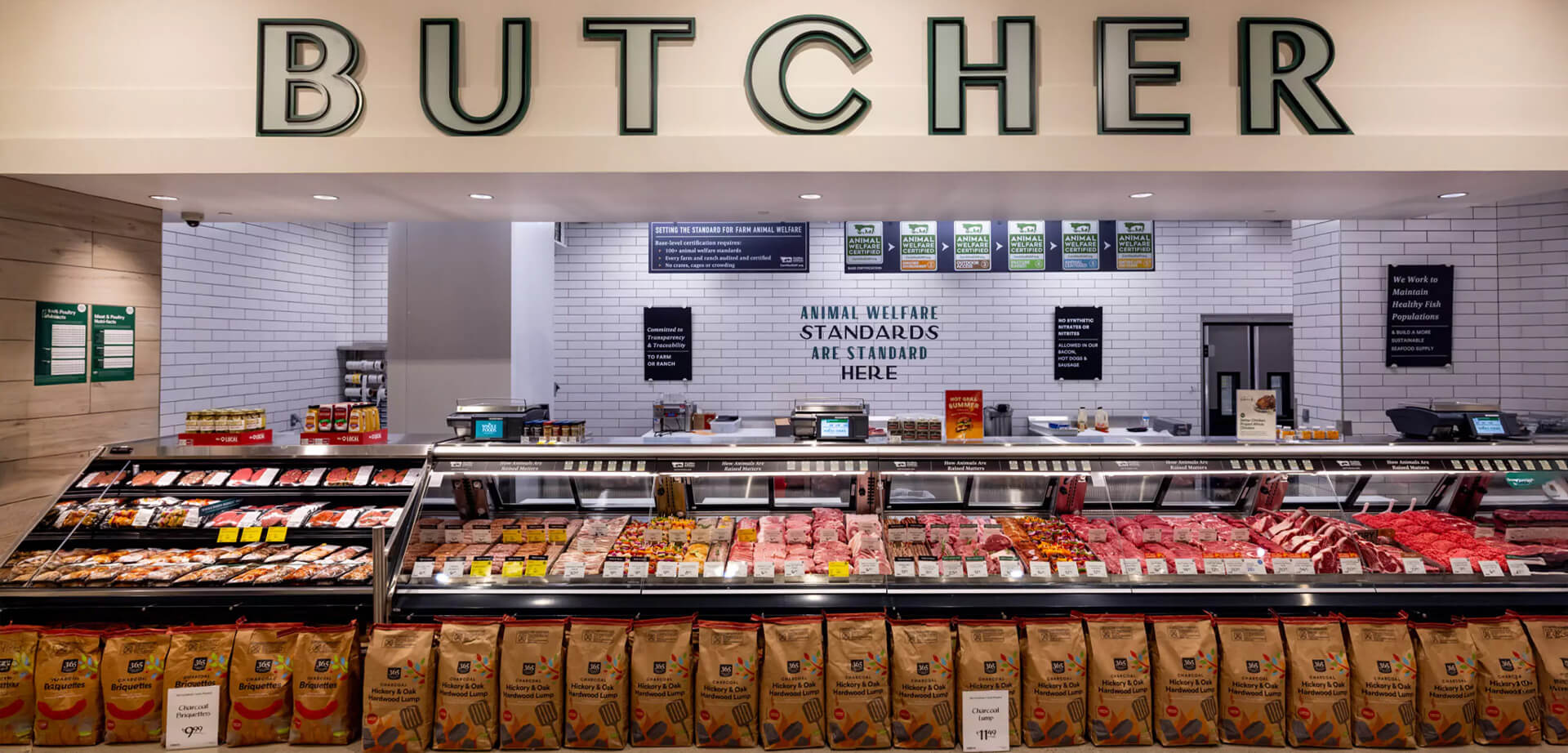
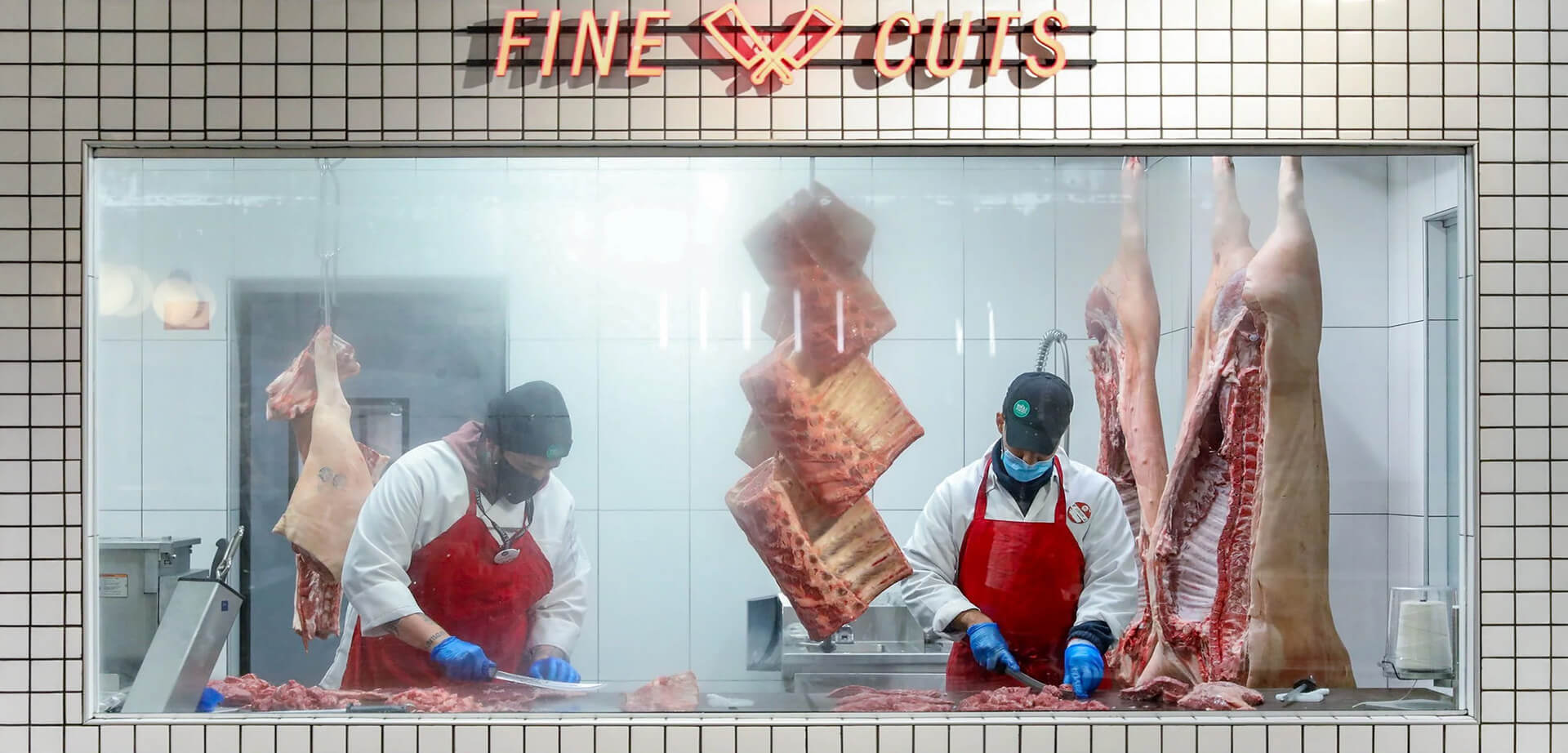
The butcher, highlighs the store's commitment to specific animal welfare standards. Location: Washington, D.C.’s historic Walter Reed development.
Make Every Square Metre Work Harder
Every supermarket has finite space, while rent, property costs, labour and capital create significant pressure on productivity.
The question is therefore not how much merchandise can be fitted into a store.
It is: How should space be allocated to maximise customer value, sales, margin and productivity?
Space planning, visual merchandising, category zoning, promotional architecture, fresh-food destinations and product adjacencies influence what customers notice, where they move and what they purchase.
Sales per square metre is consequently one of the most important indicators for management when evaluating physical retail investment.
How CampbellRigg helps
CampbellRigg combines space planning, shopper psychology, visual merchandising, signage and category presentation to create a clearer commercial hierarchy.
We assess space according to its role in the customer journey and its contribution to the retailer's objectives.
The management question becomes: Does this space earn its place in the store?
For more detailed guidance on the mechanics of floor plans, zoning, circulation and category relationships, CampbellRigg's supermarket store layout design work provides the specialist layer beneath this broader retail strategy.
Connect Loyalty, CRM and Personalisation to the Store
Loyalty data gives retailers increasingly valuable information about purchasing behaviour, frequency, category preferences and promotional response.
The opportunity is not simply to increase programme membership.
It is to use customer intelligence to create greater relevance, stronger retention, higher frequency and increased customer lifetime value.
Physical stores, CRM, loyalty platforms, ecommerce and promotions should therefore operate as connected parts of the same retail proposition.
How CampbellRigg helps
CampbellRigg connects customer proposition, physical retail, brand experience and digital touchpoints so that loyalty becomes part of the wider supermarket strategy rather than a separate marketing activity.
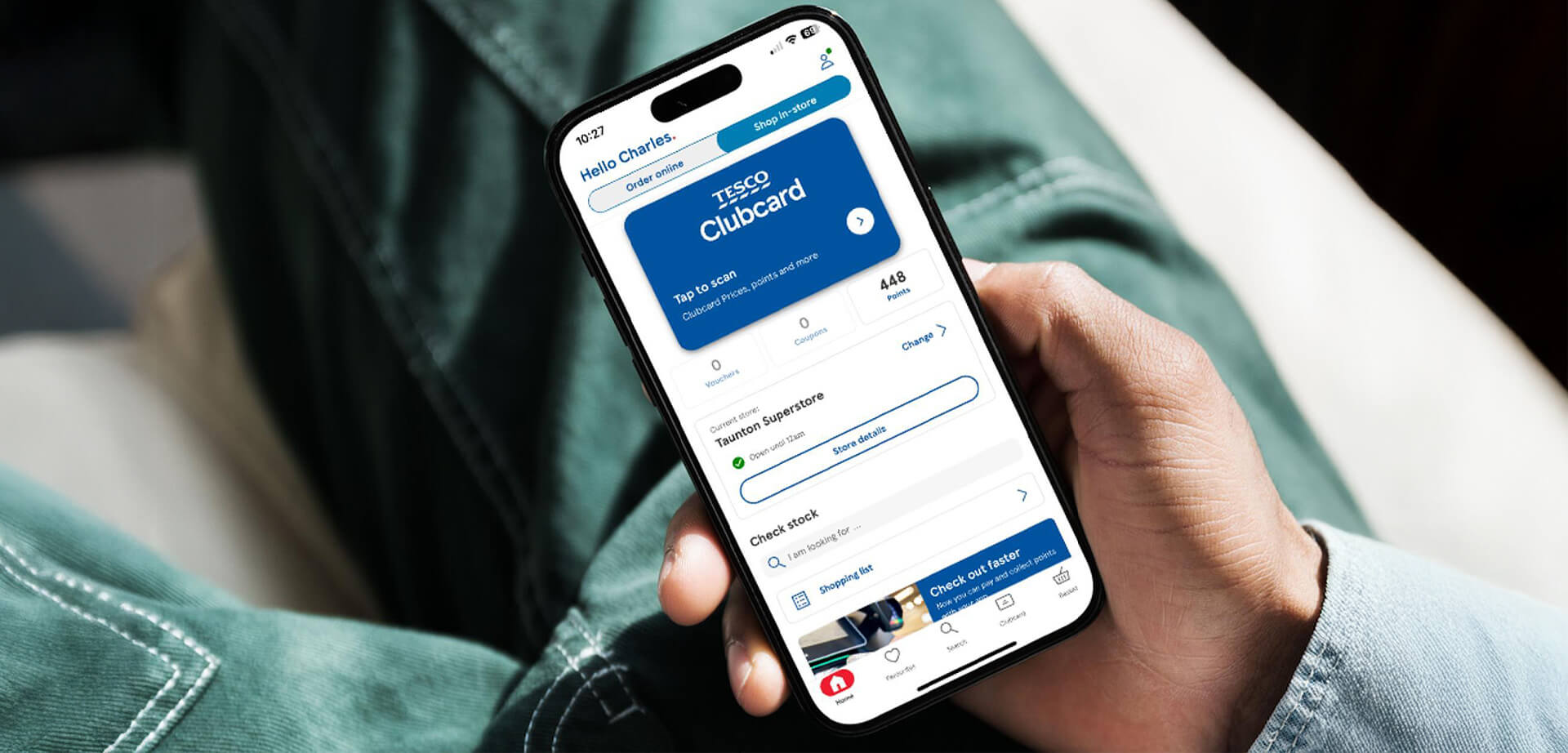
The physical environment can support personalised offers, relevant category discovery, digital engagement and more seamless customer journeys.
The commercial test remains: Does customer intelligence create measurable behavioural and financial value?
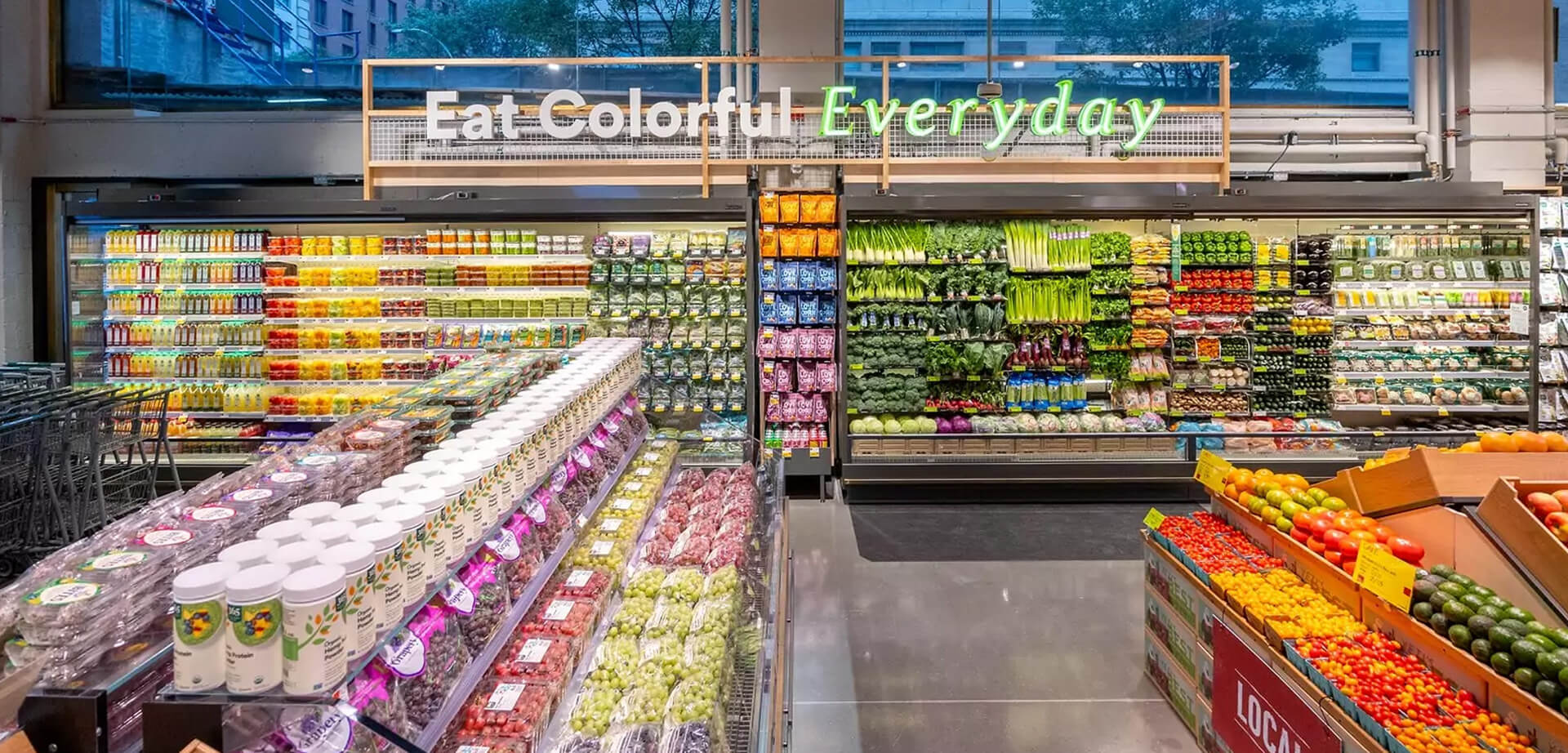
The Whole Foods Market Daily Shop in Manhattan’s Lenox Hill neighbourhood places fresh produce at the heart of the customer experience. Its design uses the “Eat Colorful Everyday” message to celebrate the visual variety, freshness and nutritional appeal of colourful fruit and vegetables.
Integrate Physical and Digital Retail
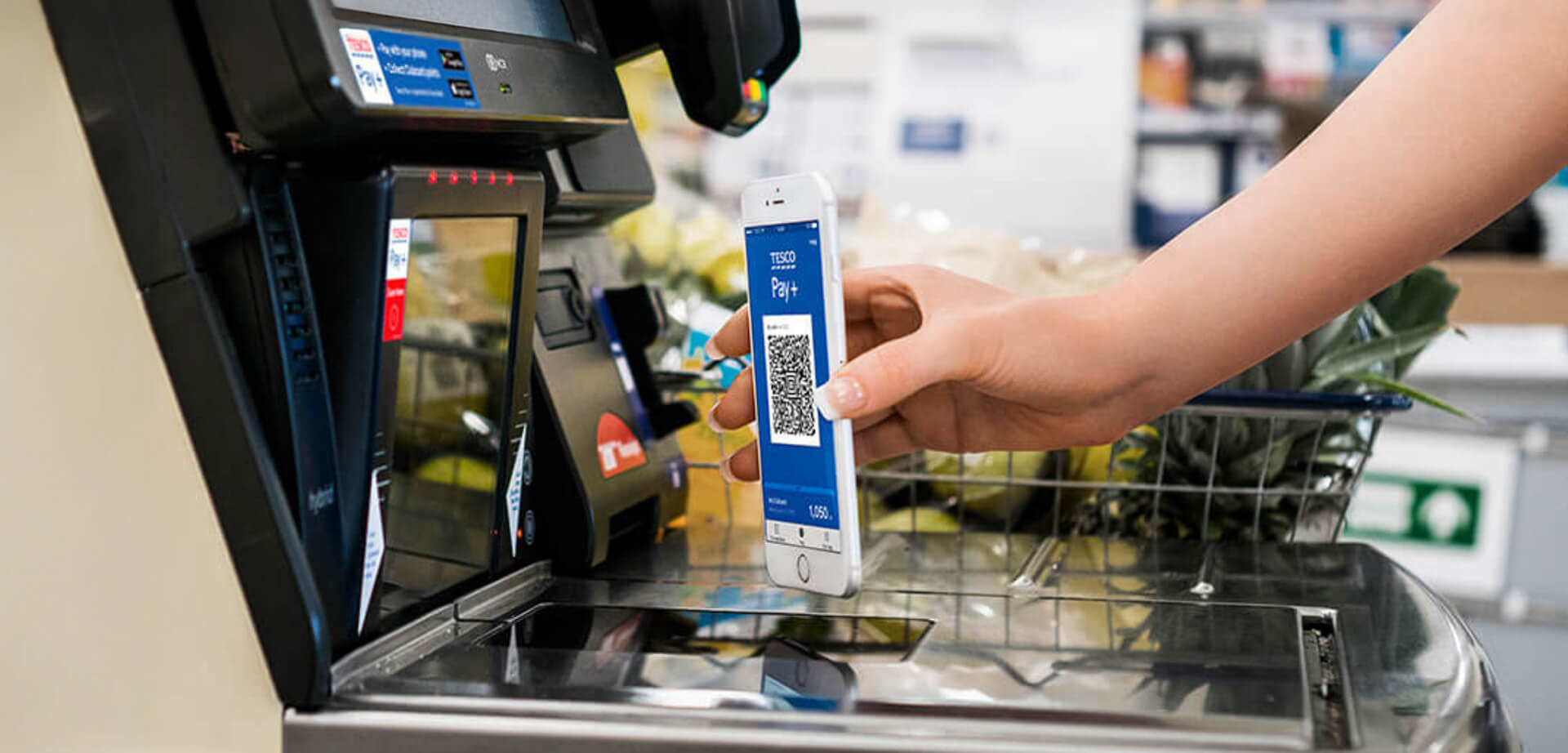
The supermarket customer may discover a product online, check availability through an app, receive a personalised offer, visit a store, use a loyalty benefit and complete another purchase digitally.
Physical and digital retail therefore need to operate as one connected brand.
Technology should not be introduced simply because it is available.
Its purpose should be to simplify shopping, improve relevance, increase engagement, improve availability or create measurable operating value.
How CampbellRigg helps
CampbellRigg integrates physical retail, digital experience, signage, customer journeys, loyalty touchpoints and emerging technology within the wider format strategy.
AI, predictive analytics and connected services can support demand forecasting, personalisation and availability.
But technology remains an enabler.
The retail strategy comes first.
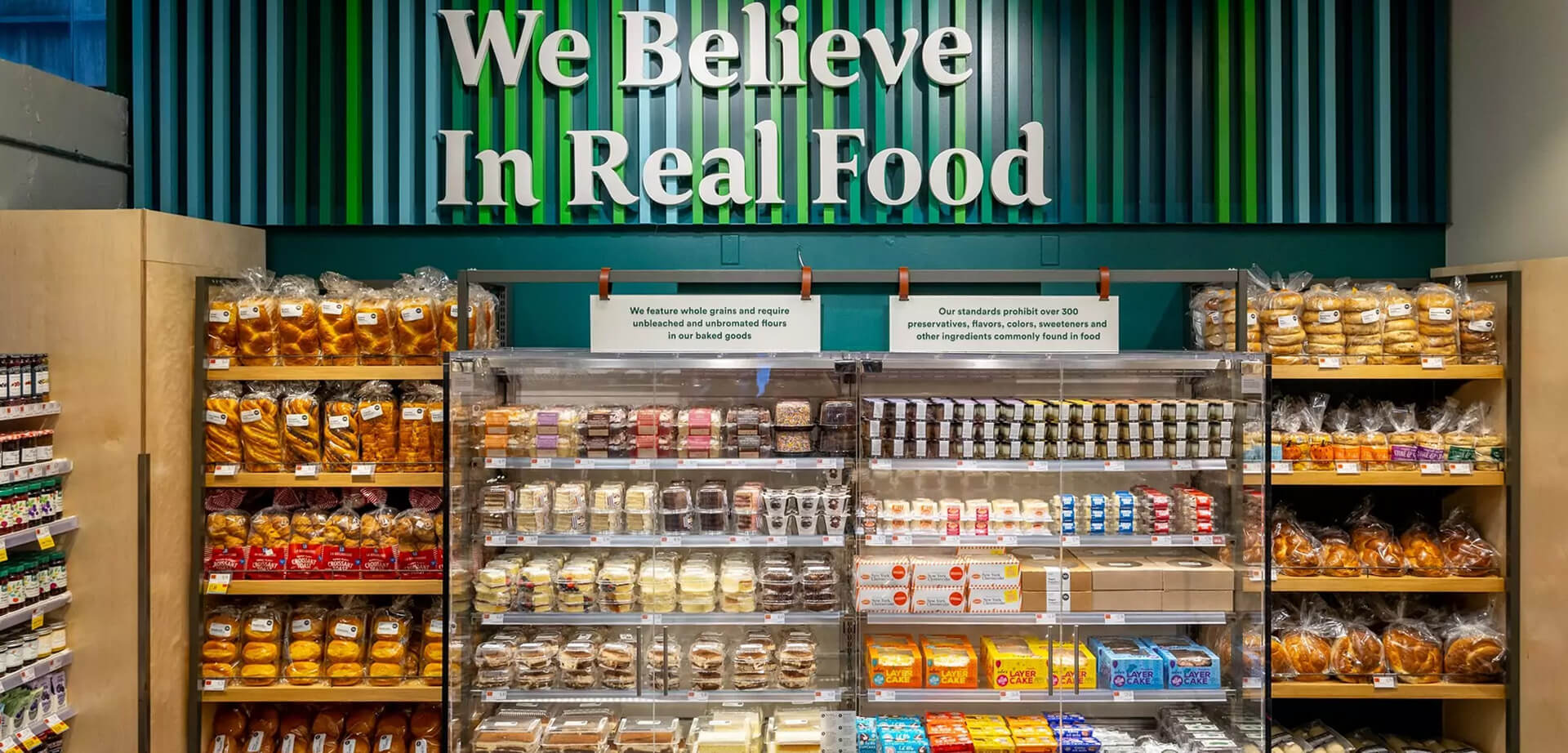
The Whole Foods Market bakery communicates the brand’s “We Believe in Real Food” philosophy through clear messaging around ingredient quality and product standards. Signage highlights the use of selected ingredients while emphasising the avoidance of common artificial additives, reinforcing the retailer’s focus on transparency and food quality.
Develop a Multi-Format Supermarket Strategy
Many grocery groups operate several formats simultaneously.
A compact urban store may prioritise food-to-go and convenience. A larger supermarket can support broader ranges, fresh-food destinations and specialist departments. A hypermarket requires a different approach to navigation, category hierarchy, experience and space productivity.
The strategic challenge is to maintain one coherent brand while creating commercially appropriate propositions for different environments.
How CampbellRigg helps
CampbellRigg develops format systems defining what must remain consistent and what should change.
These can include:
- Format architecture
- Customer journeys
- Space planning
- Visual identity
- Merchandising principles
- Service environments
- Signage
- Rollout guidelines
This creates a system capable of moving from pilot or flagship store to repeatable network deployment.
For large-format grocery assets, CampbellRigg's dedicated hypermarket transformation work provides a complementary specialist perspective on productivity, experience and ROIC.
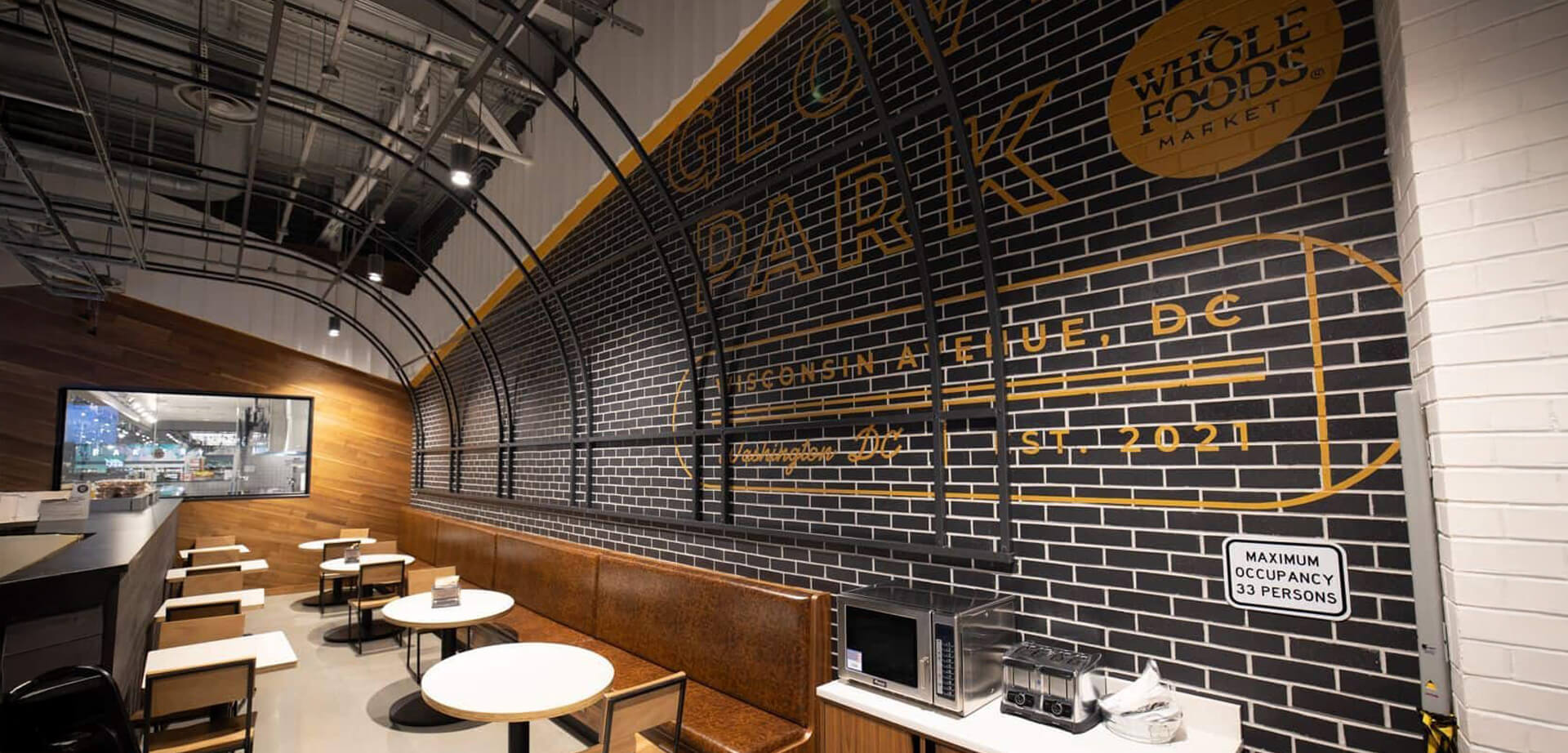
The Whole Foods Market in Glover Park, Washington, D.C., at 2323 Wisconsin Ave NW, combines a distinctive interior with technology-led convenience. Its black-brick feature wall and bold yellow typography create a strong visual identity, while the store was notable for being the first Whole Foods location to introduce Amazon’s "Just Walk Out" cashierless shopping technology.
Build Commercial Measurement into the Strategy
A supermarket retail strategy ultimately has to produce measurable results.
The commercial chain should be explicit: Customer insight → Strategic proposition → Format → Store experience → Customer behaviour → Commercial return
Relevant measures can include:
Customer performance
- Frequency
- Retention
- Loyalty engagement
- Customer lifetime value
Commercial performance
- Sales growth
- Conversion
- Average basket value
- Category penetration
- Promotional effectiveness
Estate performance
- Sales per square metre
- Space productivity
- Labour productivity
- Operating efficiency
- Return on retail investment
- ROIC
How CampbellRigg helps
CampbellRigg can structure the strategic brief around defined commercial objectives before design development begins.
This creates a stronger management framework for evaluating format development, refurbishment, space reallocation, customer-experience initiatives and technology investment.
The process can move from: Customer opportunity → Strategic intervention → Investment case → Pilot → Measurement → Refinement → Rollout
The objective is to reduce the risk of investing in design without establishing how success will be measured.

CampbellRigg Proof Point: Fresh & Fresh
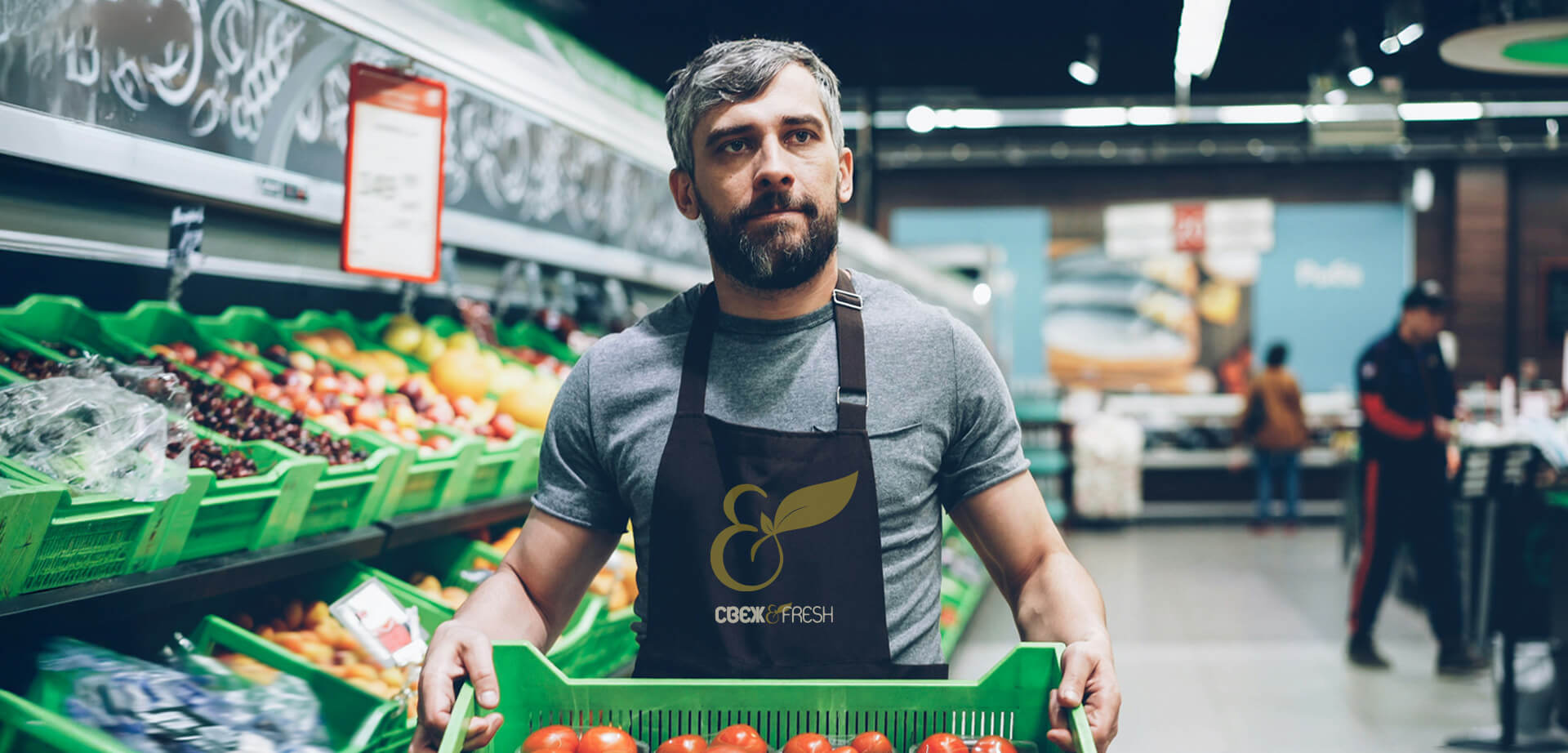
CampbellRigg's work with Fresh & Fresh (Свеж & Fresh - Svezh & Fresh) illustrates the other side of the strategic equation: creating a new supermarket proposition from the outset.
The project connected brand positioning, premium fresh-food culture, curated assortment, store concept development and customer experience.
The strategic objective was not simply to create an attractive identity.
It was to establish a distinctive grocery proposition capable of being expressed through the complete retail environment.
This illustrates CampbellRigg's broader approach: strategy establishes the proposition; format planning determines how it operates; design makes it tangible; implementation makes it scalable.
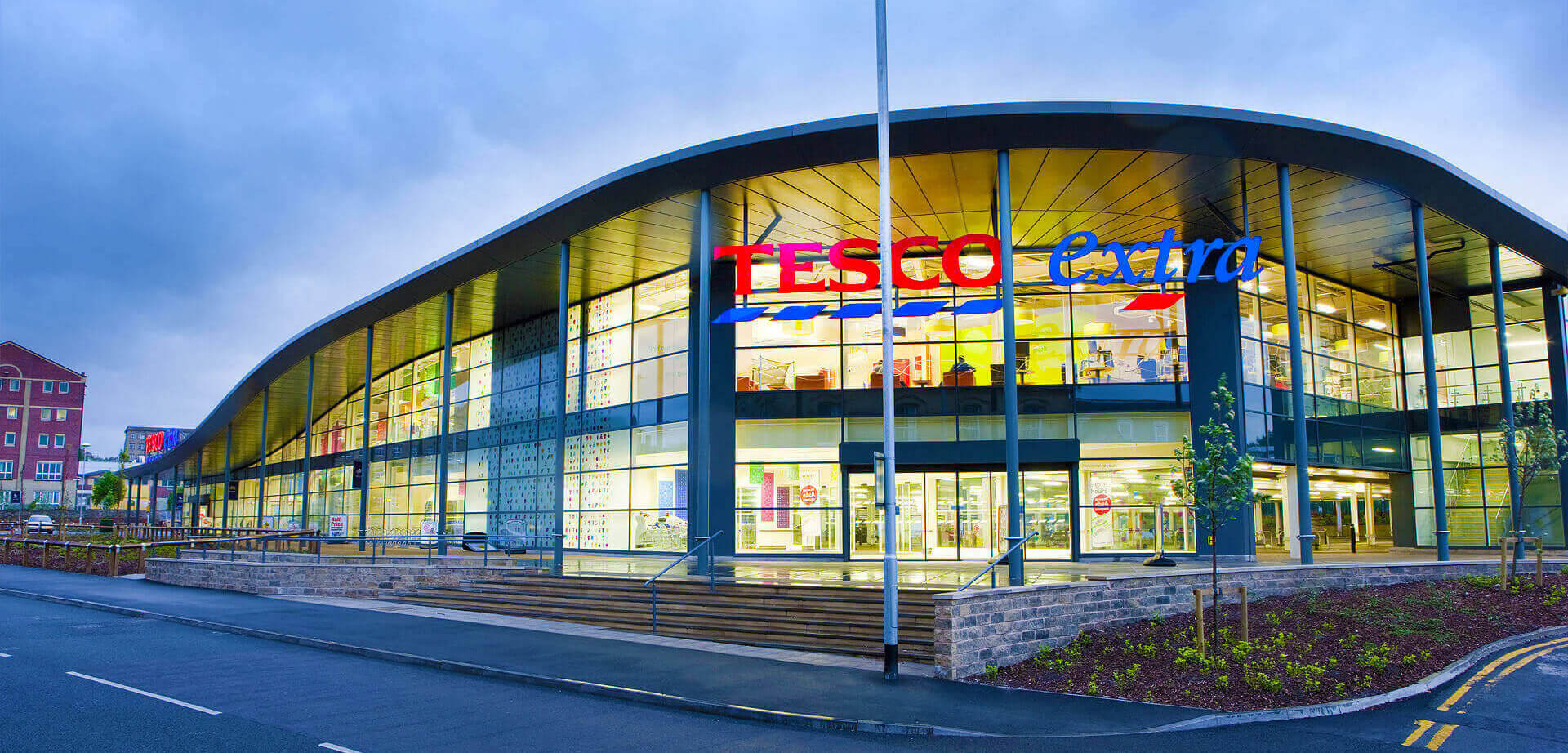
Tesco Extra Accrington: From Format Strategy to Customer Experience
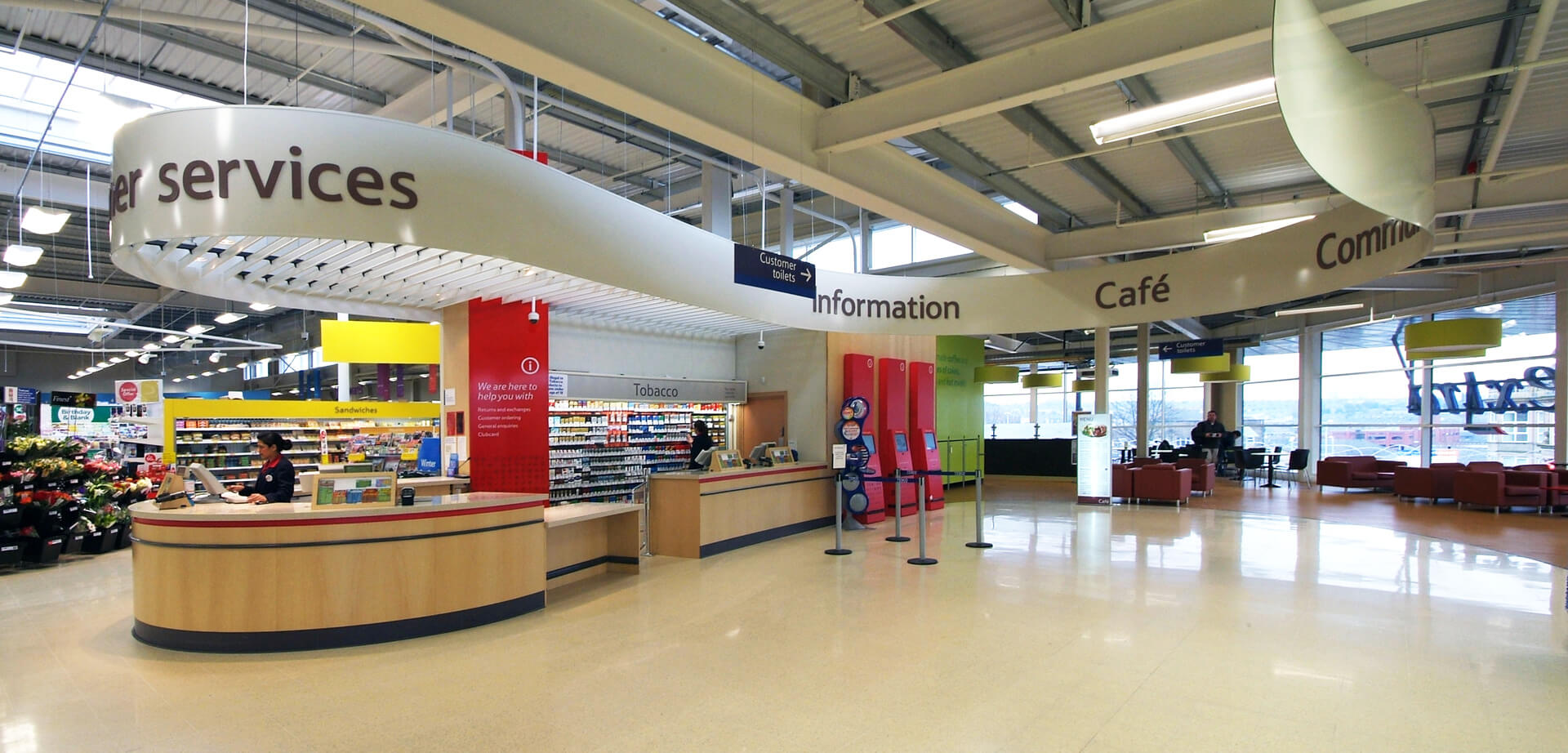
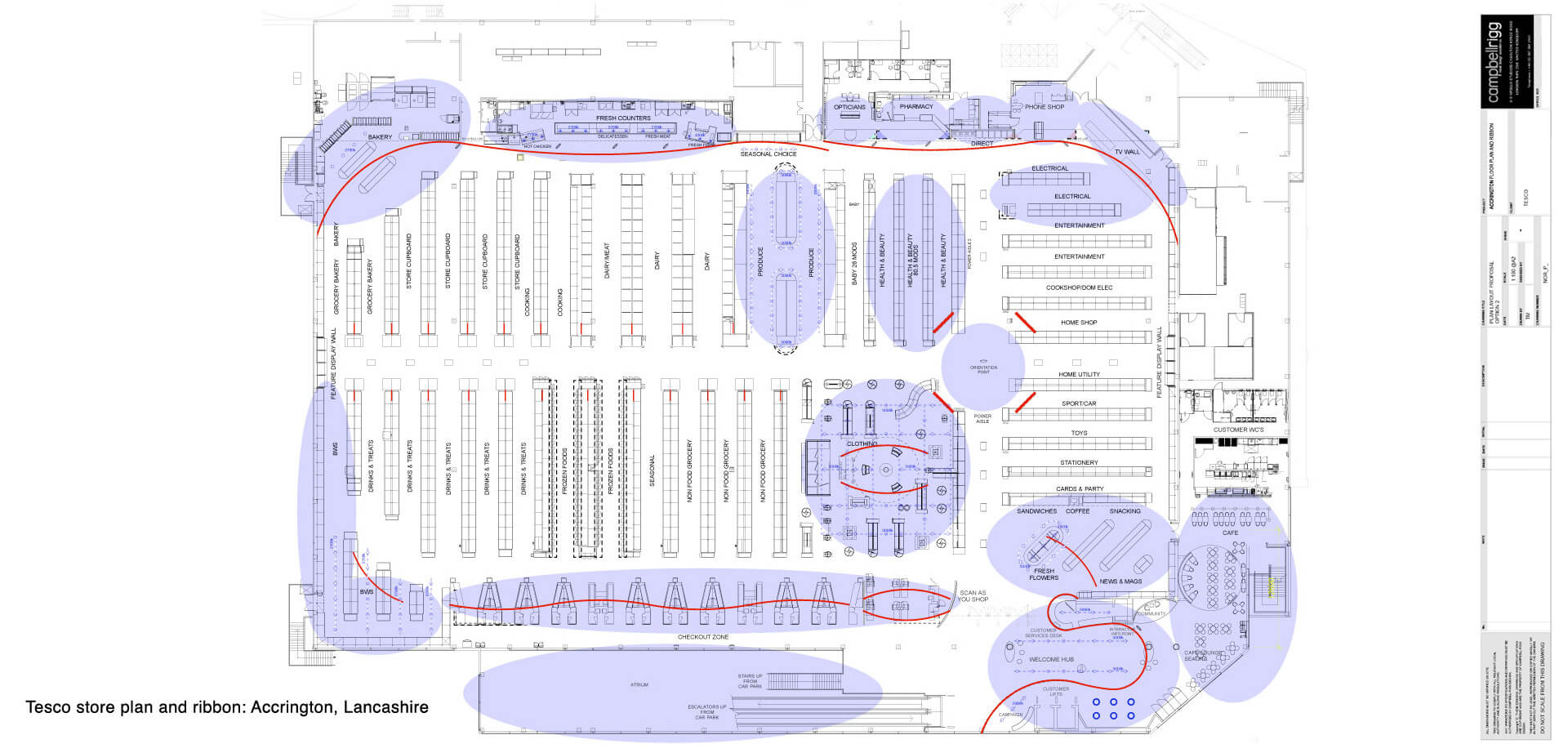
CampbellRigg's work with Tesco Extra Accrington demonstrates how supermarket retail strategy, format planning, customer journey design and fresh-food merchandising can be translated into a large-format supermarket environment.
The project illustrates how supermarket store design can support a wider retail strategy by improving navigation, strengthening fresh-food destinations, clarifying category hierarchy and making better use of available retail space.
Business challenge
Large-format supermarket environments need to accommodate extensive ranges, multiple departments and different shopping missions without creating unnecessary complexity.
Strategic response
CampbellRigg connected brand strategy, format planning, customer journey thinking, fresh-food destinations, wayfinding, merchandising and service areas.
Customer experience
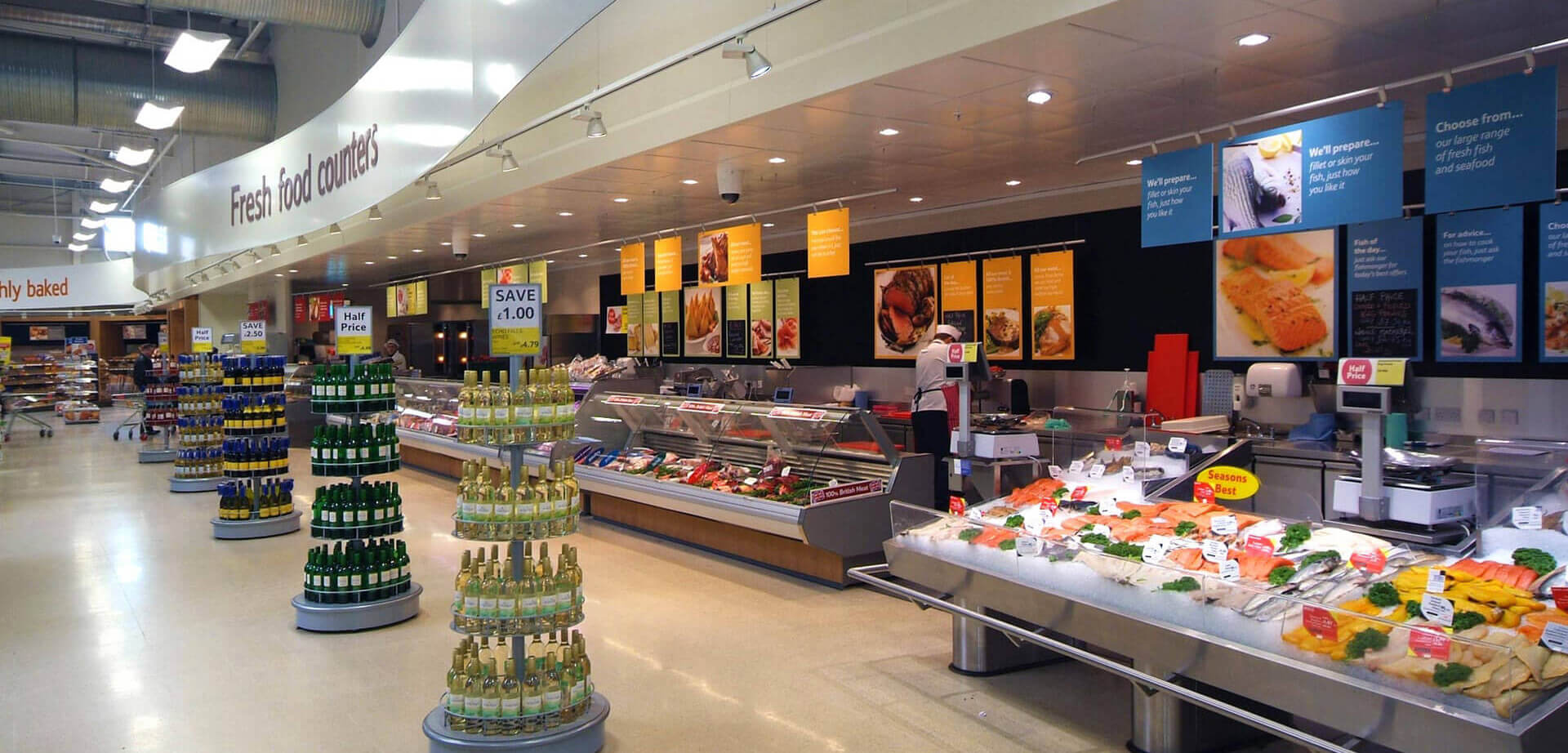
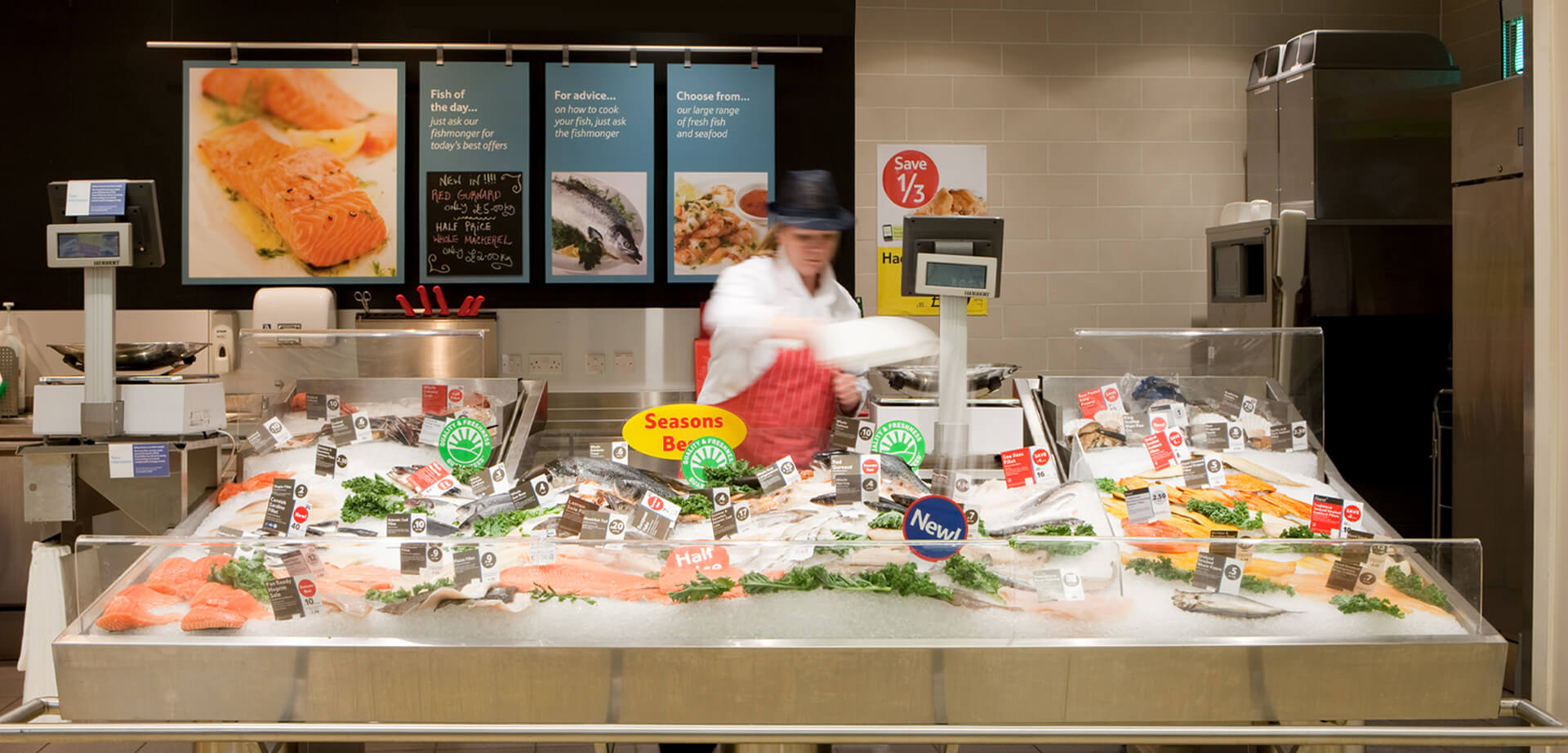
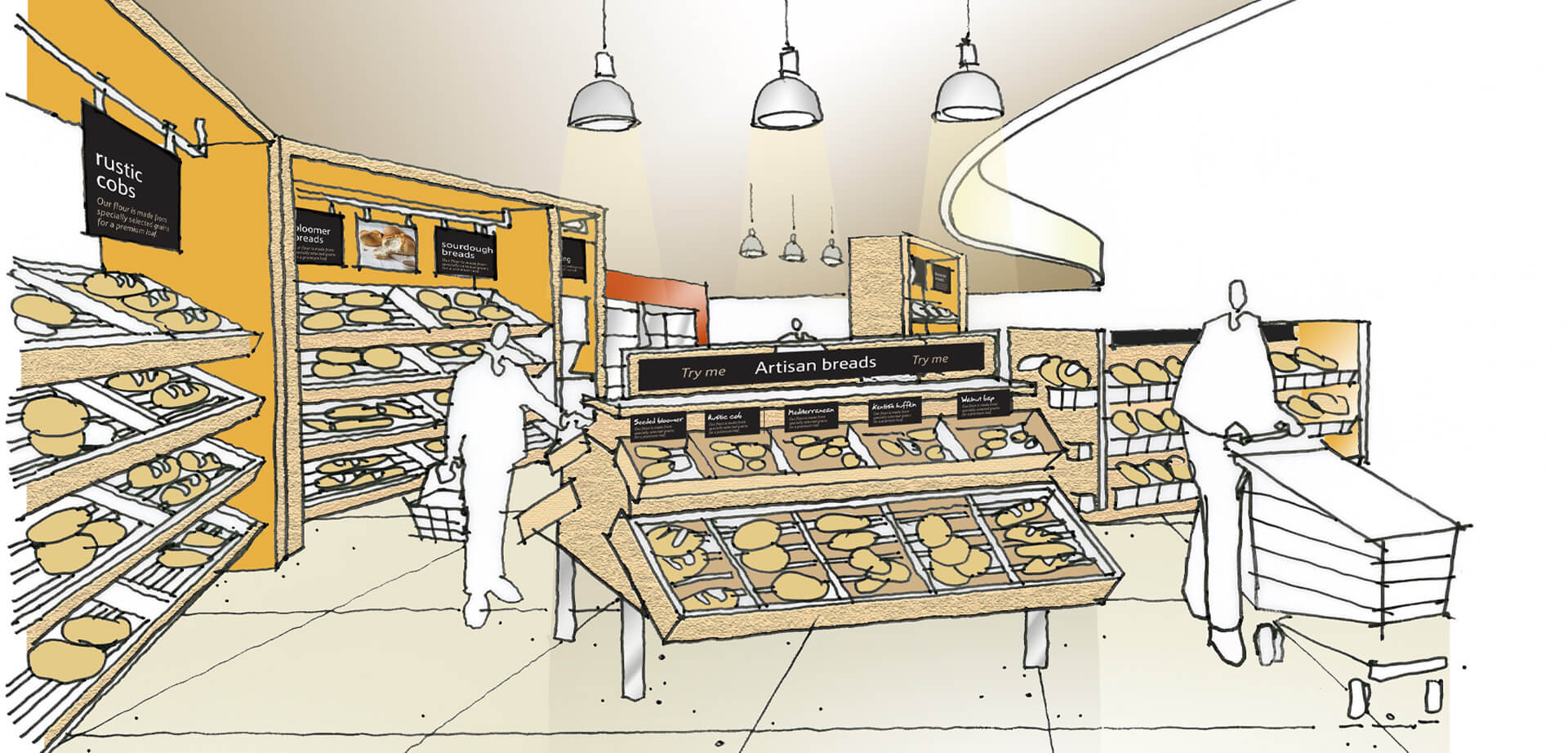
Fresh-food destinations, bakery, butcher and fishmonger areas introduced stronger food-led experiences and human expertise into the shopping journey. Clear signage and navigation helped customers understand the larger-format environment and move between departments.
Commercial objective
The objective was to make the available retail space more relevant and productive while strengthening the customer proposition.
Strategic lesson
The Tesco example demonstrates an important principle: supermarket performance is influenced by the relationship between format planning, customer journey, brand experience and physical design.
The store is not simply the location where a marketing strategy is executed. It is one of the most important places where the retail strategy becomes real.
The same principle applies to investment decisions. Store design, format development and customer experience should be considered within the wider estate strategy and assessed according to their ability to create measurable customer and commercial value.
Measurable ROIC: A Framework for Retail Investment
Supermarket retail strategy should give management a disciplined framework for allocating capital.
Each intervention should be assessed against its expected customer impact, commercial return and capital requirement.
A practical framework is: Investment → Customer impact → Sales uplift → Margin contribution → Operating benefit → Capital requirement → ROIC
Measures may include:
- Incremental sales
- Gross-margin contribution
- Sales per square metre
- Basket value
- Customer frequency
- Retention
- Labour productivity
- Operating-cost reduction
- Capital expenditure
- Payback
- ROIC
The important principle is to measure the incremental return generated by the intervention, rather than simply comparing total store sales before and after a project.
A refurbishment, for example, should not be approved simply because it produces a more contemporary environment.
The business case should establish expected sales, margin, productivity and operational benefits against the required investment.
For portfolio management, proposed projects can be considered according to: Customer opportunity + sales potential + margin potential + space productivity + operational benefit + capital requirement + strategic fit
This gives management a more useful question than: “Should this store be refurbished?”
The question becomes: “Where should the next pound of investment create the greatest strategic and commercial value?”
Fresh Market Concept: The layout has been designed to be part of Tesco's “The Fresh Market" initiative, which emphasizes fresh food sections with dedicated butchers, fishmongers, and bakers.
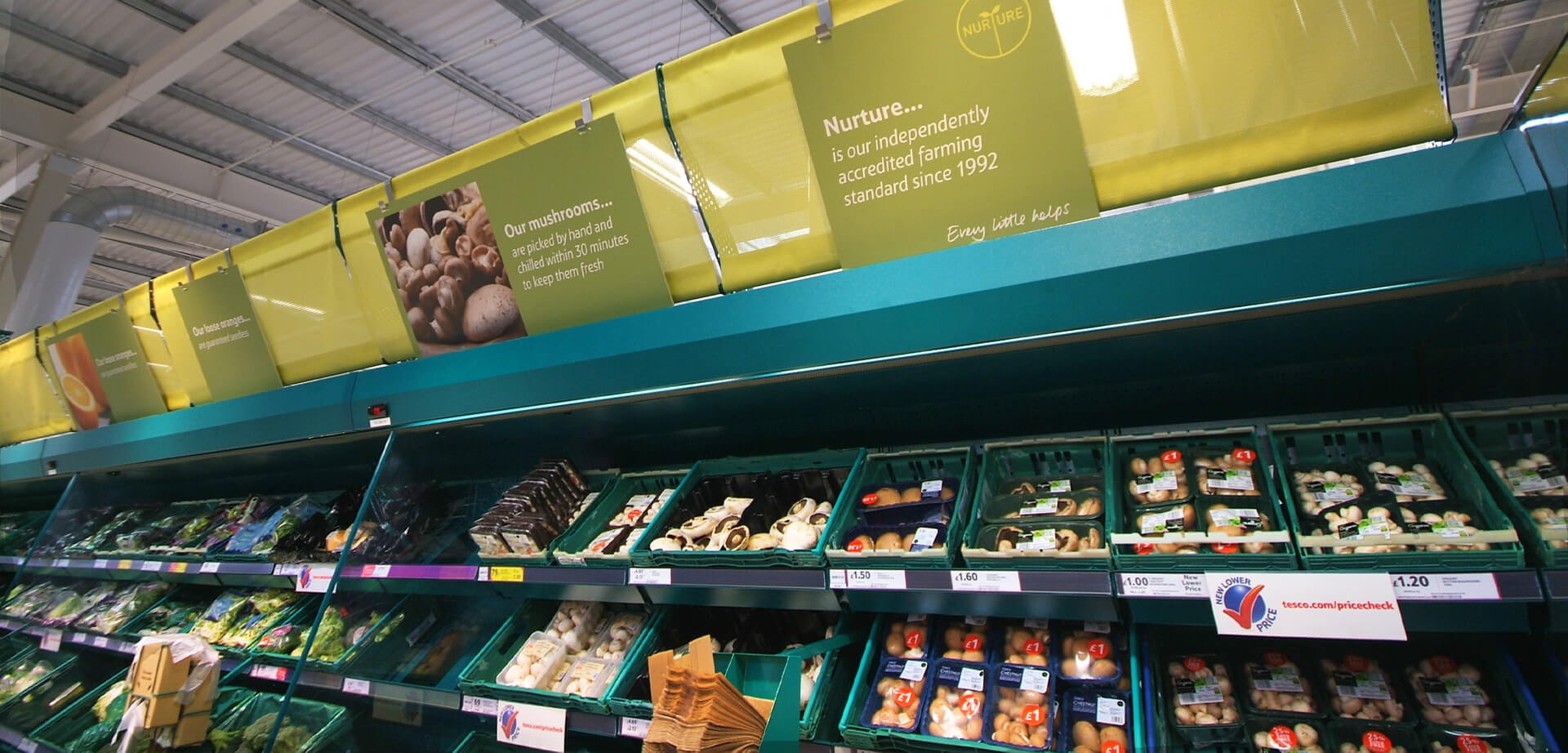
Below: The Tesco Nurture protocol has specific, demanding environmental criteria that all certified growers must follow. These requirements are designed to ensure the sustainable and responsible production of fresh fruit and vegetables for the supermarket.
Supermarket Strategy: Learning From Different Retail Models
Keep international benchmarking as a strategic input rather than a source of designs to copy.
Whole Foods Market provides an example of a quality- and fresh-food-led proposition in which product presentation, specialist destinations and food theatre reinforce the brand experience.
Tesco demonstrates the requirements of a large-scale multi-format retailer where navigation, category organisation, fresh-food destinations, loyalty and operational efficiency need to work together.
Other international retailers demonstrate how local relevance, convenience, premium positioning, wellness and digital loyalty can be incorporated into different supermarket formats.
The strategic lesson is not to copy another retailer.
Instead, supermarket groups should identify which principles are relevant to their own customer proposition, estate, market position and investment objectives.
Benchmarking should answer three questions:
- What is the retailer doing differently?
- Why does it work for its customers?
- Which principle could be adapted to our own estate?
This approach turns international benchmarking into a practical management tool rather than a collection of design references.
The Future of Supermarket Retail Strategy
From 2027 onwards, supermarket retail strategy will increasingly be shaped by data, personalisation, local relevance and intelligent technology.
Predictive analytics can support demand forecasting, inventory optimisation and product availability. Loyalty data can create more relevant customer propositions, while digital platforms can connect ecommerce with physical stores.
But technology will not remove the importance of physical experience.
Fresh-food theatre, human service, local relevance, sensory engagement and effective merchandising continue to provide physical and emotional value.
The future supermarket will therefore be a connected retail environment in which data improves relevance while physical experience creates trust, discovery and differentiation.
The strongest retailers will integrate branding, design, technology, customer experience and marketing around a clear supermarket retail strategy rather than treating them as disconnected initiatives.
For management, the implication is clear:
future investment must increasingly demonstrate measurable commercial value.
ROIC, sales per square metre, customer retention, basket value, productivity and estate performance therefore become strategic measures rather than post-project reporting metrics.
Testimonial: "I am very pleased with the very good job that Campbell and his team have done to help us create our new look, and have no hesitation In recommending CampbellRigg for their excellent work in a very challenging retail environment." Carlos Criado-Perez Chief Executive, Safeway
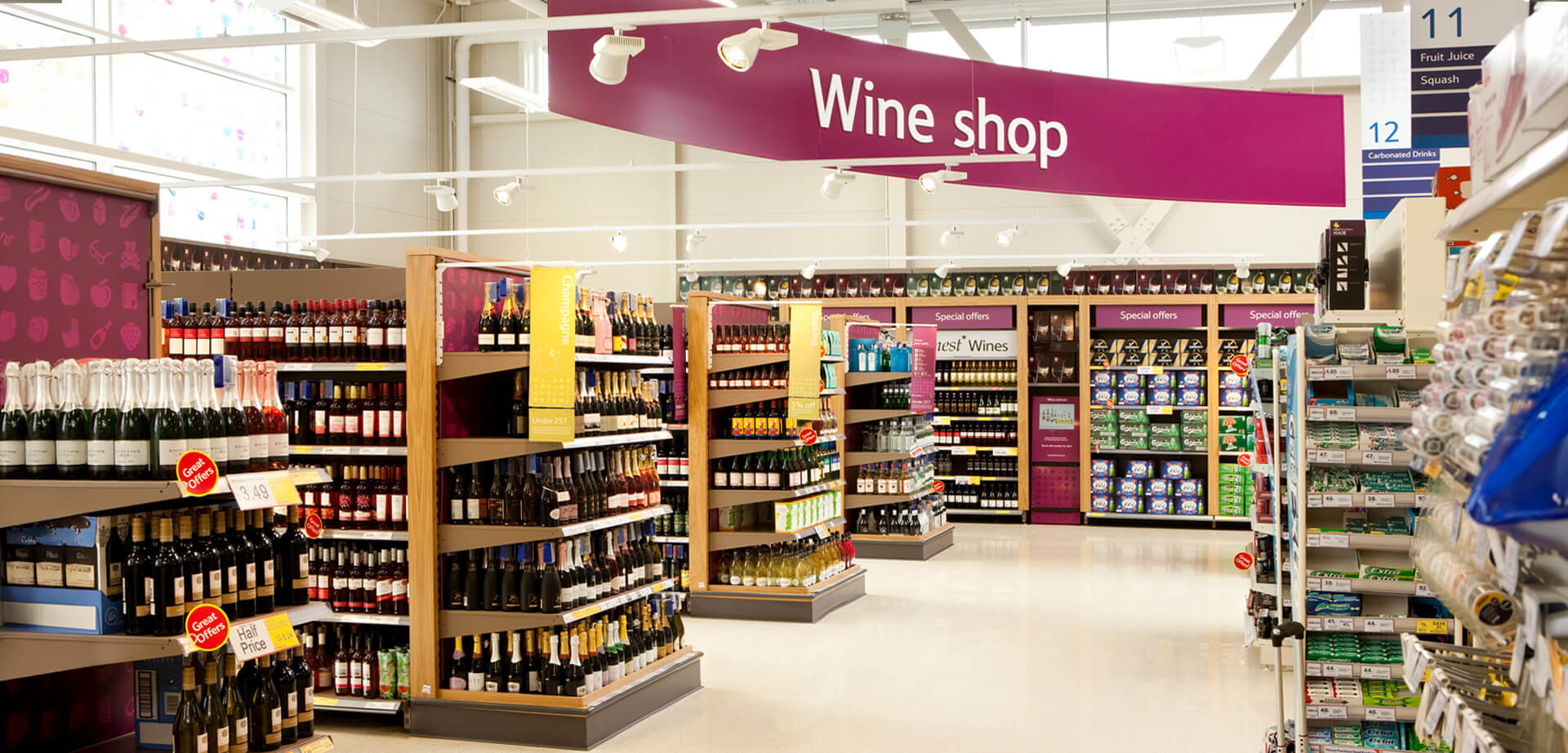
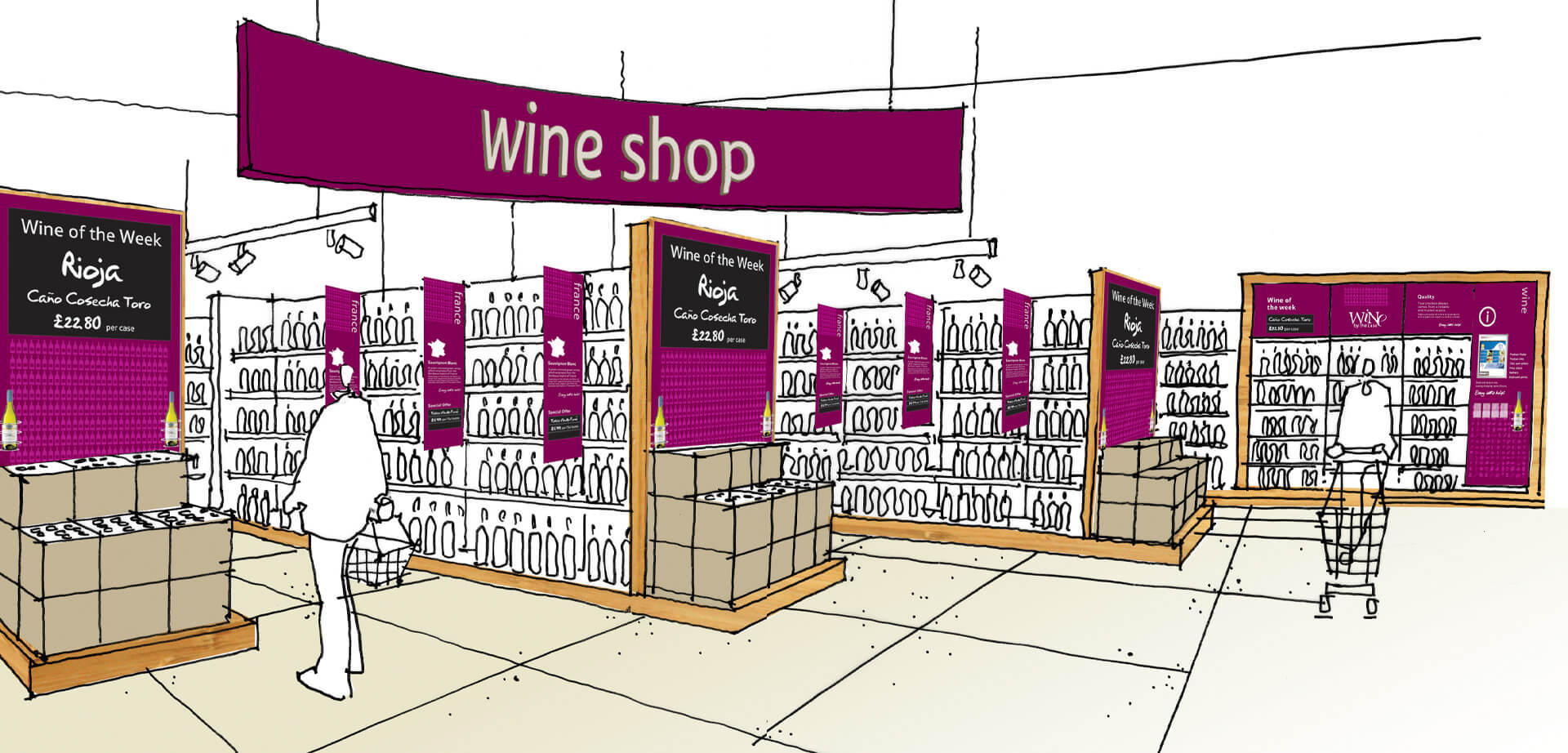
Wine Shop Product Range: Tesco’s wine department offers a broad selection of red, white and rosé wines, alongside sparkling varieties including Prosecco and Champagne. The range combines established brands such as Casillero del Diablo and Yellow Tail with premium own-label products from the Tesco Finest range.
Clear overhead signage directs shoppers towards key "hero zones", making navigation through the larger store more intuitive. Well-lit aisles and lower product displays improve sightlines across the department, helping customers locate products quickly while creating a more open and accessible shopping environment.
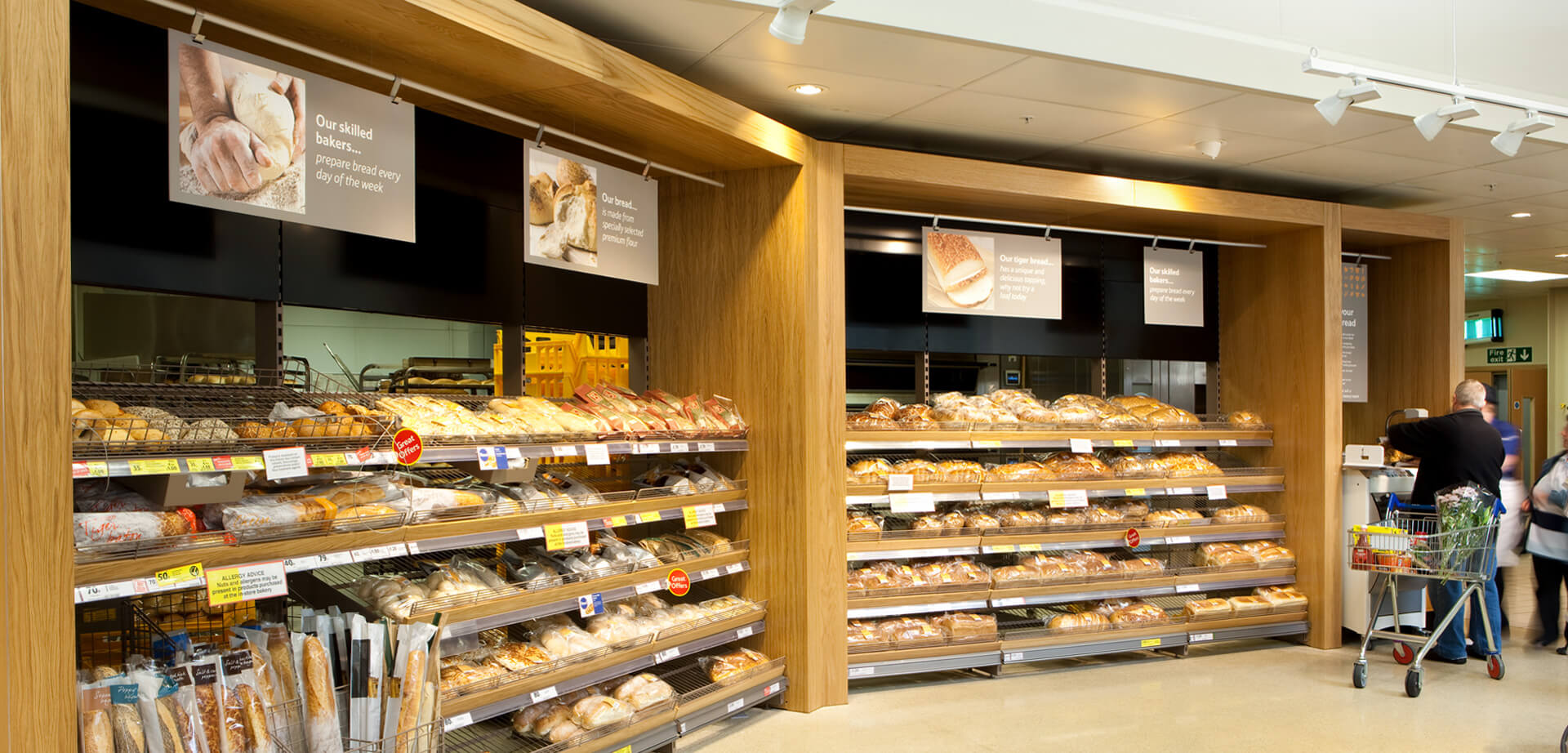
Tesco has evolved its bakery model towards a flexible hybrid approach, combining central production with in-store finishing to deliver consistent quality while improving space efficiency, labour productivity and operational control.
In smaller stores, Tesco has also developed compact “bake on the shop floor” formats, bringing fresh-baked products into space-constrained environments while retaining strong sensory appeal.
The range spans everyday staples and premium lines, including Everyday Favourites, Tea Time Treats and Tesco Finest Signature Bakes, alongside products such as tiger loaves, focaccia and sourdough.
Testimonial: “I am writing to recommend CampbellRigg for business cooperation on creative design solutions in the retail industry." Murat Akdag - Head of Marketing, Migros Ticaret A.S. Turkey
From 2027 to 2029, retail leaders will win by simplifying complexity and strengthening local connection. Performance will be unlocked by tightly integrating predictive technology, format planning, loyalty platforms and brand architecture with hard commercial metrics: sales uplift, productivity per square metre and ROIC. Growth will belong to those with the agility, investment discipline and execution capability to transform insight into consistent returns across multi-format retail estates.
How CampbellRigg Turns Supermarket Strategy Into a Scalable Retail Network
CampbellRigg helps supermarket and grocery groups connect: Brand strategy → Customer insight → Estate strategy → Format planning → Customer journey → Space planning → Store design → Implementation → Measurement → Rollout
Our multidisciplinary capability brings together brand strategists, architects, interior designers, graphic designers and retail specialists.
The objective is to give management one connected strategic direction rather than a collection of independent creative outputs.
We can support retailers developing new formats, repositioning brands, refurbishing estates, improving customer journeys, increasing space productivity or creating scalable retail systems.
For major programmes, the process can extend from: Customer opportunity → Strategic intervention → Investment case → Pilot → Measurement → Refinement → Estate rollout
That creates a management framework capable of connecting creative decisions with capital allocation and commercial performance.
What Management Gains
The value of an integrated supermarket retail strategy is not simply a better-looking store.
Management gains a framework for:
- Making clearer estate investment decisions
- Defining the role of each retail format
- Aligning brand and customer experience
- Improving space productivity
- Reducing disconnected design initiatives
- Testing and refining new concepts before rollout
- Creating consistent but locally adaptable formats
- Connecting customer experience to commercial KPIs
- Building a repeatable system for estate-wide implementation
The result is a retail network designed to be distinctive, relevant, scalable and commercially accountable.
Our Four-Step Process:
1. Book a consultation call for free
2. Co-create a bespoke brief
3. We execute the creative work fast
4. You see sales, brand loyalty and market share uplift
Discuss Your Supermarket Retail Strategy with CampbellRigg
If your management team is reviewing a supermarket estate, developing a new format, repositioning a grocery brand, planning refurbishment or assessing where future capital should be invested, CampbellRigg can help translate the commercial requirement into a practical retail strategy.
The process begins with a free consultation to understand the commercial opportunity, estate, customer proposition and management objectives.
We then develop a bespoke strategic brief, connect the relevant disciplines, execute the creative and spatial work rapidly, and establish the framework required for implementation and rollout.
Free consultation → Bespoke strategic brief → Strategic & creative execution → Scalable implementation → Commercial measurement
The objective is not simply to design another supermarket.
It is to help management build a more productive, more relevant and more scalable retail network.
Talk to CampbellRigg about your supermarket retail strategy, format development, estate transformation or next-generation store concept.
CampbellRigg: Innovative. Relevant. Memorable.
Schedule your consultation today and receive a free quote.
Cost-Effective Excellence:
Our pricing structure is highly competitive, offering exceptional value without compromising on quality or creativity.
Rapid Execution:
We move fast. From concept to implementation, our agile team ensures your project is delivered on time and to the highest standards.
Multidisciplinary Expertise:
Our team brings together seasoned brand strategists, architects, interior designers, and graphic designers, collaborating to create seamless, end-to-end brand environments.
Global Reach, Local Insight:
With successful projects delivered across Europe, the Middle East, and Asia, we combine international experience with local market understanding.
Scalable Project Delivery:
Whether it's a flagship hypermarket store, an metropolitan city supermarket or convenience store, we manage and execute projects of all sizes, efficiently and effectively.
Proven Track Record:
Our designs evolve branch networks from purely transactional spaces into experiential, relationship-focused brand environments, enhancing engagement, elevating customer experience, and driving tangible business results.
Full-Service Creative Agency:
From rebranding and marketing campaigns to spatial design and rollout, we provide an integrated service tailored to your goals.