
News and Views
Urban Supermarket Design Trends 2026–27: Strategy, Experience & Commercial Performance




Urban Supermarket Design Trends 2026–27: Strategy, Experience & Commercial Performance
Urban supermarket design is entering a more commercially demanding phase.
As cities become denser, shopping missions become shorter and customers expect greater convenience, value, freshness and relevance, supermarket operators can no longer treat an urban store simply as a smaller version of a conventional supermarket.
The management challenge is more fundamental: how can a retailer create a compact urban format that is distinctive, operationally efficient, commercially productive and scalable across a wider network?
This article focuses specifically on urban supermarket design strategy for compact city and neighbourhood supermarket formats, connecting brand positioning, format planning, customer experience and store design to measurable commercial performance.
The objective is not simply to create an attractive store. It is to develop a repeatable urban supermarket format in which brand, customer behaviour, merchandise, space and operations reinforce a defined commercial strategy.
Why Urban Supermarket Formats Are Changing in 2026–27
Urban customers are becoming more time-conscious while expectations around quality, health, sustainability and value continue to rise.
A city-centre supermarket may serve office workers seeking breakfast, lunch and food-to-go. A residential location may require broader grocery coverage, fresh produce and family meal solutions. A premium urban catchment may demand speciality products, wellness, organic ranges and premium private label.
Management therefore faces a format decision before a design decision.
The question is not: How do we fit our existing supermarket into a smaller space?
It is: Which proposition should this location deliver, for which customer, through which format, and with what commercial objectives?
This is where urban supermarket design becomes a strategic discipline rather than an interior-design exercise.
Why Urban Supermarket Formats Are Changing in 2026–27
Urban grocery shoppers are becoming more time-conscious while expectations around food quality, health, sustainability and value continue to rise.
A customer may visit a compact supermarket for a complete weekly shop, but another shopper may enter specifically for fresh ingredients, a ready-to-eat meal, breakfast, coffee or a quick top-up purchase.
Urban supermarket design therefore needs to accommodate multiple shopper missions without creating visual or operational complexity.
The strongest formats use clear zoning and intelligent category adjacencies to help customers move efficiently through the store while creating opportunities for discovery and additional purchases.
For retailers, this has a direct commercial implication. The layout determines how products are encountered, how categories connect and how efficiently limited selling space is used.
1. Compact Formats Designed Around Local Shopping Missions
Urban supermarkets are increasingly being designed around the behaviour of their immediate catchment rather than a generic supermarket template.
A city-centre store serving office workers may require stronger breakfast, lunch, food-to-go and convenience propositions. A residential urban supermarket may require a broader grocery range, family meal solutions, fresh produce and household essentials. A premium urban location may need stronger emphasis on speciality products, health, organic ranges and premium private label.
This makes supermarket format planning increasingly local.
Store size, catchment demographics, daypart behaviour, pedestrian flows and competitive positioning should inform the format before the interior design begins.
The result is a more productive compact supermarket in which space allocation reflects actual customer demand rather than simply reducing the footprint of a larger store.
Design the Format Around Local Shopping Missions
Urban supermarkets need to respond to the behaviour of their immediate catchment rather than operate from a generic store template.
Store size, pedestrian flows, demographics, daypart behaviour, competitive positioning and local shopping missions should influence the format before detailed design begins.
A compact store may need to prioritise food-to-go, coffee, meal solutions and rapid checkout. A residential location may require greater category depth and family grocery. Another location may justify a stronger fresh-food, premium or health proposition.
The commercial objective is to allocate scarce space according to actual demand rather than simply reducing the footprint of a larger supermarket.
How CampbellRigg helps
CampbellRigg begins with the commercial and customer context rather than the interior aesthetic.
Brand auditing establishes how the existing proposition is perceived and expressed. Market and customer analysis identifies relevant shopping missions and competitive opportunity. Format strategy then defines the role the urban store should play within the wider estate.
The design brief converts those strategic decisions into requirements for customer experience, store planning, identity, merchandising and implementation.
The benefit for management: catchment opportunity, brand positioning and format investment are connected through one strategic direction rather than through separate design commissions.
For retailers developing smaller urban formats, this approach complements CampbellRigg's wider expertise while keeping this article focused specifically on the strategic development of urban supermarket formats.
Build a Clear Value Architecture
Urban shoppers want to understand value quickly, but value is no longer communicated by price alone.
Customers may simultaneously seek entry-level products, trusted private label, quality fresh food, premium products, health credentials and convenient meal solutions.
The store therefore needs a clear value architecture.
Price communication, private-label hierarchy, promotional treatment, category navigation and visual merchandising should make the proposition understandable without creating visual clutter.
The environment should enable customers to move naturally between entry-level, core and premium products while giving the retailer opportunities to encourage profitable trade-up.
How CampbellRigg helps
CampbellRigg translates the retailer's positioning into a physical hierarchy.
Brand strategy defines the value proposition. Brand identity establishes the visual language. Store planning determines where value, private label, premium ranges and promotional messages should appear. Visual merchandising reinforces those decisions at category level.
The benefit for management: value becomes a consistent component of the format rather than a collection of price signs and promotional messages.
For retailers looking to connect supermarket positioning with physical experience, this work links directly to CampbellRigg's broader capability.
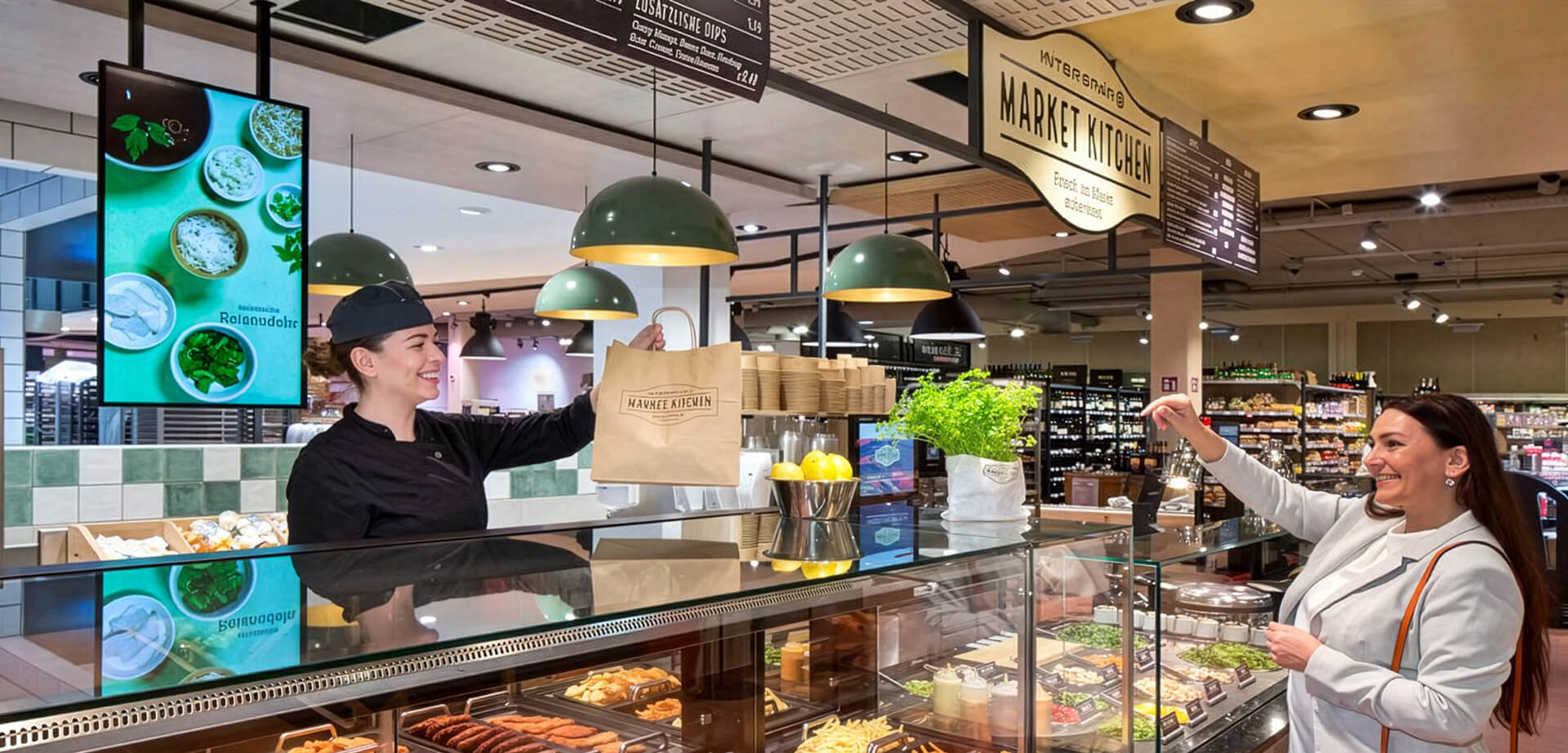
Make Fresh Food and Food-to-Go Commercial Destinations
Fresh food can transform the role of an urban supermarket.
Fresh produce, bakery, deli, prepared meals and food-to-go create reasons to visit beyond conventional grocery replenishment. They can also respond to different dayparts, breakfast, lunch, afternoon snacking and evening meal solutions.
The design opportunity is to make freshness visible.
Open displays, preparation areas, distinctive counters, strong graphics and clear category storytelling can communicate quality while creating attraction.
The objective is not theatre for its own sake. Fresh food should occupy space according to its role in the proposition and its contribution to customer demand and commercial performance.
How CampbellRigg helps
CampbellRigg develops fresh-food and food-to-go propositions as part of the wider format strategy.
We consider category positioning, visibility, customer flow, merchandising, service points, preparation requirements and daypart behaviour before translating them into the store environment.
The benefit for management: fresh food becomes a deliberate commercial destination capable of supporting differentiation, frequency and basket development.
CampbellRigg proof point: Centra Good to Go
CampbellRigg's Centra Good to Go concept was developed with Musgrave's leadership team to address home-meal-replacement and top-up shopping requirements. The format and product offering exceeded sales targets, won Convenience Store of the Year, and was subsequently rolled out across the Republic of Ireland network.
The project demonstrates how brand strategy, fresh-food merchandising, customer journey planning and format design can be integrated into one repeatable retail proposition.
Engineer the Shopper Journey
In a compact supermarket, poor navigation is expensive.
Customers have less room to orientate themselves, while congestion can quickly undermine the experience.
Entry zones should communicate the proposition immediately. High-frequency categories need to be easy to locate. Complementary categories can be positioned to support additional purchases. Food-to-go customers should be able to complete a rapid journey without being forced through the entire store.
At the same time, shoppers seeking fresh food, premium products or discovery should have opportunities to explore.
The strongest urban supermarket formats therefore support multiple customer journeys within one coherent commercial framework.
How CampbellRigg helps
CampbellRigg maps the customer journey before finalising the store layout.
We assess entry points, sightlines, category adjacencies, circulation, dwell areas, promotional zones, queues, service points and checkout journeys.
The resulting space plan balances speed, discovery and commercial opportunity.
The benefit for management: the layout becomes a customer-flow and space-productivity tool rather than simply a floor plan.
This is also where supermarket branding and retail design becomes commercially important: the brand needs to be visible, understandable and consistent throughout the customer journey.
Integrate Technology Without Allowing It to Dominate
Digital loyalty, electronic pricing, self-checkout, mobile integration, personalised offers, stock visibility, click-and-collect and fulfilment services can remove friction and improve convenience.
AI and predictive analytics can increasingly support demand forecasting, availability, personalisation and category optimisation.
But technology should support the format rather than become the format.
Customers should be able to receive an offer, find a product, understand its value, complete a transaction or collect an order without unnecessary friction between physical and digital channels.
How CampbellRigg helps
CampbellRigg considers technology as part of the customer journey and operational model rather than as an isolated installation.
We connect digital touchpoints to navigation, merchandising, service, checkout, fulfilment and the physical brand environment.
The benefit for management: technology investment is linked to defined customer or operational objectives (convenience, availability, fulfilment and productivity) rather than being added simply because it is available.
Where the objective is specifically technology-led supermarket transformation, this article should link to CampbellRigg's dedicated content rather than attempting to own that search territory itself.
Build Sustainability and Health into the Proposition
Sustainability and health are increasingly visible components of supermarket positioning.
Customers may expect clearer information about provenance, nutrition, organic products, plant-based ranges, packaging and responsible sourcing.
The design challenge is to make these choices understandable without overwhelming shoppers.
Clear category cues, materials, signage and merchandising can communicate responsible choices within the normal shopping journey.
The physical store also has an operational sustainability dimension, including lighting, refrigeration, energy efficiency, material selection, durability and maintenance.
How CampbellRigg helps
CampbellRigg integrates sustainability and health considerations into the wider brand and format strategy rather than treating them as separate communications themes.
We translate the retailer's proposition into physical cues, category structures, materials, signage and customer journeys while considering operational requirements.
The benefit for management: sustainability and health become credible components of the proposition and store operation rather than additional messages applied after the design is complete.
What International Retail Benchmarks Demonstrate
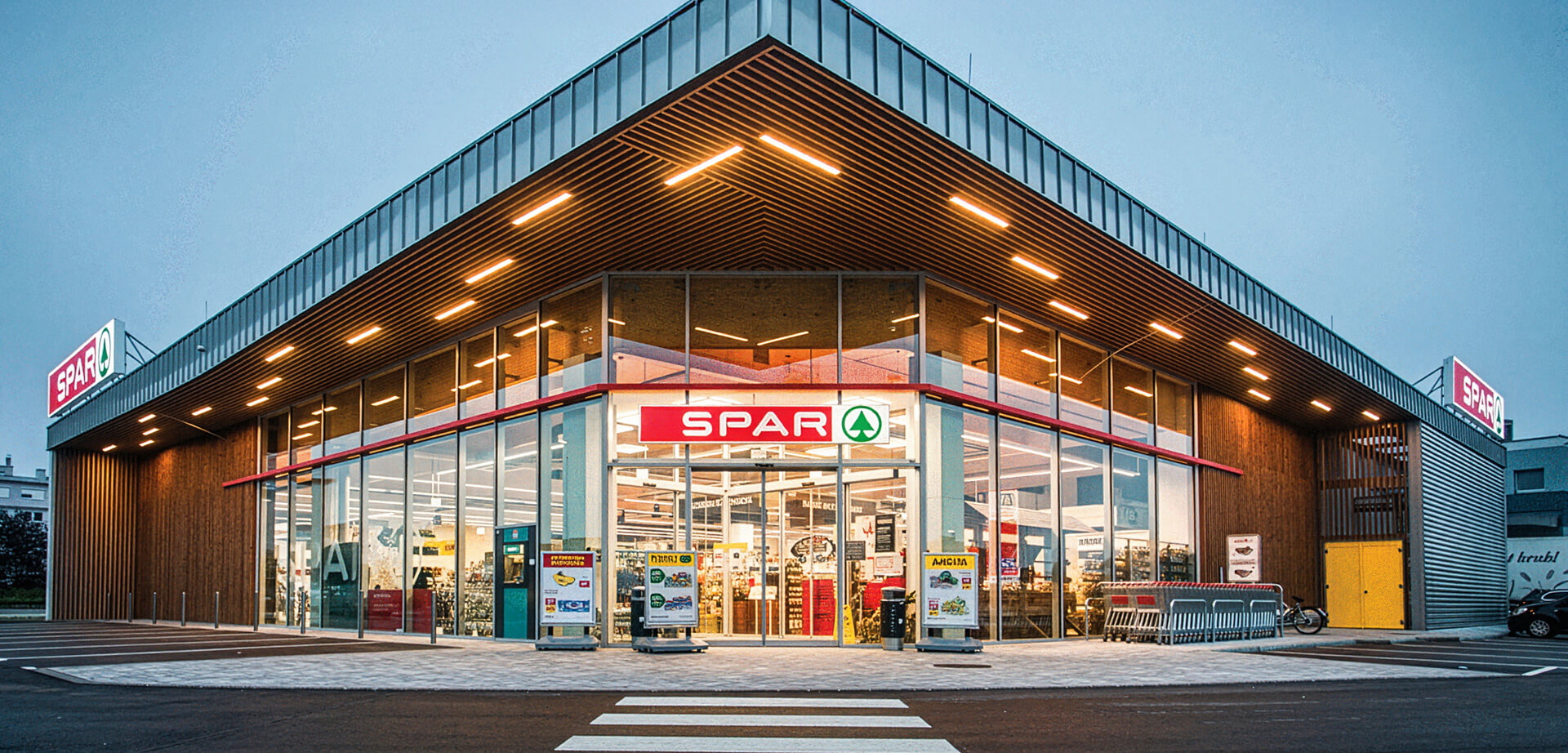
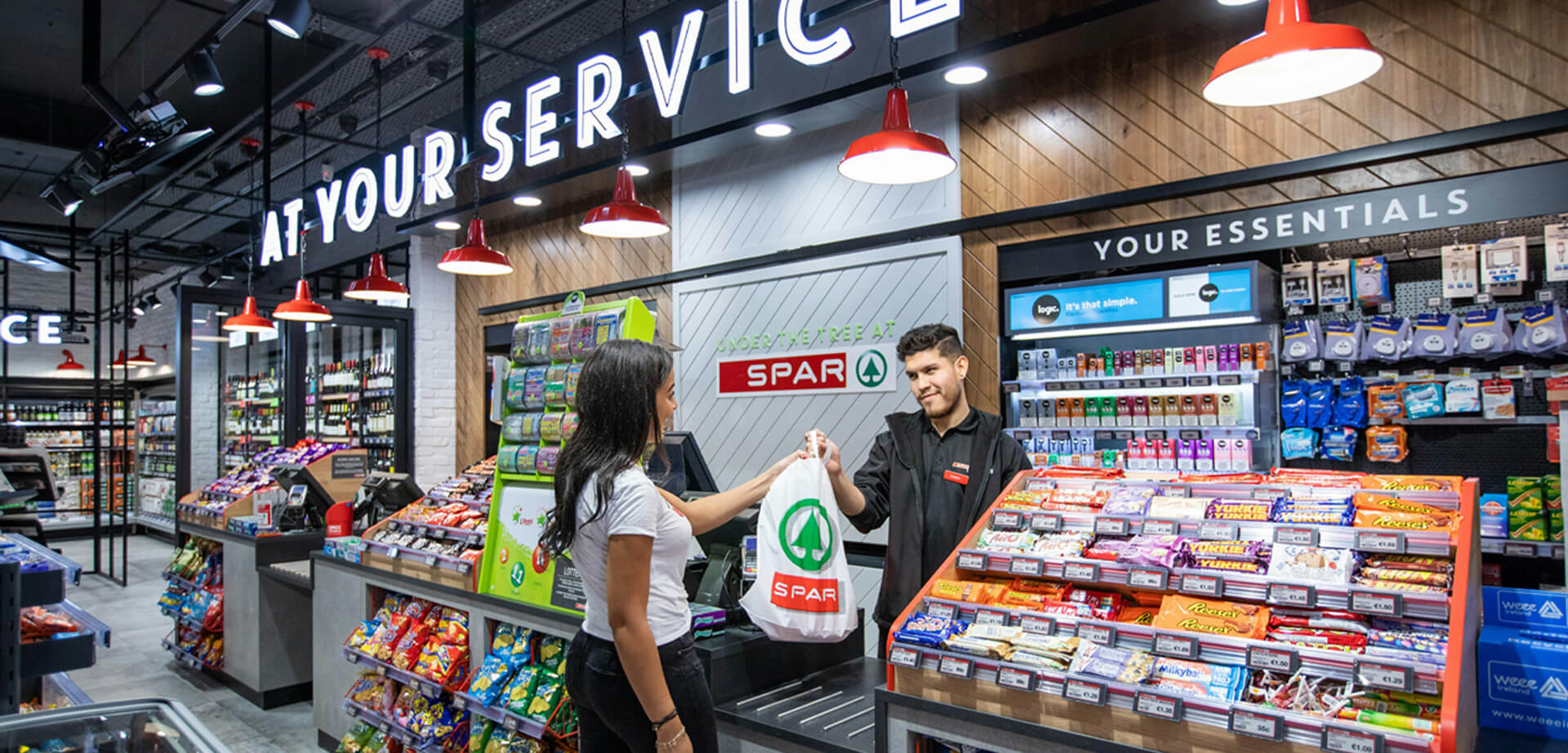
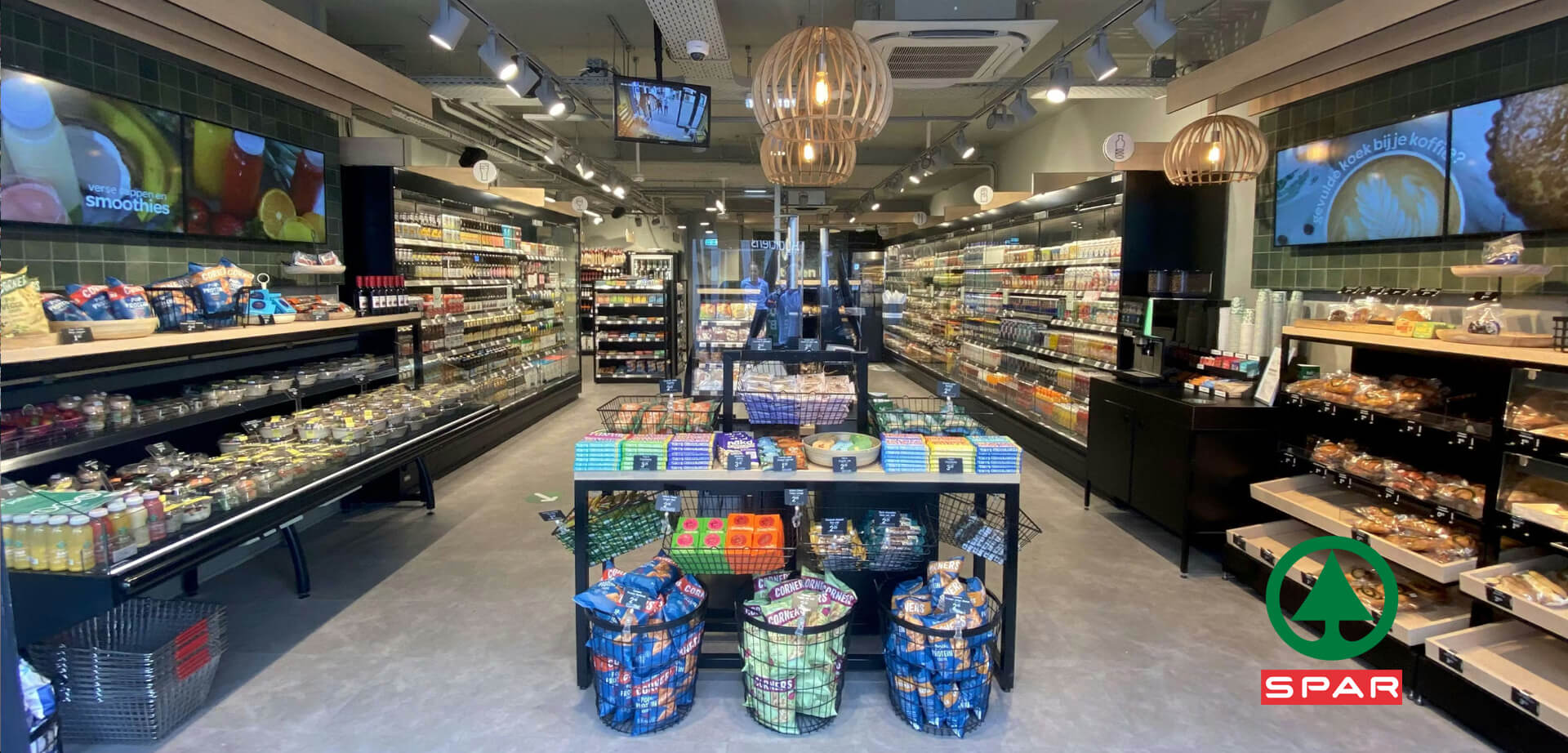
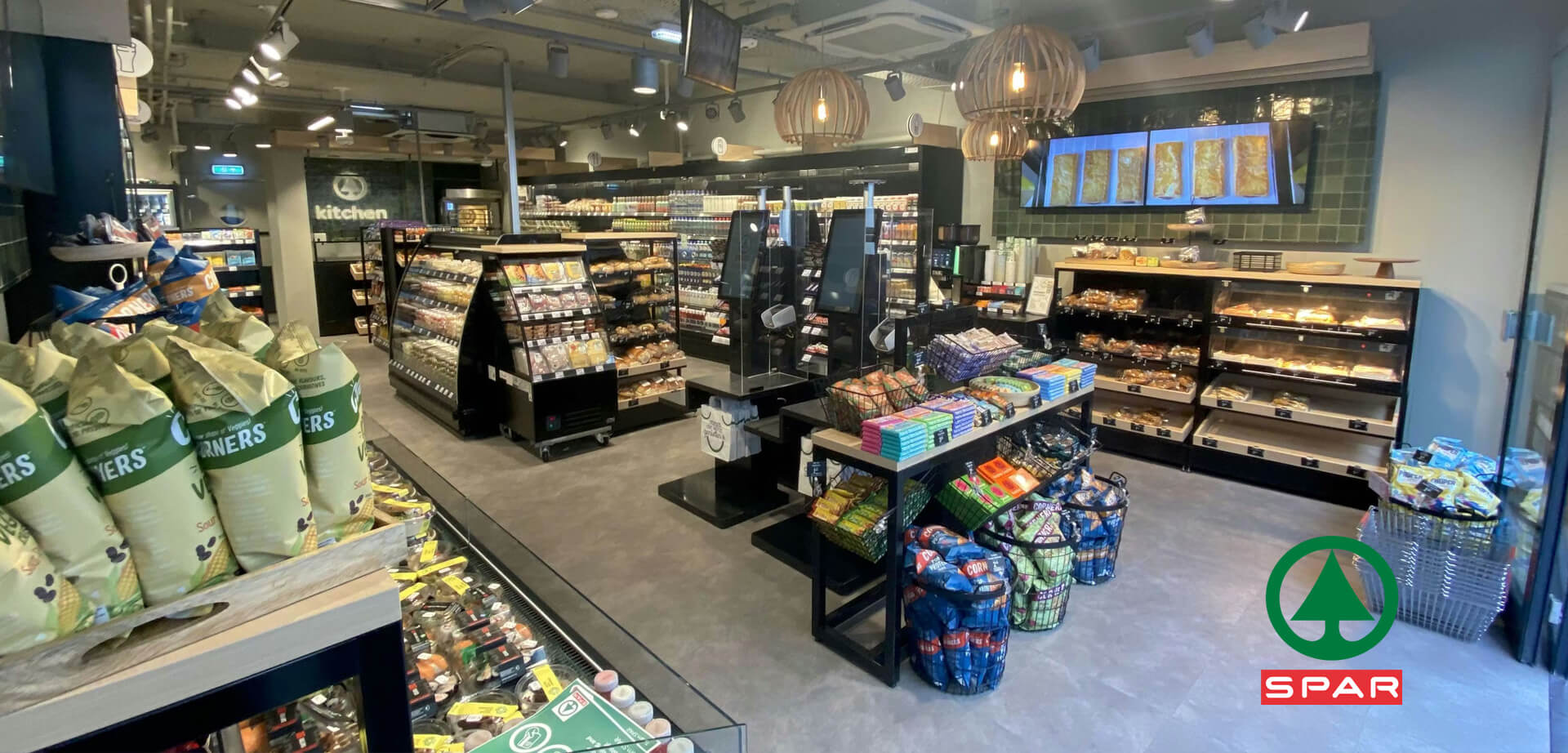
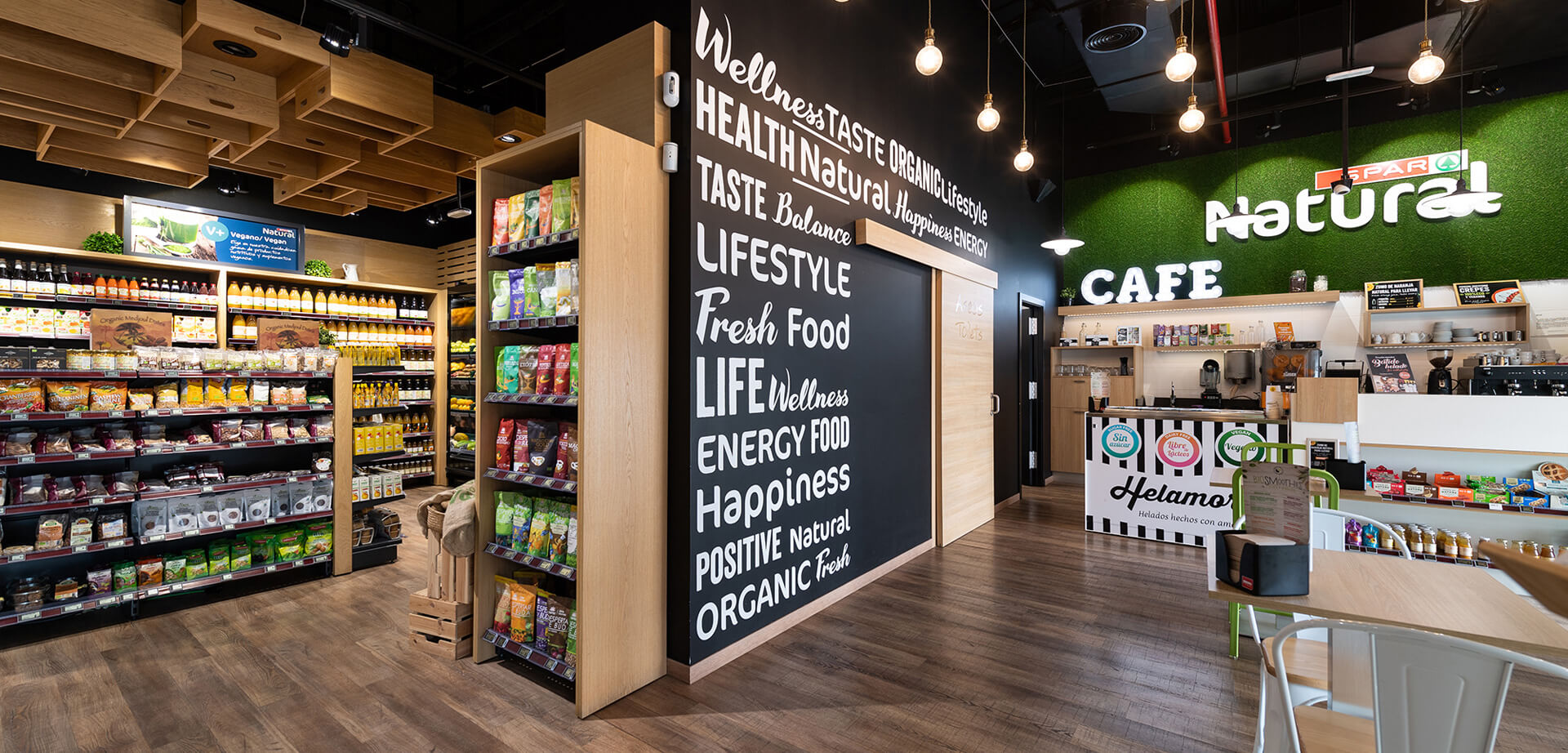
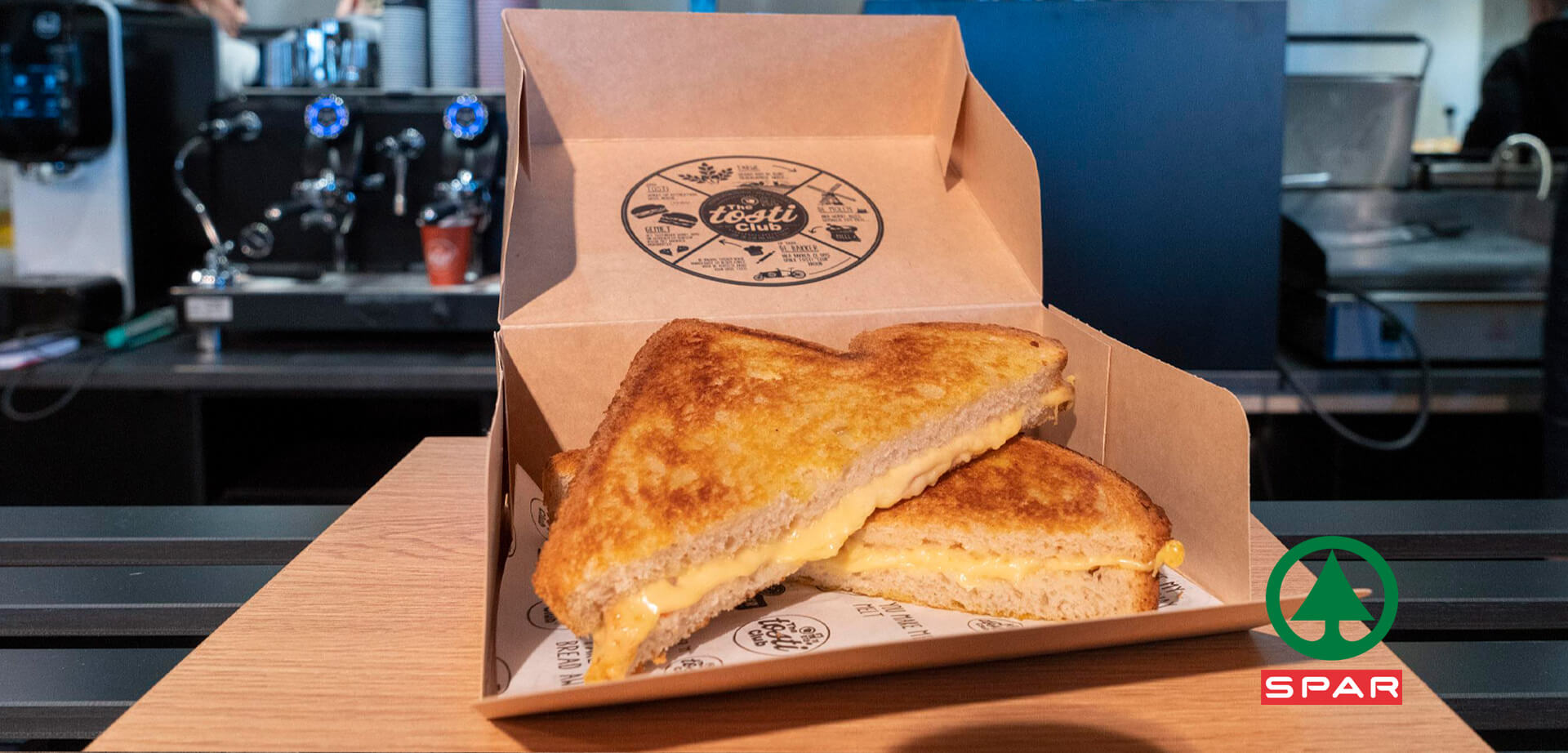
SPAR provides an important international benchmark for understanding how urban supermarket formats can combine local relevance, fresh food, convenience and brand consistency.
Operating across international markets through locally adapted businesses, SPAR demonstrates the importance of balancing shared brand principles with local customer needs.
Its different store environments illustrate how a recognisable supermarket identity can be adapted to different footprints, locations and shopping missions.
The broader lesson is directly relevant to urban supermarket strategy: standardisation should provide the framework; local insight should determine how the customer experience is delivered.
Fresh food can become a major attraction. Clear navigation can simplify compact layouts. Strong value communication can reinforce trust. Digital tools can remove friction. Brand identity can create differentiation in increasingly competitive urban markets.
These principles extend beyond SPAR to supermarket groups, convenience retailers and grocery brands developing city-centre and neighbourhood formats.

Make Every Square Metre Work Harder
Ultimately, urban supermarket design must answer a commercial question: What is each square metre contributing to the business?
Management should consider measures such as sales per square metre, basket value, conversion, category productivity, dwell time, throughput, availability and repeat visitation.
This changes the role of space planning.
The issue is no longer simply how many products can fit into a floorplate. It is where valuable space should be allocated, how customers should move through it, which categories deserve prominence and how the environment can support profitable behaviour.
How CampbellRigg helps
CampbellRigg connects space planning to commercial objectives.
High-impact fresh categories can create attraction. Value architecture can clarify the proposition. Strategic adjacencies can support complementary purchasing. Intuitive navigation can reduce friction. Promotional zones can generate additional purchase opportunities without compromising the overall environment.
The benefit for management: the urban store is treated as a productive retail asset, with brand experience and commercial performance designed to reinforce one another.
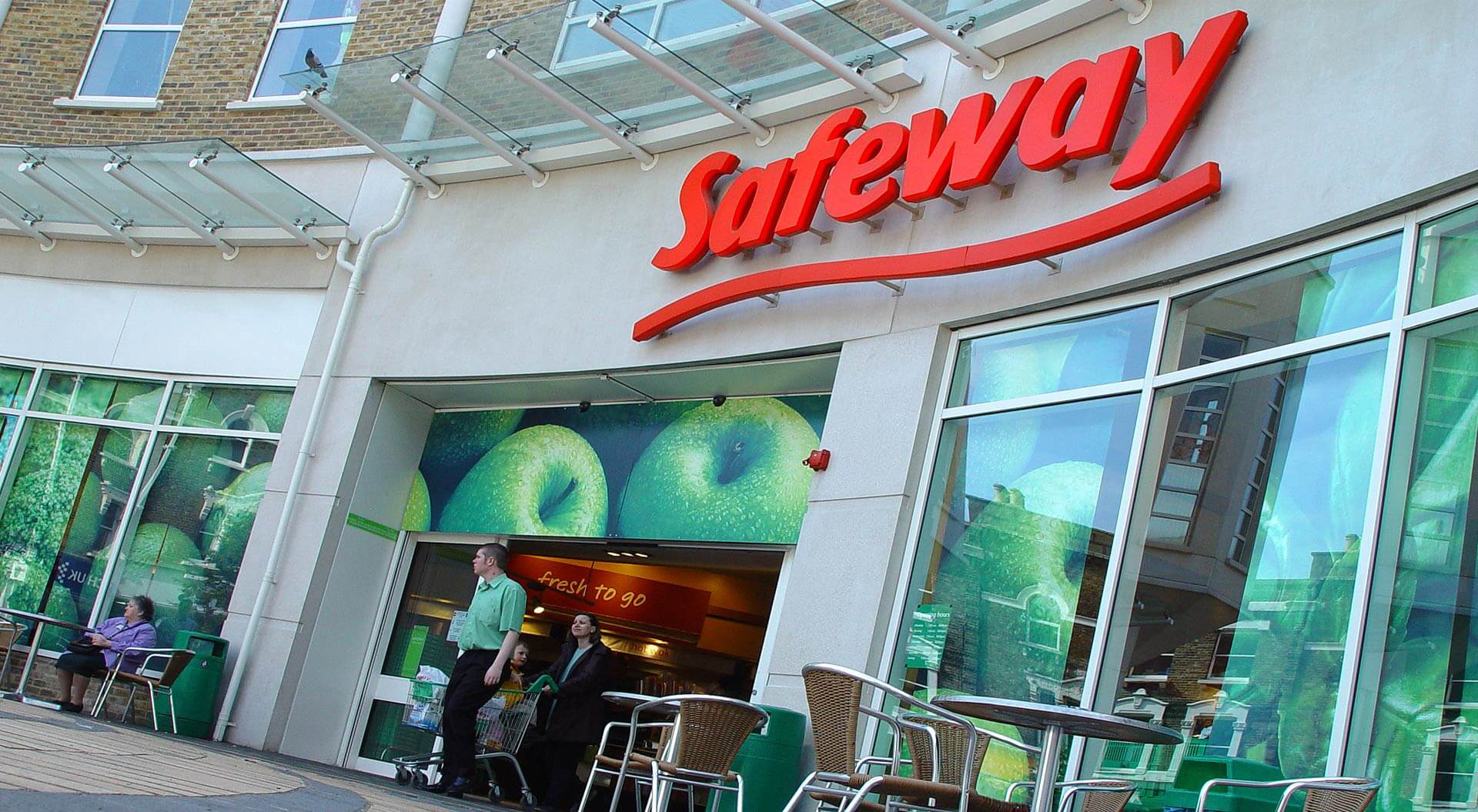
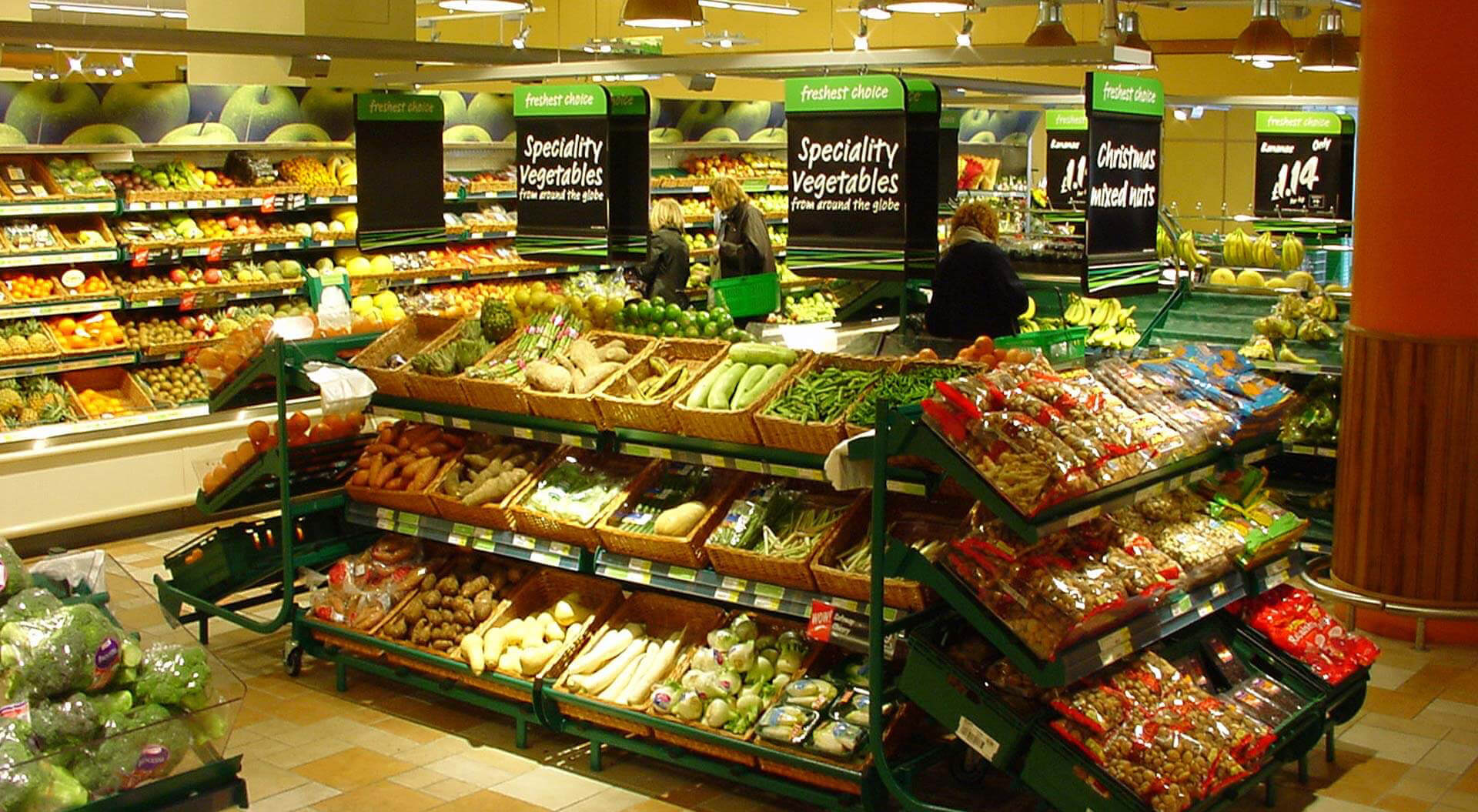
CampbellRigg Proof Point: Safeway
CampbellRigg's work for Safeway UK demonstrates how format planning can connect customer insight, store zoning and commercial performance.
The team analysed three existing formats (convenience stores, supermarkets and superstores) before developing adaptable environmental zones that could work across different store sizes.
Following implementation, sales were reported at 40% above budget.
The significance for today's urban supermarket operator is not simply the sales figure. The project demonstrates the value of developing flexible format principles that can adapt to different footprints rather than designing every location independently.
Urban Supermarket Design Is Not the Same as Convenience Store Design
Urban supermarket design overlaps with convenience retail, but the formats are not interchangeable.
An urban supermarket may combine fresh food, meal solutions, premium grocery, health and wellness, private label and food-to-go within a compact footprint.
Convenience retail places greater emphasis on proximity, speed and immediate fulfilment.
The opportunity is to combine the operational efficiency of convenience retail with the category depth, branding and experience of a supermarket.
The correct balance depends on the catchment, customer missions and commercial objectives.
This distinction protects the article's search position: urban supermarket design strategy for compact city and neighbourhood supermarket formats, rather than generic convenience-store design.
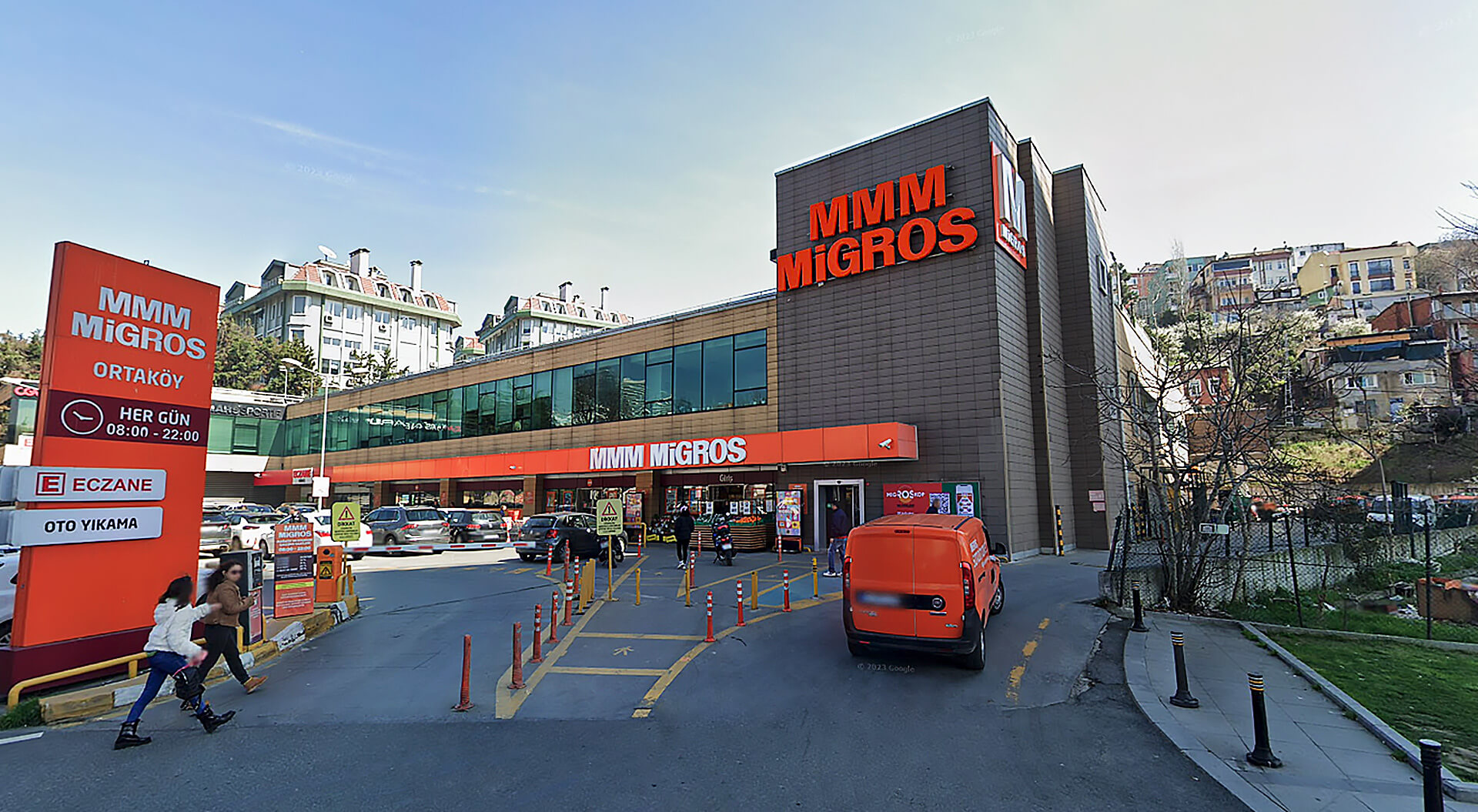
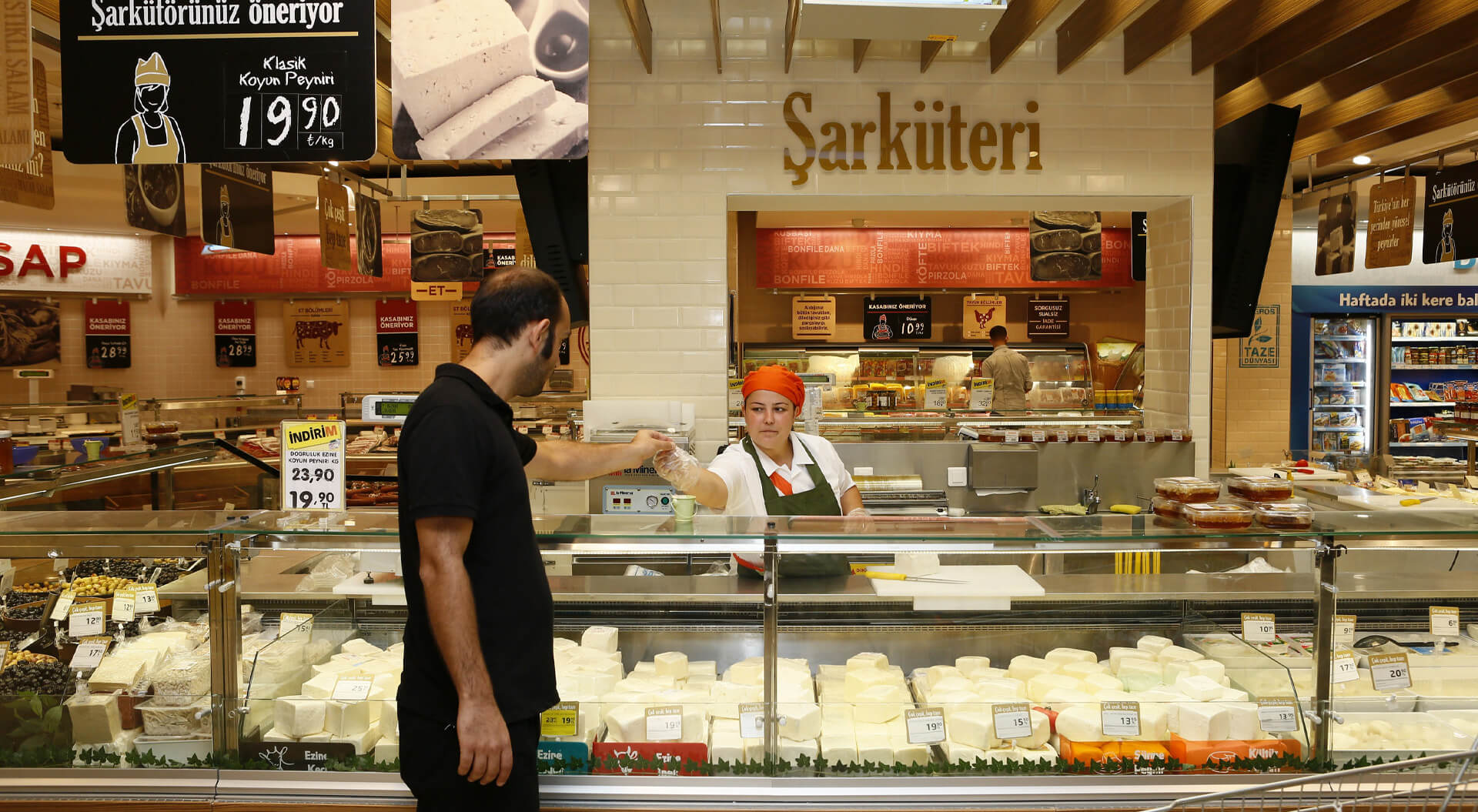
CampbellRigg Proof Point: Migros
CampbellRigg's work for Migros Turkey provides a strong example of how a supermarket concept can be designed for consistency while remaining adaptable across multiple locations.
The Ortaköy concept integrated retail design, format planning, spatial optimisation, merchandising, lighting and wayfinding. The resulting concept delivered a 25% increase in like-for-like sales and was implemented across more than 80 locations in Istanbul.
For management, the lesson is directly relevant to urban networks: a successful format is not simply a design applied repeatedly. It is a strategic framework capable of maintaining brand and customer-experience consistency while adapting to different locations.
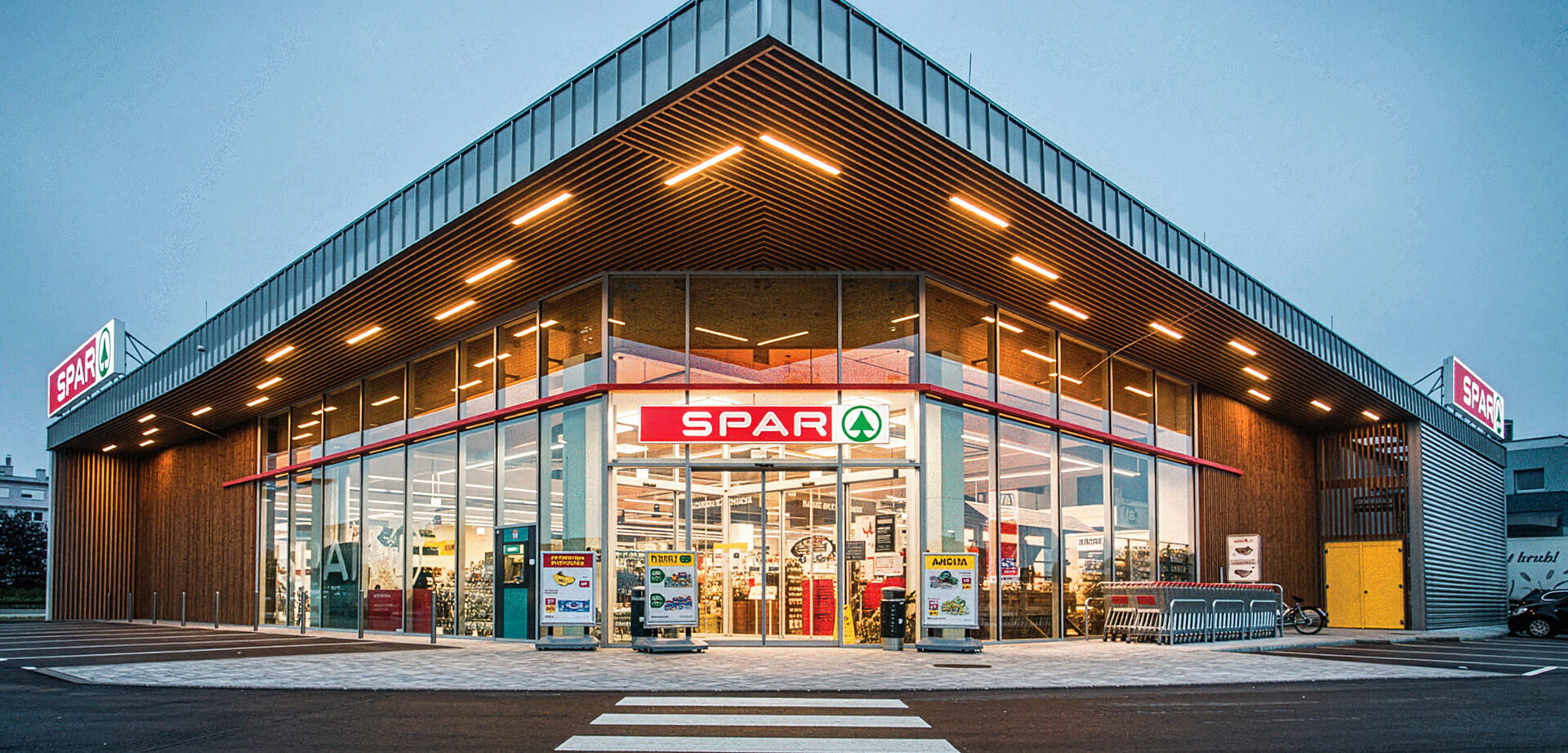
What SPAR Demonstrates About Urban Supermarket Design
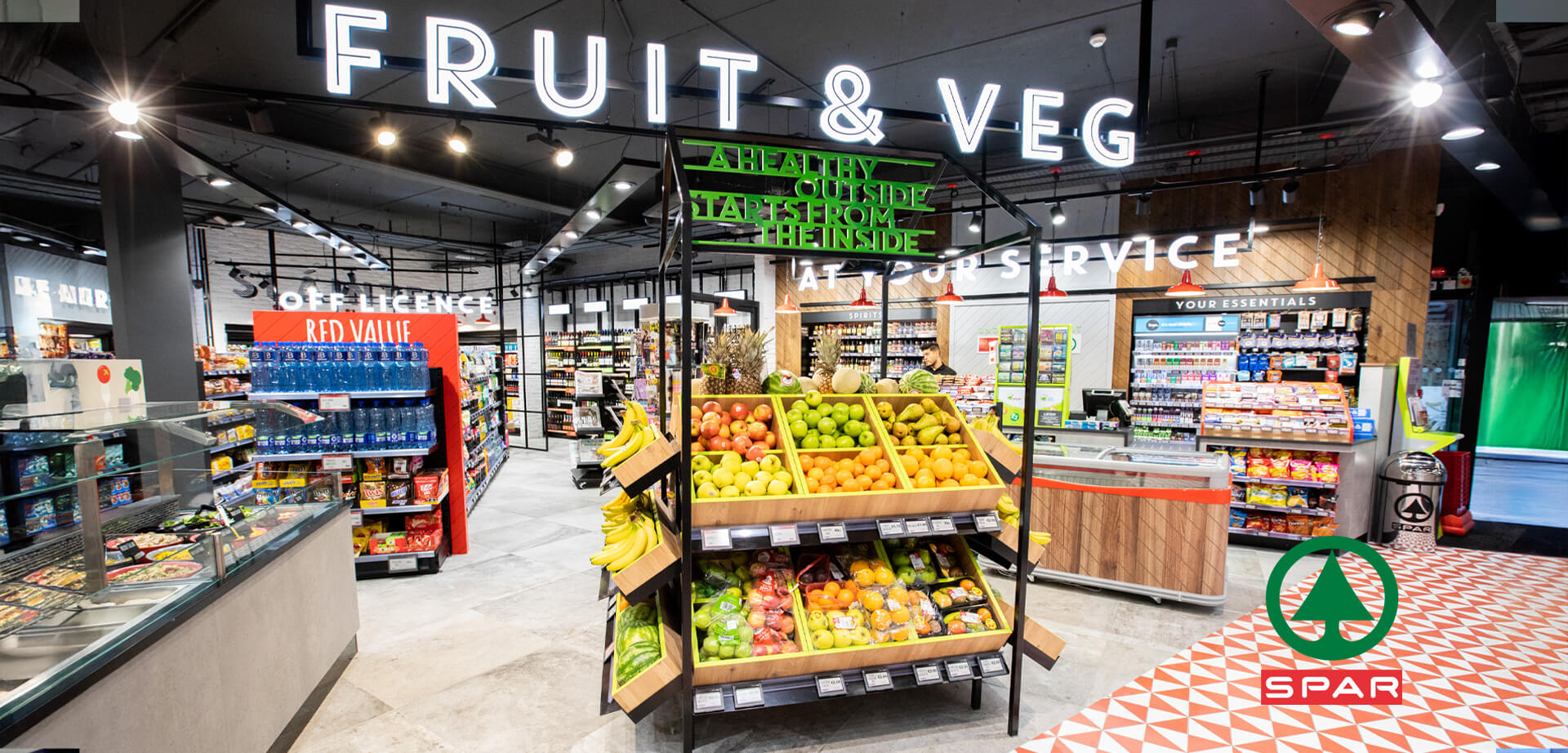
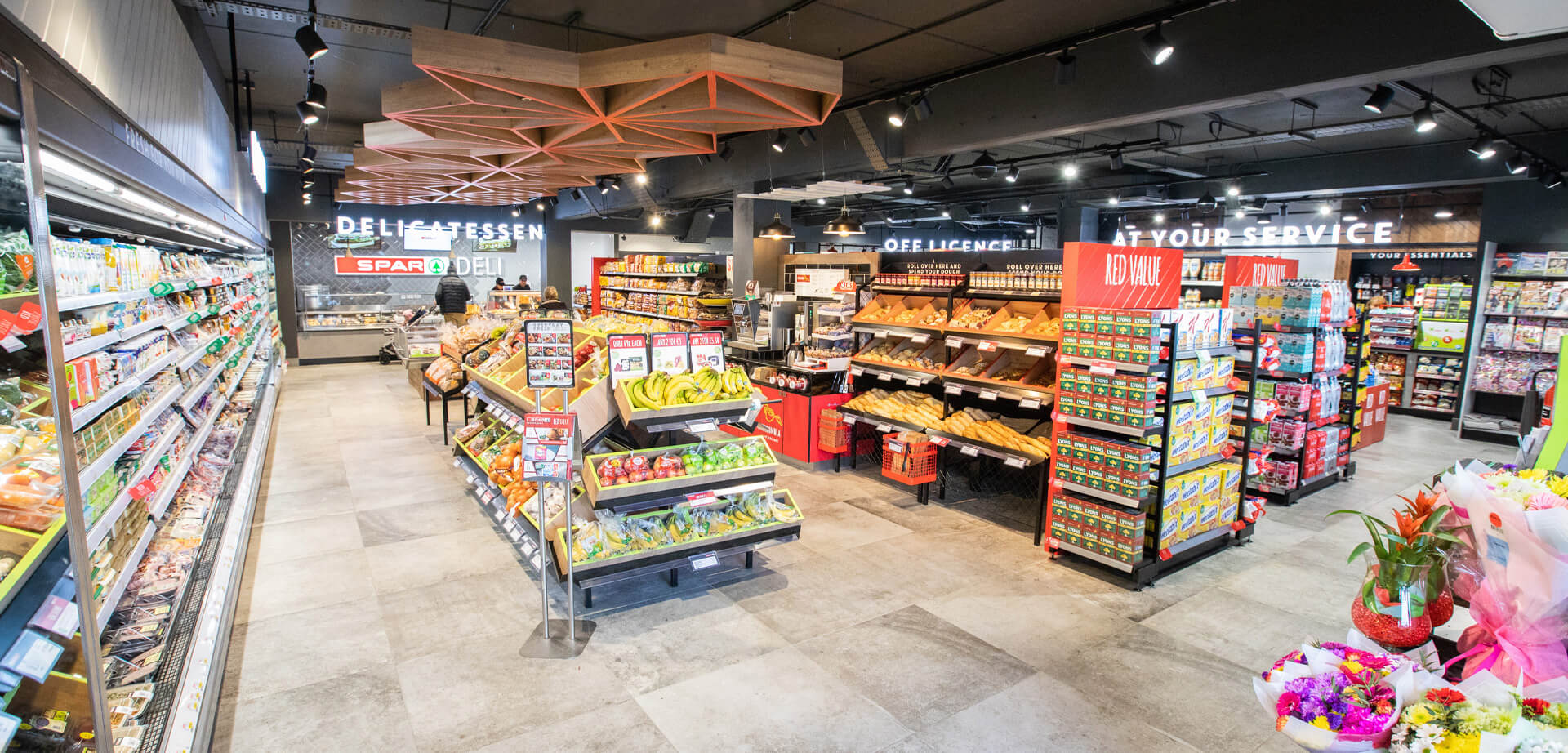
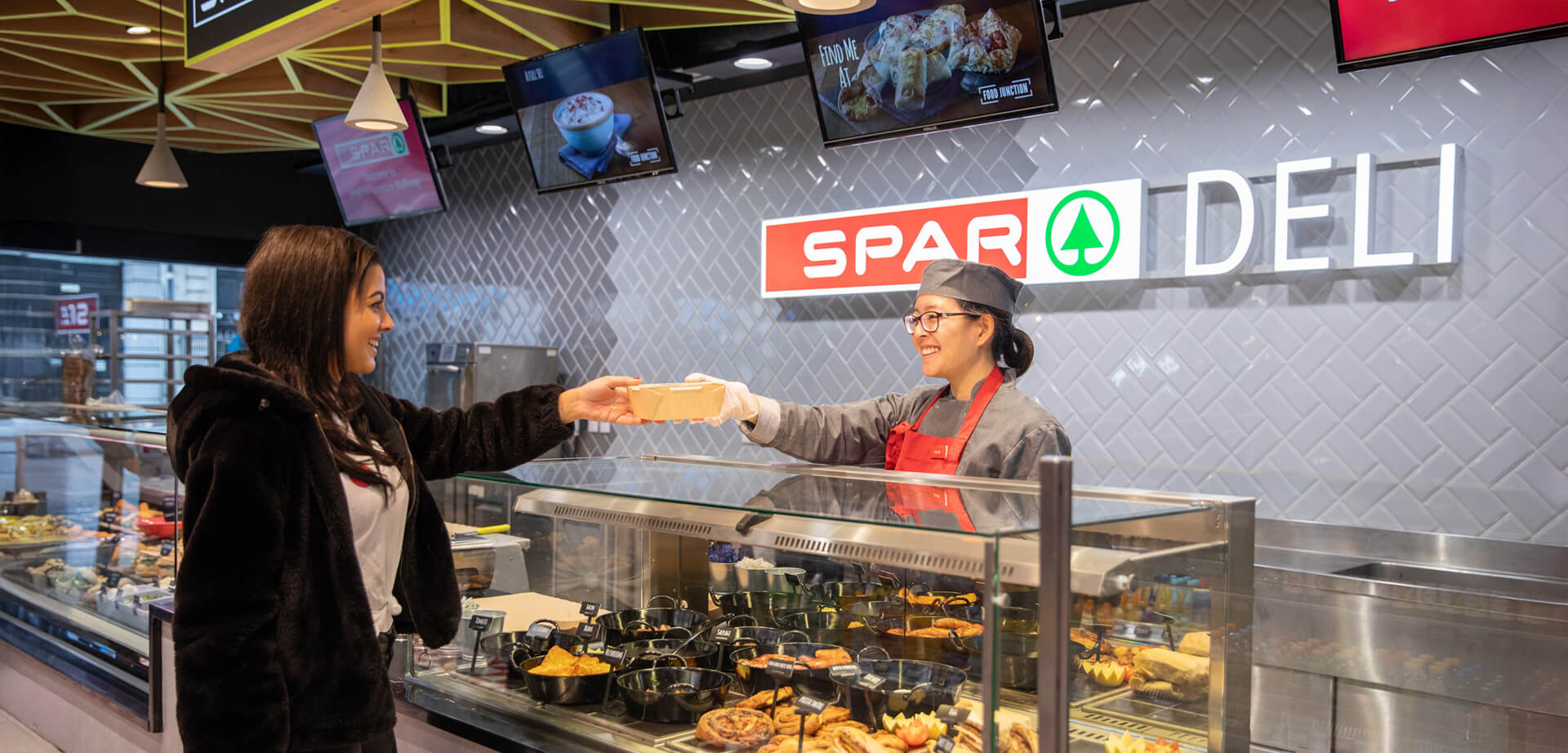
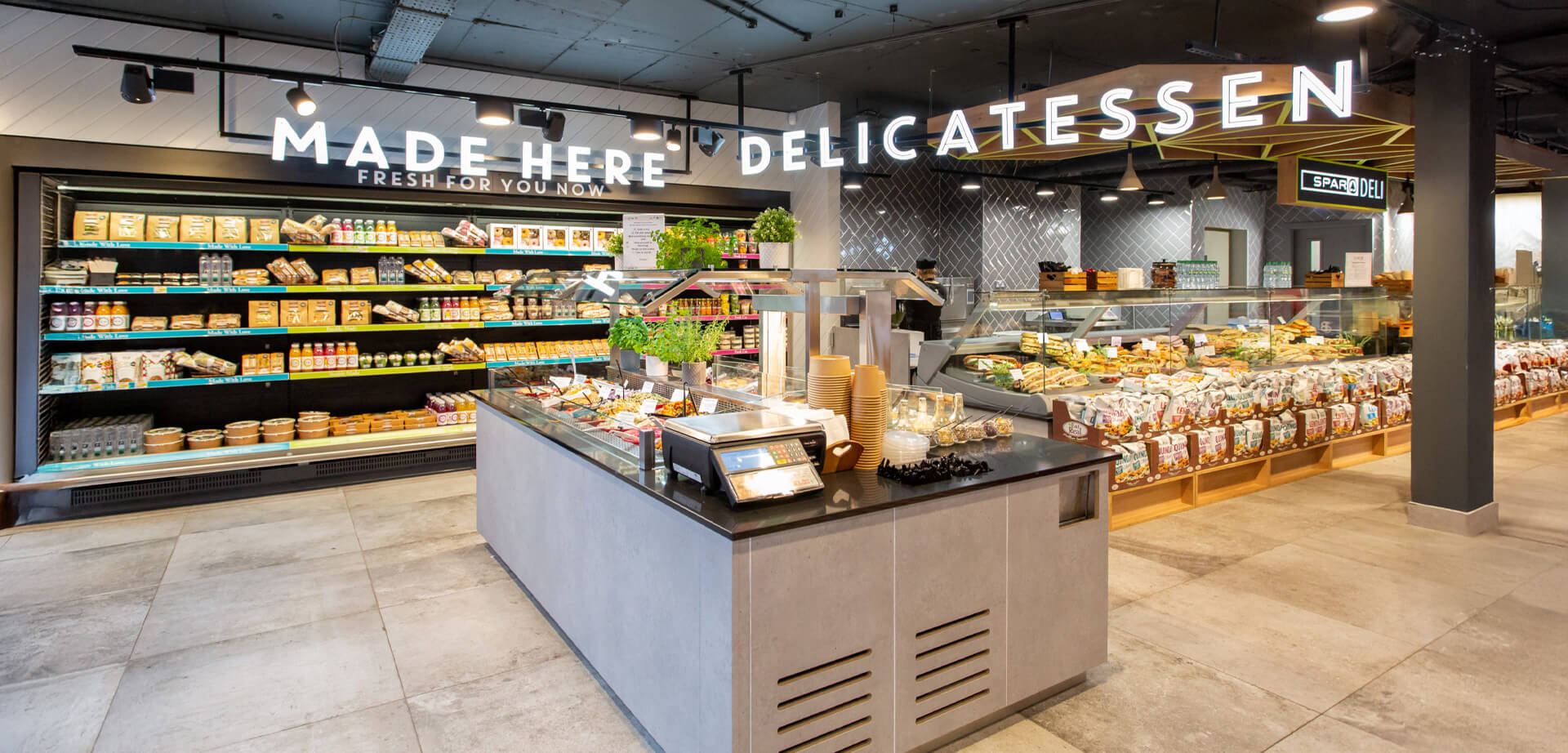
SPAR provides a useful international benchmark for understanding how urban supermarket formats can combine local relevance, fresh food, convenience and brand consistency.
Operating across international markets through locally adapted businesses, SPAR demonstrates the importance of balancing shared brand principles with local customer needs.
Its different store environments illustrate how a recognisable supermarket identity can be adapted to different footprints, locations and shopping missions.
The broader lesson is highly relevant to urban supermarket design: standardisation should provide the framework, while local insight should determine how the customer experience is delivered.
Fresh food can become a major attraction. Clear navigation can simplify compact layouts. Strong value communication can reinforce trust. Digital tools can remove friction. And brand identity can create differentiation in increasingly competitive urban markets.
These principles apply beyond SPAR to supermarket groups, convenience retailers and grocery brands developing new city-centre and neighbourhood formats.
Above and below: “Fresh produce takes centre stage in SPAR’s innovative Colombo, Sri Lanka store concept.”
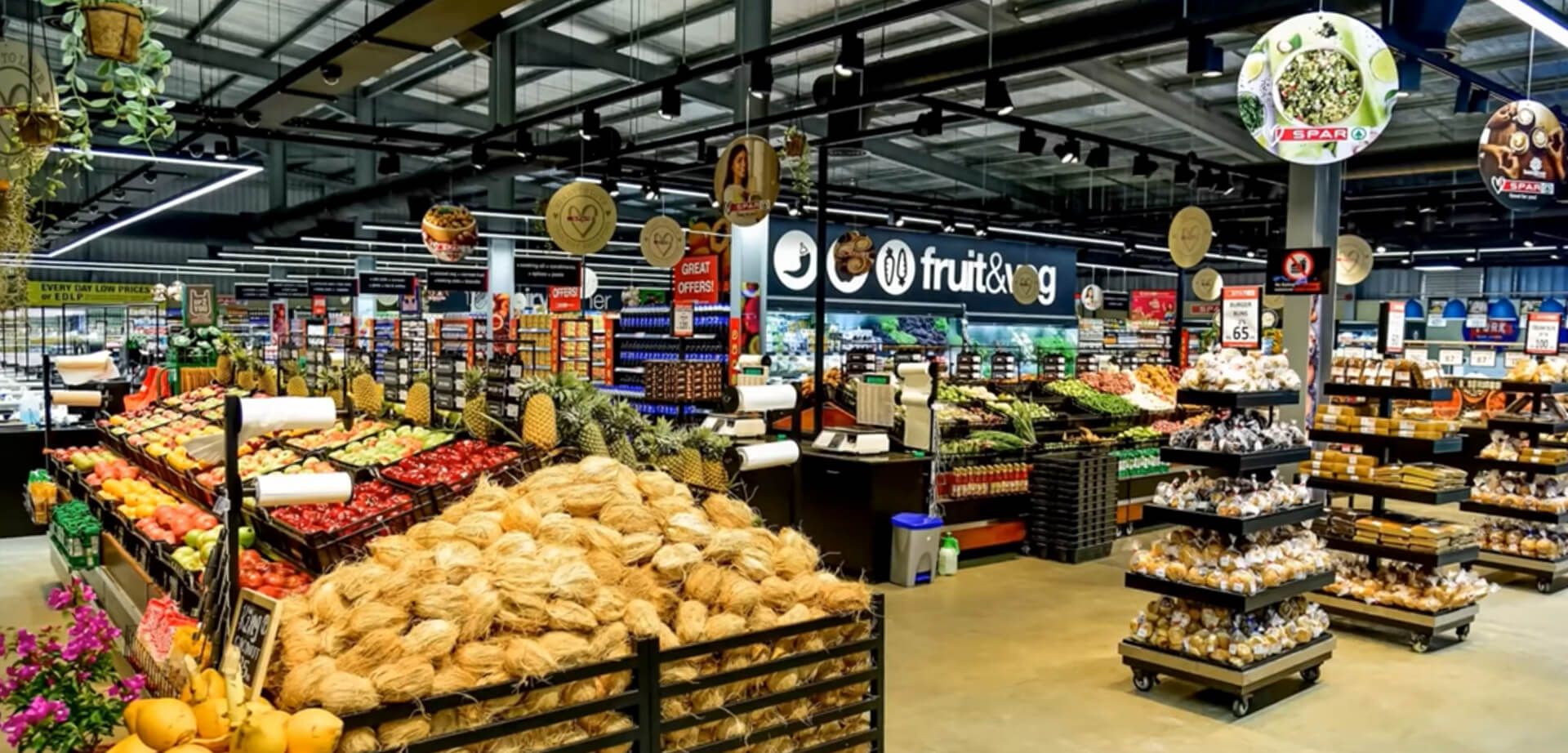
How CampbellRigg Turns Urban Supermarket Strategy into a Scalable Format
CampbellRigg begins by connecting these disciplines rather than treating them as separate design commissions.
- Brand auditing establishes how the existing proposition is perceived and expressed.
- Strategy defines the desired market position, target customer and commercial opportunity.
- Format planning determines how that proposition should work across different locations and footprints.
- The design brief converts strategy into practical requirements for customer experience, store planning, identity, merchandising and implementation.
- Store design makes those requirements physical.
- Rollout planning creates the rules and flexibility required to apply the format consistently across a wider network.
- Commercial measurement establishes whether the investment is producing the intended business outcomes.
The benefit management receives is one strategic direction linking brand decisions to the physical retail network, rather than a collection of disconnected design initiatives.
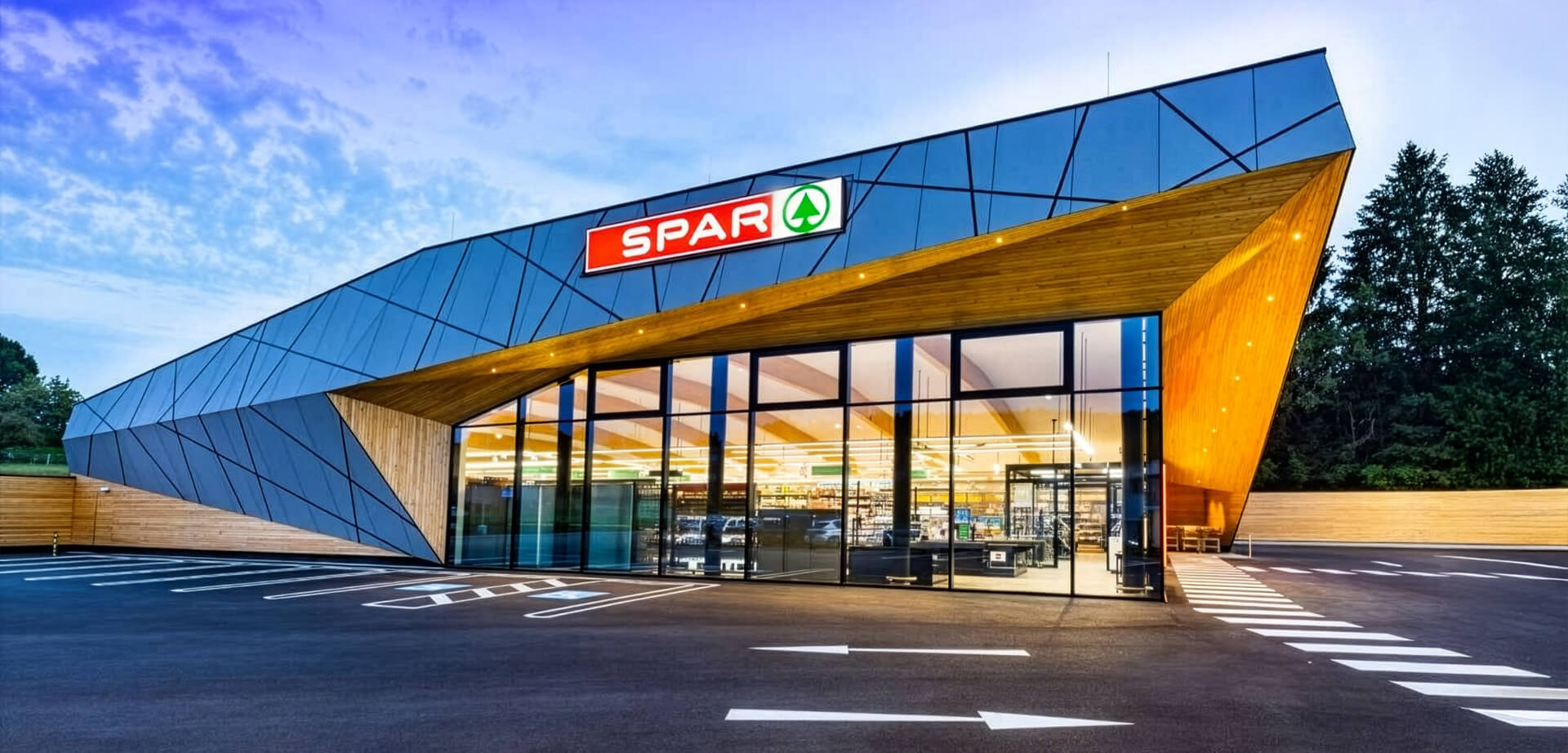
From Urban Store Concept to Network-Wide Format System
The strategic objective is not to impose one identical store everywhere.
It is to establish a scalable format system that protects the brand while allowing each location to respond to its catchment, customer missions, footprint and commercial opportunity.
CampbellRigg's capabilities include:
- Urban supermarket format strategy
- Supermarket branding and positioning
- Brand auditing
- Design brief development
- Store format and space planning
- Retail architecture and interior design
- Customer journey planning
- Shopper psychology
- Supermarket layout and zoning
- Fresh-food and food-to-go environments
- Visual merchandising
- Signage and wayfinding
- Digital and phygital retail
- Multi-store rollout and implementation
- Commercial performance and ROIC thinking
This is the distinction between designing an individual urban supermarket and developing an urban supermarket network
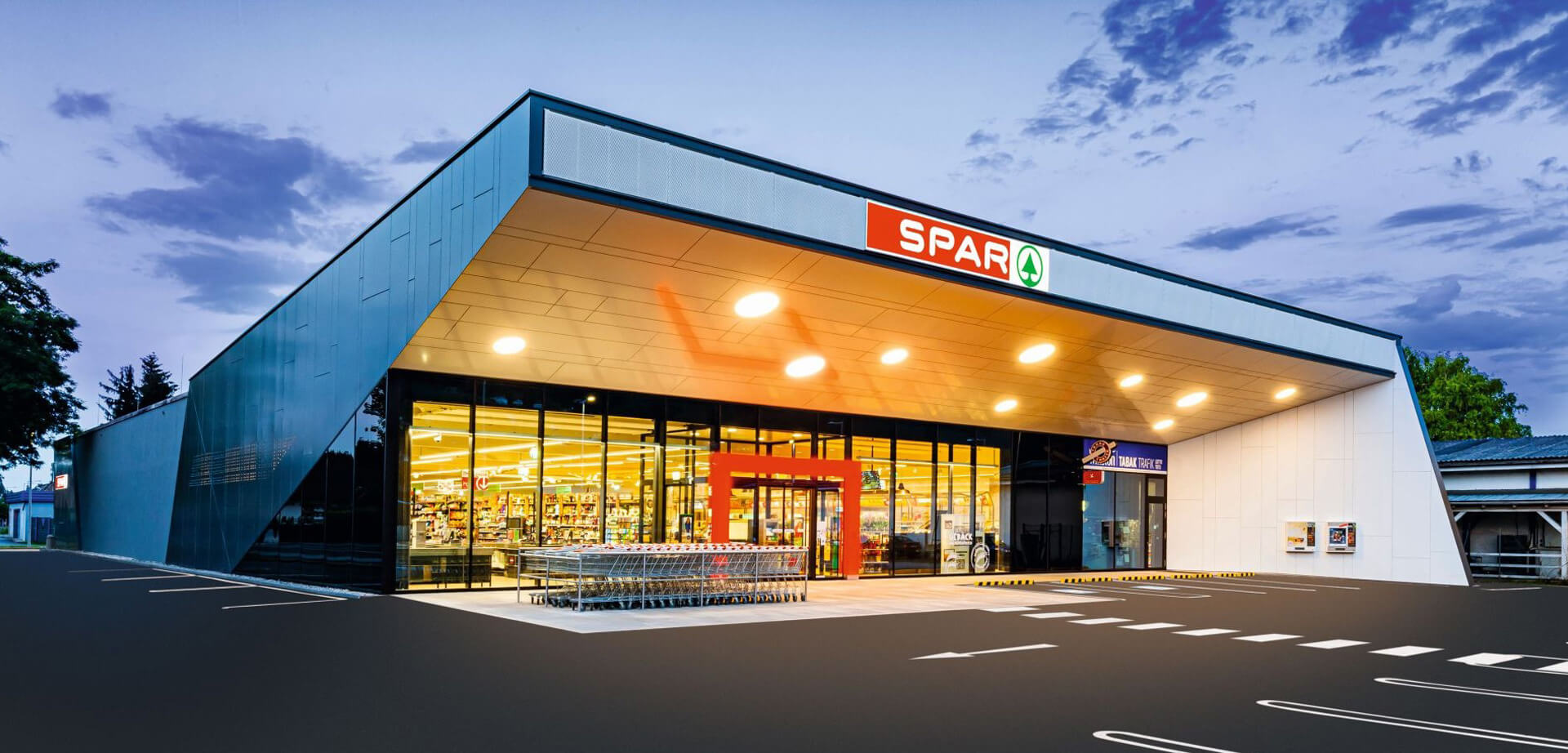
The CampbellRigg Approach
1. Define the commercial opportunity
Establish the customer, catchment, competitive position, shopping missions, format role and management objectives.
2. Audit the existing proposition
Assess brand positioning, customer experience, store environment, navigation, merchandising and operational requirements.
3. Create the format strategy
Define the urban supermarket model, spatial principles, customer journeys, category priorities and brand requirements.
4. Develop the design brief
Translate strategy into practical requirements for identity, space planning, architecture, interiors, merchandising, technology and implementation.
5. Design for rollout
Create a format framework that can adapt to different footprints and locations without losing strategic consistency.
6. Measure commercial performance
Establish the KPIs that matter to management, including sales productivity, basket value, customer experience, loyalty, space productivity and return on investment.
Build a Scalable Urban Supermarket Network
The urban supermarket of 2026–27 is becoming more compact, local and purposeful.
The management opportunity is not simply to reduce store size. It is to use limited space more intelligently.
That means aligning brand positioning, format strategy, merchandise, fresh food, customer journey, technology and operational requirements around a defined commercial purpose.
SPAR demonstrates how an international grocery brand can adapt its proposition across different markets while maintaining a recognisable identity. Migros demonstrates how a retail concept can achieve measurable like-for-like growth while being implemented across a substantial urban network. Safeway demonstrates how adaptable format planning can connect customer requirements to commercial performance.
CampbellRigg applies the same strategic principle to supermarket transformation: Strategy defines the opportunity. Format planning defines the model. Design makes it physical. Implementation makes it scalable. Commercial measurement determines its value.
For management teams planning new city-centre stores, repositioning an existing urban estate or developing a repeatable neighbourhood format, the objective is clear:
make every square metre work harder while making the customer journey faster, clearer and more relevant.
How CampbellRigg Can Help
If your organisation is developing an urban supermarket network, the starting point should not be another isolated store design.
It should be a clear format strategy capable of guiding investment across the estate.
CampbellRigg can help management teams audit the existing proposition, define the urban format strategy, create the design brief, develop the physical customer experience and establish a scalable format system for rollout across multiple locations.
Book a free consultation to discuss how CampbellRigg can turn your urban supermarket strategy into a distinctive, measurable and commercially effective retail network.