

News and Views
Premium Supermarket Design: Strategies to Increase Sales & Loyalty






Premium Supermarket Design: Turning Retail Strategy into Commercial Growth
Premium supermarket design is no longer simply a question of creating an attractive store. For senior management, the real challenge is turning a premium retail proposition into a scalable, measurable and commercially effective store network.
That requires the integration of brand strategy, customer insight, format planning, store layout, interior design, fresh-food experience, visual merchandising, technology, implementation and commercial measurement.
This article focuses specifically on premium supermarket design: how management teams can turn a premium grocery proposition into a differentiated physical experience that improves customer engagement, sales productivity, loyalty and return on investment.
Supermarket branding defines the proposition. Premium supermarket design makes that proposition physical. Format planning makes it scalable. Measurement makes it accountable.
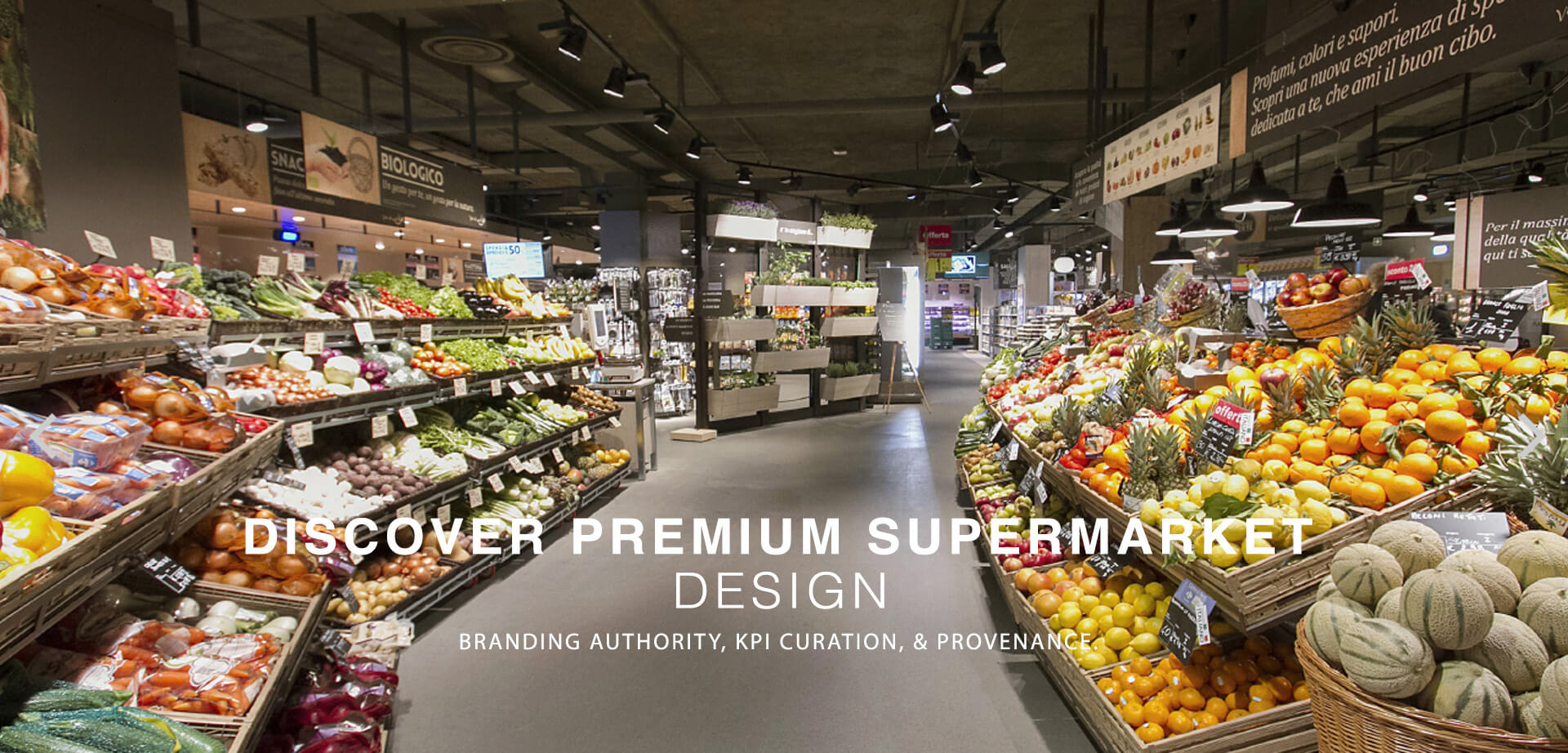
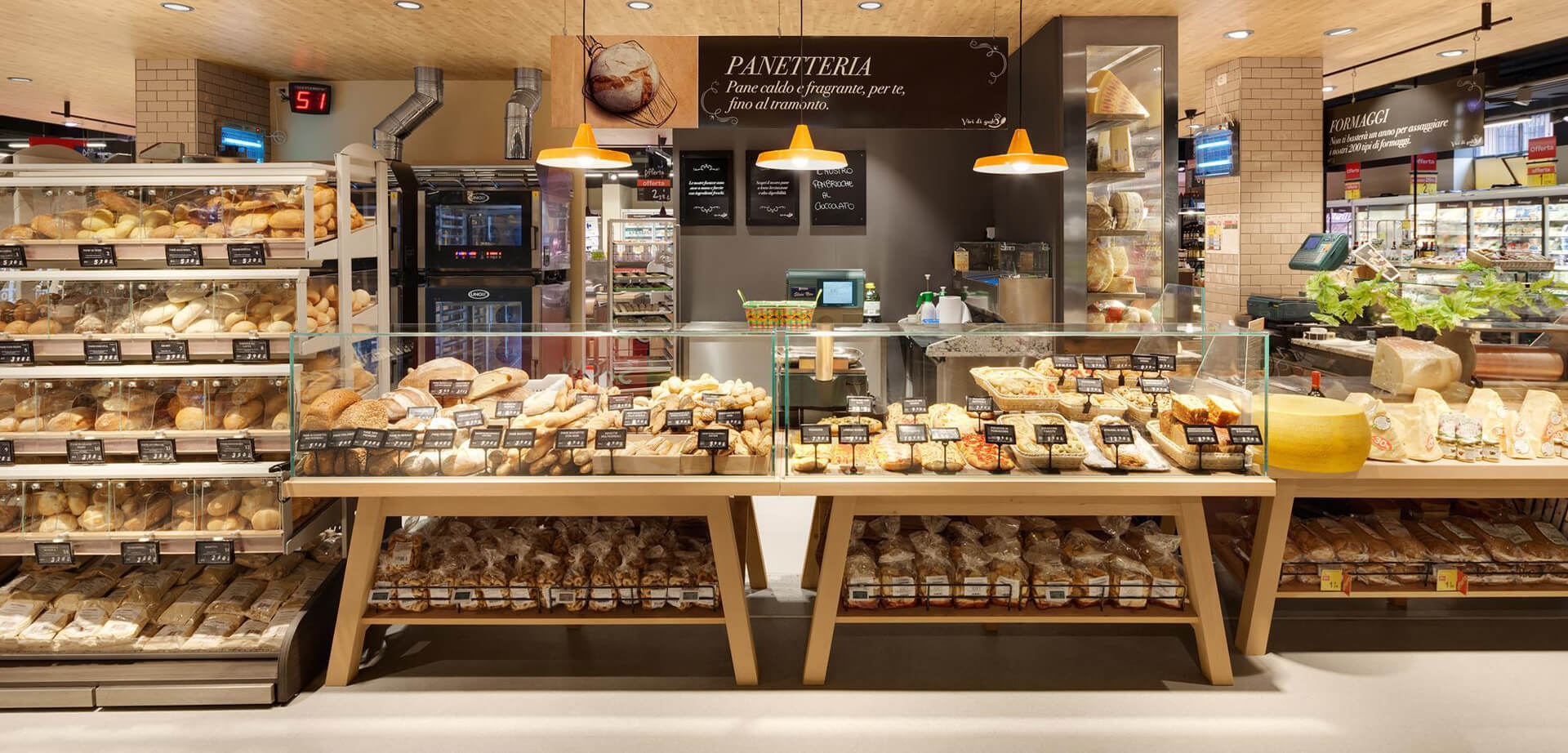
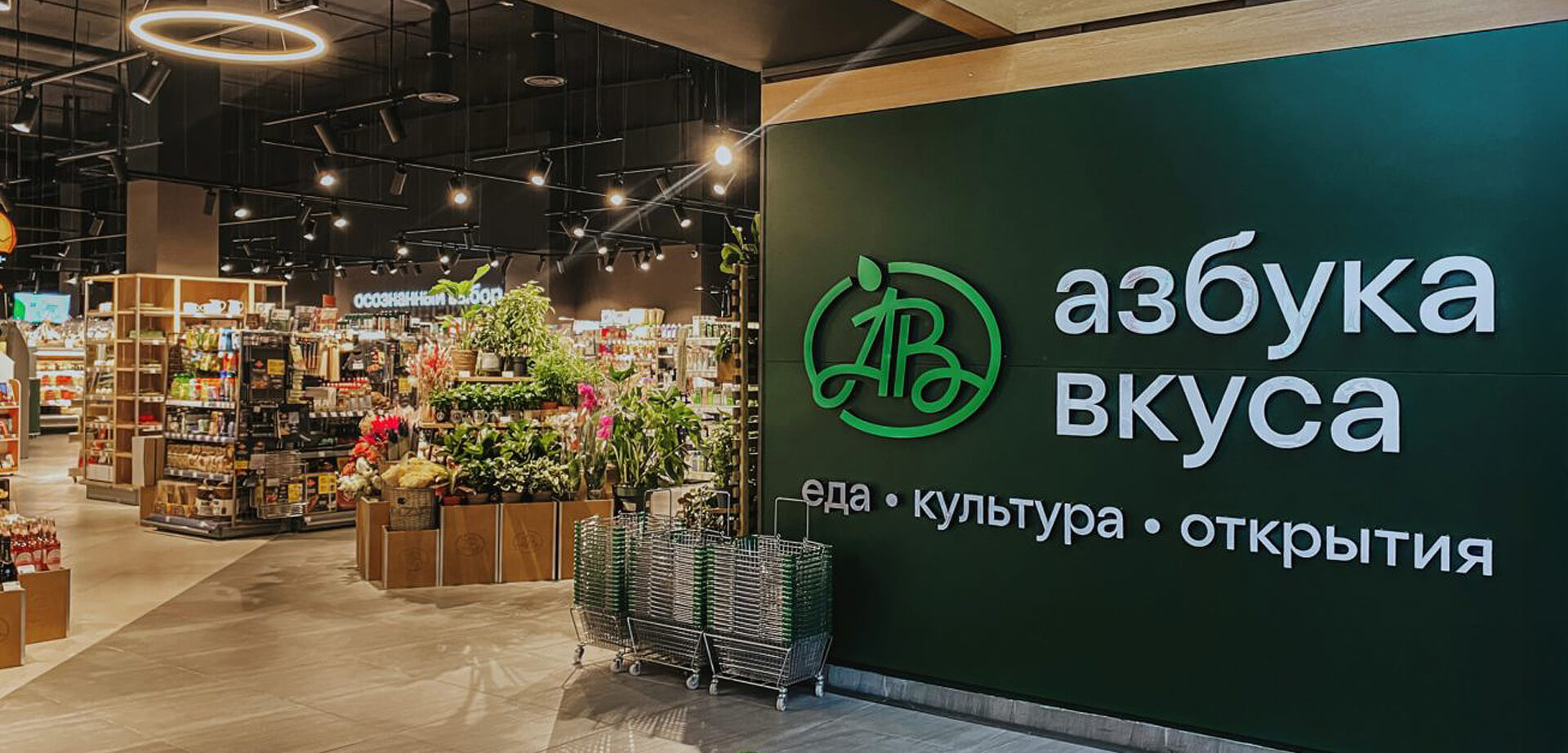
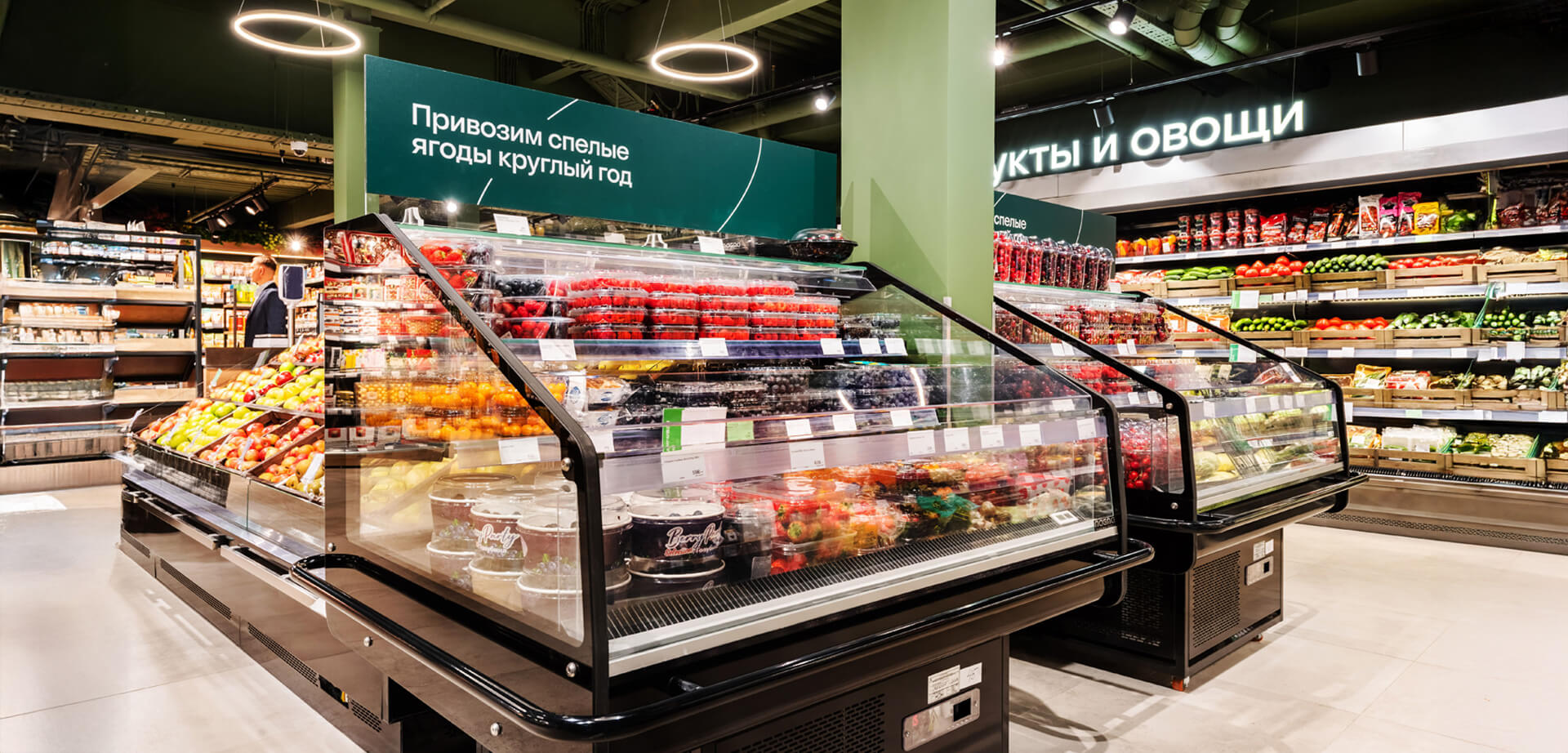
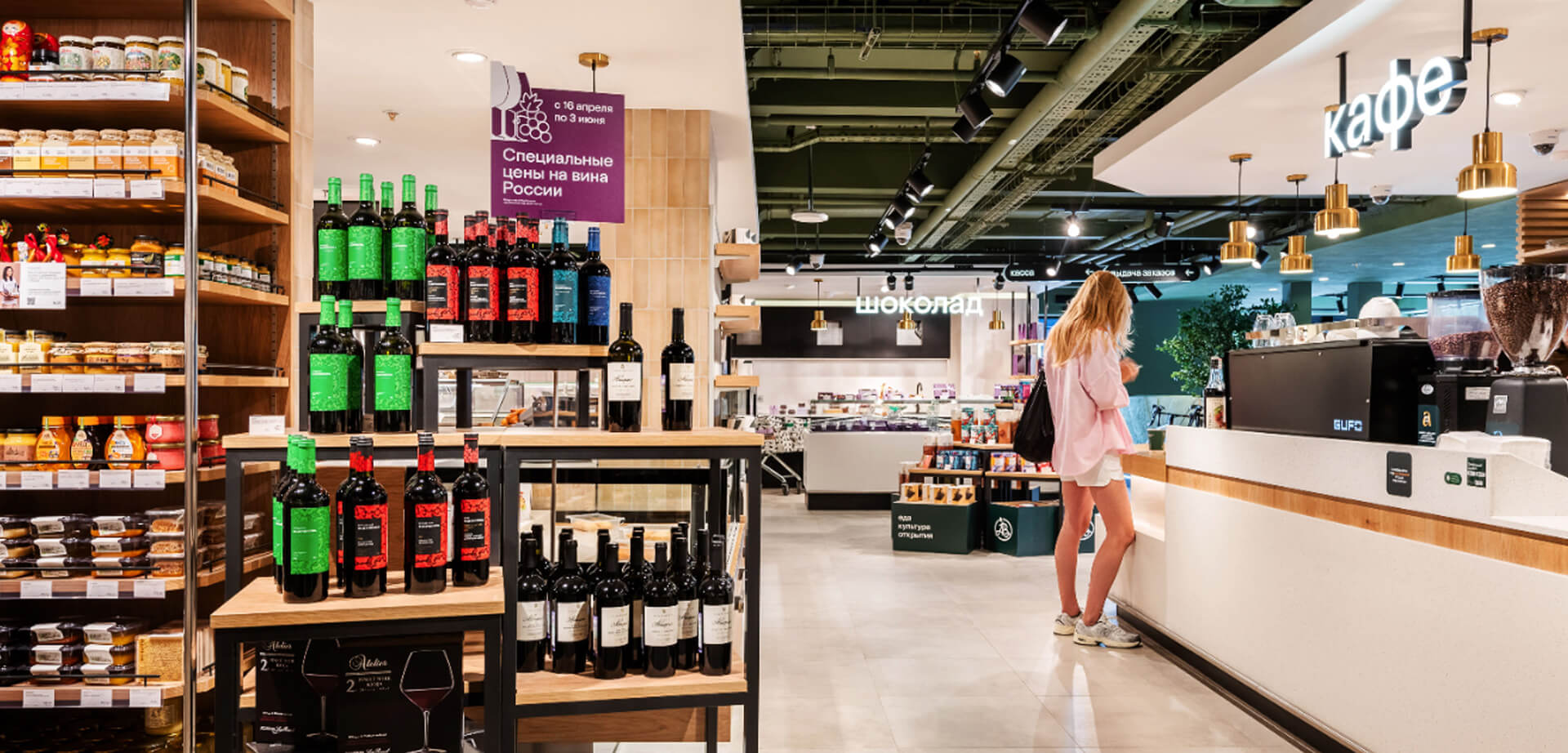
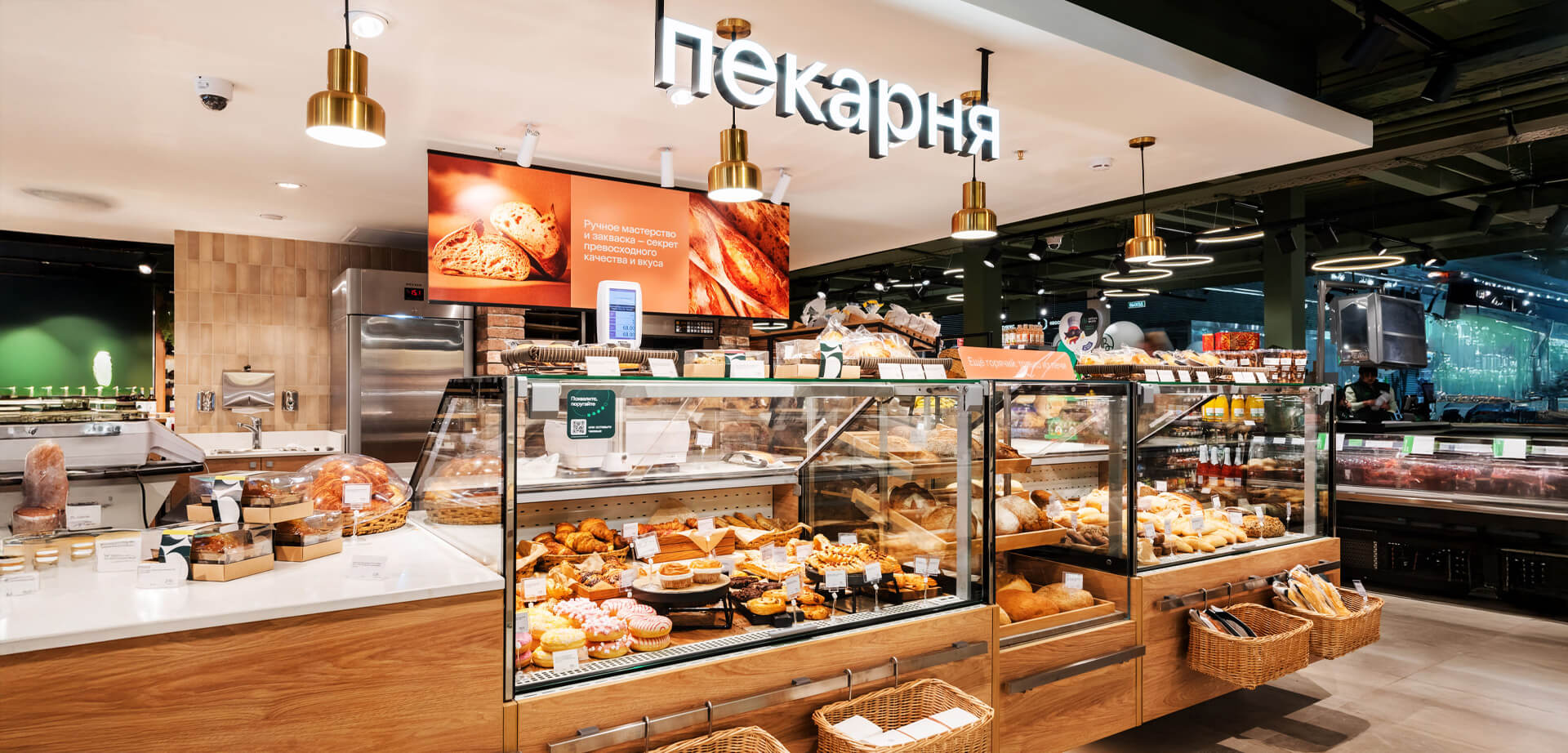
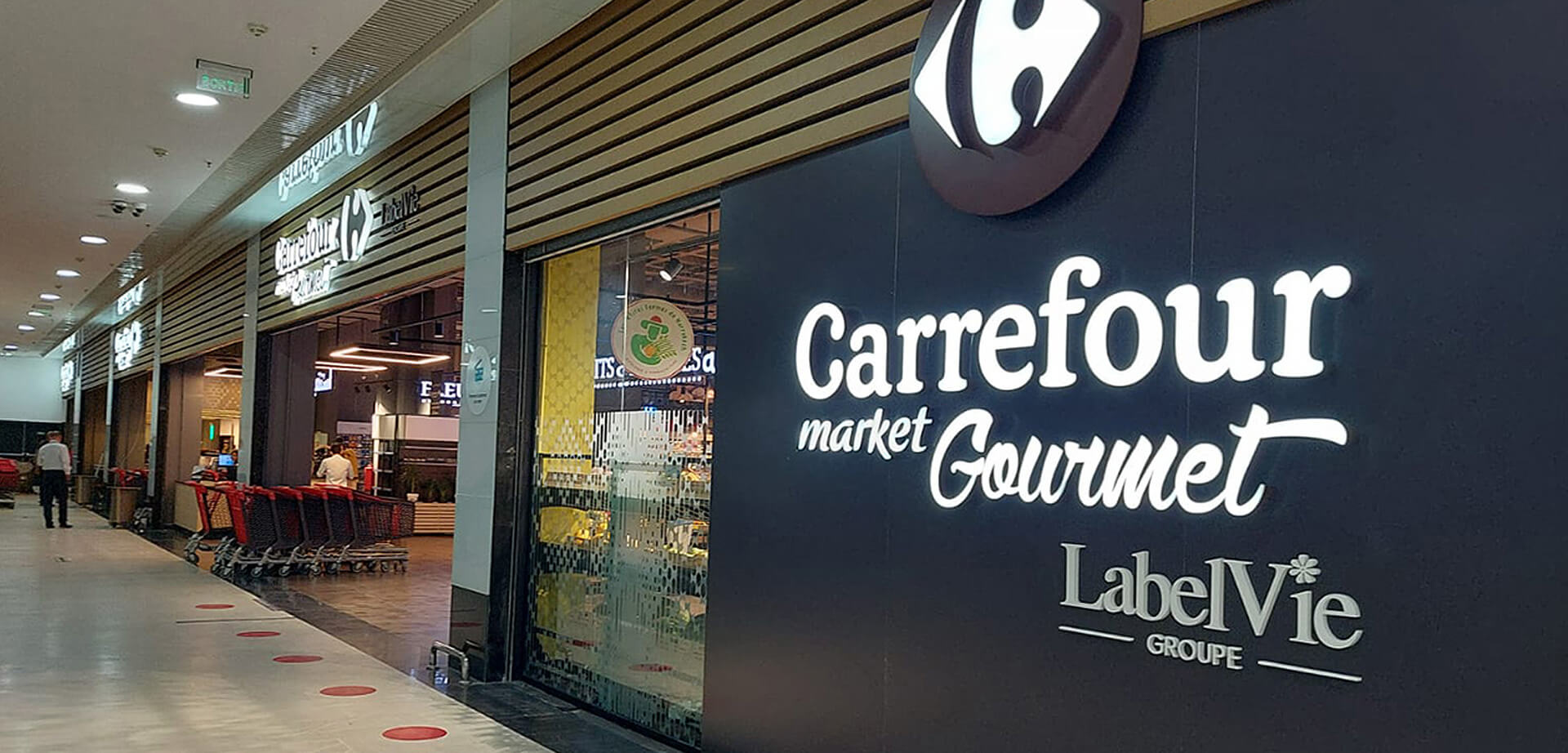
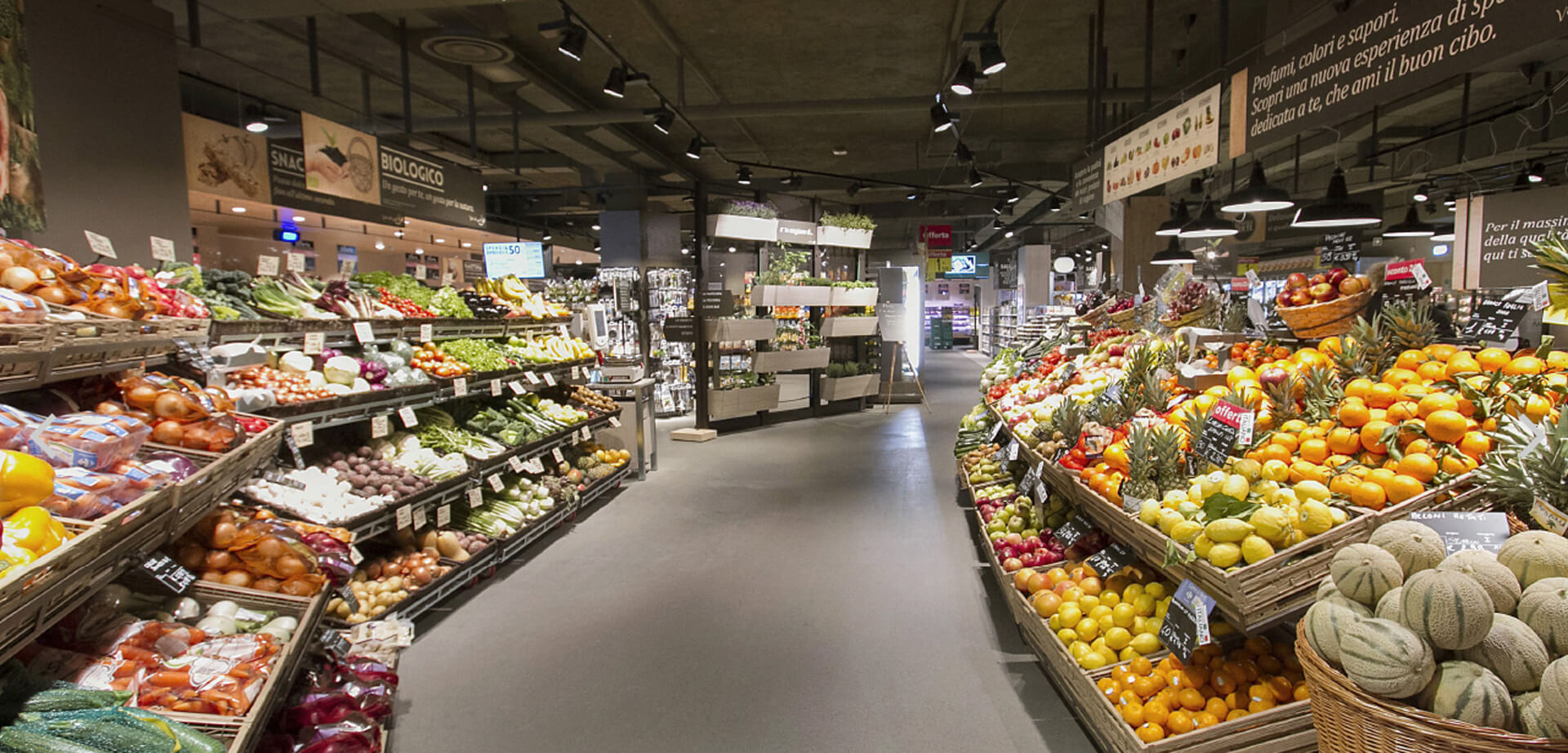
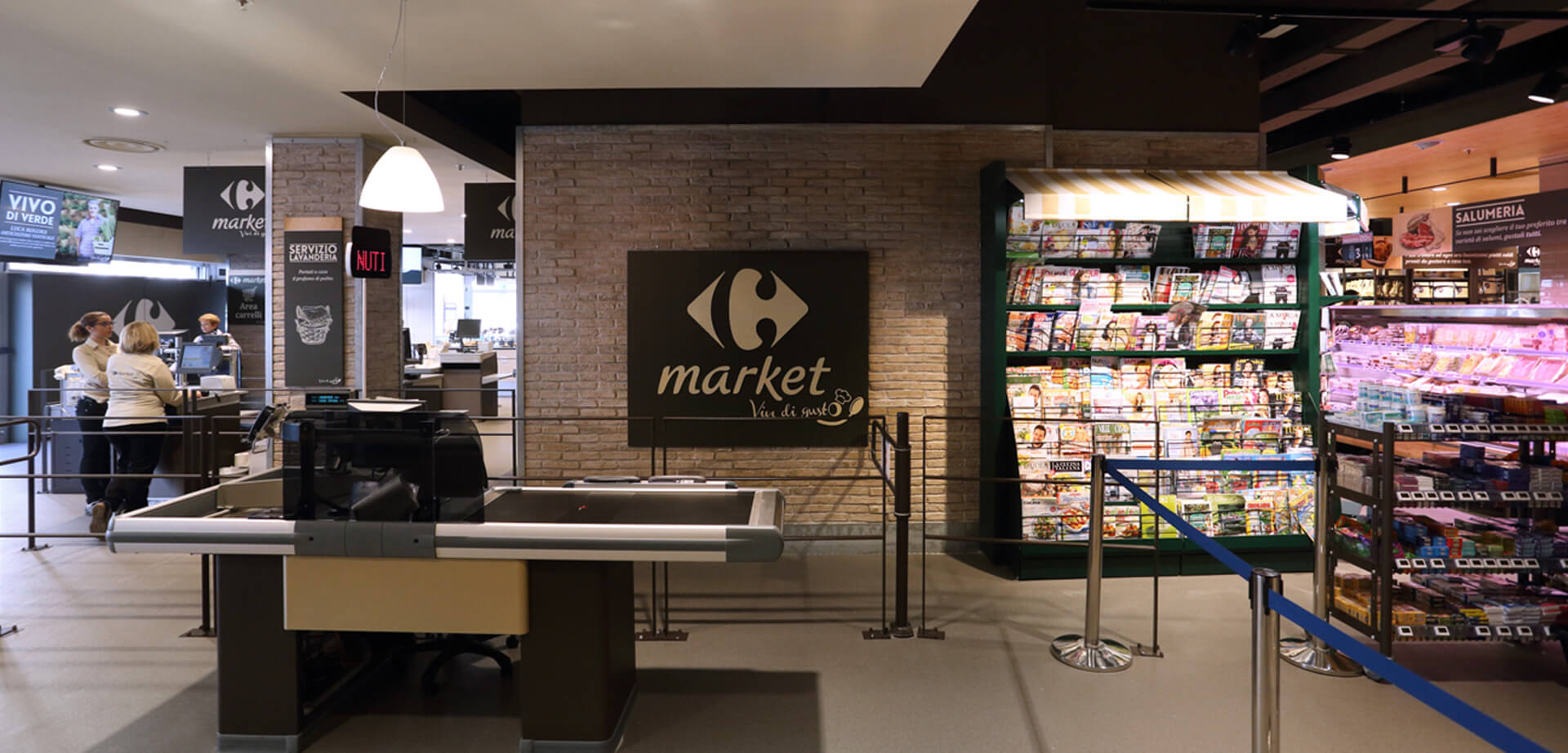
Our global perspective is shaped by benchmarking insights from leading international projects, delivering practical lessons on scaling innovation and building competitive differentiation: Azbuka Vkusa, Moscow, Russia (Agency: In-house team). Carrefour Gourmet Market, Milan, Italy (Agency: Allways Design). Свеж & Fresh, Moscow, Russia (Agency: CampbellRigg)
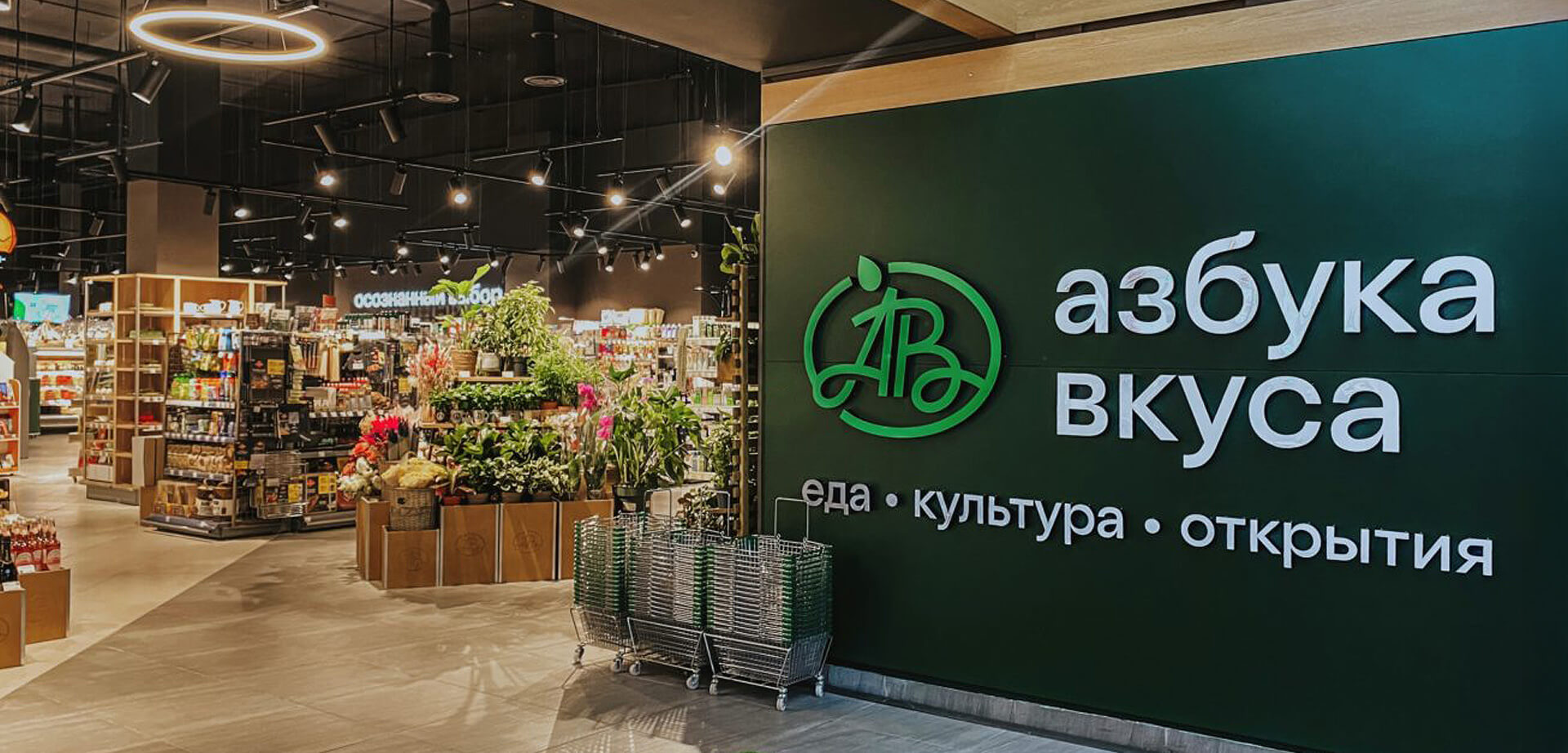
Above Azbuka Vkusa (translates in Russian as the ABC of Taste)
From Premium Proposition to Scalable Retail Format
A premium supermarket may differentiate through freshness, provenance, service, quality, curated choice, private label, wellness or convenience. But the proposition only becomes commercially valuable when it works through the physical store.
Management therefore needs to establish:
- Which customer missions the format must serve
- How the proposition should influence store layout
- Which departments should become destinations
- How fresh food should create value
- What should remain consistent across the network
- What should adapt to location and format
- How investment will be measured
- How the concept can be rolled out efficiently
How CampbellRigg helps
CampbellRigg begins by connecting these disciplines rather than treating them as separate design commissions. Brand auditing establishes how the existing proposition is perceived and expressed. Strategy defines the desired market position. Customer and format analysis identifies the missions and behaviours the store must support. The design brief then converts that strategy into practical requirements for customer experience, store planning, identity and implementation.
The benefit
Management receives one strategic direction linking brand decisions to the physical retail network, rather than a collection of disconnected design initiatives.
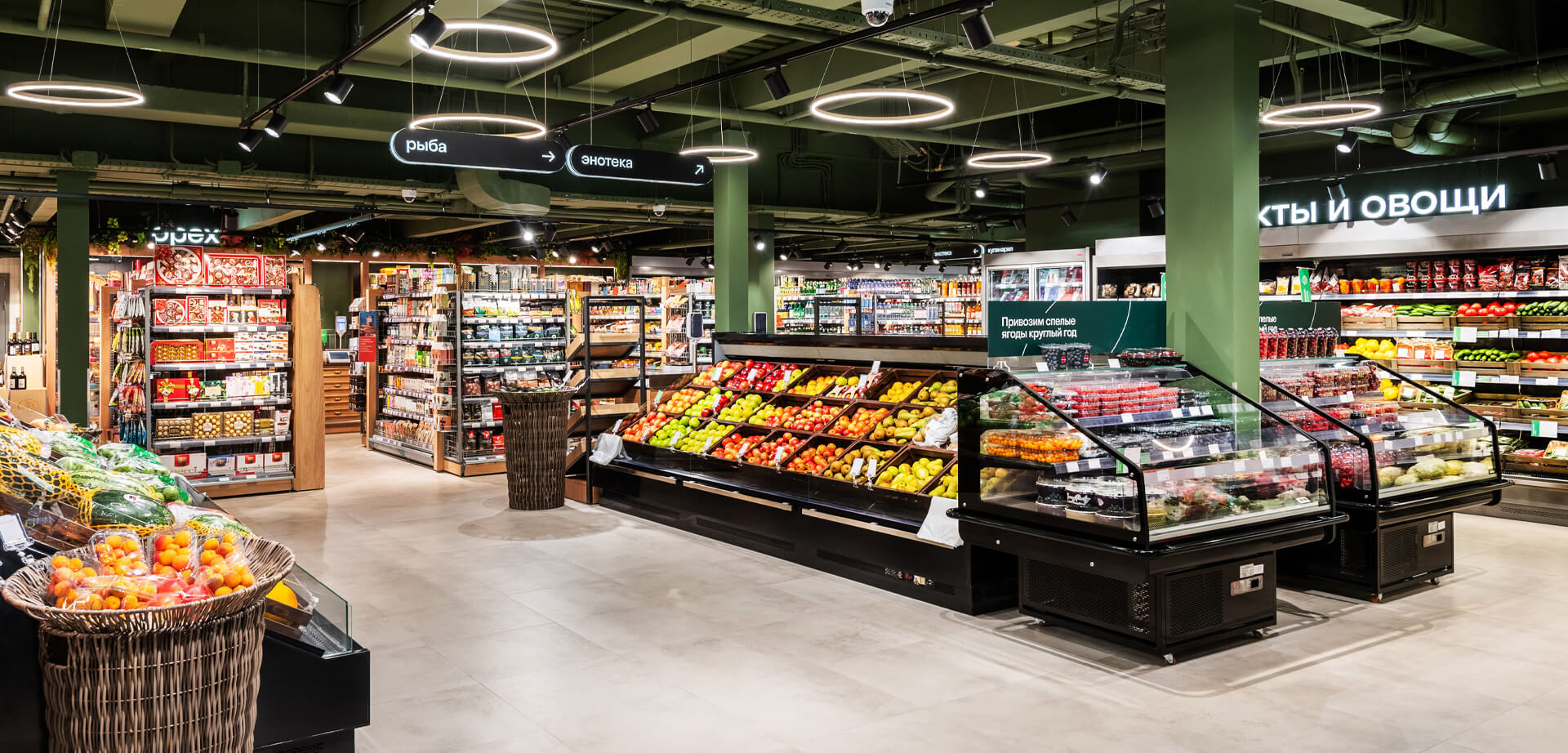
Premium Supermarket Layout and Customer Experience
Store planning is one of the most important commercial components of premium supermarket design.
The layout must balance convenience and discovery. Customers should be able to complete routine missions efficiently while encountering opportunities for premium product discovery, fresh-food engagement and incremental purchase.
Urban stores may prioritise food-to-go, meal solutions and speed. Destination stores may require broader ranges, hospitality and fresh-food theatre. Neighbourhood formats may focus on convenience, service and repeat visits.
The format should therefore be designed around customer missions rather than simply floor area.
How CampbellRigg helps
CampbellRigg connects customer behaviour, journey planning and space allocation before developing the detailed design. Customer missions are translated into zoning, circulation, category adjacencies, destination departments and spatial standards.
The benefit
The retailer gains a layout designed around customer behaviour and commercial productivity, providing a stronger basis for measuring the effect of spatial decisions.
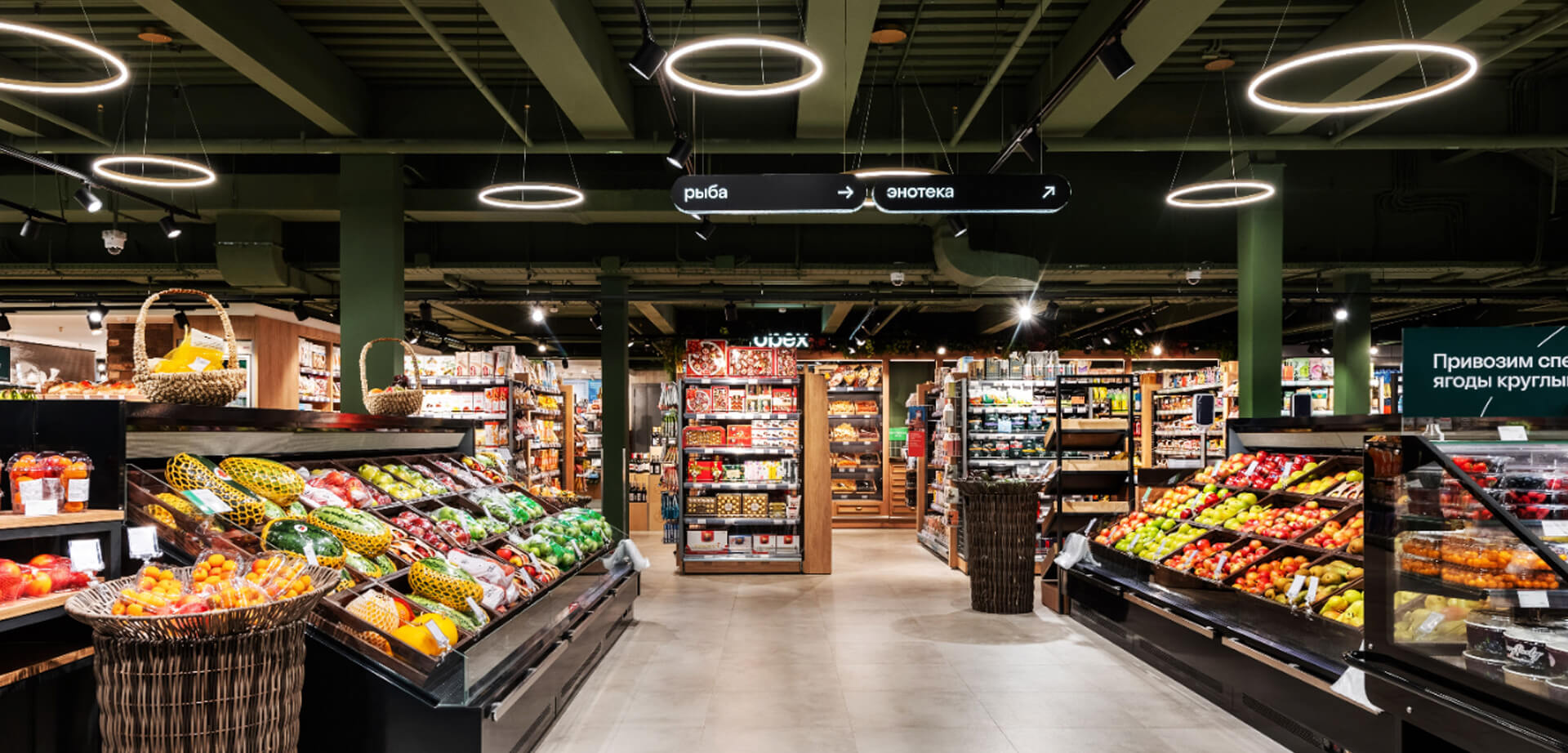
Fresh Food as a Commercial Anchor
Fresh food can be one of the strongest expressions of premium positioning.
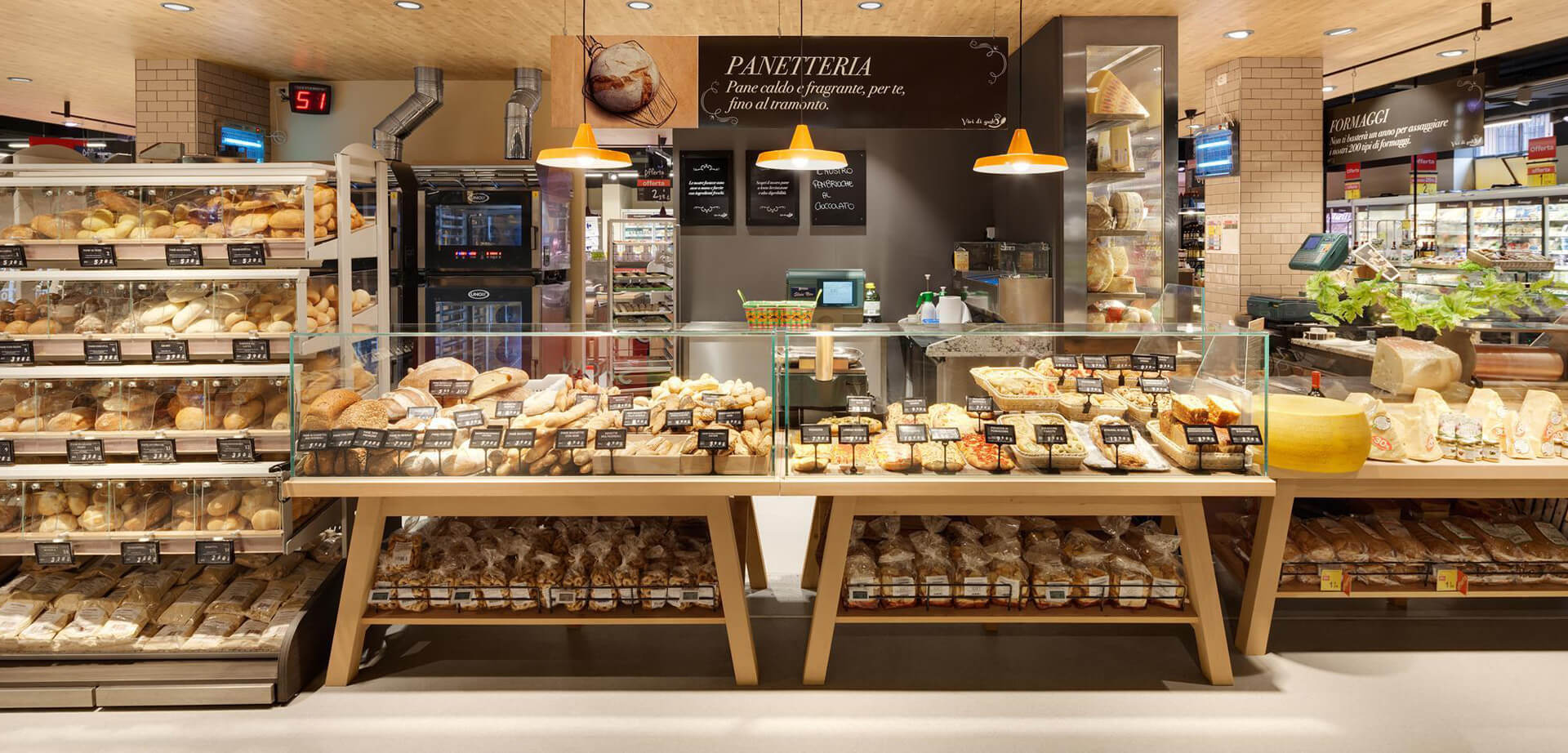
Bakery, produce, deli, prepared food, meat, seafood and food-to-go can become destination categories through open preparation, service counters, visible production, premium materials, focused lighting and curated merchandising.
But theatre should have a commercial purpose.
Management should measure whether investment in fresh-food environments improves:
- Conversion
- Sales per square metre
- Basket value
- Gross margin
- Category penetration
- Repeat visits
How CampbellRigg helps
CampbellRigg connects fresh-food strategy to store zoning, customer journey, merchandising, service environments and visual identity.
The benefit
Fresh food becomes more than a department: it becomes a commercial anchor, customer-experience asset and physical expression of the premium proposition.
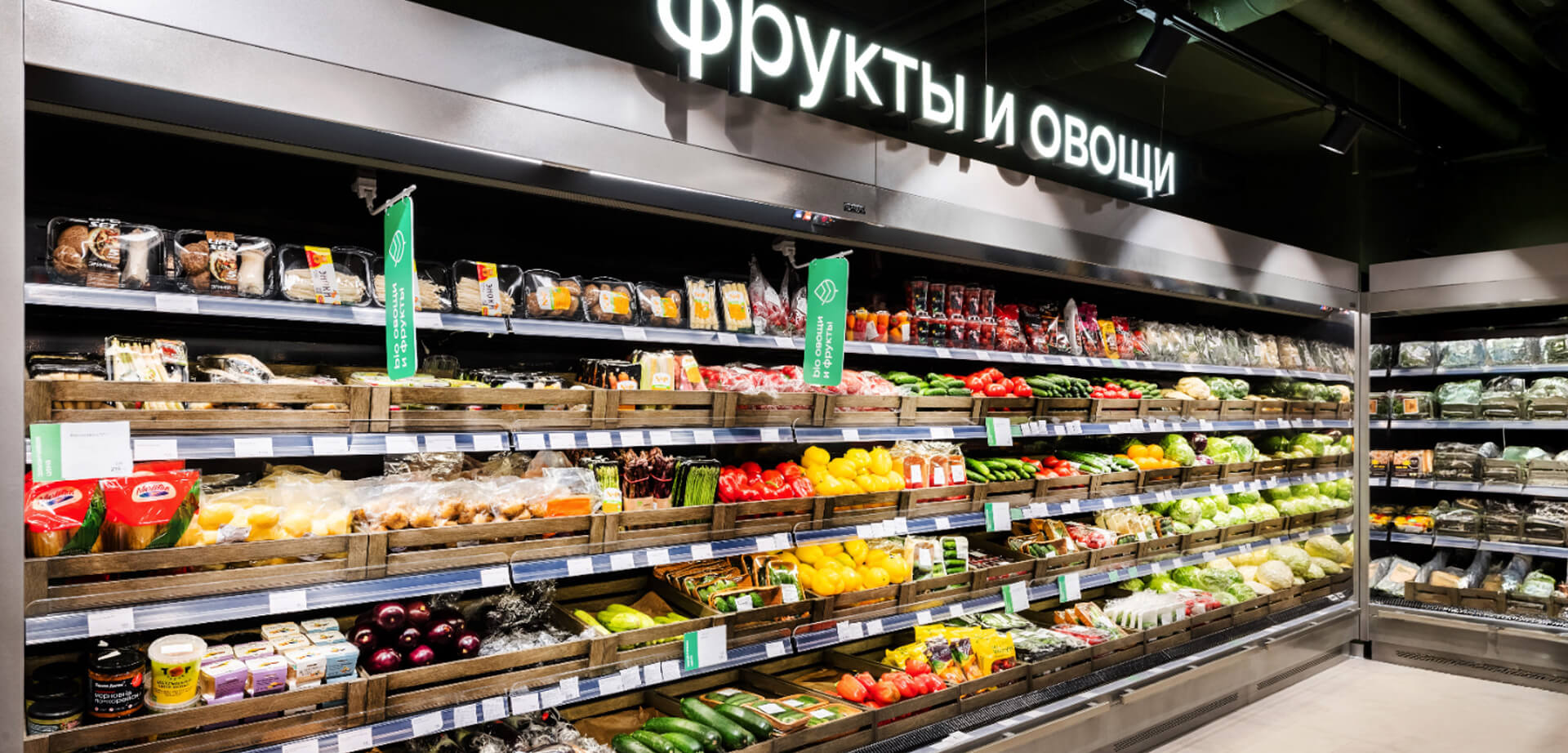
Premium Supermarket Interior Design and Visual Merchandising
Premium supermarket interior design should communicate quality without compromising operational efficiency or rollout economics.
Lighting, materials, fixtures, signage, ceilings, flooring and environmental graphics should work as one system.
Visual merchandising then translates that environment into customer behaviour through:
- Product curation
- Provenance storytelling
- Recipe inspiration
- Premium private-label presentation
- Seasonal themes
- Specialist destinations
- Cross-category merchandising
The objective is to create a store that feels edited rather than overloaded.
How CampbellRigg helps
CampbellRigg converts the brand proposition into a coherent physical design language, connecting interior design, environmental branding, visual merchandising, customer journey and store standards.
The benefit
Management receives a distinctive premium environment that is also operationally credible and capable of being reproduced across the estate.
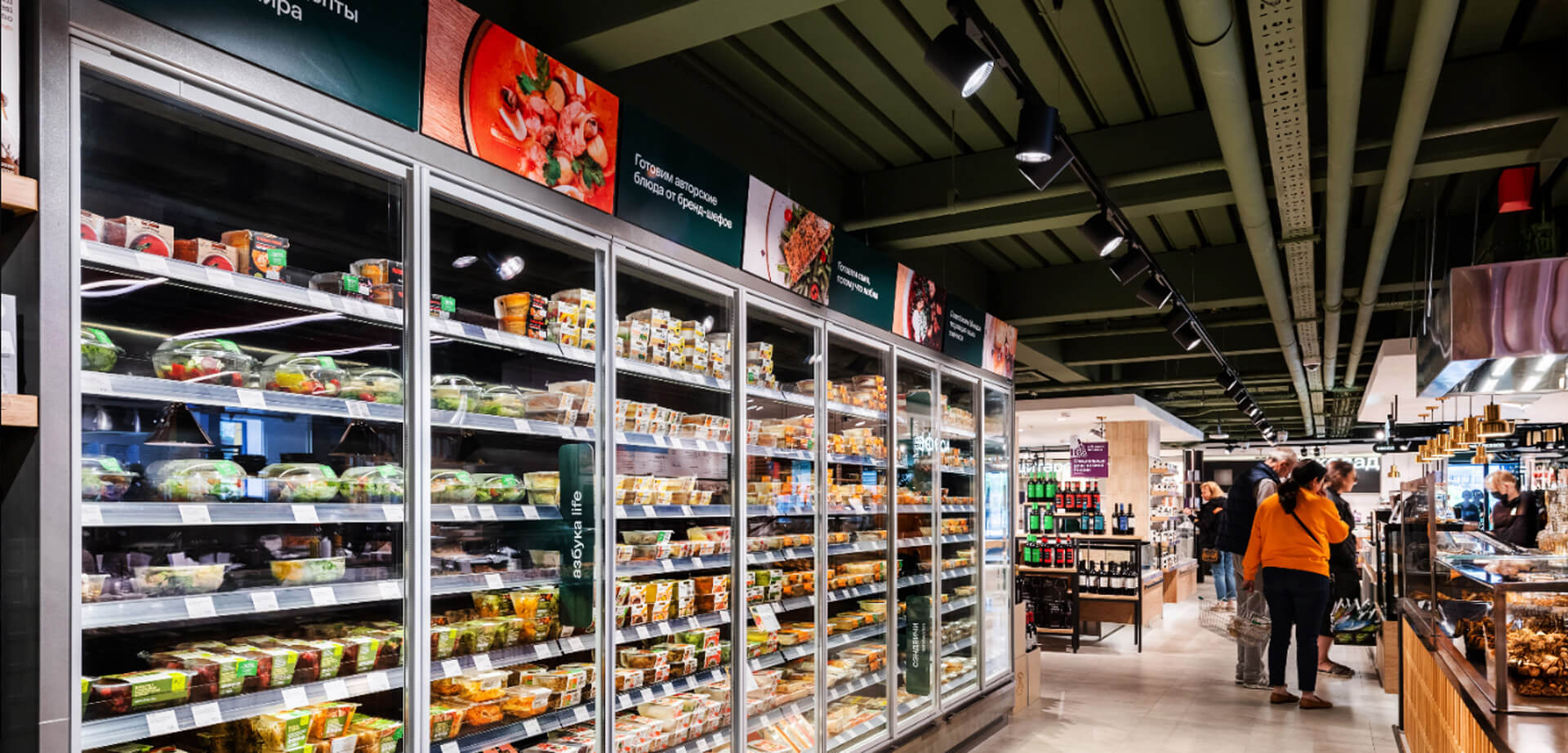
From Store Design to Network Productivity
The ultimate test of premium supermarket design is whether the concept can perform beyond the first store.
A scalable system should distinguish between non-negotiable brand standards and locally adaptable components.
Core standards may include identity, materials, signage, visual merchandising, fresh-food presentation and customer-experience principles.
Flexible elements may include department size, category mix, food-to-go provision, hospitality and local assortment.
How CampbellRigg helps
CampbellRigg develops format standards, design principles and implementation requirements that allow the concept to move from prototype to network.
The benefit
The retailer gains greater control over consistency, cost, implementation quality and rollout speed, without making every store identical.
Measuring Premium Supermarket Design ROI
Premium supermarket design should be connected to measurable commercial outcomes.
A practical framework is: Customer opportunity → Design intervention → Behaviour change → KPI → Financial outcome → Scale decision
Examples include:
Fresh-food theatre → Greater discovery → Fresh-food conversion / sales per m²
Improved wayfinding → Less search friction → Conversion / journey efficiency
Food-to-go destination → Faster purchase → Transactions per hour
Premium presentation → Greater perceived value → Basket value / margin
Store refurbishment → Improved experience → Sales per m² / ROIC
Management should establish baselines and measure sales productivity, basket value, category conversion, fresh-food performance, repeat visits, margin, retention, capital expenditure and payback.
How CampbellRigg helps
CampbellRigg establishes the commercial logic behind the design brief before creative development begins, linking major interventions to appropriate customer and business KPIs.
The benefit
Management can evaluate design investment through customer behaviour, measurable performance and commercial return, rather than aesthetics alone.
How CampbellRigg Turns Retail Strategy into a Scalable Network
CampbellRigg brings together strategy, brand, customer experience, store planning, interior design, visual merchandising and implementation within one connected process.
The approach is: Strategy → Proposition → Customer → Format → Layout → Design → Experience → Implementation → Measurement → Rollout
This prevents branding, store planning, interiors and customer experience from being developed as disconnected initiatives.
The benefit
Management receives one integrated route from retail strategy to physical execution and measurable network performance.
The result is a format that can be approved, funded, implemented, measured and scaled.
International Premium Supermarket Benchmarks
Our global perspective is shaped by benchmarking insights from leading international projects, delivering practical lessons on scaling innovation and building competitive differentiation: Azbuka Vkusa, Moscow; Carrefour Gourmet Market, Milan; and Свеж & Fresh, Moscow.
Different premium retailers demonstrate that there is no single visual formula for premium supermarket design.
- Carrefour Gourmet demonstrates the role of gastronomy and fresh-food theatre in creating discovery.
- Azbuka Vkusa demonstrates how premium quality can combine with convenience and service.
- Свеж & Fresh demonstrates how freshness, curated ranges and an urban food-destination proposition can create differentiation.
Further international references include Erewhon, Whole Foods, Albert Heijn XL and PCC Community Markets, each illustrating different approaches to fresh food, curation, destination retail and local relevance.
The purpose of benchmarking is not to copy these retailers.
It is to identify principles that can be adapted to the retailer's own customers, proposition, format and economics.
How CampbellRigg helps
CampbellRigg converts benchmarking into a management framework: Benchmark → Identify principle → Test against customer → Test against economics → Adapt to format → Build into rollout system
The benefit
Management receives a relevant strategic response rather than a collection of international design references.
Premium Supermarket Design: The Commercial Outcome
The strongest premium supermarket environments combine:
Customer strategy + Brand proposition + Format planning + Store layout + Fresh-food experience + Interior design + Visual merchandising + Technology + Measurement
Premium supermarket design is not simply about making a store look expensive.
It is about making the proposition easier to understand, more compelling to experience, more efficient to operate and more productive to scale.
How CampbellRigg helps
CampbellRigg helps supermarket management teams transform retail strategy into distinctive, scalable and commercially effective physical environments.
The process can begin with a free consultation, followed by a bespoke brief, rapid multidisciplinary execution and measurement against commercial objectives.
The benefit
The outcome is a more coherent retail network designed to support: Sales growth. Customer loyalty. Space productivity. Format consistency. Faster rollout. Better capital decisions. Long-term commercial value.
What Leading Premium Supermarkets Do Differently
Leading premium supermarket formats also provide useful benchmarks.
Erewhon demonstrates how curated merchandising, fresh food and strong spatial presentation can create a distinctive destination. Whole Foods has developed powerful fresh-food and specialist-category environments. Albert Heijn XL demonstrates the potential of large-format grocery environments to combine food, discovery and customer experience, while PCC Community Markets provides an example of how fresh food, local relevance and community positioning can influence the physical environment.
The lesson for retailers is not to copy these formats. It is to understand the underlying principle: store design should translate a distinctive customer proposition into a measurable physical experience.
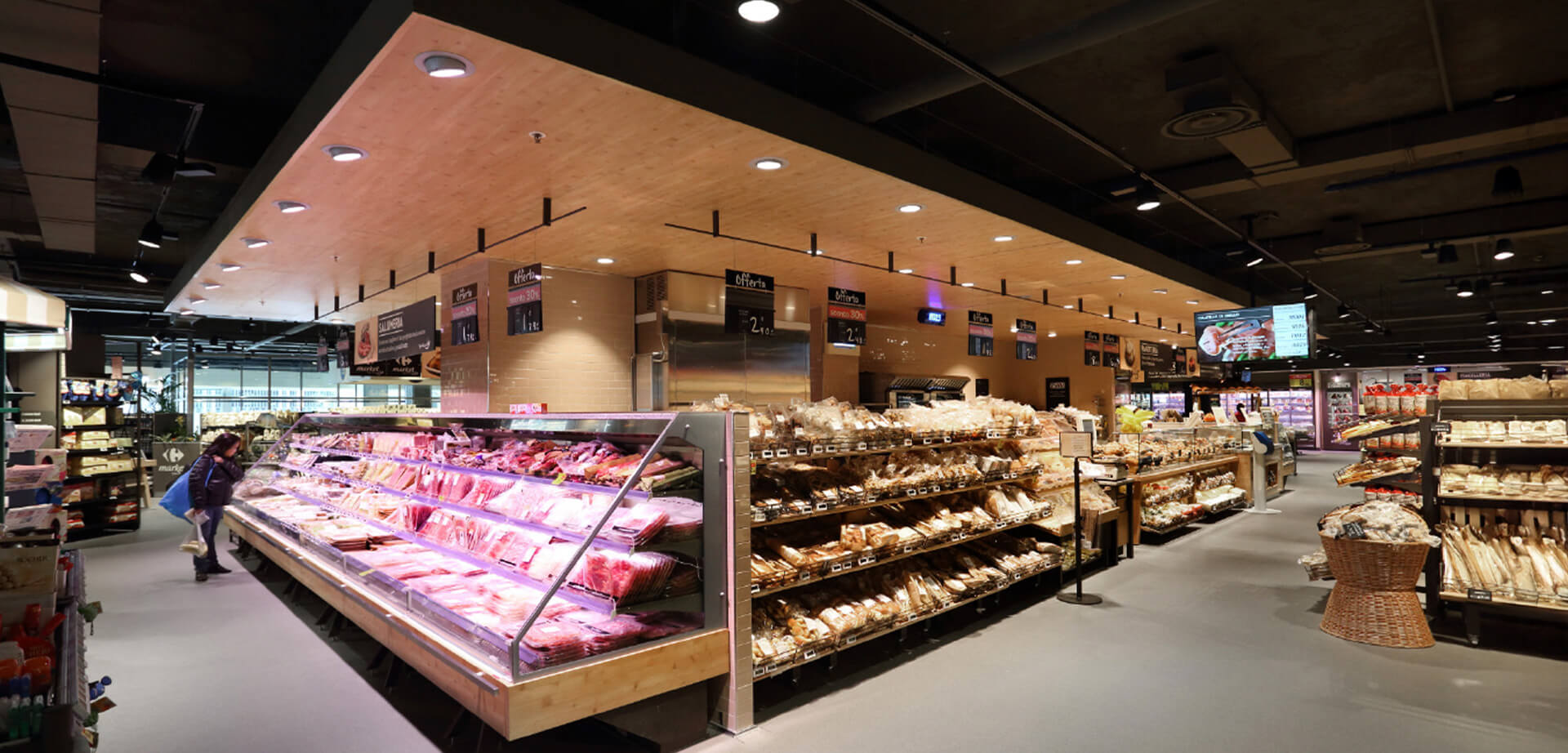
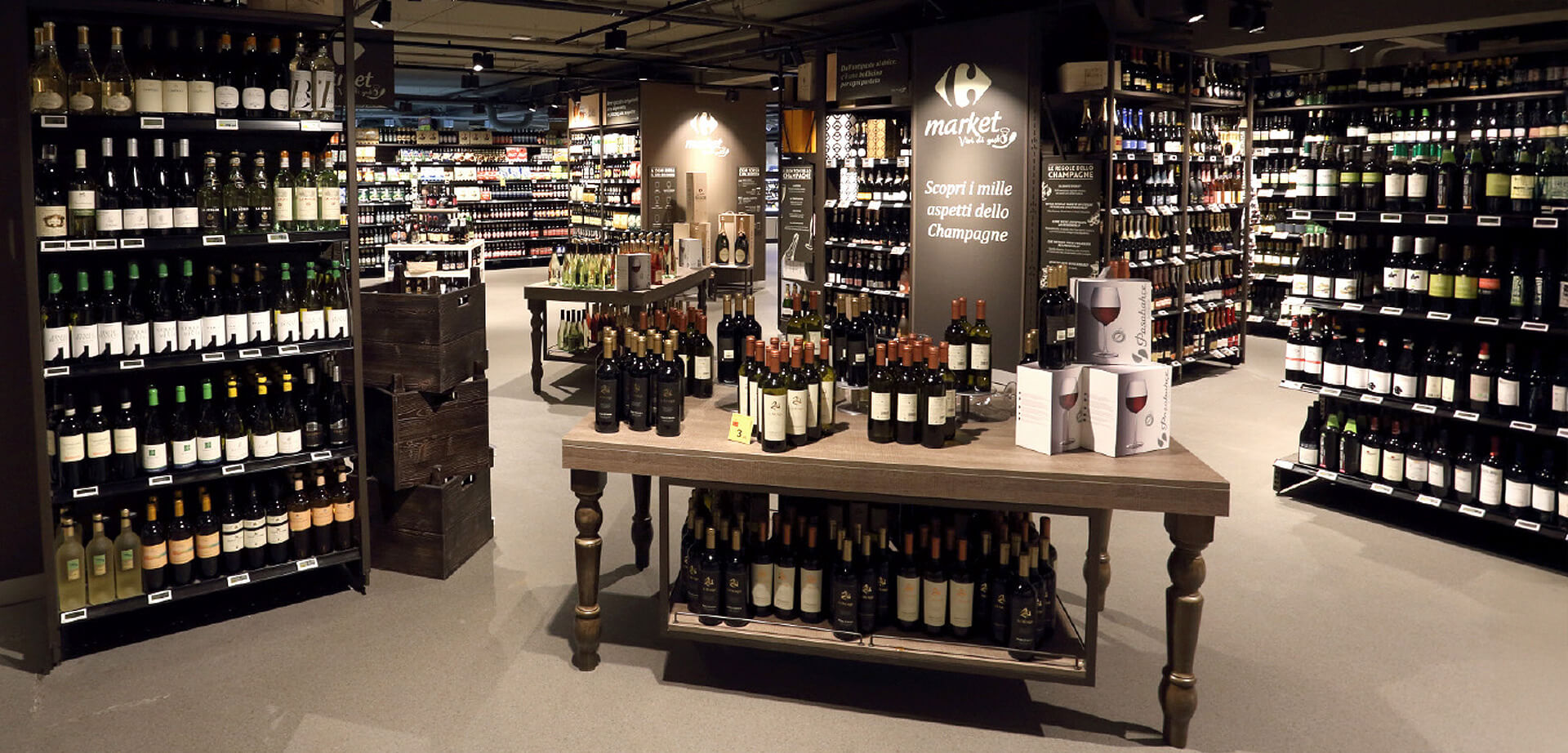
Below: CampbellRigg’s Свеж & Fresh supermarket branding illustrates how premium grocery retail can simultaneously build powerful emotional connection and deliver measurable commercial performance at scale. Свеж & Fresh (Svezh & Fresh), translates in Russian as Fresh & Fresh.

CampbellRigg Case Study: Свеж & Fresh, Moscow
CampbellRigg's work for Свеж & Fresh (Svezh & Fresh) demonstrates how a premium supermarket proposition can become an integrated brand and customer experience.
Developed as a new premium supermarket brand, the proposition centred on exceptional fresh food, curated global assortments, best-in-class service, premium private label and local cultural relevance.
The project connected: Brand identity → Premium positioning → Fresh-food experience → Curated assortment → Store environment → Customer experience
How CampbellRigg helps
Rather than developing the identity separately from the store, CampbellRigg connected the brand proposition directly to the physical customer experience.
The benefit
Свеж & Fresh demonstrates how premium supermarket design can become a complete brand-experience system, rather than simply an interior treatment.


Conclusion: Design the Store as a Commercial Growth Engine
The best premium supermarket designs combine customer experience, fresh-food theatre, intelligent layout, visual merchandising, interior design, wayfinding and space productivity.
Premium supermarket design is not simply about making a store look expensive. It is about creating a physical environment that makes quality easier to perceive, shopping easier to navigate, discovery more rewarding and commercial performance more measurable.
Supermarket branding defines the proposition. Supermarket design makes that proposition physical. Customer experience turns it into behaviour. Commercial measurement determines whether the investment is working.
For retailers planning a new premium grocery format, refurbishment or store transformation, this approach provides a practical framework for connecting design decisions with sales, loyalty, productivity and ROIC.

Four-Step Process
- Free consultation
Define the strategic challenge, customer proposition, estate and commercial objectives. - Bespoke brief
Translate management objectives into a focused strategy, format and design brief. - Fast execution
Connect strategy, branding, store planning, interiors and visual merchandising through one multidisciplinary team. - Measure and scale
Connect the completed environment to sales, loyalty, productivity, market-share and ROIC objectives and establish standards for future rollout.
Get your free quote and discover how better design drives better results.
Cost-Effective Excellence:
Our pricing structure is highly competitive, offering exceptional value without compromising on quality or creativity.
Rapid Execution:
We move fast. From concept to implementation, our agile team ensures your project is delivered on time and to the highest standards.
Multidisciplinary Expertise:
Our team brings together seasoned brand strategists, architects, interior designers, and graphic designers, collaborating to create seamless, end-to-end brand environments.
Global Reach, Local Insight:
With successful projects delivered across Europe, the Middle East, and Asia, we combine international experience with local market understanding.
Scalable Project Delivery:
Whether it's a flagship city supermarket or an urban convenience store, we manage and execute projects of all sizes, efficiently and effectively.
Proven Track Record:
Our designs evolve branch networks from purely transactional spaces into experiential, relationship-focused brand environments, enhancing engagement, elevating customer experience, and driving tangible business results.
Full-Service Creative Agency:
From rebranding and marketing campaigns to spatial design and rollout, we provide an integrated service tailored to your goals.