
News and Views
Digital-First Design, Apps, Kiosks and Stores Telecommunications & Technology.



Digital-First Telecom Retail Design: Apps, Kiosks & Phygital Stores
Digital-first telecom retail design connects physical stores with apps, self-service kiosks, digital signage and online customer journeys. It integrates digital channels, physical environments and human interaction into one connected telecom retail experience.
The objective is not simply to add technology to a store, but to create a seamless phygital retail experience in which customers can discover products, compare tariffs, configure devices, manage accounts, collect orders and access support across digital and physical touchpoints.
For telecom operators, this changes the role of the store. Instead of relying on traditional sales counters and staff-led transactions, digital-first telecom stores can combine self-service, product discovery, human advice and connected services. The result is a more flexible customer journey designed to reduce friction, improve engagement, increase efficiency and strengthen the commercial value of physical retail.
What Is Digital-First Telecom Retail Design?
Digital-first telecom retail design integrates the physical environment with the digital customer journey.
It brings together:
- mobile apps and online services
- self-service telecom kiosks
- digital signage and dynamic communications
- connected product displays
- click-and-collect services
- account management
- tariff and device comparison
- digital wayfinding
- staff-assisted technology
- customer journey and service design
The key principle is digital integration rather than digital decoration.
A customer might research a smartphone through an app, compare tariffs online, visit a store to test the device, use a self-service kiosk to complete an account transaction and collect an order. The store therefore becomes one connected component of a wider digital ecosystem.
This allows telecom brands to use physical retail where it adds most value while allowing digital channels to handle convenient, routine and self-directed tasks.
The strongest digital-first environments are therefore designed around the relationship between customer need, digital functionality, physical space and human expertise.
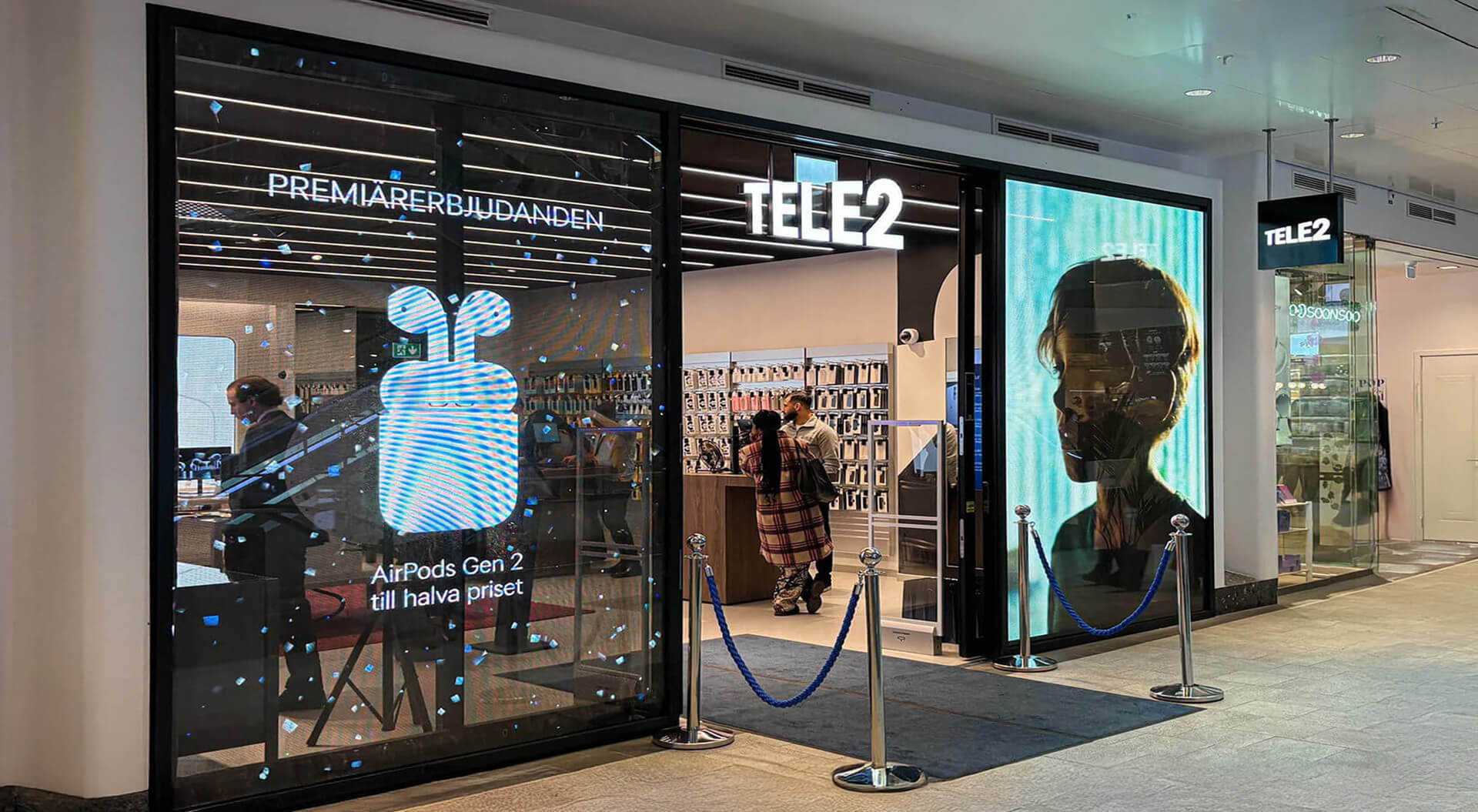
From App to Store: Designing the Digital-First Customer Journey
Effective digital-first retail starts before the customer enters the store.
A connected journey can follow: Search → App → Product Discovery → Tariff Selection → Store Visit → Self-Service → Product Demonstration → Purchase → Click & Collect → Account Management → After-Sales Support
Each touchpoint should reinforce the same brand proposition, customer experience and service logic.
This is where phygital telecom retail design becomes commercially important. The physical store is no longer an isolated sales environment. It becomes a connected service, demonstration and conversion point within the wider digital ecosystem.
For telecom operators planning a new store concept, kiosk, micro-format or network rollout, the objective is to translate digital strategy into a physical environment that improves customer experience and commercial performance.
The aim is not to replace human interaction with technology. It is to reserve human expertise for the moments when customers need advice, reassurance, product expertise or complex problem-solving.
CampbellRigg combines customer experience strategy, retail architecture, interior design, visual merchandising, brand communication and digital integration to create connected telecom retail journeys.
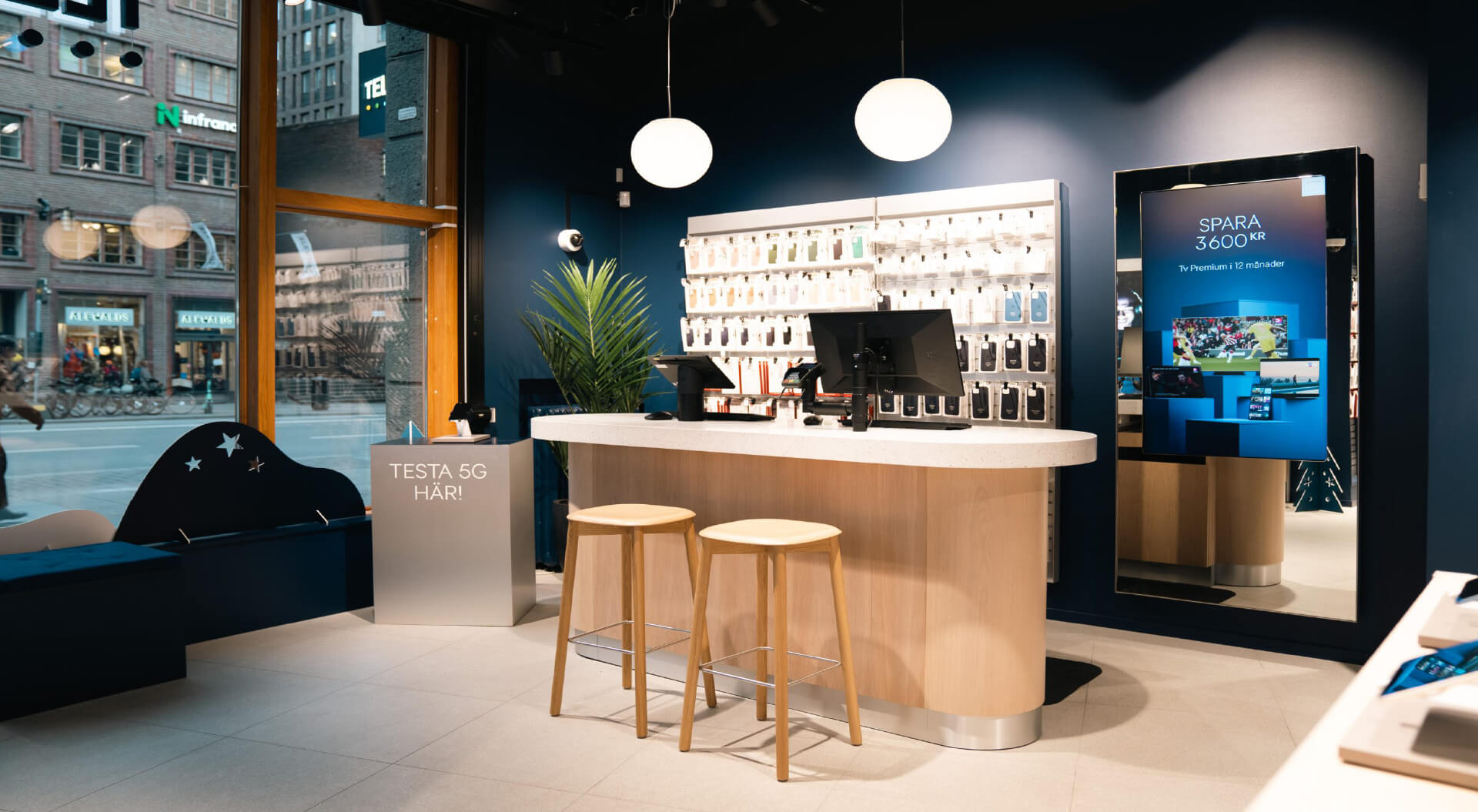
Digital Signage and Connected Product Discovery
Digital signage can extend the role of the telecom store beyond static merchandising.
Dynamic screens can communicate tariffs, promotions, product comparisons, demonstrations, service information and brand content. Connected displays can help customers understand smartphones, wearables, broadband, smart-home products and wider technology ecosystems.
However, digital displays should serve a customer journey rather than simply fill wall space.
The most effective approach combines: Content Strategy → Customer Need → Product Discovery → Demonstration → Comparison → Conversion
This creates a more relevant retail environment while allowing operators to update communications without continually replacing physical graphics.
Connected product displays can also make complex technology easier to understand. Rather than presenting a device as an isolated product, the store can demonstrate how smartphones, wearables, broadband, entertainment, smart-home products and digital services work together.
The result is a retail environment designed around technology discovery and customer understanding, not technology for its own sake.
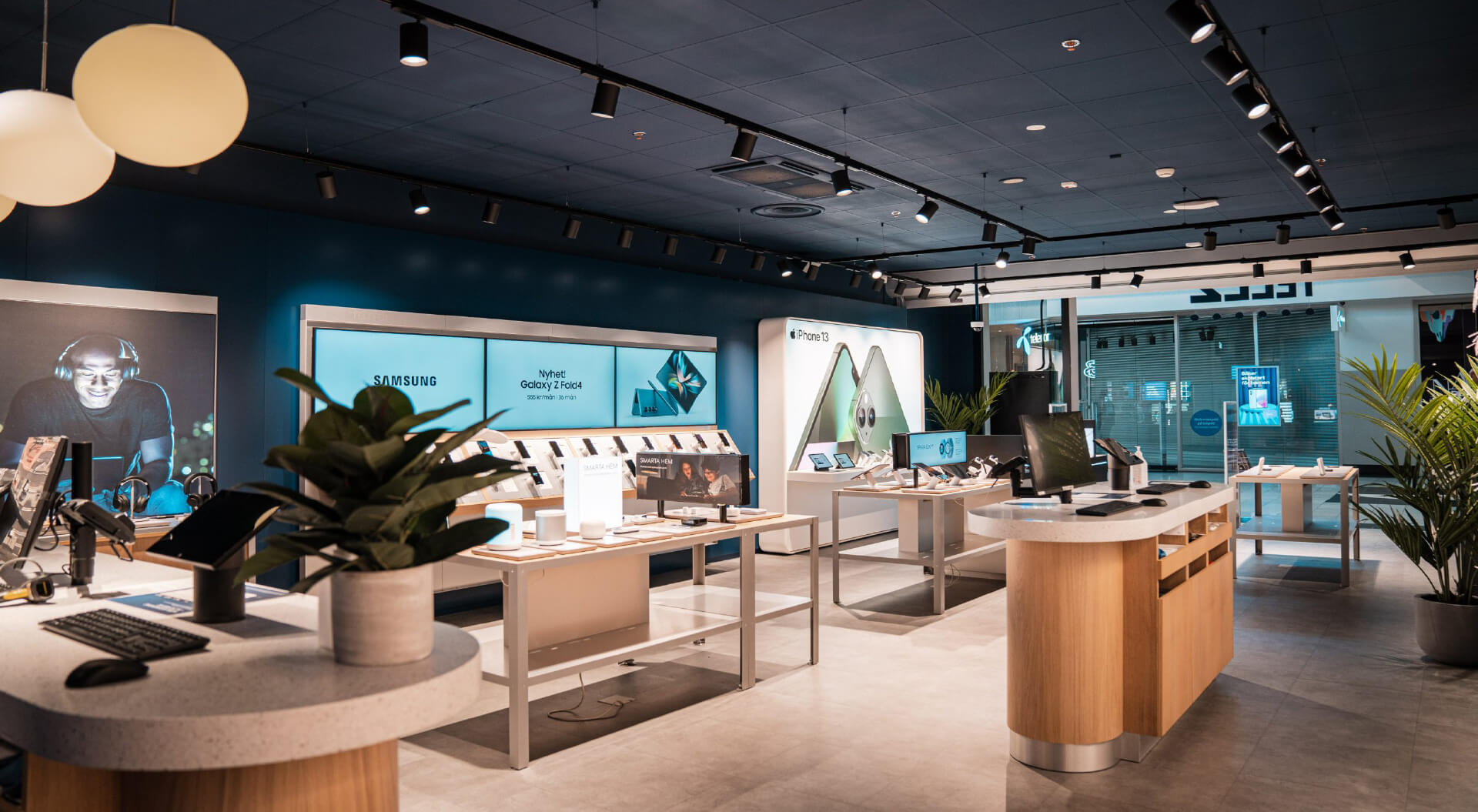
International Digital-First Telecom Retail Benchmark
The following projects demonstrate several different approaches to integrating technology, customer autonomy and physical retail: connected flagship retail, compact kiosk retail, temporary experiential retail and unmanned 24/7 micro-retail.
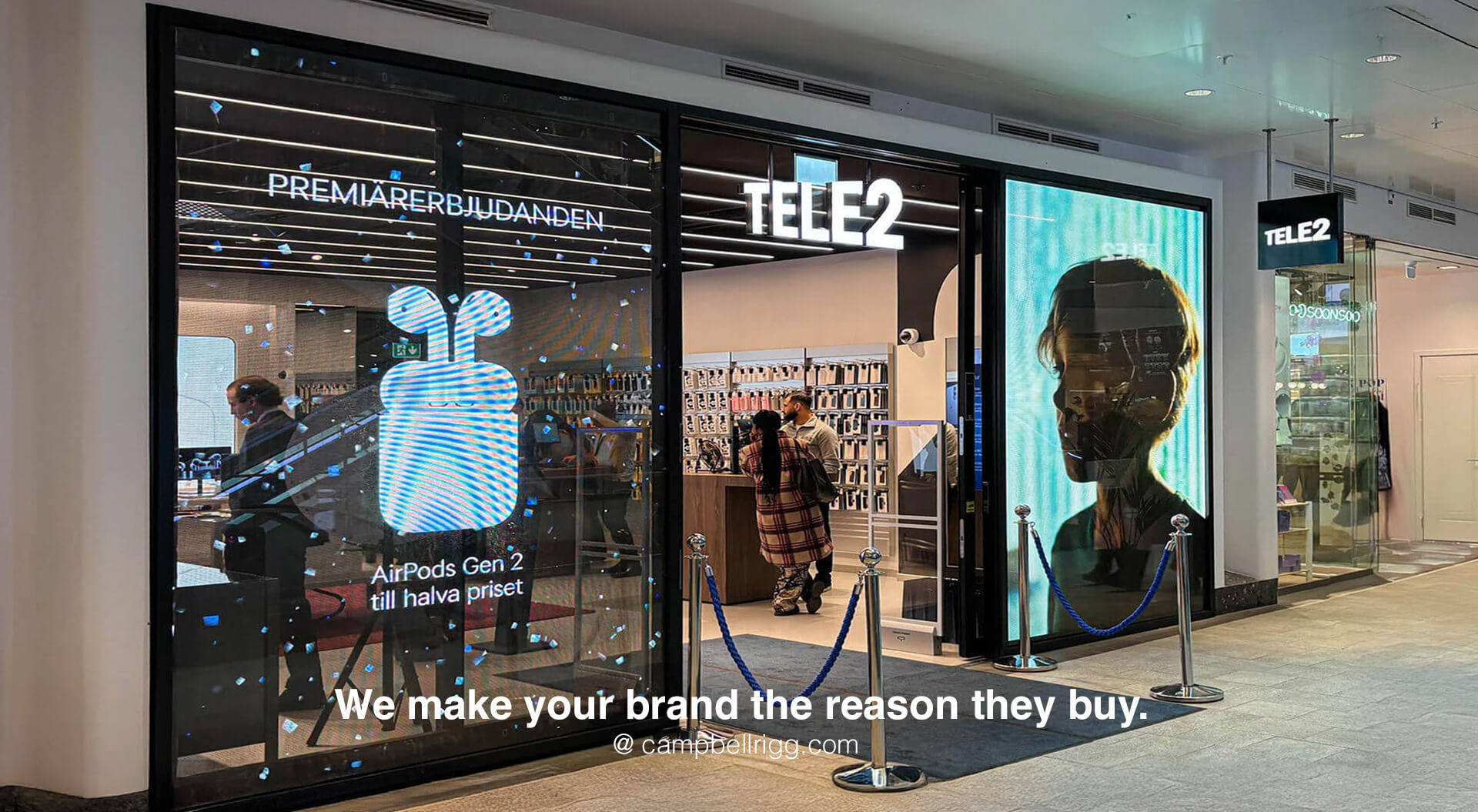
Tele2's flagship store in Gallerian, Stockholm, Sweden demonstrates how a telecom operator can use a high-profile physical location as part of a wider digital retail strategy.
Strategy: The model combines the visibility and credibility of a flagship environment with a connected approach to customer interaction. The physical store provides space for product discovery, demonstration, advice and service, while digital tools can simplify transactions and customer management. The strategic lesson is that a flagship can become a physical expression of an operator's digital proposition: technology supports the customer journey while the store provides human reassurance, product interaction and brand experience. Physical retail remains valuable when its role is clearly defined within the wider digital ecosystem.
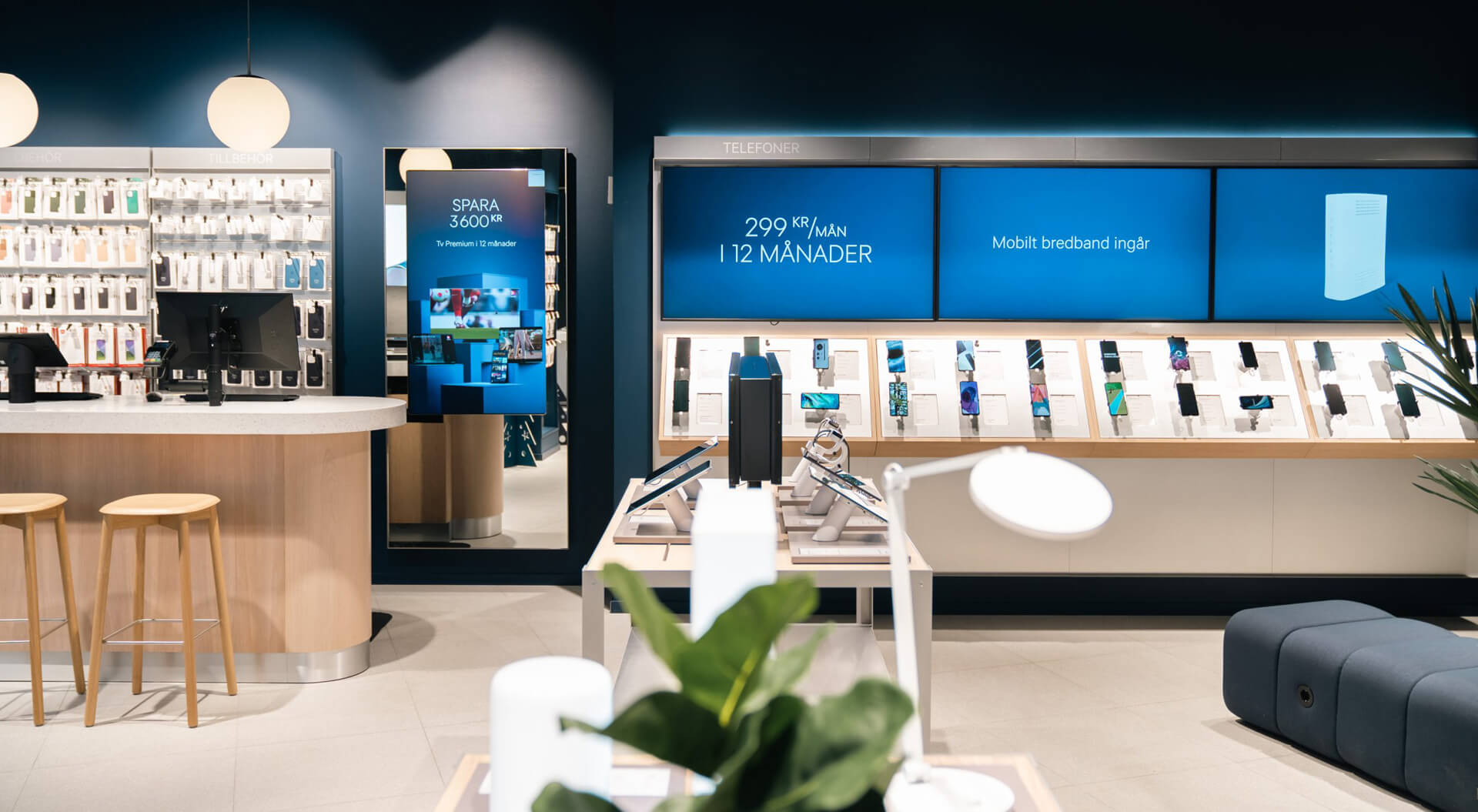
International Digital-First Telecom Retail Benchmark
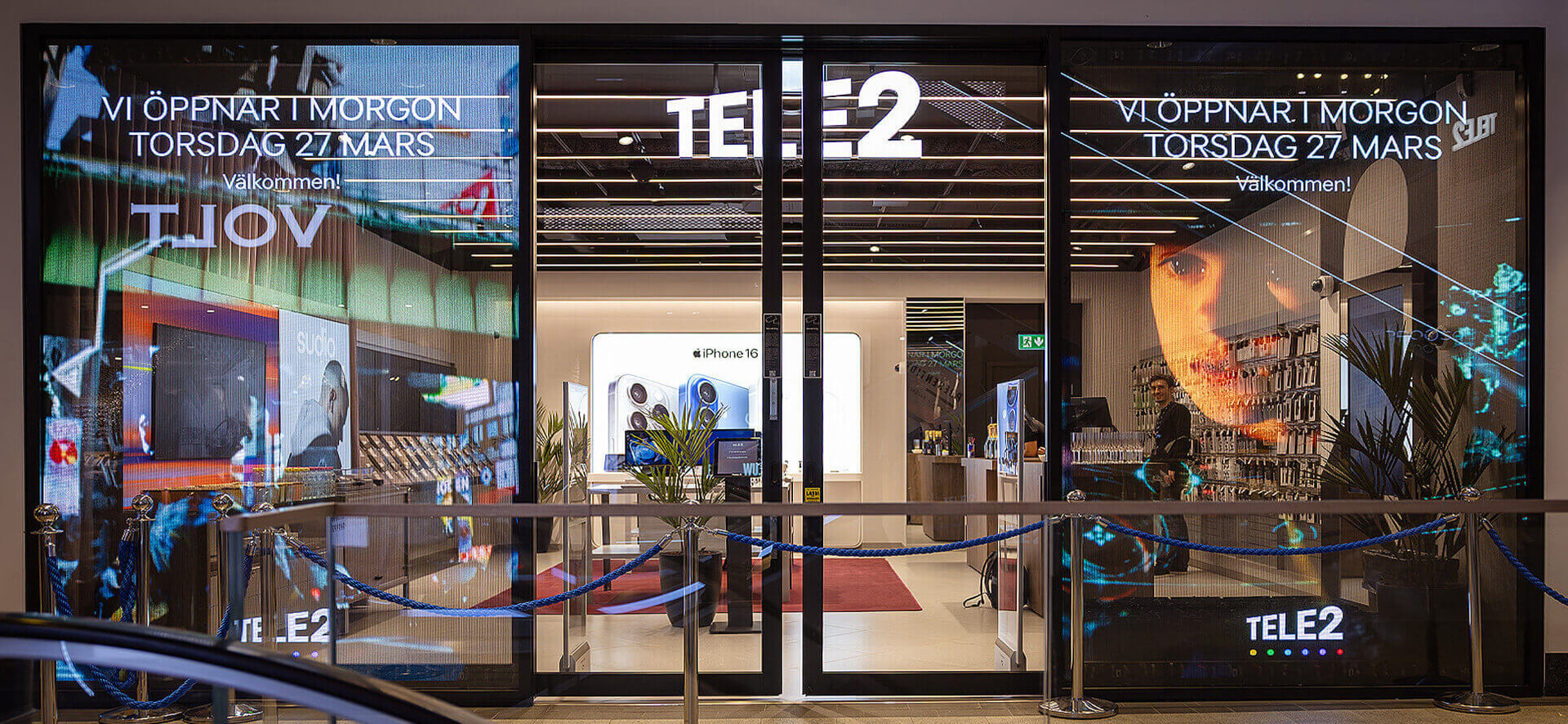
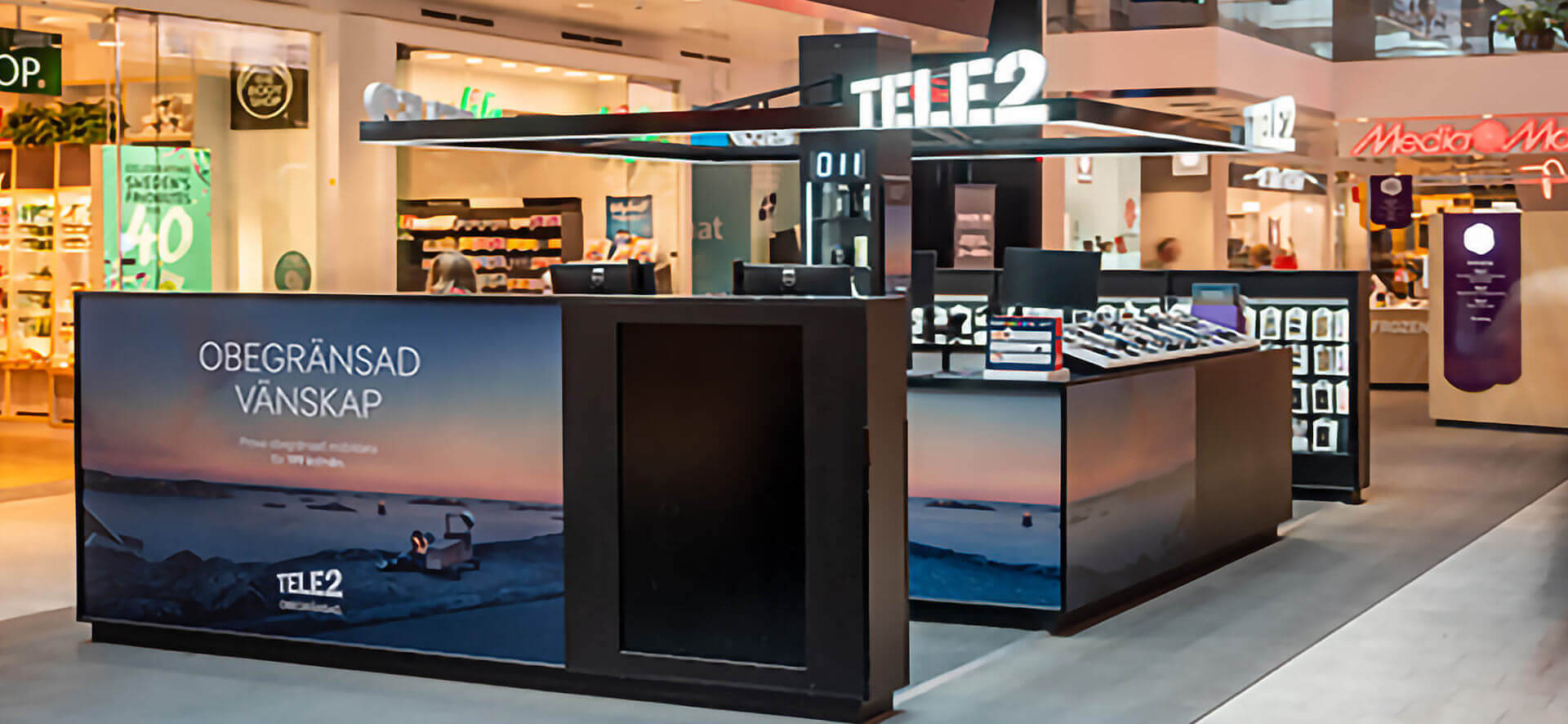
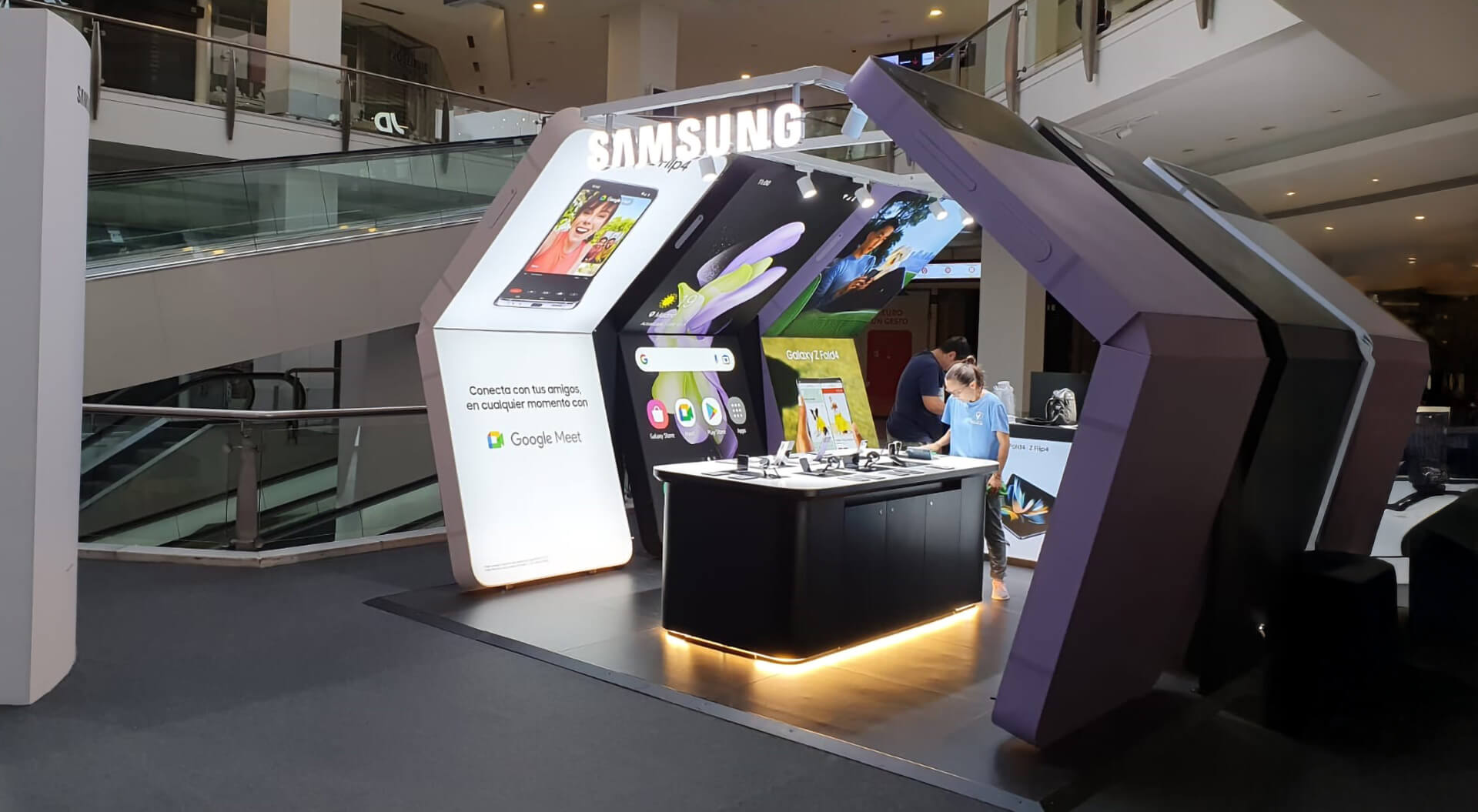
The Tele2 kiosk within Gallerian demonstrates the compact end of the telecom retail spectrum: a digitally enabled retail presence positioned within a high-footfall shopping environment.
Strategy: A telecom kiosk must communicate its proposition rapidly because customers encounter it within a broader shopping journey rather than entering a dedicated store. The format therefore prioritises visibility, accessibility, concise messaging and efficient customer interaction. Digital services and self-service can extend the capability of a small footprint without requiring the space of a conventional store. The strategic lesson is that digital-first design can make compact retail commercially viable by allowing physical space to concentrate on discovery, engagement and high-value assistance while routine service activity moves to digital touchpoints.
Self-Service Kiosks for Telecom Retail
Self-service kiosks can transform the role of the telecom store.
Rather than requiring customers to queue for every transaction, kiosks allow them to complete straightforward activities independently while staff concentrate on higher-value interactions.
Depending on the format, a telecom kiosk can support:
- bill payment and account management
- SIM and tariff services
- click-and-collect
- device configuration
- product comparison
- appointment booking
- customer check-in
- technical support
- digital wayfinding
- service registration
The design challenge is both technological and spatial. A kiosk must be visible, intuitive and accessible without creating congestion or weakening the brand experience.
Its position within the floor plan is equally important. A self-service zone might sit close to the entrance for rapid transactions, beside customer-service areas for assisted journeys, or within a compact mall format where every square metre must perform multiple functions.
The most effective telecom kiosk design therefore considers interface, visibility, customer flow, queue management, accessibility, security, branding and integration with the wider store.
Digital self-service can also extend the operating capability of smaller formats, allowing telecom brands to provide useful services where a conventional full-size store would be commercially difficult to justify.
International Digital-First Telecom Retail Benchmark
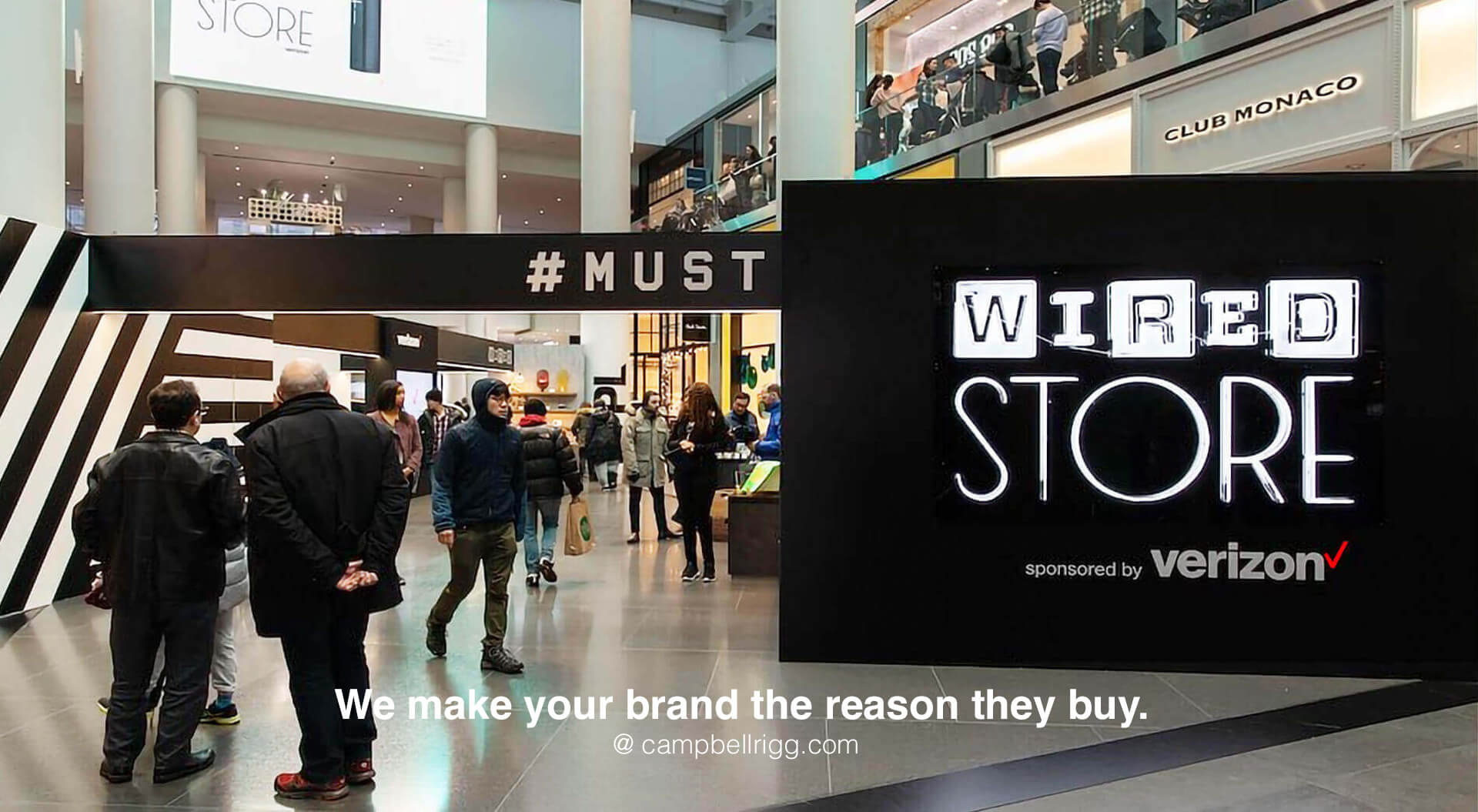
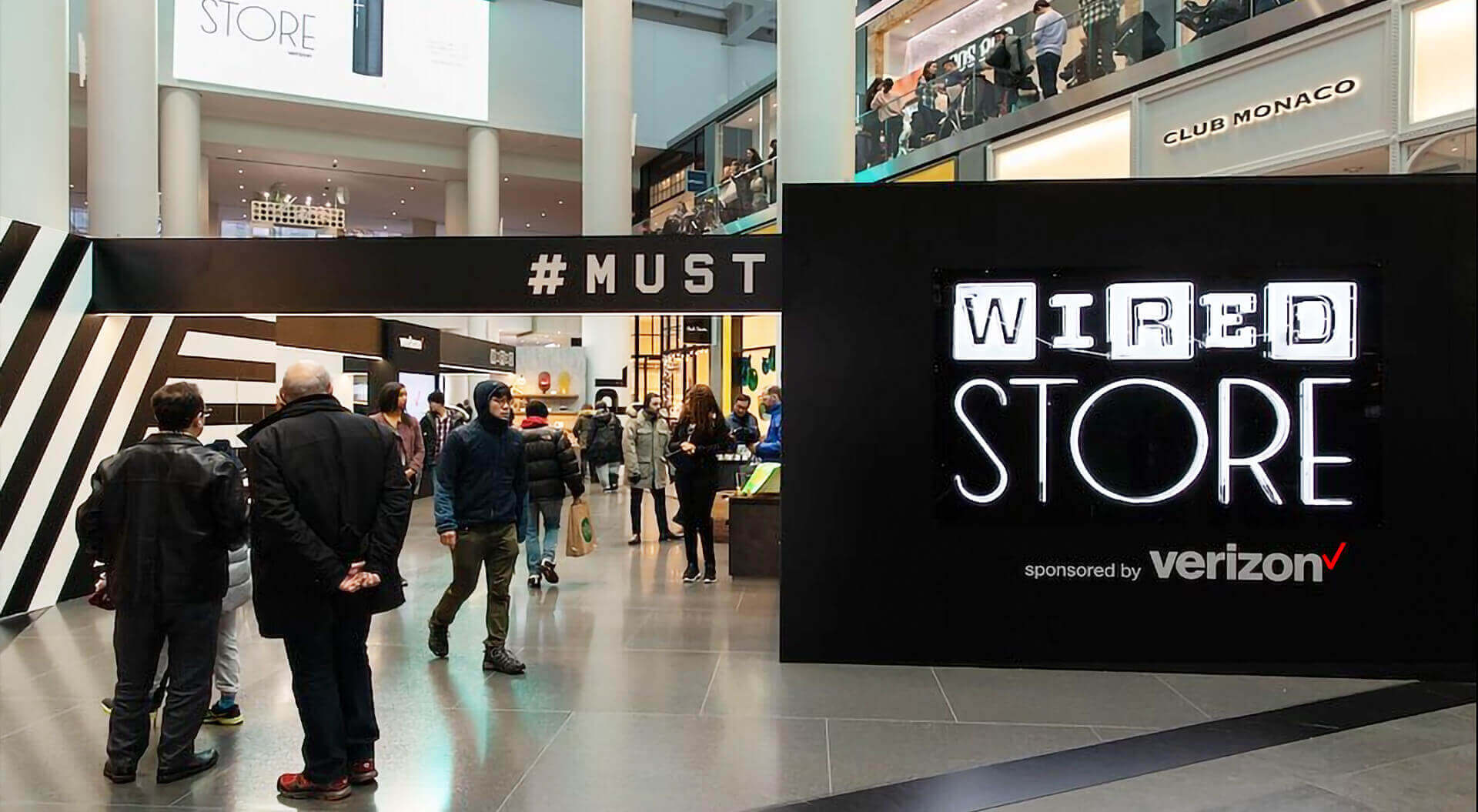
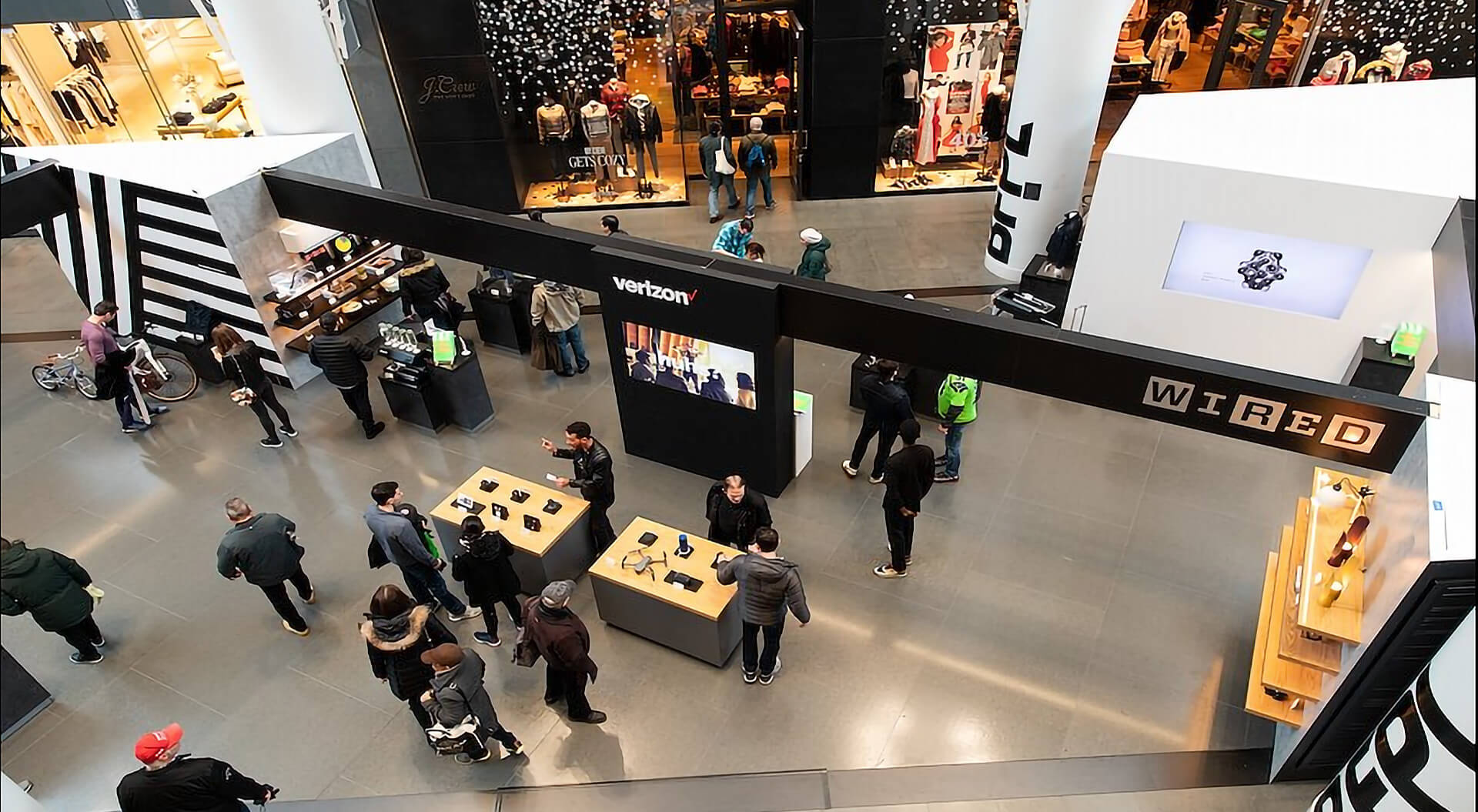
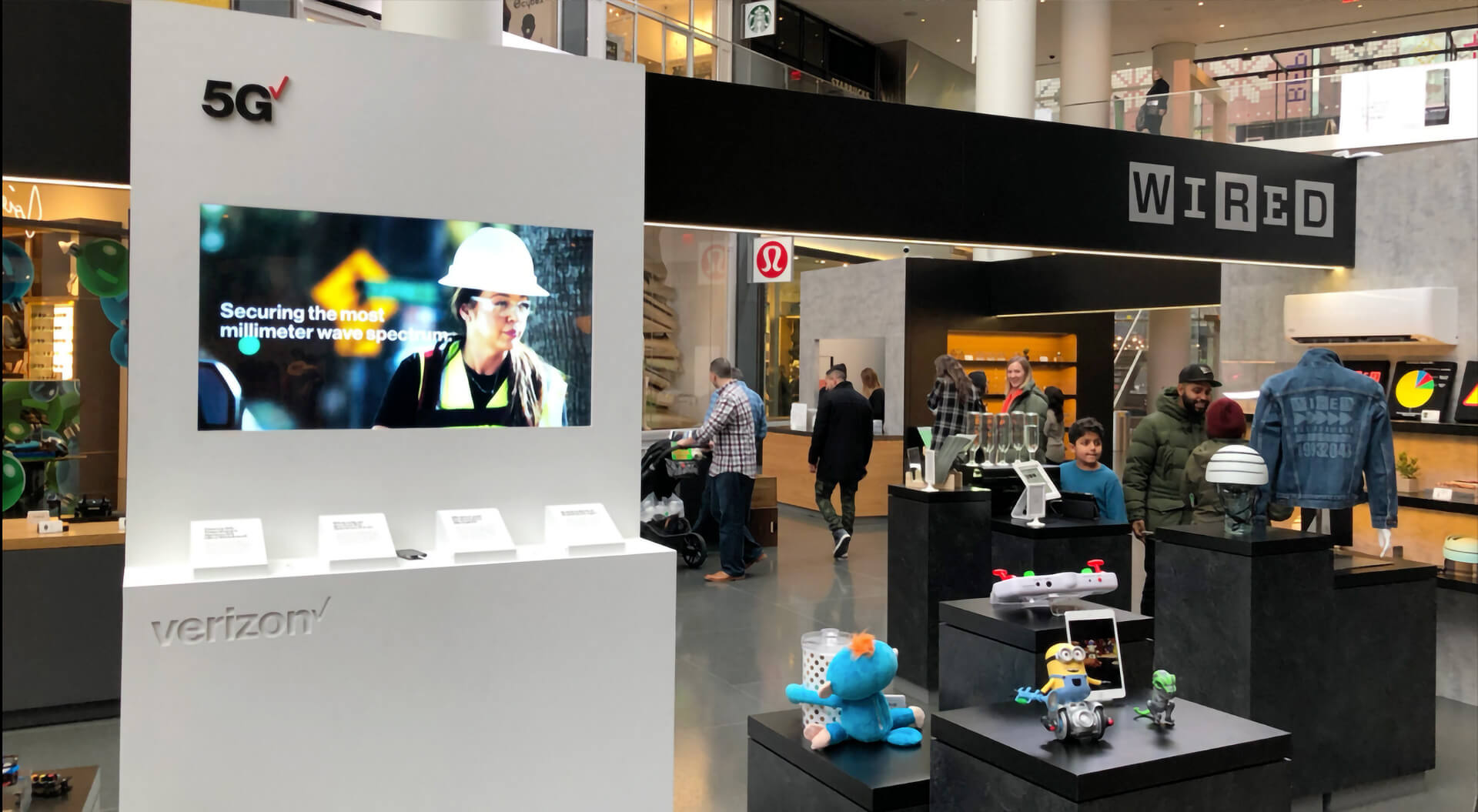
The Wired Store Holiday Pop-Up: Verizon, Brookfield Place, New York
The Verizon-sponsored Wired Store at Brookfield Place in lower Manhattan demonstrates how a telecom operator can support a temporary technology retail experience. The holiday pop-up occupied approximately 2,600 square feet and presented a curated selection of technology products, including products selected by WIRED alongside a separate Verizon assortment.
Strategy: The model uses editorial curation and temporary physical presence to turn technology retail into discovery and entertainment. Rather than presenting telecommunications as a conventional service transaction, the environment creates reasons to browse, explore and engage with technology. For telecom operators, the lesson is particularly relevant to seasonal activations, mall campaigns and short-term brand experiences: digital content, product curation and physical theatre can work together to
Testimonial: “I can wholeheartedly recommend CampbellRigg as a solid and reliable partner. The team successfully revitalised Play Telecom’s brand environment and delivered a strong retail experience for one of Poland’s leading telecommunications companies.” Serdar Cetin, Partner, Novator Partners LLP
International Digital-First Telecom Retail Benchmark
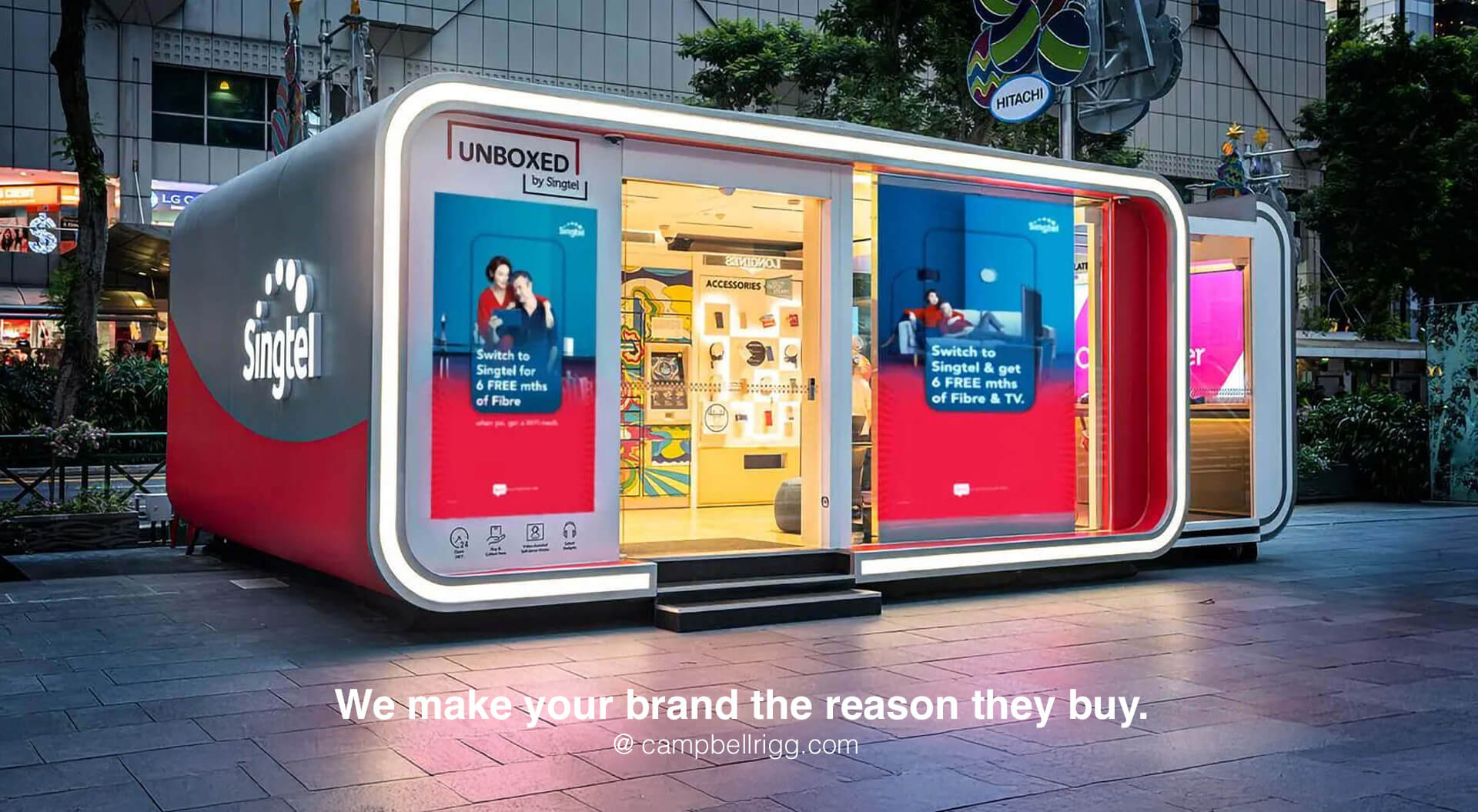
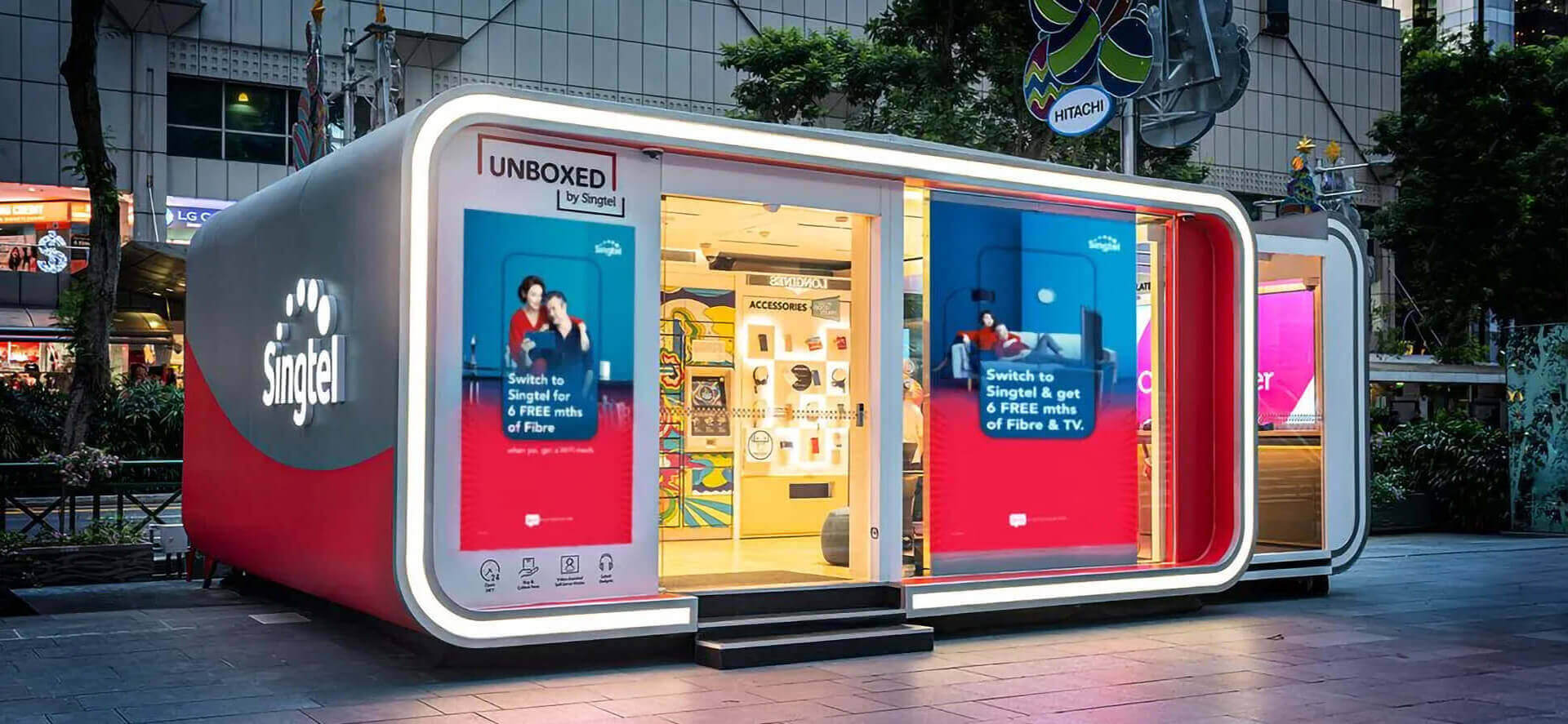
UNBOXED by Singtel: 24/7 Unmanned Retail
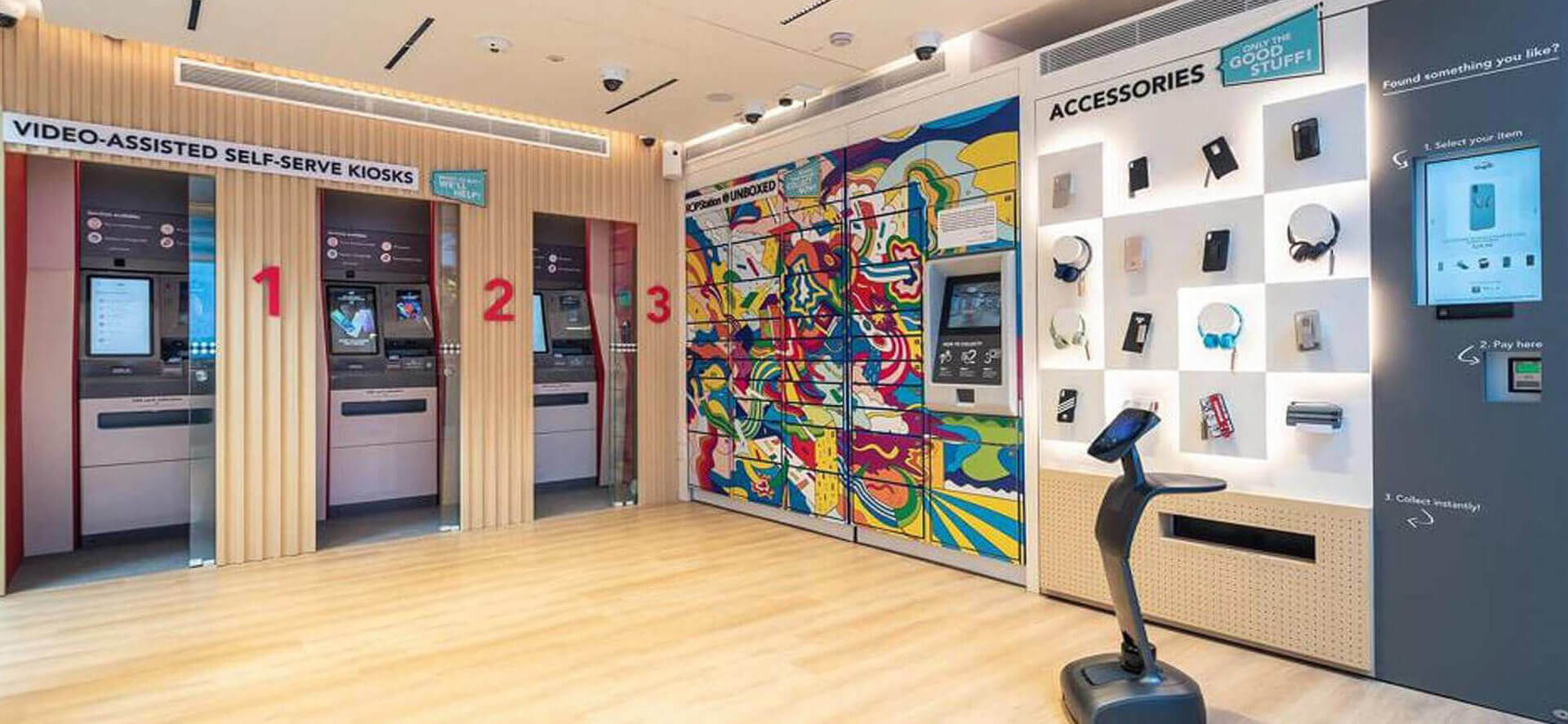
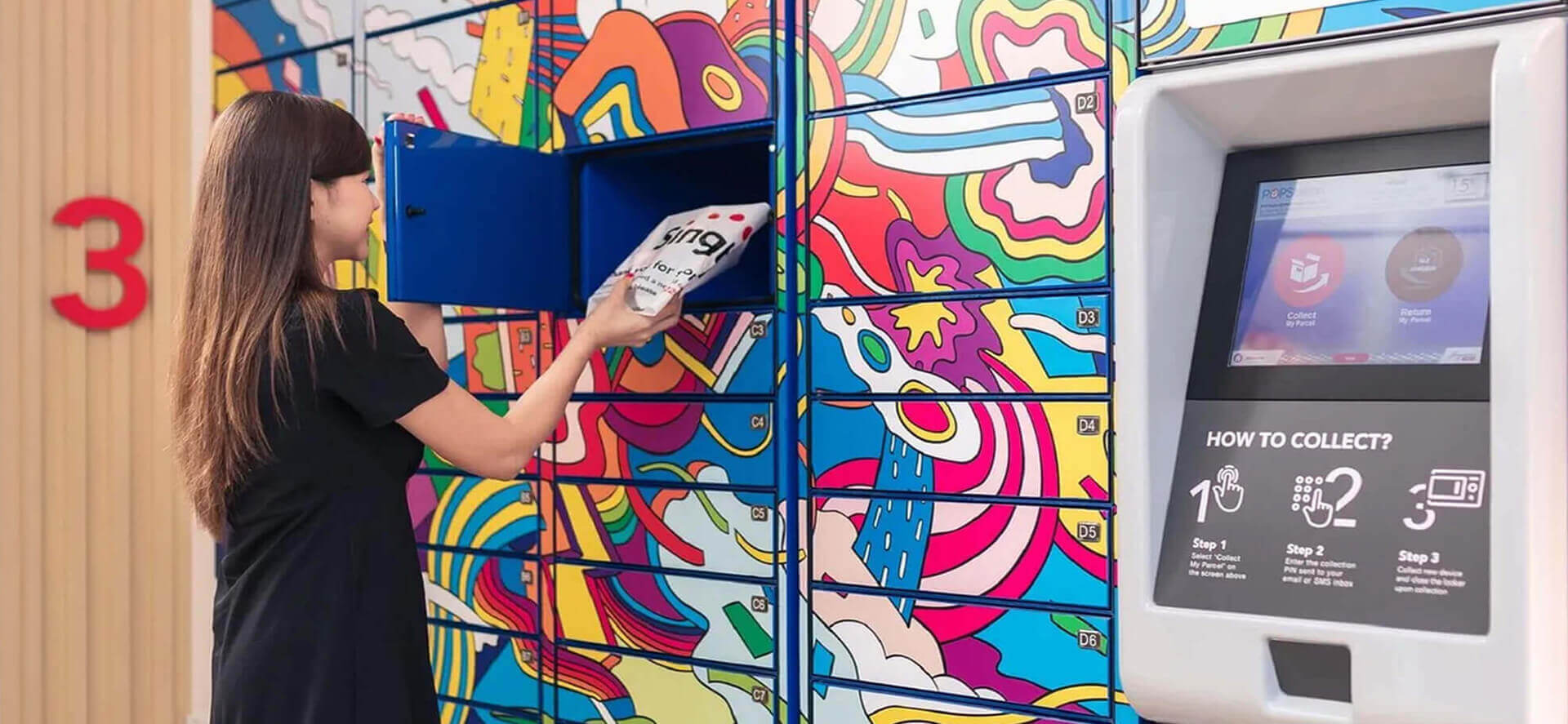
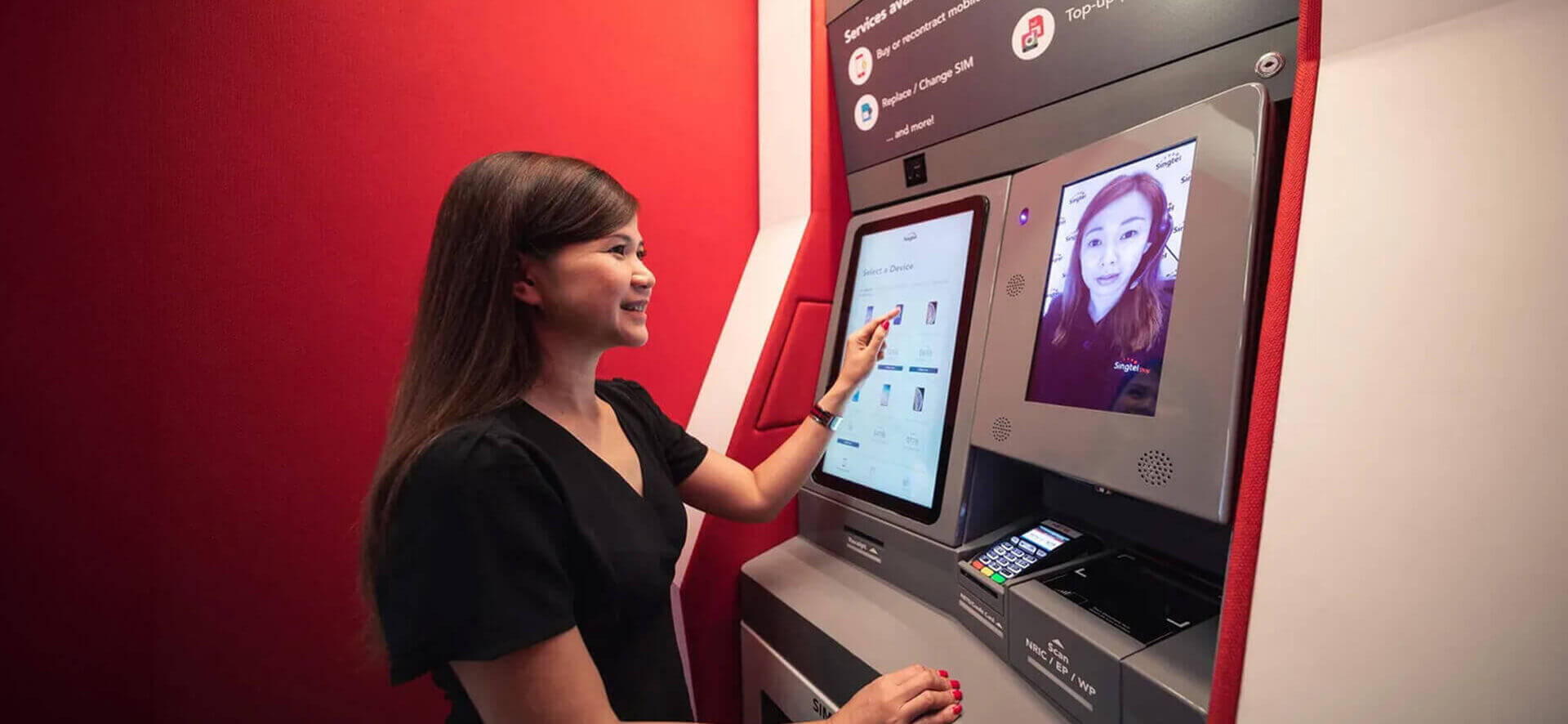
UNBOXED by Singtel provides one of the clearest examples of digital-first micro-retail. The unmanned 24/7 pop-up format allowed customers to sign up for services, replace SIM cards, purchase prepaid cards and collect devices around the clock. Singtel reported that the concept attracted more than 50,000 customers in its first year and achieved a customer experience score of 96%.
Strategy: UNBOXED combines compact physical space with digital-enabled self-service, remote assistance, security technology and modular construction. The concept demonstrates how digital infrastructure can extend the operating capability of a small retail footprint while providing 24/7 access. Routine transactions can be digitised, allowing a telecom brand to deploy smaller and more flexible retail formats in locations where a conventional store could be uneconomic. The strategic lesson is that digital-first design can increase the reach and operating efficiency of physical retail.
From Telecom Store to Digital Service Hub
These four benchmarks reveal four distinct digital-first strategies:
- Tele2 flagship → connected brand experience and product discovery.
- Tele2 kiosk → compact, high-footfall and digitally enabled retail.
- Verizon-sponsored Wired Store → curated technology discovery and temporary activation.
- Singtel UNBOXED → self-service, convenience and compact 24/7 retail.
Together they demonstrate that there is no single digital-first telecom store format.
The correct solution depends on customer mission, location, catchment, transaction complexity, operating model and the role physical retail needs to play within the wider digital customer journey.
The strategic objective is to determine what the customer should do digitally, what requires physical interaction and where human expertise adds the greatest value.
Designing Digital-First Telecom Stores for Commercial Performance
Digital technology should ultimately improve retail performance.
Commercial objectives can include:
- reducing customer waiting time
- increasing self-service adoption
- improving product discovery
- increasing conversion
- supporting higher-value staff interactions
- improving customer flow
- increasing productivity per square metre
- extending retail access through compact formats
- strengthening loyalty and brand engagement
- connecting online and physical sales journeys
Performance can be evaluated through customer-flow efficiency, self-service adoption, dwell time, conversion, transaction time, sales per square metre, digital-to-store conversion, repeat visits and customer satisfaction.
CampbellRigg: Digital-First Telecom Retail Design
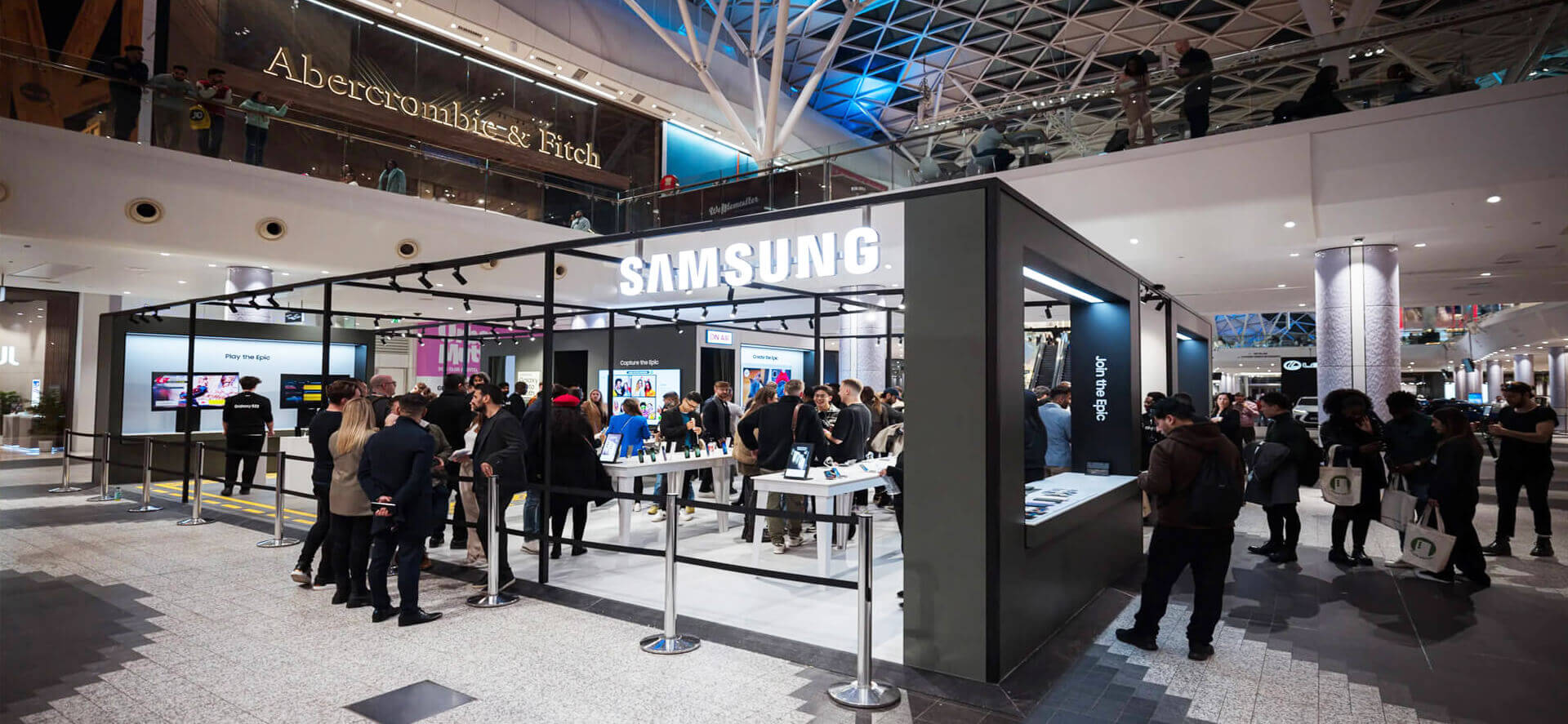
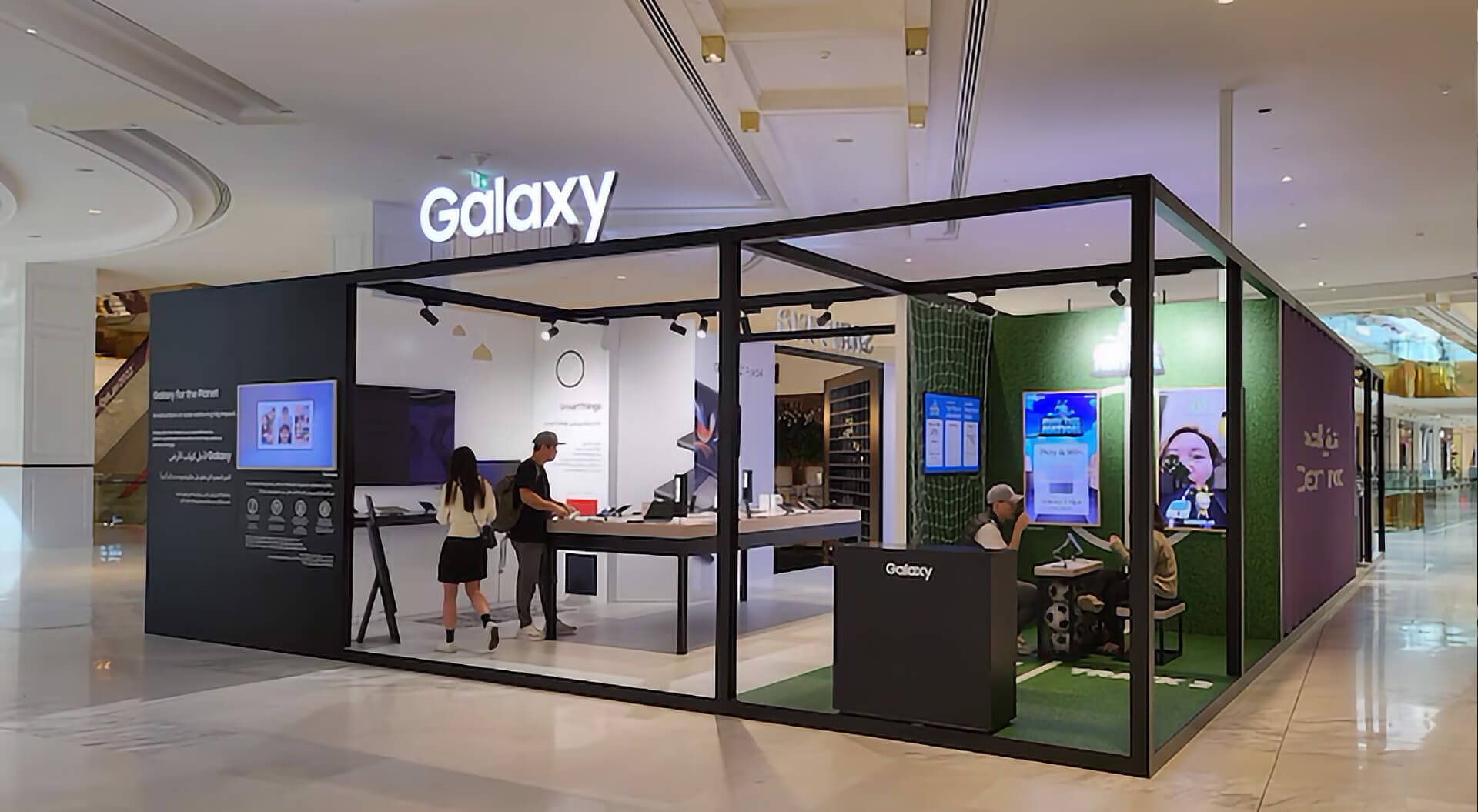
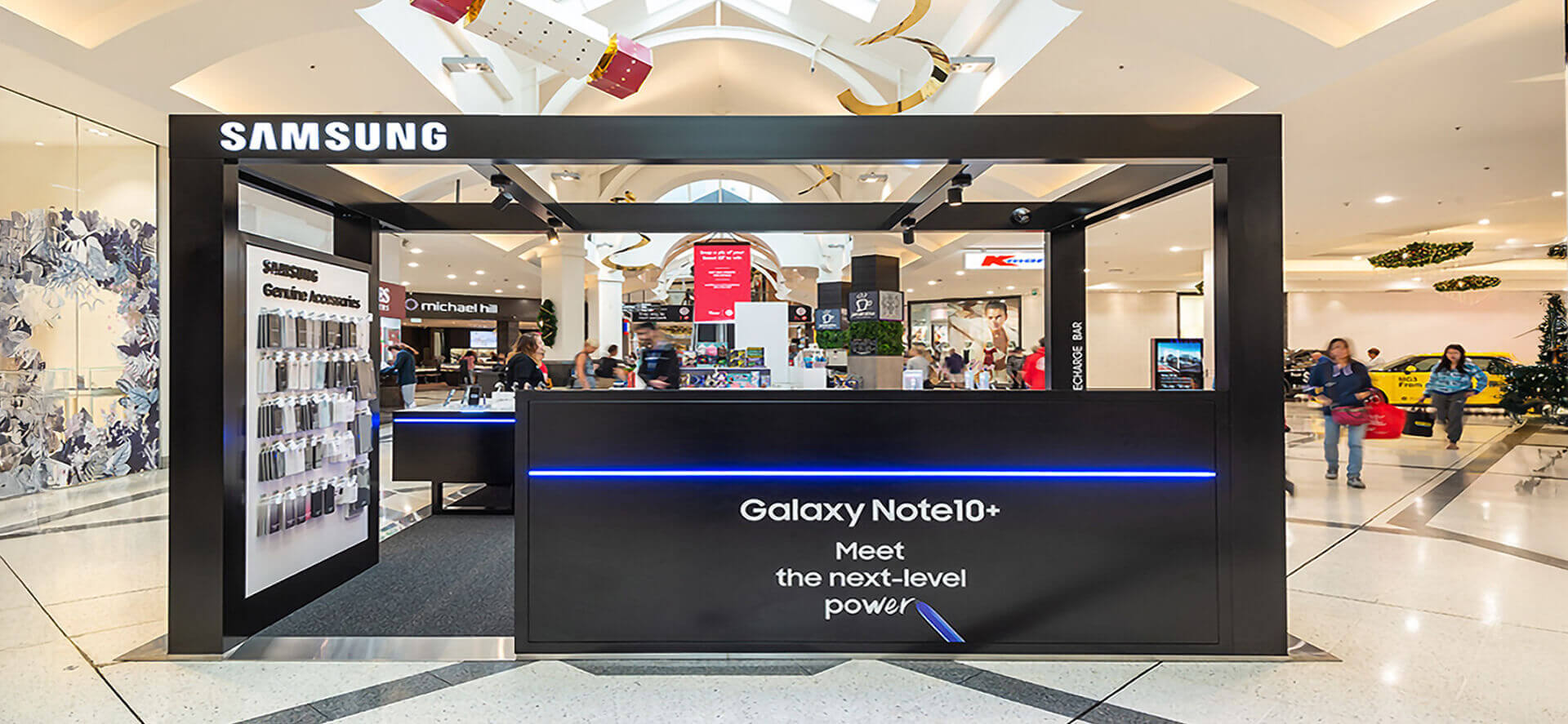
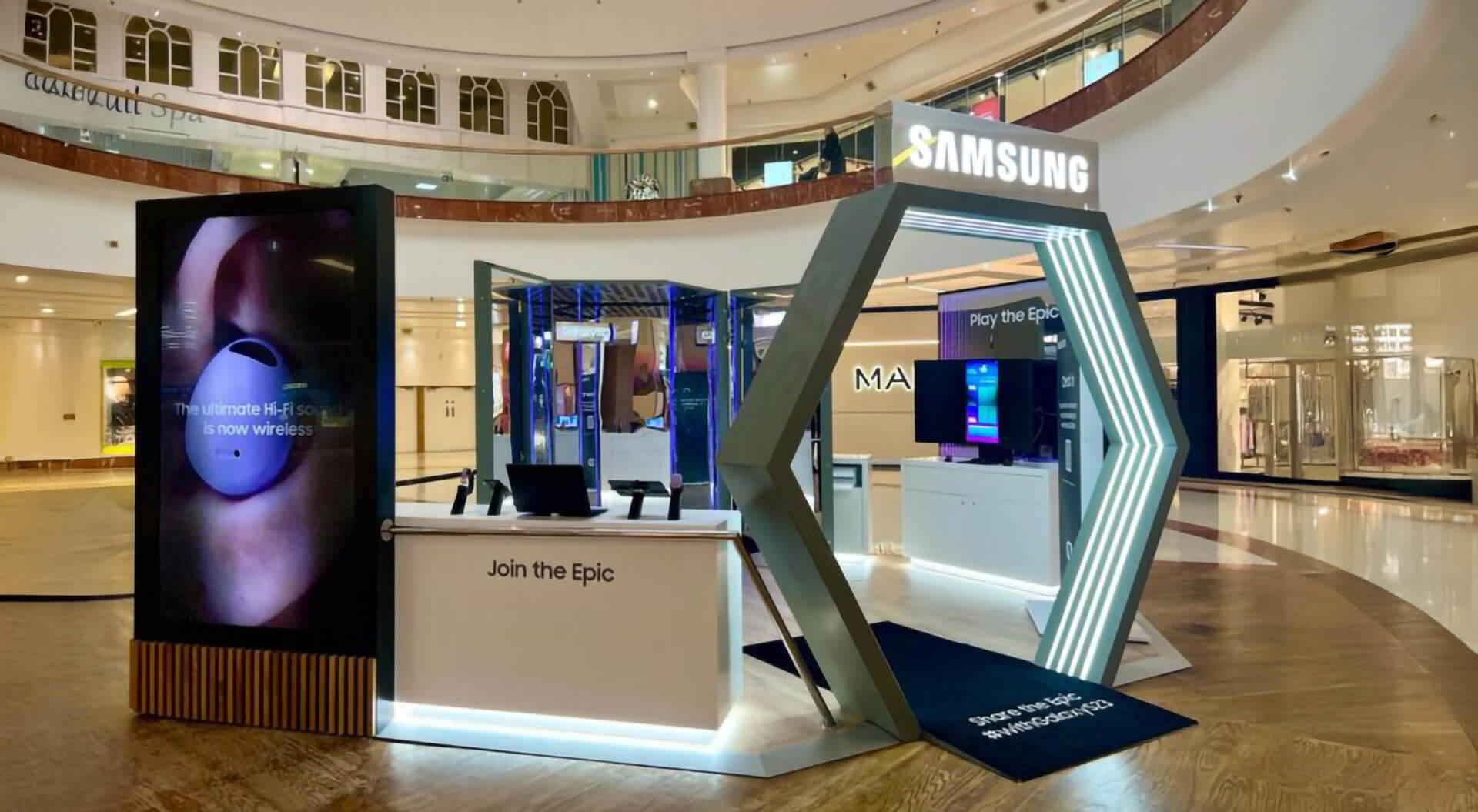
CampbellRigg's telecom and technology experience includes brand strategy, customer journey planning, retail architecture, interior design, visual merchandising, digital integration and scalable store concepts for international brands including Tele2, Megafon, Play Telecoms Poland, Verizon, AT&T and Singtel.
The emphasis is not simply on designing a visually attractive store. It is on creating a connected retail proposition in which the digital journey, physical environment and brand experience work as one system.
Our multidisciplinary approach can integrate: Strategy → Customer Experience → Brand → Space → Digital Integration → Implementation
For telecom operators developing a new store concept, kiosk, micro-format or network rollout, this approach translates digital strategy into practical customer experience and commercially effective physical environments.
A Four-Step Process
1. Free consultation
We identify the retail challenge, customer needs, commercial objectives and digital opportunities.
2. Bespoke brief
We translate those requirements into a focused strategy covering customer journey, brand, space, technology and format.
3. Rapid creative execution
Our multidisciplinary team develops the concept, design and implementation requirements efficiently.
4. Commercial performance
The objective is a retail environment designed to improve customer experience, engagement, productivity, loyalty and sales performance.
Why Digital-First Telecom Retail Matters
Telecom retail is moving beyond the traditional model of customers entering a store, waiting for assistance and completing a transaction at a sales counter.
The next generation of retail connects apps, kiosks, digital services, product demonstration, human expertise and physical experience.
The winning stores will not simply contain more technology. They will use technology intelligently to make the customer journey easier, faster and more relevant.
For telecom operators, digital-first design can provide a framework for deciding where physical retail adds value, where self-service can improve efficiency and where human expertise can strengthen trust and conversion.
That is the role of digital-first telecom retail design.
CampbellRigg can help transform that strategy into a connected customer journey, scalable retail format and commercially effective physical environment.
Book a free consultation to discuss your digital-first telecom retail strategy, phygital customer journey, self-service kiosk, micro-format or store concept.

Schedule your consultation today and receive a free quote.
Cost-Effective Excellence:
Our pricing structure is highly competitive, offering exceptional value without compromising on quality or creativity.
Rapid Execution:
We move fast. From concept to implementation, our agile team ensures your project is delivered on time and to the highest standards.
Multidisciplinary Expertise:
Our team brings together seasoned brand strategists, architects, interior designers, and graphic designers, collaborating to create seamless, end-to-end brand environments.
Global Reach, Local Insight:
With successful projects delivered across Europe, the Middle East, and Asia, we combine international experience with local market understanding.
Scalable Project Delivery:
Whether it's a flagship technology store, an urban network or mall micro-branches, we manage and execute projects of all sizes, efficiently and effectively.
Proven Track Record:
Our designs evolve branch networks from purely transactional spaces into experiential, relationship-focused brand environments, enhancing engagement, elevating customer experience, and driving tangible business results.
Full-Service Creative Agency:
From rebranding and marketing campaigns to spatial design and rollout, we provide an integrated service tailored to your goals.