News and Views
Compact Technology Store Design: Building Scalable, High-Productivity Retail Formats




Compact Technology Store Design: Best Buy Express & Tech2Go
Technology retailers are under increasing pressure to make physical networks more productive, flexible and responsive to changing customer behaviour. The strategic question is no longer simply how to make a smaller store work. It is where a compact format belongs in the network, what commercial role it should perform, and how it can be scaled profitably across multiple locations.
CampbellRigg helps technology retailers answer those questions by connecting retail strategy, format development, customer experience, brand positioning, spatial planning, digital integration and implementation. The objective is to turn a retail proposition into a defined, measurable format that management can approve, test, refine and roll out.
This approach is supported by CampbellRigg's experience across technology retail, including projects for Currys, M.Video and Interstep, giving management teams an international reference base when developing or repositioning technology-store formats.
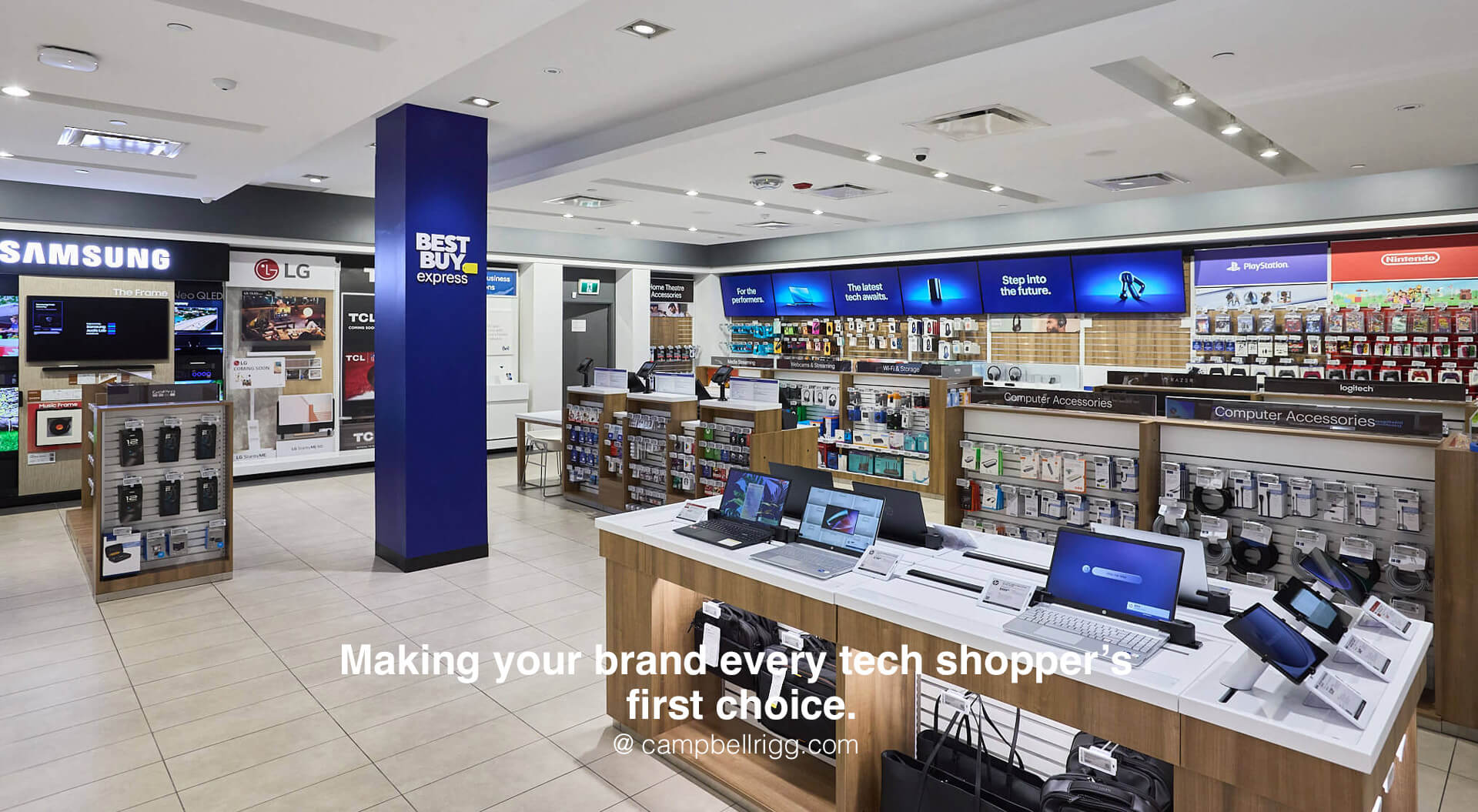
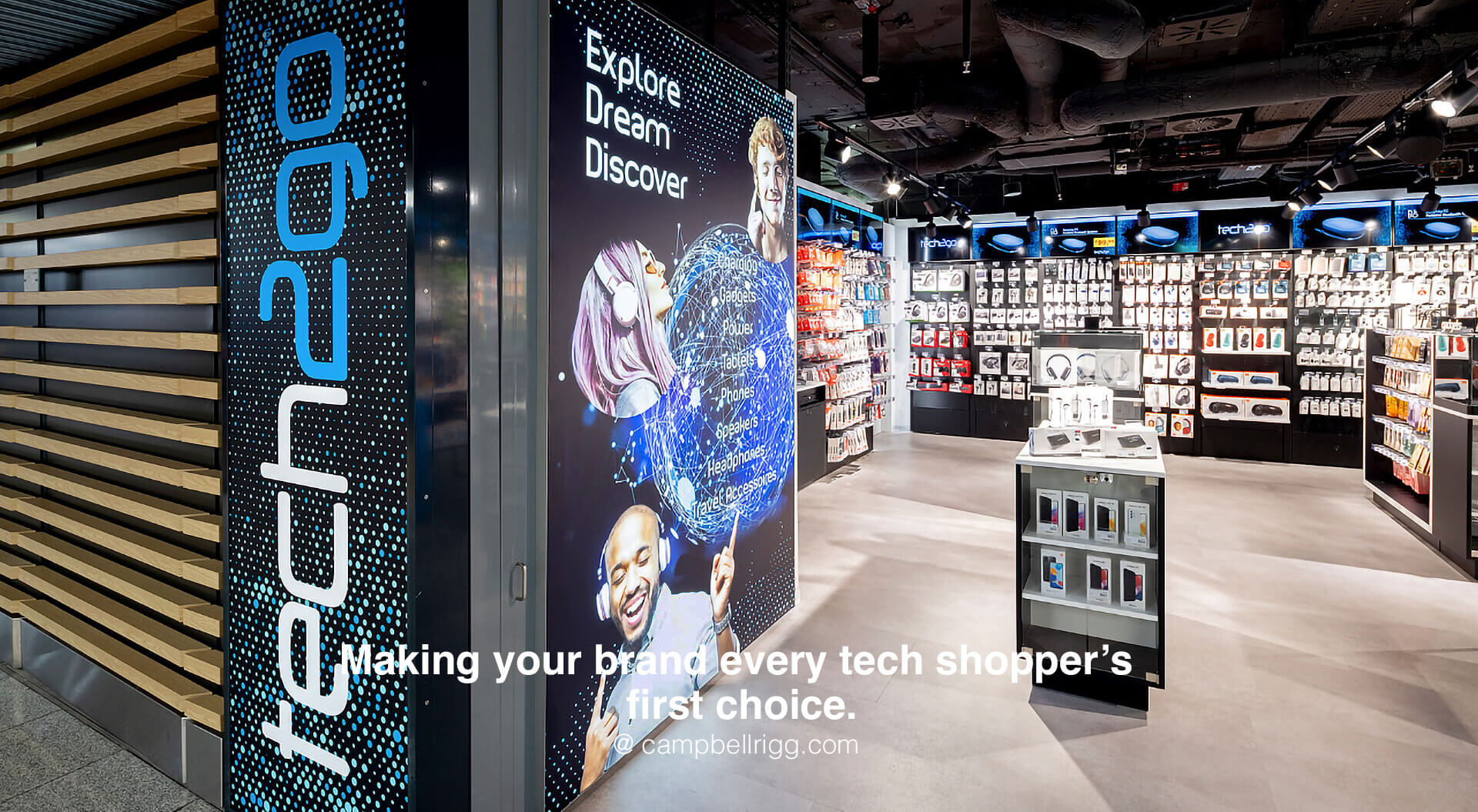
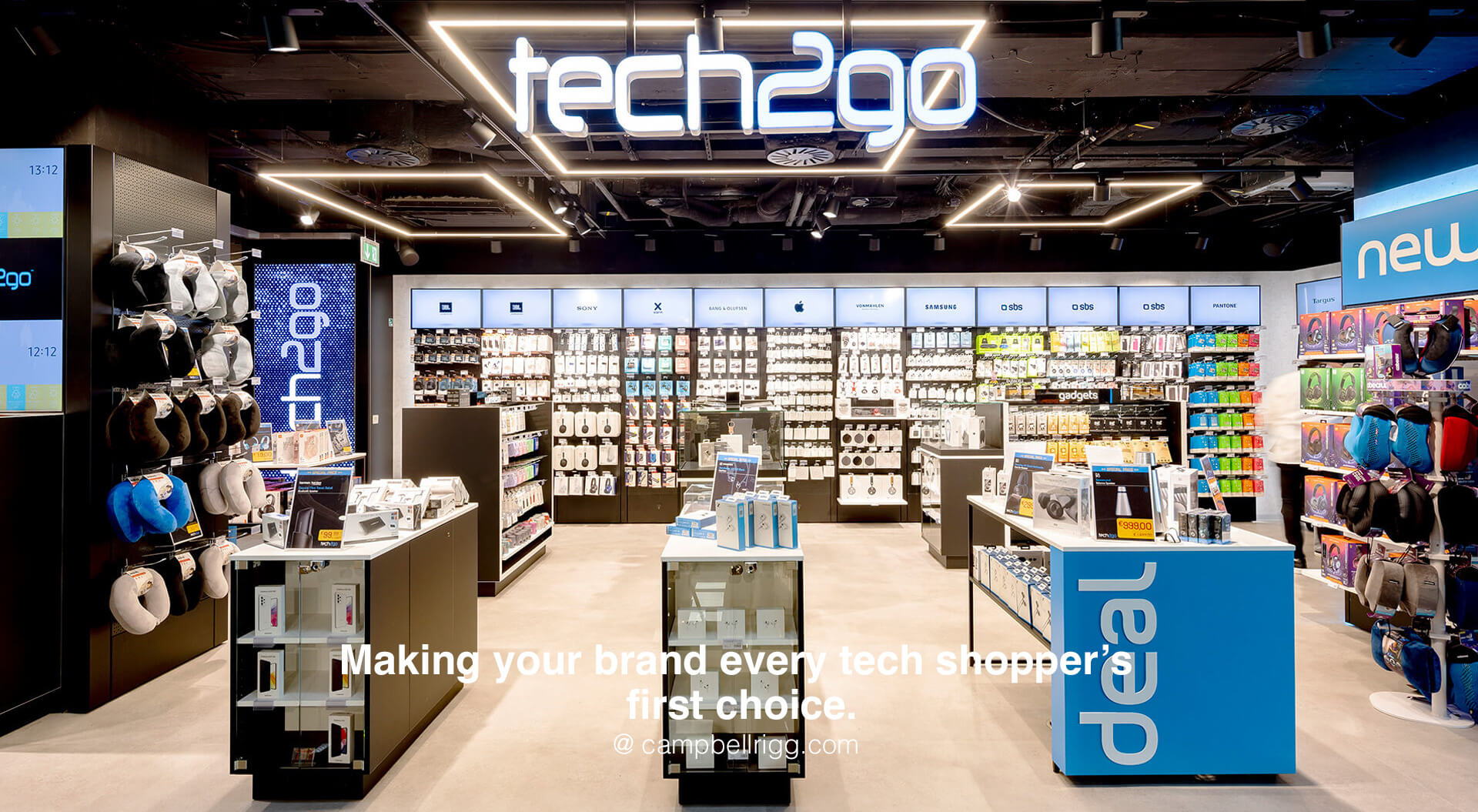
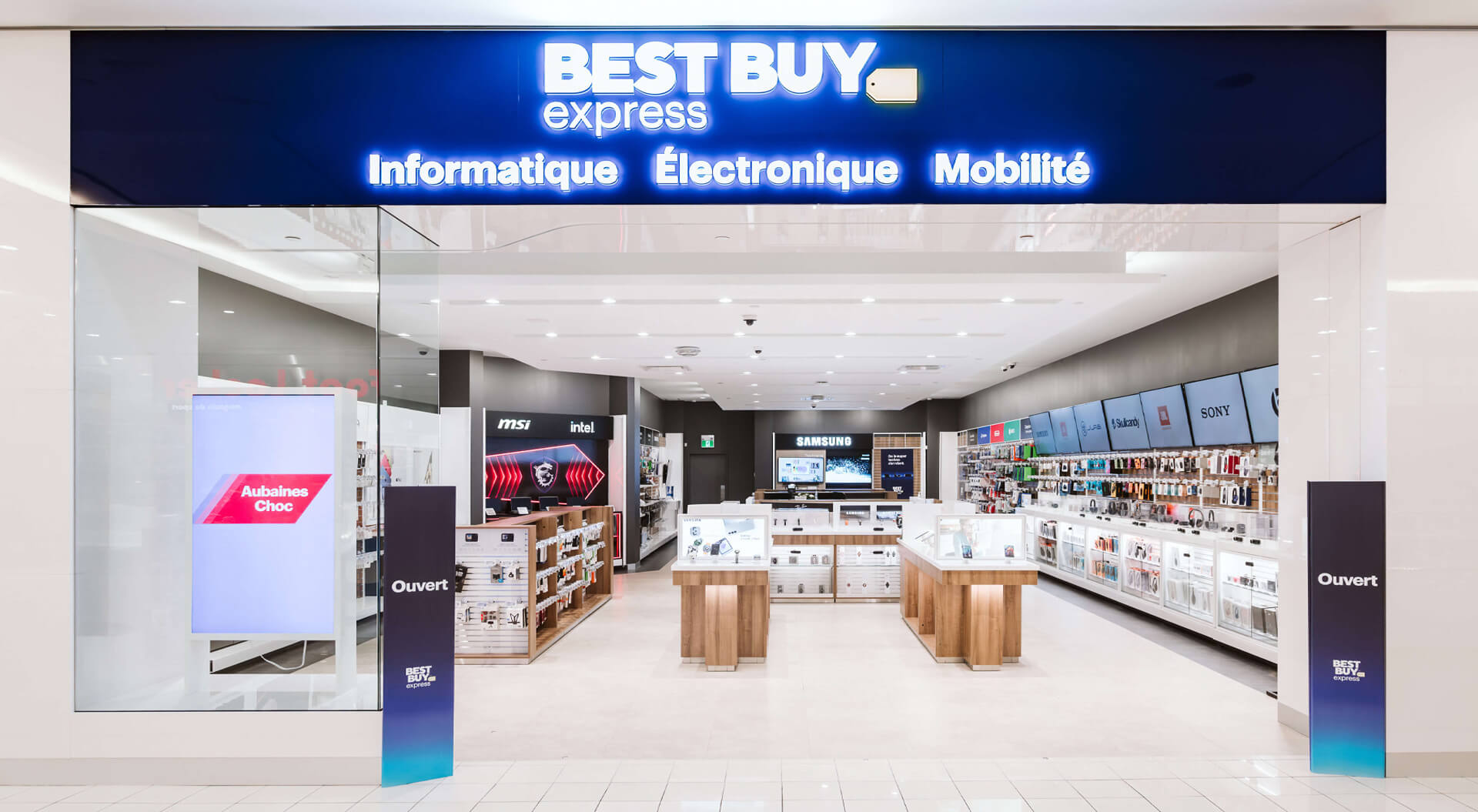
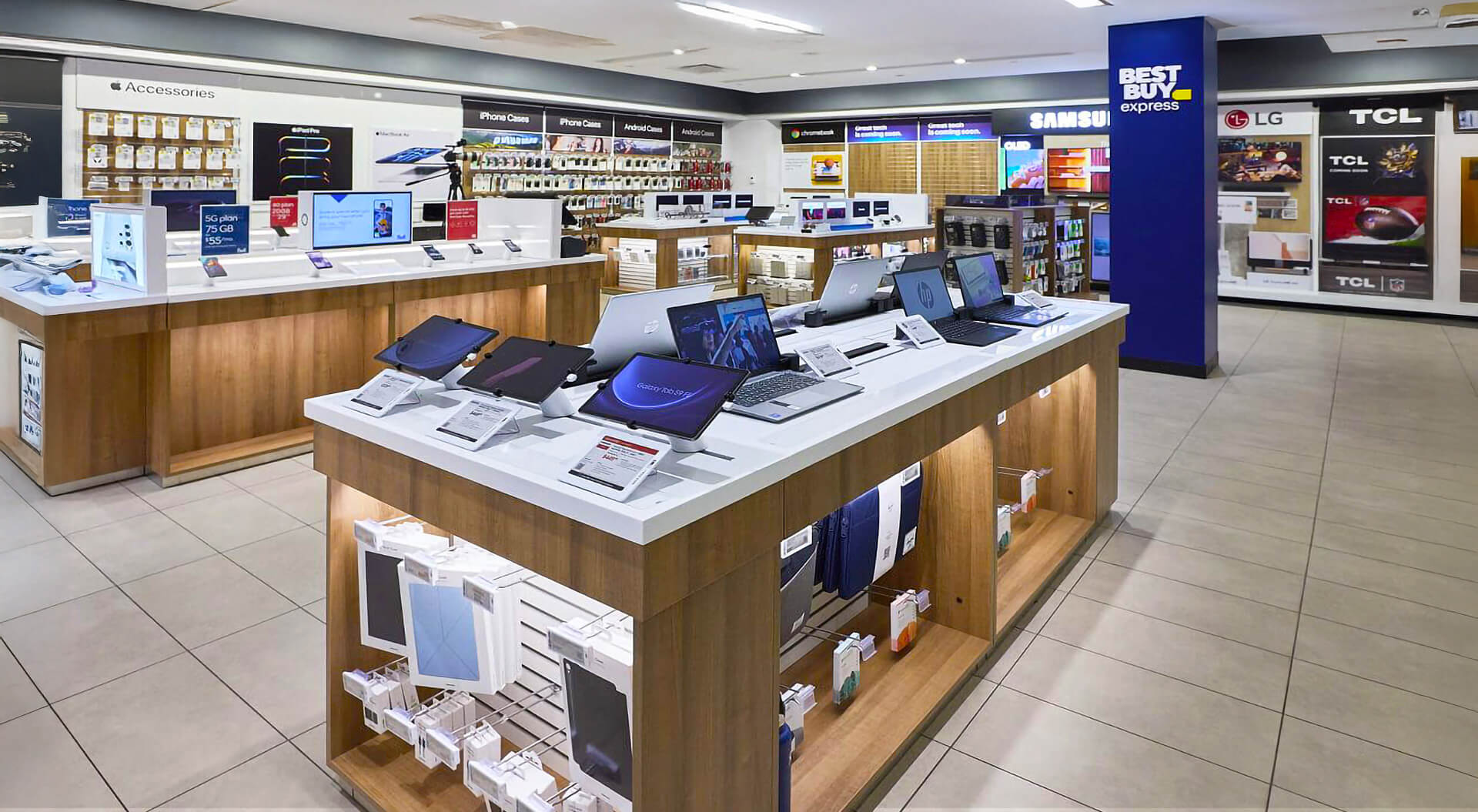
International benchmarks such as Best Buy Express and Tech2Go demonstrate how different compact formats can respond to different customer missions. Best Buy Express addresses urban convenience and high-footfall environments, while Tech2Go responds to the rapid, location-specific requirements of travel retail.
The strategic principle is straightforward: a compact technology store should be designed around its commercial role, not created simply by reducing the size of a larger store.
What Is Compact Technology Store Design?
Compact technology store design is the development of a smaller-format retail environment around a clearly defined customer mission, location, assortment and commercial objective.
A compact store might operate primarily as:
- a convenient sales location;
- a product-discovery and demonstration environment;
- an assisted-selling destination;
- a click-and-collect point;
- a service and fulfilment location;
- an omnichannel acquisition point; or
- a combination of these roles.
CampbellRigg begins by defining that role before determining the physical solution. Market conditions, catchment economics, customer behaviour, property constraints, competitive positioning, assortment, operational requirements and digital capabilities all influence the resulting format.
This creates a clear development sequence: Retail strategy → format strategy → customer mission → commercial proposition → spatial experience → implementation → measurement.
For management, this provides a more robust basis for investment decisions than designing each store as an isolated project.
Why Technology Retailers Are Moving Towards Smaller Formats
Technology retail networks increasingly require multiple formats because customer missions and property opportunities vary significantly between locations.
A large destination store can provide extensive assortment and immersive experience, but it is not necessarily appropriate for a city-centre location, shopping centre, transport hub or airport. Compact formats can provide proximity, convenience and lower spatial requirements while remaining connected to the retailer's wider digital proposition.
The opportunity is therefore network optimisation rather than simple downsizing.
CampbellRigg helps management identify where compact formats can complement existing stores, determine the commercial role of each format and establish common principles that can be adapted to different locations.
The result can be a portfolio of defined retail formats rather than a collection of unrelated stores. This allows the retailer to standardise brand experience, customer journey and operational principles while adapting footprint, assortment and services to local conditions.
How CampbellRigg Turns Compact Format Strategy into Commercial Productivity
Once the format role has been established, CampbellRigg translates the strategy into the physical and digital customer experience.
Curate the Product Assortment
Limited space makes assortment decisions commercially critical.
CampbellRigg develops the relationship between customer mission, category priority and physical space, identifying which products need to be immediately available, which require demonstration and which can be accessed digitally.
Hero products, high-demand technology, accessories, attachment categories, services and locally relevant products can be prioritised without attempting to reproduce the full range of a larger store.
The physical assortment therefore becomes deliberately curated, while digital channels extend the retailer's proposition beyond the products held on the shop floor
Create Clear Category Zoning
In a compact environment, poor navigation can quickly reduce productivity.
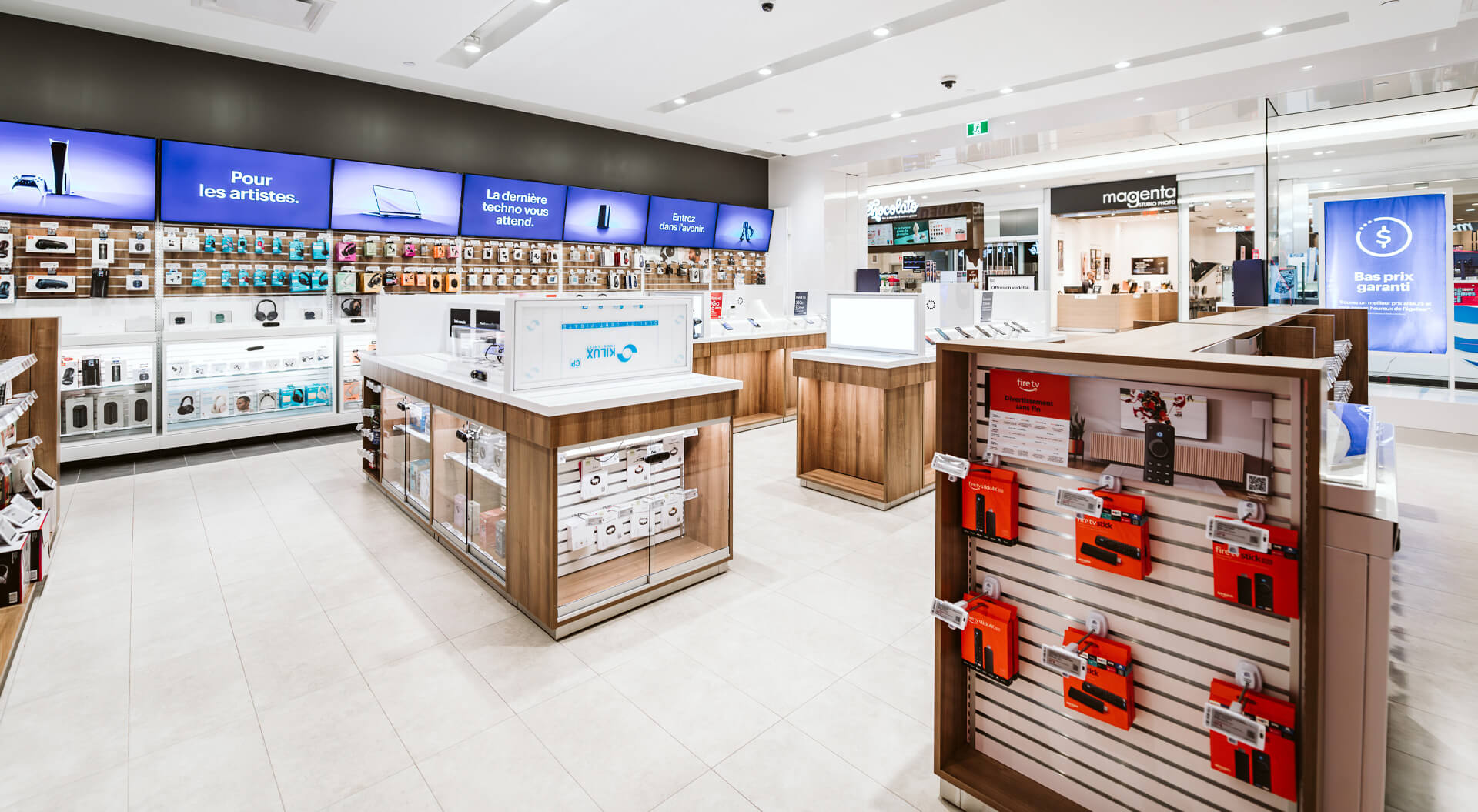
CampbellRigg translates commercial priorities into a clear spatial hierarchy, helping customers understand where they are, what is relevant and what they can experience, purchase or order.
Category zoning, adjacencies, product visibility and circulation are developed around the intended customer journey rather than simply filling available floor space.
Build Demonstration Opportunities
Technology is often easier to sell when customers can touch, test and compare it.
CampbellRigg identifies where demonstration creates genuine commercial value and integrates those opportunities into the format without allowing experience areas to consume disproportionate selling space.
The objective is to create an environment where demonstration supports engagement, confidence and conversion.
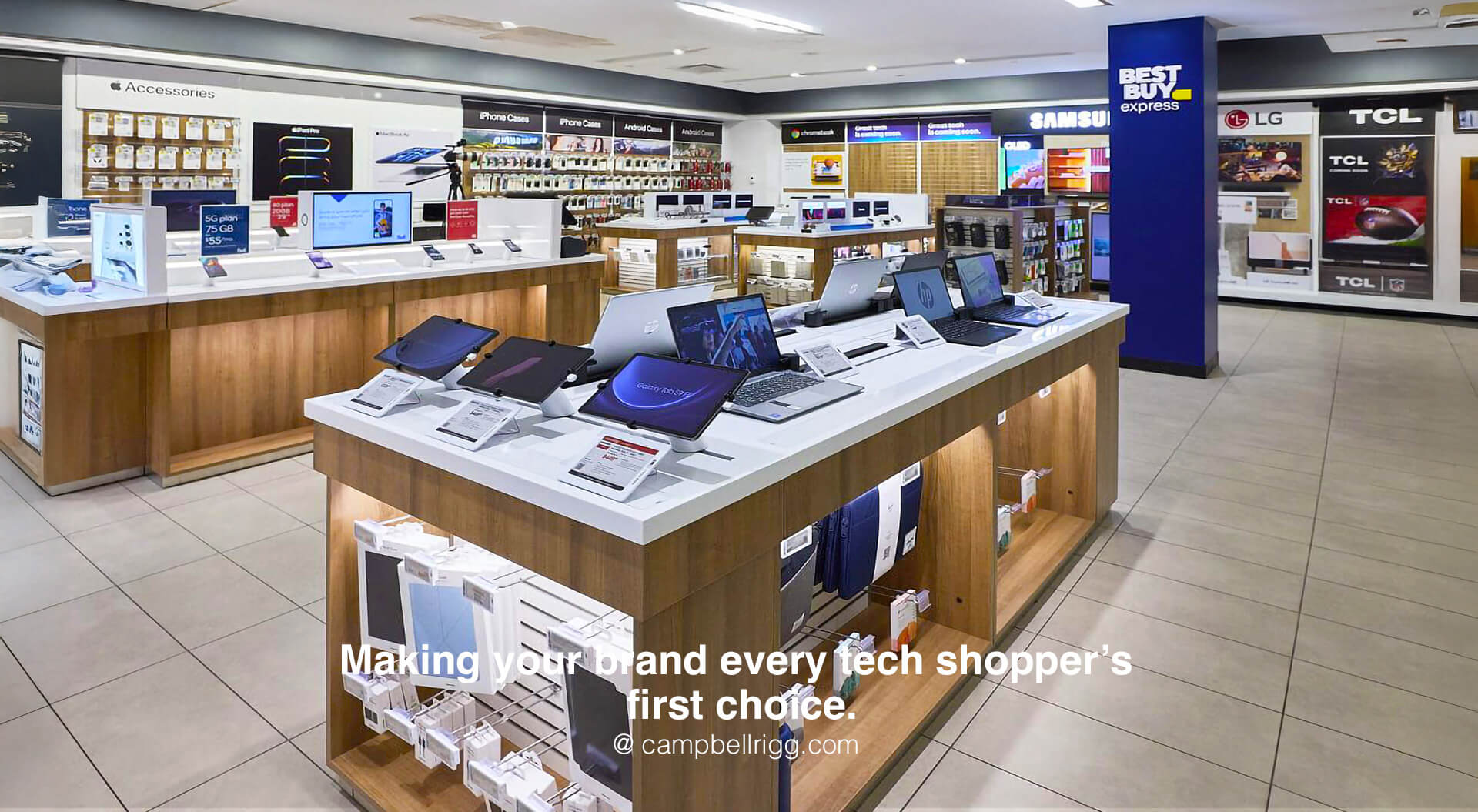
Best Buy Express: a compact technology store benchmark
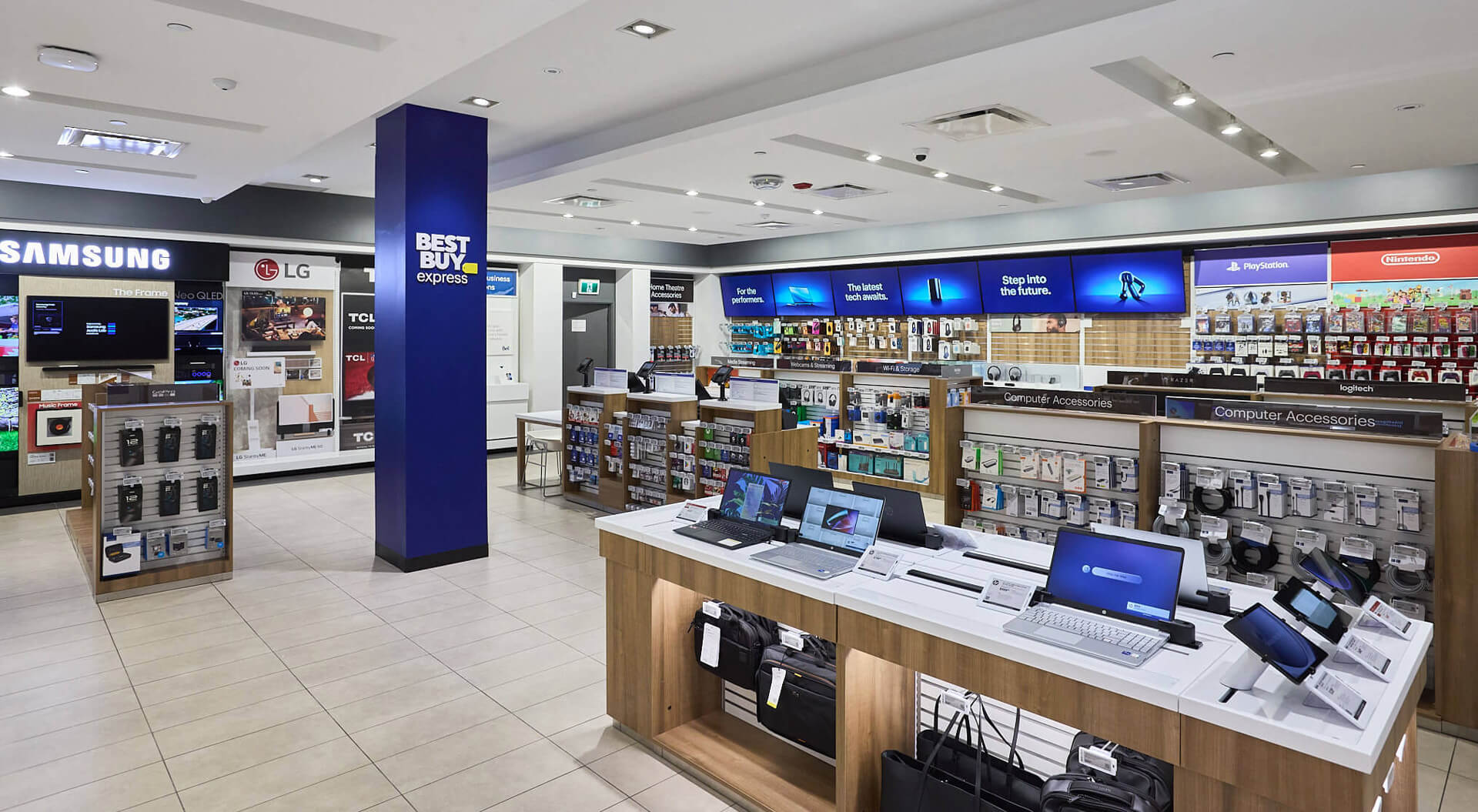
Best Buy Express provides a useful benchmark for compact technology retail.
The format demonstrates how a recognised technology brand can adapt its proposition to smaller, high-footfall environments without abandoning the brand's core technology expertise.
The Best Buy Express approach combines curated product assortments, interactive digital touchpoints, omnichannel services, mobile checkout and scalable merchandising. The emphasis is on convenience, speed and relevant product discovery rather than reproducing the complete assortment of a large destination store.
This makes the format particularly relevant to urban environments where customers may value proximity and convenience over extensive physical choice.
The design lesson is important: a compact technology store should be designed around the commercial role of its location, not simply around a reduced version of a larger store.
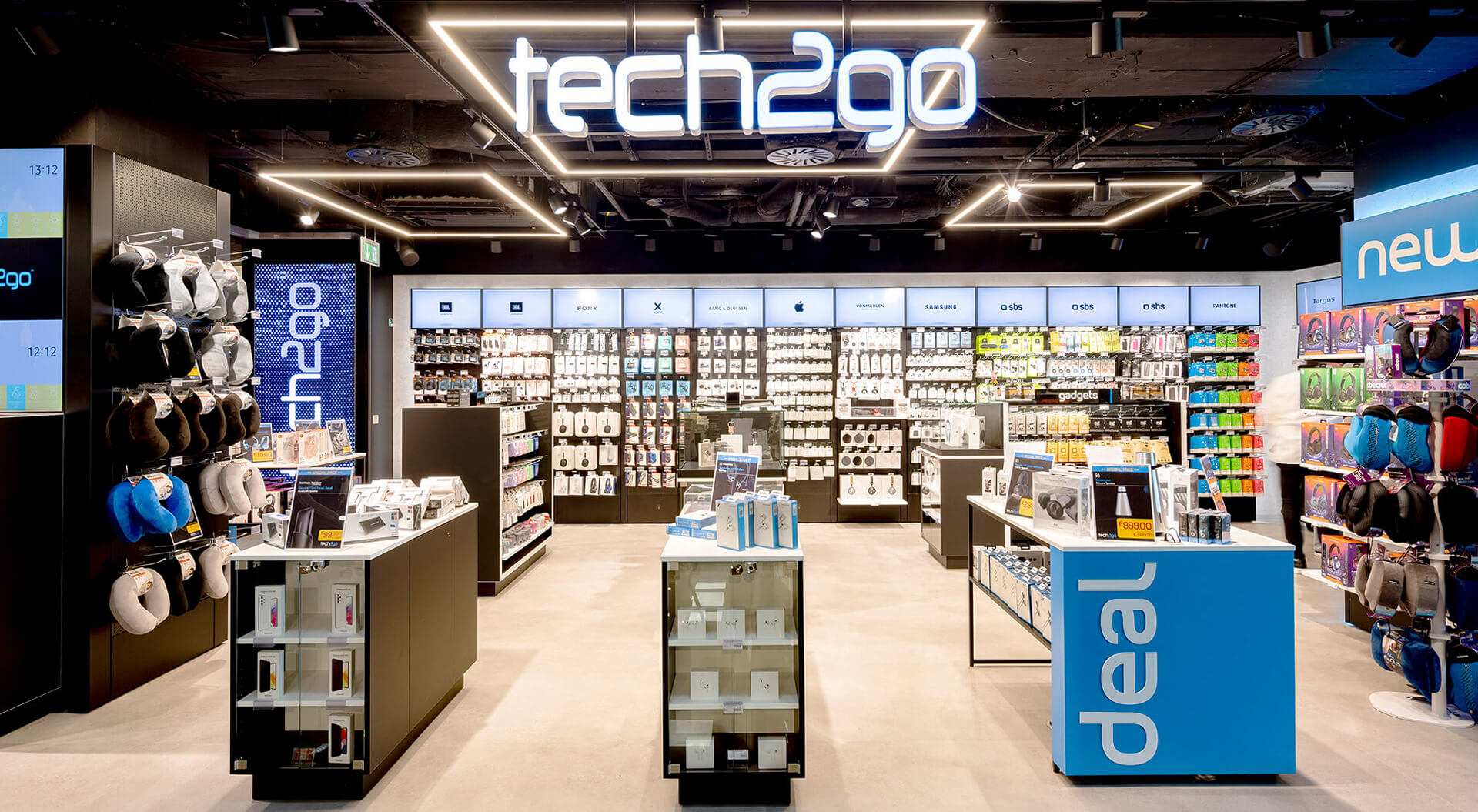
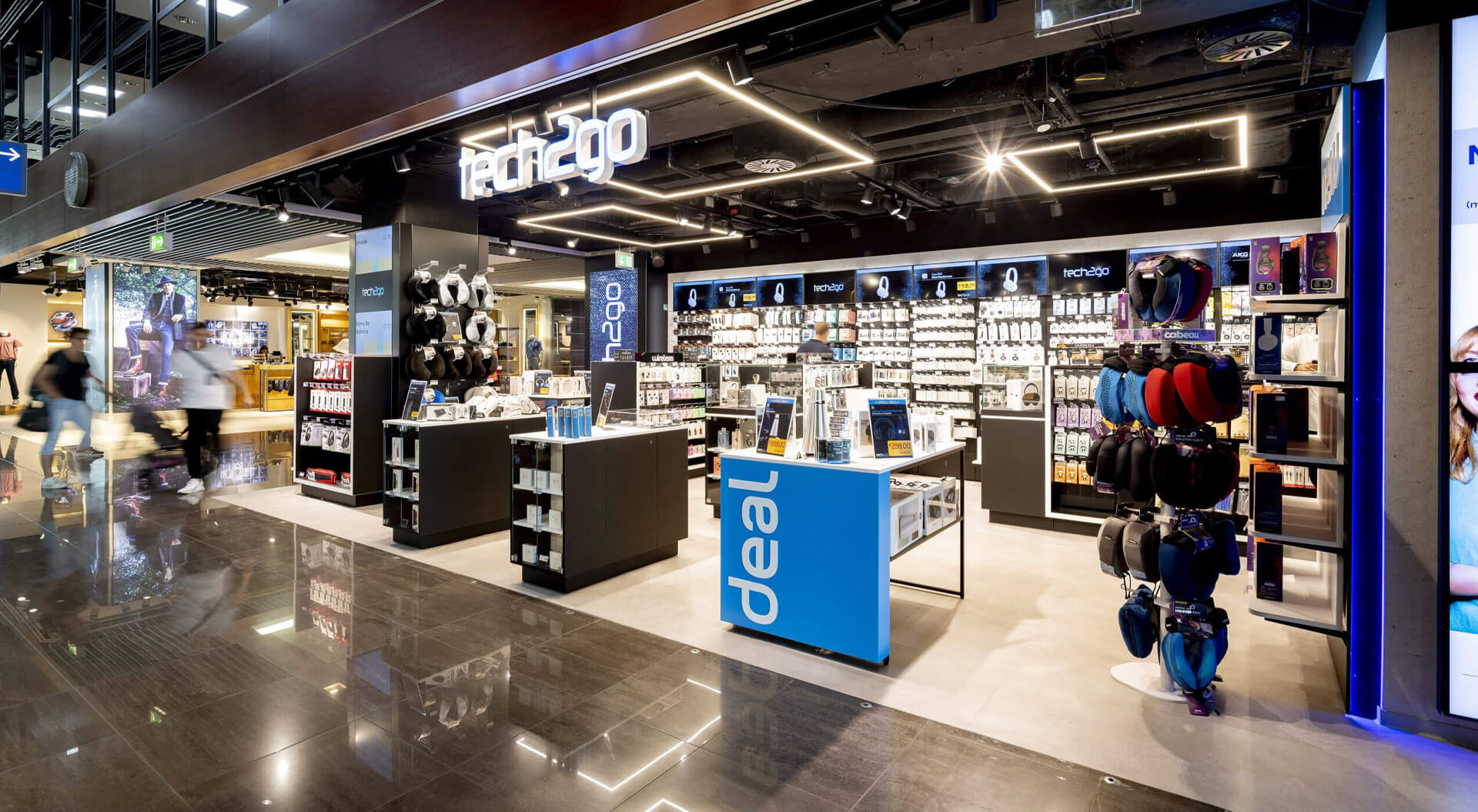
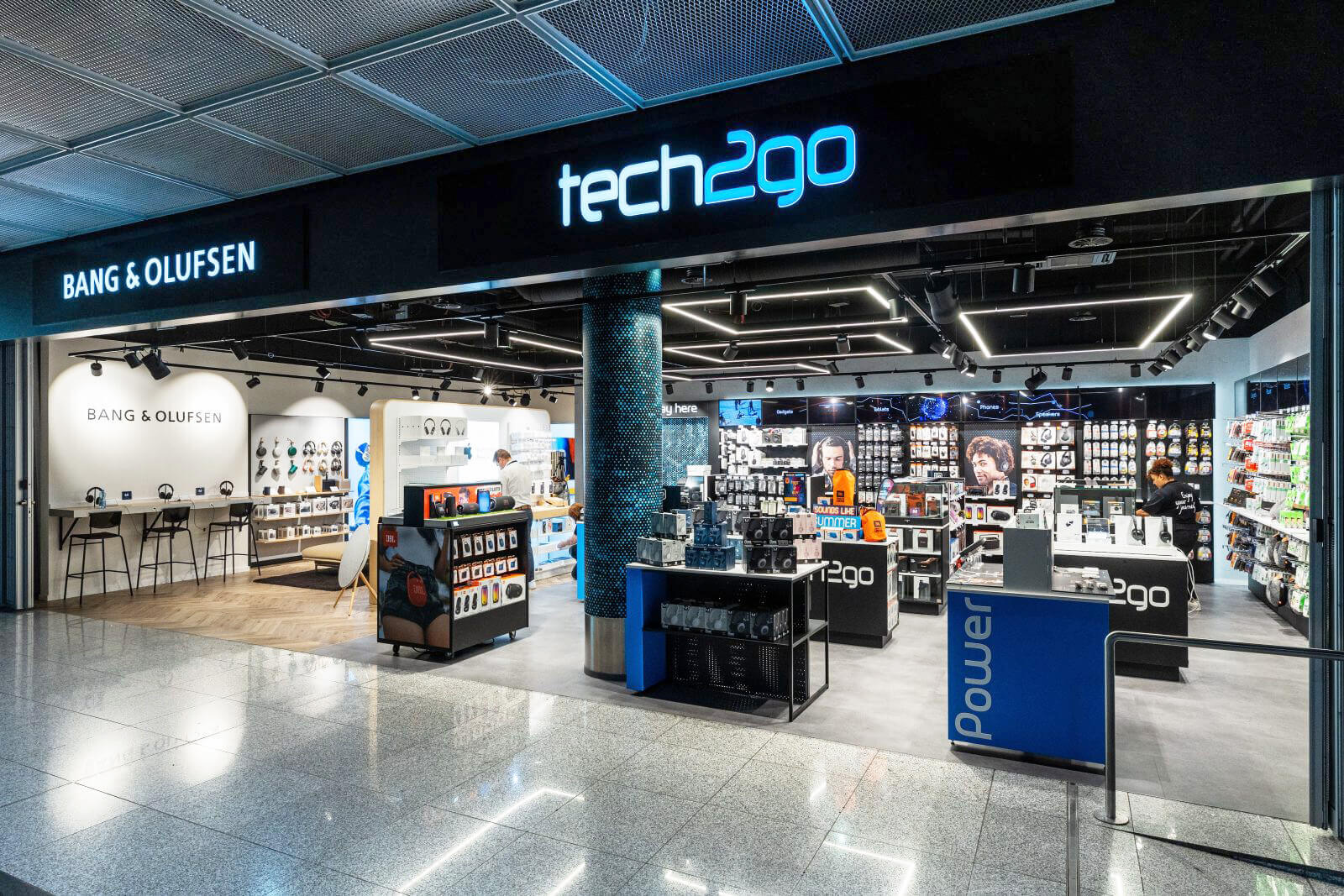
Tech2Go: designing technology retail for travel environments
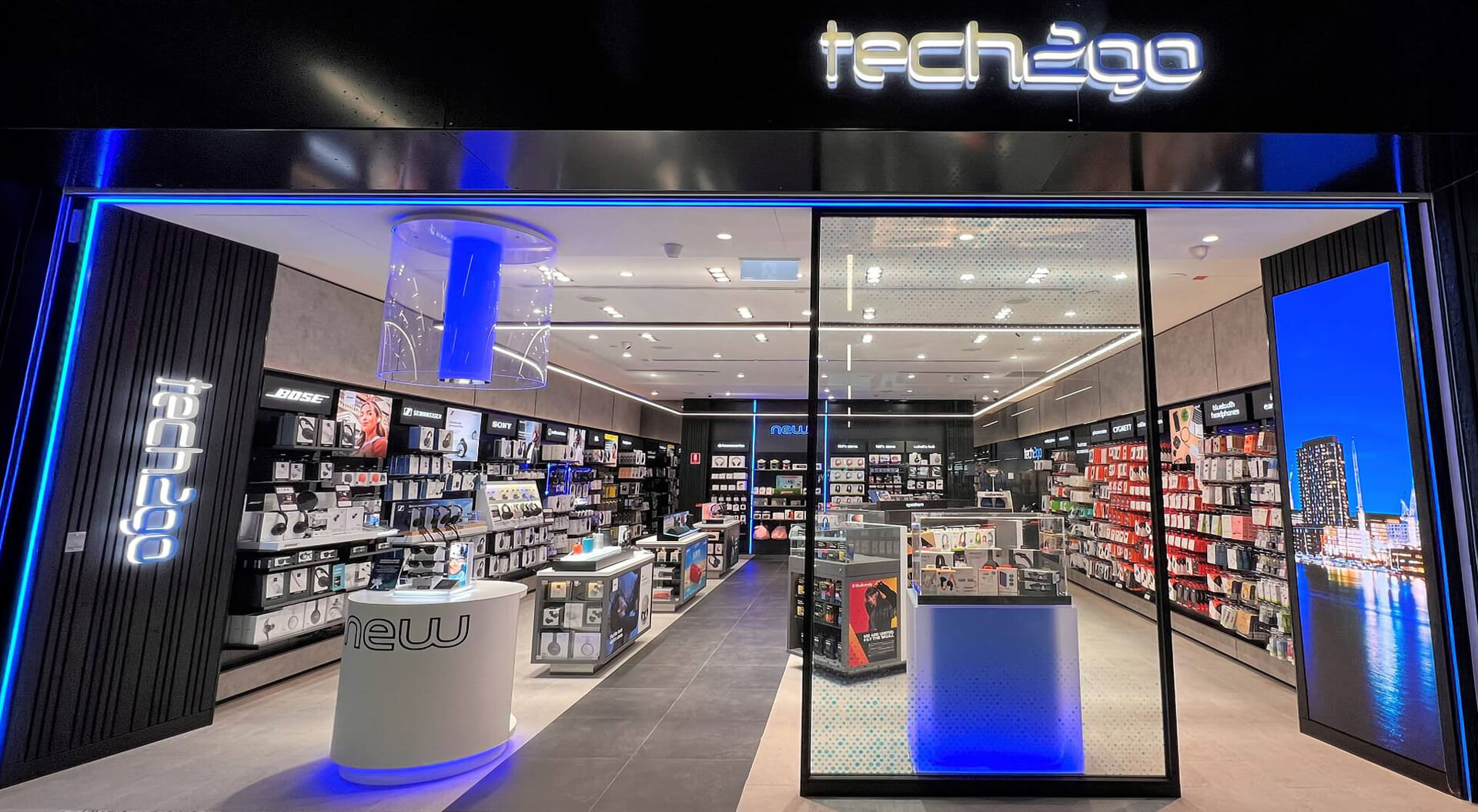
Tech2Go provides a different compact-format proposition.
Travel environments introduce specific customer requirements. Shoppers may have limited time, high expectations for convenience and a strong need for clearly presented technology products and accessories.
A technology store in an airport or travel environment therefore needs to communicate quickly.
Product categories should be easy to understand. Hero products should be highly visible. Navigation should be intuitive, while merchandising should support fast decisions.
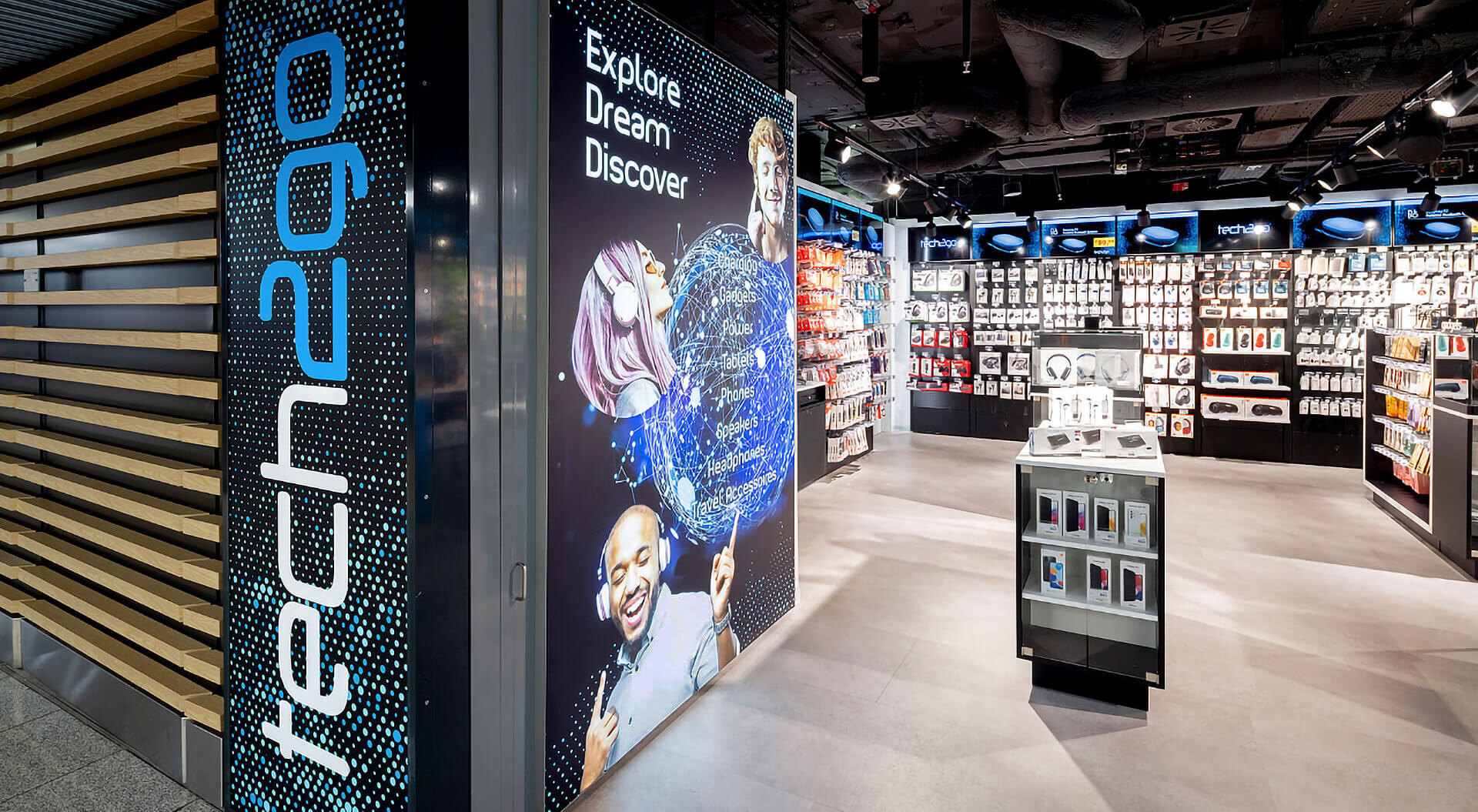
The physical environment can also use digital communications, strong brand graphics and focused product displays to create impact without requiring a large footprint.
The Tech2Go example demonstrates why compact technology store design cannot be separated from location strategy. A city-centre store, shopping-centre store and airport store may all be compact, but their customer missions are different.
Use Digital Technology to Extend the Range
A compact store does not need to hold the complete physical assortment.
CampbellRigg integrates digital discovery into the customer experience so customers can access broader product ranges, specifications, comparisons, availability, pricing and ordering options.
The physical store consequently becomes an interface to a much larger retail proposition rather than a restricted inventory environment.
Integrate Click-and-Collect
Click-and-collect can give a compact store an important additional commercial role.
CampbellRigg incorporates collection into the customer journey and operational planning, connecting online discovery with physical fulfilment. A collection visit can also create opportunities for additional purchases, service interaction and future digital engagement.
Introduce Mobile POS and Assisted Selling
Fixed checkout infrastructure can consume valuable space.
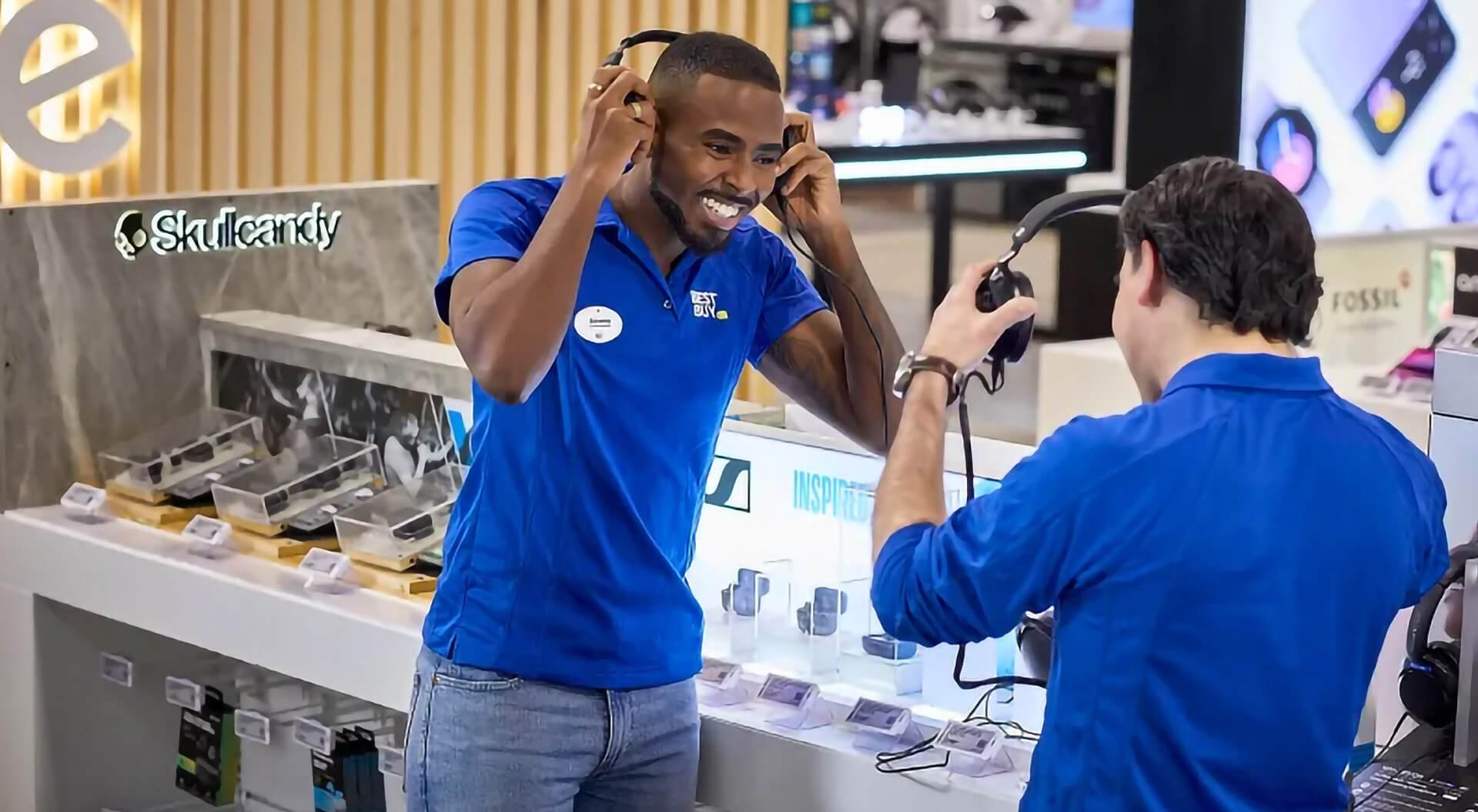
Mobile POS and assisted-selling technology allow staff to access product information, stock, pricing, customer information and transaction capabilities throughout the environment.
CampbellRigg considers these technologies as part of the format architecture, enabling staff to move from passive service to active assistance while reducing transactional friction.
Where Compact Technology Stores Work Best
Compact technology formats can be effective where proximity, convenience, speed or specific customer missions outweigh the need for a large destination environment.
City centres can support compact stores where customers value accessibility, rapid transactions, curated ranges and services. CampbellRigg considers catchment economics, pedestrian movement, assortment and journey requirements when determining the appropriate format.
Shopping centres can provide opportunities for compact technology retail focused on discovery, demonstration and assisted selling, particularly where the format benefits from high pedestrian traffic and integration with surrounding retail.
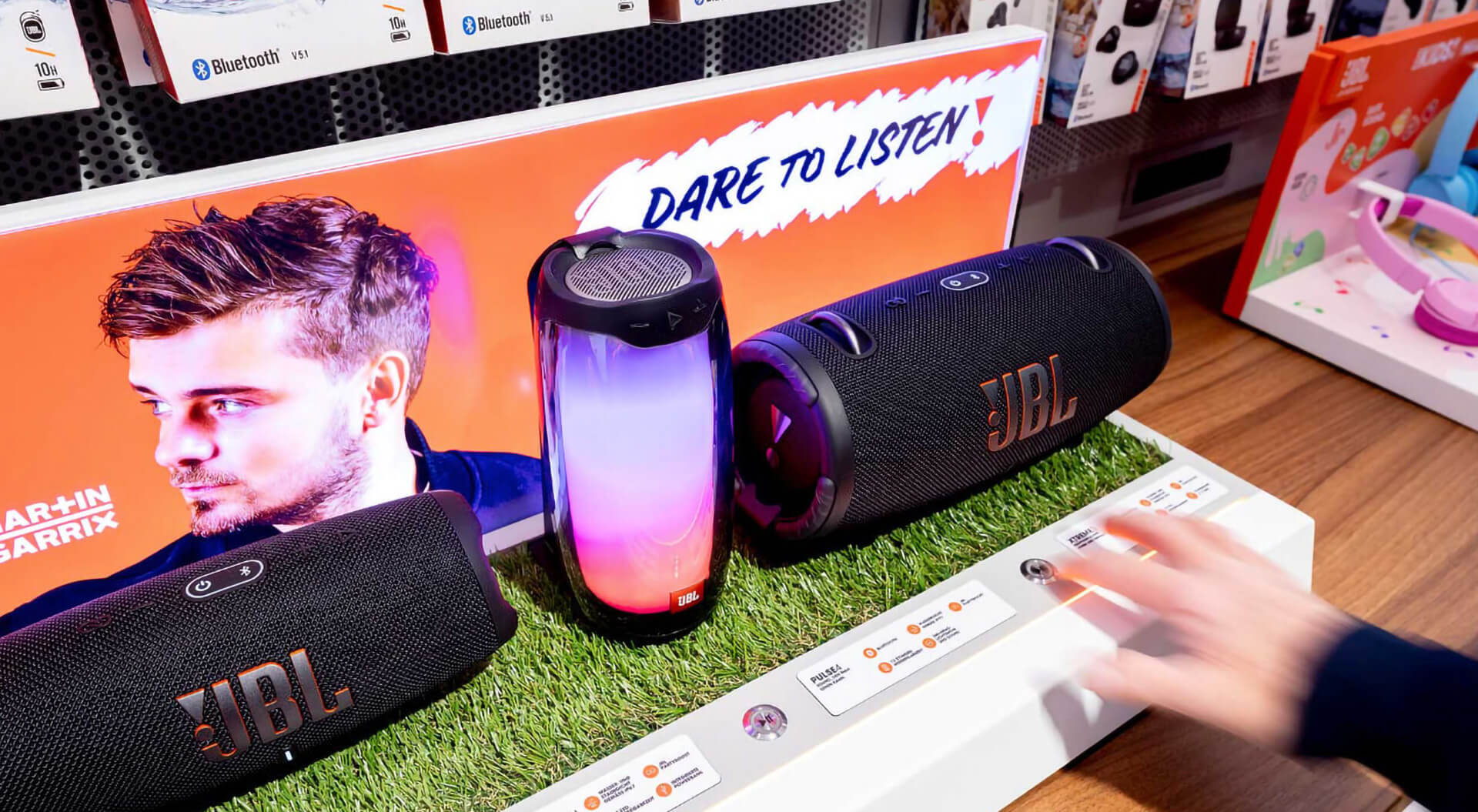
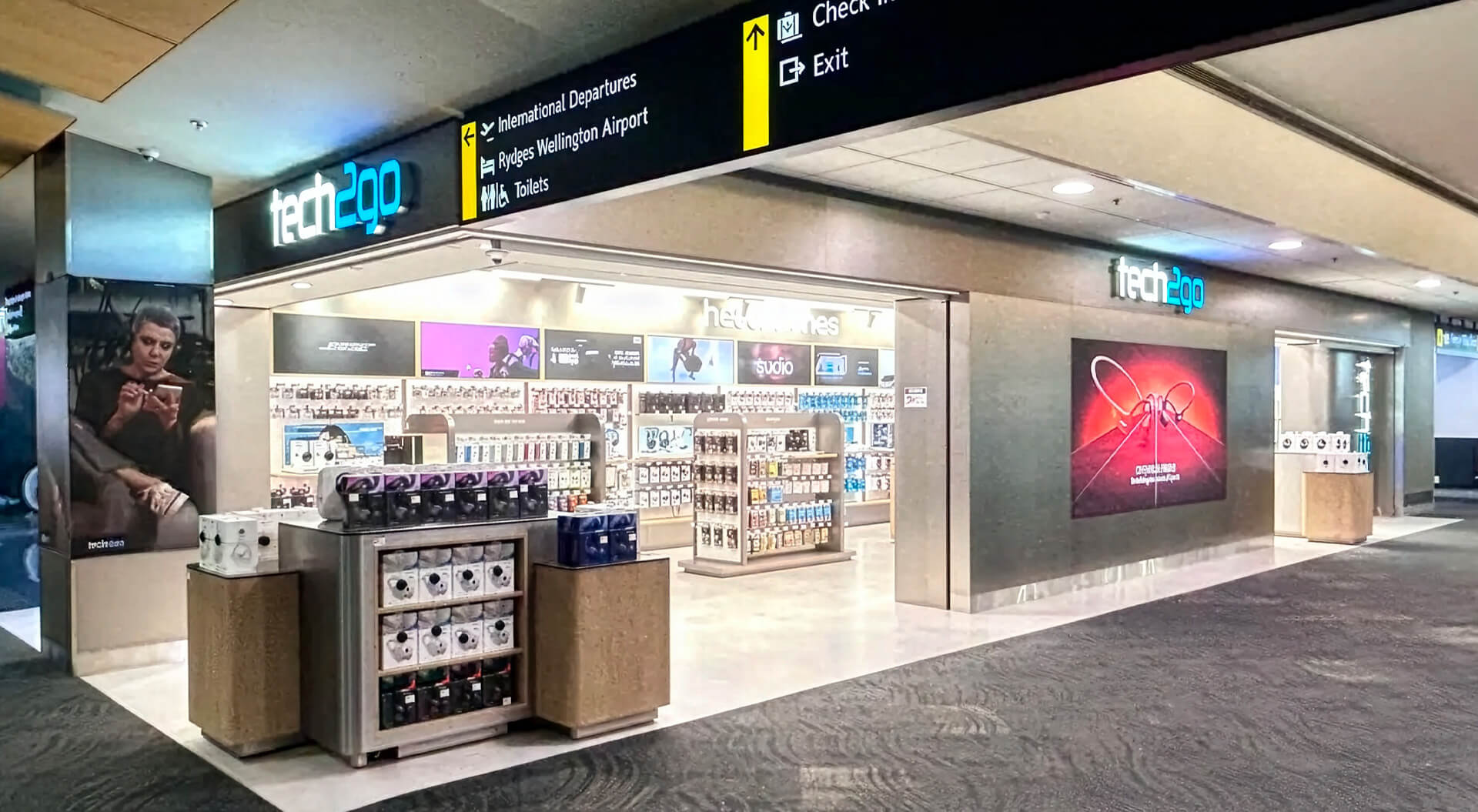
Airports and travel environments create a different mission. Customers often have limited time and immediate requirements for headphones, charging products, power banks, accessories and other travel technology. Here, navigation, visual communication, product hierarchy and rapid transaction become critical.
Transport hubs similarly favour accessibility and speed, with potential roles including technology essentials, collection, service and impulse purchasing.
The principle is consistent: Location determines customer mission. Customer mission determines format. Format determines the commercial design solution.
International Benchmarks: Best Buy Express and Tech2Go
Best Buy Express demonstrates how a major technology retailer can adapt its proposition to smaller, high-footfall environments. Its compact approach combines a curated physical offer with digital touchpoints and omnichannel services, creating a more focused technology retail experience suited to locations where a conventional large-format store may not be appropriate.
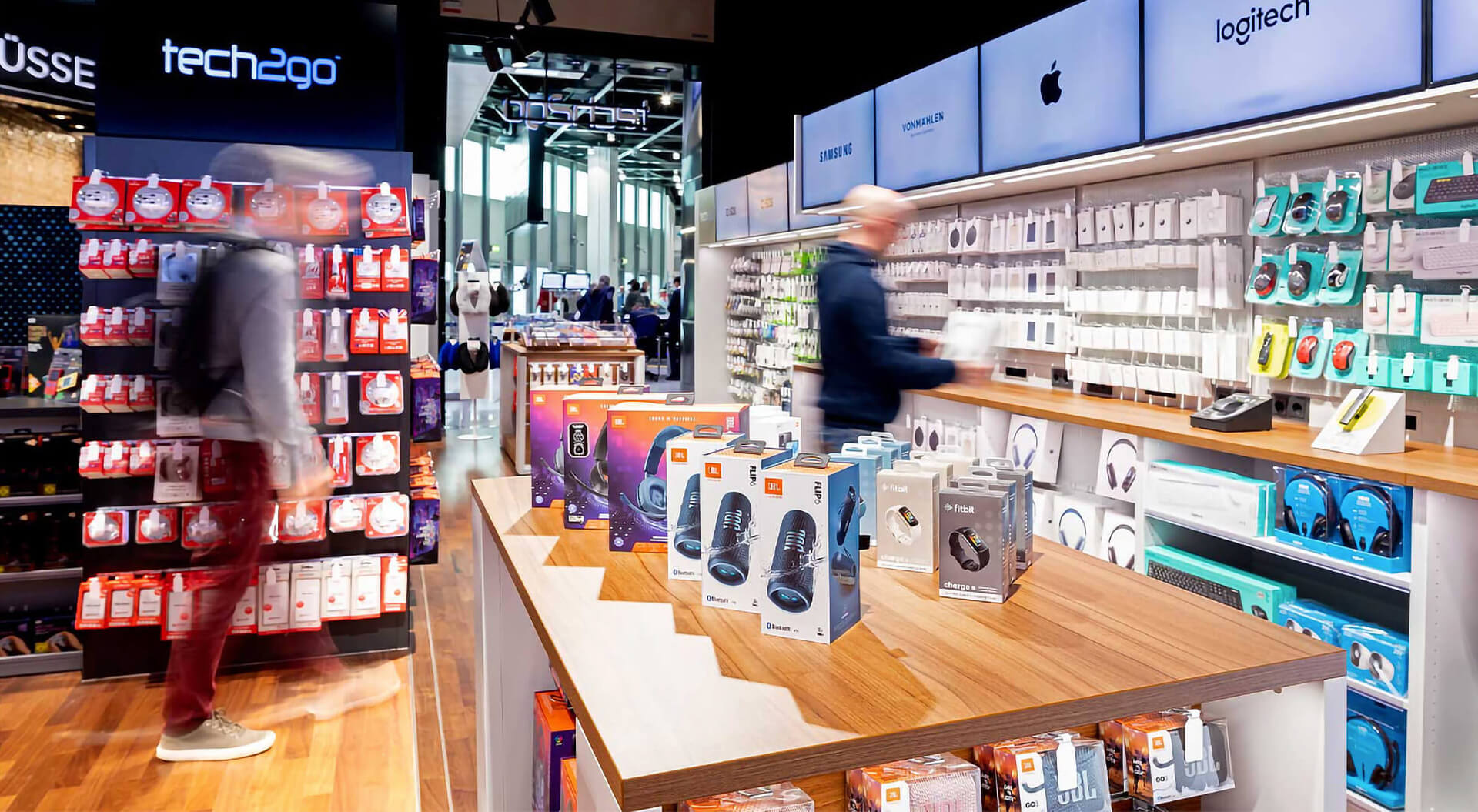
Tech2Go illustrates a different compact-format requirement. Travel retail demands immediate recognition, rapid navigation and highly relevant product selection. Headphones, charging products, power banks and other technology accessories can be presented through concise category architecture, strong product visibility and straightforward customer journeys.
Together, these benchmarks demonstrate why compact technology retail should not be treated as one universal format. The commercial role and customer mission must determine the format.
Designing the Customer Journey Around Commercial KPIs
For senior management, the critical question is not simply whether a compact store looks effective. It is how its performance will be measured.
CampbellRigg connects customer behaviour with commercial objectives throughout the format-development process.
For example:
- Discovery → engagement
- Demonstration → conversion
- Category adjacency → attachment sales
- Digital discovery → extended-range sales
- Click-and-collect → fulfilment and additional purchase
- Mobile POS → reduced transaction friction
- Service interaction → retention and future engagement
Relevant KPIs can include sales per square metre, conversion rate, average transaction value, attachment rate, product interaction, dwell time, queue time, fulfilment performance, click-and-collect utilisation and repeat visits.
This changes the management conversation from “What should the store look like?” to “What should this format achieve, and how will we know that it is working?”
Compact Technology Stores Need a Phygital Strategy
A compact format's physical limitations make integration with digital retail particularly important.
CampbellRigg develops the relationship between the physical environment and digital capabilities including product discovery, comparison, extended assortment, stock availability, online ordering, click-and-collect, customer information, assisted selling and after-sales service.
The resulting proposition connects: Physical experience + digital range + customer data + fulfilment + service.
The store can therefore contribute beyond immediate transactions by supporting customer acquisition, digital sales, fulfilment, engagement and longer-term relationships.
From Compact Footprint to Commercial Productivity
A smaller footprint does not automatically produce a more profitable store.
The objective is to make every square metre commercially productive.
CampbellRigg brings together format strategy, assortment, customer journey, spatial planning, merchandising, brand experience, technology and operational requirements so that each component has a defined purpose.
Before wider rollout, the format can be tested against agreed commercial and operational measures. Lessons from the initial implementation can then be used to refine the format and establish a more repeatable system.
This gives management a controlled route from concept to validated format to scalable network deployment.
Why Compact Technology Stores Are Becoming Strategically Important
The strategic value of compact technology retail extends beyond individual stores.
A defined compact format can allow a retailer to enter locations that cannot support a conventional destination store, respond to specific customer missions and connect physical retail more effectively with ecommerce and fulfilment.
CampbellRigg helps management establish the components required for a repeatable format system, including:
- format and retail strategy;
- footprint parameters;
- customer-mission definitions;
- assortment architecture;
- category and customer-journey standards;
- brand and visual-merchandising principles;
- spatial planning and interior design;
- digital and phygital integration;
- service and fulfilment requirements;
- implementation standards; and
- commercial KPI frameworks.
The objective is to standardise what should remain consistent while adapting what must respond to each location.
From Retail Strategy to a Scalable Technology Retail Network
The strongest compact technology programmes follow a structured development path: Retail strategy → format definition → customer mission → assortment → customer journey → spatial design → digital integration → prototype → measurement → refinement → rollout.
CampbellRigg can support management through this process, helping turn the first implementation into a validated format rather than a one-off store.
That creates a basis for faster rollout, greater consistency, controlled investment and continuous optimisation.
For technology retailers, the strategic opportunity is therefore not simply to build smaller stores. It is to create a flexible, measurable and repeatable format system capable of responding to different markets, locations and customer missions.
CampbellRigg: Turning Technology Retail Strategy into a Scalable Format
CampbellRigg combines retail and format strategy, market and customer analysis, brand positioning, customer-journey planning, assortment architecture, spatial planning, architecture, interior design, visual merchandising, digital experience and implementation.
Its technology-retail experience, including work for Currys, M.Video and Interstep, provides a practical international perspective on developing physical retail environments within changing technology markets.
For management teams planning a compact technology format or wider multi-format network, the objective is to move beyond individual store design and establish a commercially defined format that can be tested, measured, refined and rolled out.
From Strategy to Rollout
The most effective compact technology store is not defined by its size. It is defined by the commercial role it performs within the network.
CampbellRigg helps retailers establish that role, translate it into a distinctive customer experience, integrate physical and digital channels, define measurable performance criteria and develop the format for repeatable implementation.
Planning a compact technology store or multi-format retail network?
Start with a free consultation with CampbellRigg. Together, we can define the commercial opportunity, develop a bespoke format brief and move rapidly from retail strategy to an effective, scalable customer experience designed to support sales, loyalty and market-share growth.
Innovative. Relevant. Memorable.
Schedule your consultation today and receive a free quote.
Cost-Effective Excellence:
Our pricing structure is highly competitive, offering exceptional value without compromising on quality or creativity.
Rapid Execution:
We move fast. From concept to implementation, our agile team ensures your project is delivered on time and to the highest standards.
Multidisciplinary Expertise:
Our team brings together seasoned brand strategists, architects, interior designers, and graphic designers, collaborating to create seamless, end-to-end brand environments.
Global Reach, Local Insight:
With successful projects delivered across Europe, the Middle East, and Asia, we combine international experience with local market understanding.
Scalable Project Delivery:
Whether it's a flagship technology store, an urban network or mall micro-branches, we manage and execute projects of all sizes, efficiently and effectively.
Proven Track Record:
Our designs evolve branch networks from purely transactional spaces into experiential, relationship-focused brand environments, enhancing engagement, elevating customer experience, and driving tangible business results.
Full-Service Creative Agency:
From rebranding and marketing campaigns to spatial design and rollout, we provide an integrated service tailored to your goals.