News and Views
Convenience Supermarket Design Trends Europe 2026–27: Building Scalable, Efficient Store Formats




Convenience supermarket design is becoming a strategic management issue rather than simply a store-design exercise.
Across Europe, supermarket and convenience retailers are balancing margin pressure, changing shopping missions, food-to-go growth, digital adoption and the need to make every square metre more productive.
For management teams, the question is therefore not simply: “What should our next convenience store look like?”
It is: How can we create a convenience retail format that is commercially effective, operationally efficient, locally relevant and scalable across an entire network?
This article focuses specifically on convenience supermarket design: how retailers can turn a convenience proposition into a scalable store format through brand strategy, customer journey planning, spatial design and network rollout.
That distinction changes the role of design.
CampbellRigg helps supermarket and convenience retailers connect brand strategy, format planning, customer experience, store design, merchandising, technology and implementation into one commercial system.
Our award-winning expertise in retail branding, store design and format innovation is grounded in international retail experience across supermarket, convenience and travel environments. The approach is designed to connect customer experience with measurable commercial objectives rather than treating store design as an isolated creative exercise.
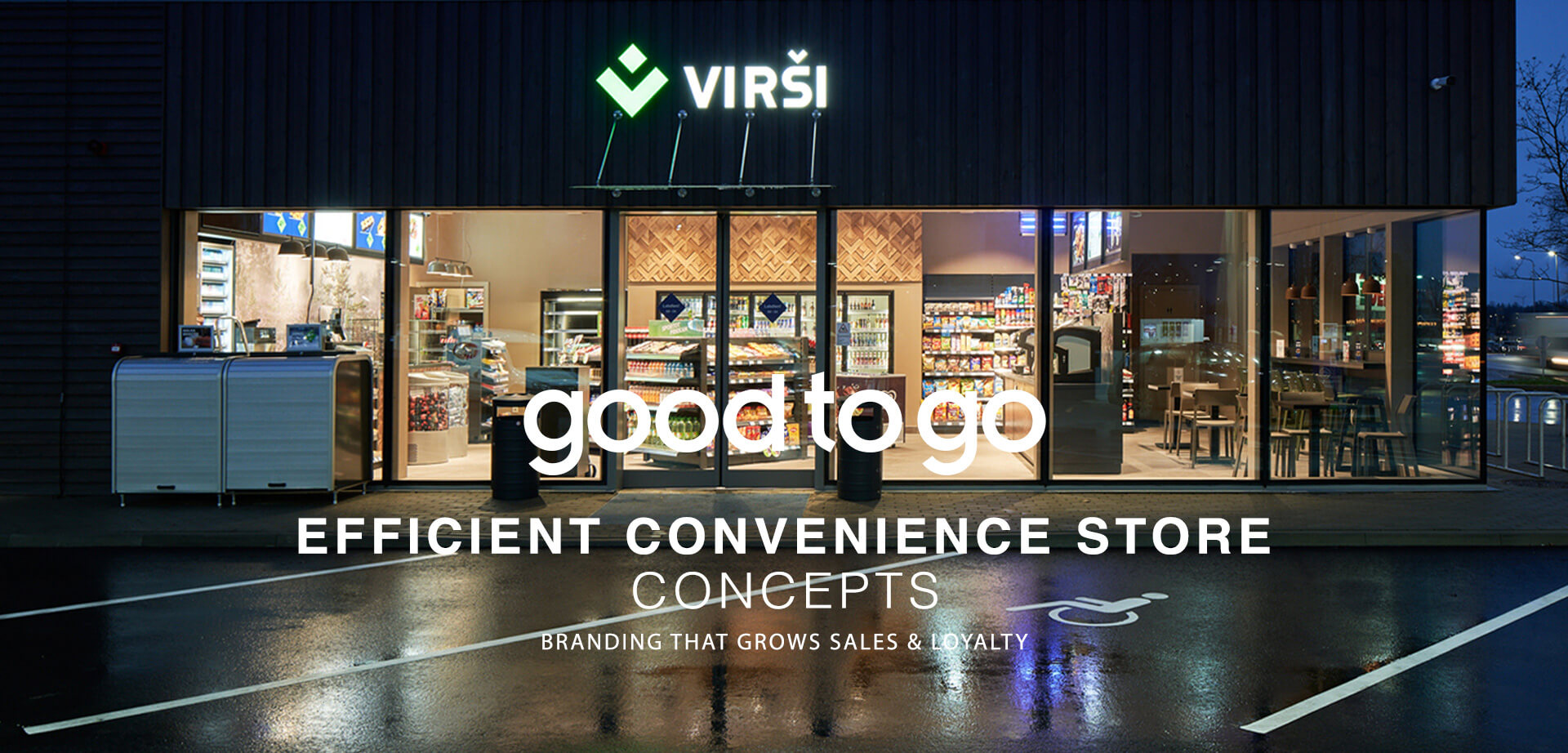
This strategic perspective is grounded in international benchmarking, including SSP Group’s Point airport convenience stores in Iceland, Centra’s “Good to Go” format in Ireland (CampbellRigg), and Virši’s convenience and service-station network across Latvia and Lithuania.
Convenience supermarket design is now a format strategy decision
Convenience retail is entering a more demanding phase.
Proximity and speed are no longer sufficient differentiation. Customers increasingly expect fresh food, food-to-go, intuitive navigation, digital convenience, relevant ranges and a consistent brand experience often within a compact footprint.
Meanwhile, management teams must make investment decisions across portfolios containing different locations, formats, catchments and operating conditions.
A successful convenience format therefore has to perform simultaneously at three levels:
- Customer: make shopping faster, clearer and more relevant.
- Operations: simplify execution, replenishment and staff workflows.
- Commercial: improve sales productivity, basket value, customer frequency and return on investment.
How CampbellRigg helps
CampbellRigg begins by connecting these disciplines rather than treating them as separate design commissions.
A brand audit establishes how the existing proposition is perceived and expressed. Strategy defines the desired market position. Design brief construction converts that strategy into practical requirements for customer experience, store planning, identity, merchandising and implementation.
The benefit management receives is one strategic direction linking brand decisions to the physical retail network, rather than a collection of disconnected design initiatives.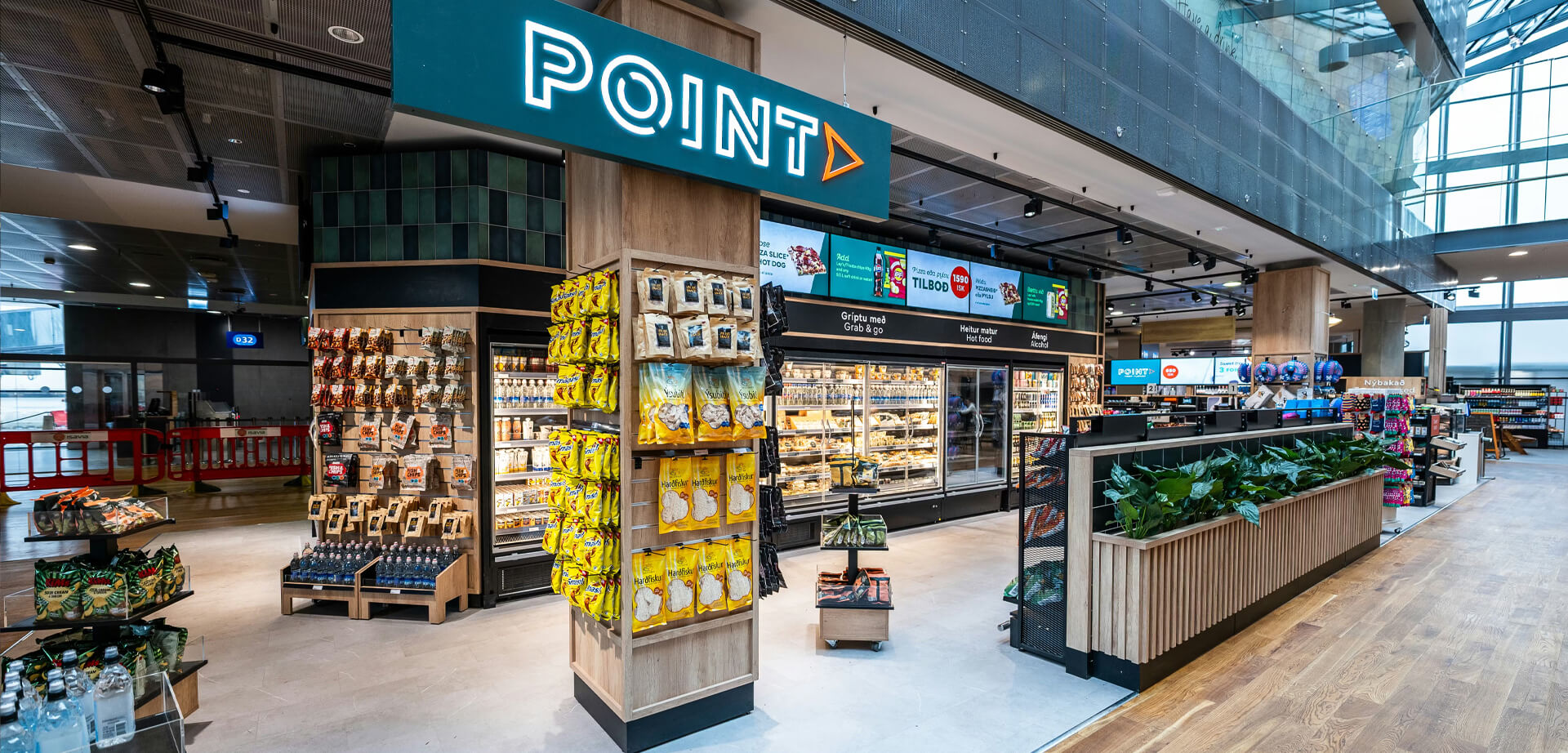
Build a scalable convenience store format not a one-off store
The most important design decision is often made before the first plan is drawn.
Management needs to establish which elements of the proposition must remain consistent across the estate and which should adapt according to location, footprint and customer mission.
A compact urban convenience store may require a very different circulation pattern from a forecourt, transport hub or airport store. Yet customers should still recognise the same brand.
The solution is a scalable format system.
This can include:
- modular space-planning principles;
- repeatable customer journeys;
- defined category zoning;
- standardised brand assets;
- flexible merchandising systems;
- adaptable food-to-go modules;
- consistent signage and wayfinding;
- specification standards for different store sizes.
How CampbellRigg helps
CampbellRigg translates the brand proposition into a format architecture that can be adapted rather than reinvented.
Through convenience retail store design and format planning, we establish the principles that should remain fixed and the components that can flex.
This enables management to approve a format once and then adapt it across multiple sites, reducing unnecessary design duplication and creating greater consistency across the network.
The commercial objective is straightforward: Make the next store faster, more predictable and more efficient to develop without making it feel standardised or generic.
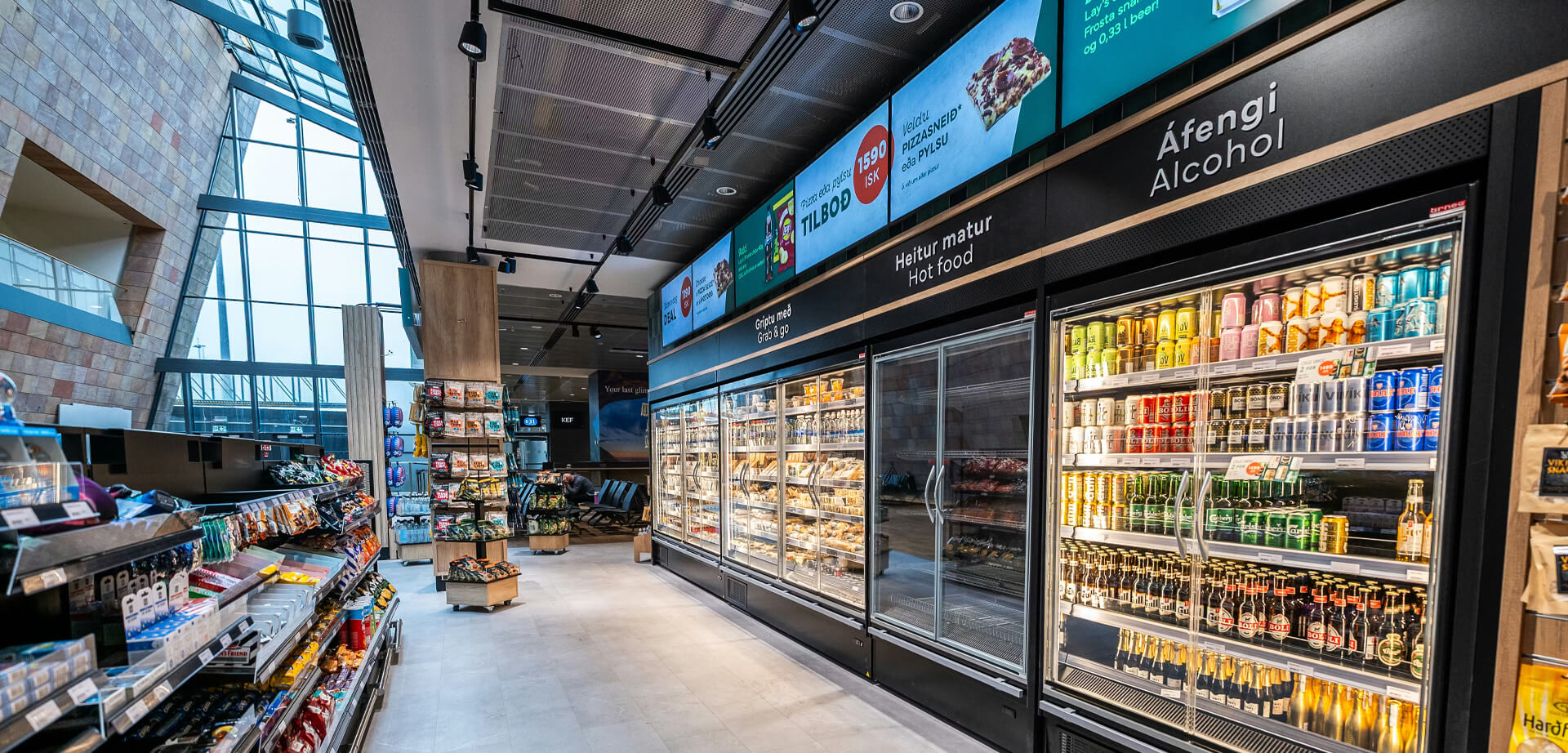
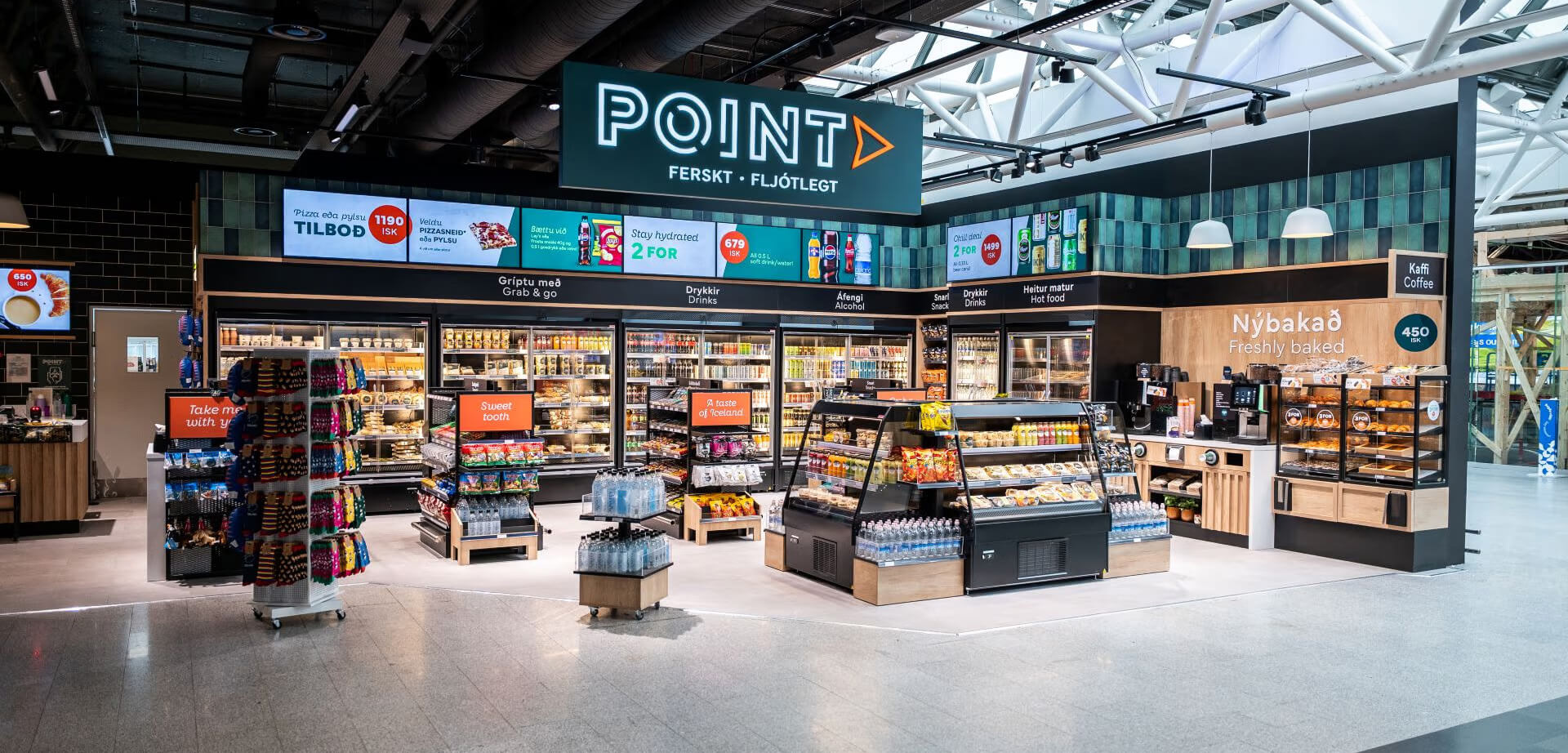
International benchmark: Point, Keflavík Airport a high-throughput travel convenience store
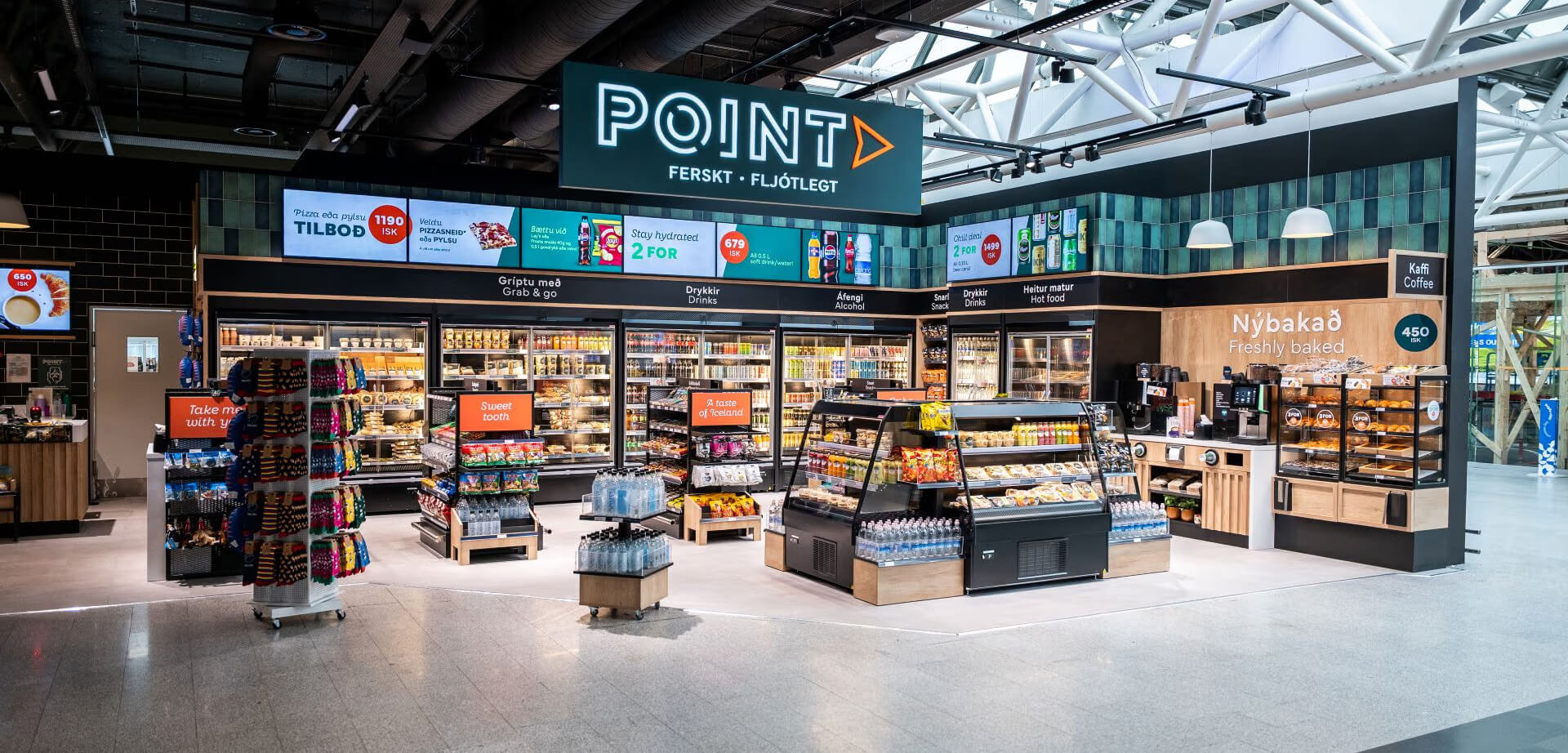
SSP Group's Point convenience environment at Keflavík Airport demonstrates the particular demands of travel-led convenience retail.
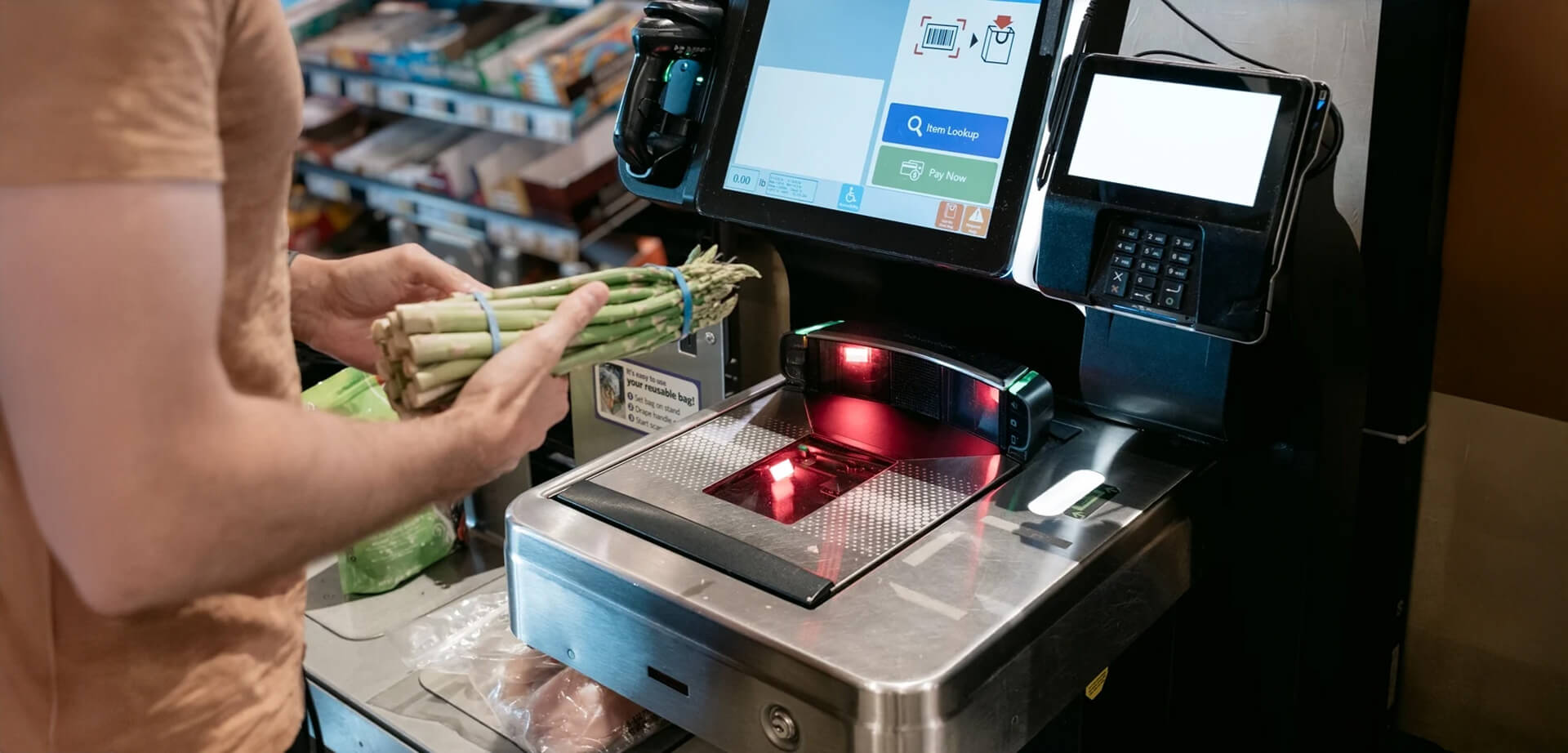
The format is built around speed, accessibility and immediate consumption, combining travel essentials, chilled drinks, fresh food, grab-and-go products and self-service checkout technology. CampbellRigg's benchmark analysis of the environment highlights how visibility, straightforward circulation and rapid purchasing support the demands of a high-footfall travel location.
For management teams, the lesson is broader than airport retail.
Different customer missions require different spatial priorities.
How CampbellRigg helps
CampbellRigg applies the same principle across convenience networks: Design the format around the commercial mission of the location.
A forecourt, urban store, transport hub and airport store should not necessarily share the same plan.
They should share the same strategic DNA.
Commercial takeaway
Point demonstrates the importance of high-throughput convenience design: maximise visibility, reduce friction and make the customer's purchase mission immediately understandable.
That principle can then be adapted to other high-footfall environments without copying the airport format itself.
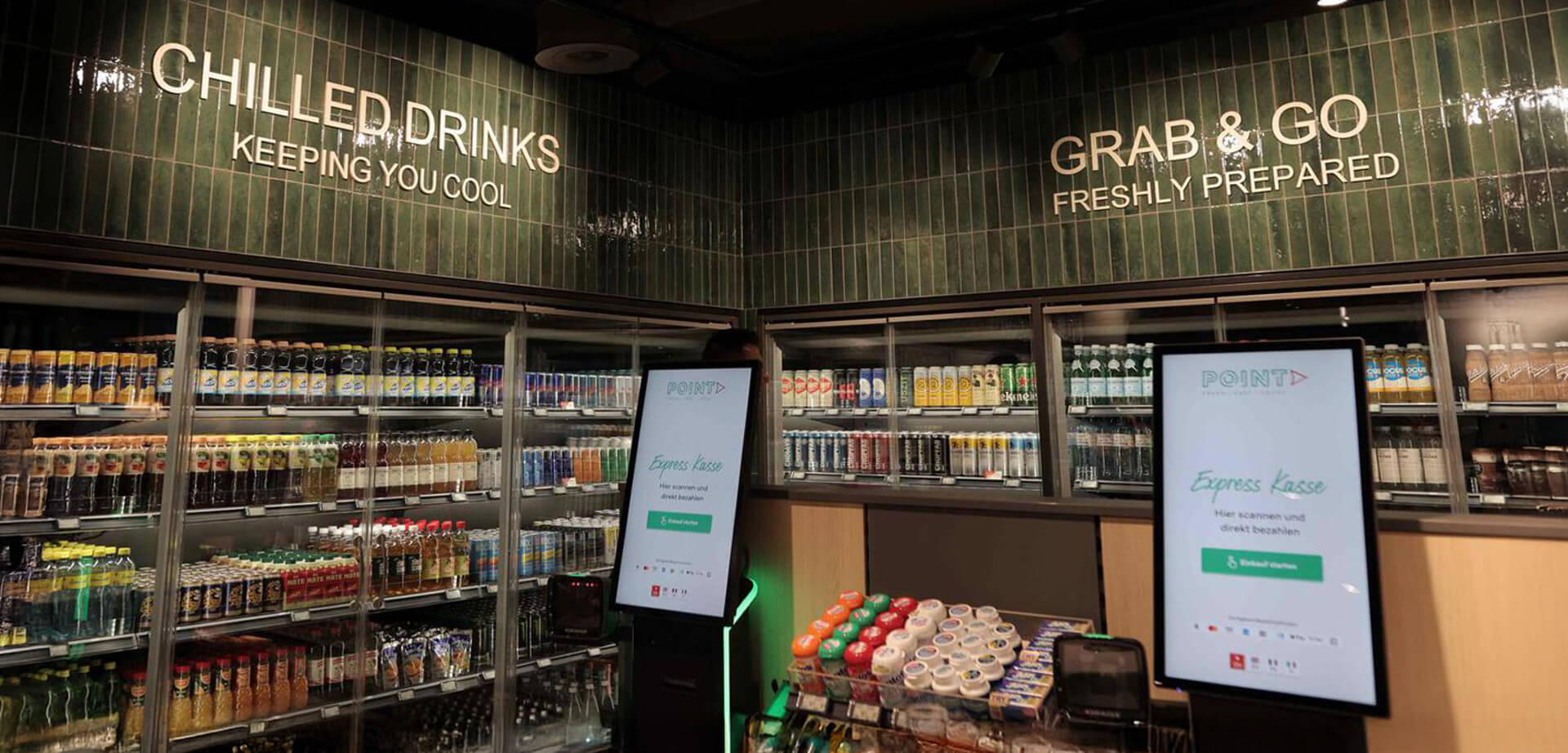
Design around customer missions, not departments
Traditional supermarket planning often starts with categories.
High-performing convenience formats increasingly start with shopping missions.
Customers may be buying breakfast on the way to work, lunch between meetings, dinner on the journey home, a few essential groceries, coffee and snacks for travel, or an immediate meal.
That means the physical environment must make the relevant mission obvious.
Food-to-go is particularly important because convenience customers increasingly combine grocery and foodservice missions.
How CampbellRigg helps
CampbellRigg analyses customer missions and converts them into zones, adjacencies, sightlines, merchandising priorities and circulation routes.
The objective is to reduce search time while increasing visibility of high-value and high-frequency propositions.
Instead of asking simply where a category should be located, we ask: What is the customer trying to accomplish, and how can the store make that mission faster and commercially stronger?
The result is a format designed around actual customer behaviour rather than a conventional departmental template.
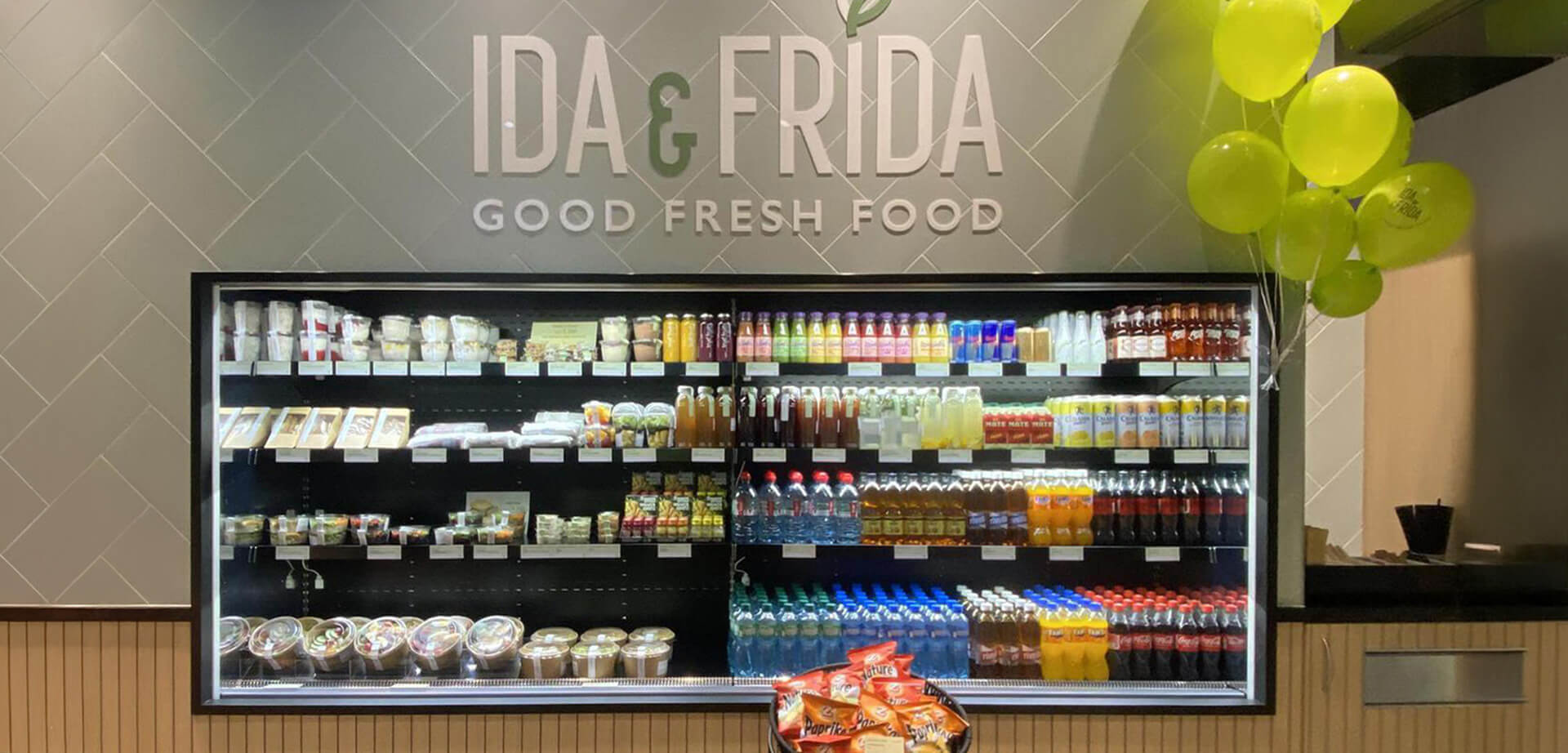
Make food-to-go a strategic growth platform
Convenience retail and foodservice are increasingly converging.
Freshly prepared food, coffee, bakery, hot food and ready-to-eat meals can generate frequency and create reasons to visit beyond traditional grocery purchasing.
This also changes store design.
Food-to-go must be visible from the customer approach, easy to understand, operationally practical and positioned to support impulse and repeat purchase.
How CampbellRigg helps
CampbellRigg integrates food-to-go strategy, brand expression, merchandising and spatial planning.
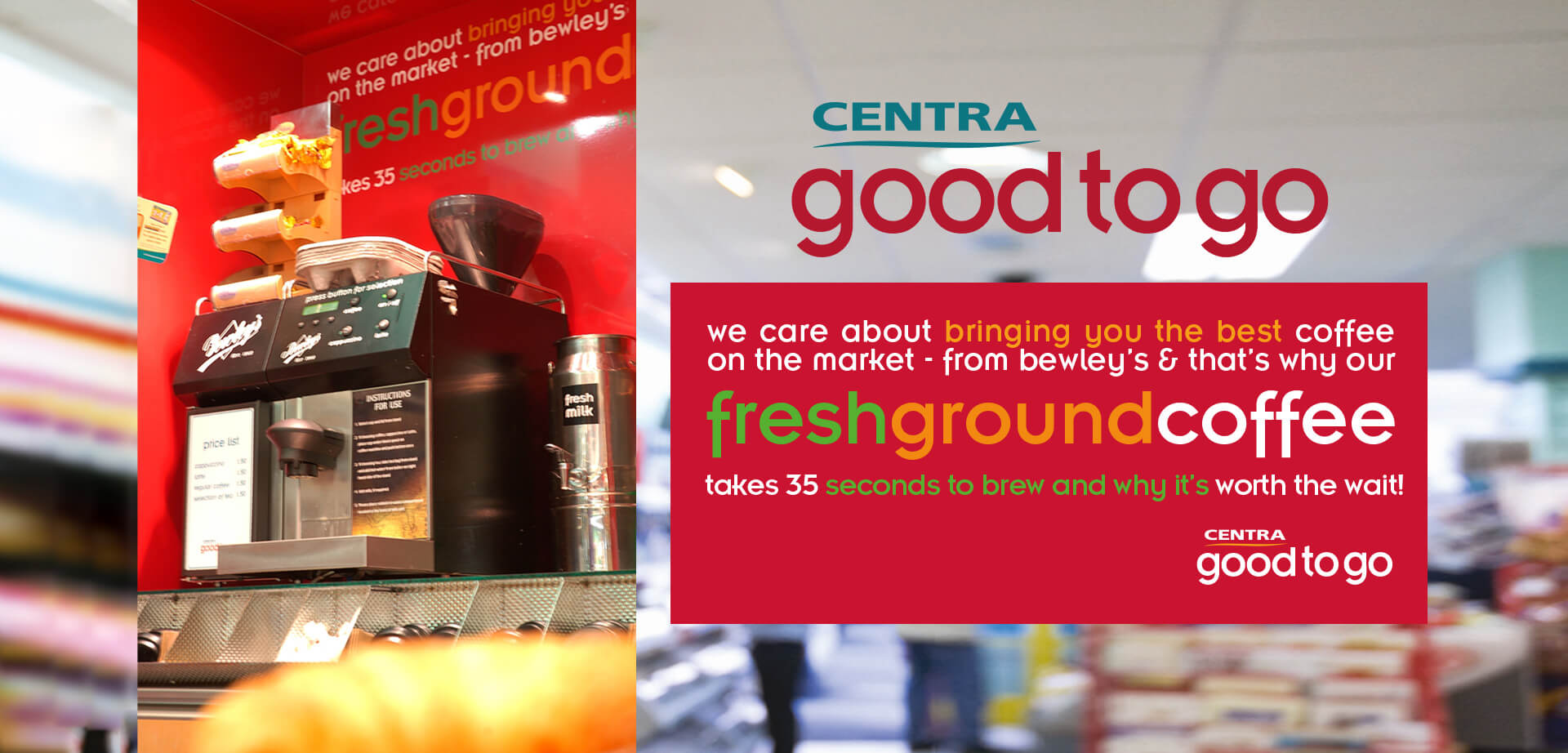
The design can establish clear arrival points, fresh-food theatre, grab-and-go refrigeration, bakery and coffee zones, together with efficient routes towards payment and collection.
The commercial objective is not simply to make food look attractive.
It is to create an environment designed around frequency, throughput, conversion and basket development.
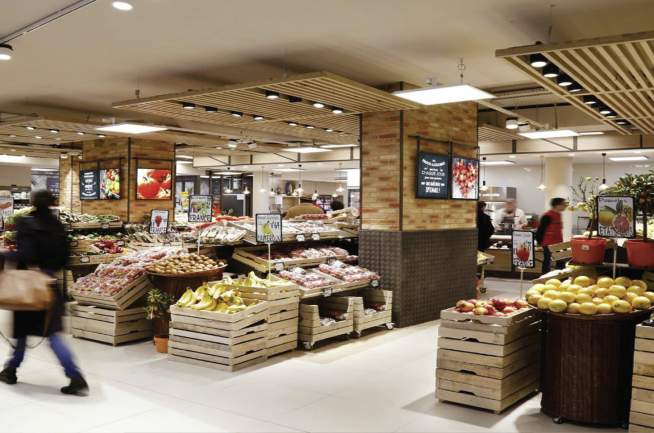
CampbellRigg's Centra work demonstrates this principle in practice. The Centra format incorporated dedicated zones including coffee, chilled convenience, ready-to-eat, hot food, produce, grocery, fresh meat and till points, with the design system subsequently developed for scalable rollout across the network. CampbellRigg reports that the format and product offering exceeded sales targets and was rolled out across Centra's network in the Republic of Ireland.
Commercial takeaway: food-to-go performs most effectively when it is integrated into the wider convenience format rather than treated as a standalone concession.
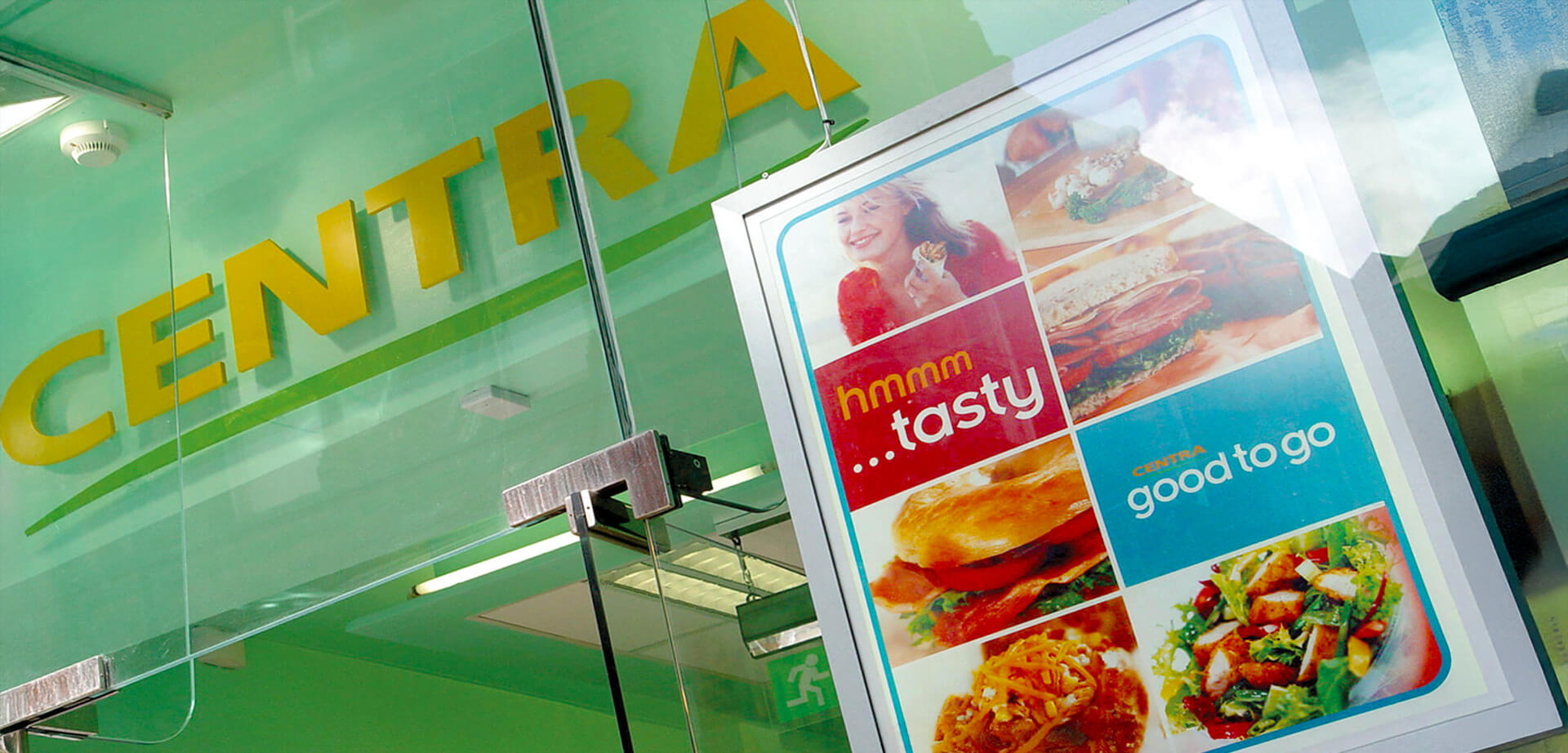
International benchmark: Centra “Good to Go” scalable food-to-go convenience
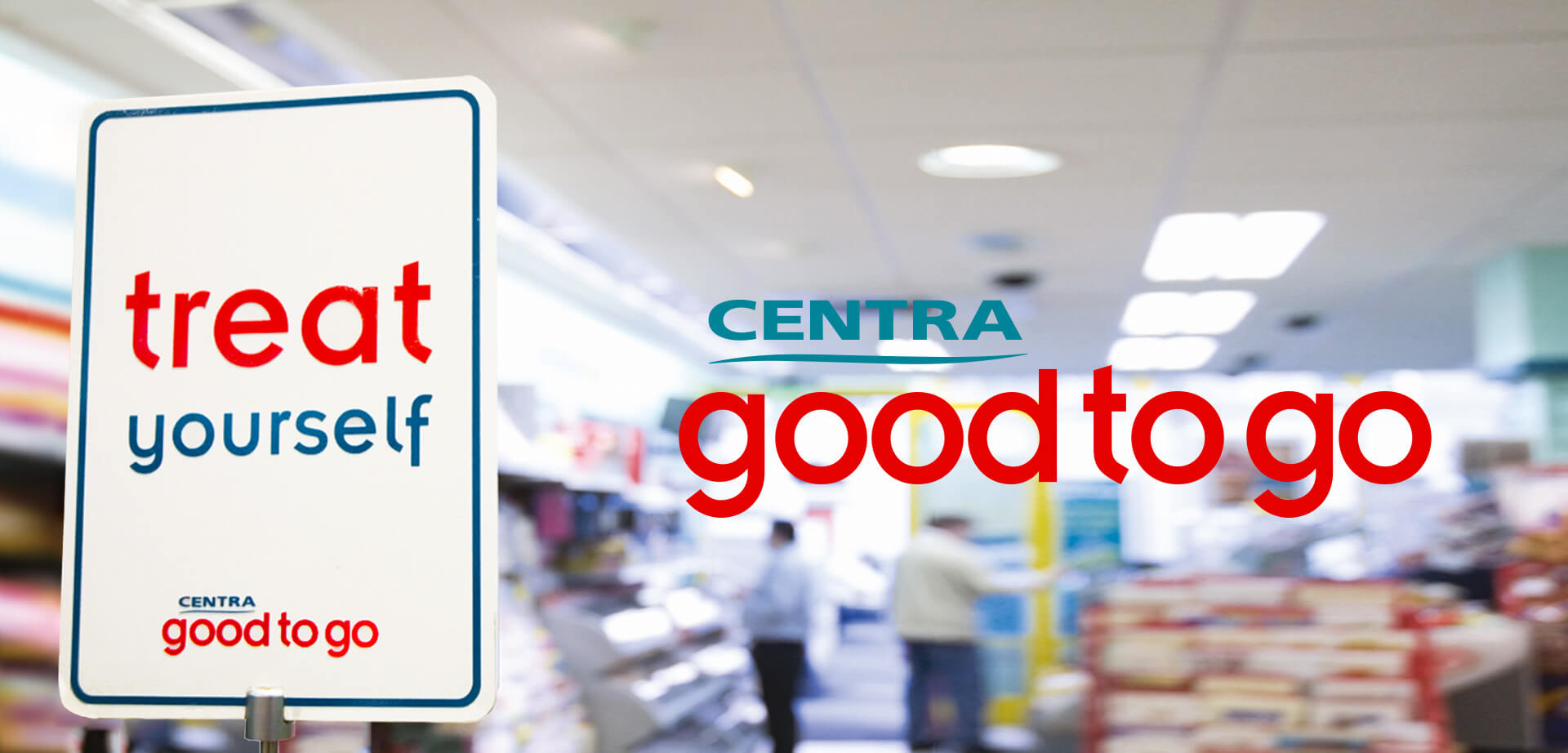
CampbellRigg's work with Musgrave and Centra “Good to Go” demonstrates how brand strategy, store design and format planning can be integrated into a commercially focused convenience proposition.
Working with Musgrave's leadership team, CampbellRigg transformed Centra convenience stores in Dublin through an integrated programme of brand strategy, store design and format planning. The resulting environment combined clear zoning, fresh-food merchandising, food-to-go propositions and intuitive customer navigation.
The format and product offering exceeded sales targets and the award-winning concept was rolled out across the Centra network in the Republic of Ireland.
The programme demonstrates why convenience supermarket design should be treated as a format system, not a one-off interior concept.
Commercial takeaway
Centra demonstrates how a scalable food-to-go proposition can combine brand identity, customer journey, merchandising and store planning into one repeatable convenience format.
How CampbellRigg helps
CampbellRigg connects the strategic proposition to the physical format, establishing the design principles, zoning, merchandising logic and rollout standards required for different store sizes and locations.
The benefit is a system management can scale while maintaining a recognisable customer experience.
CampbellRigg's Centra work demonstrates this principle in practice. The format incorporated dedicated zones including coffee, chilled convenience, ready-to-eat, hot food, produce, grocery, fresh meat and till points, with the design system subsequently developed for scalable rollout across the network. CampbellRigg reports that the format and product offering exceeded sales targets and was rolled out across Centra's network in the Republic of Ireland.
Centra is Ireland’s leading convenience store brand, with around 496 locations nationwide. It focuses on community-based convenience retailing, quality fresh food, on-the-go meals and strong own-brand ranges, expanding through new openings and store refurbishments to drive growth and customer relevance.
Awarded Convenience Store of the Year, the "Good to Go" concept redefined convenience retail, delivering a highly engaging, shopper-centric environment that elevated the food-to-go experience, accelerated sales performance, and significantly strengthened brand loyalty.

Create frictionless journeys through intelligent store planning
Convenience customers have limited patience for unnecessary complexity.
Poor sightlines, unclear zoning, congestion around checkout or badly positioned promotional fixtures can undermine an otherwise strong proposition.
The next generation of convenience supermarket design therefore combines speed with discovery.
Technology can support this through self-checkout, digital ordering, predictive availability and personalised communications. But technology should solve a customer or operational problem rather than become decoration.
How CampbellRigg helps
CampbellRigg maps the customer journey from arrival to navigation, selection, purchase and exit.
We then align physical design with the retailer's operational model.
The result is a connected customer journey in which signage, merchandising, digital touchpoints and checkout support one another.
The commercial test is simple: Does the design make the customer's mission easier while improving the retailer's ability to convert traffic into profitable transactions?
Use phygital design to connect physical and digital retail
Next-generation convenience experiences are increasingly phygital by design.
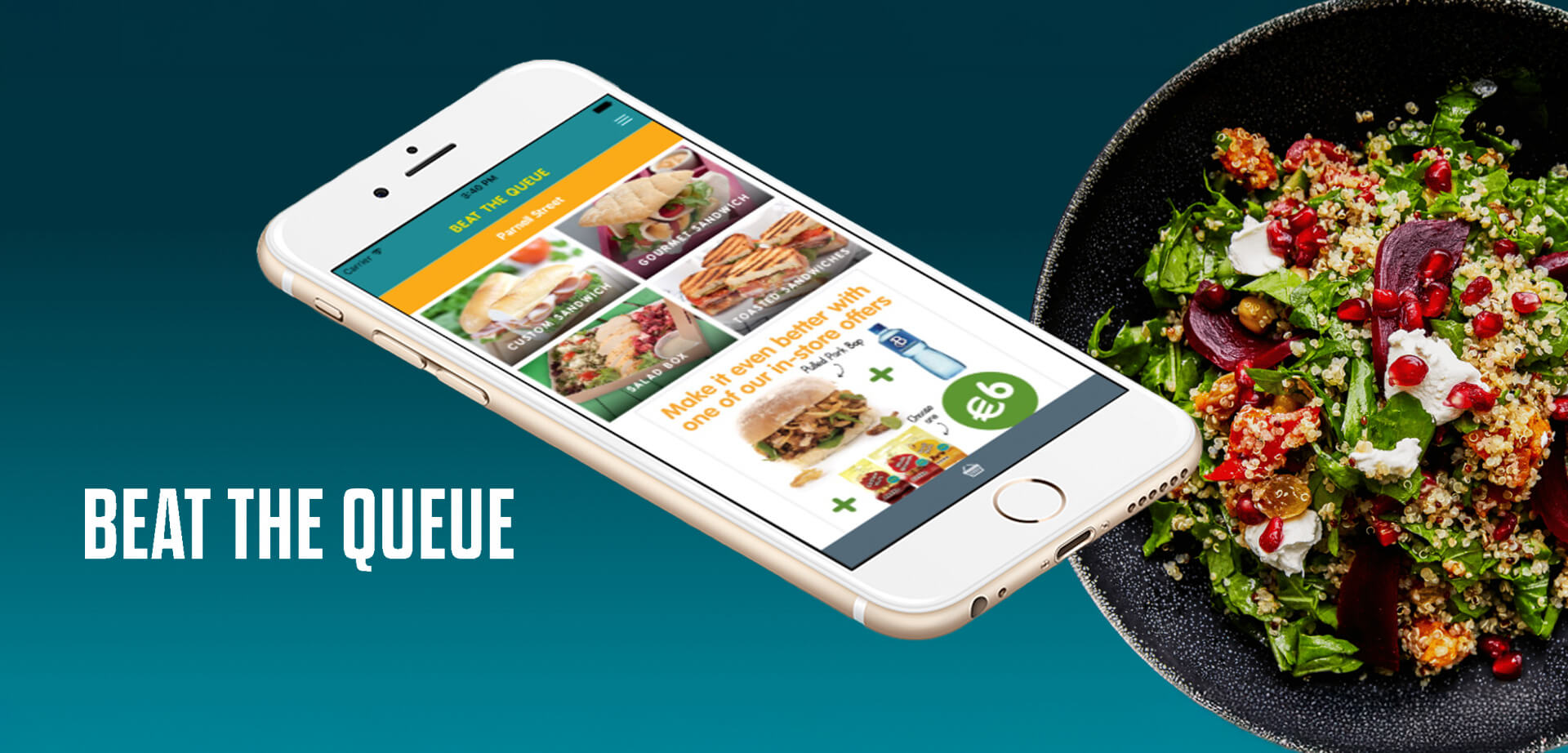
Customers may discover products digitally, pre-order food, collect in store, use self-checkout, engage with loyalty programmes or receive personalised offers.
The store therefore becomes one part of a wider customer ecosystem.
How CampbellRigg helps
CampbellRigg connects digital requirements with physical customer experience.
This means considering:
- where digital ordering begins and ends;
- how collection points affect circulation;
- where self-checkout should sit;
- how loyalty communications translate into physical merchandising;
- how digital information can simplify choice;
- how data can inform future format development.
The objective is not to make a store look technological.
It is to make the entire retail proposition easier to use and more commercially accountable.
Build local relevance into a consistent brand system
European convenience networks rarely operate in identical markets.
Catchments differ by demographics, travel patterns, competition, income, tourism, working populations and available floor space.
A successful format therefore needs central consistency with local flexibility.
How CampbellRigg helps
CampbellRigg establishes the brand architecture and design rules centrally, while identifying the elements that can respond to local demand.
Through brand architecture, we help define the relationship between masterbrand, sub-brand, proposition, visual identity and individual format applications.
This can include:
- local product emphasis;
- community messaging;
- regional food propositions;
- different category weighting;
- flexible promotional zones;
- locally relevant visual communication.
The benefit is a network that feels coherent without becoming repetitive.

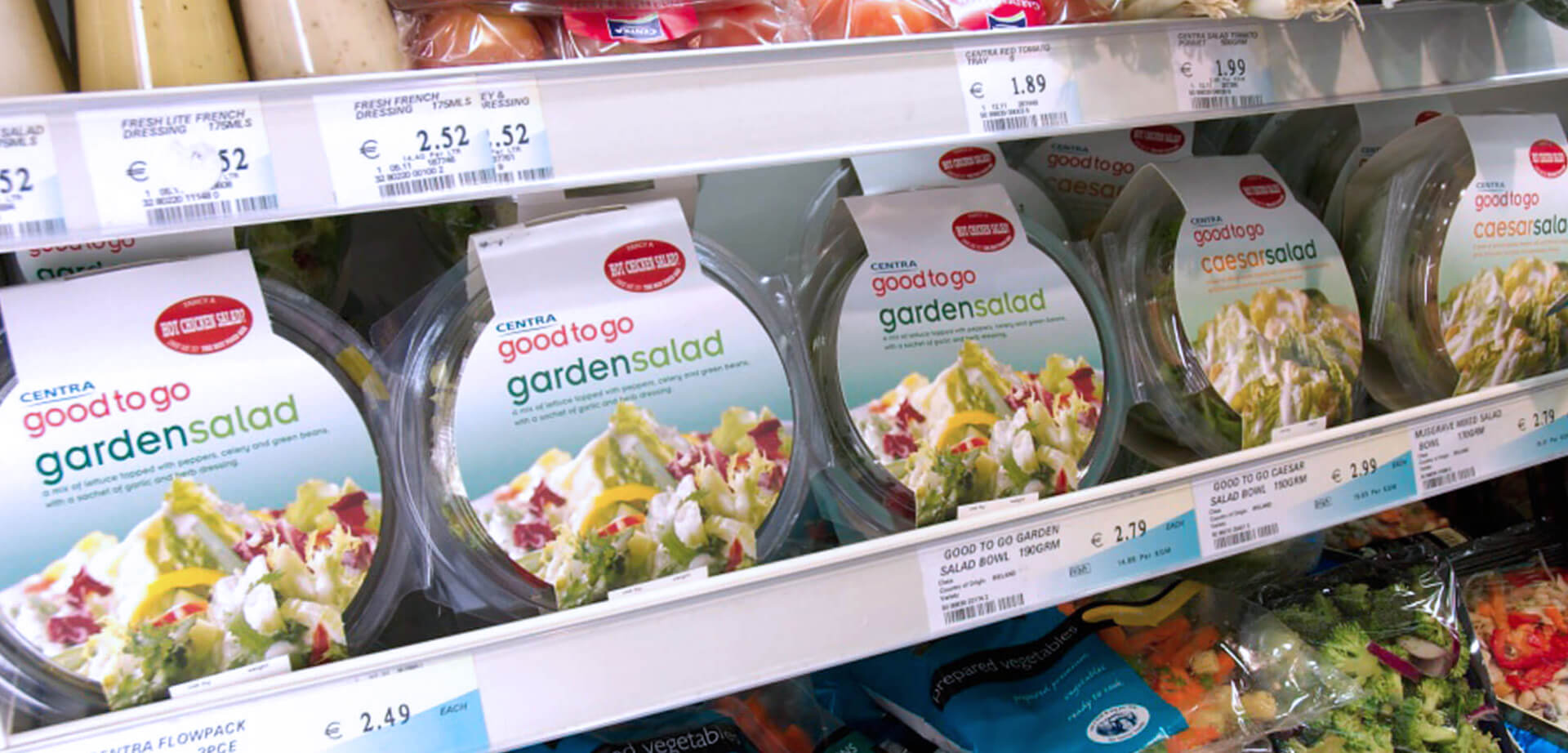
The “Good to Go” range brings fresh, convenient options to shoppers across Ireland and the United Kingdom, featuring popular items like Garden Salads and Caesar Salads. These ready-to-eat meals are part of Centra’s vibrant food-on-the-go offering, typically displayed in the refrigerated deli or salad sections of stores. Priced between €2.49 and €2.99, they combine quality, freshness, and value for busy customers.
For added convenience, many locations allow pre-ordering via the Centra app or website, enabling quick pick-up through their “Beat the Queue” service. Depending on your local store, these salads are also available for delivery through Uber Eats, Deliveroo, and Just Eat, making it effortless to enjoy fresh, on-the-go meals anytime.
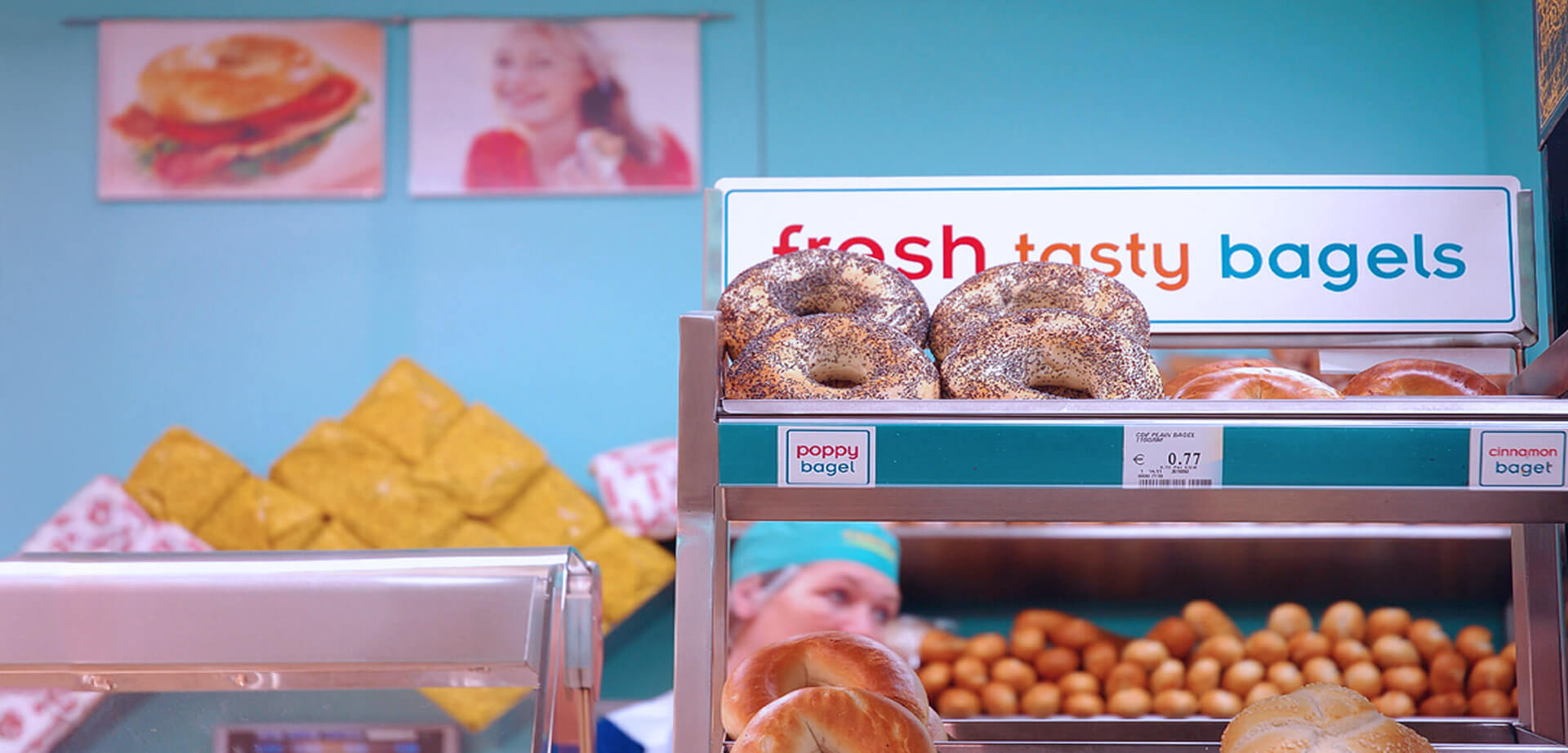
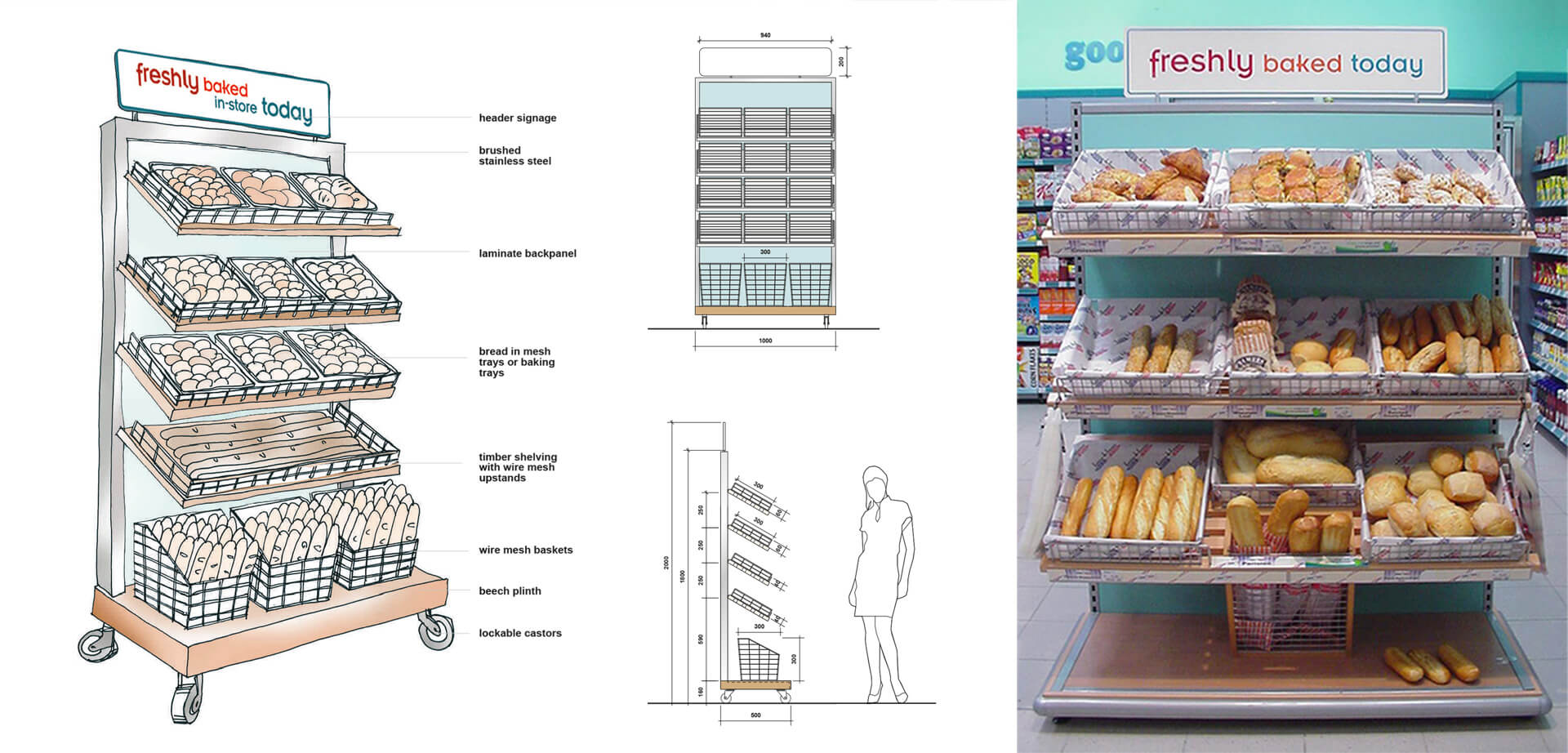
Freshly baked today concept: The store layout has been designed to be part of Centra's “The Fresh Market" initiative, which emphasizes fresh food sections.
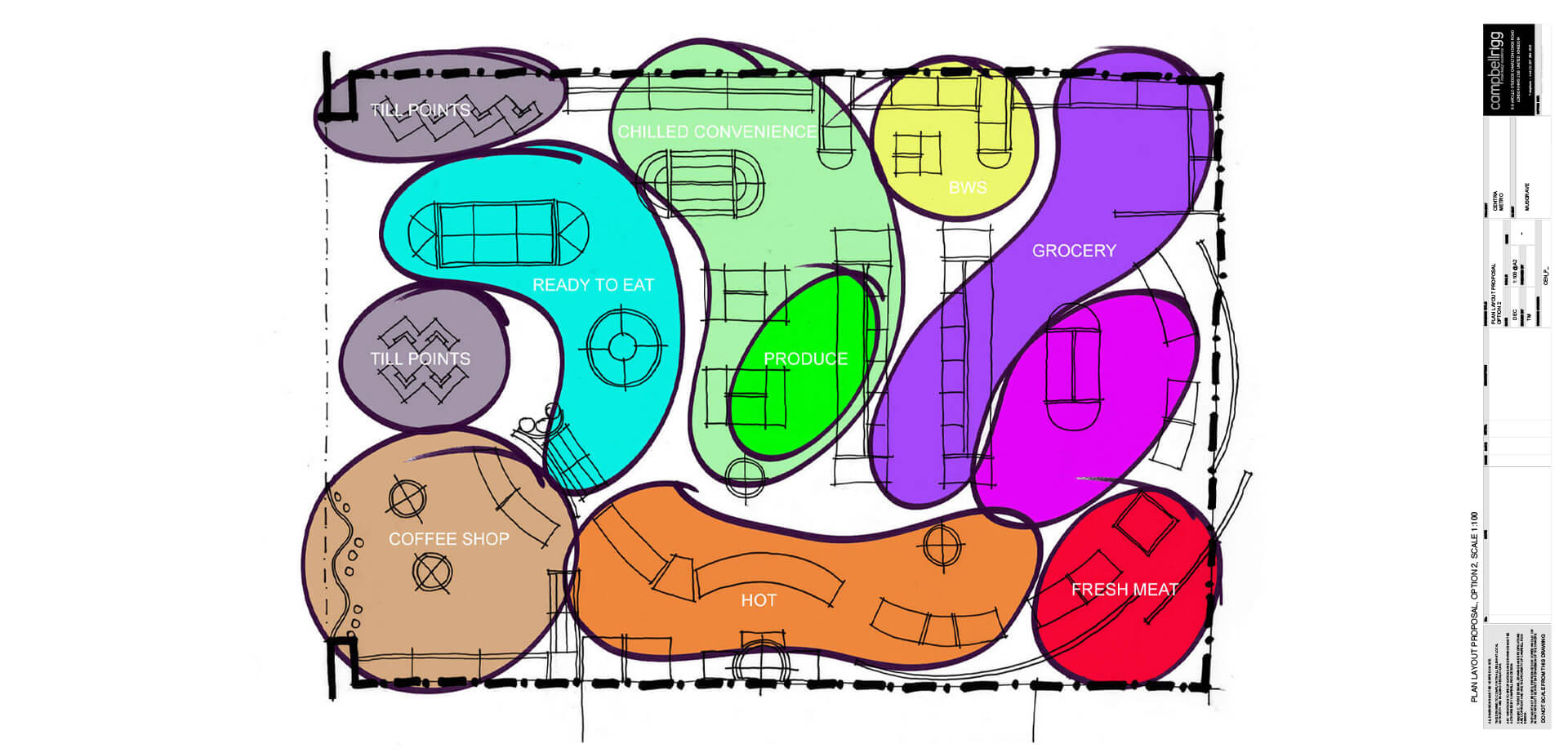
The store concept utilizes clear zoning to help customers navigate the convenience store.
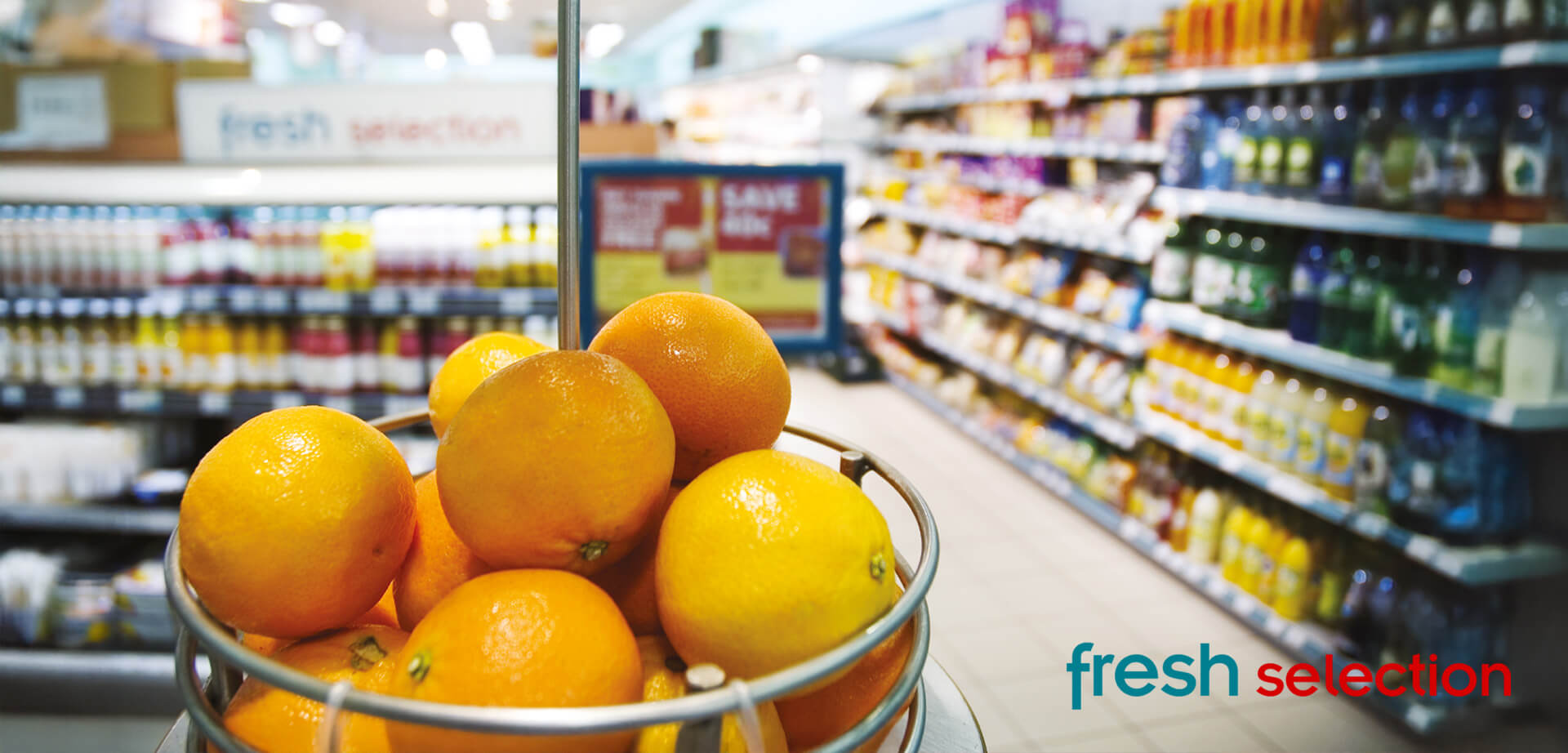
Products are presented in open wire baskets for clear visibility and easy access, encouraging impulse purchases while maintaining a smooth, intuitive shopper flow. The approach combines practicality with strong visual merchandising to support Centra’s fresh, fast and customer-focused convenience proposition.
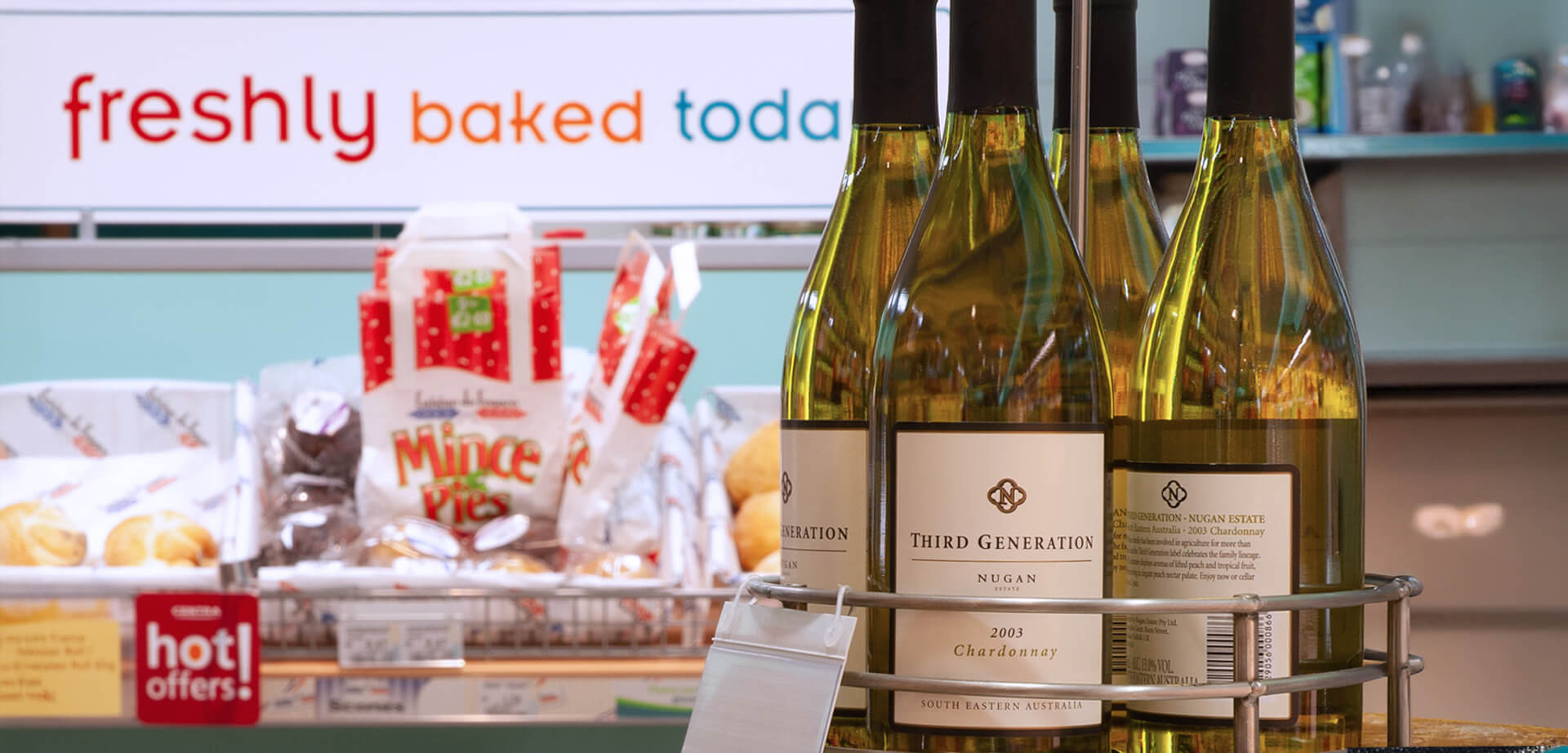
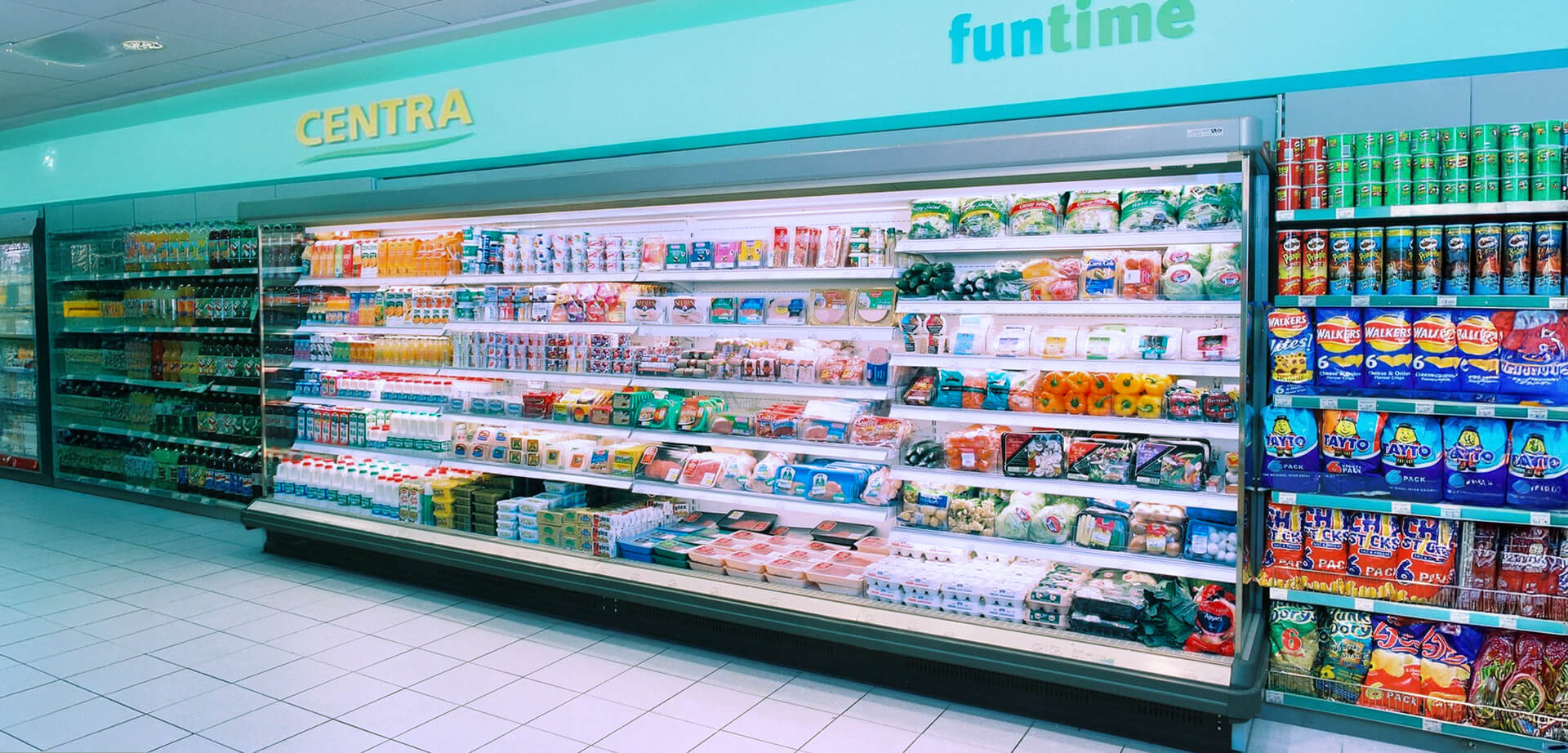
Clear Signage and Wayfinding: Prominent, intuitive signage makes key departments easy to identify, helping customers navigate the store confidently, find products quickly and move efficiently through the shopping journey.
Testimonial: "I am very pleased with the very good job that Campbell and his team have done to help us create our new look, and have no hesitation In recommending CampbellRigg for their excellent work in a very challenging retail environment." Carlos Criado-Perez Chief Executive, Safeway
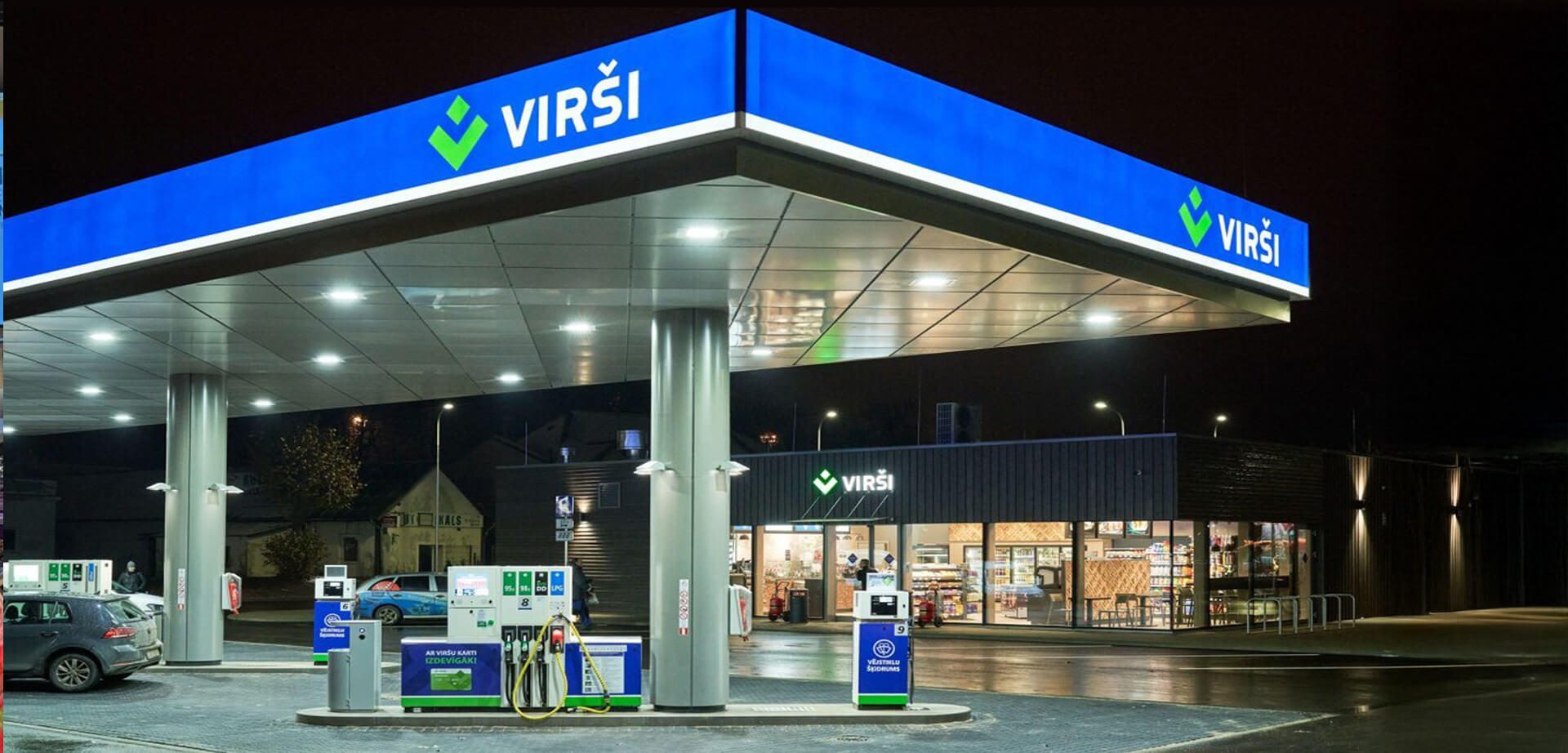
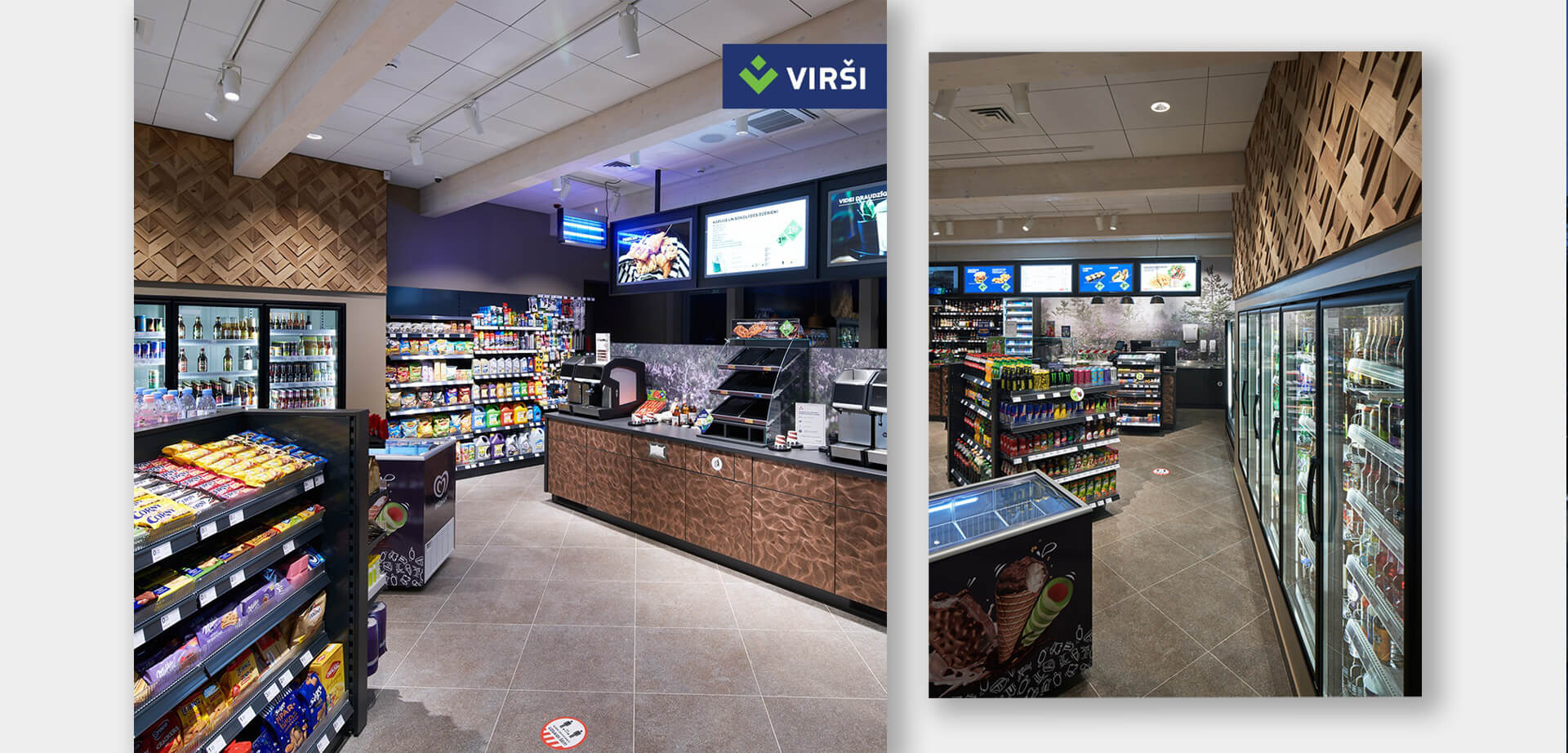
International benchmark: Virši, Latvia and Lithuania - Integrated mobility and convenience stores
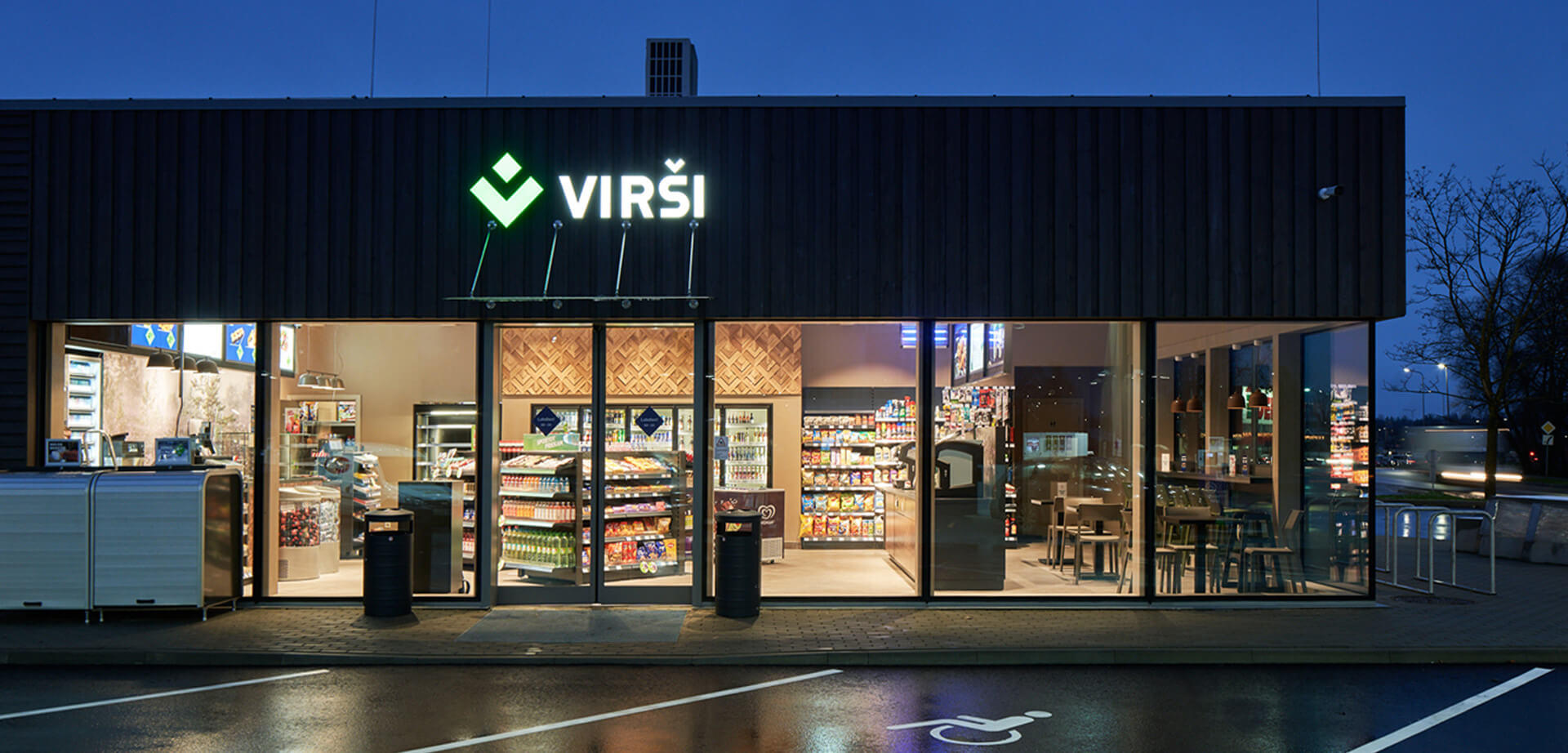
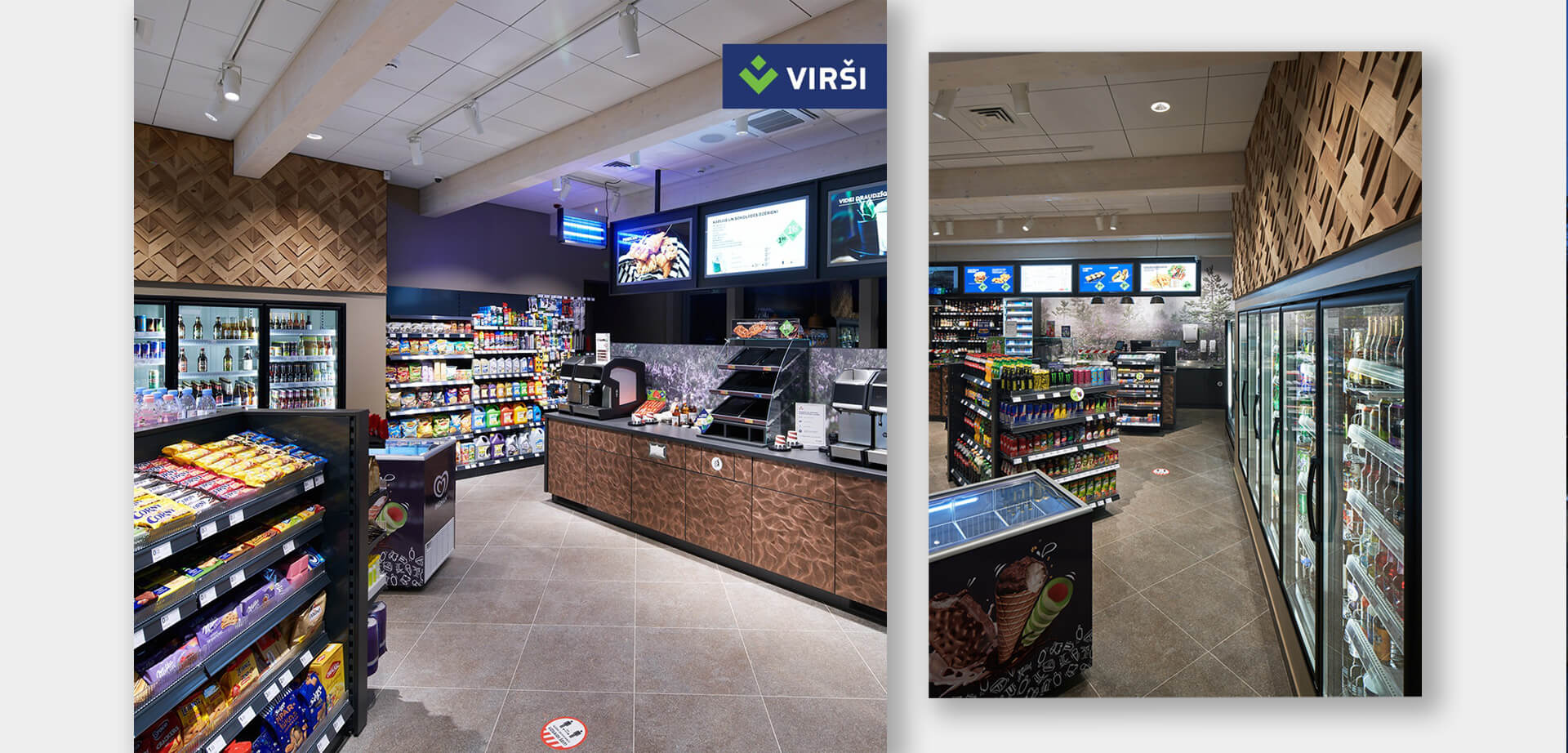
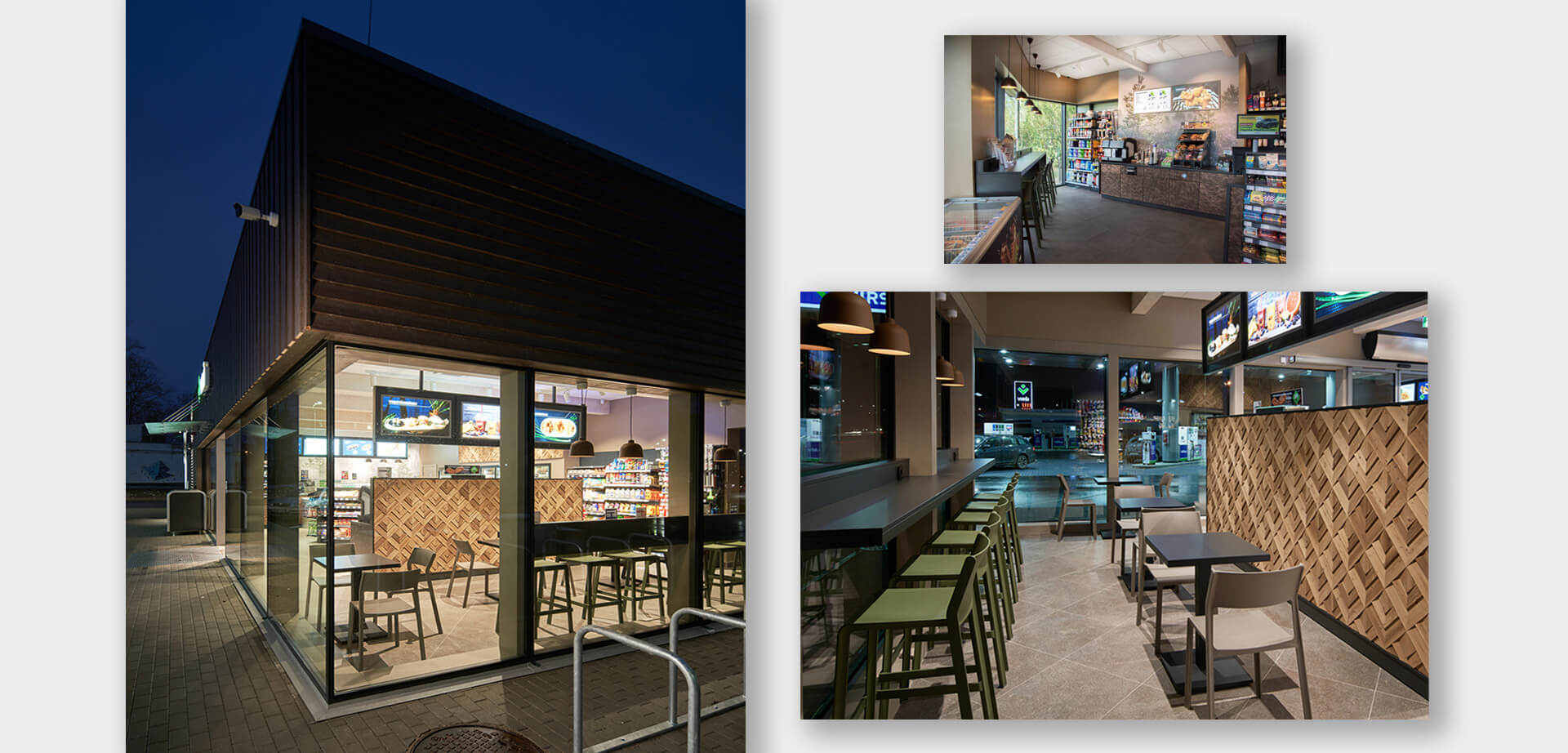
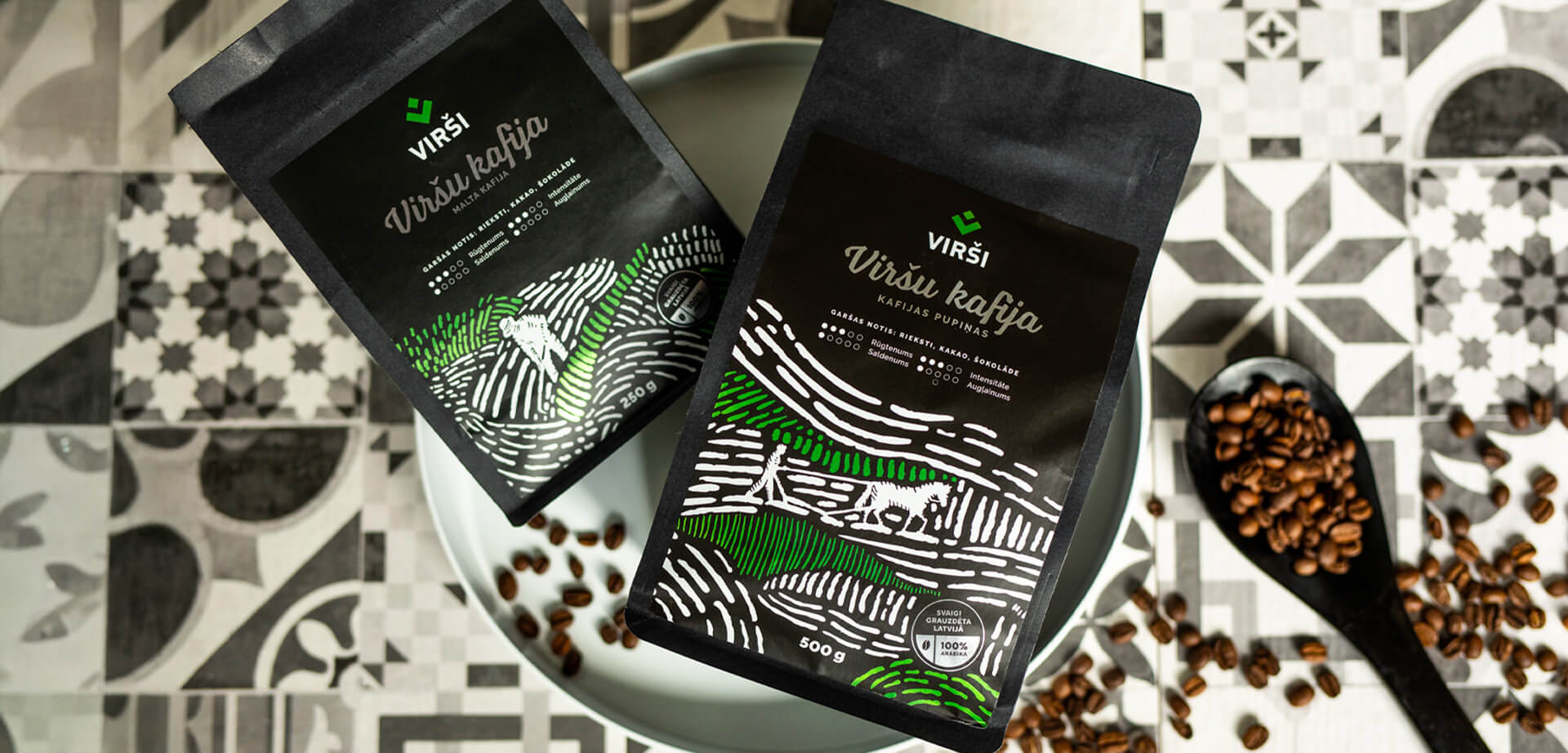
Virši combines energy and convenience retail through a network of service stations and convenience environments across Latvia and Lithuania.
Its retail environments integrate fresh coffee, hot snacks, everyday essentials and convenience purchasing within a broader refuelling and mobility proposition. The stores use open planning, strong visibility and accessible merchandising to support fast purchasing and impulse sales.
The benchmark demonstrates how convenience retail can become more than a transactional add-on.
It can become a destination within a wider service ecosystem.
How CampbellRigg helps
CampbellRigg considers the convenience environment as part of the wider customer proposition rather than designing the store in isolation.
For a mobility-led retailer, that can mean aligning:
- refuelling and retail journeys;
- food-to-go and coffee;
- customer dwell areas;
- impulse purchasing;
- brand identity;
- mobility services;
- alternative-energy propositions;
- digital customer engagement.
Commercial takeaway
Virši demonstrates how an integrated mobility and convenience ecosystem can create additional reasons to stop, purchase and return.
For retailers operating across multiple channels or locations, the format should therefore reinforce the wider business proposition rather than operate independently from it.
Use proven commercial evidence to guide format investment
A scalable convenience format should be judged by commercial performance, not visual appeal alone.
CampbellRigg's wider supermarket and convenience portfolio provides measurable evidence of this principle.
For Safeway UK, CampbellRigg's work included analysis of existing convenience, supermarket and superstore formats, followed by the development of adaptable environmental zones for different store sizes. CampbellRigg reports that the resulting format delivered sales 40% above budget after opening.
In a separate Safeway convenience project at St Katharine's Dock in London, increasing the footage devoted to fresh-food departments was associated with a reported 20–30% week-on-week sales increase.
These figures should not be interpreted as universal benchmarks. They demonstrate something more important for management: specific changes to format planning, fresh-food allocation and customer experience can be connected to measurable commercial outcomes when the project is properly structured and evaluated.
How CampbellRigg helps
CampbellRigg can establish the commercial measures at the beginning of the project rather than adding measurement after the design is complete.
Potential KPIs include:
- sales productivity;
- sales per square metre;
- basket value;
- conversion;
- customer frequency;
- food-to-go performance;
- dwell time;
- operational efficiency;
- loyalty and retention;
- capital expenditure;
- rollout cost;
- ROIC.
The benefit is a design programme with commercial accountability built into the brief.
Endoresment: “I am writing to recommend CampbellRigg for business cooperation on creative design solutions in the retail industry." Murat Akdag - Head of Marketing, Migros Ticaret A.S. Turkey
Turn format design into a measurable rollout programme
A strong concept has little value if it cannot be implemented consistently.
Management therefore needs a clear route from strategy to pilot, evaluation and network rollout.
How CampbellRigg helps
CampbellRigg can take the programme from brand audit and strategic brief through concept development, detailed design, brand guidelines, implementation and rollout.
The design brief construction process establishes the commercial and customer requirements before creative development begins.
The supermarket store design and format planning capability then enables the strategic direction to be translated into physical environments where the format requires broader supermarket-scale application.
We establish the principles required to protect consistency while enabling local adaptation.
This transforms store design from a capital project into an ongoing commercial management tool.
The management agenda for convenience retail 2026–27
Between 2026 and 2027, retail leadership will increasingly need to simplify complexity while deepening local relevance.
The strategic priorities are clear:
- build scalable multi-format systems;
- increase productivity from limited footprints;
- make food-to-go a central part of the convenience proposition;
- connect physical and digital journeys;
- use data and technology where they improve commercial performance;
- maintain brand consistency while adapting to local demand;
- measure format decisions against sales productivity, customer behaviour and ROIC.
The next-generation convenience supermarket is therefore not defined simply by size, location or visual style.
It is defined by its ability to translate intelligence into relevance and relevance into return.
How CampbellRigg helps build scalable convenience retail networks
CampbellRigg brings together the disciplines required to move from strategic ambition to physical implementation.
- Strategy: Brand audits, positioning, customer insight, mission, vision and values, and design brief construction.
- Branding; Brand identity, retail branding, brand architecture, visual communication and brand guidelines.
- Format planning: Convenience store formats, multi-format systems, modular planning and scalable rollout frameworks.
- Store design: Customer journeys, space planning, category zoning, food-to-go environments, merchandising and wayfinding.
- Digital and omnichannel: Phygital experiences, loyalty integration, digital ordering and technology-enabled customer journeys.
- Implementation: Concept development, detailed design, specifications, rollout support and network consistency.
CampbellRigg begins by connecting these disciplines rather than treating them as separate design commissions.
The benefit to management is one strategic direction linking brand decisions to the physical retail network with the flexibility to adapt that direction across different markets, footprints and customer missions.
From strategy to measurable retail performance
The management challenge is no longer simply to create a successful convenience store.
It is to create a repeatable retail format that can perform across an entire network.
CampbellRigg combines international retail experience with multidisciplinary expertise in strategy, branding, store design and format planning to help supermarket and convenience retailers make that transition.
Our approach is commercially focused:
- Book a free consultation call
- Co-create a bespoke strategic brief
- Develop and execute the creative solution rapidly
- Translate the concept into a scalable retail format
- Measure the impact through sales, loyalty, productivity and market performance
Why CampbellRigg
Cost-Effective Excellence
Competitive commercial value without compromising strategic thinking or creative quality.
Rapid Execution
An agile multidisciplinary team capable of moving from strategic definition to implementation efficiently.
Multidisciplinary Expertise
Brand strategists, architects, interior designers and graphic designers working as one integrated team.
Global Reach, Local Insight
International retail experience combined with sensitivity to individual markets and customer behaviours.
Scalable Project Delivery
From compact convenience stores and forecourts to major supermarket environments and multi-site rollout programmes.
Proven Retail Experience
A track record spanning supermarket, convenience, petrol forecourt, banking, technology and international retail environments.
Integrated Service
Strategy, branding, format planning, spatial design and implementation brought together within one commercial programme.
For management teams planning the next generation of convenience supermarket formats, the opportunity is to move beyond isolated store improvements and build a scalable retail system capable of delivering consistent customer value and measurable commercial performance.
CampbellRigg can help turn that strategy into a format that works in the real world and can be repeated across the network.