



News and Views
Phygital Banking Strategy 2026/27: How Banks Can Redesign Branch Networks


Phygital Banking Strategy 2026/27: How Banks Can Redesign Branch Networks
Phygital banking strategy is changing how banks design, operate and invest in branch networks.
The strategic issue for bank CEOs, retail banking directors and transformation teams is no longer simply whether customers will continue moving between mobile banking, digital platforms and physical branches. It is how the physical network should be redesigned so that digital convenience, human expertise, brand experience and commercial performance work as one system.
The modern bank branch is moving beyond its traditional role as a transaction centre.
It is becoming a connected customer-experience, advisory and relationship environment in which digital services, physical space, employees, technology and brand work together.
For senior management, the objective is not to create a more attractive branch.
It is to create a scalable, measurable and commercially effective branch network in which every format has a defined role, every location has a clear customer proposition and every investment can be linked to customer, operational or commercial outcomes.
That makes phygital banking strategy a network transformation challenge, not simply a branch design challenge.

The strategic shift: from digital branches to connected branch networks
The future of phygital banking is not about making every branch more digital. It is about determining what every physical location should accomplish within the bank’s wider customer, brand and commercial strategy.
A phygital banking strategy connects mobile banking, digital self-service, human advice and physical space into one coherent customer journey. The branch therefore becomes one component of a wider network rather than an isolated destination.
For bank management, the strategic question is no longer simply how to redesign individual branches. It is how to configure the branch network, formats, customer journeys and investment priorities so that each location performs a defined role.
That requires a shift from branch-by-branch design to a scalable network model: Bank strategy → customer needs → network roles → branch formats → customer journeys → spatial design → implementation standards → measurable performance.
The objective is a physical banking network that is easier to scale, more relevant to changing customer behaviour and capable of delivering measurable commercial value.

The management challenge: turning phygital strategy into a scalable branch network
Digital banking has fundamentally changed the role of the physical branch.
Routine transactions can increasingly be completed through mobile applications, online banking and self-service. Customers can research financial products digitally, communicate remotely with their bank and begin applications without visiting a branch.
Yet physical banking continues to have an important role when customers need advice, reassurance, expertise, privacy or human interaction.
The management challenge is therefore to determine where physical presence creates additional value.
Banks need to establish:
- which customer journeys should remain predominantly digital;
- where physical interaction creates commercial or relationship value;
- which services require specialist human expertise;
- which interactions require privacy;
- how much space should be allocated to advice, service and self-service;
- which locations require full-service, compact or specialist formats;
- how digital and physical channels should exchange information;
- how different branch formats should operate within one network;
- how property and spatial investment should reflect local demand; and
- how branch transformation should be measured.
The objective is not to make every branch more digital.
It is to determine what every physical location should accomplish within the bank's wider customer, brand and commercial strategy.
How CampbellRigg helps
CampbellRigg connects disciplines that are often commissioned separately.
Brand auditing establishes how the existing proposition is perceived and expressed.
Strategy defines the desired market position, customer proposition and commercial priorities.
Customer journey planning identifies where physical intervention creates value.
Format architecture establishes the role of different branch models.
The design brief then converts these strategic decisions into practical requirements for customer experience, branch planning, identity, technology and implementation.
The benefit: management receives one strategic direction linking brand, customer behaviour, physical investment and network performance rather than a collection of disconnected design initiatives.

What is phygital banking?
Phygital banking integrates physical branches with digital banking platforms, self-service technology, data, AI-enabled services, human expertise and branded customer experience.
It is more than installing digital screens in a branch.
A genuine phygital banking strategy connects the customer's journey across channels.
A customer might discover a mortgage through a digital channel, research products online, book a branch appointment through a mobile application, receive specialist advice in person, complete documentation digitally and continue managing the relationship through mobile banking.
The branch is therefore no longer an isolated physical channel.
It becomes one component of a connected banking ecosystem.
The distinction is important.
Digital banking delivers services through digital channels.
Phygital banking connects digital channels with physical environments, human expertise, customer journeys and brand experience.
For management, this changes the strategic question from: “How should we redesign our branches?”
to: “What role should the physical branch play within the complete customer relationship?”
How CampbellRigg helps
CampbellRigg maps the relationship between digital and physical customer journeys before defining the physical environment.
This establishes where the customer:
- discovers a product;
- researches alternatives;
- requests information;
- books an appointment;
- enters a branch;
- receives advice;
- completes an application;
- receives follow-up; and
- continues the relationship digitally.
The benefit: physical investment decisions are based on the complete customer journey rather than on branch interiors in isolation.
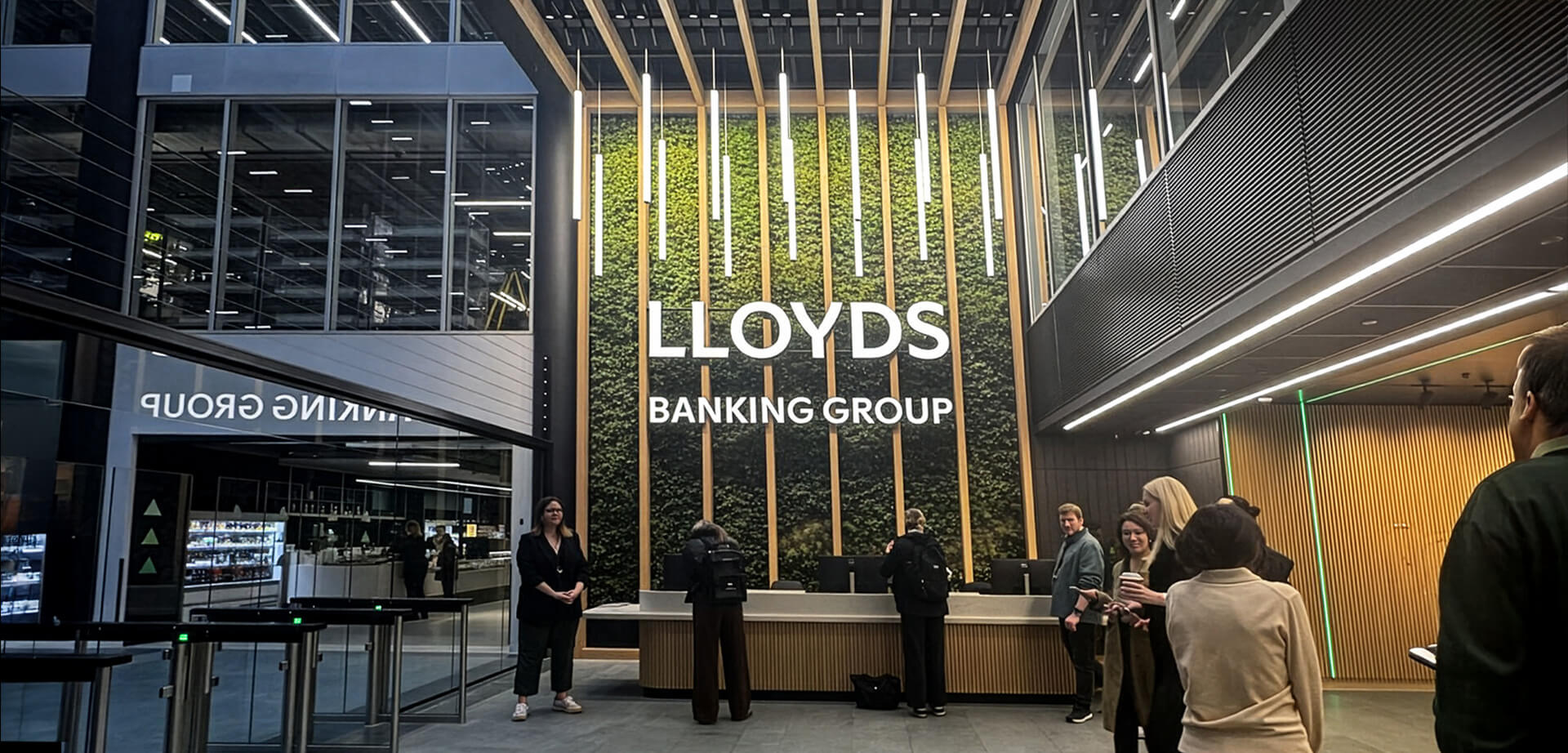
Why banks are redesigning branch networks
Three structural forces are accelerating bank branch redesign.
1. Digital banking has changed customer expectations
Customers increasingly expect banking to be convenient, fast and personalised.
A branch that simply replicates services already available through a mobile application provides limited additional value.
Physical space therefore needs a clearer purpose.
2. Complex financial decisions still benefit from human expertise
Mortgages, investments, wealth management, business finance and other significant financial decisions can involve complexity, uncertainty and personal circumstances.
Customers may require specialist advice, reassurance and the ability to discuss important decisions with an experienced professional.
This increases the strategic importance of advisory environments within the branch network.
3. Branch economics are changing
Large networks of traditional transaction-led branches can require substantial property, staffing and operational investment.
Management therefore needs to understand the role and economics of every format.
The question becomes how physical space can contribute more effectively to:
- customer acquisition;
- product conversion;
- advice;
- retention;
- relationship value;
- employee productivity;
- digital adoption; and
- network efficiency.
How CampbellRigg helps
CampbellRigg connects the strategic role of the branch with its physical requirements.
We can audit existing formats, customer journeys, communications, spatial planning and brand expression before establishing the requirements for the future network.
The benefit: management receives an evidence-led basis for deciding what should change, where investment should be concentrated and how the branch network should evolve.
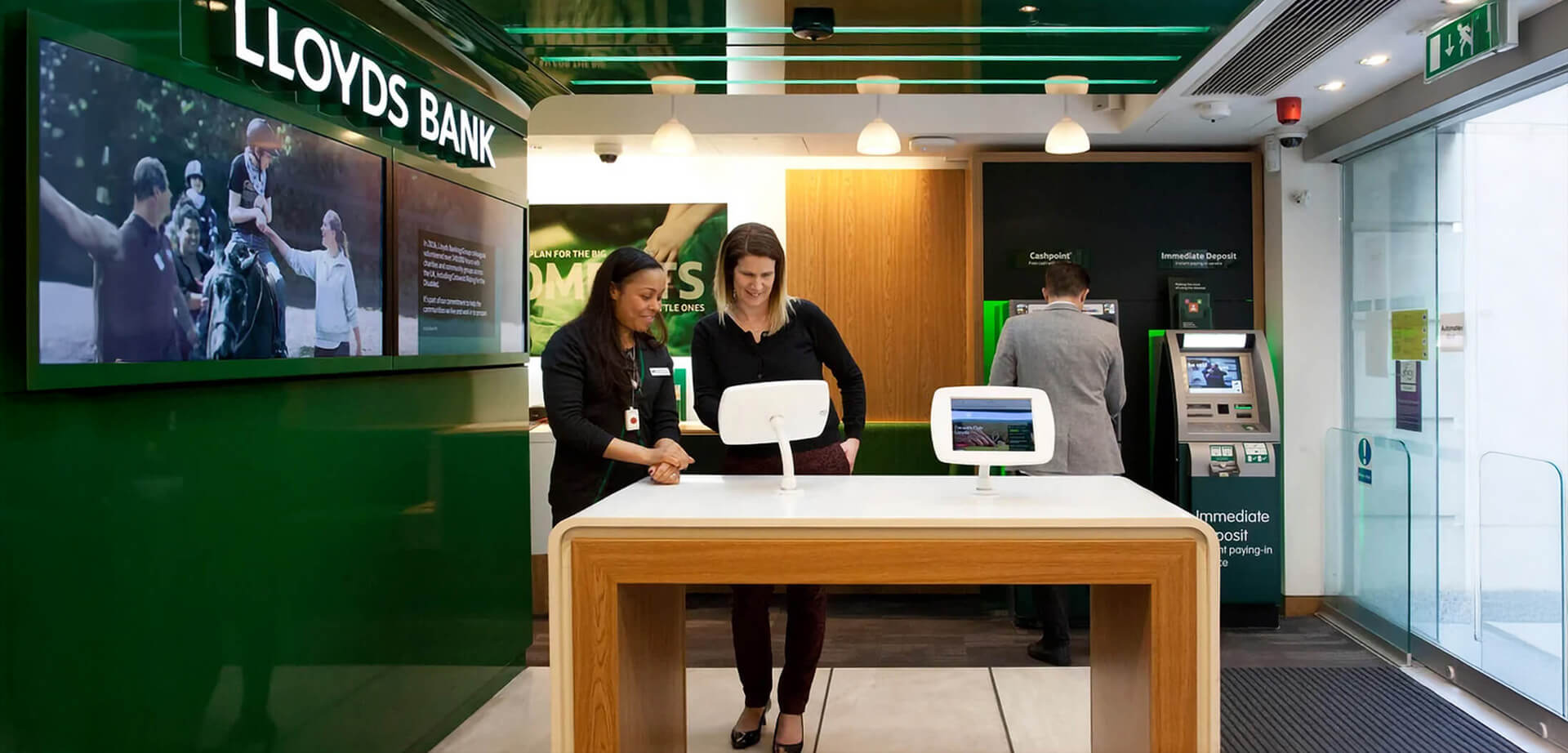
Redesign the branch around customer value
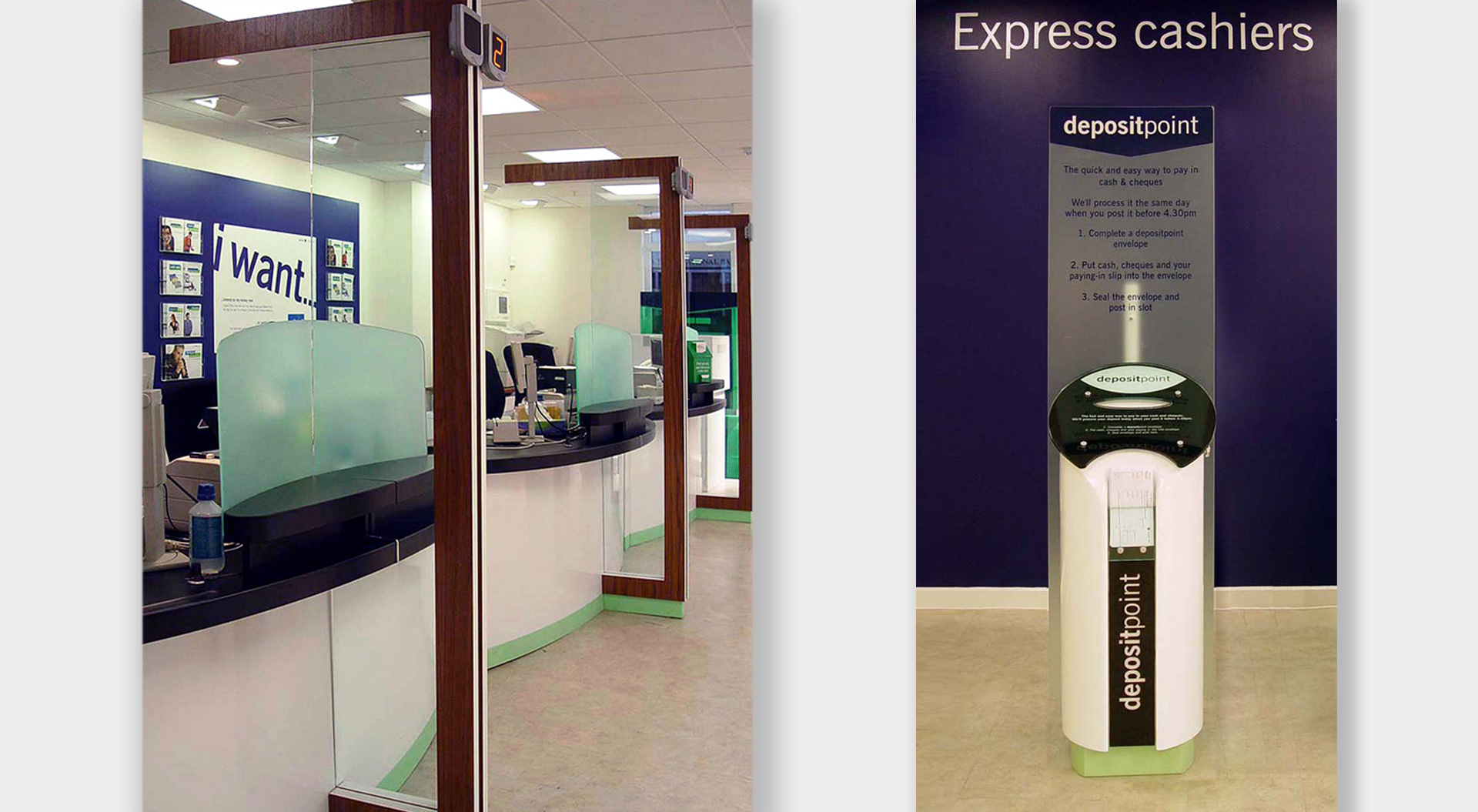
A phygital branch should be organised around customer activity rather than inherited operational processes.
Traditional banking environments were frequently structured around queues, counters and desks.
A future-ready branch can instead combine:
- digital discovery;
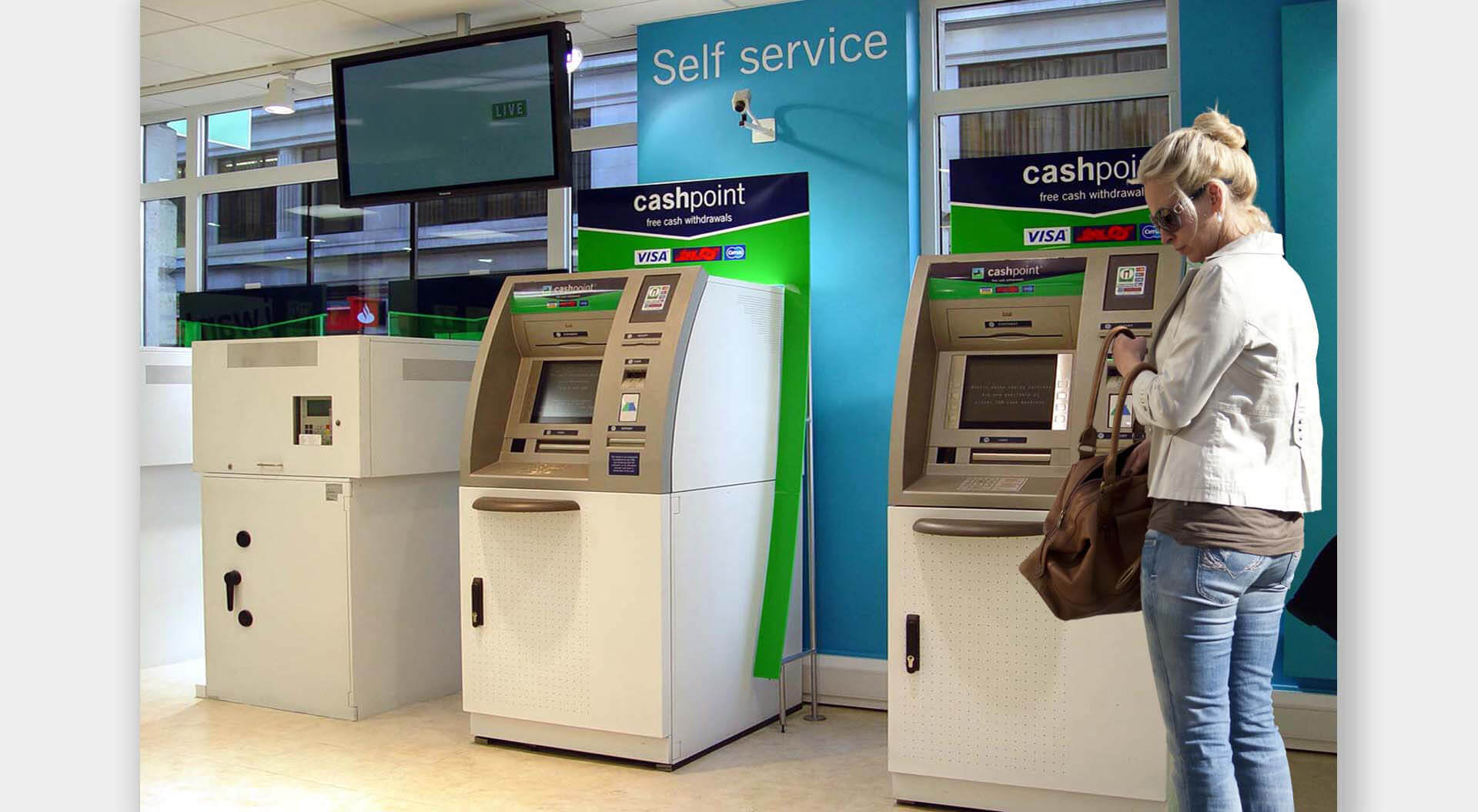
- self-service banking;
- assisted digital support;
- financial education;
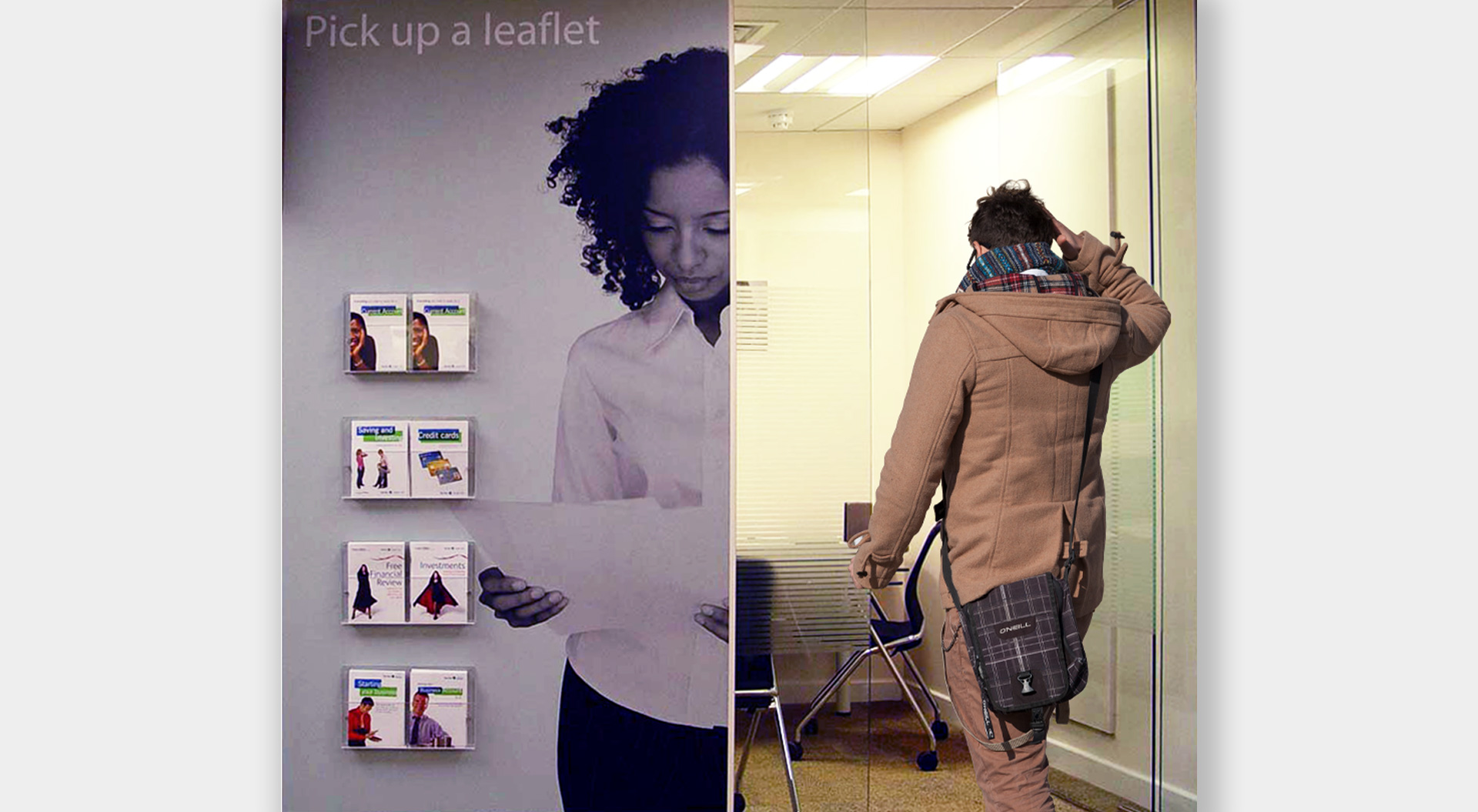
- open advisory areas;
- private consultation rooms;
- flexible meeting spaces;
- remote specialist advice;
- technology-enabled demonstrations;
- hospitality-led waiting environments; and
- intuitive wayfinding.
The objective is not to fill the branch with technology.
Technology should remove friction and support the journey.
Physical space should concentrate on the activities where presence, trust, privacy, expertise and human interaction create additional value.
How CampbellRigg helps
CampbellRigg audits the existing branch experience before translating the customer proposition into a physical design brief.
The process connects: Customer requirement → service role → spatial requirement → brand expression → technology requirement → commercial objective
This provides a practical framework for determining how much space each activity requires and what that space needs to achieve.
The benefit: physical investment is allocated according to customer and commercial value rather than inherited branch conventions.

Connect mobile banking with the physical experience
A phygital banking strategy should not stop when the customer enters the branch.
The customer journey should move naturally between smartphone, website, appointment booking, digital onboarding, branch technology and human advice.
Mobile integration can support:
- appointment booking;
- digital check-in;
- personalised information;
- application continuation;
- document submission;
- QR-enabled journeys;
- product research;
- digital onboarding;
- follow-up communications; and
- post-appointment servicing.
The objective is continuity.
Customers should not have to restart a process simply because they have moved from digital to physical.
How CampbellRigg helps
CampbellRigg connects digital and physical customer journeys with the requirements of the physical environment.
We identify where digital information, self-service, employee support and physical space need to work together.
The resulting design brief can specify the relationship between mobile journeys, digital interfaces, branch navigation, customer communications and advisory environments.
The benefit: the branch becomes a connected component of the bank's omnichannel proposition rather than a separate service channel.

From transaction centre to advisory experience hub
The role of the physical branch is changing from transaction processing towards higher-value customer interaction.
A useful strategic hierarchy is: Transaction → Service → Advice → Relationship
rather than: Queue → Counter → Exit
This has direct implications for space allocation.
Customers may enter through a digital discovery environment, move through self-service or assisted digital banking and then access increasingly private and personalised advisory spaces.
Open environments can support informal conversations.
Dedicated consultation areas can support mortgages, investments and other complex financial decisions.
Private rooms can support sensitive financial discussions.
Flexible meeting environments can support different customer and employee requirements throughout the day.
How CampbellRigg helps
CampbellRigg translates the desired customer journey into a spatial hierarchy.
Customer behaviour, service requirements, brand expression, privacy, technology and operational considerations are brought together before detailed design begins.
The benefit: the branch is designed around the value of customer interaction rather than simply around the efficient processing of transactions.
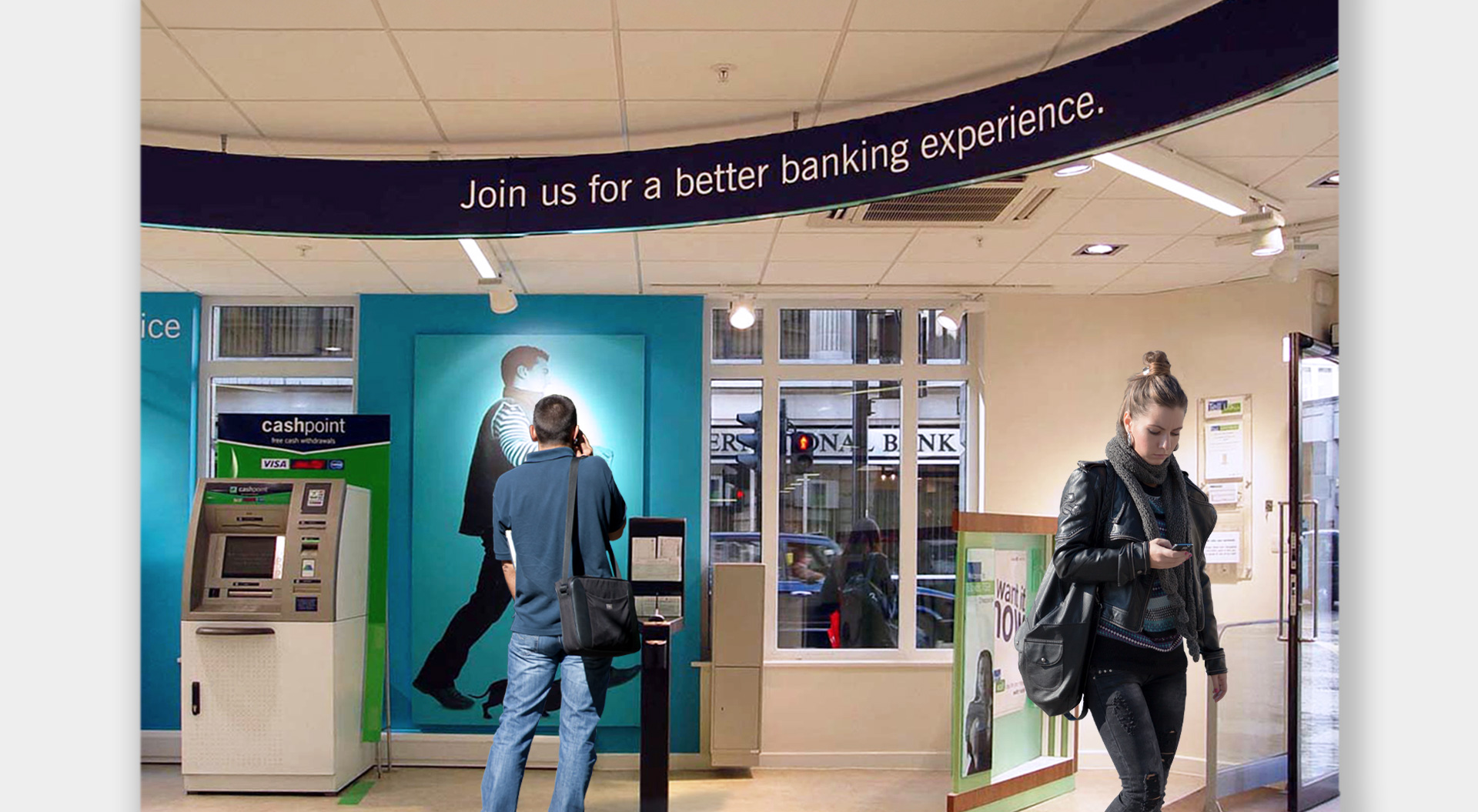
Create a modular phygital branch format system
A national or international branch network rarely requires one universal physical format.
Different locations have different catchments, customer profiles, property economics, footfall patterns and commercial objectives.
A scalable phygital network can therefore contain multiple formats.
Micro-branches - Compact environments focused on essential services, digital discovery, self-service and advice.
Advisory centres - Specialist environments focused on mortgages, wealth management, business banking or other complex financial services.
Digital banking hubs - Technology-enabled environments supporting self-service, onboarding and assisted digital banking.
Kiosks and satellite formats - Smaller physical touchpoints positioned within high-footfall locations.
Flagship branches - Larger environments combining brand experience, advisory services, digital innovation, community engagement and specialist customer journeys.
Pop-up banking environments - Flexible physical formats that can support new developments, targeted acquisition programmes, events or emerging markets.
The objective is not to create more formats for their own sake.
It is to establish a branch format architecture in which every physical model has a defined role.
How CampbellRigg helps
CampbellRigg develops the format architecture before designing individual locations.
For each format, we establish:
- customer role;
- target journey;
- service proposition;
- brand principles;
- spatial requirements;
- technology requirements;
- operational principles;
- design components;
- implementation standards; and
- performance measures.
The benefit: management can scale a proven format system across multiple locations while retaining appropriate flexibility for local market conditions.
This is where phygital banking strategy becomes a network management discipline rather than a branch-design exercise.
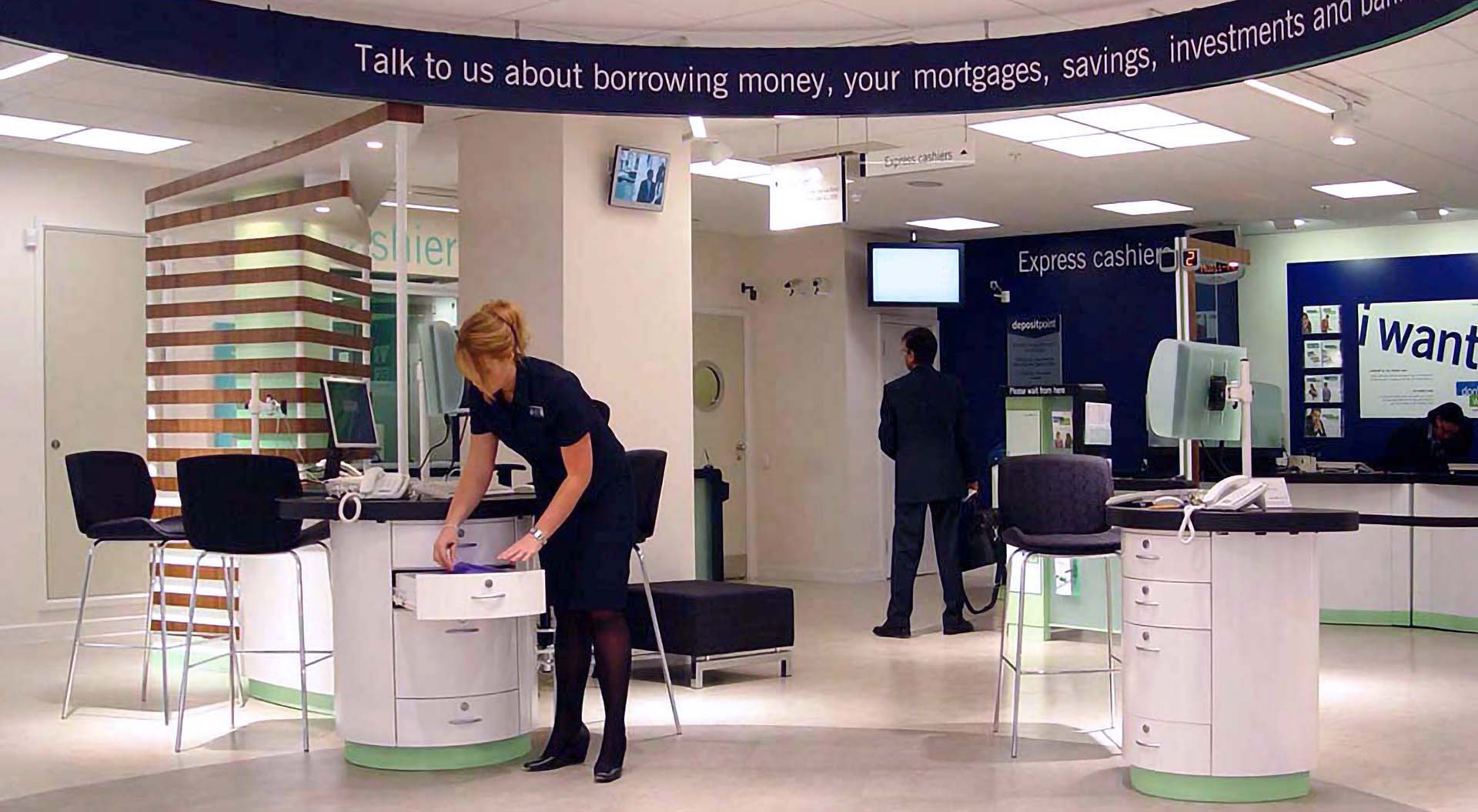
Design the complete phygital customer journey
A successful phygital customer journey can be structured as: Discover → Research → Engage → Visit → Advise → Apply → Complete → Follow-up
For example, a customer can discover a financial product digitally, research the proposition, book an appointment, enter the branch for specialist advice, complete elements of the application digitally and continue the relationship through mobile banking.
The physical environment therefore needs to support the journey before, during and after the branch visit.
How CampbellRigg helps
CampbellRigg maps the complete customer journey and identifies where physical intervention creates measurable value.
This includes the relationship between: Digital discovery → appointment → arrival → navigation → advice → application → completion → follow-up
The physical environment can then be designed around the actual sequence of customer activity.
The benefit: every branch touchpoint has a defined role within the wider customer relationship.
Build flexibility into the branch network
Branch design needs to accommodate changing customer behaviour, technology and service models.
Rigid environments can quickly become obsolete if every service requires a dedicated room, workstation or physical installation.
A more flexible approach can use:
- modular furniture;
- adaptable consultation areas;
- movable screens;
- flexible meeting spaces;
- integrated digital infrastructure;
- scalable signage;
- modular brand components; and
- technology-ready environments.
This enables the bank to adapt its physical network without repeatedly rebuilding the entire concept.
How CampbellRigg helps
CampbellRigg translates the future-state strategy into modular design principles and implementation standards.
The objective is to create a system that can evolve as customer behaviour, digital services and technology change.
The benefit: management invests in a branch platform capable of adaptation rather than a fixed environment tied to today's operating model.
Measure branch transformation against commercial performance
Phygital branch design should not be measured primarily by aesthetic quality.
For senior management, the business case needs to connect investment in architecture, technology, customer experience and brand environments to measurable outcomes.
A management KPI framework can include:
- customer acquisition;
- product conversion;
- appointment conversion;
- advisory utilisation;
- customer retention;
- digital adoption;
- customer satisfaction;
- employee productivity;
- branch utilisation;
- cost-to-serve;
- revenue per square metre; and
- return on branch investment.
The precise KPI framework should reflect the bank's proposition, customer segments, network strategy and investment objectives.
The principle is straightforward: branch design should have a measurable commercial purpose.
How CampbellRigg helps
CampbellRigg translates commercial objectives into customer-experience and design requirements.
If management wants to improve advisory conversion, the environment needs to support discovery, consultation, privacy, employee visibility and follow-up.
If the objective is increased digital adoption, self-service needs to be understandable, accessible and integrated with employee assistance.
If the objective is network efficiency, format architecture and space allocation need to reflect local demand.
The benefit: design decisions can be evaluated against the commercial outcomes the branch network is expected to produce.

The five management pillars of phygital banking
A scalable phygital branch network connects five disciplines:
1. Brand - The branch must communicate the bank's proposition, identity and differentiation consistently.
2. Digital - Mobile, web, self-service, data, AI and other digital touchpoints need to connect with the physical environment.
3. Physical - Architecture and interior design need to balance discovery, service, advice, privacy, flexibility and hospitality.
4. People - Employees remain critical where customers require expertise, judgement, reassurance and relationship management.
5. Performance - The environment needs to support measurable outcomes including engagement, conversion, productivity, utilisation and customer value.
How CampbellRigg helps
CampbellRigg connects these disciplines rather than treating them as separate design commissions.
Brand auditing establishes how the proposition is currently perceived.
Strategy defines the desired position.
Customer journey planning identifies where physical intervention creates value.
Format architecture defines the scalable network model.
The design brief converts that strategy into practical requirements for branch planning, identity, customer experience, technology and implementation.
The benefit to management:one strategic framework linking brand, digital experience, physical space, people and commercial performance.

From individual branches to a scalable phygital banking network
The strategic opportunity is larger than redesigning individual branches.
A bank may have:
- customers who primarily use mobile banking;
- customers who need local advice;
- high-value customers requiring private environments;
- business customers requiring specialist relationship space;
- locations where a compact format is appropriate; and
- flagship locations where brand experience has a strategic role.
The network should therefore be treated as a portfolio of connected physical formats.
Each format needs a defined: Customer role → Service proposition → Investment requirement → Spatial model → Brand expression → Technology requirement → Commercial objective
How CampbellRigg helps
CampbellRigg connects: Bank strategy → customer segmentation → brand proposition → format architecture → customer experience → spatial design → implementation standards → rollout
This creates a common framework for decision-making across the network.
The benefit: management can approve and fund a scalable system rather than repeatedly commissioning individual branch concepts.

How CampbellRigg turns phygital strategy into implementation
The commercial value of CampbellRigg's approach is not simply the ability to design a branch.
It is the ability to connect strategic thinking with implementation.
1. Audit - We assess the existing brand proposition, customer experience, branch formats, communications and physical environment.
2. Strategy - We define the desired market position, customer proposition, network requirements and commercial objectives.
3. Customer journey - We identify how customers move between digital and physical channels and where physical intervention creates additional value.
4. Format architecture - We establish the appropriate branch formats and define the role of each within the network.
5. Design brief - We translate the strategy into practical requirements for customer experience, architecture, interior design, identity, technology and communications.
6. Prototype - We develop and test the format before wider implementation.
7. Design standards - We establish repeatable principles, components and guidelines for network deployment.
8. Rollout - We support implementation across locations while maintaining strategic and brand consistency.
9. Measurement - We connect the transformation programme to agreed customer, operational and commercial measures.
The benefit: management receives a route from strategy to scalable implementation rather than a collection of creative outputs.

CampbellRigg: phygital banking strategy, branch design and network transformation
CampbellRigg brings together banking strategy, brand experience, customer journey planning, architecture, interior design, communications and physical-digital integration.
Our relevant capabilities include:
- banking brand strategy;
- brand auditing;
- retail banking strategy;
- customer journey planning;
- phygital banking strategy;
- bank branch design and redesign;
- branch format planning;
- modular branch architecture;
- banking interior design;
- advisory environments;
- digital and physical touchpoint integration;
- self-service environments;
- wayfinding and communications;
- design brief construction;
- prototyping;
- design standards; and
- network rollout.
The strategic principle is: Audit → Strategy → Customer Journey → Format Architecture → Design Brief → Prototype → Implementation → Measurement
This connects the strategic decision with the physical network rather than treating branch design as an isolated creative commission.
How CampbellRigg helps
CampbellRigg begins by connecting these disciplines.
Brand auditing establishes how the existing proposition is perceived and expressed.
Strategy defines the desired market position.
Customer journey planning identifies where physical intervention creates value.
Format architecture defines the scalable network model.
The design brief converts the strategy into practical requirements for customer experience, branch planning, identity, technology and implementation.
The benefit to management: one strategic direction linking brand decisions to the physical retail network, rather than a collection of disconnected design initiatives.
Our Four-Step Process:
1. Book a consultation call for free.
2. Co-create a bespoke brief.
3. We execute the creative work fast.
4. You see sales, brand loyalty and market share uplift.

The management question: what should the branch network achieve?
The future of phygital banking is not a choice between digital and physical.
It is the integration of digital channels, physical environments, human expertise, brand experience and measurable performance.
For senior banking teams, the question is therefore no longer: “How digital should our branch be?”
It is: “What should our physical network do that digital banking cannot, and how can we design, scale and measure it?”
Answering that question requires more than technology deployment.
It requires a coherent strategy linking: Customer journeys → Brand positioning → Digital experience → Branch formats → Physical design → Human expertise → Commercial measurement
The objective is not simply to create better-looking branches.
It is to create a scalable, measurable and commercially effective banking network in which every physical format has a defined role and every customer interaction contributes to the wider relationship.
How CampbellRigg helps
CampbellRigg can take the programme from: Consultation → Network and brand audit → Strategic brief → Customer journey and format strategy → Design development → Prototype → Implementation → Rollout → Measurement
The result is a practical route from phygital banking strategy to a scalable physical network capable of supporting the bank's wider commercial and customer objectives.
For banks reviewing their branch network for 2026/27 and beyond, the strategic starting point is clear:
Define what the physical network must achieve, establish which formats can deliver it, then design and implement a system that can be measured and scaled.