
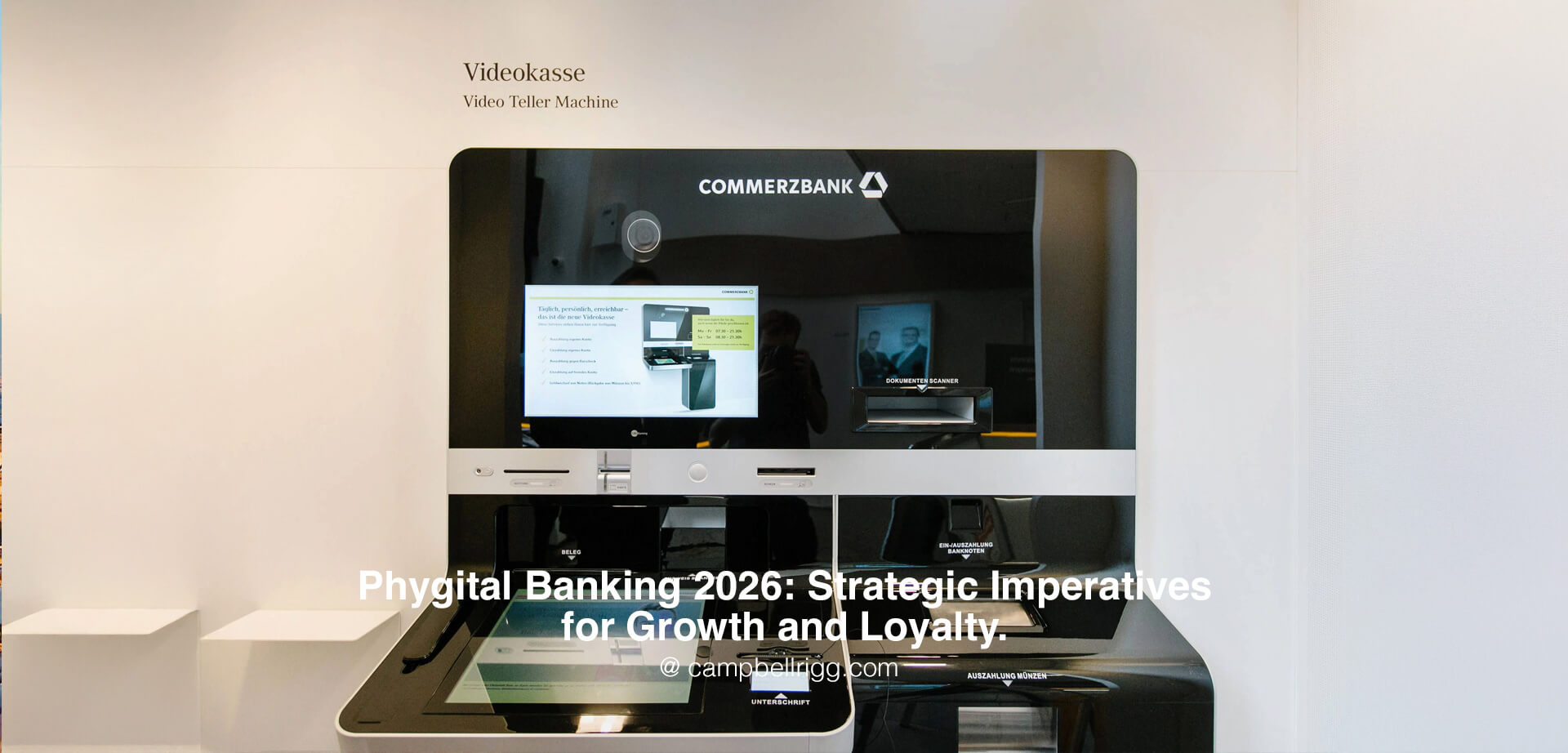
News and Views
Phygital Banking Strategy 2026 -2027: How Banks Can Increase Growth, Loyalty & Branch ROI.




Phygital Banking Strategy 2026: How Banks Can Drive Growth, Loyalty & Branch ROI
Phygital banking strategy is becoming a board-level discipline for banks deciding how digital channels, physical branches, human expertise, technology and brand experience should work together.
The management challenge is no longer whether customers will use mobile banking. It is how the bank should configure its physical network so that digital convenience and human expertise reinforce one another — while every branch format has a clear commercial purpose.
For senior management, that means moving beyond isolated branch refurbishment, technology deployment or customer-experience projects.
The strategic requirement is a scalable phygital banking network in which:
- digital and physical customer journeys are connected;
- branch space is allocated according to customer and commercial value;
- human expertise is concentrated where it matters most;
- different locations can operate through appropriate formats;
- brand and customer experience remain consistent;
- technology supports rather than complicates the journey; and
- performance can be measured against defined commercial objectives.
CampbellRigg helps banks translate these requirements into a connected strategy covering brand, customer experience, format architecture, branch design and implementation.
Our international perspective draws on banking projects including Pibank and Zenit Bank, alongside wider benchmarking of how leading financial institutions are evolving physical banking environments.
Drive customer-centric growth with phygital retail banking trends, merging AI, modular design, trust and omnichannel engagement to outperform competitors across South America,Europe and the Far East. Our global perspective draws on benchmarking insights from projects including Pibank (Agency: No Other Land) & Zenit Bank (Agency: CampbellRigg)
The management problem: a branch network cannot be managed as a collection of properties
Digital banking has changed what customers expect from a physical branch.
Routine transactions can increasingly be completed through mobile apps, online banking and self-service. Physical locations therefore need to justify their role through activities where presence, trust, expertise and human interaction create additional value.
That changes the investment question.
Management needs to establish:
- which journeys should remain digital;
- where human advice adds commercial value;
- which customer interactions require privacy;
- which services deserve dedicated physical environments;
- which locations require full-service, compact or specialist formats;
- how digital and physical channels should exchange information;
- how much space each customer activity requires;
- how the network should adapt to local demand; and
- how branch performance should be measured.
The objective is not to make every branch more digital.
It is to determine what each physical location should accomplish within the bank's wider customer and commercial strategy.
How CampbellRigg helps
CampbellRigg begins by connecting disciplines that are often commissioned separately.
Brand auditing establishes how the existing proposition is perceived and expressed. Strategy defines the desired market position. Customer journey planning identifies where physical intervention creates value. Format strategy determines what each location needs to achieve. The design brief then converts these decisions into practical requirements for customer experience, branch planning, identity and implementation.
The management benefit: one strategic direction linking brand, customer behaviour and physical investment rather than a series of disconnected design initiatives

Strategic requirement 1: Redesign the branch around customer value
The first decision is to define the role of the physical branch.
A transaction-led branch allocates space around operational processes. A phygital branch allocates space around the customer activities that benefit from physical presence.
Depending on the proposition, this can include:
- digital discovery;
- self-service and assisted digital banking;
- financial education;
- open advisory areas;
- private consultation rooms;
- flexible meeting spaces;
- remote specialist advice;
- technology-enabled demonstrations;
- community engagement; and
- intuitive navigation.
The physical environment should make the transition between digital self-service and human assistance straightforward.
How CampbellRigg helps
CampbellRigg audits the existing customer experience, branch environment, brand expression and operational requirements before establishing a future-state proposition.
The resulting design brief identifies: customer requirement → service role → spatial requirement → brand expression → technology requirement → commercial objective.
This provides management with a clear basis for investment decisions before detailed design begins.
The benefit: physical space is allocated according to customer and commercial value rather than inherited branch conventions.
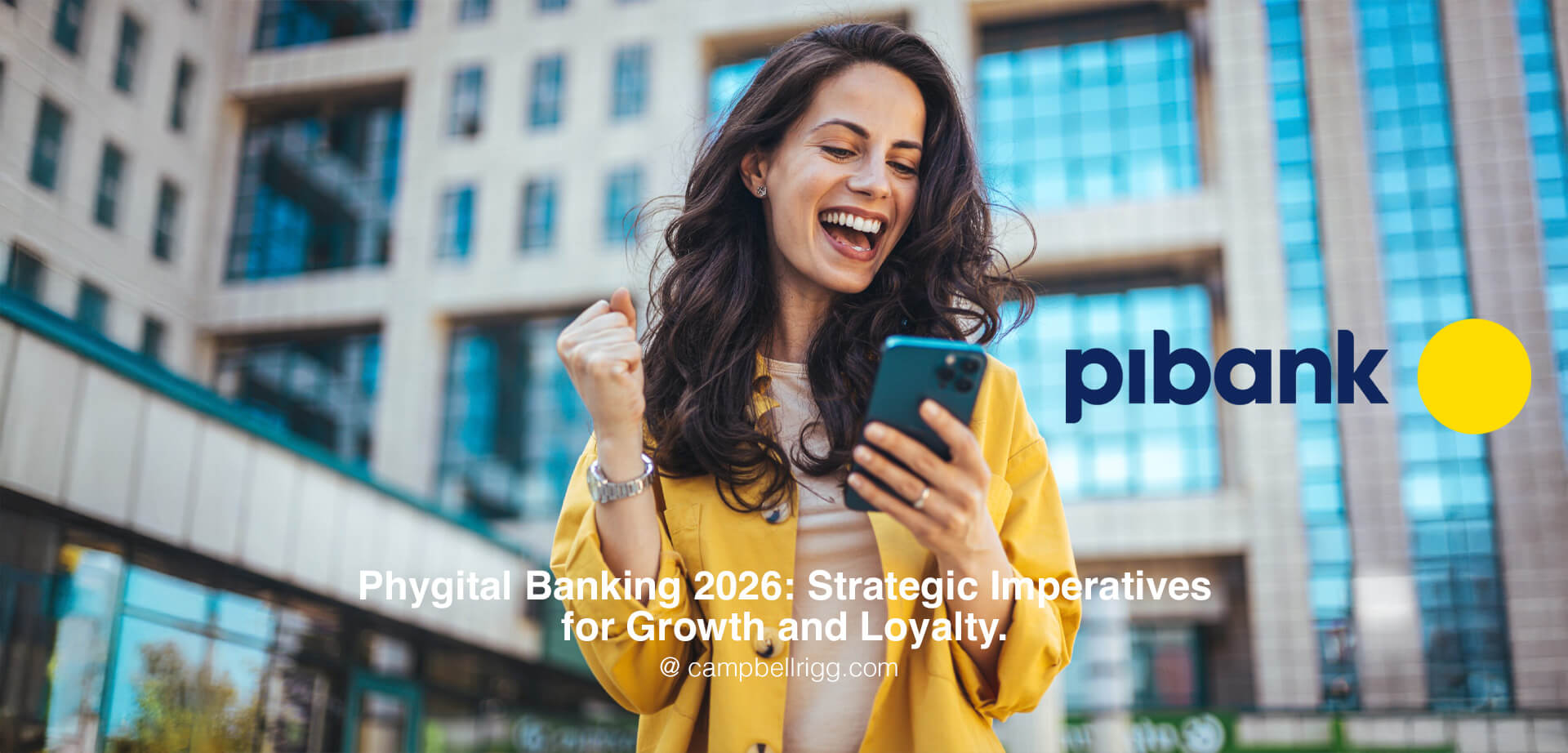
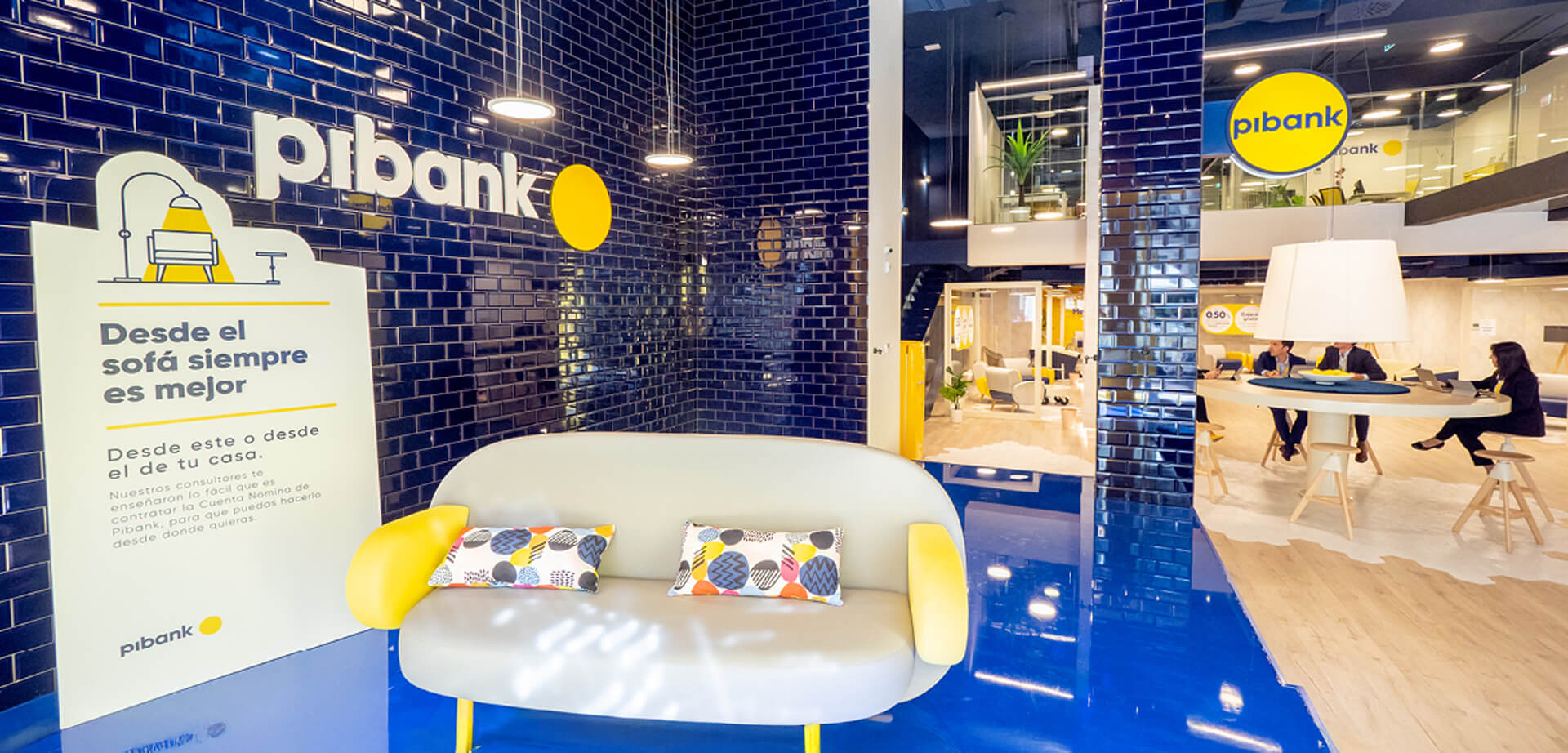
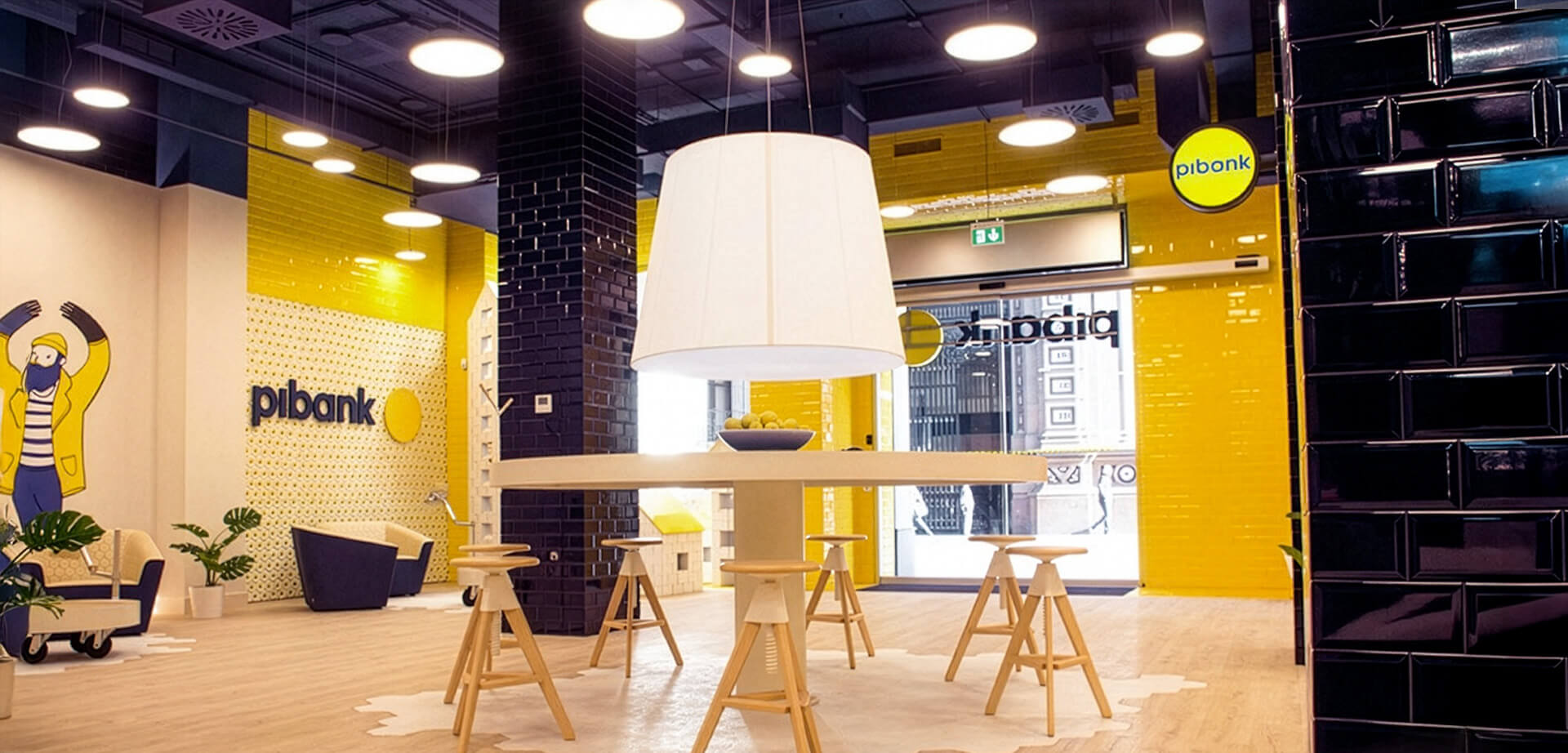
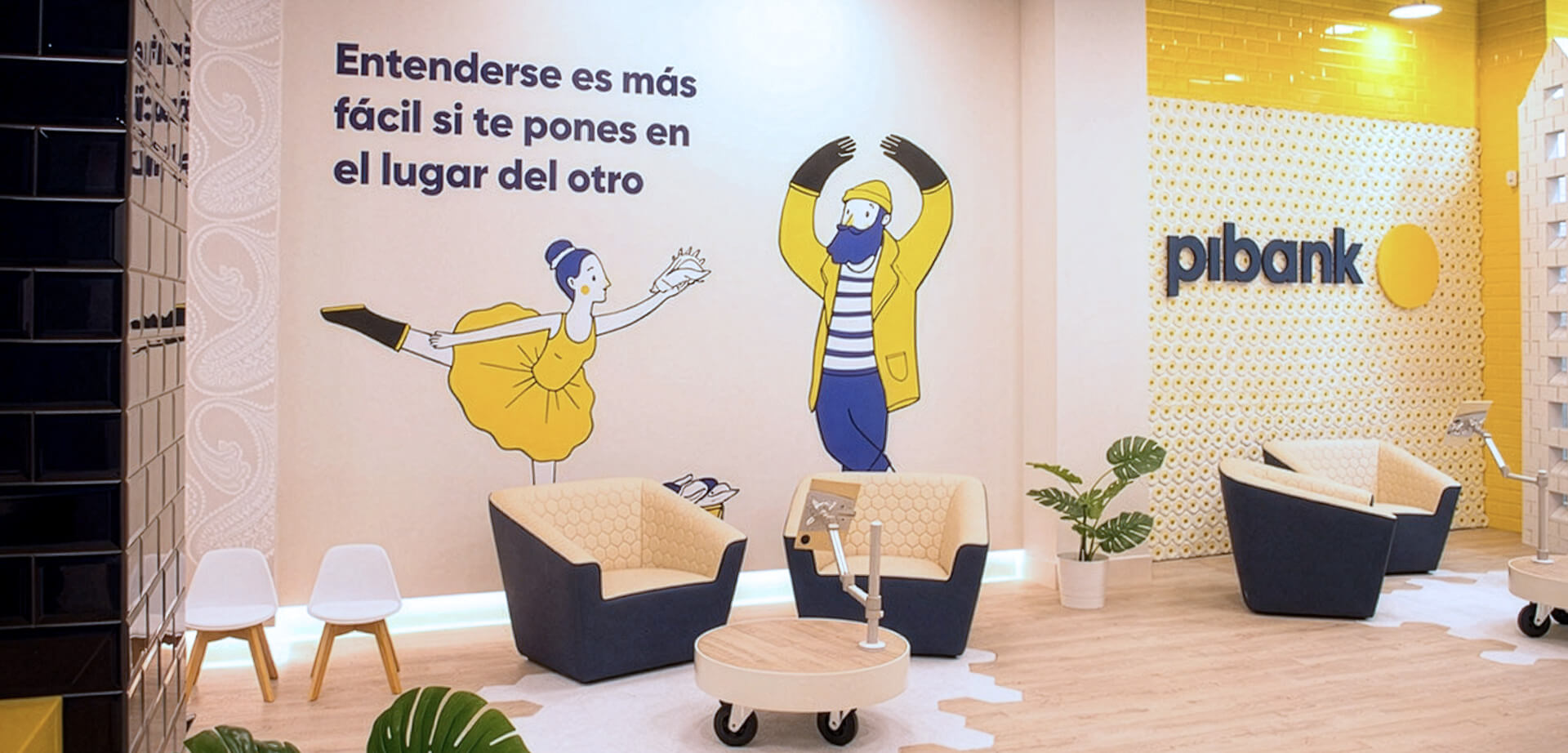
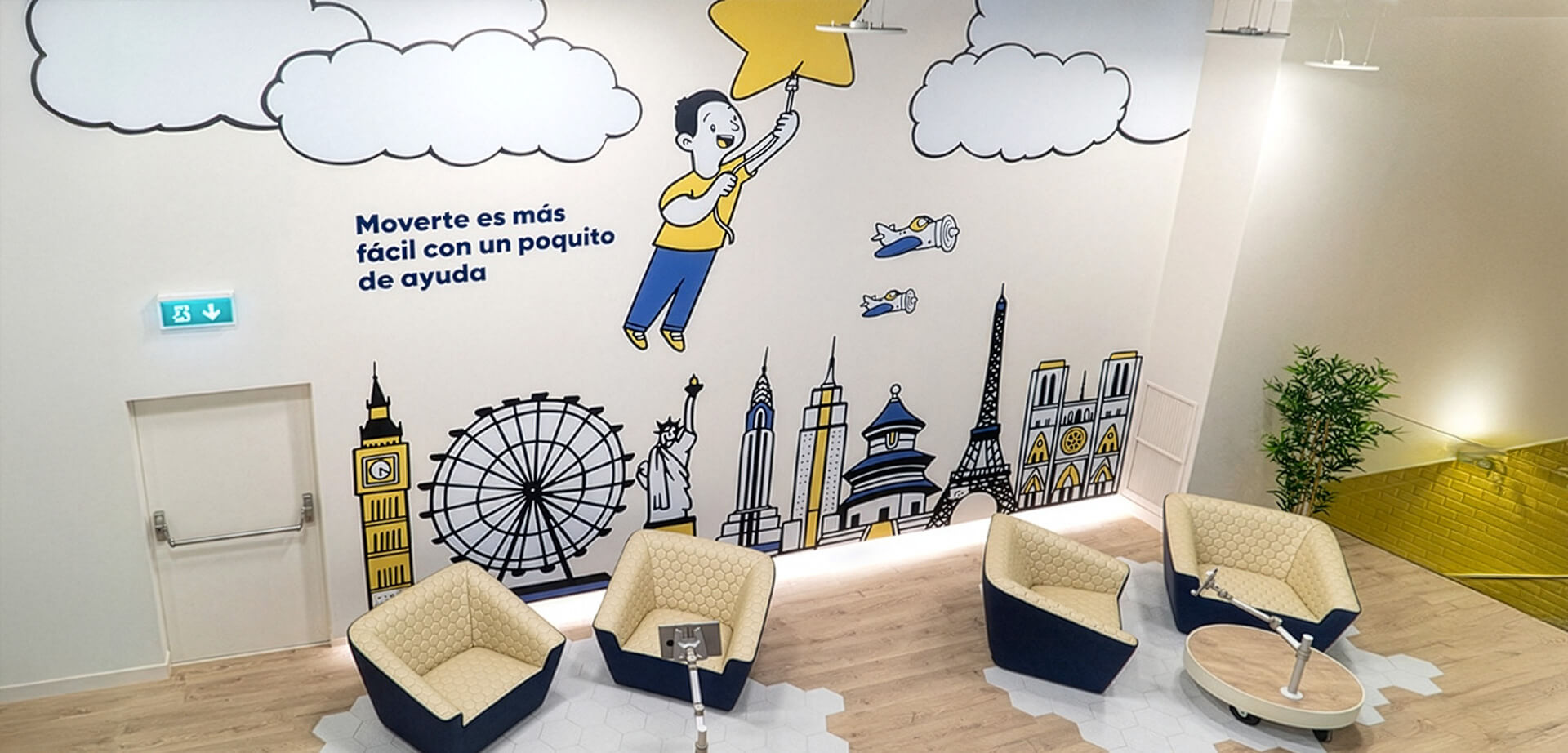
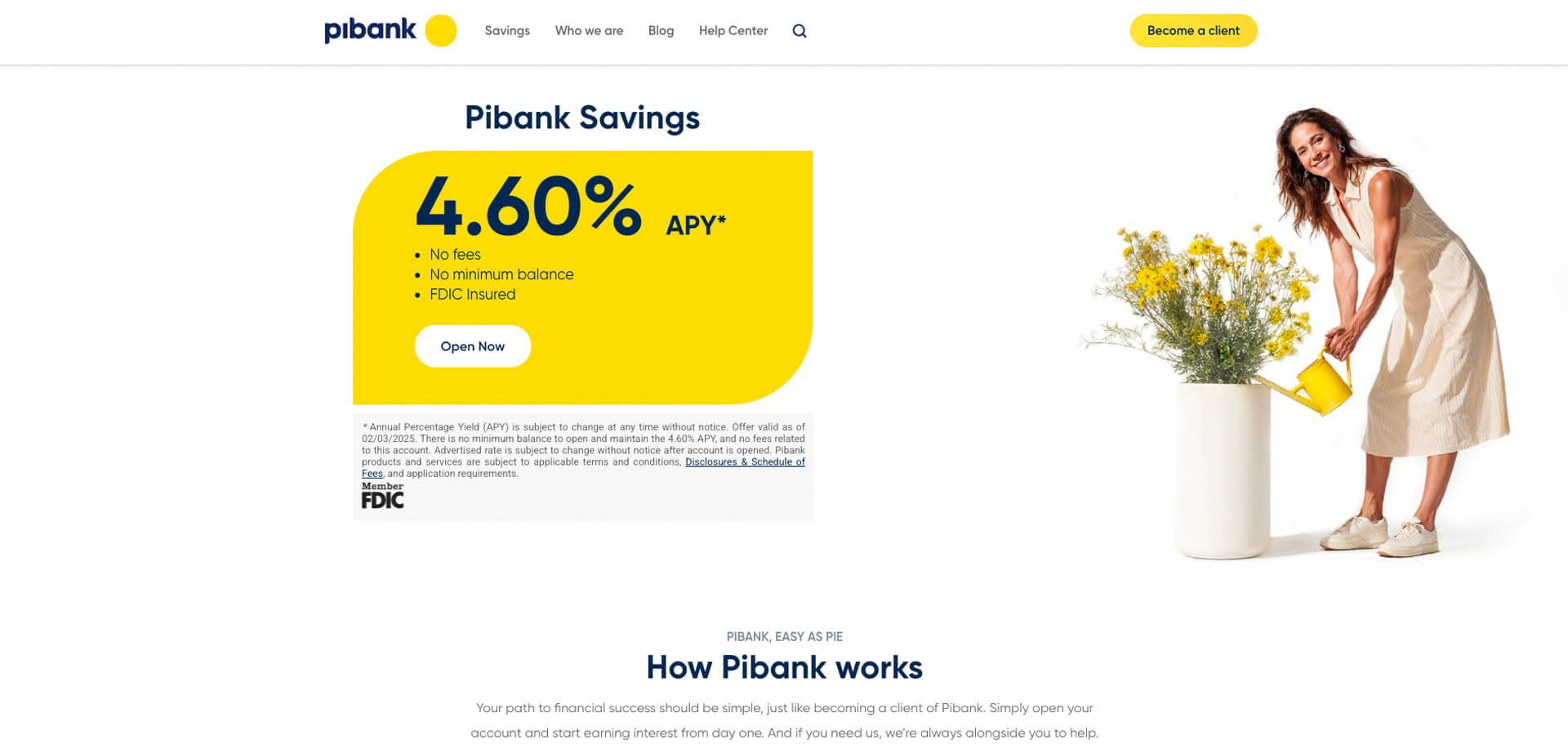
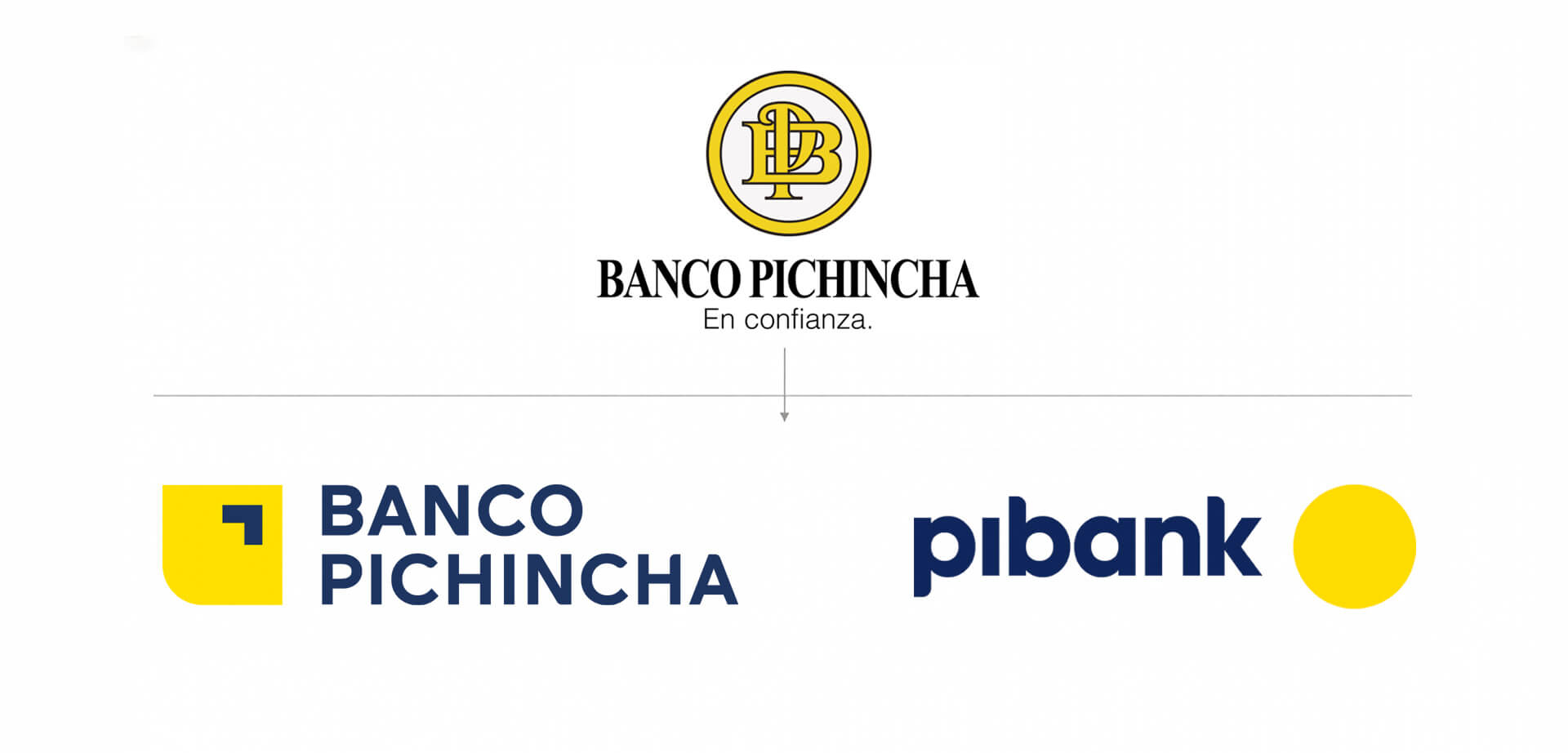
Pibank modernised its brand through a phygital-first strategy, seamlessly integrating mobile-led banking with streamlined physical branch formats. The rebrand introduced digitally enabled advisory spaces, intuitive self-service touchpoints and a simplified visual identity, delivering a consistent, customer-centric experience that combines digital efficiency with trusted human engagement across channels.
Strategic requirement 2: Connect digital banking with physical experience
A phygital banking strategy should not treat the branch as the end of the digital journey.
A customer may research a product on a smartphone, compare alternatives online, book an appointment, arrive at a branch and then return to a digital channel to complete an application.
The experience should be continuous.
Mobile integration can support:
- appointment booking;
- digital check-in;
- personalised information;
- application continuation;
- document submission;
- QR-enabled content;
- customer identification;
- employee access to relevant journey information; and
- post-visit digital follow-up.
The commercial objective is straightforward: remove friction from routine interactions and concentrate physical interaction where it can increase trust, advice and relationship value.
How CampbellRigg helps
CampbellRigg maps the digital-to-physical experience and identifies the moments where the physical environment needs to respond to digital activity.
This can influence:
- arrival and check-in;
- digital discovery zones;
- assisted self-service;
- employee interaction points;
- consultation environments;
- remote-adviser facilities;
- information architecture;
- wayfinding; and
- branded communications.
The management benefit: digital investment and physical investment are developed as one customer experience rather than as separate programmes.
Strategic requirement 3: Make human advice commercially more valuable
As routine banking migrates to digital channels, human expertise becomes more strategically important.
Mortgage advice, wealth management, business banking and major financial decisions can require privacy, specialist knowledge and reassurance.
The branch should therefore create environments that make those conversations more effective.
Open advisory areas can support accessible conversations. Private rooms can accommodate confidential or high-value discussions. Flexible meeting spaces can support changing customer requirements.
The objective is not simply to make customers stay longer.
It is to make physical interaction more valuable when it occurs.
How CampbellRigg helps
CampbellRigg translates customer segmentation and service propositions into physical advisory environments.
The process considers:
- customer value;
- service complexity;
- privacy requirements;
- employee roles;
- digital support;
- consultation duration;
- technology requirements; and
- the commercial purpose of each space.
The management benefit: the branch becomes an environment designed to support higher-value relationships rather than simply process transactions.
Emerging Asian markets and advanced European players alike are leveraging phygital design, biometric onboarding and seamless mobile continuity to deliver frictionless financial journeys. Integrating these spatial and digital experiences with omnichannel marketing and AI equips banks to deepen customer relationships, differentiate in crowded markets and capture new revenue streams across demographics.
Strategic requirement 4: Create a modular phygital branch format system
A national or international banking network rarely needs one universal physical format.
Different locations can have different customer profiles, property economics, catchment potential and commercial roles.
A scalable phygital network might therefore include:
- Micro-branches - Compact environments focused on advice, discovery and essential services.
- Digital banking hubs - Technology-led environments combining self-service with assisted digital support.
- Advisory centres - Specialist locations for mortgages, wealth management, business banking or other high-value services.
- Kiosks and satellite formats - Smaller touchpoints positioned in high-footfall locations.
- Flagship branches - Larger environments combining brand experience, advice, community engagement and digital innovation.
A modular system allows investment to follow market potential instead of forcing every location into the same physical model.
How CampbellRigg helps
CampbellRigg develops the format architecture before designing individual locations.
For each format, we can establish:
- customer role;
- service proposition;
- brand principles;
- customer journey;
- spatial requirements;
- technology requirements;
- operational principles;
- design components;
- implementation standards; and
- measurement criteria.
The management benefit: the bank can scale a proven format system across multiple locations while retaining appropriate flexibility for different markets.
This is the point at which phygital banking strategy becomes a network management discipline rather than a branch-design exercise

Strategic requirement 5: Define measurable commercial outcomes
Phygital transformation should not be judged primarily by appearance, technology adoption or branch footfall.
Management needs to understand what each format contributes to the economics of the customer relationship.
Relevant measures can include:
- customer acquisition;
- product conversion;
- appointment conversion;
- advisory revenue;
- retention;
- customer satisfaction;
- digital adoption;
- cost-to-serve;
- consultation-space utilisation;
- dwell time;
- revenue per square metre; and
- return on branch investment.
The exact KPI framework should reflect the bank's strategy and format proposition.
How CampbellRigg helps
CampbellRigg translates commercial objectives into customer-experience and design requirements.
If management wants to increase advisory conversion, for example, the environment needs to support discovery, consultation, privacy, employee visibility and follow-up.
If the objective is digital adoption, the environment needs to make self-service understandable and assisted digital support accessible.
If the objective is network efficiency, format architecture and space allocation need to reflect demand.
The management benefit: design decisions can be evaluated against the commercial outcomes the network is expected to produce.
What measurable performance can look like
The objective should be measurable, not simply aspirational.
External banking transformation programmes demonstrate the scale of outcomes that can result when customer experience, physical environments, service design and operational change are connected.
For example, our expectation is that a redesigned flagship will produce +18% year-on-year NPS, perform 23% better than comparable city-centre branches, achieve +55% more Business Hub users than target and recorded event attendance 70% above objective.
In another recent case study reports 110% more account openings, +100 branches refurbished and sales +200% higher than the next-best branch following the redesign branch programme.
Focusing specifically on connecting physical and digital banking experiences we anticipate 15- 22× conversion growth following brand environment, format planning and customer journey redesign.
These figures are benchmarks and typical of our market expectation. They illustrate the type of measurable commercial framework that bank management should expect a transformation programme to define.
How CampbellRigg applies the principle
CampbellRigg does not begin by promising a generic percentage uplift.
We begin by establishing: baseline → strategic objective → customer behaviour → design intervention → measurement framework → rollout → performance review.
The design brief can therefore be connected to the metrics that matter to management.
The benefit: the bank has a clearer basis for evaluating whether investment in experience, format and physical transformation is producing the intended commercial effect.

International benchmarks: what leading banking environments demonstrate
Emerging Asian markets and advanced European players are increasingly combining digital banking, physical environments, biometric onboarding, remote expertise and omnichannel engagement.
The strongest models do not treat technology as a visual feature.
They use technology to make the banking journey easier while using physical environments to strengthen trust, advice and relationship development.
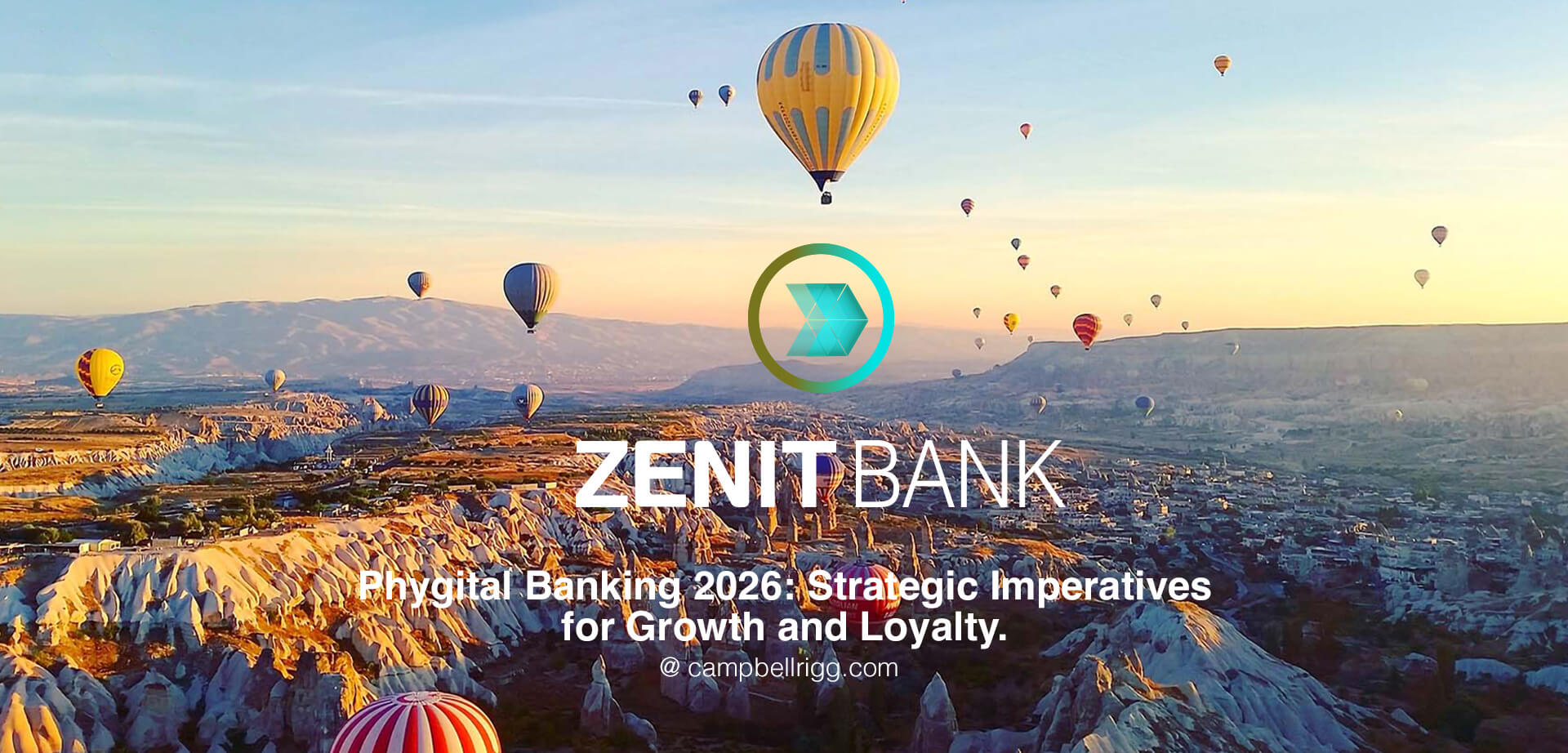
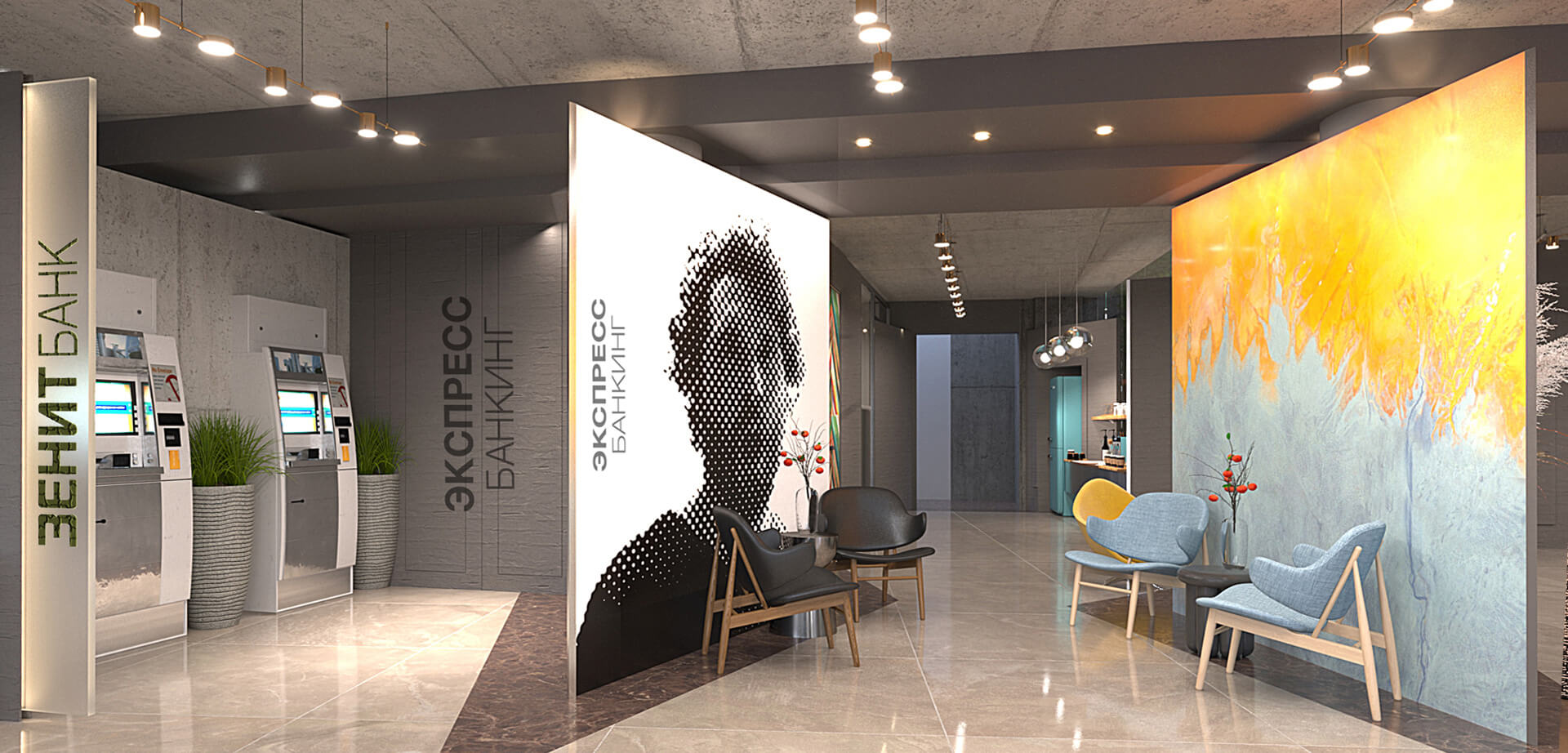
This is the direction demonstrated by projects such as Pibank and Zenit Bank, where digital-led propositions are expressed through physical environments rather than operating as separate brand experiences.
How CampbellRigg helps
CampbellRigg uses international benchmarking to identify relevant principles rather than copy another bank's format.
The process asks:
- What customer behaviour is changing?
- Which physical functions remain commercially valuable?
- Which digital services should move into the physical environment?
- Which branch formats are appropriate?
- How should the proposition express the bank's brand?
- What can be standardised?
- What needs local adaptation?
The management benefit: international insight becomes a practical decision framework for the bank's own market and network.

AI and data: use technology to make human interaction more valuable
AI should support the phygital banking strategy rather than become its objective.
It can assist with product discovery, customer service, recommendations, employee decision support, appointment management and personalised communications.
Customer data can also help identify when digital self-service is sufficient and when human advice is likely to create additional value.
The strategic principle is simple: automate routine activity; enhance human expertise.
Trust remains essential. Banks need transparent approaches to data and personalisation so that technology strengthens confidence rather than creating additional friction.
How CampbellRigg helps
CampbellRigg considers AI and digital capability as part of the customer environment.
The design response can include:
- assisted-digital areas;
- remote specialist consultation;
- digital discovery;
- intelligent wayfinding;
- self-service environments;
- technology-enabled advisory spaces; and
- flexible environments capable of accommodating future services.
The management benefit: the physical network is designed to accommodate changing digital capability rather than requiring a new physical concept every time technology evolves.

From individual branches to a scalable phygital banking network
The strategic opportunity is larger than redesigning individual branches.
A bank may have:
- customers who primarily use mobile banking;
- customers who need local advice;
- high-value customers requiring private environments;
- business customers requiring specialist relationship space;
- locations where a compact format is commercially appropriate; and
- flagship locations where brand experience has a strategic role.
The network should therefore be treated as a portfolio of connected formats.
Each format has a defined customer role, investment requirement, service proposition and commercial purpose.
How CampbellRigg helps
CampbellRigg connects: bank strategy → customer segmentation → brand proposition → format architecture → customer experience → spatial design → implementation standards → rollout.
This creates a common framework for decision-making across the network.
The management benefit: management can approve and fund a scalable system rather than repeatedly commissioning individual branch concepts.

The CampbellRigg commercial model: from strategy to implementation
The value of CampbellRigg's approach is not simply that the agency can design a branch.
It is that strategy, brand, customer experience and physical implementation can be connected within one programme.
1. Audit: We assess the existing brand proposition, branch formats, customer experience, communications and physical environment.
2. Strategic definition: We establish the desired market position, customer proposition, network requirements and commercial objectives.
3. Customer journey and format architecture: We define how digital and physical journeys should connect and establish the role of each branch format.
4. Design brief: We convert the strategic requirements into a practical brief covering customer experience, space planning, identity, communications, technology and implementation.
5. Concept and design: We develop the physical environment, brand expression, customer touchpoints, wayfinding, digital integration and spatial experience.
6. Prototype and refine: Where appropriate, concepts can be tested against customer and operational requirements before wider rollout.
7. Standards and rollout: The approved proposition is translated into design standards, guidelines and repeatable components for network implementation.
The management benefit: a single strategic direction connects decisions from the first audit through to physical rollout.

CampbellRigg banking expertise
CampbellRigg's banking expertise encompasses:
- phygital banking strategy;
- bank branch strategy;
- brand auditing;
- customer journey planning;
- banking brand strategy;
- digital-physical experience;
- modular branch formats;
- branch architecture;
- banking interior design;
- advisory environments;
- digital and self-service integration;
- brand identity;
- wayfinding and communications;
- design brief construction;
- prototyping;
- design standards; and
- network rollout.
Our work with financial institutions including Barclays, Lloyds, Pibank and Zenit Bank demonstrates experience across branch audit, brand transformation, customer experience and physical banking environments. CampbellRigg's published Barclays case study, for example, describes a multi-channel consumer study and audit across different branch formats to support a sustainable retail platform.
Its Lloyds case study describes an audit and strategic recommendations intended to move the branch toward a sales-advice-oriented hub and relationship-led retail model.
This is the expertise required to move from phygital strategy to a practical banking network.
The management opportunity
For senior banking teams, the question is no longer: “How digital should our branch be?”
It is: “How should our physical and digital experiences work together to increase customer value and improve the performance of the network?”
That is the strategic opportunity behind phygital banking strategy.
CampbellRigg helps banks connect brand strategy, customer experience, digital integration, format architecture, branch design and rollout into one commercially focused programme.
The objective is not simply to create better-looking branches.
It is to create a scalable, measurable and commercially effective banking network in which every physical format has a defined role and every customer interaction contributes to the wider relationship.
- From strategy to action
- Audit the existing network.
- Define the customer and commercial proposition.
- Create the phygital format system.
- Develop the design brief.
- Prototype and refine.
- Create rollout standards.
- Measure performance.
- Scale what works.

How CampbellRigg helps
CampbellRigg begins by connecting these disciplines rather than treating them as separate design commissions.
Brand auditing establishes how the existing proposition is perceived and expressed. Strategy defines the desired market position. Customer journey planning identifies where physical intervention creates value. Format architecture defines the scalable network model. The design brief converts that strategy into practical requirements for customer experience, branch planning, identity, technology and implementation.
The benefit to management is one strategic direction linking brand decisions to the physical retail network, rather than a collection of disconnected design initiatives.
For banks preparing the next stage of branch transformation, CampbellRigg can help turn phygital banking strategy into a practical network programme, from audit and strategic brief through to format design, implementation and rollout.
Book a free consultation to discuss how your bank can build a more connected, scalable and measurable physical-digital banking network.

Our Four-Step Process:
1. Book a consultation call for free.
2. Co-create a bespoke brief.
3. We execute the creative work fast.
4. You see sales, brand loyalty and market share uplift.

"World Class! CampbellRigg has taken Zenit Bank’s retail branch design to new heights."
Alexey Kudryavtsev, Marketing Director Zenit Bank

Ready to lead the phygital banking revolution?
Schedule a consultation today to explore tailored strategies that future-proof your brand and accelerate customer engagement.
Cost-effective excellence:
Our pricing structure is highly competitive, offering exceptional value without compromising on quality or creativity.
Rapid execution:
We move fast. From concept to implementation, our agile team ensures your project is delivered on time and to the highest standards.
Multidisciplinary expertise:
Our team brings together seasoned brand strategists, architects, interior designers, and graphic designers, collaborating to create seamless, end-to-end brand environments.
Global reach, local insight:
With successful projects delivered across Europe, the Middle East, and Asia, we combine international experience with local market understanding.
Scalable project delivery:
Whether delivering a major brand transformation, a rebrand refresh, or a digital media campaign, we manage and execute projects of any scale with efficiency and precision. From flagship programmes to targeted strategic design of world-class retail and banking branch environments, we deliver seamless execution and measurable results.
Proven track record:
From retail banking to luxury private client lounges, our designs drive engagement, elevate customer experience, and deliver measurable commercial results.
Full-service creative agency:
From rebranding and marketing campaigns to spatial design and rollout, we provide an integrated service tailored to your goals.