


News and Views
Future of Retail Banking: AI, Embedded Finance & Phygital Customer Experience


Future of Retail Banking: AI, Embedded Finance & Phygital Customer Experience
Retail banking is moving from a channel-based model towards a connected customer-experience ecosystem. Artificial intelligence is changing how banks understand and serve customers. Embedded finance is moving financial services into wider digital and lifestyle ecosystems. At the same time, physical branches are being redefined around advice, trust, experience and higher-value customer relationships.
For senior management, the challenge is no longer simply deciding how much investment should move from branches to digital channels.
The more commercially important question is:
How should brand, technology, customer experience, physical branches and operational requirements work together as one scalable retail banking proposition?
Digital-first banks such as Monzo, Revolut and N26 have helped establish expectations around simplicity, transparency, speed and customer control. Traditional banks retain different strategic assets: established trust, financial expertise, customer relationships and physical networks capable of supporting complex and high-value interactions.
The future of retail banking will therefore not be defined by digital replacing physical.
It will be defined by how effectively banks connect the two.
That makes future-ready retail banking a management discipline rather than simply a technology, branch design or customer-experience exercise.
Three forces reshaping the future of retail banking
Three connected forces are changing how banks compete and how customers expect to interact with financial services:
- AI and hyper-personalisation
- Embedded finance and digital ecosystems
- The evolution of the physical branch
Each creates a different management challenge. Together, they require banks to rethink the relationship between brand, customer journey, digital experience and physical retail.

AI and hyper-personalisation are changing the customer relationship
AI, real-time analytics and increasingly sophisticated digital banking infrastructure enable financial institutions to understand customer behaviour and deliver more contextual interactions.
The opportunity is to make banking more relevant.
Banks can use data and intelligent systems to simplify discovery, anticipate needs, personalise communications and support customers throughout their financial journeys.
But greater digital intelligence also raises customer expectations of the physical branch.
If a customer can receive immediate and relevant information through a mobile banking application, the branch cannot simply reproduce the same functionality with a screen or terminal.
The physical environment needs to provide something additional.
That may be:
- expert financial advice
- reassurance
- complex problem-solving
- financial education
- relationship management
- assisted digital services
- privacy
- a high-confidence environment for significant financial decisions
The branch consequently becomes a higher-value interaction platform rather than simply another banking channel.
How CampbellRigg helps
CampbellRigg maps customer missions against the role of digital and physical channels.
We identify where technology should remove friction and where human interaction creates greater customer or commercial value.
That analysis can inform:
- customer journey planning
- service-zone allocation
- consultation environments
- digital self-service
- advisory spaces
- staff interaction points
- information architecture
- navigation and wayfinding
- brand communication
- technology integration
The objective is not to add technology for its own sake.
It is to establish where technology improves the journey, where people add value and how the two should work together.
The management benefit is a branch model in which technology supports the customer proposition and operating model rather than becoming a collection of disconnected digital installations.

Embedded finance is expanding the banking ecosystem
Banking is increasingly embedded within everyday consumer experiences.
Payments, credit, insurance, loyalty and financial-management services can operate within retail, travel, e-commerce and wider digital ecosystems rather than being accessed exclusively through conventional banking channels.
This changes the competitive environment.
A bank may no longer compete only against another bank.
It may also compete against the convenience, usability and contextual relevance delivered by an e-commerce platform, technology company, retailer or digital service.
For management, this makes brand relevance and customer experience strategic assets.
As financial services become less visible within wider ecosystems, the bank needs a proposition customers can recognise, understand and trust.
The physical network therefore has an important role to play in making the brand tangible.
How CampbellRigg helps
CampbellRigg translates the bank's strategic proposition into the physical and customer-facing experience.
This can include:
- brand positioning
- brand identity
- spatial hierarchy
- customer experience
- retail communications
- service environments
- digital touchpoints
- customer journeys
- branch standards
The objective is consistency.
If a bank promises simplicity digitally but creates complexity physically, the proposition becomes fragmented.
If it promises personal financial expertise but provides a branch environment designed primarily around transactions, the physical experience undermines the positioning.
CampbellRigg helps connect these elements into one coherent customer proposition.
The benefit is greater consistency between what the bank promises, what customers experience and how the network operates.

The physical branch is being redesigned, not simply replaced
Rapid digital adoption does not eliminate the strategic role of the physical branch.
It changes it.
The traditional branch was designed around transactions: counters, cash services, enquiries and individual service desks.
As more routine banking moves to mobile apps, online platforms and self-service technologies, the physical branch needs to perform a different role.
It must create confidence, provide advice, resolve complex needs, demonstrate the bank's proposition and support higher-value customer relationships while remaining connected to the digital ecosystem surrounding it.
This is driving the evolution towards the phygital bank branch: a physical environment in which digital services, human expertise, customer experience and brand expression operate together.
For management, this creates three linked requirements:
- determine what the branch should achieve commercially;
- define which customer journeys genuinely require physical interaction; and
- create a repeatable format that can be implemented consistently across the network.
The strategic objective is not simply to make branches look more contemporary.
It is to make every area of customer interaction and technology investment serve a defined customer or commercial purpose.

What is the economic role of the future bank branch?
As routine transactions migrate towards digital channels, management needs to reconsider the economic role of the physical branch.
The question is no longer simply: “Should we retain or refurbish this branch?”
The more useful question is: “What value should this branch create that digital channels cannot deliver as effectively?”
A future-ready branch can become a higher-value environment for several distinct customer and business objectives.
- Complex advice - Branches can provide environments for mortgages, lending, investments, wealth management and other decisions where customers value expertise, privacy and reassurance.
- Customer acquisition - The physical environment can become a tangible expression of the bank's proposition, helping prospective customers understand the brand and its services.
- Conversion - A well-planned customer journey can reduce friction between discovery, advice and product or service completion.
- Relationship deepening - The branch can create opportunities to move beyond individual transactions towards broader and more valuable financial relationships.
- Trust and reassurance - Physical presence remains valuable when customers need confidence, human interaction or assistance with consequential financial decisions.
- Premium experience - Higher-value customers may require greater privacy, personalisation, hospitality and advisory support than a conventional transaction environment can provide.
- Assisted digital - Staff can help customers adopt digital services, making physical and digital banking complementary rather than competing channels.
- Retention - A coherent physical and digital experience can reinforce the relationship with the bank when digital interaction alone does not meet the customer's needs.
- Operational efficiency - Self-service, digital assistance, improved circulation and more effective allocation of staff time can enable branches to support customers more efficiently.
The branch therefore needs to be evaluated according to its role within the network, not simply according to its physical appearance.

How CampbellRigg helps banks redefine branch value
CampbellRigg approaches branch transformation as a network strategy rather than a sequence of individual refurbishments.
We assess:
- existing branch formats
- customer missions
- customer journeys
- local catchments
- brand expression
- spatial efficiency
- service requirements
- operational constraints
- technology integration
- communication systems
- opportunities for standardisation
This enables management to determine whether different locations require:
- flagship environments
- standard branches
- advisory-led formats
- convenience locations
- smaller modular formats
The resulting strategy establishes what each format needs to achieve and which elements should remain consistent across the network.
The management benefit is an investment framework in which branch design follows commercial purpose rather than the other way around.

Customer experience is becoming a strategic growth lever
Financial products can increasingly be compared, purchased and managed digitally.
Customer experience therefore becomes an increasingly important means of differentiation.
Customers expect:
- intuitive digital journeys
- immediate information
- transparent communication
- personalised services
- consistent experiences across channels
- convenient access to expertise
- continuity between mobile, online and physical banking
A customer may discover a service through an app, research it online, speak to an adviser, visit a branch, complete the transaction digitally and continue the relationship through mobile banking.
The customer should experience this as one relationship with the bank, not a series of disconnected channels.
Customer experience consequently cannot be owned by a single department.
It sits across:
- brand strategy
- digital experience
- branch operations
- communications
- service design
- customer journey planning
- physical environments
For senior management, the challenge is therefore organisational as much as creative: How can these disciplines be connected around one customer and commercial strategy?
How CampbellRigg helps
CampbellRigg connects these disciplines rather than treating them as separate design commissions.
Brand auditing establishes how the existing proposition is perceived and expressed.
Strategy defines the desired market position.
Customer journey planning identifies the experience the bank needs to deliver.
The design brief converts that strategy into practical requirements for customer experience, branch planning, identity, communications and implementation.
Digital experience then connects the physical network to the bank's wider ecosystem.
The benefit is one strategic direction linking brand, customer experience and physical retail rather than a collection of disconnected creative outputs.

Designing retail banking around customer missions
The future of retail banking should not be organised around products alone.
Management should understand why customers engage with the bank and what combination of digital interaction, human assistance, privacy, speed and physical space each mission requires.
Customers may need to:
- open an account
- make a payment
- obtain a mortgage
- discuss borrowing
- manage savings
- seek investment advice
- resolve a problem
- receive assistance using digital banking
- discuss a major financial or life decision
Each mission can require a different combination of physical and digital interaction.
How CampbellRigg helps
CampbellRigg translates customer missions into spatial and experience requirements.
This can determine:
- zoning
- circulation
- consultation environments
- self-service positioning
- digital interfaces
- staff interaction points
- communication hierarchy
- privacy requirements
The benefit is a branch environment designed around what customers actually need to accomplish rather than around a predetermined collection of counters, desks and screens.

International banking benchmarks: learn the principle, not the appearance
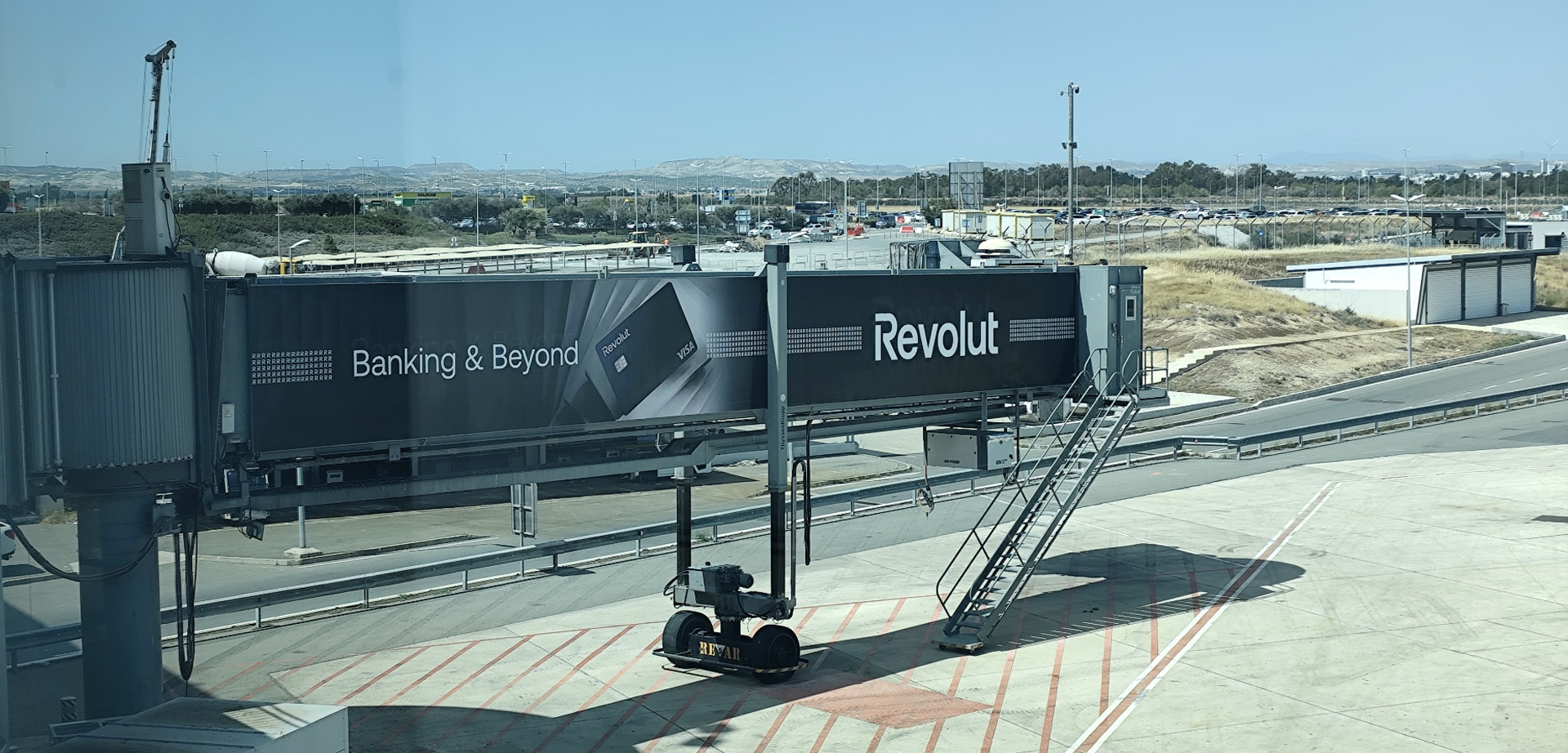
Digital-first challengers such as Monzo, Revolut and N26 provide useful reference points for expectations around mobile-first banking, real-time control, transparency and ease of use.
But these examples should not be copied literally.
A traditional bank has different:
- customers
- assets
- regulatory requirements
- operating structures
- brand equity
- network economics
The strategic question is therefore not: “How can we make our bank look like a fintech?”
It is: “What principle behind the experience is relevant to our customers and proposition?”
Management should ask:
- What makes the journey feel simple?
- Where is information made immediately accessible?
- How is customer control communicated?
- Which interactions should be digital?
- Which require human expertise?
- How is trust reinforced?
- How does the physical environment support the wider proposition?
How CampbellRigg helps
CampbellRigg uses international experience as a strategic reference point.
Our approach is: Benchmark → identify principle → test relevance → adapt to proposition → translate into experience → implement.
The benefit is that benchmarking becomes a management tool for identifying opportunity rather than a collection of attractive design references.
From individual branch design to a scalable retail banking format system
One of the biggest management risks is allowing every branch to become a separate design project.
That approach can produce inconsistency, increase implementation costs and make future rollouts unnecessarily complicated.
A future-ready network requires a format system.
The system should establish what remains consistent across the estate and what can flex according to:
- location
- customer mission
- branch size
- commercial role
- local requirements
It can include:
- brand principles
- customer journey standards
- spatial planning principles
- service zones
- consultation environments
- digital interfaces
- signage and navigation
- communication systems
- material and furniture standards
- technology requirements
- operational principles
- implementation guidelines
The objective is not rigid uniformity.
It is controlled flexibility.
How CampbellRigg helps
CampbellRigg develops the strategic framework that allows a bank to move from a successful concept to a repeatable network model.
We translate the proposition into a design system covering: Brand → Customer Experience → Format Strategy → Space Planning → Identity → Communications → Digital Integration → Implementation
This enables management to make future investment decisions within an established framework.
A new branch, refurbishment or format adaptation no longer needs to start with a blank sheet.
The benefit is scalability: one strategic direction can govern multiple formats and locations while allowing appropriate local adaptation.

CampbellRigg banking experience: turning strategy into customer experience
The principles above are supported by CampbellRigg's banking work. Each project demonstrates a different aspect of the transformation challenge.
Barclays: using customer insight to reshape the branch network
Retail banking transformation starts with understanding how customers actually use the network.
For Barclays, CampbellRigg undertook a multi-channel, consumer-centric study as part of a branch transformation programme. The work examined branch formats, location and positioning, physical environments, brand communication, technology, self-service and operational workflows. The project included a branch audit and recommendations for a sustainable retail platform.
The strategic lesson is important: branch transformation should begin with evidence about customers, operations and the existing network rather than with cosmetic redesign.
How CampbellRigg helps
By combining customer insight, brand analysis, operational assessment and branch planning before design begins, management teams gain a clearer basis for deciding:
- where investment should be made;
- which elements should be standardised;
- which customer journeys need to change; and
- how the network should evolve.
Commercial relevance: the approach shifts branch transformation from a series of isolated refurbishments towards a more evidence-led network strategy.

Zenit Bank: translating brand strategy into the branch experience
A future-ready branch must express the bank's proposition physically as well as digitally.
For Zenit Bank, CampbellRigg developed contemporary retail banking environments combining brand identity, interior design, space planning and strategic visual communications. The work was designed to create a cohesive brand environment and strengthen customer engagement.
The strategic lesson is that brand, environment and customer experience should reinforce the same proposition.
How CampbellRigg helps
CampbellRigg translates the brand proposition into practical environmental principles covering:
- customer arrival
- navigation
- communication
- spatial planning
- consultation
- interaction
- digital integration
The physical environment therefore becomes more than a visual expression of the brand. It becomes part of the customer-experience strategy.
Commercial relevance: the resulting proposition is designed to strengthen recognition, confidence and engagement while providing a framework that can evolve with customer expectations.

Promsvyazbank: connecting communications, format planning and customer engagement
Transforming a bank branch requires more than changing the interior.
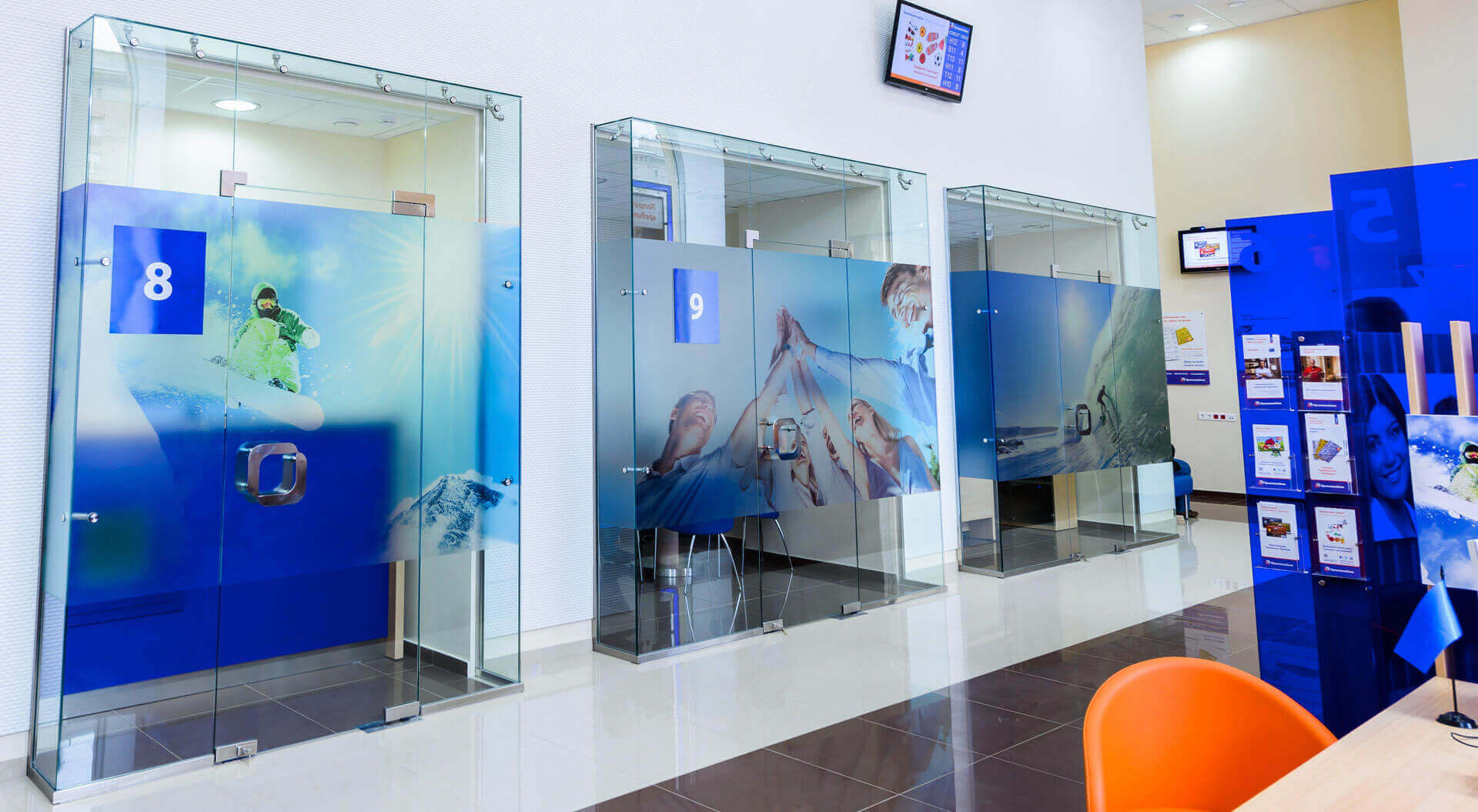
CampbellRigg partnered with Promsvyazbank to reimagine its branch network through strategic brand communications, interior design and format planning. The stated objective was to strengthen customer engagement, trust and loyalty through purposeful space and brand-experience design.
The project demonstrates the importance of considering communications, spatial planning and customer interaction together.
How CampbellRigg helps
CampbellRigg brings brand communications, customer journey planning, spatial design and format development into one coordinated brief.
This enables the physical environment to:
- explain the proposition;
- guide customers through the space;
- support different customer interactions;
- reinforce the bank's positioning; and
- provide a framework for future implementation.
Commercial relevance: a coordinated approach creates greater consistency across the customer experience while giving management a clearer basis for developing and implementing branch formats.

Measuring the commercial performance of future-ready retail banking
A modern branch should not be judged by appearance alone.
Management needs to understand whether investment in the physical environment is improving the performance of the wider retail banking proposition.
Depending on the bank's objectives, relevant measures can include:
- customer engagement
- service adoption
- advisory interactions
- product or service conversion
- customer satisfaction
- journey completion
- digital adoption
- assisted-digital usage
- branch utilisation
- staff productivity
- operational efficiency
- service times
- cross-service opportunities
- customer retention
- relationship value
- implementation cost
- consistency across the estate
The precise measurement framework should be established before design decisions are finalised.
How CampbellRigg helps
CampbellRigg starts with the management objective and works backwards to the experience and design requirements.
Rather than asking: “What should the branch look like?”
we ask: “What must the branch enable the bank and customer to achieve?”
That distinction changes the design brief.
It allows spatial planning, customer experience, branding, communications and technology to be evaluated against defined strategic requirements.
The benefit is a clearer connection between investment, implementation and measurable business objectives.

From banking strategy to network transformation
The future-ready bank branch is not simply a more attractive version of the traditional branch.
It is part of a wider customer-experience and operating system.
AI and personalisation can make banking more relevant.
Embedded finance can make financial services more accessible.
Digital platforms can remove friction.
Physical environments can provide something digital channels cannot fully reproduce: human reassurance, expertise, trust and relationship.
The strategic opportunity is to connect these capabilities.
How CampbellRigg helps turn strategy into a scalable network
CampbellRigg brings together:
- banking brand strategy
- brand auditing
- customer experience
- branch strategy
- format planning
- architecture
- retail interior design
- digital and omnichannel experience
- retail communications
- customer journey planning
- design brief construction
- implementation planning
We begin by establishing the management challenge.
Then we:
- Audit the existing proposition and network.
- Define the strategic direction.
- Construct the design brief.
- Translate the direction into customer experience, physical environments and brand systems.
- Create the frameworks required for implementation across the network.
- Measure the resulting customer and business performance.
The benefit is not simply a new branch concept.
It is a scalable retail banking platform that connects strategy, brand, customer experience and physical implementation.
The management question: what should the next generation of branches achieve?
Retail banking is moving towards an environment in which digital and physical channels are no longer separate experiences.
Customers may discover a service through an app, research it online, visit a branch for advice, complete the transaction digitally and continue the relationship through mobile banking.
The branch therefore needs to operate as one component of a much larger customer journey.
For senior management, the priority is to establish:
- What role does physical retail play in our future proposition?
- Which customer missions genuinely require physical interaction?
- How should AI and digital technology improve the journey?
- What branch formats do we actually need?
- How can the experience remain consistent across the network?
- How should investment be prioritised?
- How will performance be measured?
These are strategic questions before they are design questions.

Building the future of retail banking
The future of retail banking will not be defined by AI alone, digital banking alone or physical branches alone.
It will be defined by how effectively a financial institution connects these capabilities around its customers and commercial objectives.
- Digital platforms can deliver speed, convenience and personalisation.
- AI can make interactions more intelligent and contextual.
- Embedded finance can make financial services more accessible.
- Physical branches can provide advice, reassurance, expertise, education and relationship development.
- Brand connects these experiences.
- Customer experience makes them coherent.
- Design makes the strategy tangible.
- Measurement provides the evidence that investment is delivering value.
For senior management, the strategic objective is therefore clear:
Build a retail banking network in which every format, customer journey and physical investment has a defined role within the wider brand and commercial strategy.
That is the difference between refurbishing branches and transforming a retail banking network.
CampbellRigg helps financial institutions make that transition from strategy and brand audit through customer experience, design brief construction, branch planning, identity, implementation and network rollout.
The result is a connected retail banking proposition designed to be relevant to customers, practical for operations, scalable for management and measurable in commercial performance.