News and Views
The Future of the Hypermarket: Reinventing Large Stores for Growth, Experience & ROIC.



The hypermarket is not disappearing. It is being reinvented.
Leading grocery retailers are transforming large-format stores into productive, experience-led and digitally connected retail platforms. The focus is shifting from selling more products across more square metres to making every square metre commercially productive.
Carrefour, E.Leclerc and SSG Food Market demonstrate different approaches. Smarter space planning, stronger customer journeys and higher sales productivity can turn large stores into destinations that generate growth, loyalty and ROIC.
The future hypermarket combines fresh-food theatre, prepared meals, foodservice, discovery, convenience, technology and omnichannel fulfilment, creating stronger reasons to visit, explore, purchase, eat, collect and return.
This article examines the hypermarket trends and strategies shaping 2026–2027 and extending towards 2028.
The future of the hypermarket requires a strategy for store transformation, and format reinvention.
For retailers, the prize is higher traffic, stronger conversion, larger baskets, greater loyalty and better return on invested capital.
Across international grocery retail, leading operators are challenging the traditional large-format model by reducing unproductive space, strengthening fresh food, introducing specialist experiences, integrating digital services and making stores work as omnichannel fulfilment assets.
The objective is no longer simply to sell more products across more square metres. It is to turn every square metre into a stronger reason to visit, buy, discover, eat, collect or return. This will be achieved achieved by improving the customer experience, the hypermarket omnichannel and hypermarket technology
Carrefour, E.Leclerc and SSG Food Market demonstrate different approaches to this transformation: Carrefour combines value, quality, wellbeing and omnichannel convenience; E.Leclerc strengthens its value proposition through flexible, sustainable renewal; while SSG Food Market turns grocery shopping into a premium food-and-lifestyle experience.
The strategic opportunity is clear: redesign the hypermarket around customer behaviour, improve sales productivity per square metre and turn large stores from costly legacy assets into distinctive, high-performing destinations that generate stronger customer engagement, loyalty and ROIC.
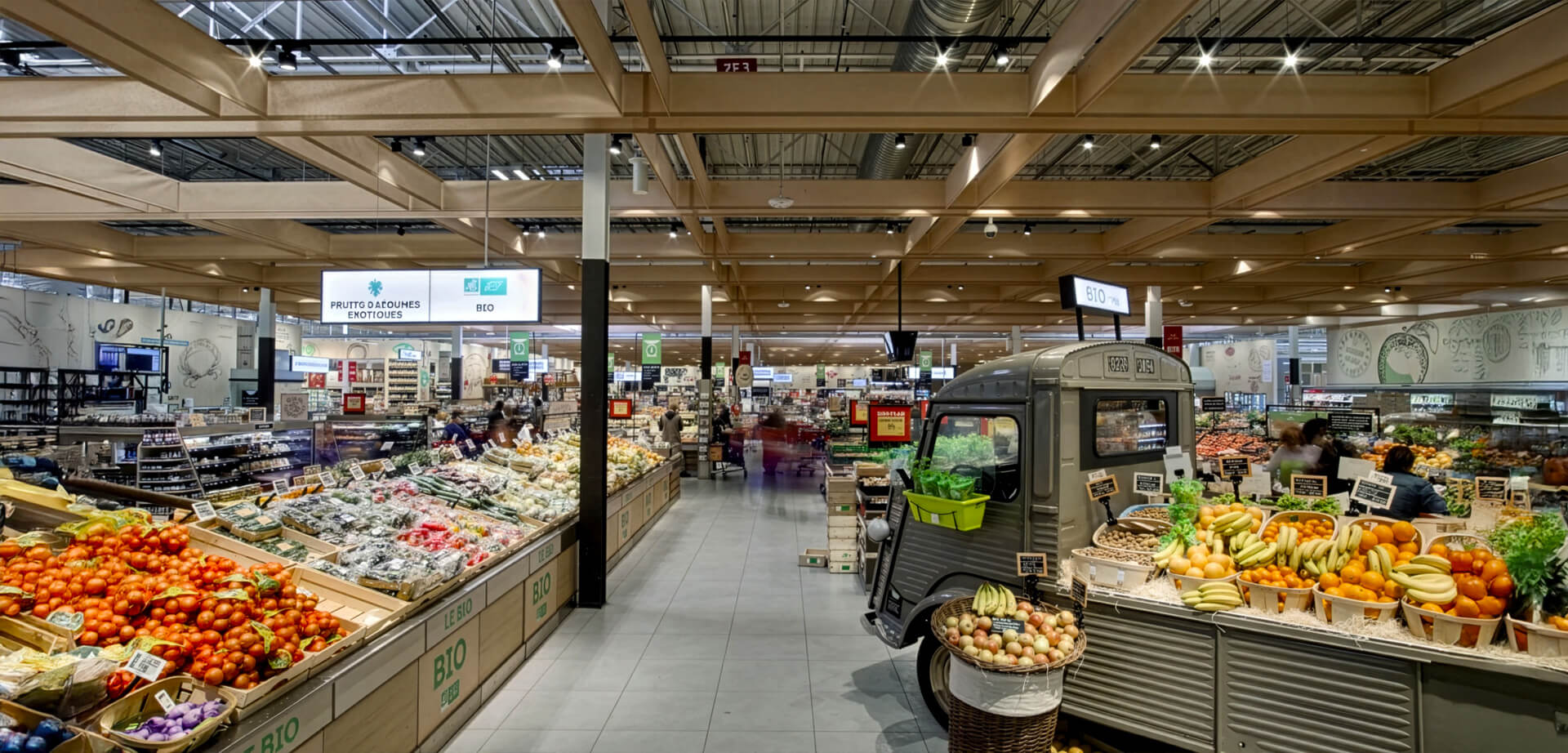
How are hypermarkets being reinvented?
The strategic opportunity is to make the hypermarket more relevant to changing shopper missions. Fresh-food theatre, prepared meals, foodservice, discovery, convenience, value and digital fulfilment can create reasons to visit that a local store or online basket cannot easily replicate.
For retailers, the prize is higher traffic, stronger conversion, larger baskets, greater loyalty and better return on invested capital.
Why hypermarkets must change → 2027–28 transformation trends → three reinvention models → customer-mission planning → space productivity → omnichannel + AI → store design → ROIC → CampbellRigg methodology.
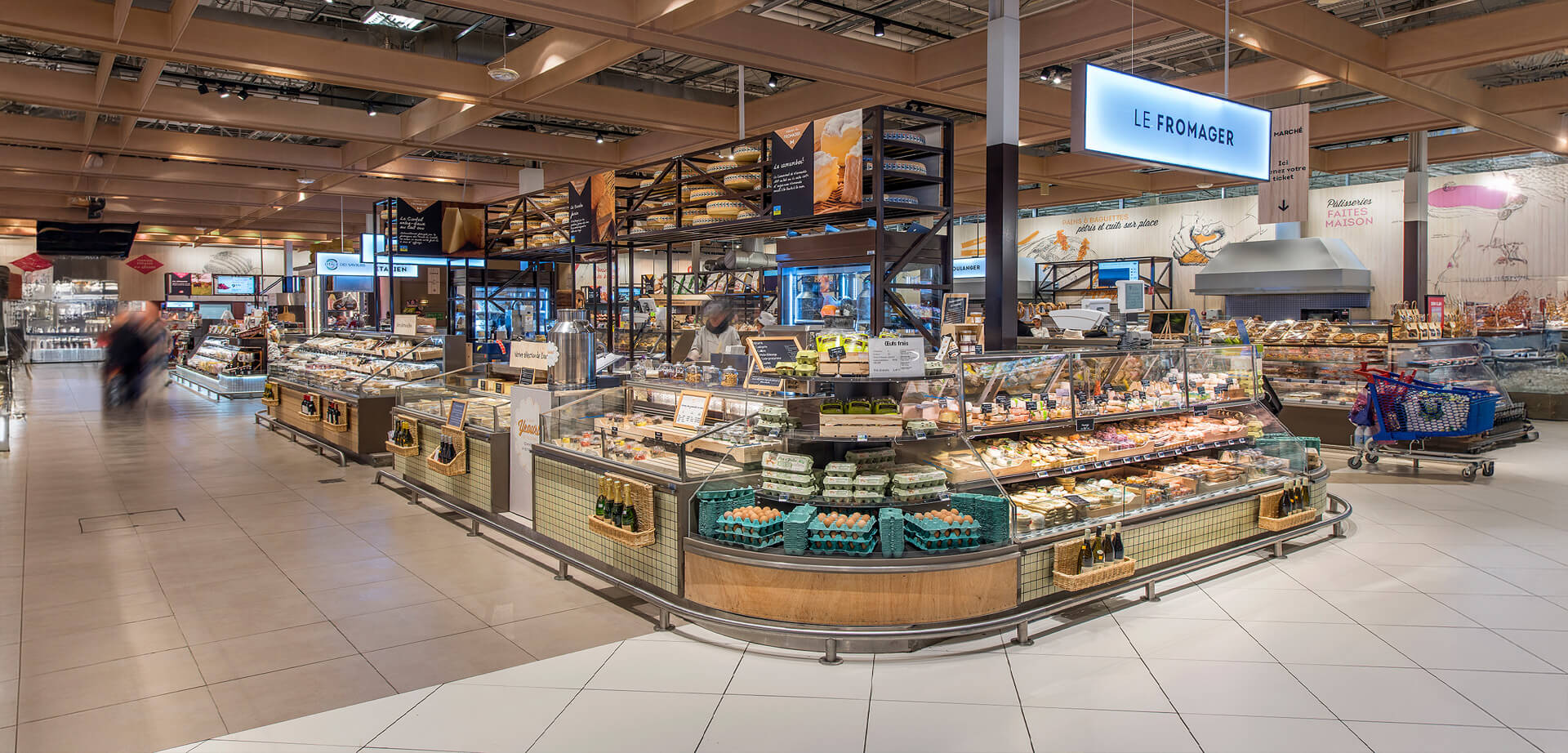
Carrefour is making the hypermarket work harder by assesing hypermarket retail design trends for 2026 - 2027
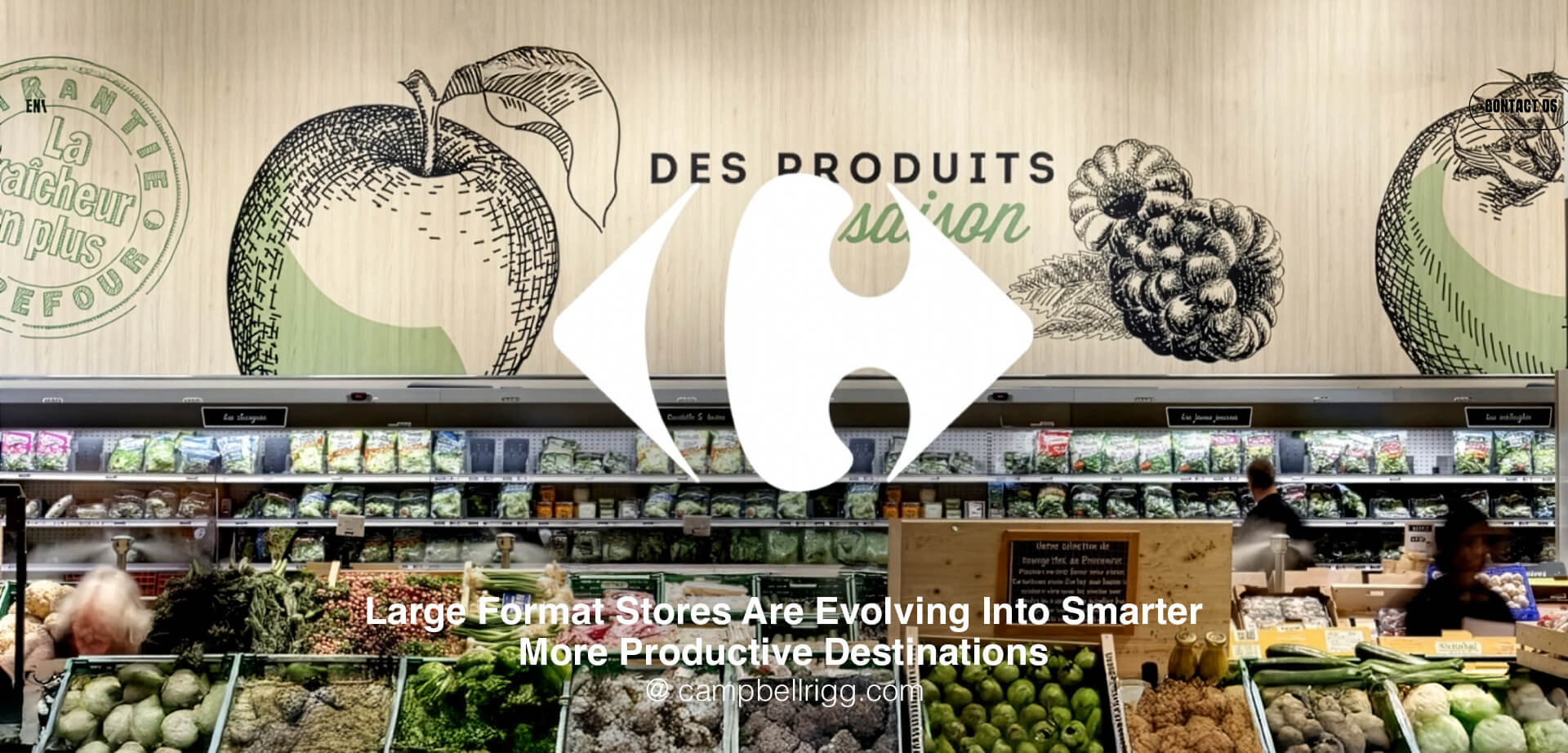
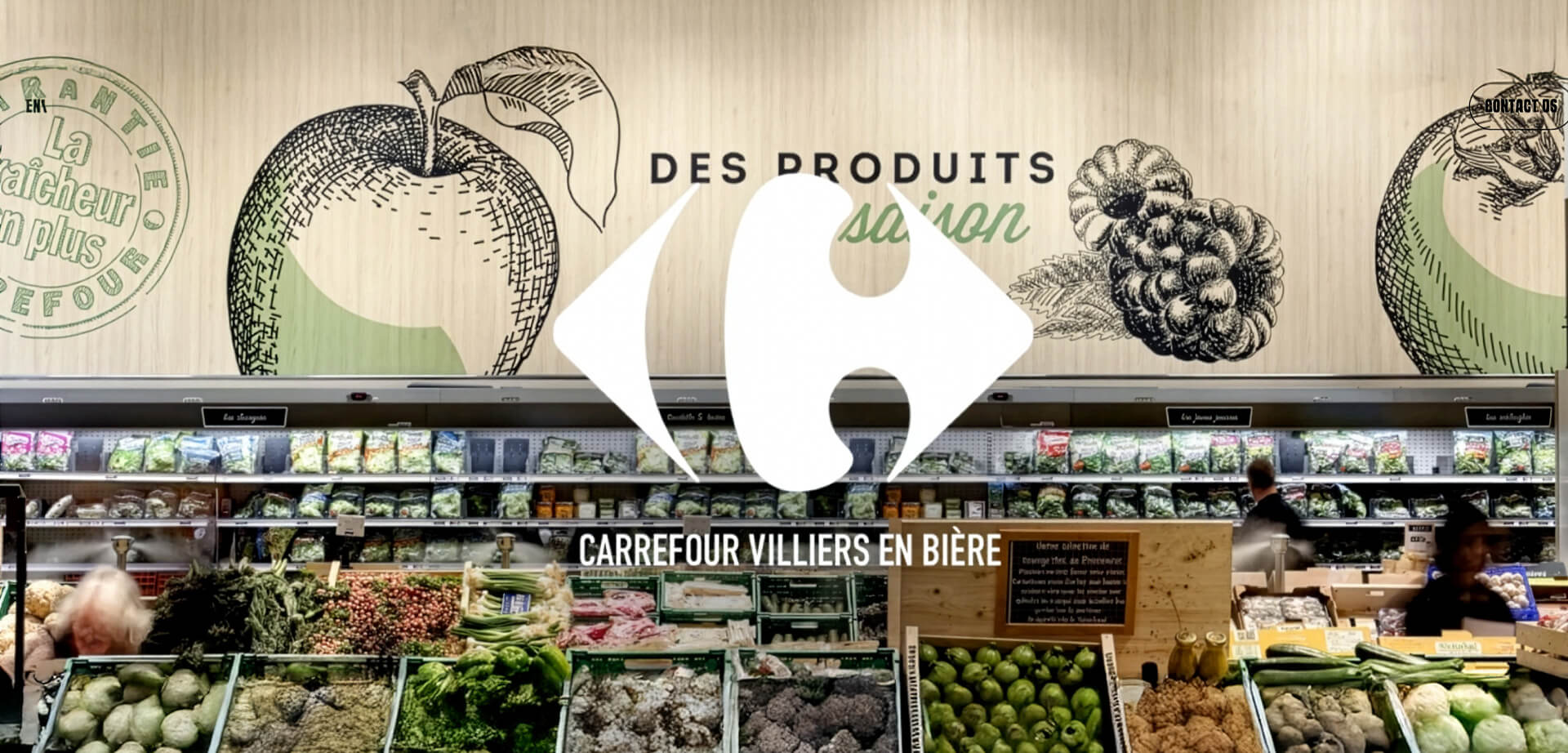
Carrefour's Villiers-en-Bière hypermarket demonstrates how a very large store can be redesigned around today's shopper. The 26,000-square-metre store has more than 10,000 references, annual sales of about €170 million and annual footfall of around 4.5 million.
Its renovation introduced a clearer plan that separates recurring, useful shopping missions from quicker pleasure-led journeys, making the enormous selling space easier to navigate.
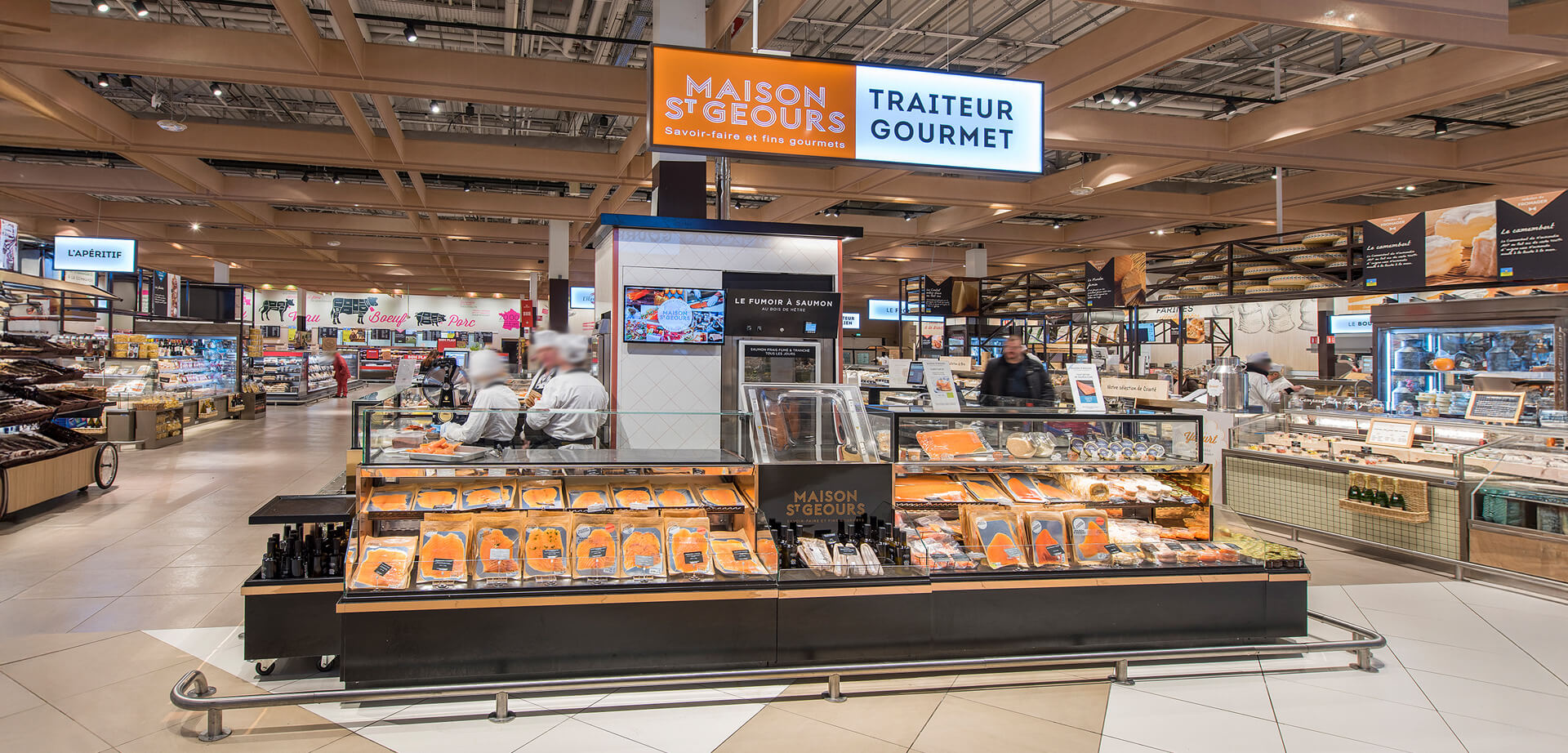
The project has a stated objective of +20% performance, illustrating the commercial ambition behind large-format reinvention. Carrefour also integrates click-and-collect, home delivery and other services, reinforcing the hypermarket's role as both shopping destination and omni-channel fulfilment asset. The current Villiers-en-Bière offer includes click-and-collect, delivery and online traiteur services ( ready-to-eat or ready-to-serve prepared foods ).
We list below key issues that should be addressed at every stage of development.
- Space productivity
- Fresh-food theatre
- Experience-led retail
- Premiumisation
- Omnichannel fulfilment
- AI-powered personalisation
- Mission-based store planning
- Wellness and foodservice
- Localisation research
- ROIC-led format optimisation
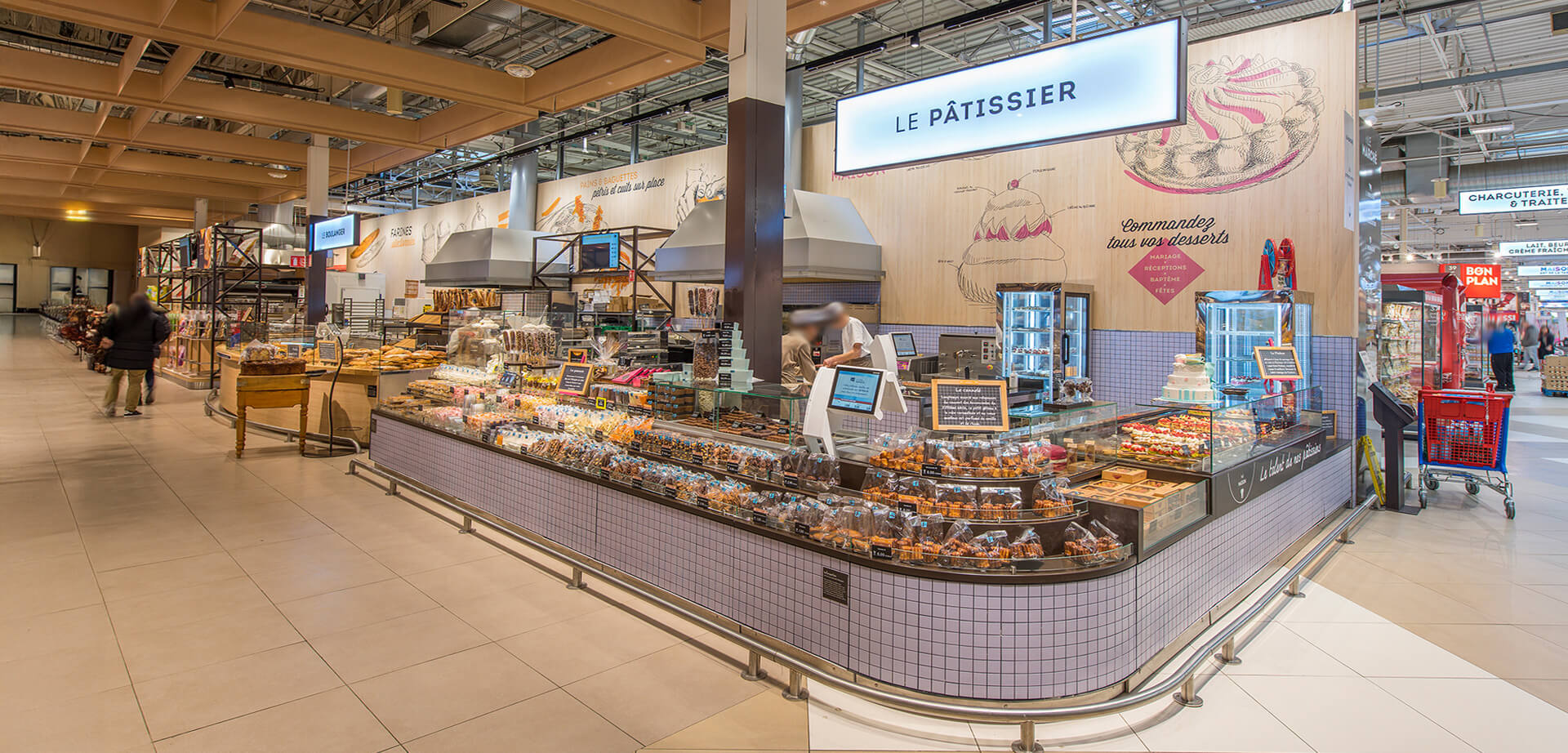
Carrefour’s target audience is broad: families, mainstream and value-conscious households, and customers combining a weekly shop with immediate meal, convenience and service needs. Its position is mass-market and accessible rather than luxury, using choice, promotions, fresh food and convenience to create value.
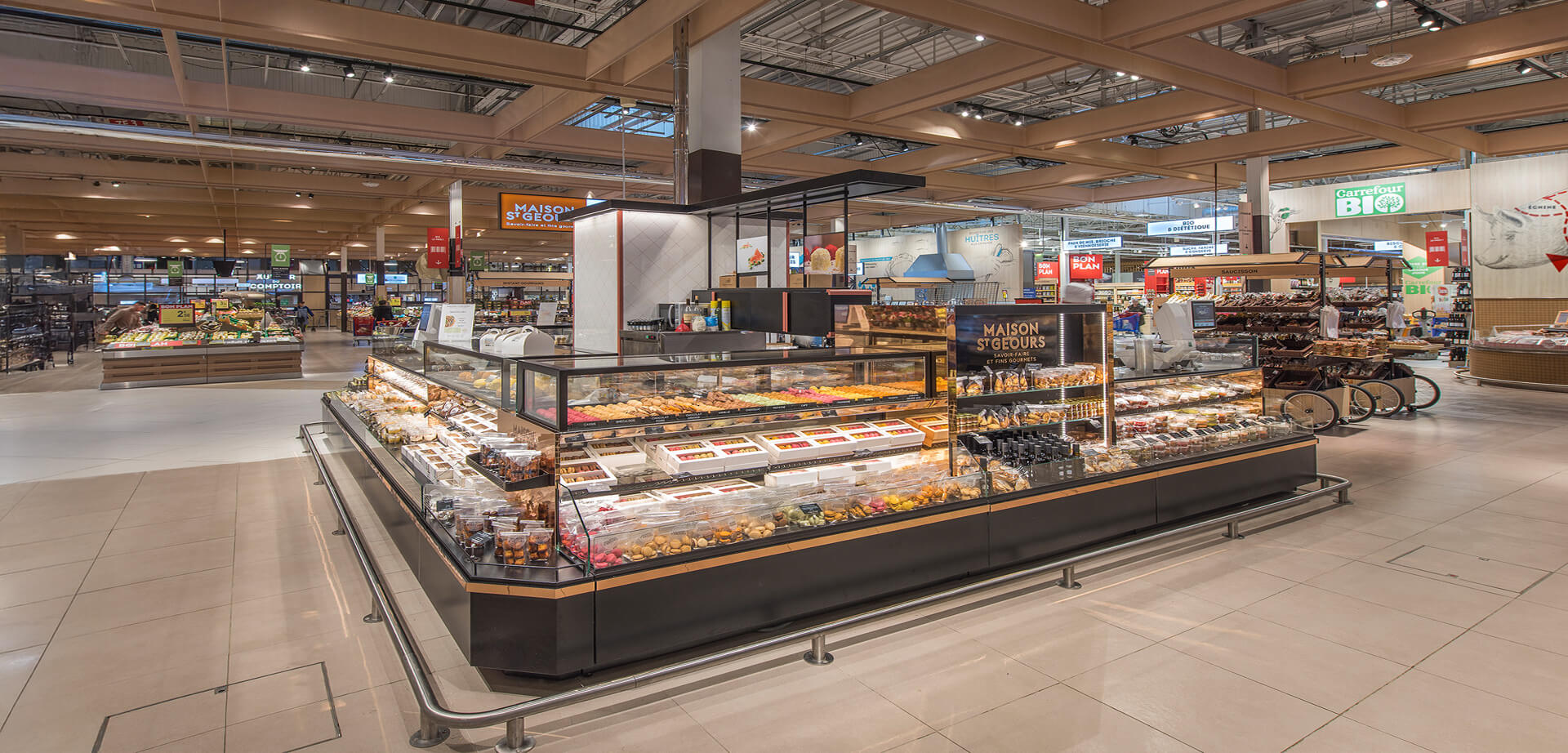
Carrefour’s USP combines accessible quality and premium food with wellbeing, discovery and experience.
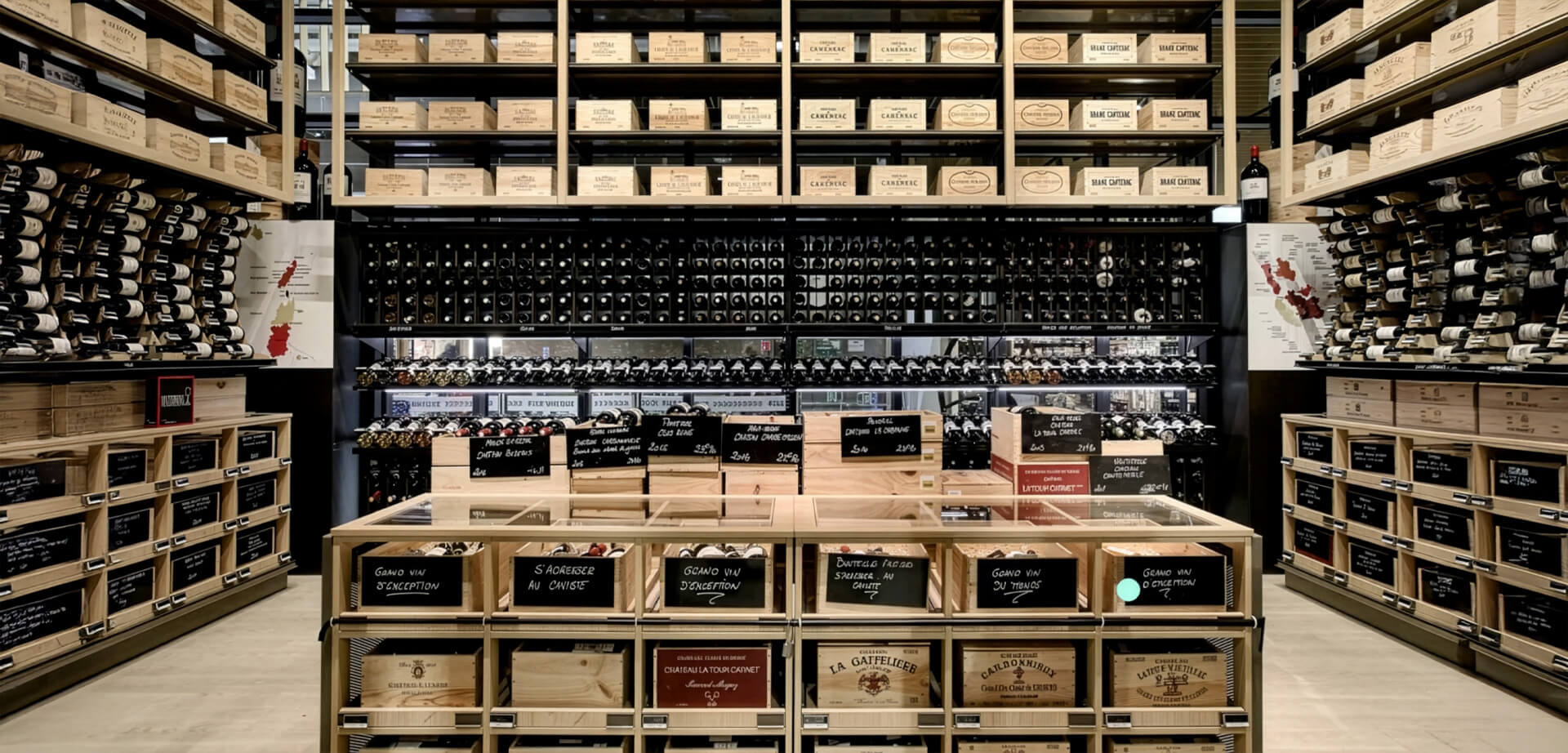
Its proposition brings together curated organic and responsibly sourced products, fresh prepared food, cafés, health and wellness, beauty, emerging brands and distinctive private-label products. By extending beyond traditional grocery retail into food culture, convenience and lifestyle, Carrefour creates a more engaging destination that strengthens differentiation, loyalty and basket value.
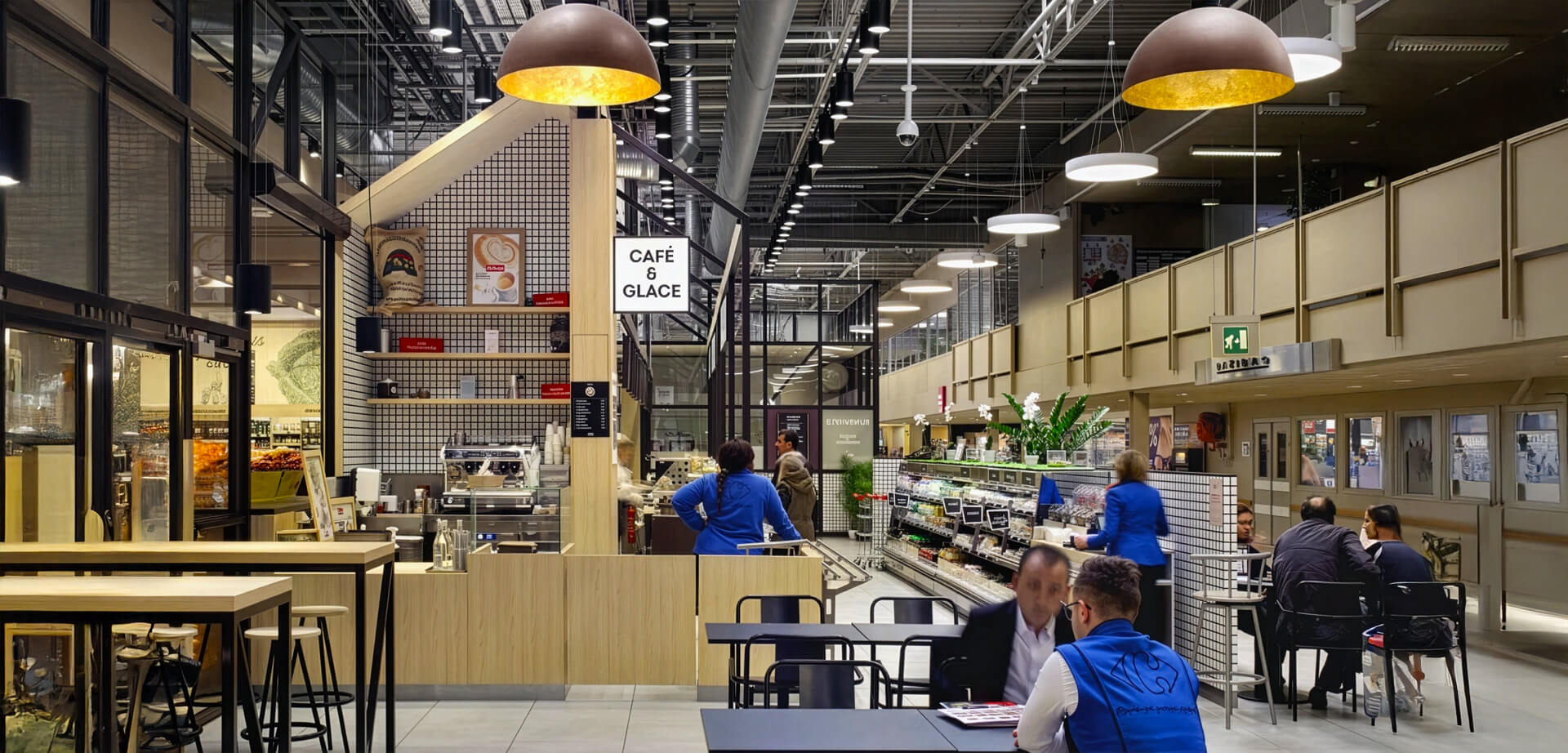
Carrefour’s Villiers-en-Bière hypermarket differentiates itself by combining value pricing with a broader, more experiential customer journey. Shoppers can discover wellness products and new brands, purchase prepared meals or fresh juices, pause at cafés and engage with social-media-oriented experiences.
Price is an important part of the positioning.
Price remains central to the proposition. Unlike discounters such as Lidl and Aldi, whose journeys focus on low prices and efficient shopping, and traditional hypermarkets such as E.Leclerc, where assortment breadth and price competitiveness dominate, Carrefour adds discovery, foodservice and lifestyle experiences without abandoning value.
Prepared foods, fresh juices and smoothies can be positioned below typical specialist or premium foodservice prices, making experiential products accessible rather than indulgent. The result is a distinctive combination of competitive pricing, affordable discovery and lifestyle-led experiences.
Customers are therefore not simply buying groceries; they are participating in a contemporary food-and-wellness proposition, while Carrefour captures additional occasions, greater engagement and potentially higher basket value.
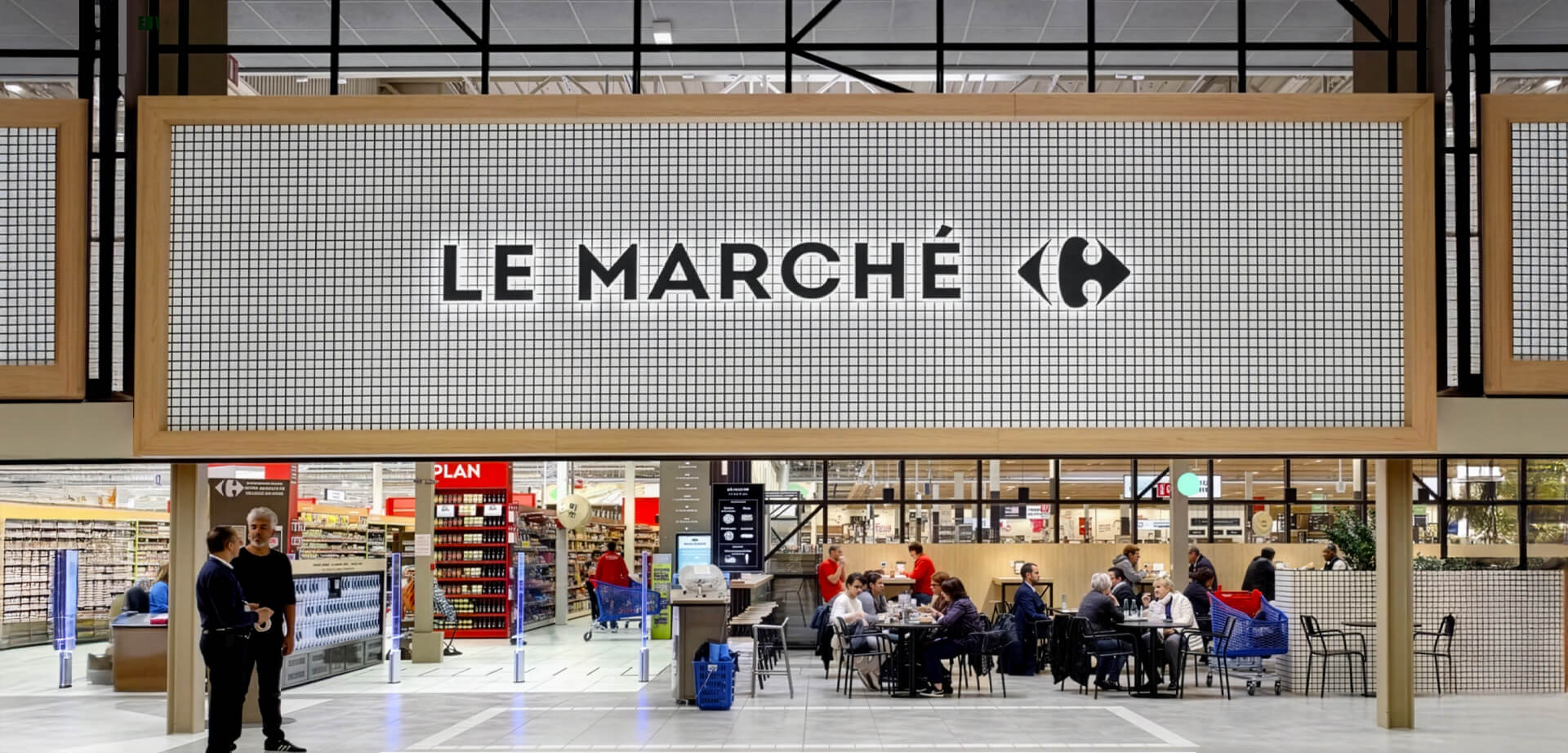
Carrefour Quality, Wellbeing and Purpose
Carrefour takes a quality- and purpose-led approach to differentiation, combining natural and organic products, responsible sourcing, fresh food, prepared meals and wellbeing with standards designed to make these commitments tangible.
Rather than relying primarily on advertising, Carrefour uses product quality, sourcing, freshness and transparency as physical proof of its brand promise. This helps differentiate it from price-focused discounters and conventional hypermarkets where quality and sustainability may be less central.
The result is a proposition in which quality, wellbeing and purpose are embedded throughout the customer journey, from product selection and merchandising to foodservice, packaging and in-store communication.
Carrefour = Makes the hypermarket more experiential and omnichannel.
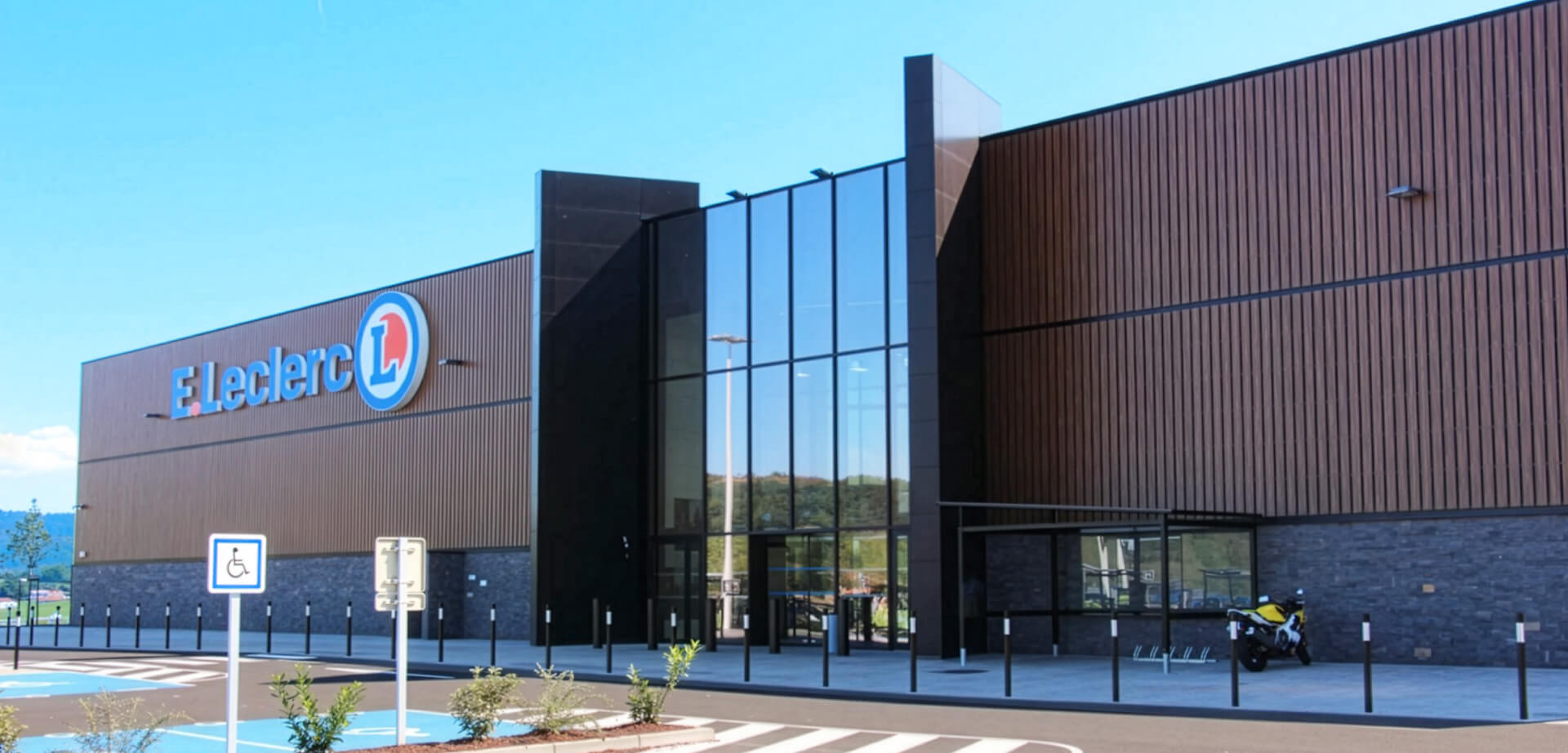
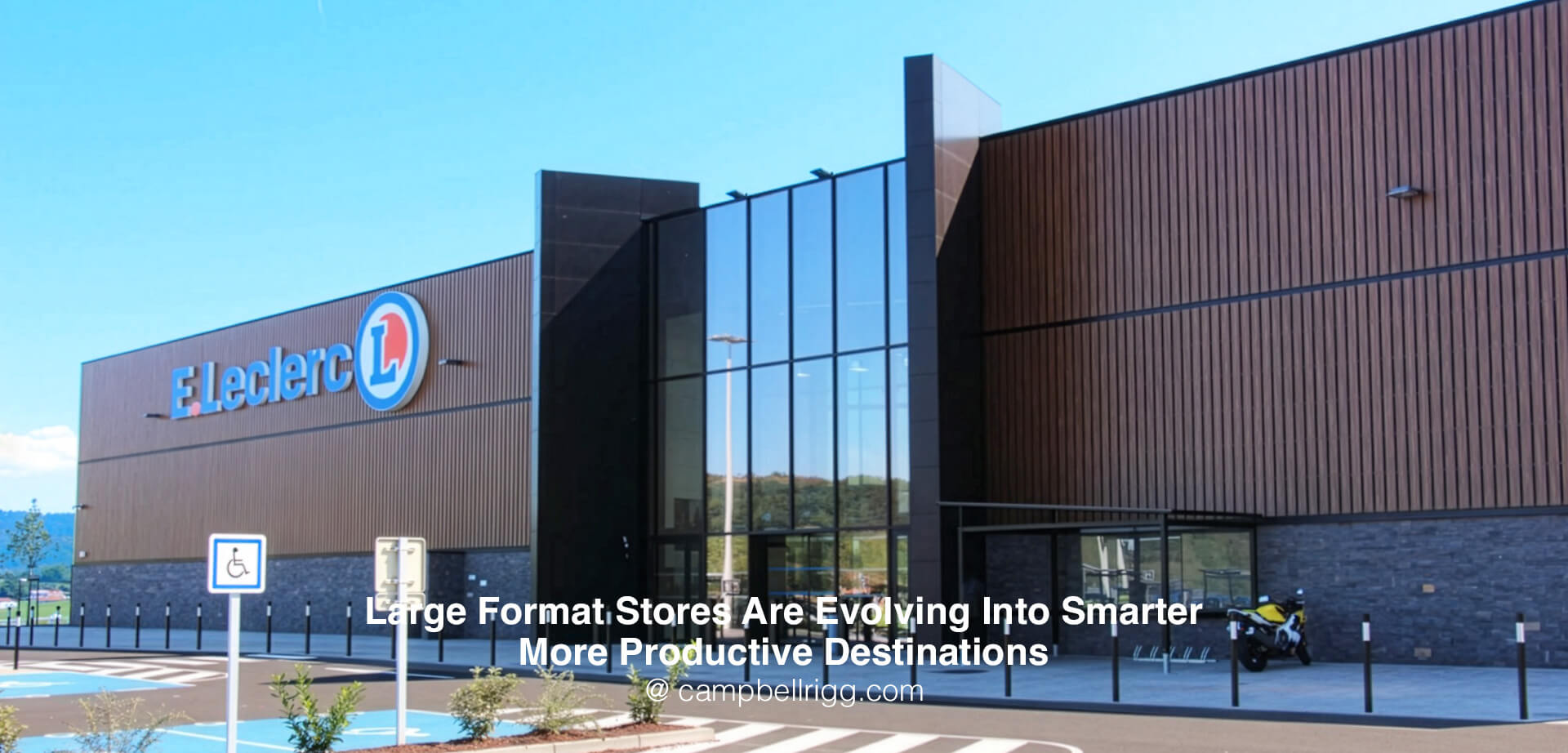
E.Leclerc is flexible, modular and sustainable renewal.
The La Roche-sur-Yon hypermarket illustrates a third model: value-led modernisation. Following a three-year comprehensive renovation, the 6,650 m² store reopened with an evolutionary, modular and environmentally responsible design. Natural light, clearer layouts, fresh-food presentation, convenience and an experience-led environment create a more attractive and adaptable shopping destination.
The project explicitly combines renewal with E.Leclerc's price positioning: “at E.Leclerc prices”.
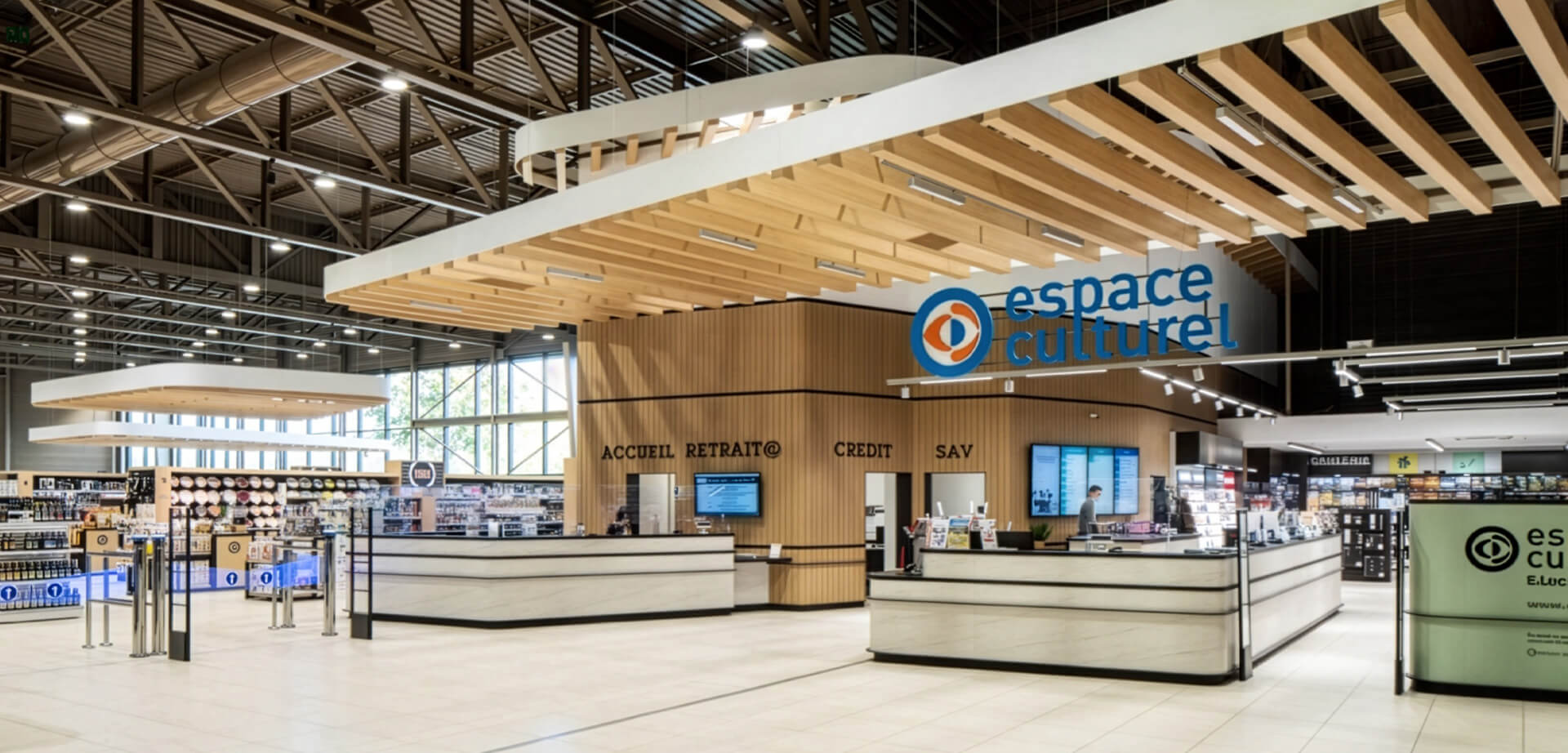
The project set an ambitious +33% growth objective over five years. While no specific traffic or like-for-like sales uplift has been publicly quantified, the target demonstrates the potential commercial upside of combining better customer experience with more productive store planning.
E.Leclerc = choice + price + purchasing power + modular renewal.
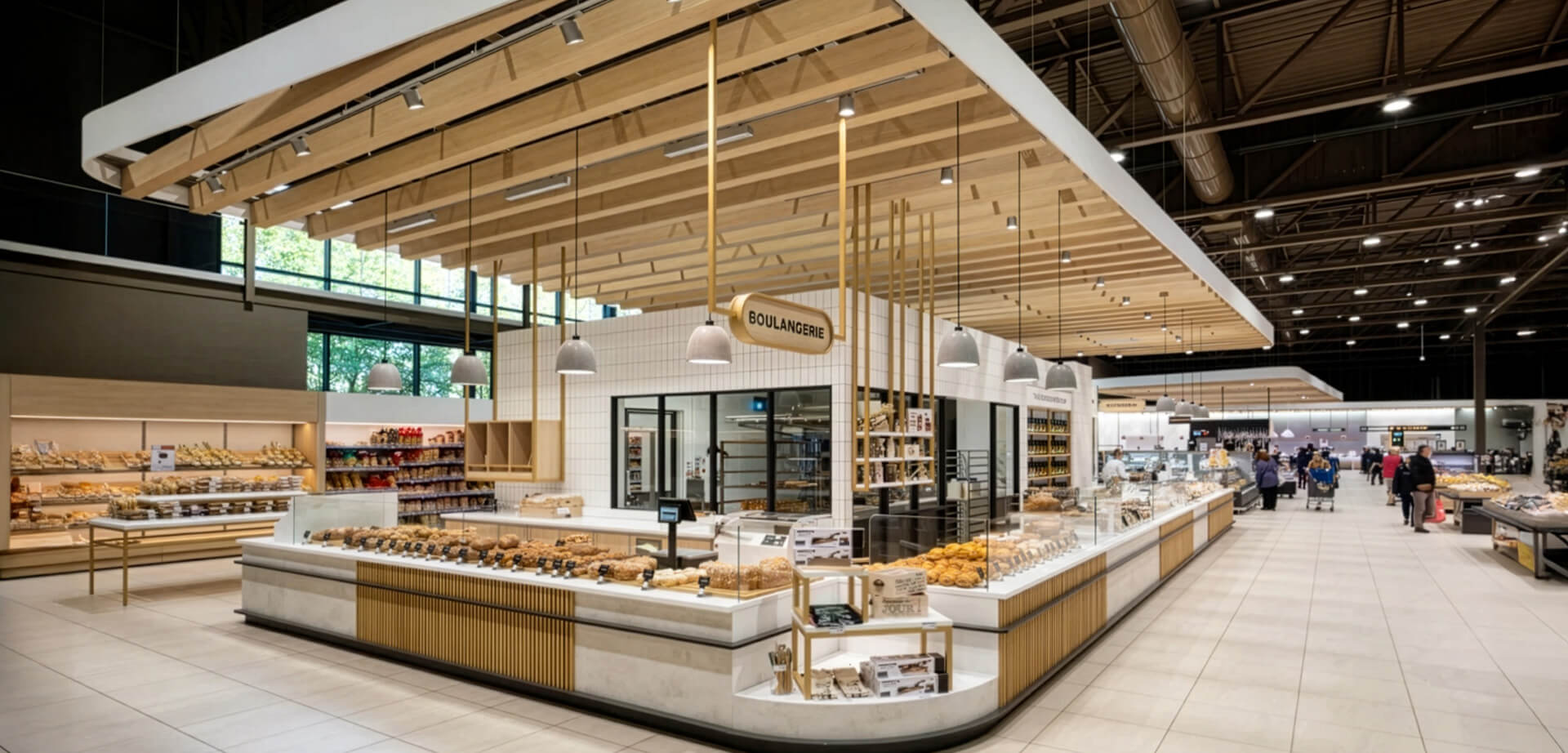
Its USP is built around price leadership, purchasing power and customer value, while Carrefour combines value with quality, wellbeing, responsible sourcing and experience.
Its broad, value-conscious audience is differentiated by a strong price image and locally adaptable, independent-operator model.
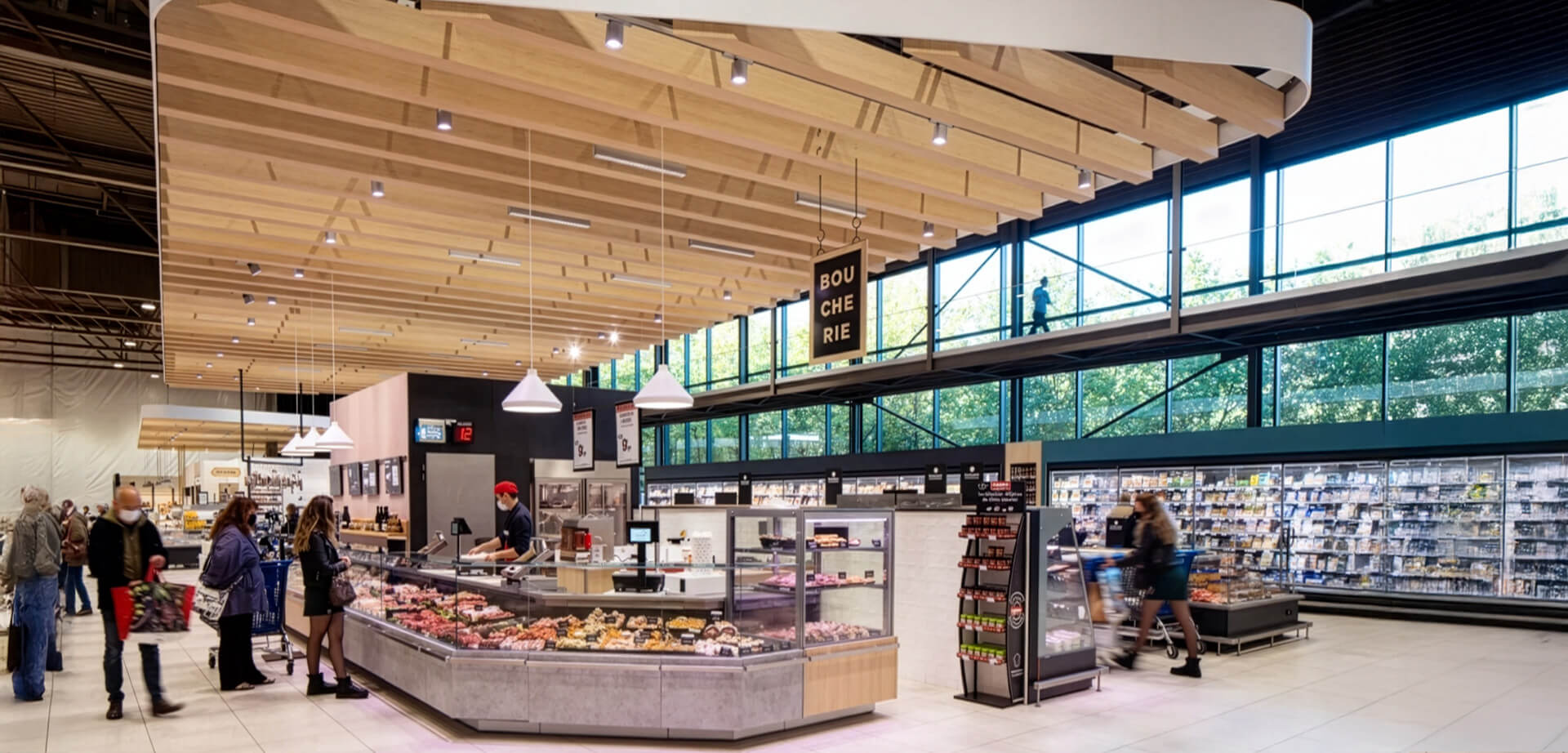
Its competitive strength comes from a broad supermarket and hypermarket offer at highly competitive prices, supported by private-label ranges, national brands, fresh food and a sophisticated digital and omnichannel proposition. Its cooperative structure reinforces its consumer-focused positioning.
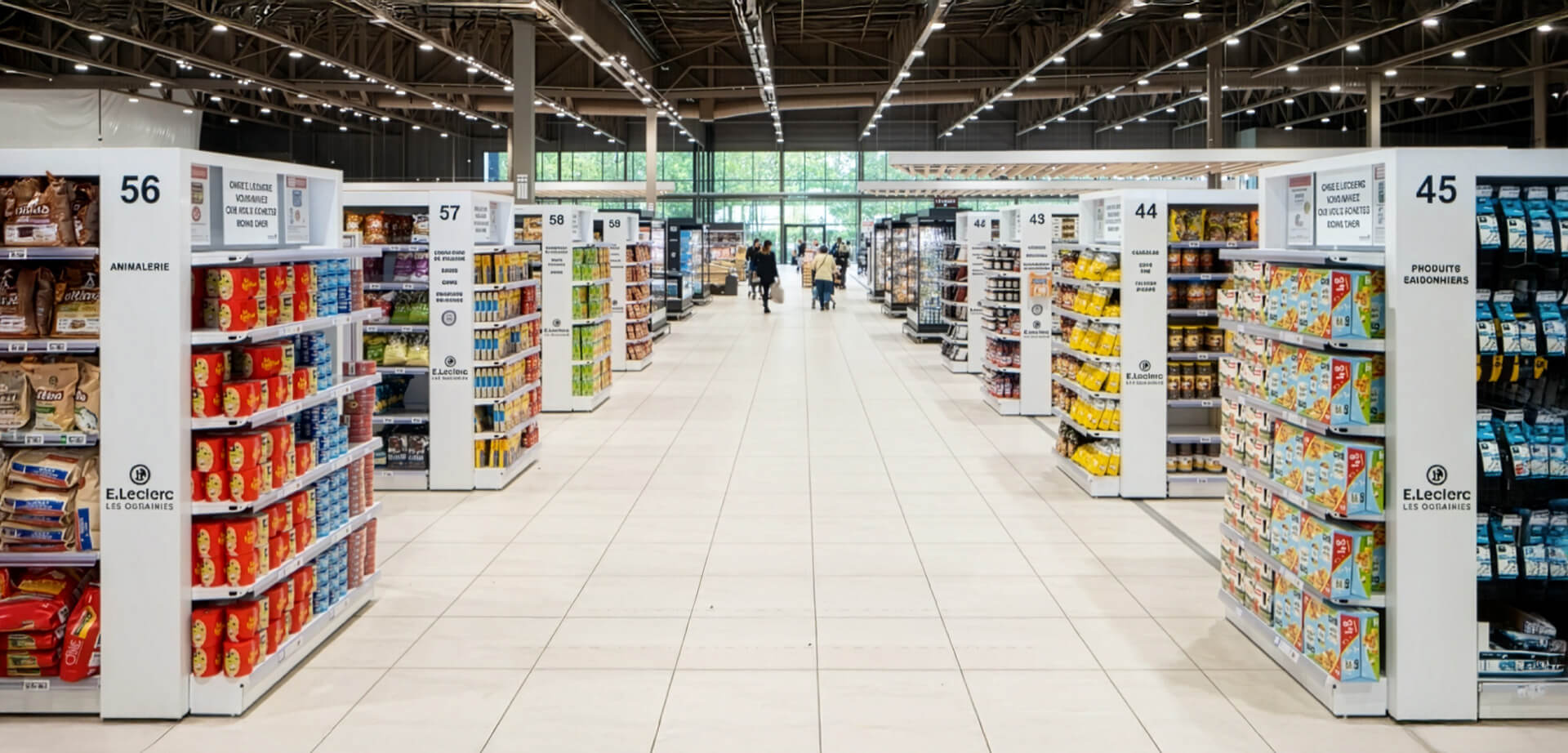
E.Leclerc’s competitive strength comes from its ability to offer a very broad supermarket and hypermarket proposition at highly competitive prices, supported by strong private-label ranges, national brands, fresh food and an increasingly sophisticated digital and omnichannel offer.
Carrefour’s differentiation is more brand-led and purpose-driven. It connects food with organic and natural products, responsible sourcing, freshness, prepared food, health and wellbeing, using its quality standards and sustainability commitments to make the proposition tangible in-store.
The distinction can therefore be summarised as:
Carrefour = Makes the hypermarket more experiential and omnichannel.
E.Leclerc = Makes the hypermarket more productive and value-led.
This creates different customer journeys.
E.Leclerc encourages shoppers to compare, select and maximise value across a broad assortment. Carrefour seeks to add discovery, reassurance and lifestyle relevance to the shopping mission, giving customers reasons to explore beyond their planned grocery purchase.
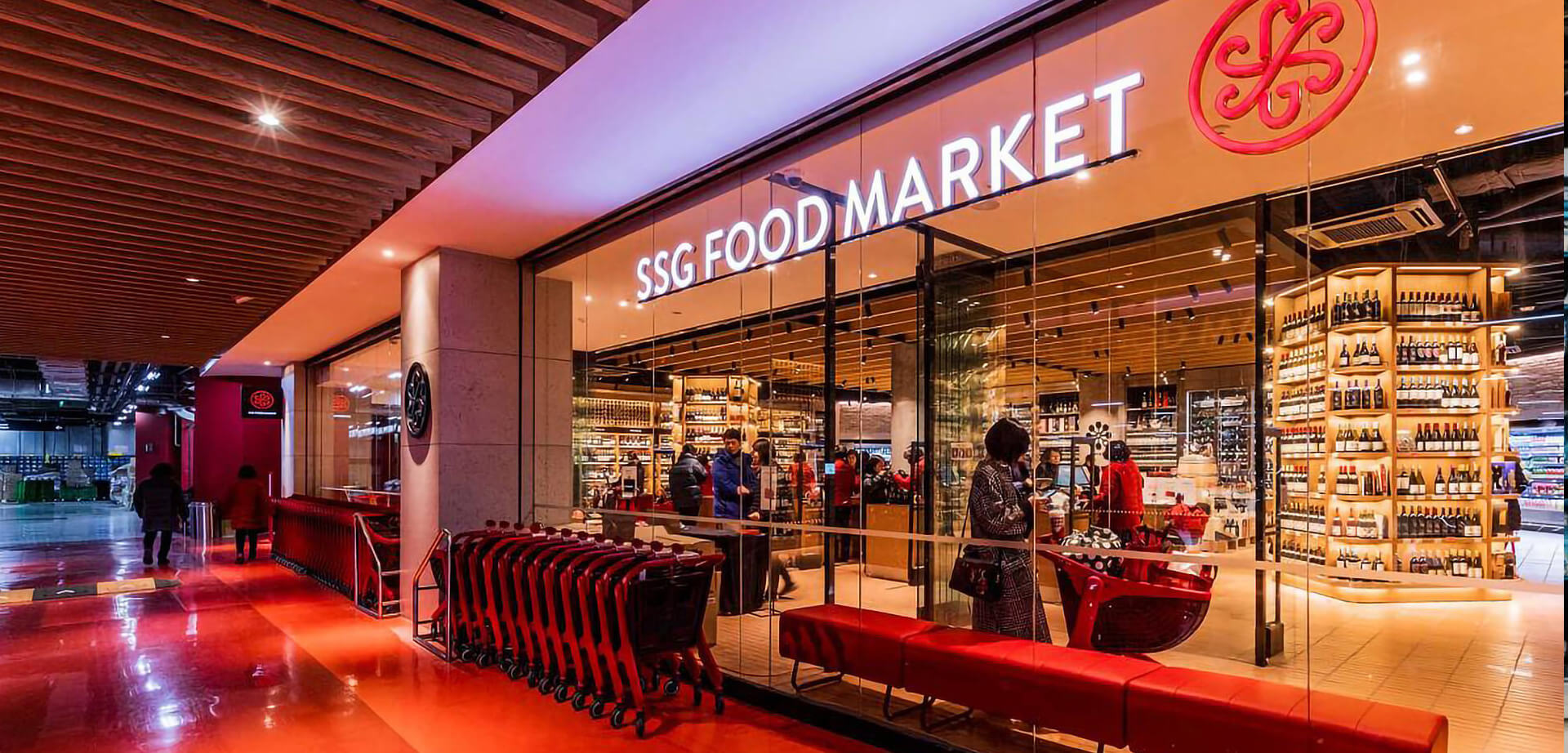
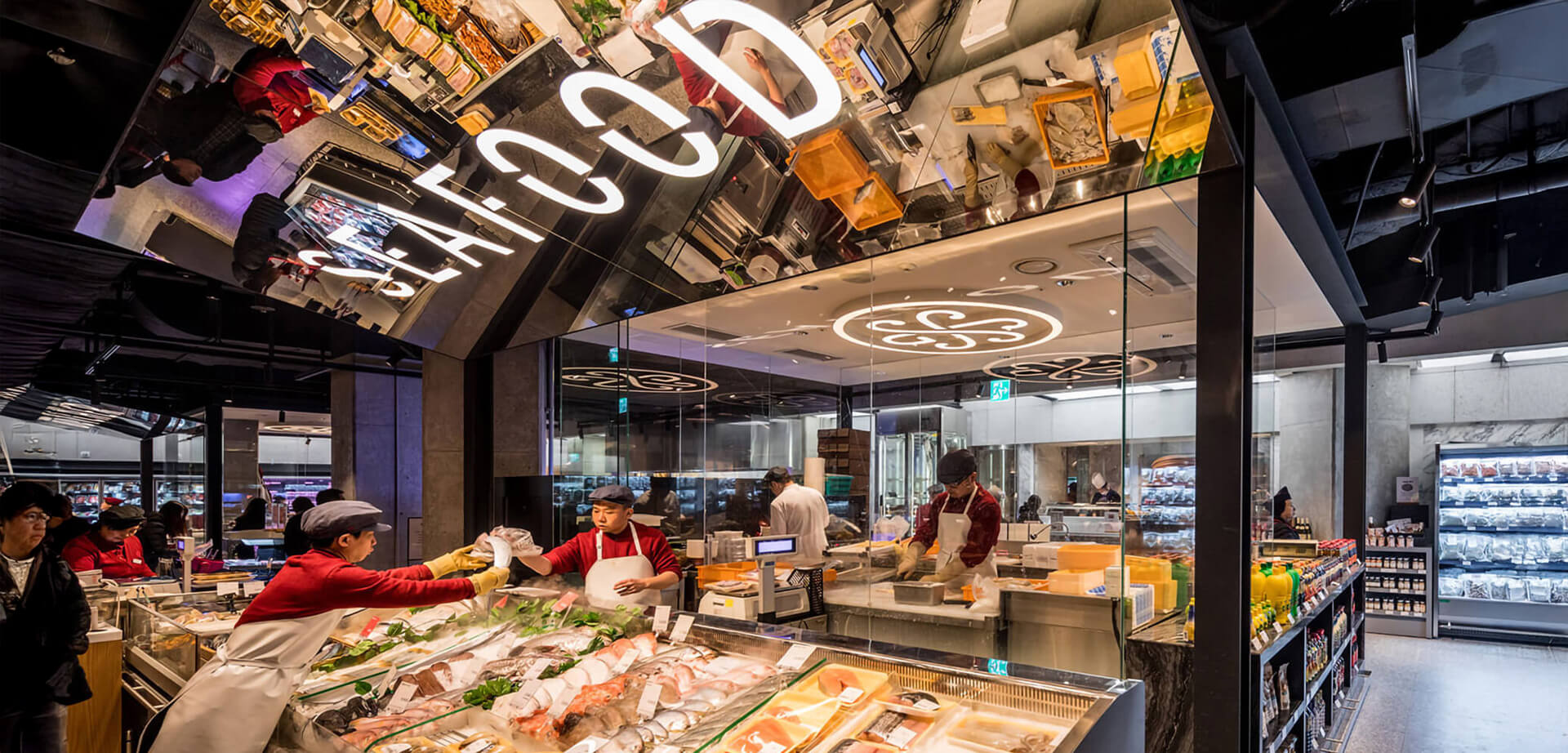
SSG Food Market: the hypermarket becomes a lifestyle destination.
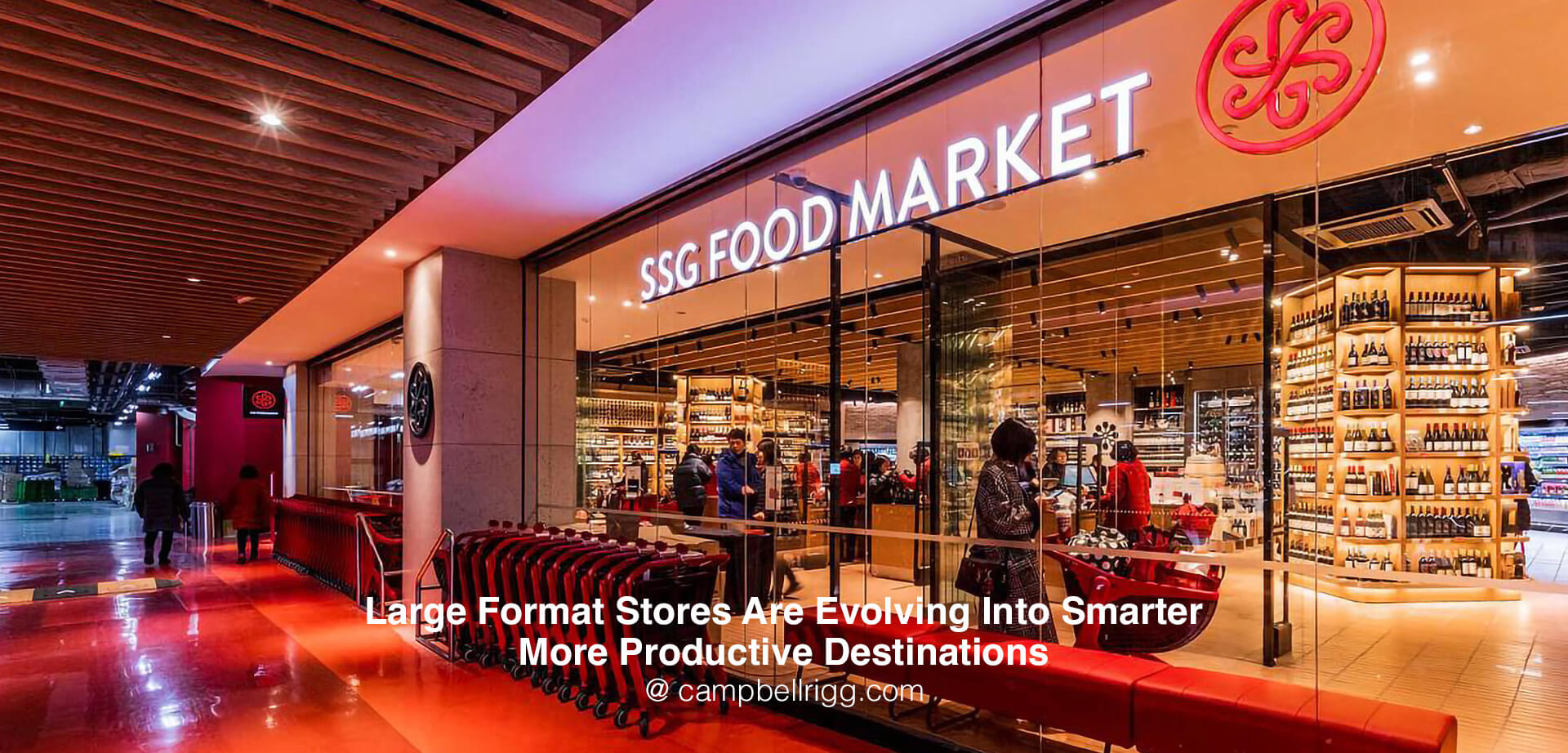
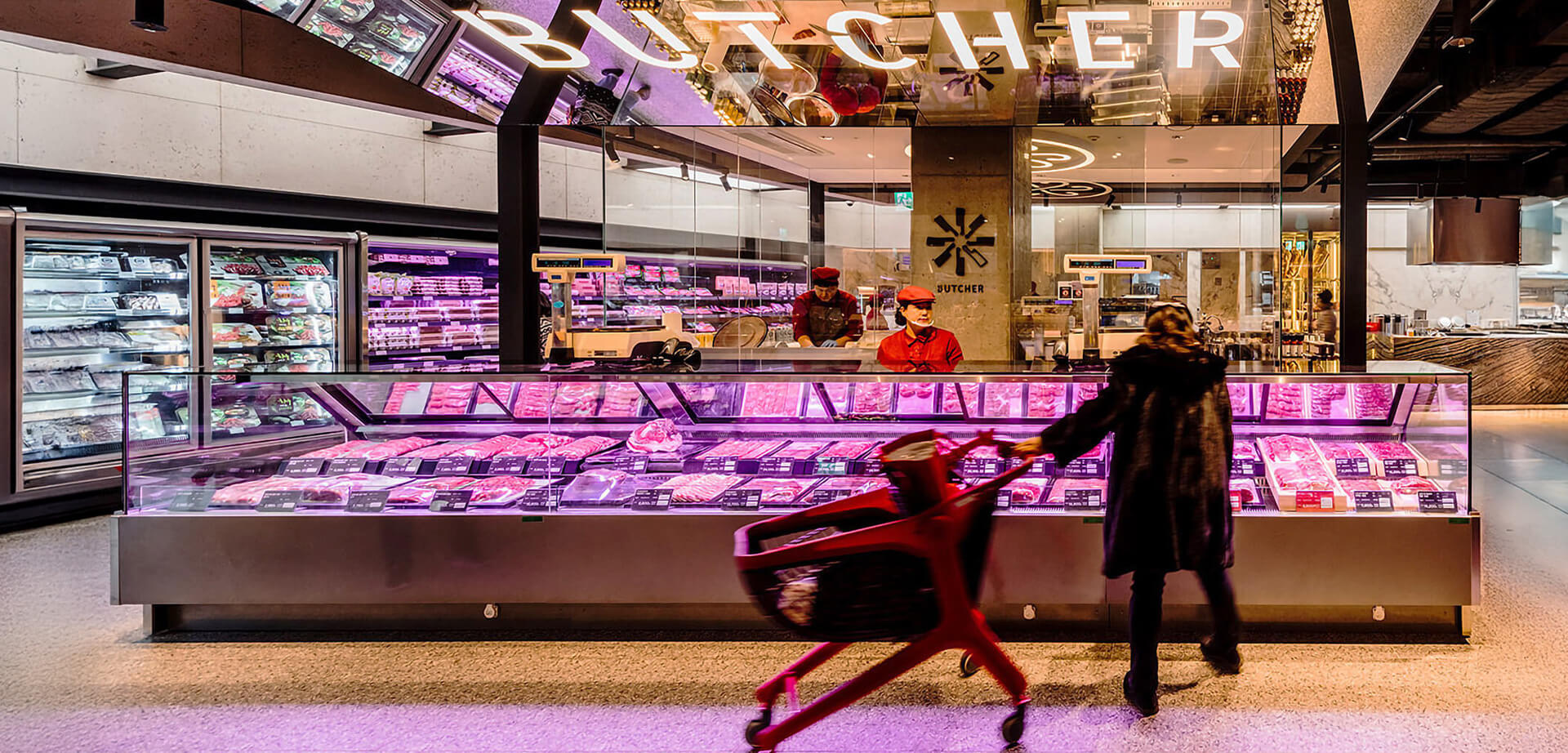
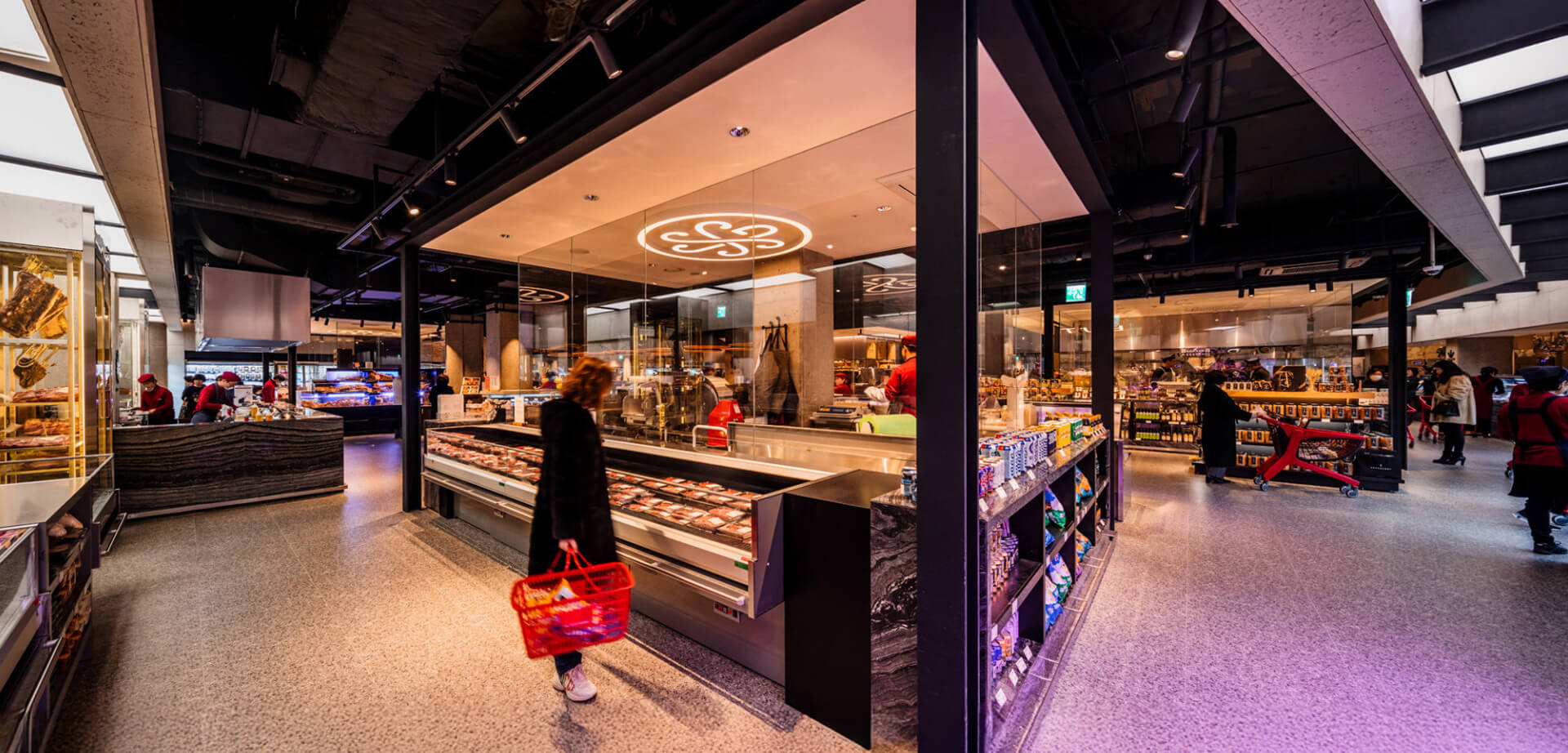
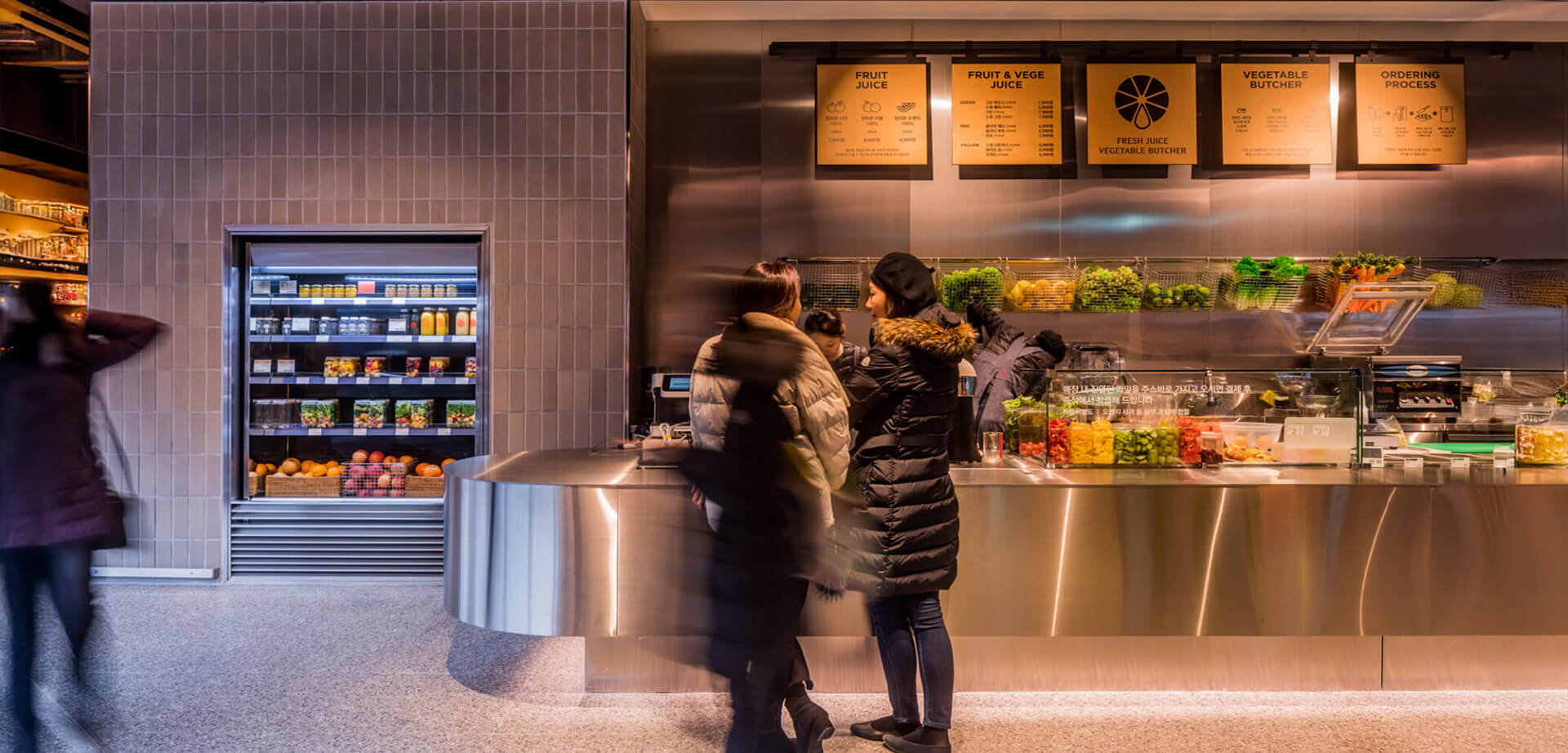
South Korea's SSG Food Market shows another route to reinvention: turning grocery shopping into a premium food-and-lifestyle experience. Its Cheongdam store combines curated food, fresh products, specialist ranges and foodservice, creating a destination that extends beyond conventional supermarket retail.
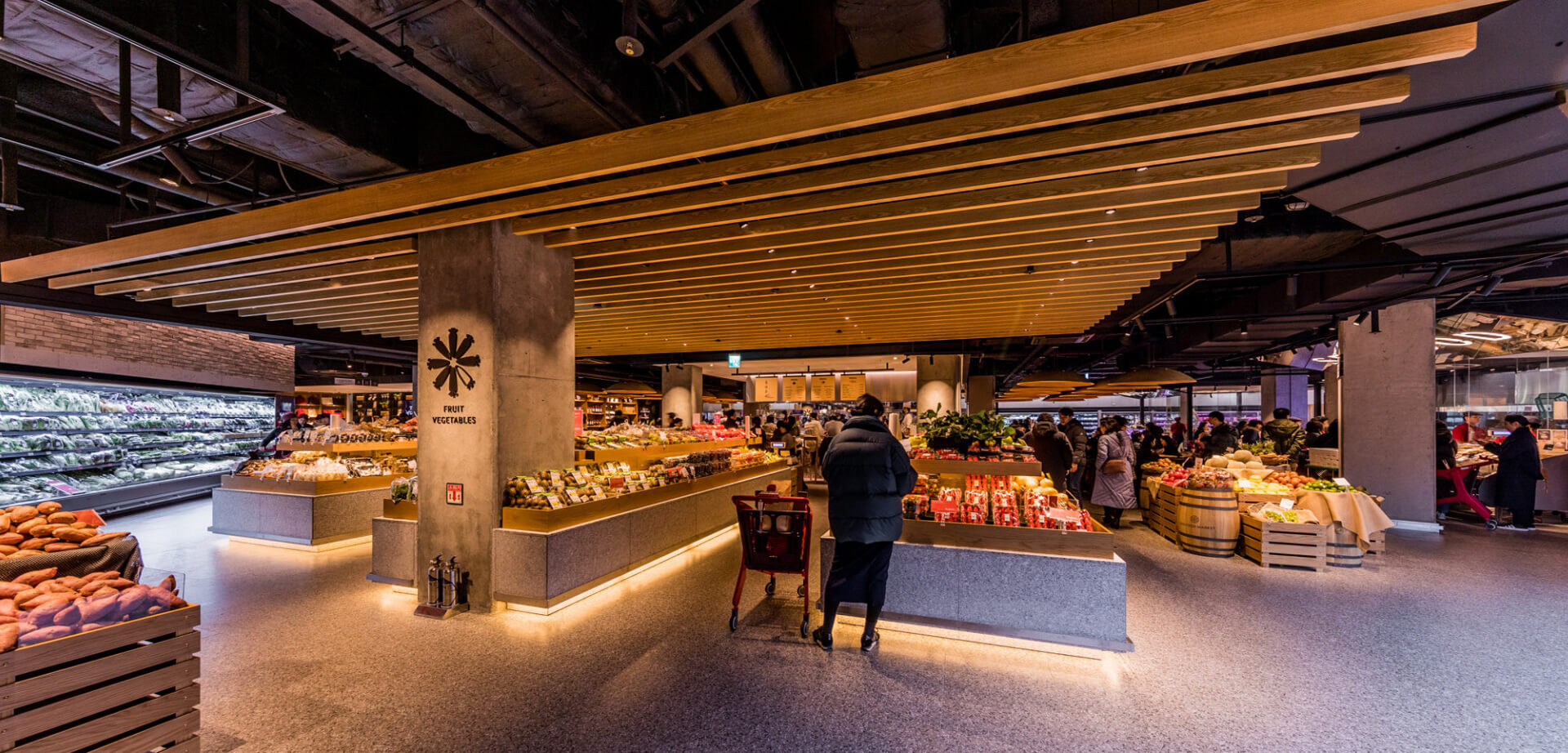
The SSG Food Market takes a very different route: premiumisation. Its sales grew 153.9% year-on-year in 2013 and 23.3% in 2014.
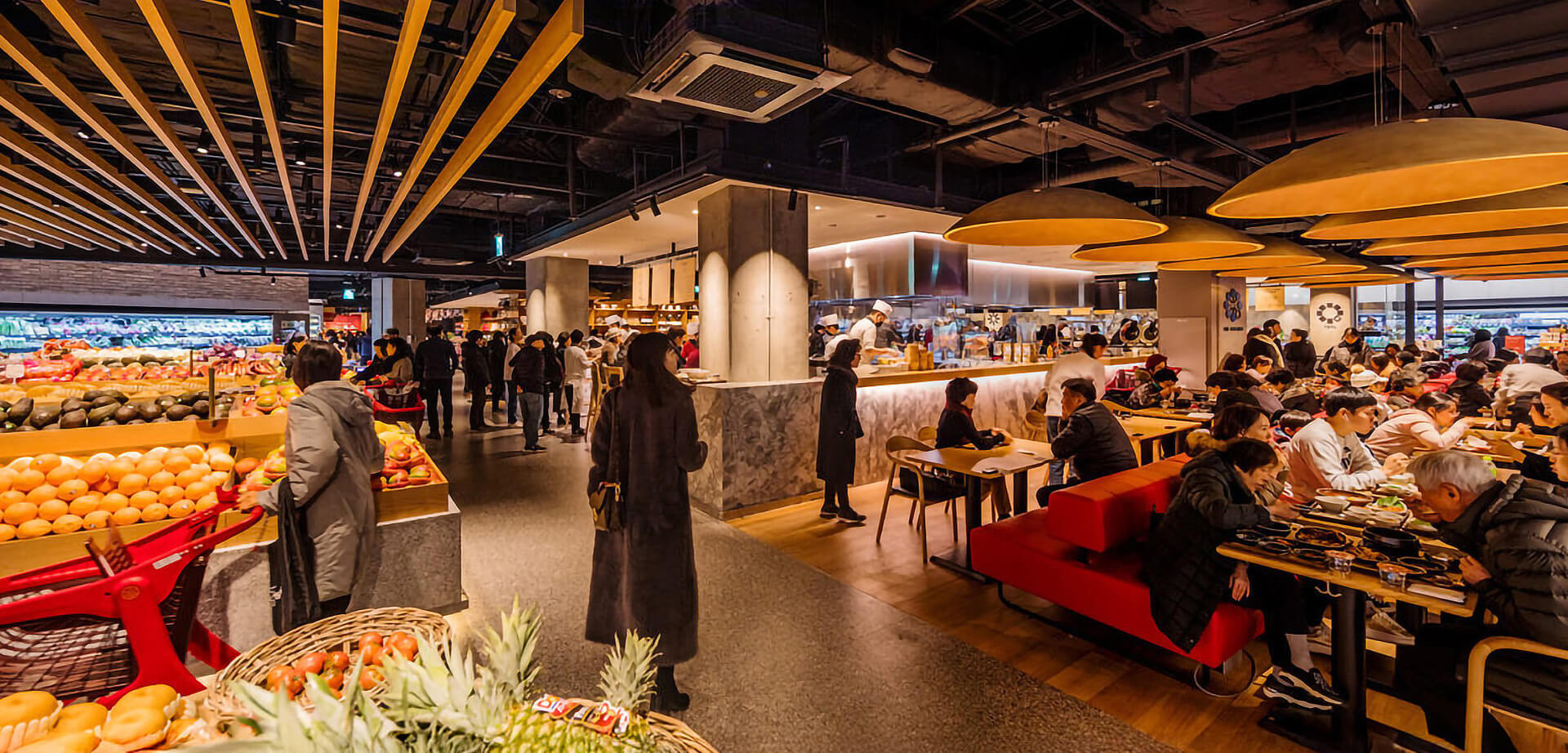
SSG Food Market can differentiate itself by moving beyond the traditional supermarket mission to create a curated food-and-lifestyle destination. Its USP combines premium and emerging products, fresh and prepared food, distinctive foodservice, cafés and social spaces with wellness, convenience and experiential merchandising. Rather than competing primarily on price, like E.Leclerc, or through the broader combination of value, quality and purpose pursued by Carrefour, SSG can compete through curation, discovery, service and experience.
The customer journey becomes less about simply completing a grocery shop and more about discovering new products, eating, socialising, exploring and returning for memorable experiences. This creates stronger emotional engagement and gives SSG Food Market a distinctive identity, positioning the supermarket as a contemporary food destination rather than simply a place to buy groceries.
Three models of hypermarket reinvention
Carrefour = Makes the hypermarket more experiential and omnichannel.
E.Leclerc = Makes the hypermarket more productive and value-led.
SSG Food Market = Turns premium food, lifestyle and discovery.
Designing the Customer Journey.
The strongest hypermarket formats are increasingly designed around customer missions rather than traditional departments.
Instead of simply organising products by category, retailers can create zones around customer needs: Discover → Explore → Experience → Purchase → Engage → Return
Hypermarkets can increasingly organise space around customer missions rather than traditional departments: wellness, meal solutions, food-to-go, family shopping, discovery and omnichannel fulfilment.
The underlying strategic framework.
Retailer Reinvention model Core proposition
Carrefour Experience + quality + omnichannel Value + quality + wellbeing + purpose
E.Leclerc Value + productivity + modular renewal Choice + price
SSG Food Market Premiumisation + discovery Premium food + lifestyle + experience
Branding, Store Design and Commercial Performance.
The objective is commercial. A stronger Hypermarket proposition can support: Greater differentiation → stronger customer engagement → increased dwell time → larger baskets → higher loyalty → stronger brand equity → improved performance/m²
Store design is not decoration. It is a commercial tool for improving space productivity, customer engagement and ROIC.
CampbellRigg's own research into European supermarket design identifies these trends as important components of the next generation of grocery formats.
The commercial opportunity is therefore to connect brand strategy with physical retail performance.
The Hypermarket of the future will not necessarily be larger.
It may be smaller, smarter, more local, more personalised and more experience-led.
Technology will increasingly support this transformation through AI, predictive analytics, digital personalisation, intelligent merchandising and connected customer journeys.
The winning retailers will combine technology with a strong human proposition: distinctive products, compelling spaces, relevant services and a clear reason for customers to choose them.
The future hypermarket will therefore be less about selling groceries and more about owning a distinctive place in customers' lives.
The future of hypermarkets - From hypermarket to high-performance retail platform.
These examples point towards a common future, but not a single format. Carrefour is making scale, value and omni-channel convenience work harder; SSG is using premium food, wellness and lifestyle to justify higher-value visits; E.Leclerc is combining a strong price proposition with flexible, sustainable renewal. The successful hypermarket is therefore becoming part supermarket, part fresh-food market, part foodservice destination, part experience centre and part fulfilment hub.
This is where store design becomes commercially important for ROIC.
Space productivity → traffic → conversion → basket size → fulfilment → ROIC
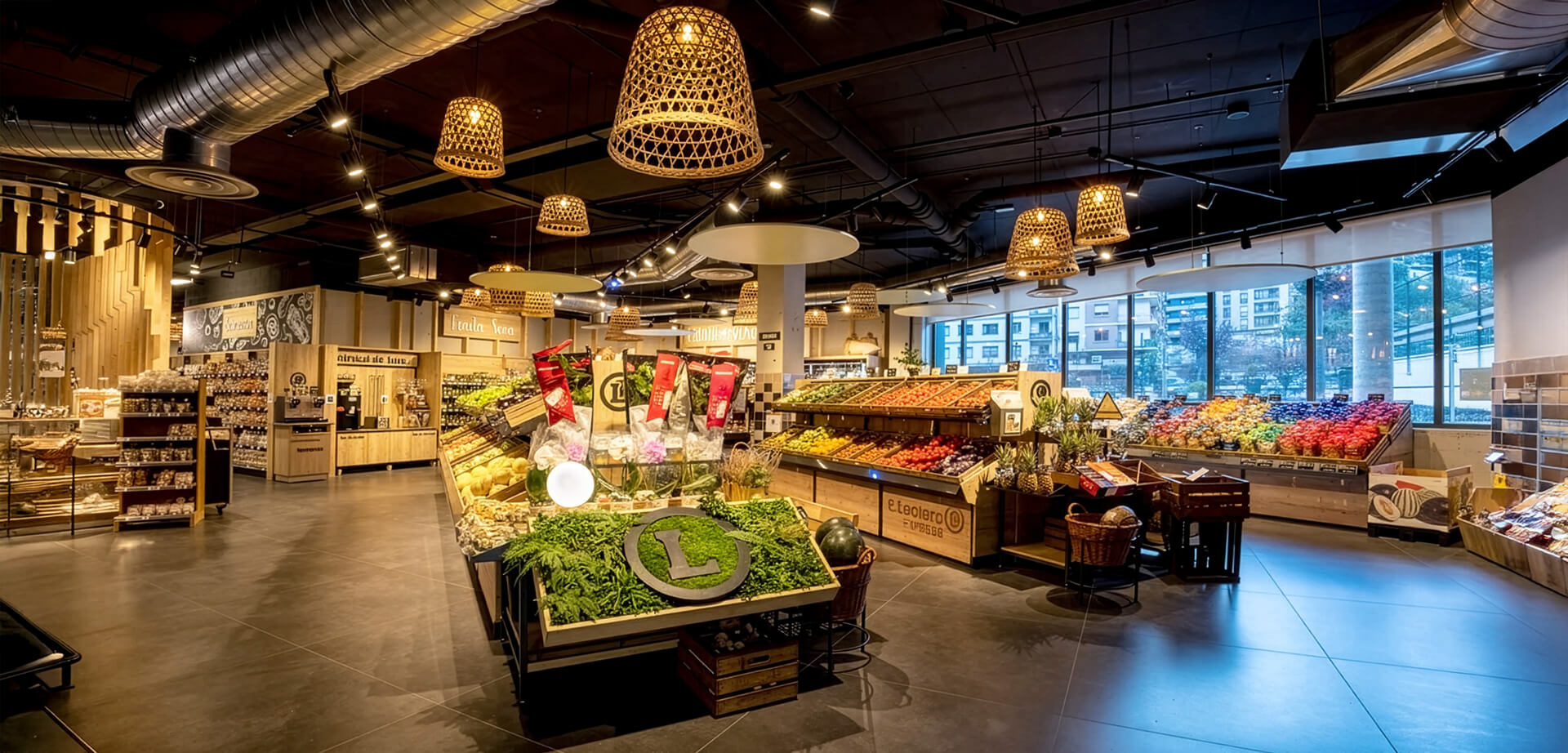
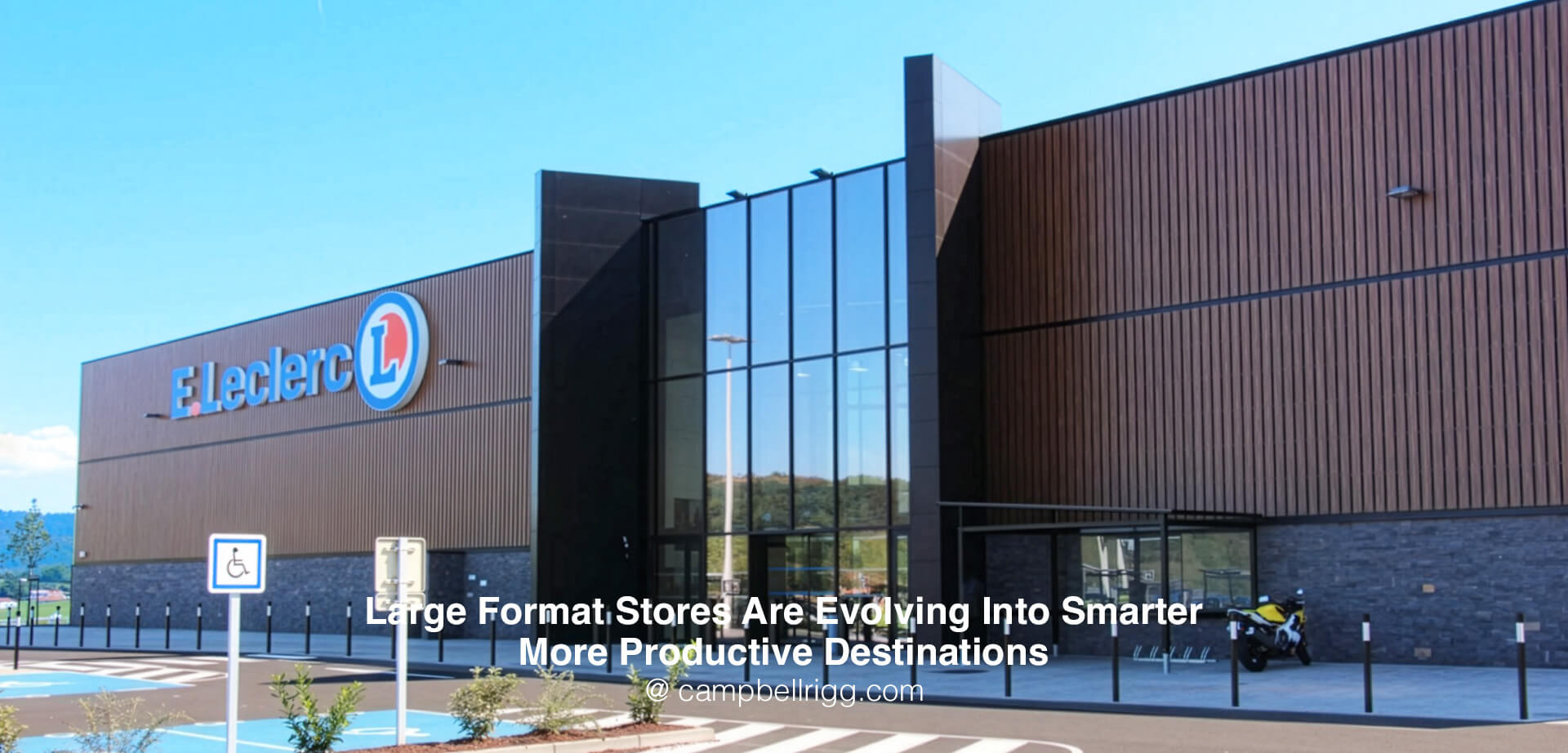
Above: E.Leclerc's 1,400 m² Supermarket situated in Andorra, Spain.
Technology is increasingly embedded rather than simply added: Digital ordering, click-and-collect, delivery, self-service, data-driven merchandising and personalised customer journeys connect the physical and digital propositions. The winning strategy is not to make every hypermarket look cheap or premium. It is to make the proposition more relevant to its chosen customer, lifestyle and price position.
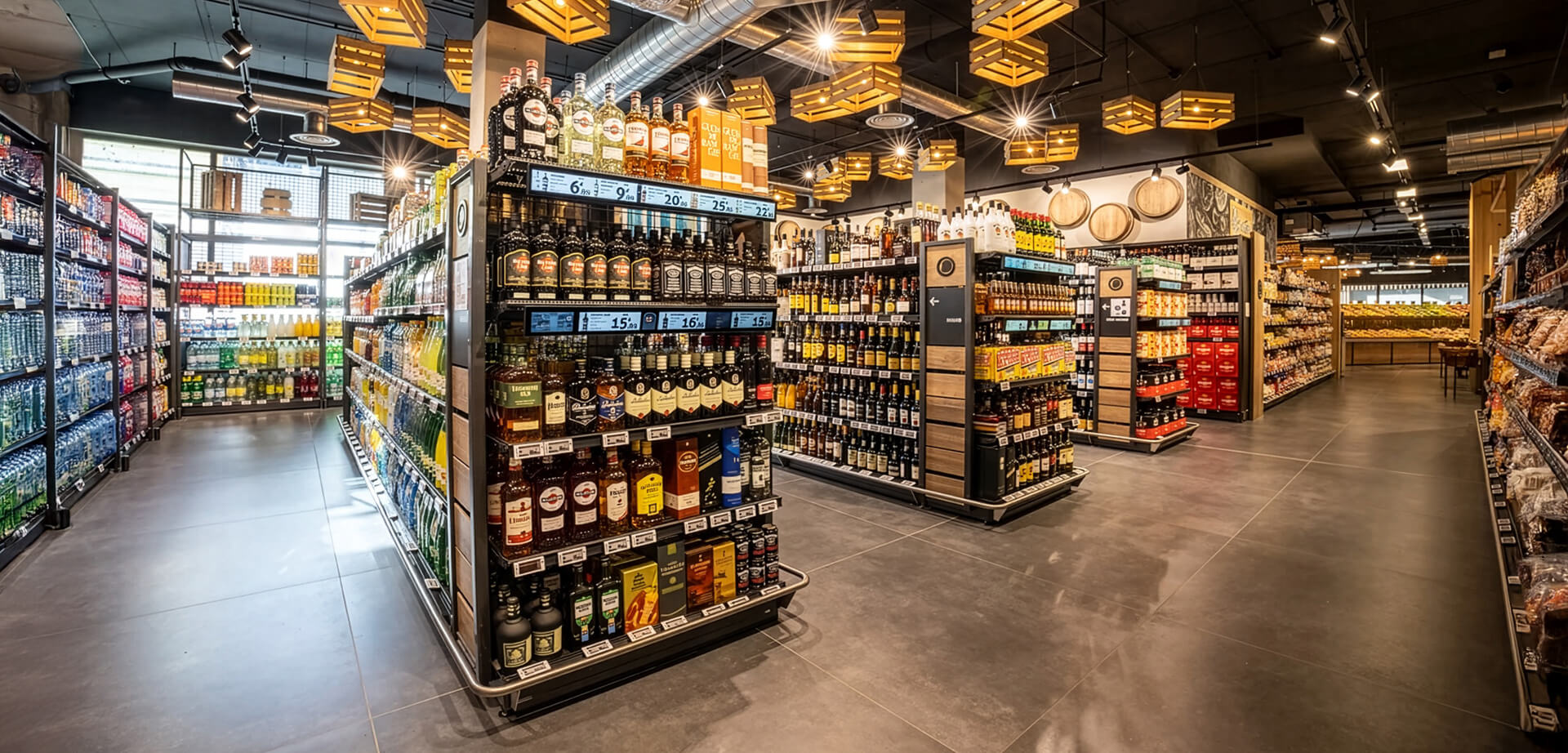
The Hypermarket of the future will not necessarily be larger.
The future hypermarket will be smaller, smarter and more productive, not necessarily smaller in footprint, but more productive in every square metre. The winners will combine fresh food, discovery, foodservice, convenience, digital fulfilment and experience with disciplined space planning and measurable ROIC.
How CampbellRigg can help
CampbellRigg brings these disciplines together through supermarket strategy, brand positioning, customer-journey planning, architecture, interior design, visual merchandising, wayfinding, digital integration and scalable format systems. Its international supermarket experience and cross-market perspective can help retailers translate shopper insight into commercially productive environments.
For hypermarket, supermarket and convenience store operators, this integrated approach can identify inefficient space, redefine shopper missions, clarify brand and price positioning, strengthen fresh-food destinations, create differentiated lifestyle experiences and connect physical stores with omnichannel services. CampbellRigg's focus is not design for its own sake, but commercially effective environments designed to improve customer engagement, sales productivity and long-term ROIC.
The future of the hypermarket will therefore be defined less by its size than by how intelligently that space is used. The retailers that win will turn large stores from costly legacy assets into productive, distinctive and digitally connected destinations built around changing shopper behaviour.