News and Views
Supermarket Brand Strategy: Connecting Customer Loyalty, Marketing and Retail Network Development.



Integrating Brand Strategy, Customer Engagement and Commercial Growth
For more than 15 years, CampbellRigg worked with Tesco management teams in the United Kingdom, Europe and Far Eastern markets, gaining extensive experience in supermarket brand strategy, hypermarket, supermarket and convenience store format planning, marketing and customer experience. This international experience has provided valuable insight into how supermarket groups can develop distinctive retail propositions, strengthen customer relationships and adapt to changing shopping needs across diverse markets. Effective supermarket brand development extends beyond creating a recognisable grocery identity. It involves shaping a coherent customer proposition across the store network, connecting value, quality, service and convenience with the right retail formats, departments and specialist brands to broaden the shopping experience and strengthen competitive positioning.
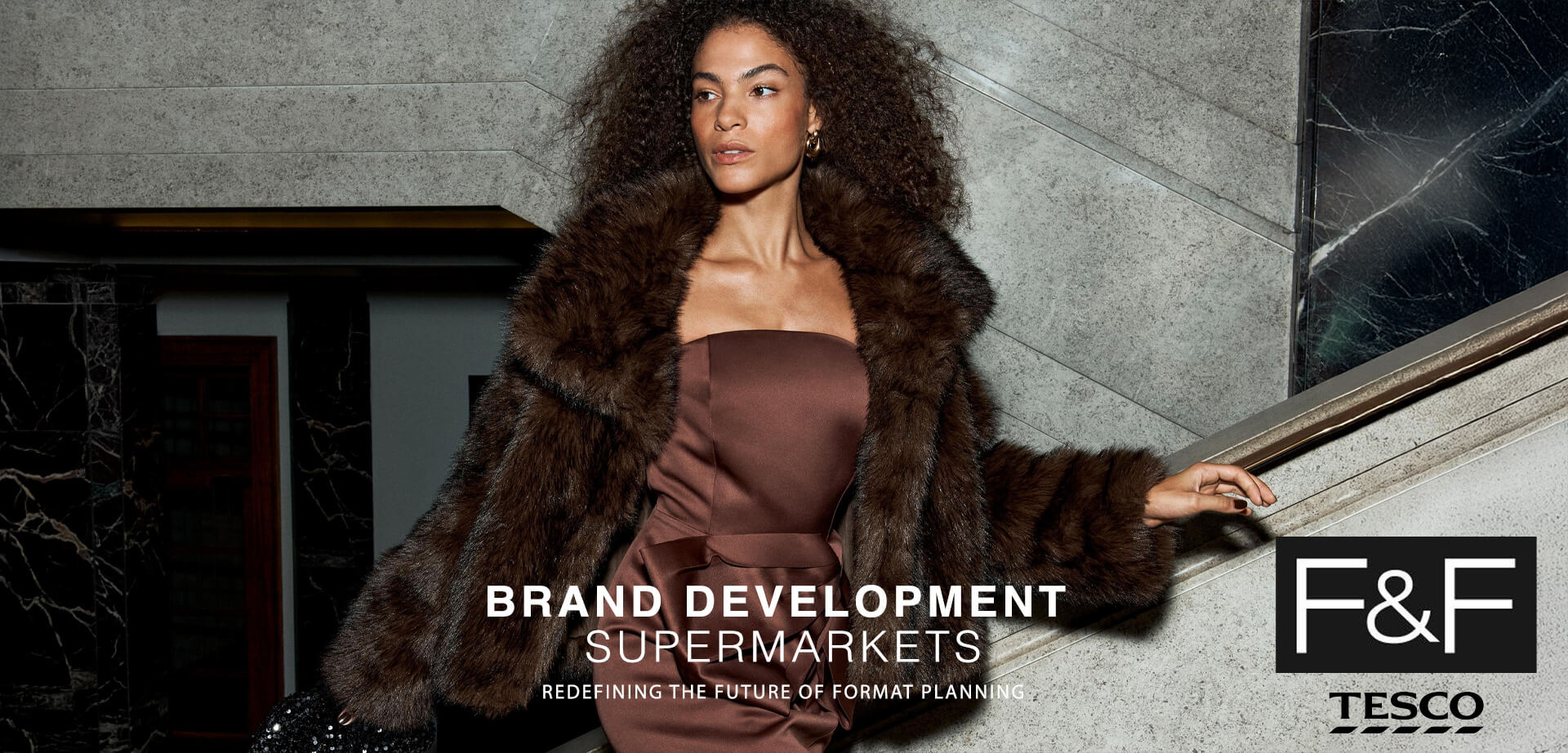
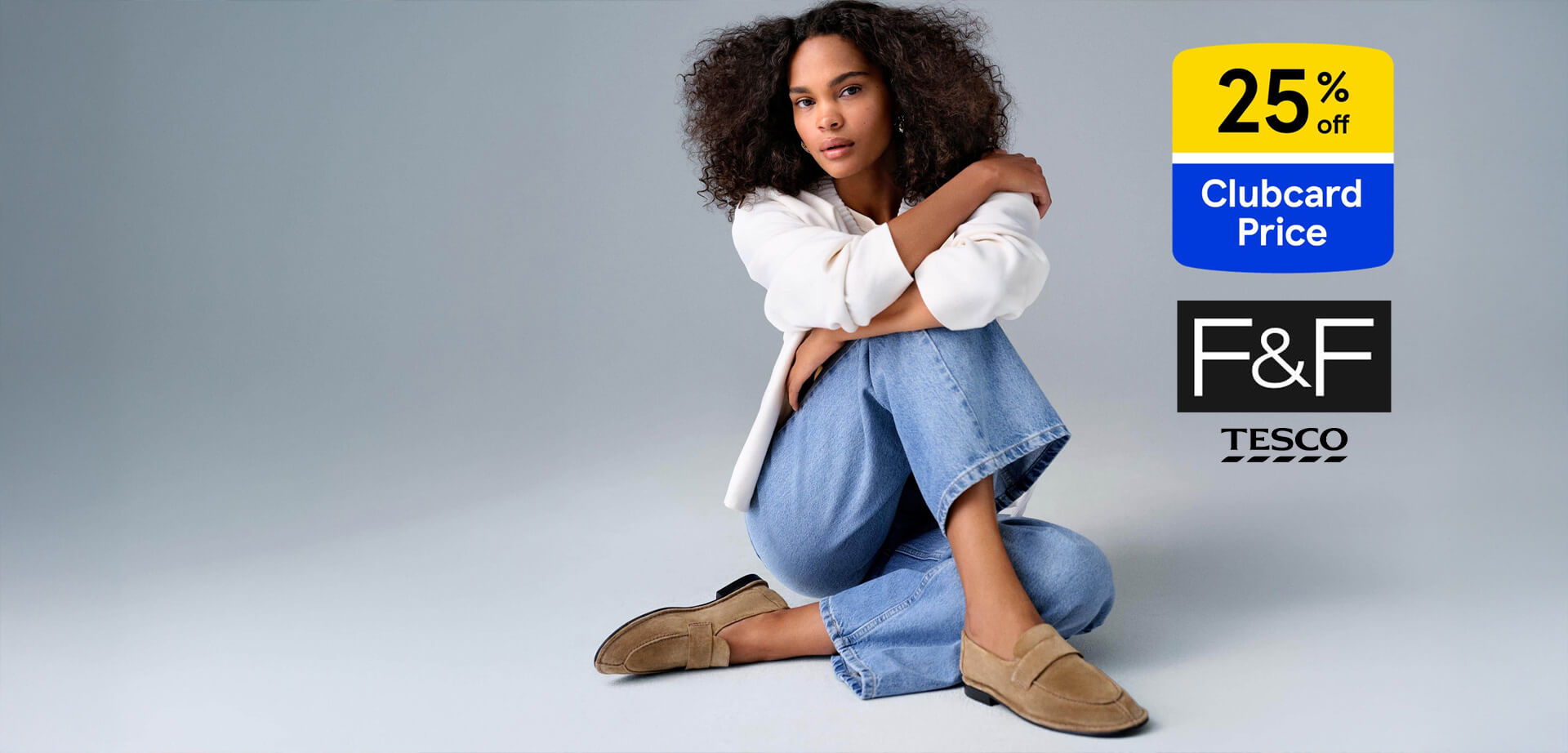
Tesco's F&F fashion brand illustrates how a supermarket can extend its proposition into non-food retail, creating a distinctive destination within selected supermarkets and hypermarkets while remaining part of the wider Tesco experience. Supported by coordinated marketing, customer loyalty and retail format planning, this approach demonstrates how supermarkets can strengthen their competitive position.
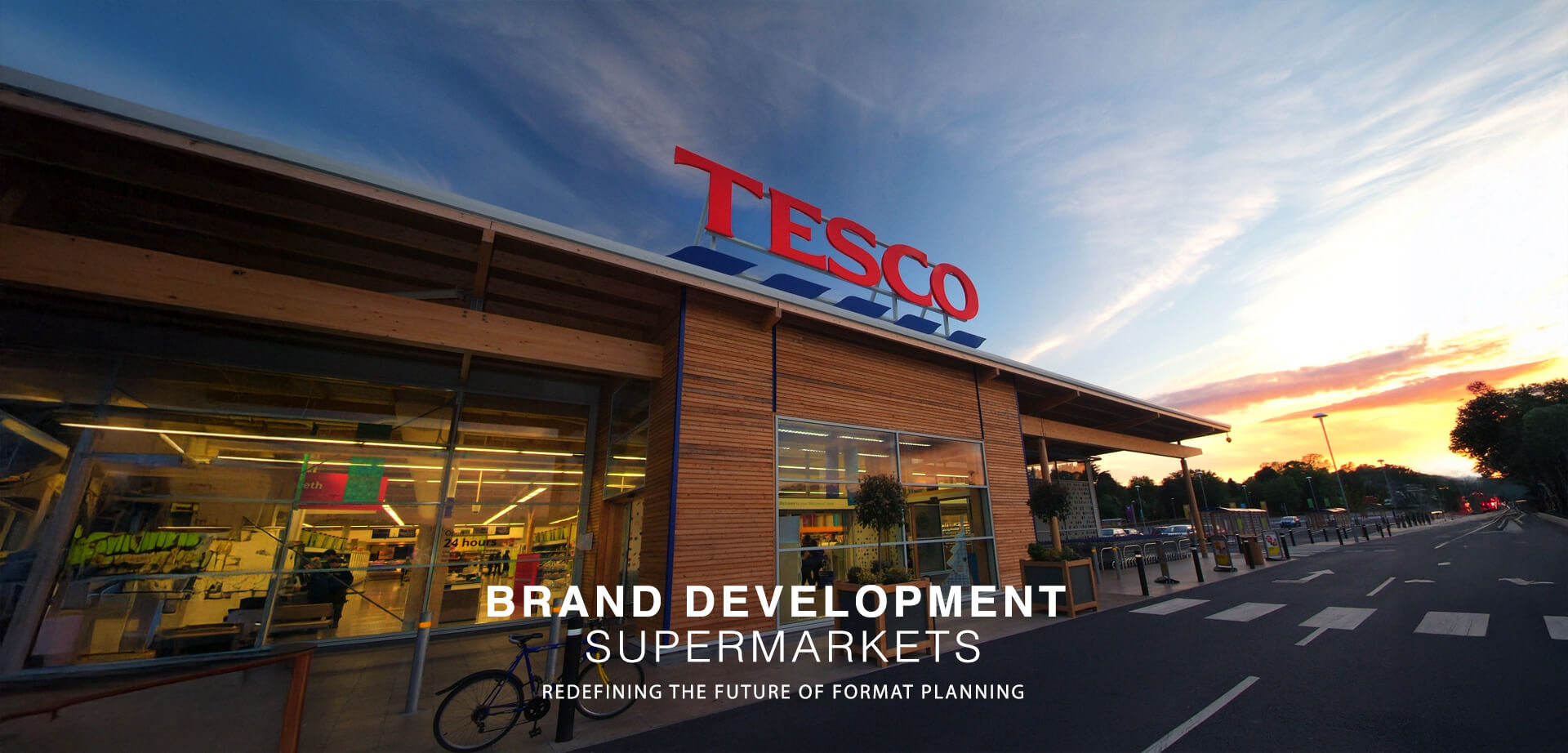
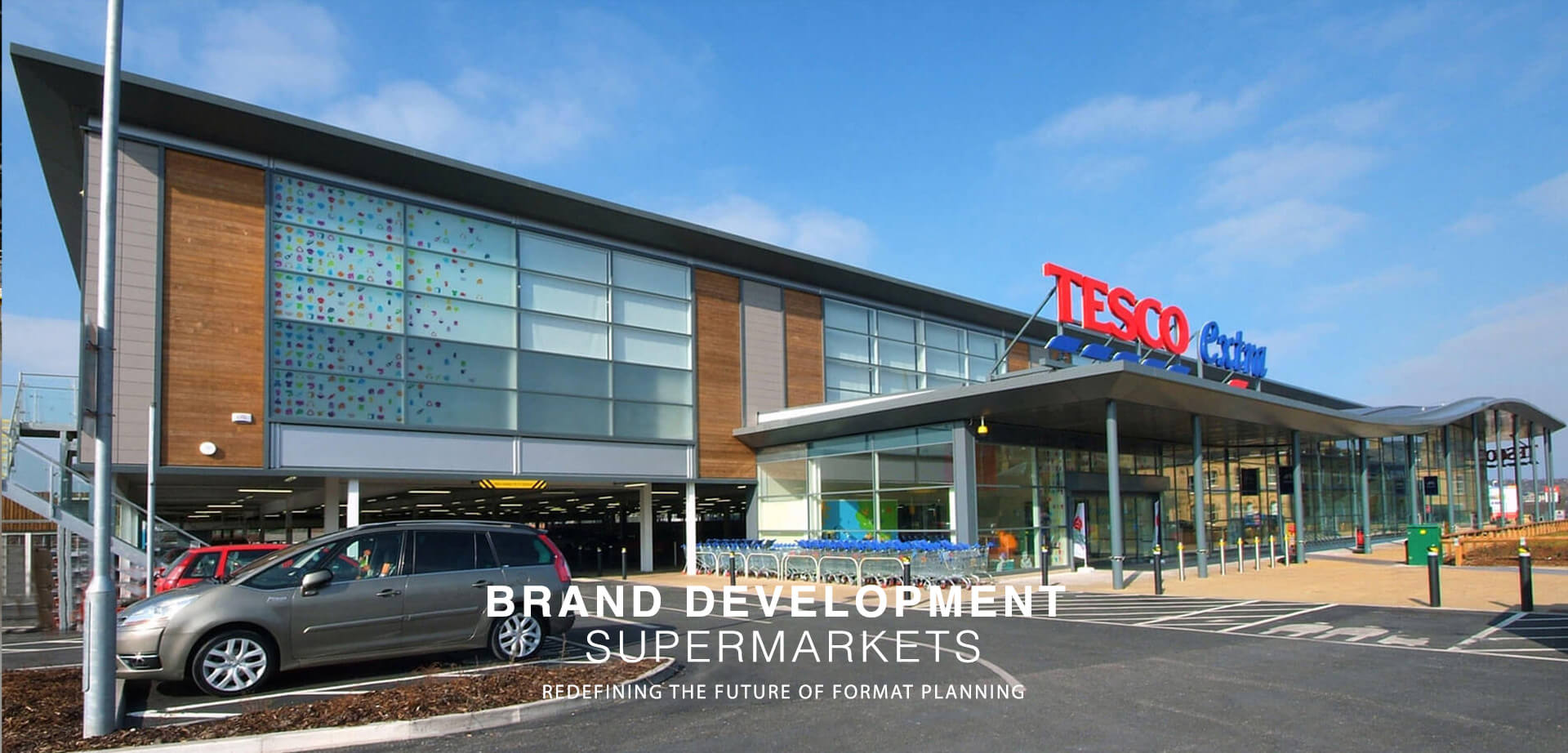
CampbellRigg's work on the new retail concept installations at the Tesco Hypermarket, Accrington and Tesco Supermarket, Welshpool provides evidence of how these strategic disciplines translate into the physical retail environment.
1. Developing a stronger supermarket brand proposition
Tesco's business strategy: Value, quality and growth
Tesco's position as one of the UK's leading supermarket businesses is built on competitive value, product quality, customer loyalty, convenience and the strength of its national store network.
Its continuing challenge is to develop these advantages while responding to changing shopping habits, rising customer expectations, digital competition and the differing needs of local markets.
Tesco's business strategy extends well beyond supermarket pricing. It encompasses food innovation, own-brand development, customer data, personalised marketing, online grocery, rapid delivery, supplier partnerships and the expansion of services beyond traditional food retail.
These initiatives contribute to a wider commercial proposition. The opportunity lies in ensuring that they work together and are consistently experienced by customers, whether shopping in a large Tesco Extra, a neighbourhood Express store or through digital channels.
Tesco's five strategic ambitions provide the framework for this development:
- Winning in food.
- Meeting more everyday customer needs.
- Becoming a more strategic partner for suppliers.
- Creating connected, personalised customer relationships.
- Strengthening long-term business sustainability.
Tesco's interim results for 2026/27 demonstrate the scale of this activity. For the first half, group sales excluding VAT and fuel increased by 1.6% at constant exchange rates, while adjusted operating profit increased by 6.3%. UK online sales grew by 8.4%, Whoosh sales increased by 37%, and more than 800 new and improved products were introduced.
These results demonstrate a business developing several connected sources of growth while continuing to invest in its customer proposition.
CampbellRigg brings more than 40 years of international experience in branding, retail interiors and communications. Our work connects strategic brand development with the practical requirements of supermarket businesses, helping management teams translate commercial ambitions into distinctive customer propositions and effective retail environments.
How CampbellRigg helps
CampbellRigg connects commercial objectives with brand strategy, marketing development and retail implementation. We help management teams translate business ambitions into clear market positioning, distinctive customer propositions and practical requirements for the physical retail environment.
The benefit
A more coherent business proposition, better-aligned investment decisions and a stronger foundation for developing the Tesco brand and its retail network.
2. Supermarket brand strategy: Connecting positioning with customer experience
A successful supermarket brand must deliver a recognisable and dependable promise at every customer touchpoint.
For Tesco, that promise brings together affordability, quality, choice, service and convenience.
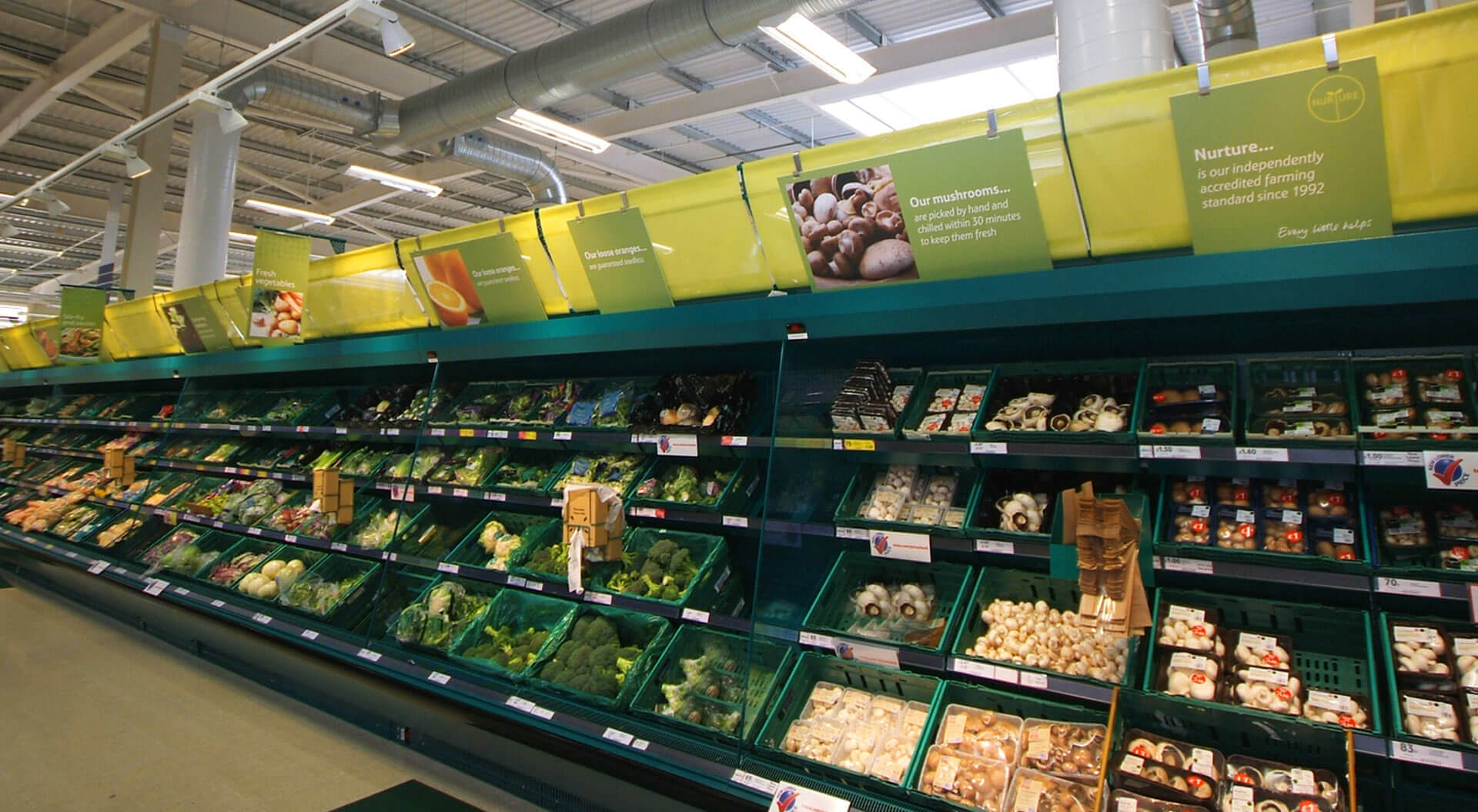
The brand is expressed through much more than advertising and corporate identity. It is reinforced by product presentation, department organisation, promotional communication, navigation, signage, service points and the overall shopping experience.
Clubcard Prices, Aldi Price Match, Everyday Low Prices and Tesco Finest address different customer priorities. Each has a distinct role in communicating value or quality.
The effectiveness of these propositions depends on customers recognising their relevance and understanding how they relate to the products and services available in store.
This is where brand strategy and retail design must work together.
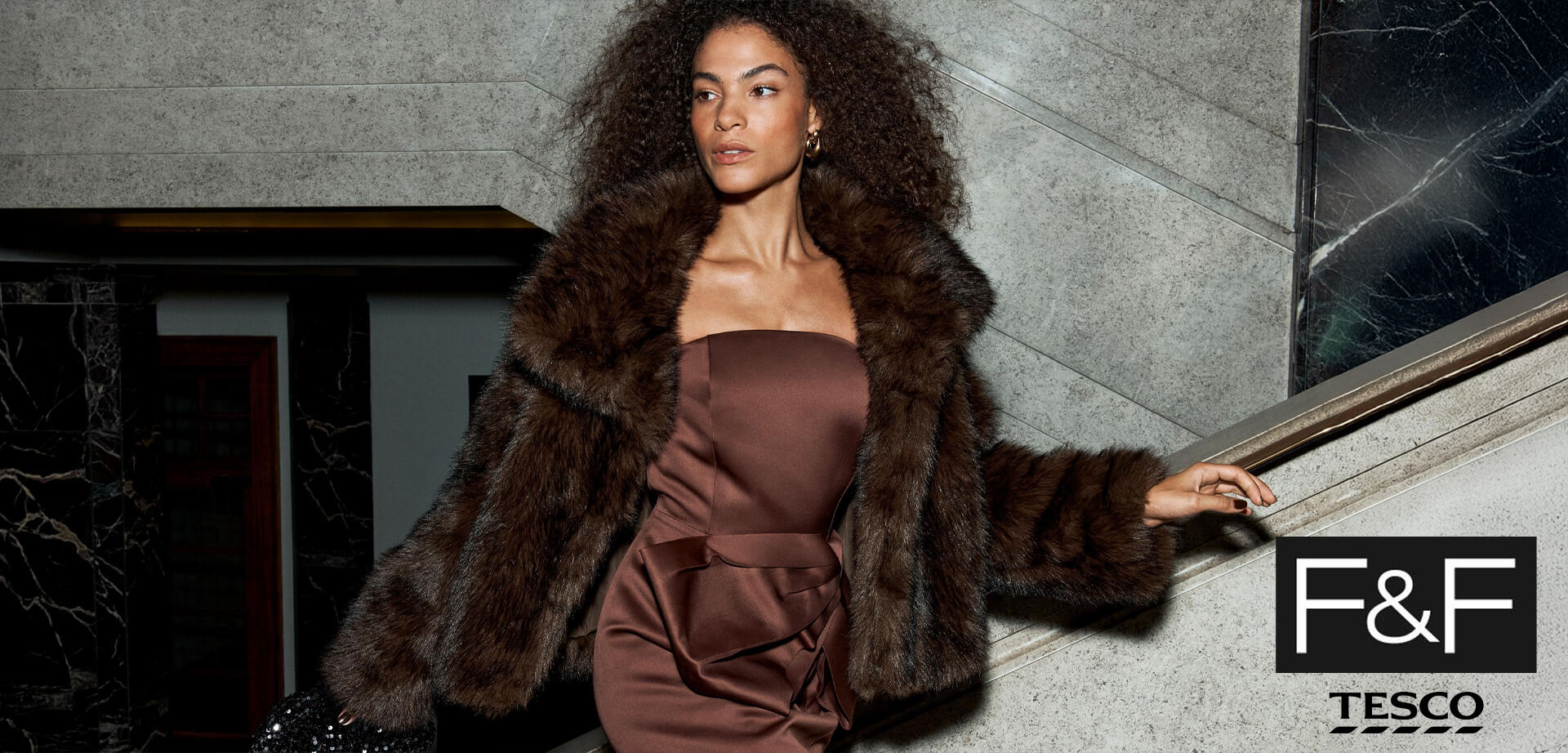
Promotional messages need to be visible without overwhelming the shopping environment. Premium ranges require presentation that communicates quality, while value-led categories need clear pricing and accessible merchandising. Specialist retail propositions, such as F&F fashion, also need a recognisable identity and an environment that communicates their particular offer without losing their connection to the parent supermarket brand.
How CampbellRigg helps
We translate brand positioning into practical design and communication principles, applying them to store identity, promotional environments, category presentation, signage and customer-facing communications.
Our approach ensures that the brand is not simply represented by a logo or advertising campaign, but experienced consistently throughout the physical retail network, including the specialist departments and sub-brands within it.
The benefit
Stronger brand recognition, clearer customer communication and a more consistent expression of Tesco's commercial proposition across different store formats and retail departments.
3. Retail format planning: Creating the right supermarket for each market
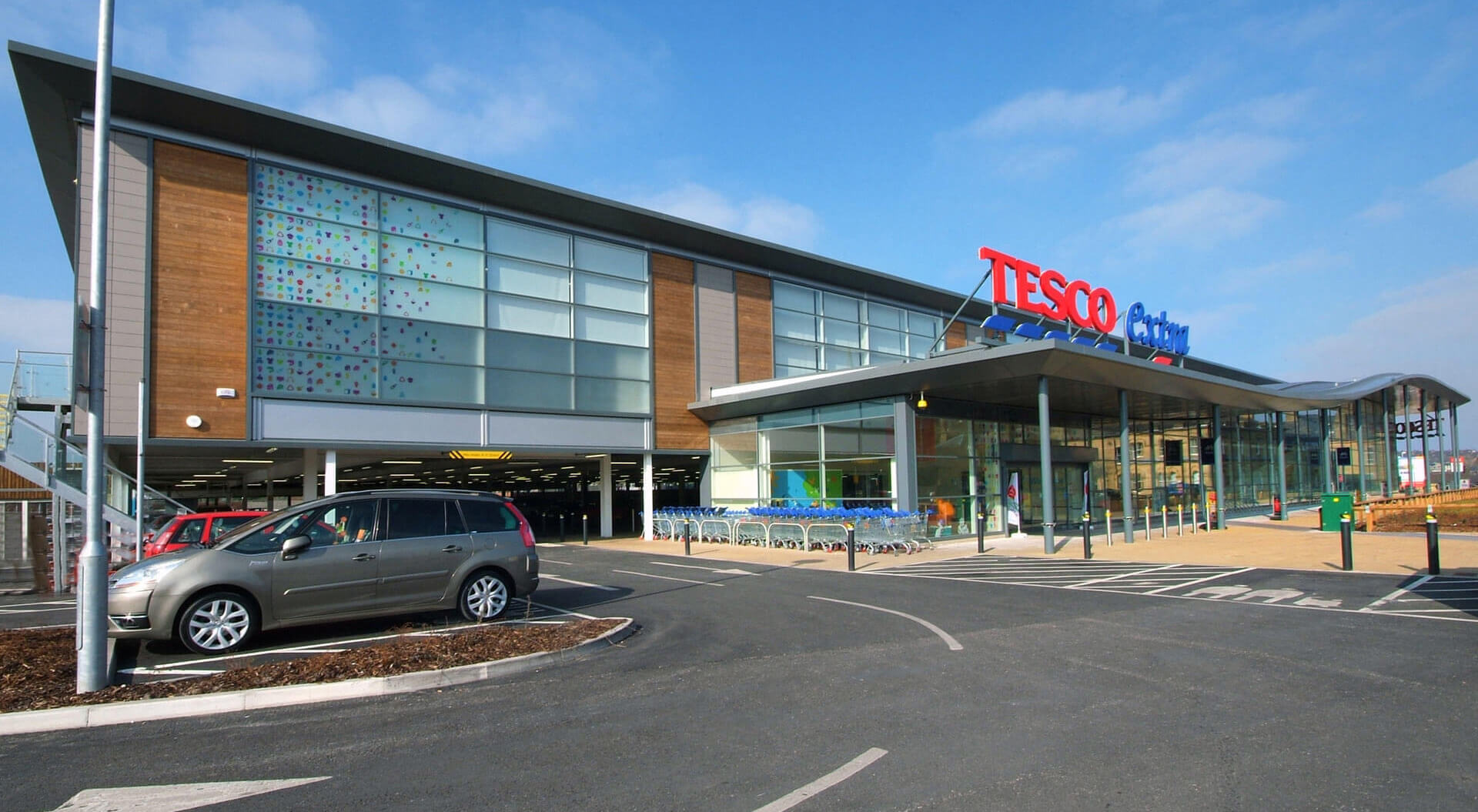
Supermarket format planning determines how a retail business responds to different locations, customer missions and commercial opportunities.
A large supermarket or hypermarket requires a different approach from a neighbourhood convenience store. The size of the catchment, customer profile, competitive environment, available property and expected shopping mission all influence the appropriate format.
The challenge for management teams is to develop a network that is consistent in brand positioning while remaining flexible enough to respond to local market conditions.
Format planning must consider:
- Store size and location.
- Catchment area and customer profile.
- Product range and category mix.
- Department organisation and circulation.
- Customer services and convenience.
- Operational efficiency and future scalability.
How CampbellRigg helps
We connect supermarket brand strategy with format planning and practical store development. Our approach considers how the brand should be expressed within each format while addressing the commercial, operational and customer requirements of individual locations.
The benefit
A more coherent and scalable supermarket network, with formats designed around identifiable customer needs and commercially appropriate market opportunities.
4. Connecting supermarket marketing with the physical store
Supermarket marketing is most effective when customers experience a consistent proposition across advertising, digital channels, loyalty programmes and physical retail environments.
Promotional campaigns, private-label products, seasonal activity and value propositions must be communicated clearly in store. The physical environment therefore becomes an important part of the wider marketing system.
Product presentation, promotional displays, category navigation, visual merchandising and environmental graphics all contribute to how customers understand the offer and make purchasing decisions.
Clubcard, customer loyalty and personalised marketing
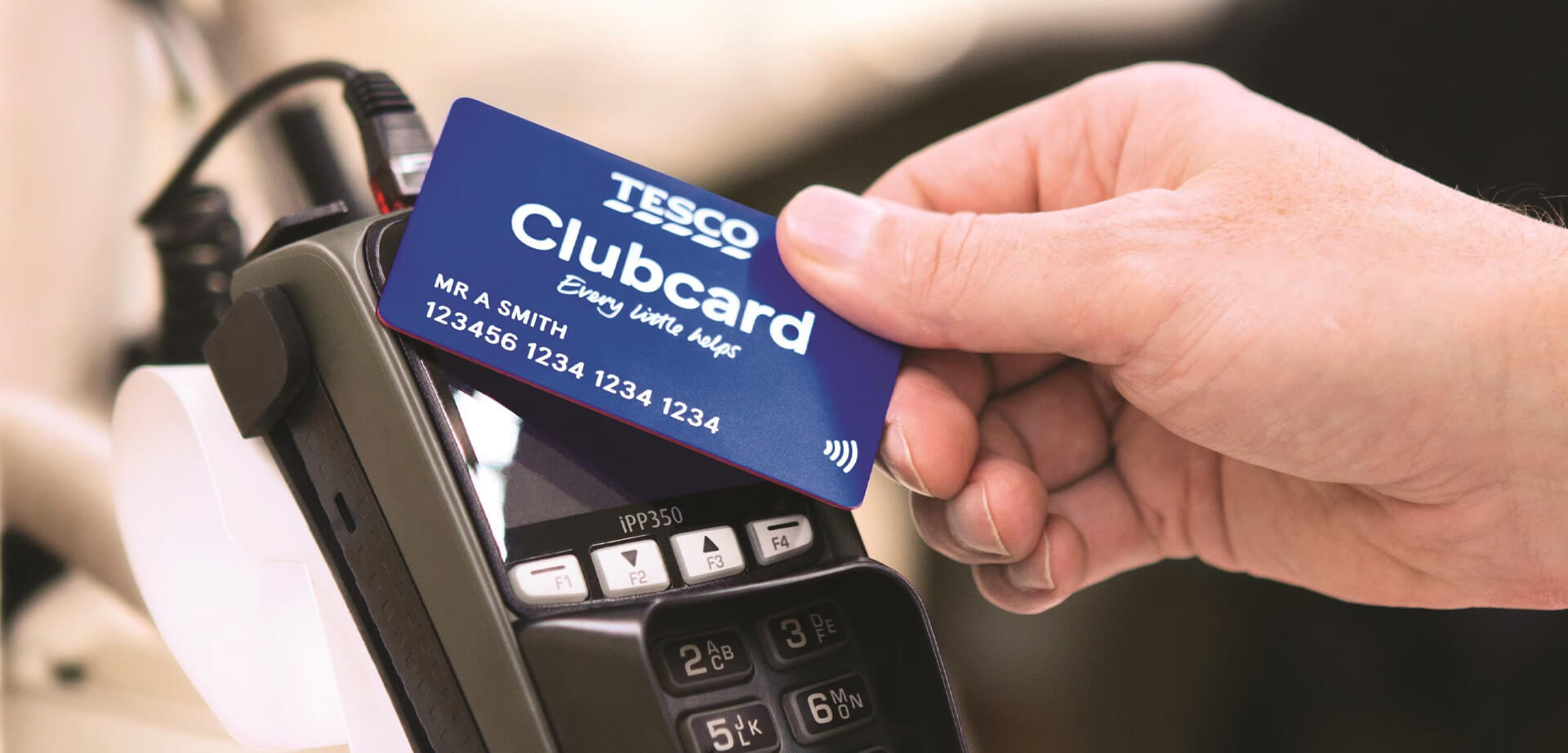
Clubcard is a central component of Tesco's customer relationship strategy.
It connects loyalty, pricing, customer insight and marketing, giving Tesco opportunities to make its offer more relevant to individual shopping habits.
Clubcard Prices, personalised offers, AI-enabled personalisation and Tesco's developing digital services demonstrate how customer data can support a more connected relationship between the retailer and its customers.
Tesco Media also provides opportunities for supplier partnerships and targeted brand communication across retail and digital channels.
The strategic importance of these developments lies in connecting customer understanding with commercial activity.
Loyalty information can help identify changing preferences, while relevant offers can encourage customers to explore products and categories that meet their needs.
However, personalisation must extend beyond digital communications.
Customers should recognise the benefits when they enter a store. Relevant offers, category organisation, promotional displays and product recommendations should reinforce the same proposition encountered through the Tesco app and online channels.
The physical environment also provides opportunities to introduce customers to different product categories and specialist retail brands. Fashion, homeware and other non-food propositions can broaden the range of shopping missions served by the supermarket, provided that their presentation is relevant to the customer and appropriate to the store format.
How CampbellRigg helps
CampbellRigg connects marketing strategy with the physical customer experience.
We consider how promotional zones, in-store communications, category navigation, merchandising and environmental graphics can reinforce customer loyalty initiatives and communicate the value of the Tesco proposition.
The benefit
A more connected customer experience in which loyalty, marketing and physical retail work together to encourage engagement, repeat visits and stronger customer relationships.
5. International supermarket development: Balancing consistency and local relevance
Supermarket groups expanding across national borders face the challenge of maintaining a recognisable brand while responding to different markets.
Customer expectations, shopping habits, product preferences, property conditions and competitive pressures vary between countries. A format that performs well in one market may require significant adaptation elsewhere.
International supermarket development therefore requires a strategic framework that protects the core brand proposition while allowing appropriate local flexibility.
CampbellRigg's international retail experience includes work associated with Safeway, Migros, Monetka and Centra. These projects provide experience across different competitive environments, customer expectations and supermarket formats.
How CampbellRigg helps
We help management teams connect international brand positioning with local market requirements. This includes assessing customer expectations, defining format principles and translating the brand strategy into practical design and implementation guidelines.
The benefit
A more adaptable international supermarket proposition, supported by consistent brand principles and formats that respond to local market conditions.
6. From supermarket strategy to store design and implementation
A supermarket strategy creates value when translated into a practical retail environment. Brand positioning, store planning, customer experience and operational requirements must therefore inform design and implementation from the outset.
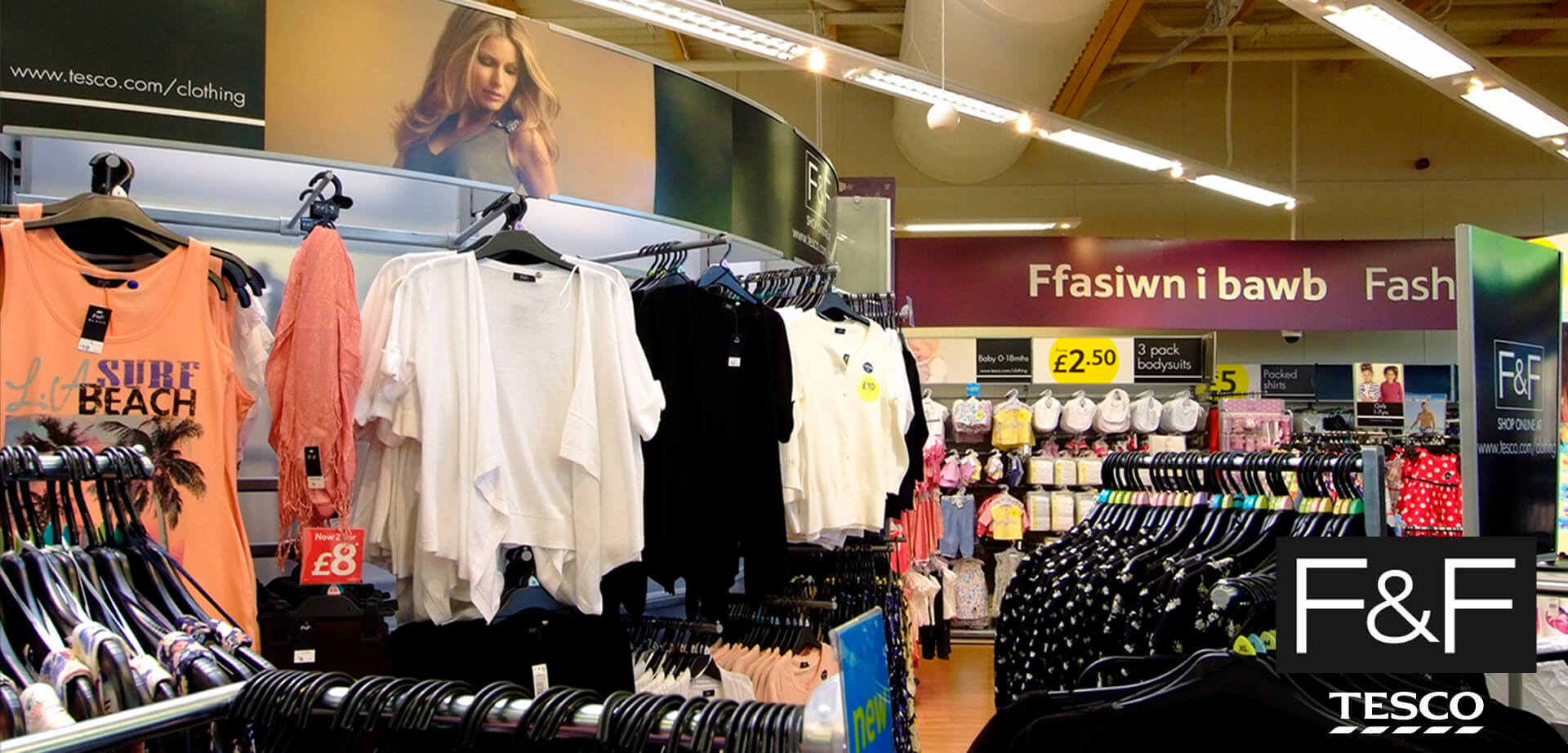
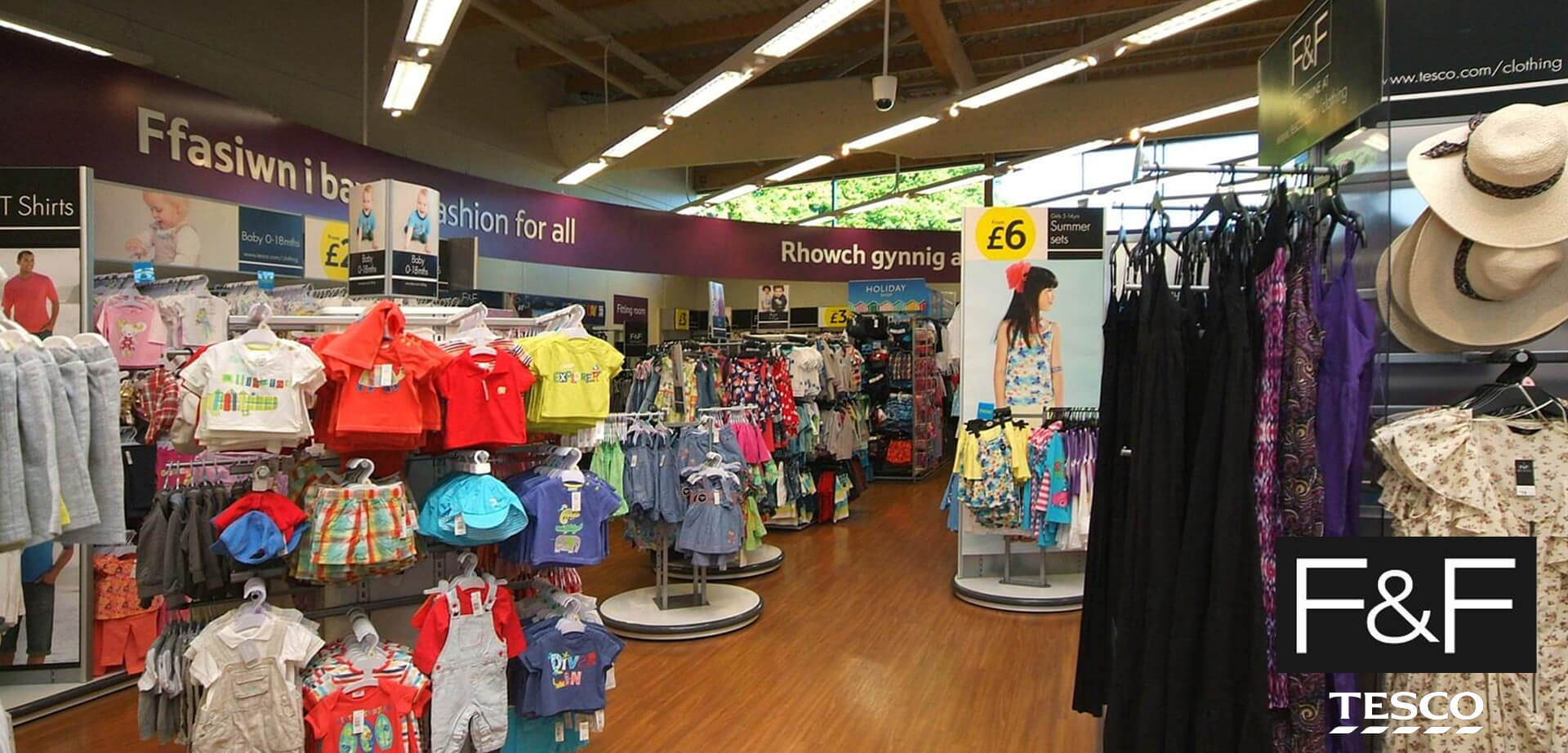
The Tesco Extra project at Accrington and Tesco supermarket at Welshpool demonstrate this integrated approach. Both included Florence & Fred (F&F), Tesco’s fashion brand, within the wider supermarket environment.
Large-format stores must accommodate extensive product ranges, multiple departments and specialist destinations while maintaining clear navigation and an accessible customer journey. Integrating F&F adds a further planning consideration: creating a recognisable fashion environment that retains its own identity while complementing the parent supermarket brand.
Extending the supermarket proposition through fashion
A dedicated fashion department extends the supermarket offer beyond food, creating another reason to visit and broadening its appeal to family shoppers. Effective lighting, merchandising, graphics and promotional communicaßtion help establish a distinctive shopping destination, improve product discovery and make better use of retail space.
The objective is not simply to allocate floor space to clothing, but to create a coherent department shaped around its products, presentation and customer journey. Accrington and Welshpool demonstrate how this specialist proposition can be integrated into different store formats while retaining the identity of the F&F brand.
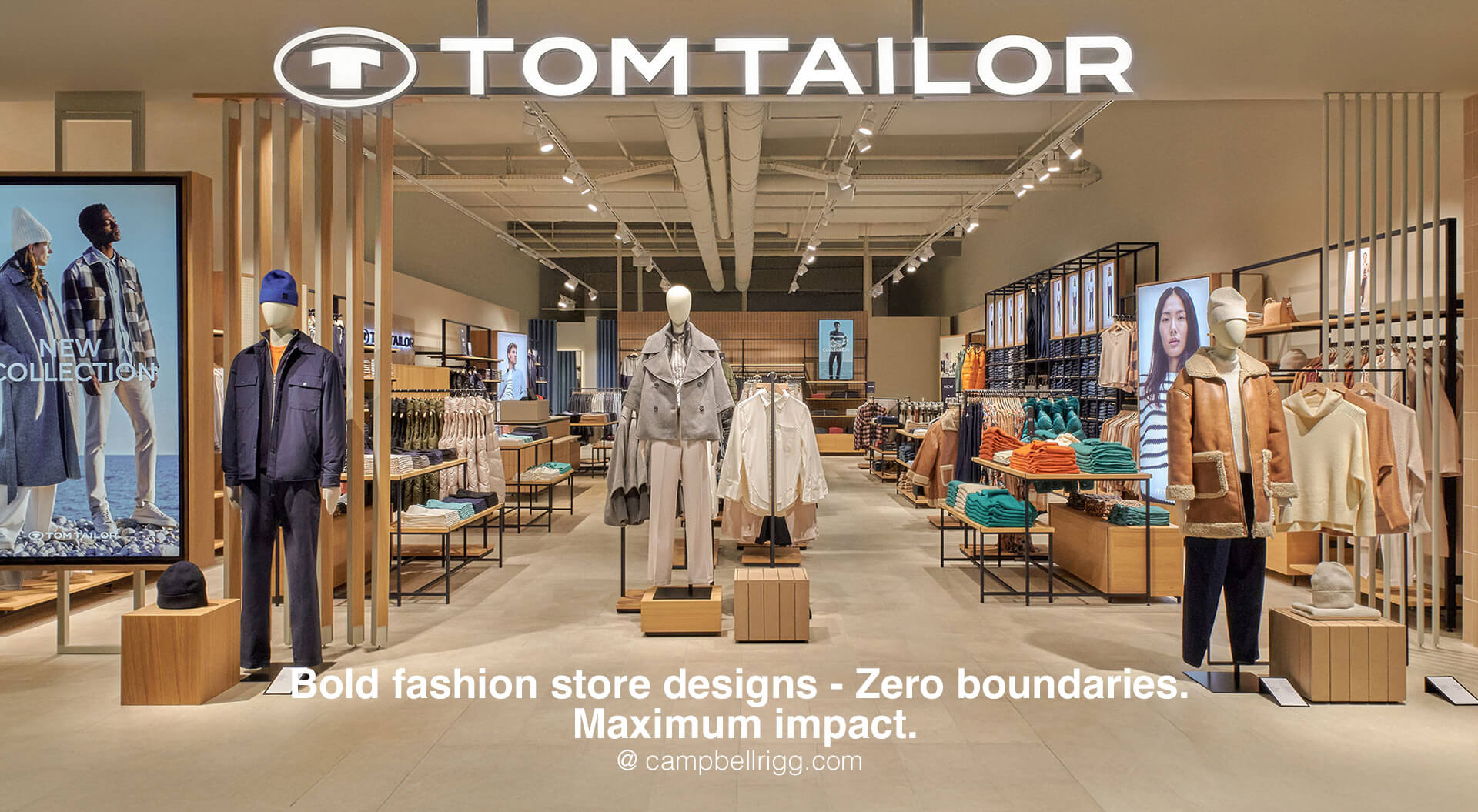
This experience is complemented by CampbellRigg’s wider international retail work with Tom Tailor (Germany), Familia (Russia) and K-Citymarket (Finland). Spanning fashion and grocery retail, these projects demonstrate CampbellRigg’s experience across different markets, retail categories and store formats. Explore our case studies.
How CampbellRigg helps
We translate supermarket business strategy and brand positioning into practical design and development requirements. This includes store planning, department organisation, merchandising, customer experience, brand communications and implementation.
We also integrate specialist brands and non-food departments into the wider supermarket proposition, ensuring they strengthen the retailer’s identity, broaden its customer appeal and contribute to the overall commercial offer.
The benefit
A coherent progression from strategy to implementation, delivering distinctive, customer-focused retail environments in which brand positioning, operational requirements and commercial objectives work together across different store formats.
7. Building a connected and commercially effective retail network
Successful supermarket development requires brand strategy, marketing, customer experience and retail format planning to work as an integrated business strategy. Together, these disciplines determine how a retailer competes, differentiates its proposition and translates investment into effective retail performance.
For supermarket owners, CEOs, investors and development directors, the challenge is to establish a clear strategic direction that connects market positioning with customer expectations and the commercial development of the store network.
Tesco illustrates the importance of this integrated approach. Its brand proposition must remain consistent across physical stores, online services and local markets, while responding to changing customer needs. Value, quality, loyalty, product innovation and convenience must be reflected throughout the shopping experience. Specialist brands and non-food departments, including F&F fashion, further extend the supermarket proposition, creating additional shopping destinations and reasons for customers to visit.
CampbellRigg brings these disciplines together through an integrated process. Brand auditing establishes how the existing proposition is perceived and communicated. Strategic positioning defines the desired market position, while the development brief translates business objectives into practical requirements for brand identity, marketing communications, customer experience, retail formats, specialist departments and implementation.
By connecting strategic thinking with practical retail development, CampbellRigg helps supermarket groups create distinctive brands, relevant store formats and commercially effective retail environments.
The result is a more coherent framework for directing investment, strengthening competitive positioning and developing retail networks that can respond to changing markets and customer expectations.
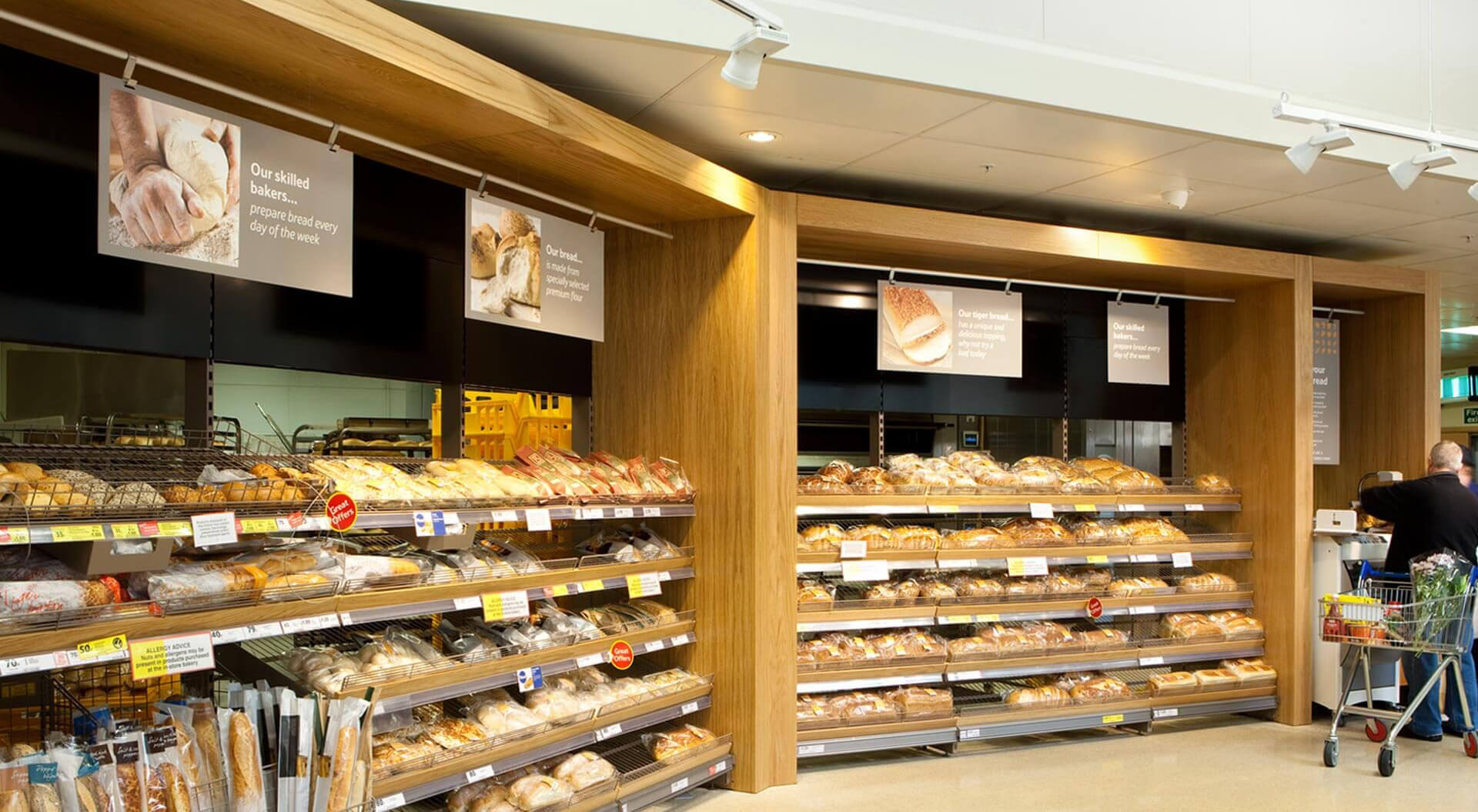
Our objective is to turn business strategy into practical brand and retail development, supporting stronger market positioning and sustainable network growth.
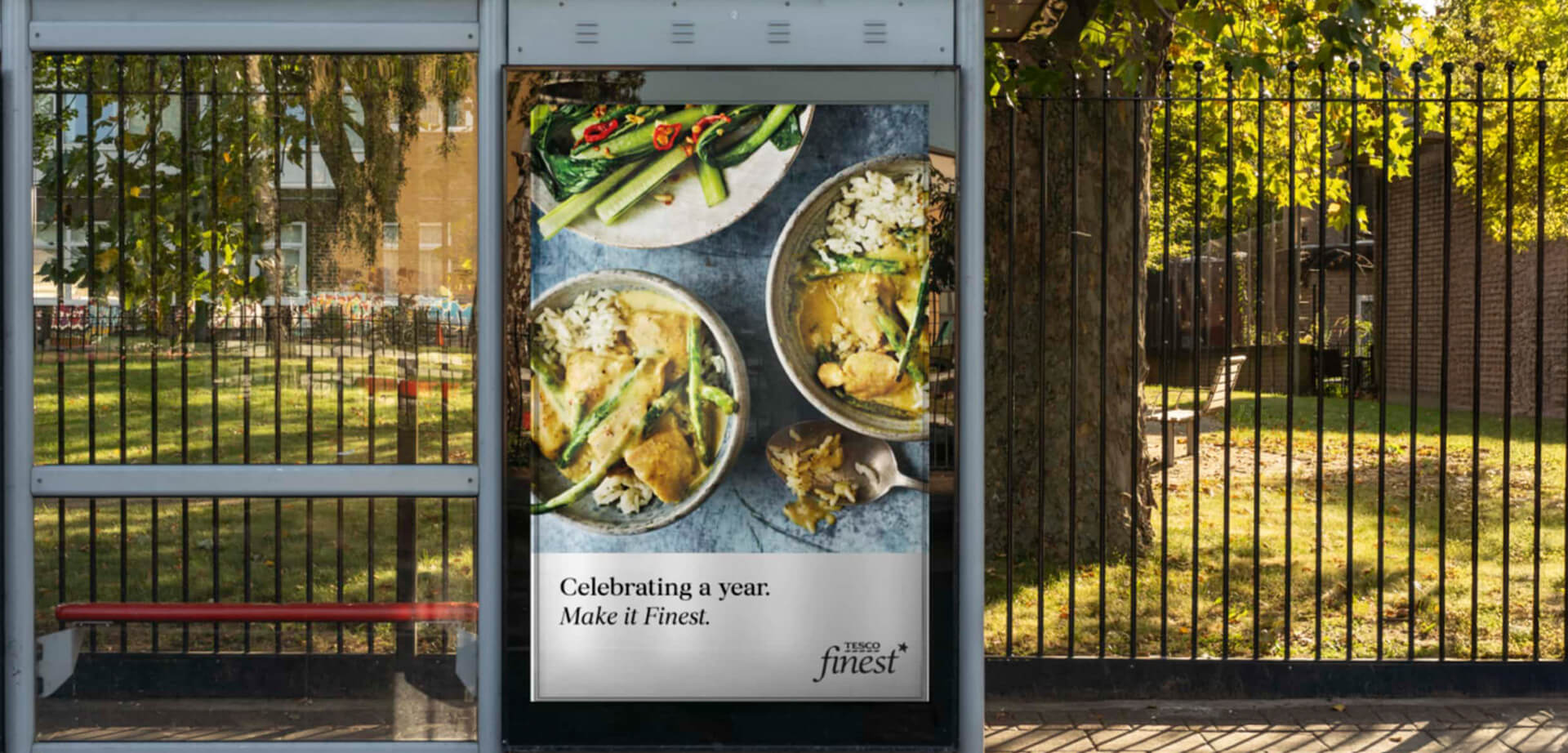
We build brands designed to transform markets.
Innovative. Relevant. Memorable.
To discuss your supermarket strategy, brand development or retail network ambitions in Europe, the Middle East and Asia, contact CampbellRigg to arrange an initial consultation. We will work with your management team to establish the commercial objectives, define the brief and develop a practical programme for implementation.