




News and Views
Consumer Electronics Store Design: Formats, Experience & Omnichannel ROI






Consumer electronics retail is no longer a single-format business.
Customers may visit a store to make a quick purchase, collect an online order, compare products, experience new technology, obtain expert advice, arrange a repair or explore a connected product ecosystem. Each mission creates different requirements for space, assortment, service, technology and investment.
For CEOs and senior management teams, the question is therefore not simply how should our electronics stores look?
It is: Which retail formats should we operate, where should each format be deployed, what should it achieve, and how can the network deliver measurable commercial returns?
That is where consumer electronics store design becomes a management discipline.
The strategic objective is not to design one ideal store, but to determine the right portfolio of formats and give each location a clearly defined commercial role.
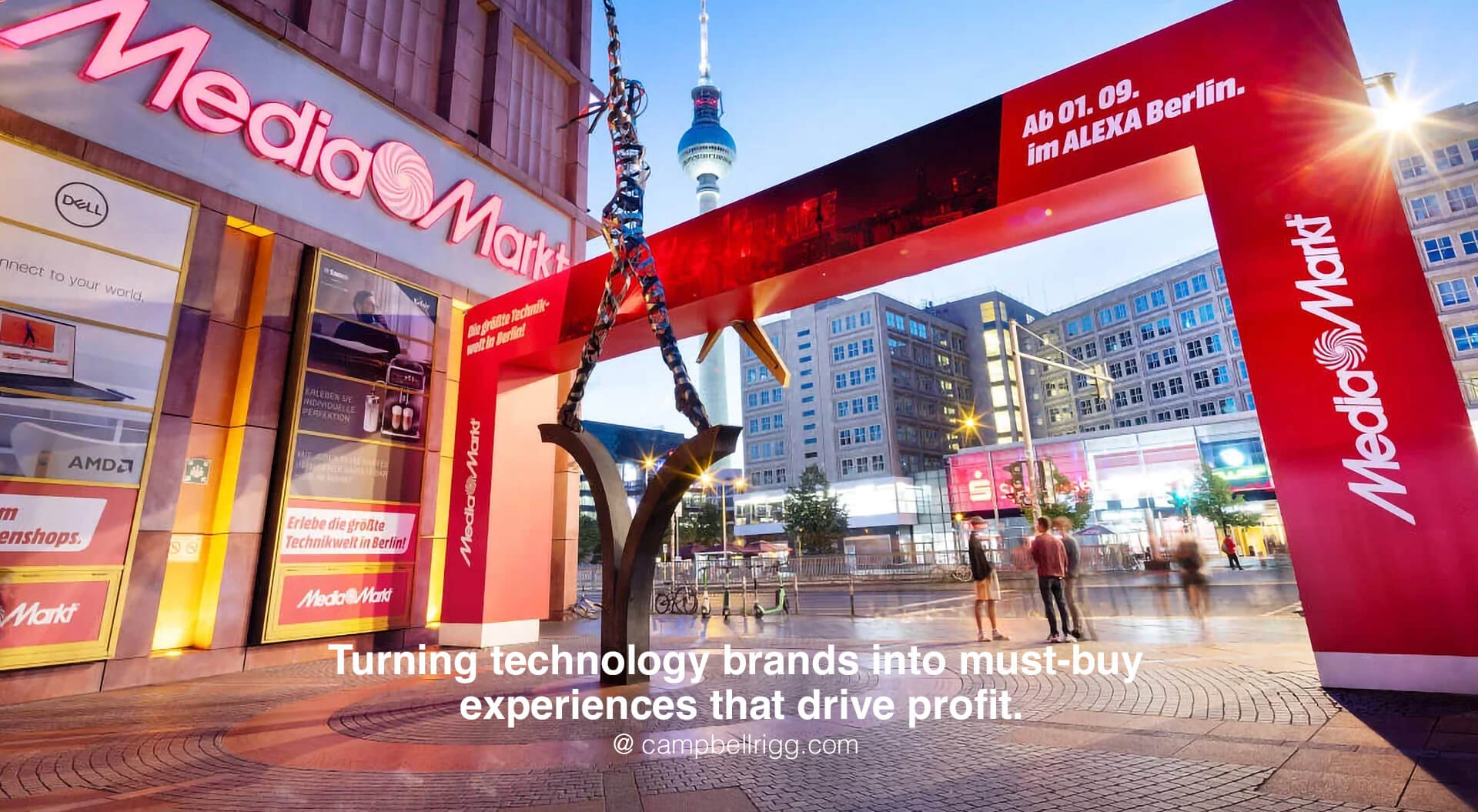
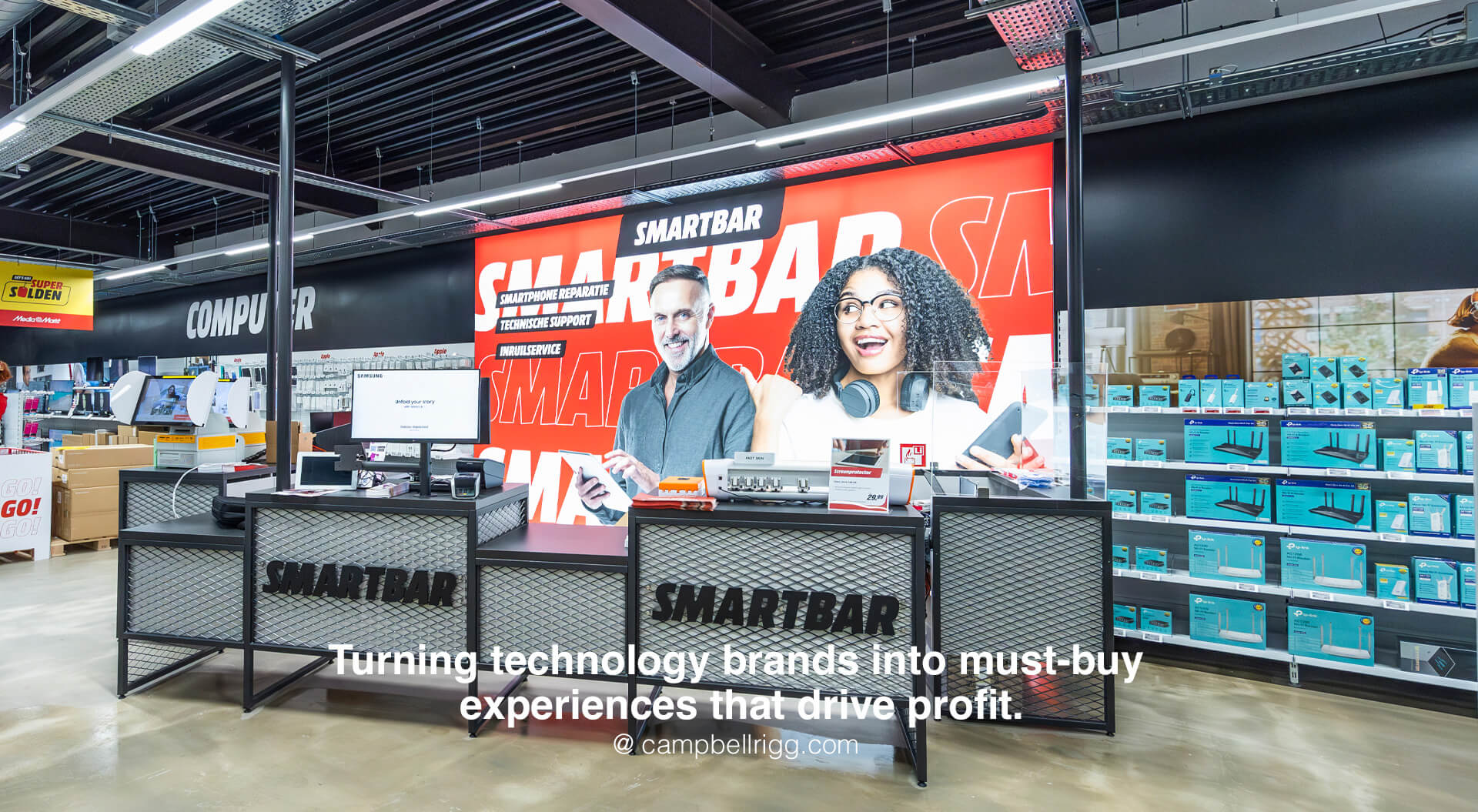
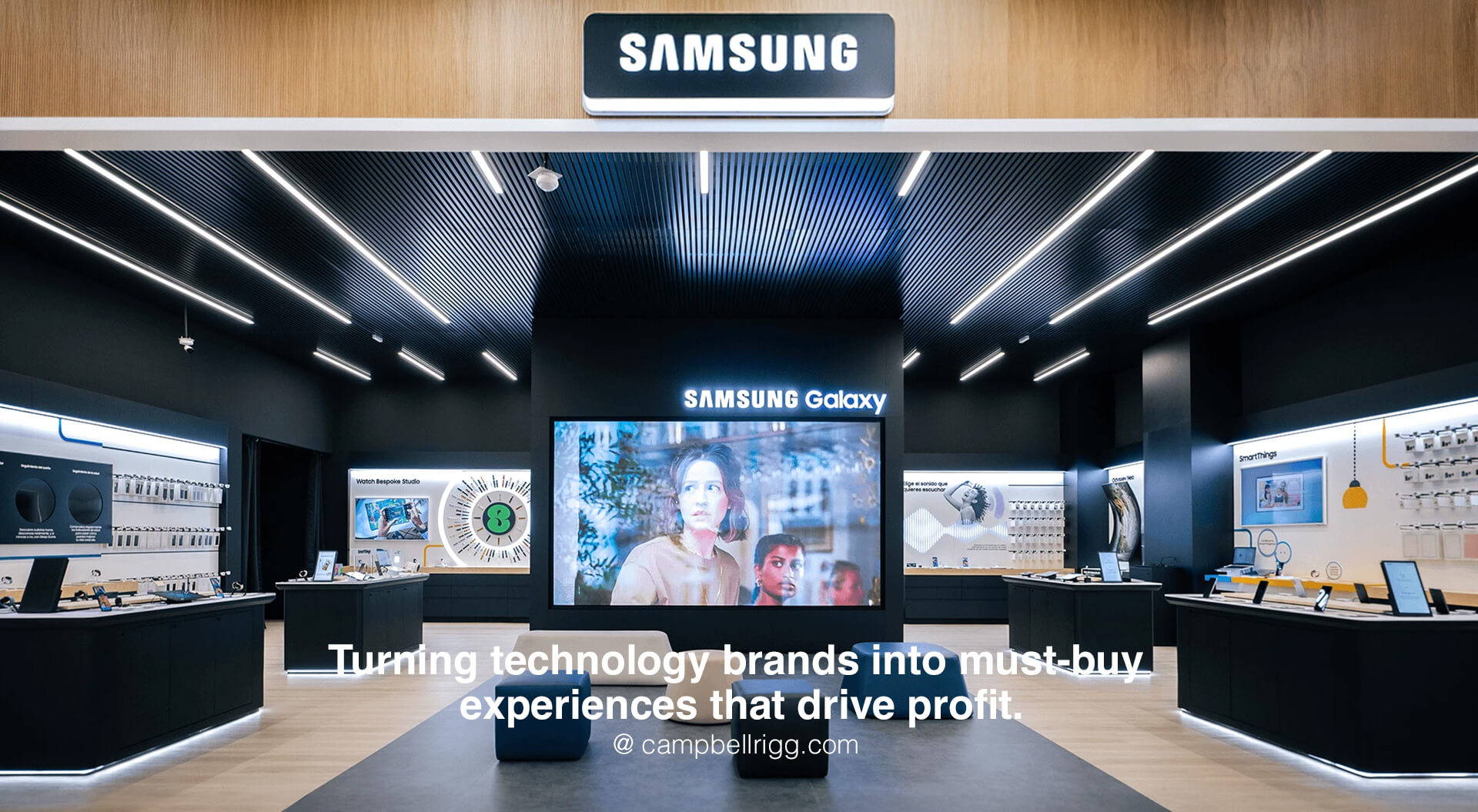
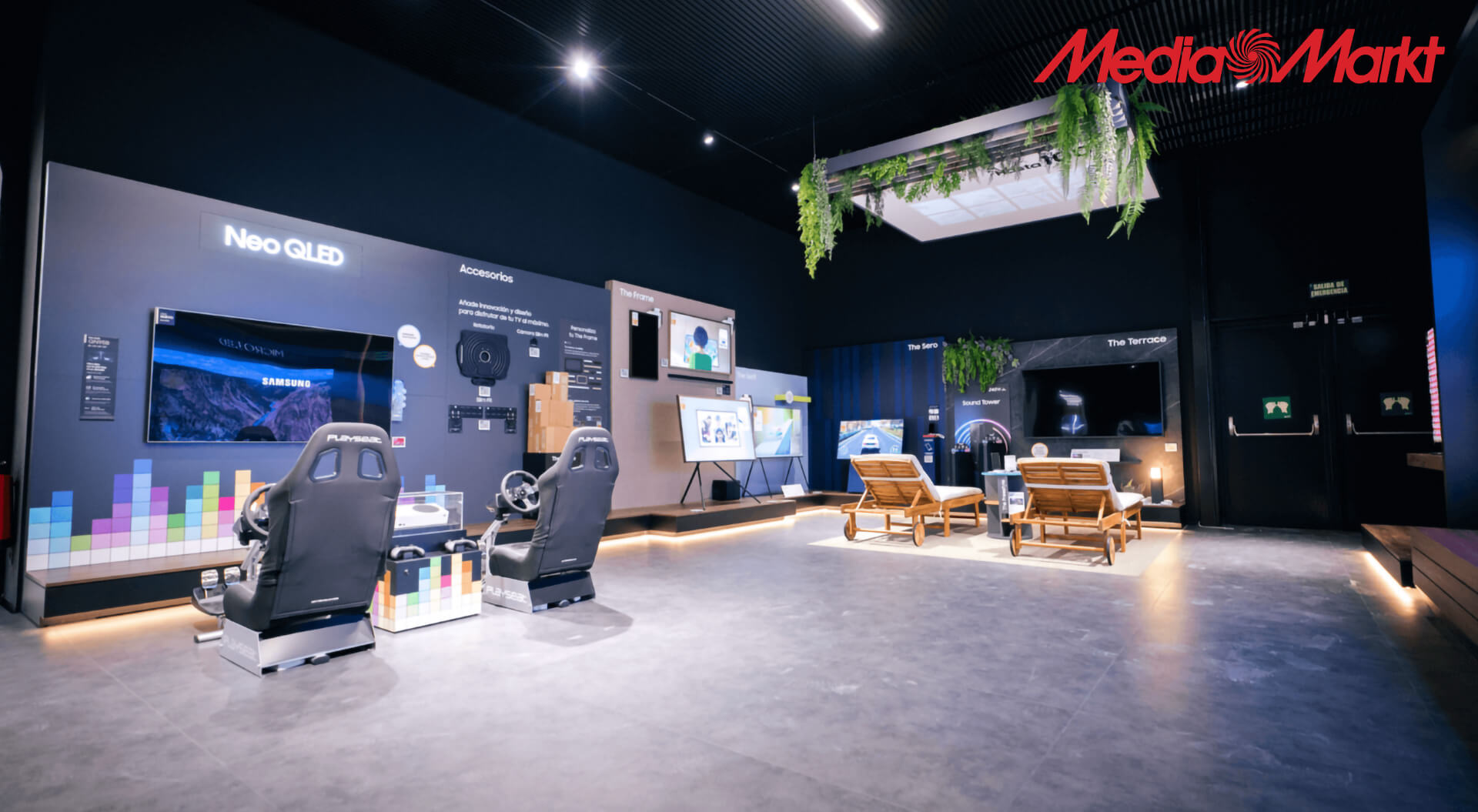
MediaMarkt provides a useful international benchmark. Its Xpress, TechVillage, shop-in-shop and Mobility concepts demonstrate how different physical formats can address different customer missions and commercial objectives. CampbellRigg's benchmarks include MediaMarkt Xpress in Rotterdam, the Samsung Shop-in-Shop at TechVillage Majadahonda in Spain and the MediaMarkt Urban Mobility Store in Antwerp.
The wider lesson is not to reproduce one MediaMarkt format. It is to create a retail format system in which location, customer mission, assortment, experience, service, digital capability and commercial KPIs work together.
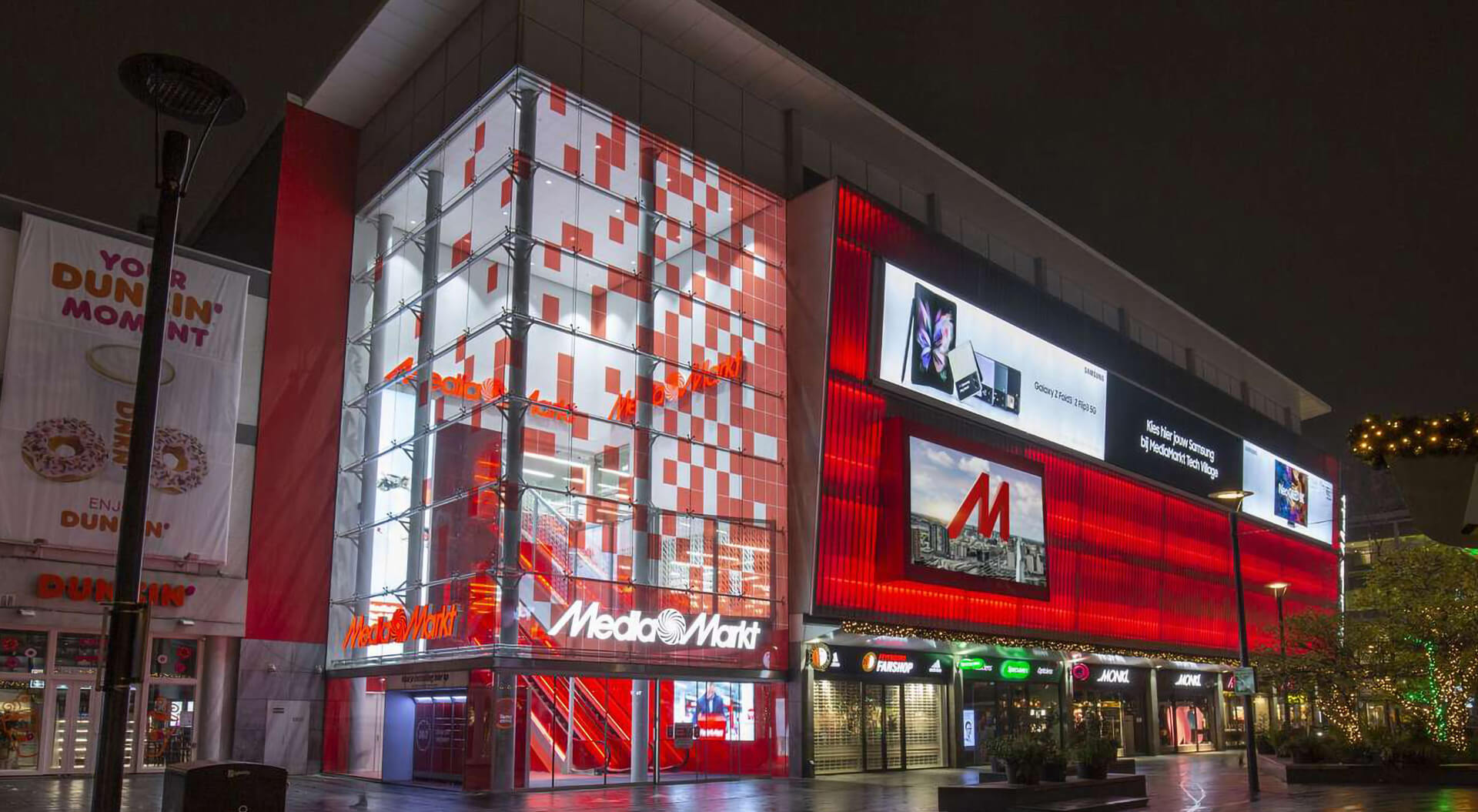
Consumer Electronics Store Design Starts with the Customer Mission
The starting point for consumer electronics store design should be the customer mission, not the floor plan.
A city-centre customer may want convenience, immediate availability and a fast transaction. A customer purchasing a television, laptop or connected-home system may require comparison, demonstration and expert advice. Another may visit for repair, an upgrade, collection or technical support.
Each mission changes the role of the store.
CampbellRigg therefore approaches format planning by asking:
- Who is the store serving?
- What does the customer need to accomplish?
- Which products need physical demonstration?
- What level of service is required?
- Which transactions should happen in store?
- Which digital services should extend the physical offer?
- What commercial outcome must the location deliver?
The answers determine the format.
A retailer may require:
- Compact urban stores for convenience and proximity.
- Destination stores for discovery, demonstration and high-consideration purchasing.
- Shop-in-shop environments for stronger brand and category engagement.
- Mobility and service formats for repair, upgrades and customer relationships.
- Omnichannel-enabled stores connecting physical experience with digital commerce and fulfilment.
This is the foundation of a scalable consumer electronics retail strategy: physical space should be allocated according to what the location needs to achieve.
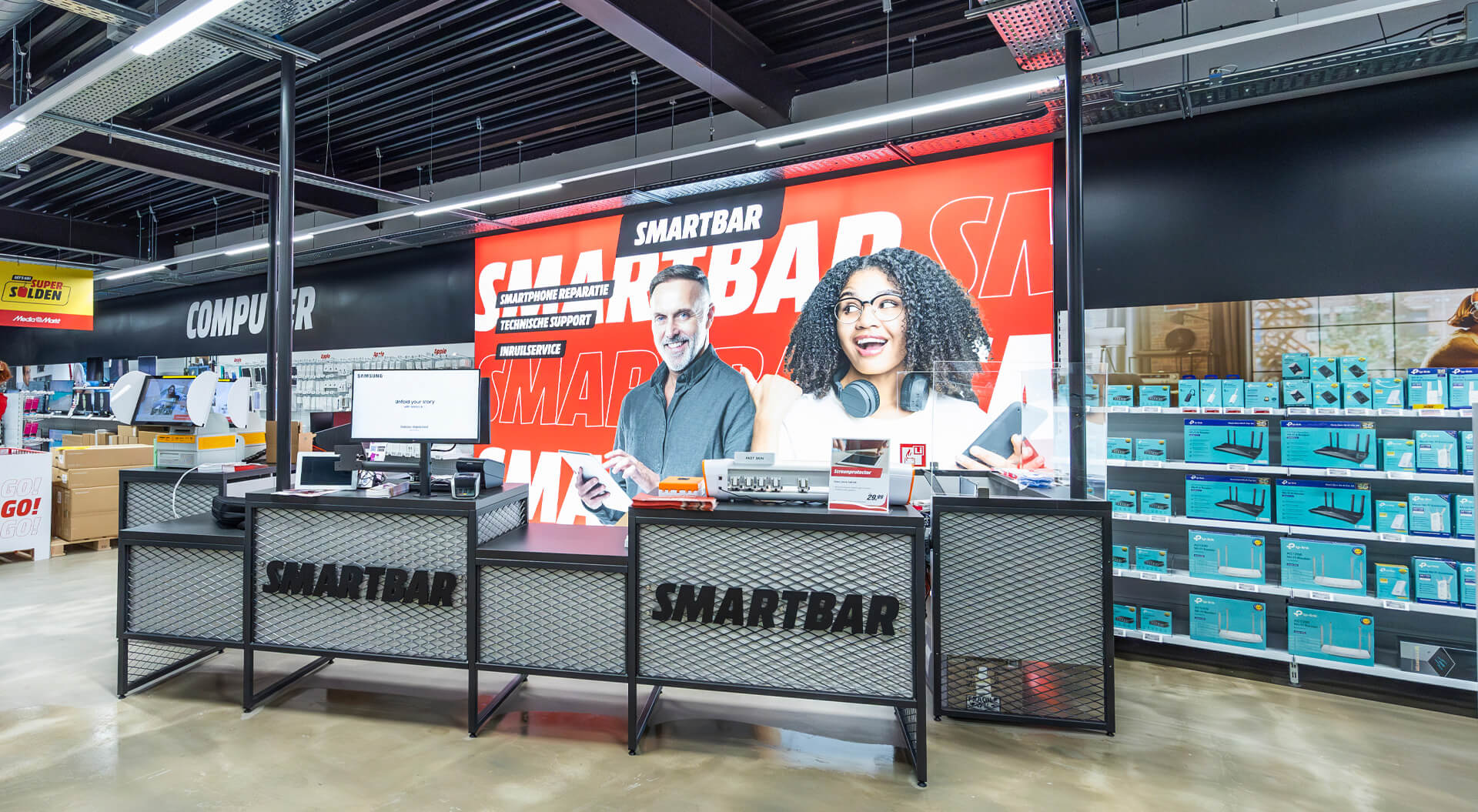
MediaMarkt Xpress: Compact Store Design for Urban Convenience
MediaMarkt Xpress demonstrates how a compact technology retail format can respond to changing urban shopping behaviour.
CampbellRigg's Xpress Rotterdam benchmark incorporates curated product assortments, digital touchpoints, online ordering, in-store collection and mobile POS. The concept focuses the customer experience within a more compact environment.
The management challenge is not simply to fit more products into less space. It is to determine which products deserve physical presence, how categories should be prioritised and how efficiently customers can move from arrival to discovery, advice, purchase or collection.
Unlike a dedicated compact-format strategy, the wider consumer electronics network must determine when compact, destination, shop-in-shop and service formats should each be deployed.
That makes assortment strategy, merchandising and spatial planning inseparable.
A curated assortment can reduce choice complexity.
Clear category zoning can shorten search time.
Digital access can extend the available range without requiring every product to occupy physical space.
Click-and-collect can turn the store into both a sales environment and a fulfilment asset.
The commercial relationships are therefore:
- Curated assortment → faster discovery → lower search friction → greater purchase confidence.
- Focused footprint → disciplined merchandising → greater space productivity → stronger sales potential per square metre.
- Click-and-collect → convenient fulfilment → additional store visits → further commercial opportunities.
For management, the objective is not the smallest possible store.
It is the most productive format for its location and customer mission.
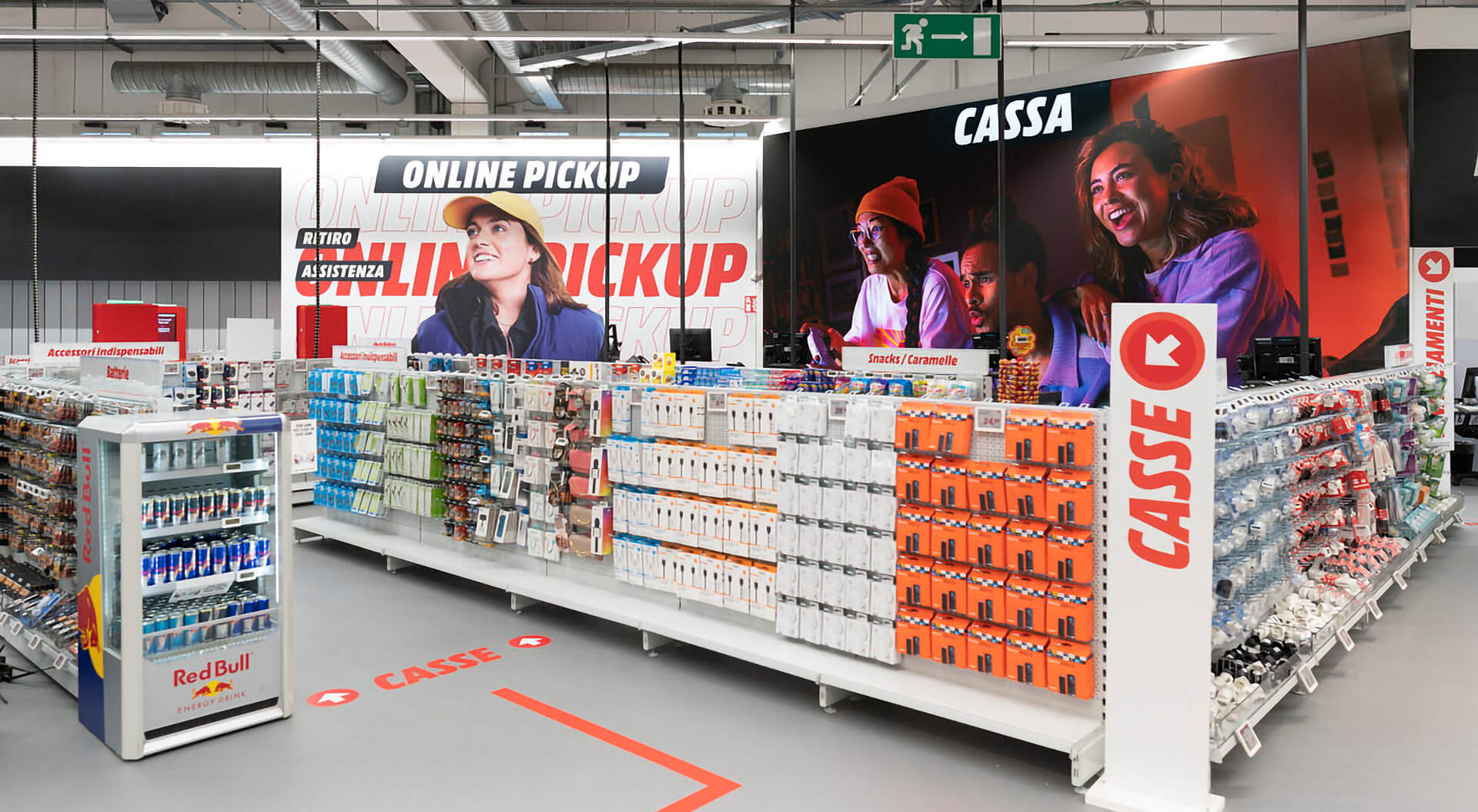
Omnichannel Electronics Retail: Connecting Store and Digital Commerce
The physical store now operates within a wider digital customer journey.
Customers can research online, compare specifications, check stock, reserve a product, visit a store for demonstration and complete the purchase digitally. Others may purchase online and use the store for collection, advice or service.
Consumer electronics store design must therefore connect physical and digital commerce from the beginning.
The Xpress benchmark incorporates online ordering, in-store pickup, mobile POS and digital product discovery.
This enables the physical store to perform several roles:
- showroom;
- product-discovery environment;
- advice centre;
- transaction point;
- fulfilment location;
- service environment; and
- physical extension of ecommerce.
CampbellRigg incorporates these requirements into the design brief rather than adding them after the store concept has been established.
Collection areas need to be operationally efficient. Digital inventory needs to support customer confidence. Staff need access to relevant product information. Digital content can extend the range where the physical assortment is deliberately curated.
The objective is a continuous customer journey, rather than separate online and offline retail channels.
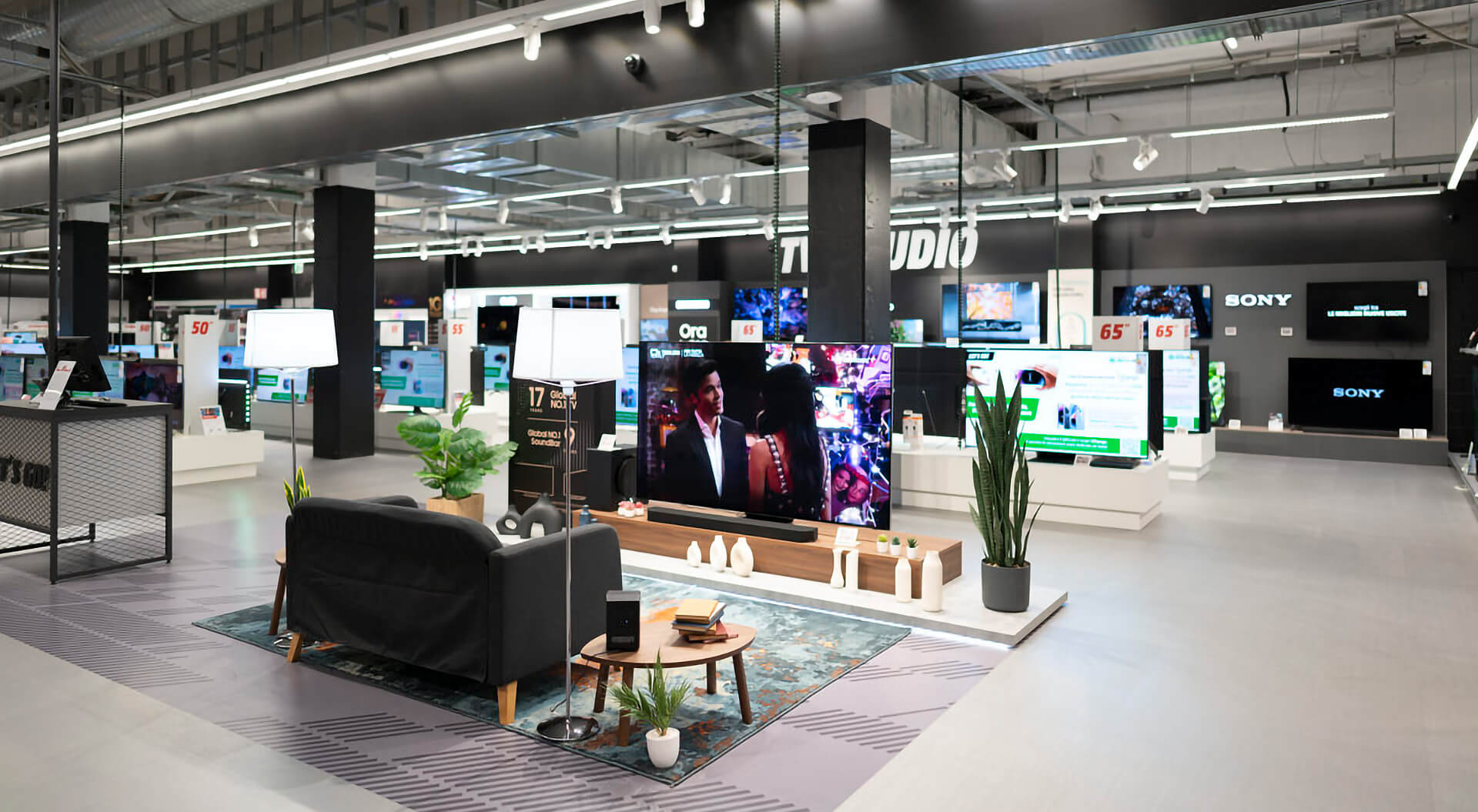
Designing Consumer Electronics Stores Around Commercial KPIs
Consumer electronics store design becomes strategically valuable when physical decisions can be connected to measurable commercial outcomes.
CampbellRigg therefore links the design brief to the KPIs management needs the format to influence.
These can include:
- footfall and qualified traffic;
- conversion;
- sales per square metre;
- dwell time;
- basket value;
- product attachment rates;
- category performance;
- collection efficiency;
- service utilisation;
- repeat visits; and
- omnichannel sales contribution.
The physical response follows the commercial objective.
- Clear zoning can reduce search friction.
- Demonstration environments can encourage product interaction and dwell time.
- Product adjacencies can support ecosystem purchasing and attachment.
- Digital information can strengthen assisted conversion.
- Collection integration can increase the productivity of the store beyond conventional sales.
- Service and repair environments can generate additional visits and extend the customer relationship.
Architecture, interiors, visual merchandising and technology therefore become commercial tools for influencing customer behaviour, operational efficiency and physical-space productivity.
That is the point at which consumer electronics store design moves from project delivery to retail strategy.
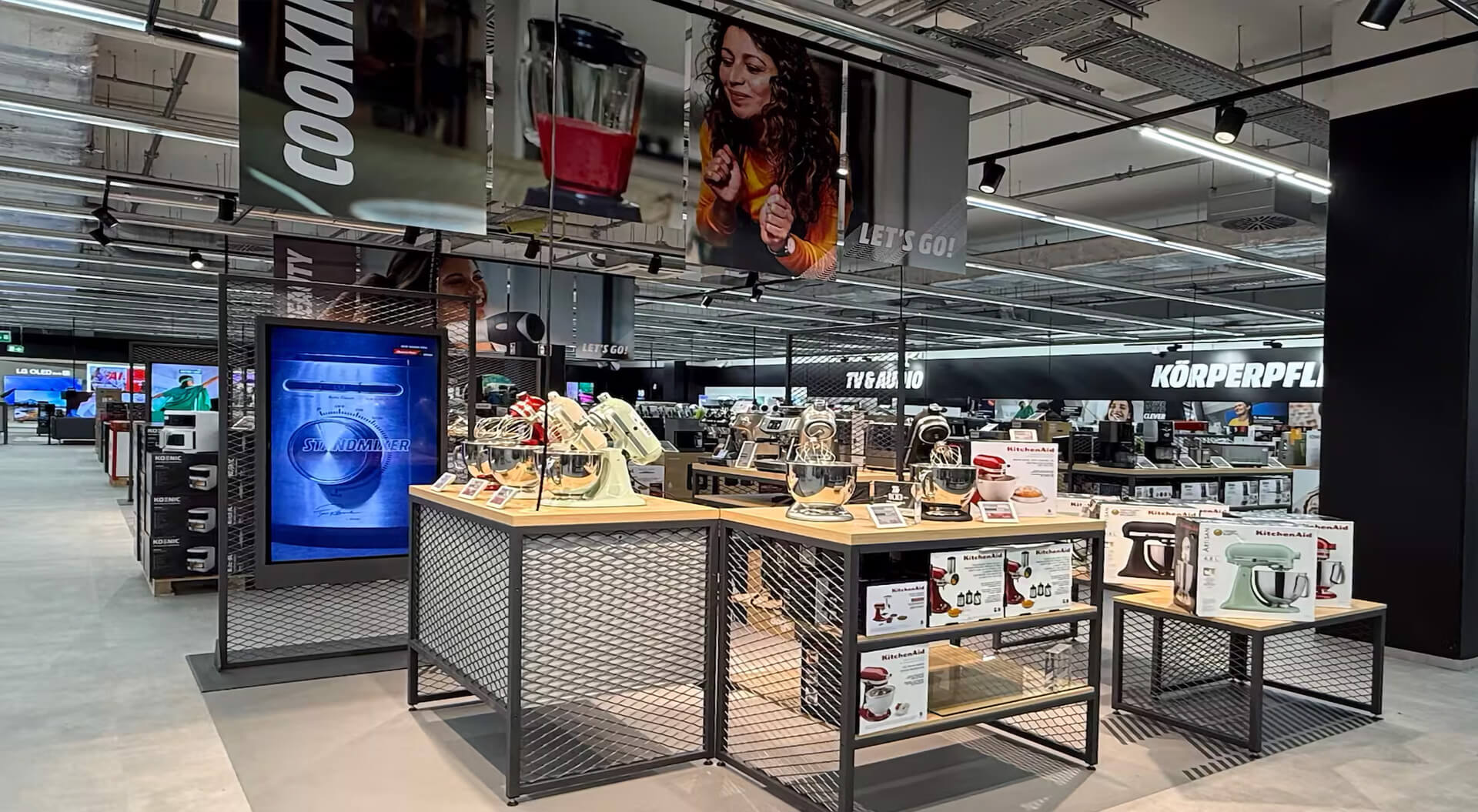
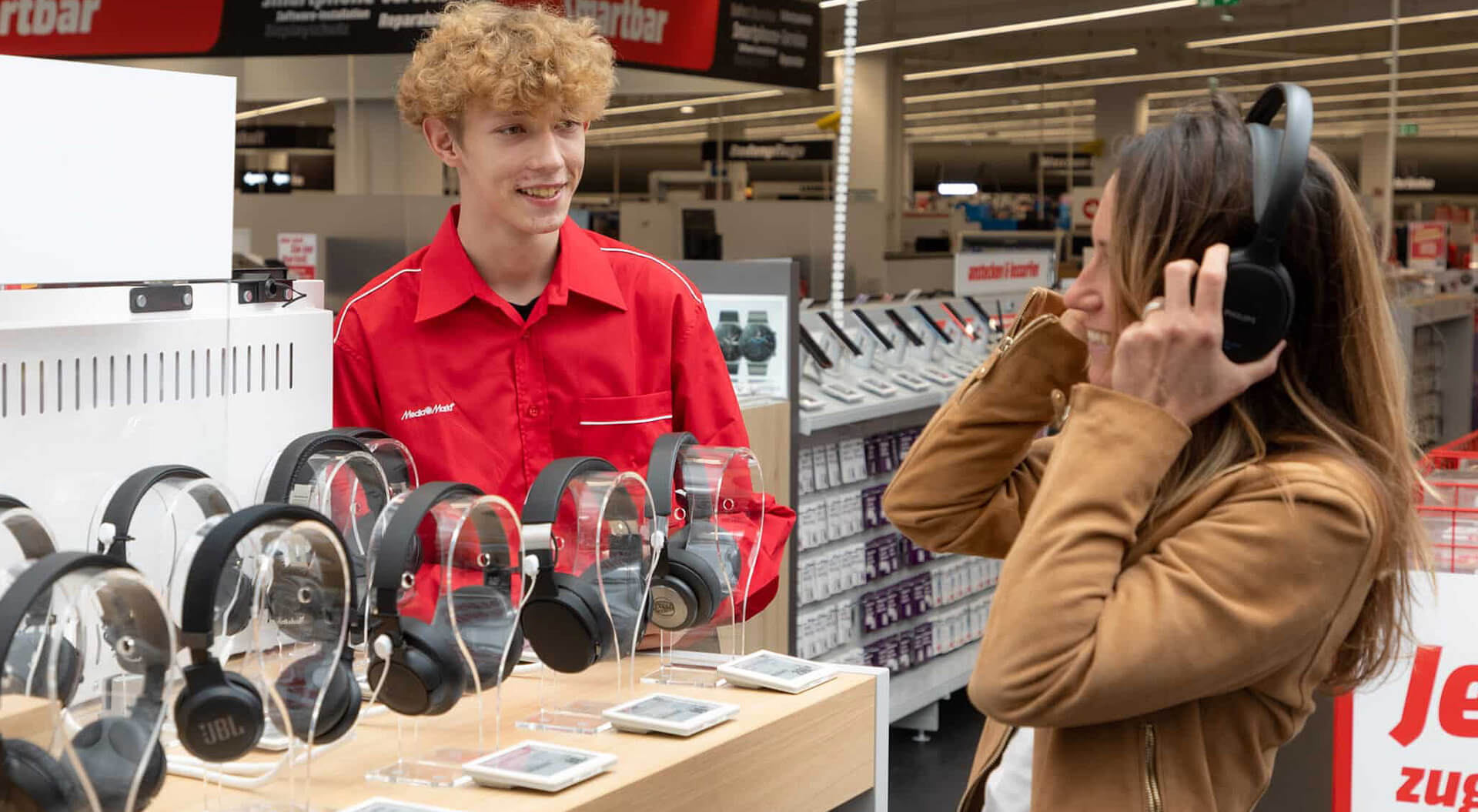
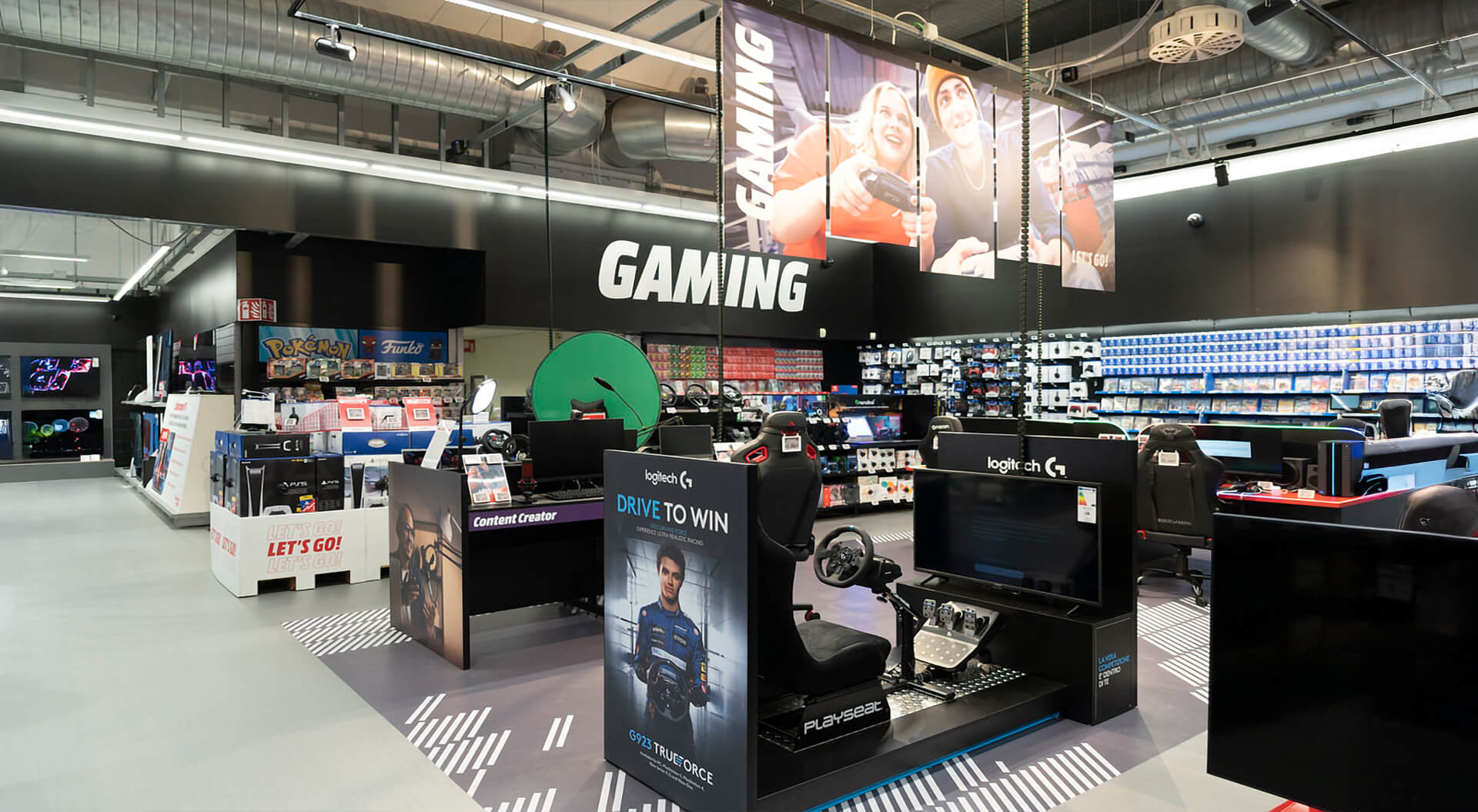
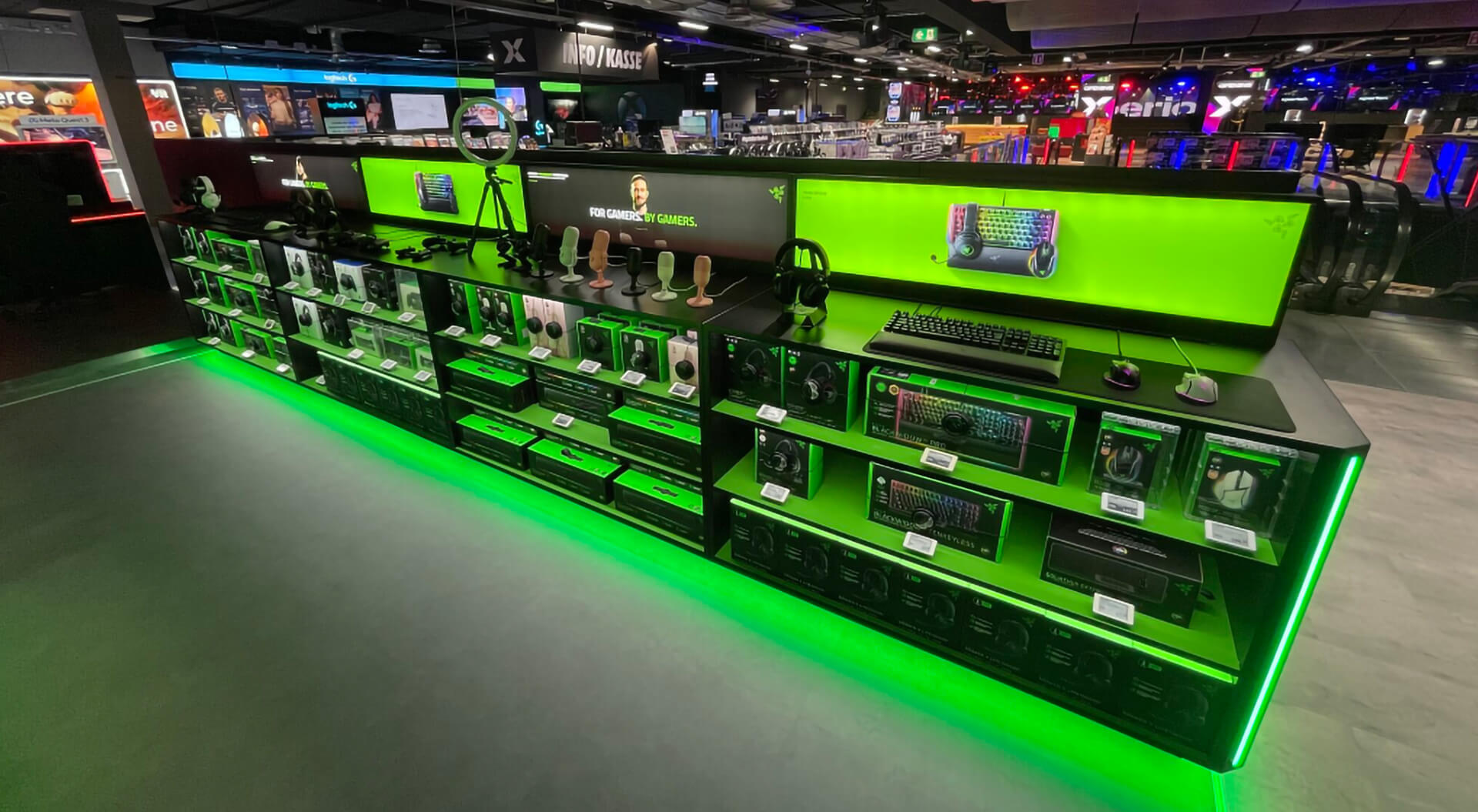
Inspire tech-savvy shoppers with visual merchandising that combines lifestyle, product discovery and learning to create engaging consumer electronics stores that increase conversion, strengthen brand experience and improve retail performance.
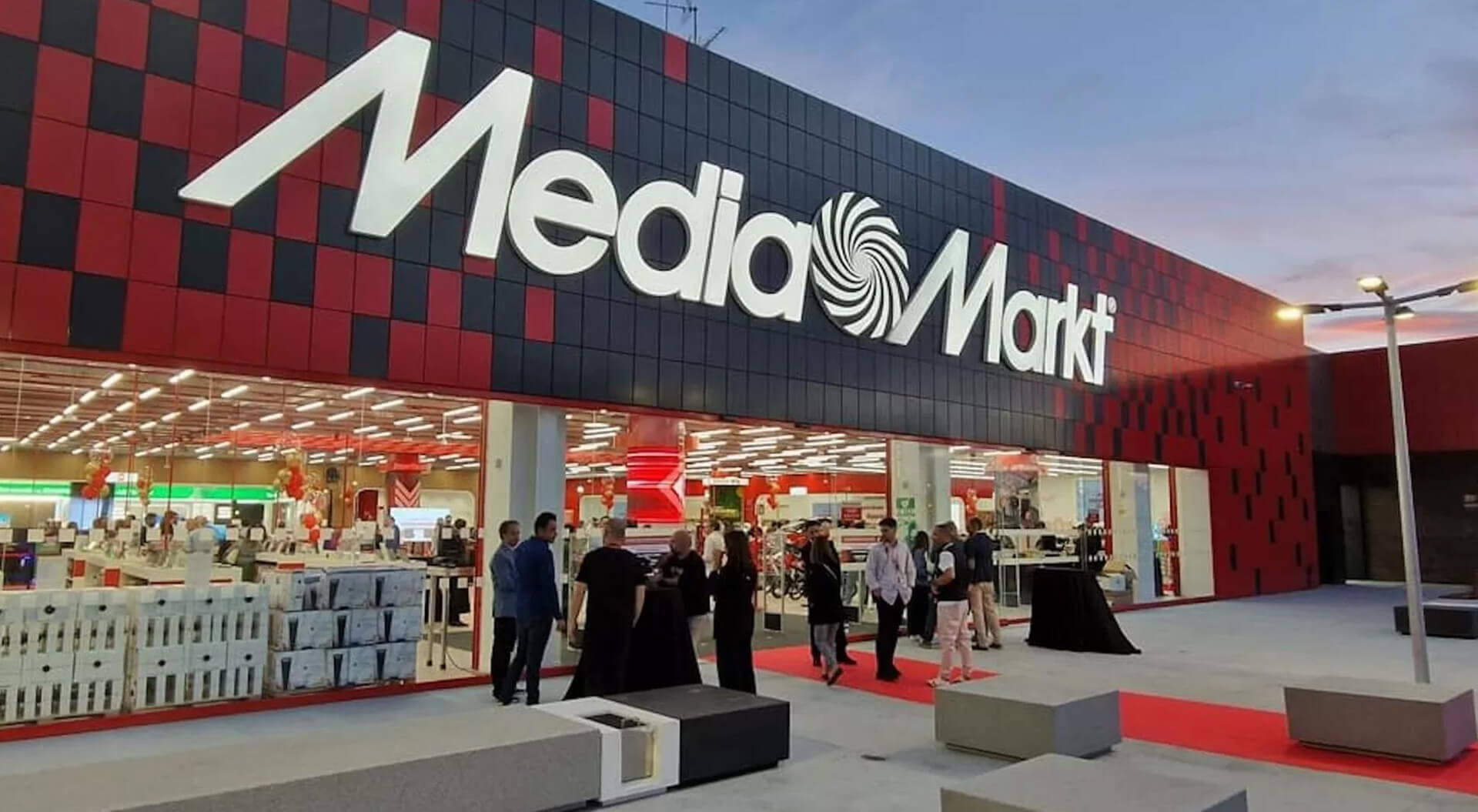
TechVillage: Designing Destination Retail Around Experience
At the opposite end of the format spectrum, MediaMarkt TechVillage demonstrates the role of destination retail.
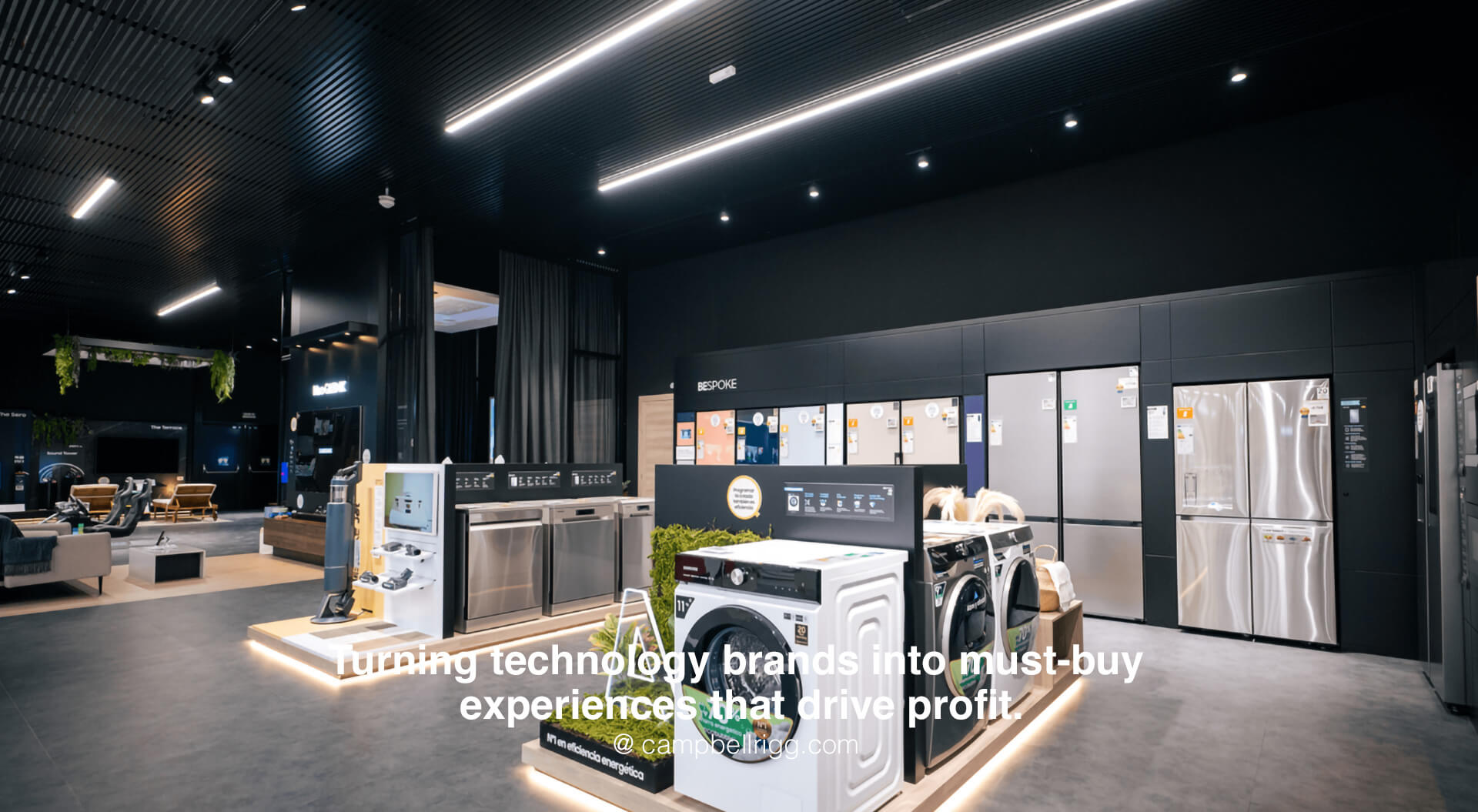
The Majadahonda TechVillage follows MediaMarkt's Lighthouse model used in locations including Milan, Rotterdam, Berlin and Rome. CampbellRigg's benchmark describes a large-format environment of approximately 7,000 square metres or more incorporating innovative products, experiential areas and dedicated brand boutiques.
A destination store performs a different commercial role from a compact urban format.
The objective is not speed.
It is discovery, demonstration, education and experience.
Customers can compare products, experience technology, explore brands, receive expert advice and spend more time understanding complex purchasing decisions.
That changes the design priorities.
Demonstration areas need sufficient space and visibility.
Product categories need to create logical journeys rather than isolated departments.
Consultation areas can support high-consideration purchases.
Lifestyle environments can demonstrate how technology works in real situations.
The commercial sequence becomes:
Demonstration → product interaction → deeper engagement → stronger purchase consideration.
Experience → longer dwell time → greater product exploration → conversion opportunity.
Product ecosystems → cross-category discovery → attachment opportunities → larger potential basket.
For management, destination retail must justify its footprint by delivering experiences and services that digital commerce cannot fully reproduce.
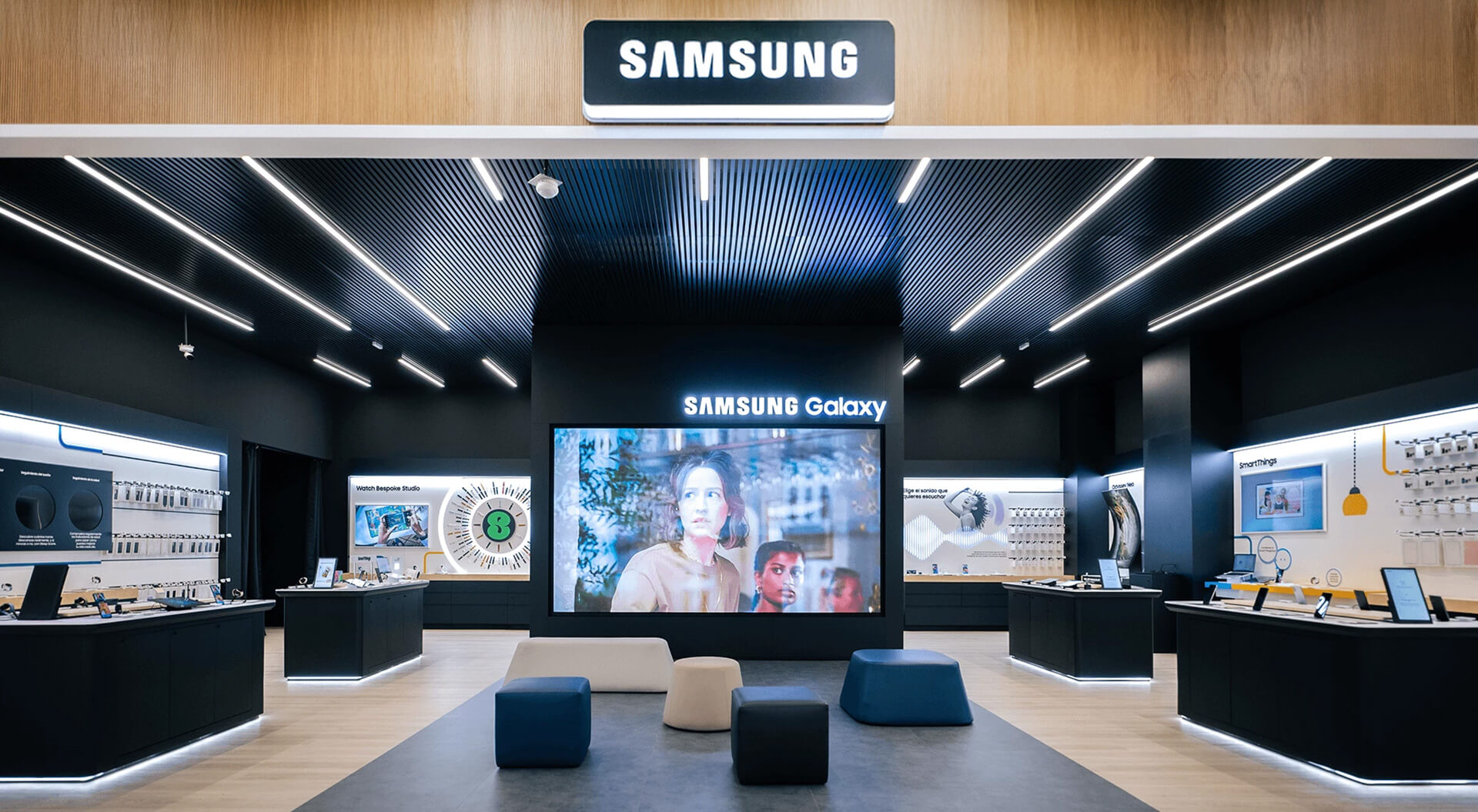
Shop-in-Shop Design: Making Brands and Categories More Engaging
Shop-in-shop environments provide another strategic component of a consumer electronics format portfolio.
At MediaMarkt TechVillage Majadahonda, dedicated spaces include brands such as Samsung, LG, Apple, Xiaomi, Oppo, Cecotec, Asus, Bosch, Braun, De'Longhi, Dyson and Google.
The opportunity is to move beyond conventional shelf merchandising.
A successful electronics shop-in-shop gives a brand sufficient physical presence to communicate its proposition while maintaining a coherent relationship with the host retailer.
CampbellRigg considers the interaction between:
- brand identity;
- product presentation;
- demonstration;
- customer navigation;
- technology storytelling;
- complementary products; and
- supporting services.
The commercial objective is not simply greater brand visibility.
It is making complex technology easier to understand and easier to buy.
Dedicated brand environment → stronger visibility → easier product discovery.
Demonstration-led merchandising → greater understanding → increased purchase confidence.
Product ecosystem presentation → stronger cross-selling potential → greater attachment opportunity.
This is particularly relevant to smartphones, computing, connected-home products and premium appliances where customers benefit from understanding how products work together.
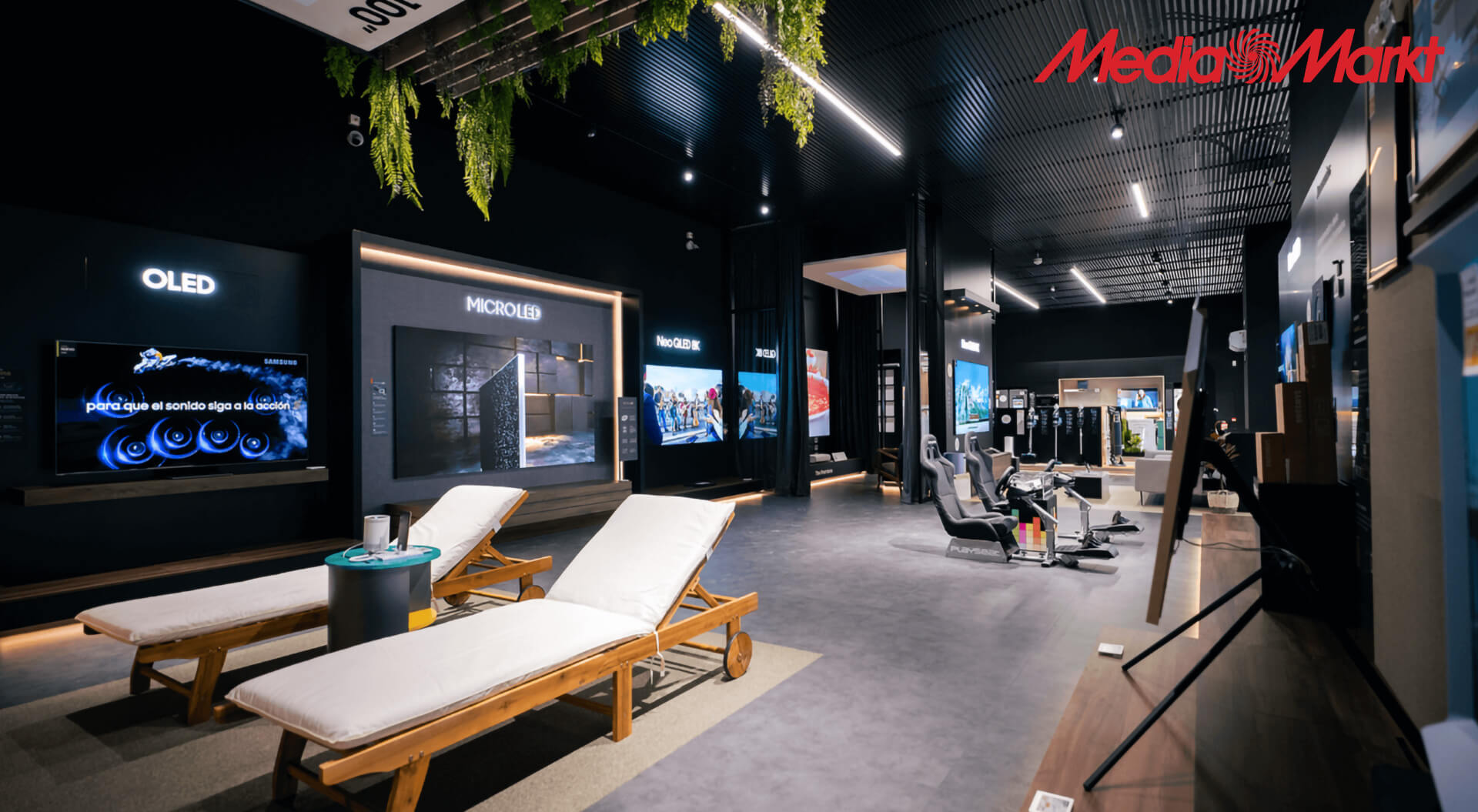
What Consumer Electronics Retailers Can Learn
The MediaMarkt benchmarks do not demonstrate that one format is universally appropriate.
They demonstrate that different customer missions require different physical responses.
- A compact urban store should make purchasing easier and faster.
- A destination store should make technology more engaging and discoverable.
- A shop-in-shop should make a brand or category easier to understand.
- A mobility environment should make service and aftercare more accessible.
- An omnichannel store should reduce friction between digital research, physical experience, purchase and fulfilment.
The management question therefore changes from: “What should our standard store look like?”
to: “What should this location enable the customer and the business to achieve?”
That shift from standardised store design to mission-led format strategy creates a more flexible and commercially disciplined network.
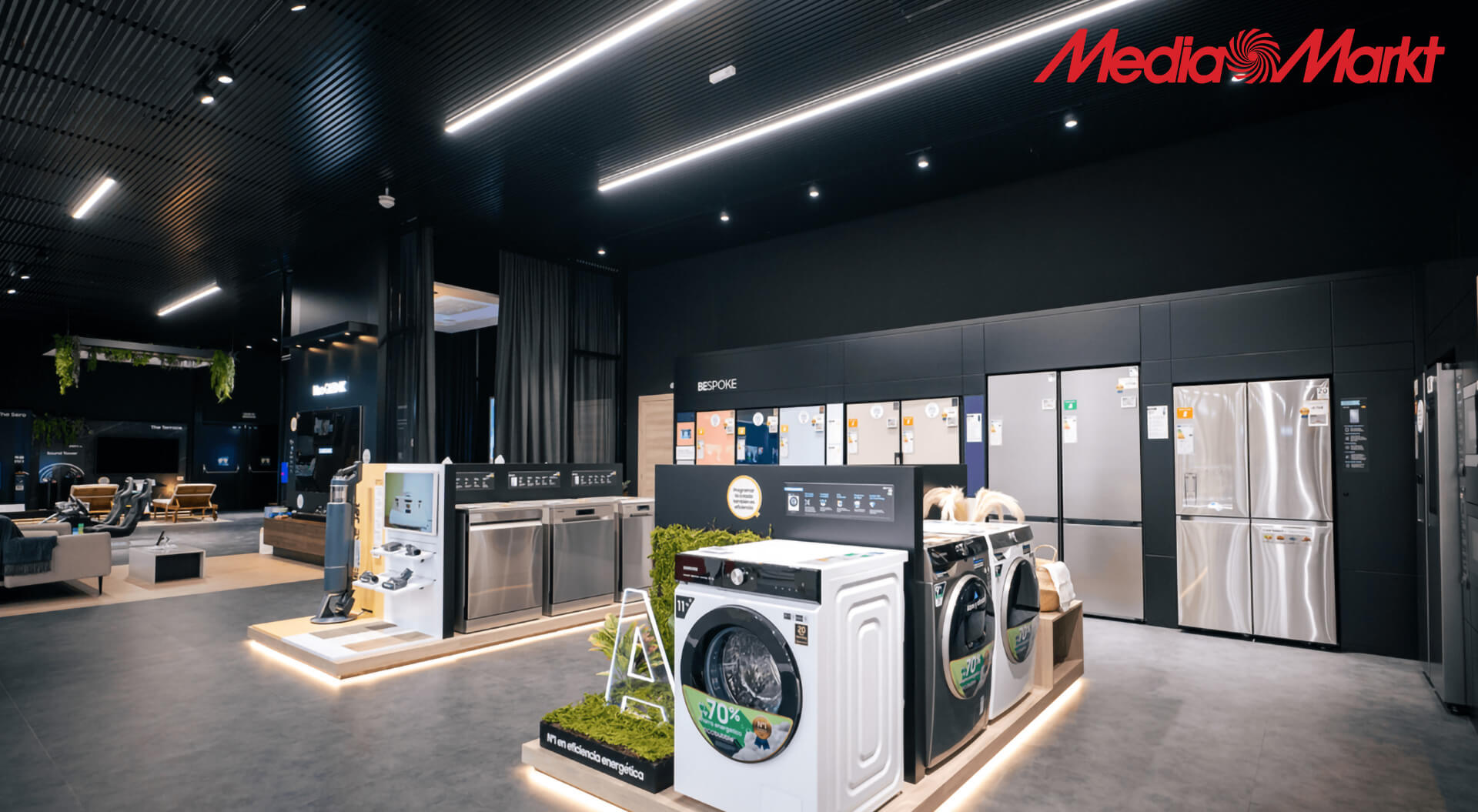
CampbellRigg: Turning Retail Strategy Into a Scalable Network
CampbellRigg combines retail strategy, brand positioning, architecture, interior design, visual merchandising, customer journey planning and digital/physical experience design to create consumer electronics environments around commercial objectives.
Our role begins before the design concept.
We establish the customer missions, identify the appropriate format architecture, define the role of each location and establish the commercial measures against which the format should perform.
We then translate that strategy into:
- store planning
- brand expression
- customer journey
- category architecture
- visual merchandising
- digital integration
- service environments
- omnichannel functionality and rollout guidelines.
Our wider technology retail experience spans international consumer electronics environments and large-scale retail programmes. For Currys, CampbellRigg transformed two electrical retail identities into a unified brand, strengthening brand recognition and consistency across the retail environment. Currys operated through 702 stores across six countries during its 2025/26 reporting period.
M.Video demonstrates how commercial retail design can translate into network-wide deployment. CampbellRigg’s refreshed retail environment delivered a reported 32% increase in like-for-like sales, leading to a 280-store refurbishment programme.
The objective is not simply to create a better-looking technology store.
It is to create a scalable, measurable and commercially effective retail network.
Mobility and Service Stores: Extending the Retail Relationship
Consumer electronics retail increasingly extends beyond the initial product transaction.
Connected devices generate continuing requirements for upgrades, accessories, repair, support and technical advice.
The store can therefore become part of a longer customer relationship.
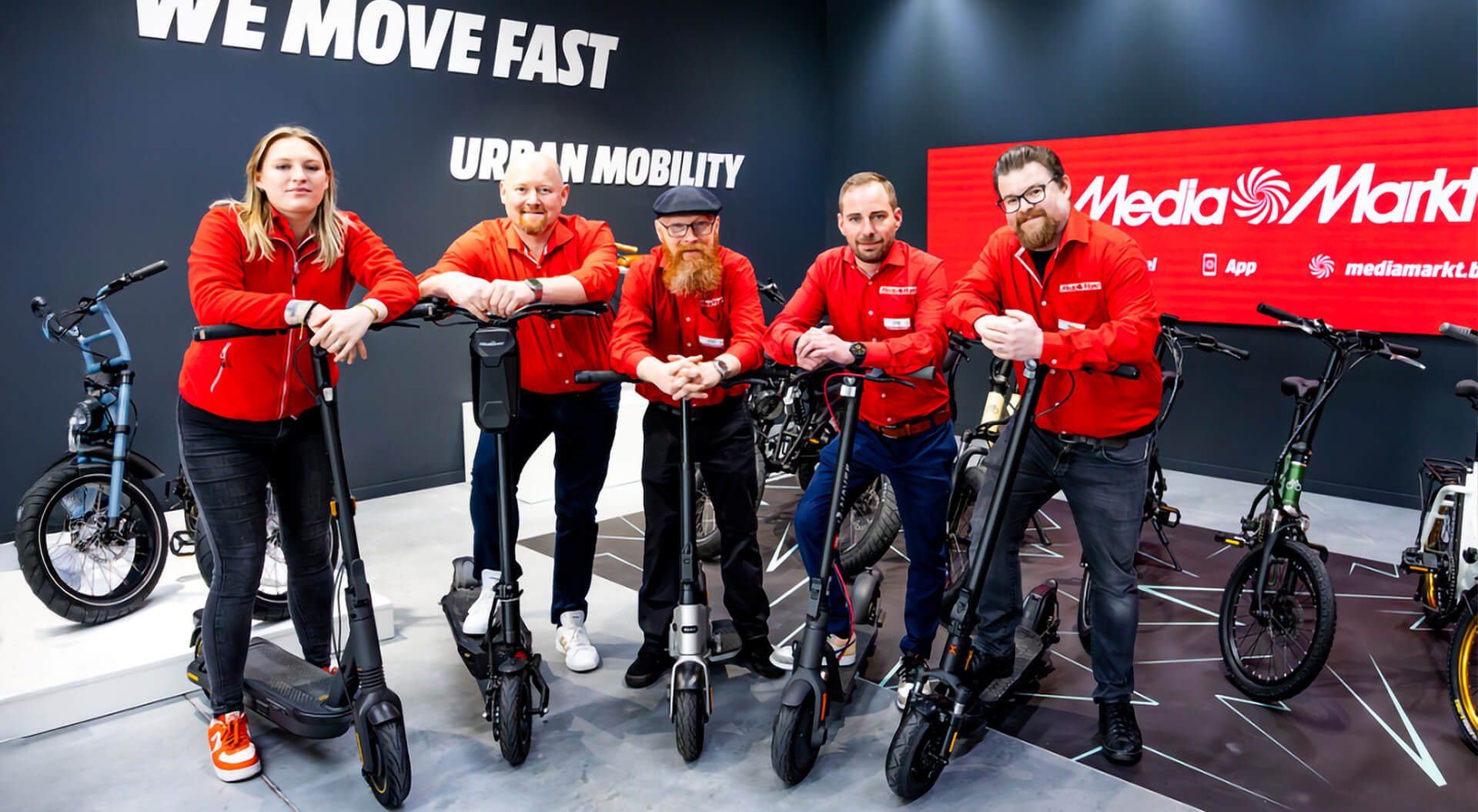
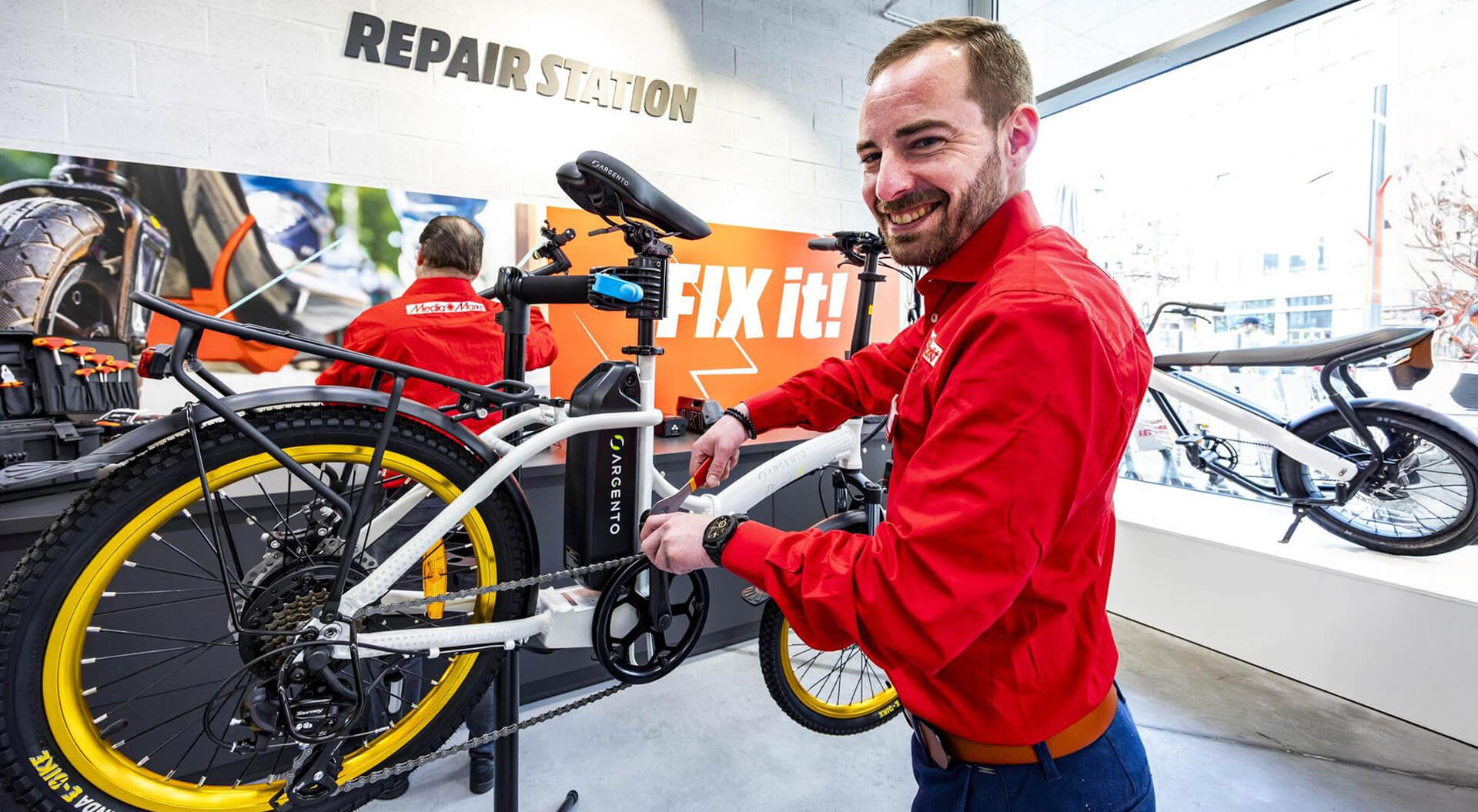
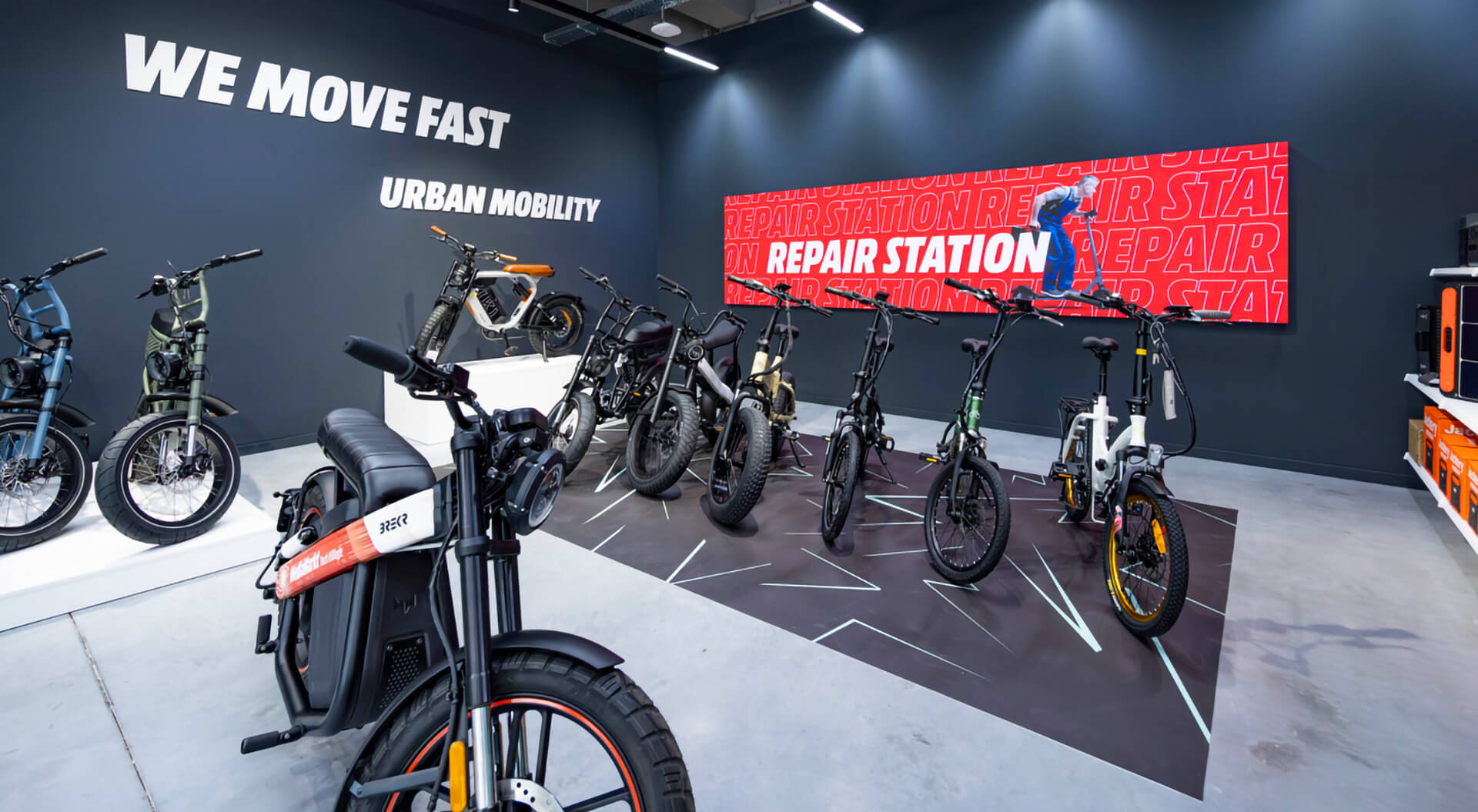
CampbellRigg's MediaMarkt Urban Mobility Store benchmark in Antwerp illustrates this service-led dimension, with repair and service functions integrated into the retail environment.
A service-oriented store needs to make support functions easy to understand and access.
Repair areas, consultation points, product displays and customer-service zones should work as an integrated journey rather than disconnected departments.
The design objective is to remove uncertainty:
Where do I go?
What service is available?
How long will it take?
Can I upgrade, repair or replace my device?
The commercial relationship extends beyond the original sale: Service interaction → physical engagement → stronger relationship → repeat purchase opportunity.
This gives physical retail an ongoing role that ecommerce alone cannot easily replicate.
From Strategy to Retail Performance
For senior management, the commercial sequence is straightforward: Retail strategy → customer missions → format portfolio → store design → omnichannel integration → measurable KPIs → scalable rollout.
That is how consumer electronics store design becomes more than an investment in physical space.
It becomes a mechanism for improving customer relevance, space productivity, experience, conversion, service and omnichannel performance.
CampbellRigg helps consumer electronics retailers move from individual store projects to scalable format systems—defining the role of each format, designing the customer experience and creating the standards required for consistent rollout.
A commercially focused process
1. Free consultation
Establish the business challenge, network opportunity and management objectives.
2. Bespoke brief
Define customer missions, format roles, commercial KPIs and design requirements.
3. Rapid execution
Translate the strategy into brand, space, merchandising, technology and customer experience.
4. Scalable rollout
Create a consistent format system capable of deployment across locations and markets.
From retail strategy to physical execution, CampbellRigg designs consumer electronics stores to perform.

Schedule your consultation today and receive a free quote.
Cost-Effective Excellence:
Our pricing structure is highly competitive, offering exceptional value without compromising on quality or creativity.
Rapid Execution:
We move fast. From concept to implementation, our agile team ensures your project is delivered on time and to the highest standards.
Multidisciplinary Expertise:
Our team brings together seasoned brand strategists, architects, interior designers, and graphic designers, collaborating to create seamless, end-to-end brand environments.
Global Reach, Local Insight:
With successful projects delivered across Europe, the Middle East, and Asia, we combine international experience with local market understanding.
Scalable Project Delivery:
Whether it's a flagship technology store, an urban network or mall micro-branches, we manage and execute projects of all sizes, efficiently and effectively.
Proven Track Record:
Our designs evolve branch networks from purely transactional spaces into experiential, relationship-focused brand environments, enhancing engagement, elevating customer experience, and driving tangible business results.
Full-Service Creative Agency:
From rebranding and marketing campaigns to spatial design and rollout, we provide an integrated service tailored to your goals.


