News and Views
Consumer Electronics Store Design: Multi-Format Retail Strategies That Maximise ROI




Consumer Electronics Store Design: Multi-Format Retail Strategies That Maximise ROI
Consumer electronics retail is no longer a question of choosing between a large store and an online proposition. For senior management, the strategic challenge is more fundamental: how should the physical retail network be structured so that every format has a clear commercial role, supports omnichannel growth and can be scaled efficiently across different markets and locations?
The answer is not simply better store design.
It is a multi-format retail strategy connecting brand positioning, format planning, customer journeys, merchandising, digital commerce, fulfilment and measurable commercial performance.
For retailers such as Currys and M.Video, physical stores operate within increasingly sophisticated omnichannel networks. Customers may research online, visit a store to see and compare products, seek expert advice, purchase digitally and collect from the same location. The store therefore needs to work as showroom, sales environment, service point, fulfilment hub and brand experience simultaneously.
For management, the objective is clear: turn the physical estate into scalable commercial infrastructure that earns its space, investment and operating cost.
CampbellRigg helps retailers achieve this by connecting retail strategy, brand strategy, customer experience, store planning, merchandising and implementation into one coherent format system.
How CampbellRigg helps management turn retail strategy into a scalable network
CampbellRigg begins by establishing the commercial role of the physical estate.
Brand auditing establishes how the existing proposition is perceived and expressed. Strategy defines the desired market position and the role physical retail should play within it. Format planning determines which store types are required, where they should operate and what each format must achieve. The design brief then converts those decisions into practical requirements for customer experience, store planning, identity, merchandising and implementation.
The benefit to management is one strategic direction linking brand decisions to the physical retail network, rather than a collection of disconnected design initiatives.
That direction can then be translated into a repeatable retail system covering:
- mega and destination stores
- urban and city-centre stores
- shopping-centre formats
- compact stores
- showroom-led environments
- collection and fulfilment points
- digital extensions of the physical assortment
- modular design components for network rollout
The result is a retail estate designed around commercial roles rather than simply different sizes of store.
Build a format strategy around commercial roles
The first management question should not be, “What should the new store look like?”
It should be: “What does this location need the store to achieve?”
A destination mega store may need to maximise product breadth, demonstration, specialist advice and service revenue. A city-centre store may need to prioritise convenience, speed, curated assortment and click-and-collect. A shopping-centre format may require high-impact brand communication and rapid product discovery. A compact store may depend on digital assortment extension and efficient fulfilment.
Treating every location identically can therefore create unnecessary cost and reduce productivity.
How CampbellRigg helps
CampbellRigg defines the commercial role of each format before developing its physical expression.
This includes assessing location characteristics, customer missions, assortment requirements, customer journeys, service needs, operational constraints and the relationship between physical and digital channels.
The benefit is a format architecture that tells management why each store exists, what it should deliver and how it fits into the wider network.
Make every square metre commercially productive
Large technology stores provide considerable opportunities: broad ranges, demonstration environments, specialist departments, service facilities and immersive product experiences.
But additional space only creates value when it improves commercial performance.
Poorly planned large stores can create excessive circulation, difficult navigation, underused departments and weak connections between complementary categories.
How CampbellRigg helps
CampbellRigg treats store planning as a commercial variable.
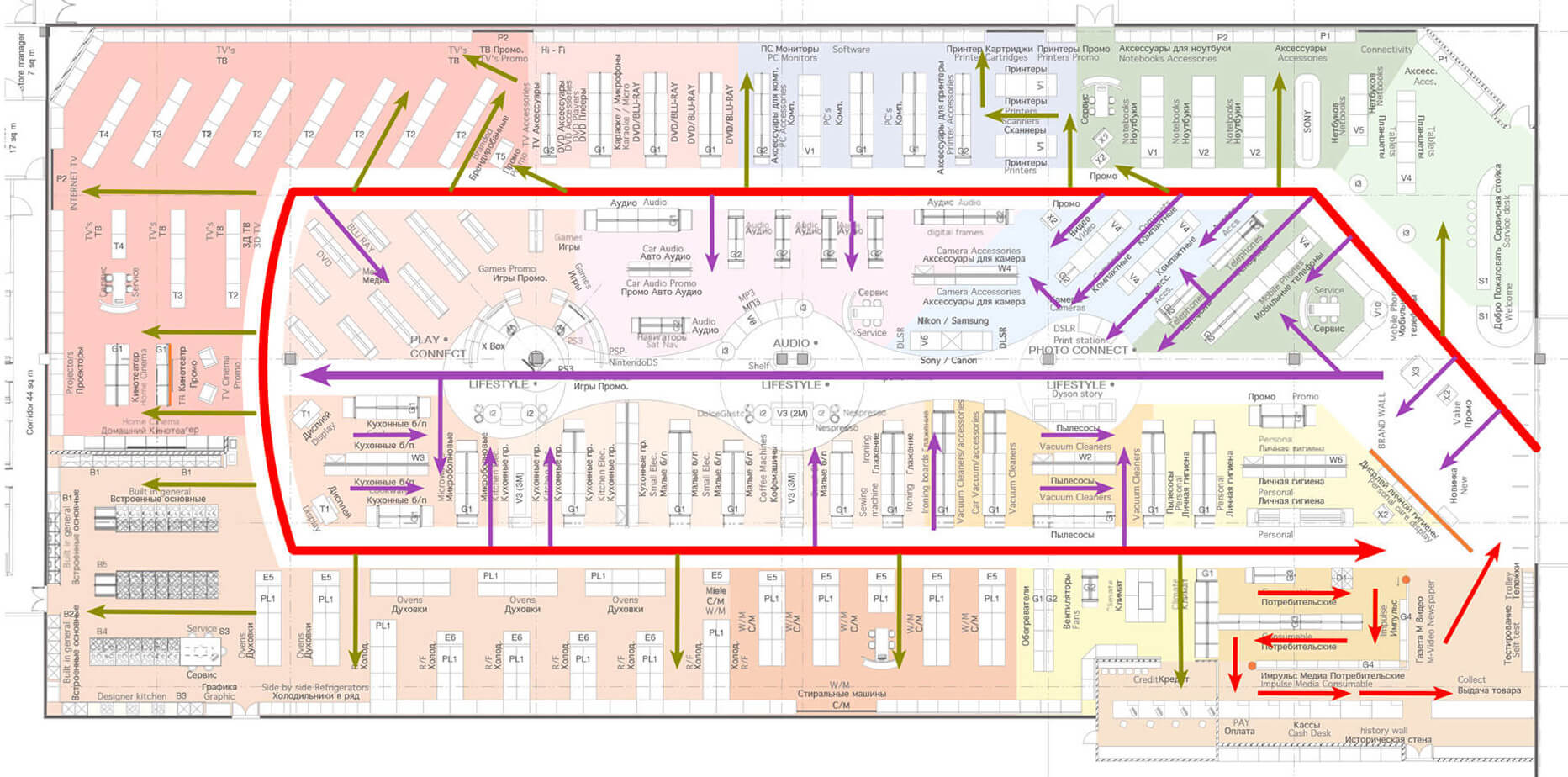
Customer circulation, category adjacencies, sightlines, demonstration areas, service points, promotional zones, collection areas and staff positions are planned around the customer missions the store must serve.
The objective is to make additional space work harder.
A larger footprint should create more opportunities for discovery, comparison, consultation, attachment sales and service uptake, not simply more products on display.
The benefit is a store where space allocation follows commercial priorities rather than being driven primarily by architectural convention.
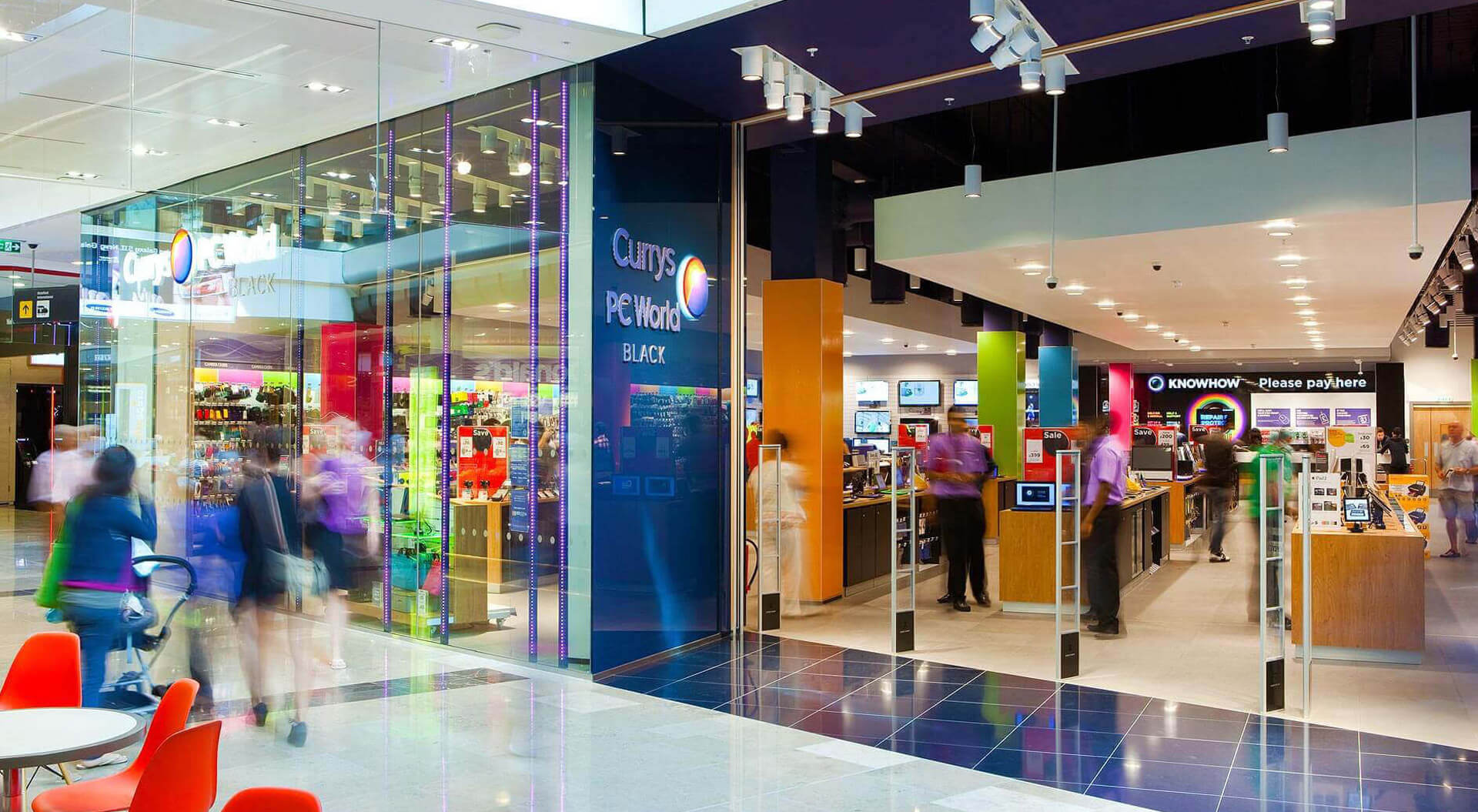
Use urban and compact formats to expand the network efficiently
Urban retail creates a different commercial proposition.
City-centre and shopping-centre locations can bring a retailer closer to customers but typically involve smaller footprints, higher property costs and different patterns of customer behaviour.
The solution is not to reproduce the mega store on a smaller floorplate.
It is to determine what the smaller format must do exceptionally well.
M.Video provides a useful international benchmark. Its published 2024 results describe compact stores averaging 500–600 m², approximately half the area of its traditional 1,000–1,500 m² stores, while maintaining a comparable assortment through different merchandising and product-placement techniques. The company reported that opening investment was almost three times lower, with higher turnover per square metre, and had expanded the network to more than 1,240 stores across 370 cities.
How CampbellRigg helps
CampbellRigg determines which categories, services, products and experiences deserve physical space and which can be extended through digital commerce.
The store can then operate as a curated showroom, sales environment and fulfilment hub, rather than attempting to become a miniature version of a mega store.
The benefit is the ability to extend physical reach into commercially attractive locations while controlling footprint, capital investment and operational complexity.
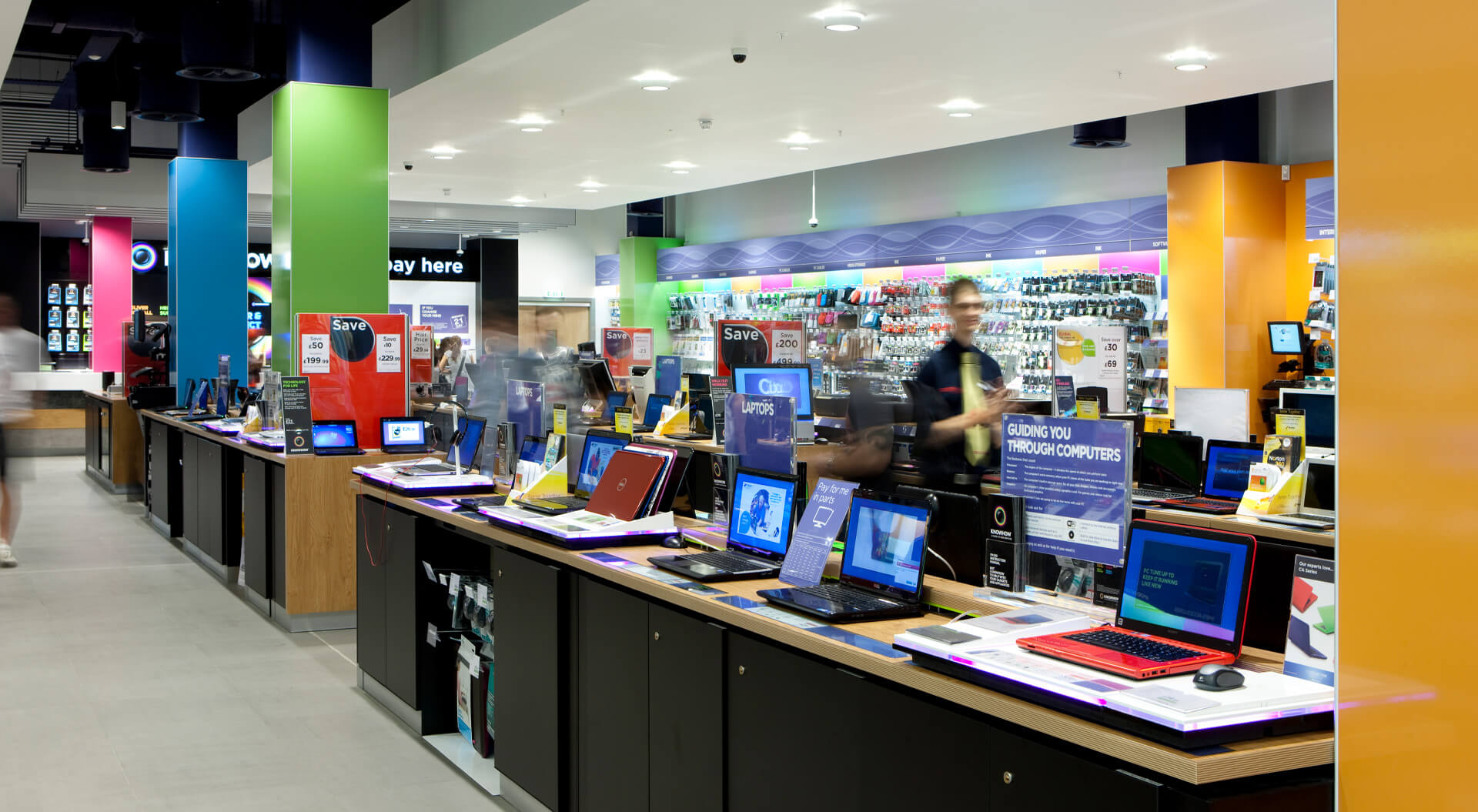
Design the customer journey around buying behaviour
Technology purchases can involve substantial research and comparison.
Customers may arrive knowing exactly what they want. Others may need to compare products, understand technical differences or experience a product physically before committing to purchase.
The store therefore has to accommodate different levels of customer intent.
How CampbellRigg helps
CampbellRigg maps the journey from entry and orientation through discovery, comparison, demonstration, advice, purchase, collection and post-purchase service.
Category zoning reduces search friction. Demonstration areas encourage interaction. Product adjacencies create opportunities for complementary purchases. Expert consultation areas support high-consideration decisions. Clearly defined collection and service areas improve operational flow.
The benefit is a customer journey designed around how people actually make technology purchasing decisions, rather than around the location of fixtures alone.
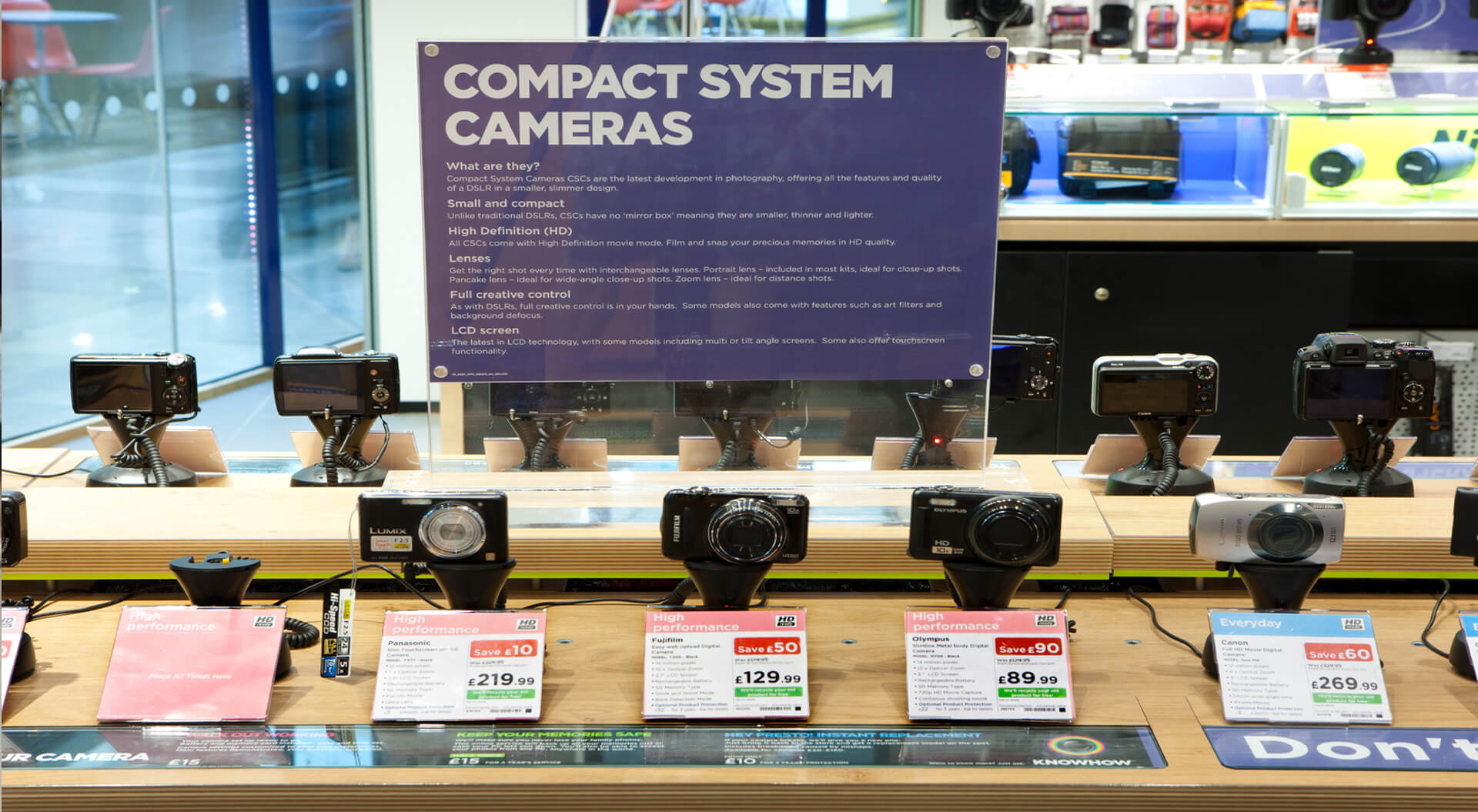
Connect physical stores to omnichannel commerce
For technology retailers, the physical and digital estates are increasingly interdependent.
Currys' current strategy demonstrates the scale of this relationship. In FY2025/26, omnichannel sales represented 33% of UK&I revenue, while the company continued investing in store and online integration. Its current initiatives include improvements to order-and-collect, electronic shelf-edge labels, colleague tools and online-in-store services.
The implication for management is significant: store design can no longer be separated from the operating model that connects stores to e-commerce.
How CampbellRigg helps
CampbellRigg identifies where digital capability should improve the physical journey.
This can include:
- click-and-collect
- real-time stock visibility
- mobile POS
- digital product information
- extended online assortment
- customer-data applications
- digital ordering
- service and repair journeys
- fulfilment and collection areas
The objective is not to add technology for its own sake.
It is to determine whether each intervention makes the store easier to shop, easier to operate or more commercially productive.
The benefit is a physical environment that actively supports the retailer's wider omnichannel business model.
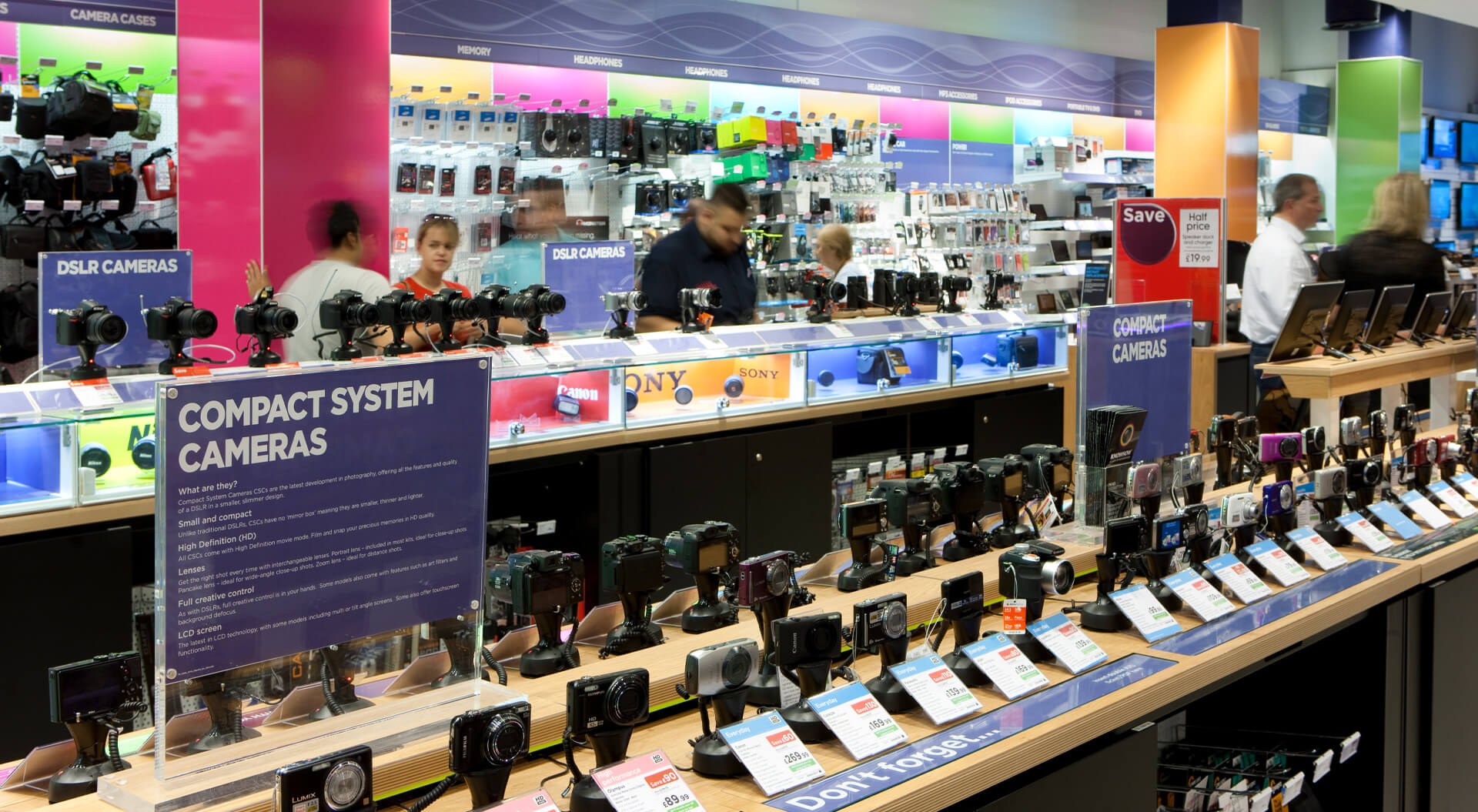
Turn merchandising into a commercial tool
Consumer electronics can be difficult to shop because customers must compare specifications, features, prices, brands and performance.
Merchandising therefore has a strategic role.
Products can be organised around customer needs rather than technical specifications alone. Laptops can be structured around work, gaming, mobility and performance. Television departments can simplify comparison by screen size, technology and viewing environment. Smart-home products can be presented as connected solutions rather than isolated devices.
How CampbellRigg helps
CampbellRigg connects category strategy with customer missions, product relationships and commercial priorities.
The resulting merchandising system can make cross-selling more intuitive.
A laptop purchase can lead naturally to accessories, protection, connectivity and technical support. A television purchase can connect to sound, installation and smart-home solutions.
The benefit is a retail environment that helps customers understand the complete solution, while creating opportunities to increase basket value and service attachment.
Build a brand system that can scale across formats
A multi-format estate creates a management challenge: consistency without uniformity.
A mega store, city-centre location and compact shopping-centre store should be recognisably part of the same brand, but they should not necessarily use the same spatial solution.
How CampbellRigg helps
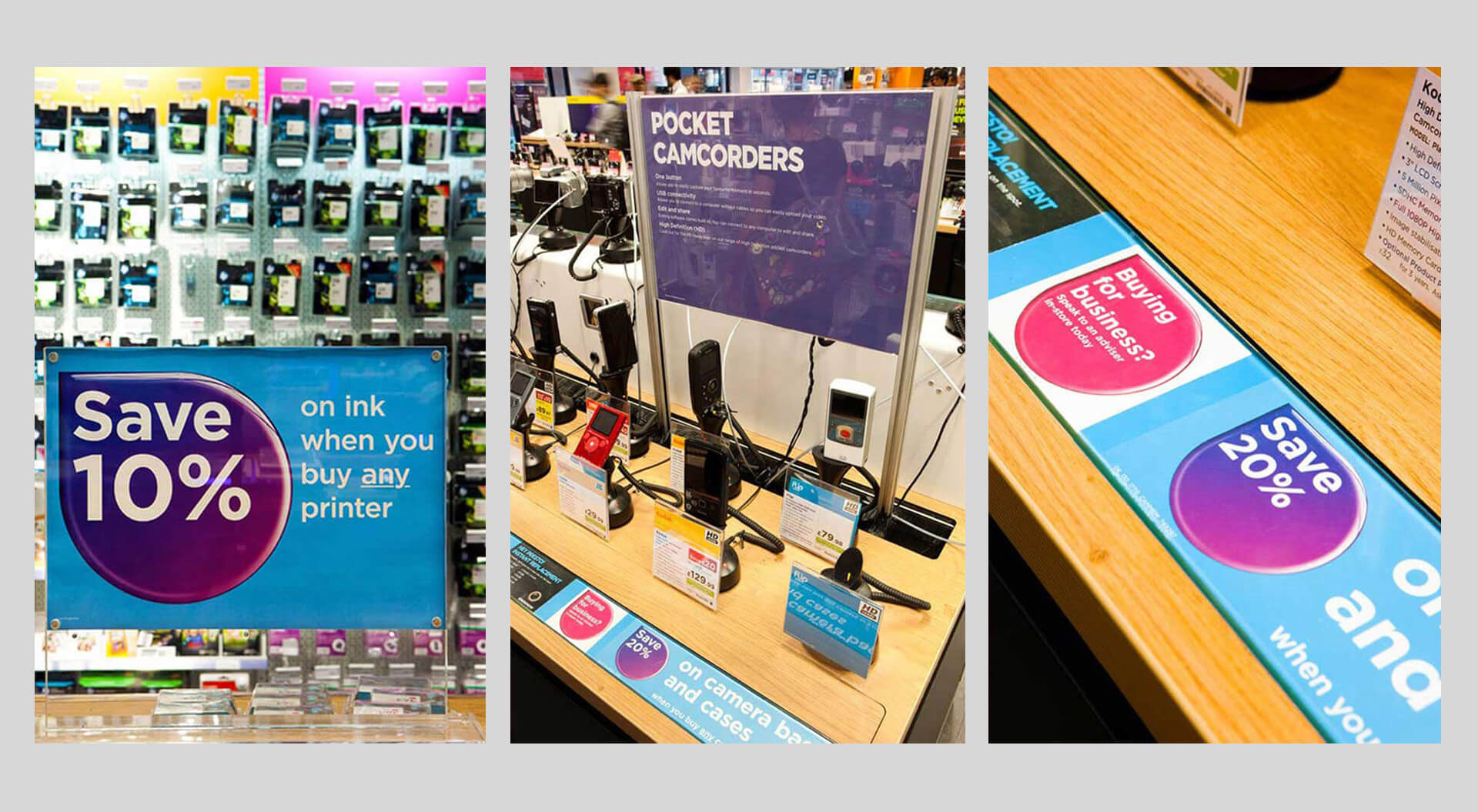
CampbellRigg develops modular design principles covering brand identity, signage, communications, category zoning, merchandising, customer-service areas and key experience elements.
These principles establish what must remain consistent and what can adapt to local conditions.
The benefit is a scalable retail design system that protects brand recognition while allowing different formats, footprints and markets to operate effectively.
This is particularly important when management moves from a successful pilot to a network rollout.
Measure the commercial performance of the estate
Retail design should ultimately be accountable to business performance.
Management can assess the impact of format and design decisions through measures such as:
- sales per square metre
- conversion rate
- average transaction value
- attachment rate
- service uptake
- dwell time
- click-and-collect utilisation
- fulfilment speed
- customer satisfaction
- repeat purchase
- traffic-to-store conversion
How CampbellRigg helps
CampbellRigg identifies the commercial objectives before translating them into design requirements.
That creates a clearer relationship between intervention and outcome.
Improved zoning can reduce search friction. Demonstration areas can increase product interaction. Better adjacencies can support attachment sales. More efficient collection environments can reduce operational friction. Modular formats can reduce rollout complexity.
The benefit is a commercial framework for evaluating physical retail investment, rather than judging a store principally on appearance.

Currys: connecting brand, store and omnichannel performance
Currys demonstrates a different but complementary management challenge: how a large technology retailer can connect its physical estate to a broader omnichannel proposition.
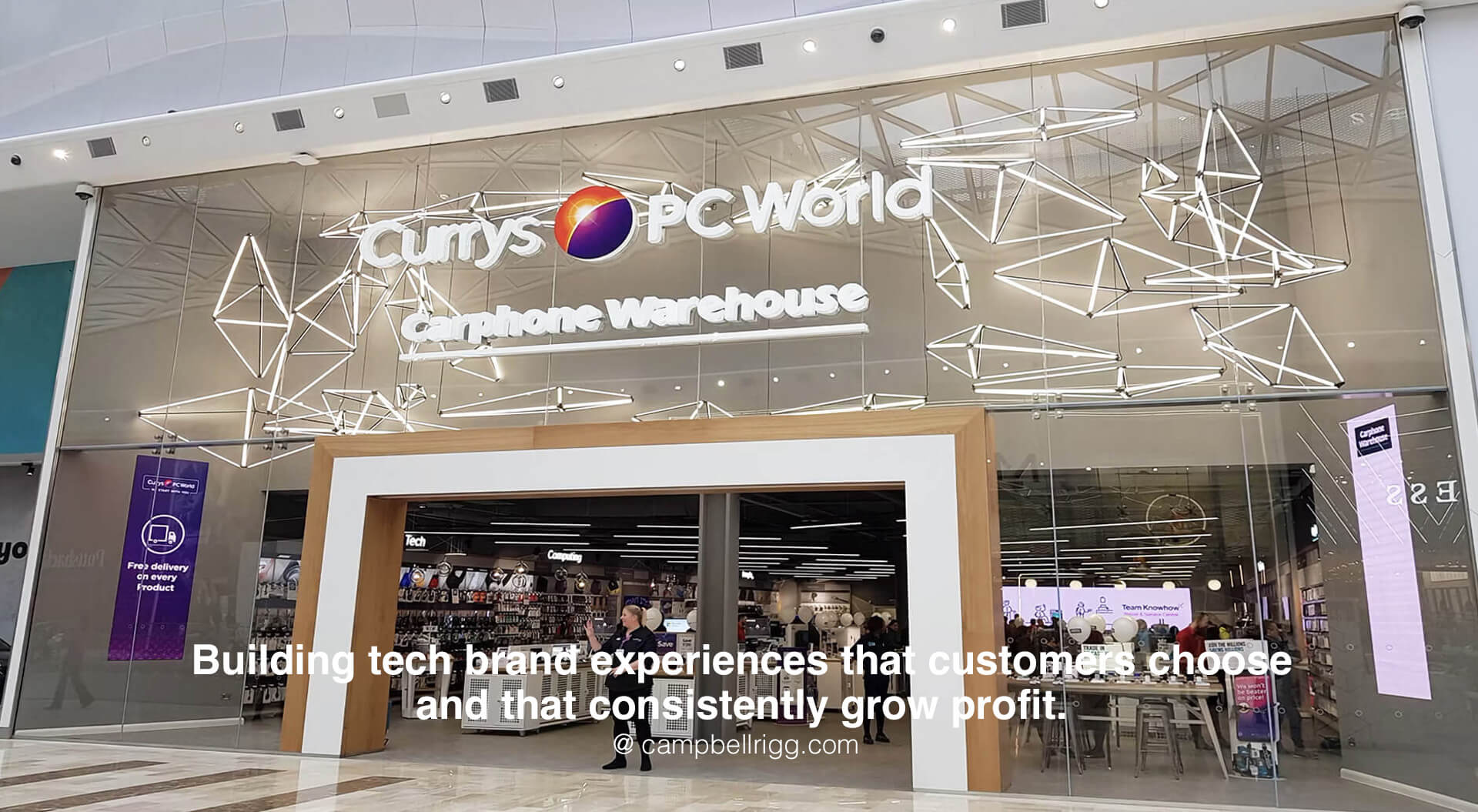
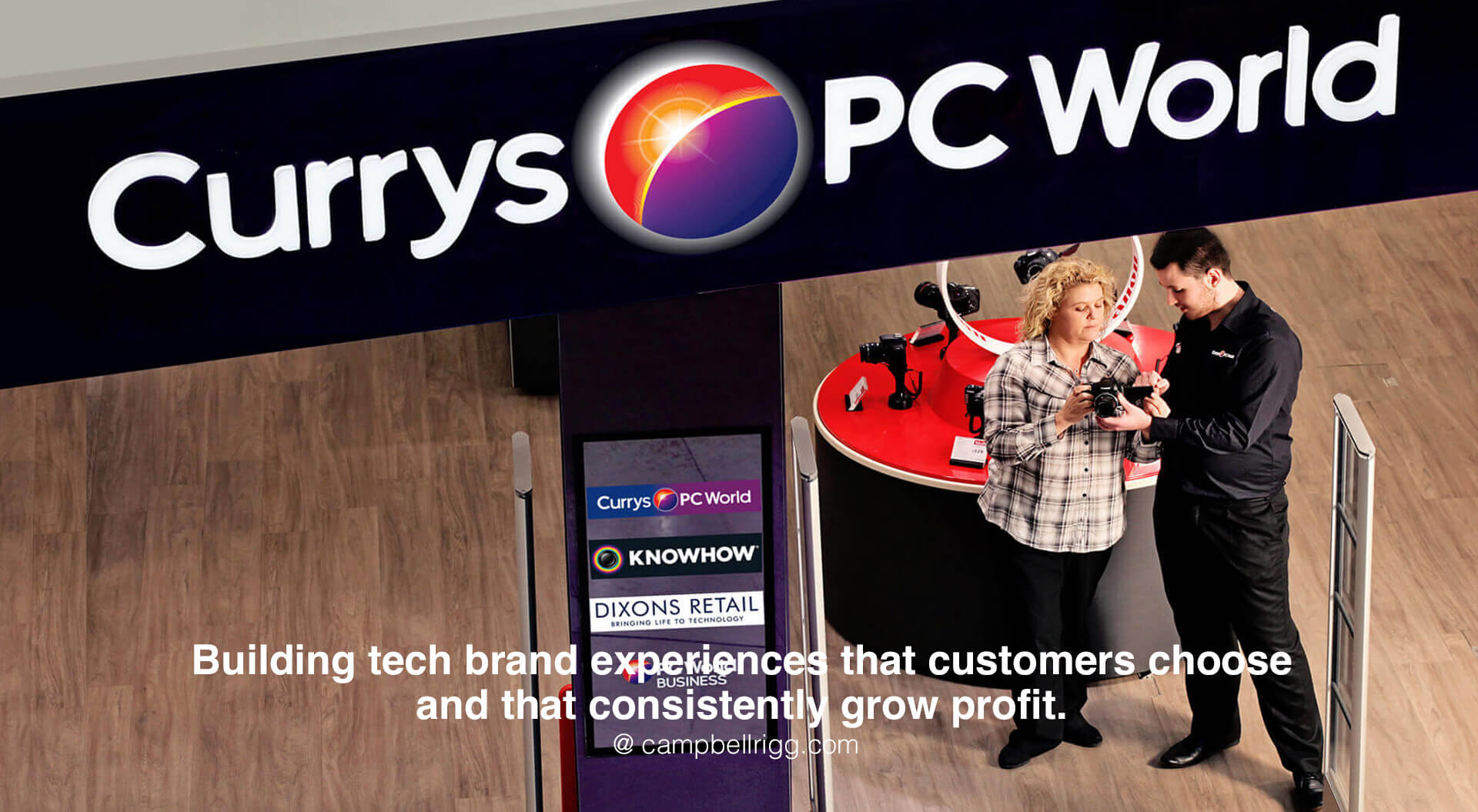
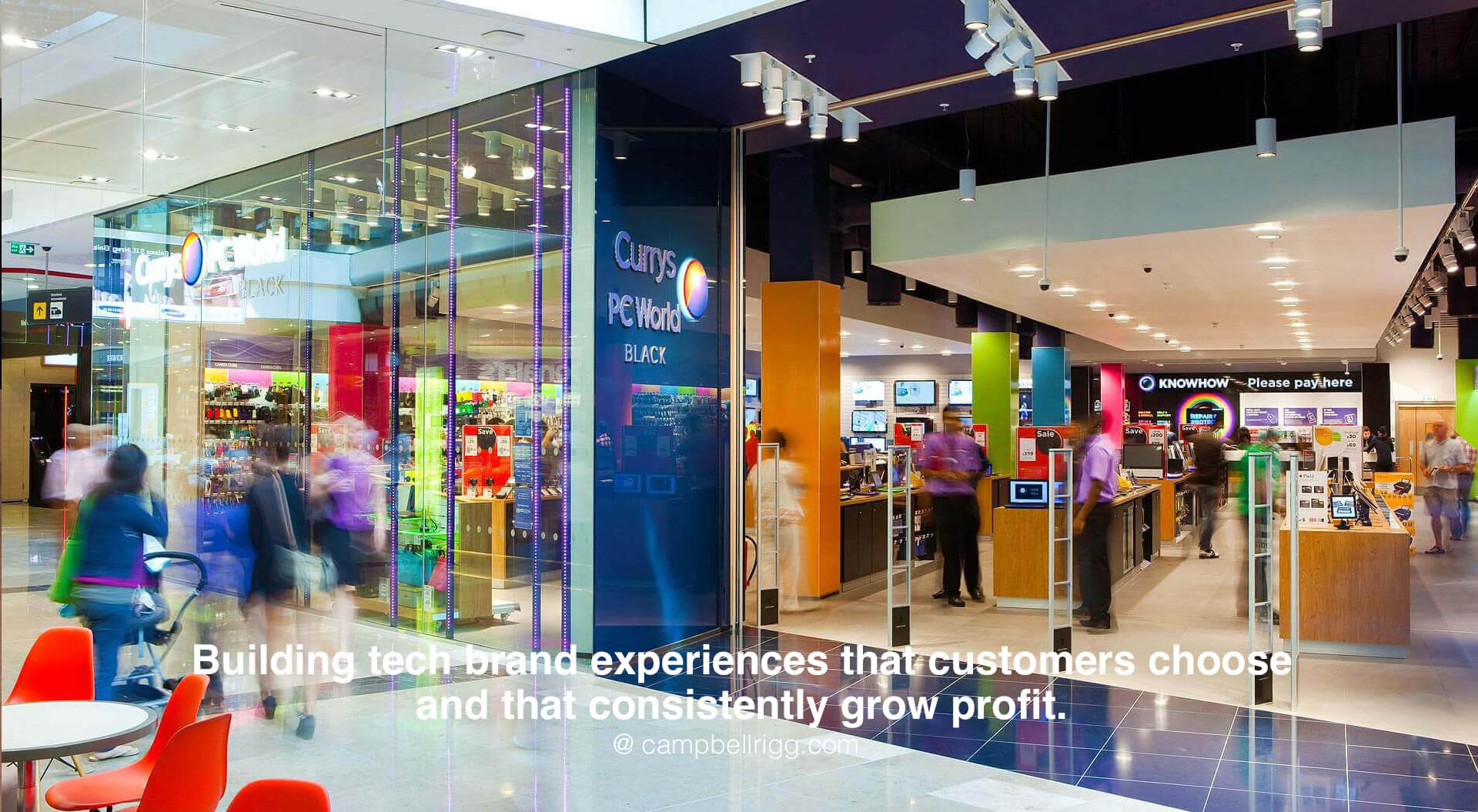
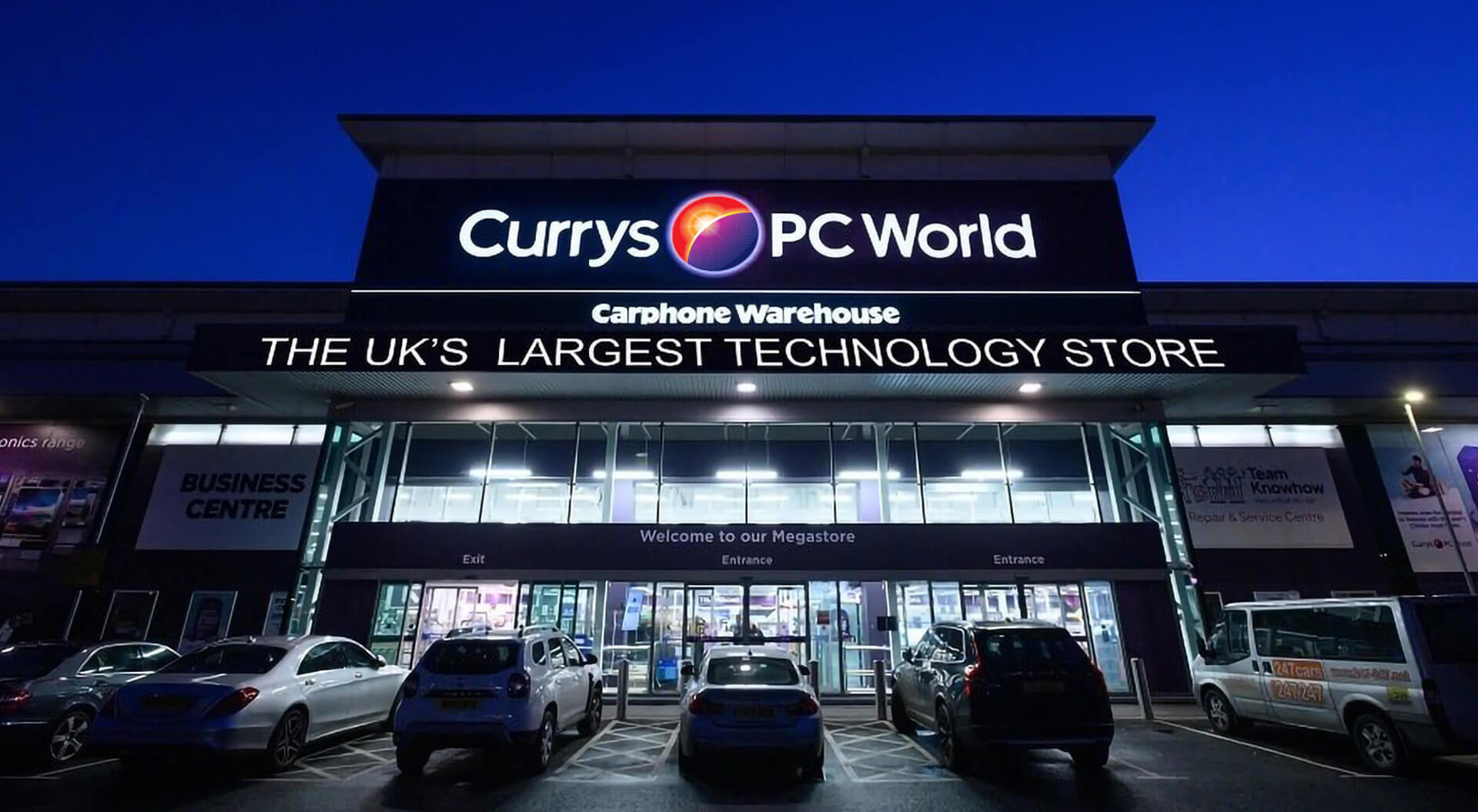
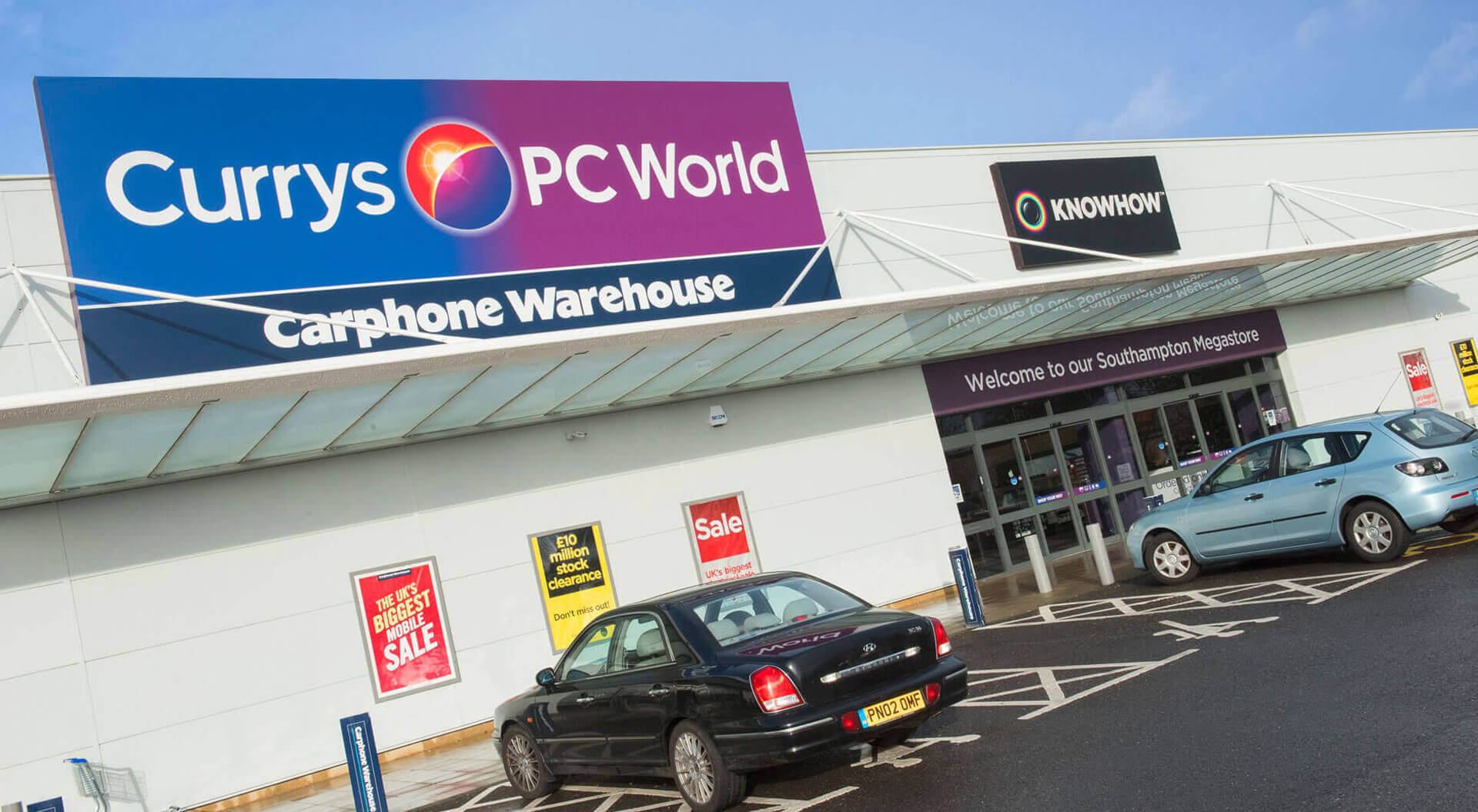
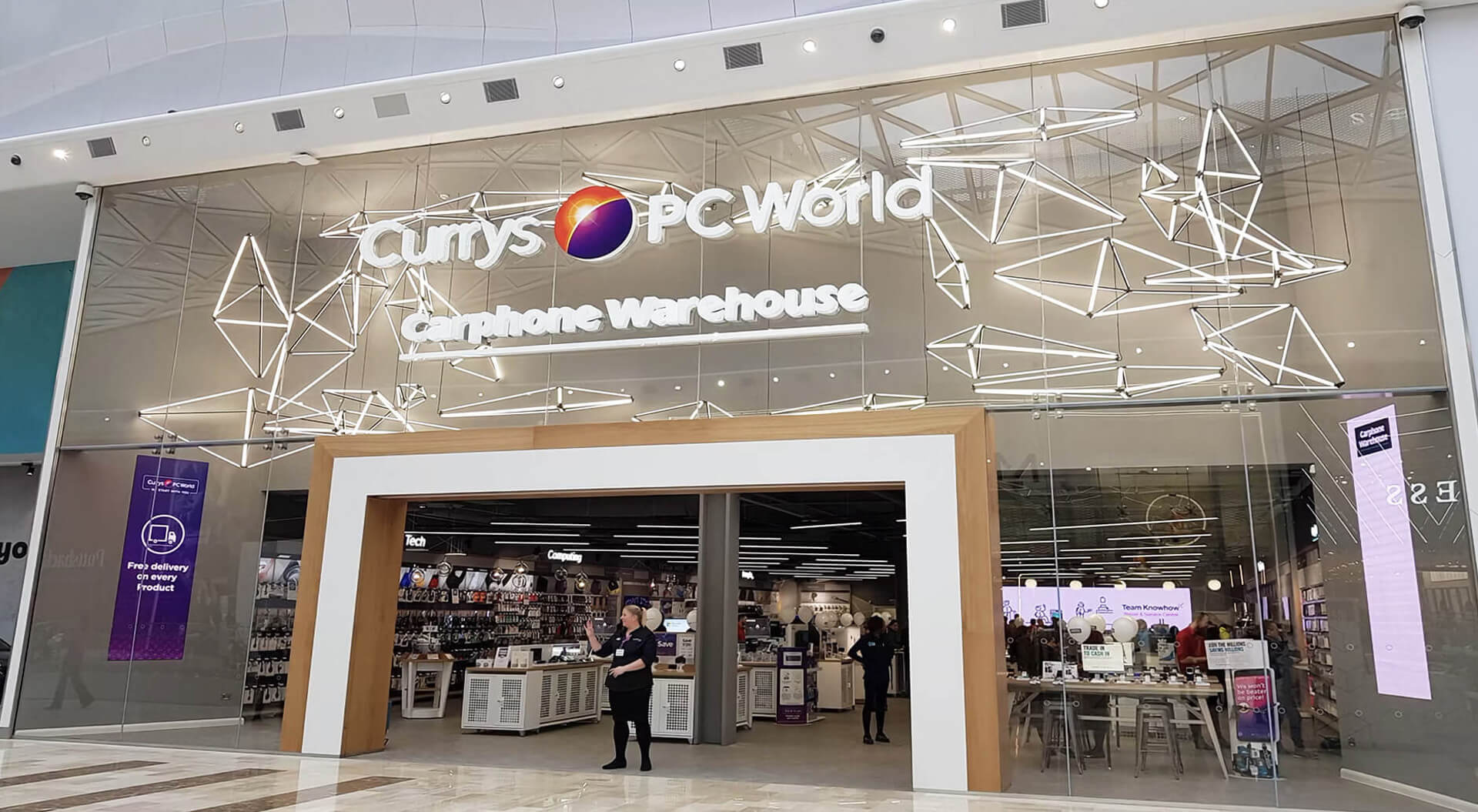
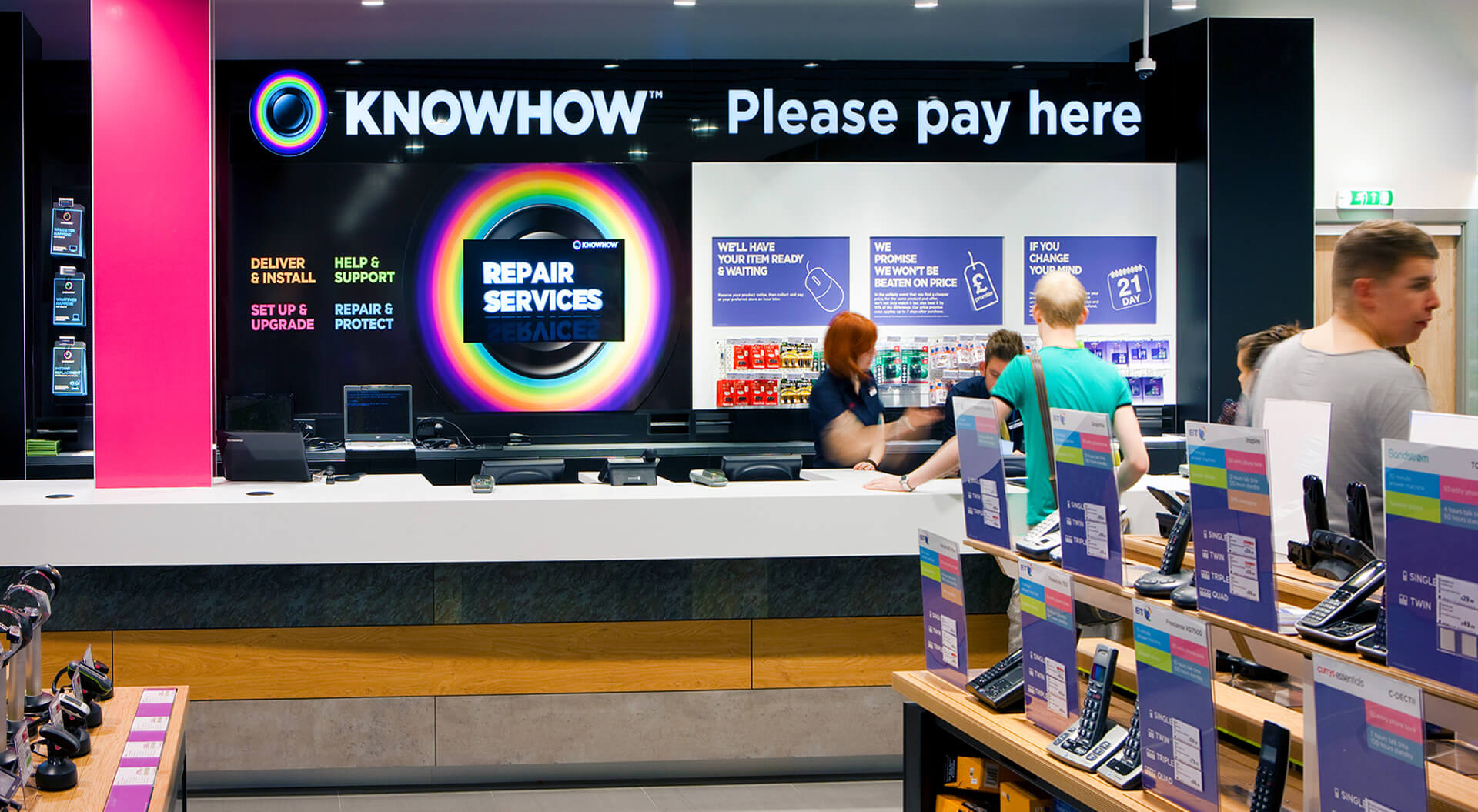
CampbellRigg's Currys work has included retail branding, POS communications, store design and customer-experience development.
The strategic lesson is that consistency across a network does not mean identical stores.
Destination stores can support broader ranges, demonstrations and specialist services. Urban and mall environments can use more curated assortments and faster customer journeys. Digital commerce can extend the range available to customers without requiring every product to occupy physical space.
Currys' current strategy reinforces this direction. The company reports that its customers value stores for seeing, touching and trying technology and for expert advice, while online provides convenience, range and availability.
How CampbellRigg helps
CampbellRigg brings these requirements together into a format system.
Brand strategy defines the proposition. Format strategy establishes the role of each store. Customer-journey planning determines how customers should move through it. Merchandising defines how products and services should be presented. Design expresses the proposition physically. Digital integration connects the store to the wider commercial ecosystem.
The benefit is one joined-up retail strategy rather than separate brand, digital and store programmes.
M.Video: measurable commercial performance through store design
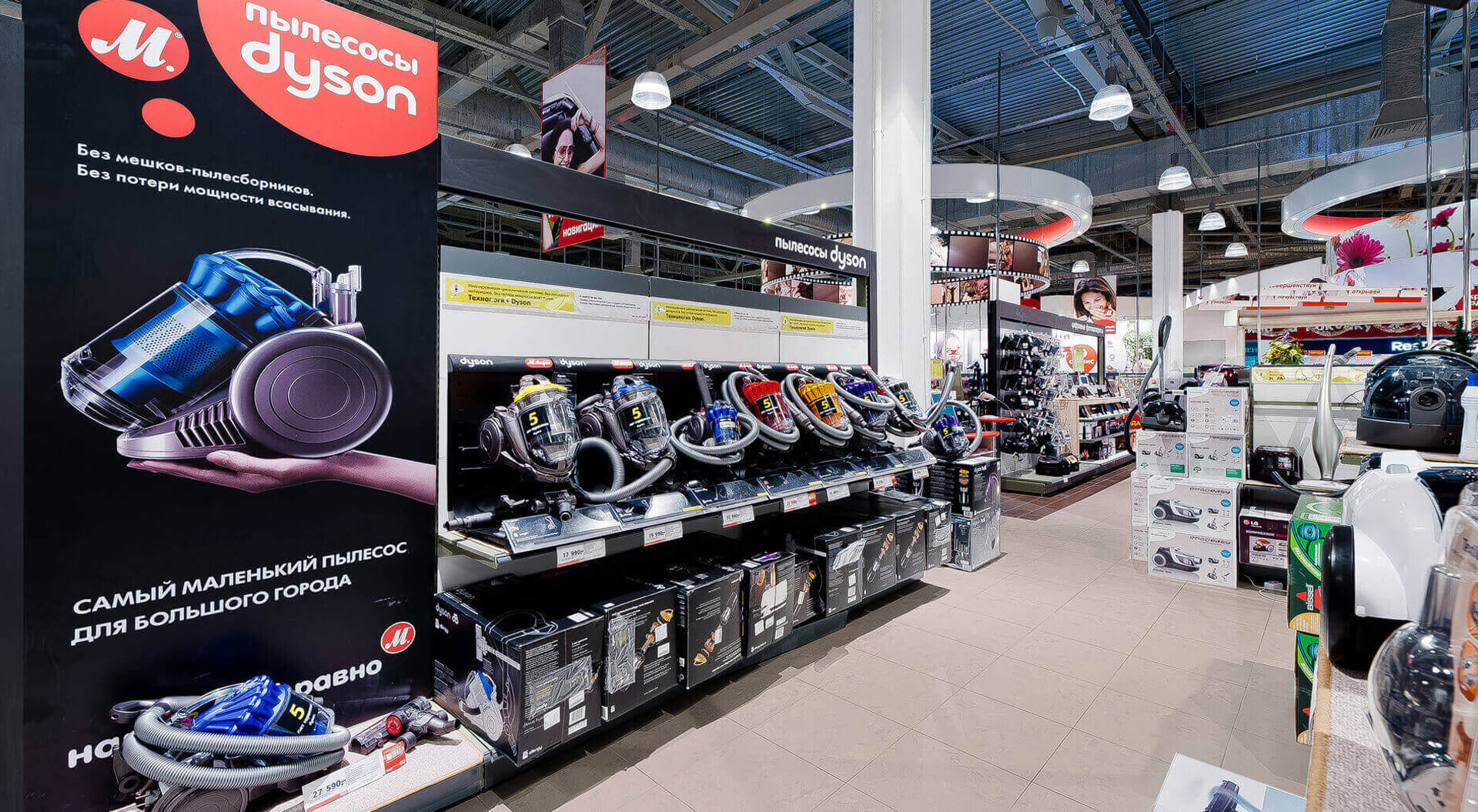
M.Video provides a particularly relevant example of how retail design can be connected to measurable performance.
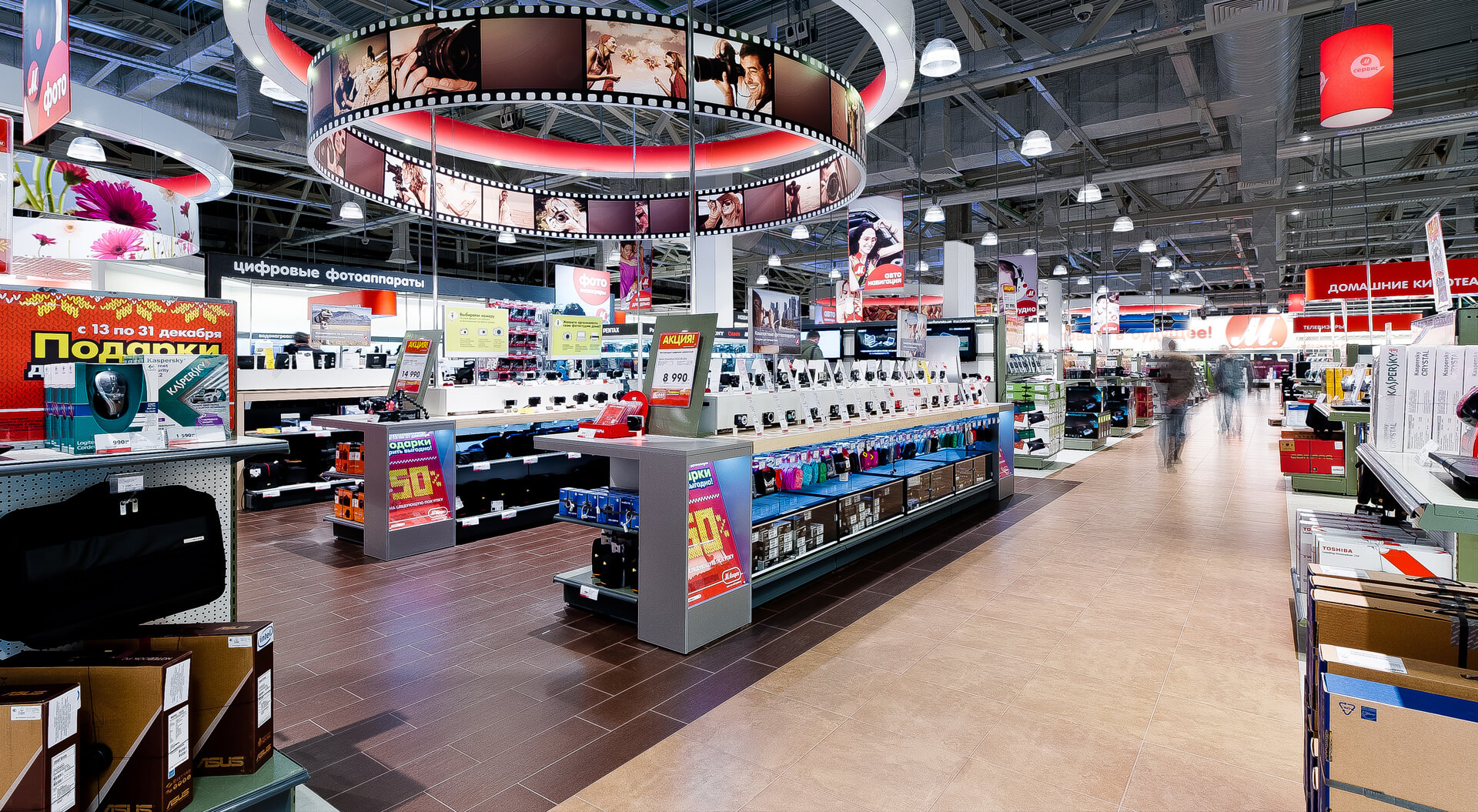
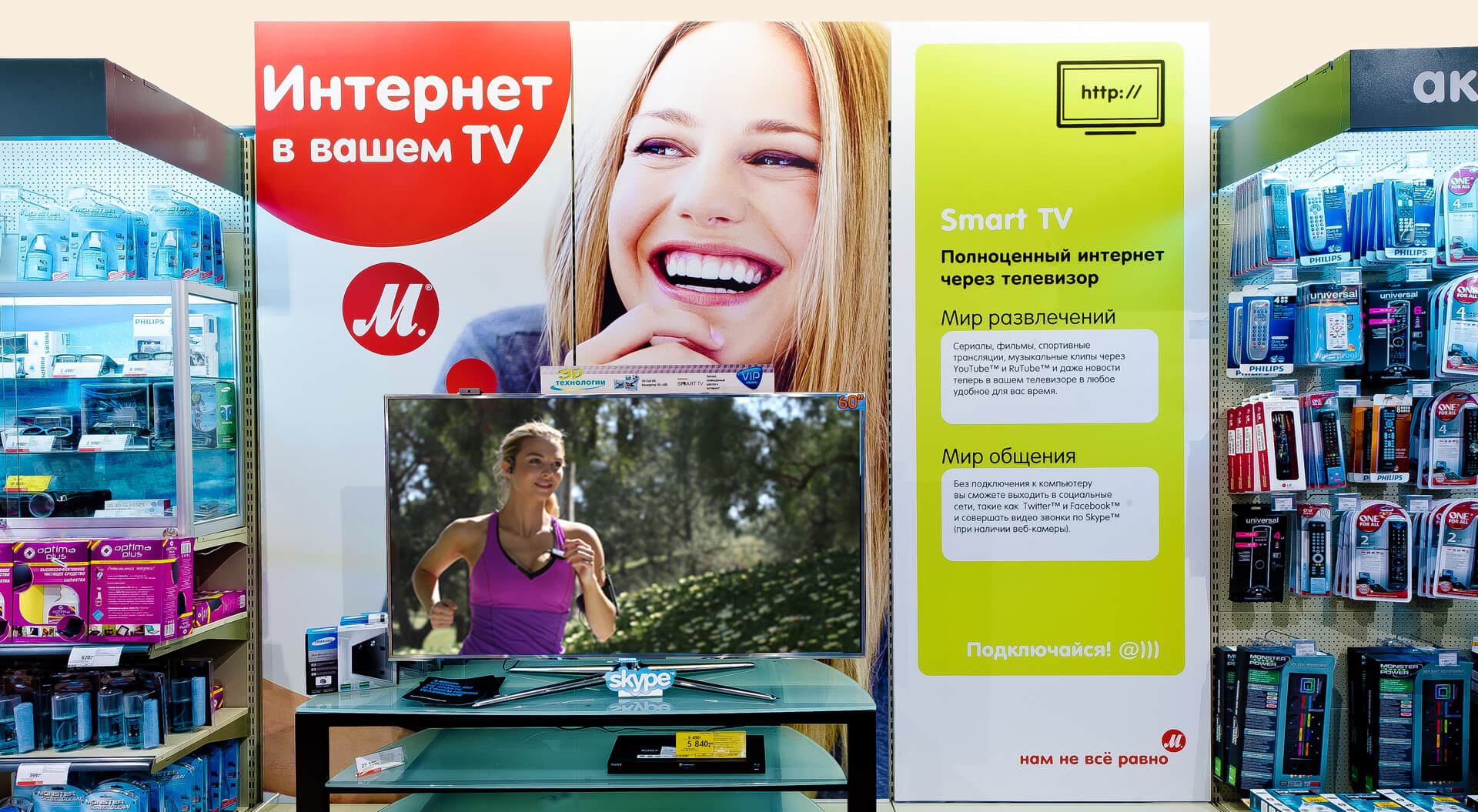
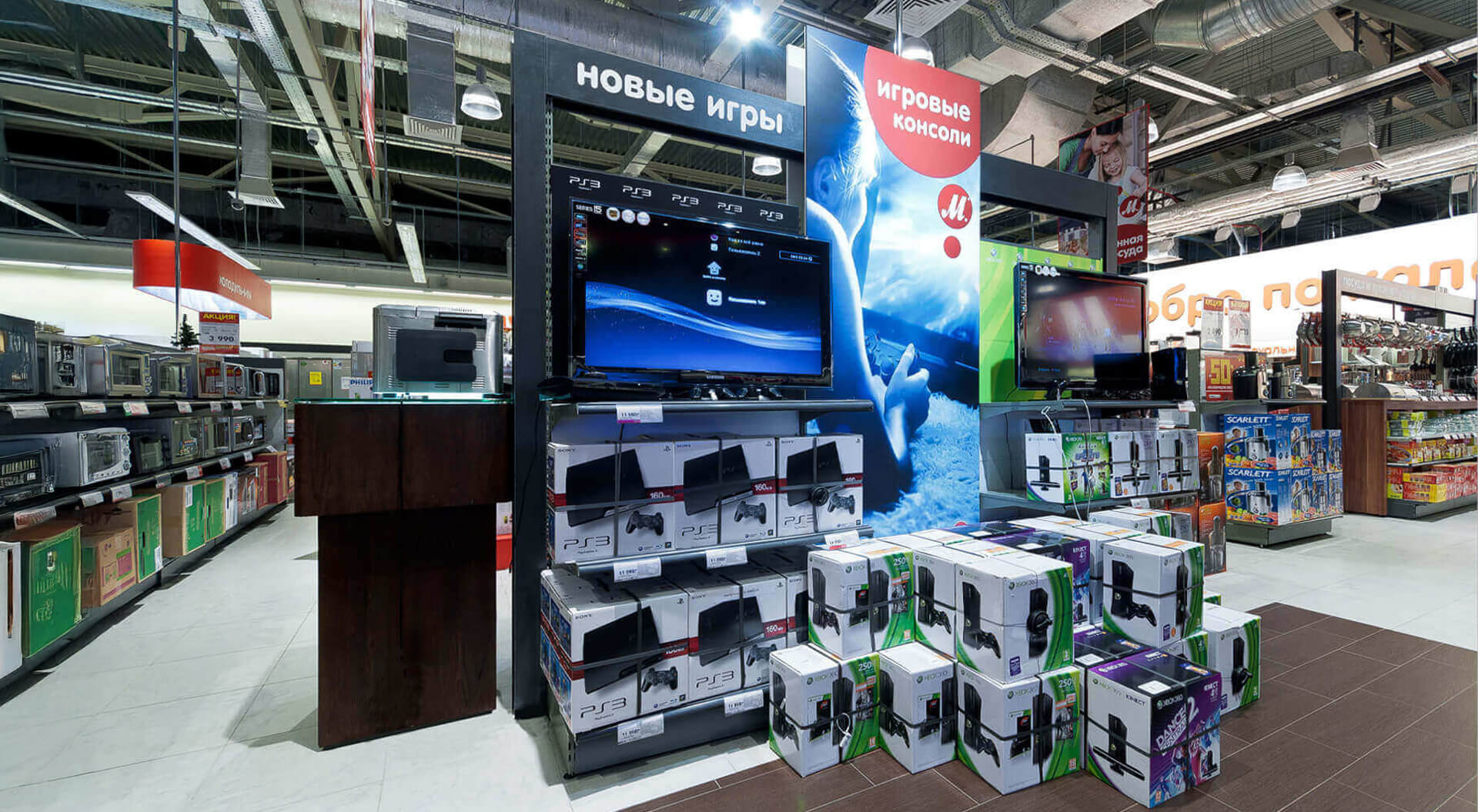
CampbellRigg's M.Video project generated a reported 32% increase in like-for-like sales in trial stores, followed by a refurbishment programme covering 280 stores. The company's published case material describes the concept as having been developed with CampbellRigg.
The significance of the project is not simply the visual transformation.
Store planning, customer circulation, category organisation and merchandising were treated as commercial variables. The concept was designed to make product categories easier to understand and navigate while establishing a stronger technology destination.
The subsequent rollout demonstrates the second management requirement: a successful retail concept must be capable of replication.
A concept that works in one store but cannot be adapted efficiently across an estate has limited strategic value.
Build a scalable technology retail format system
The strongest consumer electronics estates are unlikely to depend on one universal store format.
They require a portfolio of formats, each with a defined commercial role.
- Mega stores can create destinations for discovery, expertise and extensive product experience.
- Urban stores can deliver convenience, proximity and fulfilment.
- Compact formats can extend physical reach while digital commerce expands the available assortment.
- Omnichannel systems can connect inventory, customer information and fulfilment.
- Merchandising can simplify complex purchasing decisions.
And commercial measurement can establish whether physical investment is producing sufficient value.
How CampbellRigg helps
CampbellRigg connects these disciplines rather than treating them as separate design commissions.
Brand auditing establishes how the existing proposition is perceived and expressed. Strategy defines the desired market position. Format planning determines how the retail estate should respond. The design brief converts that strategy into practical requirements for customer experience, store planning, identity, merchandising and implementation.
The benefit management receives is one strategic direction linking brand decisions to a scalable physical retail network.
That is the difference between designing another store and developing a retail format system capable of supporting growth.

From retail concept to network rollout
The commercial opportunity for a technology retailer is therefore larger than a refurbishment programme.
It is the opportunity to establish a repeatable retail operating environment in which brand, space, product, digital commerce, fulfilment and customer service reinforce one another.
CampbellRigg can support the process from initial audit and strategic definition through format planning, brand development, customer-journey design, retail architecture, interior design, visual merchandising, digital experience and rollout.
The objective is straightforward:
Create a technology retail network that is scalable, measurable and commercially effective, across every format and every market.
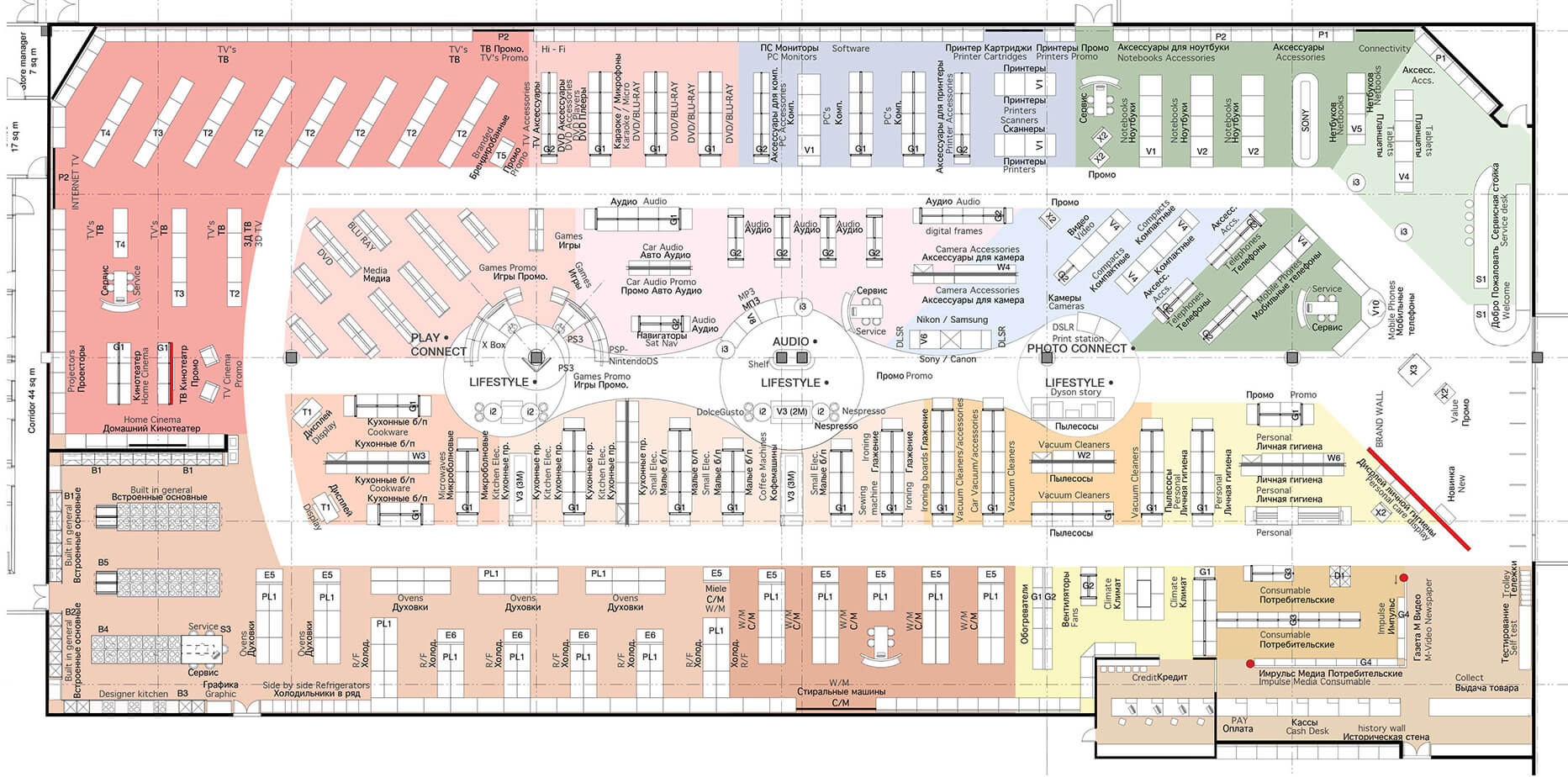
Above: M.Video’s store format planning - Below: The plan illustrates customer circulation.
Transform your retail network from a collection of stores into a scalable commercial system
The strategic question for technology retail management is no longer whether physical stores still matter.
It is how effectively the physical estate is contributing to the wider business.
The answer lies in designing formats around customer missions, commercial roles and measurable objectives. Then we build a system capable of adapting those principles across different locations and markets.
CampbellRigg helps technology retailers make that transition: from individual store projects to scalable retail strategy; from aesthetic investment to measurable commercial performance; and from disconnected physical and digital channels to one coherent customer proposition.
Discuss your retail network, format strategy or next-generation store programme with CampbellRigg.

Why CampbellRigg
Cost-Effective Excellence
Commercially focused solutions designed to deliver strong value without compromising strategic thinking, creativity or execution.
Rapid Execution
An agile multidisciplinary team capable of moving from strategic definition and design brief to implementation efficiently.
Multidisciplinary Expertise
Brand strategists, architects, interior designers and graphic designers working together so that strategy, identity and physical experience remain aligned.
Global Reach, Local Insight
With successful projects across Europe, the Middle East and Asia, CampbellRigg combines international experience with understanding of local markets and customer behaviour.
Scalable Project Delivery
From flagship technology stores and urban networks to shopping-centre and compact formats, projects can be developed around the scale and rollout requirements of the estate.
Proven Track Record
Experience includes Currys and M.Video, with the M.Video concept demonstrating the potential relationship between shopper-led store planning, merchandising, sales performance and network rollout.
Full-Service Creative Capability
From brand audit, strategy and rebranding through retail design, customer experience, communications and rollout, CampbellRigg can connect the disciplines required to turn retail strategy into physical commercial performance.