


News and Views
Convenience Supermarket Design Trends 2027: Building High-Performance Retail Formats


Convenience Supermarket Design Trends 2027: Building High-Performance Retail Formats
Convenience supermarket design is entering a more commercially demanding phase. Proximity and speed remain fundamental, but they are no longer enough to differentiate a retail network. Customers increasingly expect convenience stores to combine clear value, fresh food, meal solutions, frictionless shopping, digital connectivity and local relevance within highly efficient footprints.
For supermarket management, the challenge is therefore larger than redesigning individual stores. It is how to create a repeatable convenience retail format that can respond to different locations while maintaining brand consistency, operational efficiency and measurable commercial performance.
This is the critical distinction between convenience supermarket design and simply creating a smaller supermarket.
Convenience format strategy is about designing a repeatable network model around high-frequency shopping missions, constrained footprints and local catchments. The objective is to determine what the format needs to achieve commercially, how customers will use it, which elements should remain consistent across the estate and where controlled local adaptation is required.
CampbellRigg helps supermarket management connect retail strategy, brand positioning, customer experience, store planning, merchandising and implementation to create scalable convenience formats designed for network growth.
Convenience supermarket design is a network strategy, not a smaller-store exercise
A conventional approach can begin with a simple question: How can we fit the supermarket proposition into a smaller footprint?
A stronger management question is: What retail format should we create for high-frequency shopping missions, and how can that format be replicated effectively across different locations?
The difference is significant.
A convenience supermarket may serve customers buying a few essentials on the way home, collecting dinner, purchasing breakfast or lunch, buying fresh food, picking up a forgotten household item or combining a physical visit with digital fulfilment.
Those missions place different demands on:
- store size and format
- category selection
- space allocation
- customer circulation
- fresh-food and food-to-go zones
- technology
- service points
- replenishment
- brand communication
- local adaptation
- operational efficiency.
The format therefore needs to be designed around customer frequency, shopping mission, catchment and commercial productivity, rather than simply reduced in size.
How CampbellRigg helps
CampbellRigg begins by connecting these disciplines rather than treating them as separate design commissions.
Brand auditing establishes how the existing proposition is perceived and expressed. Strategy defines the desired market position. Customer and catchment analysis identifies the principal shopping missions. Format strategy then translates those requirements into practical parameters for store planning, customer experience, identity, merchandising and implementation.
The management benefit is a single strategic direction linking brand decisions to the physical retail network, rather than a collection of disconnected design initiatives.
This also establishes a clearer basis for deciding which components should be standardised, which should be modular and which should respond to individual catchments.
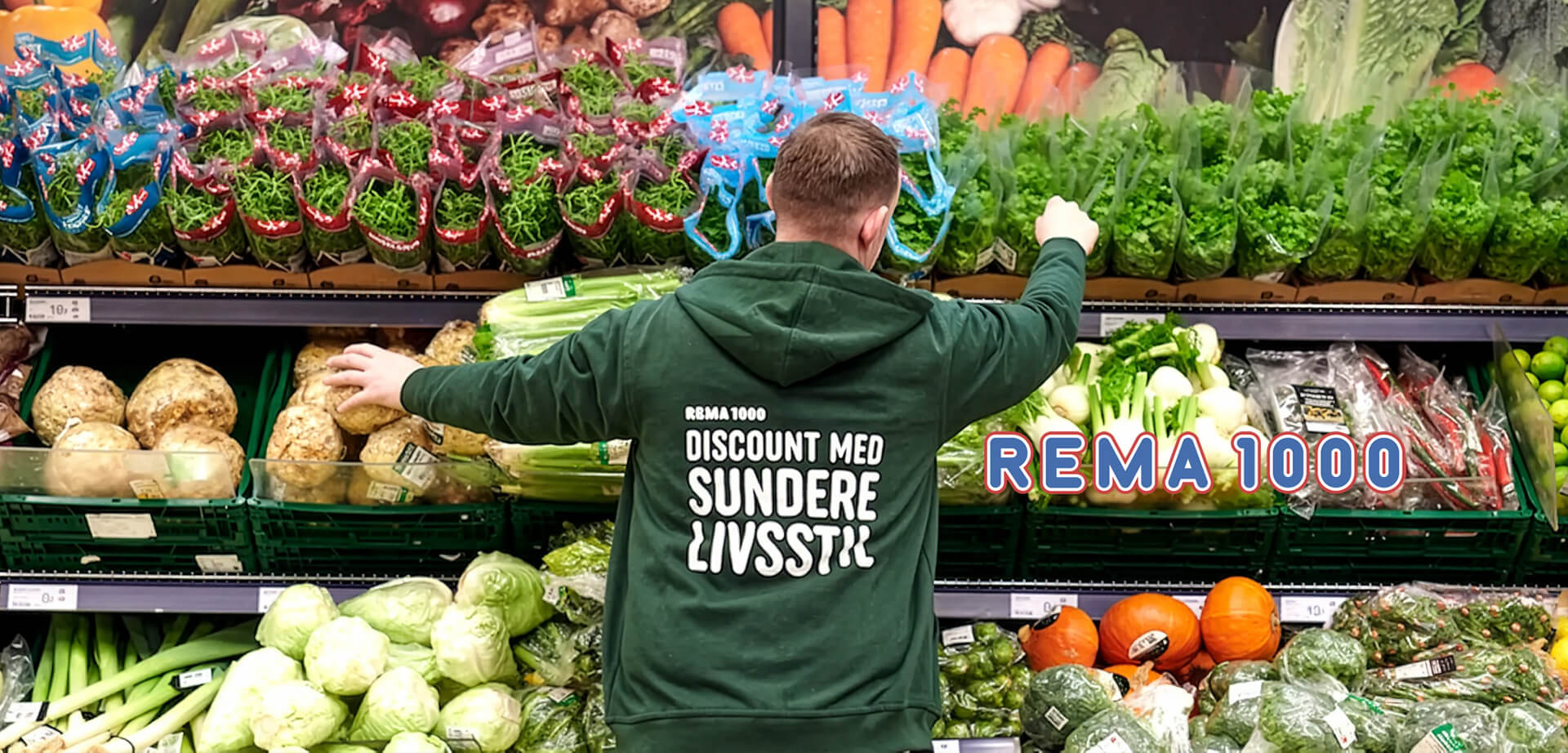
Convenience supermarket design vs urban supermarket design
Convenience and urban supermarket formats overlap, but they should not be treated as interchangeable.
Urban supermarket design addresses the broader challenge of making compact grocery environments more productive within dense urban locations. An urban supermarket may support weekly grocery shopping alongside fresh food, premium ranges, food-to-go and other shopping missions. CampbellRigg's urban-supermarket work addresses these specific spatial, operational and shopper requirements.
Convenience supermarket design has a more specific strategic emphasis.
It is concerned with high-frequency, mission-led purchasing, immediate fulfilment, constrained footprints, local catchments and repeatable network deployment.
That distinction matters commercially as well as for search positioning.
The objective is not simply to make a compact supermarket attractive. It is to create a format that can be deployed repeatedly, with enough flexibility to respond to different locations without requiring management to reinvent the proposition at every site.
Convenience format strategy therefore owns the repeatable network model; urban supermarket strategy owns the wider challenge of compact urban grocery environments.
From proximity to proposition: what is changing in convenience retail?
Convenience retail has traditionally competed on three fundamental advantages:
location, speed and immediate availability.
Those advantages remain important, but they are increasingly shared by competing supermarket formats, discounters, forecourts, rapid-delivery services and digitally enabled retailers.
The physical store therefore needs a stronger reason to visit.
Food-for-now, ready-to-eat ranges, coffee, fresh food, meal solutions, loyalty services and convenient fulfilment can strengthen the proposition. But every additional service also affects space, staffing, replenishment, equipment, customer flow and investment.
The management challenge is to determine which elements genuinely strengthen the proposition and which simply increase complexity.
How CampbellRigg helps
CampbellRigg assesses the relationship between the brand proposition, customer missions and commercial objectives before translating the findings into the physical format.
This can include:
- brand and proposition auditing
- customer and competitor analysis
- catchment and shopping-mission assessment
- convenience format strategy
- customer-journey planning
- store zoning
- retail identity
- merchandising
- signage and communications
- technology integration
- rollout planning.
The benefit is that customer experience becomes a commercial component of format strategy, rather than an aesthetic layer added after operational decisions have already been made.

Design around shopping missions, not departments
A convenience supermarket must make it easy for customers to complete different missions within a constrained footprint.
A commuter buying breakfast has different priorities from a parent purchasing an evening meal. A customer buying lunch may value speed and visibility, while a neighbourhood shopper may need fresh food, household essentials and meal solutions.
The store layout therefore needs to prioritise mission clarity.
Entry sightlines, category adjacencies, food-to-go, fresh food, impulse products, promotional areas, service points and checkout should work together rather than operate as isolated departments.
How CampbellRigg helps
CampbellRigg maps customer missions against the commercial objectives of the format.
We examine where customers enter, what they need to find quickly, which categories should encourage discovery, where food-for-now propositions should sit, how queues and collection points affect circulation and how the environment should reinforce the brand promise.
The resulting customer journey is translated into zoning, adjacencies, visual hierarchy, signage, merchandising and store-planning requirements.
The management benefit is a customer experience designed around commercial purpose rather than visual novelty.
.

CampbellRigg proof: Centra Good to Go
CampbellRigg's work for Musgrave's Centra demonstrates how brand, proposition, merchandising and physical planning can be integrated within a convenience format.
The “Good to Go” concept brought together sub-brand identity, store design, food merchandising and customer-flow planning. The proposition incorporated coffee, chilled convenience, ready-to-eat, hot food, produce, grocery, fresh meat and till points into a coordinated customer journey. CampbellRigg also developed a serve-over concept and supported the introduction of impulse and chilled food lines, fresh coffee and hot food.
The significance for management is the integration.
Brand, proposition, merchandising and physical planning were developed as parts of one convenience retail proposition rather than as separate creative commissions.
That is the role of convenience supermarket design at network level: make the format easier to understand, easier to operate and more commercially relevant to the customer mission.
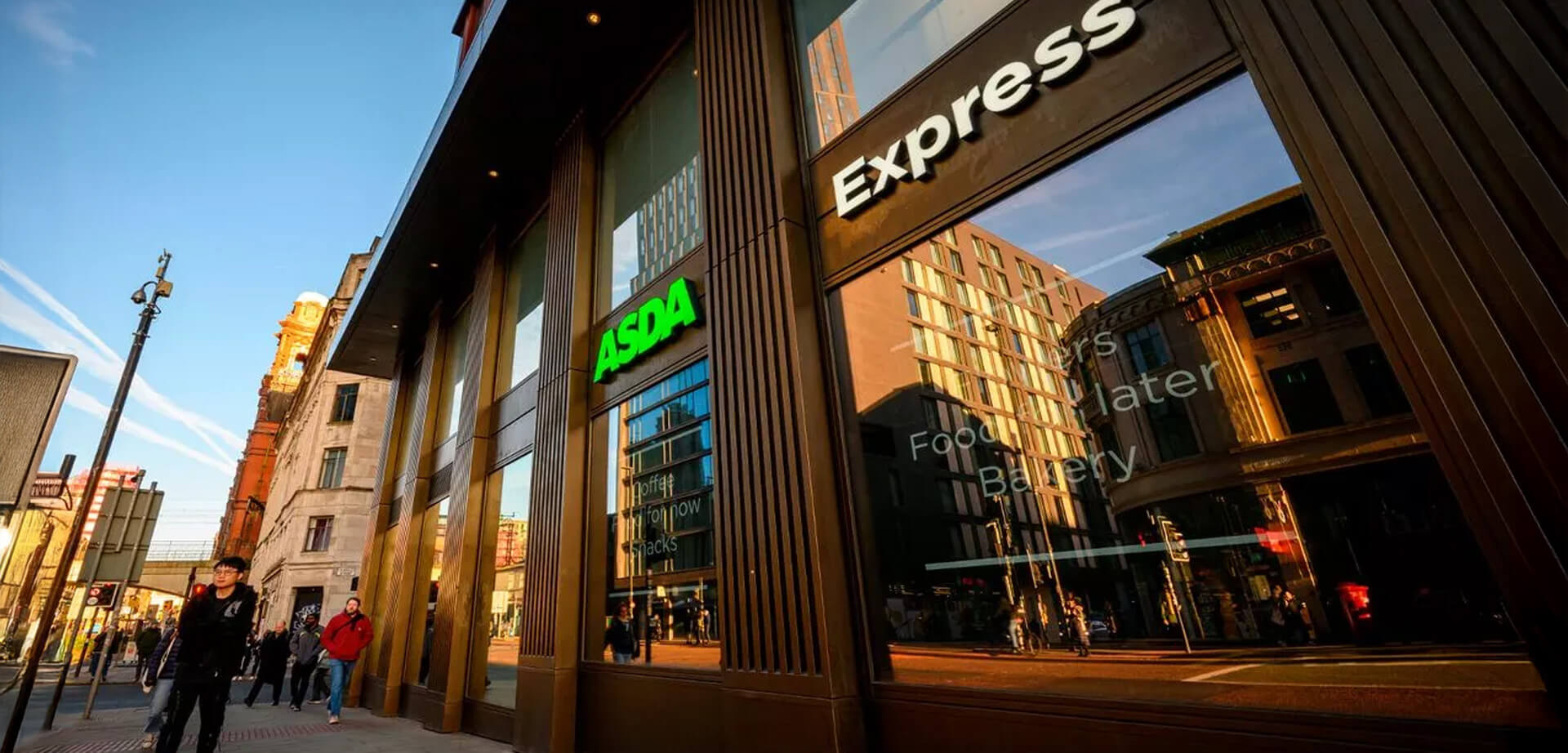
Hyper-local strategy must inform the format
A convenience supermarket serving commuters near a transport interchange has different requirements from one serving a residential neighbourhood.
An office-led location may require stronger breakfast, lunch and food-to-go propositions. A residential catchment may demand greater emphasis on meal solutions, fresh food and household essentials. A travel location may prioritise speed, visibility and immediate fulfilment.
Applying exactly the same format everywhere can therefore create inefficiency.
But excessive localisation can undermine brand consistency and increase rollout cost.
The management objective is controlled localisation.
How CampbellRigg helps
CampbellRigg uses catchment and customer-mission analysis to establish which elements of the proposition should adapt locally and which should remain consistent across the estate.
This can inform:
- product and category zoning
- format size
- customer journey
- food-to-go emphasis
- service points
- visual identity
- communications
- digital integration
- operational requirements.
The benefit is a format architecture that can flex to local demand without losing the recognition, efficiency and implementation discipline of the parent brand.
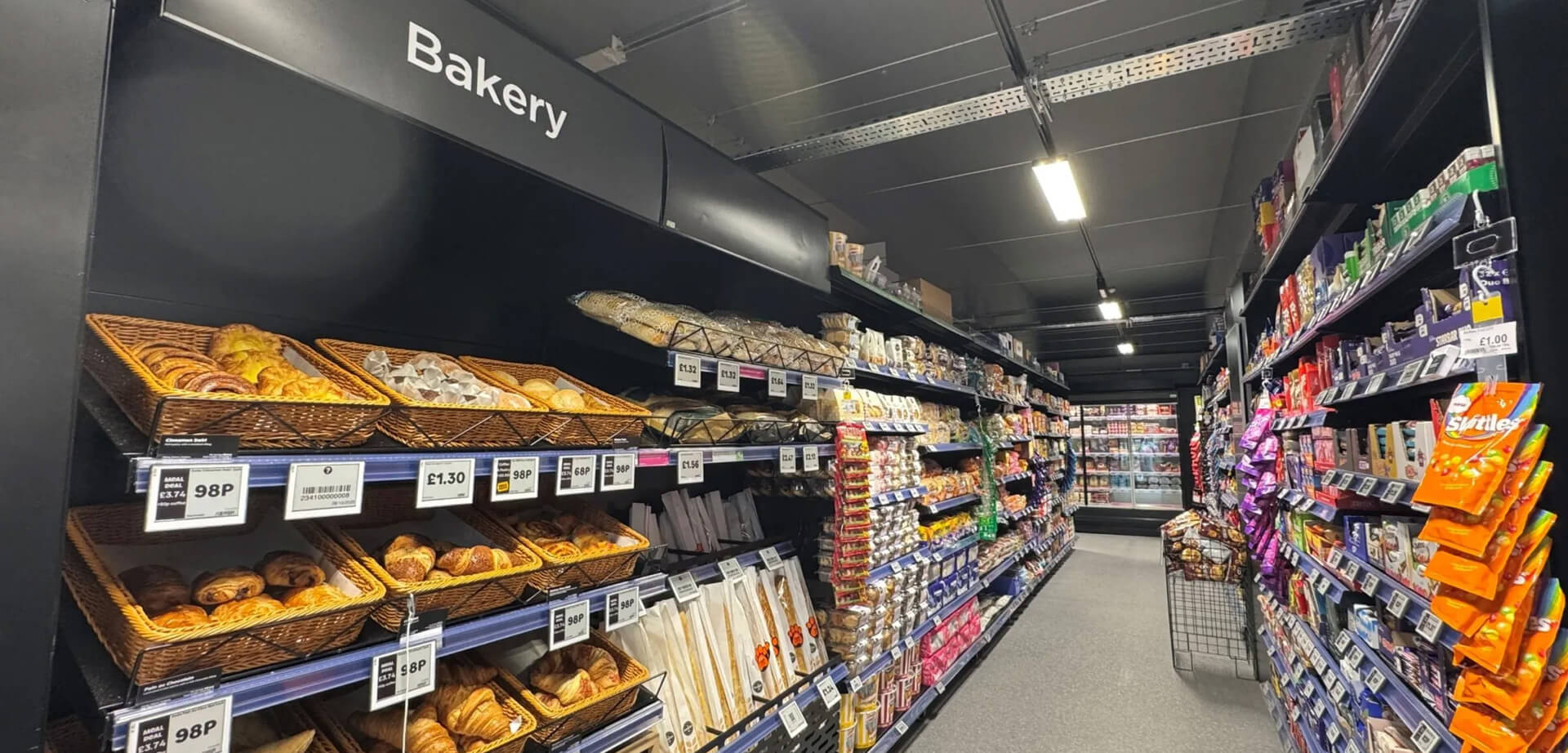
Experience-led convenience must remain commercially productive
Experience is becoming more important in convenience retail, but experience for its own sake is not a sufficient management objective.
The stronger question is:
Which experiences increase relevance, encourage additional purchase, improve loyalty or make the shopping journey easier without creating unnecessary operational complexity?
Fresh food, coffee, food-to-go and ready-to-eat propositions can create reasons to visit beyond basic replenishment. However, these propositions require appropriate space, equipment, visibility, replenishment and customer flow.
How CampbellRigg helps
CampbellRigg examines the relationship between category strategy, customer journey and physical space.
Rather than treating food-to-go, fresh food or coffee as isolated departments, we assess their role within the wider customer proposition.
Store planning can then establish appropriate zones, adjacencies, sightlines and communication priorities.
The benefit is a convenience environment where higher-frequency and higher-value propositions receive the spatial prominence necessary to support their commercial role without compromising everyday shopping efficiency.
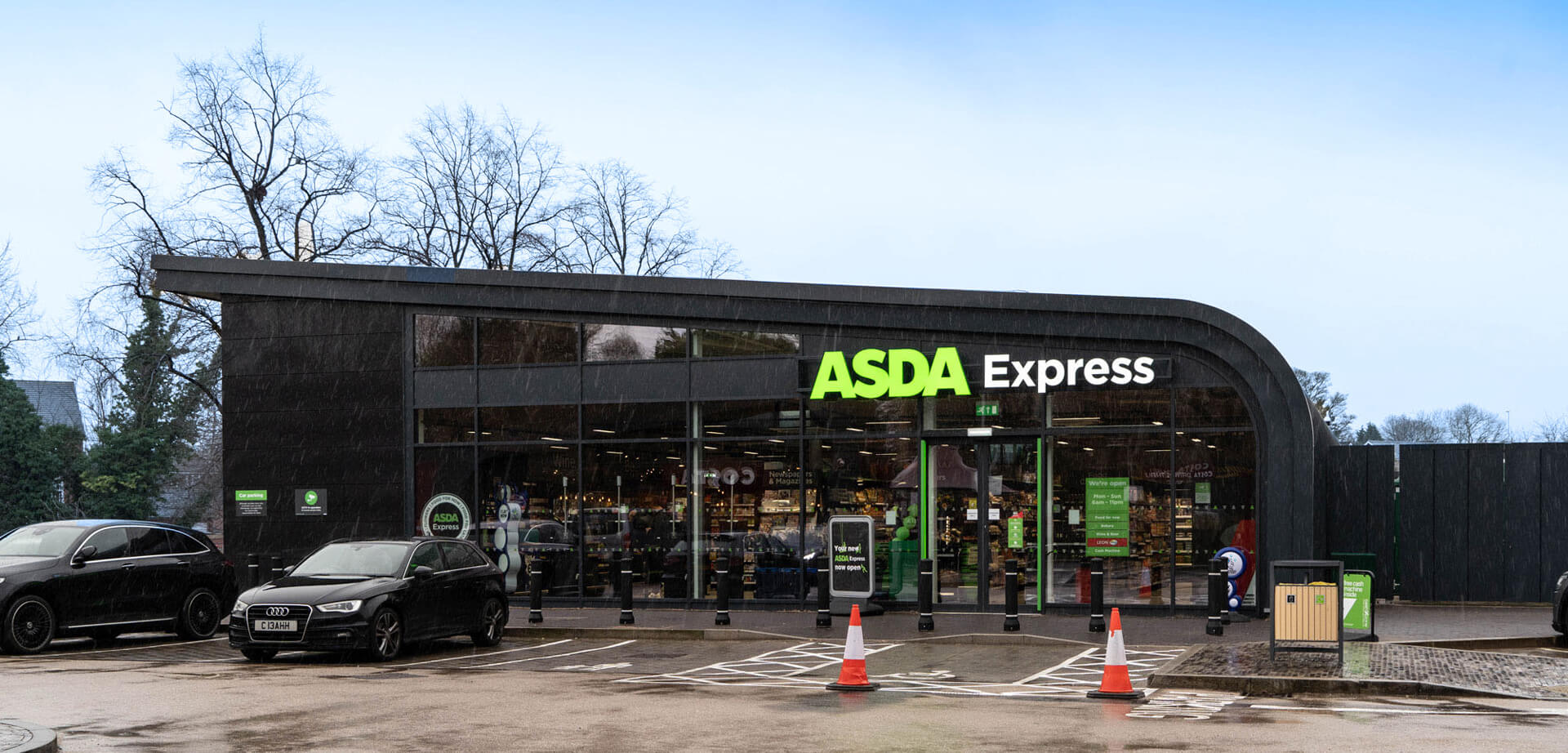
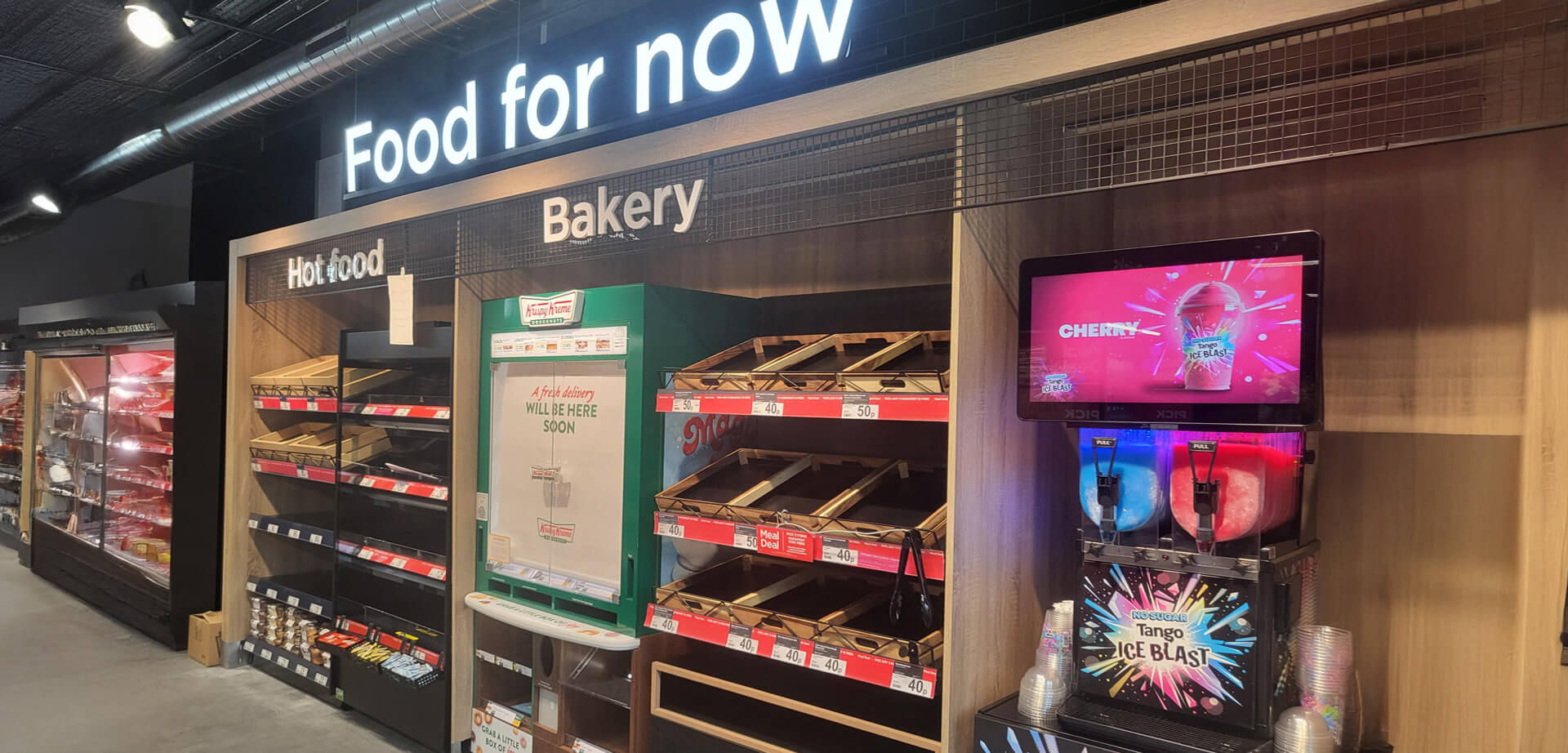
International benchmark: Asda Express
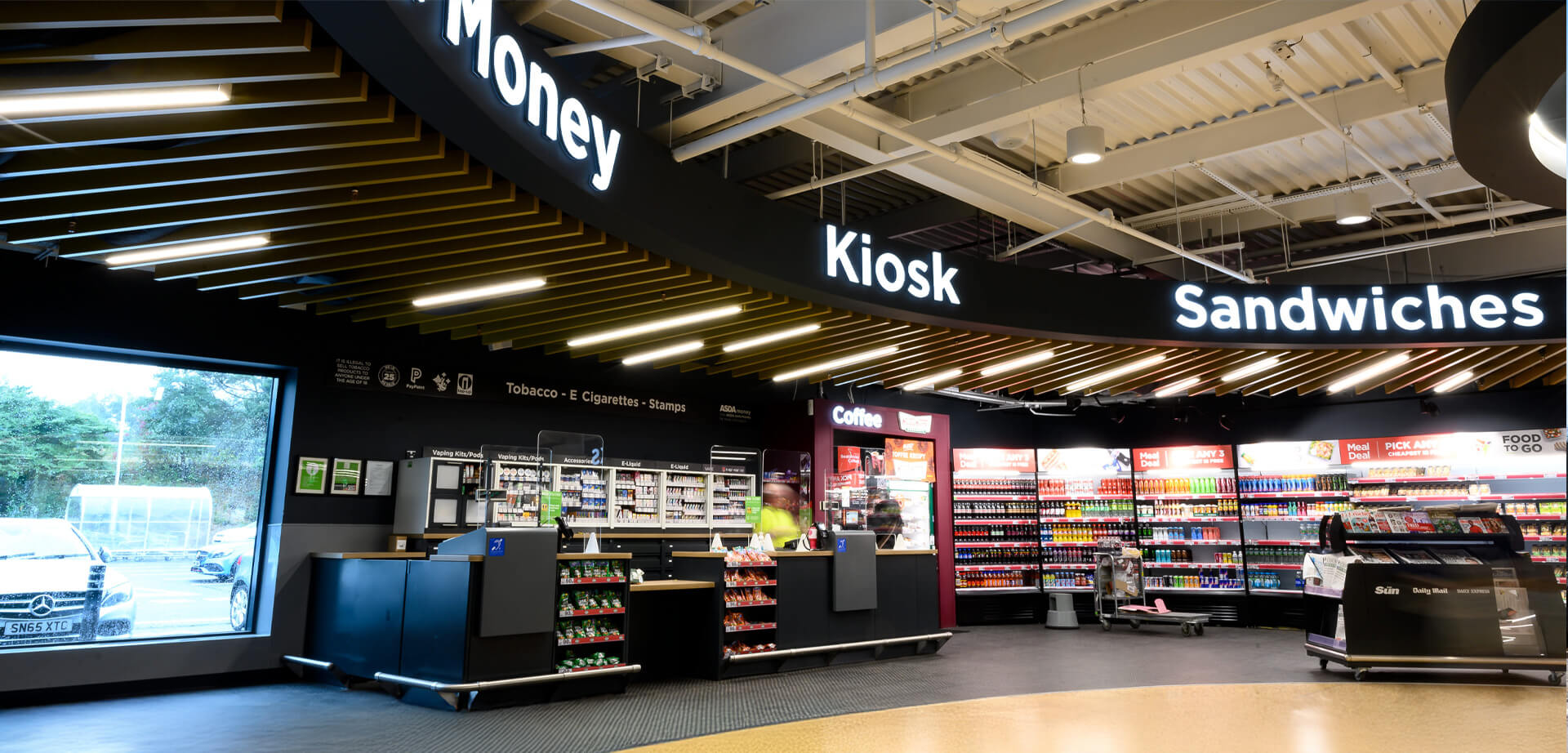
Asda Express illustrates the importance of adapting a supermarket proposition to smaller, high-frequency locations.
For management, the issue is not simply the appearance of an individual convenience store. It is the ability to translate a wider supermarket brand into formats appropriate to different catchments, footprints and shopping missions.
This becomes increasingly important as supermarket groups operate portfolios containing large stores, neighbourhood supermarkets, convenience formats, forecourts and other compact propositions.
Flexible formats are essential to network growth
The economics of a compact convenience store cannot simply be treated as a smaller version of a conventional supermarket.
The format requires its own rules for:
- space allocation
- circulation
- product density
- services
- equipment
- signage
- customer experience
- replenishment
- fulfilment.
A scalable format therefore needs a repeatable design language and operational framework, while allowing controlled variation according to footprint and catchment.
The real test of a convenience concept is not whether it works in one pilot store.
It is whether management can deploy it across dozens or hundreds of locations without excessive redesign, cost or operational disruption.
How CampbellRigg helps
CampbellRigg converts the strategic proposition into a format framework.
We establish principles for:
- store planning
- customer journey
- zoning
- category relationships
- identity application
- communications
- fixtures and materials
- key customer touchpoints
- implementation.
Where appropriate, the design brief establishes rules for multiple formats rather than one prototype.
The benefit is greater control over rollout cost, implementation consistency, brand recognition and future adaptation.
Management can therefore move from asking: "Does this individual store work?"
to: "Can this format be deployed effectively across the network?"
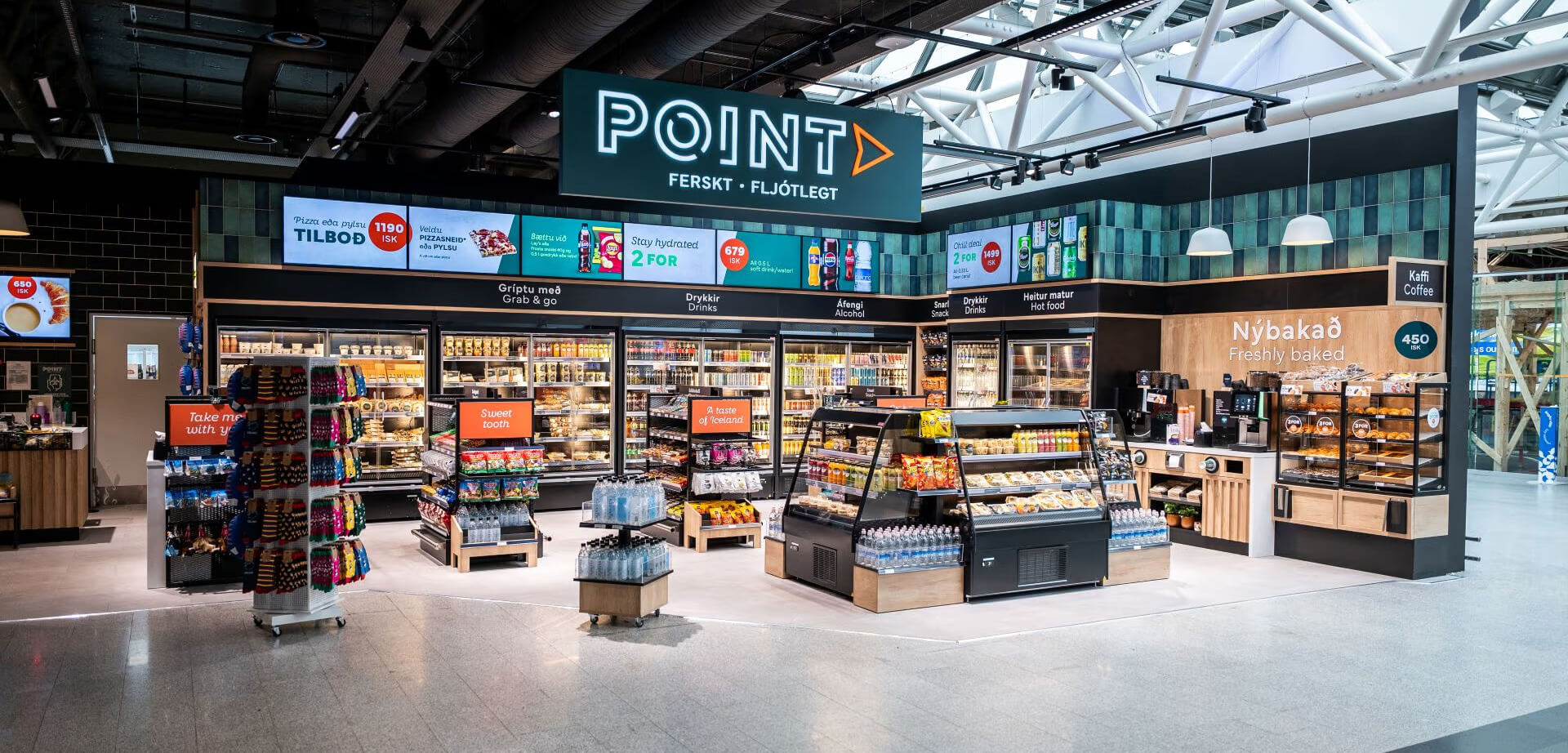
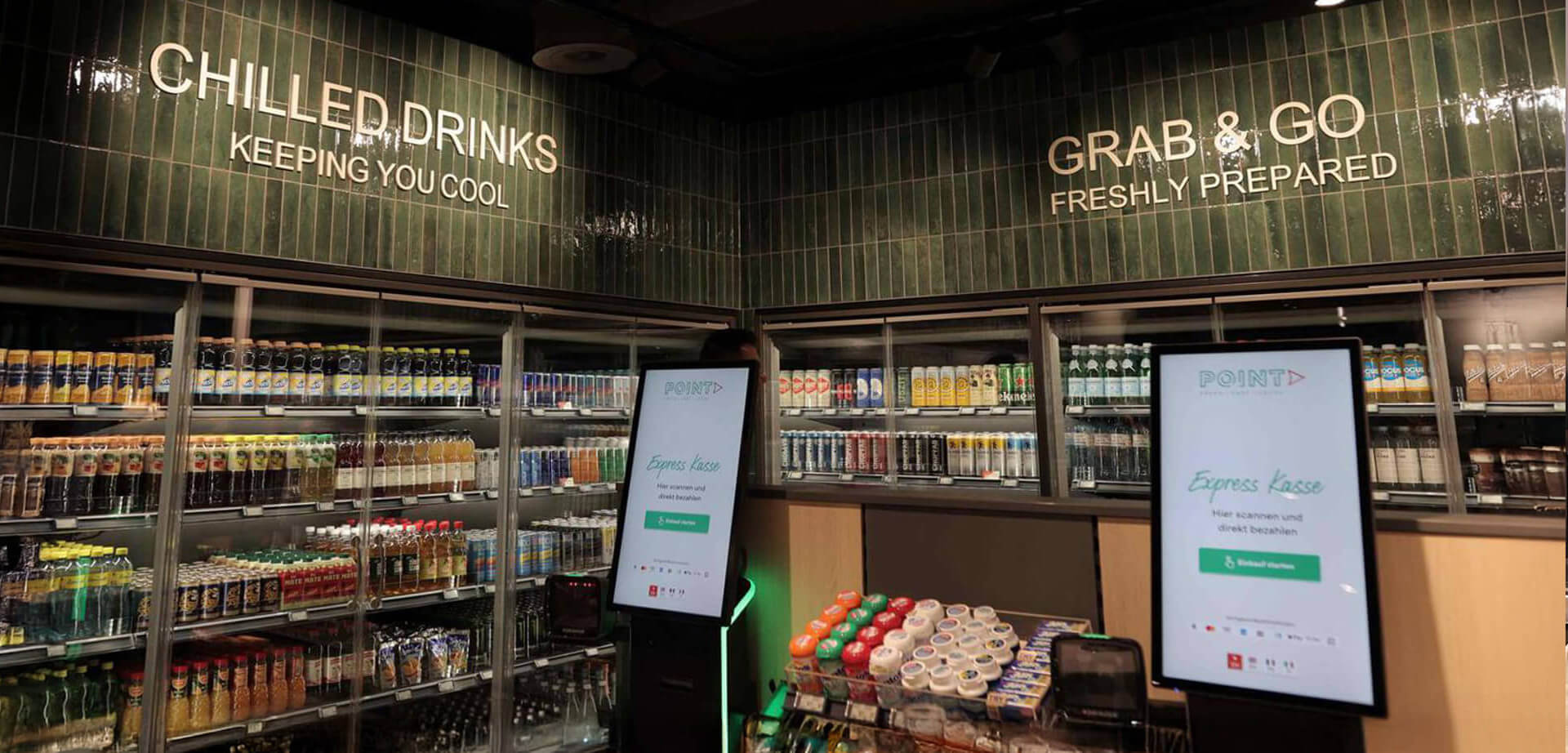
International benchmark: Point
Point demonstrates how a convenience proposition can be tailored to travel environments where speed, visibility and immediate purchasing decisions are particularly important.
Transport-led locations require different customer journeys from residential convenience stores. The benchmark reinforces the strategic importance of designing around the shopping mission and location, rather than applying one generic convenience-store model.
Fresh food and food-to-go can reshape convenience economics
Fresh food, ready-to-eat and food-to-go categories can create additional reasons to visit and support higher-frequency shopping missions.
But these categories also require more sophisticated planning.
Fresh food needs visibility, replenishment and appropriate equipment. Food-to-go can create queue and dwell requirements. Coffee and hospitality zones influence circulation. Ready-to-eat products may need to respond to particular dayparts and customer missions.
The opportunity therefore depends on how these categories are integrated into the format.
How CampbellRigg helps
CampbellRigg examines the relationship between category strategy, customer journey and physical space.
We assess:
- where fresh food should be positioned
- how food-to-go connects with entry and circulation
- which products should be immediately visible
- how impulse opportunities can support the mission
- where queues and service points should operate
- how replenishment can occur without disrupting customers.
The result is a format where high-frequency propositions receive the spatial prominence necessary to support their commercial role without compromising everyday shopping efficiency.
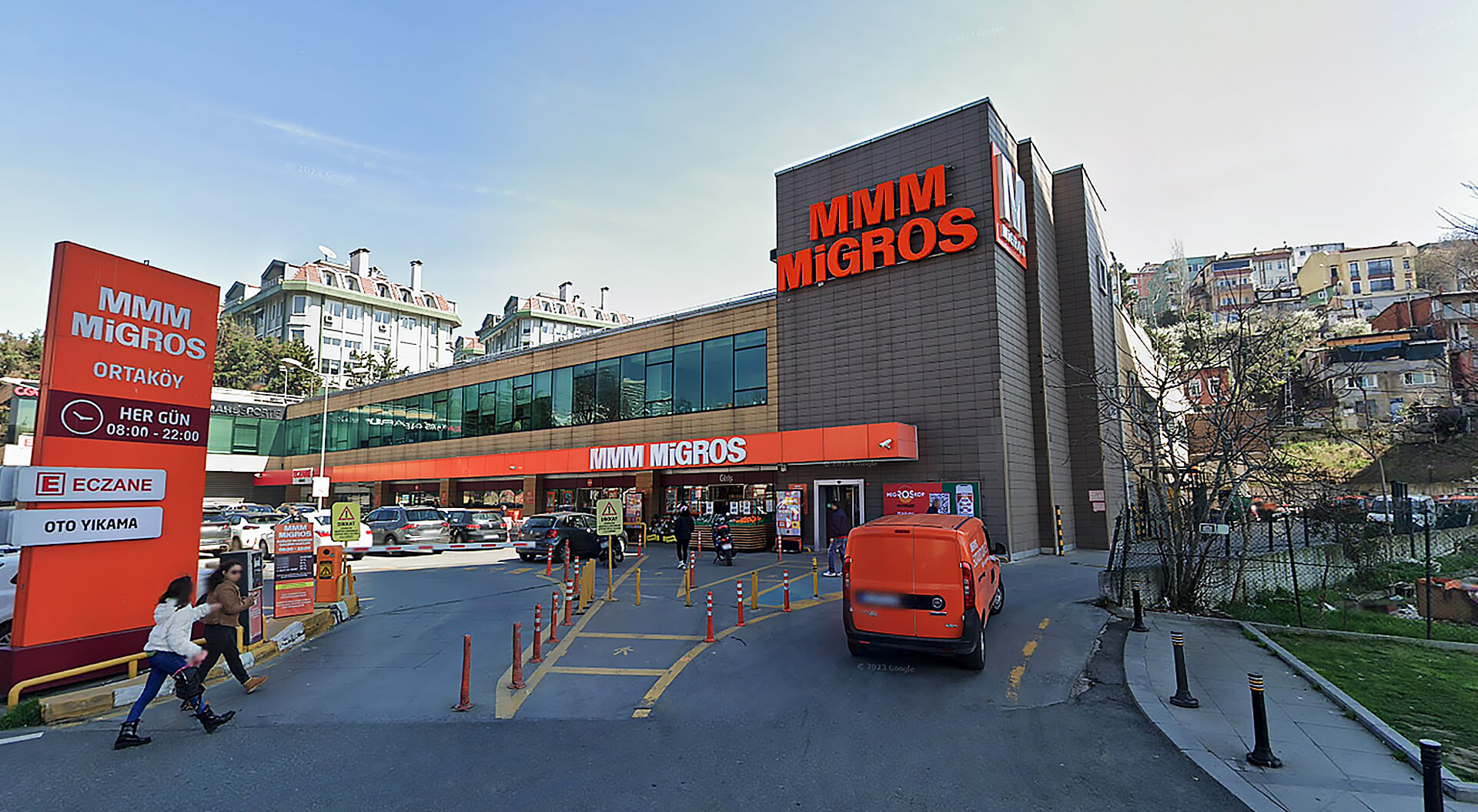
CampbellRigg proof: Migros Turkey
CampbellRigg's work with Migros Turkey provides evidence of this network-level approach.
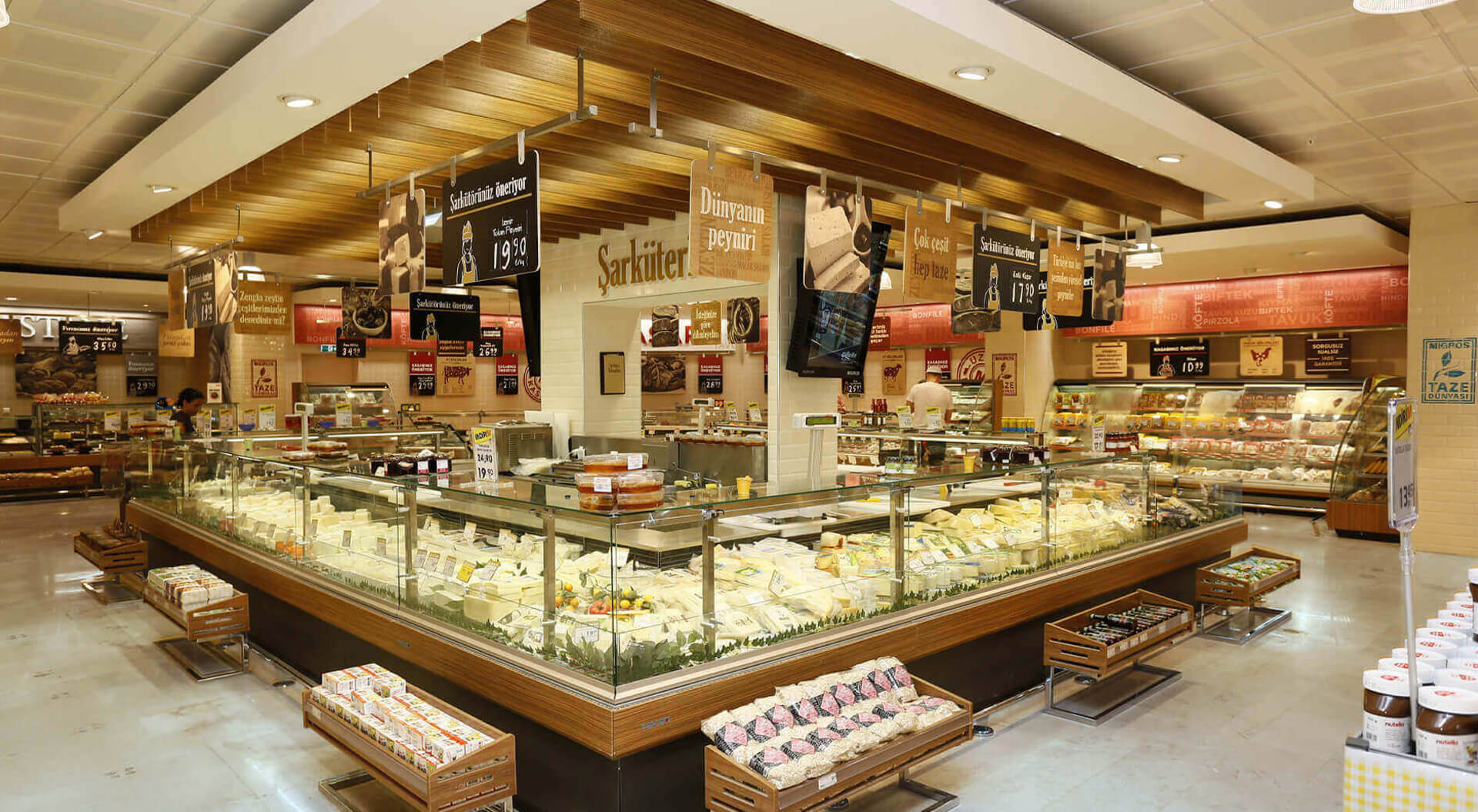
The project integrated multi-format interior design, visual merchandising, brand communication and signage within Migros's supermarket network. The initial Ortaköy, Istanbul store recorded a reported 25% sales increase, and the concept was subsequently implemented across 80 locations in Istanbul.
For management, the important lesson is not the percentage in isolation. It is the relationship between strategic retail design, customer experience, brand consistency and network implementation.
A successful format concept creates value when it can move beyond the prototype and become a repeatable operating model.
Frictionless technology should remove barriers, not dominate the store
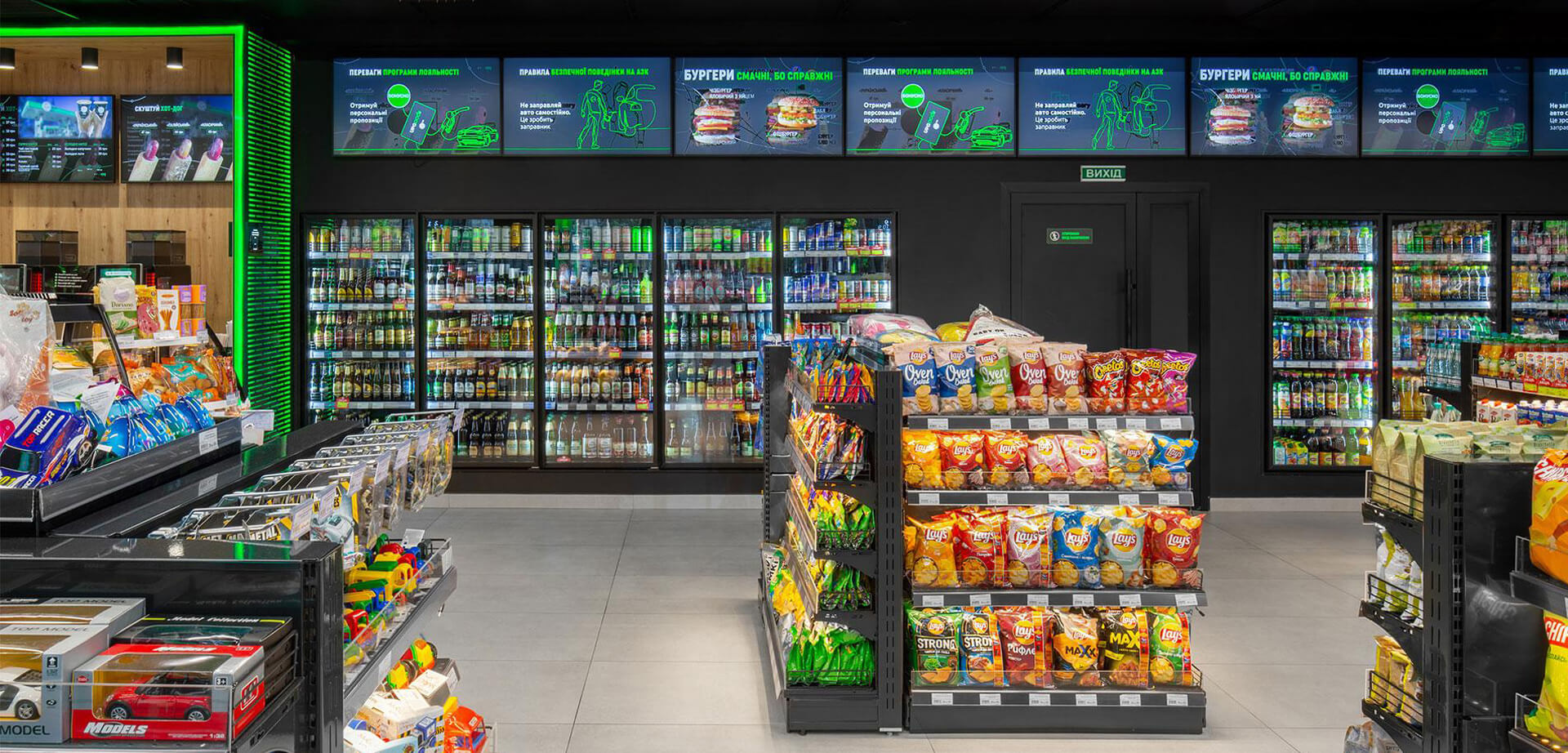
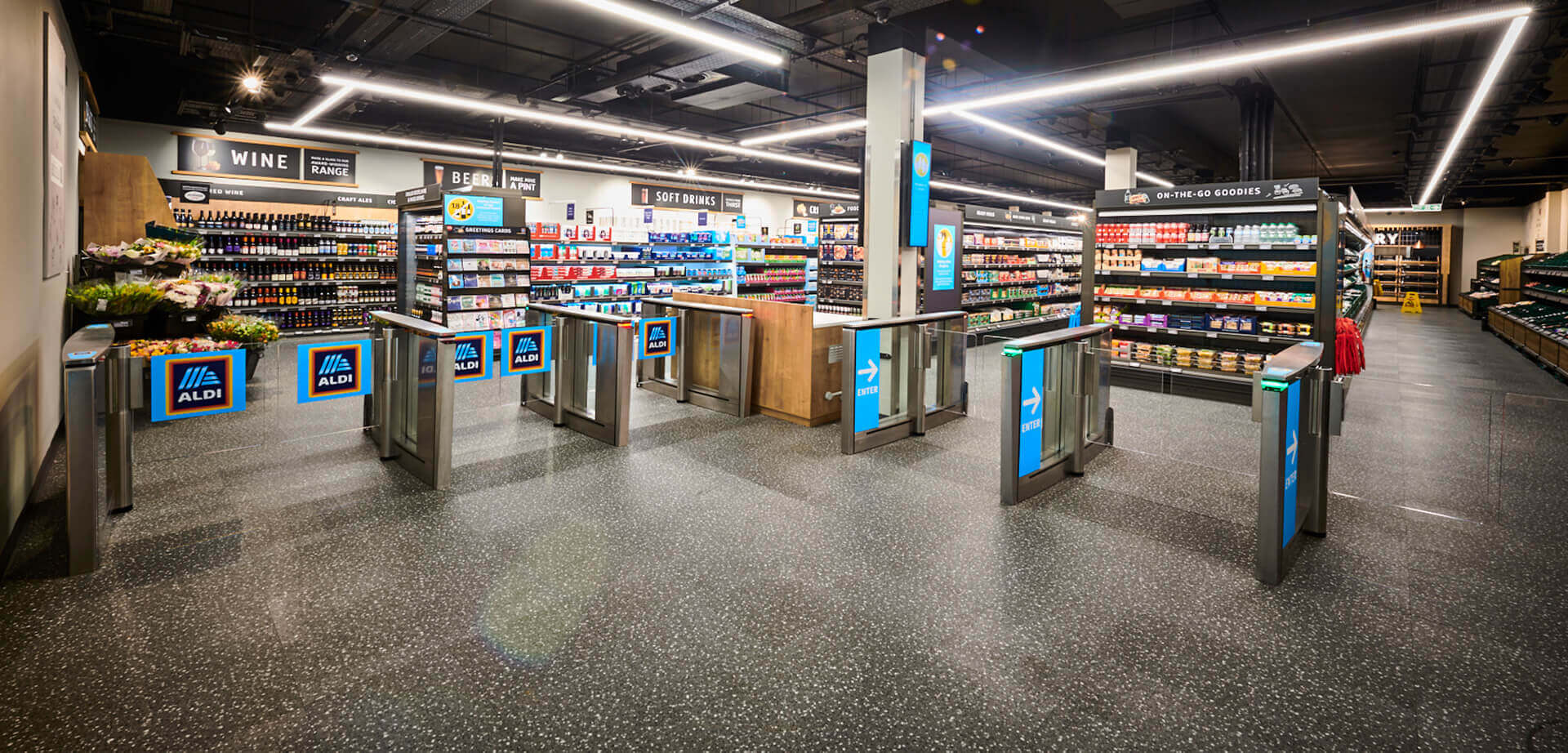
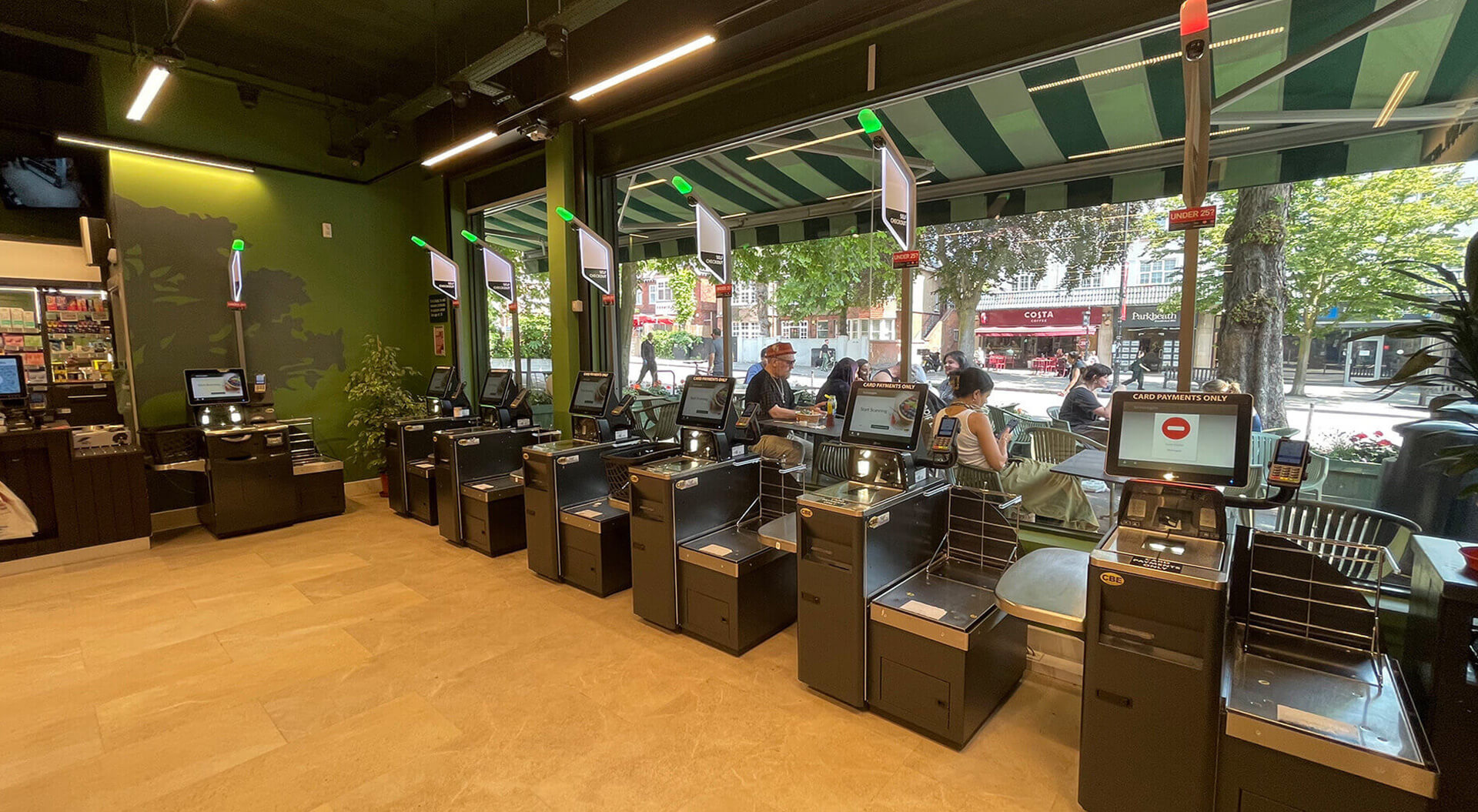
Self-checkout, contactless payment, digital loyalty, electronic shelf-edge communication, click-and-collect and connected services can reduce friction and improve operational efficiency.
But technology should solve a customer or operational problem.
A technology-led environment can become unnecessarily complicated if digital features are introduced without considering the physical customer journey.
How CampbellRigg helps
CampbellRigg considers technology as part of the customer-experience and operational design brief.
We establish where technology should:
- simplify the journey
- improve information
- increase product availability
- support fulfilment
- strengthen loyalty
- reduce friction.
The benefit is a digitally enabled convenience format in which technology supports the proposition rather than competing with it.
Supermarket branding must communicate value, relevance and trust
In a price-sensitive market, branding has a more important commercial role than simply creating recognition.
Customers need to understand value quickly. Private-label ranges, promotions, fresh-food credentials, sustainability messages and local relevance all compete for limited visual space.
The challenge is particularly acute in compact stores where communication must be clear without creating clutter.
How CampbellRigg helps
CampbellRigg connects brand positioning with the physical retail environment.
We assess the existing brand expression, establish the desired positioning and translate it into a practical retail identity across:
- signage
- graphics
- point-of-sale
- category communication
- navigation
- packaging
- key customer touchpoints
- digital interfaces.
The benefit is a stronger connection between what the supermarket promises and what customers experience.
Operational efficiency must be designed into the customer experience
A commercially effective convenience supermarket has to work for customers and staff simultaneously.
Poor back-of-house planning, inefficient replenishment, unclear service points, congested queues or poorly positioned equipment can undermine customer experience while increasing operating costs.
Operational planning therefore cannot be separated from customer experience design.
How CampbellRigg helps
CampbellRigg brings operational optimisation into the format and design brief, considering customer flow, staff movement, replenishment, service points, equipment, fulfilment and operational constraints alongside brand and experience requirements.
The benefit is a store designed around the realities of operating the business, not simply the appearance of the finished environment.
At network scale, this distinction becomes significant: small operational inefficiencies can multiply across an estate.
Benchmarking should identify transferable commercial principles
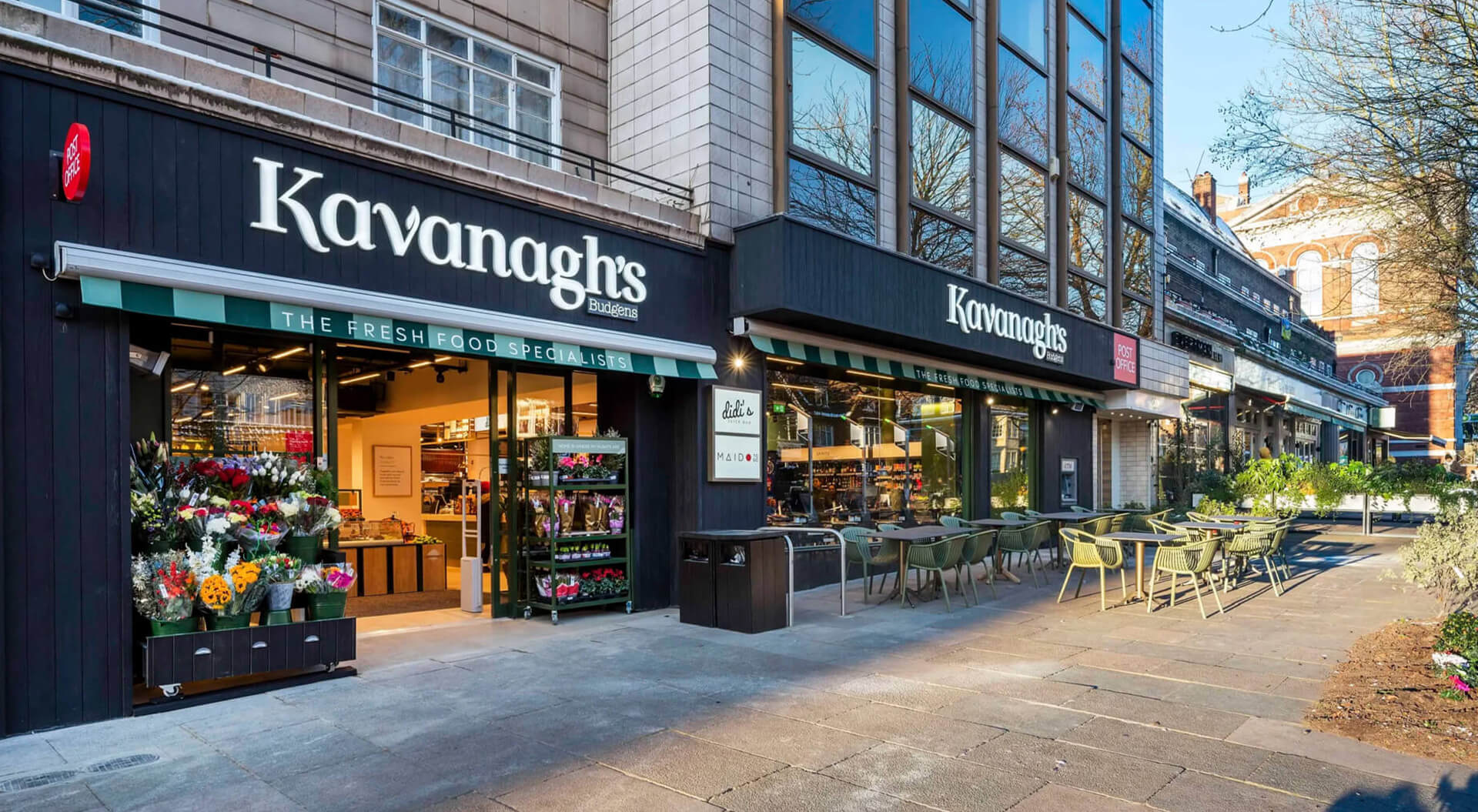
International benchmarks are valuable when they inform management decisions rather than encourage design imitation.
The relevant questions are:
- What is the retailer doing differently?
- Why does that approach work for its customers and format?
- Which principle could be adapted to our own network?
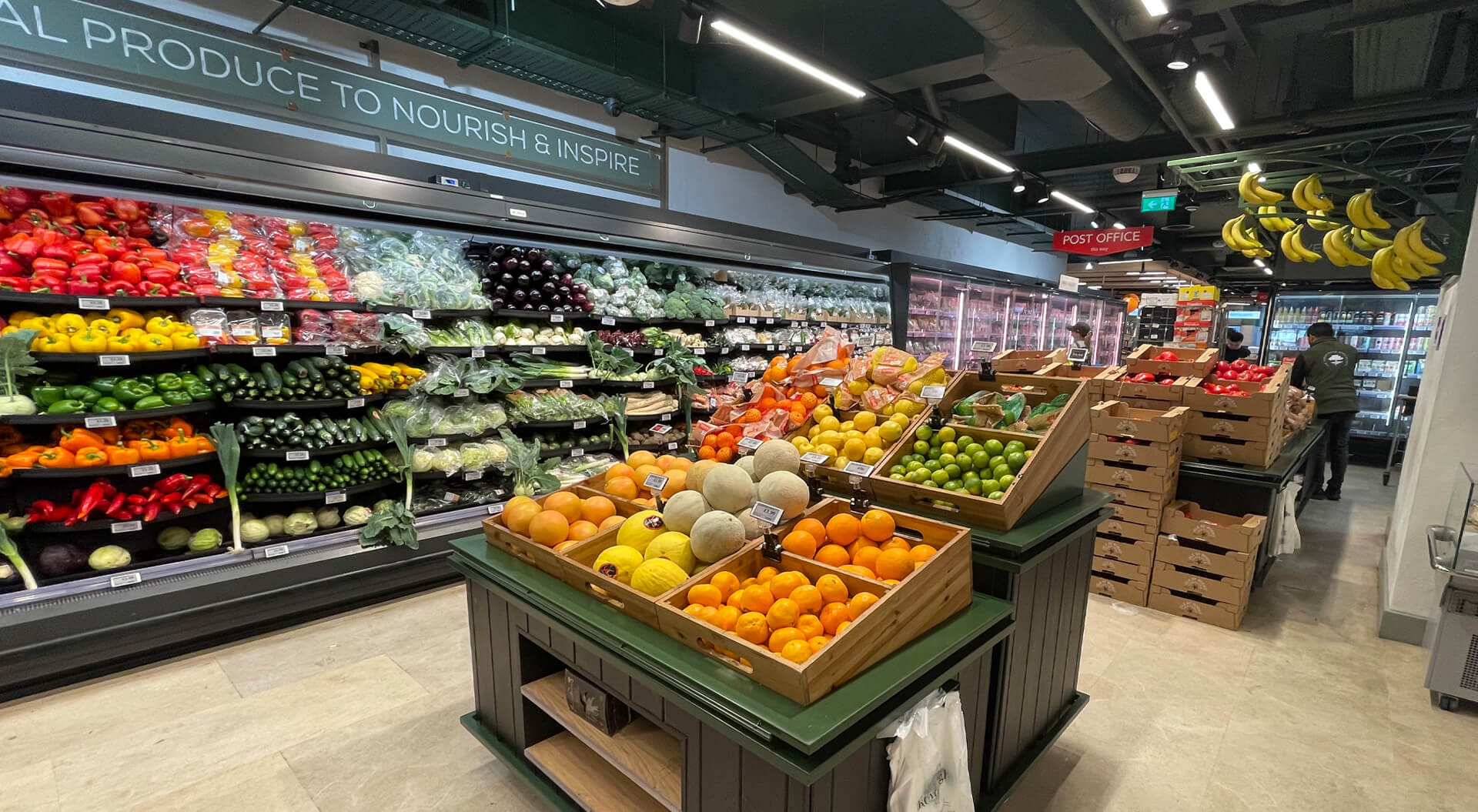
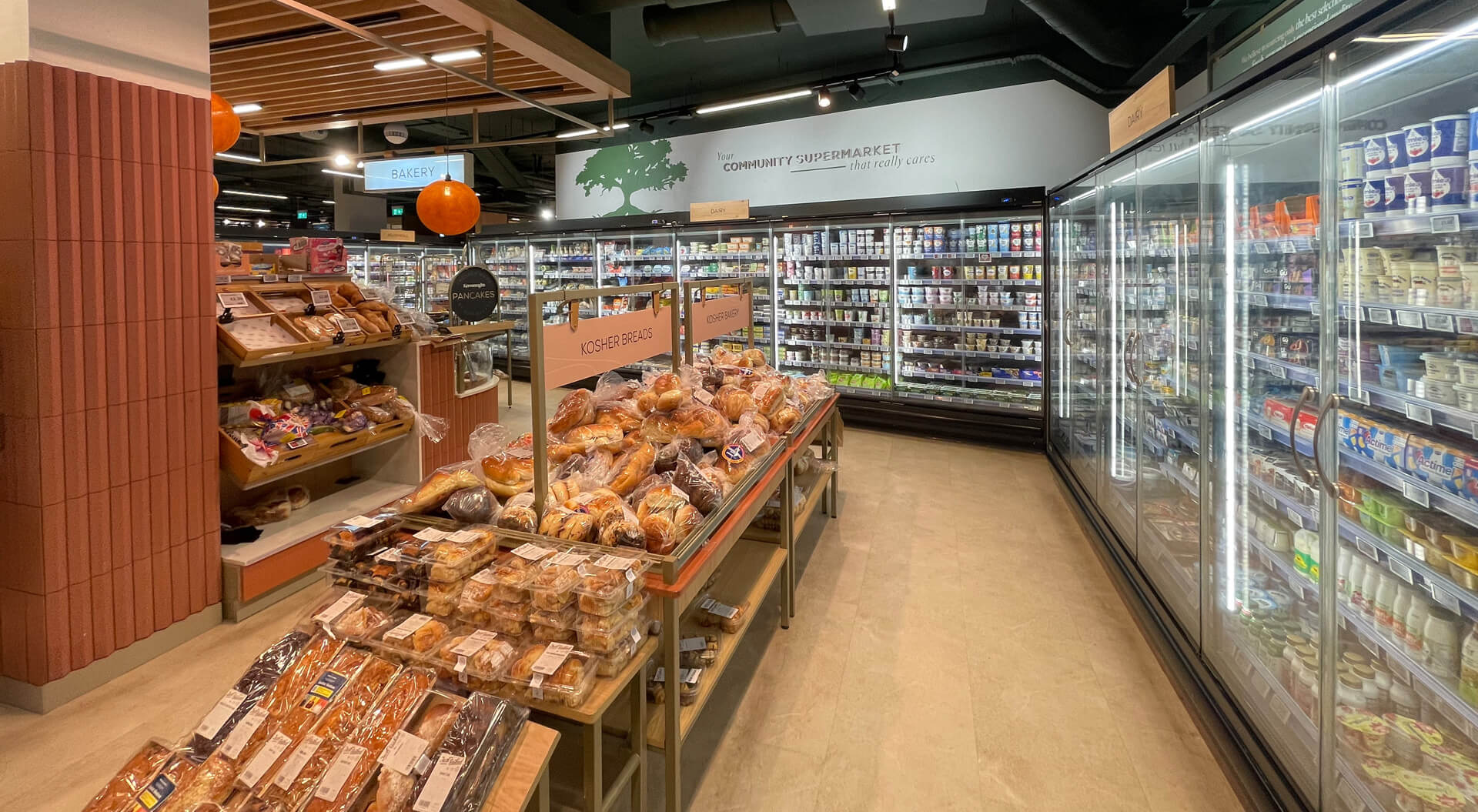
CampbellRigg uses international retail examples as strategic reference points, but the objective is to translate relevant principles into the client's own proposition, catchments, estate and investment objectives.
This is particularly important in convenience retail because a format designed for a railway station, dense city centre or residential neighbourhood cannot simply be copied into another market.
Benchmarking should therefore inform the format strategy, not replace it.
How CampbellRigg turns convenience strategy into a scalable retail format
The strongest convenience supermarket concepts are not created by starting with interior aesthetics.
They begin with a sequence of management decisions.
1. Audit - Assess the existing brand, proposition, customer experience, competitive environment and estate.
2. Strategy - Define the target market position, customer missions, commercial objectives and role of the convenience format within the wider network.
3. Format - Establish the format architecture, footprint requirements, space priorities, local adaptation rules and operational principles.
4. Experience - Map the customer journey, identify friction points and define the role of fresh food, food-to-go, technology, service and discovery.
5. Design - Translate the strategy into store planning, zoning, identity, signage, merchandising, materials and customer touchpoints.
6. Rollout - Create the principles, specifications and design rules required to reproduce the format consistently across different locations.
7. Measurement - Establish the commercial measures by which management can assess the performance of the format and inform subsequent rollout decisions.
The benefit is a connected retail system rather than a collection of individual store designs.
This is where CampbellRigg's multidisciplinary expertise becomes commercially relevant. Brand strategists, retail planners, architects, interior designers and graphic designers work against the same strategic direction, rather than delivering disconnected outputs.
CampbellRigg proof: Tesco and the customer journey
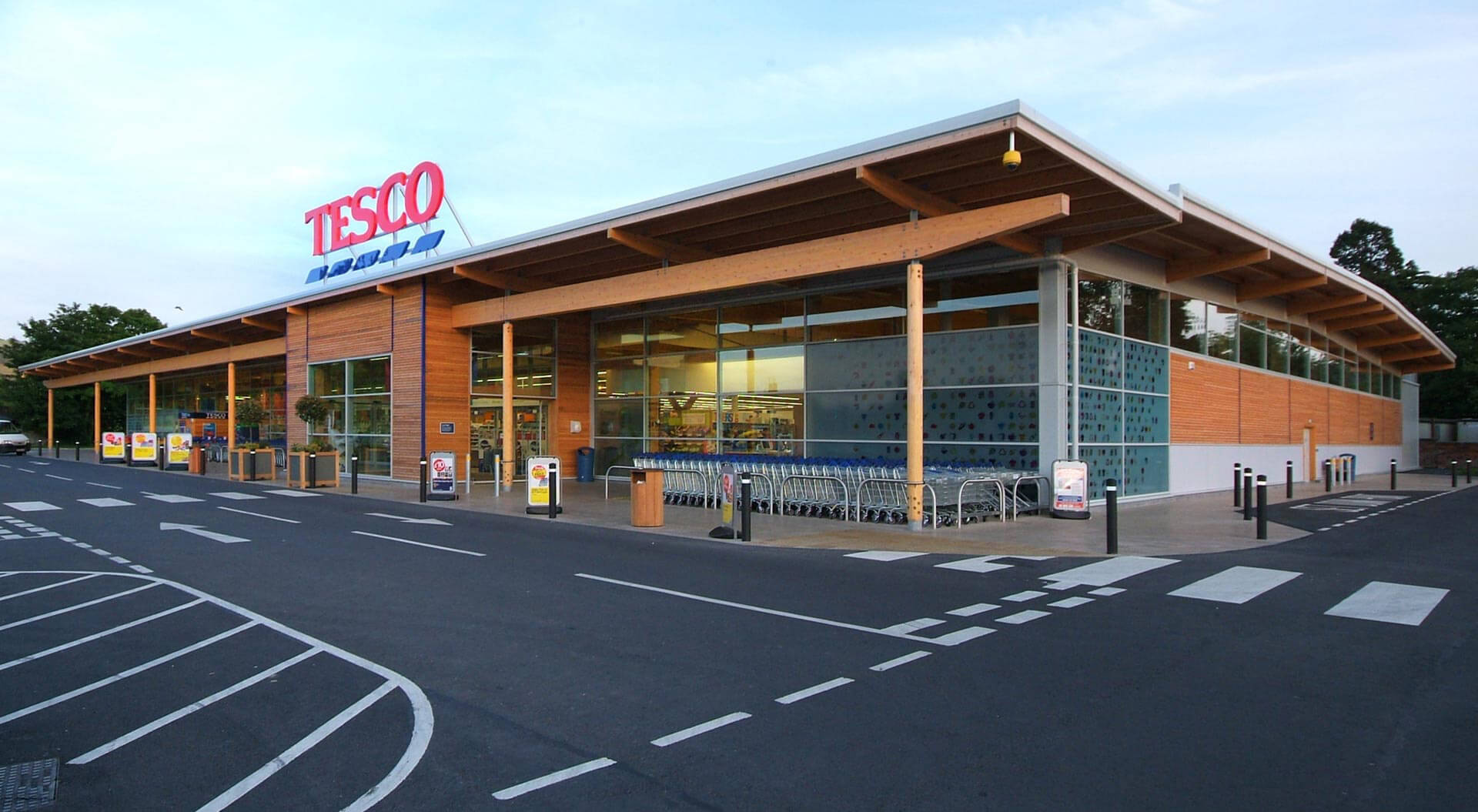
CampbellRigg's Tesco work demonstrates how customer behaviour, store planning, brand communication and merchandising can be brought together within a supermarket environment.
For Tesco Welshpool, CampbellRigg analysed shopper behaviour and circulation patterns before developing planning principles focused on clarity, relevance and ease of movement. Under-used areas were converted into destination "hero zones", including Bakery, Wine Shop and Quick Shop/Snack Shop, while wayfinding and graphic communications were developed to strengthen navigation and the brand experience.
The project reports a 25% improvement in shopper flow, 18% increase in dwell time and 12% growth in basket spend following the redesign.
For a convenience network, the transferable principle is clear: space planning, customer journey, merchandising and brand communication should be designed together when management wants the physical environment to contribute to commercial performance.
The project also illustrates why convenience format strategy should not be reduced to interior design. The same disciplines (customer analysis, zoning, navigation, brand expression and commercial measurement) can inform a repeatable convenience model at a smaller scale.
What should management measure?
A convenience format should be assessed against the commercial objectives established at the beginning of the programme.
Relevant measures can include:
- sales per square metre
- basket value
- customer frequency
- conversion
- category performance
- food-to-go penetration
- checkout and service times
- fulfilment efficiency
- loyalty engagement
- implementation cost
- operational efficiency
- rollout consistency.
Not every metric will apply to every format. The important point is that measurement should be established before rollout, so management can distinguish between a visually successful store and a commercially effective format.
The management objective: a productive network, not a beautiful prototype
The individual store should not be the final measure of success.
For supermarket management, the larger questions are:
- Can the format respond to high-frequency shopping missions?
- Does it work within constrained footprints?
- Can it adapt to different catchments?
- Which elements should remain consistent across the estate?
- Can the format be implemented without excessive redesign?
- Does the customer journey support speed and relevant discovery?
- Does the brand remain distinctive at every touchpoint?
- Can operational complexity be controlled?
- Can investment and performance be measured?
- Can the concept evolve as customer behaviour changes?
These questions move convenience supermarket design from store aesthetics to network strategy.
CampbellRigg addresses them by connecting brand auditing, retail strategy, convenience format planning, customer experience, supermarket branding, store planning, visual merchandising, technology and implementation.
The objective is not to make every store identical.
It is to establish the strategic rules that make a network coherent while giving individual locations enough flexibility to respond to their customers and catchments.
From convenience supermarket design to measurable network performance
The future of convenience supermarket design will not be defined by technology, aesthetics or food-to-go in isolation.
High-performing formats will need to combine: high-frequency shopping missions + local relevance + constrained-footprint planning + operational efficiency + strong brand expression + scalable implementation.
That is why convenience format strategy should be treated as a network-development discipline.
A successful convenience supermarket is not simply a smaller supermarket.
It is a repeatable retail model designed around how customers actually shop, where the store operates and what management needs the network to achieve.
CampbellRigg helps supermarket groups make that transitio, from individual store design to a commercially structured convenience format that can be tested, refined and rolled out.
For management teams developing a new convenience proposition, repositioning an existing format or preparing an estate-wide rollout, the opportunity is to make each location more relevant to its catchment while retaining the strategic consistency of the wider brand.
From brand strategy to scalable retail format, CampbellRigg helps supermarket management turn retail strategy into commercially effective physical networks.
Discuss your convenience retail format
- Book a free strategic consultation
- Co-create a bespoke convenience format brief
- Develop the customer journey, brand and store-planning strategy
- Create a scalable design and rollout framework
- Measure the commercial performance of the resulting format


