

News and Views
Telecom Retail Design Agency: Building Scalable, Commercially Effective Store Networks






Telecom Retail Design Agency: Building Scalable, Commercially Effective Store Networks
Telecom retail is no longer simply a network of shops selling smartphones, SIMs, tariffs and accessories. For management teams, the more important question is how the retail estate can become a scalable commercial asset: one that expresses the brand consistently, improves customer experience, supports higher-value customer conversations and can be adapted efficiently across different markets, locations and formats.
This article focuses specifically on telecom retail design agency expertise: how CampbellRigg connects retail strategy, brand positioning, customer experience, store design and format planning to create scalable, measurable and commercially effective telecom retail networks.
CampbellRigg works with technology and telecommunications brands to translate business strategy into physical retail environments. Our expertise combines retail strategy, brand positioning, customer journey design, store concept development, architecture, interior design, visual merchandising, environmental branding, digital integration and implementation.
The objective is not to create a visually impressive store in isolation. It is to establish a retail proposition that can be tested, measured, refined and rolled out across a network.
International benchmarks
Our global perspective draws on projects and benchmarks including Cell C, South Africa; AT&T, Chicago, USA, Tele2 and Megafon, Moscow, Russia, providing contrasting approaches to telecom brand expression, customer experience and retail design.
These international examples demonstrate different approaches to brand expression, experiential retail and telecom store design while providing useful reference points for management teams evaluating their own retail networks.
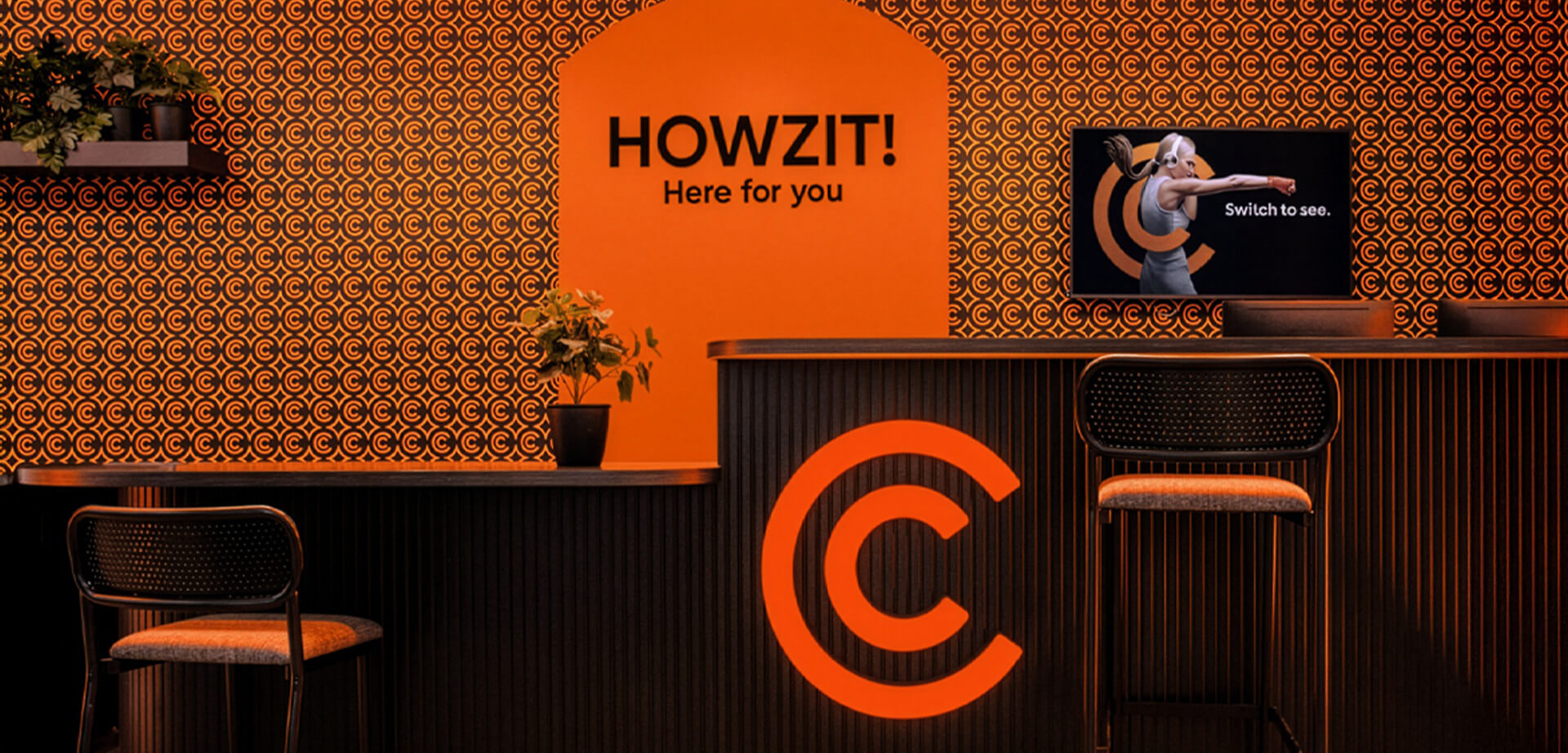
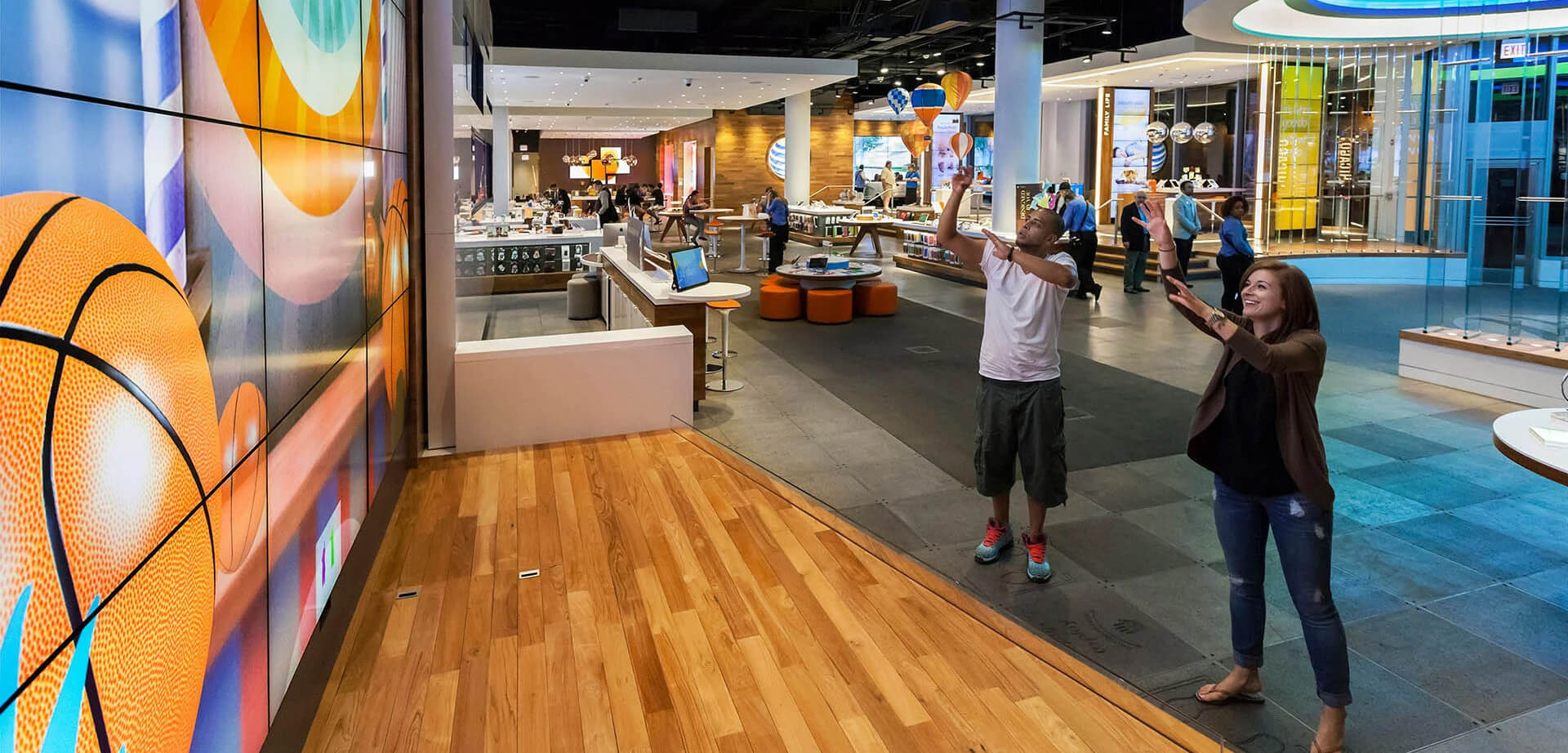
Cell Telecom, South Africa (Agency: SHFT) and AT&T, Chicago USA (Agency: CallisonRTKL), Tele2 and Megafon, Moscow Russia (Agency: CampbellRigg).

Telecom retail strategy must start with the commercial objective
Customers can discover smartphones, compare tariffs, research connectivity, arrange upgrades and manage accounts without entering a store.
The physical store therefore has to justify its role.
Its value increasingly lies in what digital channels cannot replicate as effectively: physical product experience, expert advice, demonstration, reassurance, service, problem resolution and brand interaction.
That changes the management brief.
A telecom retail network may need to support several commercial missions:
- customer acquisition
- upgrades and retention
- device and tariff sales
- accessory attachment
- broadband and connectivity
- smart-home and connected-device propositions
- technical support
- digital onboarding
- product demonstration
- customer education
- brand experience
The strategic challenge is to make those missions work within an economically viable physical network.
How CampbellRigg helps
CampbellRigg begins by connecting these disciplines rather than treating them as separate design commissions.
Brand auditing establishes how the existing proposition is perceived and expressed. Strategy defines the desired market position. The design brief then converts that strategy into practical requirements for customer experience, store planning, identity, merchandising and implementation.
The benefit to management is one strategic direction linking brand decisions to the physical retail network, rather than a collection of disconnected design initiatives.
Cell C is a South African mobile telecommunications operator that launched in 2001 as a challenger to Vodacom and MTN. It provides mobile voice and data, fixed connectivity, enterprise telecommunications and wholesale services. The company has increasingly adopted an asset-light, partnership-led model and has also become a significant MVNO enabler, supporting other brands in delivering mobile services. Its transformation and refreshed brand positioning reflect a broader focus on customer experience, digital connectivity and flexible telecommunications services.

Convert management objectives into a telecom retail strategy
The first decision should not be the appearance of the store.
Management needs to establish what the retail network is actually intended to achieve.
Is the priority customer acquisition, retention, higher-value conversations, connected-home adoption, service efficiency, reduced cost-to-serve, stronger differentiation or a combination of these objectives?
Those decisions affect store size, location, customer journey, staffing, technology, merchandising and format economics.
A robust telecom retail strategy should therefore establish:
- target customer segments
- customer missions
- commercial priorities
- brand positioning
- competitive differentiation
- the role of physical versus digital channels
- format requirements
- operational constraints
- performance measures
- rollout priorities
How CampbellRigg helps
CampbellRigg translates management objectives into a retail strategy and design brief.
We connect the business proposition to the customer journey and then to the physical requirements of the network: what the store must achieve, who it must serve, how customers should move through it and which commercial behaviours the environment should support.
The benefit: investment decisions are based on an agreed retail proposition rather than aesthetics alone.

Turn telecom brand positioning into physical experience
Telecom operators frequently offer broadly comparable products and services. Differentiation therefore has to be expressed through more than advertising.
The store becomes a physical expression of the brand.
That includes:
- environmental identity
- signage and graphics
- tone of voice
- materials and finishes
- lighting
- fixtures
- digital communications
- service points
- product presentation
- spatial storytelling
Consistency is critical because customers increasingly move between advertising, websites, apps, social media and physical stores.
The experience should feel like the same brand wherever the customer encounters it.
How CampbellRigg helps
CampbellRigg connects brand strategy with retail design to translate positioning into environmental brand language.
Rather than simply applying a visual identity to an existing store, we determine how the brand should influence navigation, spatial hierarchy, communications, merchandising and customer interaction.
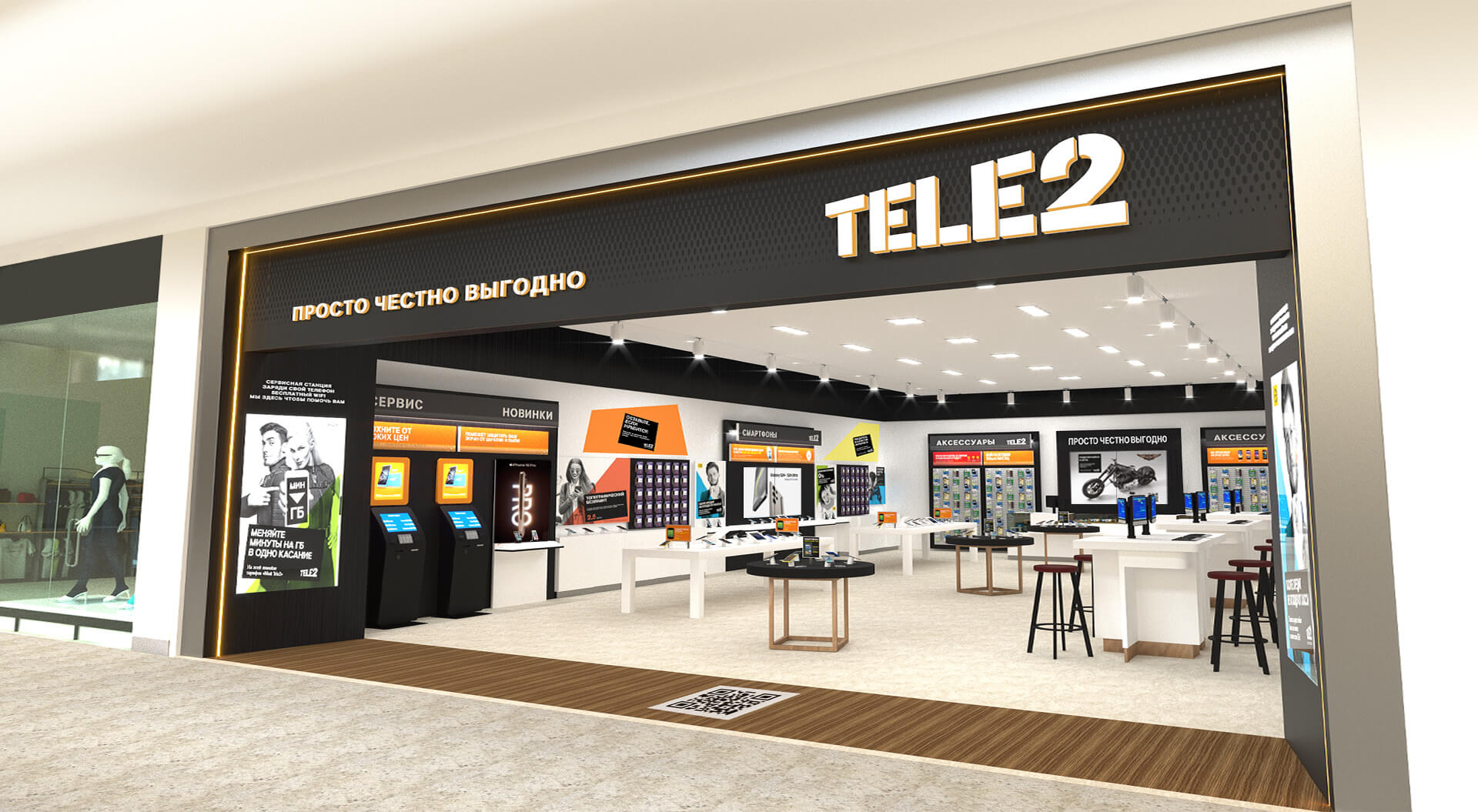
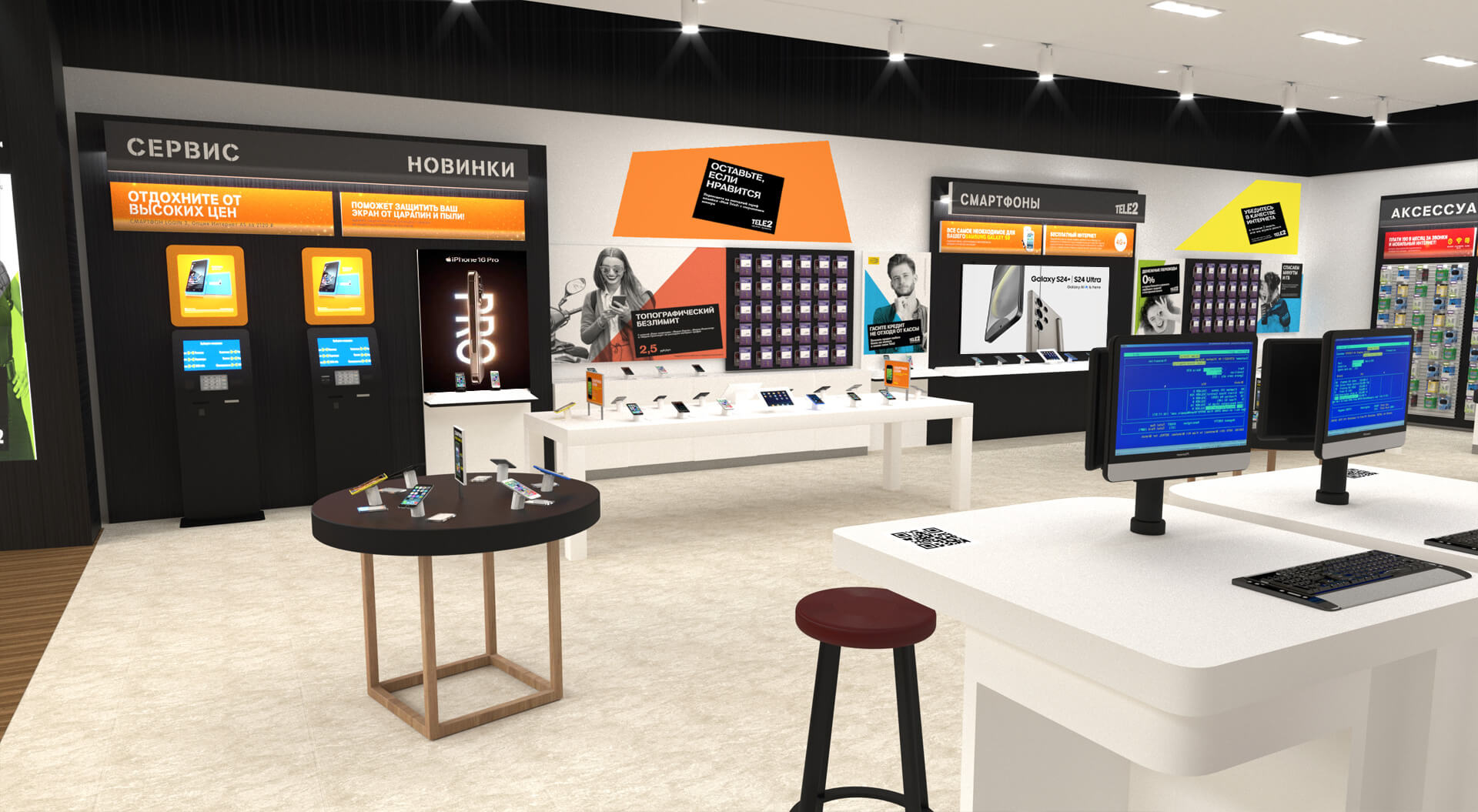
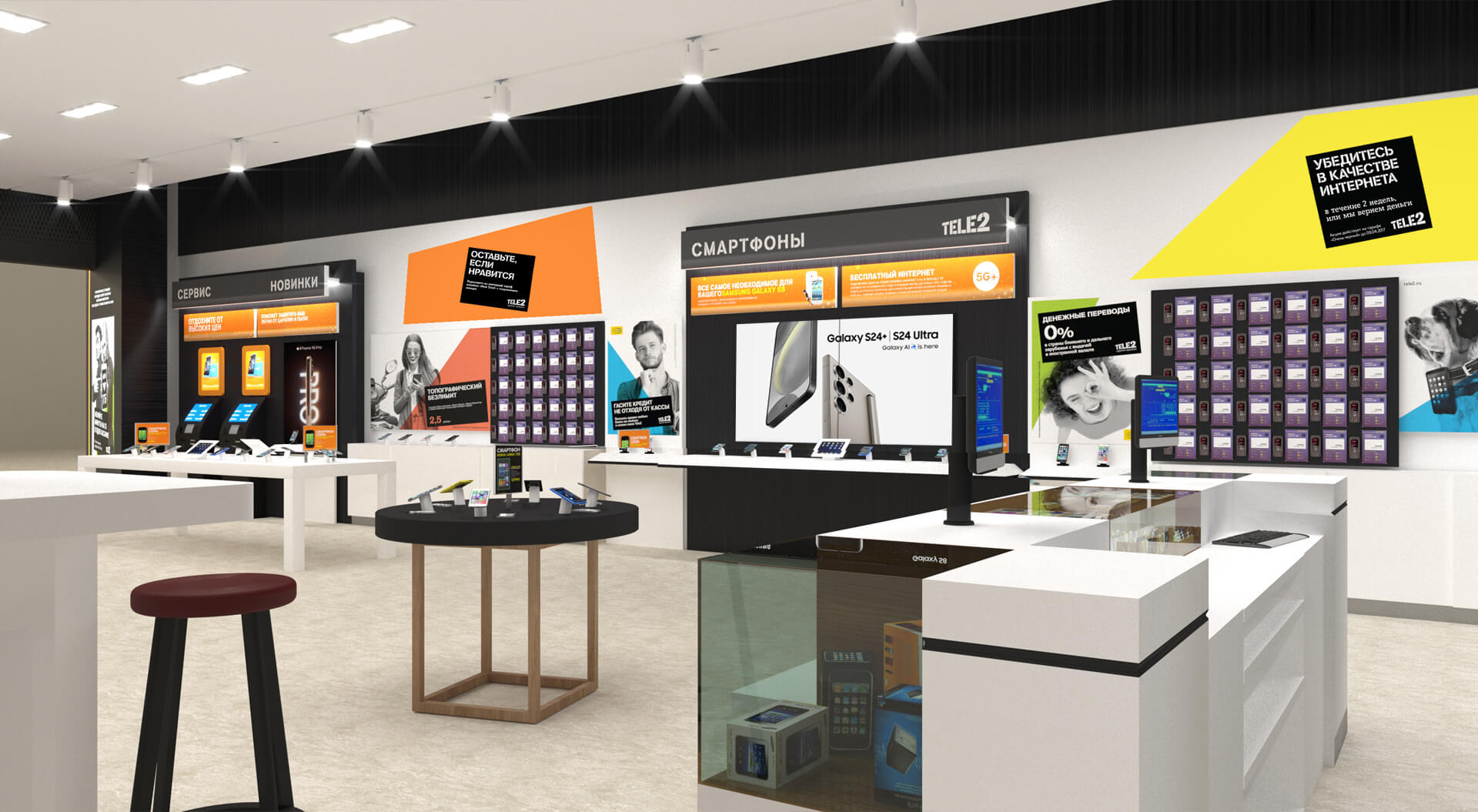
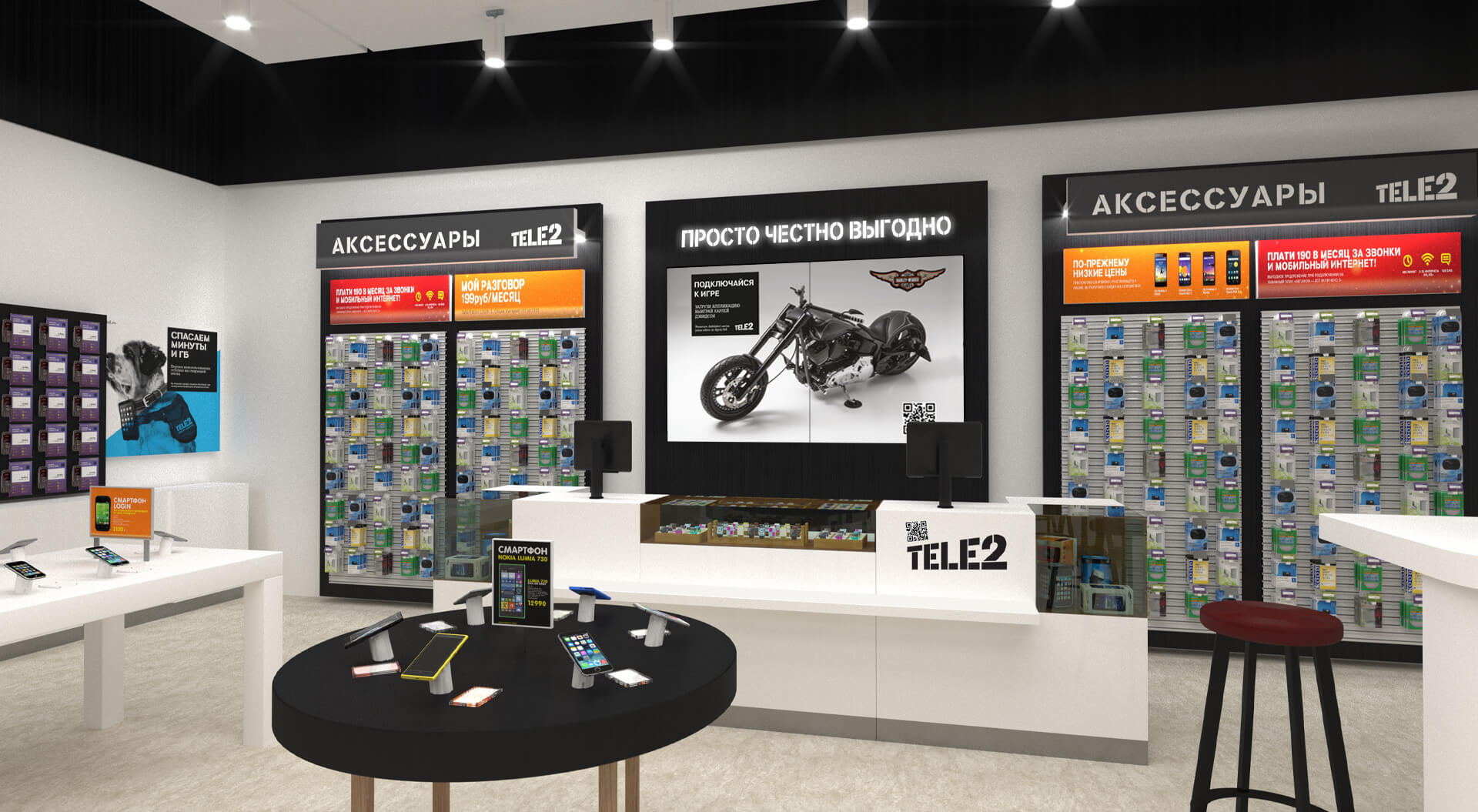
CampbellRigg's Tele2 work illustrates this integrated approach. The project combined retail brand positioning, customer journey clarity, product presentation, operational efficiency and commercial objectives, with the resulting concept developed across three distinct retail formats.
The benefit: brand investment becomes embedded in the retail network and can be reproduced across formats rather than recreated store by store.
Design the customer journey around commercial priorities
A telecom store can contain excellent products and still underperform if the customer journey is confusing.
The journey may include: arrival → discovery → exploration → comparison → demonstration → consultation → purchase → onboarding → aftercare
Each stage creates a design requirement.
The entrance must communicate the proposition immediately. Product areas must encourage exploration. Demonstration zones need to make technology understandable. Consultation areas must support higher-value conversations. Self-service and digital onboarding can remove unnecessary friction.
The store should also make appropriate cross-selling natural.
A smartphone may lead to accessories, connectivity, insurance, entertainment, broadband or connected-home services.
How CampbellRigg helps
CampbellRigg maps the customer journey against the commercial journey.
We identify where customers need discovery, where they need reassurance, where staff intervention creates value and where digital tools can simplify the process.
Spatial planning, merchandising, signage and service design are then developed around those requirements.
The benefit: the store is organised around customer and business missions rather than simply around product categories.

Make complex technology easier to understand
Technology becomes more valuable when customers understand what it does for them.
Telecom experience environments can demonstrate:
- 5G applications
- smartphones
- wearables
- gaming
- audio
- broadband
- connected homes
- security
- entertainment
- IoT
- smart devices
The objective is not to fill the store with technology. Demonstration must be connected to customer needs and commercial priorities.
How CampbellRigg helps
CampbellRigg designs experience-led environments that turn complex propositions into understandable customer scenarios.
Demonstration, spatial planning, communication and staff interaction are coordinated around the products and services management wants customers to understand and buy.
The benefit: technology becomes easier to explain, compare and value, supporting customer confidence and more meaningful commercial engagement.
Connect physical retail with digital channels
A telecom customer may research online, compare tariffs through an app, visit a store to experience a device, receive expert advice, complete digital onboarding and continue managing the relationship digitally.
The store should therefore complement—not compete with—the digital ecosystem.
Potential tools include:
- digital signage
- interactive displays
- self-service
- digital onboarding
- account access
- product comparison
- click-and-collect
- mobile integration
- digital wayfinding
- assisted digital selling
How CampbellRigg helps
CampbellRigg integrates customer journey, physical space and digital experience rather than adding technology as decoration.
Our role is to determine where physical retail adds value and where digital tools can simplify the customer journey.
This approach is consistent with the wider CampbellRigg telecom design philosophy: physical retail provides product discovery, demonstration, advice and human reassurance, while digital tools can simplify transactions and ongoing customer management.
The benefit: management can allocate physical space to activities where it creates genuine value while using digital channels for routine or self-directed tasks.
Make flagship stores strategic assets for the wider network
A flagship should have a role beyond being the largest or most visually impressive store.
It can operate as:
- a brand destination
- an experience laboratory
- a demonstration centre
- a training environment
- a community space
- a launch platform
- a test bed for new services
- a source of learning for the wider estate
CampbellRigg's wider telecom work includes flagship and standard formats for brands including Megafon, Tele2 and Play Telecommunications, with environments designed to combine technology, experiential storytelling and customer interaction.
How CampbellRigg helps
CampbellRigg designs flagship environments with the wider network in mind.
The question is not simply: How should this flagship look? It is: Which elements should be tested, measured, refined and transferred into the wider retail estate?
The benefit: flagship investment can generate learning and innovation for the network rather than functioning as a standalone branding exercise.
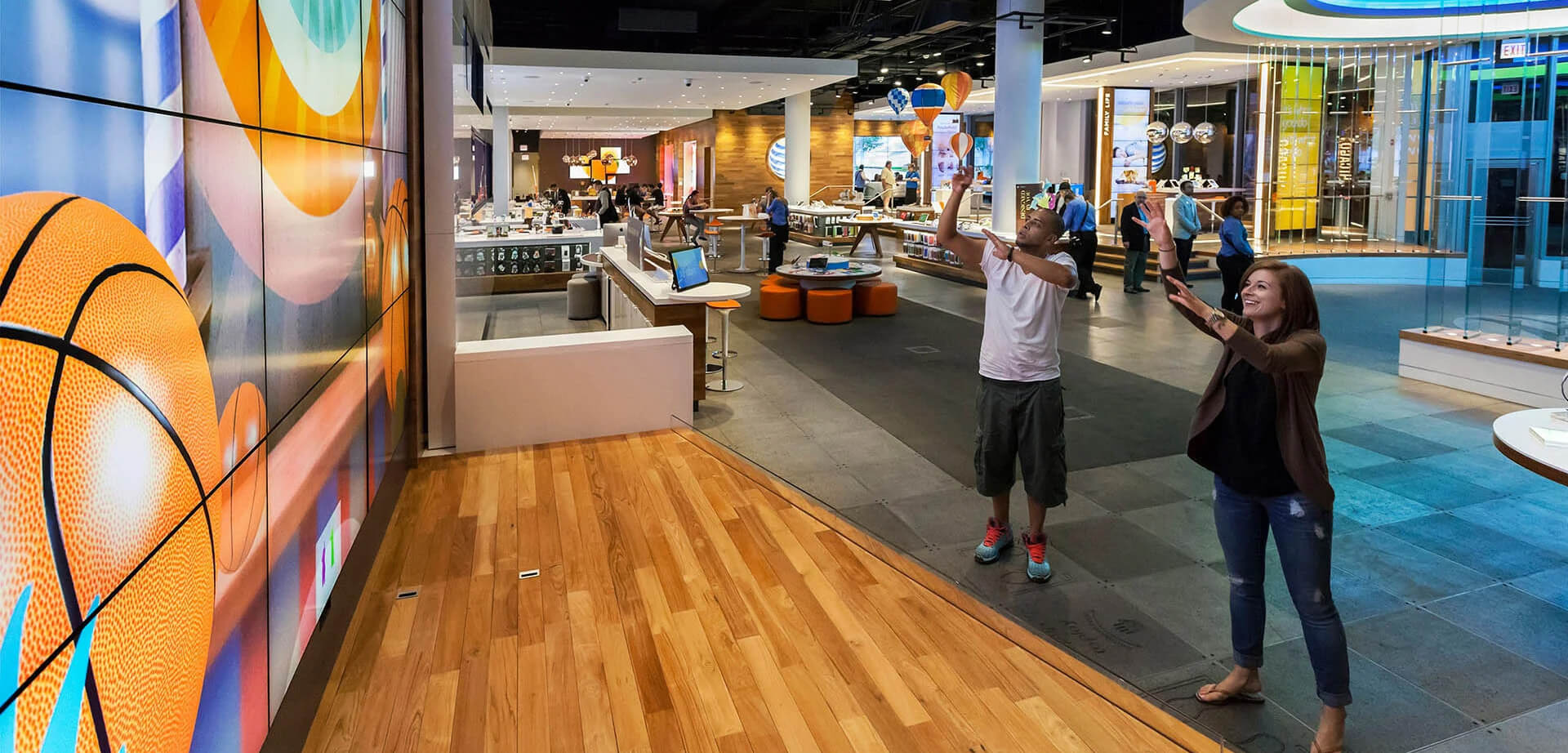
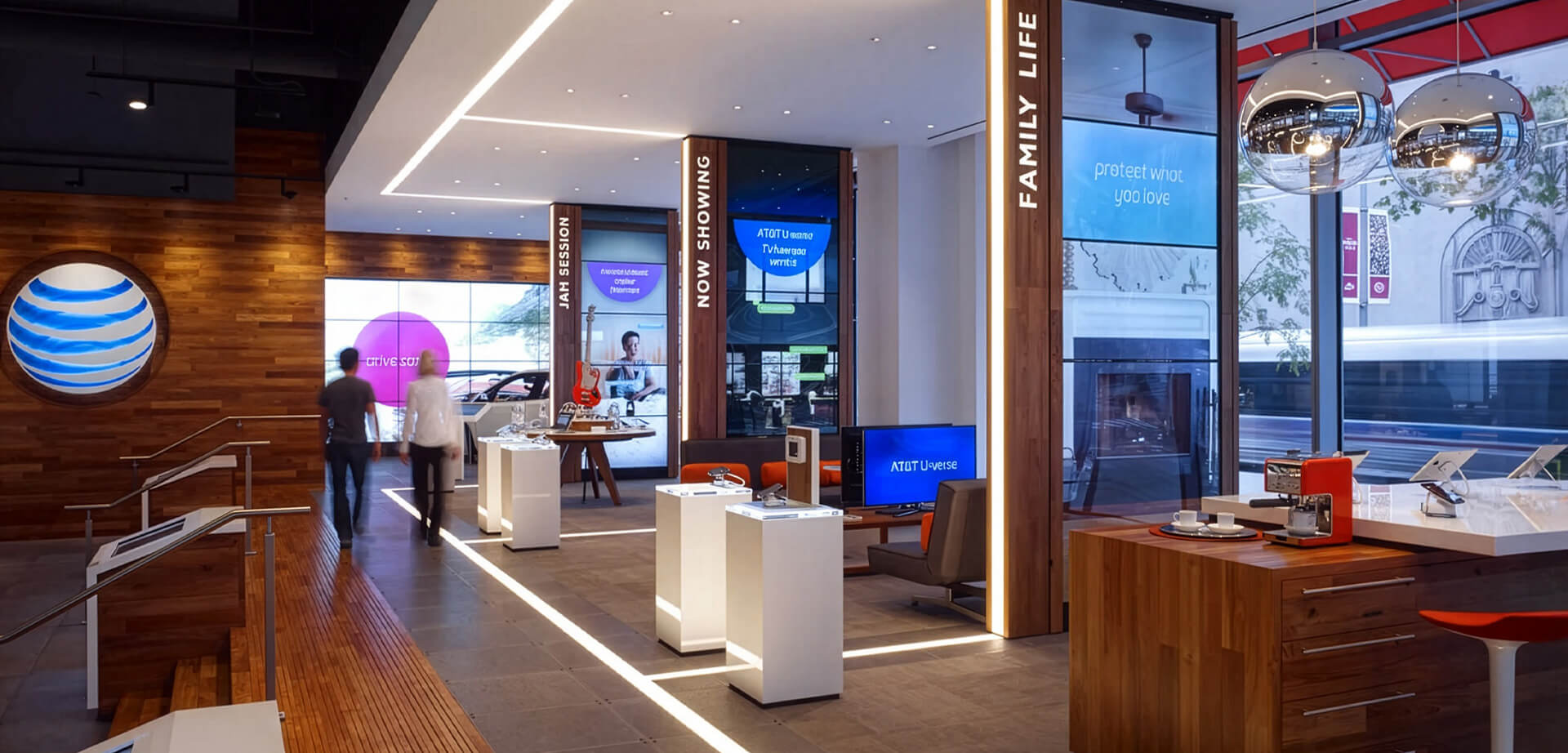
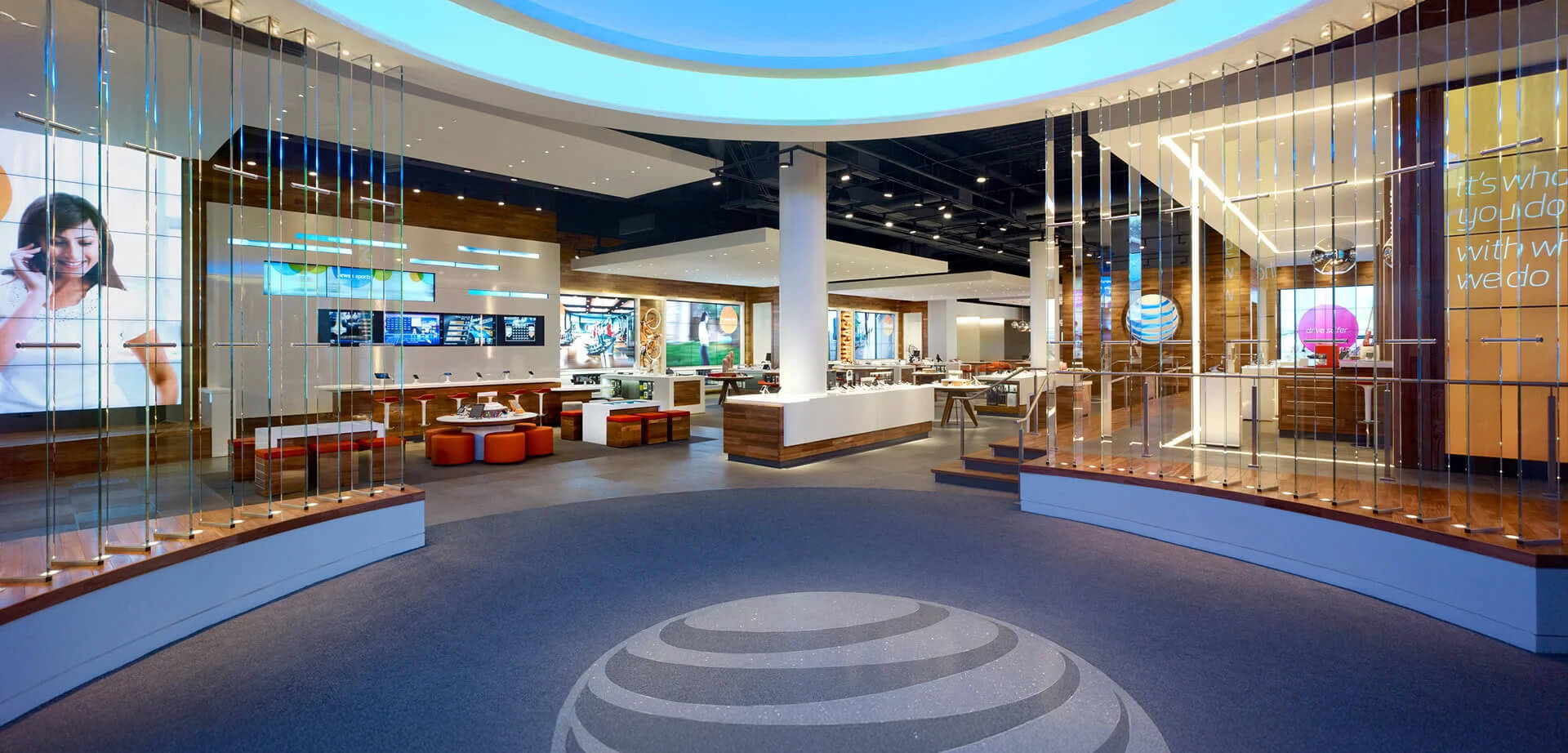
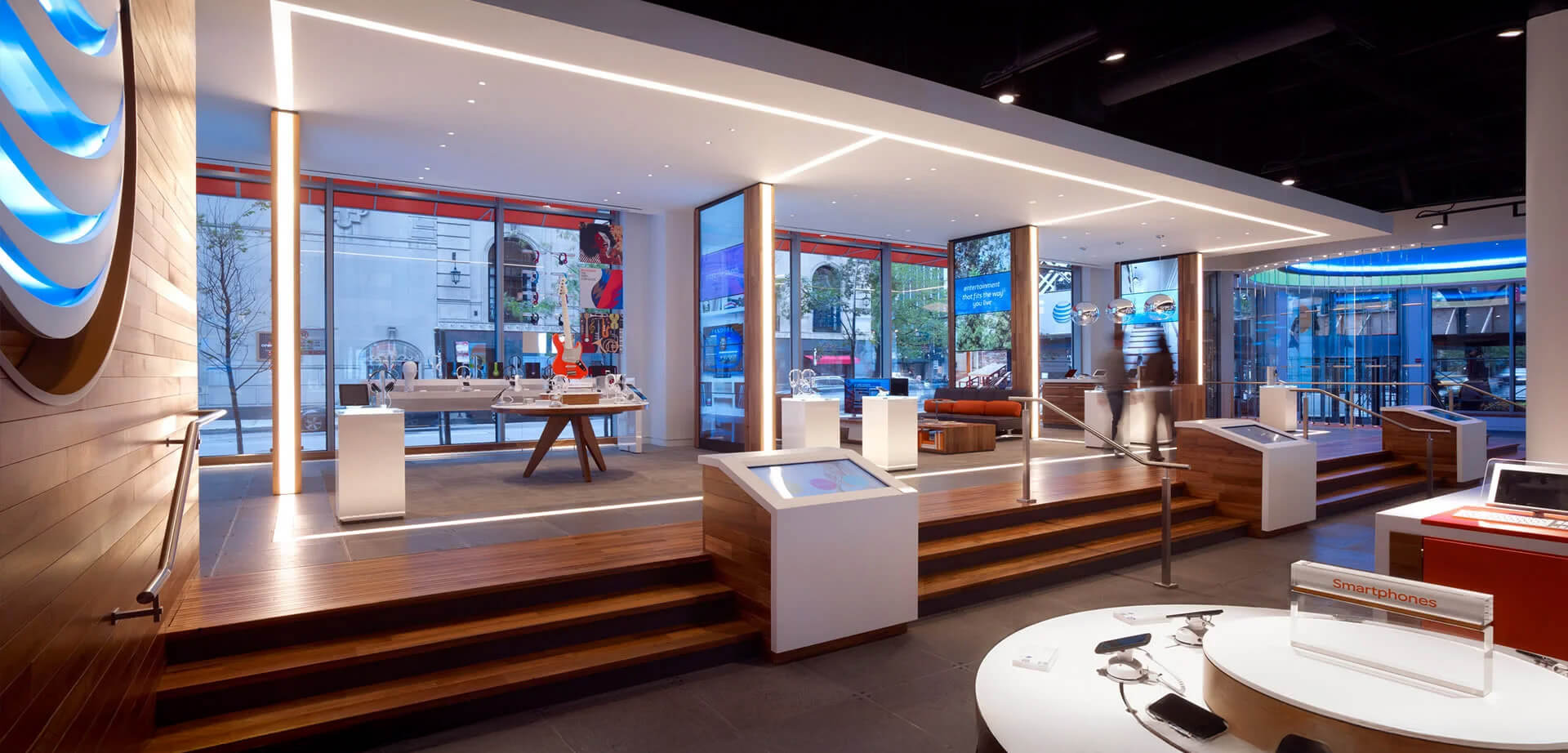
The AT&T flagship store on Michigan Avenue in Chicago was designed as an interactive, lifestyle-led telecommunications experience rather than a conventional phone shop. The 10,000+ sq ft concept combined hands-on product demonstrations, digital displays, lifestyle zones and connected-home experiences, showing customers how AT&T technology could fit into everyday life. Traditional checkout counters were replaced with mobile service points, learning tables and comfortable consultation areas, shifting the experience from transaction to interaction.
Improve productivity through visual merchandising and spatial planning
Telecom stores operate within relatively compact footprints, making spatial productivity important.
Product zoning, planograms, hero products, category adjacencies, signage and promotional communications must work together.
High-interest products can create destinations. Accessories can be positioned around relevant devices. Connected services can be presented as ecosystems rather than isolated propositions.
How CampbellRigg helps
CampbellRigg connects merchandising strategy with spatial planning and customer behaviour.
We identify which categories deserve visibility, which require demonstration, where cross-selling opportunities exist and how customers should navigate between propositions.
The benefit: every square metre is planned around customer value and commercial purpose rather than product density.
Build a telecom retail format architecture that can scale
A national or international telecom operator rarely needs one identical store format.
The network may require:
- flagship stores
- standard stores
- compact urban stores
- shopping-centre locations
- kiosks
- airport or travel formats
- service-led stores
- connected-home environments
- technology experience hubs
The strategic challenge is to achieve format differentiation without brand fragmentation.
Tele2 provides a documented CampbellRigg example. Three priority formats were developed: flagship stores of approximately 150–200 sqm, standard stores of 50–70 sqm and shopping-mall kiosks. The project demonstrates how different footprints can operate within a coherent retail strategy.
How CampbellRigg helps
CampbellRigg develops modular format systems in which the core brand proposition remains consistent while planning principles, fixtures, graphics, technology zones and customer journeys adapt to different footprints.
The design system establishes what must remain consistent and what can change.
The benefit: management gains a repeatable framework for network expansion rather than commissioning a new design solution for every location.
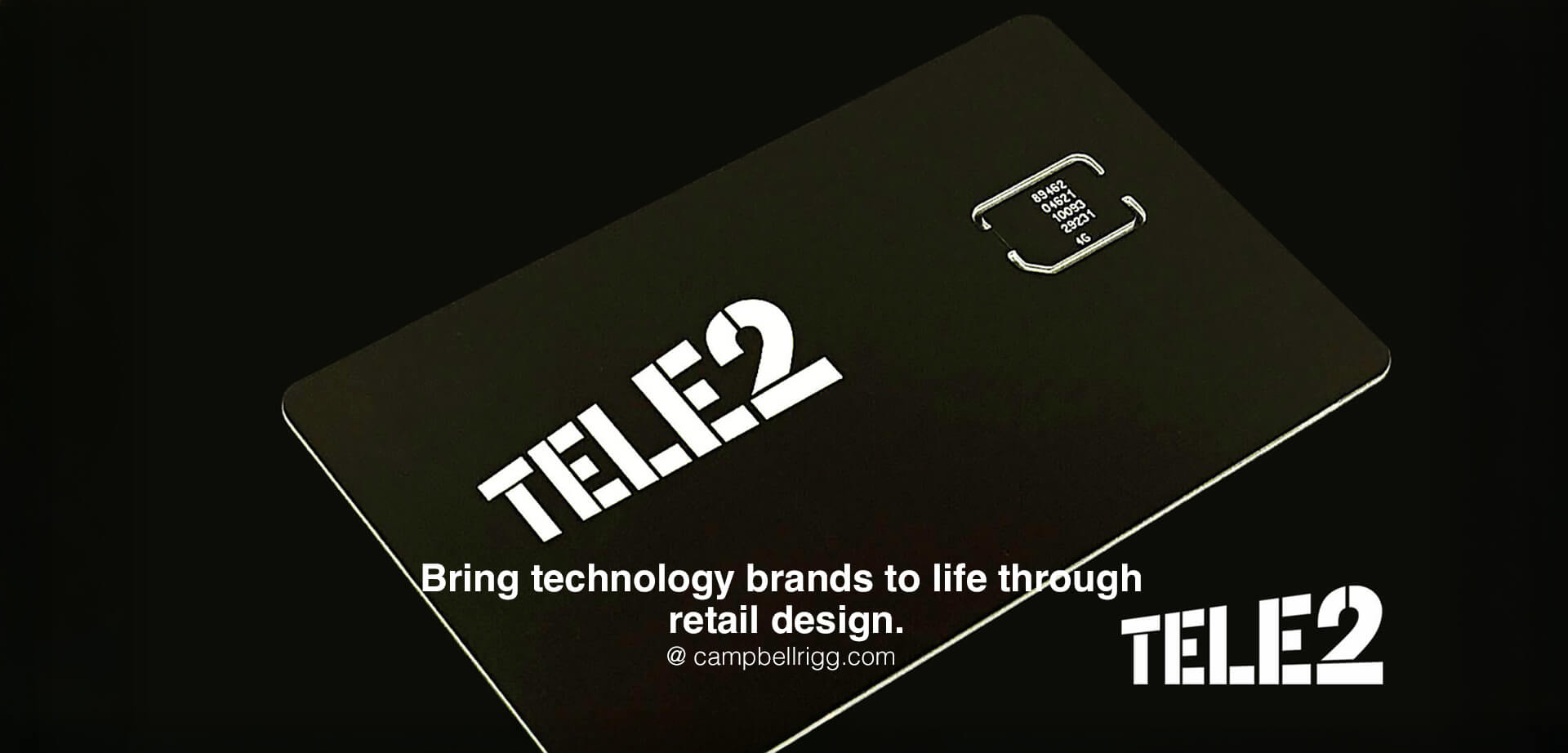
Tele2 is one of Russia's top three mobile telecom operators
CampbellRigg partnered with Tele2 to develop a retail brand strategy and store design programme focused on stronger customer engagement, merchandising and point-of-sale efficiency. The work translated Tele2’s challenger positioning into distinctive, customer-focused environments across three formats: flagship stores, standard stores and shopping-mall kiosks. CampbellRigg created integrated visual merchandising, signage, consultation and accessory-display systems that supported acquisition, loyalty, customer service and technical support throughout the telecom customer journey.
Challenger Brand Positioning: As an industry disruptor, Tele2 challenges market norms with superior value and flexible options.
Focus on Digital Transformation: Significant investments in mobile apps and self-service platforms enhance convenience for tech-savvy users.

Make commercial performance part of the design brief
Retail design should be accountable to business objectives.
Depending on the proposition, management may monitor:
- sales
- conversion
- sales per square metre
- average transaction value
- accessory attachment
- cross-selling
- customer engagement
- customer satisfaction
- loyalty
- service productivity
- digital adoption
- fulfilment performance
The precise measures should be established before implementation so that the design can be evaluated against the intended commercial outcome.
A useful CampbellRigg technology-retail benchmark comes from M.Video. CampbellRigg reports that like-for-like sales in its trial stores increased 32%, after which M.Video invested in a 280-store refurbishment programme; the concept was subsequently implemented across the retailer's estate of 284 stores.
This is technology retail rather than telecom, so it should be treated as a cross-sector benchmark for scalable retail transformation, not as a telecom-specific performance claim.
How CampbellRigg helps
CampbellRigg translates commercial objectives into design criteria and measurable performance requirements.
The question becomes not simply whether a store looks different, but whether the intervention supports the behaviours and outcomes the investment was intended to influence.
The benefit: design becomes part of a measurable retail transformation programme rather than an isolated capital expenditure.

Design implementation and rollout into the strategy
A concept that works in one location but cannot be delivered consistently across an estate is not a scalable retail solution.
Implementation requires attention to:
- design standards
- specifications
- modular components
- brand guidelines
- signage
- materials
- fixtures
- technology integration
- local adaptation
- rollout sequencing
- implementation governance
How CampbellRigg helps
CampbellRigg develops the design logic, format principles and implementation requirements needed to translate strategy into repeatable physical environments.
Our multidisciplinary team brings brand strategists, designers, architects and retail specialists into the same process.
The benefit: management receives a concept developed with rollout in mind, reducing the gap between strategic approval and physical implementation.
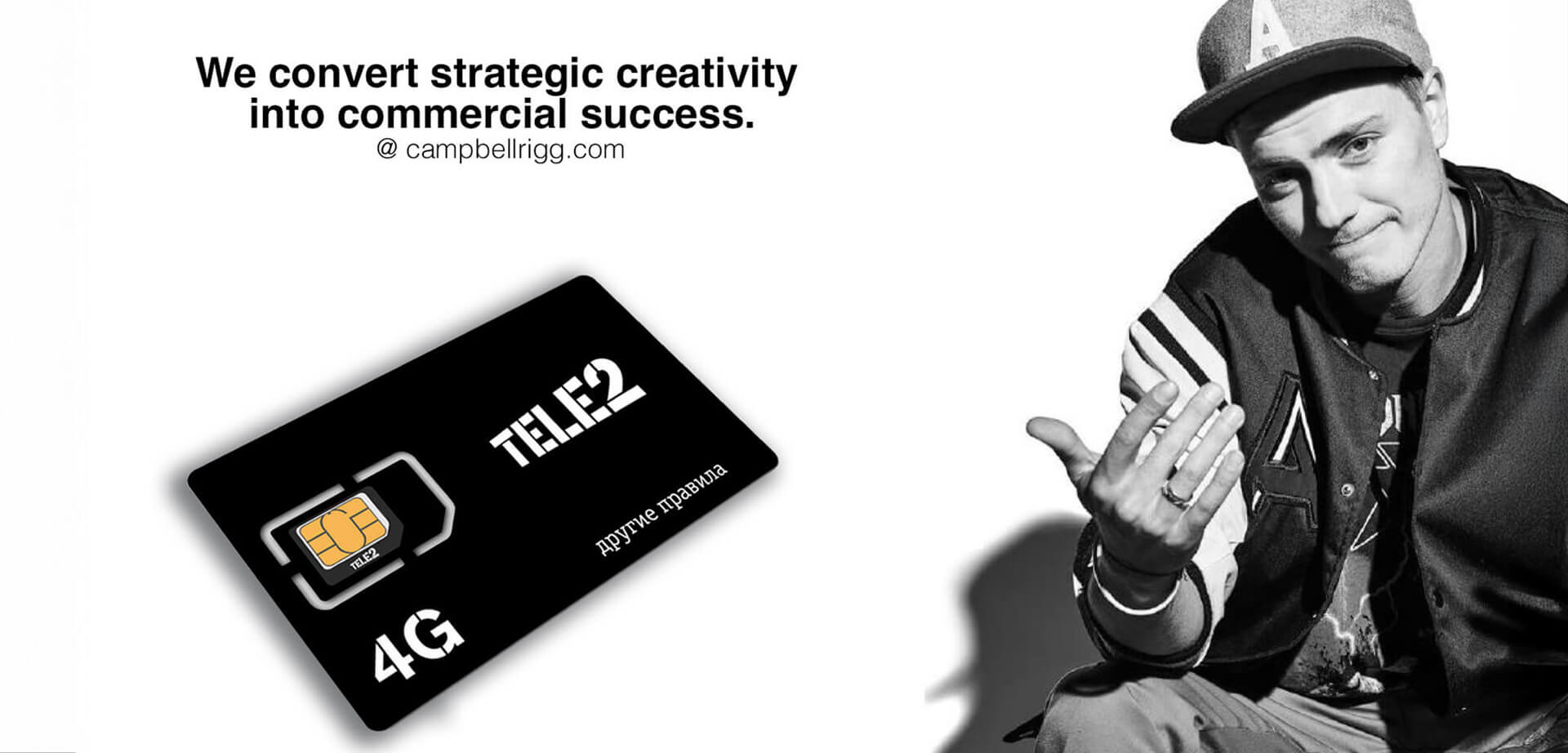
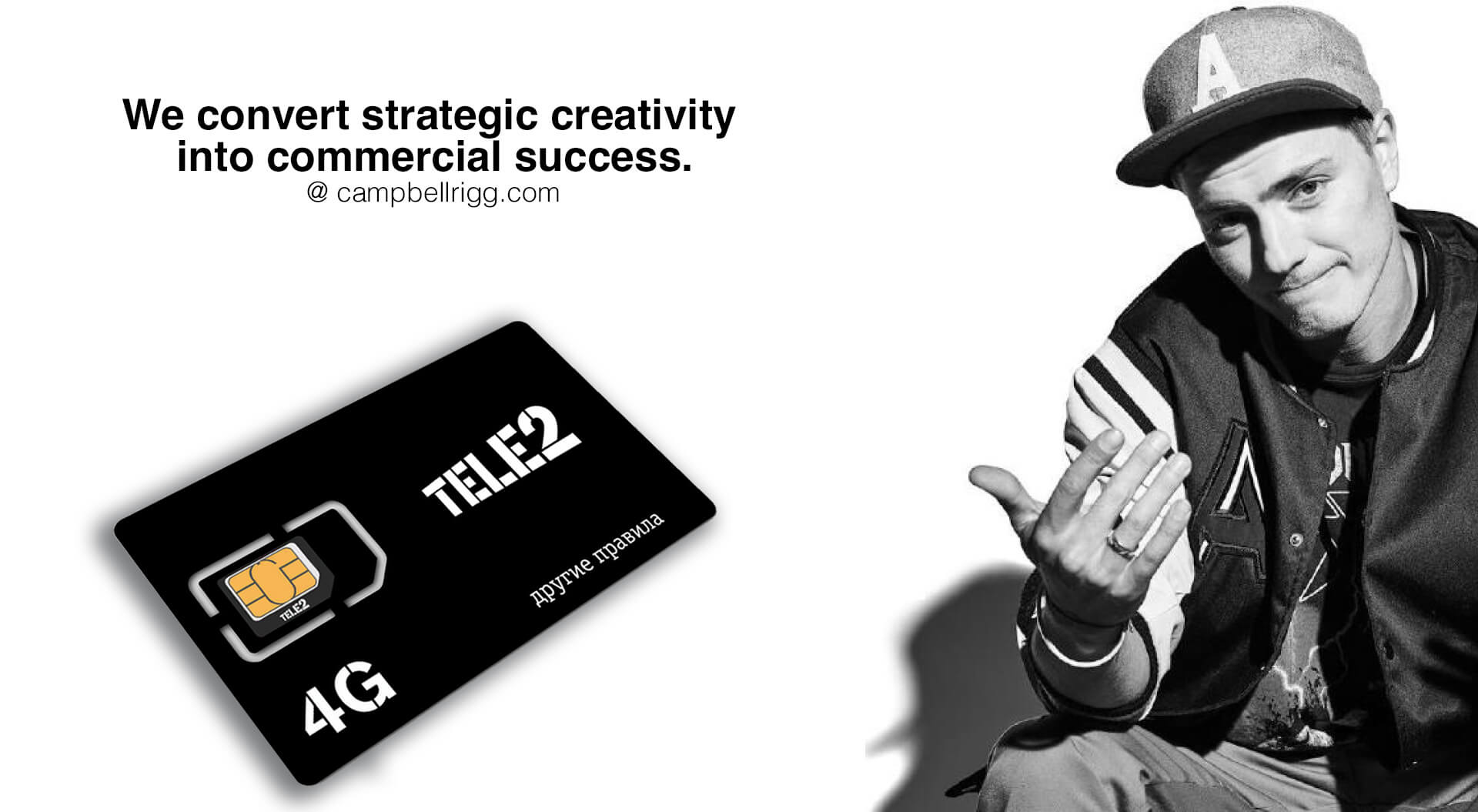
Above: Advertising campaign for Tele2 Russia. The ad campaign and tagline, "We convert strategic creativity into commercial success" and "другие правила" (Russian for "other rules"), are associated with the brand strategy developed by the CampbellRigg Agency.
CampbellRigg's telecom retail design expertise
CampbellRigg can connect:
- Telecom retail strategy
- Brand positioning
- Brand auditing
- Retail brand identity
- Design brief development
- Customer journey design
- Store concept development
- Retail architecture
- Interior design
- Visual merchandising
- Environmental graphics
- Wayfinding
- Digital experience
- Phygital retail strategy
- Connected-technology experience zones
- Flagship store design
- Standard and compact formats
- Modular retail systems
- Store rollout and implementation
The important distinction is that these capabilities are connected through strategy.
CampbellRigg begins with the business problem, defines the retail proposition, establishes customer and brand requirements, develops the format architecture and then translates that strategy into physical environments.
Above: A Tele2 Russia store concept visual. Includes the ad campaign and tagline, "We convert strategic creativity into commercial success" and "другие правила" (Russian for "other rules"), are associated with the brand strategy developed by the CampbellRigg Agency.
From one store concept to a commercially effective network
The strategic distinction is between designing a store and designing a retail system.
A store concept may solve one location.
A retail system establishes: Brand → Strategy → Customer Journey → Format → Space → Experience → Merchandising → Digital → Implementation → Measurement
That system gives management a framework for deciding where different formats belong, what each format must achieve and which design principles should remain consistent across the network.
Tele2 demonstrates this principle through the development of multiple formats rather than a single environment.
M.Video provides a separate cross-sector demonstration of the commercial importance of scalability: CampbellRigg reports a 32% like-for-like sales increase in trial stores followed by a 280-store refurbishment programme.
The management implication is straightforward: the objective is not to create more attractive stores. It is to create a retail proposition that can perform consistently across a network while adapting to different customer missions, locations and commercial priorities.
Why Choose CampbellRigg for Telecom Retail Design?
CampbellRigg combines brand strategy, retail strategy, architecture, interior design, customer experience, visual merchandising and digital integration.
This multidisciplinary approach allows telecom operators and technology brands to address the entire retail proposition rather than treating branding, store design, merchandising and digital experience as separate projects.
We can develop concepts for flagship destinations, standard network stores, compact urban formats, kiosks and experience-led locations, creating scalable systems that can be adapted across markets.
The objective is not simply to create a visually attractive store.
It is to create a branded telecom retail experience that makes technology easier to understand, gives customers compelling reasons to engage physically, strengthens brand relationships and supports commercial performance.
CampbellRigg's management-led process
CampbellRigg structures the engagement around management objectives rather than starting with aesthetics.
1. Strategic consultation: We identify the commercial challenge, existing estate issues, customer requirements and opportunities for improvement.
2. Brand and retail audit: We assess how the existing brand proposition, customer experience, store formats and communications perform against the desired strategic position.
3. Bespoke retail brief: We translate management priorities into a focused brief covering brand, customer journey, format, space, merchandising, digital experience and implementation.
4. Concept and format development: We develop the retail proposition, store concepts and format architecture, identifying what should remain consistent and what should adapt.
5. Creative execution: Our multidisciplinary team develops the design, communications, spatial planning and implementation requirements.
6. Rollout and performance: The objective is a repeatable retail system that can be implemented across the network and assessed against agreed customer and commercial KPIs.
The benefit to management is a direct line from strategy to execution.
Building the next generation of telecom retail
Telecom retail is moving beyond the traditional device-led store.
AI-assisted discovery, connected devices, 5G, smart-home propositions and increasingly sophisticated digital journeys are changing what customers expect from physical retail. The role of the store is consequently shifting toward demonstration, advice, experience, service and connected lifestyle propositions.
The strategic question is not whether every new technology should be placed into the store.
It is where physical retail adds value, what each format should achieve and how brand, experience, technology and operations should work together.
Specialist areas such as AI-enabled telecom experience hubs, flagship design, compact formats and digital-first retail require their own strategies. CampbellRigg's wider telecom content addresses these subjects in greater depth; this article remains focused on the overarching retail strategy, design and network architecture that connects them.
How CampbellRigg helps
CampbellRigg connects retail strategy, brand positioning, customer experience, format planning, architecture, interior design, merchandising and digital integration into one coordinated process.
We help technology and telecommunications brands move from individual store projects to a coherent retail system, one that can be tested, refined and rolled out across markets.
The result is not simply a branded store. It is a retail network designed to support customer engagement, brand differentiation, operational effectiveness and measurable commercial performance.
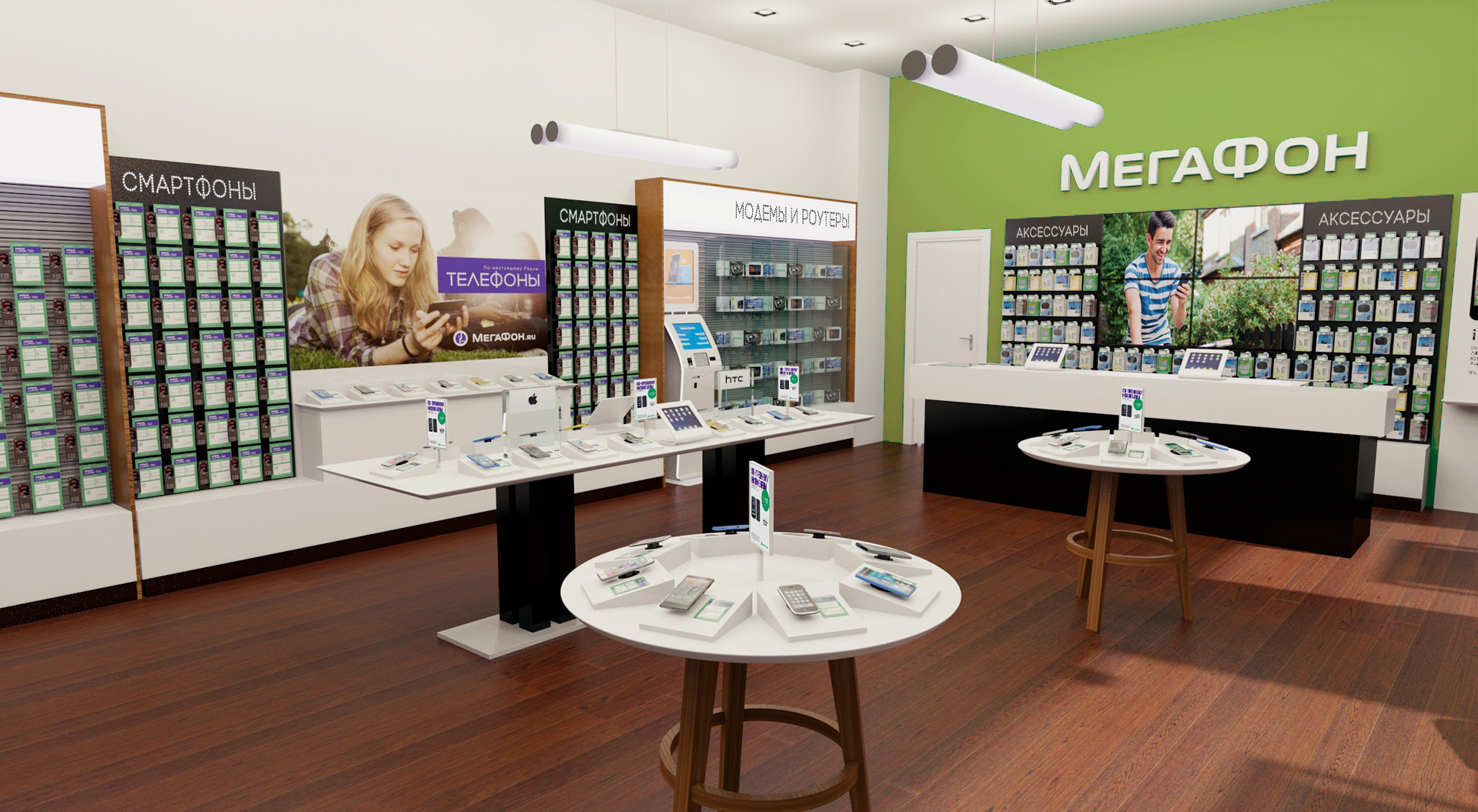
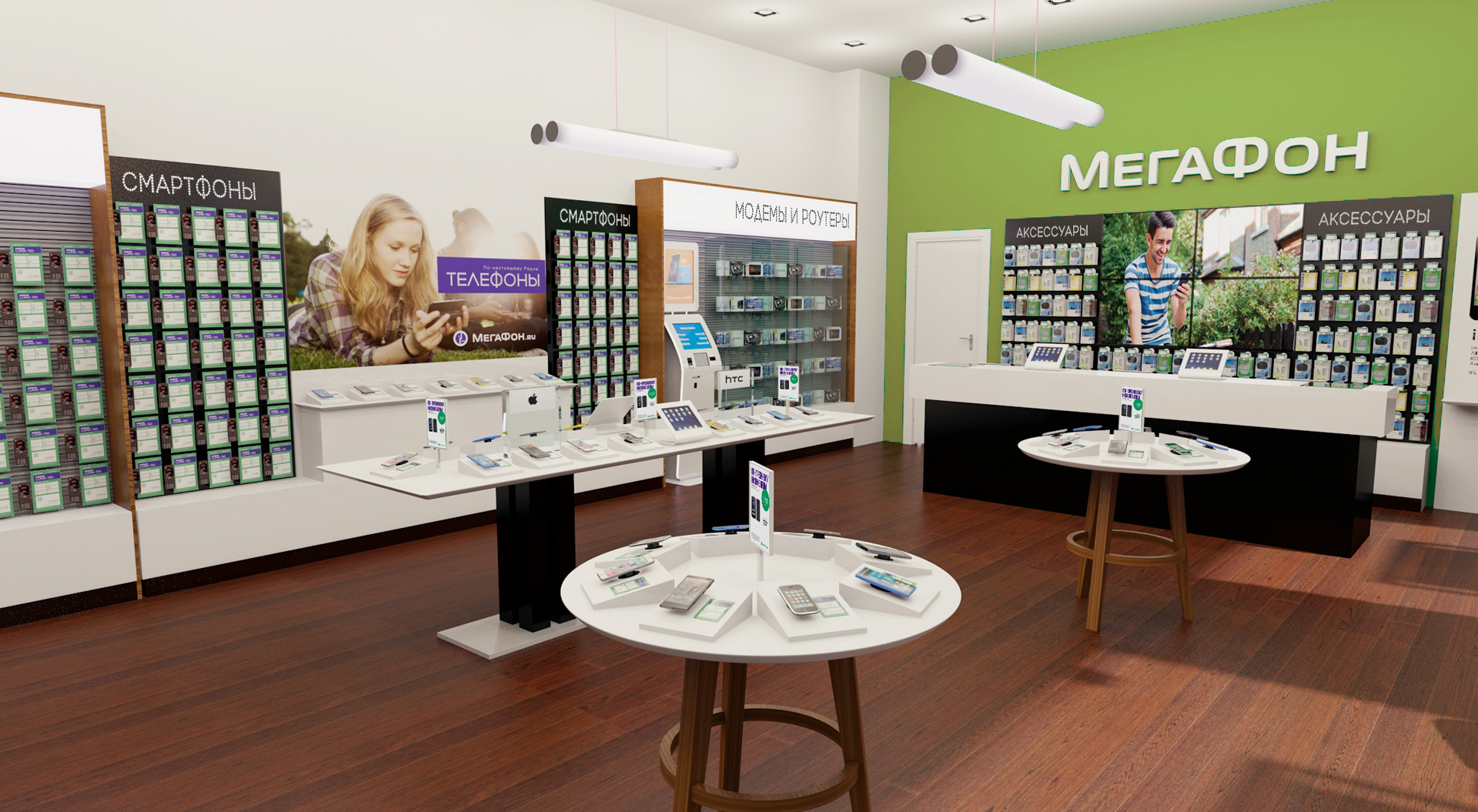
Building the next generation of Megafon retail
CampbellRigg worked with Megafon, a leading Russian telecom and technology retailer, to develop a comprehensive retail brand strategy, store design and visual identity programme. The work strengthened brand expression, customer journeys and product presentation across multiple formats.
The work encompassed graphics, signage, wayfinding, merchandising systems and intuitive zoning for Flagship stores on Tverskaya Street, Moscow, Business Centres on Bolshaya Sadovaya (200-150 sqm), as well as Standard stores (50-70 sqm) and shopping-mall kiosks. By connecting brand strategy with physical retail, the programme created a more consistent, engaging and commercially focused customer experience across the network
Turn telecom retail strategy into a scalable network
For senior management, the question is not simply how the next telecom store should look.
It is how the retail estate can become a scalable, measurable and commercially effective network.
CampbellRigg helps answer that question by connecting: Strategy → Brand → Customer Experience → Format Architecture → Store Design → Digital Integration → Implementation → Measurement
Our approach brings together brand auditing, retail strategy, customer journey design, store planning, identity, experiential design, merchandising and rollout.
The benefit is a single strategic direction that can guide investment across the retail estate.
We build brands designed to transform markets. Innovative. Relevant. Memorable.
For a confidential discussion about a telecom retail strategy, store redesign, format programme or network rollout, CampbellRigg can begin with a free consultation and develop a bespoke brief around your commercial objectives.

Frequently Asked Questions
What is telecom retail store design?
Telecom retail store design is the planning and design of physical environments where customers discover, experience, compare and purchase telecommunications products and services. It combines retail strategy, branding, architecture, interior design, visual merchandising, technology and customer experience.
What does a telecom retail design agency do?
A telecom retail design agency develops the strategy, brand environment, store concept, customer journey, spatial design, merchandising and digital experience required to create effective telecommunications retail environments.
Why is telecom store branding important?
Telecom store branding translates the identity and positioning of an operator into a physical customer experience. Consistent signage, graphics, materials, messaging and spatial design can strengthen recognition, differentiation and brand trust.
What is phygital telecom retail?
Phygital telecom retail connects physical stores with digital channels so customers can move seamlessly between online discovery, digital comparison, physical product experience, expert consultation, purchase and ongoing service.
What types of telecom stores can be designed?
Telecom retail design can cover flagship stores, standard network stores, compact urban stores, shopping-centre locations, kiosks, airport or travel formats, connected-home environments and technology experience hubs.
How can telecom store design improve sales?
Effective design can make products easier to discover and understand, improve customer flow, support assisted selling, encourage cross-selling and reduce friction during purchase. Performance should be measured against appropriate commercial and customer-experience KPIs.
What makes CampbellRigg different?
CampbellRigg integrates brand strategy, retail design, architecture, interior design, visual merchandising and customer experience. This enables telecom brands to develop a coherent retail proposition from strategic concept through to physical implementation.
Conclusion
Telecom retail is changing from a transactional model based primarily on selling devices and contracts into a broader experience in which brand, technology, service and physical space work together.
The most effective telecom retail store design makes complex technology understandable, creates opportunities for hands-on discovery, supports human expertise and connects the physical environment with digital customer journeys.
For telecom operators and technology brands, the opportunity is to create stores that do more than display products. They can become branded experience hubs that build loyalty, demonstrate innovation and support measurable commercial performance.
CampbellRigg helps technology and telecommunications brands turn strategy into distinctive retail environments designed around customers, brands and business objectives.