News and Views
Phygital Banking Strategy 2026/27: How Banks Are Redesigning the Branch.


Phygital Banking Strategy 2026/27: How Banks Are Redesigning the Branch
Phygital banking strategy is changing how banks design, operate and invest in physical branches. As customers move between mobile banking, digital platforms and physical locations, banks are redesigning branches around seamless omnichannel journeys, digital self-service, human advice and customer experience.
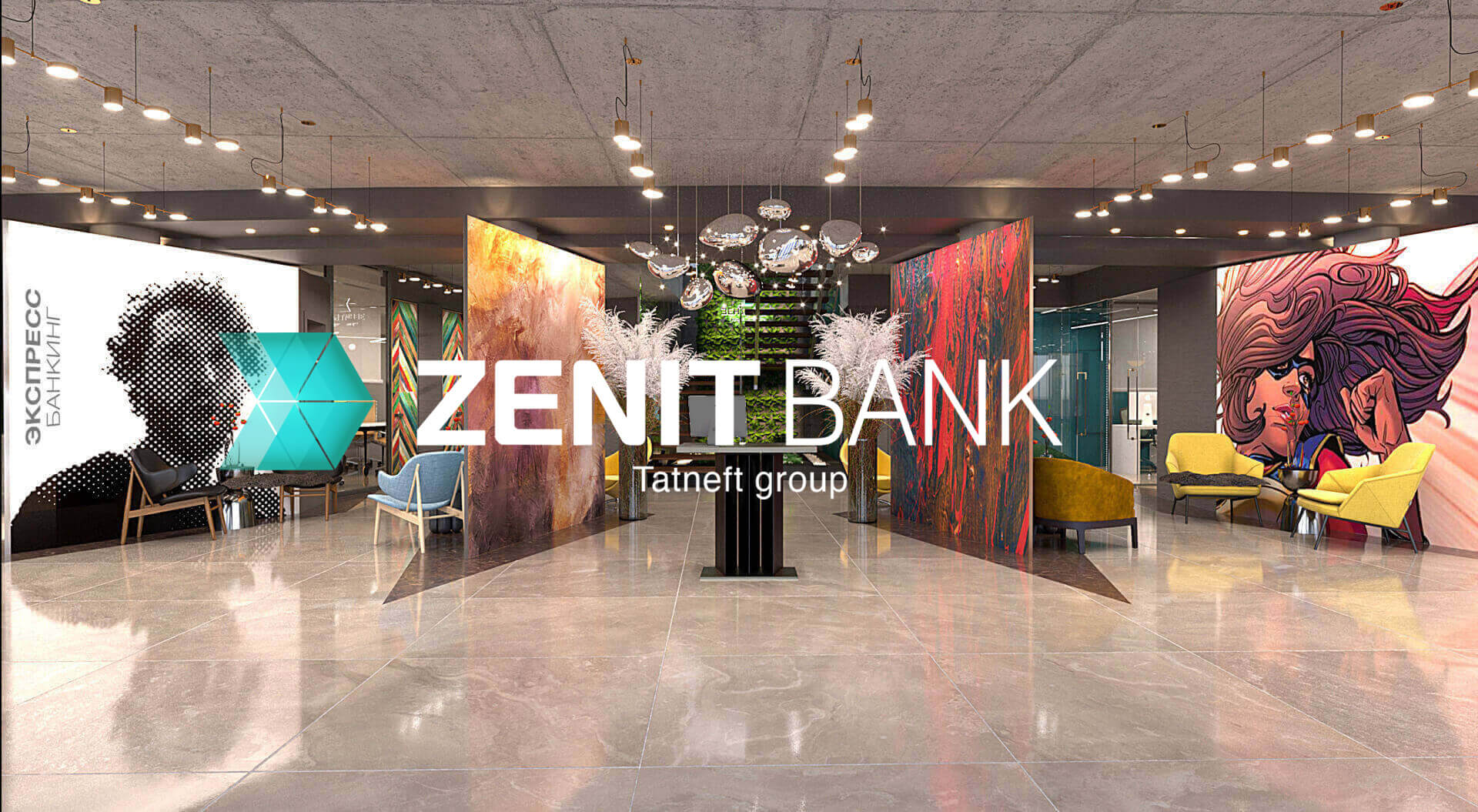
The modern bank branch is no longer simply a transaction centre. It is becoming a digitally connected advisory and experience hub where brand, technology, architecture and human expertise work together. For banks, the objective is to create branch environments that improve customer engagement, increase conversion, reduce cost-to-serve and generate measurable commercial returns.
Phygital bank branch design is the physical expression of a bank's digital strategy. It connects mobile banking, online services, AI-enabled tools, self-service technology and human advisory with the branch environment to create one continuous customer journey.

What Is Phygital Banking?
Phygital banking integrates physical bank branches with digital banking platforms, data, AI-enabled services, self-service technology and human expertise to create a connected customer experience across every channel.
Rather than treating the branch, mobile app, website and digital services as separate touchpoints, a phygital banking strategy connects them throughout the customer journey, from discovery and product research to advice, onboarding, servicing and relationship management.
For example, a customer might research a mortgage through a banking app, compare products digitally, book an appointment online, visit a branch for specialist advice, complete documentation digitally and continue managing the relationship through the bank's mobile platform. The branch becomes an integrated part of the wider banking ecosystem rather than an isolated physical channel.
This shift does not make physical branches irrelevant. Instead, it changes their role. As routine transactions increasingly move to digital channels, bank branch design can focus more heavily on advice, complex financial decisions, reassurance, relationship building and brand experience.
The future phygital bank branch therefore combines the convenience and personalisation of digital banking with the trust, expertise and human interaction that customers value in a physical environment.

Phygital Banking vs Digital Banking
Digital banking delivers financial services through digital channels. Phygital banking connects those digital channels with physical environments, human expertise and branded customer experiences.
Why Banks Are Redesigning Branch Networks
Three forces are accelerating the transformation of retail banking.
1. Digital banking has changed customer expectations
Customers increasingly expect banking to be fast, convenient and personalised. They can research products, transfer money, manage accounts and communicate with financial providers through digital channels.
A branch that simply replicates transactional services available through an app provides little additional value.
2. Complex financial decisions still require human expertise
Mortgages, investments, business finance, retirement planning and other significant financial decisions can involve complexity and uncertainty.
Customers may still want to speak to a trusted expert, particularly when the financial consequences are significant. The future bank branch therefore needs to combine digital convenience with human judgement rather than choosing between the two.
3. Branch economics are changing
Maintaining large networks of traditional transactional branches can be expensive. Banks need physical locations that make better use of space and generate greater value from every customer interaction.
This creates an opportunity to redesign branches around advisory services, customer experience and measurable commercial performance.
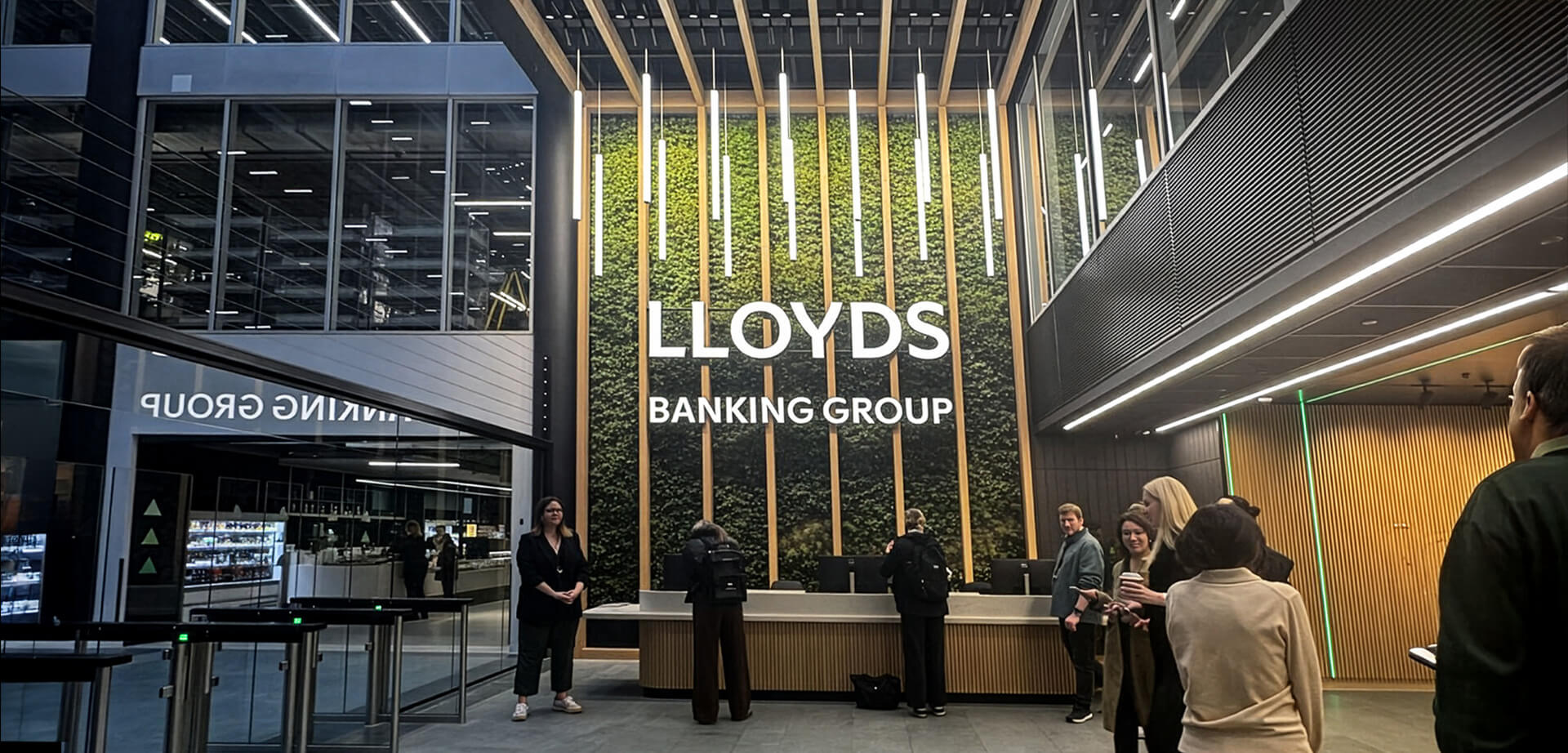
Phygital banking strategy must ultimately be translated into physical space.
The traditional banking environment was often organised around queues, counters, desks and back-office functions. The phygital branch requires a more flexible architecture that supports different types of customer interaction.
Key elements of modern bank branch design include:
- Digital discovery zones for product exploration and financial education
- Self-service areas for routine banking and onboarding
- Flexible consultation spaces for one-to-one and family discussions
- Private meeting rooms for sensitive financial conversations
- Integrated digital screens connecting physical communications with digital services
- Digital wayfinding that makes navigation simpler
- Hospitality-style waiting environments that reduce the perception of queuing
- Flexible furniture and modular layouts that allow spaces to change throughout the day
- Accessible design that supports different customer abilities and needs
- Consistent brand environments that reinforce trust and differentiation
The physical branch should not feel like a showroom for technology. Technology should be integrated into the environment so that it improves the customer journey without becoming an obstacle.
- Design around customer journeys
- Create digital discovery zones
- Move routine transactions to self-service
- Increase advisory space
- Introduce flexible consultation rooms
- Integrate digital screens and wayfinding
- Design for privacy and accessibility
- Create hospitality-led waiting environments
- Measure space against commercial performance
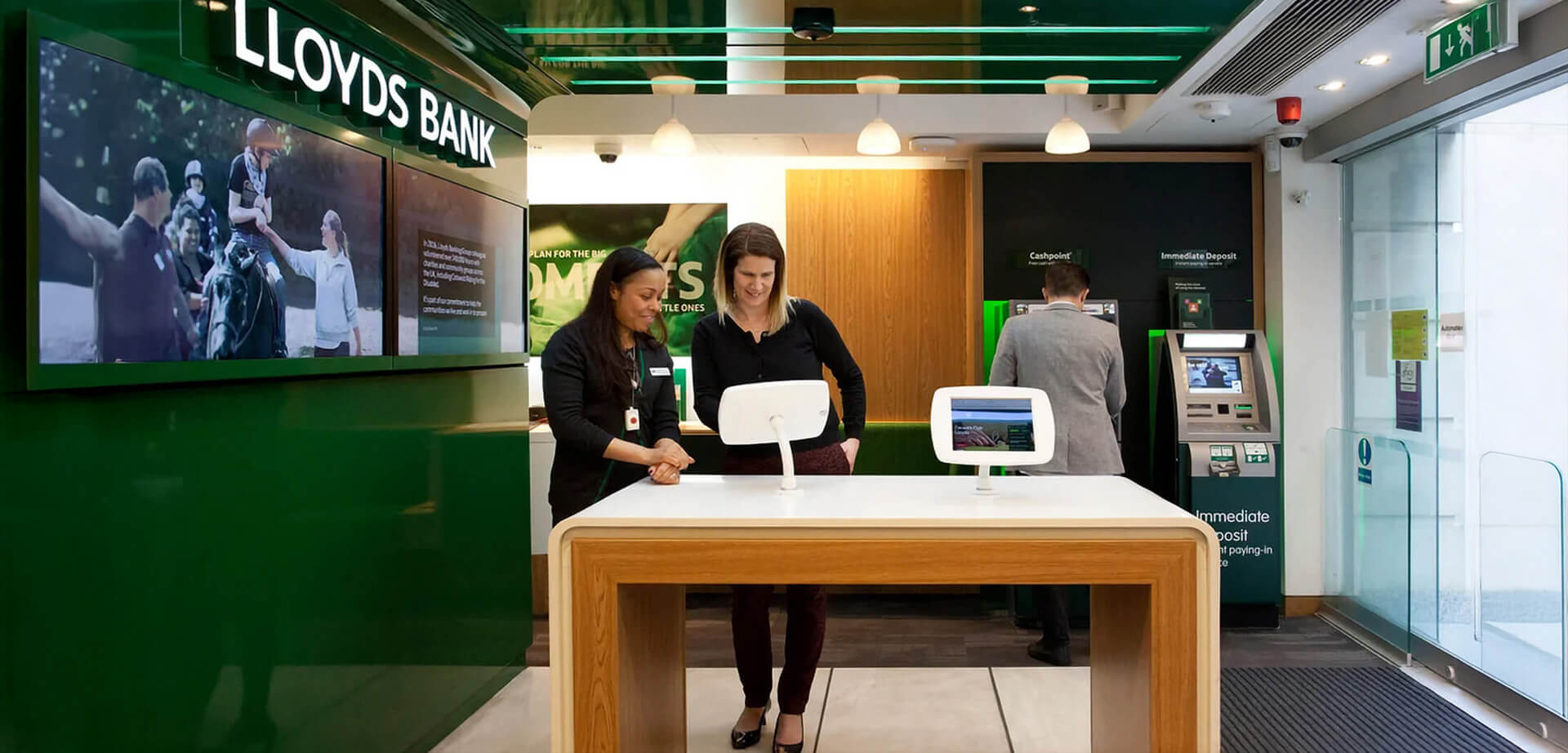
The Phygital Bank Customer Journey
A successful phygital banking strategy connects every stage of the customer journey, from digital discovery and product research to branch advice, application, onboarding and post-sale service.
AI discovery → mobile research → digital appointment → branch visit → advisor interaction → digital application → onboarding → ongoing mobile relationship
A typical journey can be structured as: Discover → Research → Engage → Visit → Advise → Apply → Complete → Follow-up
For example, a customer may discover a mortgage through digital advertising or a mobile banking application. They can research products online and use digital tools to understand their options.
If the decision requires specialist advice, they can book a branch appointment. When they arrive, the advisor already has access to relevant information and can continue the conversation rather than restarting the process.
The customer can then complete elements of the application digitally and continue receiving support through the bank's digital channels.
This creates continuity between online and offline banking.
For bank branch designers, the implication is significant: every physical touchpoint should have a relationship with the wider digital ecosystem.
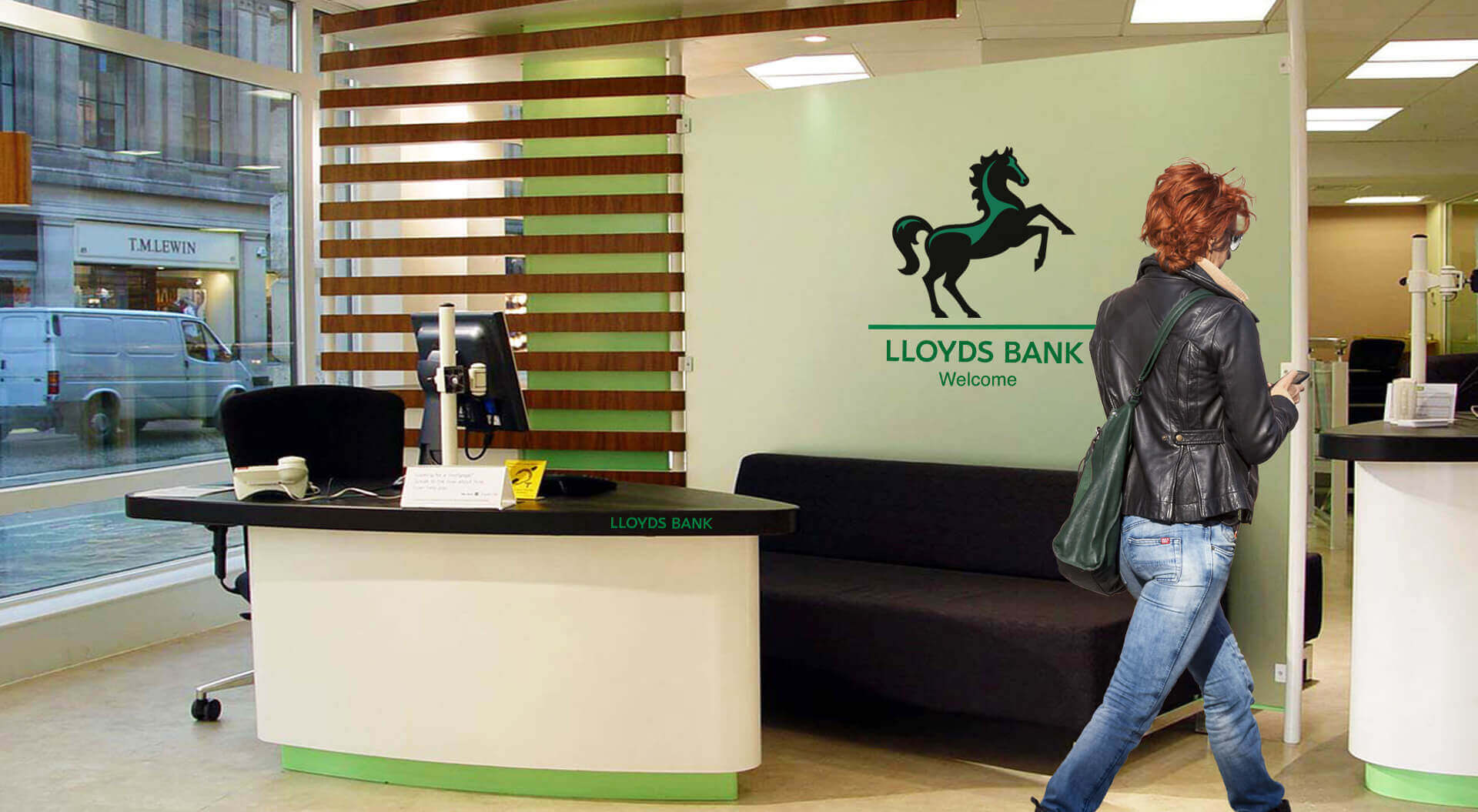
From Transaction Centre to Advisory Experience Hub
The successful branch of the future will be less focused on processing transactions and more focused on creating valuable customer interactions.
This means reallocating physical space.
A branch might contain a welcoming entrance and digital discovery area, followed by self-service facilities for simple requirements. Beyond this, customers can access increasingly private and personalised advisory environments.
The design hierarchy can therefore move from: Transaction → Service → Advice → Relationship
rather than simply: Queue → Counter → Exit
This changes the atmosphere of the branch as well as its functionality.
Customers should be able to explore financial products, receive guidance, ask questions and engage with specialists in environments that feel comfortable and trustworthy.
For banks, this creates opportunities to increase appointment utilisation, cross-selling, product conversion and customer retention.
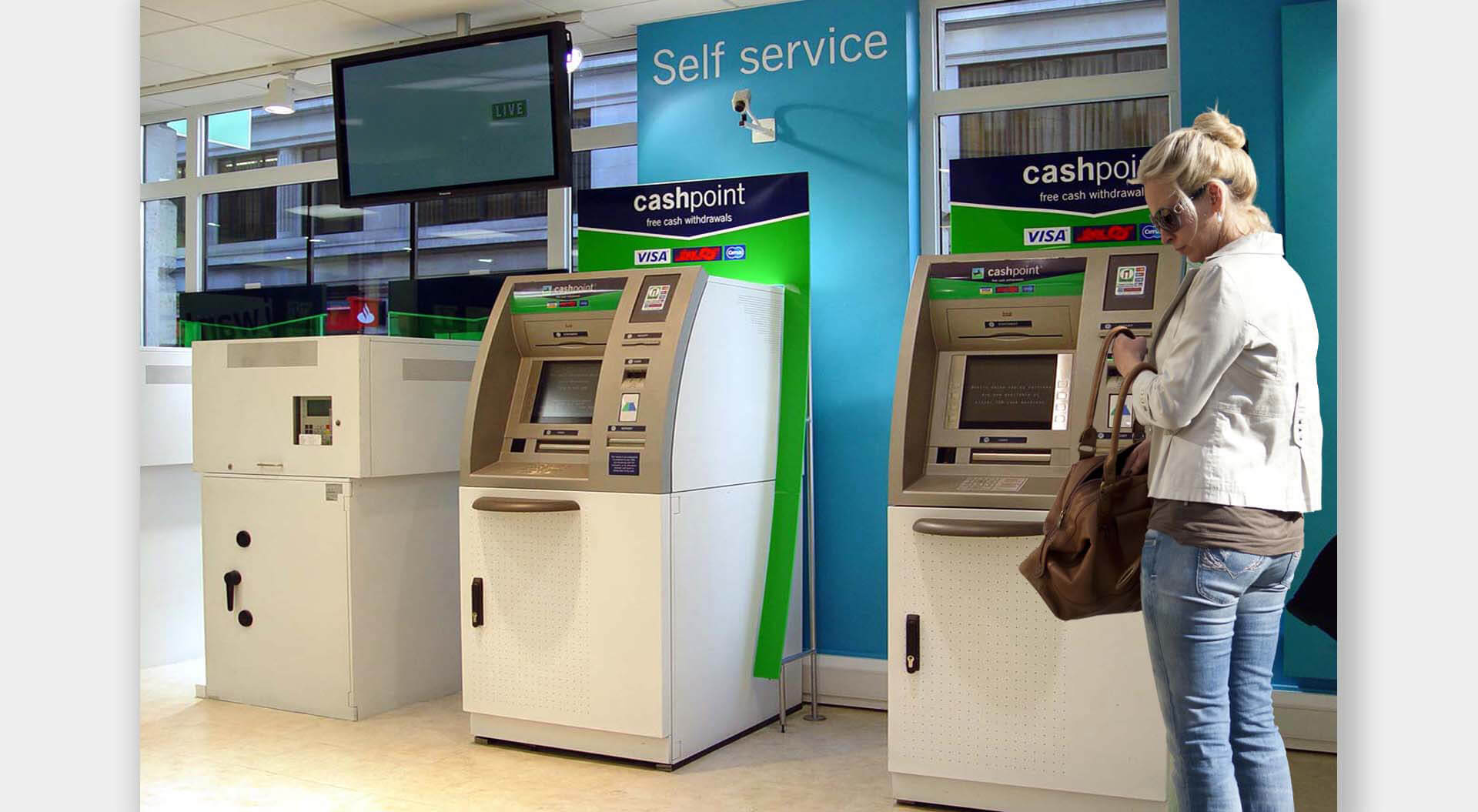
AI, Digital Self-Service and Human Expertise
AI and automation will play an important role in phygital banking, but they should support rather than dominate the branch experience.
Digital self-service can help customers complete routine tasks, access information, verify identity and begin applications before speaking to an employee.
AI-enabled advisory tools can also help employees prepare for meetings, personalise recommendations and connect information from previous digital interactions with the physical appointment.
However, the strategic role of AI is broader than putting an AI interface inside a branch. AI is an enabling layer within phygital banking rather than a substitute for the broader strategy. While AI can personalise recommendations, support advisors and automate routine interactions, phygital banking encompasses the wider integration of digital platforms, physical environments, brand experience, customer journeys and human expertise.
The objective is to connect digital intelligence with human expertise across the customer journey.
AI strategy and agentic AI bank branches are therefore important developments within the wider phygital ecosystem, but they represent a specialist layer of the transformation rather than the definition of phygital banking itself.
Modular Bank Branch Formats for the Phygital Era
Not every location requires the same type of bank branch. A phygital banking strategy enables banks to develop a modular network of physical formats, adapting each environment to local demand, customer demographics, location characteristics and commercial objectives while maintaining a consistent digital and brand experience.
Micro-branches
Compact branches can provide essential banking services, digital discovery, self-service and mobile integration in high-footfall locations such as shopping centres, transport hubs and urban districts. Digital onboarding, video banking and intuitive wayfinding can help customers complete routine activities independently while accessing human support when needed.
Advisory hubs
Advisory-led formats prioritise financial advice, private consultation and relationship management rather than traditional counter transactions. Dedicated advisory spaces can provide greater privacy for mortgages, investments, business banking and complex financial decisions, supported by customer data, video banking and digital tools.
Self-service banking lounges
Digitally enabled environments allow customers to access digital self-service, complete onboarding and manage routine activities independently. Digital discovery zones can demonstrate mobile banking, AI-enabled services and connected financial products, while employees remain available to provide assistance and human advice.
Pop-up banking spaces
Temporary, flexible environments can support new developments, events, emerging markets and targeted customer acquisition campaigns. Flexible layouts, branded environments and consistent digital integration allow banks to adapt the physical experience without compromising brand identity.
This modular approach enables banks to optimise their branch network around customer needs, local market demand and commercial performance, while reducing property costs, improving accessibility and extending market coverage. The result is a flexible physical network connected by one consistent omnichannel banking experience.

How to Measure Bank Branch Transformation
Phygital bank branch design should be measured against commercial outcomes, not simply aesthetic quality.
For bank executives, branch redesign should therefore be treated as a commercial transformation programme rather than an interior design exercise. The business case should connect investment in architecture, technology, customer experience and brand environments to measurable improvements in conversion, appointment utilisation, sales per square metre, customer retention, staff productivity and ROIC.
A well-designed environment can support:
- Customer acquisition through stronger local visibility and brand experience
- Conversion by making product journeys easier to understand
- Cross-selling by creating better opportunities for relevant conversations
- Advisory appointments through dedicated consultation environments
- Customer retention through stronger relationships and service continuity
- Staff productivity through better space planning and digital support
- Branch utilisation by allowing spaces to support multiple activities
- Cost-to-serve reduction through appropriate self-service and automation
- Sales per square metre through more productive physical environments
- ROIC by connecting investment in branch transformation to measurable commercial performance
This shifts the discussion from “What should the new bank branch look like?” to “What should the branch achieve?”
That is a fundamentally more strategic approach to banking environment design.

CampbellRigg's approach can be understood through five connected components:
1. Brand
The branch must communicate the bank's identity, values and proposition through architecture, interiors, graphics, materials and customer experience.
2. Digital
Mobile, web, self-service, data and other digital touchpoints need to connect seamlessly with the physical environment.
3. Physical
Architecture and interior design must create the right balance of discovery, service, advice, privacy, flexibility and hospitality.
4. People
Employees remain critical where customers need expertise, reassurance, judgement and relationship management.
5. Performance
The environment should be designed around measurable outcomes including conversion, engagement, productivity, utilisation, customer satisfaction and ROIC.
Together, these five components turn phygital banking from a technology concept into an actionable branch transformation strategy. The most effective phygital banking strategies do not optimise these five elements independently. They connect them into one operating model in which brand, digital experience, physical space, people and commercial performance reinforce each other.

Why Banks Are Redesigning Branch Networks
Here are five reasons:
- declining relevance of transactional branches
- digital banking adoption
- changing customer expectations
- rising branch operating costs
- greater demand for advice and complex financial services
Designing the Future Phygital Bank Branch
The future bank branch will not necessarily be larger or filled with more technology. It will be more purposeful.
Routine transactions will increasingly move towards digital and self-service channels. Physical space will be concentrated around activities where it creates greater value: advice, education, complex financial decisions, human interaction and brand experience.
This means bank branch design will become more flexible, modular and customer-centric.
The most effective environments will also maintain continuity with the bank's digital platforms. Customers should recognise the same brand, language, services and experience whether they begin their journey on a smartphone or inside a branch.
The branch therefore becomes a physical extension of the bank's digital ecosystem.
CampbellRigg: Phygital Banking Strategy, Brand and Branch Design
CampbellRigg brings together banking strategy, brand experience, customer journey thinking, architecture, interior design and digital integration to help financial institutions transform their physical environments.
For banks, phygital transformation is not simply a technology project. It requires the translation of digital strategy into physical environments that customers can understand, navigate and trust.
CampbellRigg helps financial institutions develop bank branch redesign strategies that connect brand, customer experience and commercial performance.
The approach can include:
- Banking brand and experience strategy
- Customer journey and service design
- Phygital banking strategy
- Bank branch design and redesign
- Modular branch formats
- Digital and physical touchpoint integration
- Interior architecture and environmental design
- Customer experience design
- Branch rollout and implementation
The result is a more connected banking environment in which digital capability, physical design and human expertise work together.
Our Four-Step Process:
1. Book a consultation call for free.
2. Co-create a bespoke brief.
3. We execute the creative work fast.
4. You see sales, brand loyalty and market share uplift.

The Future of Phygital Banking
Phygital banking is not the replacement of physical banking with digital technology. It is the integration of both.
As customers become more comfortable with digital banking, the role of the branch will become more specialised and potentially more valuable. Physical locations can provide the trust, expertise and human reassurance that digital channels cannot always replicate, while digital services can make physical interactions faster and more personalised.
The winning model is therefore not digital versus physical.
It is digital + physical + people + brand + performance.
For banks planning their 2026/27 transformation strategies, the priority should be to redesign the branch network around the journeys customers actually want to make.
The future bank branch is not simply a place to transact. It is a connected customer experience environment designed to turn digital relationships into deeper human relationships, stronger brand loyalty and measurable commercial performance.
CampbellRigg can help banks translate phygital banking strategy into brand-led, customer-focused and commercially effective branch environments.