



News and Views
How Banks Can Capture New Markets Through Smarter Brand Strategies




Bank Branding Strategy: Building Trust and Capturing New Markets
Bank branding strategy is a critical management discipline for financial institutions seeking to strengthen competitive positioning, enter new markets and accelerate customer acquisition.
Banking leaders face a challenge that extends beyond visual identity, advertising or branch design. The central task is to establish a distinctive market position, develop a compelling customer proposition and ensure that every relevant interaction reinforces the bank's competitive advantage.
There are six major strategic priorities:
- Market positioning and competitive differentiation.
- Brand proposition and development.
- Integrated marketing communications.
- Digital engagement and customer acquisition.
- International benchmarks and competitive intelligence.
- Commercial accountability and measurable growth.
The strategic question facing banking leaders
The central management challenge is to establish a distinctive market position, explain why the bank's proposition matters to customers, and ensure that every relevant interaction reinforces that choice.
In competitive financial services markets, a brand creates value when it connects business ambition with customer needs and turns that connection into meaningful engagement.
Digital behaviour has changed how customers discover, compare and use financial services. A bank's brand is experienced through search results, websites, apps, online content, email, product information, service conversations and personal advice. These are not separate from brand development; they form the communications environment in which the brand promise is experienced and evaluated.
For CampbellRigg, the opportunity is to connect business strategy and brand positioning with practical marketing communications, digital engagement and below-the-line marketing. This helps banks reach intended markets, strengthen customer relationships and support commercial growth.

1. Market positioning and competitive differentiation:
A bank's market position determines where it competes, which customers it intends to attract and why those customers should choose its services over competing financial institutions.
For CEOs and marketing directors, establishing this position requires more than reviewing competitors' advertising or refreshing the corporate identity. It requires an understanding of the bank's business ambitions, customer segments, existing market perceptions and competitive advantages.
Retail banks, private banks and business banking institutions operate with different customer expectations and commercial priorities.
A retail bank may seek to differentiate itself through accessibility, convenience and straightforward financial services. A private bank may place greater emphasis on discretion, investment expertise and personal relationships. A business bank may need to demonstrate its understanding of commercial pressures, financing requirements and business development.
The strategic challenge is to identify a credible position that connects the bank's capabilities with the needs of its intended marketplace.
Without this clarity, marketing expenditure can become fragmented across disconnected campaigns, product communications and brand initiatives.
How CampbellRigg helps
CampbellRigg begins by examining the existing brand, its marketplace position, competitive environment and customer proposition.
Brand auditing and strategic assessment establish where the bank currently stands and where management wants it to compete. This provides the foundation for positioning, brand development, communications strategy and subsequent creative implementation.
The resulting strategy establishes a consistent direction for brand identity, messaging, marketing priorities and customer-facing applications.
The commercial benefit
A clearly differentiated market position gives management a stronger basis for investment decisions, customer acquisition and long-term brand development.
It also ensures that subsequent marketing and communications activities contribute to a defined business objective rather than operating as isolated initiatives.
2. Develop a compelling brand proposition:
A distinctive market position must be translated into a customer proposition that people understand, recognise and value.
Banks frequently communicate similar promises around trust, expertise, innovation, service and financial security. These attributes are important, but they do not necessarily differentiate one institution from another.
The proposition must explain what makes the bank relevant, which customers it serves, what it offers and why its services deserve consideration.
For management, this involves connecting the bank's business model with the expectations of its priority customer groups.
A private bank may develop its proposition around personal wealth management, investment expertise and long-term financial relationships. A retail institution may focus on accessible financial services and digital convenience. A business bank may emphasise sector knowledge, responsive financing and support for commercial growth.
Brand development must translate these strategic choices into a recognisable identity, compelling messages and consistent customer experiences.
The proposition must also be credible. If a bank promises simplicity, its product information and onboarding should be straightforward. If it promises personal expertise, customers must be able to access that expertise.
How CampbellRigg helps
CampbellRigg connects strategic positioning with brand proposition development, brand identity, messaging and practical applications across customer touchpoints.
The process translates management objectives into a coherent brand proposition that can be communicated consistently through marketing materials, digital channels, customer communications and physical environments.
The commercial benefit
A compelling proposition gives customers a clearer reason to choose the bank.
It provides marketing teams with a consistent platform for developing campaigns, communicating products and building stronger relationships with priority customer segments.

3. Integrate brand development with marketing communications:
Brand strategy creates commercial value when it influences how the bank communicates with its marketplace.
A positioning statement or new visual identity is not sufficient. The strategy must be translated into integrated marketing communications that connect the bank's proposition with customer needs and commercial priorities.
This requires coordination across advertising, public relations, digital content, direct marketing, email communications, sponsorship, customer literature, sales materials and below-the-line marketing.
Each channel should have a defined role.
Brand communications establish awareness and recognition. Product marketing explains relevant services and benefits. Direct marketing encourages appropriate customer action. Relationship communications support retention, loyalty and ongoing engagement.
Below-the-line marketing is particularly important when banks need to reach specific customer groups, introduce new products, develop local relationships or generate responses from defined market segments.
The objective is not simply to increase communication volume. It is to ensure that every activity reinforces the bank's positioning and contributes to an agreed marketing or business objective.
How CampbellRigg helps
CampbellRigg connects brand strategy with integrated marketing communications and practical marketing development.
This includes establishing communication principles, developing messaging frameworks and translating the brand proposition into relevant applications across advertising, digital communications, customer materials and below-the-line activity.
The approach ensures that marketing development follows the strategic direction rather than becoming a collection of unrelated creative assignments.
The commercial benefit
An integrated communications strategy strengthens brand consistency, improves the relevance of customer messaging and gives management greater control over marketing investment.
It also provides a more coherent platform for product launches, customer acquisition and market development.

4. Make digital engagement part of the banking brand experience:
Digital engagement is now central to how customers discover, assess and interact with financial institutions.
For many customers, the website, mobile application, search results, email communications and online service interactions provide their most frequent experience of a bank.
Consequently, digital engagement is not simply a technology or IT responsibility. It is an essential part of brand positioning, marketing development and customer relationship management.
Banks must consider whether their digital communications clearly explain their proposition, answer customer questions and make the next step straightforward.
A prospective customer researching a mortgage, savings account, business loan or wealth management service should encounter a coherent proposition throughout the decision-making process.
The bank's messaging, content, visual identity and digital experience must reinforce one another.
Artificial intelligence also creates opportunities to improve customer information, personalise communications and support service interactions. However, these developments must operate within appropriate standards for privacy, transparency, security and regulatory compliance.
Technology should strengthen the bank's proposition, not replace the human expertise and trust on which financial relationships depend.
How CampbellRigg helps
CampbellRigg aligns digital communications and customer-facing brand applications with the bank's strategic positioning.
This includes developing consistent messaging, brand presentation and marketing communications across websites, digital advertising, online content and other customer touchpoints.
The objective is to ensure that digital engagement reinforces the bank's intended marketplace position.
The commercial benefit
A connected digital brand experience makes the bank's proposition easier to understand and access.
It provides a stronger foundation for customer engagement, qualified enquiries, acquisition and relationship development.
5. Learn from international banking benchmarks and competitive intelligence
Banking leaders operate in international markets where customer expectations, digital adoption, financial products and competitive propositions continue to evolve.
Understanding how successful financial institutions develop and communicate their brands can provide valuable strategic insight.
International institutions such as JPMorgan Chase, Barclays, HSBC and Santander offer different examples of how established banking brands communicate their propositions across markets and customer segments.
Their approaches should not simply be copied. The value lies in understanding the strategic decisions behind their brand development.
Management should consider:
- How do competing banks differentiate their propositions?
- How do they communicate expertise, trust and innovation?
- How effectively do their digital and physical channels reinforce their brand?
- How do they address different customer segments?
- How do their communications support product development and customer acquisition?
- What lessons can be adapted to the bank's own competitive environment?
Santander provides a useful example of how a clearly defined brand philosophy can inform communications across different markets and customer interactions.
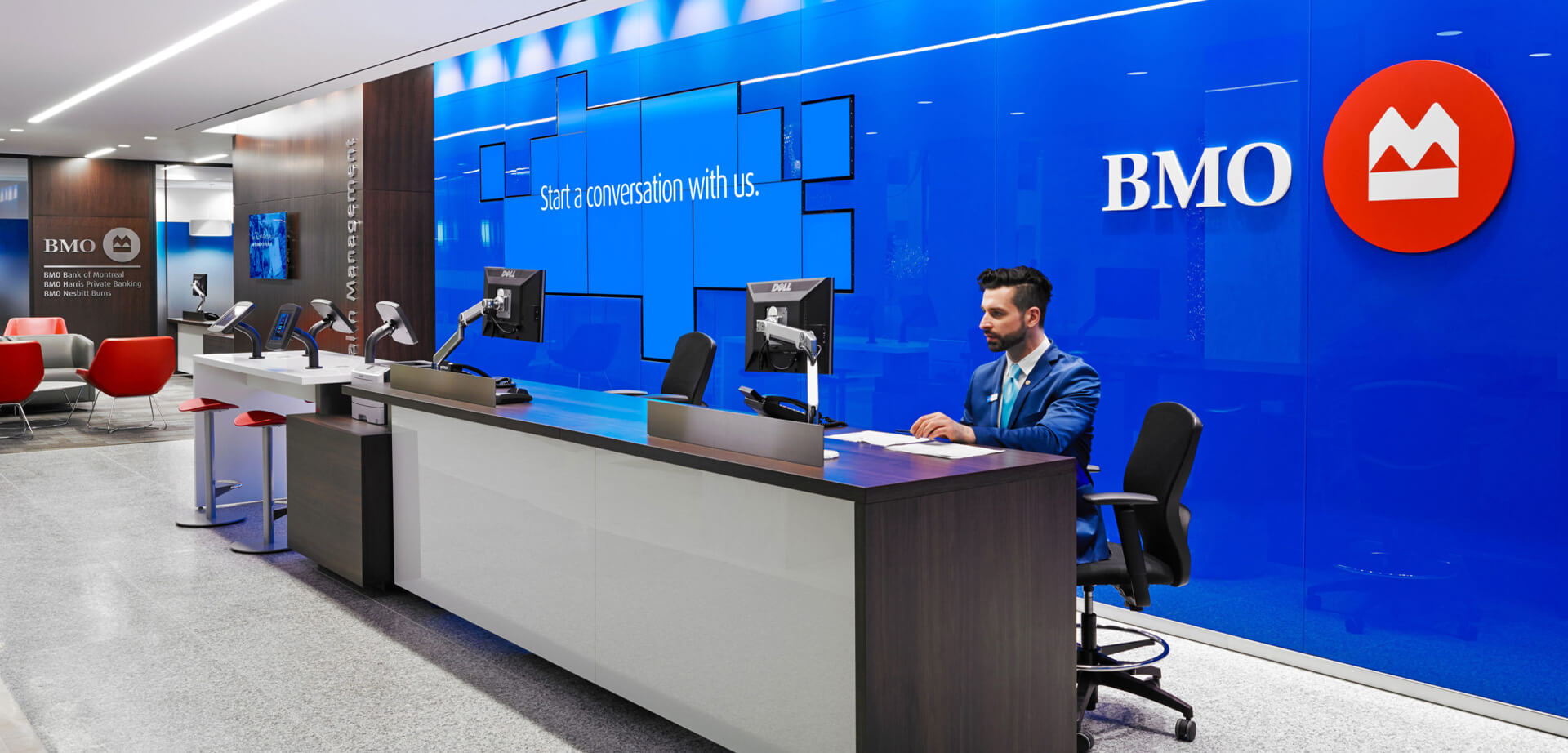
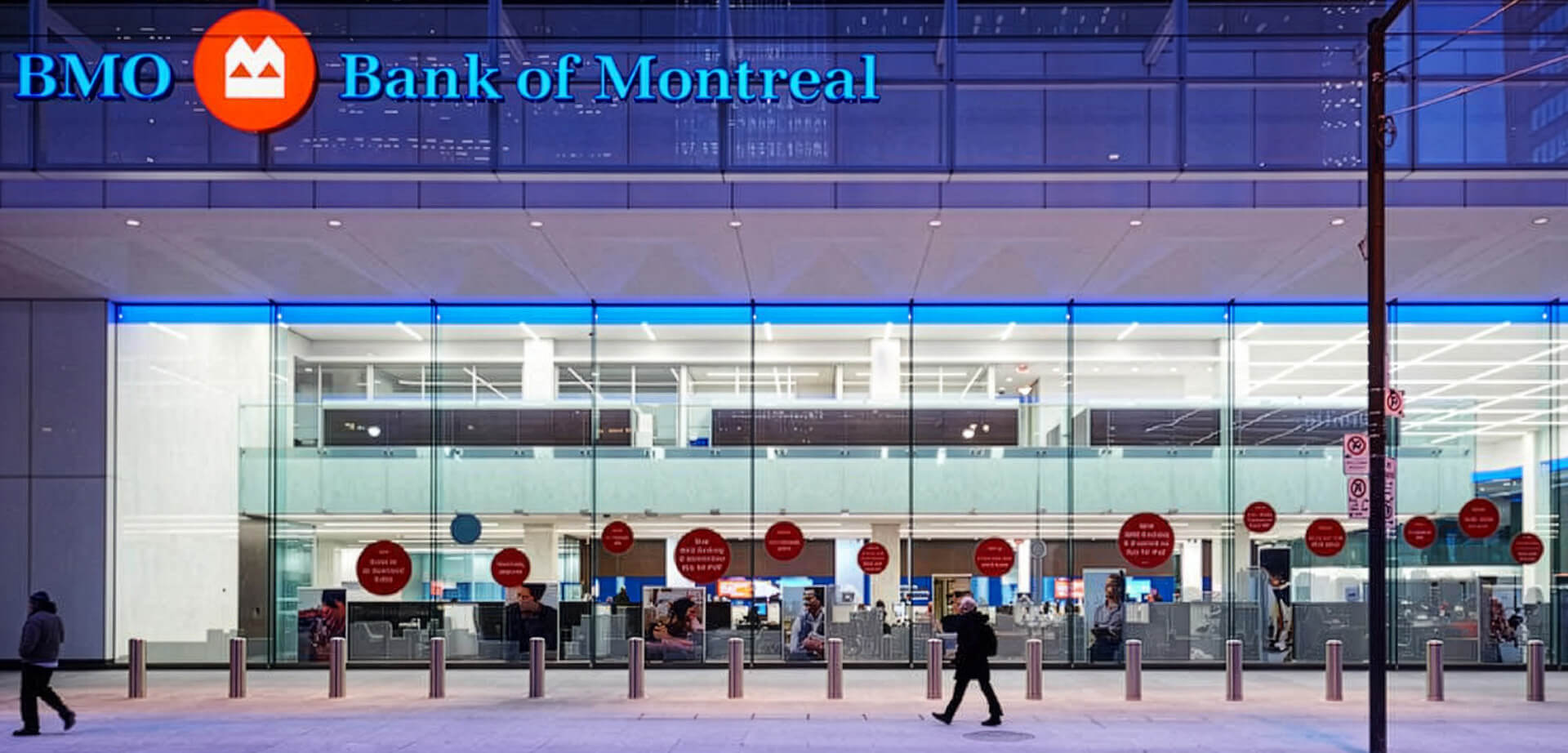
Similarly, the development of advisory-led banking environments at institutions such as BMO illustrates how physical customer experiences can reinforce a wider brand proposition.
The objective of competitive intelligence is to identify relevant opportunities, not reproduce another institution's identity or marketing activity.
CampbellRigg project experience: Zenit Private Bank
CampbellRigg's work with Zenit Private Bank demonstrates the practical relationship between brand identity, customer proposition, communications and the banking environment.
The project brought together brand identity refinement, private banking environment design and an integrated communications suite.
The brand proposition included the messages Discover a world of possibilities and Money is only a tool.
The work addressed the expectations of private banking customers through a consistent approach to brand presentation, VIP client environments and communications.
The project included:
- Brand identity refinement and visual communication.
- Development of brand messaging around long-term wealth management.
- VIP lounge and private advisory environment design.
- Conference and meeting spaces supporting client relationships.
- Marketing communications for physical and digital channels.
- Customer-facing messaging addressing investment solutions and wealth management.
This demonstrates how brand strategy can extend beyond corporate identity to influence the complete customer experience.
Explore the Zenit Private Banking case study.
How CampbellRigg helps
CampbellRigg combines international competitive observation with practical experience in banking brand development.
The objective is to identify relevant benchmarks, assess opportunities for differentiation and translate management ambition into a distinctive brand and communications strategy.
The commercial benefit
International benchmarking helps management make better-informed strategic decisions.
It provides a broader understanding of competitive positioning, customer expectations and opportunities to strengthen the bank's marketplace proposition.
6. Connect brand investment with commercial accountability and measurable growth
Brand development and marketing communications must ultimately support the bank's business objectives.
For CEOs and marketing directors, this means establishing a clear relationship between strategic investment, customer engagement and measurable commercial performance.
Brand awareness alone is not sufficient. Management needs to understand whether the bank is becoming more relevant to its intended customers, whether marketing communications are generating meaningful engagement and whether the proposition is supporting customer acquisition and retention.
Depending on the bank's priorities, relevant performance indicators may include:
- Brand awareness within priority customer segments.
- Market consideration and customer preference.
- Qualified customer enquiries.
- New account openings.
- Marketing campaign response.
- Product uptake and cross-selling.
- Customer retention and loyalty.
- Digital engagement and completed customer journeys.
- Customer satisfaction and relationship development.
Not every commercial result can be attributed directly to branding. Management should establish appropriate baselines, define measurable objectives and evaluate performance over a realistic period.
Brand strategy should also provide a framework for decision-making and governance.
Brand positioning, communications, digital content and customer-facing applications require clear principles to maintain consistency while allowing individual marketing activities to respond to different customer groups and markets.
How CampbellRigg helps
CampbellRigg connects business strategy, brand positioning, brand development and marketing communications within a coherent implementation framework.
This helps management ensure that creative development and marketing activity remain aligned with the intended proposition and agreed commercial priorities.
By establishing clear strategic objectives and communication principles, CampbellRigg helps banks create a more accountable approach to brand investment and marketing development.
The commercial benefit
Management gains a clearer basis for evaluating marketing activity, prioritising investment and developing the bank's competitive position.
Brand development becomes an ongoing business management discipline rather than an isolated exercise in visual identity or advertising.

The opportunity for banking leaders: turning brand strategy into business development
Banks do not develop stronger market positions through visual identity alone, nor through disconnected advertising campaigns.
They develop distinctive brands by connecting business strategy with a compelling customer proposition and expressing that proposition consistently through marketing communications, digital engagement and customer experiences.
For CEOs, the challenge is to determine where the bank should compete, which customer groups it should prioritise and how its proposition can become more relevant and differentiated.
For marketing directors, the challenge is to translate those decisions into integrated communications, effective digital engagement and marketing development that supports the bank's commercial objectives.
These responsibilities must operate together.
CampbellRigg connects business strategy, brand positioning, brand development and marketing communications to help financial institutions translate management ambition into practical marketplace differentiation.
Our work brings together strategic assessment, brand identity, customer propositions, marketing communications and customer-facing environments.
The objective is to give banking management a coherent platform for developing the business, strengthening customer relationships and pursuing new market opportunities.
CampbellRigg: Innovative. Relevant. Memorable.
We build brands designed to transform markets.
Discuss your banking brand strategy with CampbellRigg.
Explore how we can help your bank establish a stronger market position, develop its customer proposition and connect brand investment with commercial growth.

CampbellRigg can help connect these commercial objectives with the customer proposition, brand experience, branch format and implementation strategy. The resulting design brief should be informed by the bank's intended market position and measurable business priorities.
The opportunity for European banks through 2031
The future of bank branch strategy will not be determined by a universal choice between opening and closing locations. It will depend on how effectively each bank identifies growth opportunities and aligns its distribution network with customer needs.
JPMorgan Chase provides a useful international benchmark because it demonstrates a deliberate commitment to physical expansion alongside digital investment. European institutions must establish their own priorities based on local market conditions, customer expectations and competitive opportunities.
For Barclays, the next stage should begin with identifying markets where the bank could strengthen its position, the customer segments it intends to attract and the services needed to differentiate its proposition.
Only then should management decide whether the appropriate response is a new branch, a modernised location, a specialist advisory centre or a different form of local presence.

CampbellRigg's contribution is to help translate those business decisions into brand positioning, customer propositions, scalable physical formats and commercially focused implementation.
The fundamental question for banking leaders is this: where should the bank compete next, and how can its physical network help it win?
That is the strategic opportunity behind the future of bank branches, not simply to manage a property estate, but to build a stronger market position through a connected, differentiated and commercially effective banking network.

The Phygital Banking Opportunity
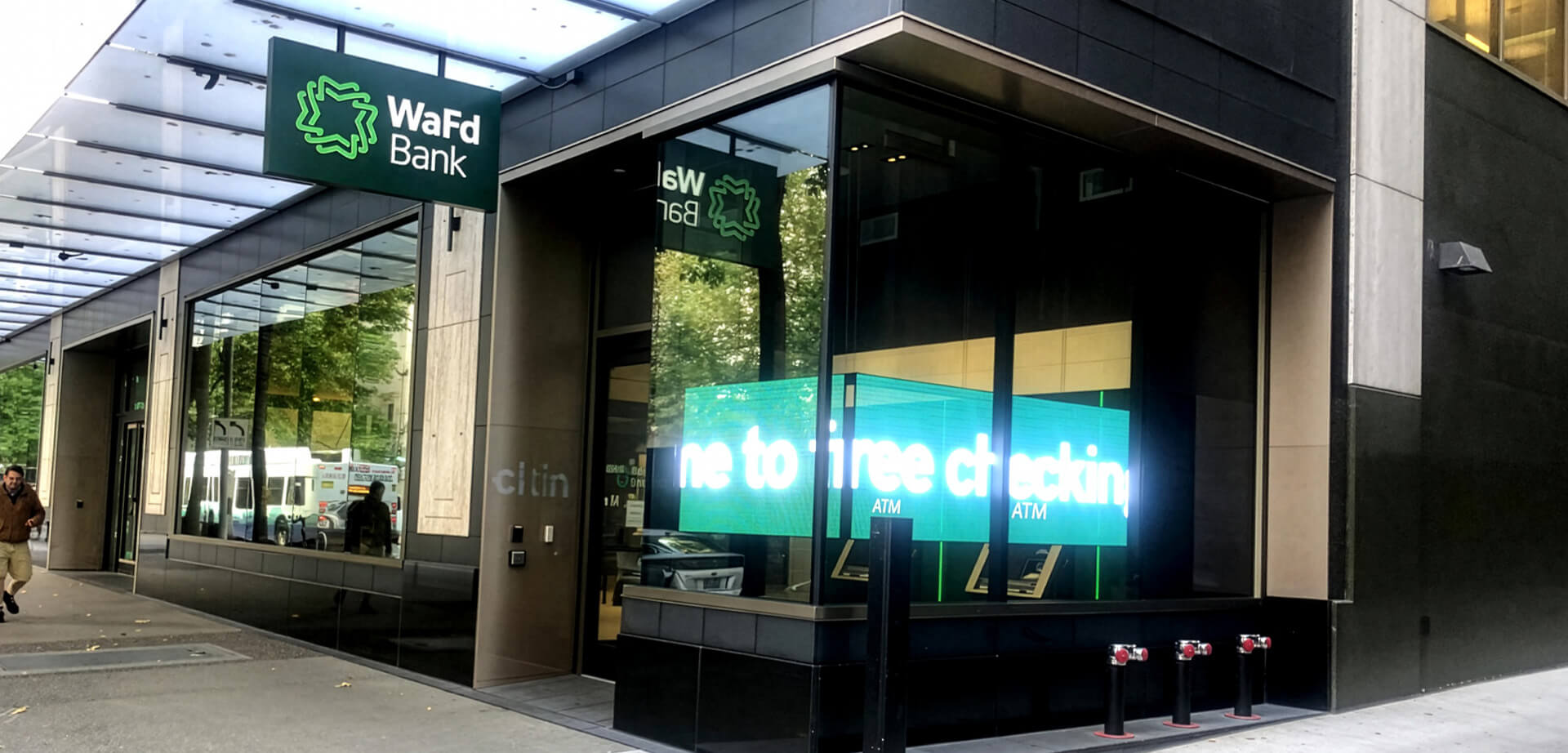
BMO and WaFd illustrate how digital convenience, human advice and physical environments can reinforce differentiated banking brands.
For banks planning next-generation branches, the opportunity is no longer simply to redesign the interior, but the entire customer experience.
Phygital banking turns the branch into a connected platform for engagement, advice, loyalty and measurable growth.