News and Views
Flagship Fashion Store Design: Concepts, Innovation & Brand Experience






Flagship Fashion Store Design: Concepts, Innovation & Brand Experience
Flagship fashion store design should be treated as a strategic investment in the future of a retail network, not simply as the creation of a larger or more spectacular store.
For senior fashion retail management, the question is what the flagship must achieve commercially. It should strengthen brand positioning, differentiate the customer experience, improve product discovery, test new retail propositions and establish principles that can influence future stores.
CampbellRigg develops flagship fashion store concepts by connecting retail strategy, brand identity, architecture, interior design, spatial planning, visual merchandising and digital experience. The objective is to turn strategy into a distinctive physical environment that can be measured, refined and used to inform the wider retail portfolio.
The strategic model is straightforward: define the proposition, test it in the flagship, measure the response, translate the learning and apply the relevant principles across the network.
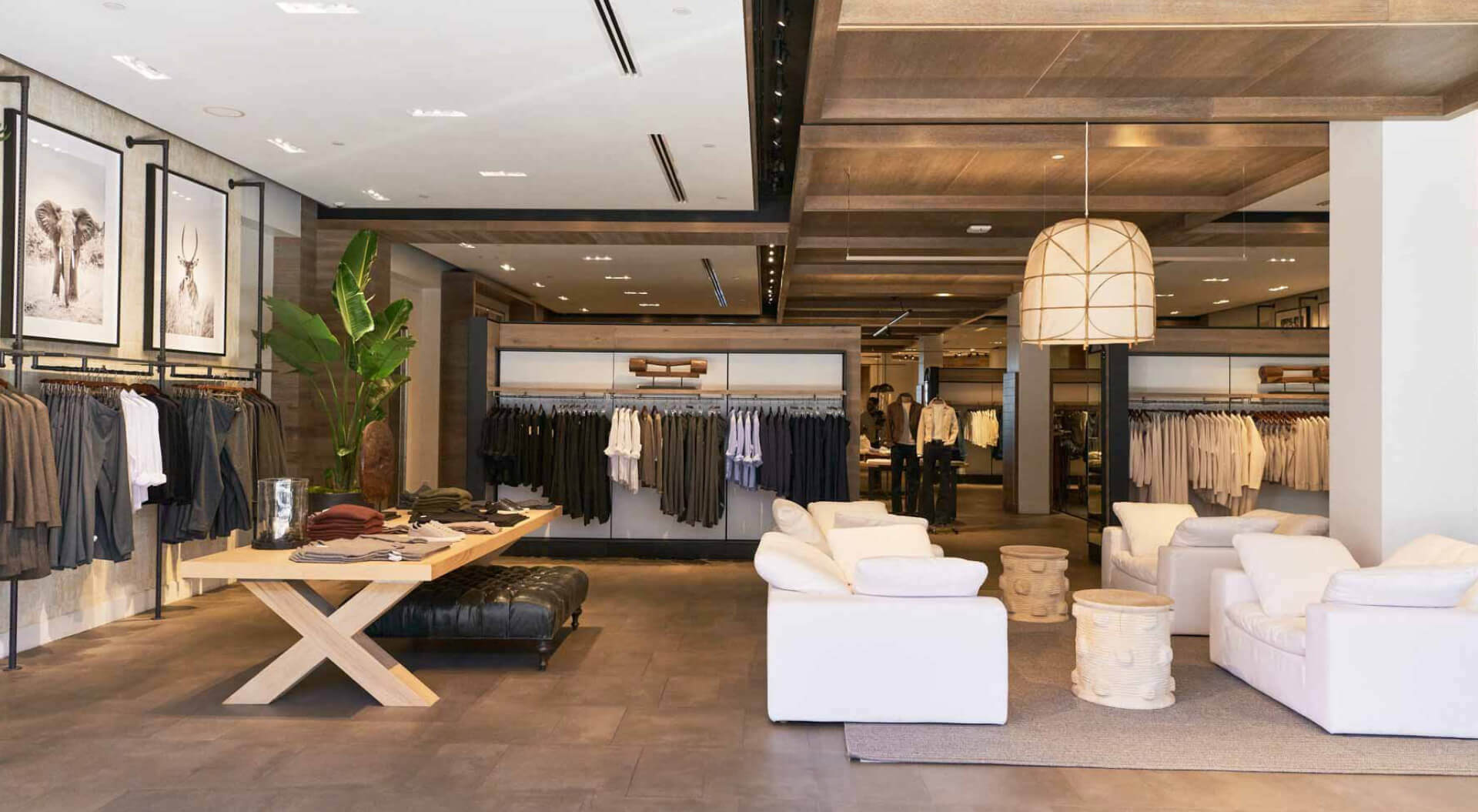
Flagship Fashion Store Design as a Strategic Retail Platform
A flagship should represent the brand at its strongest level while giving management a controlled environment in which to develop the next generation of physical retail.
CampbellRigg begins by establishing the strategic brief: target customers, brand positioning, commercial priorities, customer journey, product hierarchy, service proposition, digital requirements and the intended role of the flagship within the wider estate.
These decisions then inform the physical concept.
The result is not architecture developed in isolation. Brand expression, spatial planning, merchandising, customer experience and digital services are developed as one commercial proposition.
The objective is to balance brand theatre with retail productivity: creating an environment that customers want to explore while making products easy to understand, compare and purchase.
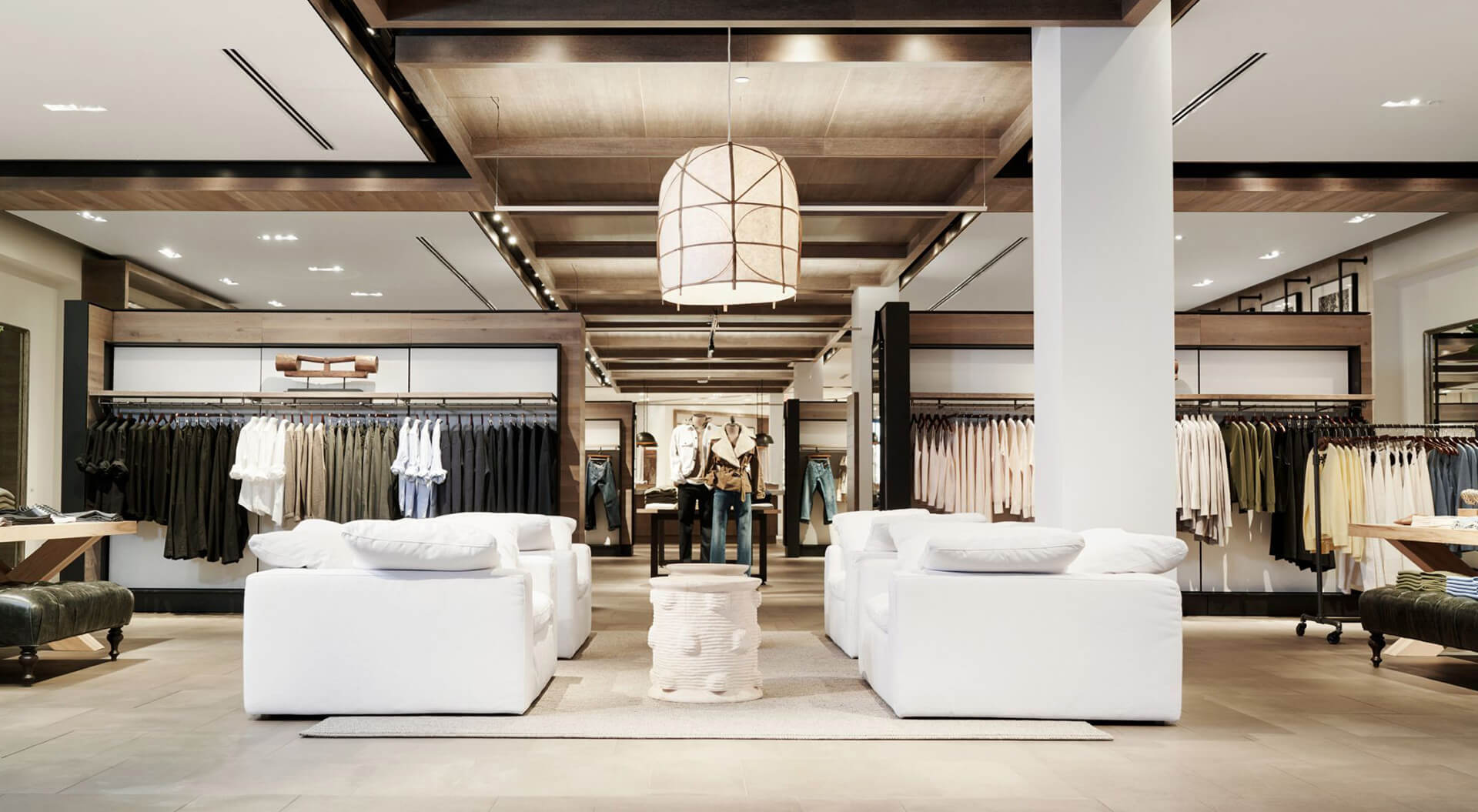
Designing Immersive Fashion Customer Experiences
The strongest flagship fashion stores give customers reasons to visit beyond an immediate purchase mission.
Immersion does not necessarily require more technology. It requires relevant experiences that make the brand tangible and memorable.
CampbellRigg can develop distinctive entrance sequences, curated collection environments, storytelling installations, personalised discovery, premium fitting rooms, styling areas, events, community spaces and content opportunities.
The physical store can also connect directly with the digital journey. Customers may discover products online, experience them physically, access digital information, receive personalised assistance and complete purchases through whichever channel is most convenient.
The commercial objective is to make physical retail offer something ecommerce cannot reproduce while removing friction between channels.
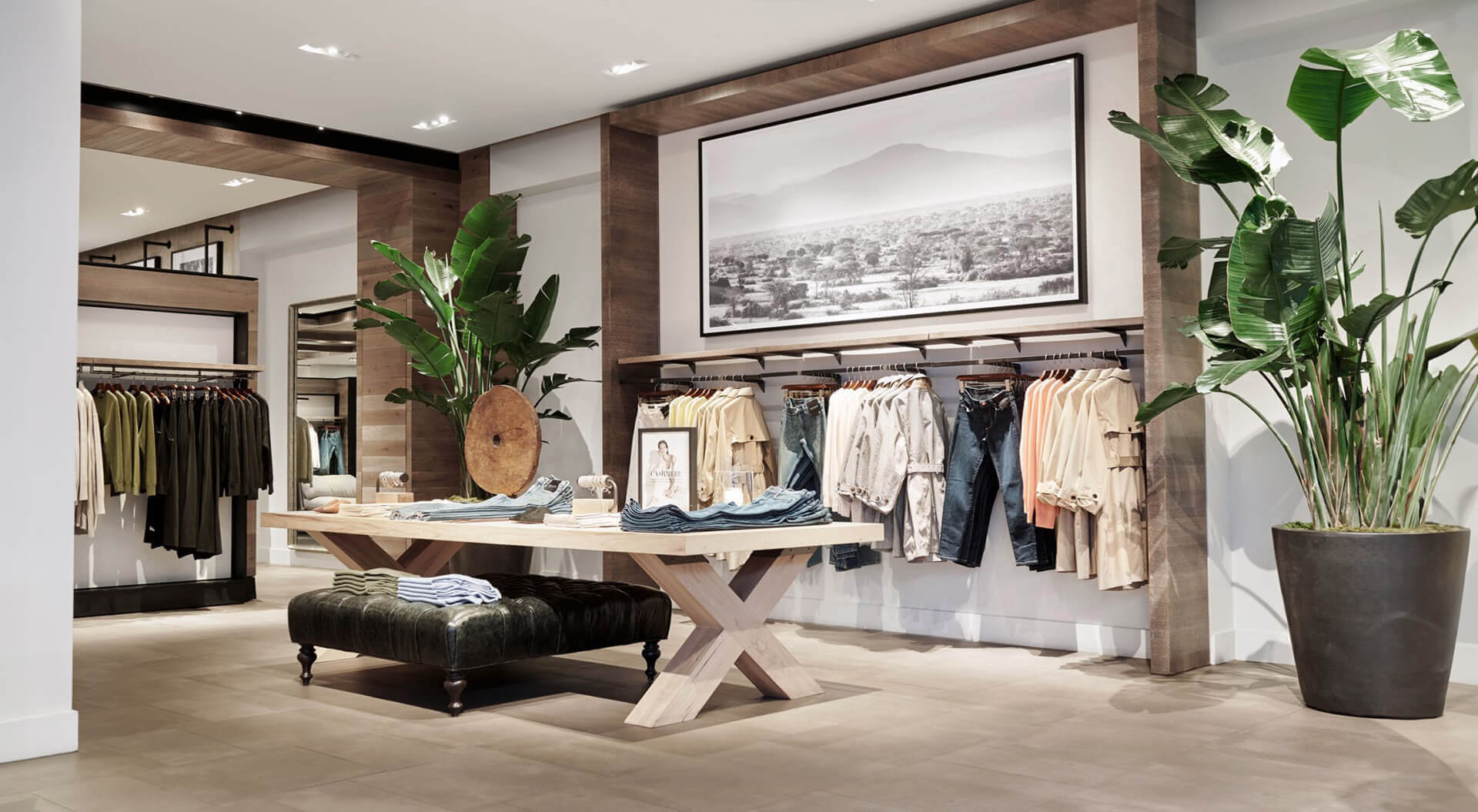
Retail Architecture, Spatial Planning and Visual Merchandising
A visually impressive flagship can still underperform if customers cannot navigate it easily or understand the merchandise hierarchy.
CampbellRigg therefore develops spatial planning around:
- entrance visibility and sightlines;
- primary and secondary circulation;
- category zoning and product adjacencies;
- collection hierarchy;
- focal displays;
- fitting-room and service locations;
- queue and fulfilment requirements;
- dwell areas;
- stock access and operational efficiency.
Visual merchandising reinforces this structure. Fixtures, graphics and display systems must communicate the brand while allowing collections, launches, collaborations and seasonal activity to change.
The objective is a store that is inspirational without becoming difficult to shop.
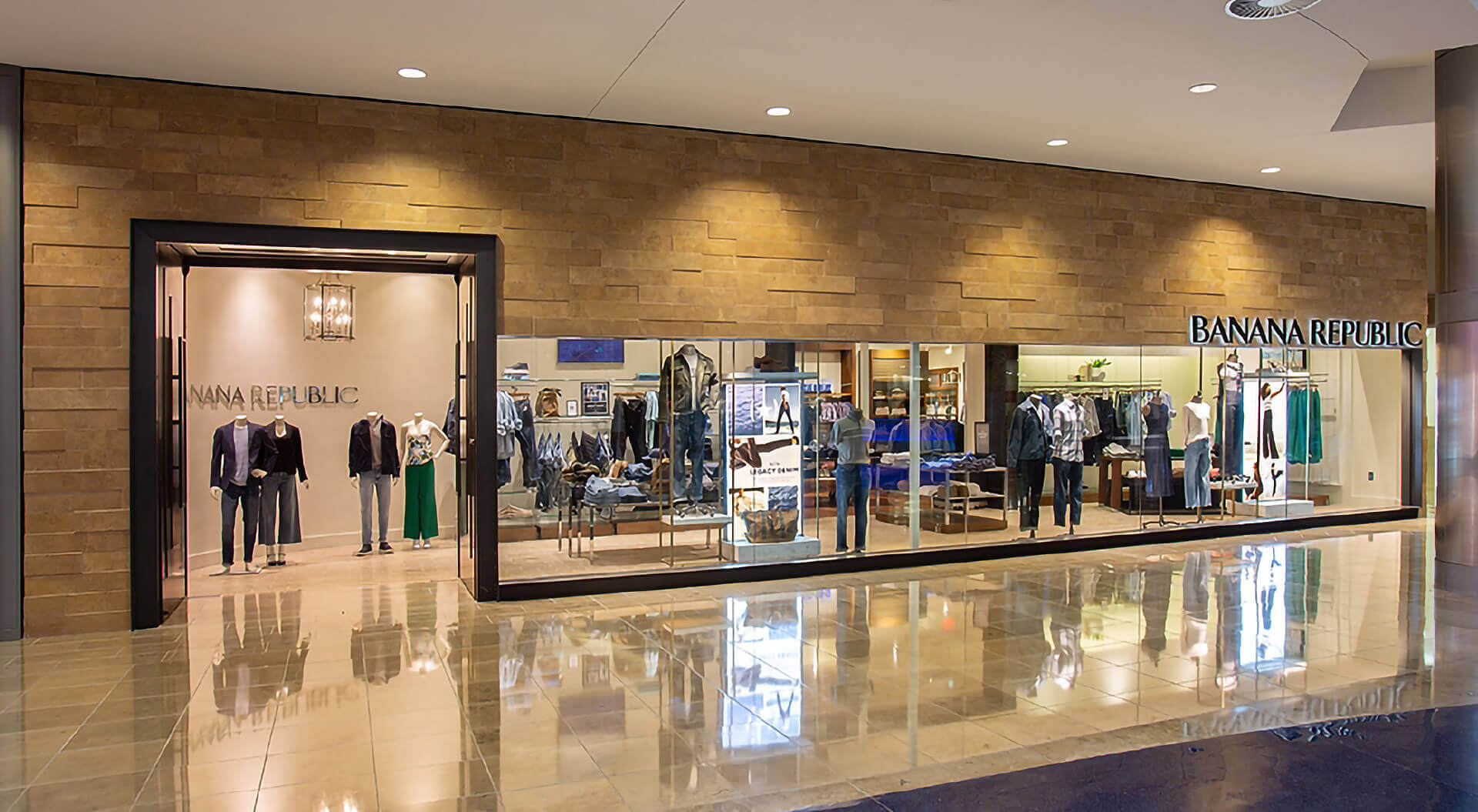
Banana Republic: Creating a Fashion Destination
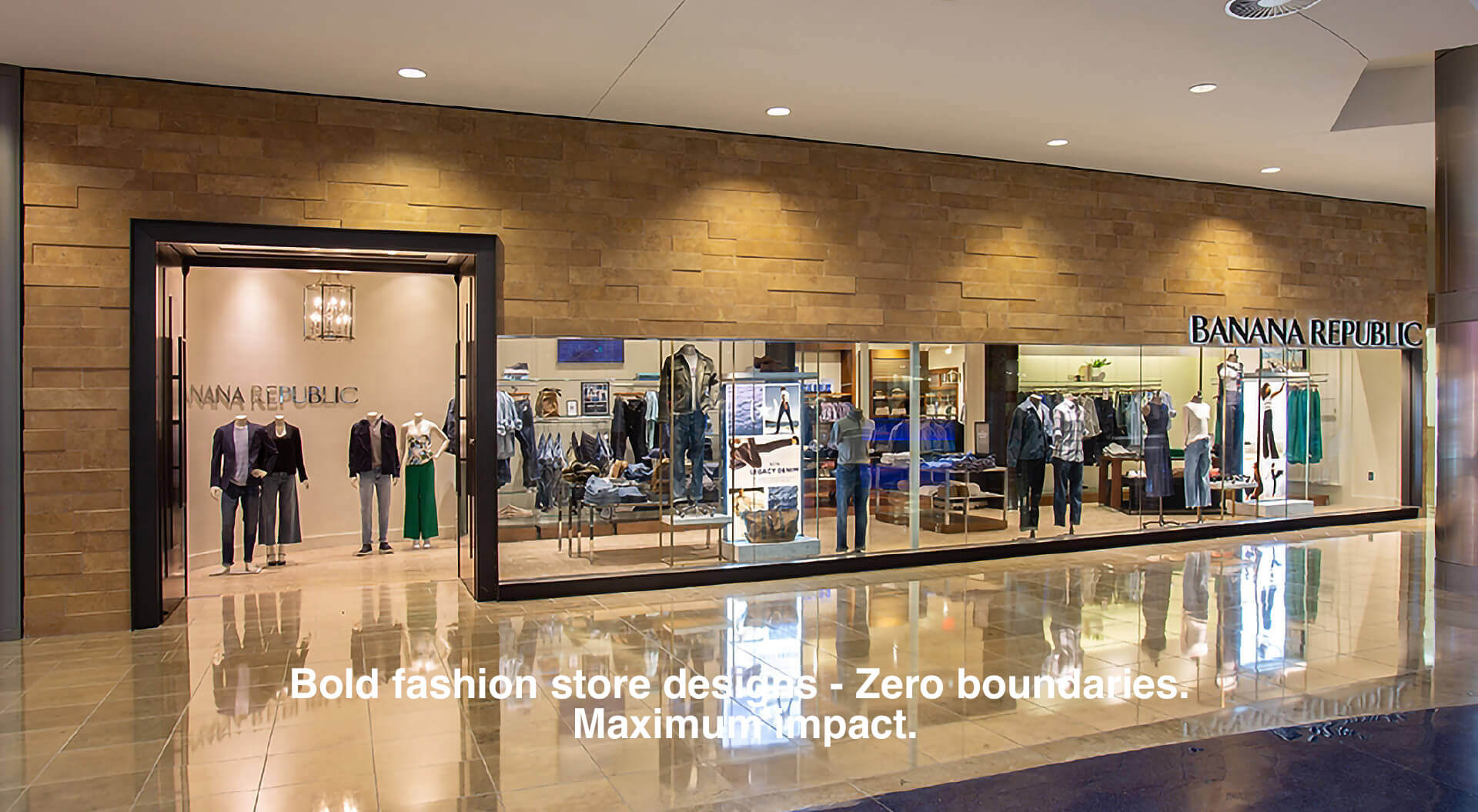
Banana Republic demonstrates how entrance architecture, external branding, window communication, merchandising, spatial hierarchy and customer areas can create a stronger sense of destination.
For management, the lesson is not simply to reproduce an attractive environment. It is to determine which elements give customers a reason to visit, explore and engage with the brand physically.
CampbellRigg applies this principle by connecting brand identity, customer journey and spatial design. The flagship can therefore become a destination for discovery, service, content and brand engagement rather than simply another product-distribution point.
Testimonial: "I am very pleased with the very good job that Campbell and his team have done to help us create our new look, and have no hesitation In recommending CampbellRigg for their excellent work in a very challenging retail environment." Carlos Criado-Perez Chief Executive Officer, Safeway
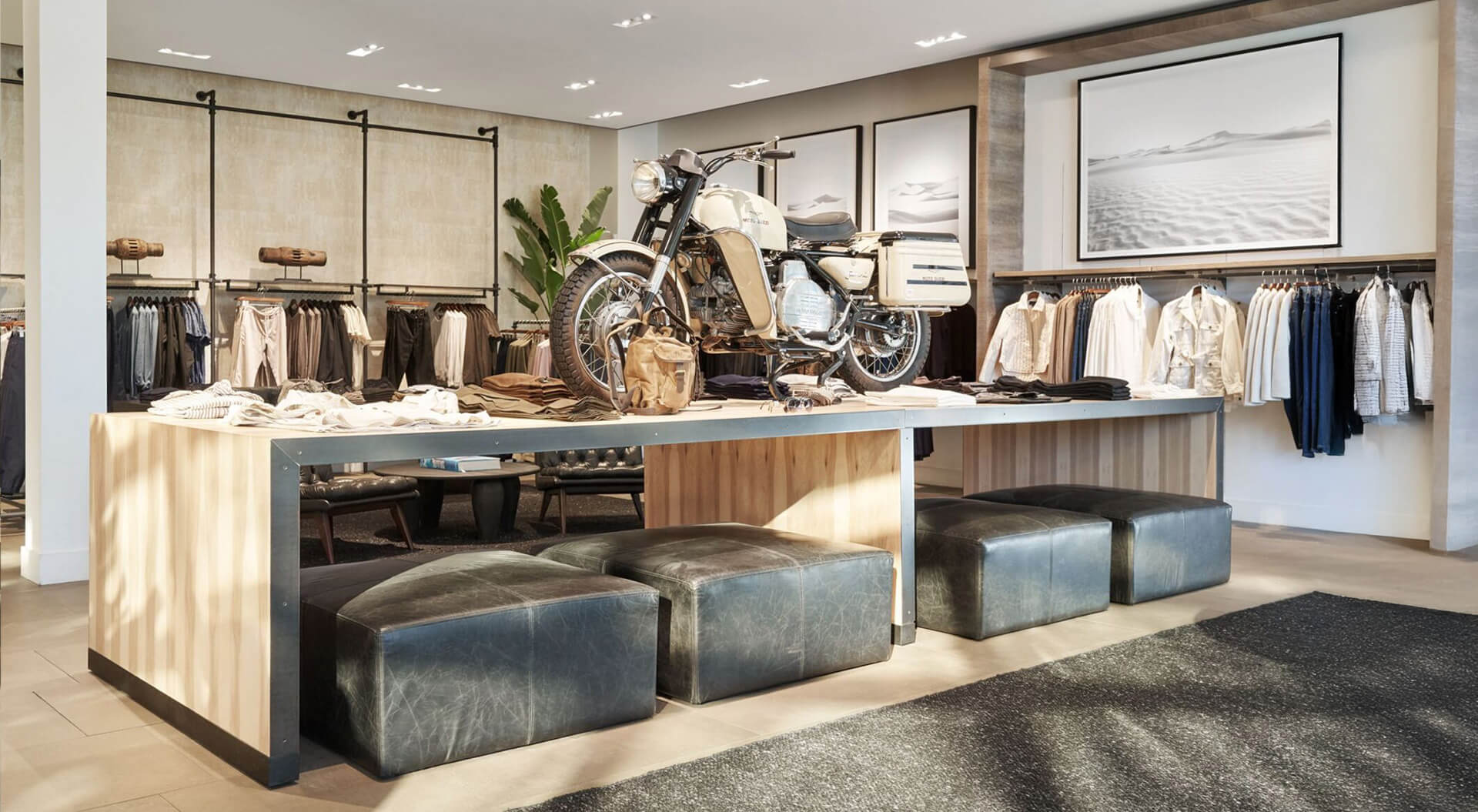
Banana Republic: Creating a Fashion Destination
Banana Republic demonstrates how a fashion retail environment can communicate brand character beyond product presentation.
Entrance architecture, external branding, window communication, merchandising, spatial hierarchy and customer areas can combine to create a stronger sense of destination.
This changes the role of the physical store.
Instead of functioning only as a place to display and sell products, a flagship can become an environment where customers experience the brand through architecture, product, service and atmosphere.
For fashion retailers, this creates opportunities for discovery, engagement, customer service, social content, events and brand differentiation.
The lesson is important: a flagship should give customers a reason to visit the physical environment that cannot be replicated by simply browsing an ecommerce site.
Partner with Campbell Rigg to unlock 15% to 30% sales uplifts by using shopper-centric layouts and optimized fashion retail design strategies.
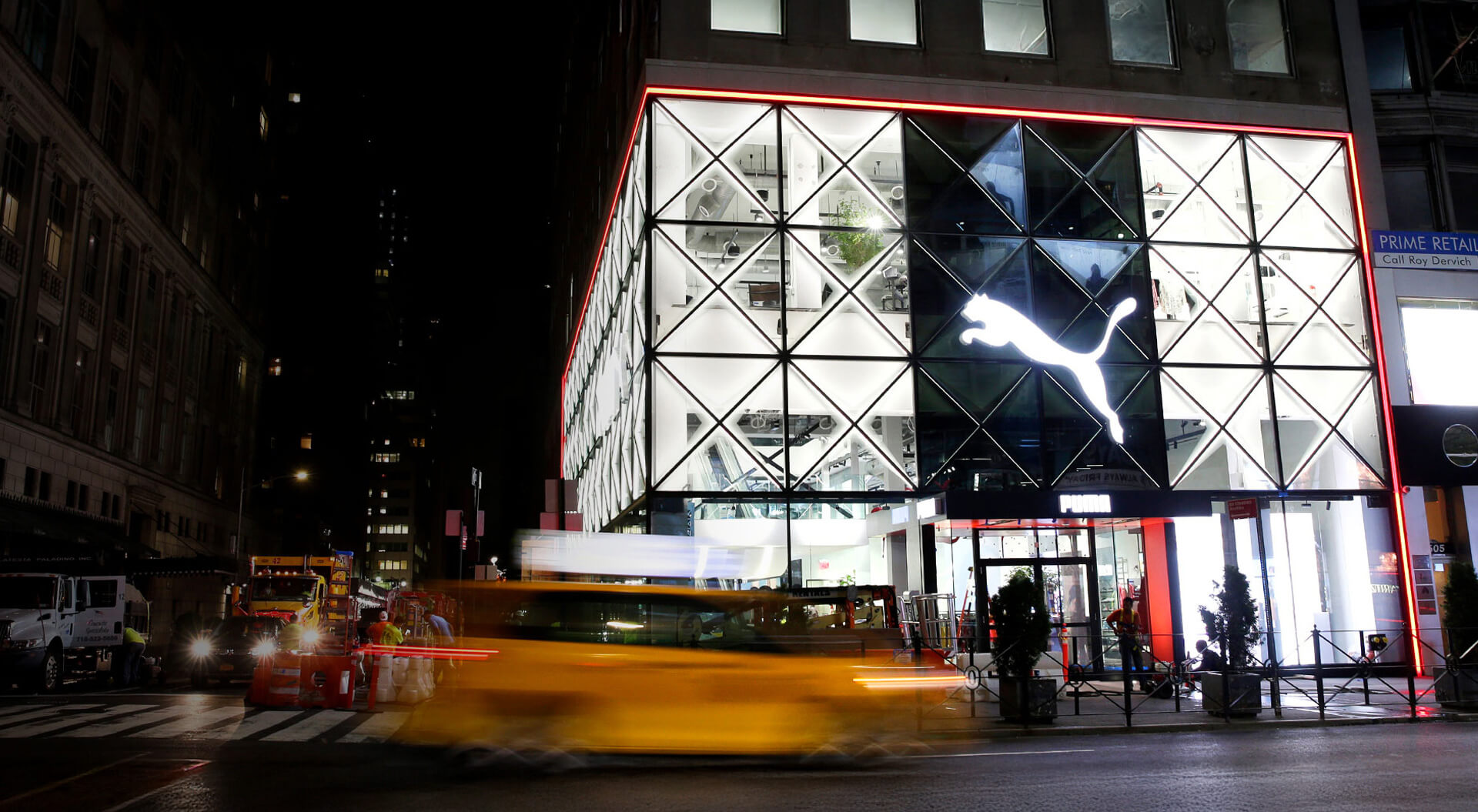
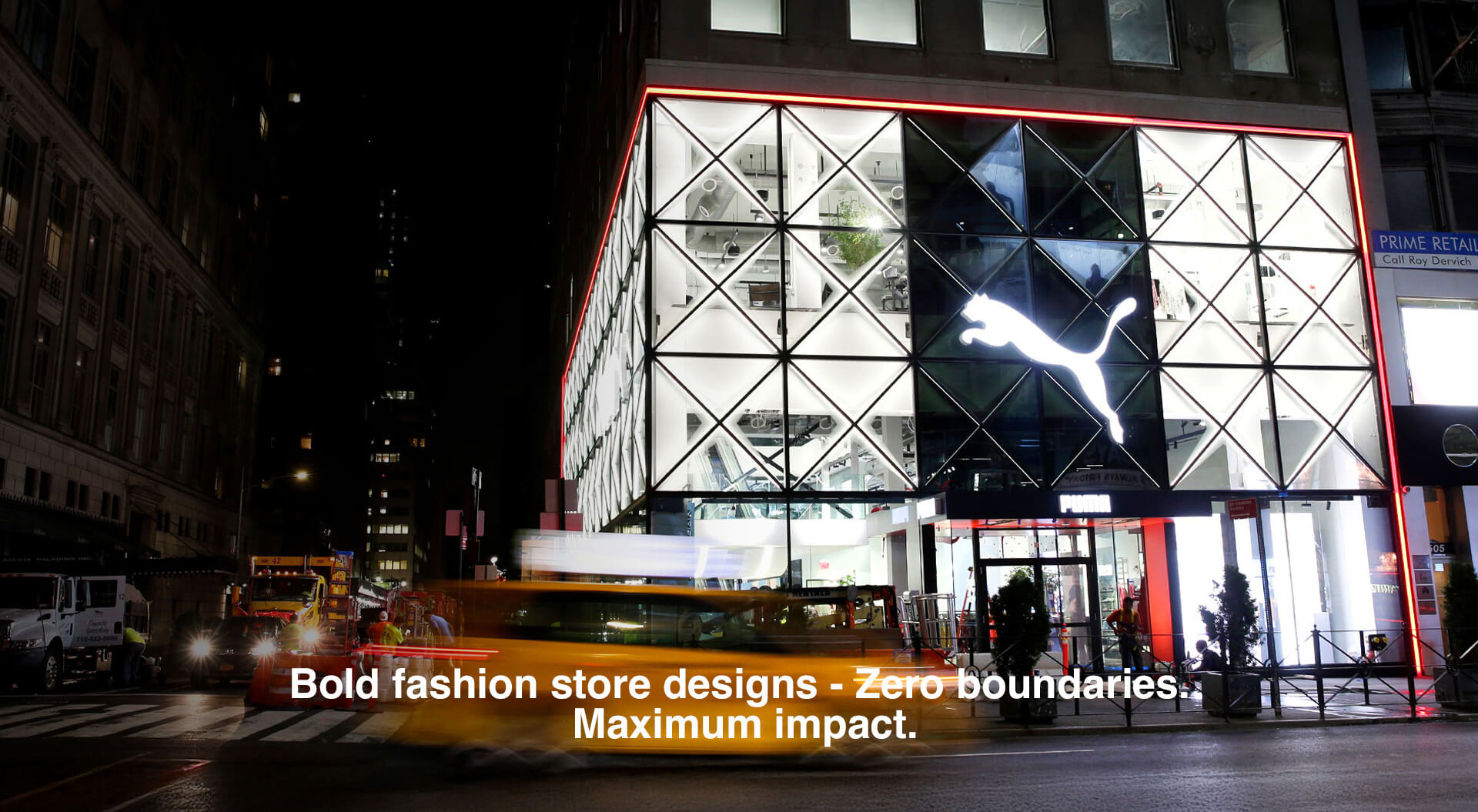
PUMA Fifth Avenue: A Benchmark for Flagship Fashion Retail Innovation
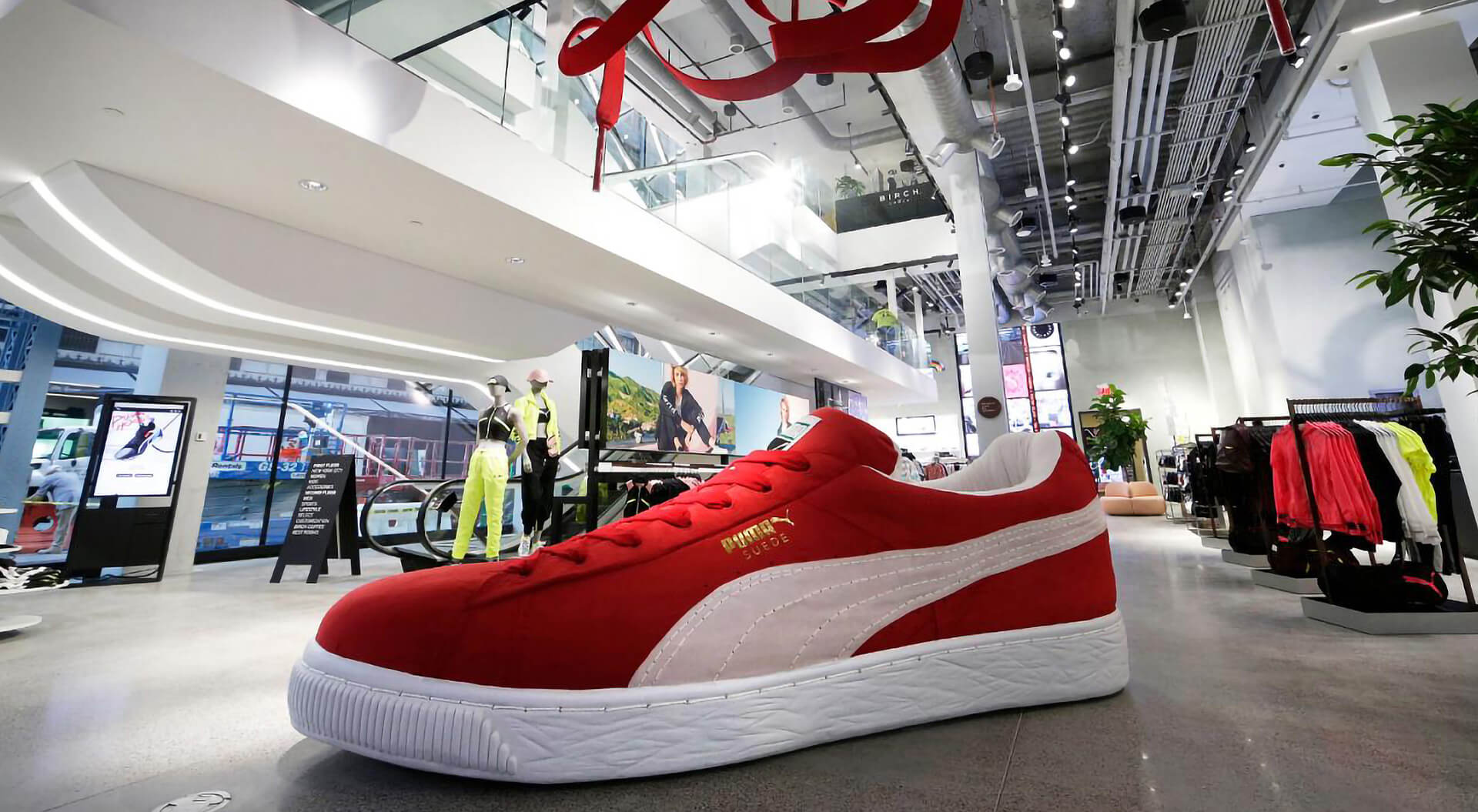
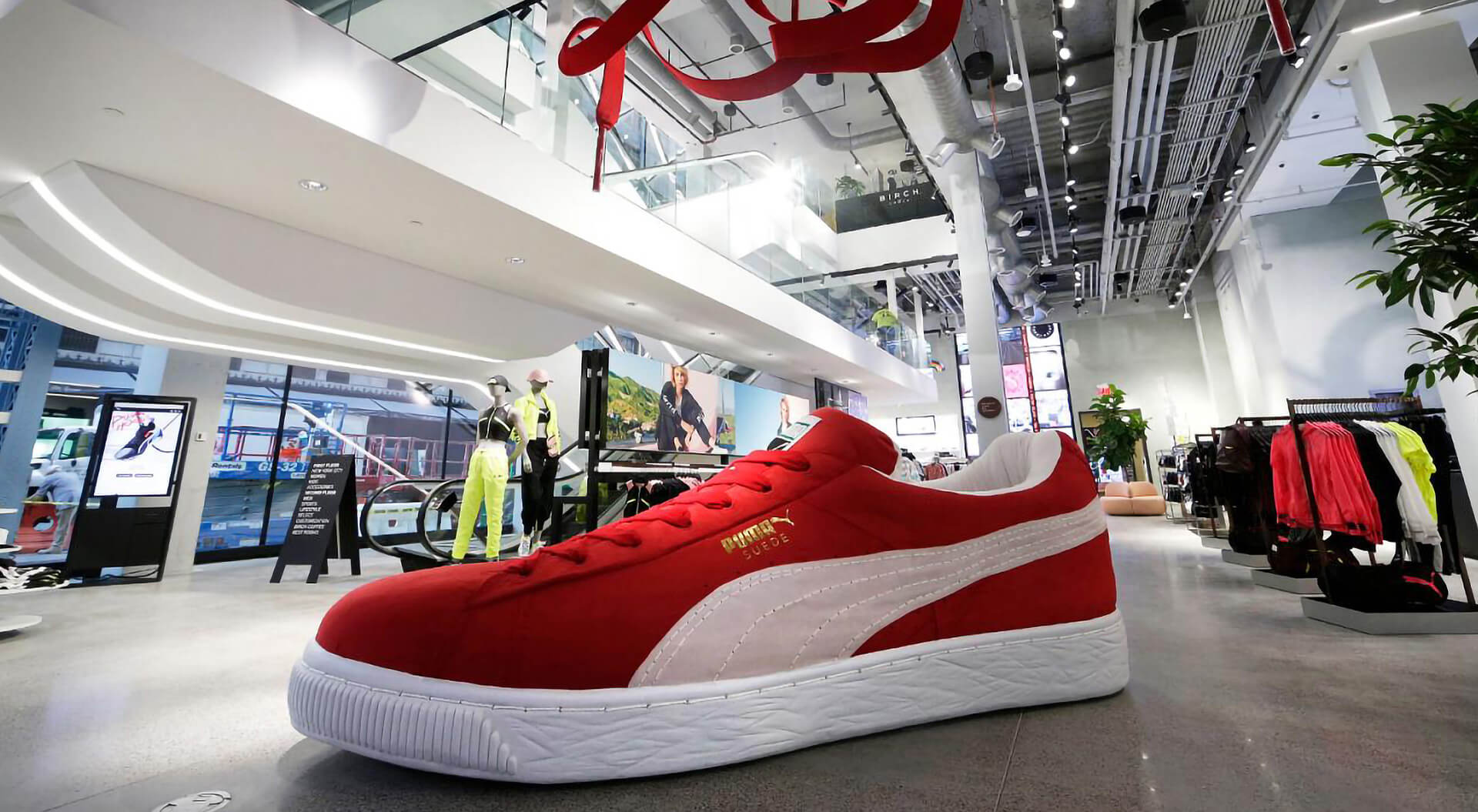
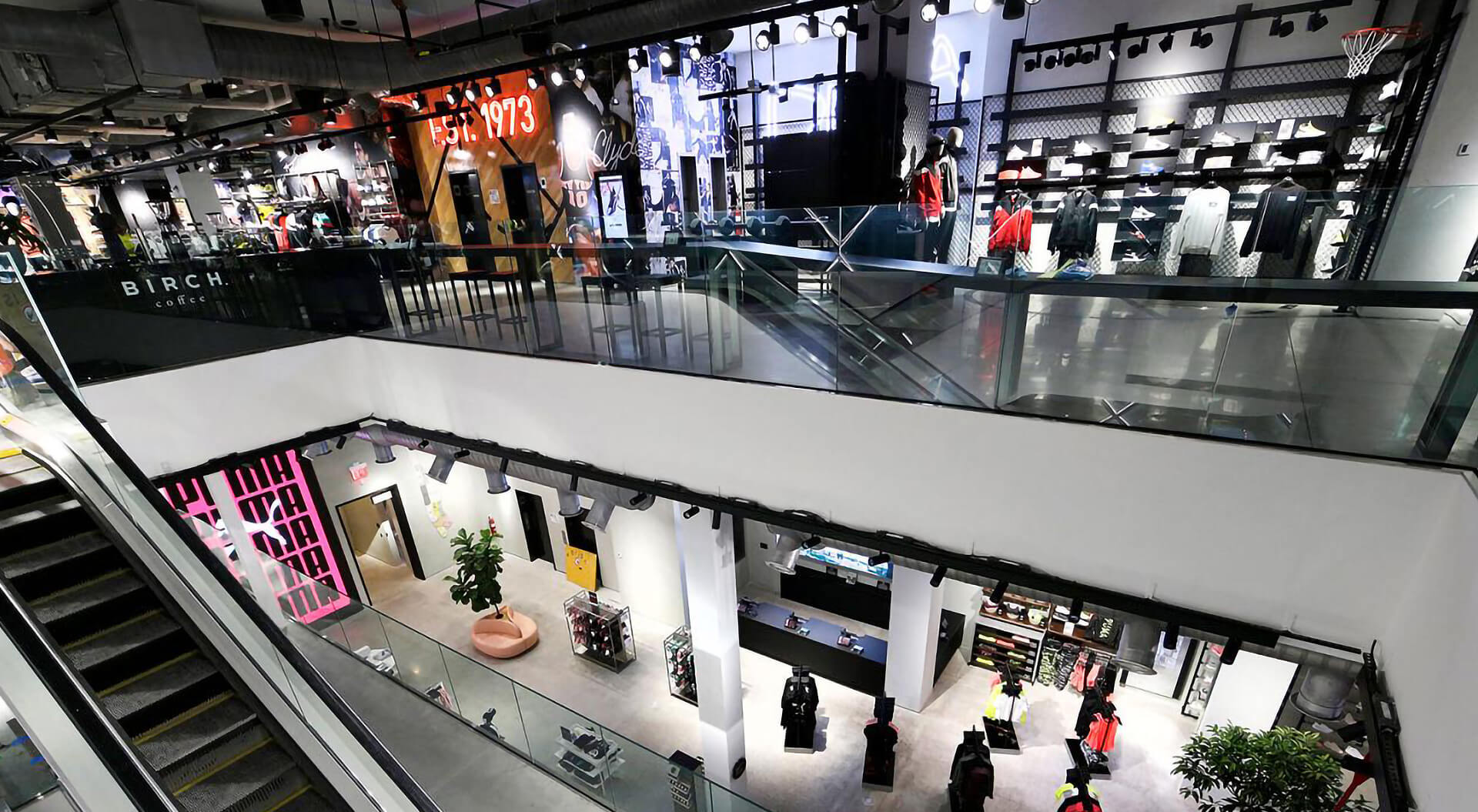
The PUMA flagship at 609 Fifth Avenue in New York provides a useful benchmark for how a global sports-fashion brand can use a high-profile location to strengthen brand presence and create a more immersive physical experience.
Its combination of architectural identity, product storytelling, digital interaction, personalisation and sport-focused experiences illustrates how a flagship can become an expression of wider brand culture.
For management, the lesson is not to reproduce PUMA's environment. It is to identify which elements create customer or brand value, determine which are strategically transferable and establish where they belong within the retailer's wider format portfolio.
CampbellRigg applies this principle when developing flagship concepts: identify the proposition to be tested, connect it to customer behaviour and commercial objectives, then establish which principles can inform subsequent store development.
Measuring Flagship Performance: Customer, Commercial and Strategic
Flagship design should connect creative decisions to a defined measurement framework.
Customer performance
Management can assess:
- store entry;
- dwell time;
- customer engagement;
- conversion;
- repeat visitation.
Commercial performance
Relevant measures can include:
- sales per square metre;
- average transaction value;
- units per transaction;
- category performance;
- cross-selling;
- average basket value.
Strategic performance
The flagship can also be evaluated by:
- adoption of tested concepts;
- rollout efficiency;
- format adaptability;
- brand consistency;
- performance of subsequent stores.
This three-level framework prevents the flagship from being judged purely by aesthetics or opening-day footfall. It connects design decisions with customer response, commercial productivity and longer-term network development.
CampbellRigg applies this commercially focused approach to shopper-centric layouts and intuitive navigation. Project objectives have included a targeted 20%+ sales uplift for Tom Tailor and an 18% increase in average basket through tailored space planning and navigation. These are project objectives, not universal guarantees, but demonstrate how retail design can be structured around measurable business outcomes.
The Flagship as an Innovation Laboratory
The flagship should provide management with a controlled environment for testing ideas before wider implementation.
Potential areas for testing include:
- new merchandising systems;
- alternative customer journeys;
- digital services;
- personalised experiences;
- service models;
- experiential retail;
- new brand expressions;
- community and event concepts.
The objective is not experimentation for its own sake. Management should be able to define what is being tested, why it matters commercially, how customer response will be evaluated and which learning could influence future formats.
CampbellRigg helps structure the flagship around these decisions, turning innovation into a practical input to future retail strategy.
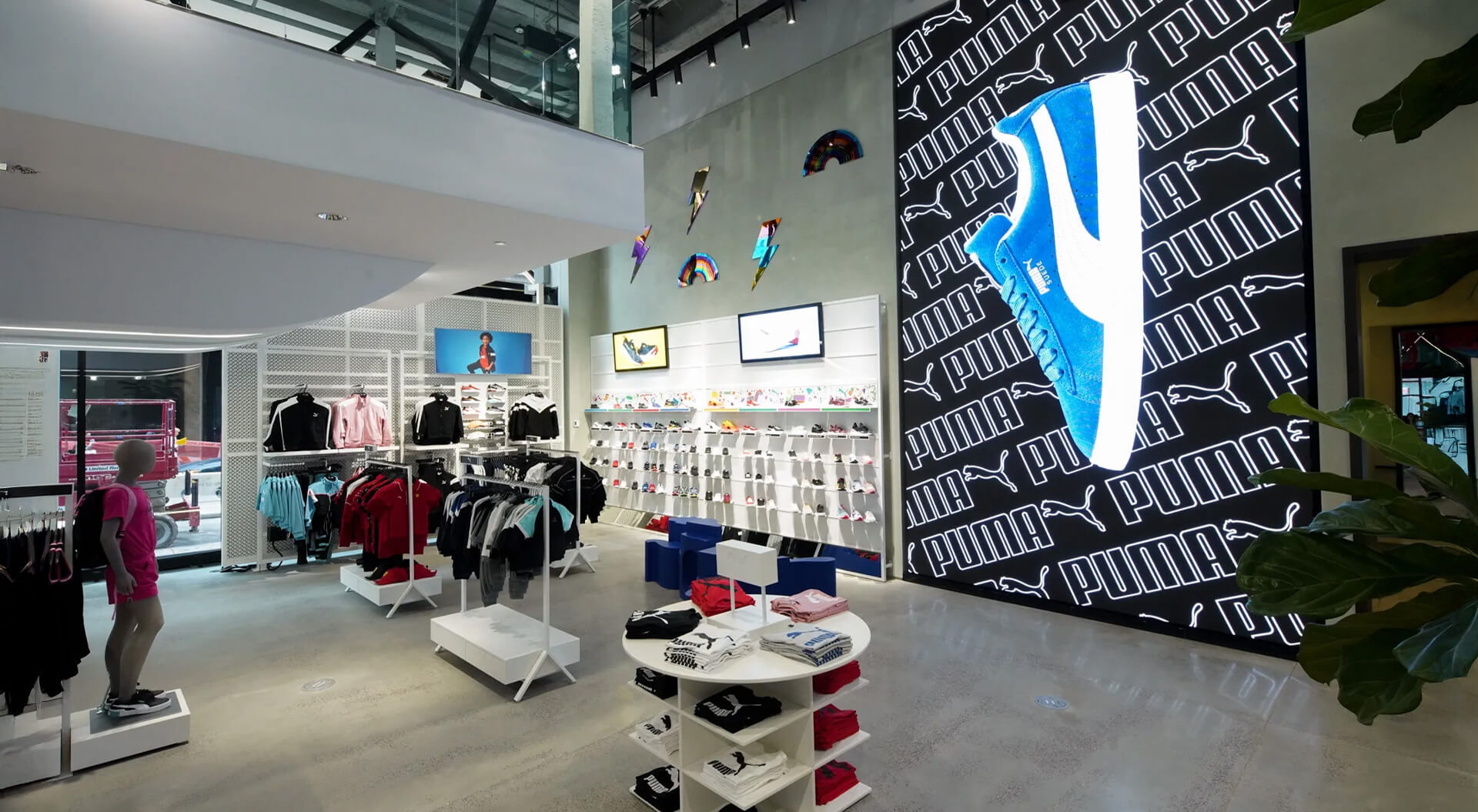
Puma and H&M: Two Approaches to Flagship Fashion Retail
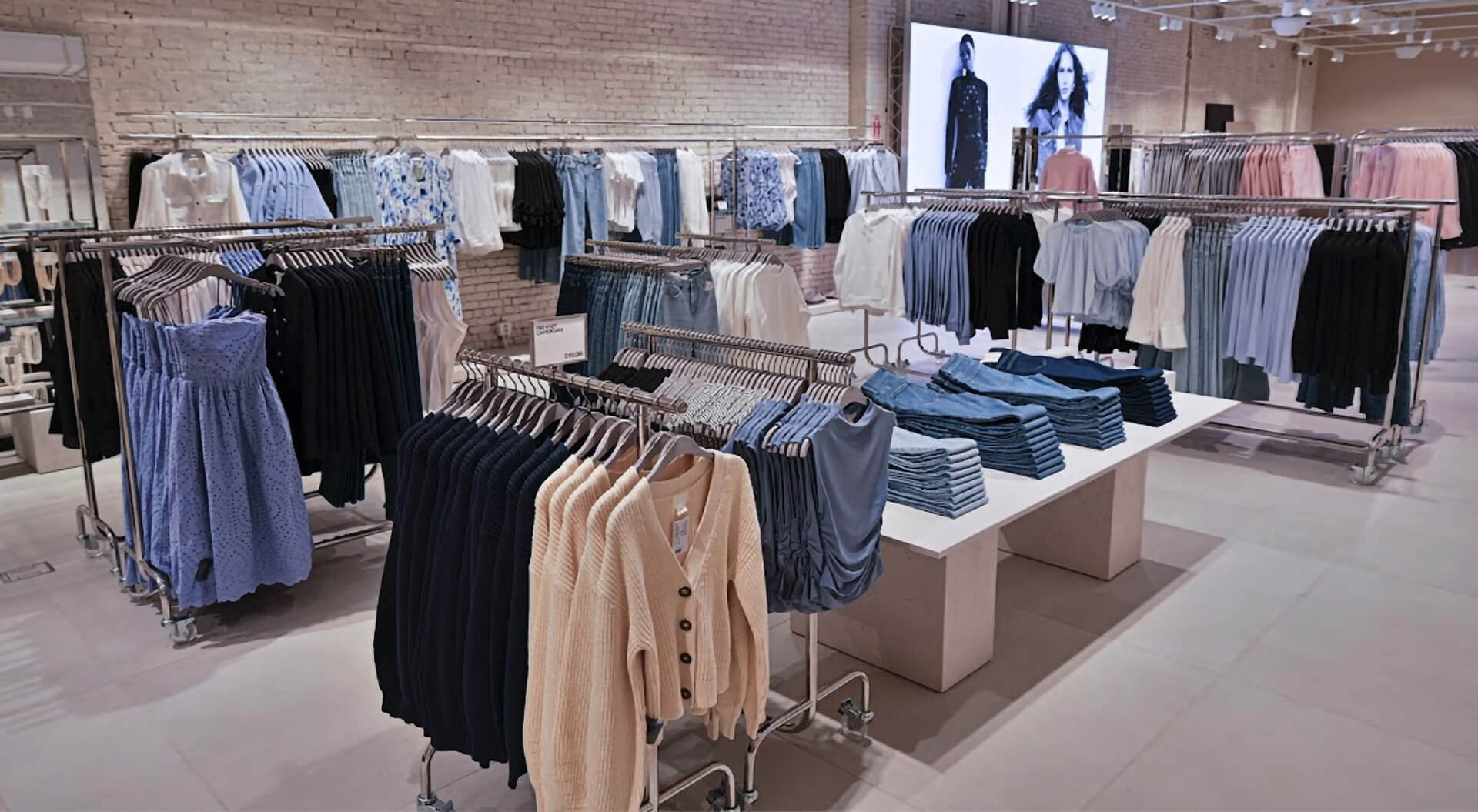
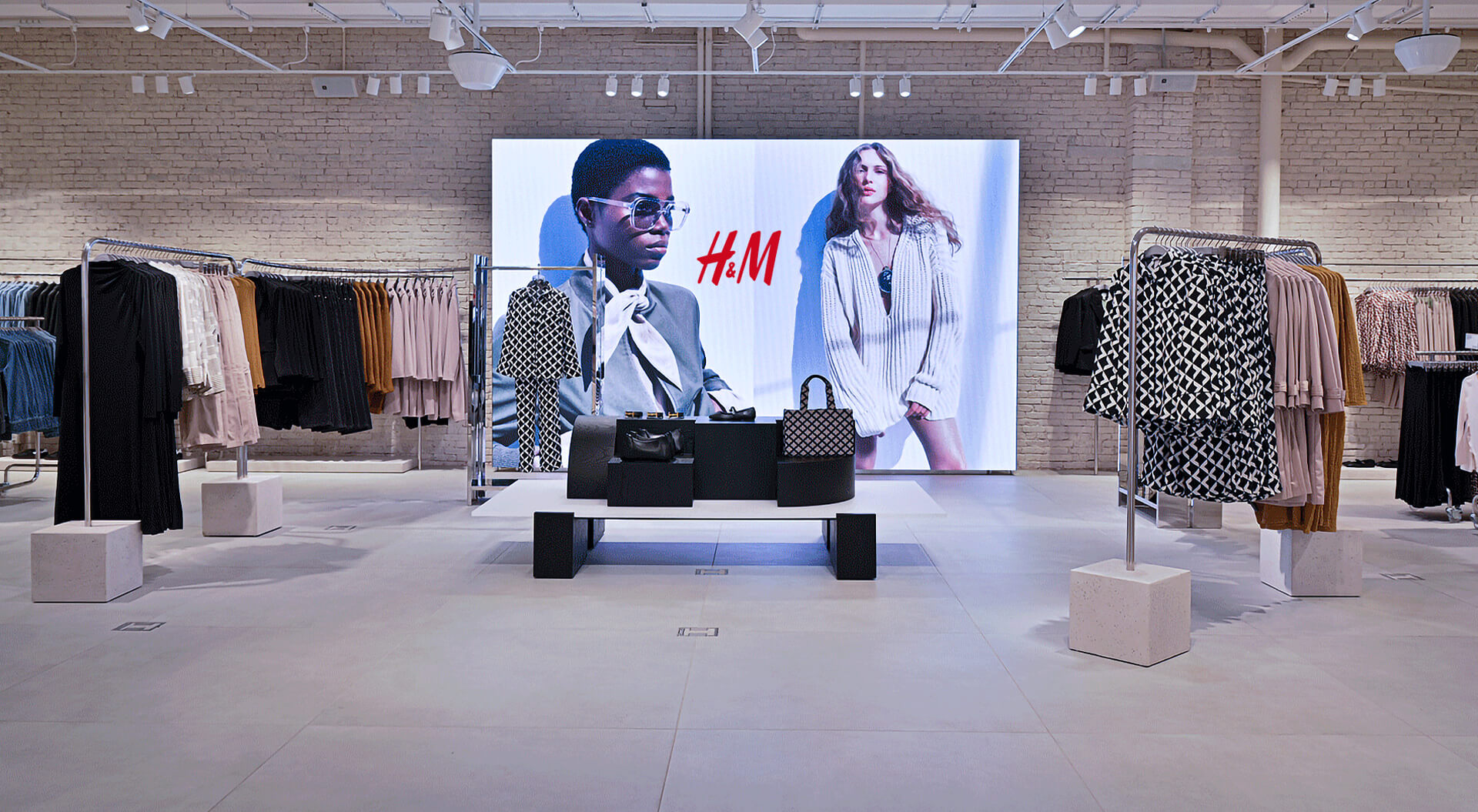
Puma and H&M demonstrate different approaches to the same strategic opportunity: using flagship stores to make global fashion brands more tangible, distinctive and engaging.
Puma can place greater emphasis on sport, performance, product innovation and interactive experiences, while H&M can combine fashion discovery, curated collections, digital services and destination retail.
For senior management, the common lesson is that a flagship should not simply be the largest store in the estate. Its role should be defined by what the business needs it to achieve: stronger brand positioning, new customer experiences, innovation, improved engagement or evidence for future store development.
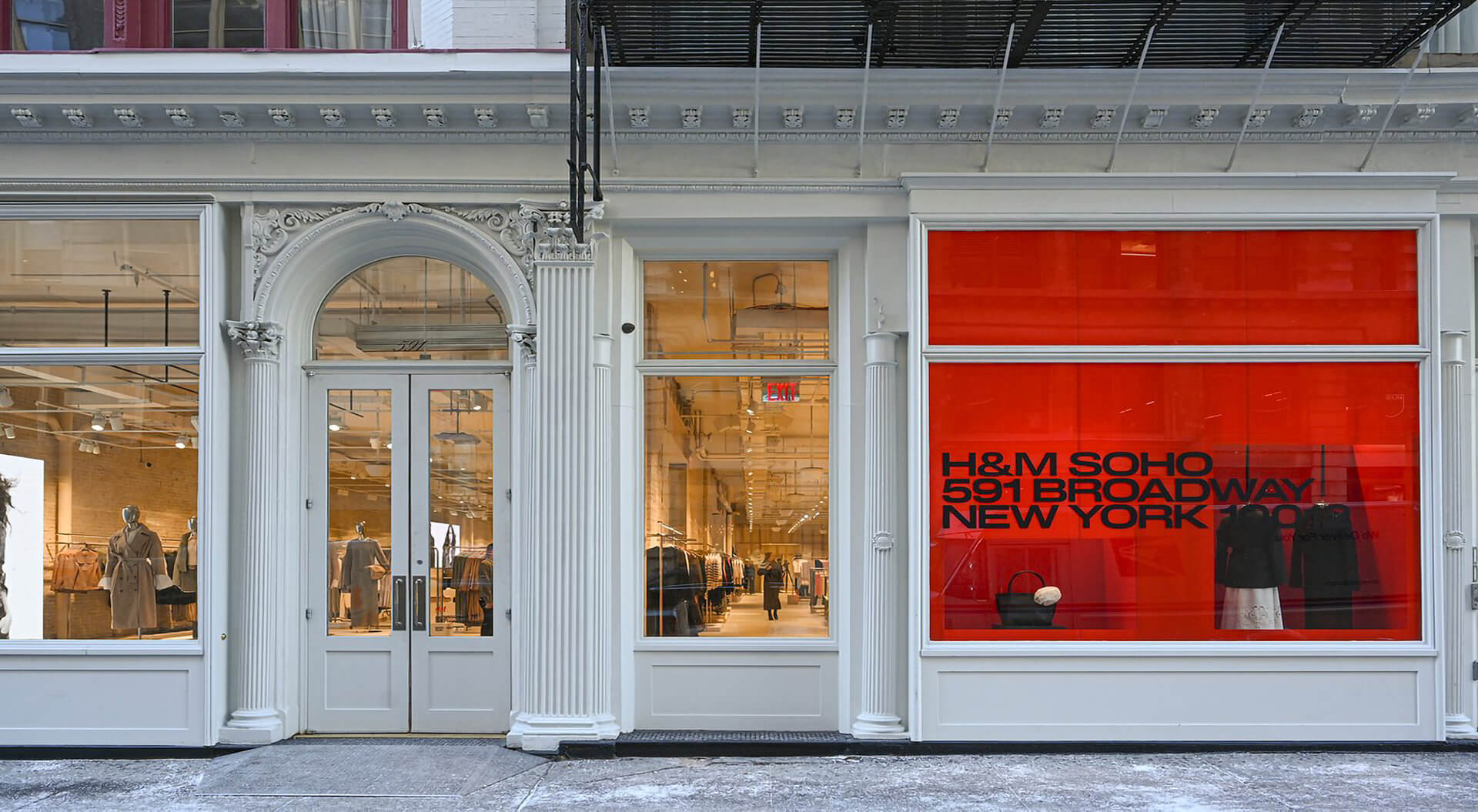
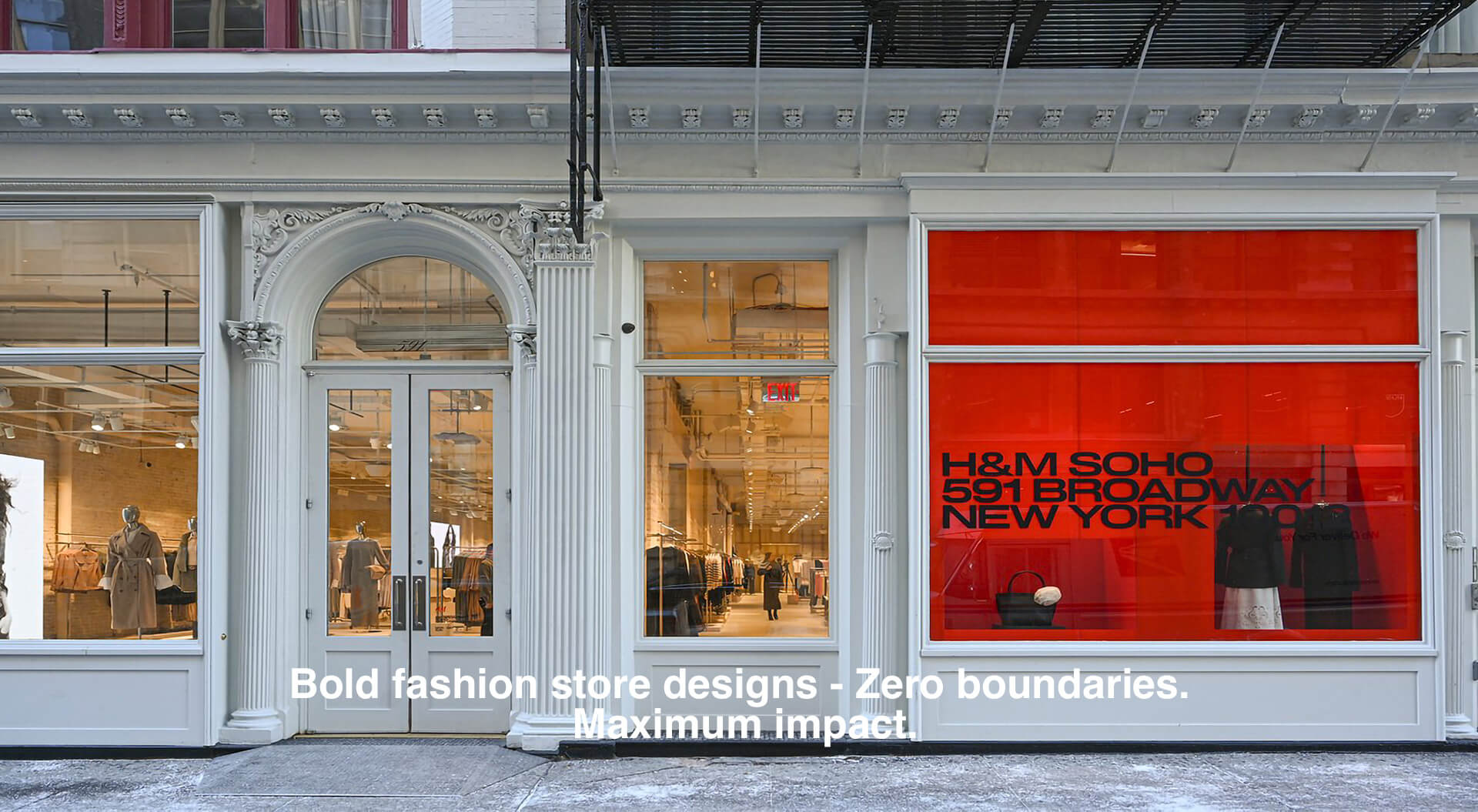
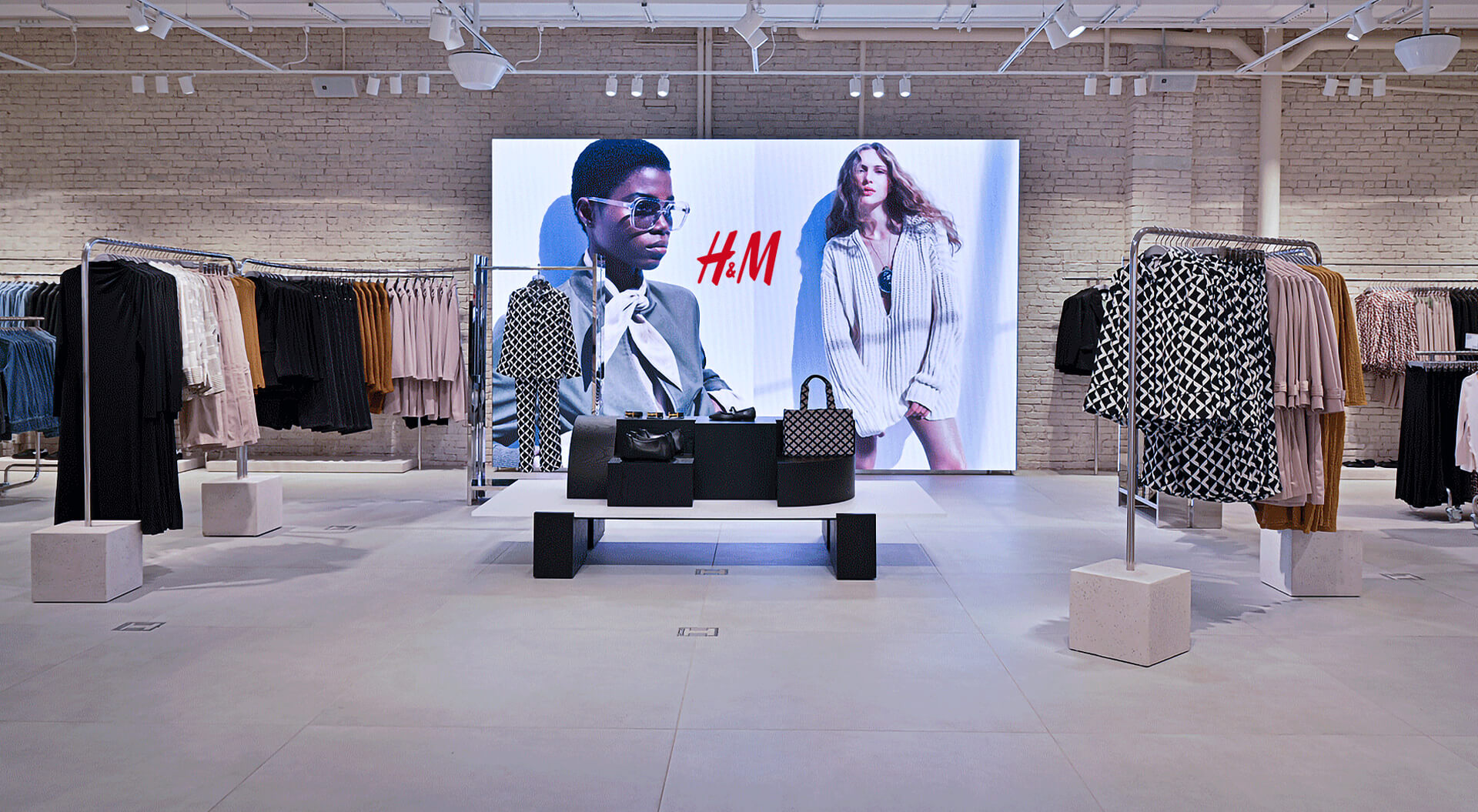
H&M SoHo: Translating Fashion Brand Strategy into a Flagship Retail Experience
H&M's concept store at 591 Broadway in New York's SoHo district provides another international benchmark.
The strategic opportunity extends beyond creating a larger store. Exterior identity, entrance experience, spatial hierarchy, product presentation, visual merchandising, fixtures, graphics, technology and service need to operate as one coherent proposition.
For management, the value of a prominent flagship is also the ability to introduce and observe new approaches to product discovery, customer engagement, digital services and merchandising.
CampbellRigg uses this thinking to connect flagship development with future retail decisions. The flagship can establish a recognisable visual language, customer journey and experience principles without requiring every subsequent store to become a replica.
The Flagship as an Innovation Laboratory
The flagship should provide management with a controlled environment for testing ideas before wider implementation.
Potential areas for testing include:
- new merchandising systems;
- alternative customer journeys;
- digital services;
- personalised experiences;
- service models;
- experiential retail;
- new brand expressions;
- community and event concepts.
The objective is not experimentation for its own sake. Management should be able to define what is being tested, why it matters commercially, how customer response will be evaluated and which learning could influence future formats.
CampbellRigg helps structure the flagship around these decisions, turning innovation into a practical input to future retail strategy.
From Flagship Concept to a Scalable Retail Network
The flagship becomes commercially more valuable when successful principles can influence the wider network.
This does not mean reproducing every architectural detail.
Instead, management can identify the principles that should remain consistent:
- customer journey;
- brand expression;
- merchandising logic;
- visual language;
- service principles;
- digital touchpoints;
- spatial hierarchy;
- key customer experiences.
These principles can then be interpreted according to location, footprint, customer profile and trading requirements.
This distinction protects the flagship's strategic role without creating unnecessary overlap with modular store design. The flagship establishes what the brand should learn and preserve; subsequent format development determines how those principles are adapted to different commercial environments.
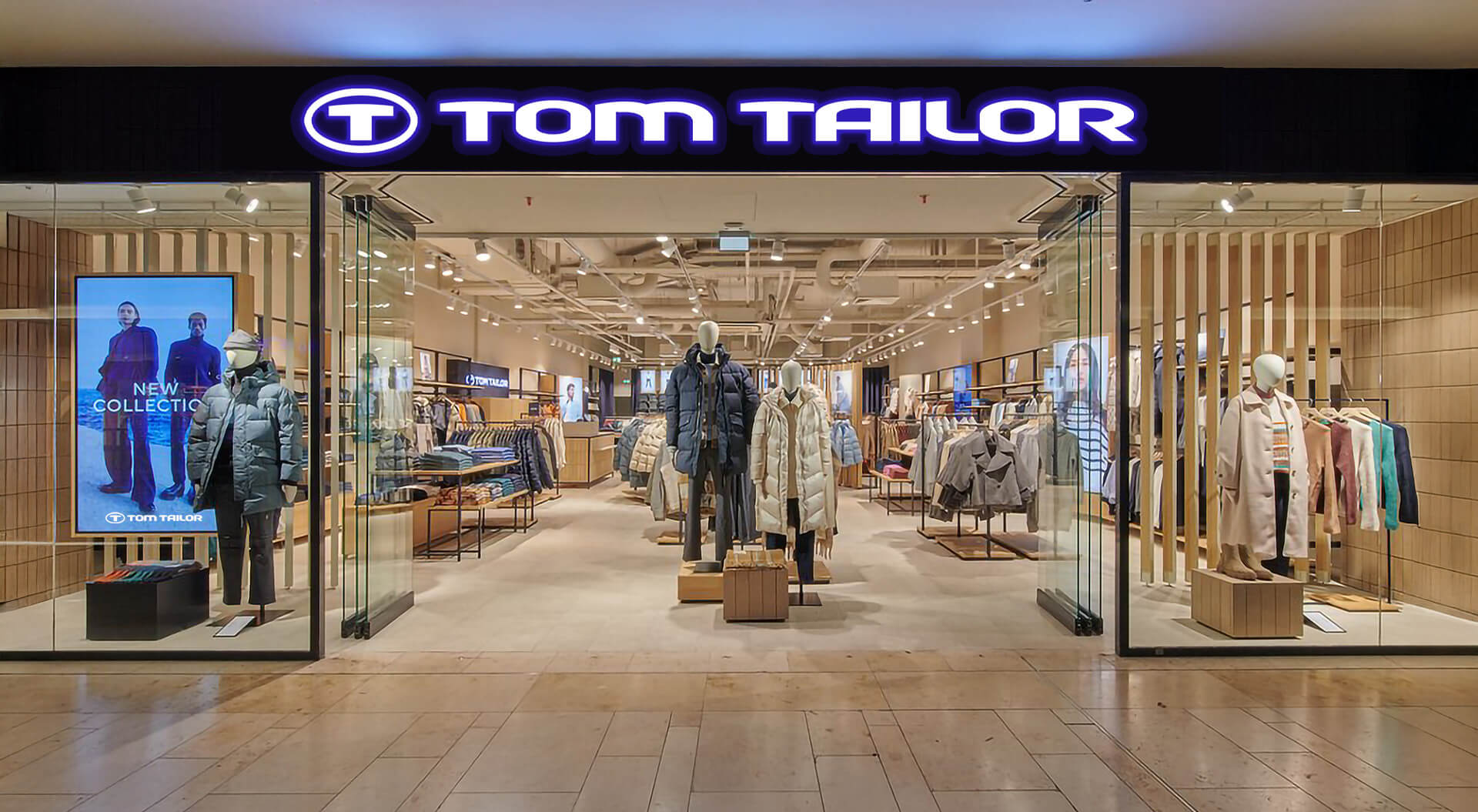
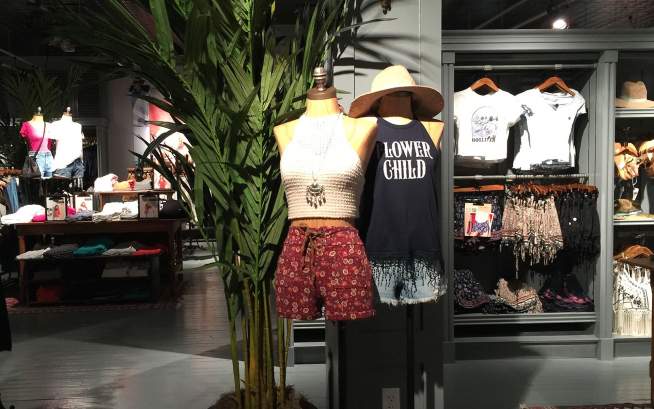
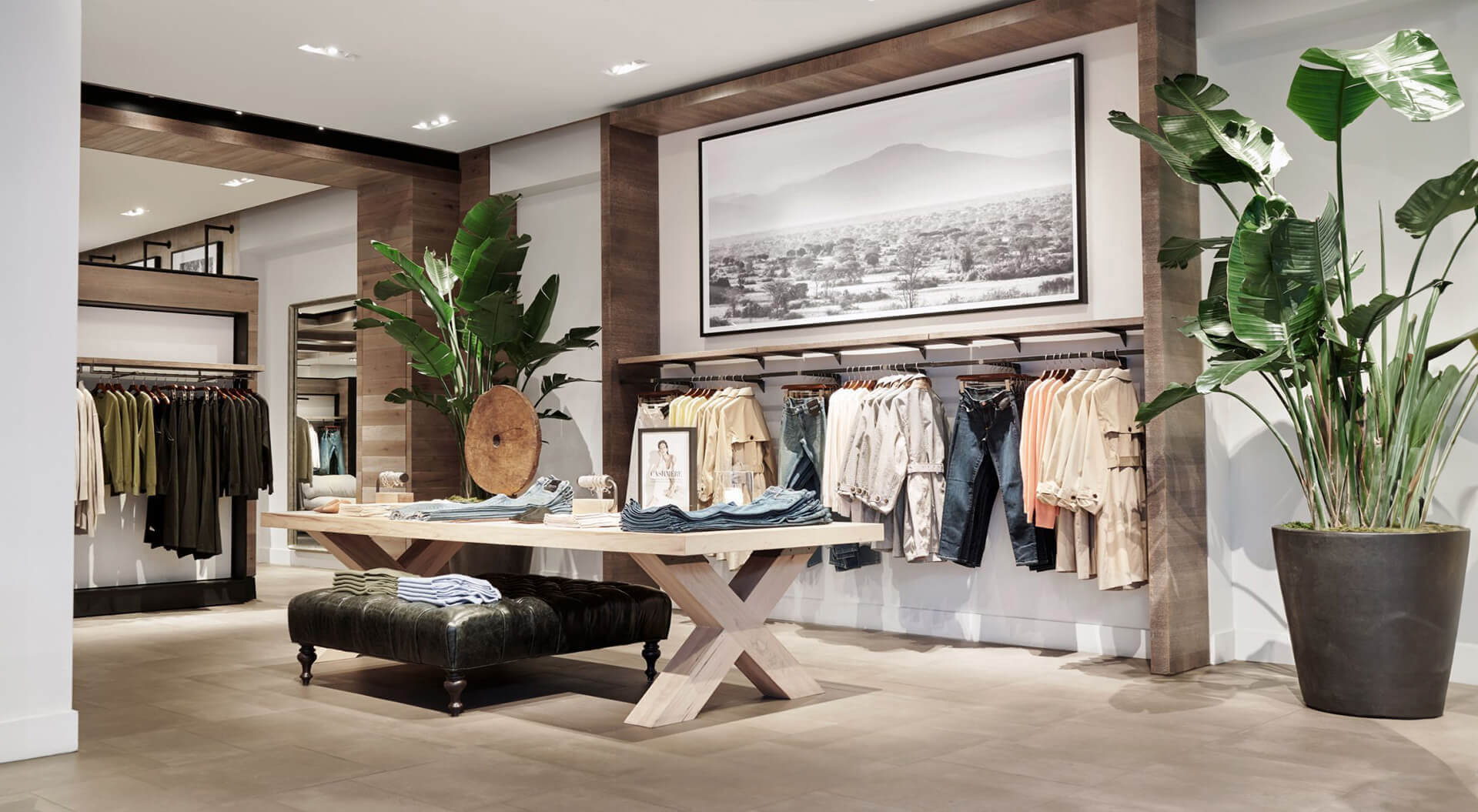
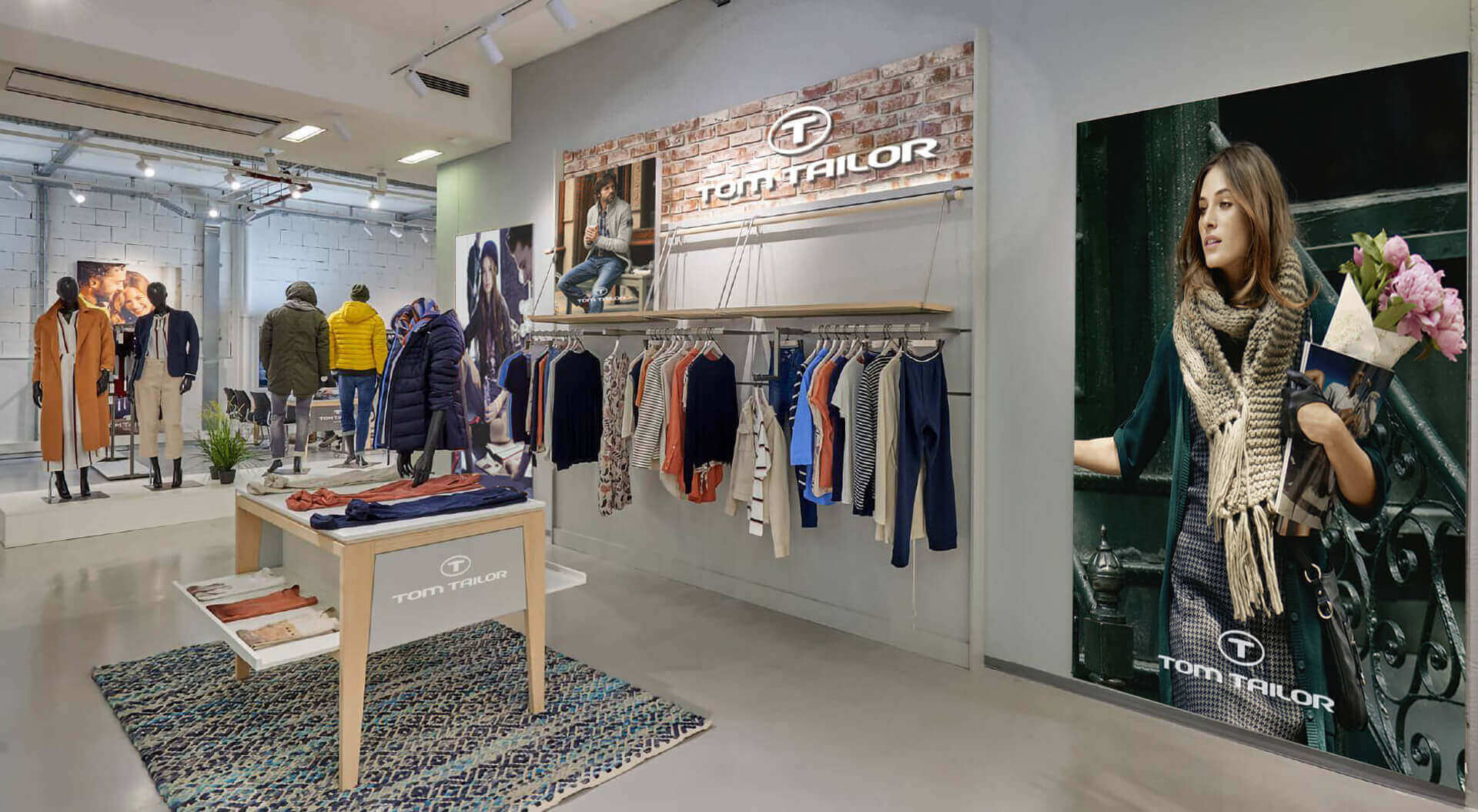
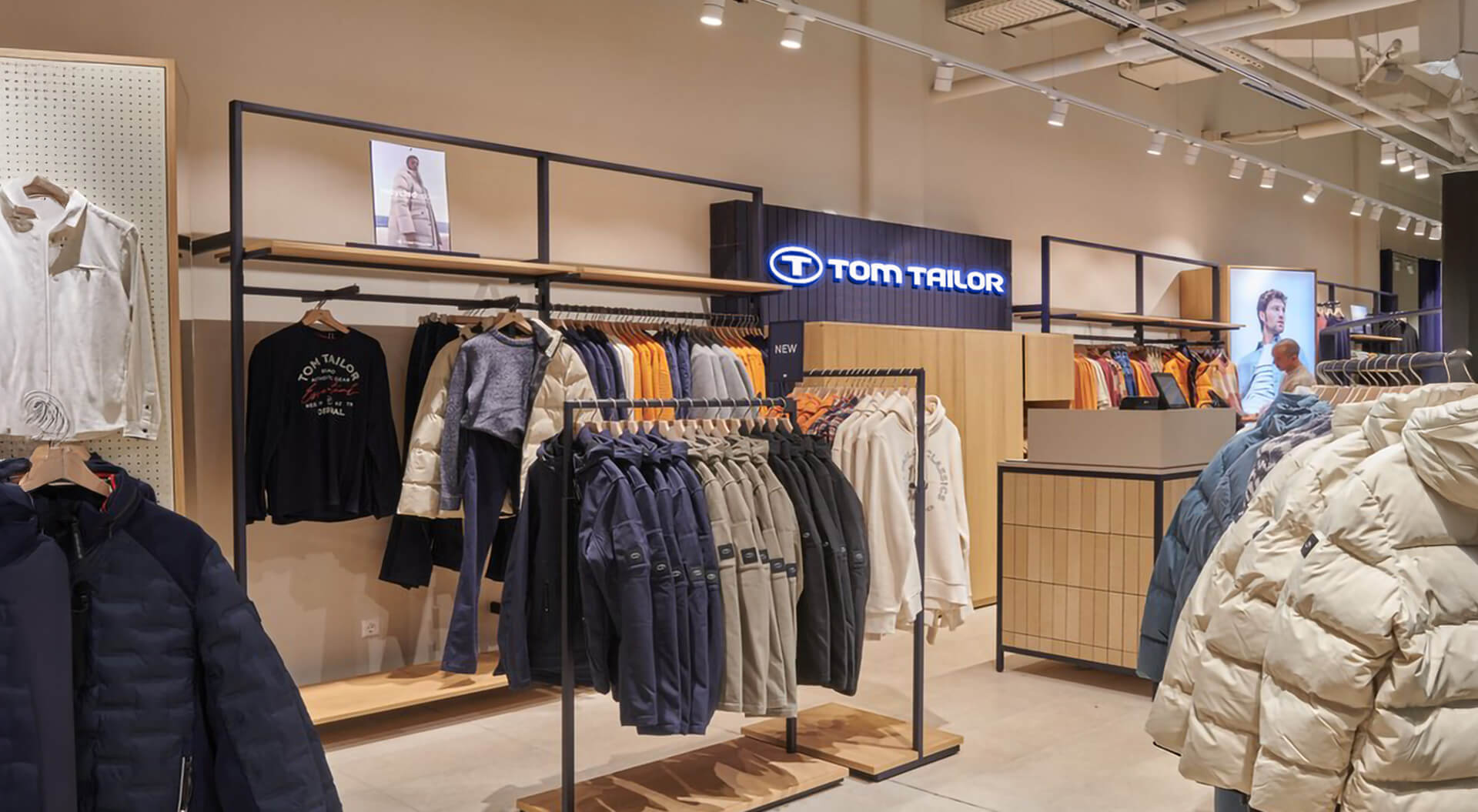
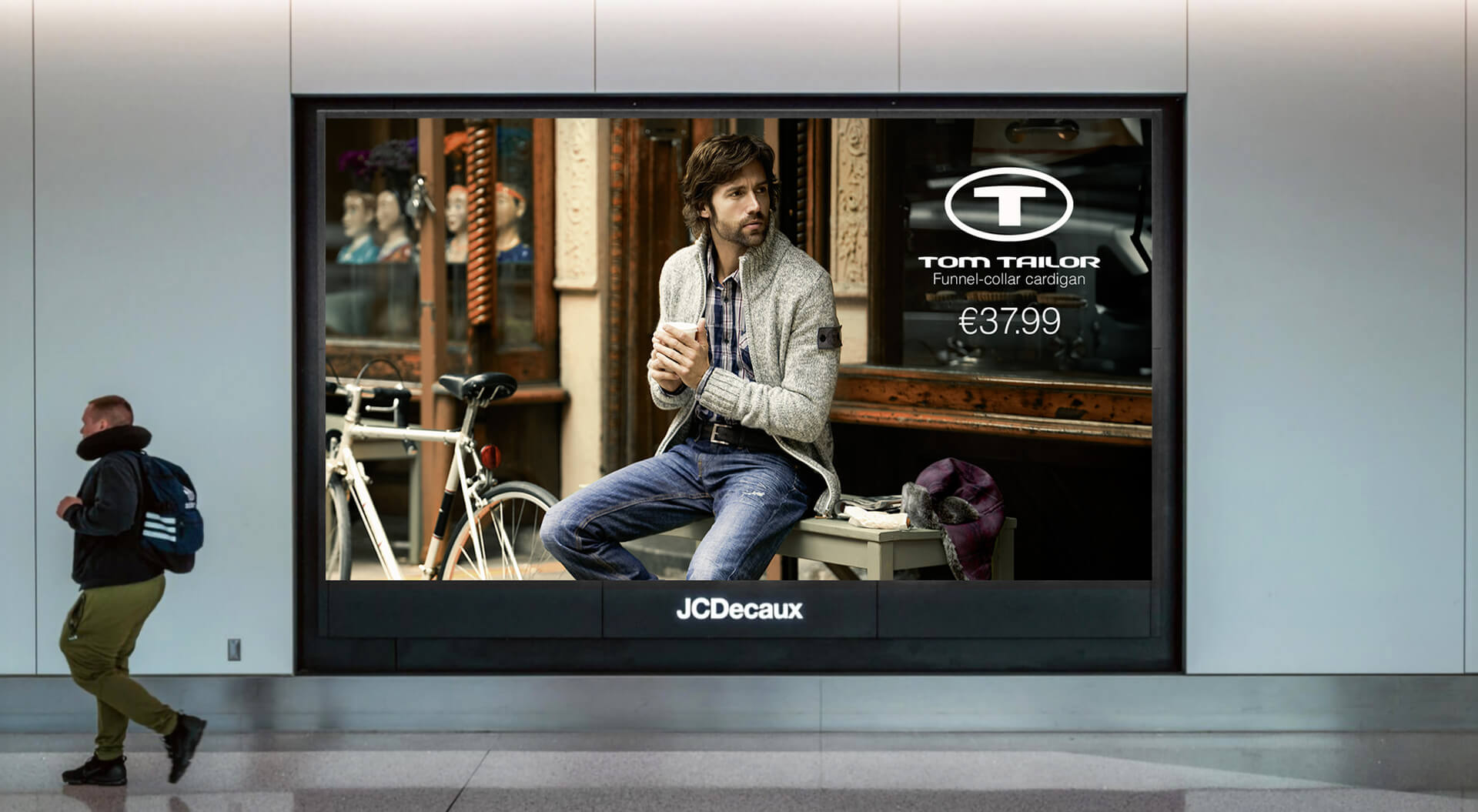
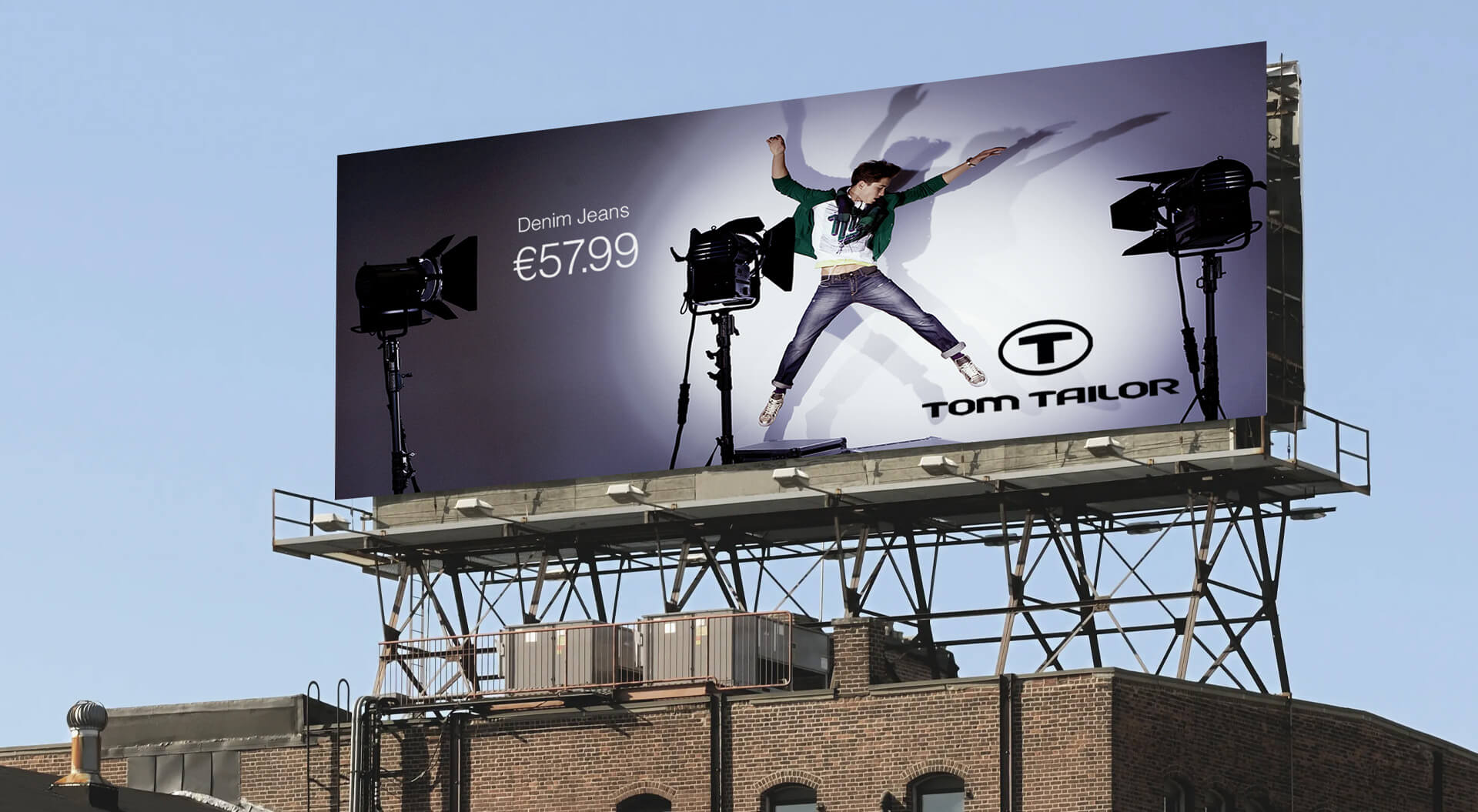
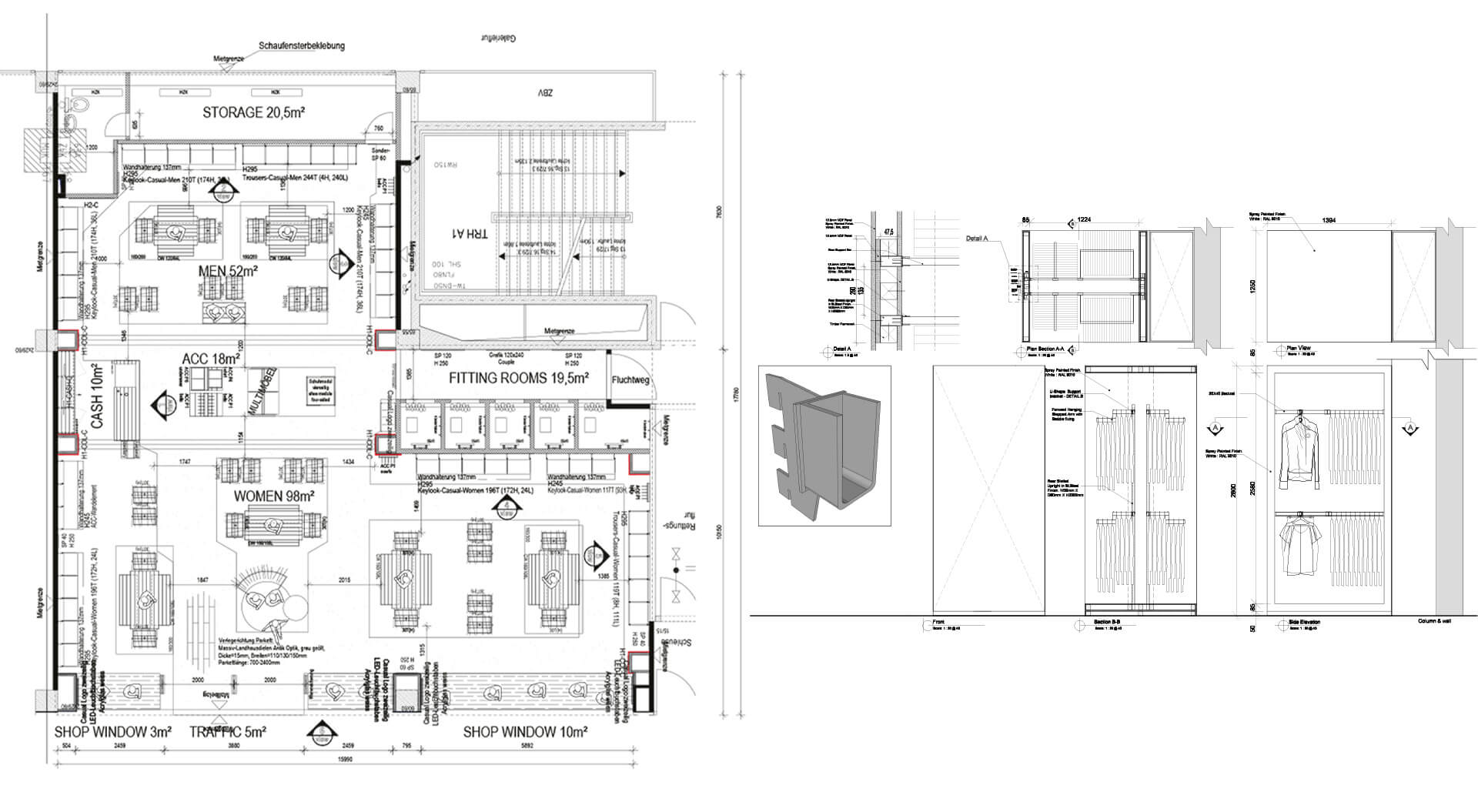
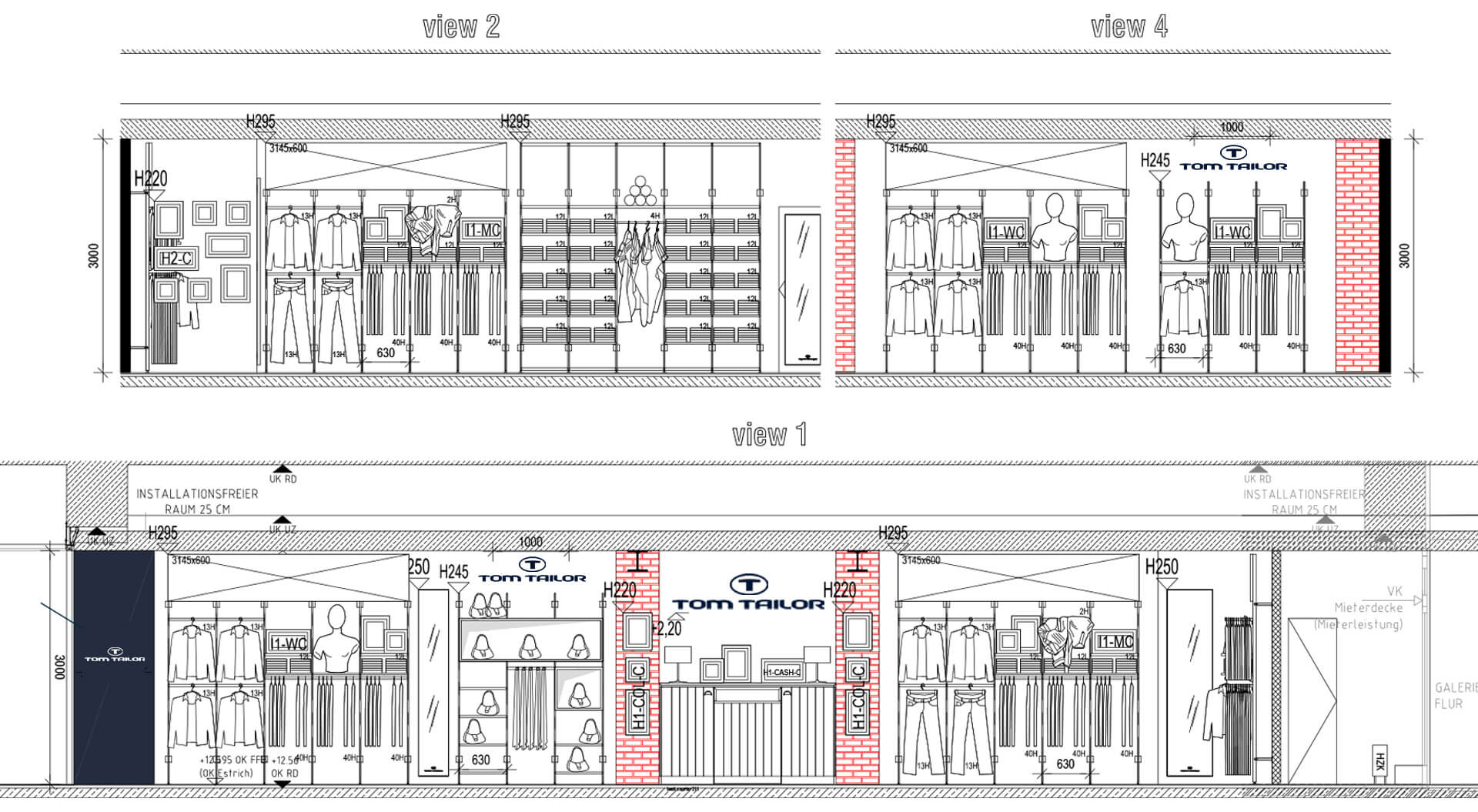
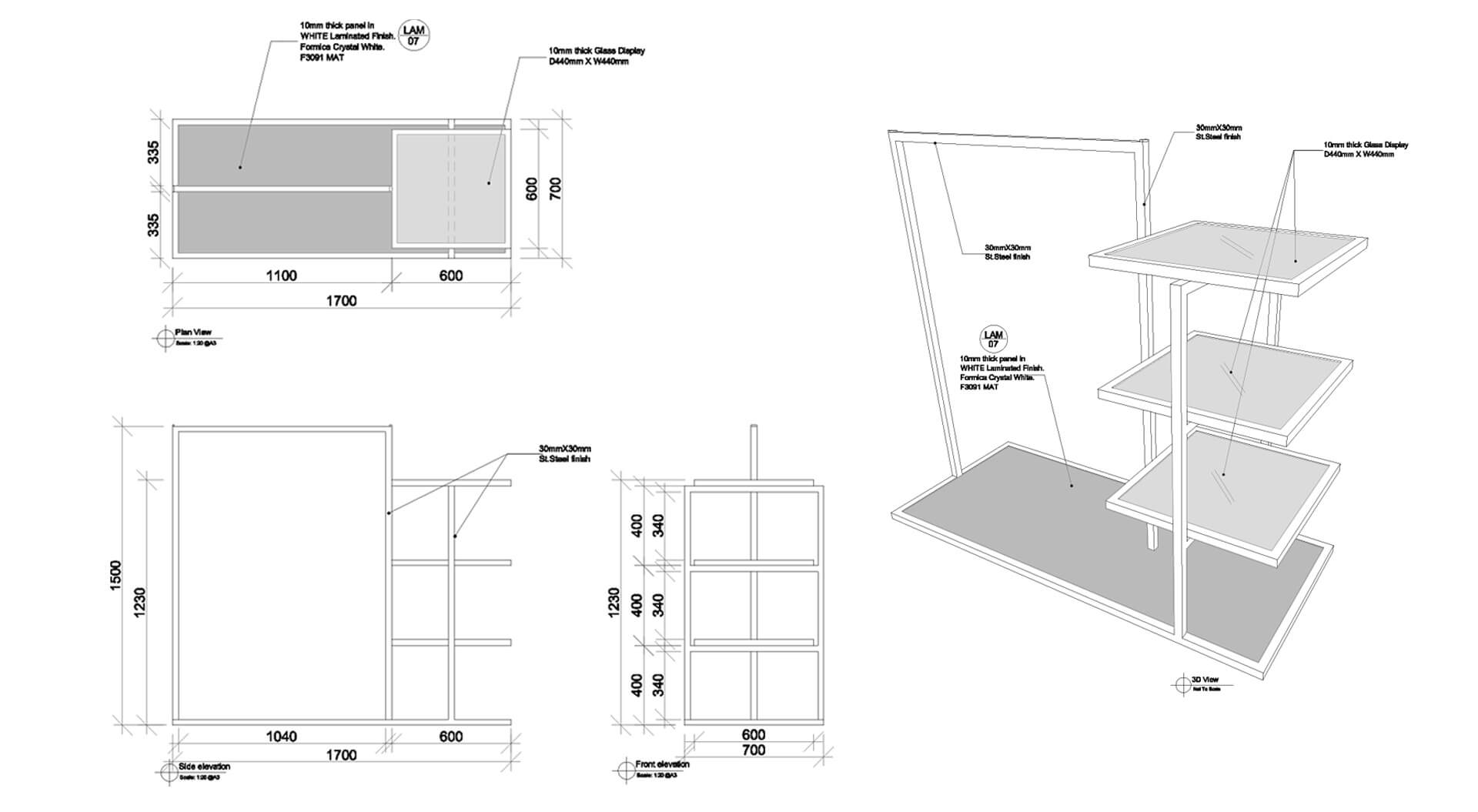
Tom Tailor collaborated with CampbellRigg to redefine its brand identity, translating strategy into powerful in-store experiences. As shown in the images above and below, the new concept unites design consistency with commercial performance, targeting a 20%+ sales uplift through shopper-focused layouts and optimized merchandising.
Tom Tailor: Translating Fashion Brand Identity into Retail
Tom Tailor demonstrates how brand strategy can be translated into a coherent physical retail environment.
CampbellRigg collaborated with Tom Tailor to redefine its brand identity and translate the strategy into in-store experiences. The concept connected brand expression, merchandising, spatial hierarchy, fixtures, graphics and navigation rather than treating identity as a superficial visual layer.
The commercial objective was a stronger relationship between brand positioning and customer behaviour, with shopper-focused layouts and optimised merchandising forming part of a targeted 20%+ sales uplift.
The wider project objective included an 18% increase in average basket through tailored space planning and intuitive store navigation.
For flagship development, this approach is particularly valuable. The flagship can establish a distinctive expression of the brand while providing practical principles that inform future retail environments.

How CampbellRigg Turns Flagship Strategy into Retail Performance
CampbellRigg combines retail strategy, branding, architecture, interior design, visual merchandising and digital experience within one multidisciplinary process.
The process is:
1. Define the strategy
Establish the brand proposition, target customer, commercial objectives and role of the flagship.
2. Develop the concept
Translate strategy into customer journey, spatial planning, merchandising, brand expression, service and digital experience.
3. Test the proposition
Use the flagship to introduce new experiences and assess customer, commercial and operational response.
4. Translate the learning
Identify which principles should influence future stores and which elements remain specific to the flagship.
5. Support implementation
Turn the strategic principles into a practical retail environment capable of supporting brand growth and commercial performance.
CampbellRigg's international experience across Europe, the Middle East and Asia supports this strategy-led approach: establish the proposition, translate it into the customer journey, test the commercial logic and create principles that can influence the wider network.
|
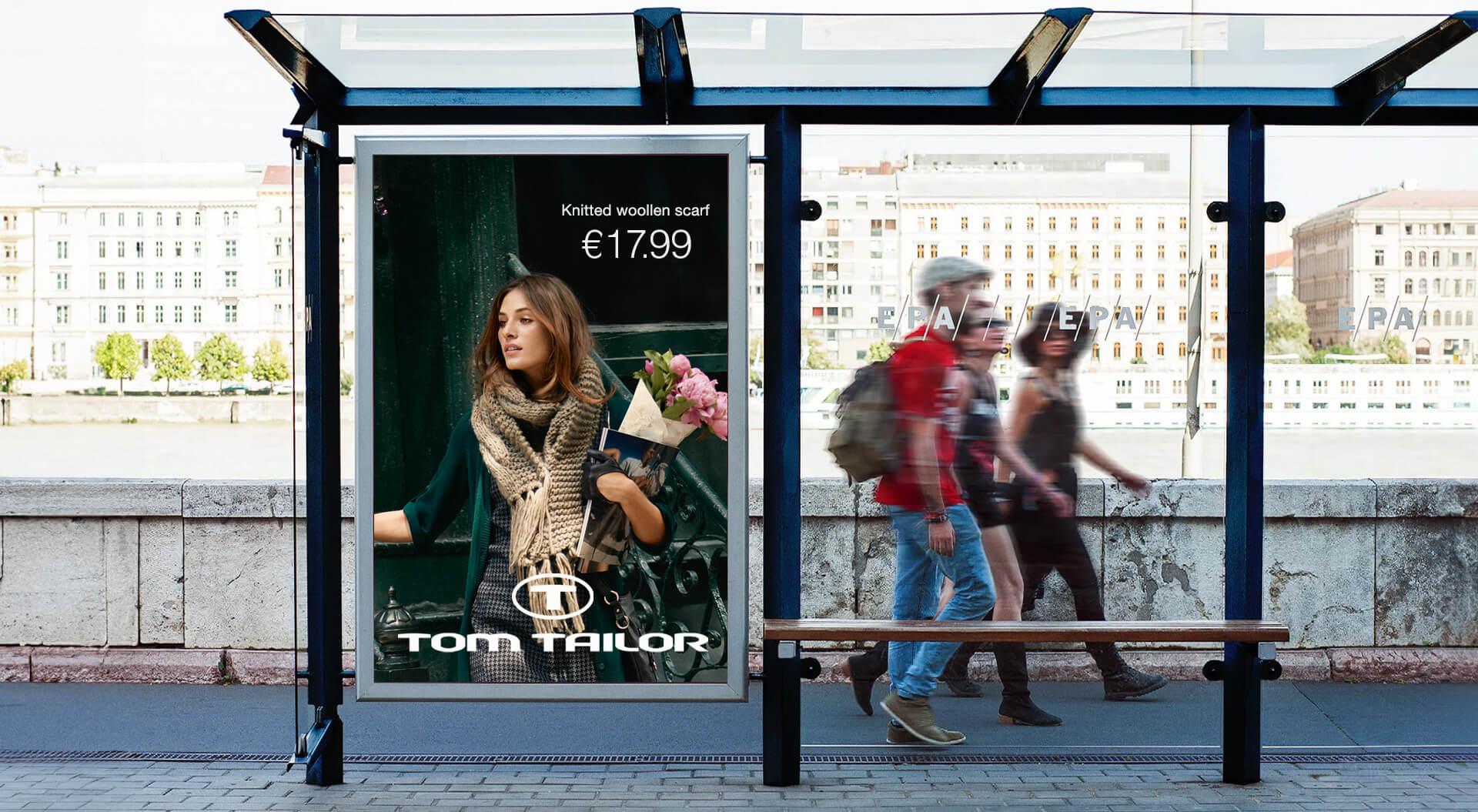
Flexible, scalable media campaigns engineered for rapid rollouts, seasonal refreshes, and brand consistency across locations. |
Increase average basket by 18% with Campbell Rigg’s tailored space planning and intuitive store navigation designs.
Building a Flagship That Performs Beyond the Opening
The future flagship is not simply a larger fashion store.
It is a brand destination, commercial asset and innovation laboratory that can provide management with evidence about where physical retail should go next.
The strongest flagship fashion store concepts connect architecture, spatial strategy, visual merchandising, digital experience, service and brand storytelling around measurable customer and commercial objectives.
CampbellRigg helps fashion retailers turn those objectives into distinctive physical environments—and use the resulting learning to strengthen the wider retail proposition.
Book a free consultation with CampbellRigg to develop a flagship fashion store concept aligned with your brand strategy, customers, location and commercial objectives.
Schedule your consultation today and receive a free quote.
Cost-Effective Excellence:
Our pricing structure is highly competitive, offering exceptional value without compromising on quality or creativity.
Rapid Execution:
We move fast. From concept to implementation, our agile team ensures your project is delivered on time and to the highest standards.
Multidisciplinary Expertise:
Our team brings together seasoned brand strategists, architects, interior designers, and graphic designers, collaborating to create seamless, end-to-end brand environments.
Global Reach, Local Insight:
With successful projects delivered across Europe, the Middle East, and Asia, we combine international experience with local market understanding.
Scalable Project Delivery:
Whether it's a flagship fashion store, an urban network or mall store, we manage and execute projects of all sizes, efficiently and effectively.
Proven Track Record:
Our designs evolve branch networks from purely transactional spaces into experiential, relationship-focused brand environments, enhancing engagement, elevating customer experience, and driving tangible business results.
Full-Service Creative Agency:
From rebranding and marketing campaigns to spatial design and rollout, we provide an integrated service tailored to your goals.