




News and Views
AI Agents in Telecom Retail: How the Future Telecom Store Becomes an Experience Hub




AI Agents in Telecom Retail: How the Future Telecom Store Becomes an Experience Hub
AI agents are changing how customers discover, compare and purchase technology.
For telecom operators, however, the strategic implication extends far beyond AI-led commerce. As AI becomes increasingly capable of interpreting customer needs, comparing smartphones and tariffs, recommending products and supporting purchase decisions, the starting point of the telecom customer journey is moving away from the store and potentially away from the operator's own digital channels.
This creates a more important management question: If AI increasingly handles discovery, comparison and routine transactions, what should the telecom retail network become?
The answer is not to add AI, interactive screens or digital kiosks to an existing store.
The opportunity is to redesign the relationship between AI, digital commerce, physical experience, human expertise, brand and store formats so that every component of the network has a defined commercial role.
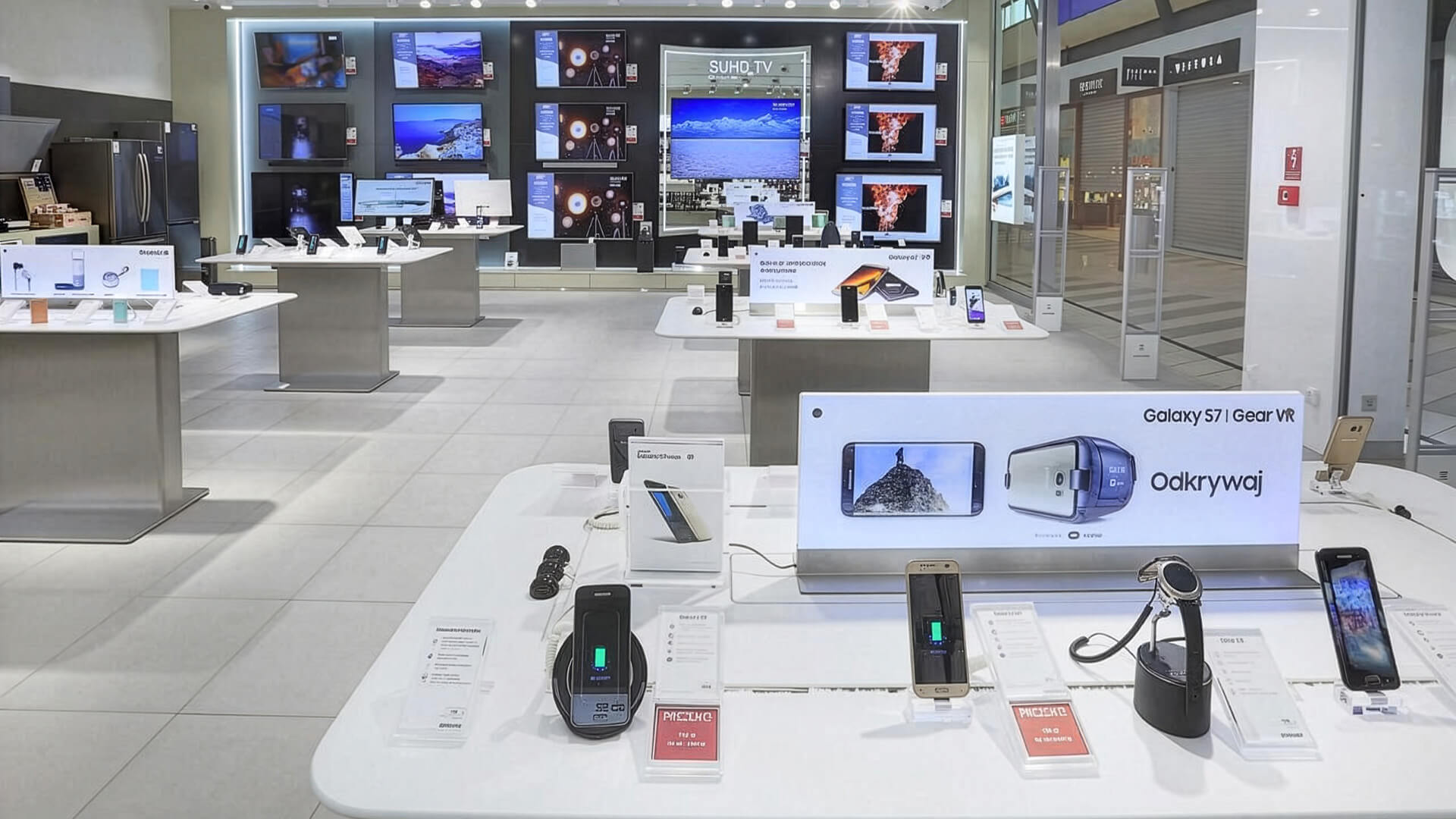
The future telecom store can become an experience hub where customers test technology, understand connected ecosystems, receive expert advice and gain confidence before purchasing.
For senior management, the objective is broader: How can AI-led customer behaviour be translated into a scalable, measurable and commercially effective telecom retail network?
That requires a shift from individual store design to retail network strategy.

AI agents are changing the telecom customer journey
AI agents can increasingly help customers research smartphones, compare specifications, evaluate tariffs and broadband packages, assess connected devices and narrow down purchase options.
The customer journey can therefore begin before the customer visits a telecom store.
Instead of: Store → Salesperson → Product → Tariff → Purchase
the journey can increasingly become: AI discovery → Digital recommendation → Comparison → Physical experience → Expert advice → Purchase → Connected ecosystem → Aftercare
That changes the commercial role of physical retail.
If AI can provide information, comparison and increasingly personalised recommendations, the store must provide value that digital interaction alone cannot easily reproduce.
That includes:
- Physical product interaction
- Demonstration and testing
- Expert consultation
- Connected-technology experiences
- Service and reassurance
- Brand experience
- Complex solution configuration
- Human confidence at the point of decision
The store is therefore not disappearing.
Its commercial role is changing.
How CampbellRigg helps
CampbellRigg starts with the customer journey rather than the store interior.
We identify where customers discover the proposition, where AI and digital platforms influence decisions, where physical interaction creates value, where employees add expertise and where the transaction or service interaction should occur.
That customer-journey analysis becomes the foundation for the retail strategy, format architecture and design brief.
The benefit: management receives one connected customer journey linking AI, digital commerce, physical retail and human expertise rather than separate channel strategies.
From AI discovery to physical experience
AI may reduce the need for customers to visit stores simply to obtain product information.
It does not make physical retail less important.
It changes what physical retail needs to accomplish.
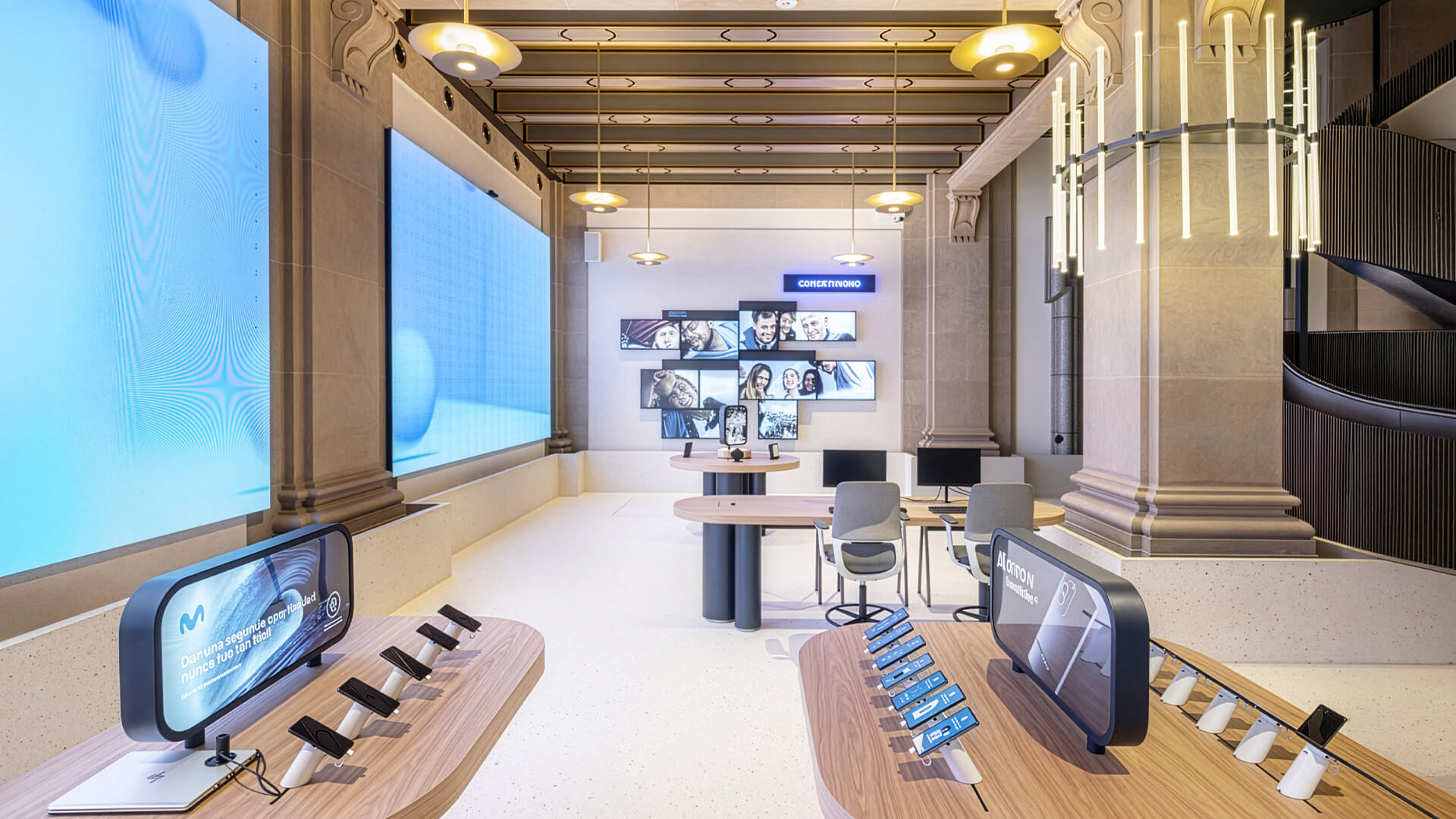
A smartphone can be researched digitally, but its camera, screen, weight and interface can be experienced physically.
A broadband proposition can be compared online, but customers may understand its value more effectively when they see how broadband, entertainment, security and connected-home technologies work together.
Wearables, gaming technology, smart-home products and emerging connected services can similarly benefit from demonstration.
The physical store therefore needs to move from information distribution towards experience, expertise and confidence.
The management question changes from: How many products can this store sell?
to: How effectively does this store demonstrate and commercialise the wider technology ecosystem?
This distinction matters because AI changes the economics of the customer journey. If information becomes easier to obtain digitally, physical space needs to justify its investment through experiences, relationships and commercial outcomes that digital channels cannot replicate as effectively.
How CampbellRigg helps
CampbellRigg connects brand auditing, retail strategy, customer experience and design brief construction before physical design begins.
- Brand audit establishes how the existing proposition is perceived and expressed.
- Strategy defines the desired market position and commercial role of retail.
- Customer-journey planning identifies where physical interaction creates value.
- Design brief construction converts those strategic requirements into practical requirements for customer experience, store planning, identity, communications and implementation.
The benefit: management gains one strategic direction linking brand decisions to the physical retail network rather than a collection of disconnected design initiatives.
From telecom store to connected experience hub
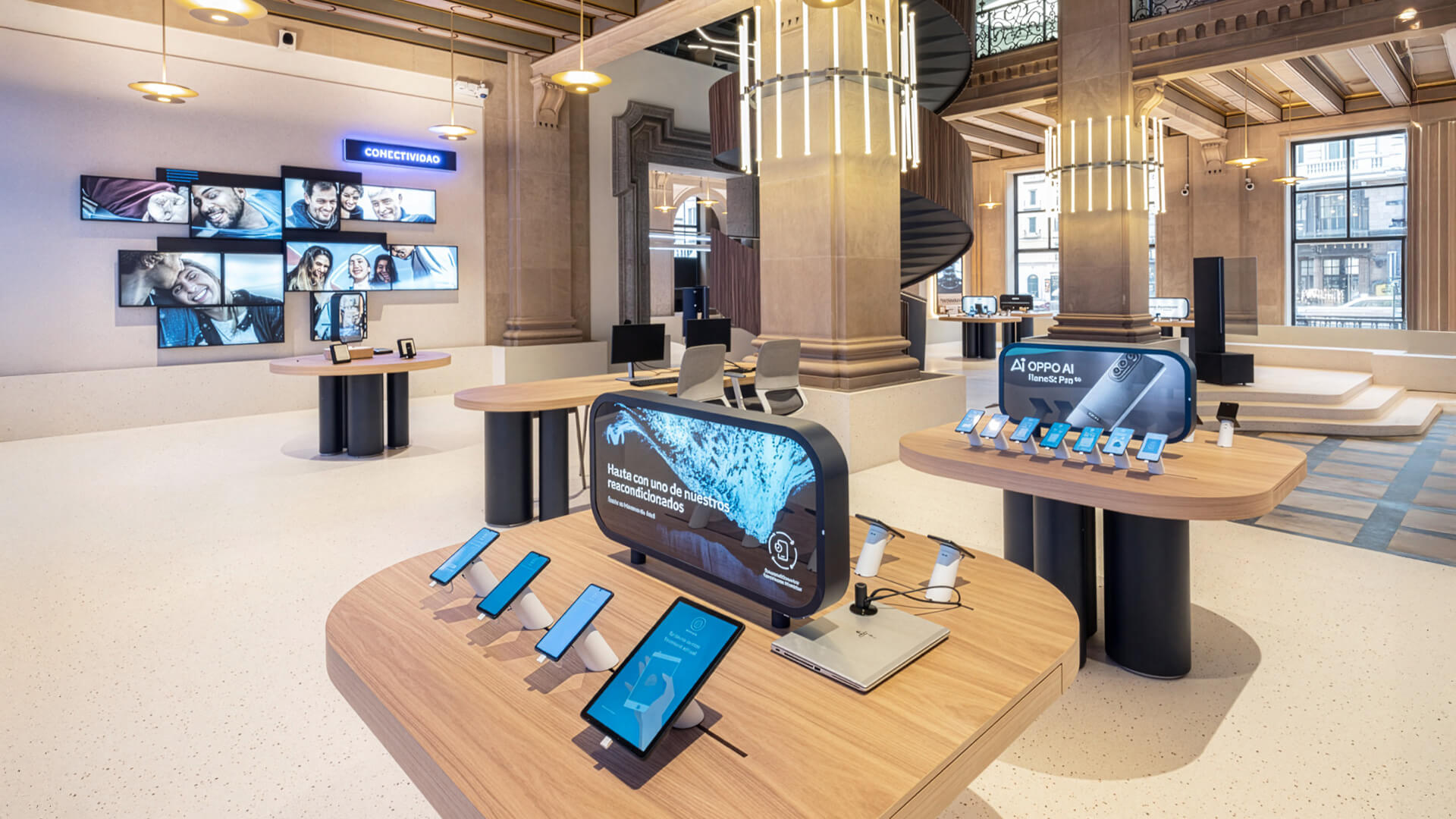
The future telecom store should be organised around customer needs, missions and technology ecosystems, rather than product categories alone.
Smartphones, wearables, broadband, entertainment, gaming, security and connected-home technology can be brought together around real customer requirements.
A customer might explore:
- Connected living
- Mobile productivity
- Entertainment
- Gaming
- Smart home
- Security
- Wearables
- Connectivity
- Business technology
The physical environment becomes a demonstration of how the operator's wider proposition works in everyday life.
This creates a commercial opportunity beyond device sales.
Where AI can increasingly compare devices and tariffs, physical experience can become a stronger source of brand differentiation, confidence and ecosystem engagement.
How CampbellRigg helps
CampbellRigg develops the experience architecture behind the store.
We determine:
- which customer missions deserve physical demonstration;
- which products and services should be connected;
- where consultation should occur;
- how digital tools support the journey;
- how the brand should be expressed consistently throughout the environment; and
- how the experience can support commercial objectives.
The benefit: the store becomes a structured commercial experience rather than a product showroom, creating more opportunities for engagement, cross-selling and higher-value customer relationships.
Designing telecom stores for the AI era
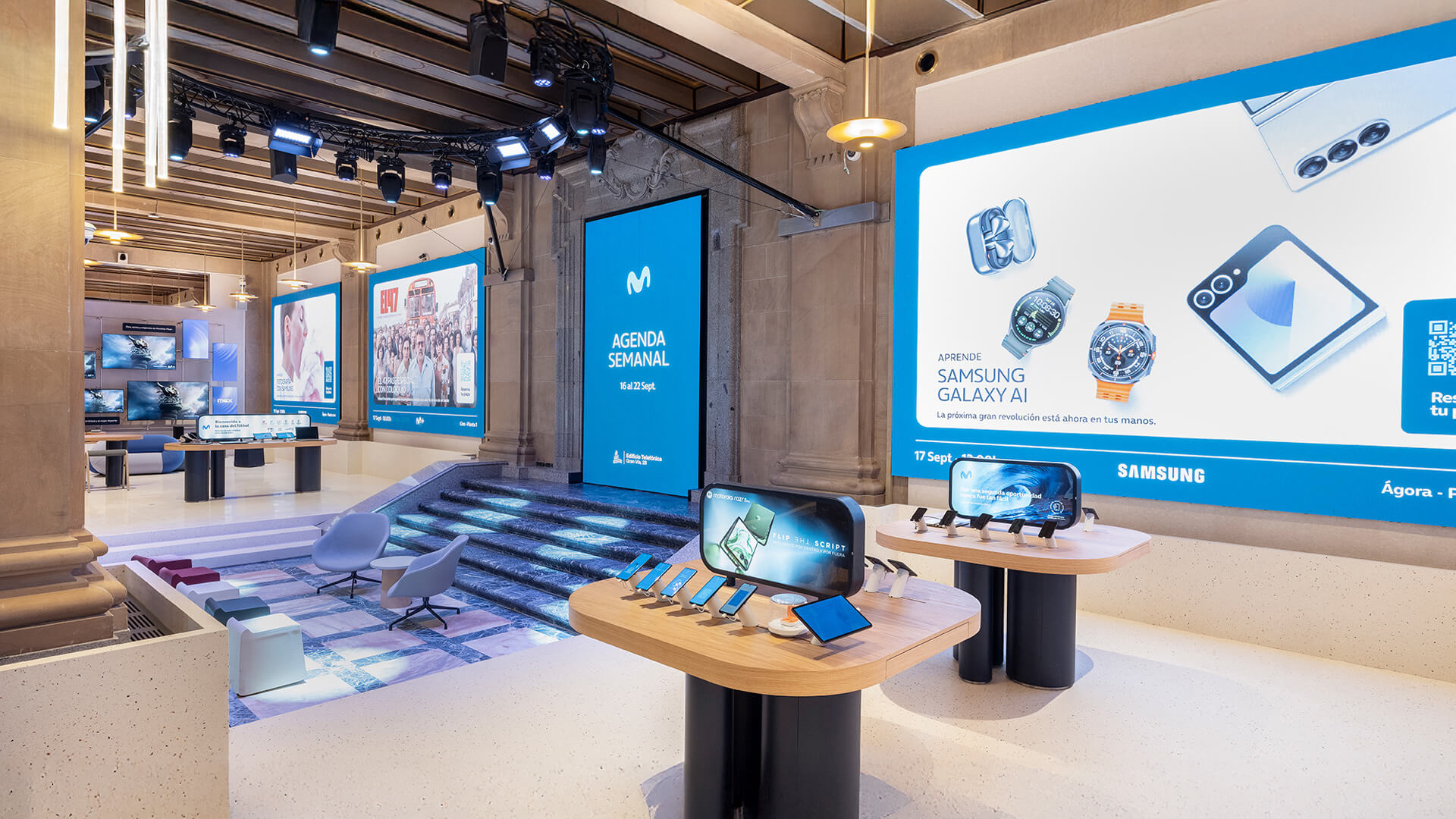
AI-ready telecom retail requires management to reconsider the relationship between space, people, technology and customer value.
The most effective environments will be flexible rather than fixed.
Product portfolios change. Customer expectations change. Digital journeys change. AI capabilities change.
The physical environment therefore needs to accommodate change without requiring the operator to repeatedly reinvent the entire store.
That means:
- Experience zones should accommodate new technologies without requiring complete store redesigns.
- Architecture should encourage discovery.
- Interior design should make technology understandable.
- Digital interfaces should extend the physical experience rather than compete with it.
- Consultation environments should support higher-value conversations.
- Self-service should process routine requirements efficiently.
- Employees should concentrate on complex customer needs where human expertise adds value.
- The store should operate as part of a wider phygital ecosystem.
A future journey might therefore look like: Discover through AI → continue through ecommerce → reserve digitally → visit the store → experience the product → consult an expert → purchase → receive AI-assisted aftercare.
The physical store becomes one component of a connected retail system.
How CampbellRigg helps
CampbellRigg connects: Brand strategy → Customer journey → Retail strategy → Format planning → Experience design → Store design → Digital integration → Implementation
Technology is considered within the commercial architecture of the store rather than added as an isolated feature.
The benefit: management gains a retail format capable of evolving with technology while maintaining brand consistency and controlling the cost and complexity of future rollout.
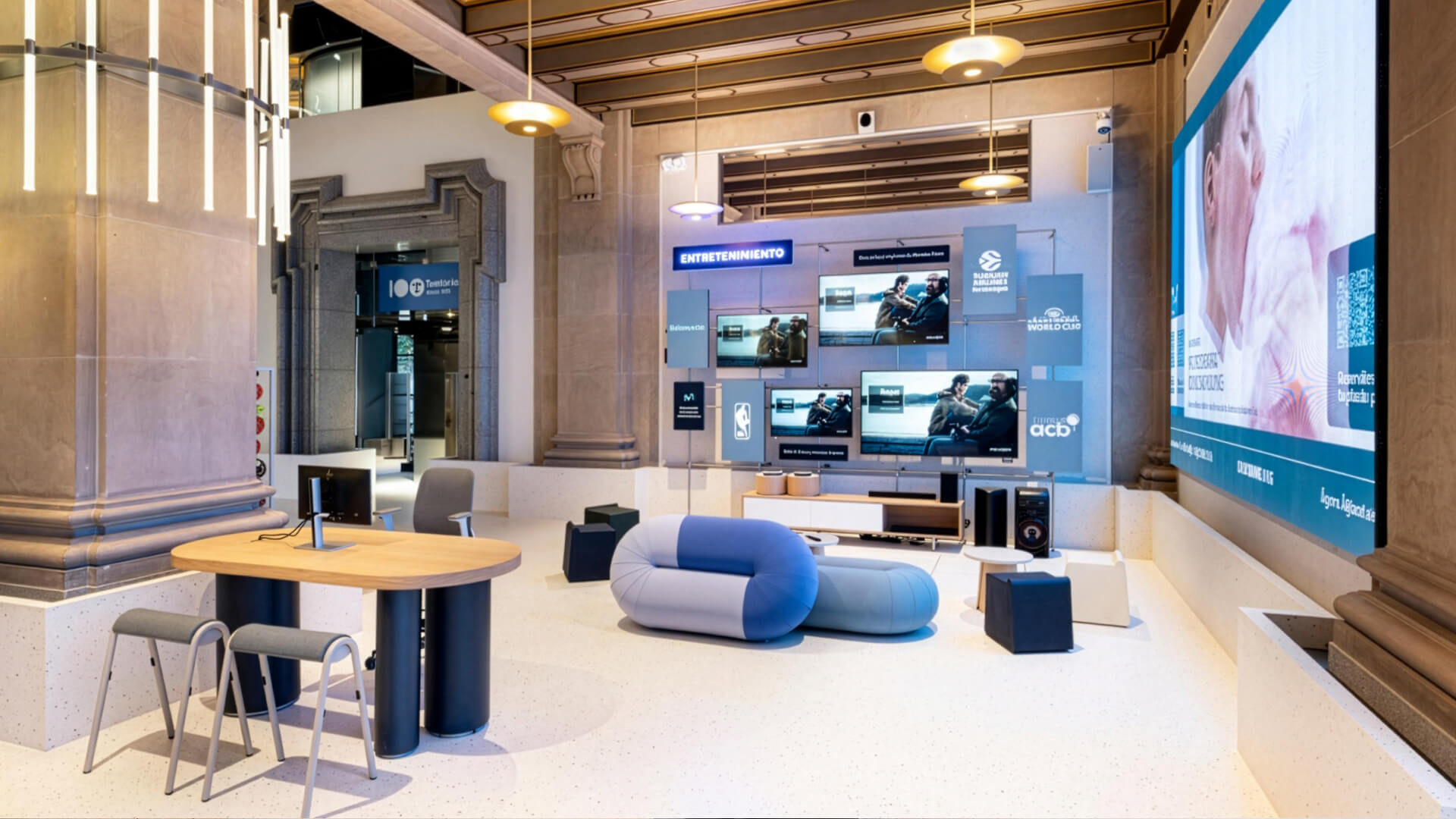
Phygital telecom retail: connecting AI, digital and physical stores
The future of telecom retail is neither purely physical nor purely digital.
It is phygital.
AI, ecommerce, mobile applications, digital customer accounts and physical stores need to operate as connected components of one customer journey.
A customer might discover a product through an AI agent, receive a personalised recommendation digitally, reserve the device online and then visit the store to experience it.
At the store, the customer can:
- Test the technology
- Compare alternatives
- Experience connected services
- Speak to an expert
- Configure a solution
- Complete the purchase digitally
After purchase, AI-assisted service can continue the relationship.
This creates a continuous customer ecosystem rather than a collection of disconnected channels.
The strategic requirement is therefore not simply to digitise the store.
It is to determine which part of the customer journey belongs in AI, which belongs in digital commerce, which requires physical experience and where human expertise creates incremental value.
How CampbellRigg helps
CampbellRigg defines the role of every physical and digital touchpoint within the journey.
We determine where self-service is appropriate, where employees should intervene, how appointments and reservations affect customer flow, how digital tools support consultations and how the brand remains consistent from AI discovery through physical experience and aftercare.
The benefit: customers experience one connected telecom proposition rather than a series of independently designed channels.
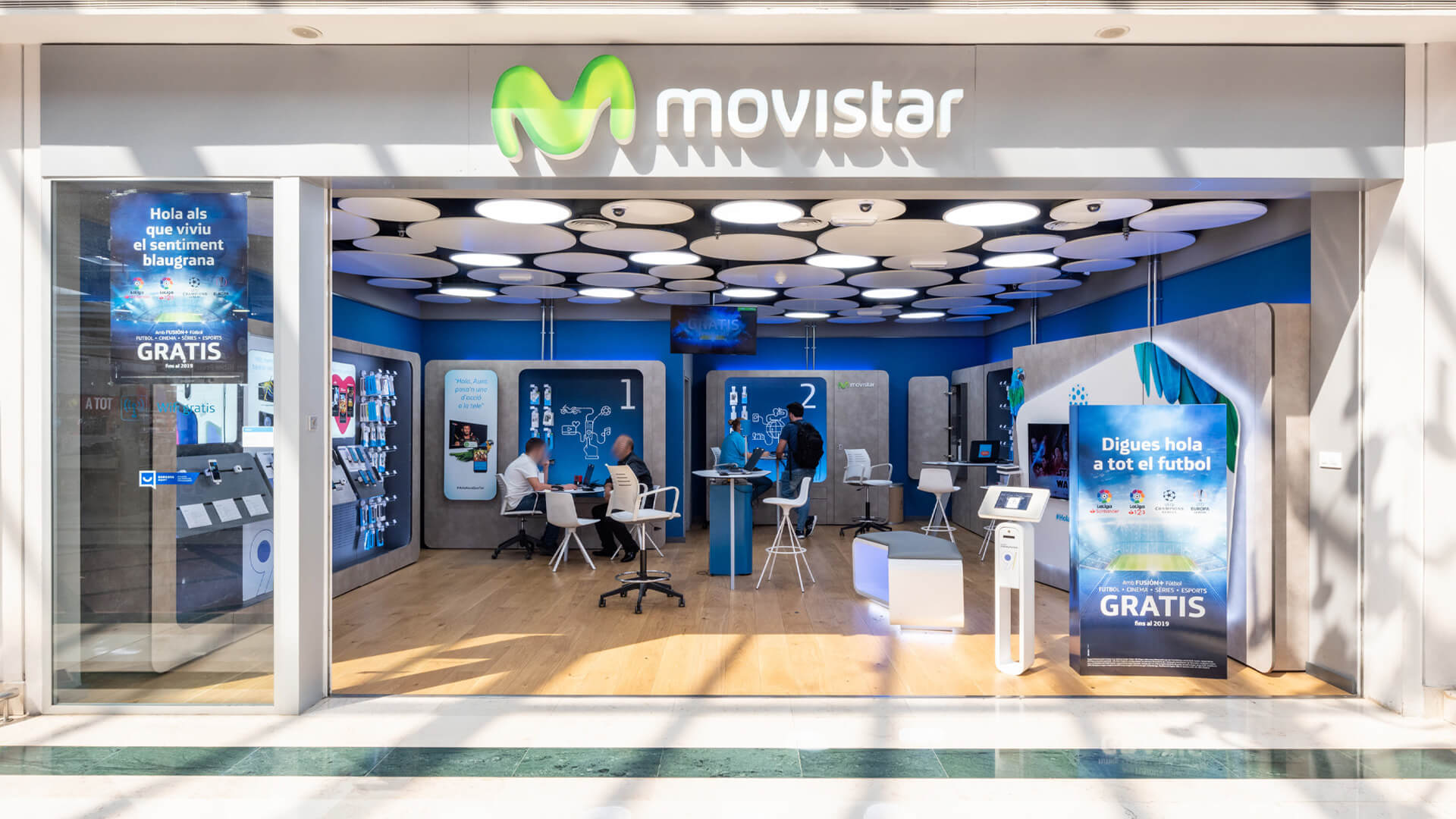
The future telecom store needs a format strategy
One of the most important management decisions is not how to design one future store.
It is how to build a network of different formats that work as one system.
A large flagship, high-street store, shopping-centre unit, compact store and kiosk do not have the same customer mission, economics or spatial constraints.
The future network therefore requires format architecture.
|
Format |
Primary commercial role |
|
Flagship |
Brand experience, technology discovery, launches, ecosystem demonstration and high-value consultation |
|
Standard store |
Product experience, sales, service, consultation and digital fulfilment |
|
Compact store |
High-frequency missions, core propositions, quick service and selected product experiences |
|
Kiosk |
Visibility, high-footfall access and simple, targeted interactions |
The formats should look and feel like one brand while performing different commercial roles.
This is where retail strategy becomes more important than individual store aesthetics.
How CampbellRigg helps
CampbellRigg establishes the format architecture before designing individual stores.
We define:
- Format roles
- Target customer missions
- Space requirements
- Experience principles
- Brand expression
- Operational requirements
- Digital integration
- Investment parameters
- Rollout principles
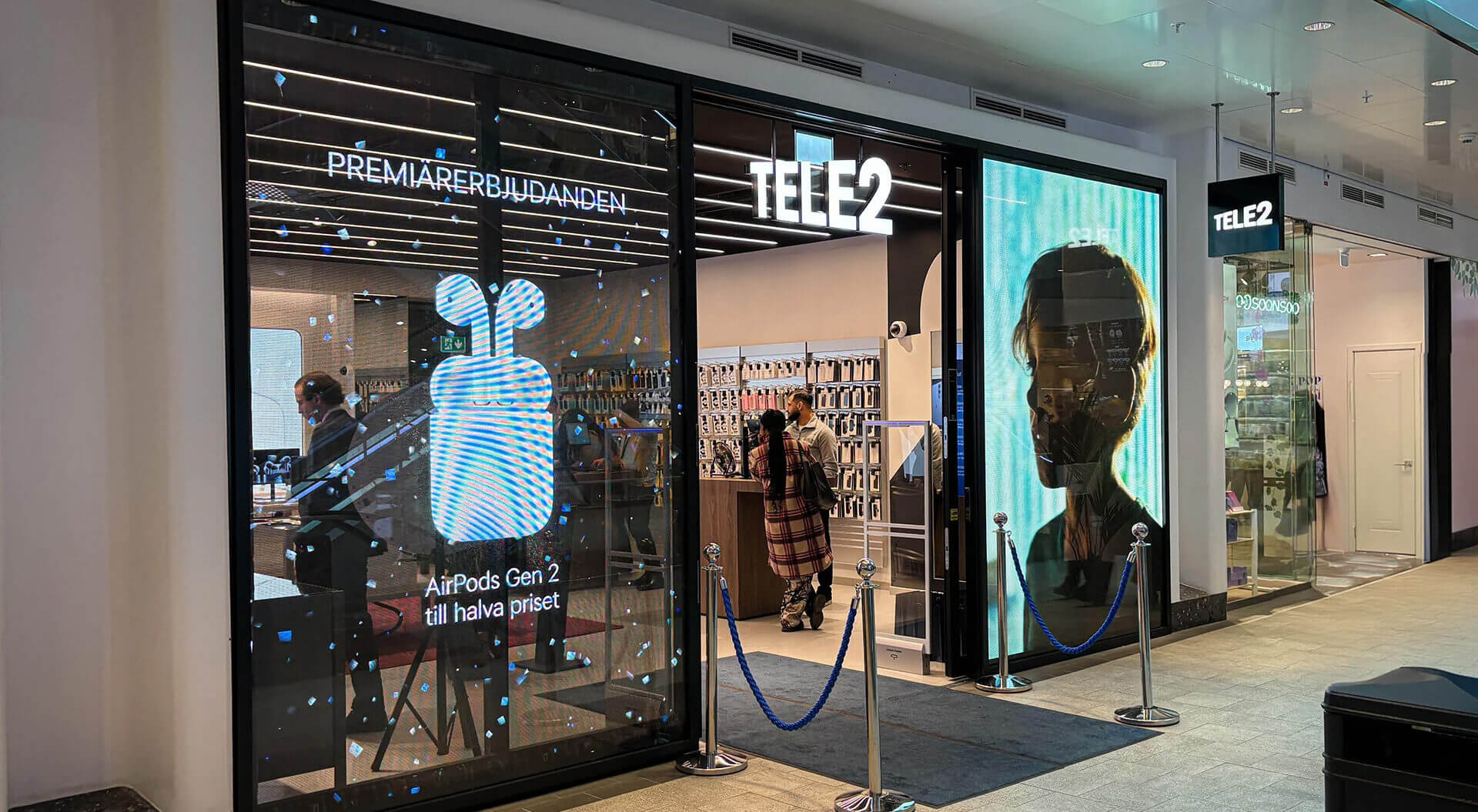
CampbellRigg's Tele2 work demonstrates experience in connecting retail brand strategy and store design within a broader network proposition.
The benefit: management receives a scalable retail network rather than a single successful store concept that becomes difficult to reproduce across different locations and investment levels.
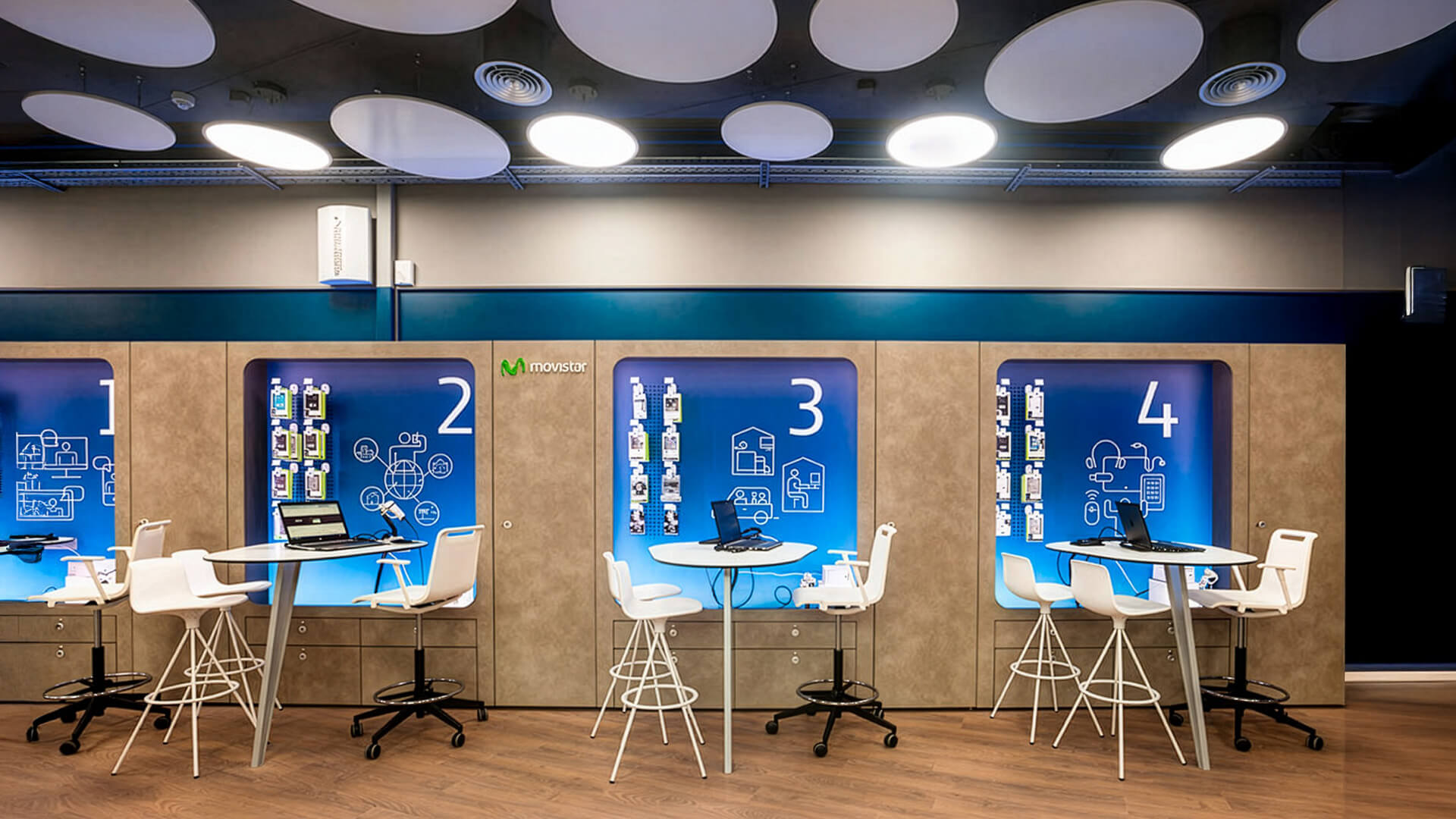
Five management priorities for AI-ready telecom retail
1. Design around customer journeys
Start with how customers discover, evaluate, experience and purchase technology.
Do not start with a floor plan.
AI changes the journey before the customer enters the store. Retail strategy therefore needs to establish what physical space should accomplish after AI and digital channels have already influenced the customer.
How CampbellRigg helps: customer-journey mapping determines the role of AI, digital platforms, physical environments and human expertise.
The benefit: the store is designed around future customer behaviour rather than inherited retail conventions.
2. Make technology experiential
Products should be demonstrated and tested wherever physical interaction creates value.
The objective is not to fill the store with screens.
It is to create experiences that make technology easier to understand and more compelling to use.
How CampbellRigg helps: product and service propositions are translated into experience zones, demonstration environments, consultation areas and customer journeys.
The benefit: physical retail provides a reason to visit that cannot be replicated simply by displaying specifications online.
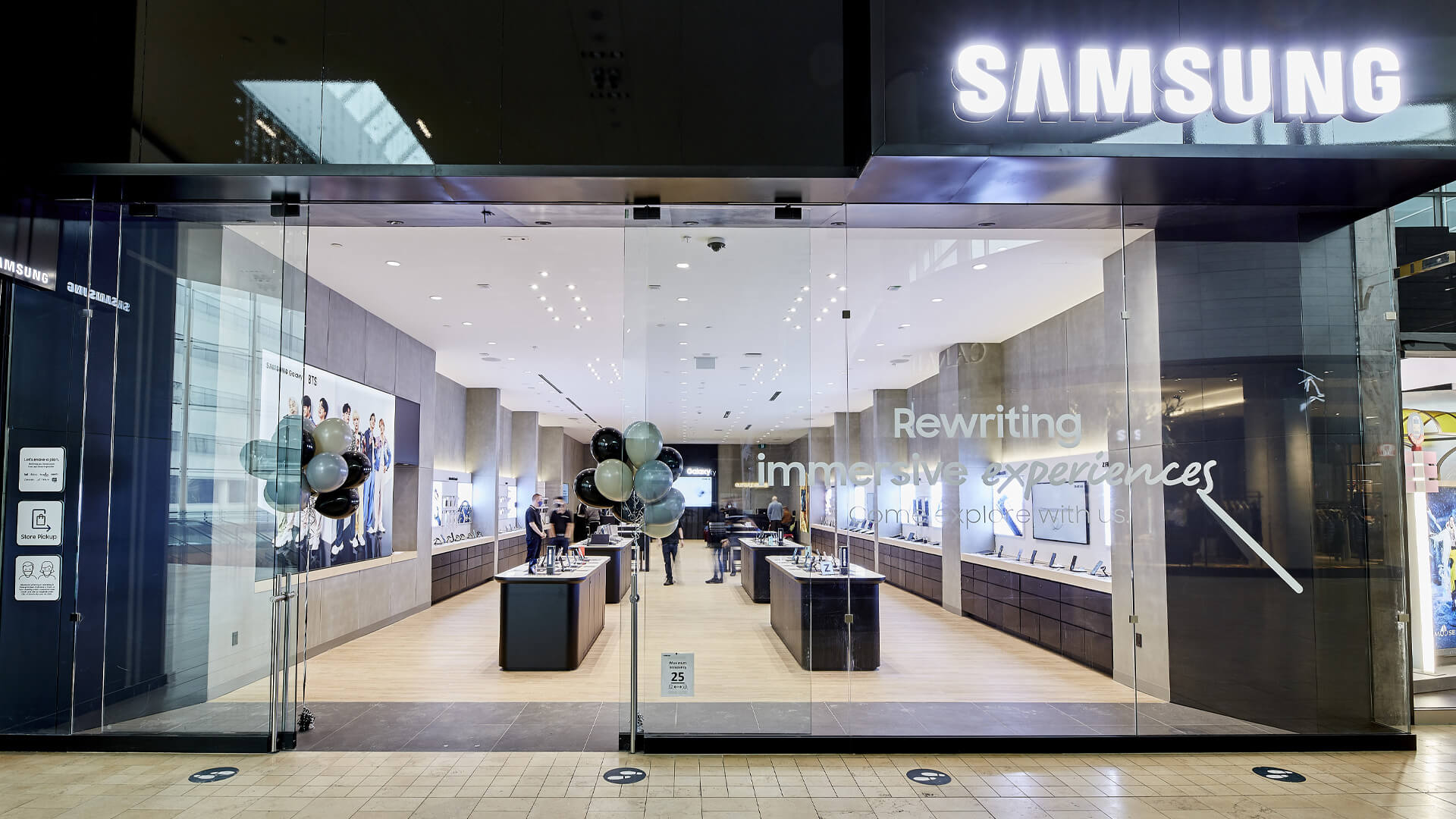
3. Connect products into ecosystems
Move beyond the individual smartphone.
Show how smartphones, broadband, wearables, entertainment, security and smart-home technologies work together.
This shifts the store from product merchandising towards solution-led retail.
How CampbellRigg helps: ecosystem-led zoning and merchandising strategies connect complementary products and services around customer needs.
The benefit: the store can create opportunities for cross-selling and higher-value propositions rather than relying on individual-device transactions.
4. Give people a higher-value role
AI and self-service can increasingly absorb routine information and transactional requirements.
Employees should therefore concentrate on situations where human expertise creates greater value.
That can include:
- Complex configuration
- Reassurance
- Solution selling
- Connected-home advice
- Business technology
- Service recovery
- High-value consultation
How CampbellRigg helps: consultation environments, customer flows and service touchpoints are designed so employees can focus on expertise and complex technology solutions.
The benefit: human resource is directed towards higher-value customer interactions.
5. Build flexible, scalable formats
Technology, customer behaviour and propositions will continue to change.
Store formats need to change with them.
How CampbellRigg helps: modular design principles, flexible merchandising systems and scalable format guidelines can be adapted across flagship stores, standard stores, compact formats and kiosks.
The benefit: management can roll out a consistent proposition while adapting the format to local requirements and changing technology.
From store transformation to commercial performance
Telecom retail transformation should deliver more than improved customer experience.
It should contribute to commercial performance.
A well-designed environment can support:
- Higher engagement
- More productive dwell time
- Improved conversion
- Greater product interaction
- Higher ecosystem sales
- Stronger cross-selling
- Improved customer confidence
- Greater brand differentiation
- Better employee productivity
- Higher sales per square metre
- More efficient service delivery
The commercial opportunity becomes particularly significant as telecom operators move from individual product sales towards broader connected propositions.
A smartphone customer may also need: Connectivity + accessories + insurance + wearables + entertainment + broadband + smart-home services
The store should make those relationships understandable.
For a large network, the commercial equation extends further.
- Every square metre represents invested capital.
- Every format represents an operating model.
- Every customer interaction represents an opportunity to create value.
The store should therefore be managed as a commercial asset, not simply as a sales or service channel.
How CampbellRigg helps
CampbellRigg builds commercial objectives into the retail strategy and design brief before creative development begins.
We align customer experience and physical planning with measurable objectives such as:
- Engagement
- Conversion
- Cross-selling
- Productivity
- Service efficiency
- Customer loyalty
- Return on retail investment
The benefit: management can evaluate retail design against business outcomes rather than subjective visual preference.


Measure the Commercial Performance of the Store
AI-powered telecom store design should ultimately be judged by business performance, not visual novelty.
Key metrics can include:
Objective → KPI
Increase engagement → Dwell time
Improve conversion → Conversion rate
Increase ecosystem sales → Cross-sell rate
Improve productivity → Sales per square metre
Increase technology adoption → Demo-to-purchase conversion
Improve loyalty → Retention and NPS
Reduce service costs → Cost to serve
Improve investment performance → Return on retail investment
The precise KPI framework should reflect the operator's commercial strategy and format objectives.
The critical principle is: The commercial outcome should be established before the design is finalised.
How CampbellRigg helps
CampbellRigg translates management objectives into customer-journey requirements, spatial priorities and design principles.
The connection becomes: Business objective → Customer behaviour → Retail strategy → Format → Experience → Design → Measurement
The benefit: management has a clearer line of sight between retail investment, customer behaviour and commercial performance.

From AI Strategy to Telecom Retail Network Strategy
For telecom operators planning a flagship, standard-store rollout, compact format, kiosk or network transformation, AI strategy should be developed alongside:
- Customer journey strategy
- Retail format strategy
- Brand positioning
- Customer experience
- Retail architecture
- Store interiors
- Digital experience
- Phygital integration
- Visual merchandising
- Implementation planning
- Performance measurement
The challenge is not simply to introduce AI into an existing store.
It is to understand how AI changes customer behaviour and then determine what the retail network needs to become because of that change.
How CampbellRigg helps
CampbellRigg begins by connecting these disciplines rather than treating them as separate design commissions.
- Brand auditing establishes how the existing proposition is perceived and expressed.
- Strategy defines the desired market position and commercial role of retail.
- Customer-journey planning determines how AI, digital, physical and human interactions should connect.
- Format strategy establishes the role of flagship, standard, compact and kiosk environments.
- Design brief construction converts strategy into practical requirements for customer experience, store planning, identity and implementation.
- Retail architecture and interior design turn those requirements into scalable physical environments.
- Digital and phygital integration connects physical retail with ecommerce, apps and AI-led journeys.
- Implementation guidelines allow the concept to be adapted consistently across the network.
- Performance measurement establishes whether the retail environment is delivering against its intended commercial objectives.
The benefit: management receives one strategic direction linking brand, customer experience, format architecture and physical retail rather than a collection of disconnected AI, digital, branding and store-design initiatives.

CampbellRigg: turning AI-led telecom retail strategy into a scalable network
CampbellRigg helps telecom and technology brands translate changing customer behaviour, technology propositions and AI-led journeys into commercially effective retail environments.
Our technology retail portfolio includes Tele2, Megafon, Currys and M.Video, demonstrating experience across brand strategy, retail environments, customer engagement, merchandising and store design.
For Tele2, CampbellRigg's work addressed retail brand strategy and store design within a broader retail proposition.
For Megafon, the work encompassed retail brand strategy, store design and visual identity across multiple retail formats, with attention to customer experience, product-category presentation and point-of-sale efficiency.
These examples reinforce an important distinction.
CampbellRigg does not approach each store as an isolated creative commission.
The strategic requirement is to establish the system first.
That means connecting: Brand strategy → Customer journey → Retail strategy → Format architecture → Experience design → Physical environment → Digital integration → Implementation → Measurement
The resulting format system can then be adapted across flagship stores, standard stores, compact environments and kiosks while maintaining a coherent brand experience.
Every element should have a commercial purpose: Discovery. Engagement. Demonstration. Consultation. Conversion. Service. Relationship.

What will the future telecom store look like?
The future telecom store will not be defined by how much technology it contains.
It will be defined by how effectively it connects: AI + Digital Commerce + Physical Experience + Human Expertise + Brand + Connected Technology
AI can make discovery and recommendation more intelligent.
Digital platforms can make comparison, configuration and purchasing more seamless.
Physical environments can make technology tangible.
People can provide expertise, reassurance and judgement.
Brand can connect the entire experience.
For management, the opportunity is to turn these components into one scalable retail system.
That means moving:
- From salesroom to experience hub
- From product-led retail to connected ecosystems
- From channel management to customer-journey management
- From individual store design to scalable format architecture
- From visual innovation to measurable commercial performance
- From transaction to relationship
How CampbellRigg helps
CampbellRigg helps telecom brands turn this strategic shift into a practical retail network.
We connect brand strategy, customer experience, retail architecture, interior design, digital integration and format planning to create environments designed around how customers increasingly discover, experience and purchase technology.
The objective is clear: Turn AI-led customer behaviour into a scalable, measurable and commercially effective telecom retail network.
For management, that means every flagship, standard store, compact format and kiosk can operate as part of one coherent retail strategy with a defined customer role, clear brand proposition and measurable commercial purpose.
AI may change how customers discover technology. CampbellRigg helps determine what your retail network needs to become because of it.