



News and Views
Neo-Banks vs Traditional Banks: Who Defines the Future of Retail Banking?





Neo-Banks vs Traditional Banks: Who Defines the Future of Retail Banking?
Neo-banks have changed what customers expect from banking. Instant onboarding, intuitive mobile interfaces, real-time transactions, transparent pricing and always-on service are no longer differentiators reserved for digital challengers. They are increasingly the benchmark against which every banking relationship is judged.
At the same time, traditional banks retain advantages that digital-only competitors cannot simply reproduce through an app: established customer relationships, deposits, regulatory infrastructure, extensive product portfolios, trusted brands and physical presence.
The strategic question for bank leadership is therefore no longer whether neo-banks or traditional banks will define the future of banking.
It is how traditional and challenger banks can combine digital experience, physical presence, human advice, brand trust and operational efficiency into a retail banking model that is commercially effective and capable of scaling.
This matters because the customer relationship itself is changing. McKinsey reports that neobanks and fintechs now hold more than a quarter of UK banking relationships, up from low single digits a decade ago, while increasingly capturing transactions and daily customer engagement.
For management teams responsible for banking networks, the implication is significant:
The future of retail banking will not be defined by the number of branches a bank operates or the sophistication of its app. It will be defined by how effectively the entire customer relationship works across digital, physical and human channels.
Neo-banks have changed the customer expectation
The strongest contribution of neo-banks has not simply been technological.
It has been behavioural.
Customers have become accustomed to banking experiences designed around convenience rather than institutional processes.
They expect:
- rapid digital onboarding
- simple navigation
- immediate access to information
- transparent products and pricing
- real-time notifications
- personalised recommendations
- convenient payments
- responsive customer service
- minimal administrative friction
- consistent experiences across devices and channels.
S&P Global's 2026 assessment describes the most successful neobanks as having moved beyond their original challenger status, with sustainable business models and the ability to reshape market practices.
This creates a structural challenge for traditional banks.
Customers do not necessarily compare one bank's branch with another bank's branch.
They compare the experience of their bank with the best digital experiences they encounter anywhere.
A bank therefore competes not only against another financial institution but against the service standards established by digital commerce, technology platforms and other digitally native businesses.
How CampbellRigg helps
CampbellRigg begins by identifying where customer expectations have moved faster than the existing banking proposition.
The process combines brand auditing, customer-experience analysis, channel review, competitive benchmarking and physical-network assessment.
The objective is not to make a branch look more contemporary.
It is to determine how the bank's proposition should work across the customer journey — and then establish what that means for branch formats, communications, technology, service environments and implementation.
The management benefit is a single strategic direction connecting customer expectations with practical changes to the retail network.
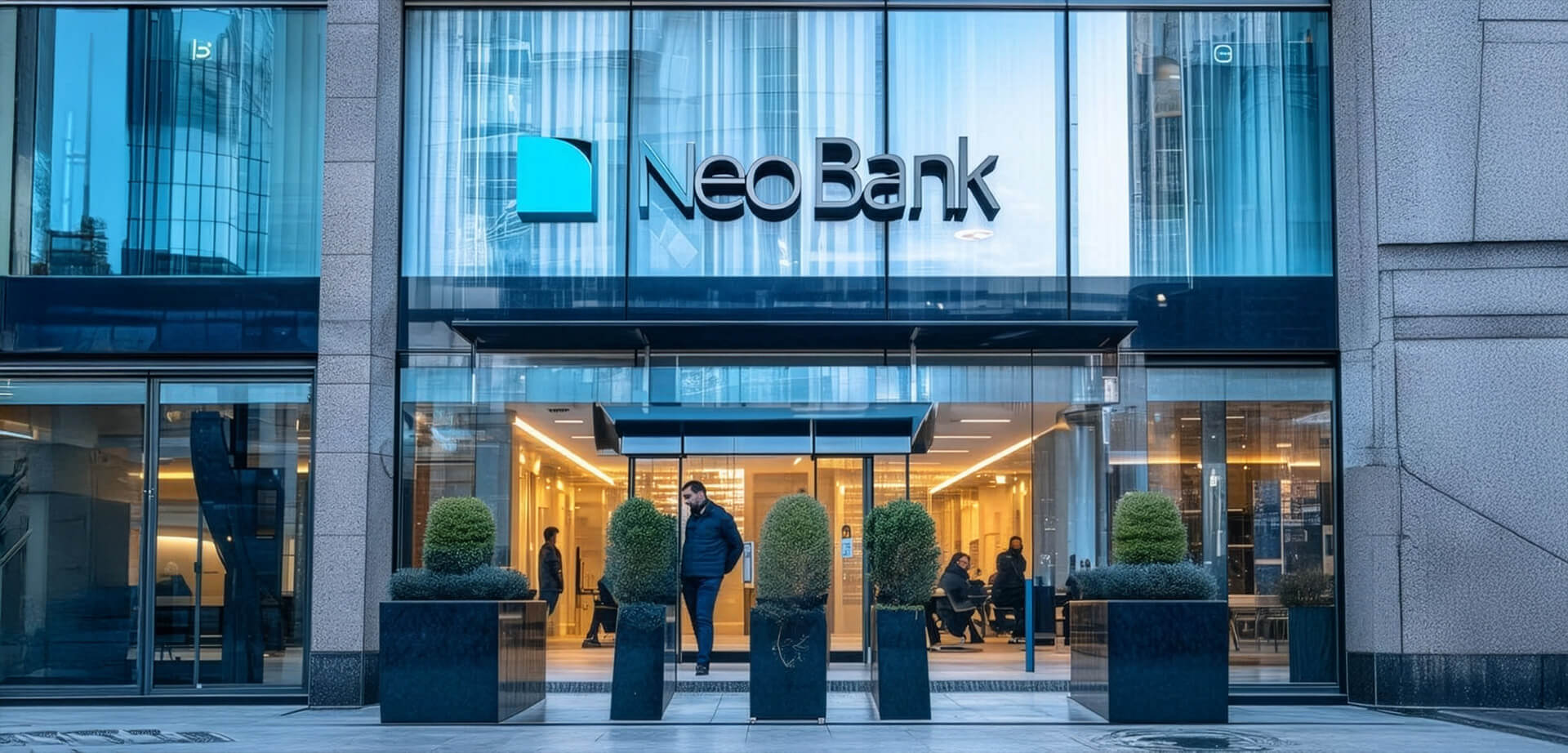
The strengths of the neo-bank model
Neo-banks have demonstrated that banking can be designed around the customer rather than around the legacy structure of the institution.
Their advantages typically include four areas.
1. Digital-first customer journeys - The mobile interface is often the primary relationship rather than an additional channel.
This allows onboarding, payments, account management, customer communication and product discovery to be integrated into one experience.
2. Lower structural complexity - Digital-native organisations can avoid many of the property, legacy technology and organisational structures associated with traditional branch networks.
This can create greater flexibility in how customer services are delivered.
3. Faster proposition development - A digital environment allows new features and services to be introduced, tested and refined without redesigning an entire physical estate.
4. Stronger everyday engagement - The most important change may be the shift from banking as an occasional service to banking as an everyday digital relationship.
McKinsey's 2026 UK research identifies this shift explicitly: traditional banks may retain customers' salary deposits while challengers increasingly capture everyday spending, transactions and digital engagement.
That distinction matters because the institution that owns everyday engagement has greater opportunities to influence future product decisions and share of wallet.

What traditional banks still have that neo-banks cannot easily replicate
The rise of neo-banks does not eliminate the advantages of established banking institutions.
Traditional banks continue to possess substantial assets:
Trust and familiarity.
Customers may be more willing to entrust significant financial decisions to an institution they have known for many years.
Physical presence.
Branches provide visible evidence that a bank exists within a community and can provide human assistance when customers need it.
Complex financial expertise.
Mortgages, investments, business finance, wealth management and other high-value decisions can require human interaction and specialist advice.
Established customer relationships.
Traditional banks often have extensive data, long-standing relationships and broad product portfolios.
Scale and infrastructure.
Large banks can invest in technology, AI, security, compliance and network transformation at a level that smaller institutions may struggle to match.
The challenge is not therefore to discard these advantages.
It is to make them relevant to the new customer journey.

The branch is changing, not disappearing
One of the most important strategic mistakes would be to treat declining transactional branch usage as proof that physical banking has become irrelevant.
The evidence is more complicated.
Oliver Wyman's 2026 survey of almost 5,000 retail banking customers across nine European countries found that 62% said they did not use branches, yet 85% still considered branches either very or somewhat important. Fifty-seven percent preferred an in-person appointment for important journeys, while 37% preferred a branch when resolving a problem.
The implication is not that every branch should remain unchanged.
It is that physical banking needs a clearer job to do.
The traditional branch was designed around transactions.
The future branch can be designed around:
- advice
- acquisition
- relationship development
- financial education
- complex problem resolution
- mortgages and lending
- wealth and investment conversations
- SME support
- community presence
- brand experience
- digital assistance.
This creates an opportunity to reduce unnecessary physical infrastructure while increasing the value generated by the locations that remain.
How CampbellRigg helps
CampbellRigg assesses the role of each physical format against customer need, location, proposition and commercial objectives.
This can lead to different environments for different purposes: transaction-led locations, advisory branches, flagship environments, community formats, compact locations, private banking environments or digitally enabled service hubs.
The design brief follows the business strategy rather than the other way around.
The benefit is a network in which each physical location has a defined commercial and customer role, rather than a collection of branches carrying essentially the same proposition.

The real competition is for the customer relationship
The phrase “neo-bank vs traditional bank” can imply a binary contest.
Customer behaviour is much more fragmented.
Customers increasingly use multiple financial providers.
McKinsey's 2026 European analysis found that customers in six European markets maintained accounts at an average of 2.6 banks, compared with two in 2021. Digital-first neobanks now attract a substantial share of relationships in some markets.
The management issue therefore becomes: Which institution owns the relationship at each stage of the customer's financial life?
A customer might:
- receive their salary into a traditional bank
- use a neo-bank for daily spending
- hold savings elsewhere
- obtain a mortgage from another provider
- use a digital investment platform
- interact with financial services through an embedded-finance proposition.
The traditional definition of customer primacy is therefore becoming less useful on its own.
Banks need to understand relationship primacy, who owns the customer's attention, transactions, data, trust and next financial decision.
How CampbellRigg helps
CampbellRigg maps the customer journey across digital and physical channels to identify where the bank currently owns the relationship and where it is vulnerable to competing providers.
The resulting strategy can connect: brand positioning → customer journey → digital experience → physical environment → service model → communications → network rollout.
This prevents branch design from being developed independently of the bank's wider customer proposition.

Digital and physical banking must operate as one experience
The strongest future banking networks will not treat the branch and app as separate propositions.
A customer may:
- discover a product online;
- begin an application digitally;
- require advice;
- book a branch appointment;
- meet an adviser;
- complete documentation digitally;
- receive ongoing service through the app.
The physical environment therefore becomes one part of a connected journey.
This is the essence of phygital banking: digital and physical channels are deliberately designed to reinforce one another.
A branch may provide the human interaction that digital banking cannot.
The app may remove the administration that a branch should not have to perform.
The relationship manager may use digital tools to provide a more personalised service.
The physical environment may reinforce the brand promise that customers encounter digitally.
How CampbellRigg helps
CampbellRigg translates the desired customer journey into physical requirements.
That can include:
- customer arrival and orientation
- zoning
- privacy
- consultation environments
- self-service
- digital interaction
- staff workflows
- product communication
- brand expression
- accessibility
- technology integration
- appointment journeys.
The benefit is not simply an improved interior.
It is less friction between the bank's customer proposition and the environment in which that proposition is delivered.

International banking benchmarks: from branch network to relationship network
The most relevant international benchmarks are no longer simply examples of attractive bank interiors.
They demonstrate different responses to the same strategic challenge.
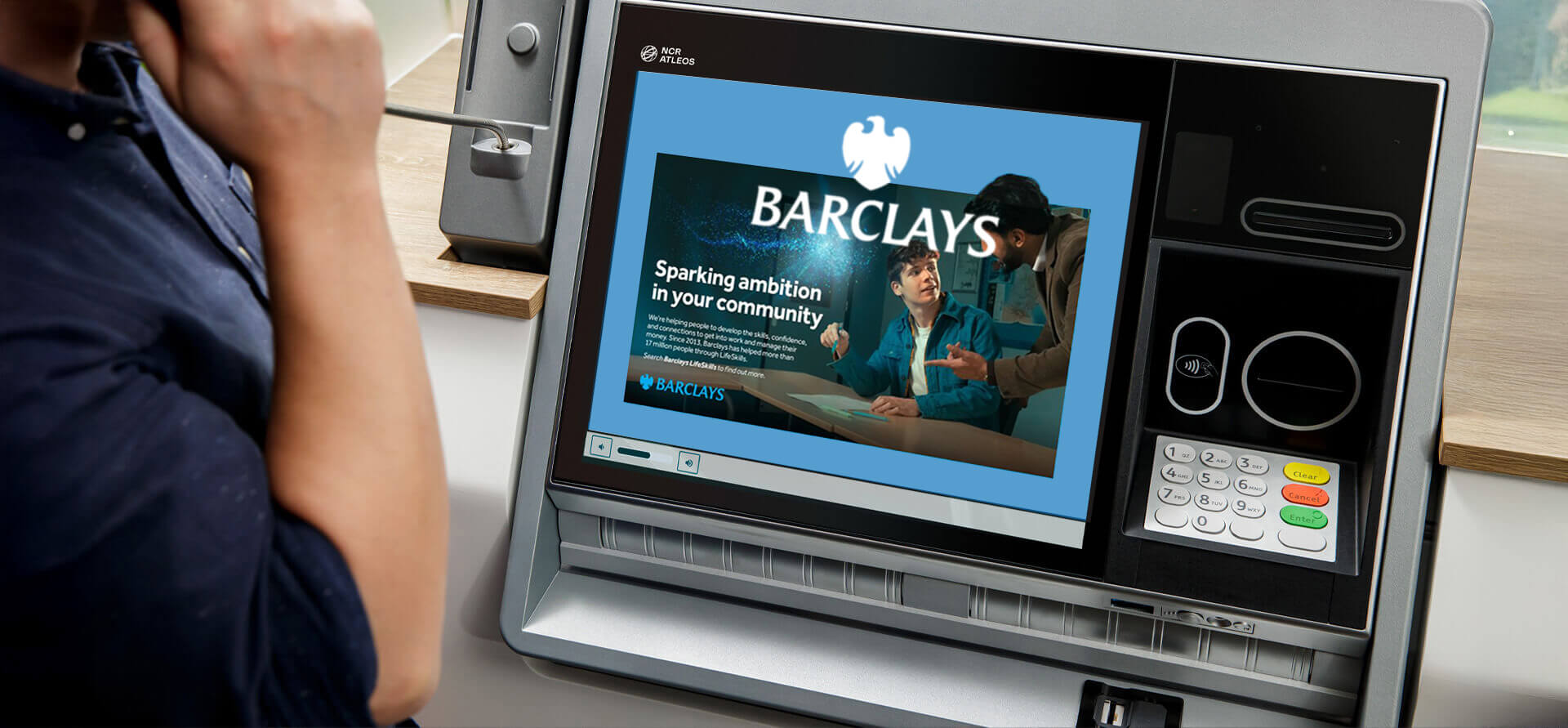
Barclays: using customer and branch analysis to identify network opportunities
CampbellRigg's work with Barclays included a multi-channel consumer study and audit across branch formats.
The work examined factors including:
- location
- physical environment
- communications
- technology
- self-service
- customer journeys
- operational workflows.
The resulting recommendations prioritised practical changes capable of improving the customer experience while supporting commercial and operational objectives.
Management lesson: network transformation should begin with evidence about how customers actually use the estate, rather than assumptions about what a branch should look like.

Promsvyazbank: aligning branch planning with brand and customer experience
For Promsvyazbank, CampbellRigg worked across retail branch audit, interior design, planning and brand communications.
The objective was to establish a more coherent relationship between the bank's brand, customer environment and operational requirements.
The programme is associated with a 15% cost reduction and an improvement in NPS from 10th to 5th.
Management lesson: branch transformation can address both customer perception and commercial efficiency when brand, planning and operational considerations are developed together.

Zenit Private Banking: designing for higher-value relationships
Private banking requires a different physical proposition.
The customer journey is less about transaction processing and more about trust, confidentiality, advice and relationship depth.
CampbellRigg's work for Zenit Private Banking incorporated premium environments, bespoke interiors, brand identity and strategic communications.
Management lesson: customer value should influence the design and role of the physical environment. A private banking relationship should not simply be delivered through a smaller version of a mass-market branch.

Build a banking format strategy, not a collection of branches
A scalable banking network needs a hierarchy of formats.
The right portfolio might include:
|
Format |
Primary role |
|
Flagship |
Brand leadership, complex advice and high-value customer engagement |
|
Advisory branch |
Financial advice and relationship development |
|
Standard branch |
Core customer service and local relationship management |
|
Compact branch |
Convenient access within constrained locations |
|
Digital service hub |
Assisted digital service and customer support |
|
Private banking environment |
Confidential, high-value relationship management |
|
Pop-up / temporary format |
Acquisition, brand visibility or market testing |
The exact architecture will differ by bank.
What matters is that management can answer a simple question:
Why does each format exist?
A format should have a defined target customer, customer journey, operational model, space requirement, technology requirement and commercial purpose.
How CampbellRigg helps
CampbellRigg develops the format strategy before translating it into design.
This starts with network and customer analysis, followed by format definition, brand positioning, experience principles, spatial planning and implementation requirements.
The result is a repeatable framework that allows different locations to respond to local conditions without losing the core proposition.
The management benefit is greater control over capital allocation, rollout consistency and network performance.

What neo-banks can learn from traditional banks
The comparison also works in the opposite direction.
As successful neo-banks scale, they increasingly encounter challenges traditionally associated with established financial institutions:
- regulatory complexity
- lending
- mortgages
- wealth management
- complex advice
- trust
- fraud protection
- physical reassurance
- affluent and high-net-worth relationships
- broader customer service requirements.
S&P Global's 2026 research notes that successful neobanks have developed sustainable business models and increasingly compete with incumbent banks, while established European banks have simultaneously accelerated digitalisation and adopted technologies such as AI.
The competitive boundary is therefore becoming less clear.
Traditional banks are becoming more digital.
Neo-banks are becoming more comprehensive.
Both are moving toward a broader definition of banking.
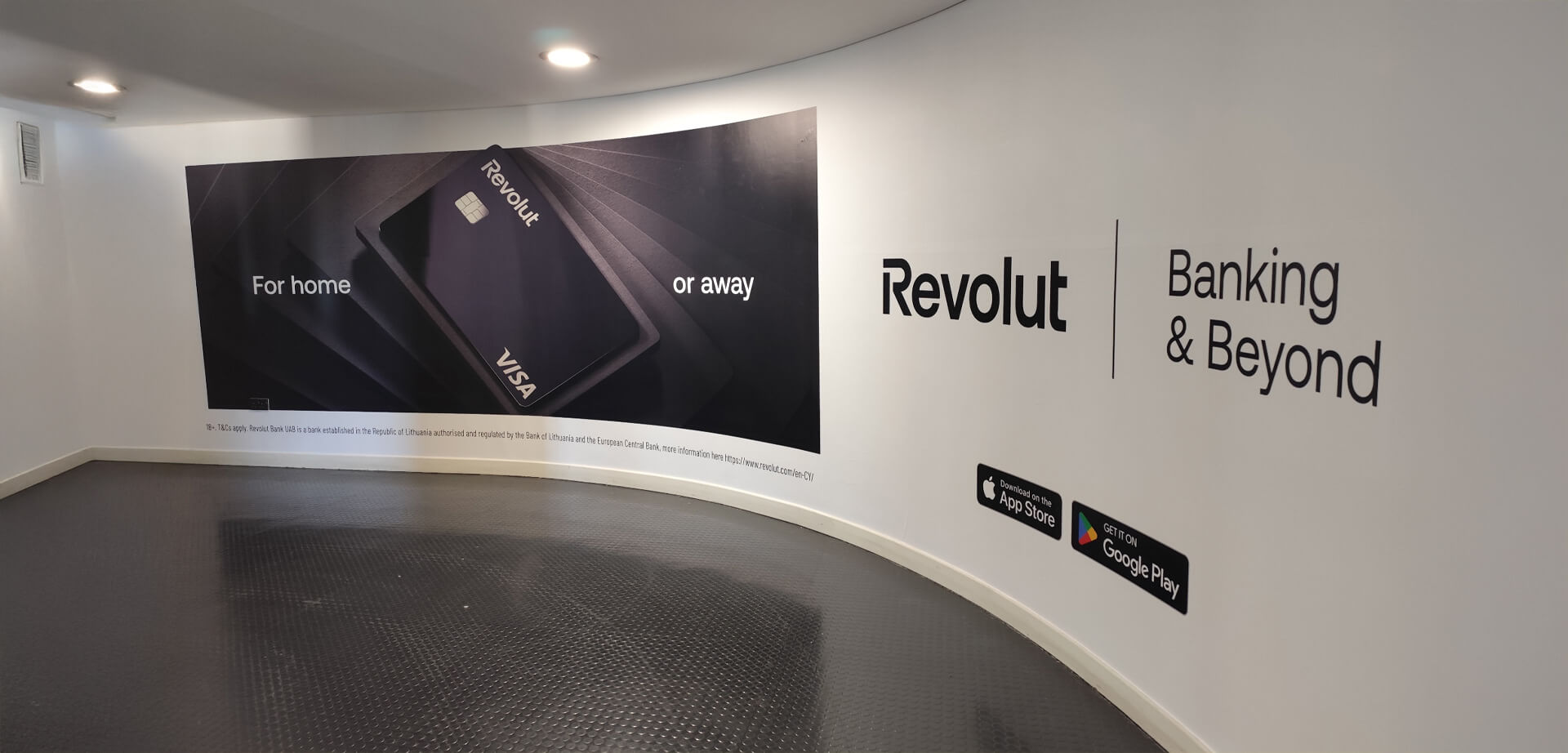
The slogan “Banking and Beyond” and “This is how I bank” is highly relevant in positioning a modern financial brand. It signals that the business offers core banking services, but also delivers broader value through technology, lifestyle integration, and customer-centric experiences.

AI will accelerate the convergence
Artificial intelligence is likely to intensify this convergence.
AI can change:
- customer service
- financial advice
- personalisation
- fraud detection
- onboarding
- product recommendation
- staff productivity
- relationship management
- customer communications.
McKinsey's September 2026 UK research identifies AI as one of the forces accelerating competition for customers, deposits and everyday engagement.
For banks, the important question is not simply which AI technology to deploy.
It is: Where should AI remove friction, and where should human interaction remain central?
That question directly affects the physical network.
If routine transactions become increasingly automated, branch space can be reallocated toward higher-value conversations.
If AI improves adviser productivity, consultation environments can become more important.
If digital onboarding becomes simpler, physical locations can concentrate on complex acquisition and relationship development.
The network therefore needs to evolve alongside the operating model.
How CampbellRigg helps
CampbellRigg considers technology as part of the customer and operating model rather than as an isolated feature.
The design process asks what the technology is intended to achieve, who uses it, where it sits within the customer journey and how it affects staff behaviour and space.
The benefit is technology that supports the proposition rather than technology added to demonstrate that the branch is “digital”.
Above: An advertisment featuring the text “Pocket” and the Revolut logo, part of a global campaign focused on financial possibilities. It highlights the app’s “Pockets” feature for short-term budgeting and savings goals.


Above: Revolut launches its first ATMs worldwide in Barcelona.

The management challenge: designing for change, not today's banking model
The most successful retail banking networks will not be those that simply reproduce today's customer journey more efficiently.
They will be designed to evolve.
Management should therefore test the proposed network against several questions:
1. Who owns the everyday relationship?
If customers increasingly use multiple financial providers, where does the bank remain indispensable?
2. What is the role of physical presence?
Does each location have a defined purpose beyond transaction processing?
3. Which journeys should be digital?
Which should be hybrid?
Which require human interaction?
4. Can the format scale?
Can the concept be implemented consistently across multiple locations without creating excessive design and construction costs?
5. Can performance be measured?
Can management connect investment in the network with customer, commercial and operational outcomes?
6. Can the proposition evolve?
Can technology, AI, customer behaviour and regulatory requirements be incorporated without rebuilding the entire network?
These questions move the conversation beyond neo-banks versus traditional banks.
They establish a more useful management framework:
Which banking model can create the strongest customer relationship across every relevant channel — and deliver it efficiently at network scale?
How CampbellRigg turns retail banking strategy into network performance
CampbellRigg brings together brand strategy, customer experience, retail planning, interior design, communications and implementation to help banks translate strategic ambition into physical and customer-facing networks.
The process begins by understanding the bank's commercial objectives and existing customer relationship.
From there, CampbellRigg can develop:
- retail banking strategy
- customer and competitor audits
- brand positioning
- customer-experience strategy
- branch-format strategy
- network planning
- branch interior design
- service and customer-flow planning
- digital and physical integration
- brand communications
- technology integration
- implementation standards
- rollout programmes.
The disciplines are not treated as separate design commissions.
Brand auditing establishes how the existing proposition is perceived and expressed. Strategy defines the desired market position. The design brief then converts that strategy into practical requirements for customer experience, store planning, identity, communications and implementation.
This creates one strategic direction linking the bank's proposition to its physical network.
For management, the benefit is greater clarity over where to invest, which formats to deploy, what each location should achieve and how the resulting network should be measured.
Our Four-Step Process:
1. Book a consultation call for free.
2. Co-create a bespoke brief.
3. We execute the creative work fast.
4. You see sales, brand loyalty and market share uplift.

Neo-banks vs traditional banks: the future is the relationship
The debate about whether neo-banks or traditional banks will define the future of banking is becoming less useful.
Neo-banks have demonstrated that customers expect digital convenience, transparency and frictionless service.
Traditional banks retain significant advantages in trust, expertise, scale, product breadth and physical presence.
The next phase of competition will be determined by how effectively those advantages are combined.
The winning principle is not simply digital versus physical.
It is digital where digital is better, human where human interaction creates value, and physical where presence strengthens trust, advice and relationship depth.
For bank management teams, this means the future retail network should not be designed as a collection of branches.
It should be designed as a connected relationship network.
One in which every digital touchpoint, physical location, adviser interaction, brand expression and operational process has a defined role in acquiring, serving, retaining and developing customers.
That is the strategic opportunity: to transform retail banking from a network of physical locations into a measurable customer relationship platform.
Build the next generation of your retail banking network
CampbellRigg helps banks translate brand, customer and commercial strategy into retail banking environments designed for measurable performance.
From network strategy and branch-format planning through to customer experience, interior design, brand communications and implementation, the objective is clear:
Create a banking network that customers value, management can measure and the organisation can scale.
Discuss your retail banking network strategy with CampbellRigg.