
News and Views
Small-Format Supermarket Design: Building Scalable Urban Retail Networks






Small-Format Supermarket Design: Compact Store Planning, Brand Strategy & Commercial Performance
Small-format supermarket design is no longer simply a response to smaller retail footprints. For supermarket groups, it is increasingly a format strategy and network-development decision.
As urban property becomes more expensive, catchments become denser and shoppers place greater value on proximity, convenience and speed, retailers need formats capable of delivering stronger commercial performance from less space.
The management challenge is therefore not simply:
How do we fit a supermarket into a smaller store?
It is: How can we create a small-format supermarket that is commercially productive, operationally efficient, distinctive to the brand and scalable across a network?
That requires decisions about catchment economics, shopper missions, assortment, space productivity, fresh food, customer circulation, brand identity, technology, operating requirements and rollout economics to be made as one integrated format strategy.
CampbellRigg helps supermarket and grocery retailers turn these decisions into scalable retail environments, combining supermarket strategy, shopper insight, brand identity, store planning, interior design, visual merchandising, customer experience and rollout expertise.
The objective is straightforward:
Create more commercial value from every square metre while making the store easier and more relevant for the shopper.
Why Retailers Are Investing in Small-Format Supermarkets
Small-format supermarkets can enable retailers to enter or strengthen positions in dense residential neighbourhoods, urban centres, transport locations and other catchments where conventional supermarket footprints may be commercially or physically unsuitable.
But reducing the footprint does not automatically create a better format.
A smaller store concentrates commercial risk. Every square metre has greater importance. Every category allocation affects productivity. Every fixture influences circulation. Every sightline affects product visibility. Every operational requirement competes with selling space.
A compact supermarket may also need to support multiple missions throughout the day:
- Breakfast and morning convenience
- Lunch and food-to-go
- Top-up grocery shopping
- Fresh-food purchasing
- Evening meal solutions
- Impulse purchasing
- Smaller planned grocery missions
- Click-and-collect or other omnichannel services
The strategic requirement is to design a format around the economics and behaviour of its target catchment, rather than attempting to reproduce a conventional supermarket on a smaller footprint.
The strongest formats balance: Convenience + assortment + fresh food + brand differentiation + operational efficiency + space productivity
This is why small-format supermarket design should be treated as a commercial format-planning discipline, not simply an interior-design exercise.
Catchment Economics Should Shape the Store Format
A successful small-format supermarket begins with the market opportunity, not the floor plan.
Before developing the store environment, management should understand the characteristics of the catchment and how those characteristics affect the retail proposition.
Relevant factors include:
- Population density
- Residential and daytime populations
- Pedestrian movement
- Transport connections
- Local competition
- Existing retail provision
- Property costs
- Shopping frequency
- Shopper missions
- Household composition
- Local food preferences
- Trading patterns and dayparts
A city-centre location serving office workers can require a very different proposition from a neighbourhood store serving families. A transport-led location may prioritise speed and food-to-go, while a residential store may require greater grocery depth and fresh-food relevance.
The commercial sequence should therefore be: Catchment economics → shopper insight → shopping missions → format proposition → space allocation → customer journey → commercial performance
CampbellRigg can translate this strategic logic into the physical retail environment, helping management teams establish the format principles before detailed design begins.
From Shopper Insight to Small-Format Store Planning
The starting point for compact supermarket design should be an understanding of how customers actually use the store.
Management teams should examine:
- Shopping missions
- Customer flow
- Dwell patterns
- Category performance
- Product visibility
- Congestion points
- Cross-selling opportunities
- Fresh-food demand
- Food-to-go demand
- Checkout requirements
- Digital and omnichannel services
- Back-of-house requirements
These insights determine how the available footprint should be allocated.
Rather than copying the department structure of a large supermarket, a compact format should allocate space according to customer and commercial priorities.
CampbellRigg combines shopper insight, format strategy and store planning to turn these commercial requirements into a coherent physical proposition.
How to Design a High-Performance Small Supermarket
1. Maximise Space Productivity
CampbellRigg's multidisciplinary approach connects the commercial brief with space planning, brand identity, interior design and customer experience so that design decisions support measurable business objectives.
In a compact supermarket, every square metre should have a defined commercial or operational purpose.
The objective is not to maximise fixture density. Excessive density can reduce visibility, create congestion and make the store feel smaller.
Instead, management should optimise the relationship between: Selling space + circulation + category productivity + storage + service + fulfilment + operational efficiency
Performance can then be evaluated using measures such as:
- Sales per square metre
- Gross margin per square metre
- Basket value
- Conversion
- Category productivity
- Visit frequency
- Return on investment
This creates a more rigorous approach to small-format supermarket design.
The question is not: How many products can we fit into the store? It is: How much commercial value can each part of the footprint generate?
2. Design Shopper Circulation Around Missions
CampbellRigg treats circulation as part of the commercial strategy, not simply as a technical floor-planning exercise. In a compact store, poor circulation has an immediate commercial cost.
Customers have less space to recover from unclear navigation, while excessive fixture density can create congestion and reduce product visibility.
The customer journey should therefore be designed around the missions the store is expected to serve.
A shopper purchasing three items quickly should be able to navigate efficiently.
A customer undertaking a broader grocery mission should still encounter relevant categories, fresh food and opportunities for additional purchases.
This requires:
- Clear sightlines
- Logical category adjacencies
- Intuitive navigation
- Appropriate aisle widths
- Strong destination-category positioning
- Effective signage
- Controlled promotional density
- Clear service zones
- Efficient checkout planning
3. Give Fresh Food and Food-to-Go Commercial Priority
Fresh food can play an important role in compact formats because it can create differentiation without requiring the full range of a conventional supermarket.
Depending on the catchment, priority may include:
- Fresh produce
- Bakery
- Chilled food
- Prepared meals
- Sandwiches
- Hot food
- Coffee
- Food-to-go
- Ready-to-eat solutions
The appropriate balance should be determined by the local shopping mission rather than by a universal percentage of floor space.
Fresh Food as a Commercial Driver
Safeway provides a relevant CampbellRigg benchmark. Its convenience format included a substantial Fresh to Go zone representing approximately 25% of the store, incorporating fresh perishables, hot food, pizza, sandwiches and bakery.
CampbellRigg reports that expanding fresh-food departments was associated with a 20–30% week-on-week sales increase at the St Katharine's Dock location.
The strategic lesson is not to replicate the same percentage in every small supermarket.
It is to identify which fresh categories can generate the greatest commercial value for the specific catchment, daypart and customer proposition.
4. Balance Assortment With Merchandising Density
CampbellRigg can translate assortment priorities into category zoning, fixture planning, merchandising principles and visual communication so that the store remains commercially productive without becoming visually or physically congested.
The assortment needs to reflect:
- Local demand
- Shopping missions
- Category productivity
- Household requirements
- Price positioning
- Fresh-food relevance
- Brand proposition
- Available selling space
High-frequency products should be easy to locate and access. Complementary products can be positioned to encourage cross-selling and basket development.
- The balance is critical.
- Too little density can make the store appear under-ranged.
- Too much density can create visual noise, congestion and poor product visibility.
- The objective is therefore: Commercial density without shopper friction.
International Small-Format Retail Benchmarks
The following international benchmarks demonstrate principles that can inform small-format supermarket design. They are not presented as CampbellRigg projects. Their relevance lies in how leading retailers use constrained footprints, local adaptation, food service, digital services and format innovation to increase the value of compact retail environments.
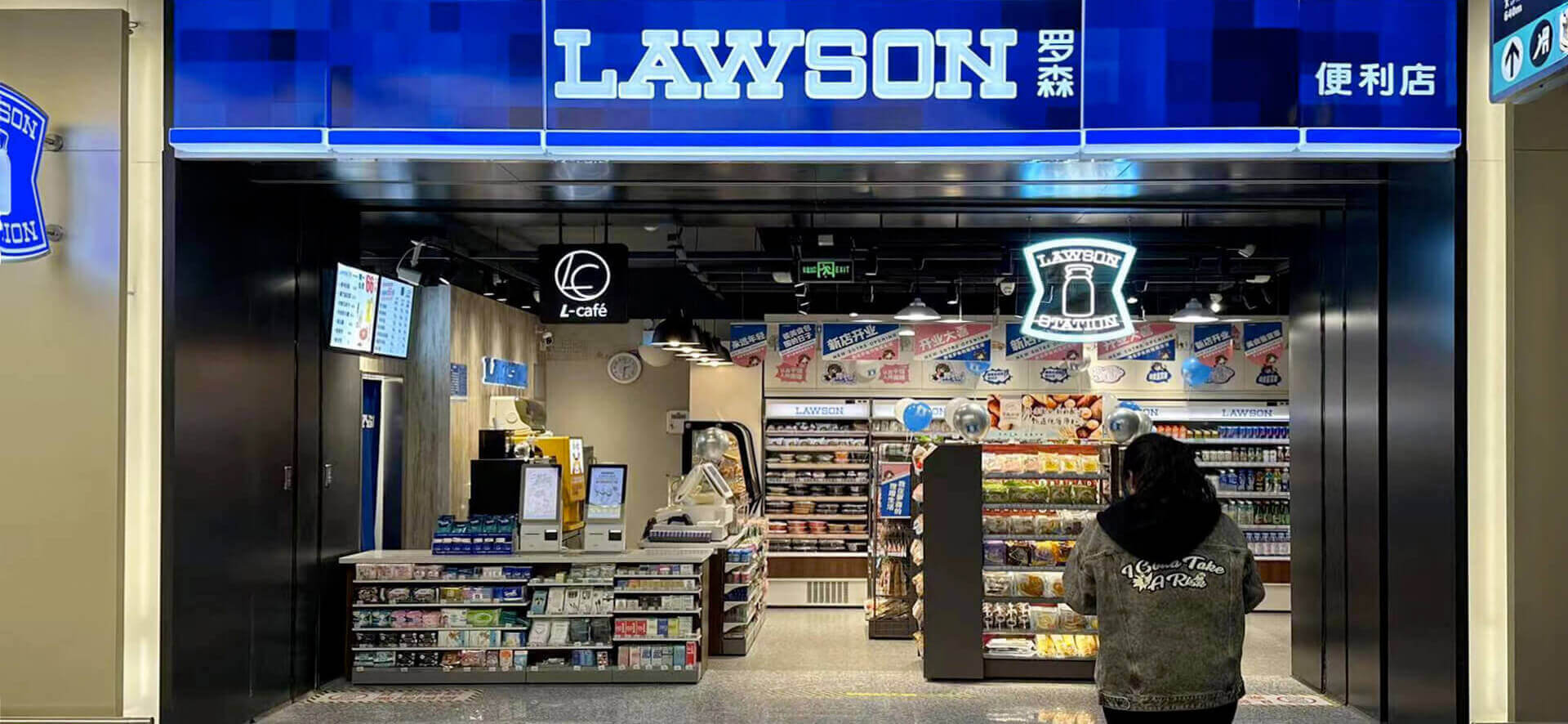
Lawson: Compact Retail in Transport Environments
Lawson provides a useful benchmark for compact retail in a high-footfall transport environment. At Hangzhou Xiaoshan International Airport, Lawson operates in Terminal 4, including locations within restricted and non-restricted areas.
The format demonstrates how a compact proposition can respond to passengers requiring speed, immediate consumption and essential purchases within a constrained footprint.
For supermarket management teams, the relevant lesson is the importance of: Visibility + rapid navigation + prioritised range + efficient service.
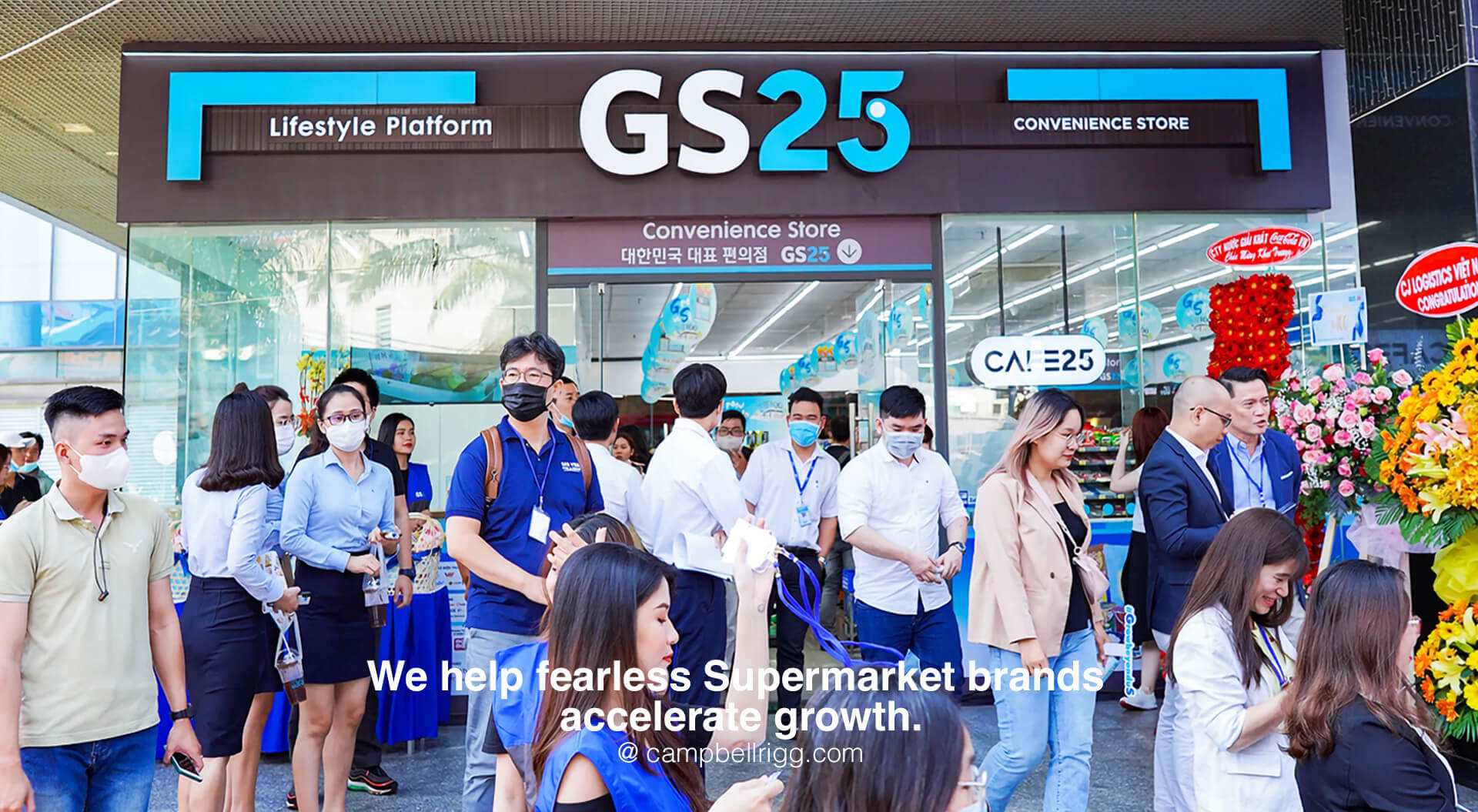
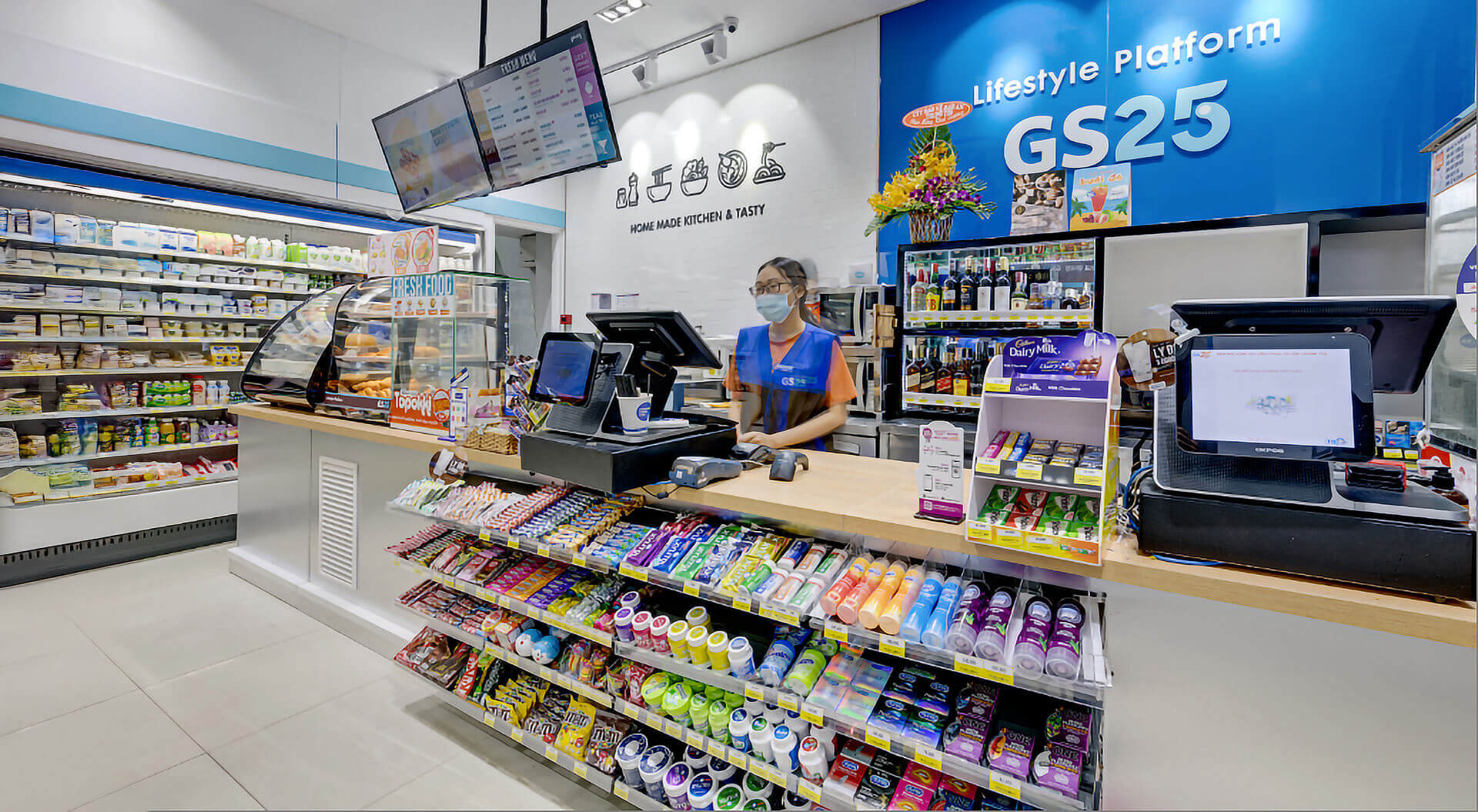
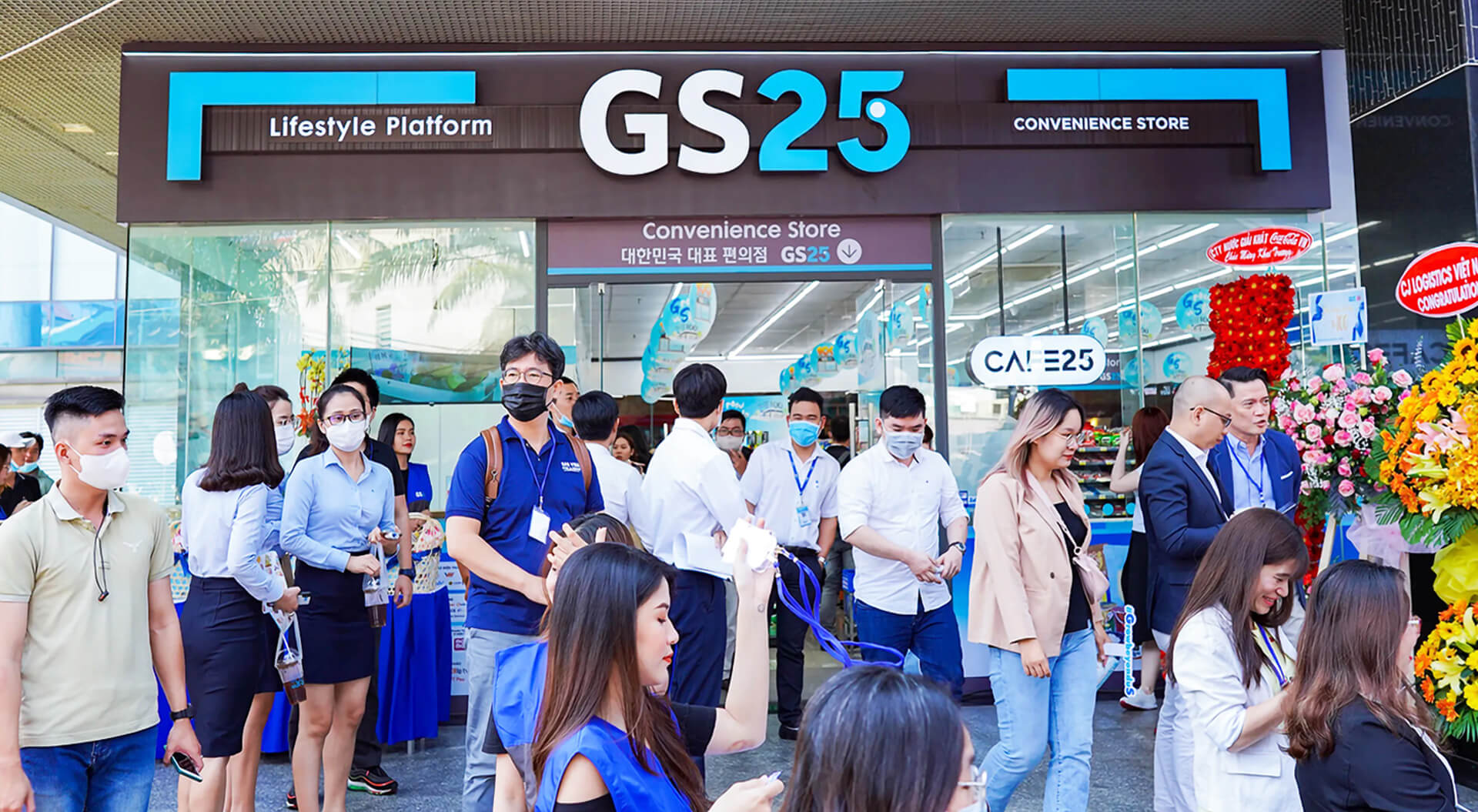
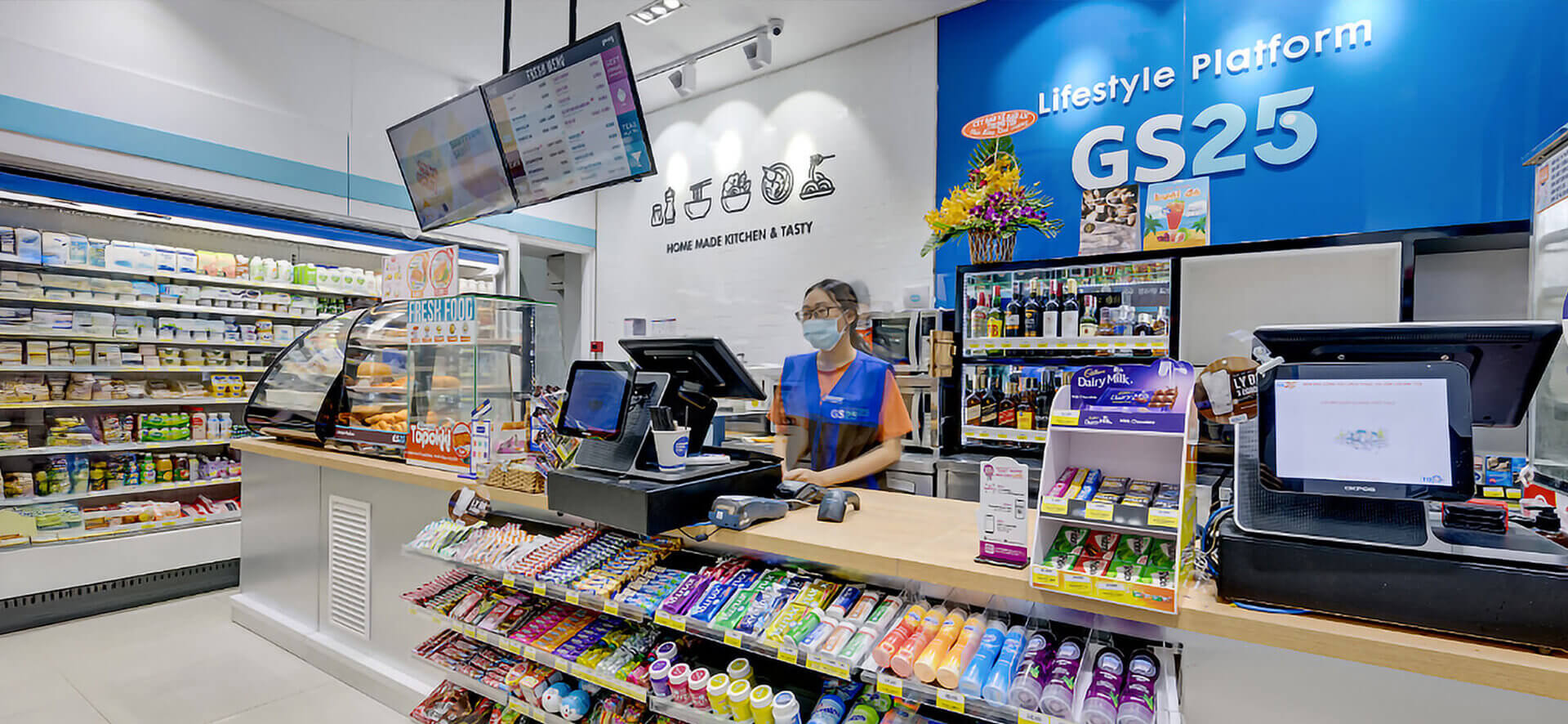
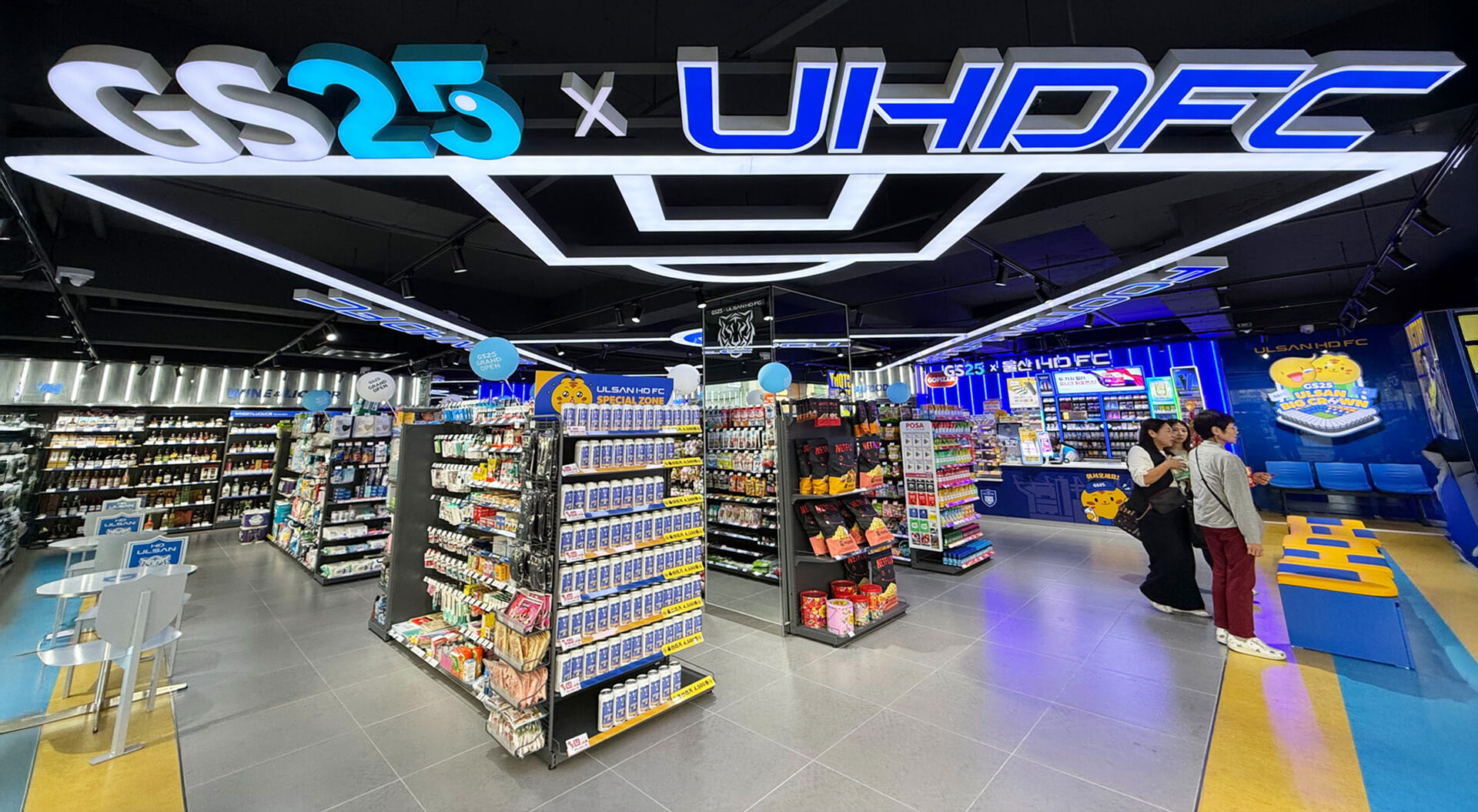
GS25: Localised Compact Retail
GS25 demonstrates how compact convenience formats can combine grocery, food service, digital convenience and localised concepts.
Its Korean formats include fresh food, private-label products, coffee, prepared food and additional services. Location-specific concepts include supermarket-style formats for one- and two-person households and fresh-food-focused stores.
Its digital ecosystem also supports delivery and pickup services.
The wider lesson is that a compact store can increase relevance by combining: Efficient space planning + differentiated food + services + digital touchpoints.
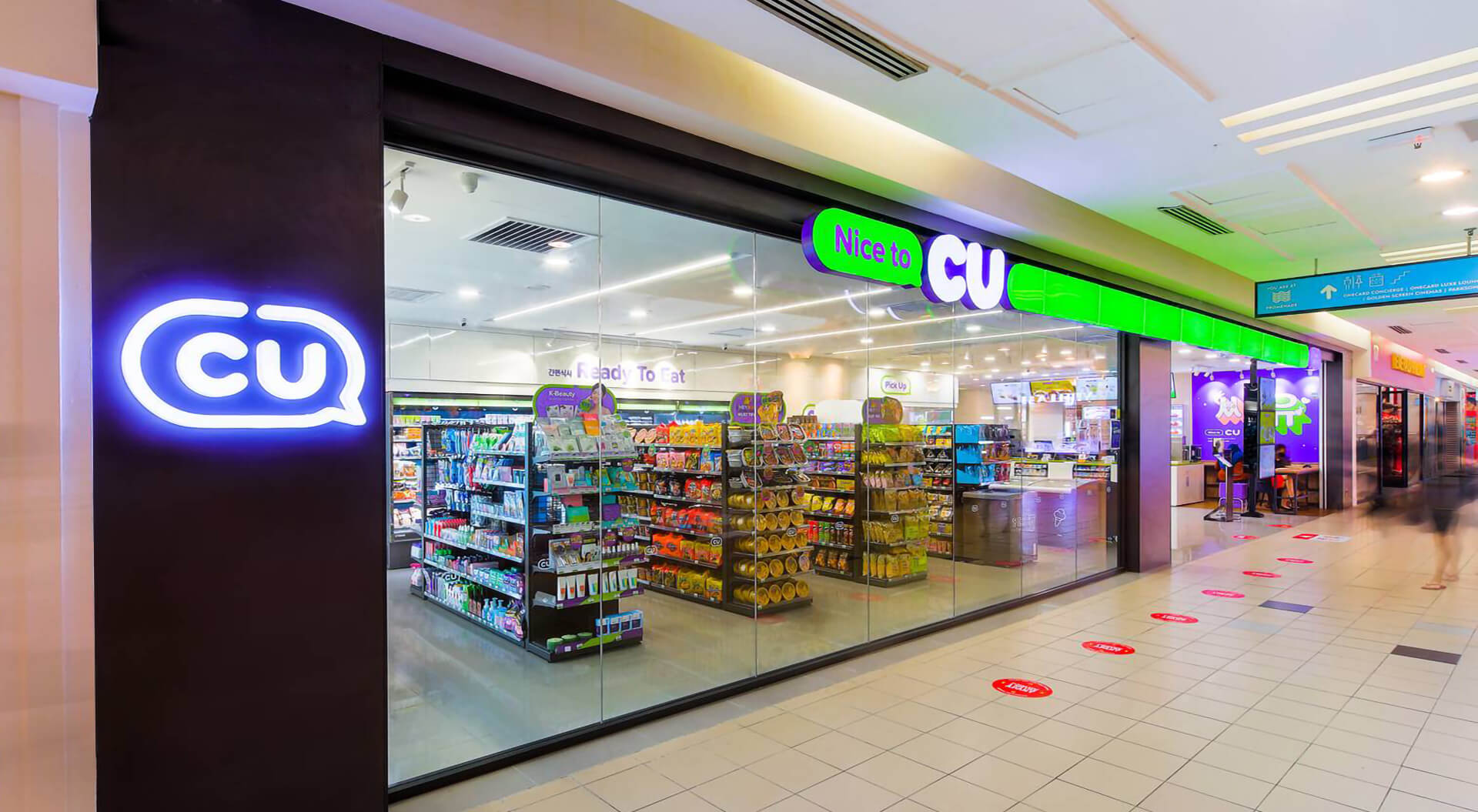
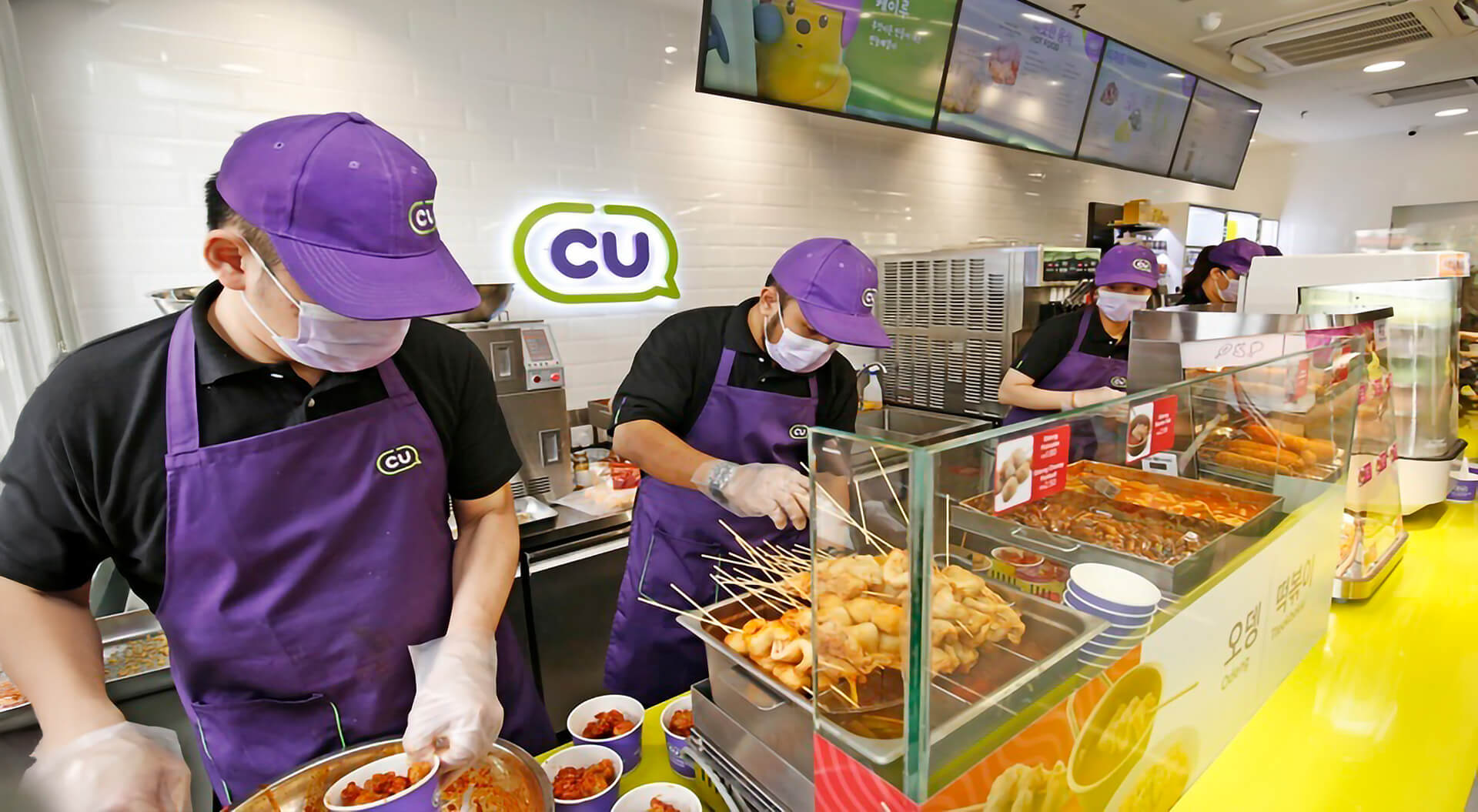
CU: Global Format, Local Relevance
CU demonstrates how a consistent retail system can be adapted to local market requirements.
Its expansion into Mongolia through a master-franchise model illustrates how a recognised format can be translated into a different consumer and cultural environment while retaining the underlying brand system.
By 2026, CU had surpassed 800 overseas stores.
For supermarket operators developing international or multi-format networks, the principle is highly relevant: Standardise the format system. Localise the customer proposition.
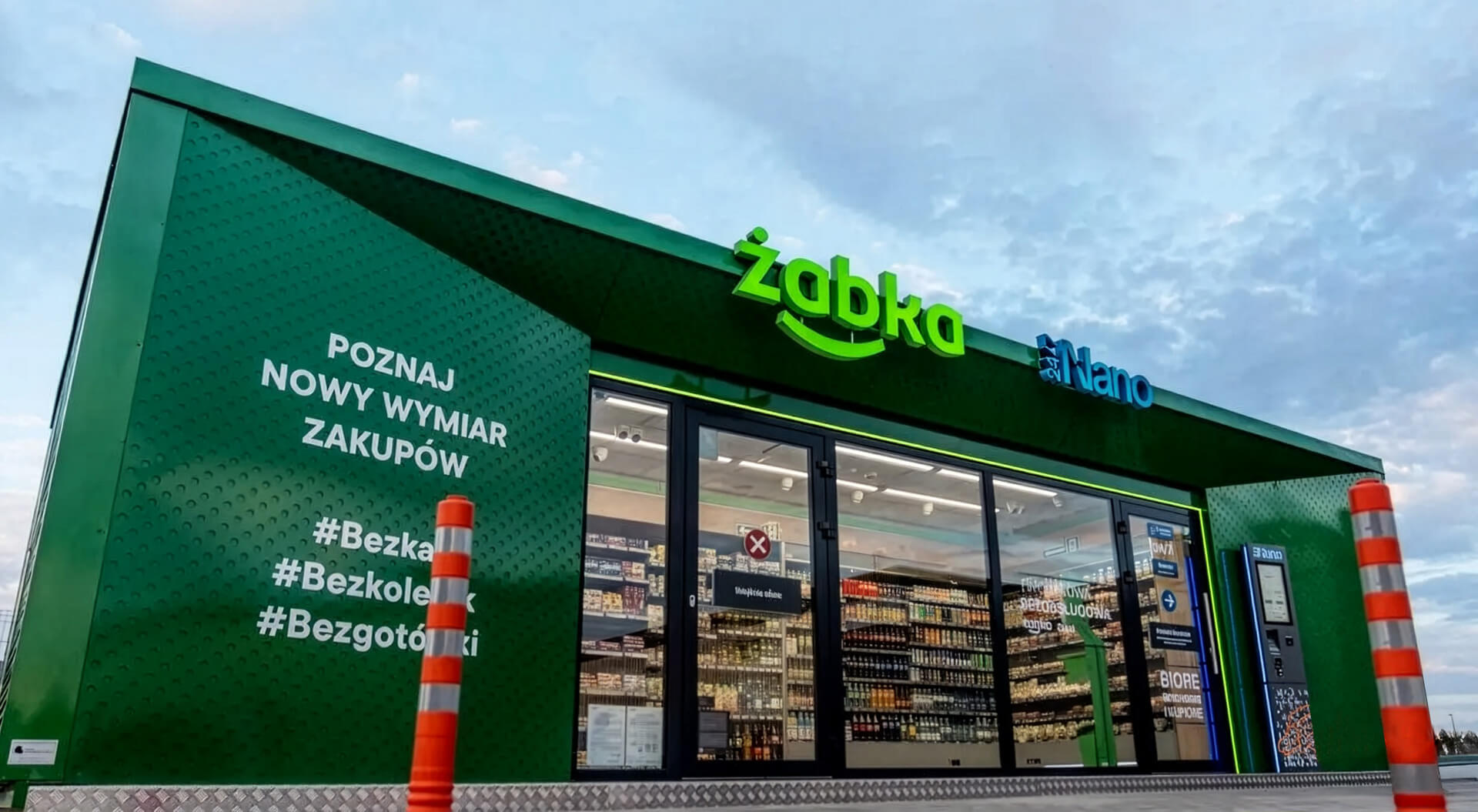
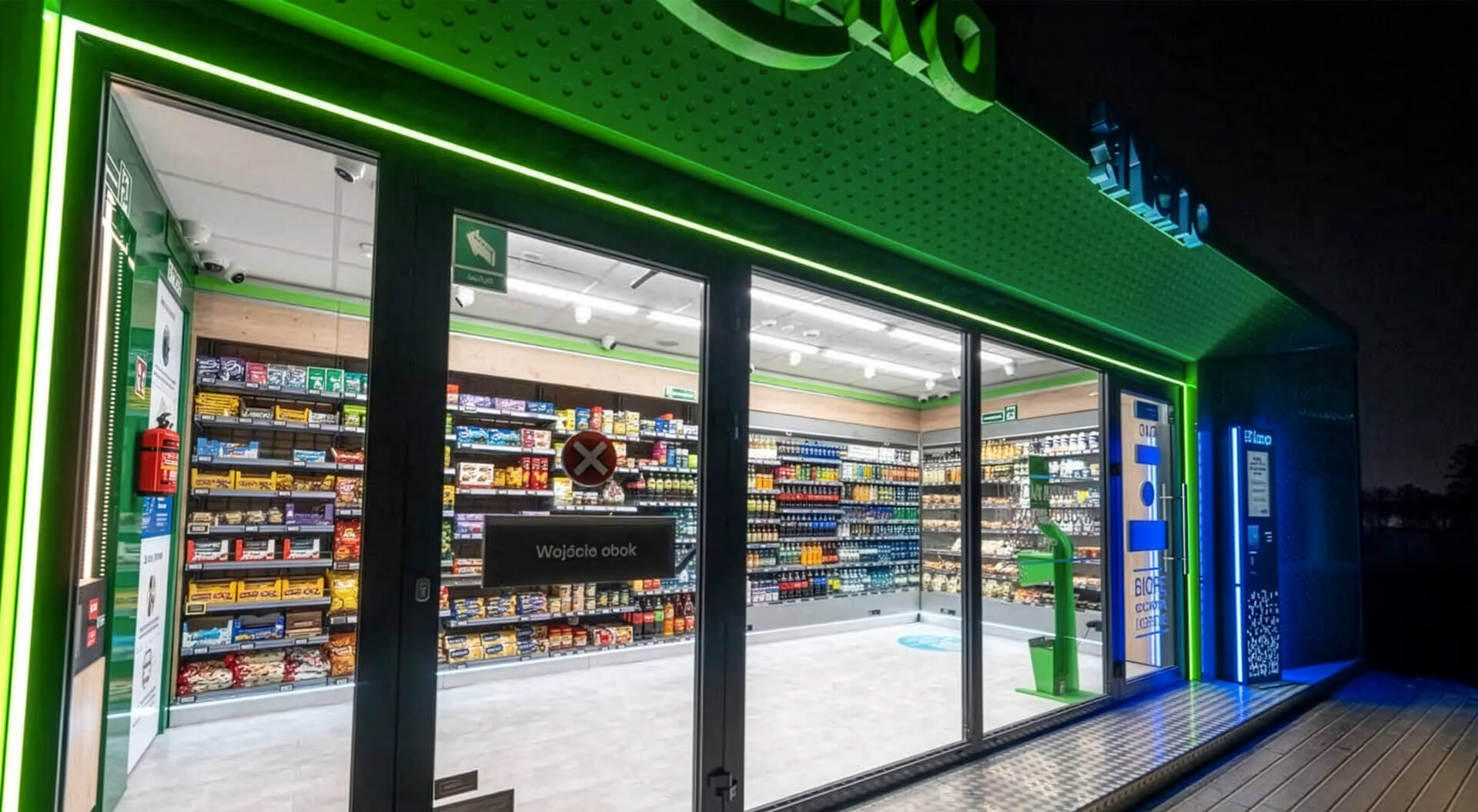
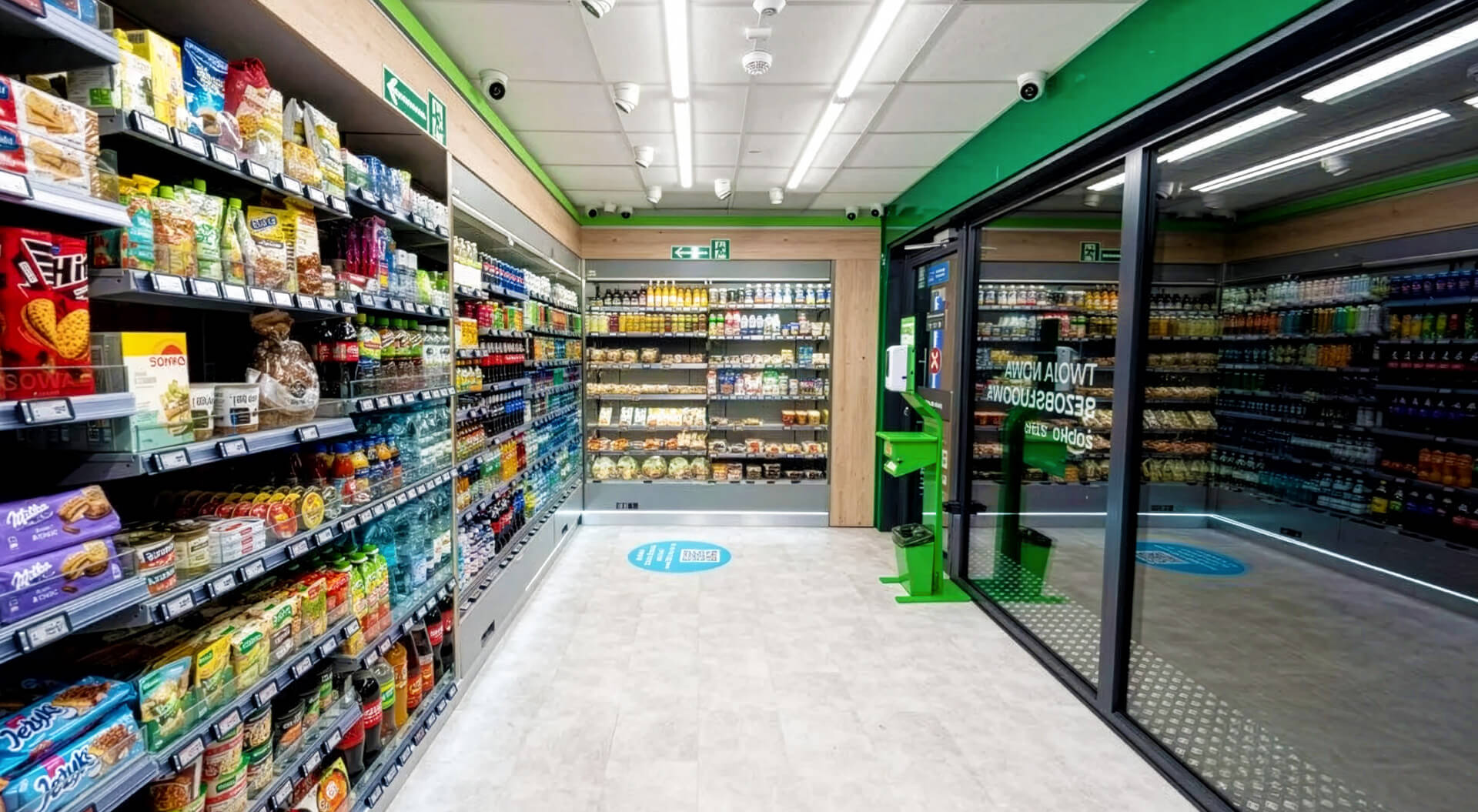
Żabka Nano: Unmanned Automated Convenience Stores
Żabka Nano, Poland, demonstrates how autonomous convenience retail can extend a supermarket network into locations where conventional stores may be impractical. Its compact, 24/7 format uses automated technology to provide rapid access to everyday essentials and impulse purchases across environments such as offices, gyms and hospitals.
Żabka reported more than 100 Nano stores operated across Poland and Germany in 2026.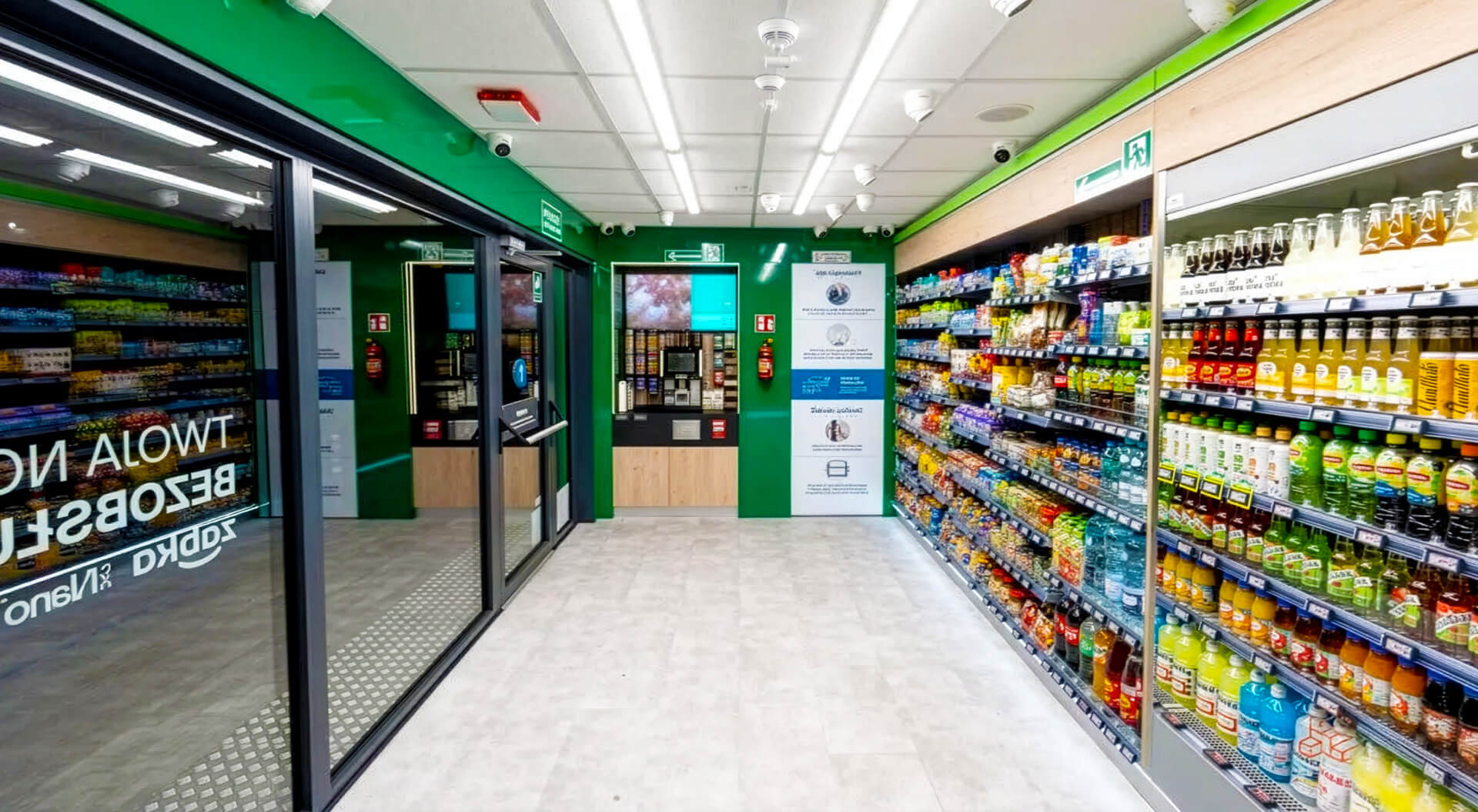
Benchmark Case Study: OBA Market, Azerbaijan
One of the most relevant benchmarks for small-format supermarket design is OBA Market in Azerbaijan, where CampbellRigg created the brand identity and store environment, including interior design.
OBA is particularly relevant because the retailer has built a very large neighbourhood-oriented grocery network around relatively compact stores.
OBA's own corporate history records the opening of its 500th store in 2017, its 900th store in February 2021 and its 1,000th store in September 2021. By 2023, OBA reported more than 1,300 stores and more than 500,000 customers. In 2024, OBA reported more than 1,400 stores and more than 8,000 employees.
The scale is significant because OBA's proposition is built around neighbourhood convenience and relatively small-format stores. A 2019 OBA store cited by the company had a sales area of just 292 m², illustrating the compact physical environment in which the brand operates.
For CampbellRigg, the OBA project demonstrates an important principle: small-format supermarket design is not only about fitting a retail assortment into a restricted footprint; it is about creating a recognisable, repeatable brand environment that can operate successfully across a large estate.
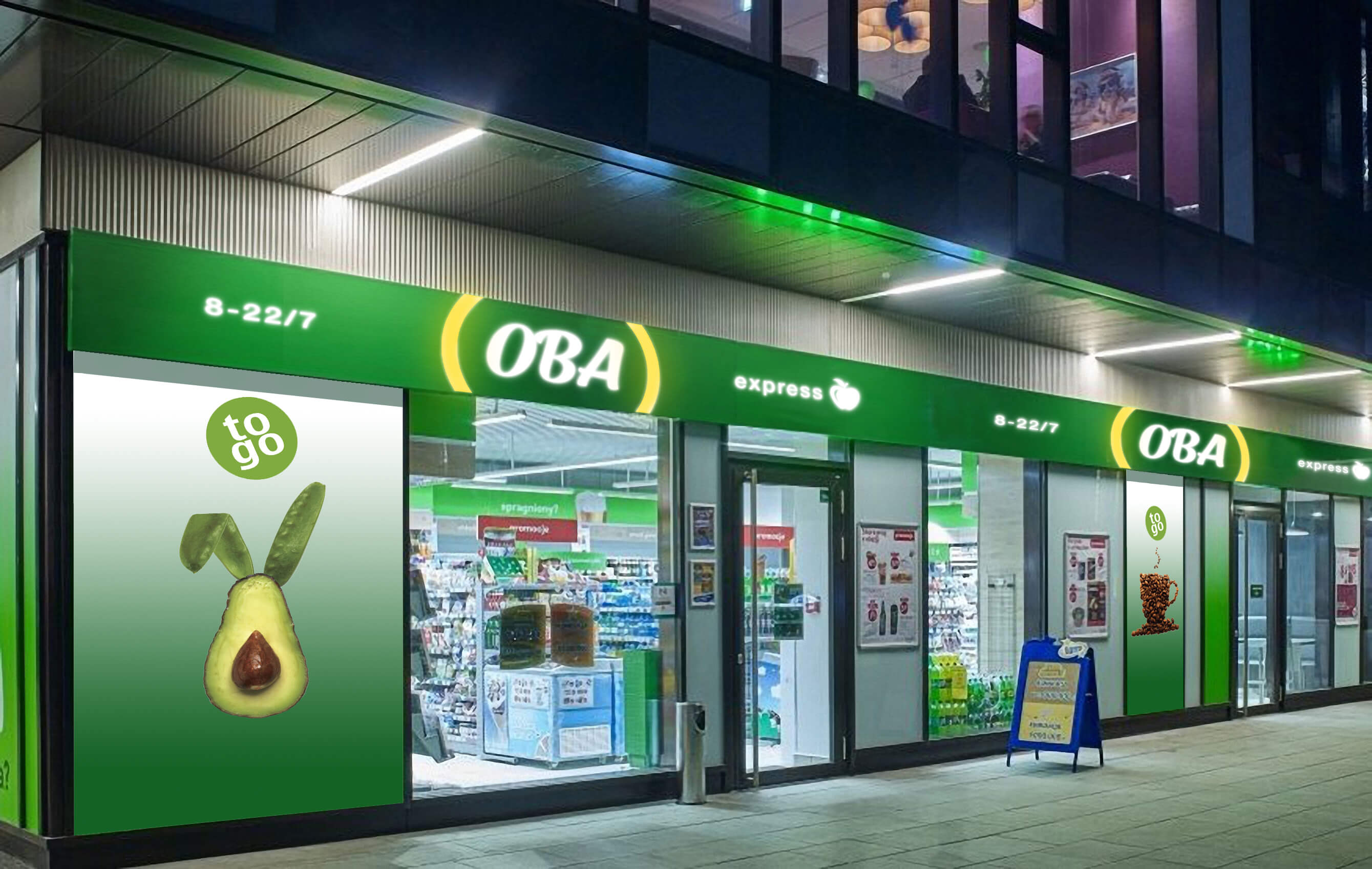
CampbellRigg's contribution to OBA included:
- Brand identity development
- Store-environment design
- Interior design
- Translation of brand identity into physical space
- Customer-facing visual communication
- A repeatable environment suitable for a large store network
OBA therefore provides a strong benchmark for a key small-format principle: Brand identity + store environment + repeatable design principles = a scalable retail format.
The case study is especially relevant to retailers seeking to build or refresh a large network of neighbourhood stores. The design challenge is not to create one exceptional flagship. It is to establish an environment that remains recognisable, commercially functional and operationally practical as the estate expands.
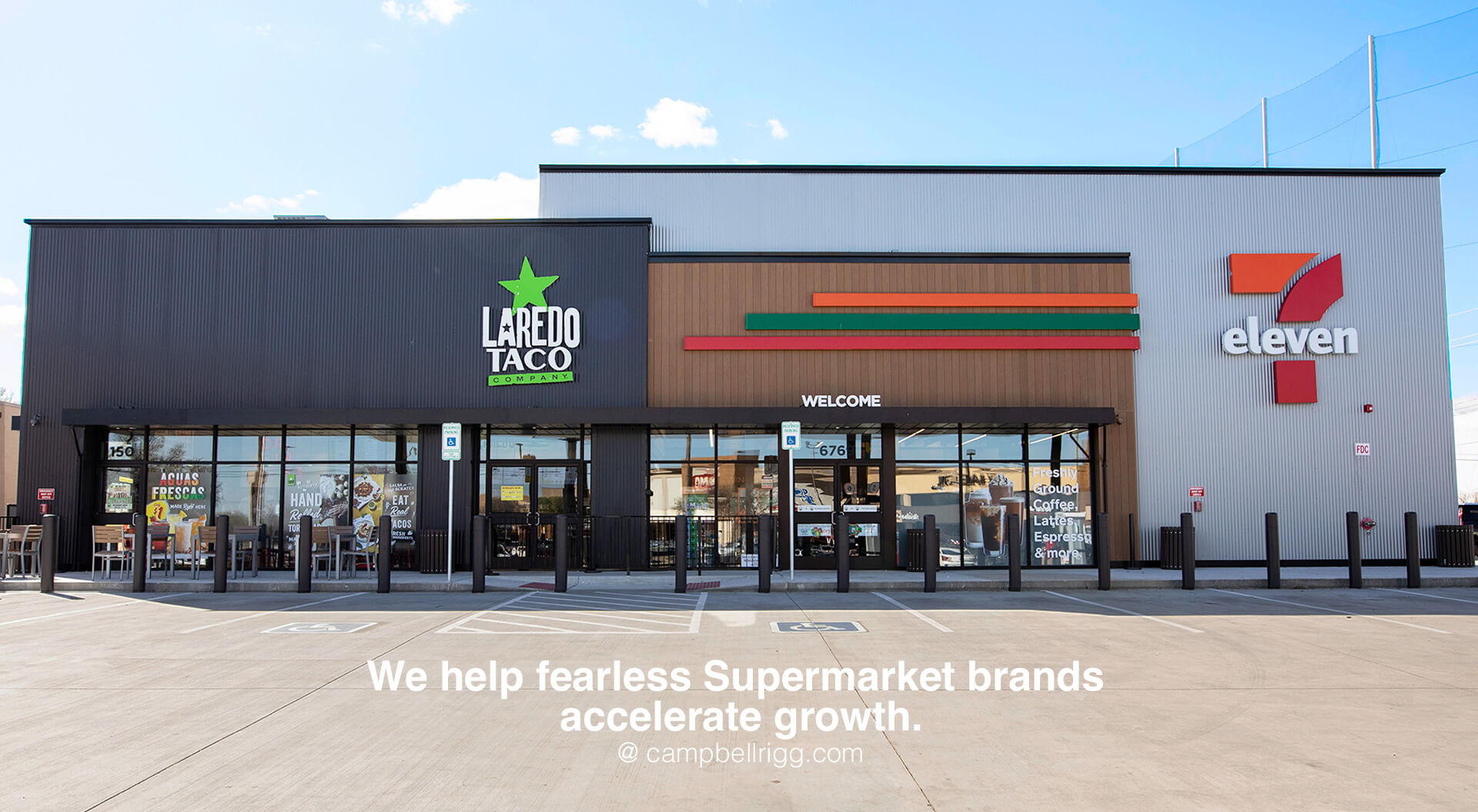
7-Eleven Evolution Store: Compact Formats as Test Beds
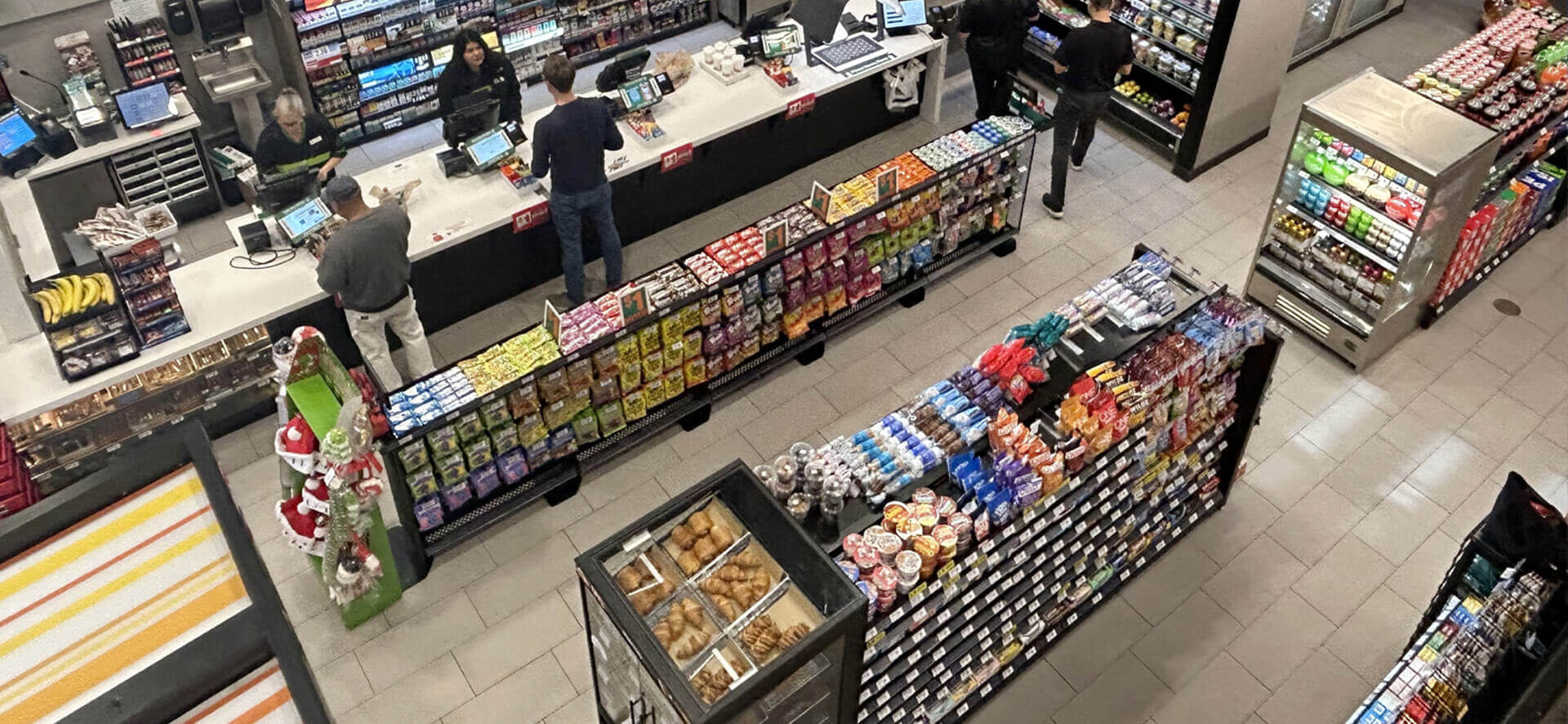
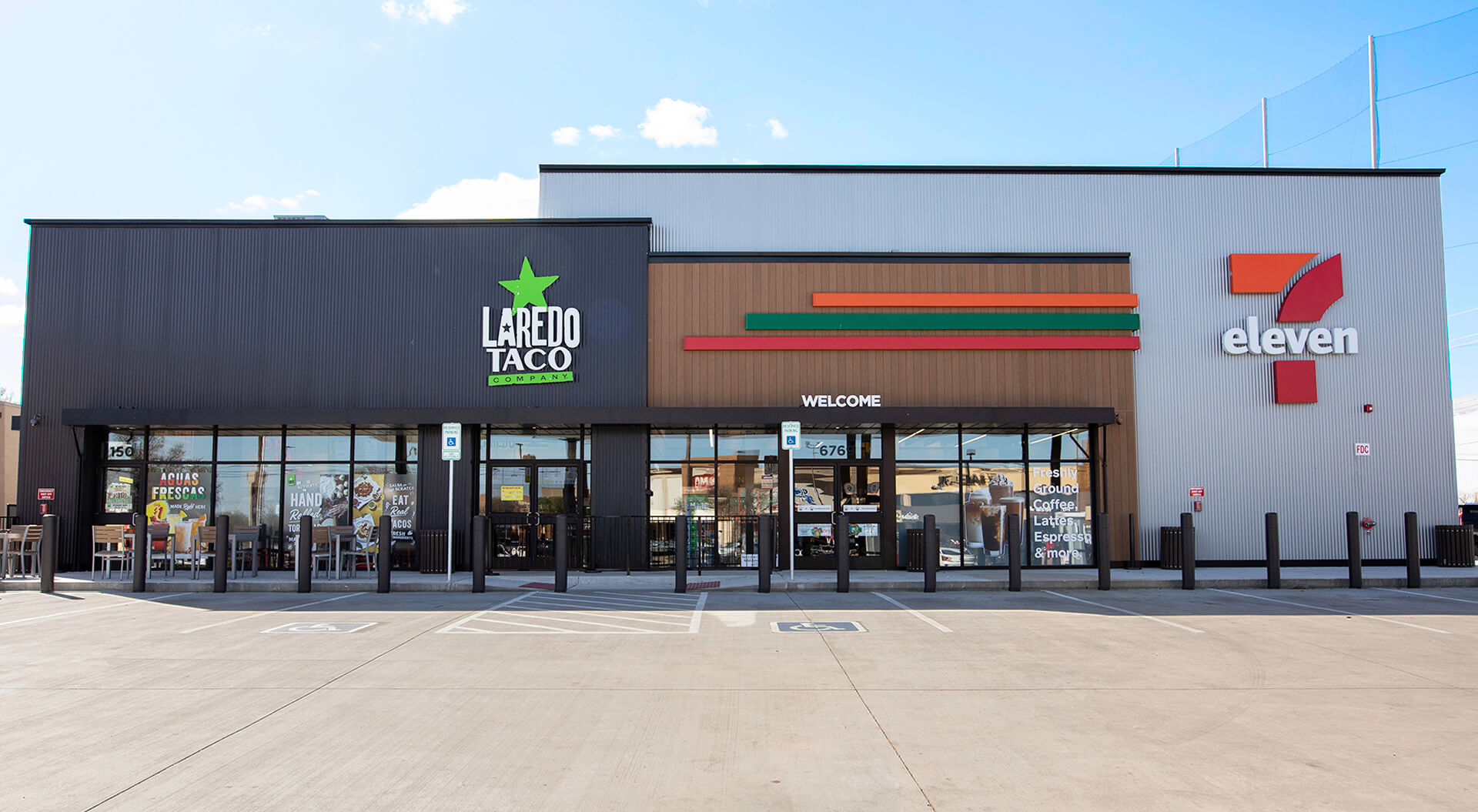
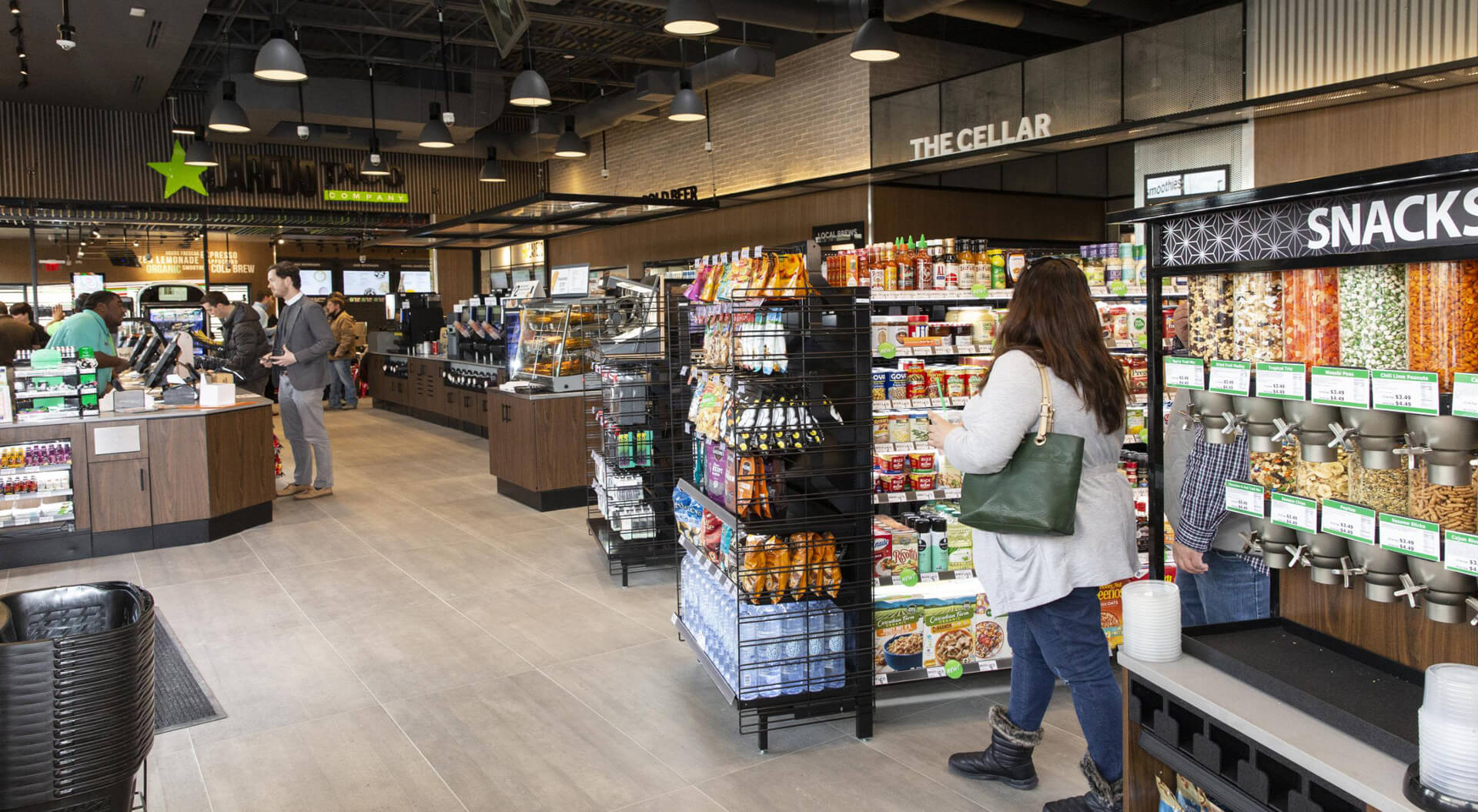
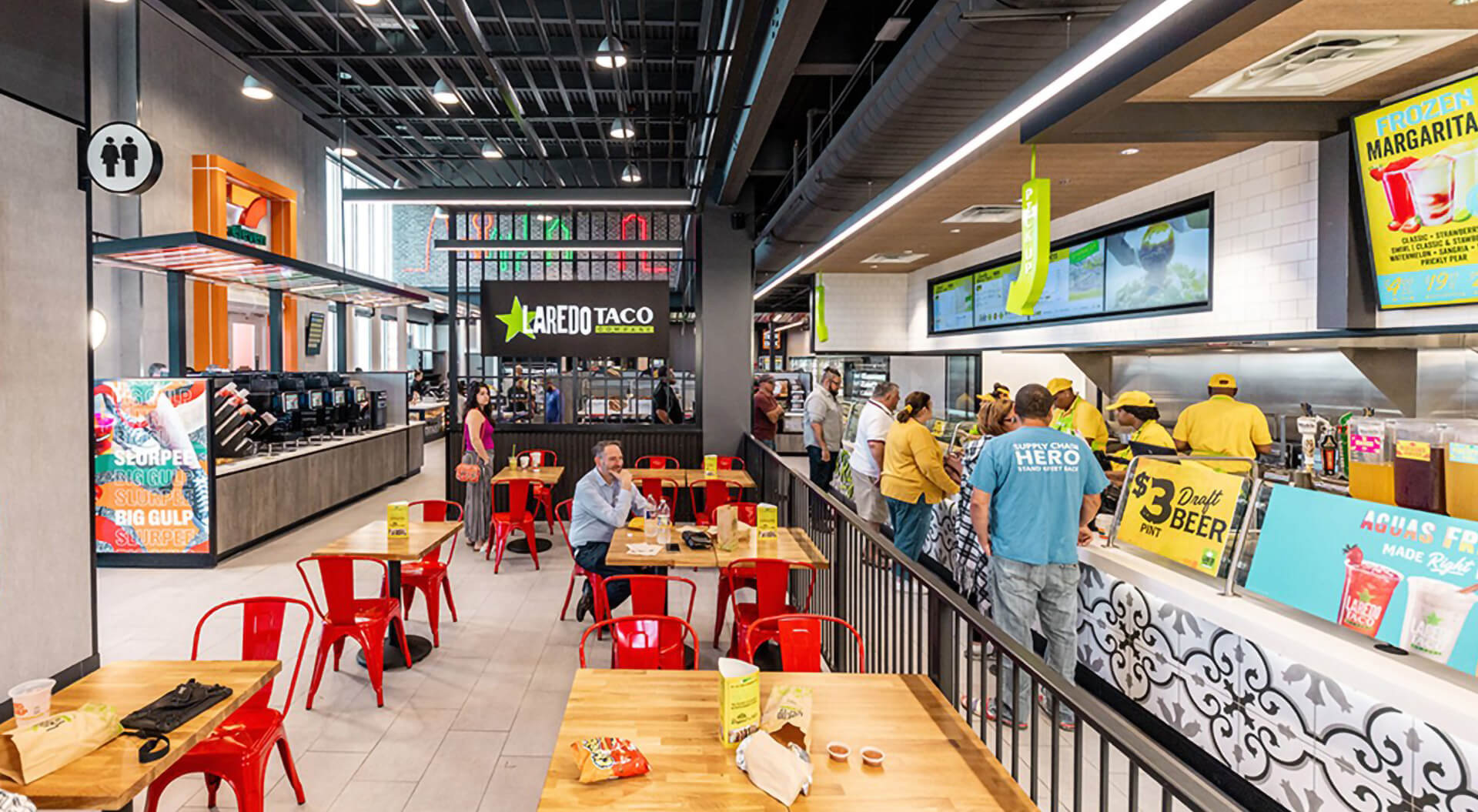
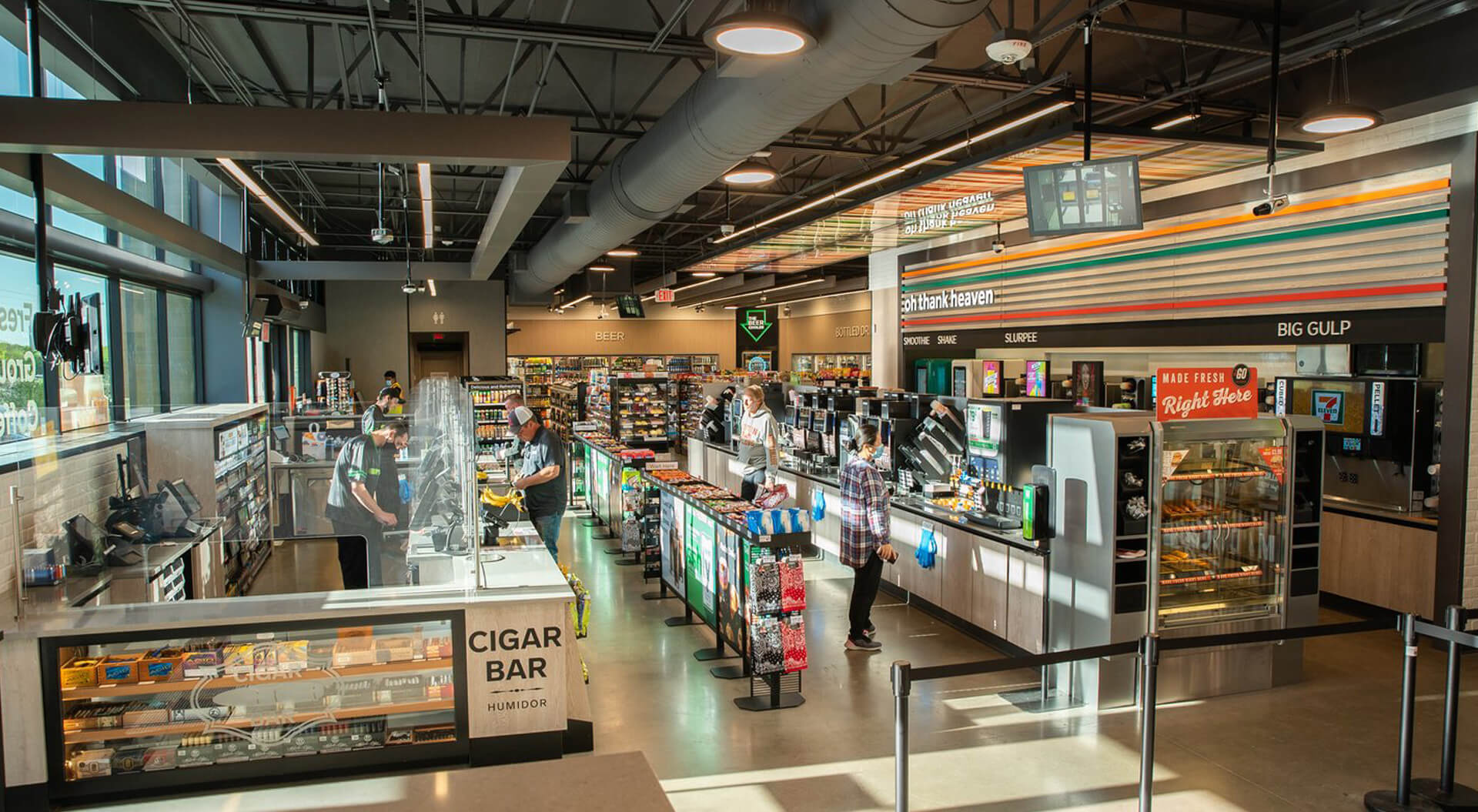
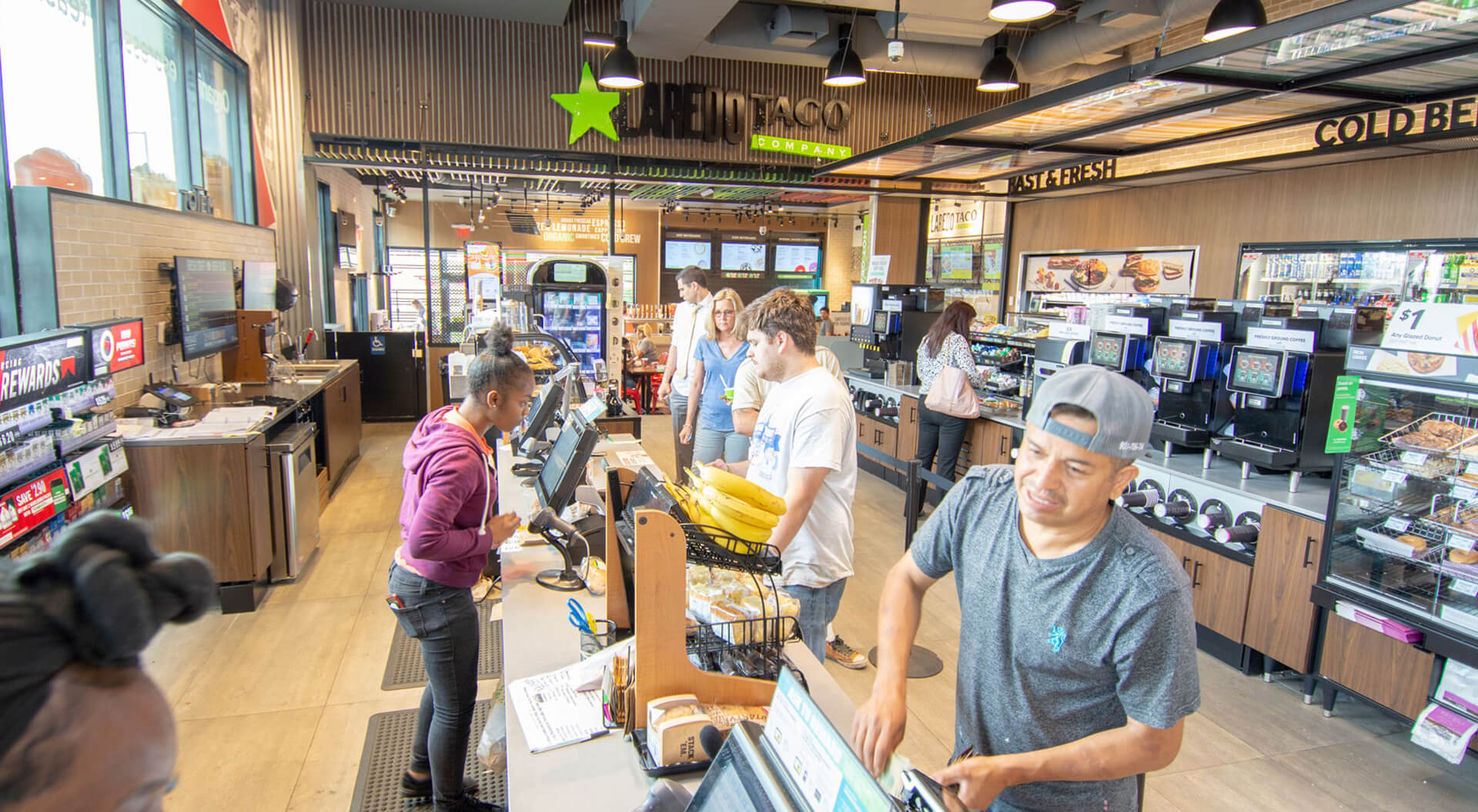
The 7-Eleven Evolution Store at Park Lane and Abrams Road Dallas Texas demonstrates another useful approach to compact-format innovation.
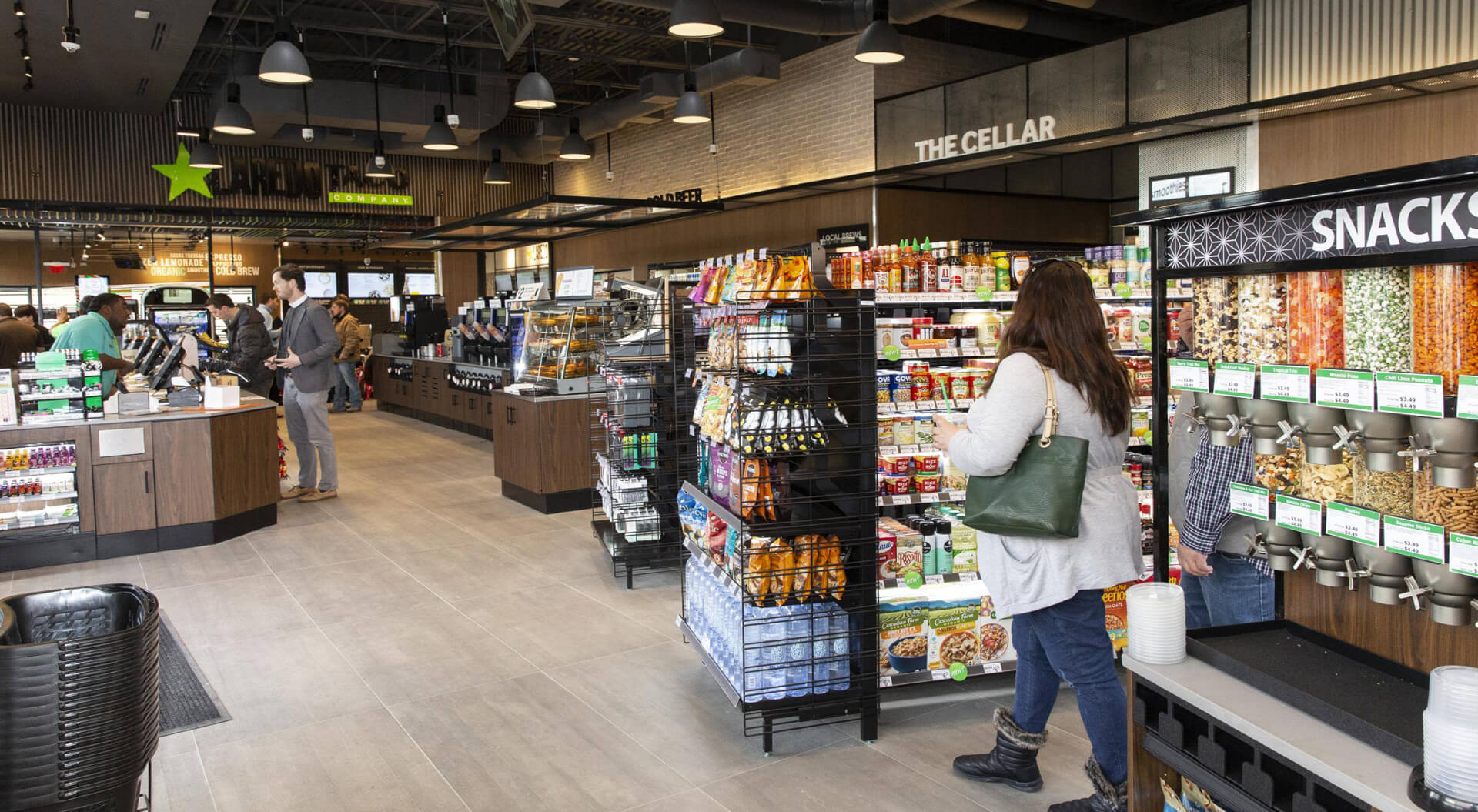
The store was developed as a testing environment for new products, technology and customer propositions. It also incorporated food-service innovation, including a Laredo Taco Company drive-through and a first-of-its-kind Slurpee drive-through collection point at a 7-Eleven location.
Other features included bean-to-cup coffee, fresh baked goods and expanded better-for-you products.
The relevant lesson for supermarket management is that compact stores can become test-and-learn environments for new propositions.
The principle is broader than convenience retail: A scalable format should provide a framework for testing new customer propositions without requiring the entire estate to change simultaneously.
These international examples demonstrate the principles that matter most:
Speed + visibility + local relevance + commercial density + operational clarity + format innovation.
Small-Format Supermarket Design vs Convenience Store Design
Small-format supermarkets and convenience stores share many principles, but they should not be treated as identical formats.
Convenience stores typically prioritise:
- Rapid shopping missions
- Immediate consumption
- Essential grocery
- Food-to-go
- High-frequency purchases
- Speed of service
Small-format supermarkets can support broader grocery missions, greater category depth and a stronger fresh-food proposition.
International convenience brands such as Lawson, GS25, CU and 7-Eleven therefore provide valuable benchmarks for compact retail planning—but they should inform the supermarket format rather than define it.
The most relevant transferable principles include:
- Limited-footprint planning
- Fast customer journeys
- High-density merchandising
- Food-to-go
- Local adaptation
- Strong visual recognition
- Efficient service zones
- Format flexibility
The strategic distinction is important: Convenience-store benchmarks can inform small-format supermarket design without becoming the subject of the supermarket format itself.
How CampbellRigg Helps Supermarket Management Turn Strategy Into a Scalable Format
For a management team, the critical question is not whether an agency can produce an attractive store concept.
It is whether the agency can help turn a commercial strategy into a repeatable, measurable and implementable retail network.
CampbellRigg brings together:
- Supermarket strategy
- Shopper and market insight
- Format planning
- Brand strategy
- Brand identity
- Retail architecture
- Interior design
- Space planning
- Visual merchandising
- Customer experience
- Store environment
- Detailed design
- Rollout support
The process can be structured as: Retail strategy → Shopper & market insight → Format definition → Brand identity → Design brief → Space planning → Store environment → Customer experience → Detailed design → Rollout → Measurement
The objective is not simply to make a small supermarket look better.
It is to determine how the available space can work harder commercially while making the customer journey easier, strengthening brand recognition and improving relevance to the catchment.
From Pilot Store to Network Rollout
A management team investing in a new small-format concept should think beyond the first store.
The pilot should establish the rules for the network.
That means defining:
- What must remain consistent?
- What can be adapted?
- What should be measured?
- What should be tested before rollout?
- What is the cost of implementation at scale?
- How quickly can the format be replicated?
This is where multidisciplinary expertise becomes commercially important.
A design that performs well in one location but is expensive or difficult to reproduce is not necessarily a successful network format.
CampbellRigg's role is to connect strategic ambition with practical implementation
The Future of Small-Format Supermarket Design
The future of small-format supermarket design will be defined by precision rather than size.
Retailers will increasingly use shopper data, local catchment intelligence, demand forecasting and performance measurement to determine where compact stores should be located, what they should sell and how space should be allocated.
AI and predictive analytics will increasingly support assortment, demand forecasting, availability and space productivity. But the physical store will still need to translate those insights into a clear, intuitive and commercially effective customer experience.
The strongest compact formats will combine: Local relevance + efficient space planning + fresh food + clear navigation + distinctive brand identity + convenient services + measurable performance
The competitive question is therefore not simply how small a supermarket can become.
It is how much commercial value can be created from every square metre without compromising the customer experience.
Frequently Asked Questions
Can CampbellRigg create a small-format supermarket design that scales across a network?
Yes. CampbellRigg develops repeatable design principles covering customer journey, space planning, fixtures, category zoning, signage, brand identity and store environment.
These principles can adapt to different footprints and catchments while maintaining brand consistency, giving management greater control over investment, implementation and rollout.
How does CampbellRigg integrate brand identity into small-format supermarket design?
Brand identity should be integrated into the store from the outset—not applied after the floor plan is complete.
CampbellRigg combines brand strategy, identity and store environment to create distinctive customer experiences that support navigation, differentiation and commercial objectives while providing a repeatable system for network expansion.
How can CampbellRigg help move from a pilot store to network rollout?
The pilot should establish the commercial and design principles for the future network, not simply prove one store concept.
CampbellRigg develops scalable frameworks covering space planning, brand application, fixtures, materials, visual communication and customer experience, enabling concepts to be replicated efficiently and adapted locally.
What business services does CampbellRigg provide?
CampbellRigg connects retail strategy with physical implementation, including shopper insight, format definition, brand strategy, brand identity, space planning, retail architecture, interior design, visual merchandising, customer experience, store environment and rollout support.
This multidisciplinary approach creates a coherent, commercially focused retail format rather than disconnected strategy and design outputs.
What should management measure after implementing a small-format supermarket?
Performance should be measured against agreed commercial objectives, including sales and gross margin per square metre, basket value, category productivity, conversion, visit frequency, operational efficiency, development cost, payback and ROI.
CampbellRigg connects design decisions to these objectives from the outset. The ultimate measure is whether the format delivers measurable commercial productivity, stronger customer experience and scalable network potential.
What should management expect from a small-format supermarket design programme?
A small-format supermarket should be developed as a commercial retail format, integrating catchment economics, shopper missions, assortment, space productivity, brand identity and operational requirements.
CampbellRigg translates these priorities into a format strategy, store-planning framework and customer experience designed to perform at store level and scale across the network.
How does CampbellRigg differentiate small-format supermarket design from convenience-store design?
Small-format supermarkets can support broader grocery missions and category depth, while convenience formats typically prioritise speed, essential products and food-to-go.
CampbellRigg uses international benchmarks to develop the right assortment, category hierarchy, customer journey and fresh-food proposition for each supermarket's catchment and commercial objectives.
How can CampbellRigg help increase sales per square metre?
CampbellRigg identifies where the existing footprint is creating or losing commercial value, analysing shopper missions, category productivity, assortment, adjacencies, circulation and product visibility.
These insights inform space planning and merchandising to increase the commercial output of available space while protecting customer experience and operational efficiency.
How much can small-format supermarket design improve space productivity?
There is no universal percentage uplift. Results depend on the catchment, footprint, assortment, category mix, customer behaviour and operating model.
CampbellRigg establishes measurable opportunities and performance targets around sales per square metre, category productivity, basket value, conversion, operational efficiency and ROI.
This multidisciplinary approach creates a coherent, commercially focused retail format rather than disconnected strategy and design outputs.
What should management measure after implementing a small-format supermarket?
Performance should be measured against agreed commercial objectives, including sales and gross margin per square metre, basket value, category productivity, conversion, visit frequency, operational efficiency, development cost, payback and ROI.
CampbellRigg connects design decisions to these objectives from the outset. The ultimate measure is whether the format delivers measurable commercial productivity, stronger customer experience and scalable network potential.

Make Every Square Metre Work Harder
The best small-format supermarket is not simply a smaller supermarket.
It is a purpose-designed retail format in which shopper insight, catchment economics, brand identity, space planning, merchandising, store environment and commercial performance work together.
CampbellRigg helps supermarket and grocery retailers develop distinctive, scalable and commercially focused retail environments, from brand identity and format strategy through to shopper insight, store-environment design, implementation and rollout.
How We Help Retailers
CampbellRigg helps supermarket and grocery retailers develop distinctive, scalable and commercially focused retail environments, from retail strategy, shopper insight and brand identity through format planning, store-environment design, implementation and rollout.
If you are developing a small-format supermarket, compact neighbourhood grocery format or scalable urban retail network, CampbellRigg can help define the commercial and design brief around your location, customer proposition, footprint, brand and growth objectives.
Book a free consultation to discuss your requirements.
Shopper insight → Brand strategy → Format definition → Store planning → Brand environment → Fast execution → Network rollout → Measurable commercial performance
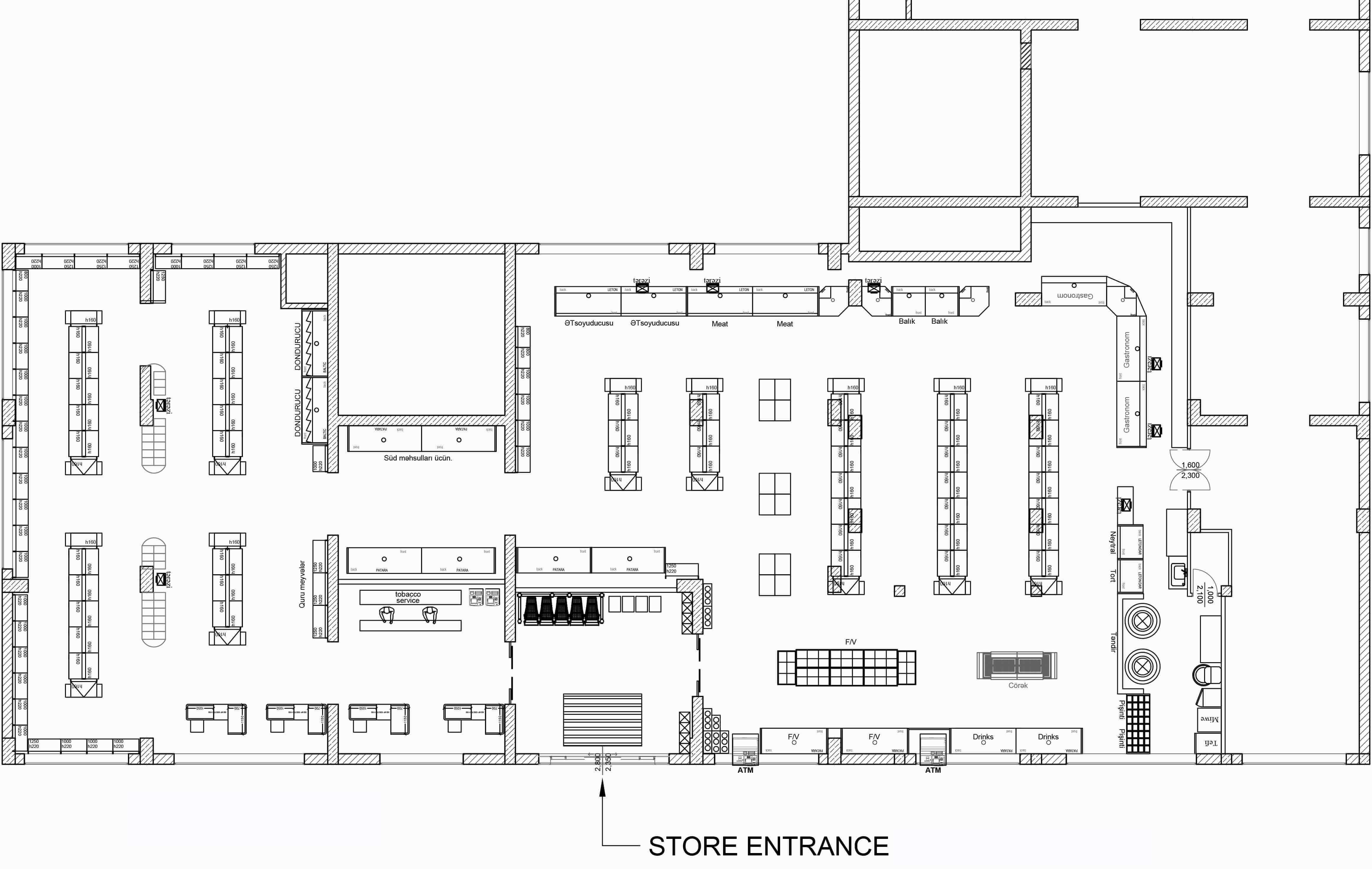
Above: A typical floor plan for a convenience-store format, illustrating how customer circulation, category zoning, merchandising, service areas and back-of-house functions are integrated within a compact footprint. The plan demonstrates how careful space planning can balance operational efficiency with an intuitive and commercially productive customer journey.

Schedule your consultation today and receive a free quote.
Cost-Effective Excellence:
Our pricing structure is highly competitive, offering exceptional value without compromising on quality or creativity.
Rapid Execution:
We move fast. From concept to implementation, our agile team ensures your project is delivered on time and to the highest standards.
Multidisciplinary Expertise:
Our team brings together seasoned brand strategists, architects, interior designers, and graphic designers, collaborating to create seamless, end-to-end brand environments.
Global Reach, Local Insight:
With successful projects delivered across Europe, the Middle East, and Asia, we combine international experience with local market understanding.
Scalable Project Delivery:
Whether it's a flagship technology store, an urban network or mall micro-branches, we manage and execute projects of all sizes, efficiently and effectively.
Proven Track Record:
Our designs evolve branch networks from purely transactional spaces into experiential, relationship-focused brand environments, enhancing engagement, elevating customer experience, and driving tangible business results.
Full-Service Creative Agency:
From rebranding and marketing campaigns to spatial design and rollout, we provide an integrated service tailored to your goals.