News and Views
Flagship fashion store brand identity – concept Interior design






Flagship Fashion Store Design: Brand Identity, Concept & Commercial Performance
Flagship fashion store design turns a fashion brand's identity, positioning and customer proposition into a distinctive physical destination. It combines brand strategy, concept development, spatial planning, retail architecture, visual merchandising, interior design, digital integration and customer experience to create stores that are recognisable, commercially effective and capable of influencing the wider retail network.
For leading fashion retailers, a flagship store is more than a high-profile sales location. It can be a brand showcase, innovation platform, customer destination and strategic prototype for future stores. The objective is to create a physical environment that communicates what the brand stands for while making products easier to discover, evaluate and purchase.
CampbellRigg develops flagship fashion store concepts that connect brand identity with customer behaviour and commercial performance. Our multidisciplinary approach combines retail strategy, brand identity, store planning, architecture, interior design, visual merchandising and retail communications to create distinctive flagship environments and practical principles for wider rollout.

What Is Flagship Fashion Store Design?
Flagship fashion store design is the strategic development of a high-profile retail environment that represents a fashion brand at its most influential level.
Unlike a conventional fashion store, a flagship can perform several roles simultaneously. It communicates brand positioning, introduces new customer experiences, showcases collections, tests retail innovation, generates content and establishes design principles that can influence the wider store network.
Effective flagship fashion store design considers the complete customer journey, including the exterior and entrance, spatial planning, circulation, product zoning, merchandising, fitting rooms, service areas, digital touchpoints, storytelling, checkout and fulfilment.
The result should balance brand theatre with commercial discipline. A flagship needs to inspire customers, but it must also make the store intuitive to navigate and the merchandise easy to understand and purchase.
Turning Fashion Brand Identity into a Physical Environment
A successful flagship begins with the brand rather than the interior.
Brand positioning should determine how customers experience the store through architecture, materials, lighting, colour, fixtures, graphics, signage, merchandising and spatial hierarchy. Premium, contemporary, youthful, performance-led, lifestyle and value-oriented fashion brands require different physical expressions.
The design therefore needs to translate brand identity into a coherent retail language.
This means moving beyond applying a logo or colour palette to an existing store. Brand identity should influence the entrance, customer journey, product presentation, visual hierarchy and service experience. Every significant design decision should reinforce the brand proposition.
For fashion retailers, the flagship can become the clearest physical expression of the brand: a destination where customers can understand the brand's personality, discover collections and experience its values in a way that digital channels cannot fully reproduce.
How Flagship Fashion Store Design Creates Commercial Value
Effective flagship design begins with brand and customer strategy before moving into concept development and detailed design.
CampbellRigg's approach connects brand positioning with customer behaviour, merchandising, circulation, visual hierarchy, digital touchpoints and operational requirements.
1. Brand and market positioning
Define the brand proposition, target customer, competitive position and role of the flagship within the wider retail network.
2. Flagship concept development
Translate brand strategy into an architectural, interior and visual design concept that gives the flagship a distinctive identity.
3. Customer journey and spatial planning
Organise entrances, circulation routes, product zones, focal displays, fitting rooms, service points and checkout to make the customer journey intuitive.
4. Visual merchandising and product discovery
Create a hierarchy for collections, campaigns and priority categories so customers can navigate, explore and compare products naturally.
5. Digital and omnichannel integration
Connect physical retail with ecommerce, mobile, click-and-collect, digital product information, customer accounts and other relevant services.
6. Commercial measurement
Link design decisions to measurable objectives such as footfall, dwell time, conversion, average basket value, sales productivity, cross-selling, customer retention and loyalty.
This transforms flagship fashion store design from an aesthetic exercise into a strategic retail platform.
H&M and COS: Learning from Leading Fashion Retail Environments
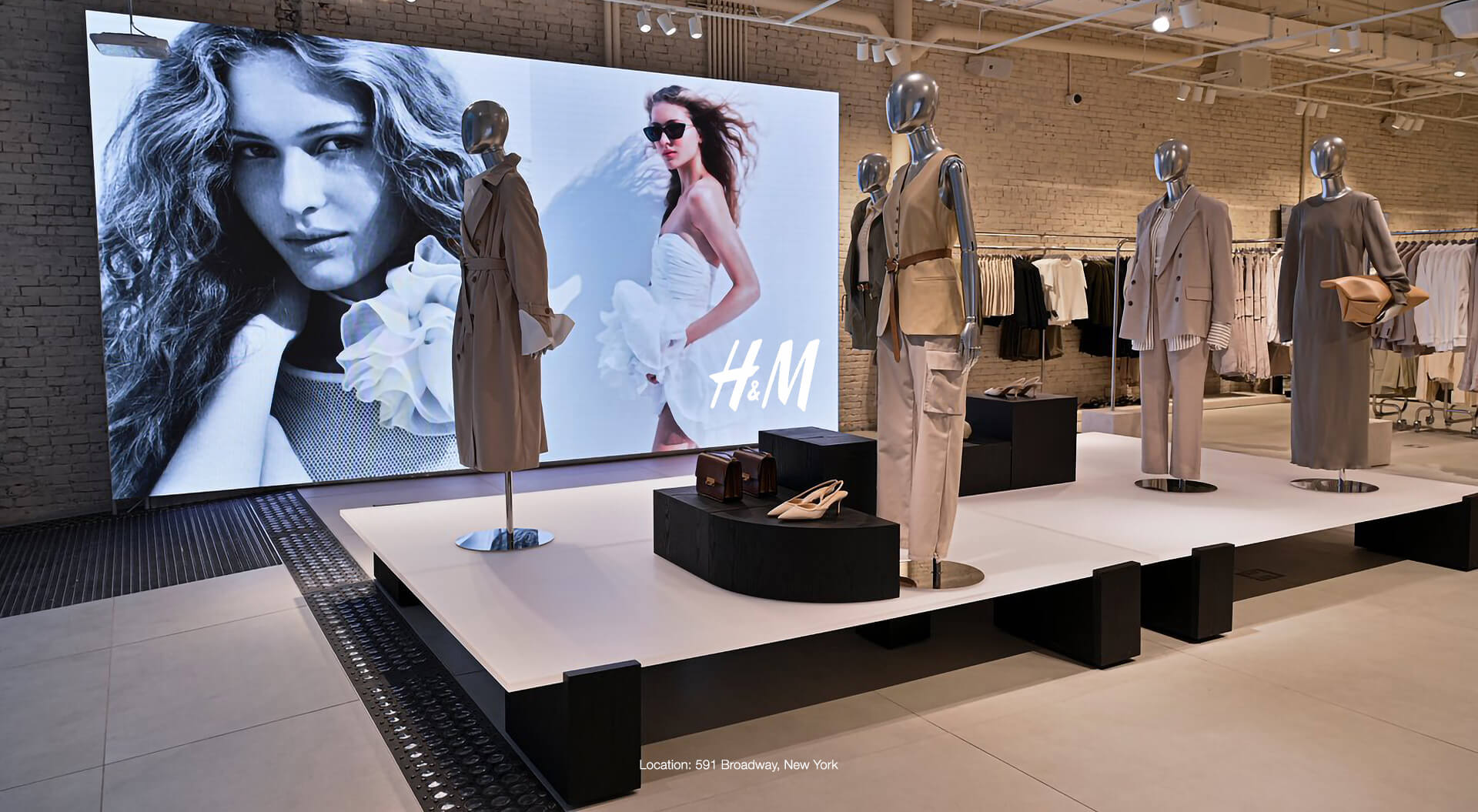
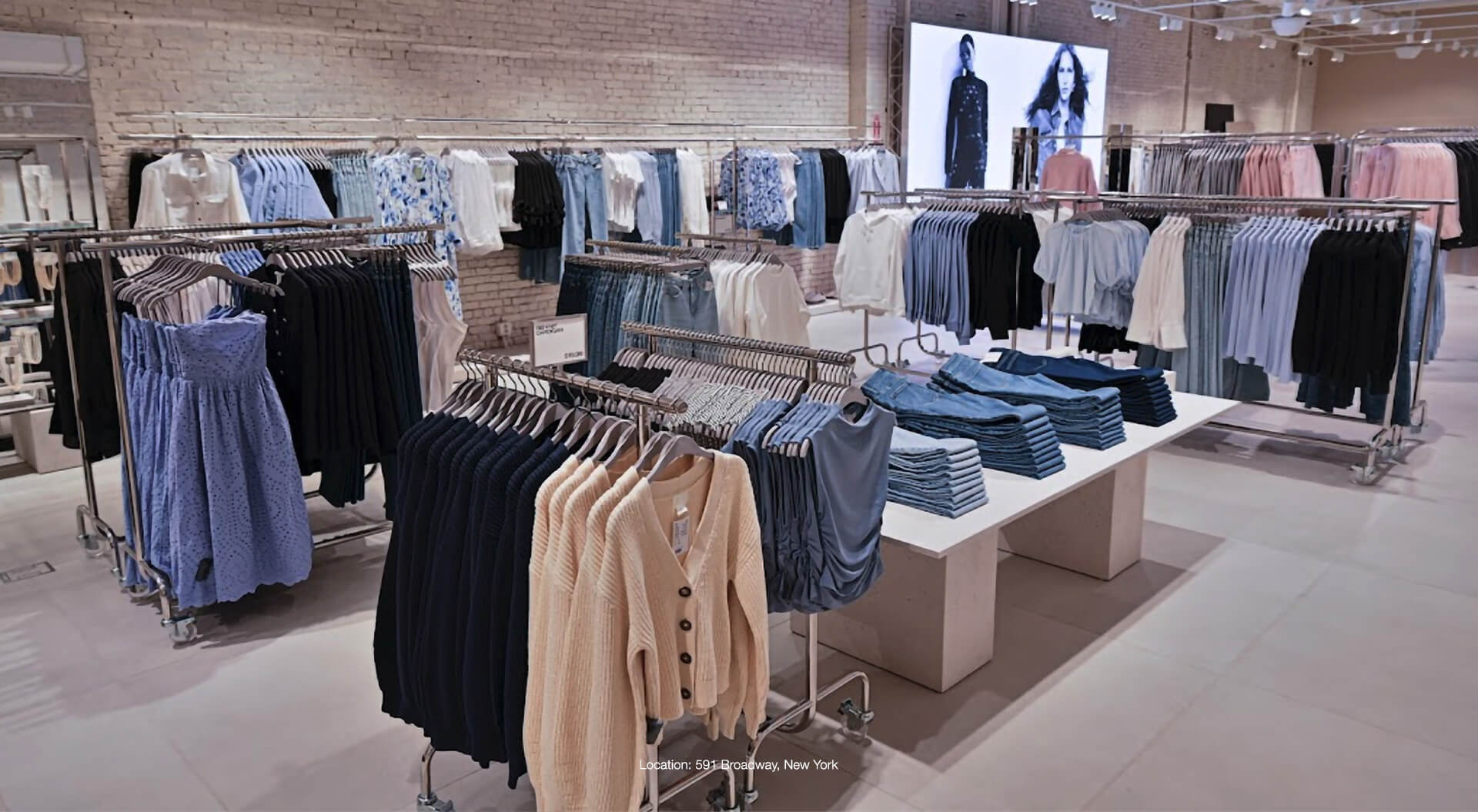
H&M's 591 Broadway store in New York provides a strong benchmark for understanding how exterior identity, entrance experience, spatial hierarchy, product presentation, fixtures, graphics and visual merchandising can combine to create a distinctive high-profile fashion retail environment.
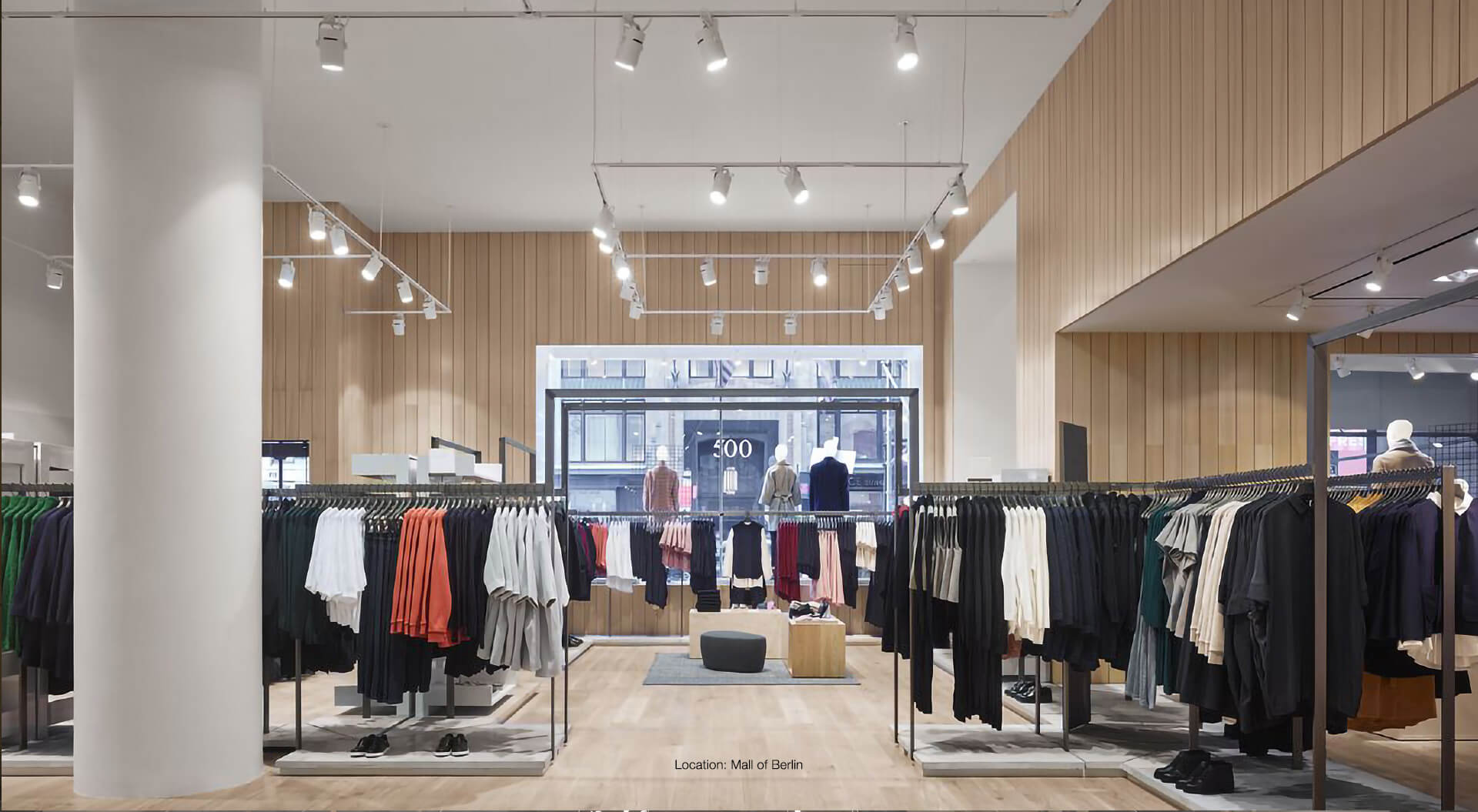
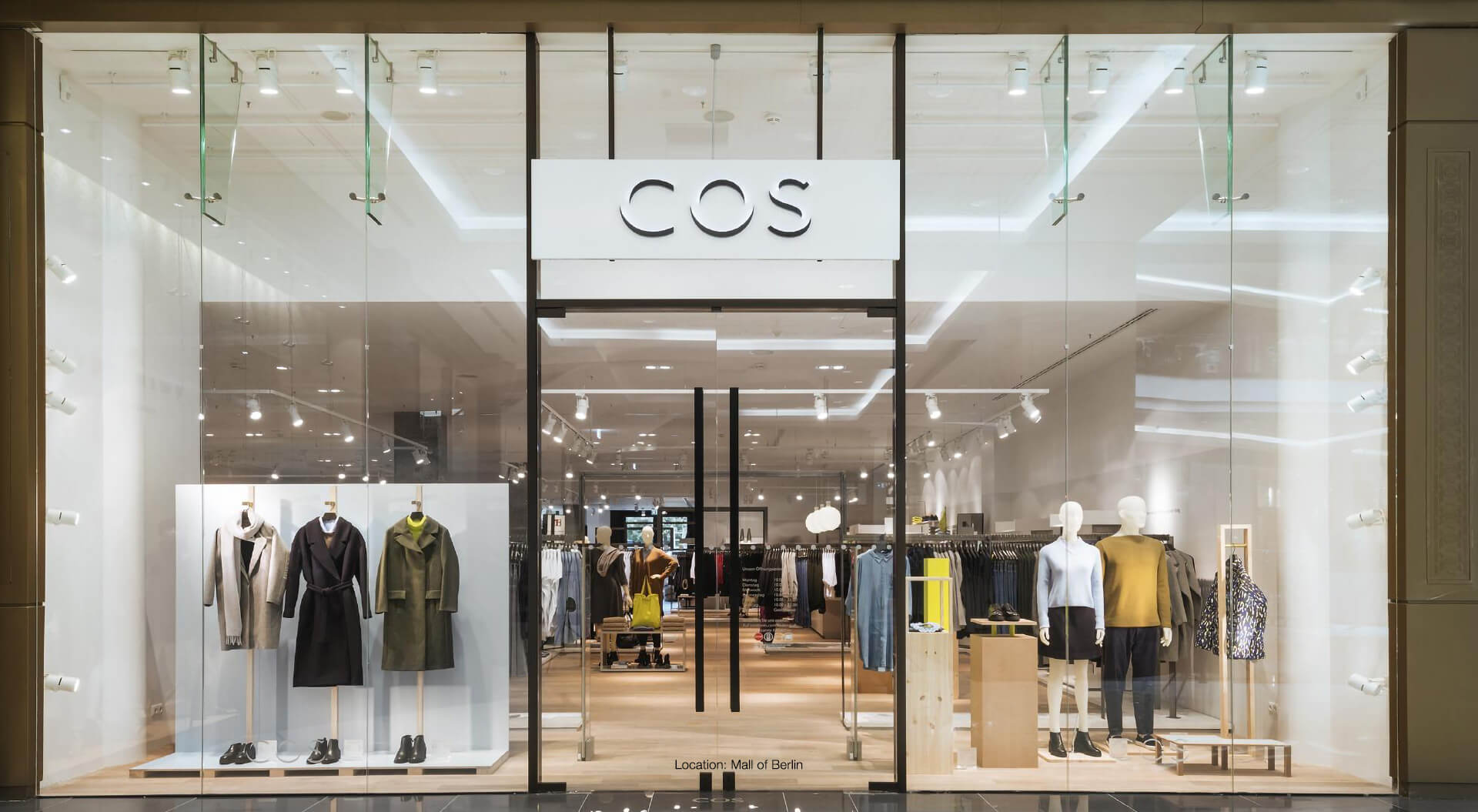
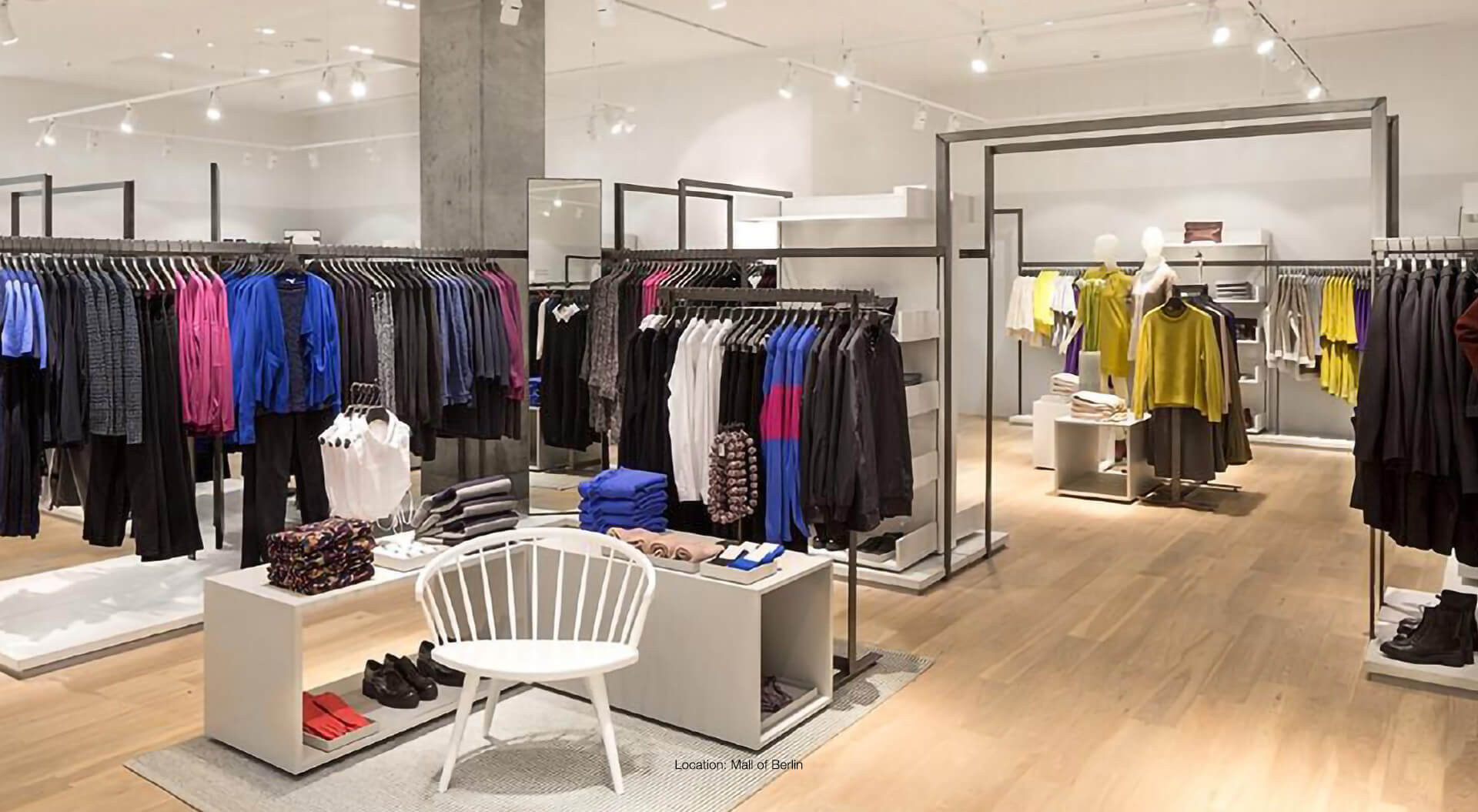
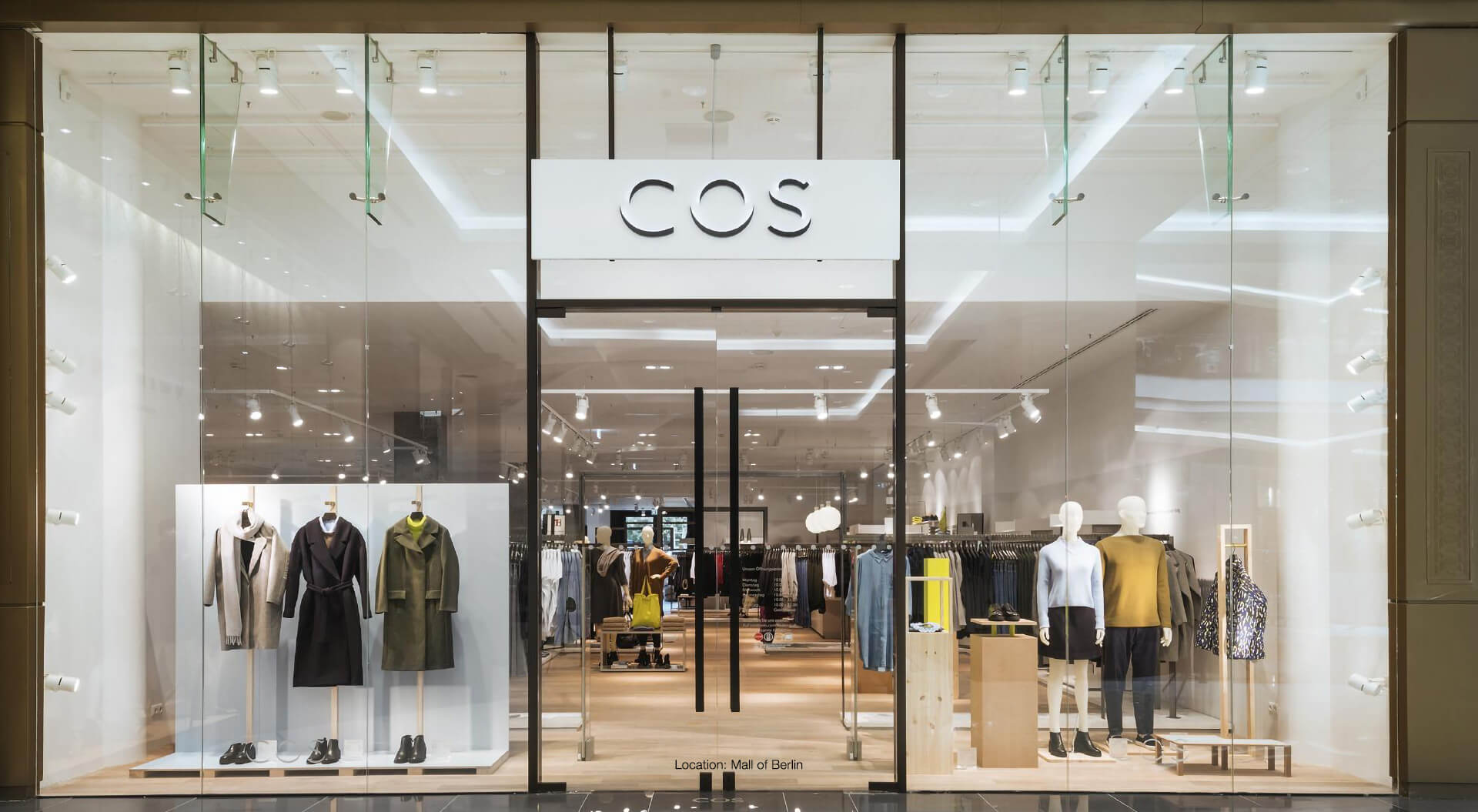
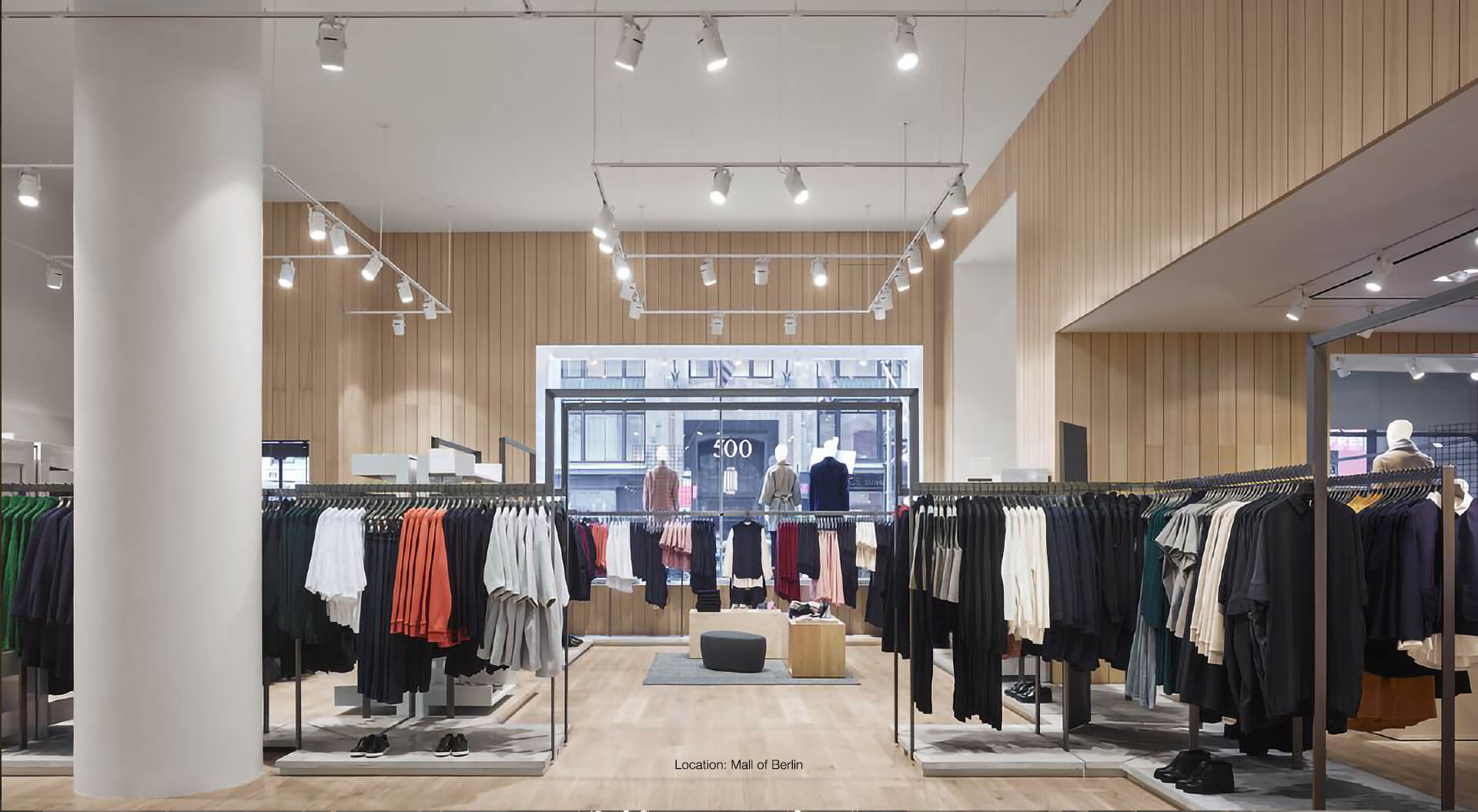
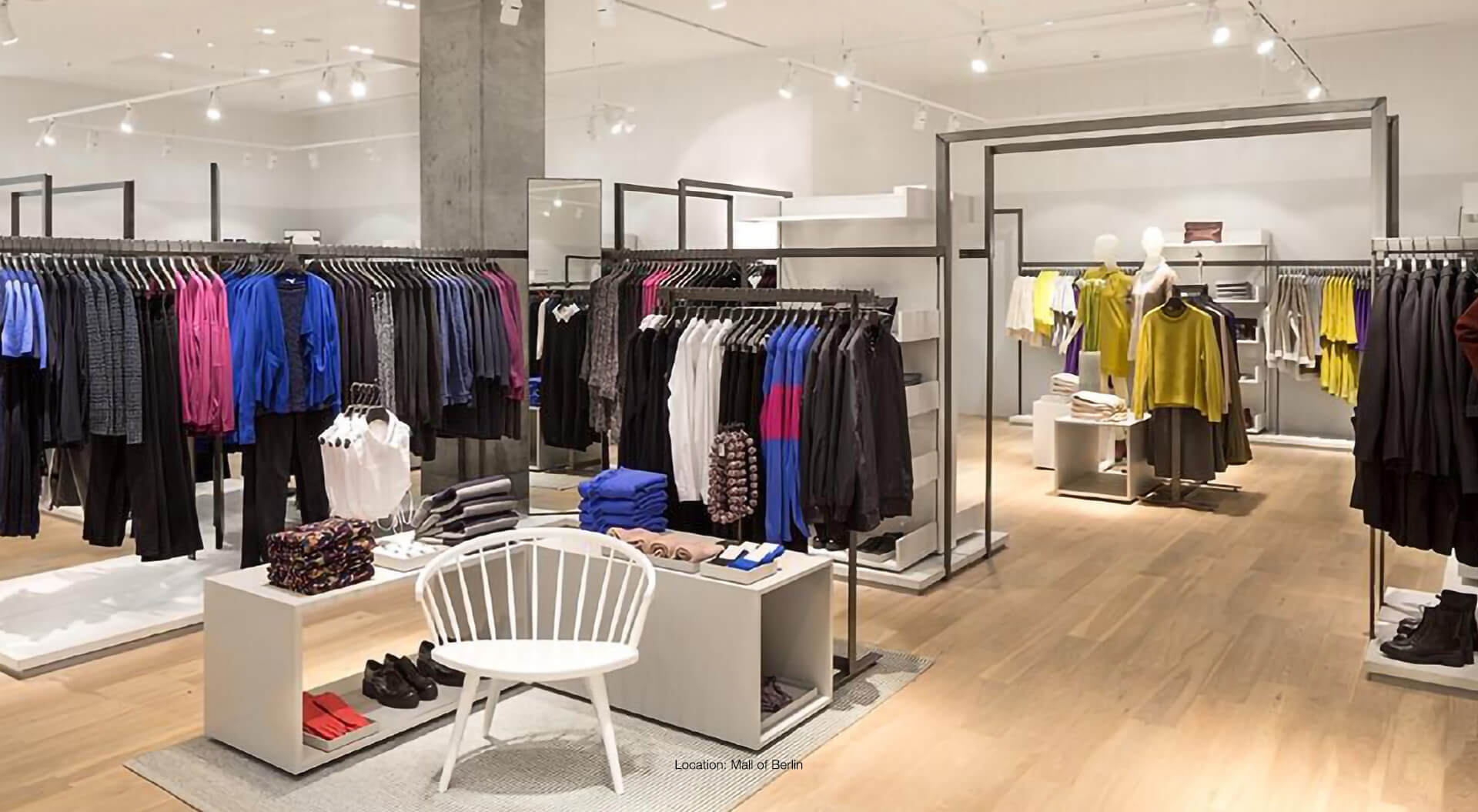
COS at Mall of Berlin offers a contrasting approach, demonstrating how a more restrained architectural language, considered material palette, curated product presentation and controlled visual merchandising can translate a contemporary fashion proposition into a cohesive physical experience.
Together, these environments illustrate that effective flagship and fashion store design does not depend on a single visual formula. The design response must reflect the retailer's brand positioning, customer proposition, product strategy and commercial objectives.
For CampbellRigg, international benchmarking provides a framework for identifying opportunities, understanding different approaches to fashion retail design and developing differentiated concepts, not reproducing existing retail solutions.
Your store is your stage and your brand is the performance:
Trends in the Phygital Era: Phygital retail is defined by seamless transitions between online and offline journeys. Customers expect smart fitting rooms, mobile-enabled checkouts, AR try-ons, and personalised product recommendations. Emotional storytelling and sensory elements, lighting, scent, sound, play a growing role in shaping memorable experiences. “Third-space” environments such as cafés, lounges, and social zones extend dwell time and deepen brand affinity. Modular displays allow rapid campaign activation, while sustainable materials build trust. Consumers reward brands that make shopping frictionless, immersive, and consistent across every digital and physical touchpoint.
COS and Banana Republic: Learning from Distinctive Fashion Retail Environments
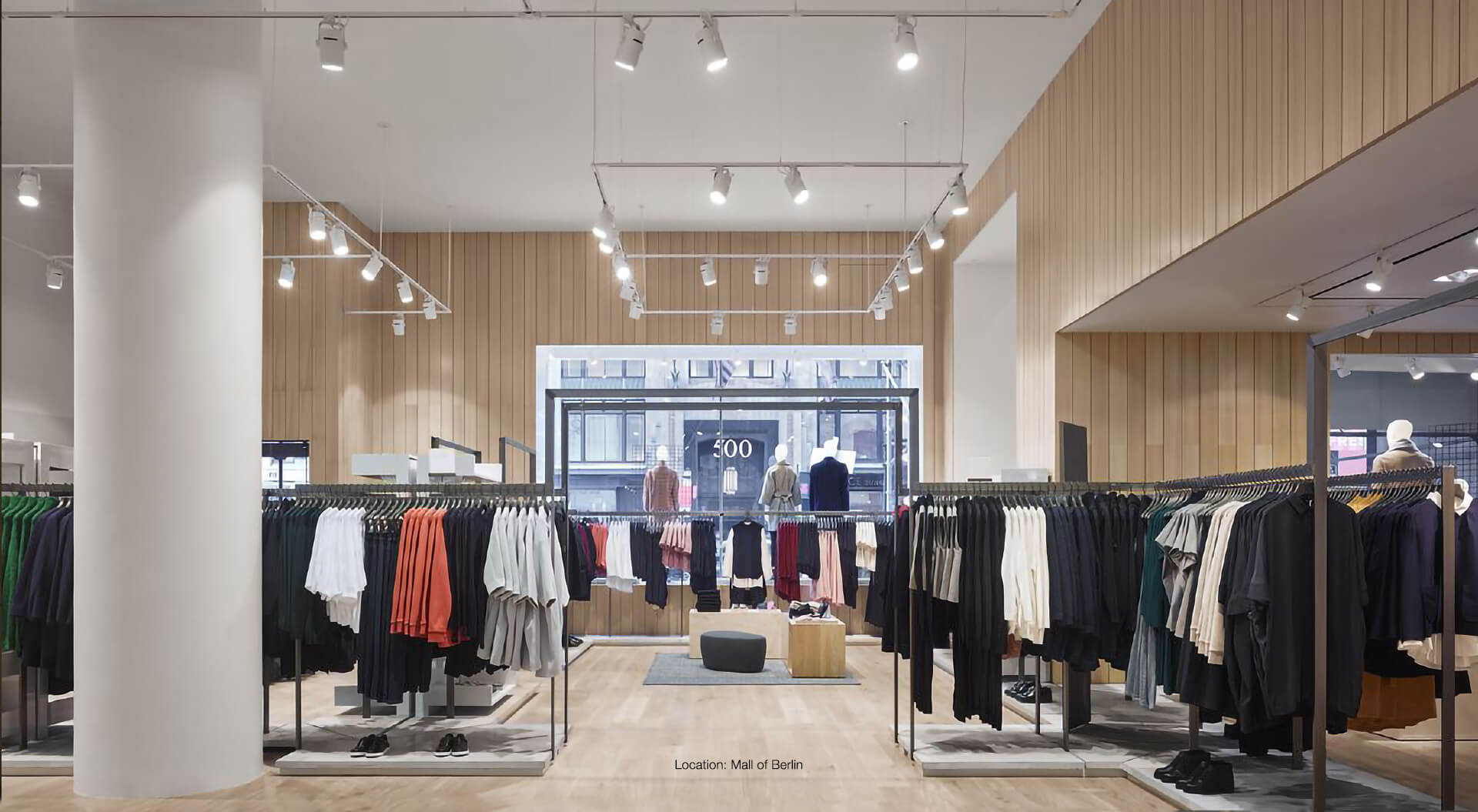
COS at Mall of Berlin provides a useful benchmark for understanding how restrained architectural language, material selection, spatial clarity, curated product presentation and controlled visual merchandising can translate a contemporary fashion proposition into a distinctive physical environment.
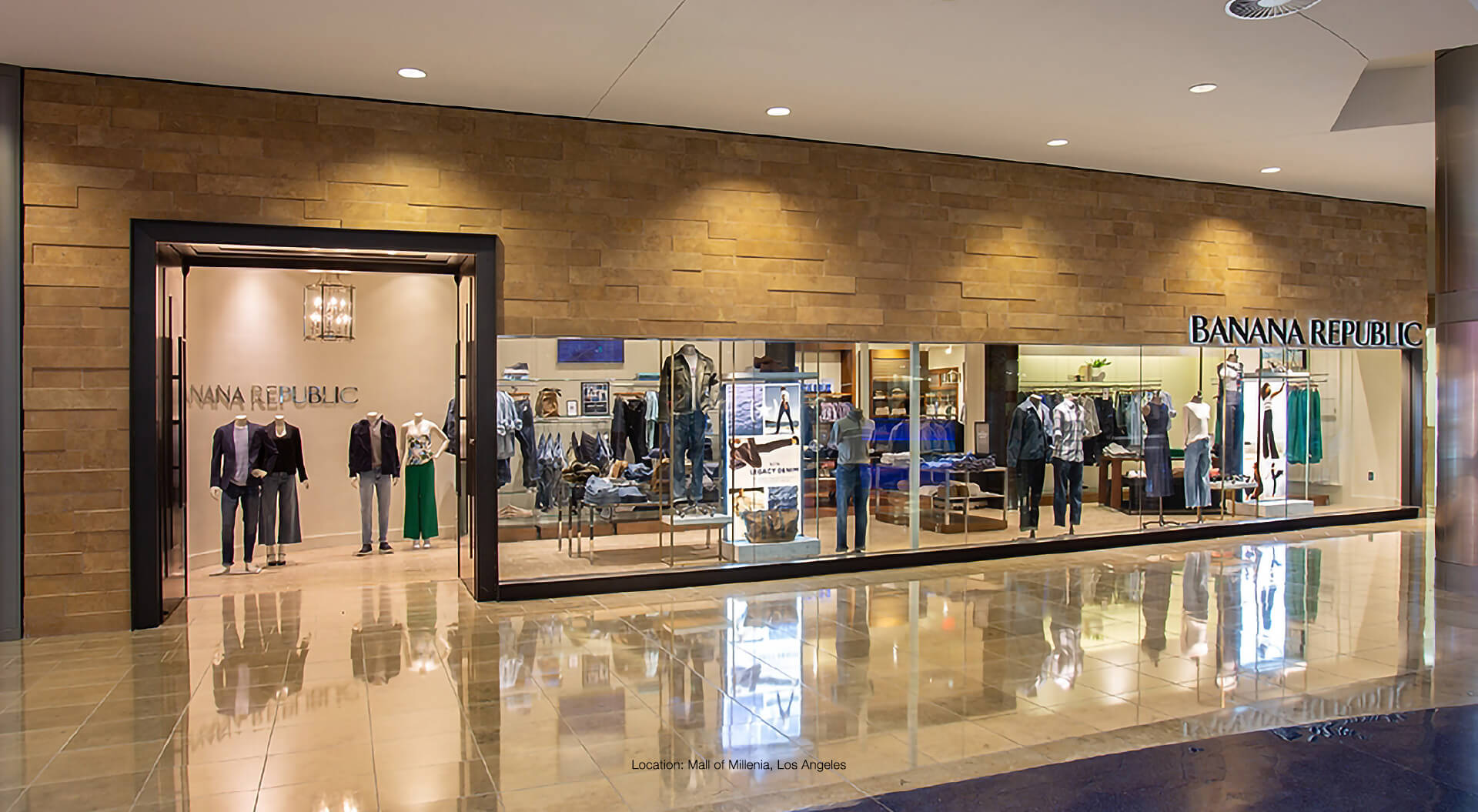
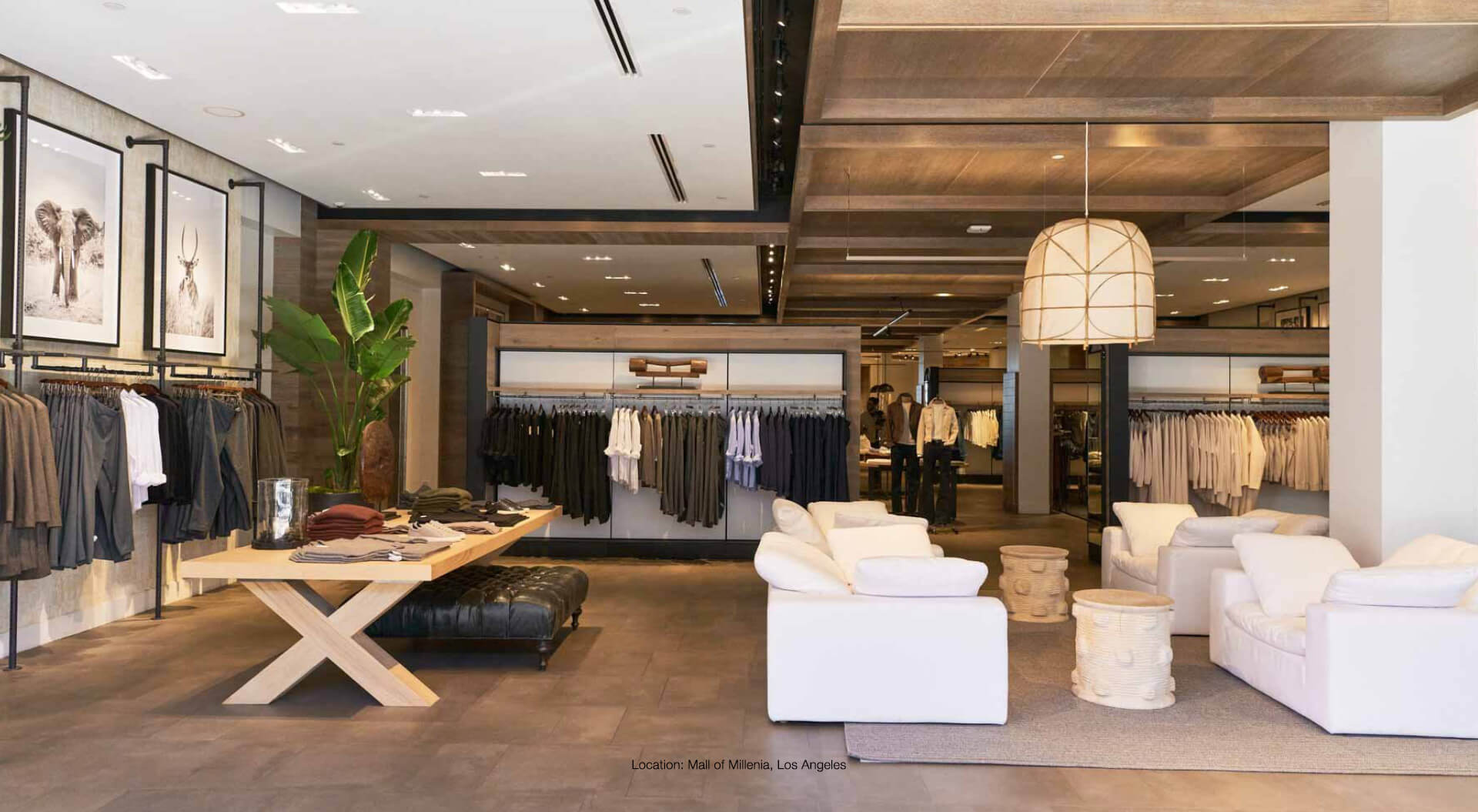
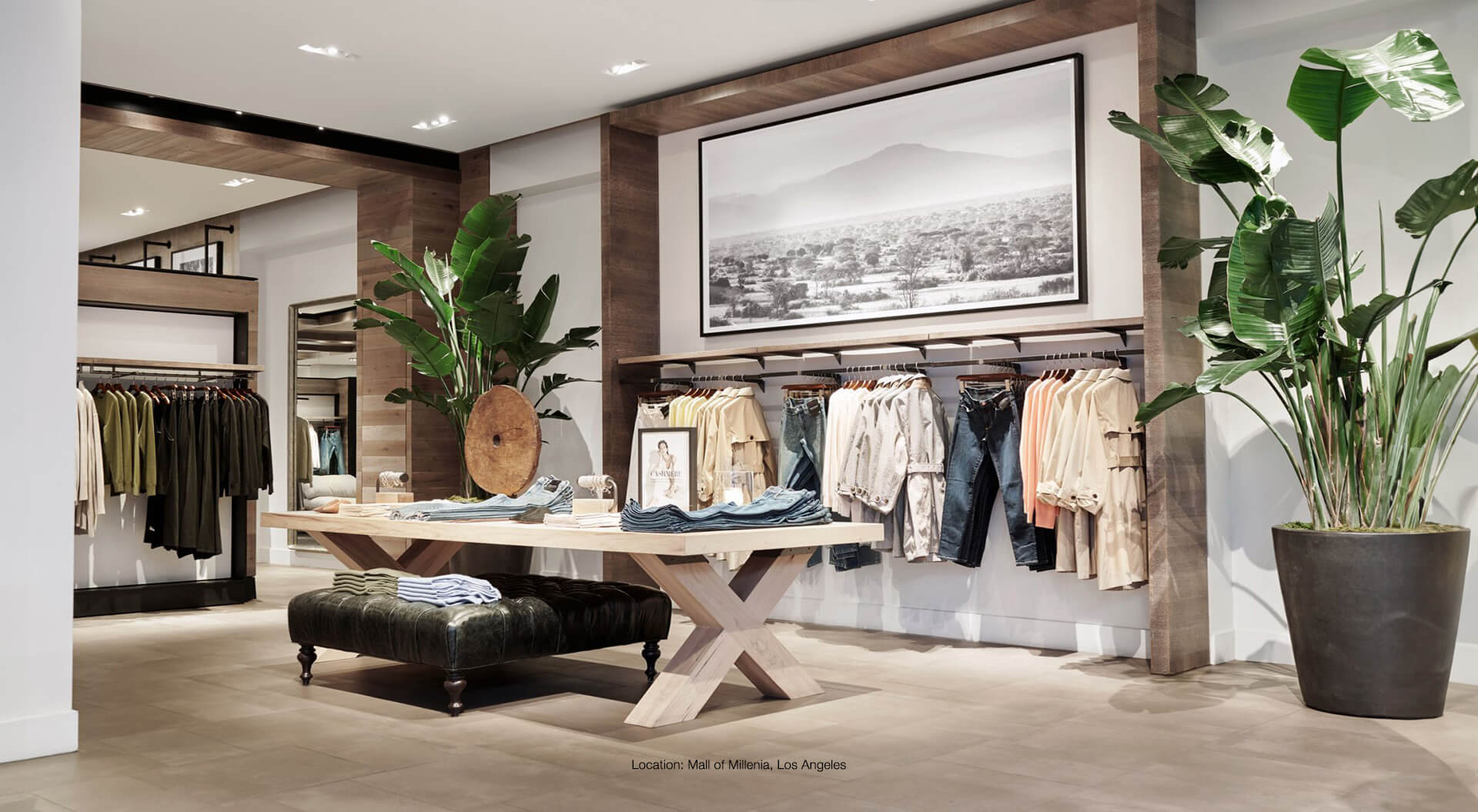
Banana Republic's Mall of Millenia environment demonstrates a different approach, showing how store identity, entrance communication, interior presentation, product zoning and customer experience can work together to express a more sophisticated and aspirational fashion proposition.
These contrasting examples are valuable not because one design approach should be copied, but because they demonstrate how different fashion brands can translate their strategic positioning, customer proposition and visual identity into coherent retail environments.
For CampbellRigg, international benchmarking is a strategic tool for identifying opportunities, understanding alternative approaches and developing differentiated fashion store concepts rather than reproducing existing retail solutions.
Retail Architecture, Planning and Merchandising
A visually impressive fashion flagship can still underperform if customers struggle to navigate the environment or understand the merchandise hierarchy.
Spatial planning therefore needs to balance inspiration with usability.
Entrance visibility, primary and secondary circulation, category zoning, product adjacencies, visual sightlines, focal displays, collection hierarchy, fitting-room locations and service points all contribute to the commercial effectiveness of the store.
Visual merchandising should reinforce this spatial strategy. Fixtures and display systems need to present collections clearly while remaining sufficiently flexible for seasonal changes, new product launches, collaborations and campaigns.
The strongest flagship environments make the relationship between architecture, merchandising and customer behaviour feel natural.
The objective is not maximum merchandise density. It is the right balance between brand expression, product discovery, navigation, inspiration and conversion.
Drive up to 30% ROI improvement using CampbellRigg’s holistic design, category strategy, and efficiency–focused store layouts.
The Flagship as an Innovation Platform
One of the most valuable roles of a flagship is its ability to test ideas before they influence the wider retail network.
A flagship can be used to explore new merchandising systems, customer journeys, service models, digital touchpoints, product-discovery experiences, community spaces and new expressions of the brand.
Customer behaviour can then inform future retail decisions.
This makes the flagship a strategic prototype rather than simply the largest or most expensive store in the network.
The principle is particularly valuable for international fashion retailers. A flagship can establish a recognisable visual language, customer journey, merchandising logic and service model while allowing individual stores to adapt to different locations, footprints and customer profiles.
The flagship therefore becomes a source of learning for the wider estate.
Fashion Store Design: From Concept to Retail Network
The best flagship concepts are designed with the wider retail network in mind.
That does not mean copying the flagship identically across every location. Instead, the flagship should establish adaptable principles covering brand expression, spatial hierarchy, merchandising, visual language, service, digital integration and customer experience.
These principles can subsequently influence high-street stores, shopping-centre locations, urban formats and smaller environments.
This creates a valuable relationship between flagship innovation and scalable retail design: the flagship establishes the strategic benchmark, while other formats adapt the principles to local commercial requirements.
For fashion retailers managing multiple markets, this approach can strengthen brand consistency without eliminating local relevance.
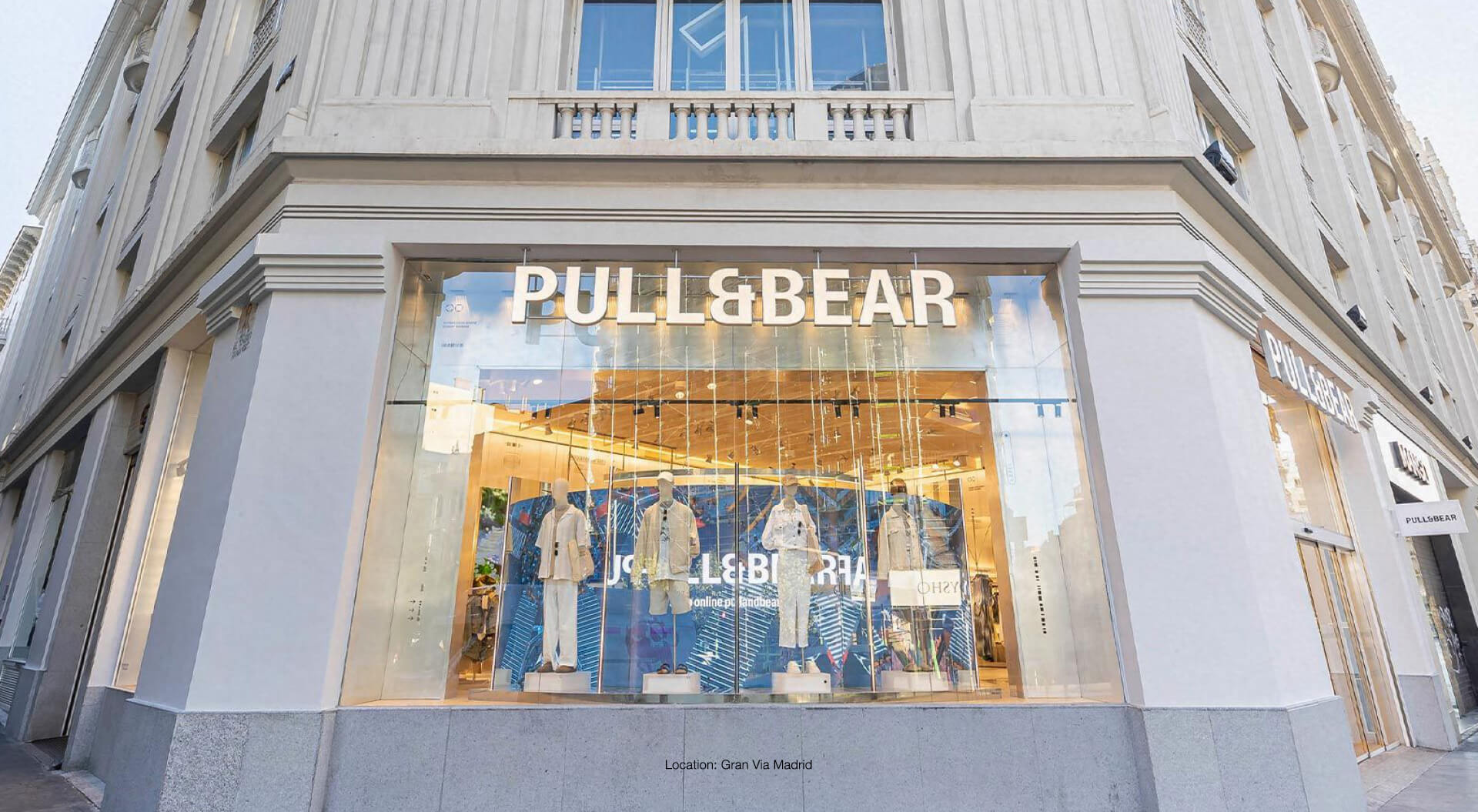
Store Design & Rebranding Trends 2026 2027:
Affluent design-conscious consumers prioritise premium environments, seamless omnichannel journeys, and curated storytelling that enhances emotional connection. Families and mid-market shoppers increasingly favour modular, easy-to-navigate stores that support quick missions while still offering moments of inspiration. Across Europe, tech-enabled shoppers expect real-time stock visibility, smart fitting rooms, and mobile-assisted purchasing.
Sustainability-driven consumers prefer responsibly sourced materials, circular initiatives, and localised cues that express authenticity. Competitive benchmarking shows that top-performing retailers, Zara, COS, Arket, Mango, excel by blending modular formats, cultural storytelling, and experience-led design. For brands aiming to grow market share, investing in flexible store formats, omnichannel integration, and emotionally resonant design is now essential. Retailers must transform stores into strategic assets that increase dwell time, drive loyalty, and amplify brand distinctiveness.
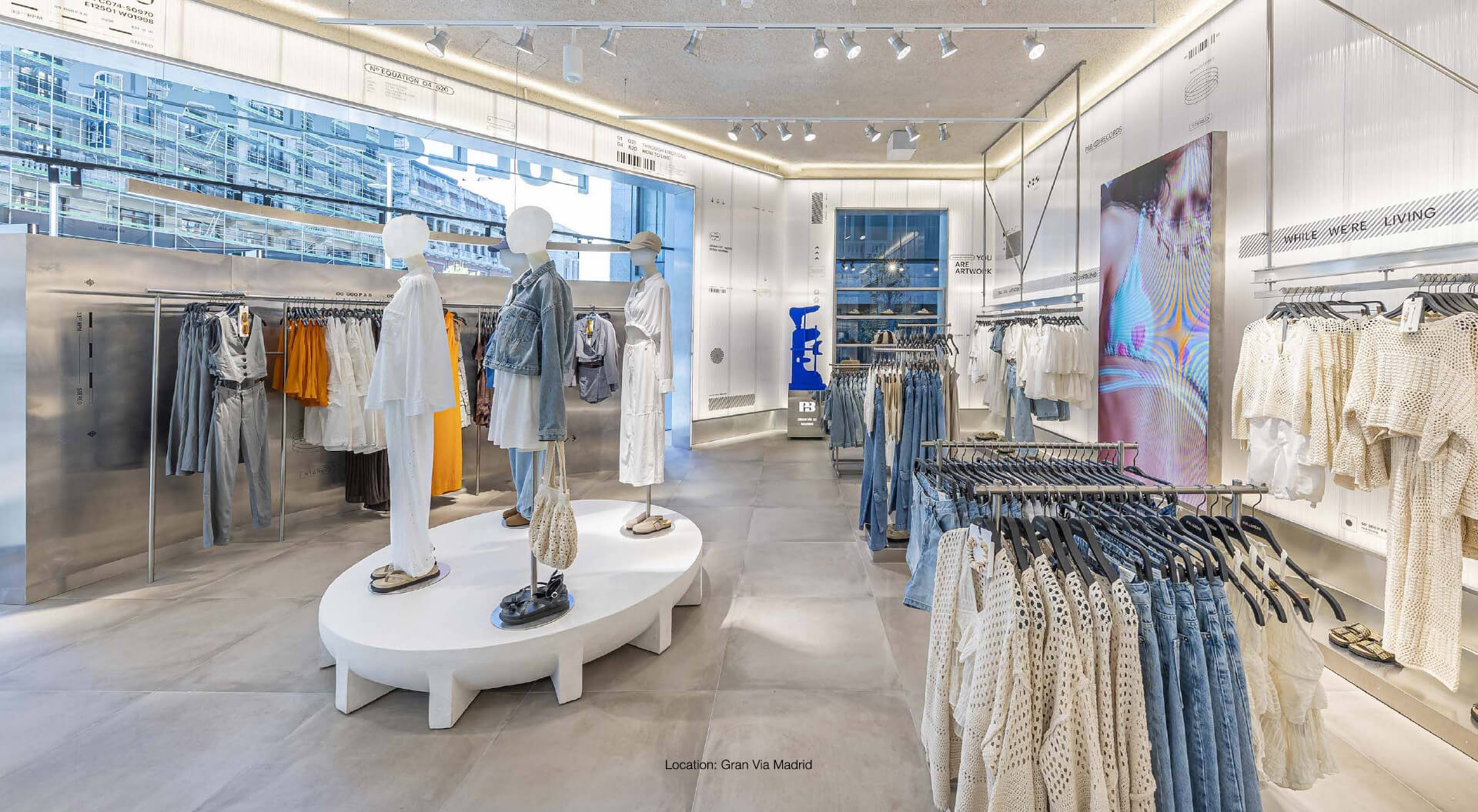
Partner with CampbellRigg to unlock 15% to 30% sales uplifts by using shopper-centric layouts and optimized fashion retail design strategies. Engage customers with immersive environments that tell your brand’s visual story and drive conversion.
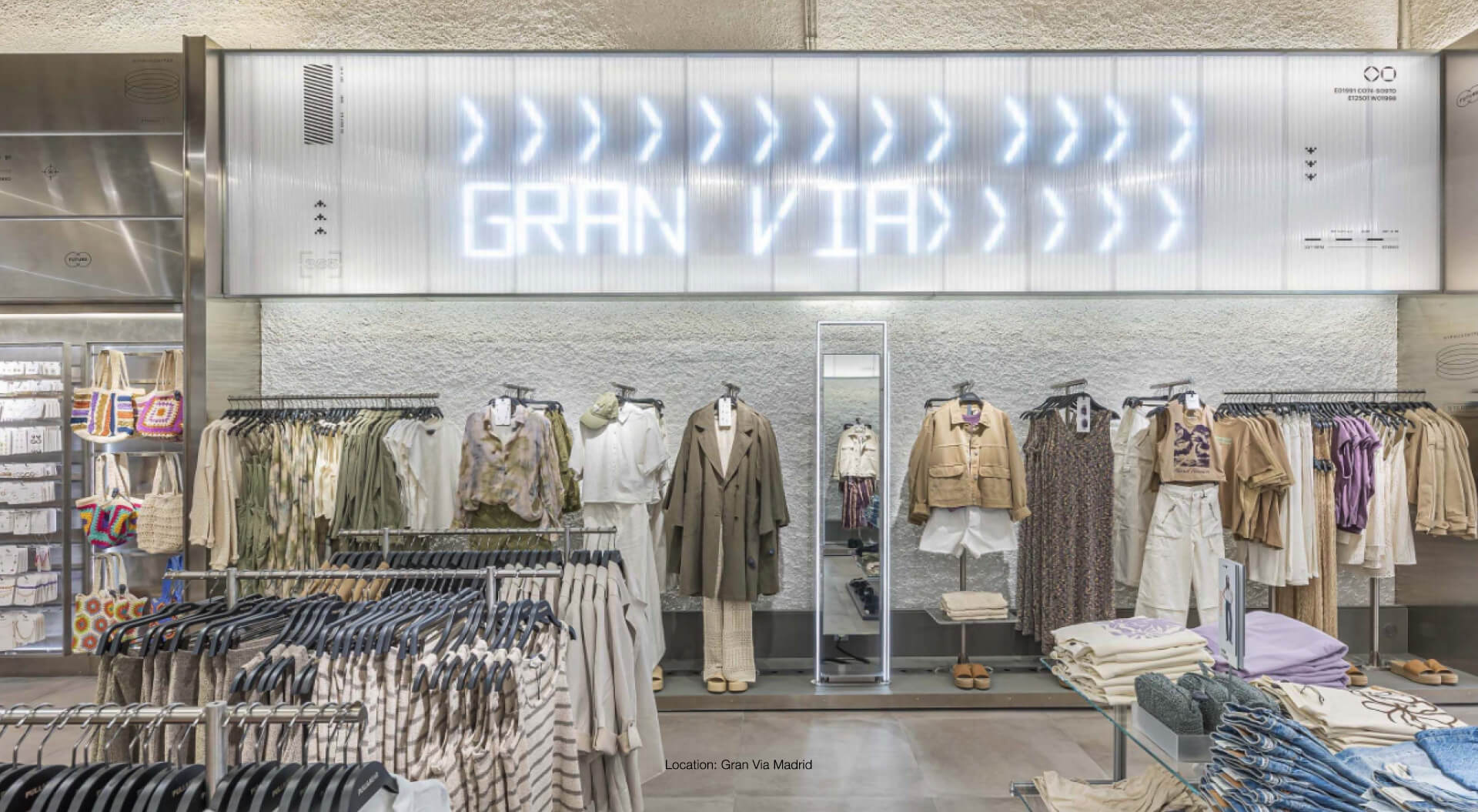
We create a unified design strategy across interiors, branding, and environments that boost sales and brand strength.
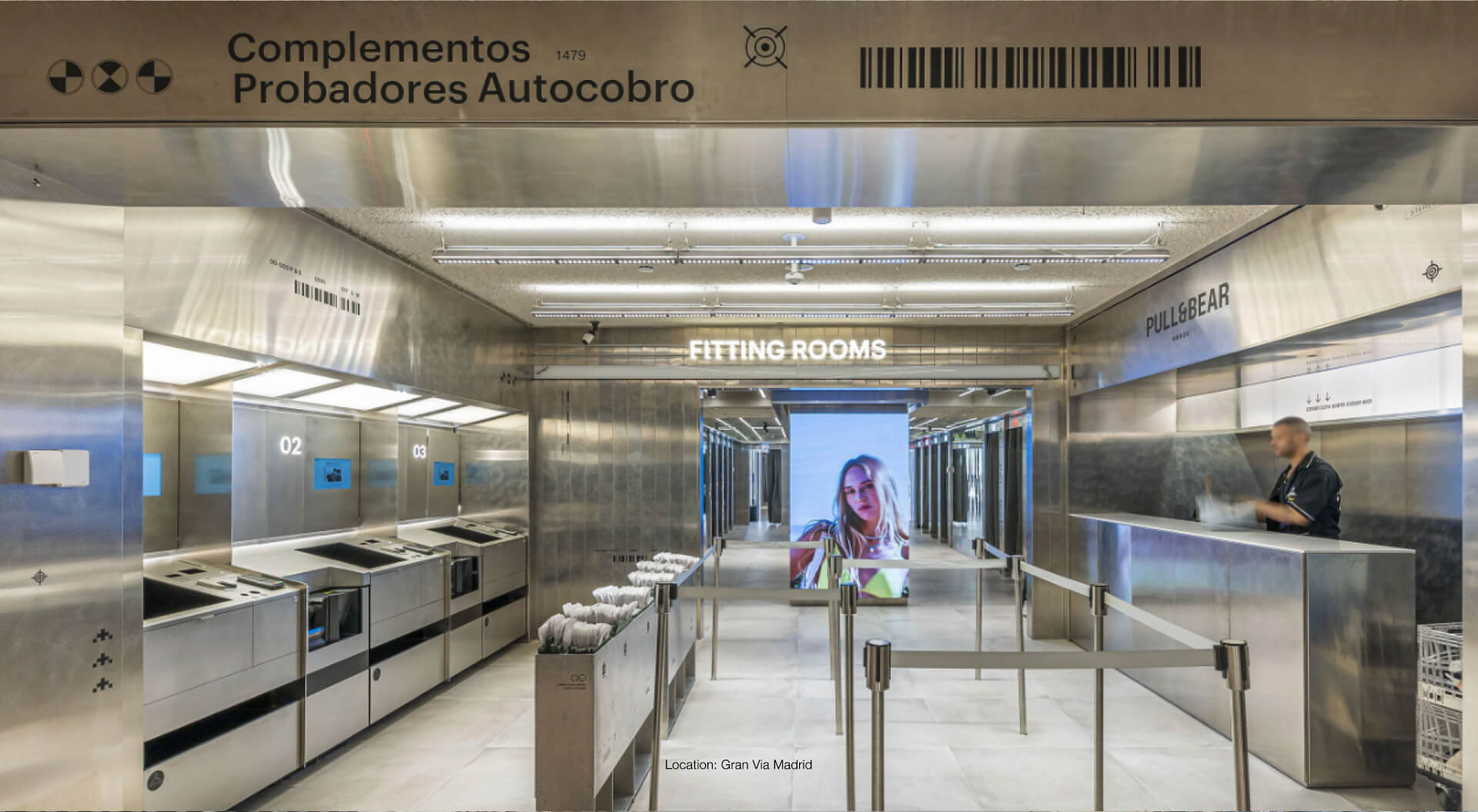
Testimonial: "I am extremely pleased with the outstanding work of Campbell and his team, who helped us create our new presence. I wholeheartedly recommend CampbellRigg." Carlos Criado-Perez, CEO Safeway
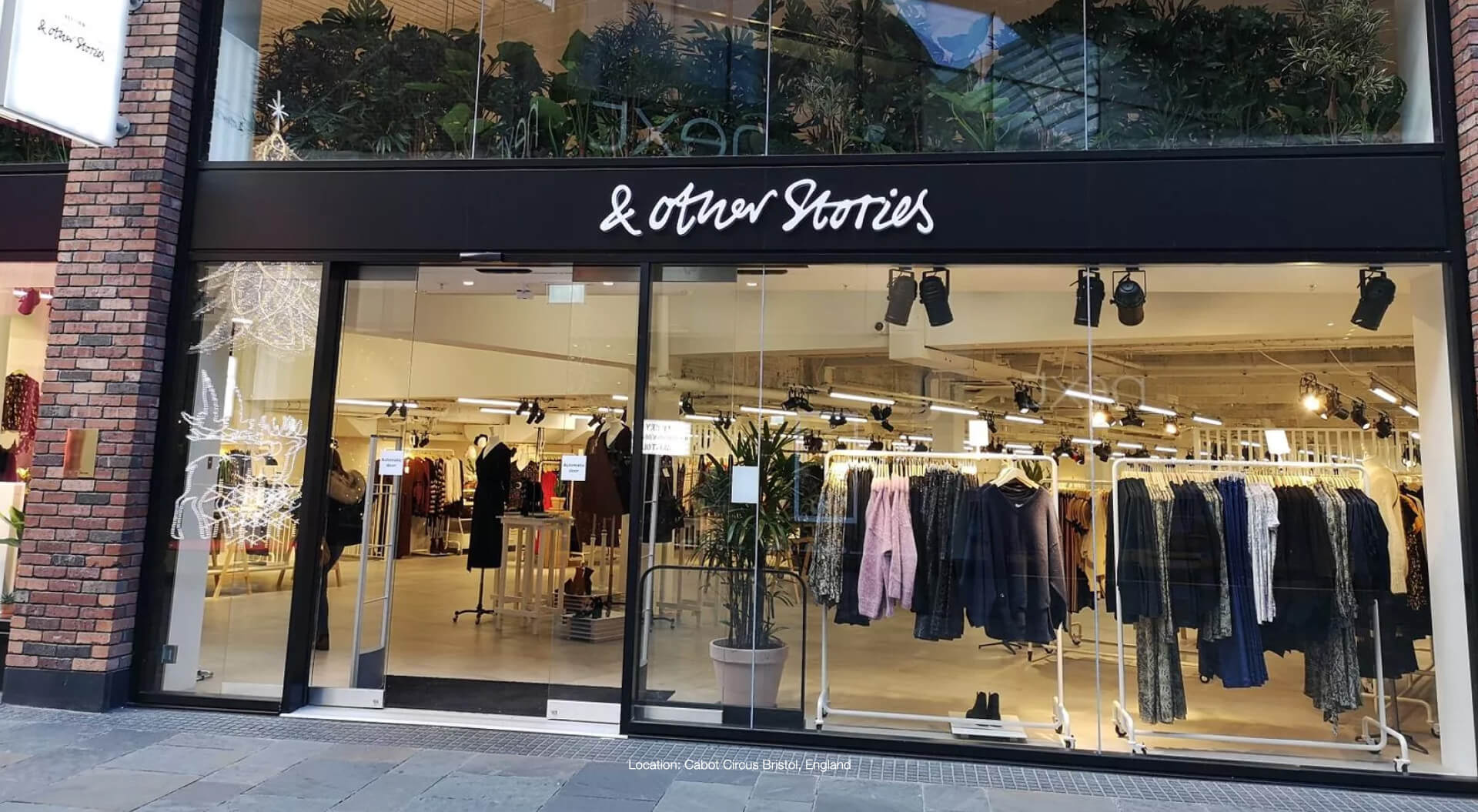
Testimonial: We recommend CampbellRigg as an agency with a unique creative approach. At the same time, the studio team stands out for its attention to detail and responsibility in completing assigned tasks.
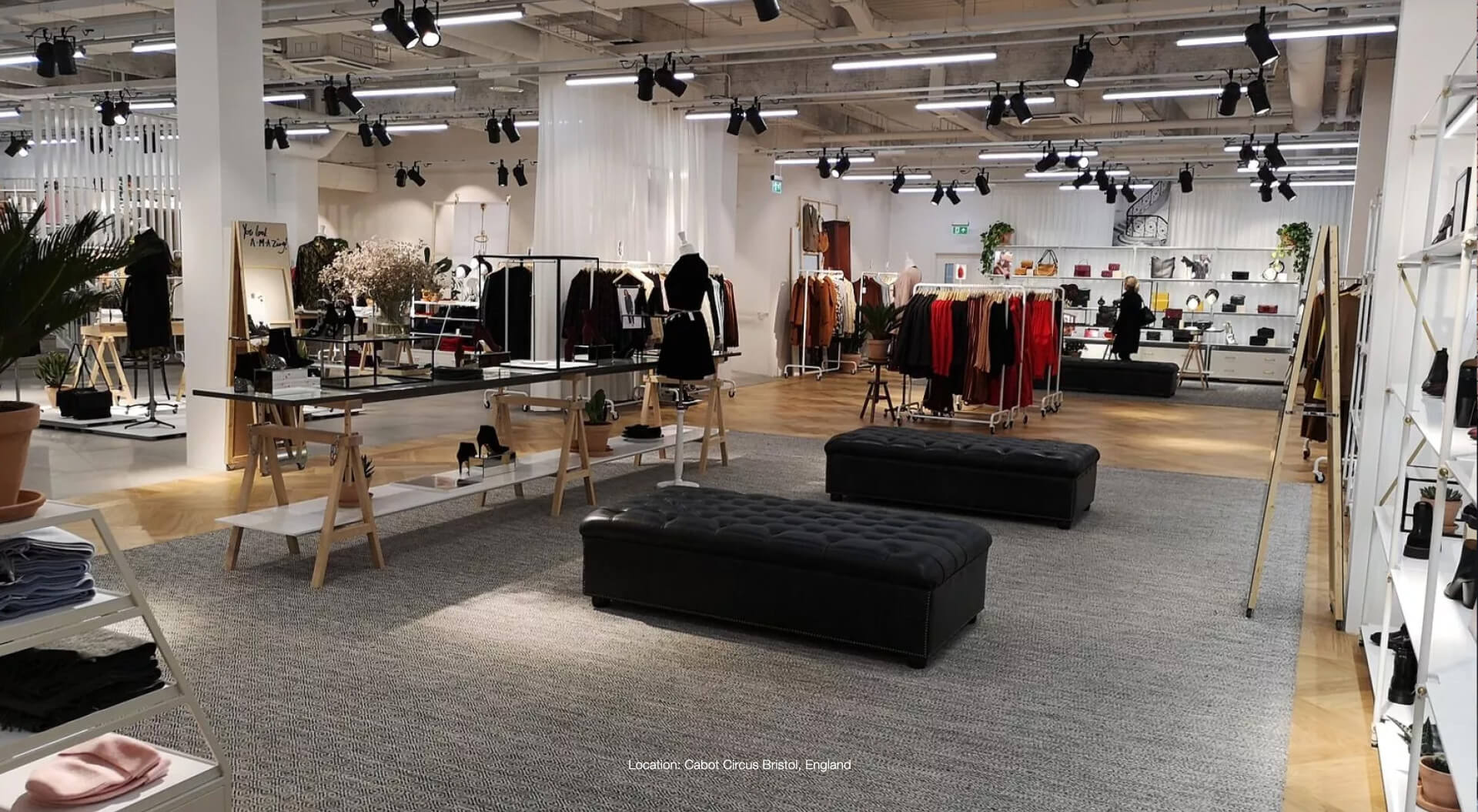
The agency focused on the design of the store interior, lighting system, and visual merchandising. As a result, store traffic increased by 11.3%, conversion rate by 9.9%, average check by 8.4%, and revenue by 32.6%. Chief Executive Officer of the Detsky Mir Group, Vladimir Chirakhov
Your Store Is Your Stage and Your Brand Is the Performance
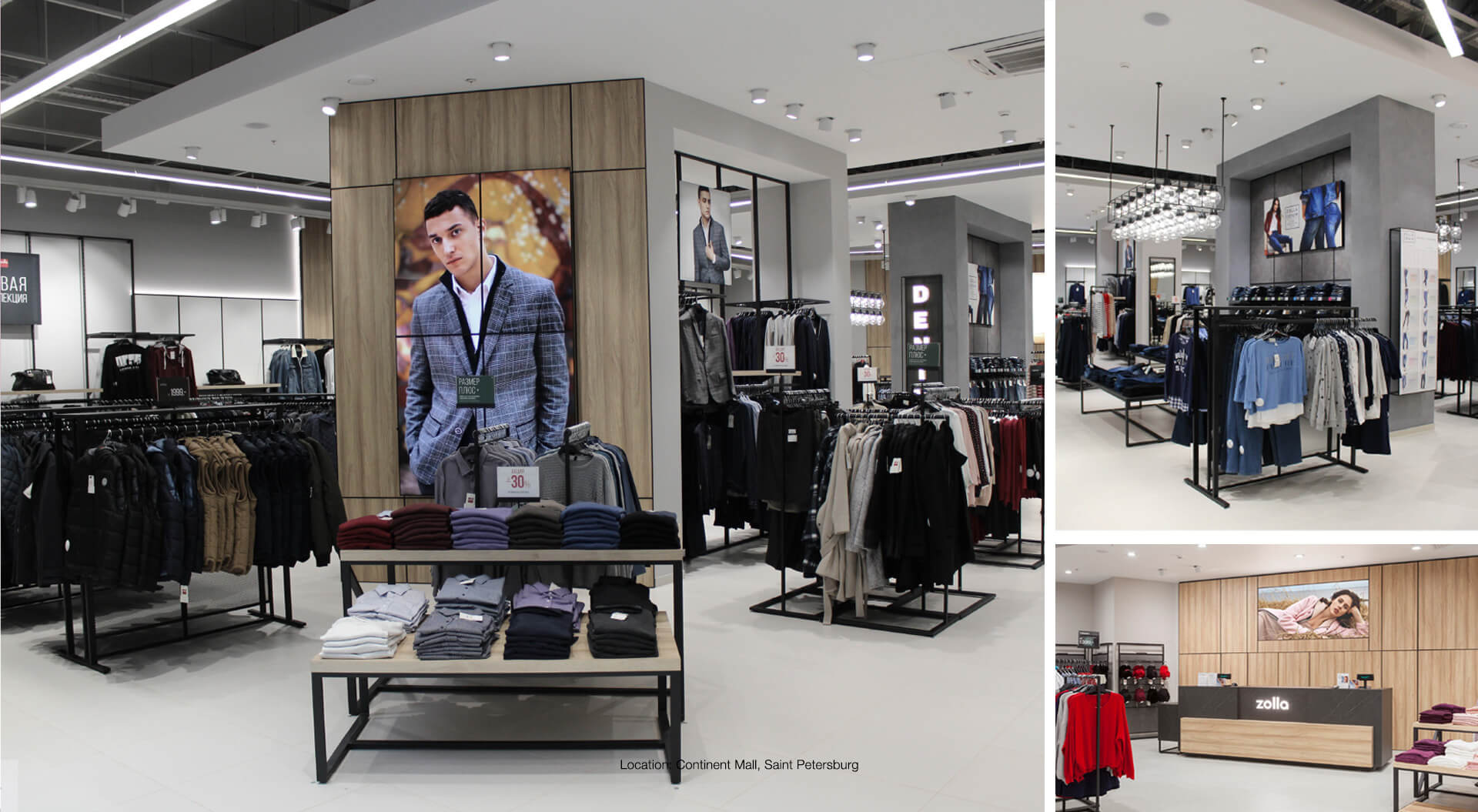
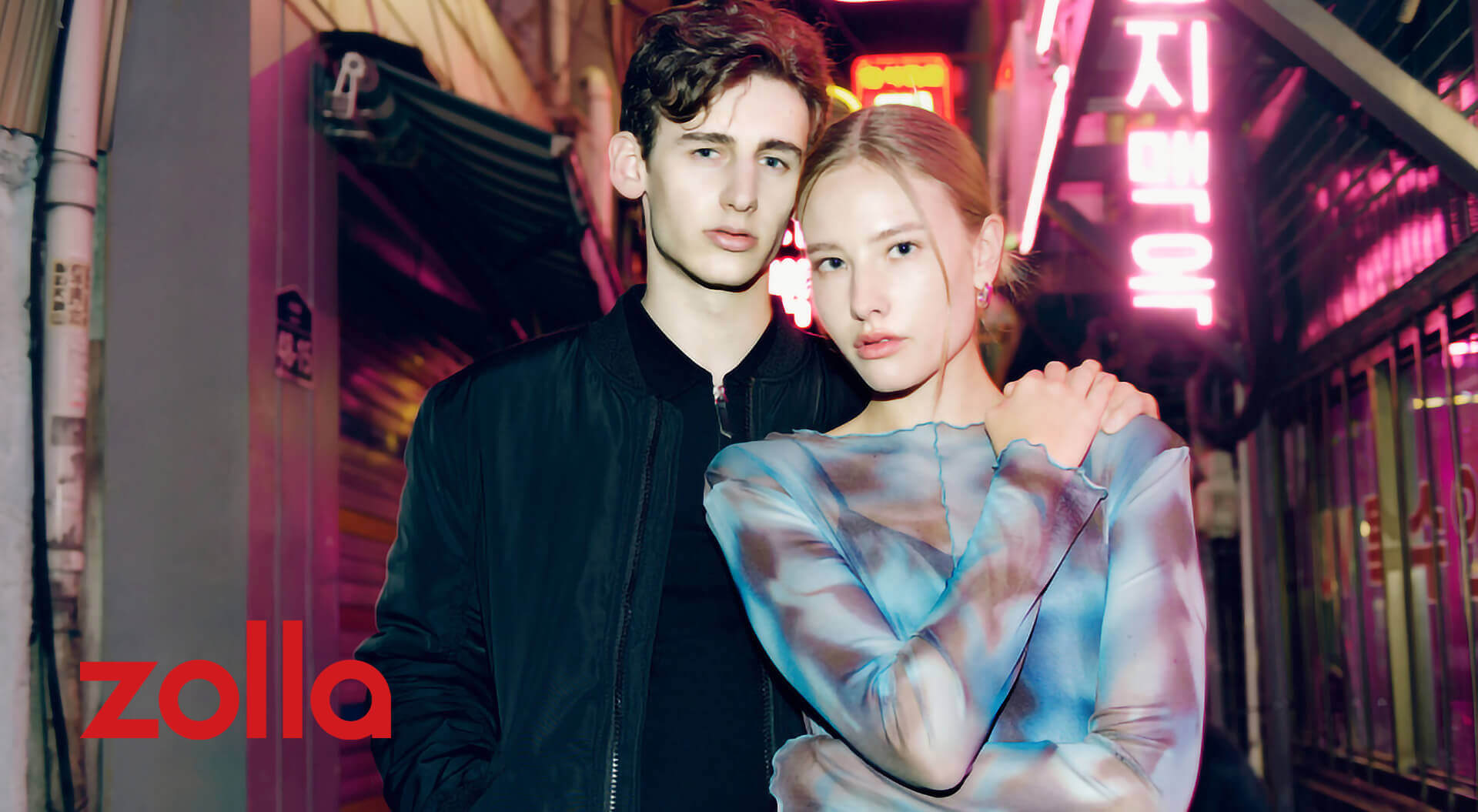
When the management team at Zolla Fashion Retail, a Russian fashion chain with more than 450 stores, approached CampbellRigg to propose the redevelopment of its store formats, we recommended beginning with a comprehensive benchmarking study before moving into concept development.
The fashion retail landscape is continually evolving, driven by changing customer expectations, accelerated digital adoption and growing demand for more engaging brand experiences. Younger urban consumers, particularly Gen Z and Millennials, increasingly expect fashion retailers to demonstrate cultural relevance, sustainability, personalisation and more intuitive product discovery.
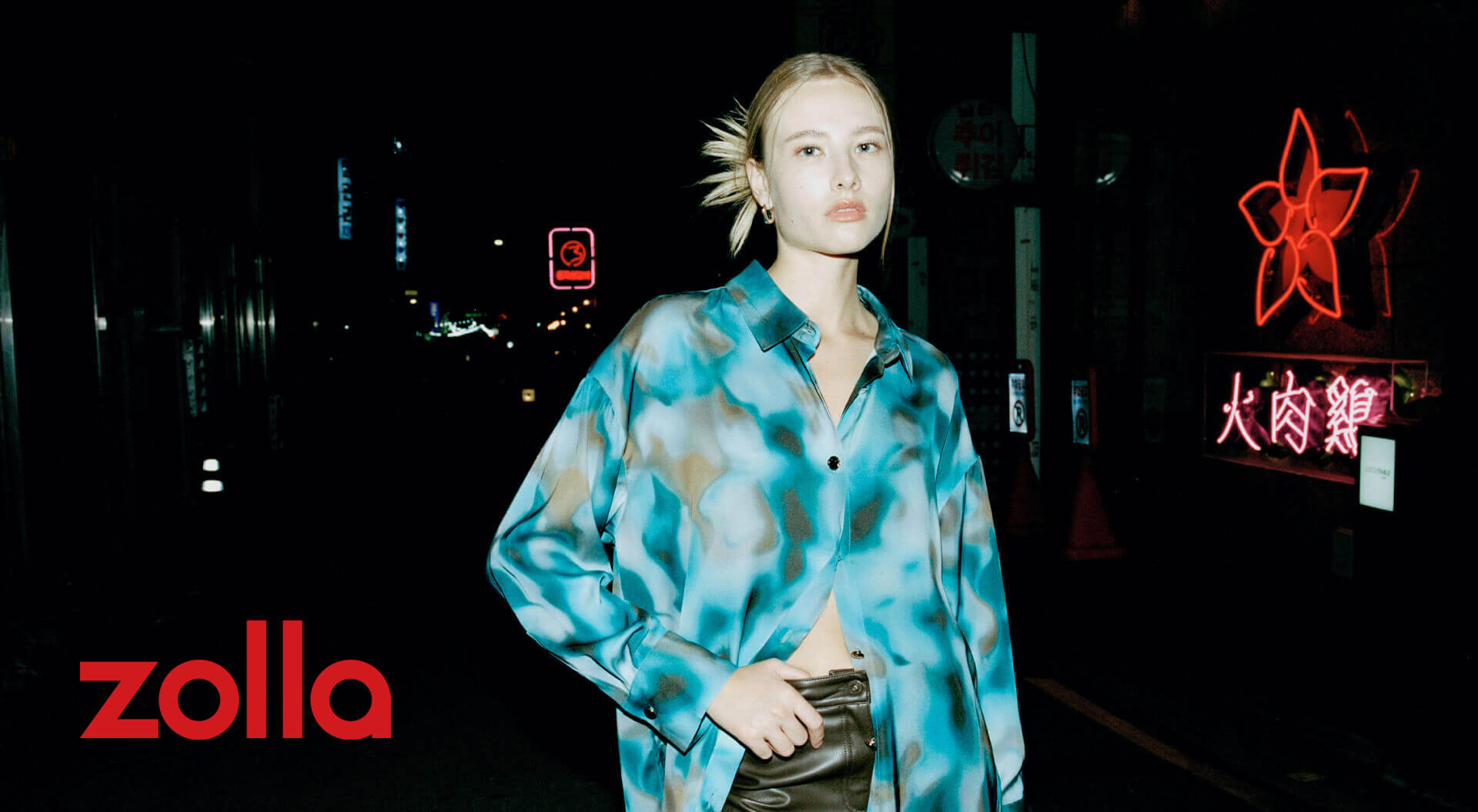
Zolla: Benchmarking Before Concept Development
Zolla demonstrates the strategic value of benchmarking before developing new fashion store formats. Rather than moving directly into visual design, CampbellRigg recommended analysing the key issues, trends and competitive approaches shaping the international fashion retail market.
This approach recognises that effective flagship fashion store design should begin with strategy, not decoration. Understanding customer expectations, competitor formats, emerging technologies, merchandising approaches and opportunities for differentiation provides a stronger foundation for concept development.
Benchmarking can reveal how leading fashion retailers use space, customer journeys, visual merchandising, technology and brand communication to create distinctive retail experiences. These insights can then be translated into a store concept that is commercially relevant to the brand and its customers, rather than simply visually distinctive.
For Zolla, the objective was therefore not to replicate another retailer's environment, but to use international retail intelligence as a foundation for developing a differentiated and scalable store-format strategy.
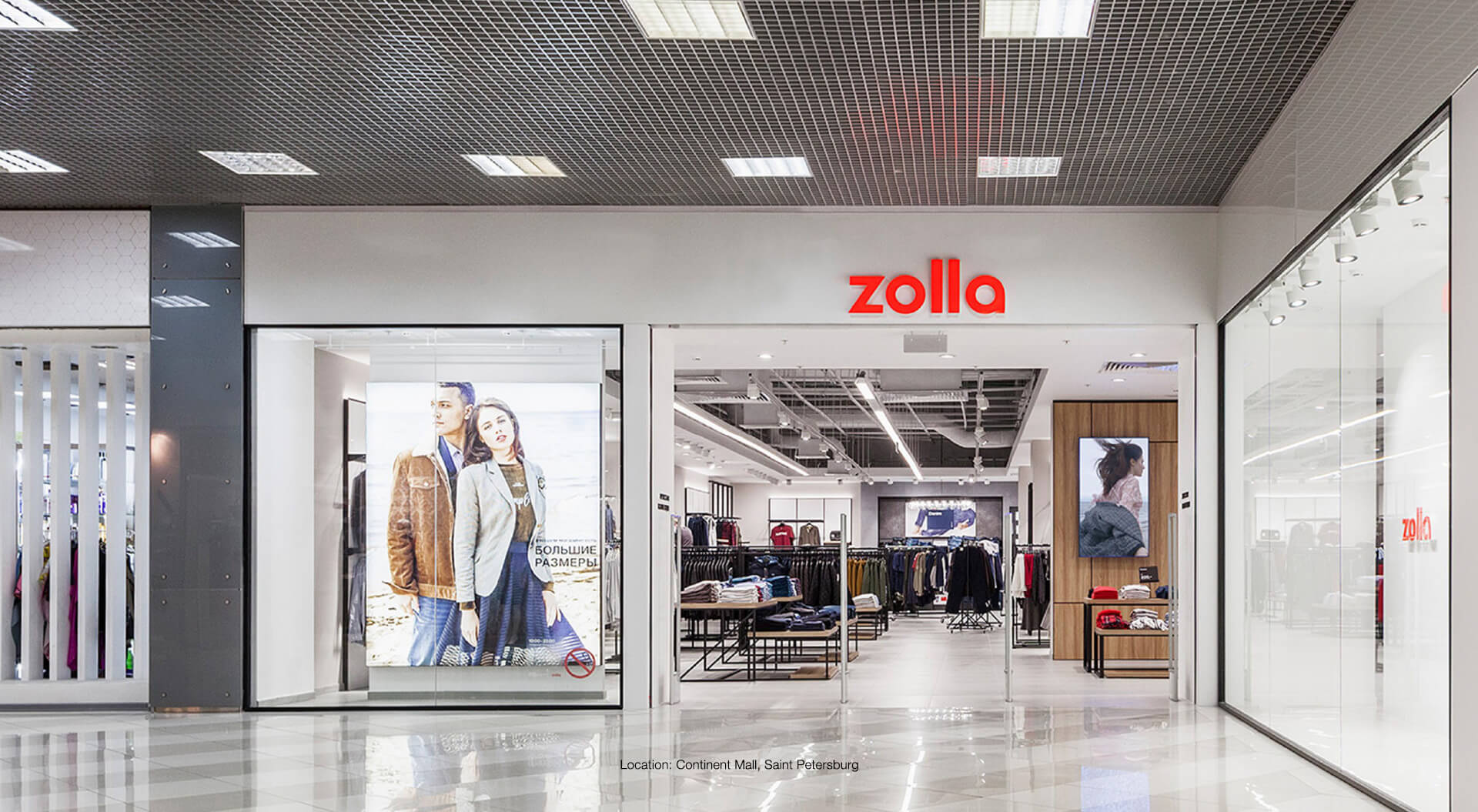
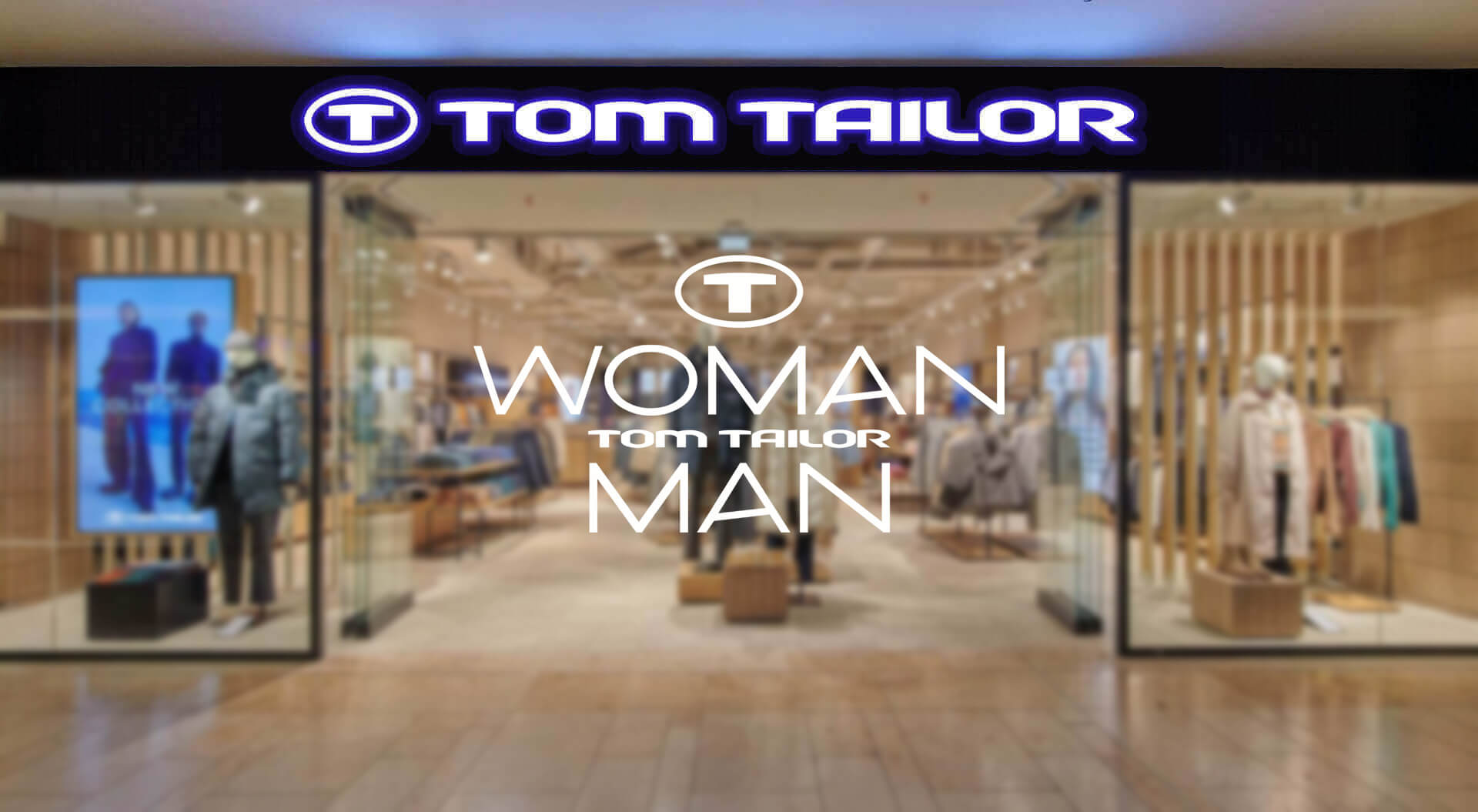
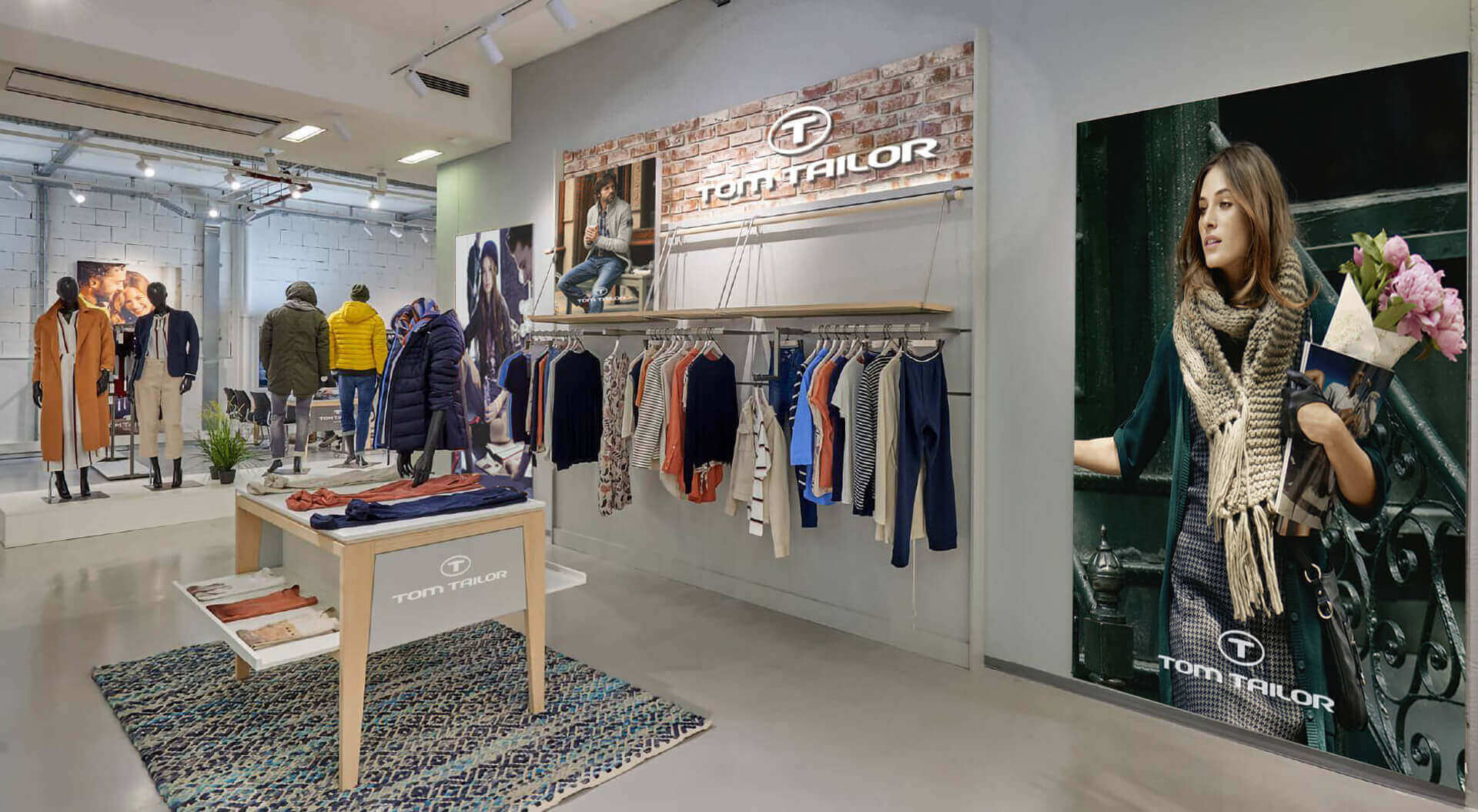
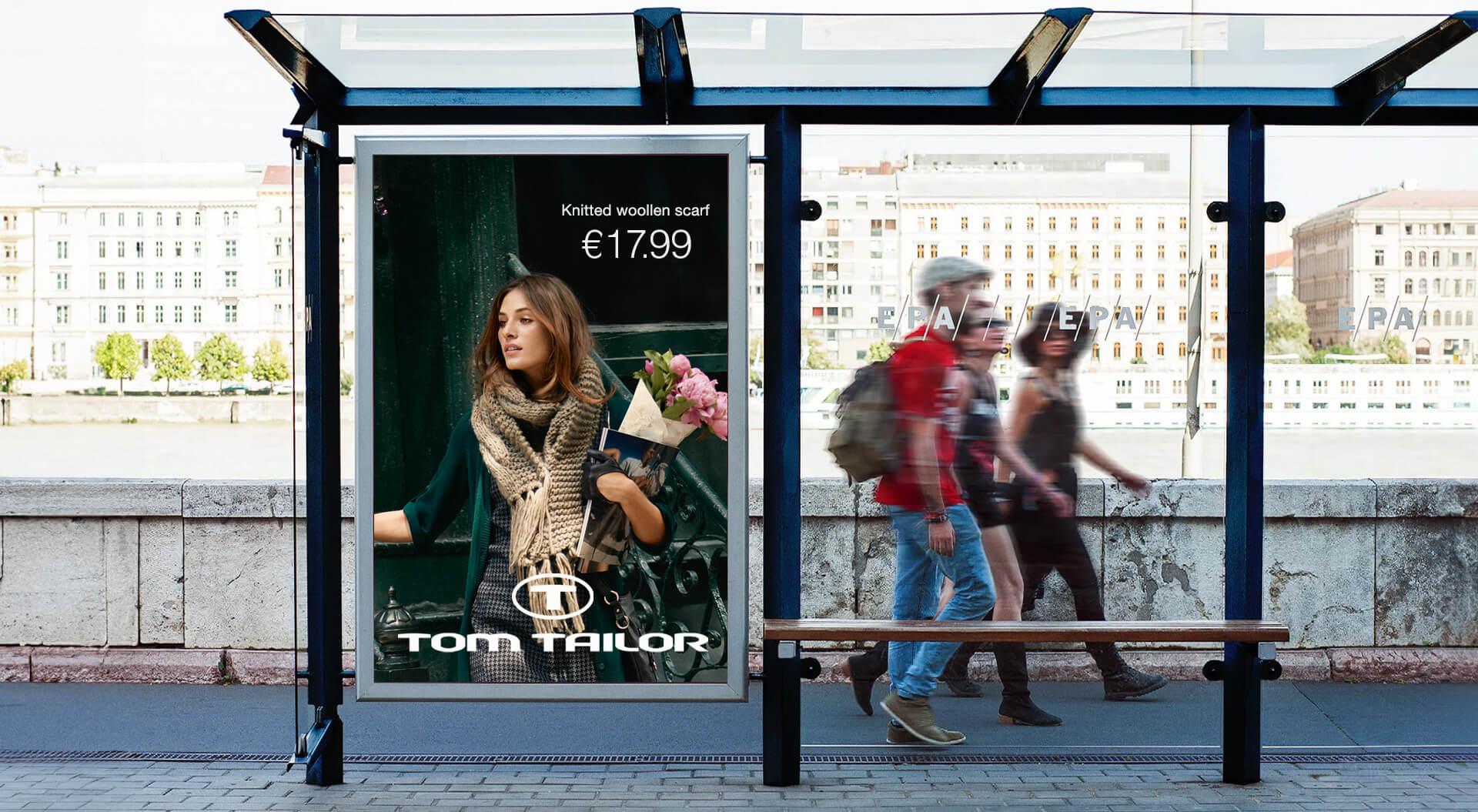
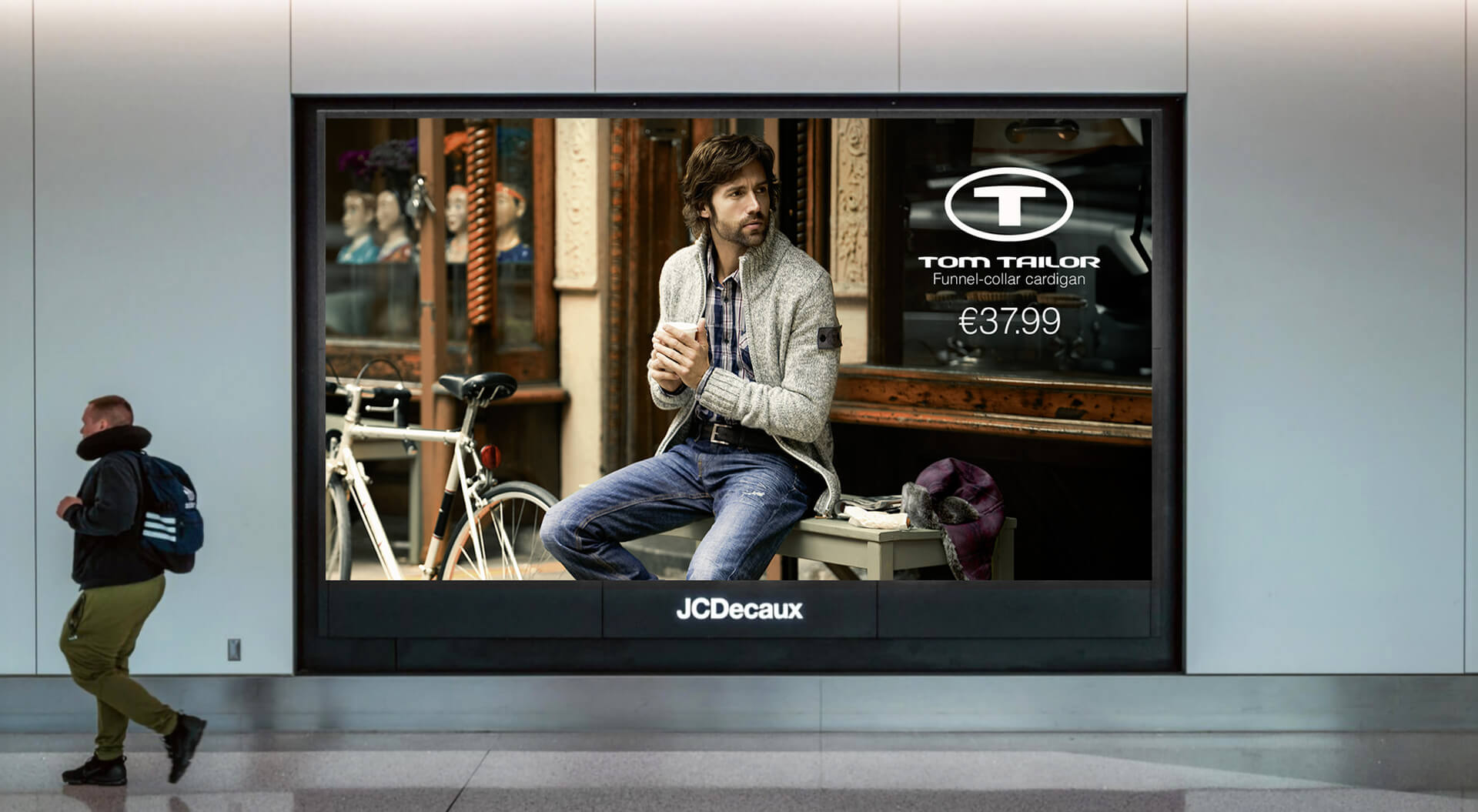
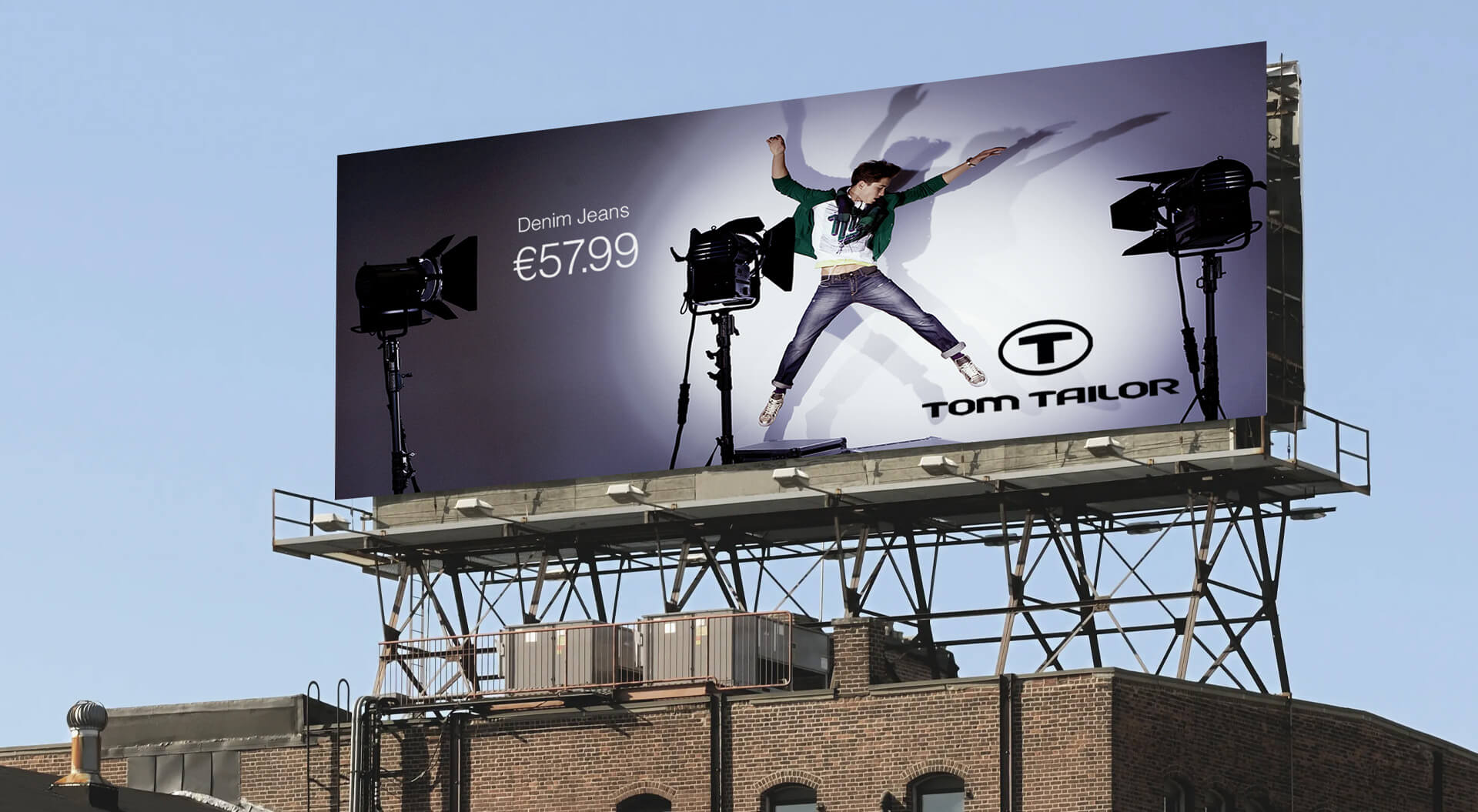
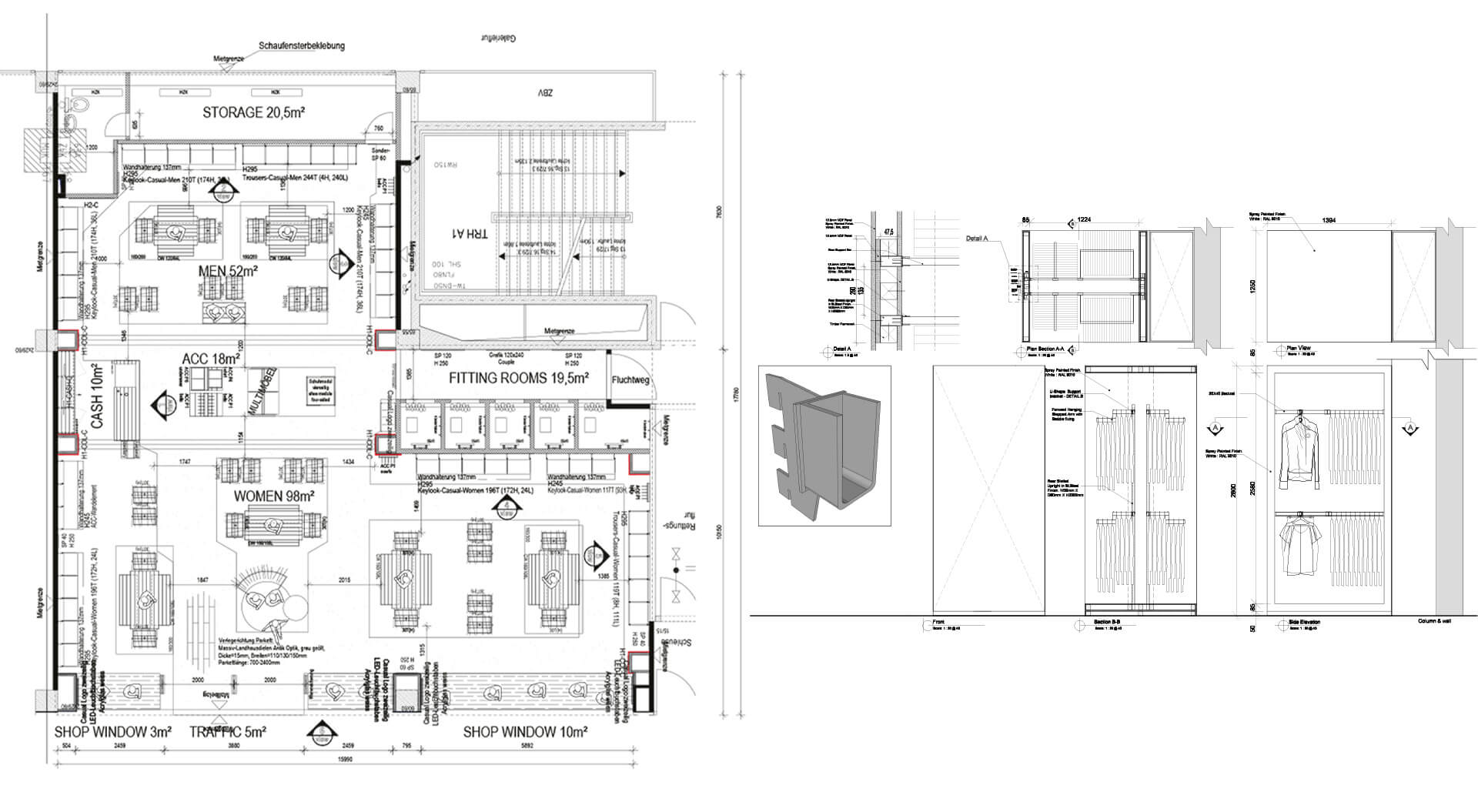
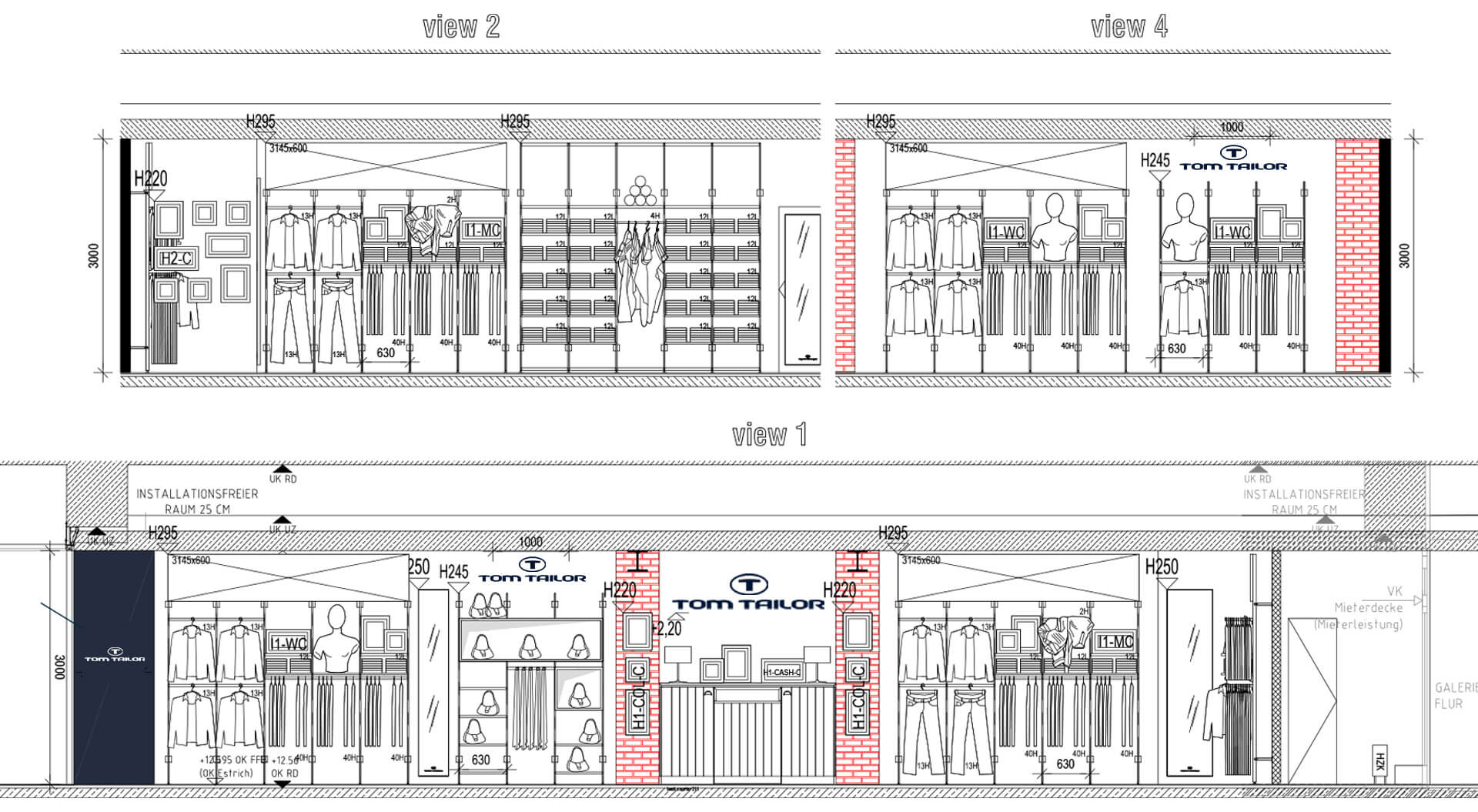
Tom Tailor's management team collaborated with CampbellRigg to redefine its brand identity and translate the strategy into a more compelling in-store experience. As illustrated by the images above and below, the resulting concept combines consistent brand expression with shopper-focused layouts, stronger product presentation and optimised merchandising, with a target of achieving a 20%+ sales uplift.
Translating Brand Identity into Retail
Tom Tailor demonstrates how fashion brand identity can be translated into a coherent physical retail environment.
The project shows why a successful fashion store concept requires more than applying a visual identity to an existing interior. Brand strategy needs to influence signage, merchandising, spatial hierarchy, fixtures, graphics, navigation and the overall customer experience.
CampbellRigg's work with Tom Tailor brought brand identity and retail design together to create a more consistent physical expression.
The project also demonstrates an important flagship-design principle: a strong store concept should be distinctive enough to communicate the brand while establishing practical design principles that can influence other locations.
The commercial objective is a retail environment that is easier to recognise, navigate and shop, supported by shopper-focused layouts and optimised merchandising.

Flagship Fashion Store Design Trends
The future of flagship fashion retail is being shaped by several connected priorities.
- Brand-led destinations: Flagships increasingly need to provide a distinctive reason to visit beyond simply accessing products.
- Customer-led planning: Layouts must make discovery, navigation, fitting and purchasing intuitive while creating opportunities for exploration.
- Digital integration: Technology should connect physical and digital journeys where it improves convenience, information, personalisation or fulfilment.
- Flexible merchandising: Fixtures and display systems need to support collections, seasonal campaigns, collaborations and changing customer missions.
- Cultural relevance: Flagship environments can incorporate locally relevant design cues, community activity and experiences that strengthen authenticity.
- Sustainable design: Material selection, longevity, adaptability and responsible design decisions increasingly influence the development of retail environments.
The important distinction is that these trends should support flagship strategy rather than become the subject of the page. Experiential fashion retail, modular store systems and fashion retail rebranding each require their own specialist design approach.
Why Choose CampbellRigg for Flagship Fashion Store Design?
CampbellRigg combines retail strategy, brand identity, flagship concept development, spatial planning, interior design, visual merchandising and retail communications within one multidisciplinary process.
Our approach is designed to connect creativity with commercial objectives, from the initial strategic brief through concept development, design execution and implementation.
We bring international retail experience together with local market insight to develop distinctive flagship environments that can also provide practical principles for wider store networks.
Whether developing a flagship fashion store, high-street format, shopping-centre environment or wider retail network, we manage projects of different scales efficiently and consistently.
Our process is straightforward:
- Book a free consultation call.
- Co-create a bespoke design brief based on your commercial objectives.
- Develop and execute the creative strategy rapidly.
- Measure the outcome through stronger customer engagement, sales, loyalty and market opportunity.
The objective is not simply to create an impressive store. It is to create a flagship fashion retail environment that strengthens brand identity, improves customer experience, supports commercial performance and provides a strategic benchmark for the future.
Schedule your consultation today and receive a free quote.
Cost-Effective Excellence:
Our pricing structure is highly competitive, offering exceptional value without compromising on quality or creativity.
Rapid Execution:
We move fast. From concept to implementation, our agile team ensures your project is delivered on time and to the highest standards.
Multidisciplinary Expertise:
Our team brings together seasoned brand strategists, architects, interior designers, and graphic designers, collaborating to create seamless, end-to-end brand environments.
Global Reach, Local Insight:
With successful projects delivered across Europe, the Middle East, and Asia, we combine international experience with local market understanding.
Scalable Project Delivery:
Whether it's a flagship technology store, an urban network or mall micro-branches, we manage and execute projects of all sizes, efficiently and effectively.
Proven Track Record:
Our designs evolve branch networks from purely transactional spaces into experiential, relationship-focused brand environments, enhancing engagement, elevating customer experience, and driving tangible business results.
Full-Service Creative Agency:
From rebranding and marketing campaigns to spatial design and rollout, we provide an integrated service tailored to your goals.