Noticias y Opiniones
Los agentes de IA transforman el sector minorista de las telecomunicaciones.
Cómo el agentic commerce está convirtiendo las tiendas de telecomunicaciones en centros de experiencia
Los agentes de IA están cambiando la forma en que los consumidores descubren, comparan y compran tecnología. Para las marcas de telecomunicaciones, el cambio puede ser mucho más profundo que una nueva herramienta digital: puede transformar por completo el papel de la tienda física.
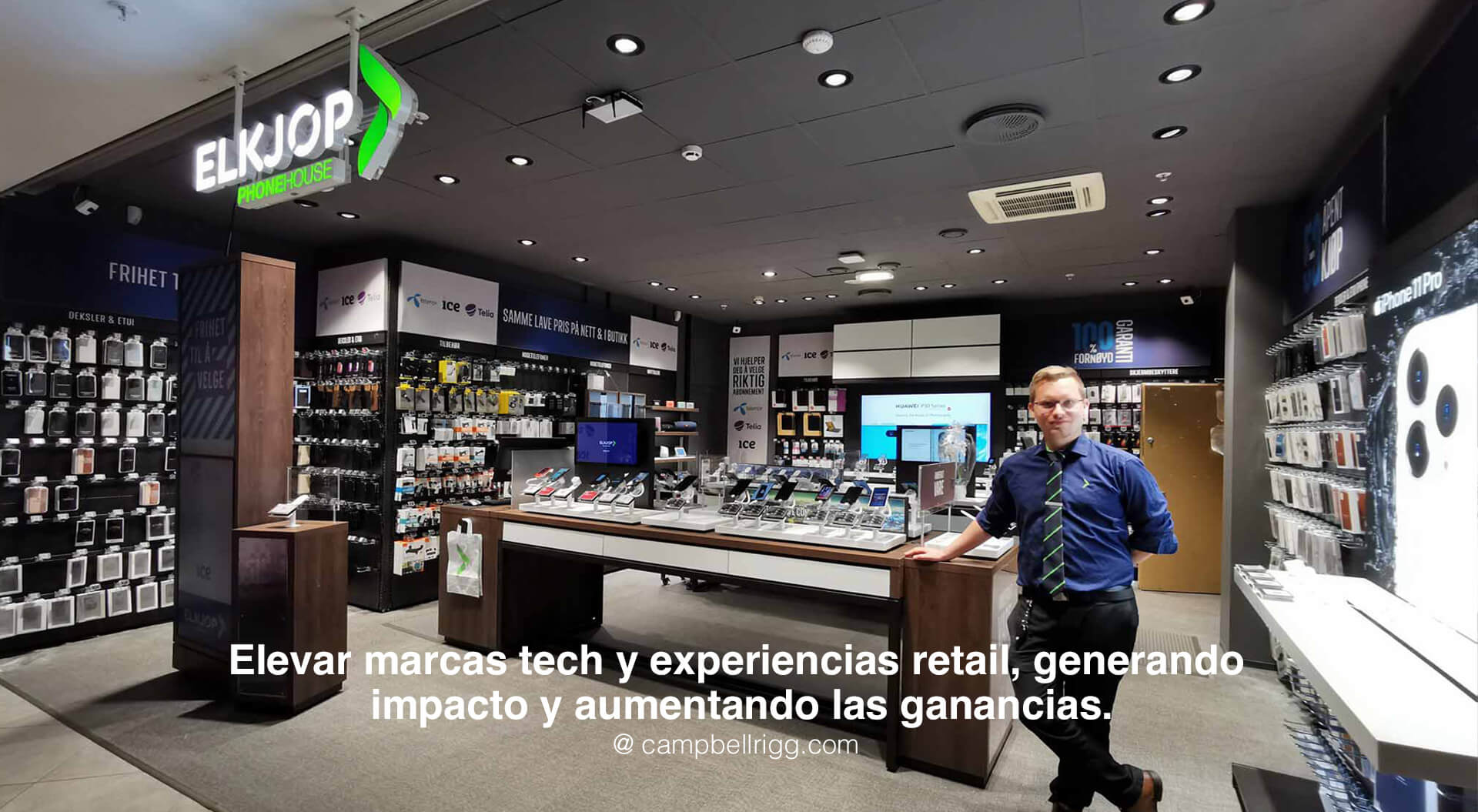
La tienda tradicional ha estado diseñada alrededor de smartphones, tarifas, accesorios y contratos. Pero si un agente de IA puede comprender las necesidades del cliente, comparar productos, recomendar soluciones y ayudar a iniciar o completar una compra, la tienda ya no necesita ser principalmente un lugar para seleccionar productos.

Debe convertirse en un lugar para experimentar, comprender y confiar en la tecnología.
El nuevo modelo es: IA para descubrir → digital para comparar → tienda para experimentar → experto para asesorar → ecosistema para conectar → IA para continuar la relación. La consecuencia es clara: las marcas de telecomunicaciones necesitan pasar de salesrooms a experience hubs.
¿Qué es el agentic commerce?
El agentic commerce, o comercio agéntico, describe un modelo emergente en el que agentes de IA pueden ayudar a los consumidores a descubrir productos, comparar alternativas y realizar determinadas tareas de compra en su nombre.
A diferencia de una búsqueda tradicional, un agente puede interpretar las necesidades y preferencias del consumidor y participar en diferentes etapas del recorrido de compra.
Un cliente de telecomunicaciones podría preguntar:
- ¿Qué smartphone es mejor para mi estilo de vida?
- ¿Qué tarifa ofrece la mejor relación calidad-precio?
- ¿Qué teléfono funciona mejor con mis dispositivos actuales?
- ¿Necesito realmente actualizar mi smartphone?
- ¿Qué wearable es compatible con mi ecosistema?
- ¿Puedes ayudarme a realizar la compra?
Esto modifica el punto de partida del customer journey.
Antes: Tienda → vendedor → producto → contrato
Nuevo modelo: IA → descubrimiento → recomendación → comparación → experiencia física → asesoramiento → compra → ecosistema conectado → servicio posventa
Google Cloud identifica precisamente esta transición hacia un comercio en el que los agentes pueden realizar tareas de compra y crear una nueva “shelf” digital invisible para las marcas.
Los agentes de IA pueden cambiar el papel de la tienda
La adopción de agentes de IA está avanzando rápidamente. Una investigación de CI&T publicada en julio de 2026 encontró que el 68% de los consumidores encuestados en Reino Unido e Irlanda ya había utilizado un agente de IA durante sus compras, mientras que el 86% lo había utilizado o estaba abierto a hacerlo.
Para las marcas de telecomunicaciones, esto presenta una amenaza y una oportunidad.
Si la función principal de una tienda es ayudar a los clientes a seleccionar productos, una parte creciente de esa función puede trasladarse al entorno digital. Pero si la tienda ofrece experiencias que una interfaz de IA no puede reproducir, su valor puede aumentar.
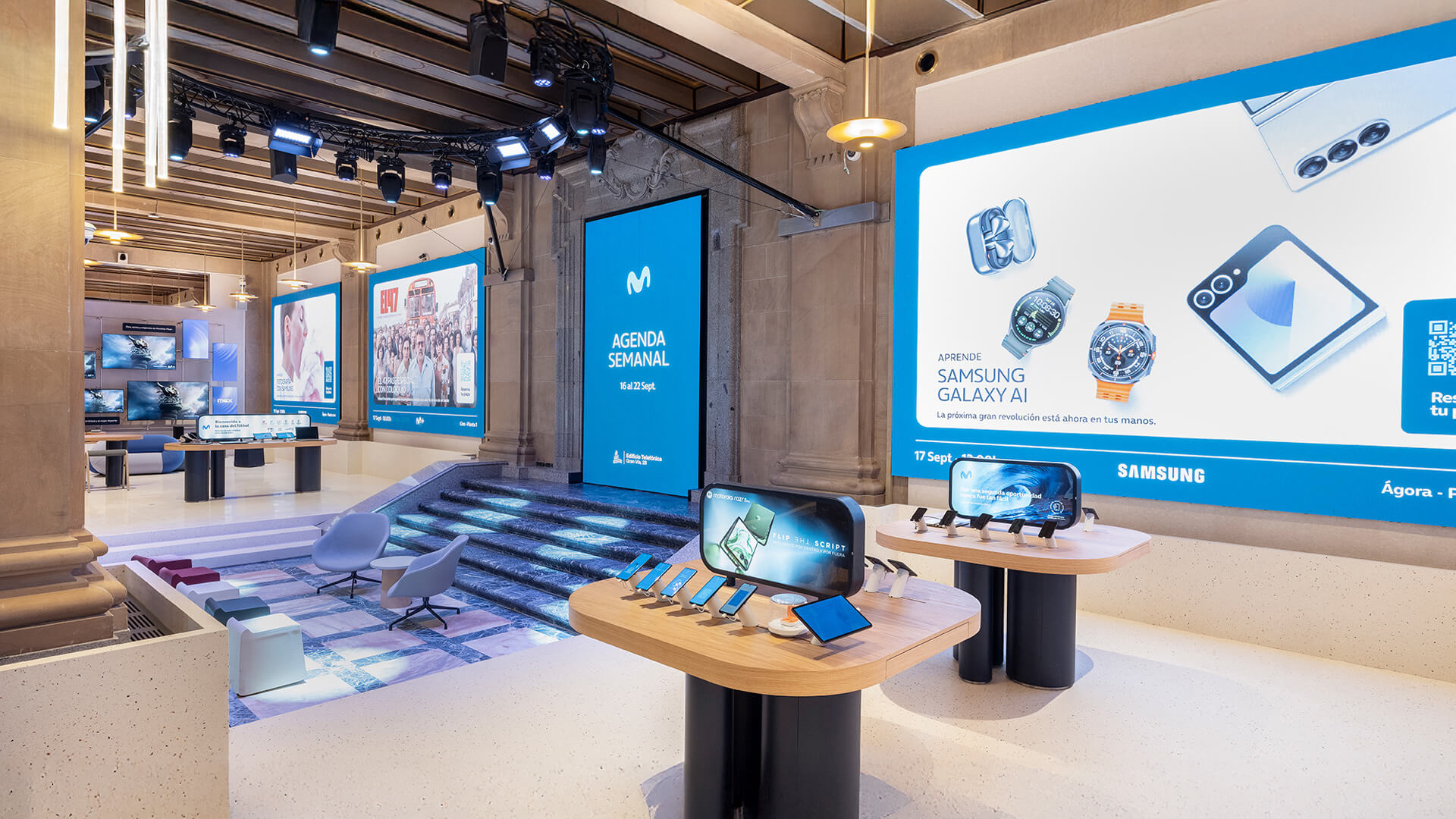
La tienda de próxima generación debe centrarse en:
Demostración.
Asesoramiento.
Confianza.
Interacción.
Descubrimiento.
Comunidad.
Experiencias conectadas.
La pregunta deja de ser: “¿Qué smartphone quieres?”
Y pasa a ser: “¿Cómo quieres que la tecnología mejore tu vida?”
De salesroom a telecom experience hub
La tienda tradicional suele estar organizada por categorías de producto:
Smartphones | Tarifas | Accesorios | Atención al cliente
Una tienda orientada a la experiencia puede organizarse alrededor de las necesidades del consumidor:
Connected Living | Entretenimiento | Trabajo | Bienestar | Smart Home | Movilidad | IA
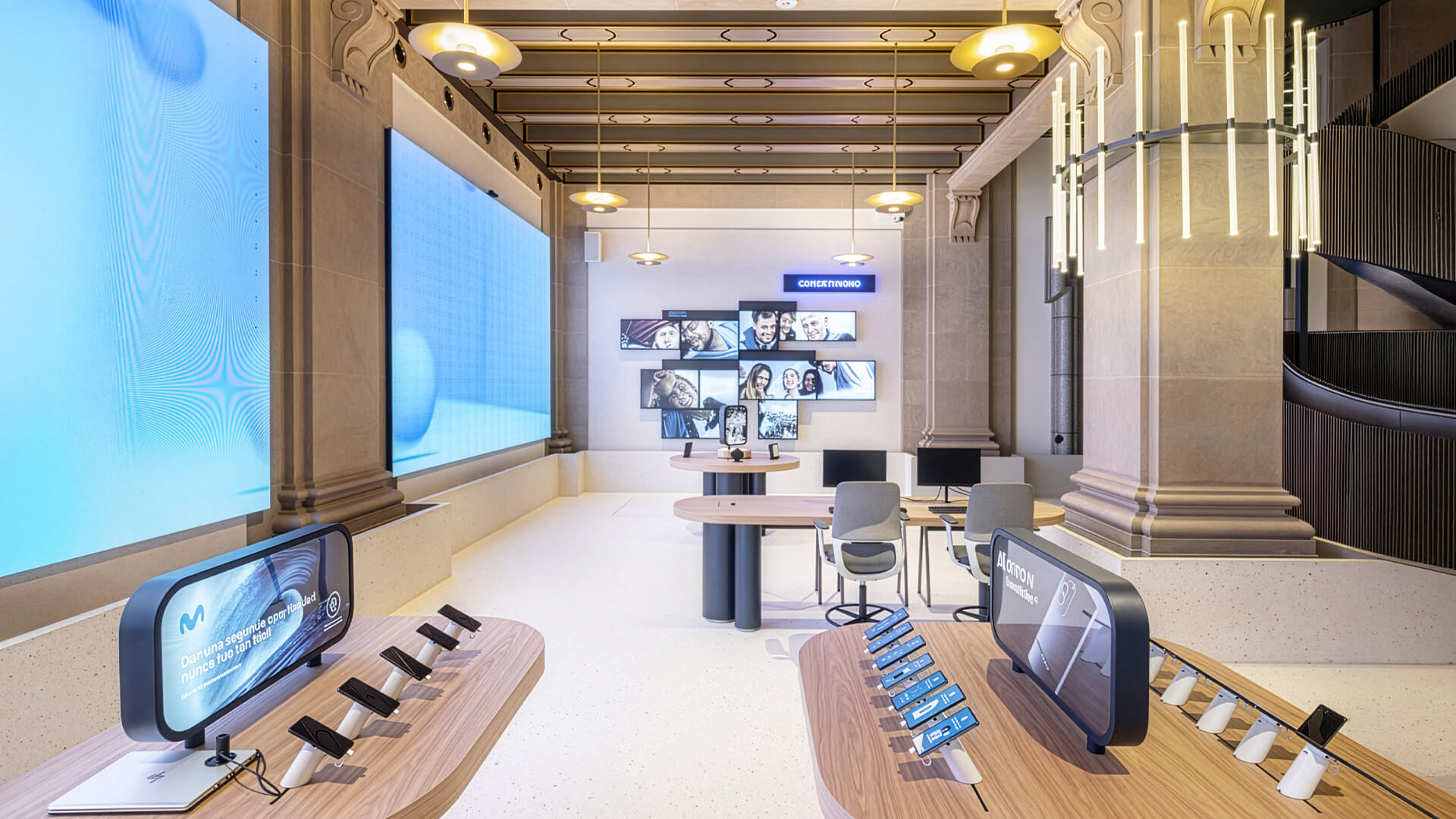
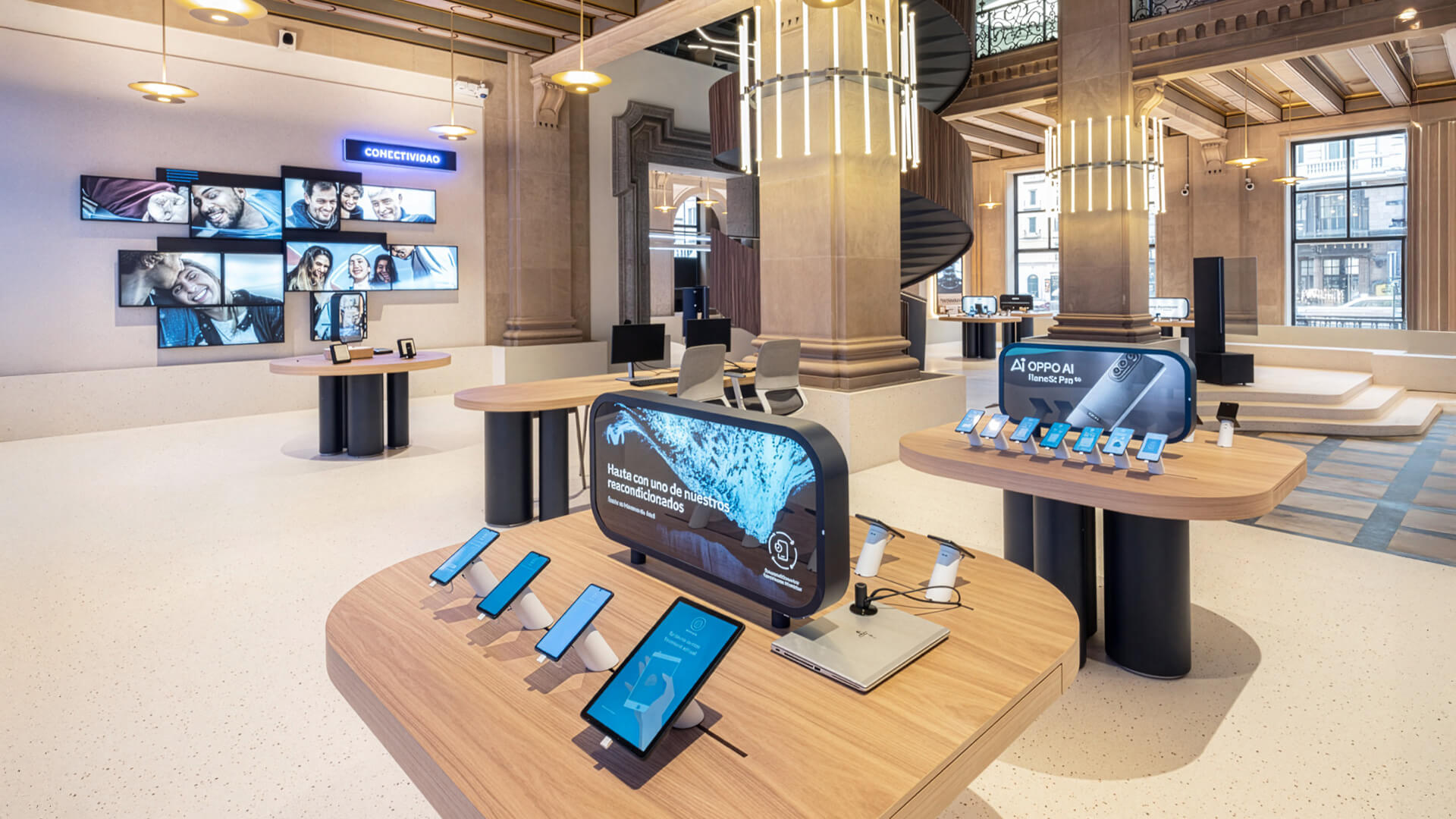
Esto crea un entorno comercial completamente diferente. Un cliente podría probar un smartphone con IA junto a smart glasses, wearables, conectividad doméstica, servicios de entretenimiento y tecnología para el hogar conectado.
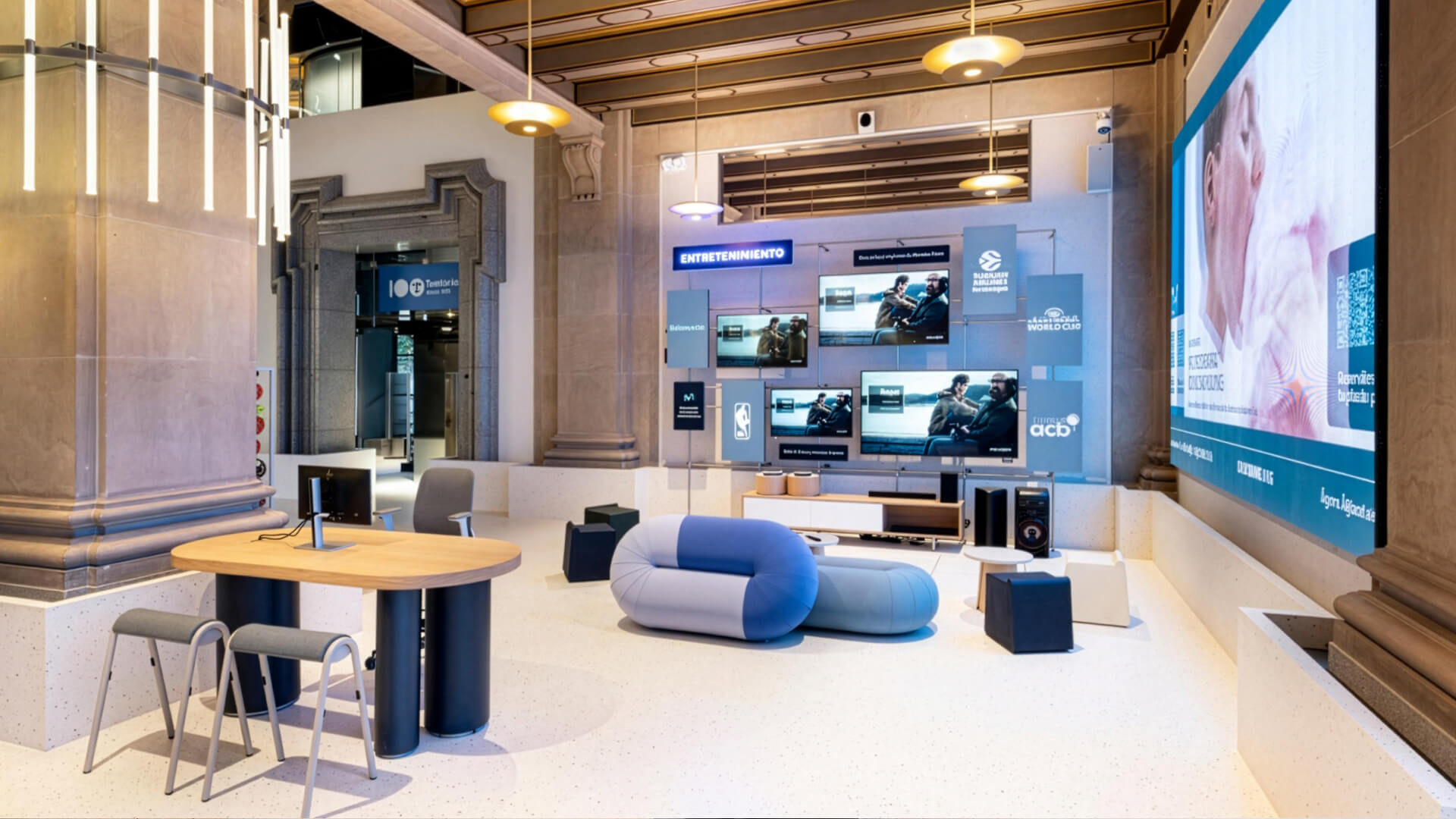
La tienda deja de ser un catálogo físico. Se convierte en un laboratorio de tecnología y estilo de vida.
¿Qué zonas debería tener una tienda de telecomunicaciones del futuro?
1. AI & Smartphone Lab
Los clientes pueden probar smartphones con IA, comparar capacidades y descubrir cómo las nuevas funciones pueden resolver problemas cotidianos.
La demostración sustituye a la simple exposición del producto.
2. Connected Home
Banda ancha, seguridad, entretenimiento, smart home y dispositivos conectados pueden presentarse como un único ecosistema.
Esto permite a las marcas pasar de vender una conexión a vender un connected lifestyle.
3. Wearables & Wellness
Smartwatches, auriculares, wearables y tecnología relacionada con el bienestar deben poder experimentarse, no limitarse a estar expuestos.
4. Entertainment & Gaming
Gaming, streaming y experiencias inmersivas pueden demostrar de forma tangible el valor de la conectividad de alta velocidad.
5. Expert Advice
El empleado deja de ser únicamente un vendedor. Se convierte en un technology advisor capaz de interpretar las necesidades del cliente, explicar tecnologías complejas y generar confianza.
6. Self-Service & AI
Los asistentes de IA, kioscos digitales y sistemas de autoservicio pueden gestionar tareas rutinarias y servicios de cuenta.
Esto permite que los empleados dediquen más tiempo a las interacciones de mayor valor.
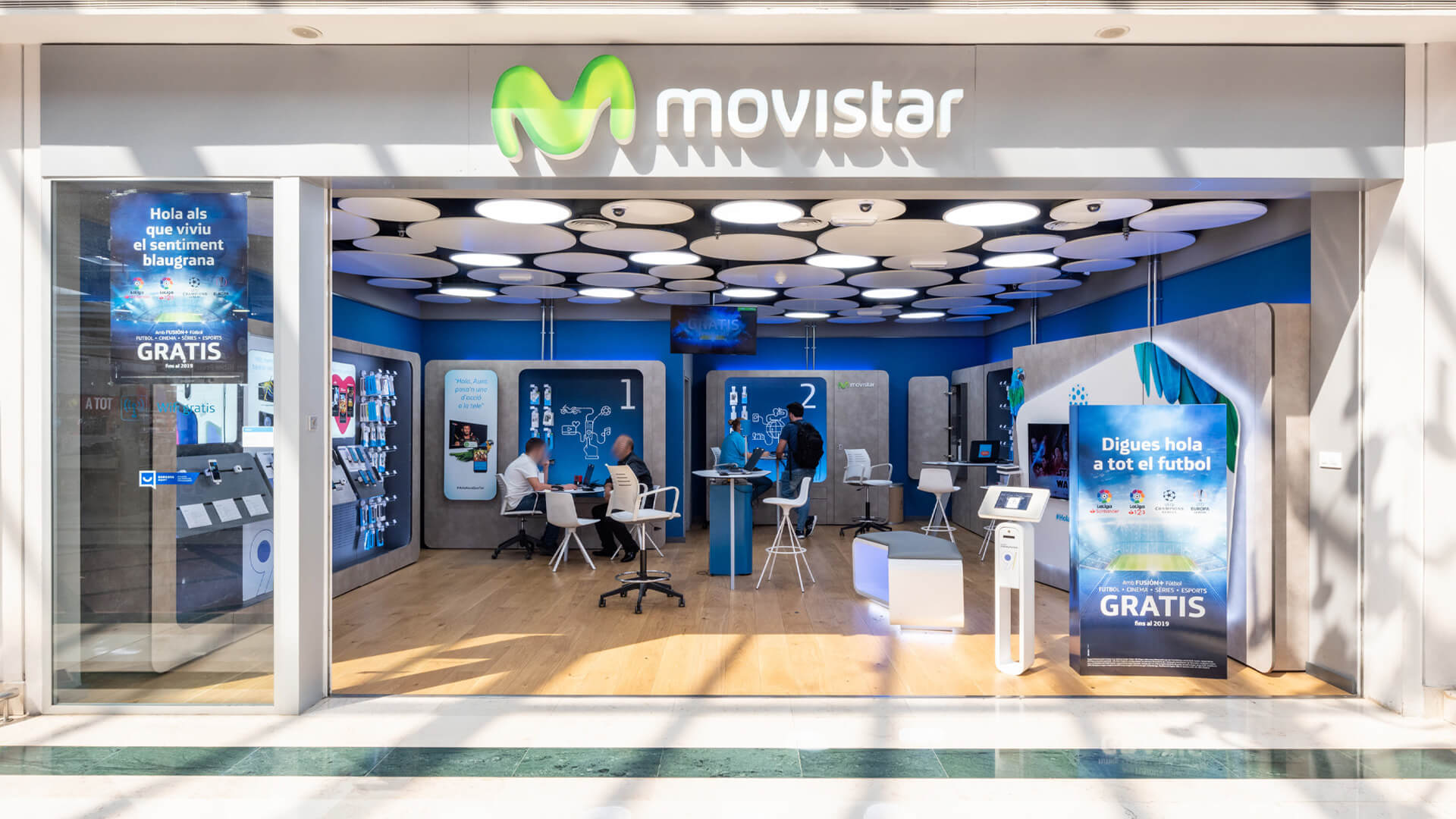
La tienda física no desaparece: cambia de función
La IA no necesariamente hace irrelevante la tienda física.
Puede hacer que la experiencia física sea más importante.
Los consumidores pueden utilizar IA para crear una shortlist de productos y, aun así, querer:
- tocar un smartphone;
- probar una cámara;
- experimentar un wearable;
- comprobar un sistema de smart home;
- probar gaming;
- hablar con un experto;
- comparar productos físicamente;
- recibir ayuda para una decisión compleja.
La investigación de Invoca citada en el artículo actual de CampbellRigg apunta en la misma dirección: el 48% de los consumidores de telecomunicaciones encuestados en Reino Unido afirmó que la IA había mejorado su experiencia de compra, mientras que el apoyo humano continuaba siendo importante.
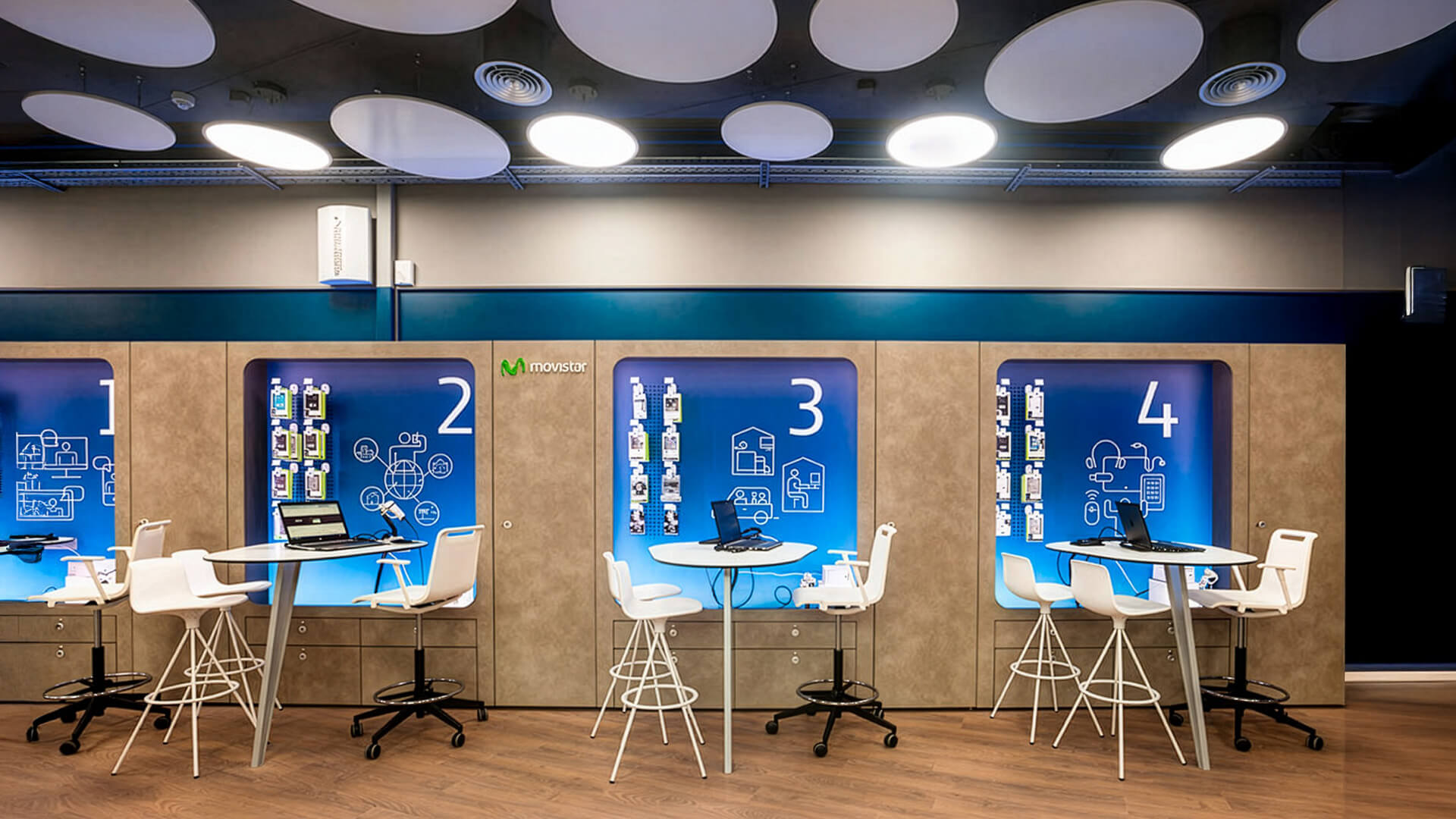
Por tanto, el futuro no es: IA vs. Personas
Es: IA + personas + experiencia física.
Diseñar la tienda para lo que la IA no puede hacer sola
Este debería convertirse en uno de los principios centrales del diseño de telecom retail.
La IA puede comparar miles de productos.
La tienda puede permitir experimentar uno.
La IA puede recomendar un smartphone.
El asesor puede explicar cómo encaja en el estilo de vida del cliente.
La IA puede responder una pregunta técnica.
El experto humano puede proporcionar confianza.
La IA puede personalizar información.
El espacio físico puede generar emoción y conexión con la marca.
Por eso, arquitectura comercial, interiorismo, customer experience, branding y tecnología deben diseñarse como un único sistema.
Del omnichannel al phygital telecom retail
El siguiente paso es conectar el agente de IA con la experiencia física.
Un consumidor podría:
- descubrir una solución mediante IA;
- recibir una recomendación personalizada;
- comparar productos online;
- reservar una demostración;
- visitar la tienda;
- probar el producto;
- hablar con un asesor;
- completar la compra;
- conectar servicios adicionales;
- continuar la relación mediante IA.
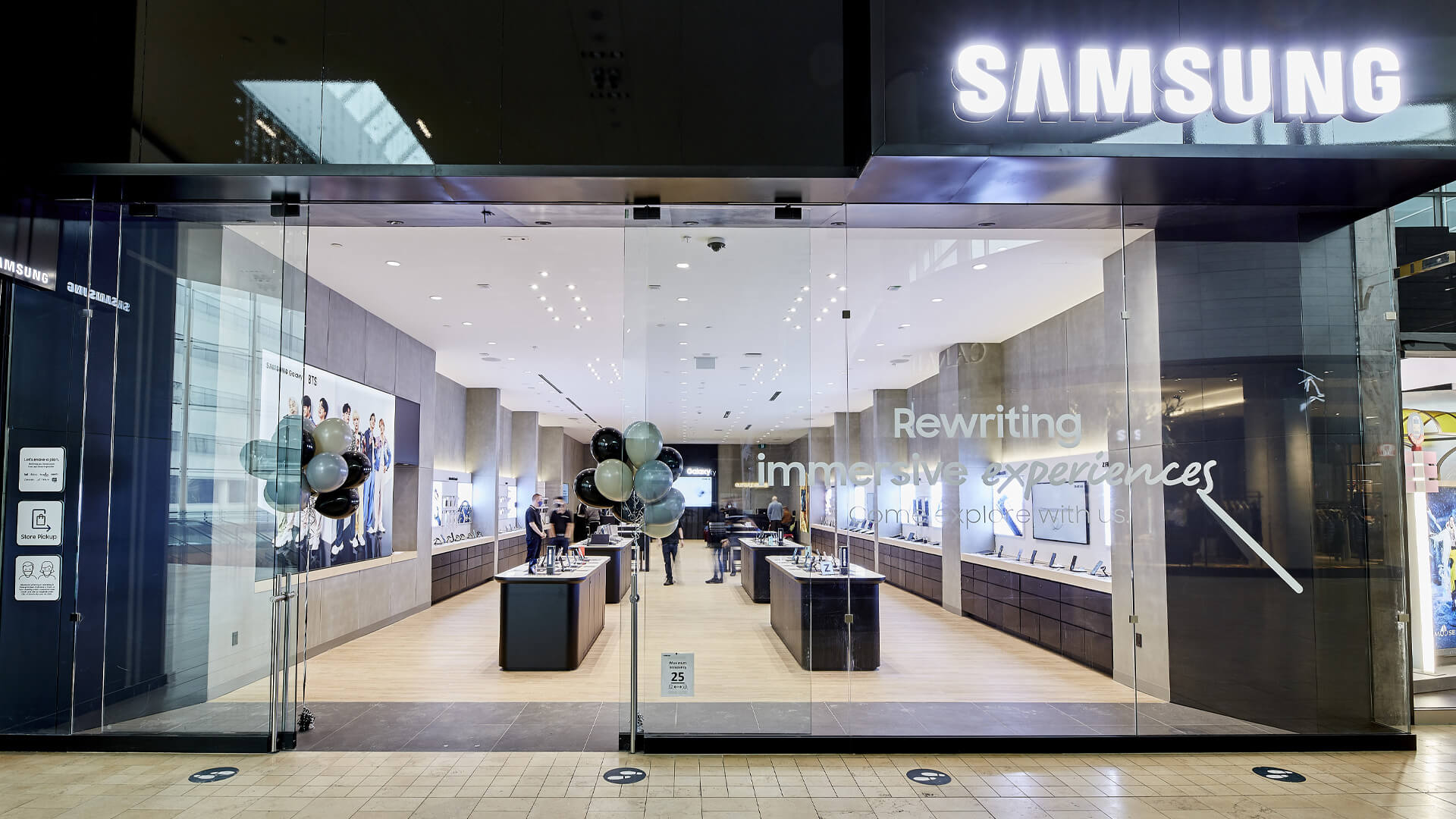
Para el cliente, todo debería sentirse como un único recorrido, no como diez sistemas independientes.
Esto requiere integrar:
- AI assistants
- aplicaciones móviles
- websites
- ecommerce
- CRM
- digital signage
- interactive displays
- self-service
- mobile POS
- store advisors
- product demonstration
- customer data
- after-sales service
Esta es la evolución del omnichannel retail al phygital retail: espacios físicos y plataformas digitales diseñados como una única experiencia de marca.
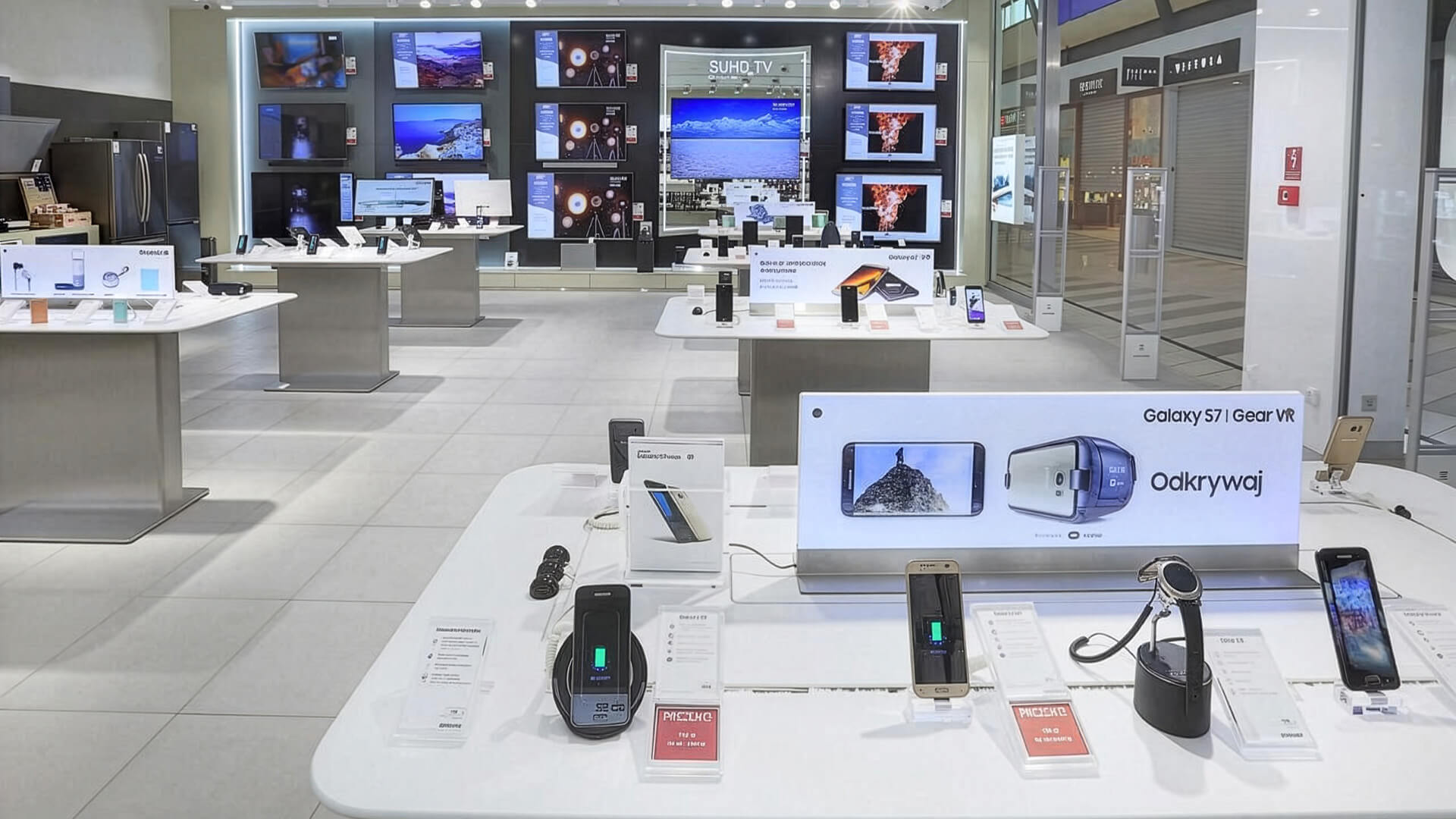
¿Qué significa esto para el diseño de tiendas de telecomunicaciones?
A medida que cambia el customer journey, también debe cambiar el espacio.
Menos espacio transaccional.
Más experiencia.
Menos showroom.
Más technology lab.
Menos mostradores.
Más consultoría.
Menos producto aislado.
Más ecosistemas conectados.
El objetivo no es simplemente crear una tienda que parezca futurista.
El objetivo es crear una tienda que sea comercialmente más eficaz.
Por ello, el diseño debe considerar:
- customer journey;
- flexible experience zones;
- digital integration;
- product demonstration;
- consultation spaces;
- self-service;
- AI interfaces;
- connected-home demonstrations;
- community spaces;
- seamless digital-to-physical journeys.
Medir el nuevo retail de telecomunicaciones
La transformación del espacio debe poder medirse.
Las marcas deberían analizar indicadores como:
- engagement;
- dwell time;
- conversion;
- cross-selling;
- customer satisfaction;
- loyalty;
- service efficiency;
- sales per square metre;
- cost to serve;
- return on retail investment.
El objetivo es transformar las tiendas de telecomunicaciones de lugares donde los consumidores compran tecnología en lugares donde experimentan el futuro de la tecnología. La IA puede convertirse en la nueva puerta de entrada al telecom retail. La tienda puede convertirse en el lugar donde la marca cobra vida.

Preguntas frecuentes
¿Qué es el comercio agéntico?
El comercio agéntico es un modelo emergente en el que los agentes de IA ayudan a los consumidores a descubrir, comparar y realizar determinadas tareas de compra en su nombre.
¿Cómo cambiarán los agentes de IA el retail de telecomunicaciones?
Pueden trasladar una mayor parte del descubrimiento y comparación de productos a interfaces digitales, haciendo que las tiendas físicas se concentren más en experiencia, demostración, asesoramiento y relación con la marca.
¿La IA sustituirá las tiendas de telecomunicaciones?
No necesariamente. La IA puede cambiar el papel de las tiendas más que eliminarlas. La experiencia física ofrece demostración, interacción humana, confianza y experiencias sensoriales que una interfaz digital no puede reproducir completamente.
¿Cómo será la tienda de telecomunicaciones del futuro?
Será más parecida a un technology experience hub que a un showroom tradicional, con zonas de IA, smartphones, connected home, wearables, gaming, entretenimiento, asesoramiento y autoservicio.
¿Por qué es importante el phygital retail para las telecomunicaciones?
Porque conecta agentes de IA, plataformas digitales, aplicaciones, CRM y tiendas físicas en un único customer journey.
¿Cómo deberían rediseñar sus tiendas las marcas de telecomunicaciones?
Deberían comenzar por el customer journey y no por el catálogo de productos. El espacio debe priorizar las experiencias, demostraciones, asesoramiento y momentos en los que la interacción física aporta más valor que el descubrimiento digital.
Conclusión
El futuro del telecom retail no consiste en elegir entre inteligencia artificial y tiendas físicas.
Consiste en conectar ambos.
IA para descubrir.
Digital para comparar.
Tienda para experimentar.
Personas para asesorar.
Tecnología para conectar.
Datos para personalizar.
Las marcas que integren estos elementos podrán transformar sus tiendas de salesrooms transaccionales en experience hubs capaces de generar engagement, loyalty y crecimiento comercial.

That model is changing.
AI agents can increasingly understand customer needs, compare products and services, recommend solutions and support purchasing decisions before a customer ever enters a store. The implication is significant: the telecom store can no longer compete simply as a place to sell smartphones, SIM cards and contracts.
It needs to become a place where customers experience technology, receive expert advice, build trust and discover connected services.
AI may become the new front door to telecom retail. The physical store needs to become the experience destination.
What Is Agentic Commerce?
Agentic commerce is an emerging model in which AI agents help consumers discover products, evaluate alternatives and increasingly complete purchasing tasks on their behalf.
Unlike traditional search, an AI agent can potentially understand an individual's requirements and take action across multiple stages of the customer journey.
For telecom customers, this could mean asking an AI agent:
- Which smartphone is best for my lifestyle?
- Which tariff gives me the best value?
- Which devices work with my existing smart home?
- Should I upgrade my phone now?
- Which wearable works with my current ecosystem?
- Can you arrange the purchase and delivery?
This changes the starting point of the telecom buying journey.
Instead of: Store → salesperson → product → contract
The journey could become: AI discovery → recommendation → digital comparison → physical experience → expert advice → purchase → connected ecosystem → AI-assisted aftercare
This is not simply a digital transformation. It is a retail transformation.
AI Agents Could Change the Role of the Telecom Store
AI agents are increasingly moving into mainstream shopping behaviour.
A 2026 CI&T study found that 68% of surveyed UK and Ireland consumers had already used an AI agent while shopping, while 86% had either used one or were open to doing so.
As AI becomes better at product discovery and comparison, customers may increasingly arrive at a telecom store already knowing what they want. That creates both a threat and an opportunity.
If the store's primary purpose is product selection, AI can increasingly perform much of that job remotely.
But if the store provides something customers cannot get from an AI interface, its value increases.
The next-generation telecom store therefore needs to focus on: Demonstration. Advice. Trust. Interaction. Discovery. Community. Connected experiences.
The store becomes less about displaying products and more about helping customers understand what technology can do for their lives.
From Salesroom to Experience Hub
The traditional telecom store is often organised around products:
Smartphones | Tariffs | Accessories | Service Desk
The experience-led store can instead be organised around customer needs:
Connected Living | Entertainment | Work | Wellness | Smart Home | Mobility | AI
This creates a fundamentally different retail environment.
A customer might experience an AI-powered smartphone alongside smart glasses, wearable technology, home connectivity, entertainment services and connected home products.
Rather than asking: “Which phone do you want?”
The store can ask: “How do you want technology to improve your life?”
That is a much more powerful proposition for a telecom brand.
The Physical Store Still Matters
AI does not necessarily make physical retail irrelevant.
It can make the physical experience more valuable.
Customers may use AI to shortlist products but still want to touch a device, test a camera, experience a wearable, understand a smart-home system or speak with an expert before making an important purchase.
Research into UK telecom buyers also suggests that consumers are increasingly comfortable with AI while still valuing access to human support. Invoca's 2026 Telecom Buyer Experience Report found that 48% of surveyed UK telecom consumers said AI had improved their buying experience, while consumers continued to expect human help when they needed it.
The winning model is therefore not: AI versus people.
It is: AI + people + physical experience. The New Telecom Experience Hub
Future telecom stores could operate more like technology experience centres than conventional salesrooms.
Potential experience zones include:
AI & Smartphone Lab
Customers can test AI-enabled smartphones, compare capabilities and discover how AI can simplify everyday tasks.
Connected Home
Smart-home devices, broadband, security, entertainment and connected appliances can be demonstrated as one integrated ecosystem.
Wearables & Wellness
Smart watches, health technology, earbuds and wearable devices can be experienced rather than simply displayed.
Entertainment & Gaming
Customers can experience high-speed connectivity through immersive gaming, streaming and entertainment demonstrations.
Expert Advice
Human advisors become technology consultants rather than conventional salespeople.
Their role is to interpret customer needs, explain complex technology and provide reassurance.
Self-Service & AI
AI assistants, digital kiosks and connected interfaces can handle routine transactions, account services and product discovery, allowing employees to focus on higher-value interactions.
Designing for What AI Cannot Do Alone
The strategic principle for telecom retail is becoming clear:
Design the store around what AI cannot deliver by itself.
AI can compare thousands of products.
The store can let customers experience one.
AI can recommend a smartphone.
The advisor can explain how it will work within the customer's lifestyle.
AI can answer a technical question.
The human expert can provide reassurance when the purchase is important or complicated.
AI can personalise information.
The physical environment can create emotion, confidence and brand connection.
This is where retail architecture, customer experience and technology integration become strategically important.
From Omnichannel to Phygital Telecom Retail
The next challenge is connecting the physical store with the digital ecosystem.
A customer might begin with an AI agent, continue through a telecom app, visit a physical store, speak with an advisor and complete the purchase online.
These should not feel like separate experiences. They should feel like one journey.
That means integrating:
- AI assistants
- Mobile apps
- Websites
- Digital commerce
- CRM systems
- Digital signage
- Interactive displays
- Self-service technology
- Mobile point of sale
- In-store advisors
- Product demonstration
- Customer data
- After-sales support
This is the evolution from omnichannel retail to phygital retail: physical and digital environments designed as one connected customer experience.
What This Means for Telecom Store Design
As the customer journey changes, the physical environment must change with it.
Telecom stores may become:
Smaller in transaction space.
Larger in experience value.
Less showroom.
More technology laboratory.
Less sales counter.
More advisory platform.
Store design should therefore prioritise flexible experience zones, intuitive customer journeys, digital integration and high-impact product demonstration.
The objective is not simply to make stores look more futuristic. It is to make them more commercially effective.
Performance should be measured through metrics such as:
- customer engagement
- dwell time
- conversion
- cross-selling
- customer satisfaction
- loyalty
- service efficiency
- sales per square metre
- cost to serve
- return on retail investment
AI Agents Will Not Kill Telecom Retail. They Will Redefine It.
The biggest mistake would be to assume that AI agents will make telecom stores obsolete.
The more likely outcome is that they will make the traditional telecom store obsolete.
There is an important difference.
If AI takes over more of the discovery and comparison process, telecom brands have an opportunity to rethink what physical retail is for.
The store can become the place where customers:
Experience technology.
Understand technology.
Trust technology.
Connect technology.
And discover what comes next.
This represents a fundamental shift from product-led telecom retail to experience-led telecom retail.
CampbellRigg: Designing the Next Generation of Telecom Retail
CampbellRigg combines telecom brand strategy, retail architecture, customer experience and digital design to create connected physical and digital brand environments.
Our approach integrates:
- Telecom retail strategy
- Brand positioning
- Retail architecture
- Store interior design
- Customer journey planning
- Phygital experience design
- Digital retail environments
- Retail communications
- Technology integration
- Store format optimisation
The objective is simple: Transform telecom stores from places where customers buy technology into places where customers experience the future of technology. AI may become the new front door to telecom commerce. The store can become the place where the brand comes to life.
Frequently Asked Questions
What is agentic commerce?
Agentic commerce is a developing model in which AI agents help consumers discover, compare and increasingly execute purchasing activities on their behalf.
How will AI agents change telecom retail?
AI agents could move more product discovery, comparison and purchasing activity into digital interfaces, changing physical telecom stores from transactional sales environments into experience, demonstration and advisory destinations.
Will AI replace telecom stores?
AI is more likely to change the role of telecom stores than eliminate them. Physical environments provide product demonstration, human expertise, reassurance and sensory experiences that digital interfaces cannot fully replicate.
What will the future telecom store look like?
Future telecom stores are likely to focus more heavily on connected technology, demonstrations, advisory services, immersive experiences and integration with AI, apps and digital commerce.
Why is phygital retail important for telecom brands?
Phygital retail connects physical stores with digital platforms, AI assistants and mobile experiences to create one continuous customer journey.
How should telecom brands redesign their stores?
Telecom brands should begin with the customer journey rather than the product catalogue. The store should be designed around experiences, advice, technology demonstration and the moments where physical interaction creates more value than digital discovery alone.
The Future of Telecom Retail Is Connected
AI agents are changing the way consumers discover and purchase technology.
The response should not be to make the telecom store disappear.
It should be to make the store more valuable.
The future belongs to telecom brands that connect AI, digital platforms, physical environments, human expertise and customer experience into one intelligent ecosystem.
From salesroom to experience hub.
From product-led retail to connected lifestyle.
From transaction to relationship.